

Hello, gardeners, summer residents, and anyone else reading this. We've all stocked up on seeds and soil, planted the seeds, and many of us have windowsills filled with seedlings. I've also stocked up on all of this, and since the end of February, I've really started sowing. I started by preparing pepper seeds for planting. These are the peppers I bought for 2024.
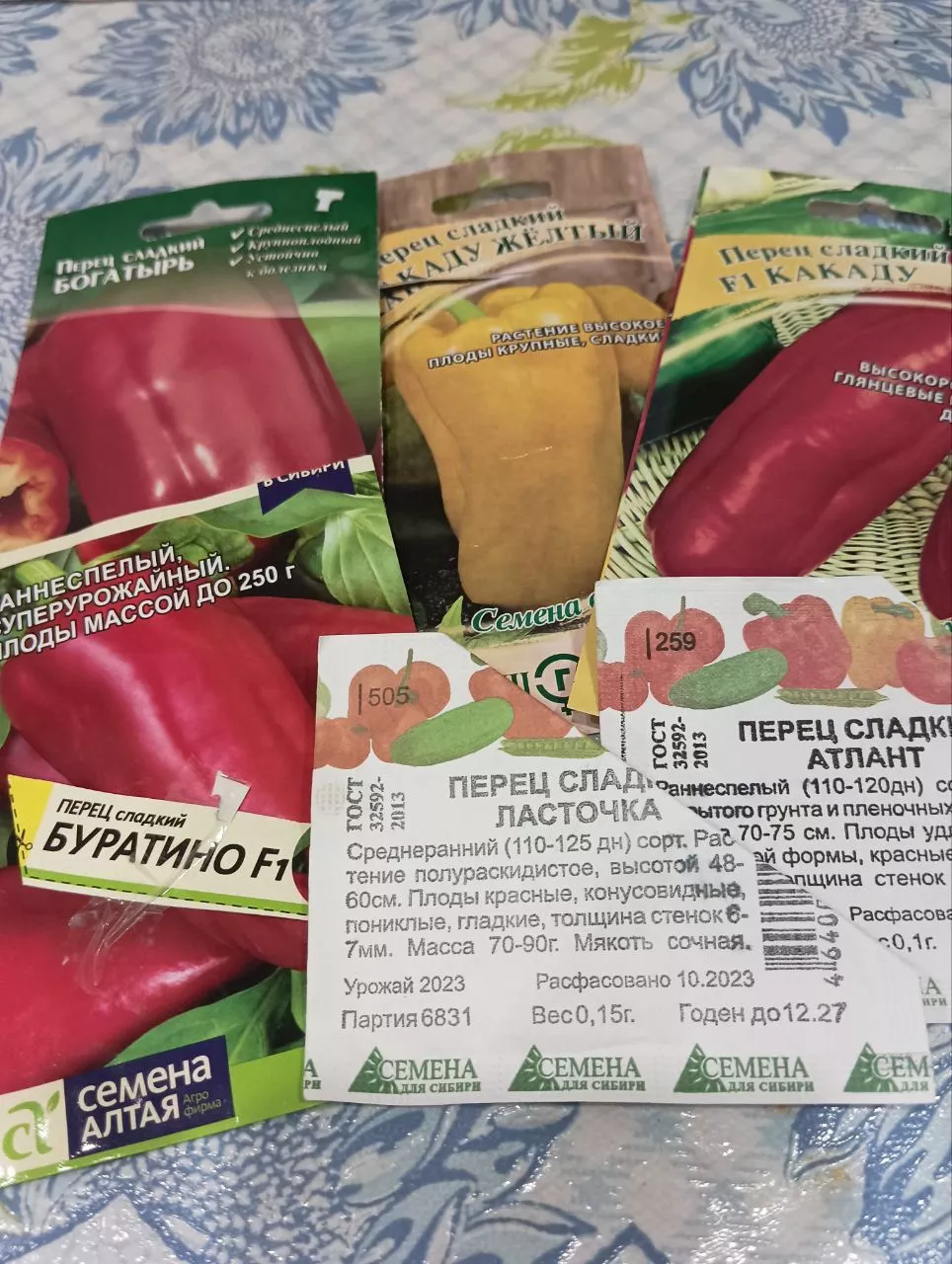
I grow Bogatyr, Lastochka, and Atlant peppers every year. I like these varieties. I've already written about these peppers in detail. Here And here, if you're interested, you can read it.
I first encountered the Kakadu Orange pepper, a hybrid, in 2023. I loved this pepper; it was productive, and the flowers and ovaries never dropped. The peppers are beautiful, aromatic, and sweet and juicy. The fruits are elongated, cuboid, with 3-4 chambers, about 15 cm long, and 5-7 cm thick. Unripe peppers are light green, and ripe ones are light orange.
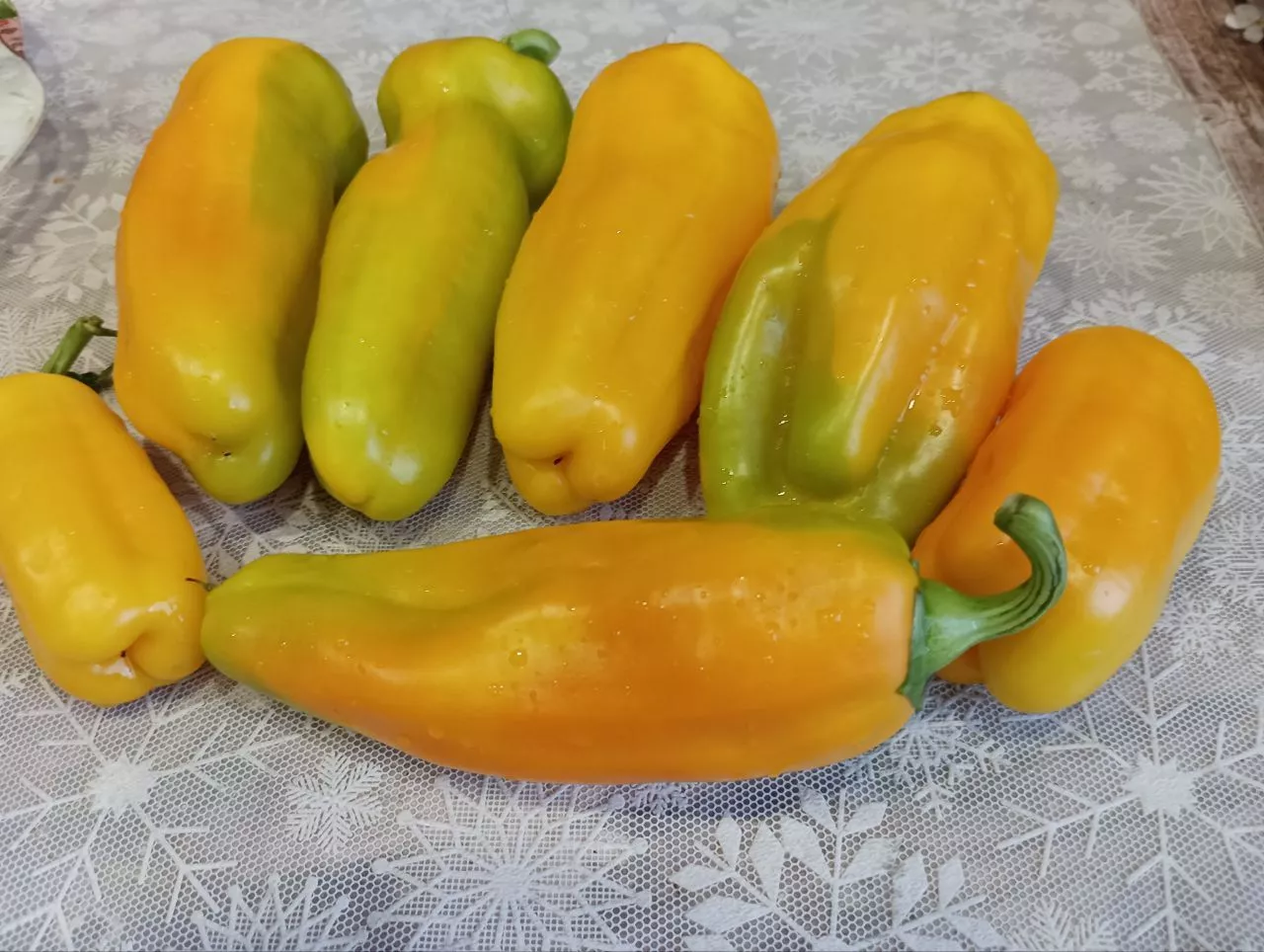
I also bought some red Kakadu pepper.
I also caught the eye of the Buratino F1 pepper seeds. This hybrid is high-yielding, resistant to pepper diseases, and ripens early. The fruits are large, cone-shaped, and about 17 cm long. Ripe peppers are red, juicy, and sweet.
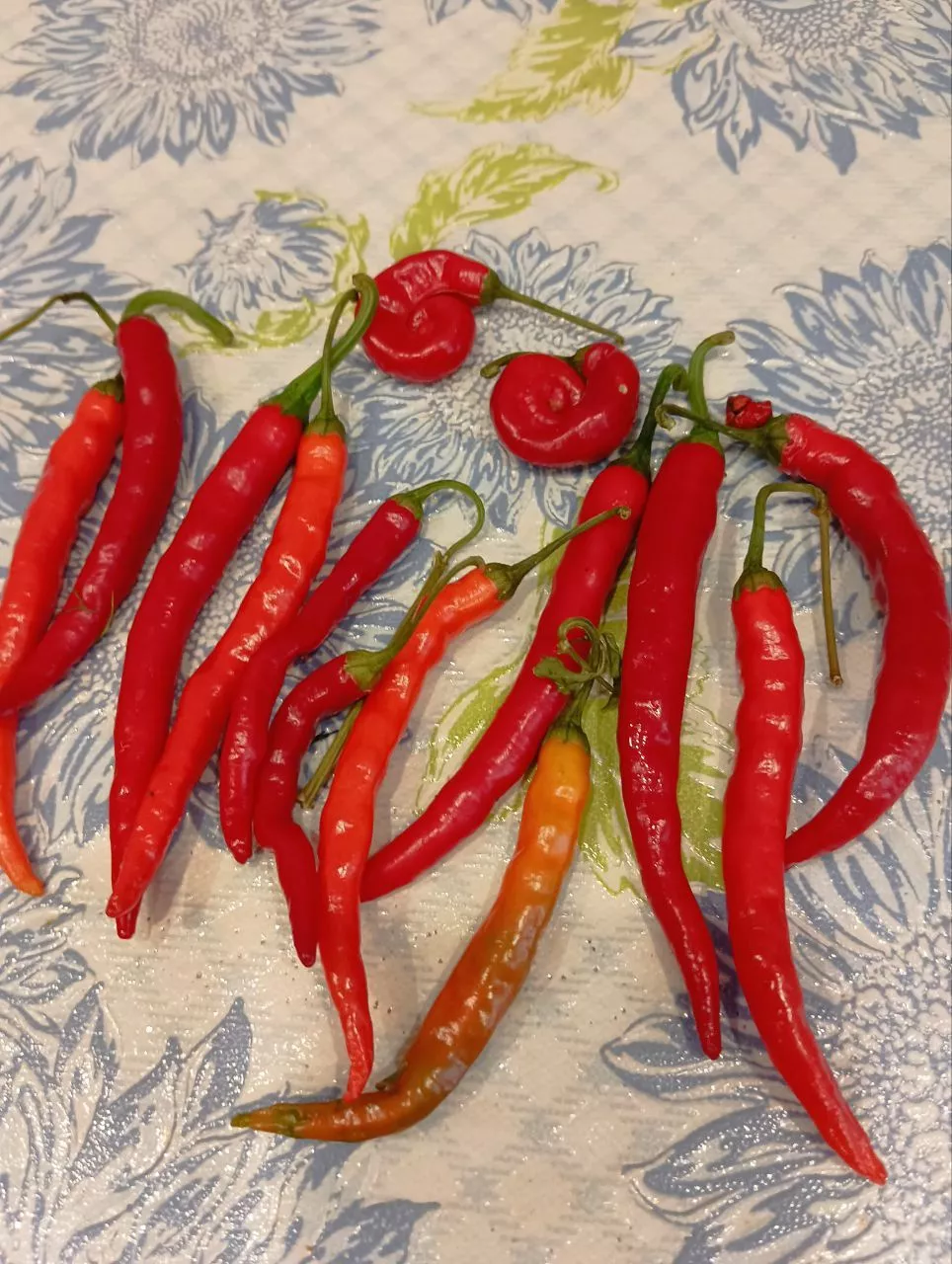
And I'll definitely plant a couple of hot cayenne pepper plants; they have narrow, not very long peppers. We don't need many; two plants are plenty. And I have plenty of dried hot peppers at home, both whole and ground. What should I do with them?
Before sowing, I treat the seeds every time. First, I soak the pepper seeds in hot or salt water, each variety separately. It's believed that good seeds should sink to the bottom, while those that float on the surface are overdried, low-quality, and empty.
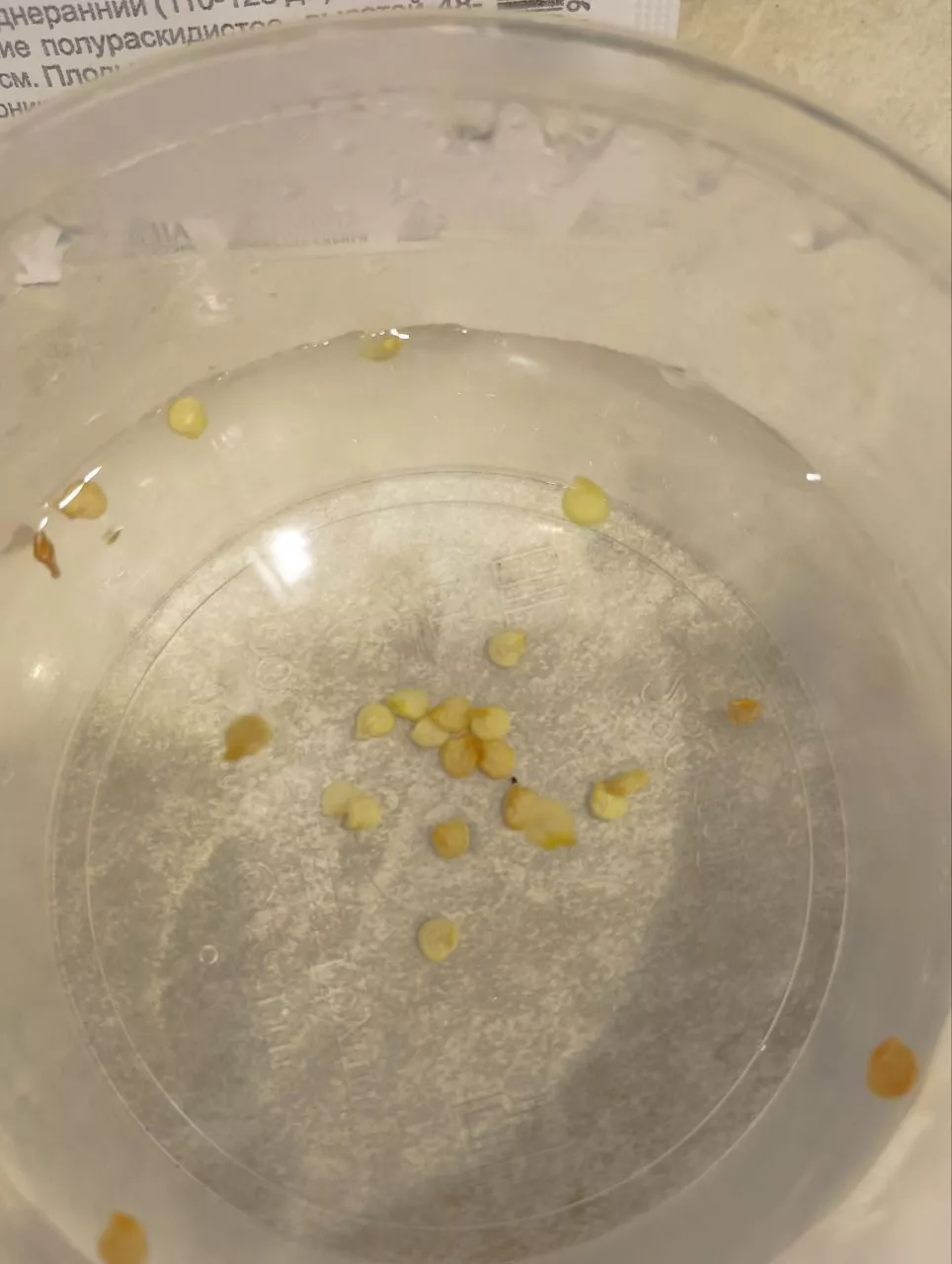
It's best not to sow them; they won't sprout, or the seedlings will be weak. But the packets contain only a few seeds, and sometimes all the seeds float on the surface. If you throw away these seeds, there won't be anything left to sow.
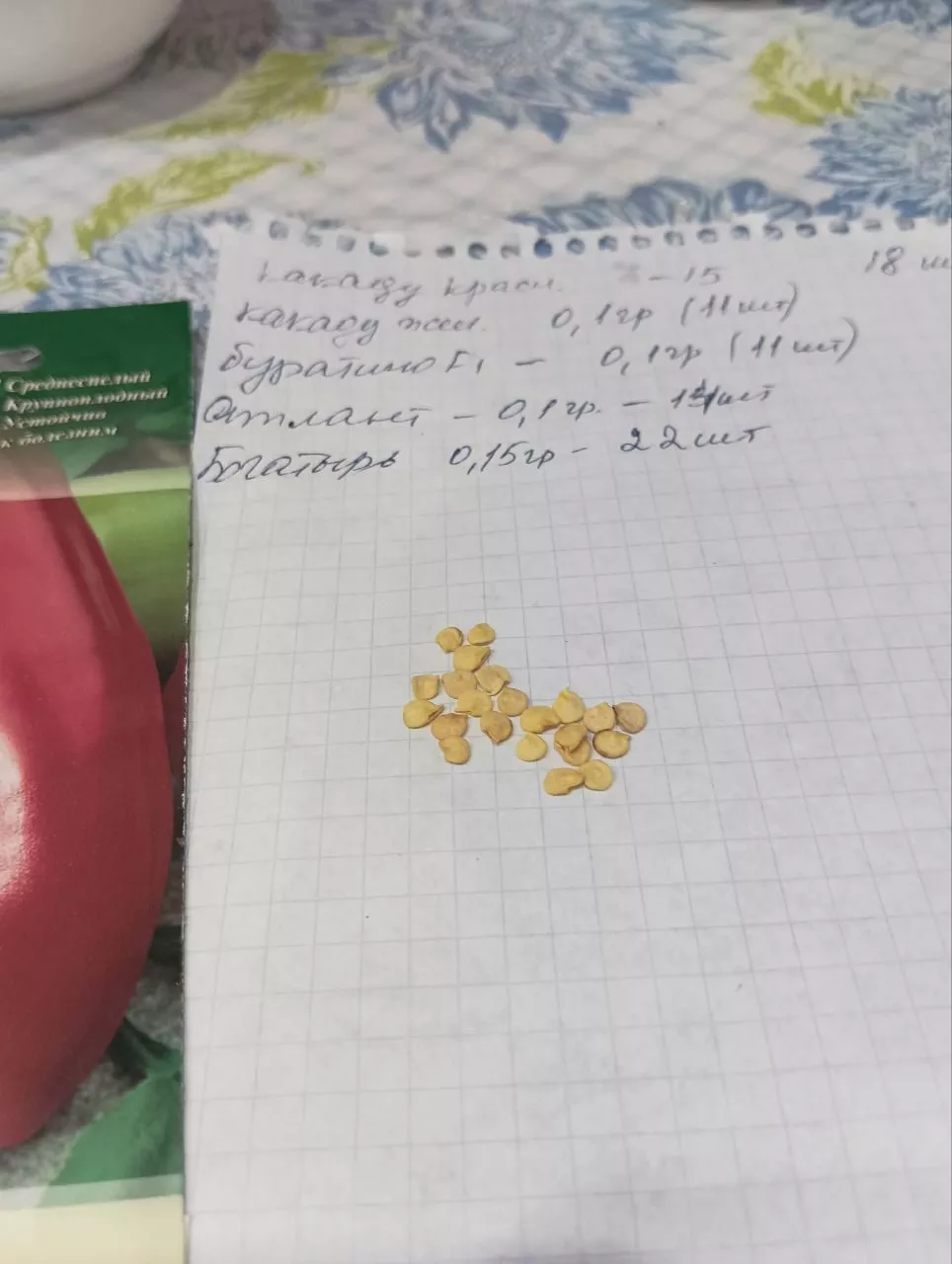
This time, almost all of my Bogatyr seeds didn't sink; only a few remained at the bottom. I left them in the water for a longer period of time. Some of the seeds sank to the bottom. I placed the remaining seeds on a cotton pad.
I also placed the ones that continued to float on the surface of the water on another disk. I decided to see if these seeds would germinate and whether it was true that floating seeds don't germinate.
I didn't disinfect the seeds this time. I usually soak them in a pink solution of potassium permanganate. Then I moisten cotton pads and spread the seeds out, cover them with another pad, and put them in containers, always labeling each seed.
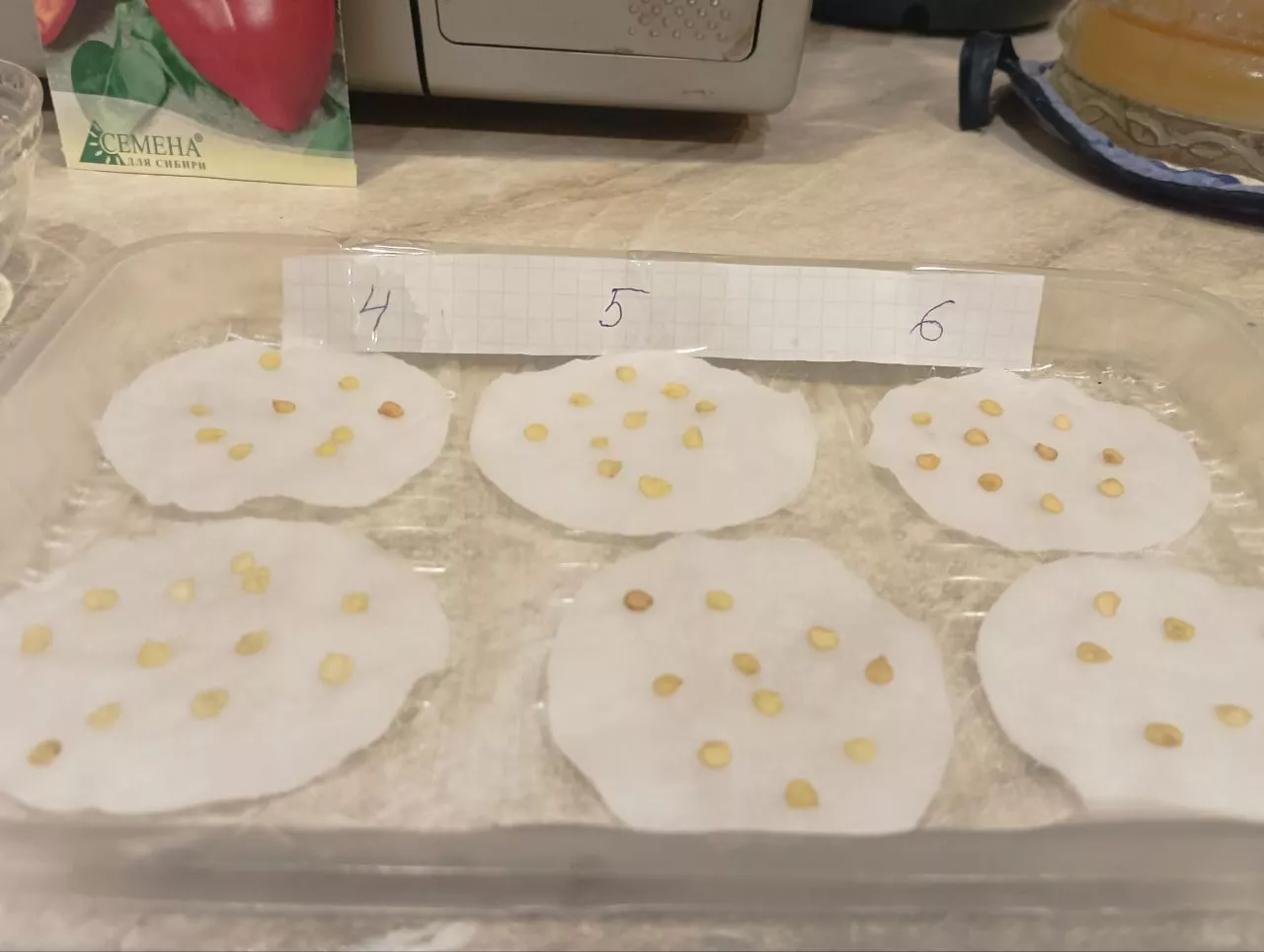
I cover it with a bag. I watch the seeds as soon as they start to sprout, and then I plant them. I plant each variety in a separate cup.
I use store-bought soil for growing seedlings. I've been using this type of soil for many years.
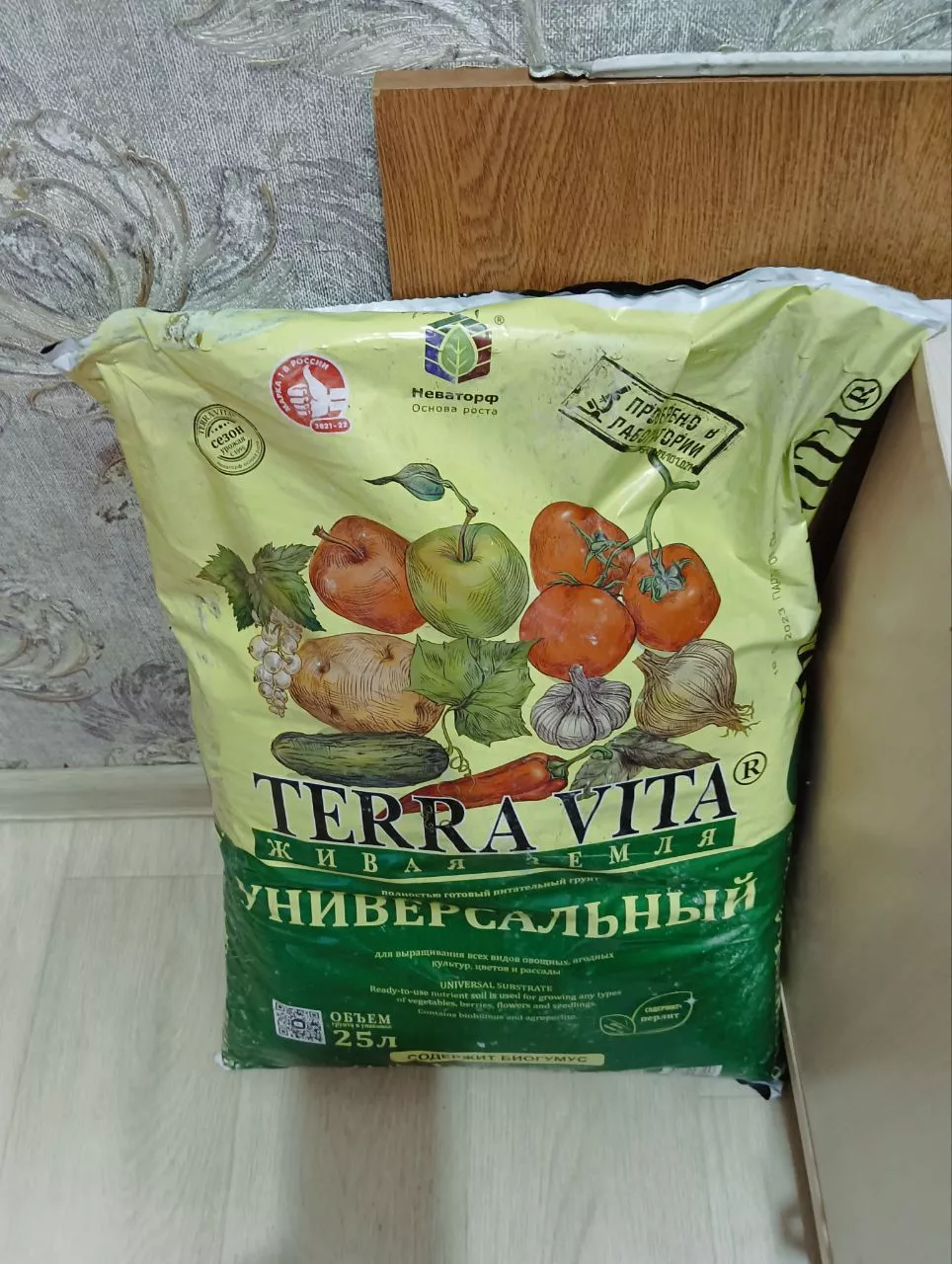
It is completely ready for growing seedlings; all fertilizers and minerals have been added to the soil.
I don't add any vermiculite, perlite, or coconut substrate. I simply fill the cups with soil and water them with a pink solution of potassium permanganate or a phytosporin solution. I arrange the seeds, sprinkle them with soil, lightly compact the soil, and water with warm water. I cover the cups with dark plastic and place them under a radiator. But this year, I decided to place some of the cups directly under a grow light. Seedlings began to appear in 3-5 days, and almost all the seeds sprouted.
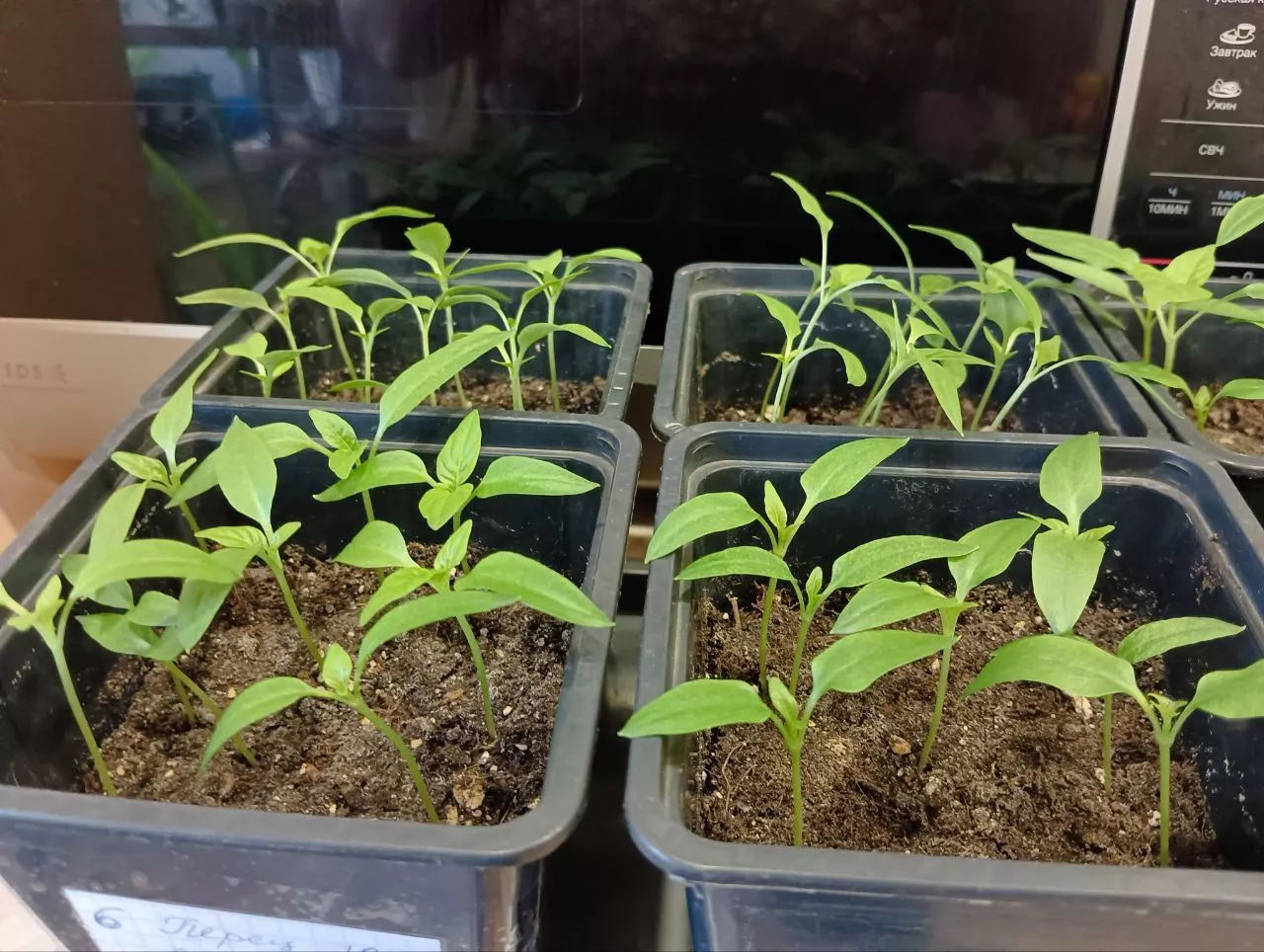
And the Bogatyr seeds that didn't sink to the bottom never sprouted. So, it's true, floating seeds don't germinate.
Now almost all peppers already have two true leaves.
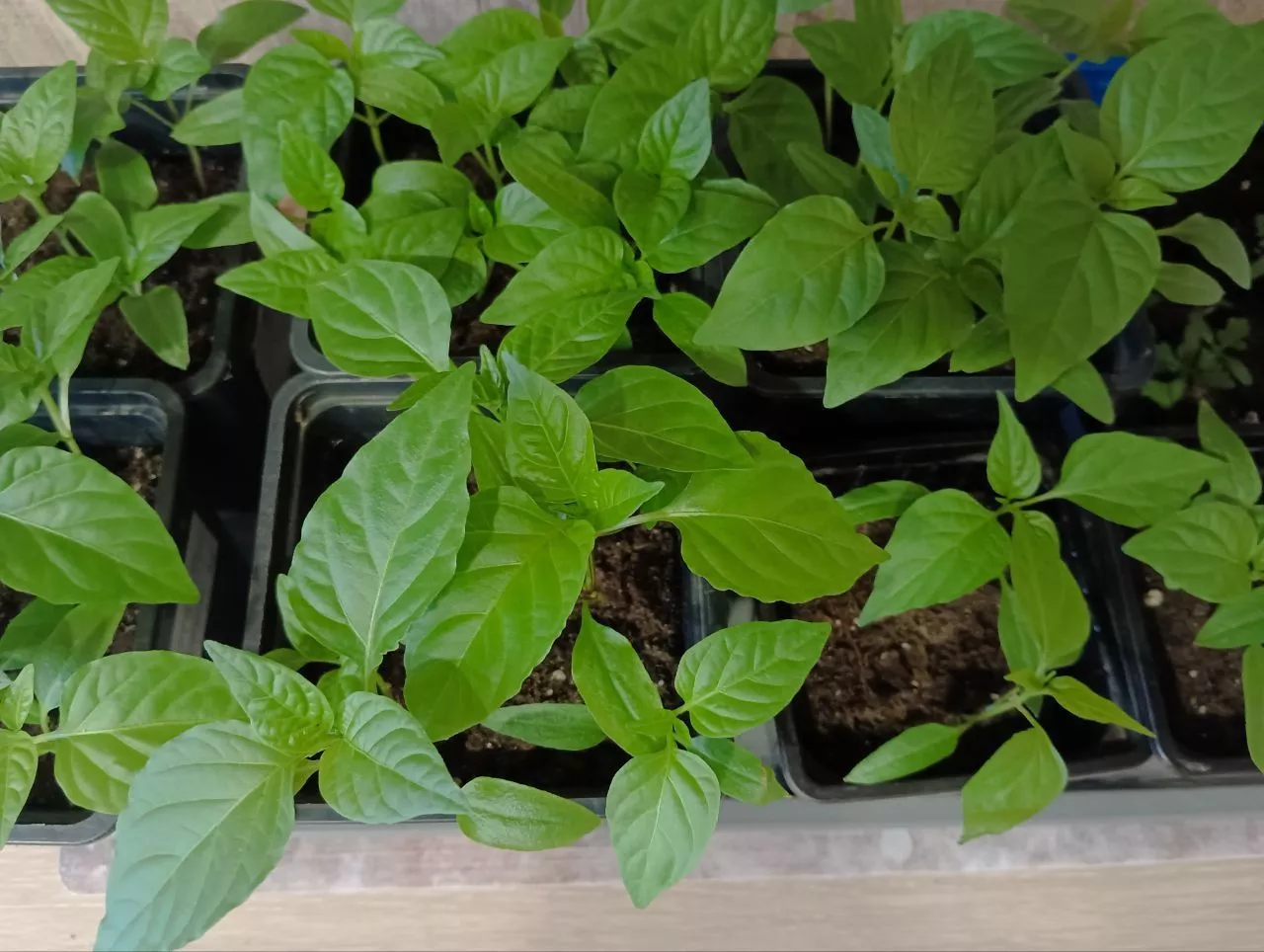
In the next few days I will transplant them into separate cups.
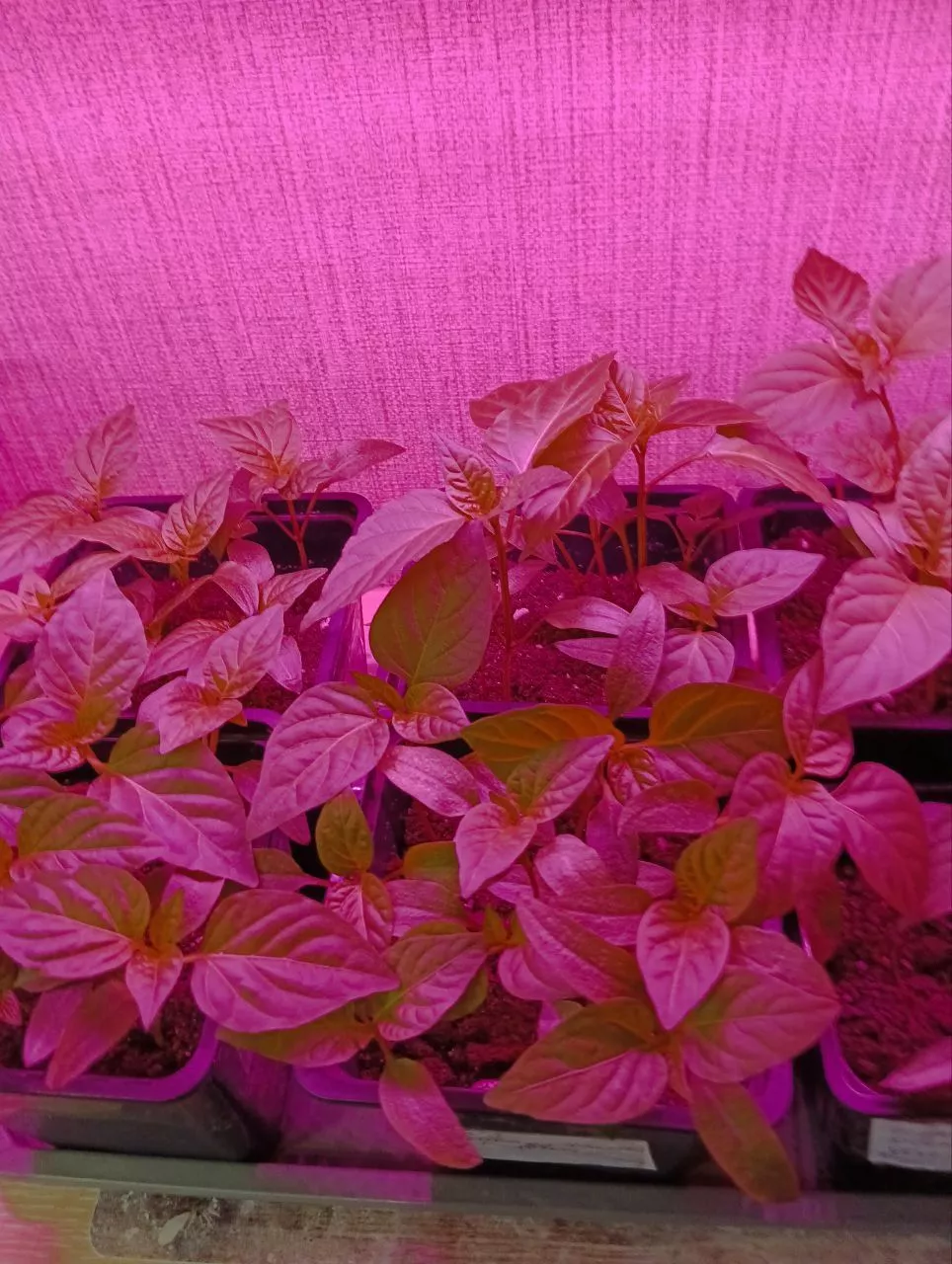
Peppers grow under a phytolamp.
Every time before sowing seedlings, I read articles on the Internet about how to properly plant seeds for seedlings, how to treat the seeds and soil.
The articles generally contain the following information about processing pepper seeds:
“Place in warm water (no more than +50 °C) for 4 hours, wrap in a damp cloth and leave for several days;
keep in a solution of potassium permanganate for 20 minutes;
place in a 40% hydrogen peroxide solution for 10 minutes, do not rinse, dry;
treat with growth stimulants: "Epin", "Zircon" and others;
keep in an ash solution to boost the immunity of future sprouts;
Place in the refrigerator for 1 week, then for 1 day in a mixture of water and aloe juice."
There are also many articles recommending treating seeds with chlorhexidine. I found this comment on one of them, and it made me laugh.
"After treating with chlorhexidine, I soaked the seeds in a weak solution of nicotinic, succinic, acetic acid, and glycine (1/2-1/4 tablet per liter of water), then laid them out on damp toilet paper to germinate... On the third day, a fine fluff appeared on the seeds!? What should I do?"
Every gardener has their own methods; some don't bother at all and sow dry seeds. But I do everything the old-fashioned way, using potassium permanganate or phytosporin.
How do you carry out pre-sowing treatment of seeds and soil?
Soil with potassium permanganate (KMnO4), seeds with chlorhexidine. The unsunk seeds don't germinate because they don't have sprouts, while the sunken seeds do because they have sprouts.