
I only recently came to understand and appreciate the value and benefits of pumpkin. Until then, I couldn't understand why parents tried to preserve it as long as possible—it's so tasteless, and only suitable for feeding to animals. How wrong I was!
My mother often boiled the orange pieces in sugar water, and my grandmother made rice or millet porridge from the pumpkin. Everyone devoured it, and I just grimaced on the sidelines. After I was married, I tried making pumpkin dishes myself, as the internet offered soups, main courses, and even desserts galore! Authors claimed, "If you don't eat pumpkin, you simply don't know how to cook it!"
These days, not a single season goes by without harvesting this queen of autumn. It's now our favorite. We grow savory varieties for first and second courses, and for dessert, we use the sugar-rich varieties. These can also be eaten raw!
Fresh pumpkin is a storehouse of beauty vitamins (A and E), calcium, potassium, iron, zinc, copper, and other micronutrients. Eating it has a diuretic and choleretic effect, promoting gastrointestinal function. However, overconsumption of the vegetable can lead to intestinal colic and other upset stomachs.
We don't set aside special plots of land for growing pumpkins for the table—they thrive and produce a bountiful harvest in marginal areas. We plant them near animal waste piles, near and around compost pits, and in weedy patches of soil. The main thing is to protect the young seedlings from weeds at first; once they've established themselves, the pumpkins will take care of themselves, preventing weeds from gaining ground.
We grow pumpkins for livestock in fields and on supplemented soil, focusing on varieties with thick skins to ensure they last longer in storage. During the active growth phase, the crop is easy to grow and tolerates drought. Under unfavorable conditions, the yield is smaller, but still present!
When cutting the vegetable, remove the seeds. After washing and drying, they are ready to eat. Roasted seeds are delicious. Raw ones can be consumed as a preventative measure against helminths and other intestinal parasites.
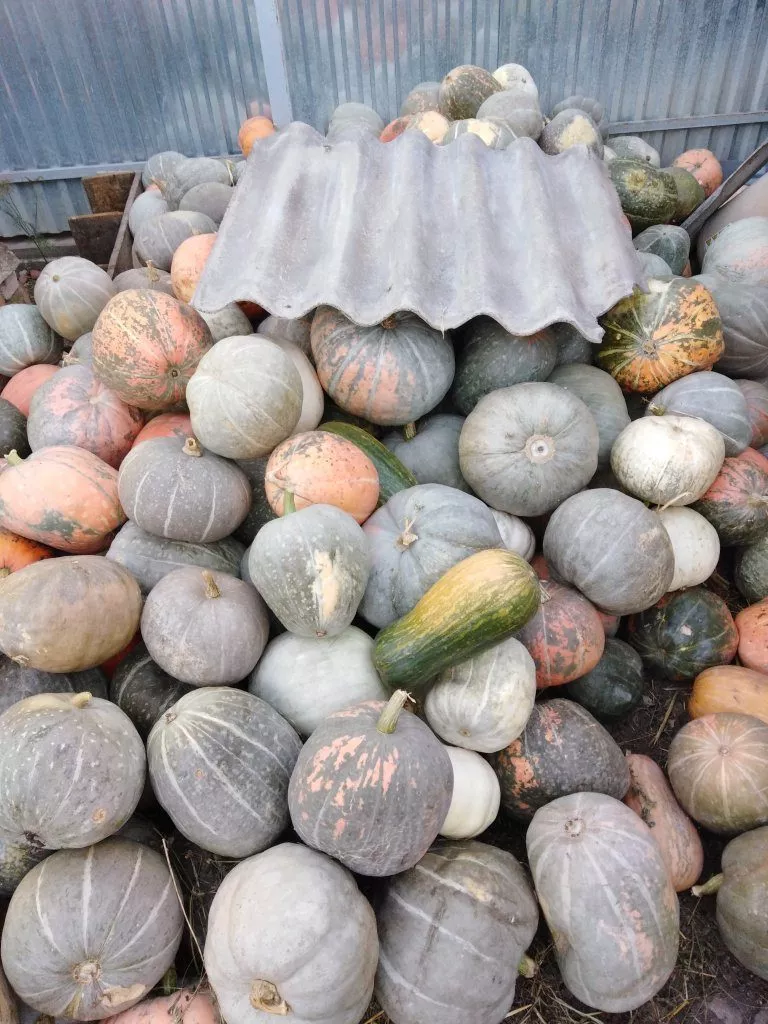
We harvest before the first frost. First, we pile the pumpkins into piles and then sort them, separating the healthy ones from the undamaged ones. We move the best pumpkins to the cellar. We arrange them on wooden shelves and platforms so that the pumpkins don't touch each other. We periodically inspect each one, carefully inspecting for any spoilage or rot. We remove any that are damaged immediately to avoid contaminating the other vegetables.
If you haven't tried pumpkin yet, don't delay! Brush half a pumpkin with butter, drizzle with honey, and pop it in the oven. This simple recipe makes for a delicious treat!