

In the south of Russia, you can often see palm trees like these in courtyards.
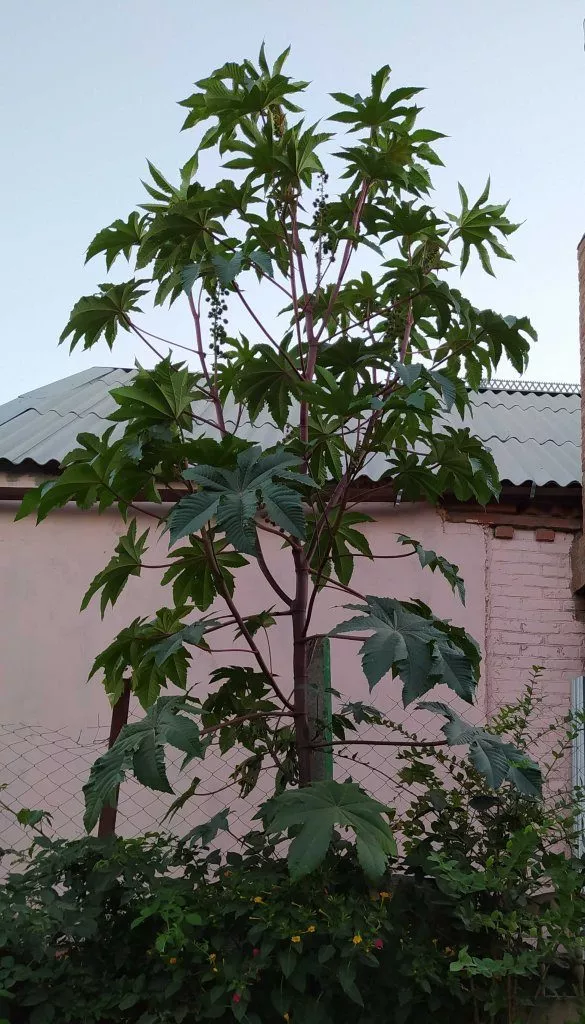
This plant, called castor oil plant, is a fast-growing member of the spurge family. It's native to Africa, where it grows up to 10 meters. It looks unusual and very decorative. In our climate, in Russia, the plant can reach 3-4 meters in height, producing beautiful, brightly colored cones.
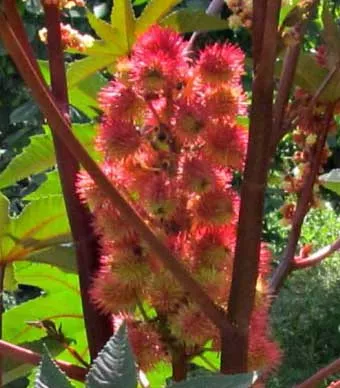
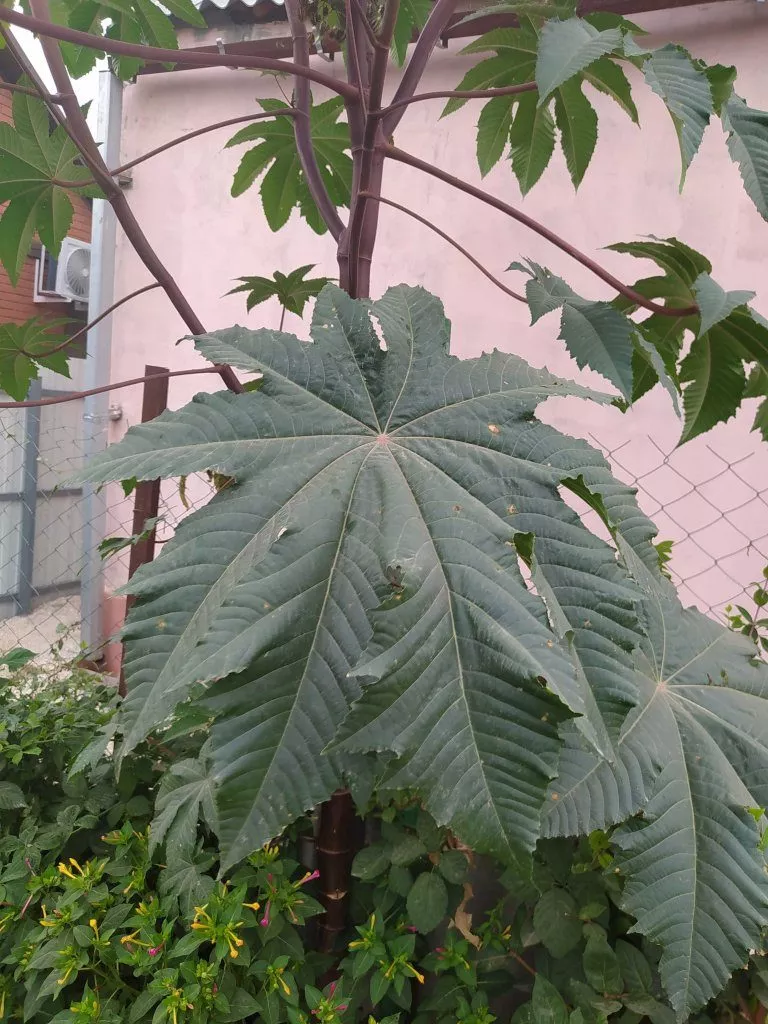
And huge leaves:
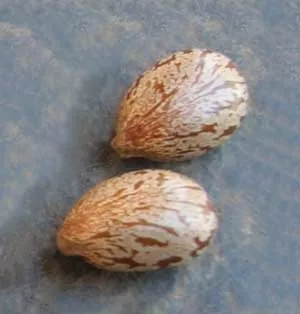
The plant got its name from its seeds, which resemble a type of tick.
There are several types of castor oil plants, with different bush shapes and leaf colors, from green to dark burgundy.
They are grown as annuals and can also self-seed. Even in the warm climate of Kuban, they freeze to death in winter. Besides being decorative, they are said to repel flies and mosquitoes. They are often planted in yards and near gazebos for this purpose, as well as to provide shade.
I don't know how true this is, but this belief has stuck around. It's grown from seed using seedlings. These seed pods mature and then disperse throughout the area.
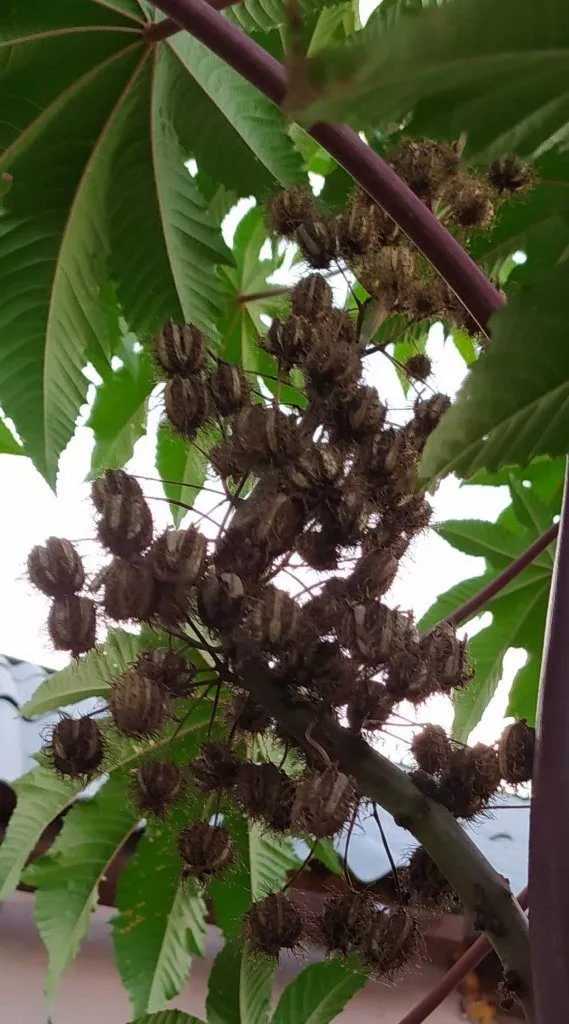
Only when sowing castor oil plants it is important to know that they are very poisonous - the poison is in the plant's juice, and especially in its fruits.
Castor oil plants contain ricin, a powerful poison for which no antidote has yet been developed. This poison is even more toxic than cyanide. For an adult, the lethal dose is 10 seeds, and for a child, 5. However, poisoning is only possible by eating the leaves or fruits, or by getting the plant's sap on mucous membranes or in the mouth when pruning.
Poisoning from inhaling the pollen of this plant is theoretically possible, but there is no confirmed data. The plant's sap is not absorbed through the skin and does not cause poisoning.
If an animal eats the leaves or berries of the castor oil plant, its meat is also dangerous to eat and can cause poisoning. Therefore, if you have small children or animals in the house who might try to eat the seeds or leaves of this plant, do not grow it in your yard under any circumstances.
When pruning the plant, always wear gloves. Another danger is that the poisoning begins subtly, similar to the symptoms of a cold.
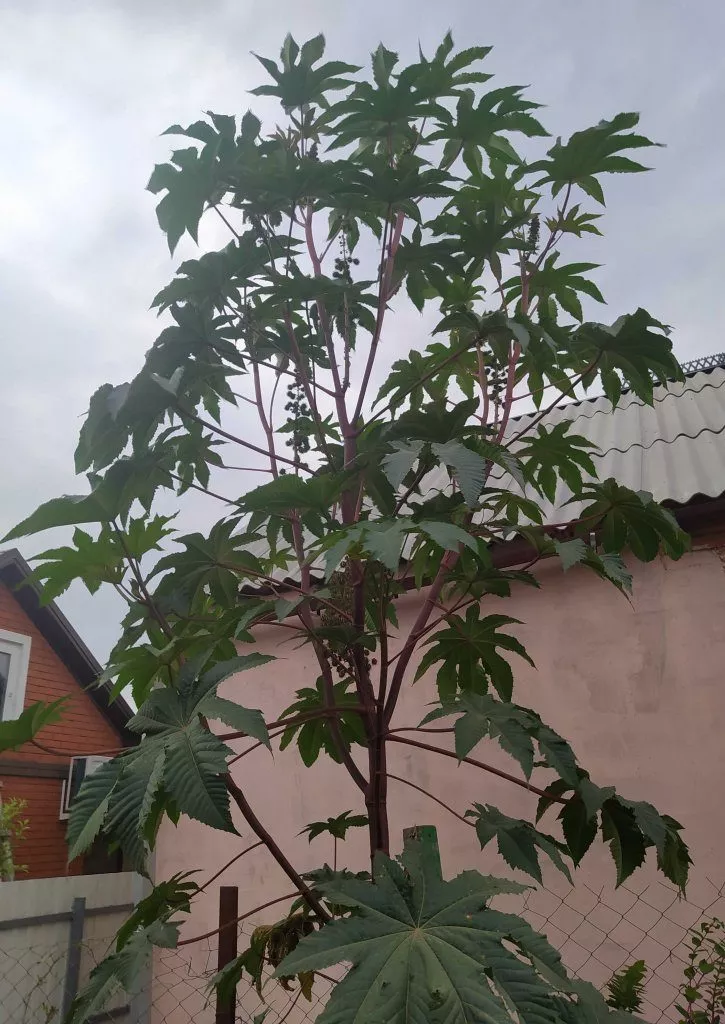
Despite its toxicity, the castor oil plant is still cultivated. Its fruits are used to extract the familiar castor oil, which has a number of unique properties: it does not dry out, is prized in painting, is used in industry as an excellent natural lubricant, and is a very effective and safe laxative.
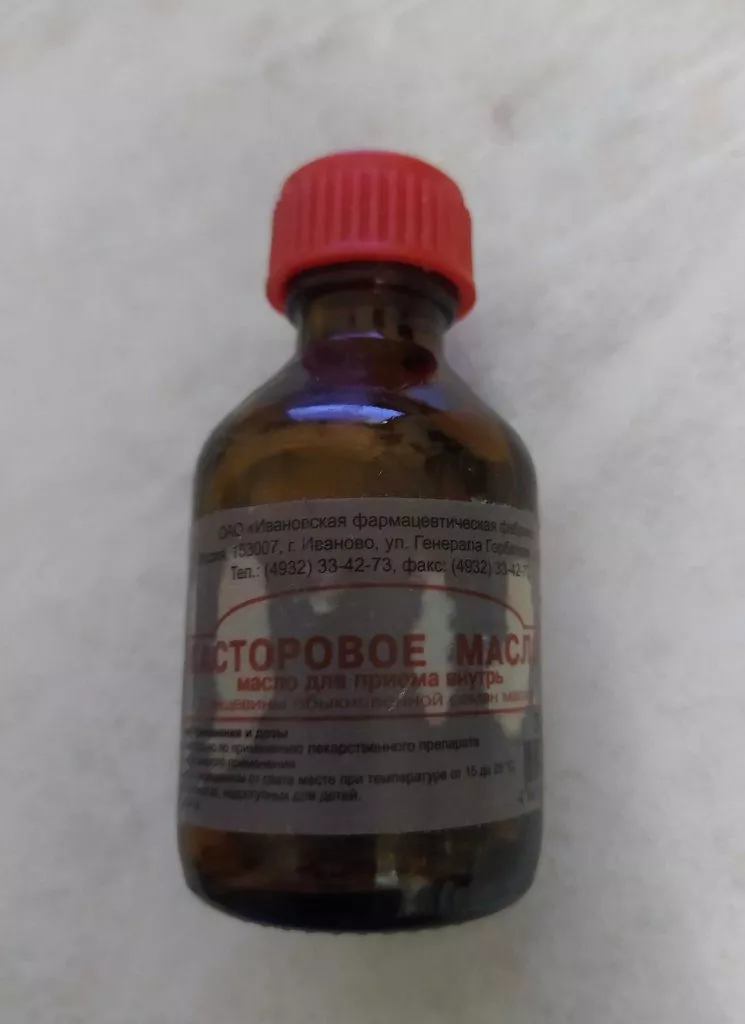
Castor oil is non-toxic because ricin is destroyed during processing at a temperature of 80 degrees Celsius.
This is such a surprising, very dangerous and useful plant at the same time.
Many people have palm trees like these growing in their summer cottages. They look unusual, but I didn't know castor oil was poisonous.