

I want to tell you what kind of tomatoes are growing in my greenhouse this year (2019).
Tomatoes are my favorite crop. I love caring for them. Every year I buy new varieties. This year I'm growing the following varieties:
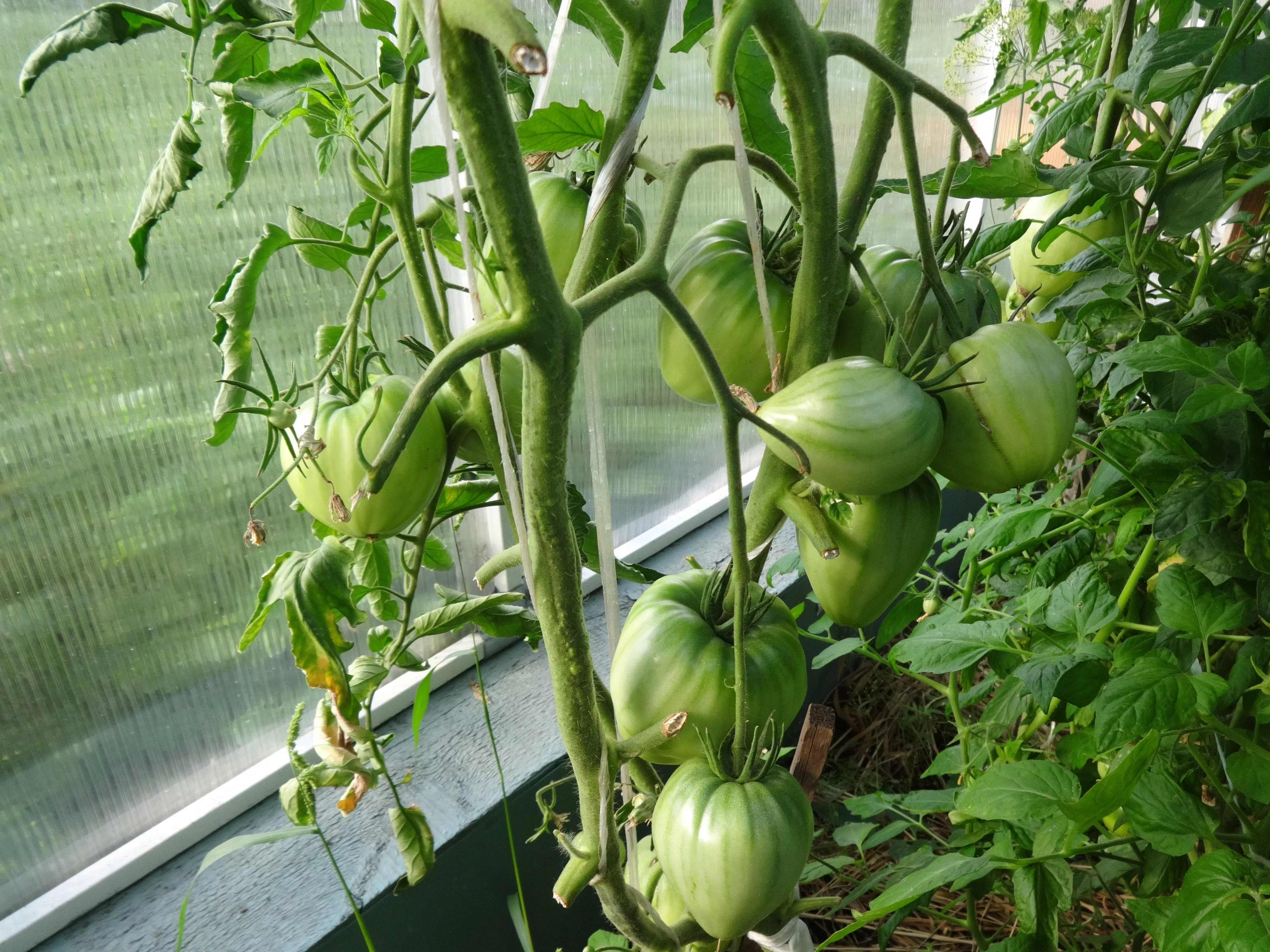
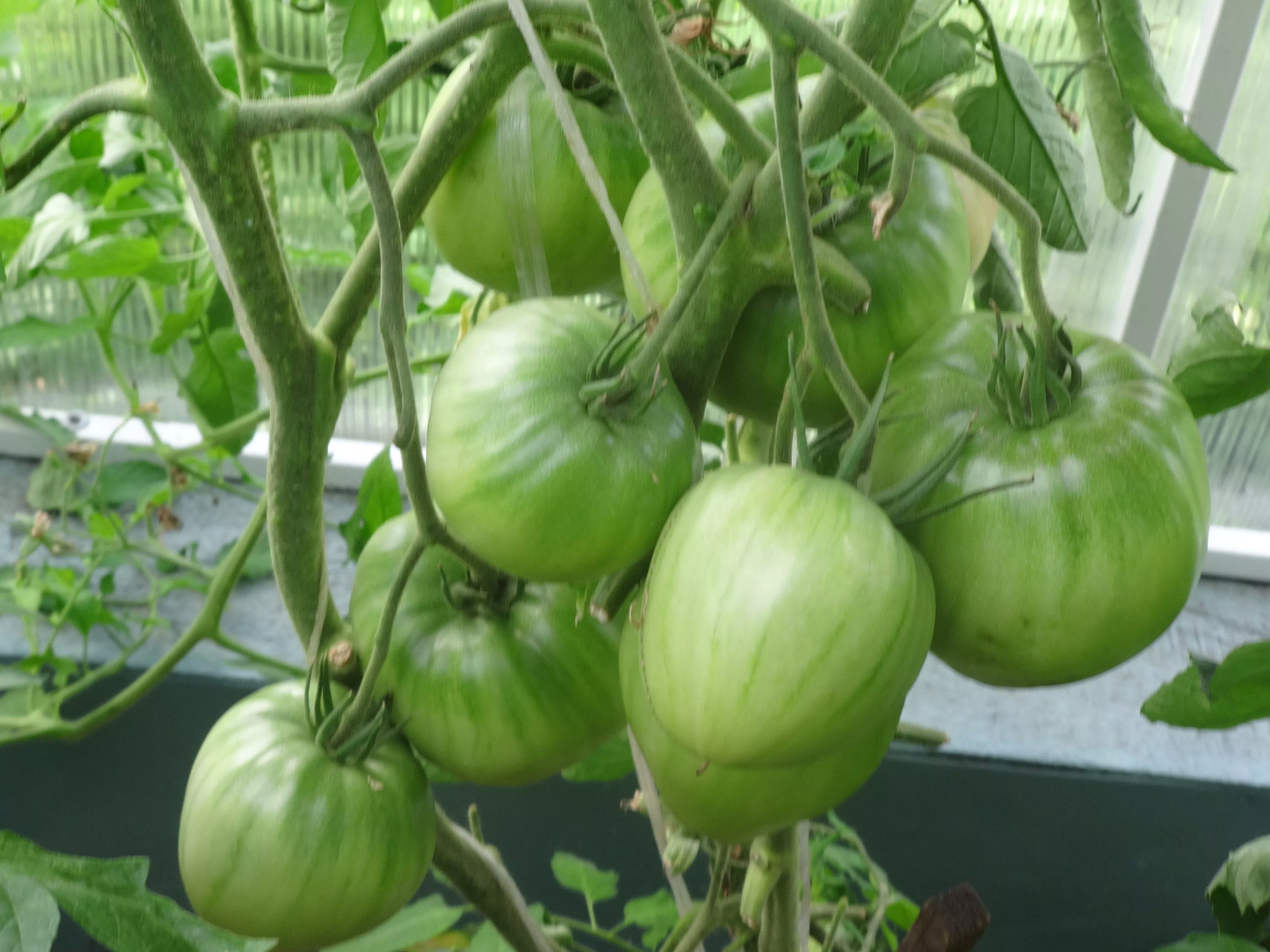
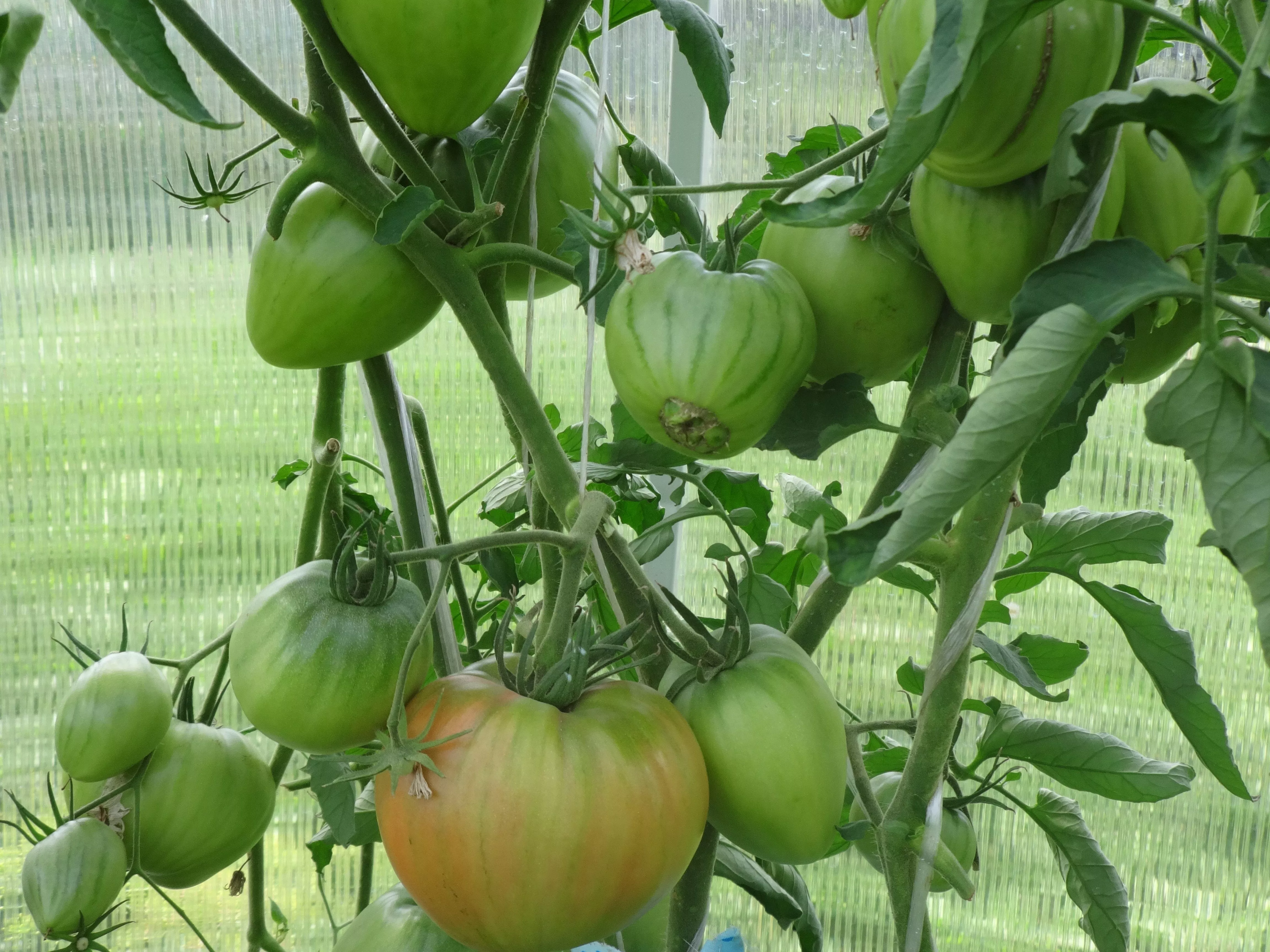
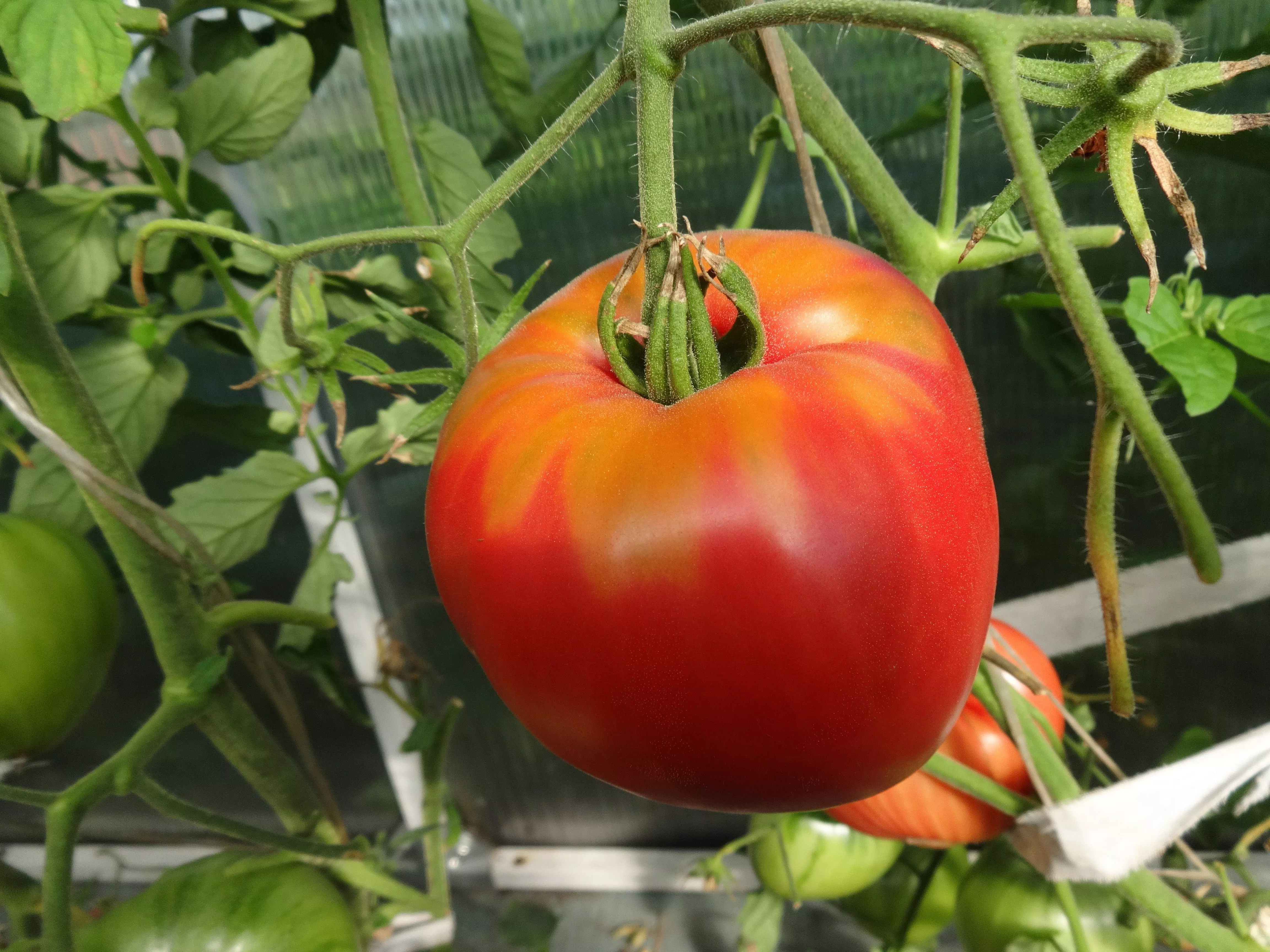
Bull's heart
This is my favorite tomato. It's the most delicious, meaty, sweet, thin-skinned, large, and beautiful. It blooms beautifully and sets fruit well. A cluster produces 3 to 5 large fruits.
Sometimes, for some reason, double flowers appear; if they aren't removed, the fruit will be misshapen and growth-prone. Fruit can also be affected by blossom-end rot, but if you maintain soil moisture and add ash to the plant regularly, blossom-end rot won't appear.
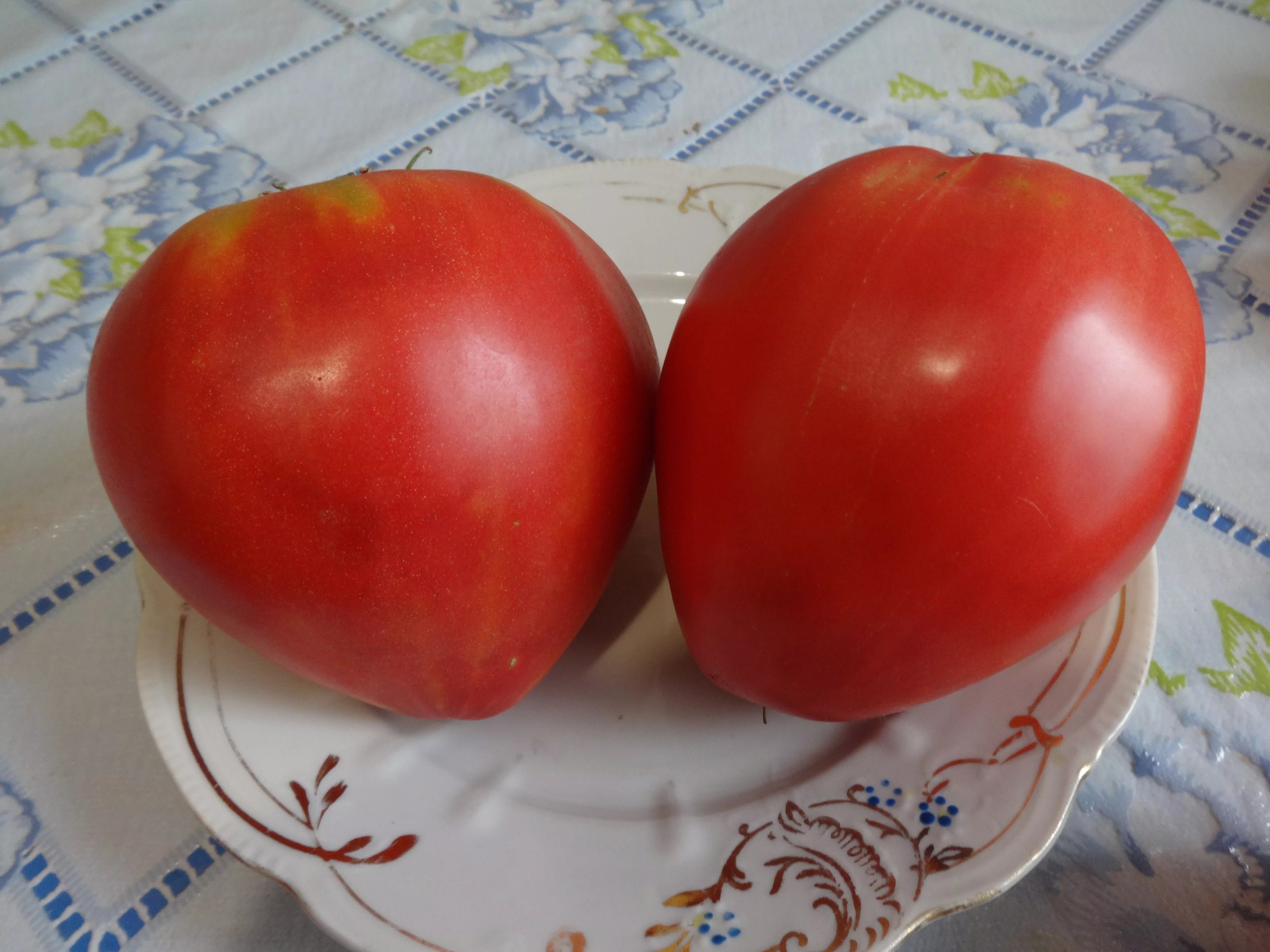
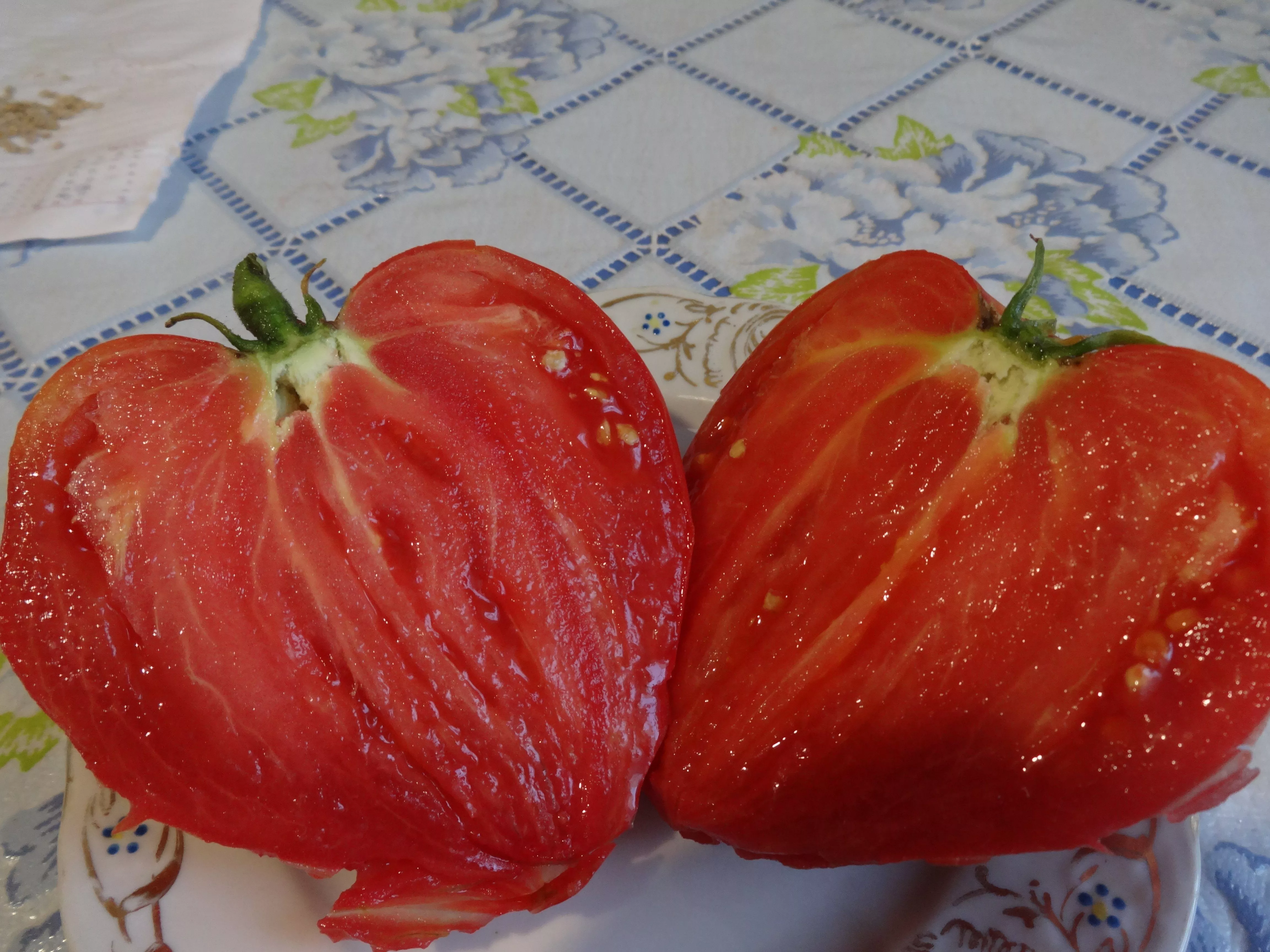
Large pink
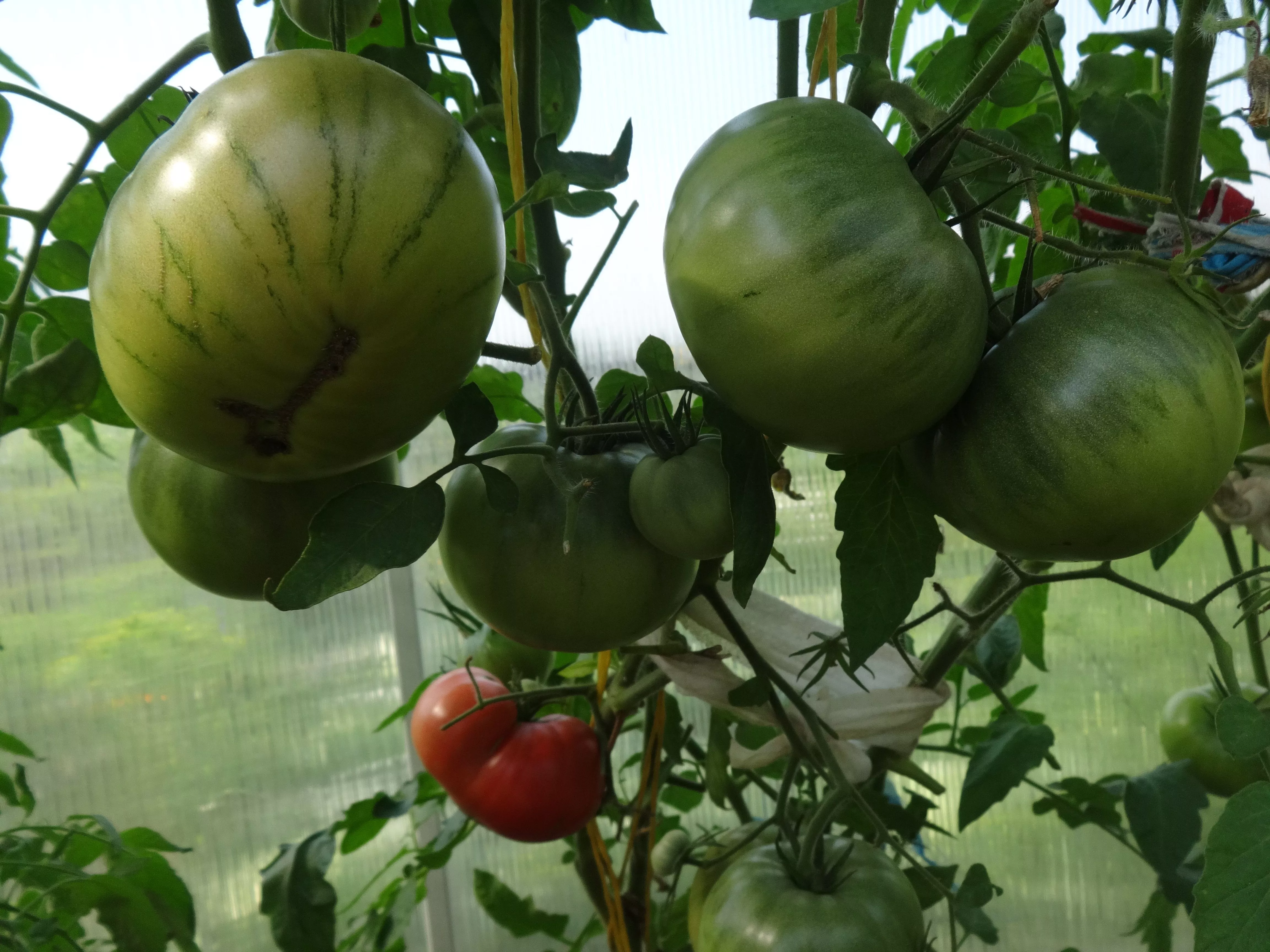
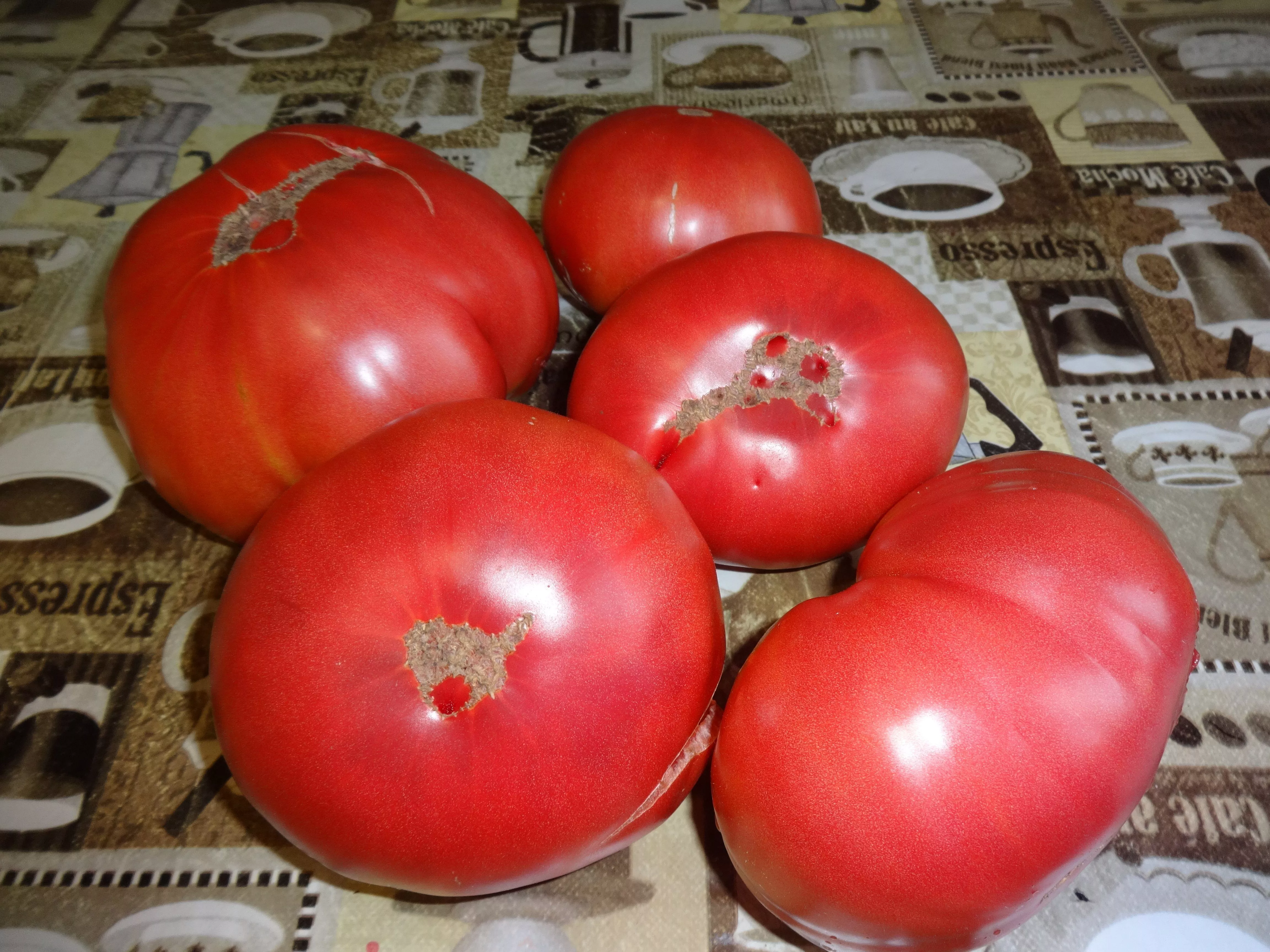
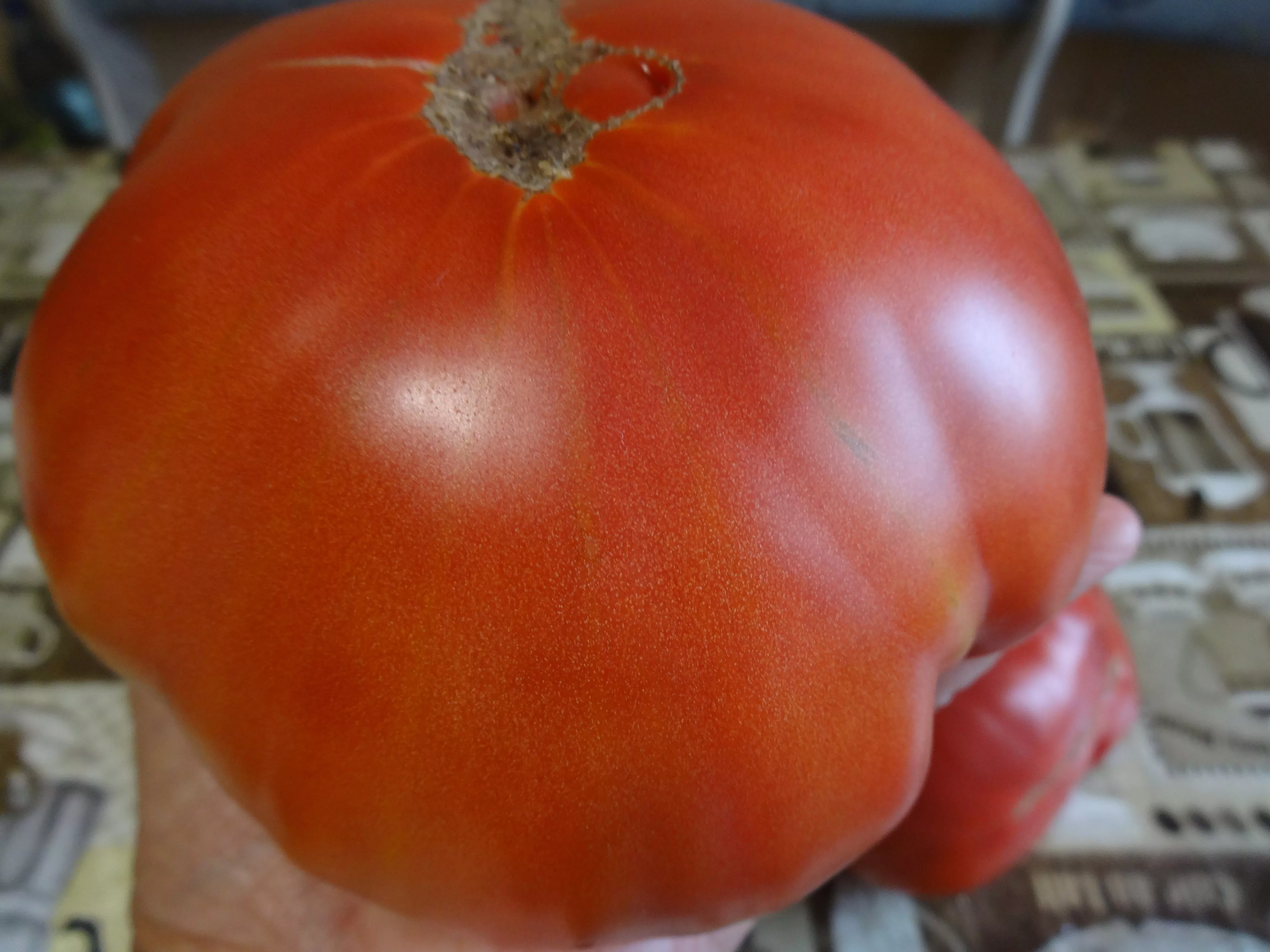
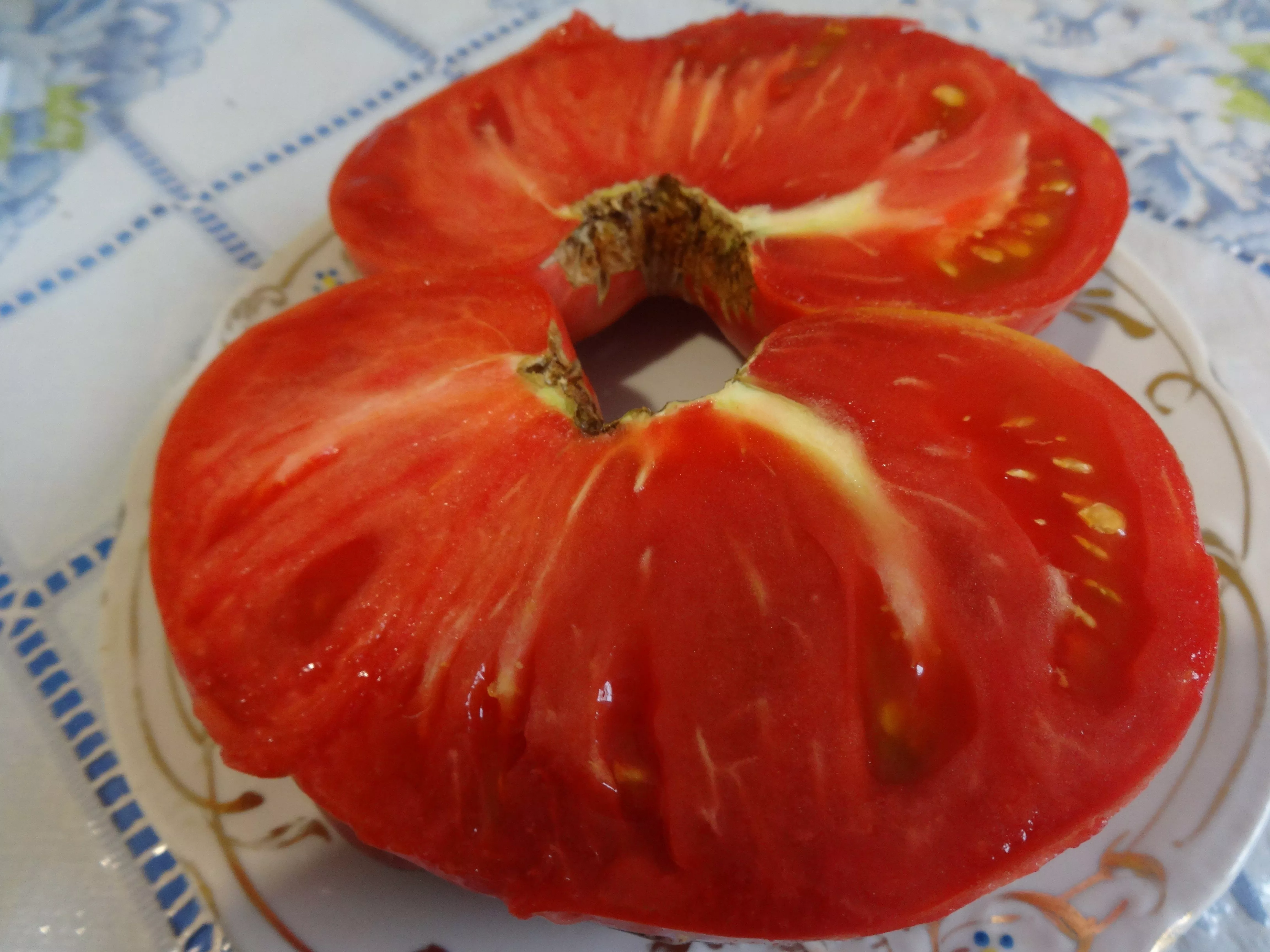
Pink Large—that's what we call it, but I don't actually know what variety it is. I brought the seeds from Kazakhstan; we lived there and always grew these tomatoes, calling them Pink. It's also tasty and meaty. And very large; some specimens weigh over a kilogram. My largest weighed 1,100 grams.
The bush has large leaves and strong branches, but it has a drawback: it produces few fruit in hot weather, dropping flowers even at the top of the bushes. Fruit sets only when the heat subsides. However, the fruits that do exist are quite sufficient, as they are large, with 12 to 22 per bush. The number varies from bush to bush. The clusters often break under the weight of the fruit, and they need to be tied up promptly.
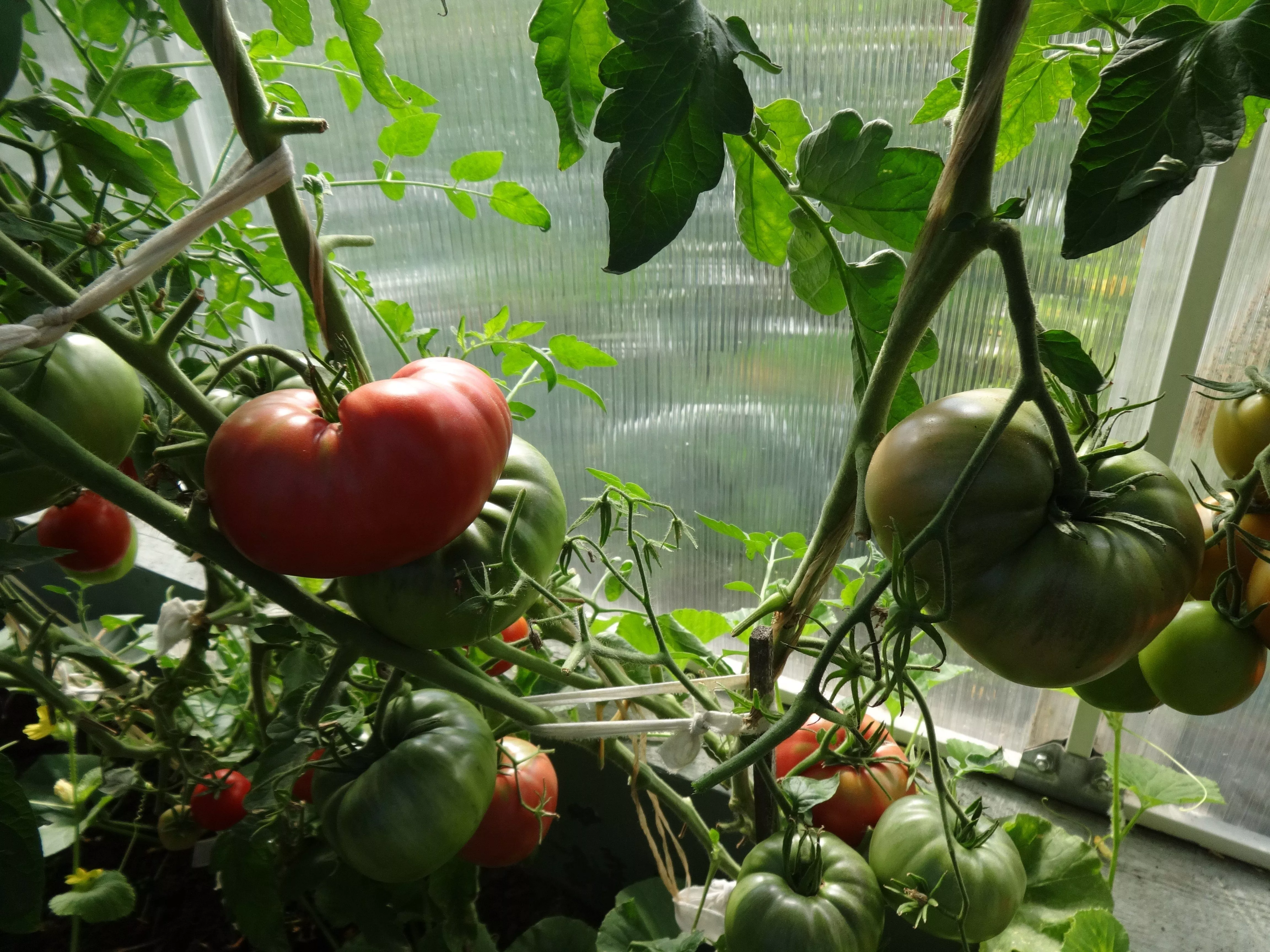
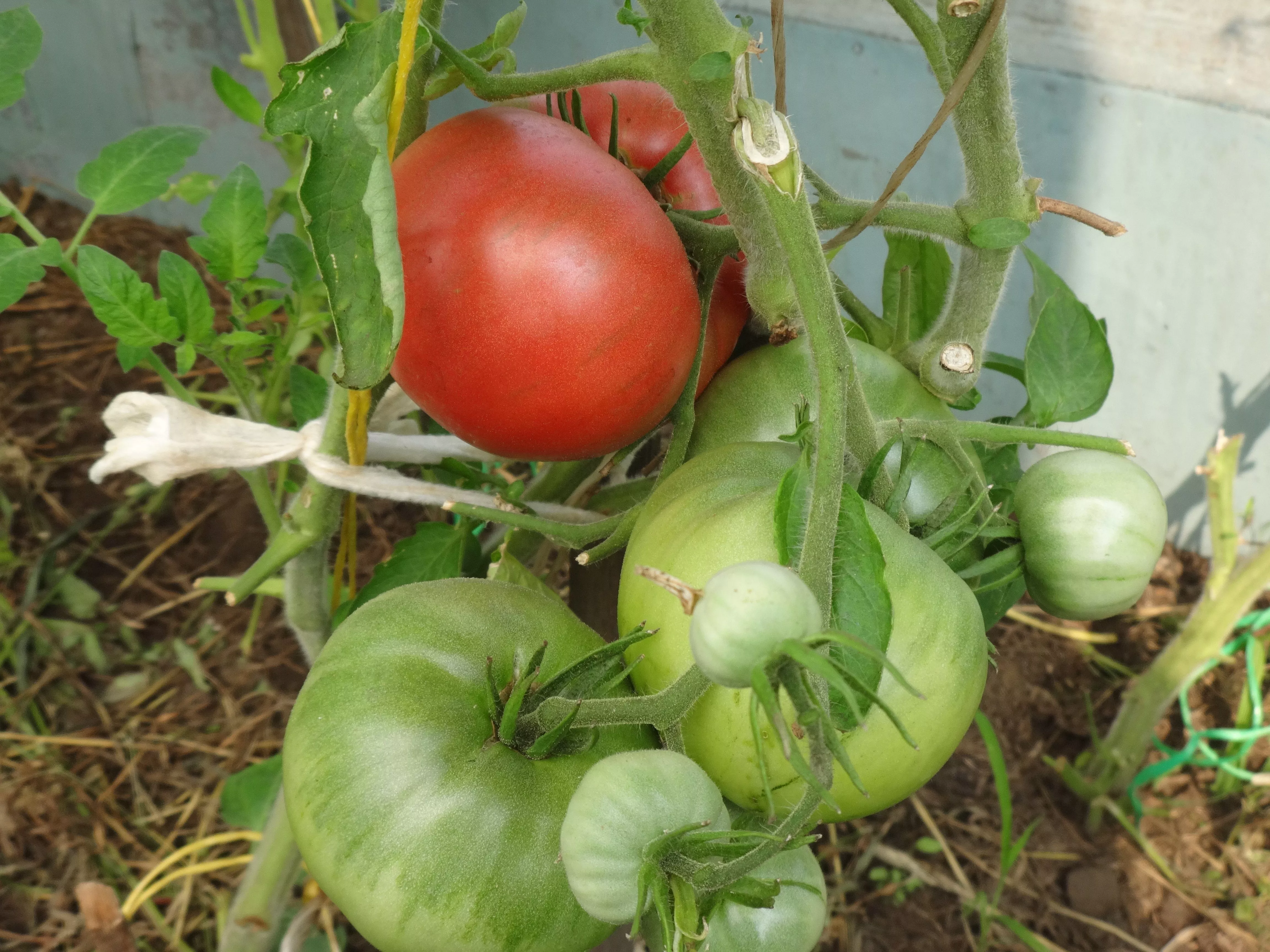
Niagara
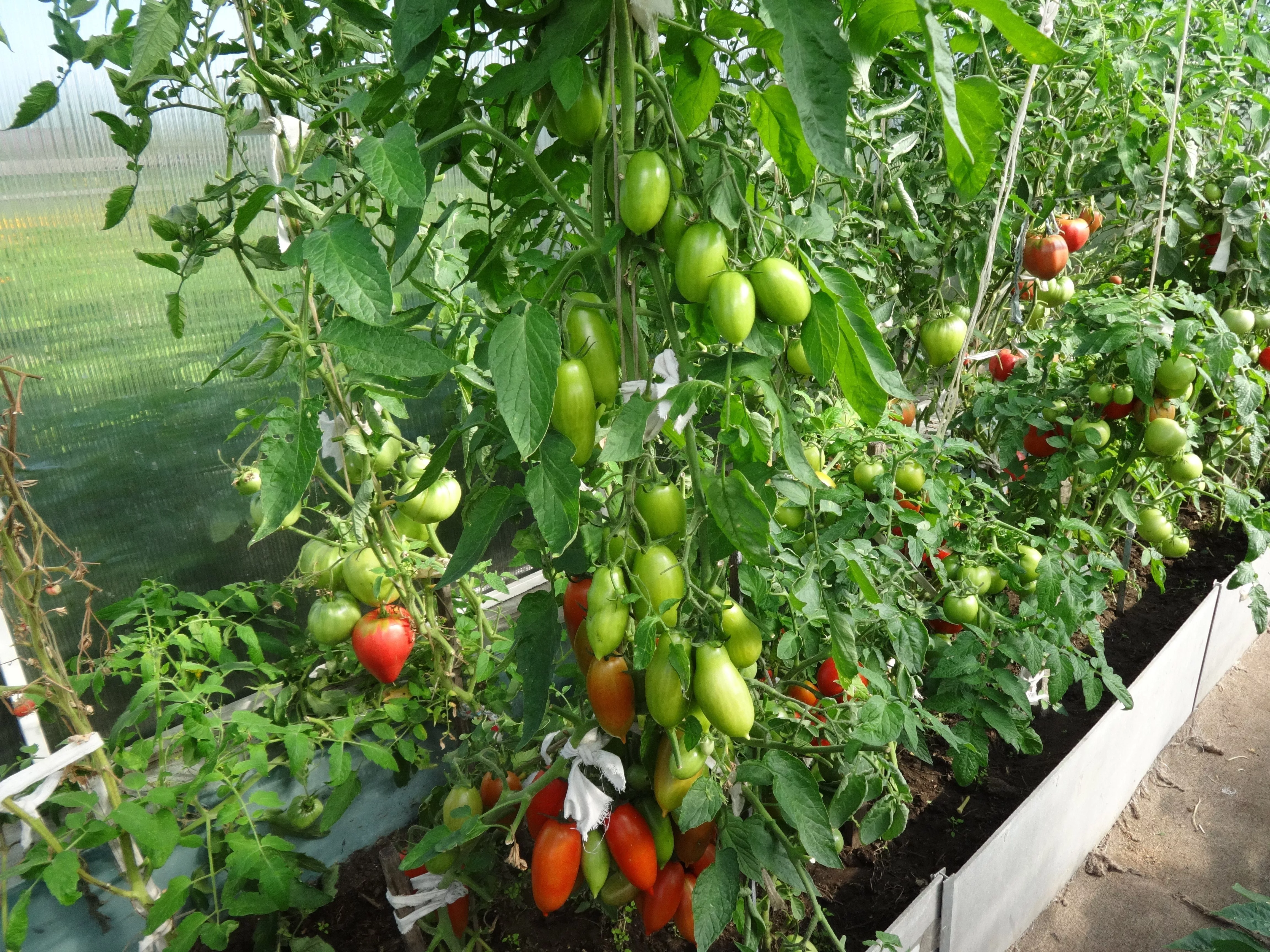
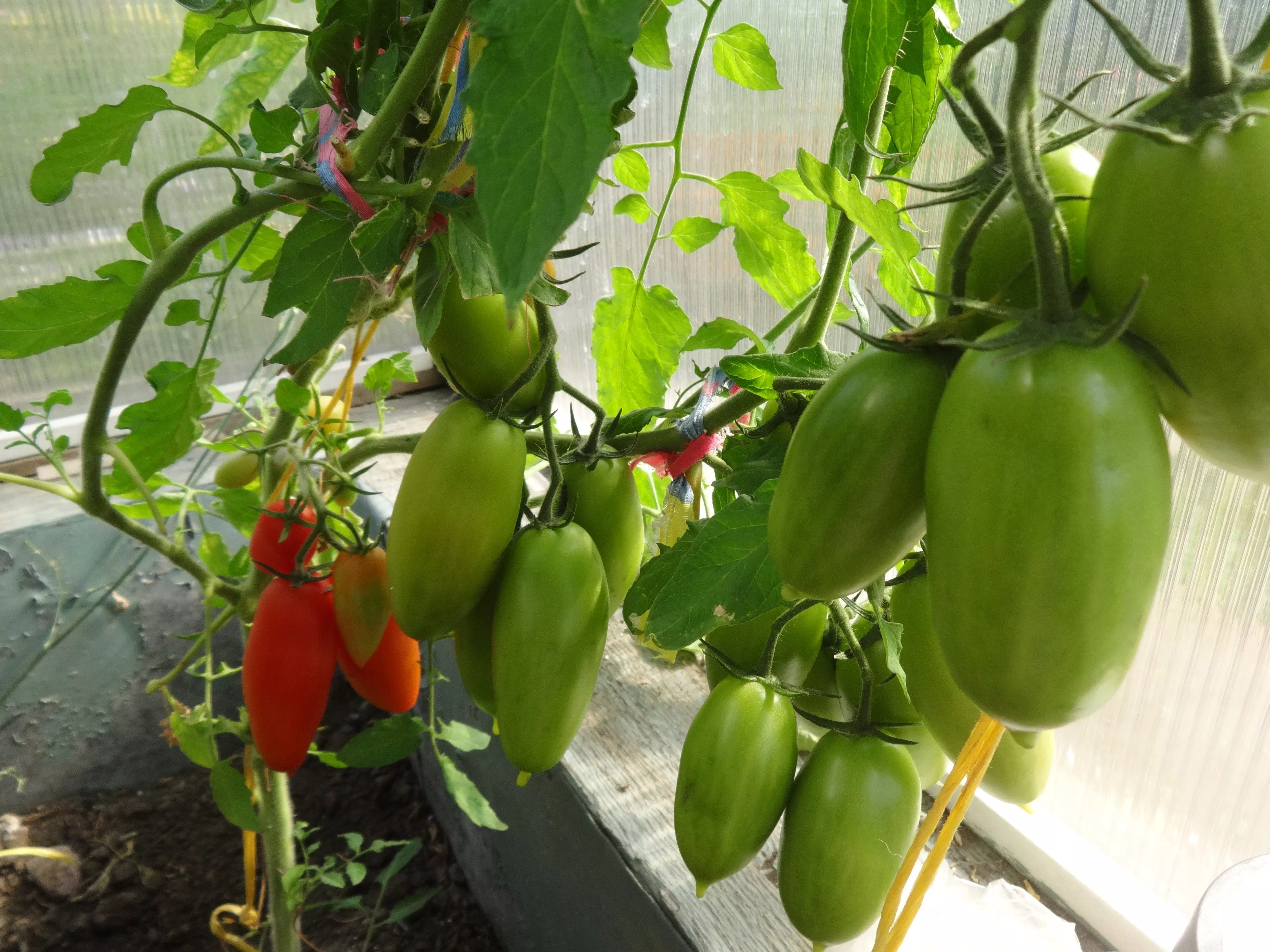
Niagara is another favorite of mine. It doesn't have a very dense crown and isn't very tall, unlike Pink. The bush is covered with elongated fruits from top to bottom. The tomatoes set well, and the flowers don't drop even in extreme heat. It's tasty, juicy, and looks beautiful when preserved.
Pepper-shaped giant
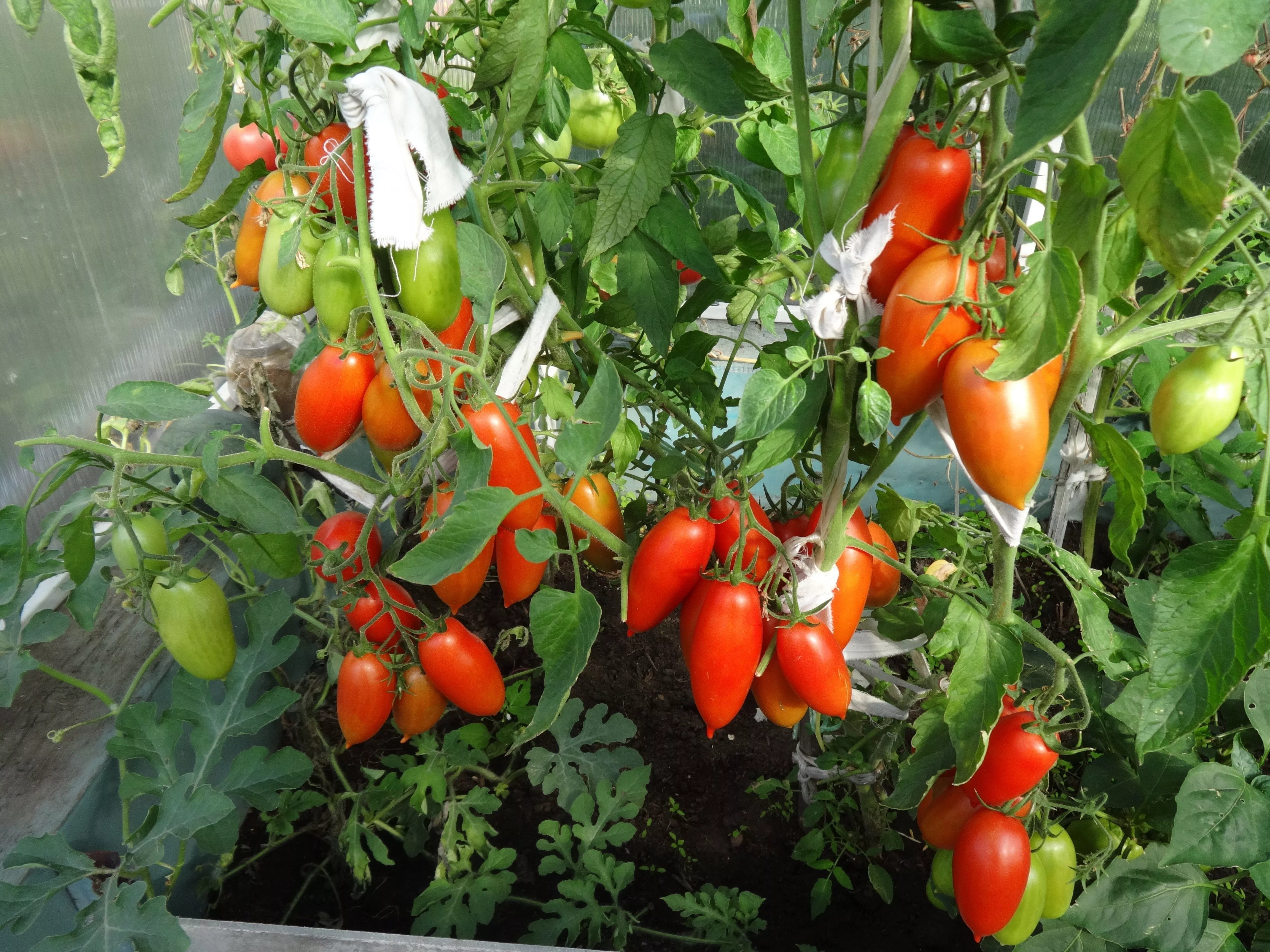
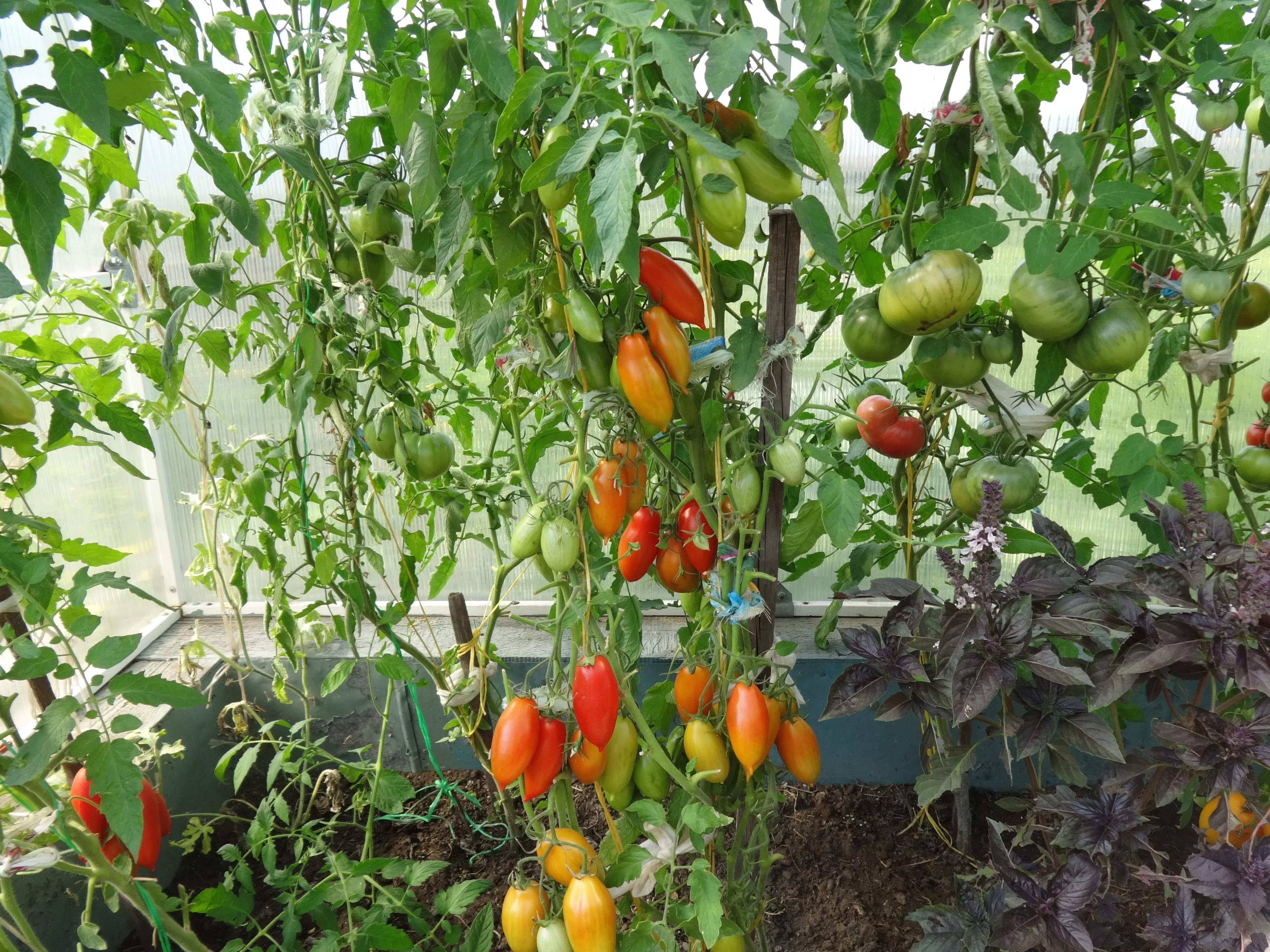
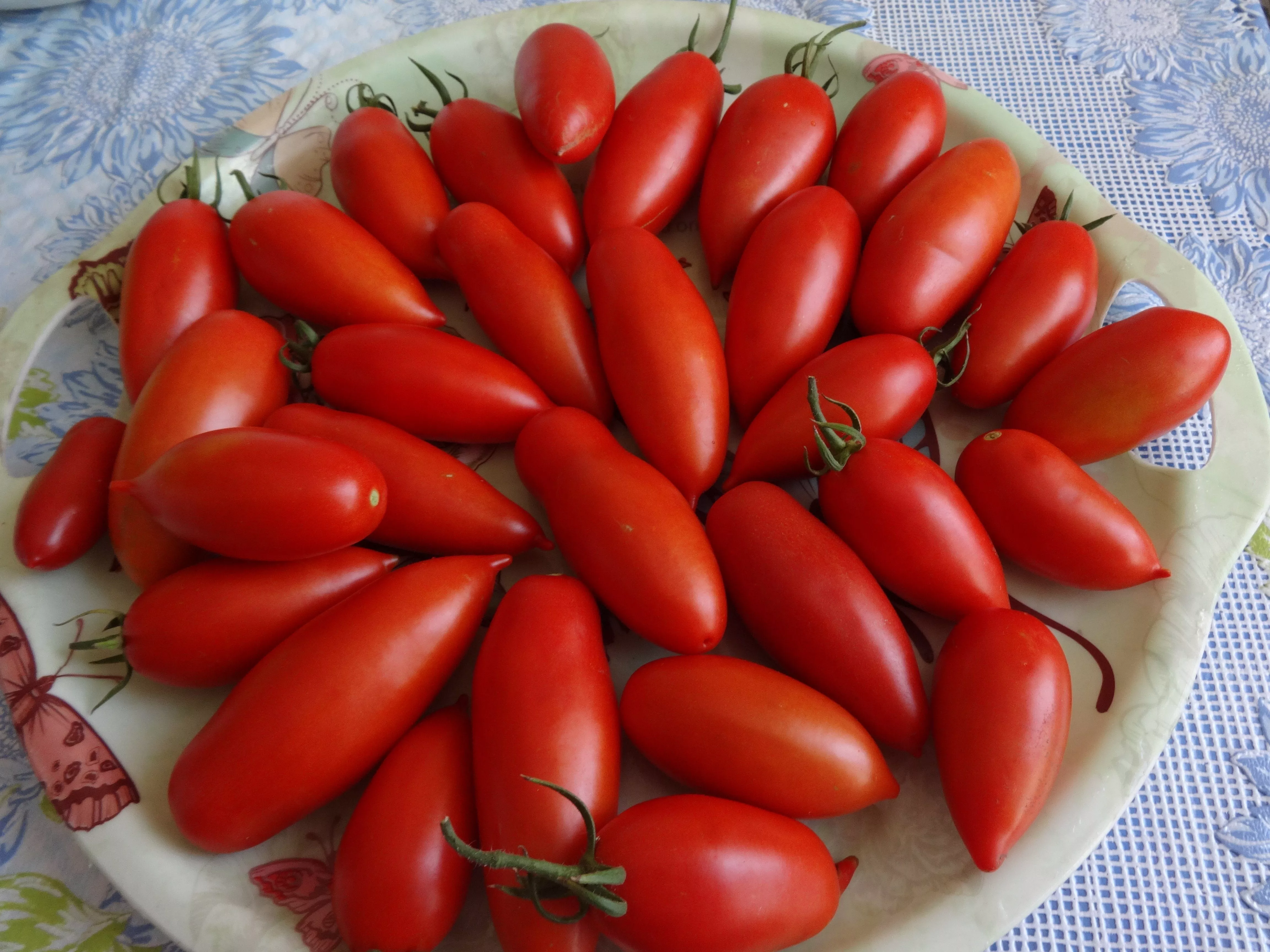
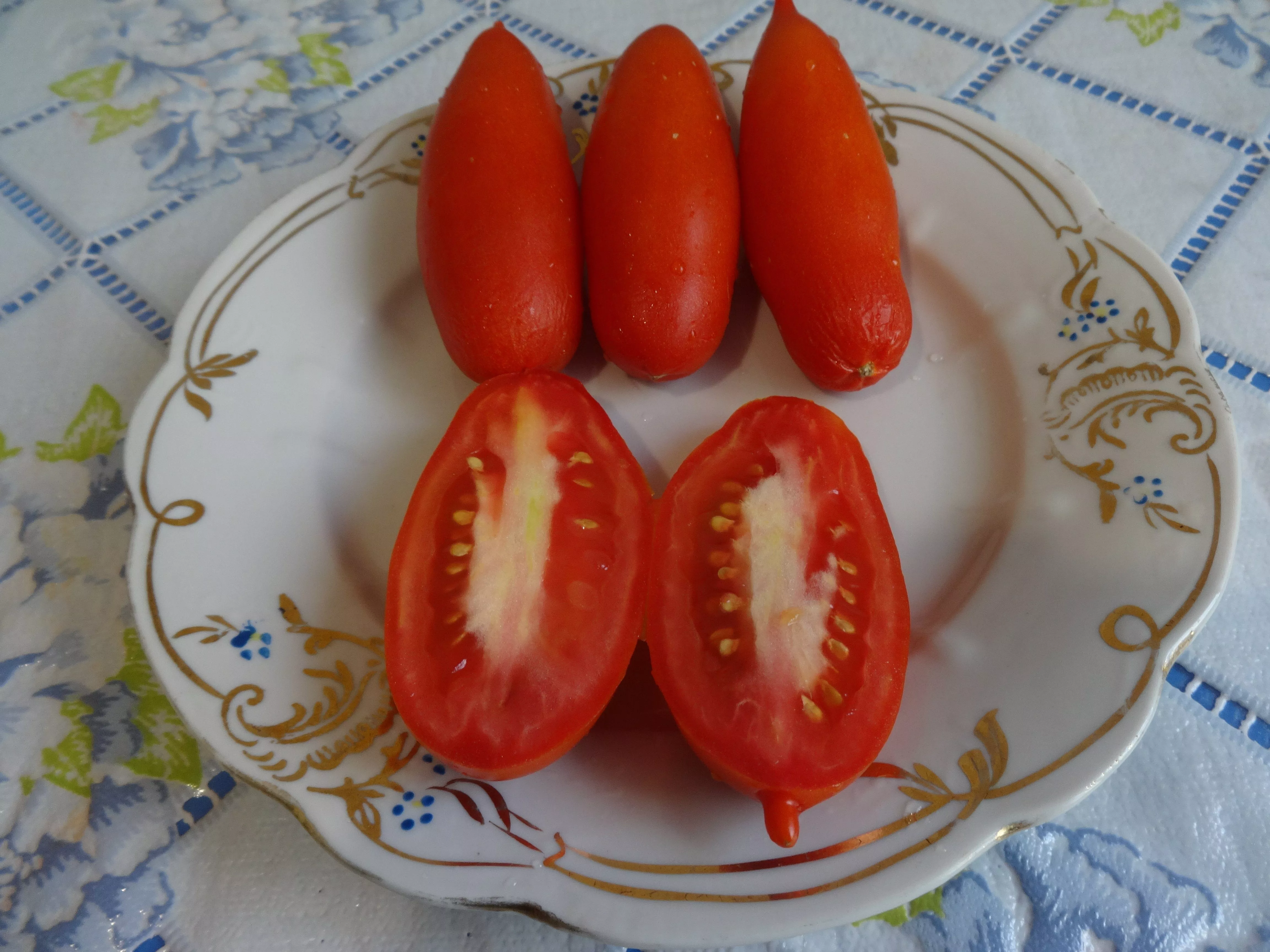
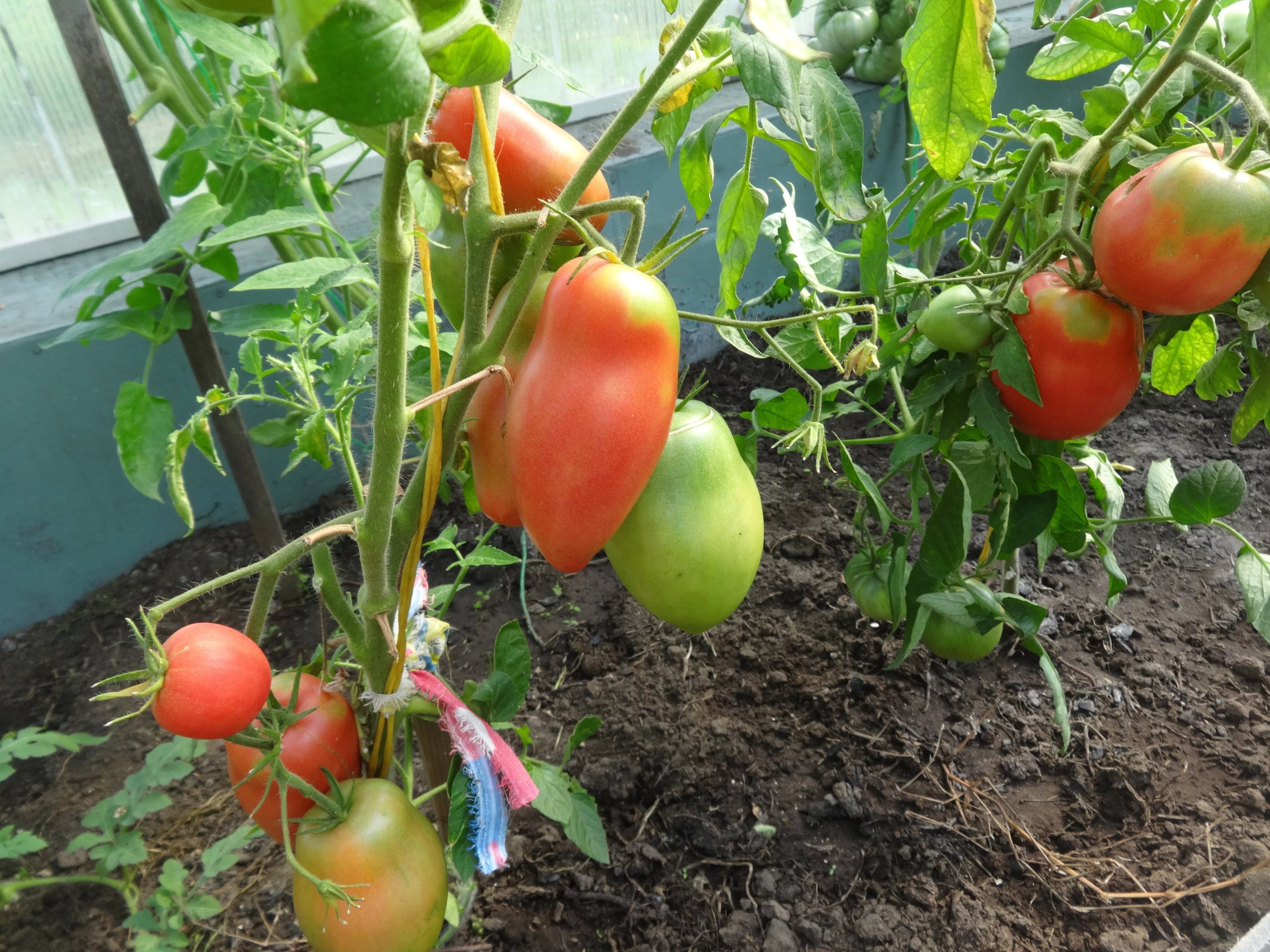
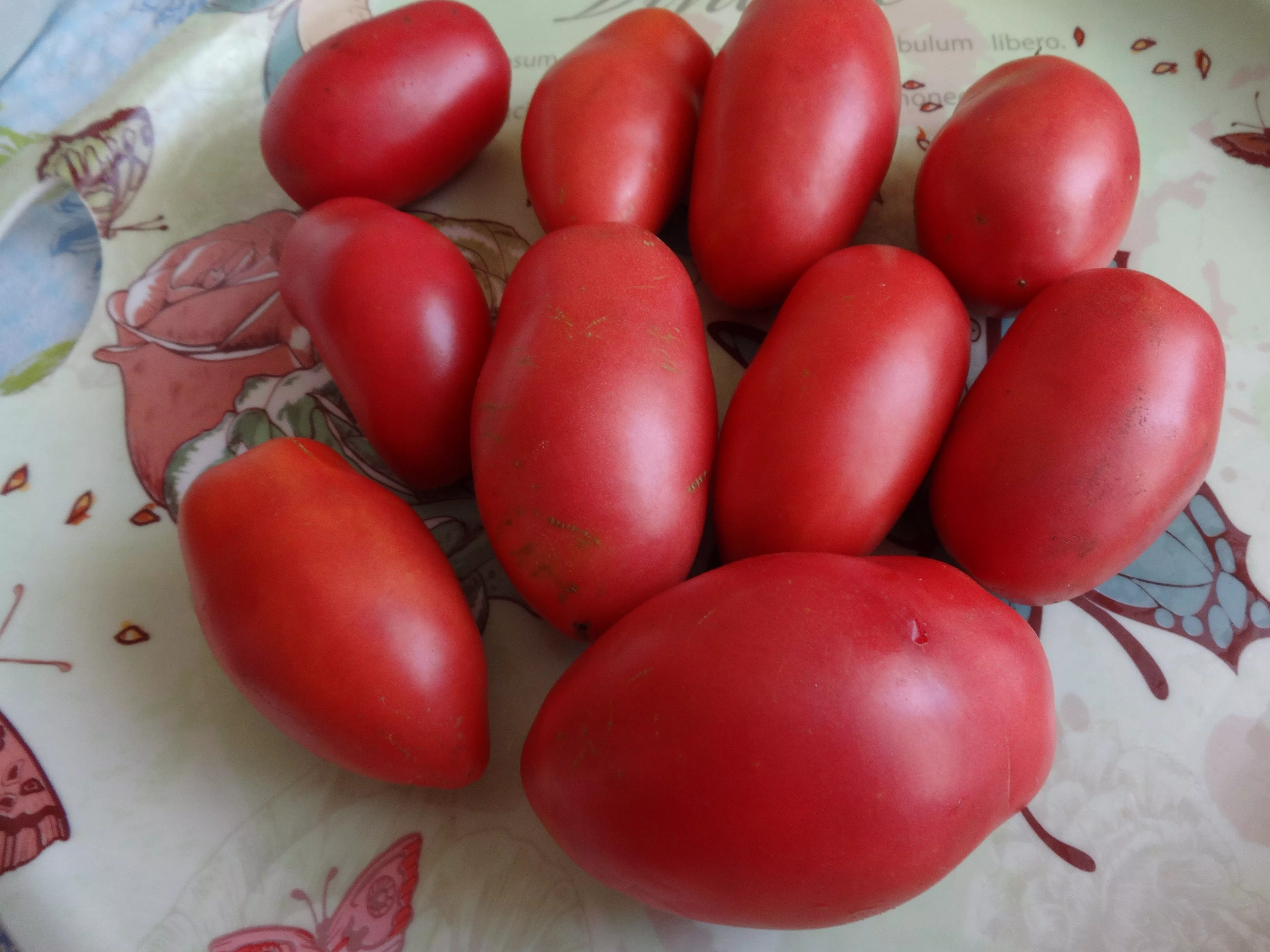
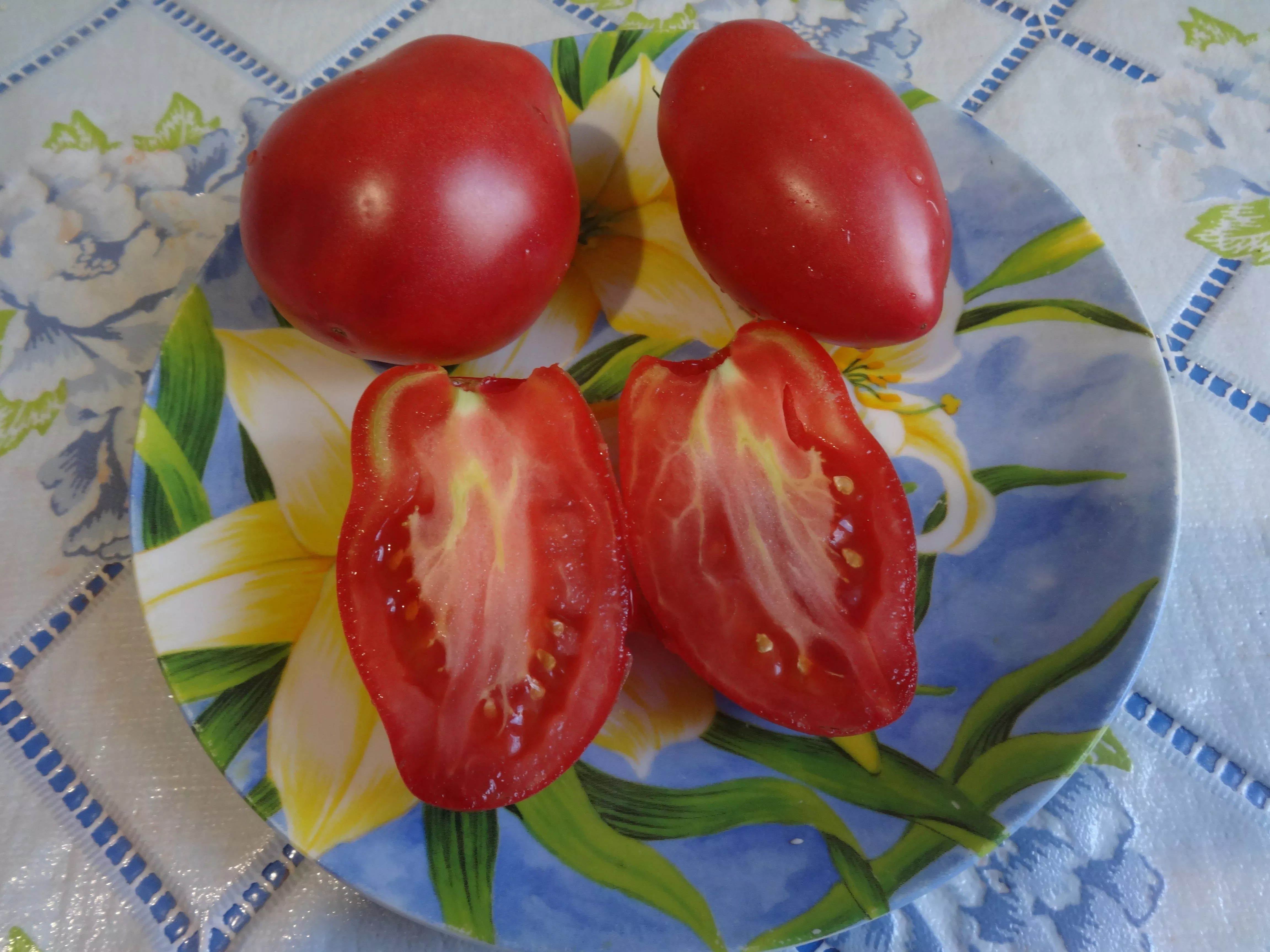
This tomato is not tall, the bush is compact, and I don't pluck its side shoots. The fruits are pepper-shaped, tasty, fleshy, and a crimson-red color. The fruits vary in size: some are large, over 200 grams, while others are small and vary in shape, including sharp and barrel-shaped. This tomato is tasty and fleshy.
For some reason, a green spot remains near the stem on some tomatoes for a long time, even though the entire tomato is red. It may be lacking certain nutrients or not getting enough light, or perhaps this is just a characteristic of this variety. It also has one drawback: the crown, upper leaves, and inflorescences often get sunburned if it's very hot and there's no watering.
Maybe it should be planted in open ground, but I grow it in a greenhouse. I'll need to plant a few in the garden next year. We'll see how it does.
Siberian pirouette
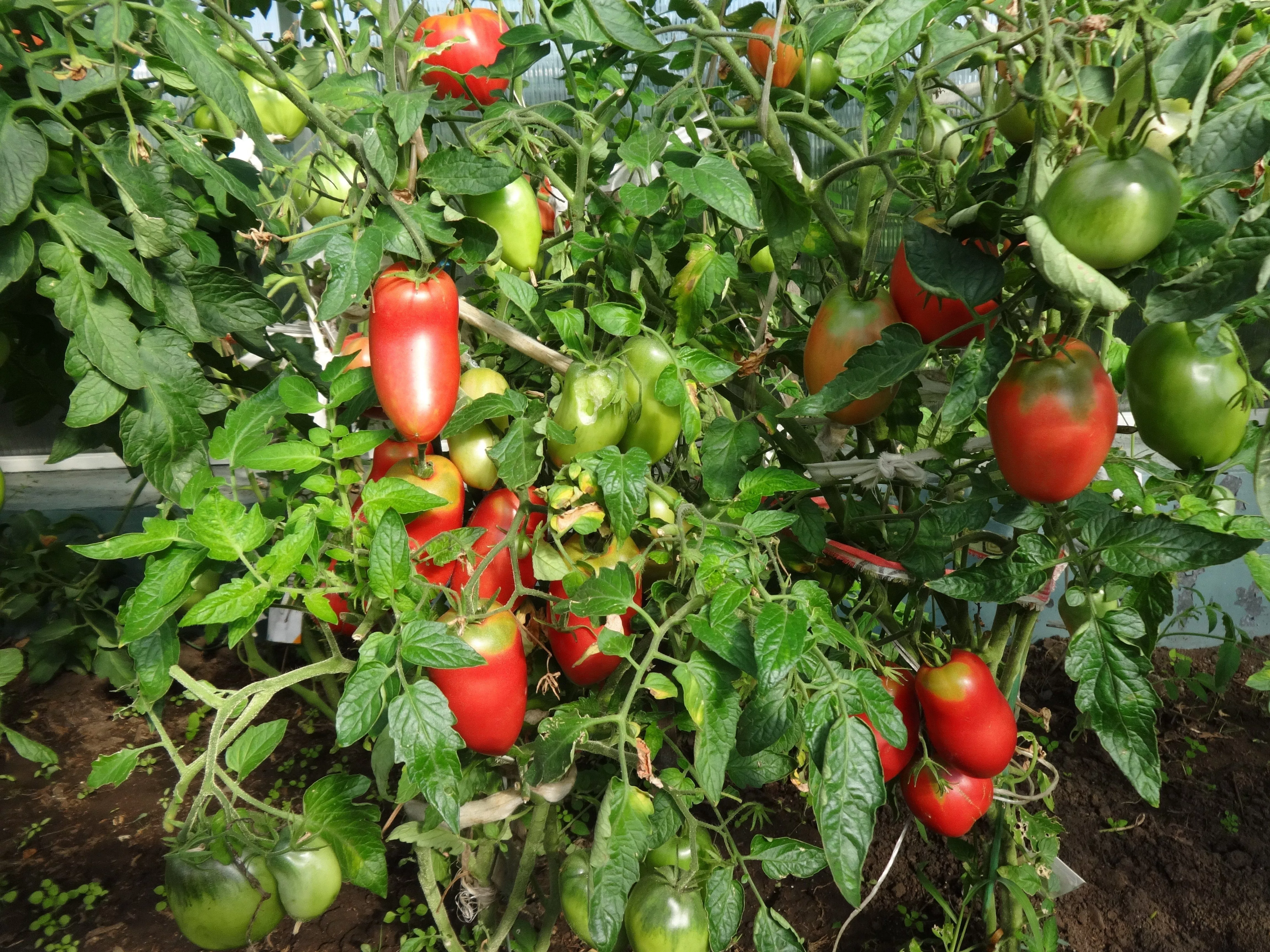
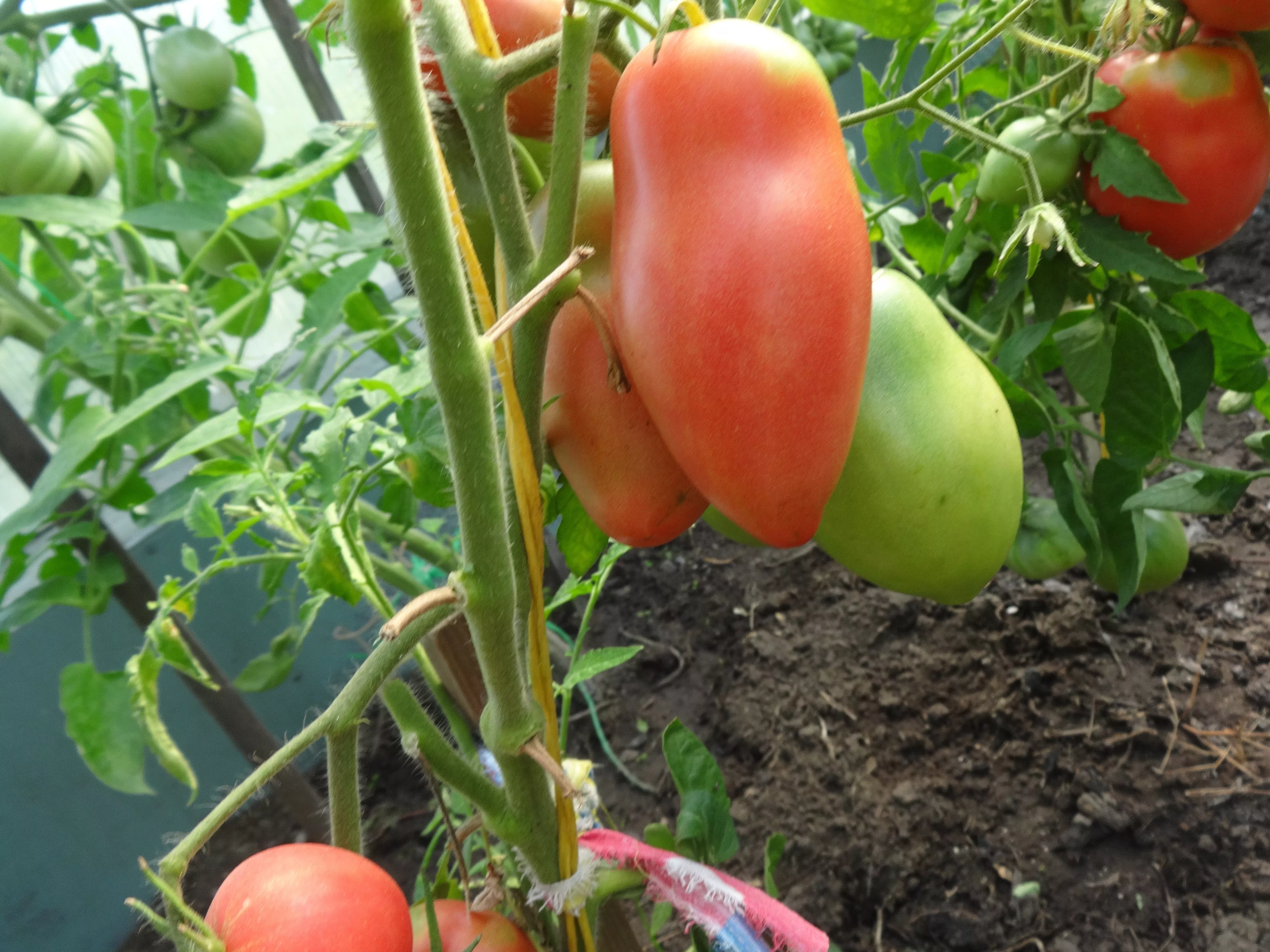
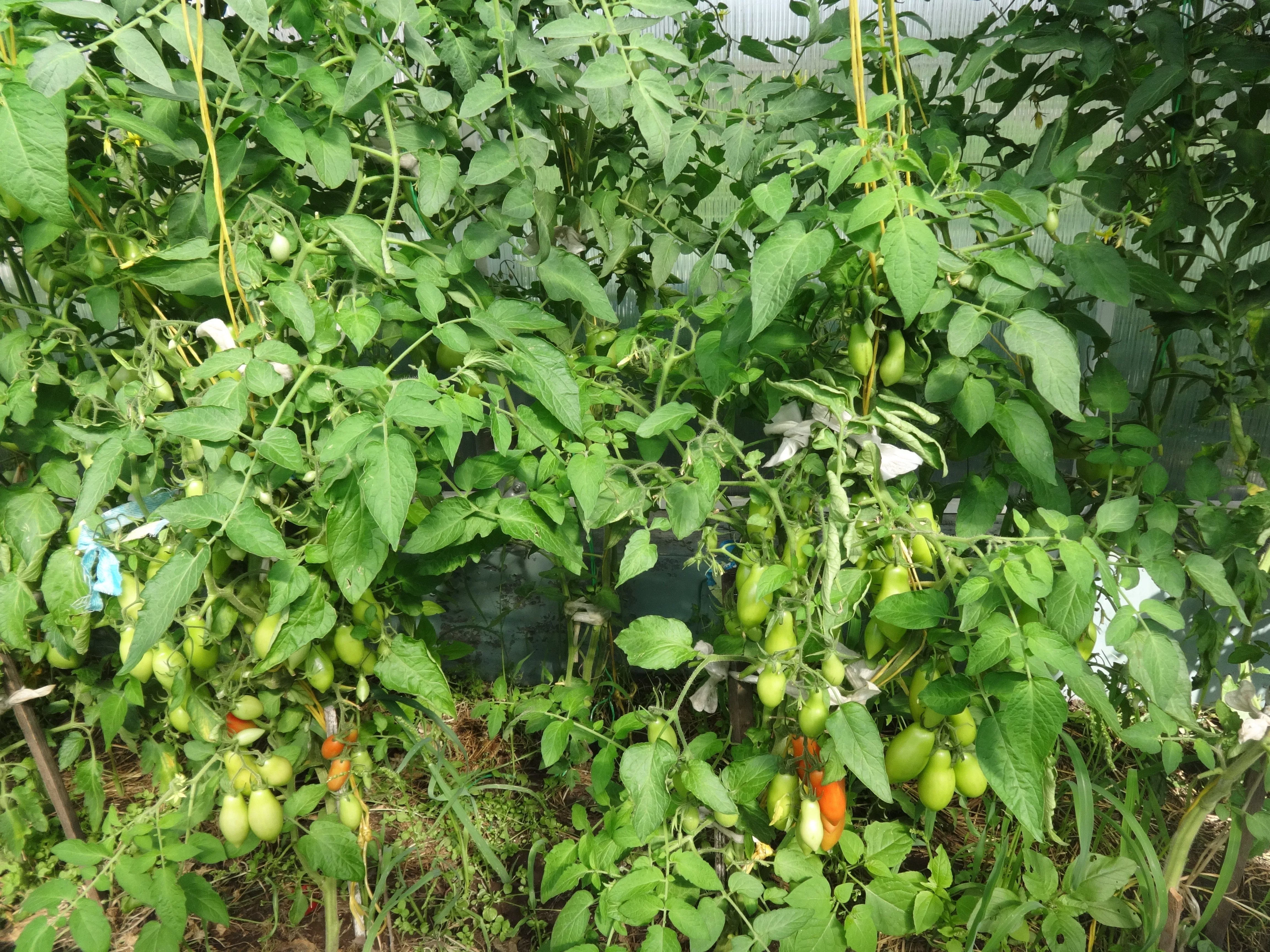
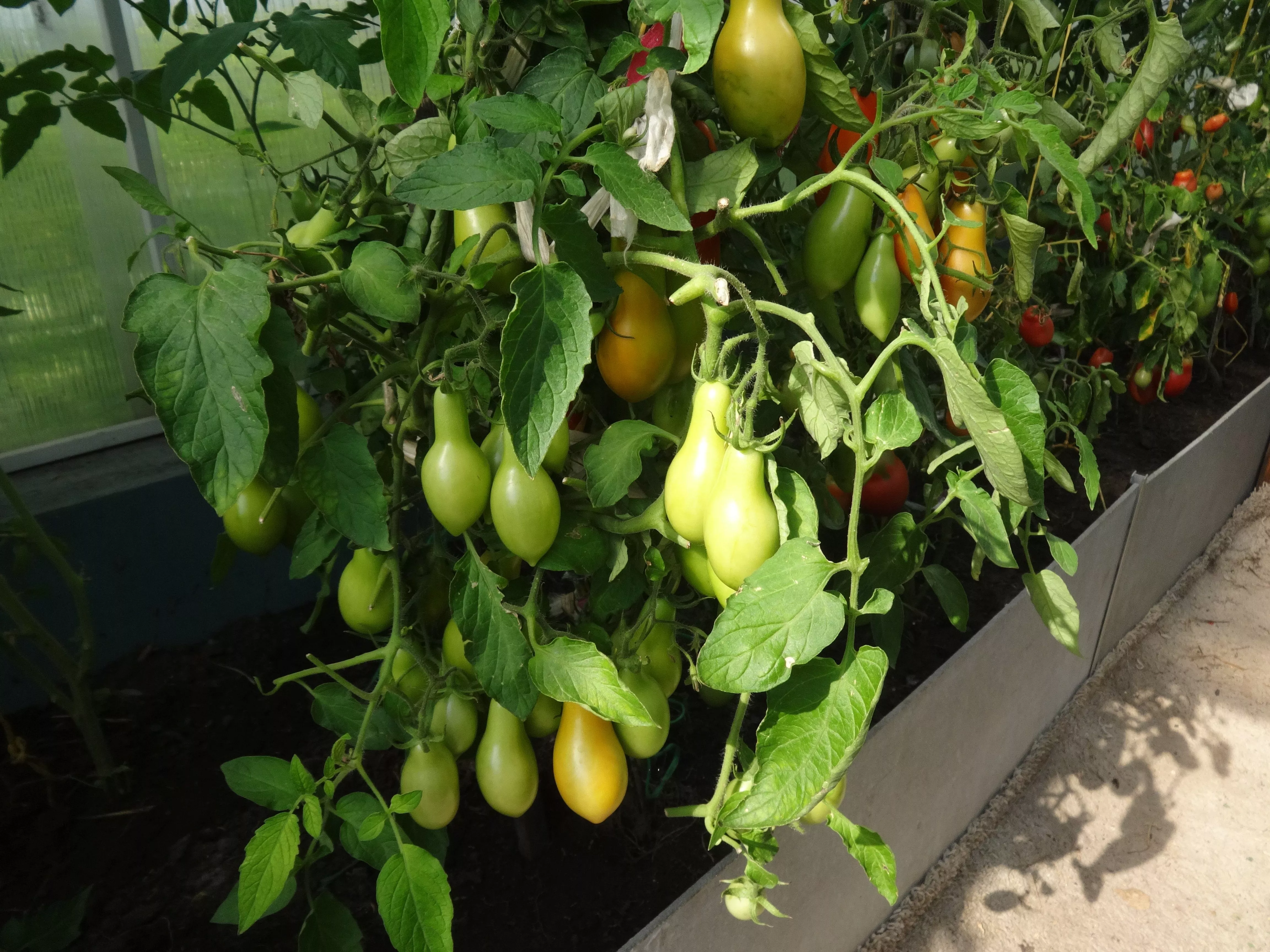
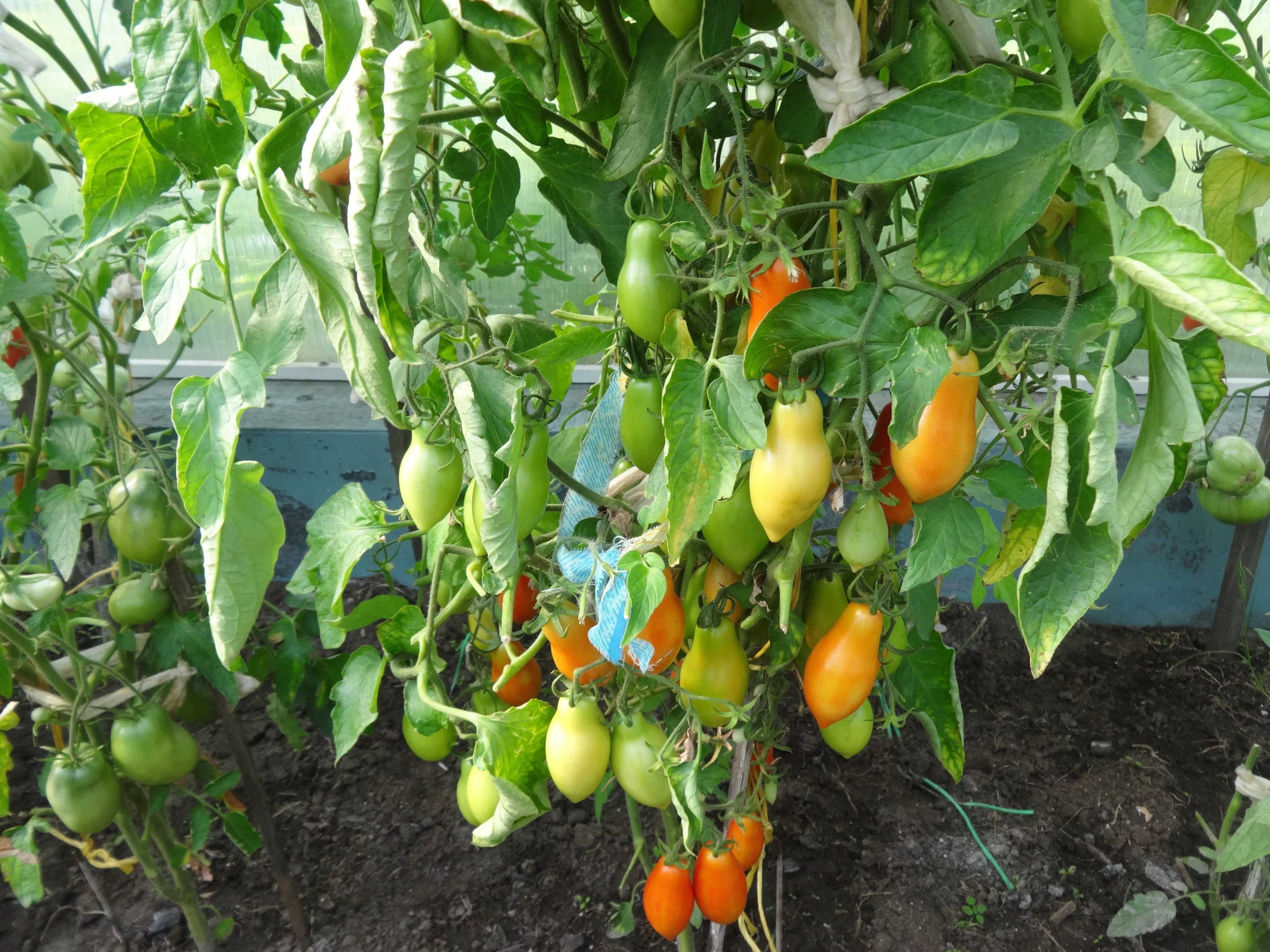
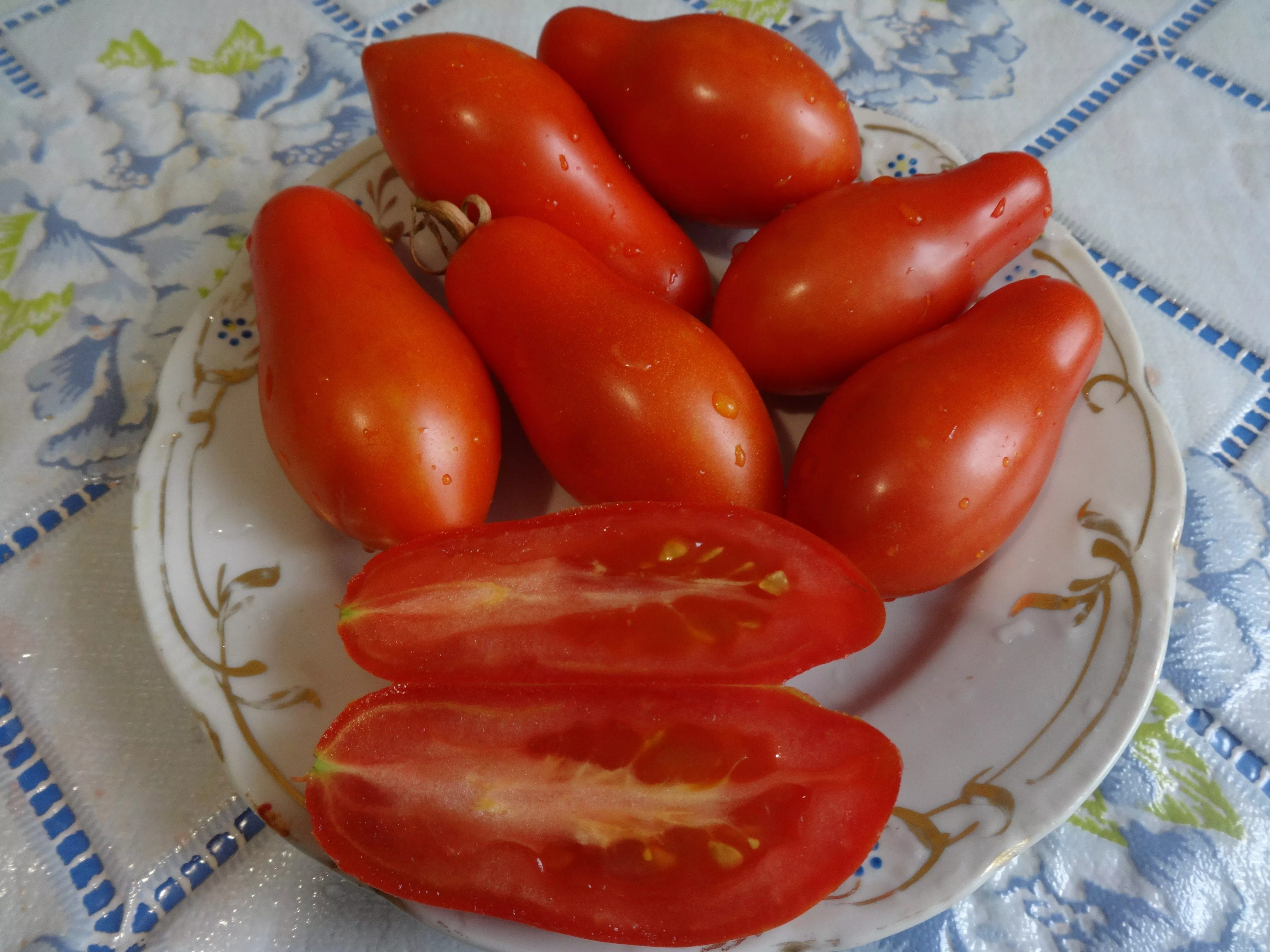
This tomato plant is growing for the second year. It produces a lot of fruit, the bush is growing strongly laterally, branching, and has many side shoots, which quickly develop flower clusters and ovaries. The bush is about a meter tall or a little more.
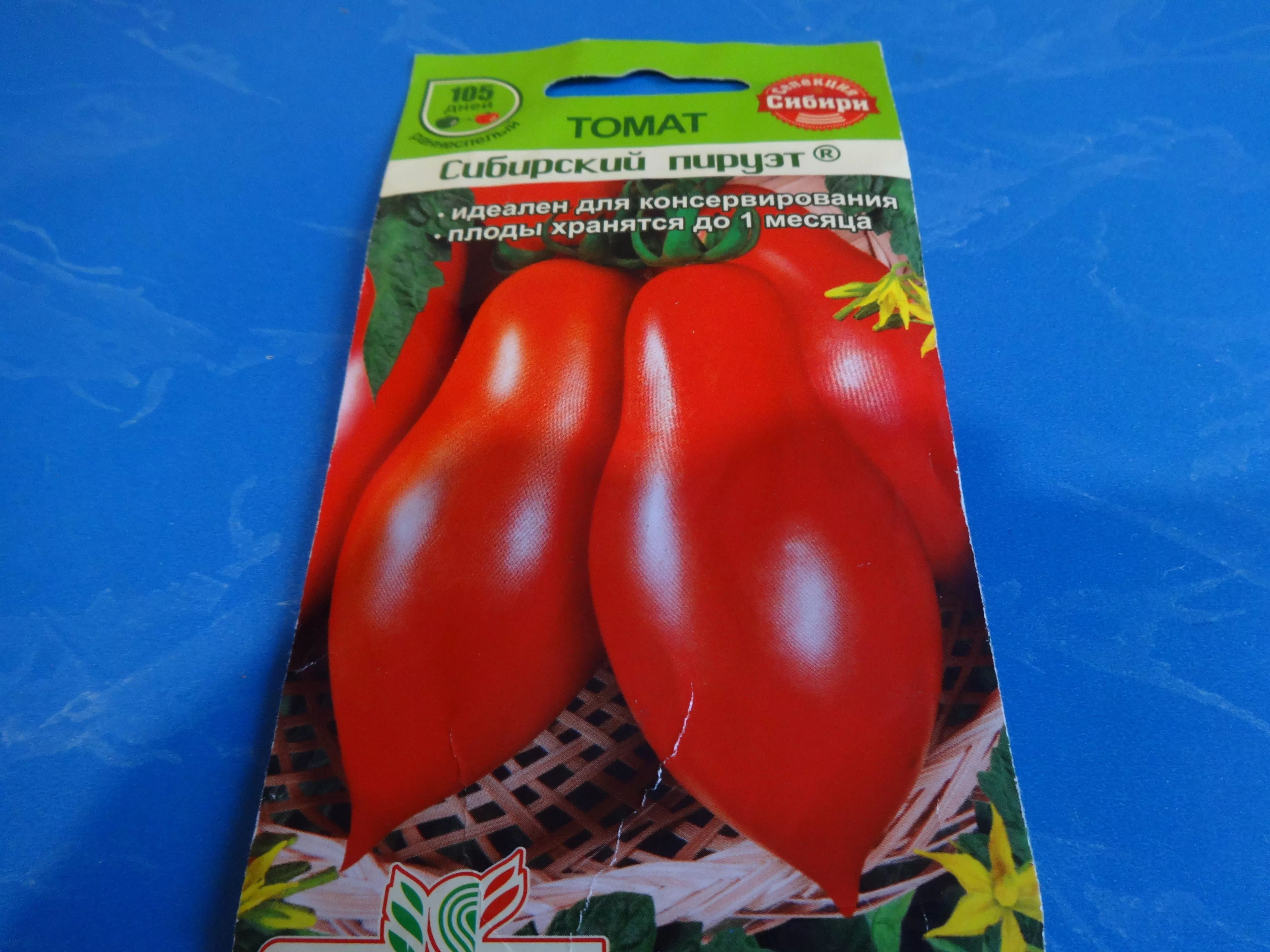
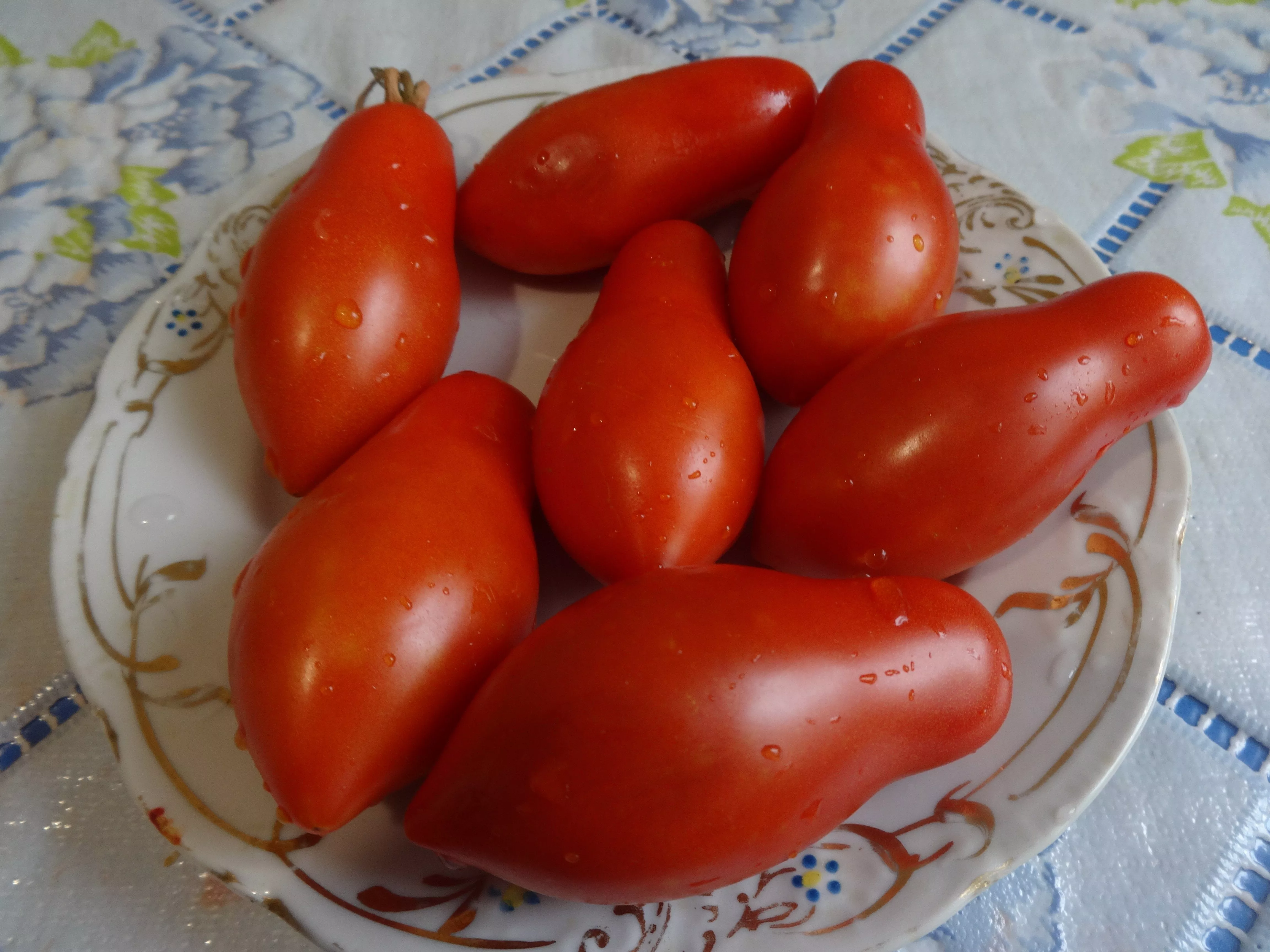
Tomatoes are long, creamy, have a sharp tip, red, juicy, tasty.
Some fruits resemble pears, others resemble bells or matryoshka dolls. The fruits vary in size, with some being large and others small. They store well and are suitable for pickling.
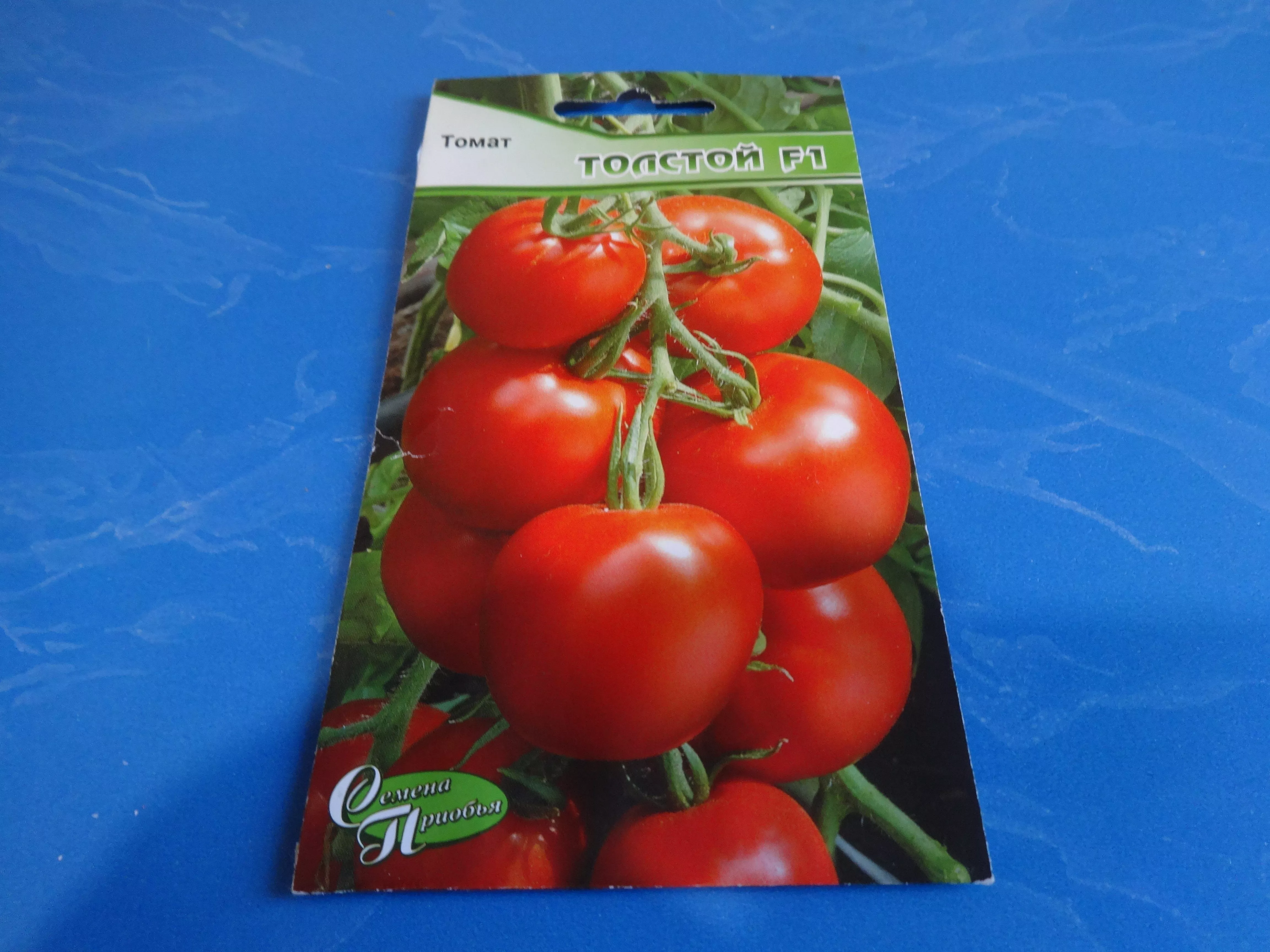
Tolstoy F1
Tolstoy is also a favorite of mine—it was one of the first tomatoes I bought in 2012 to plant in the greenhouse. It was my first time planting tomatoes in a greenhouse—we had a glass greenhouse—and it performed brilliantly. I've been planting it every year since.
Tolstoy is a hybrid. It grows very tall, has a strong bush, powerful, large leaves, and thick stems. Clusters hold 9 to 12 tomatoes. The tomatoes are red, sweet, firm, and fleshy, though the skin is a bit thick, but at least it doesn't crack when pickled. It makes delicious tomato juice. Last year, I froze these tomatoes, and after defrosting, they remained plump, didn't spread, and tasted wonderful in a salad.
The tomatoes set fruit in all weather conditions, are never susceptible to disease, and are very productive, ripen early, don't crack, and have a long shelf life. However, seeds aren't always available in stores. So, if I do find seeds, I buy enough for 2-3 years.
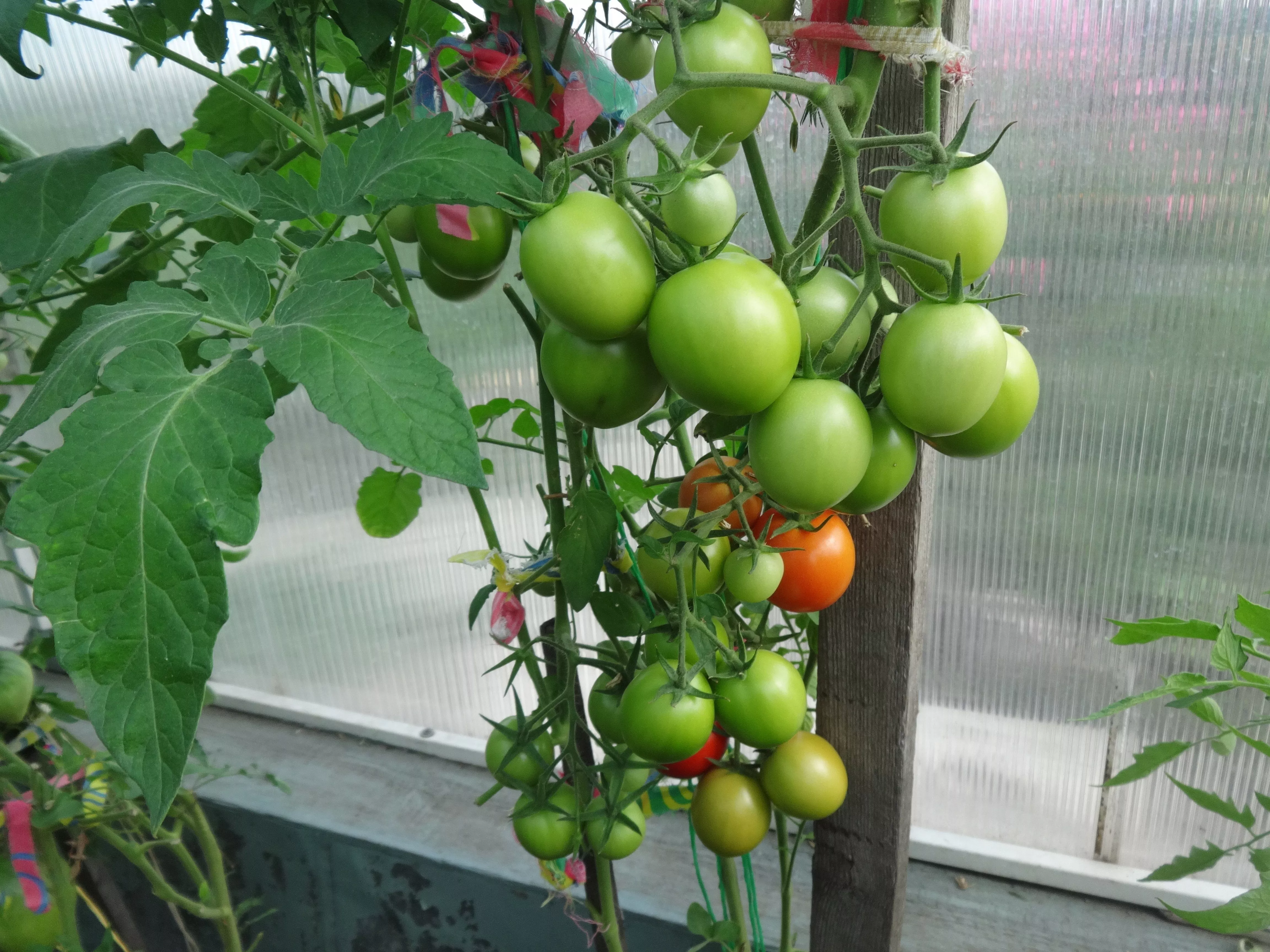
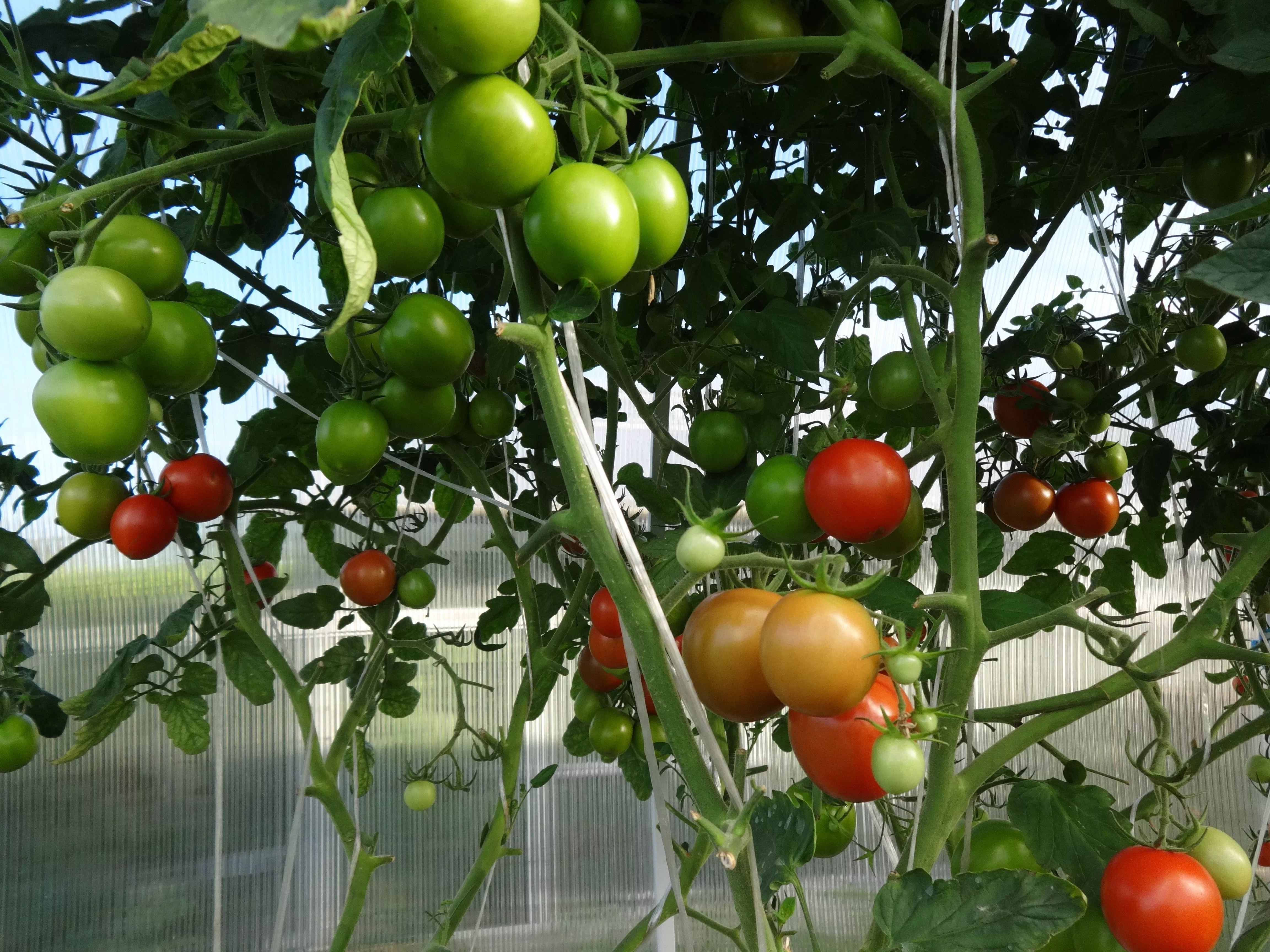
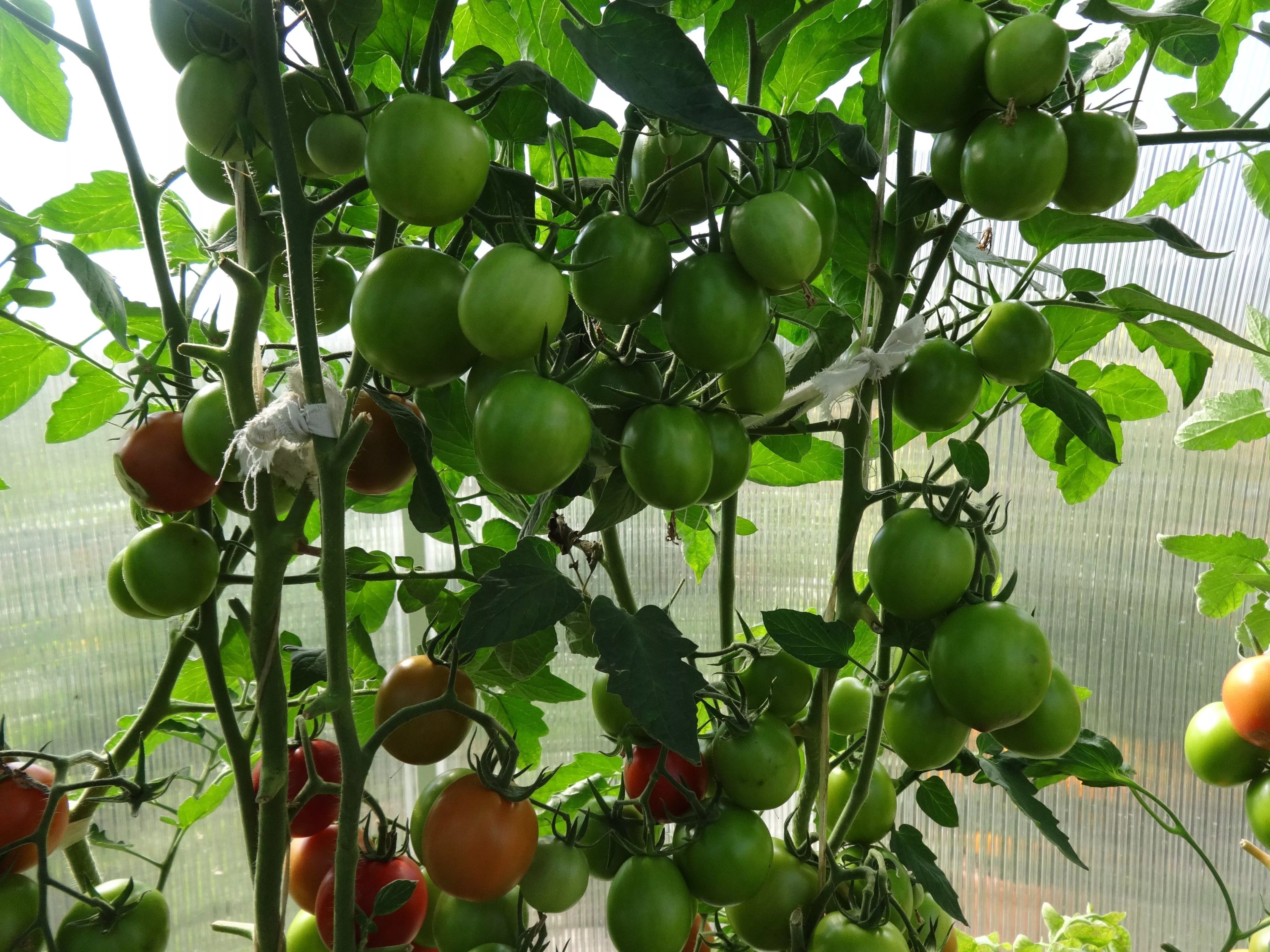
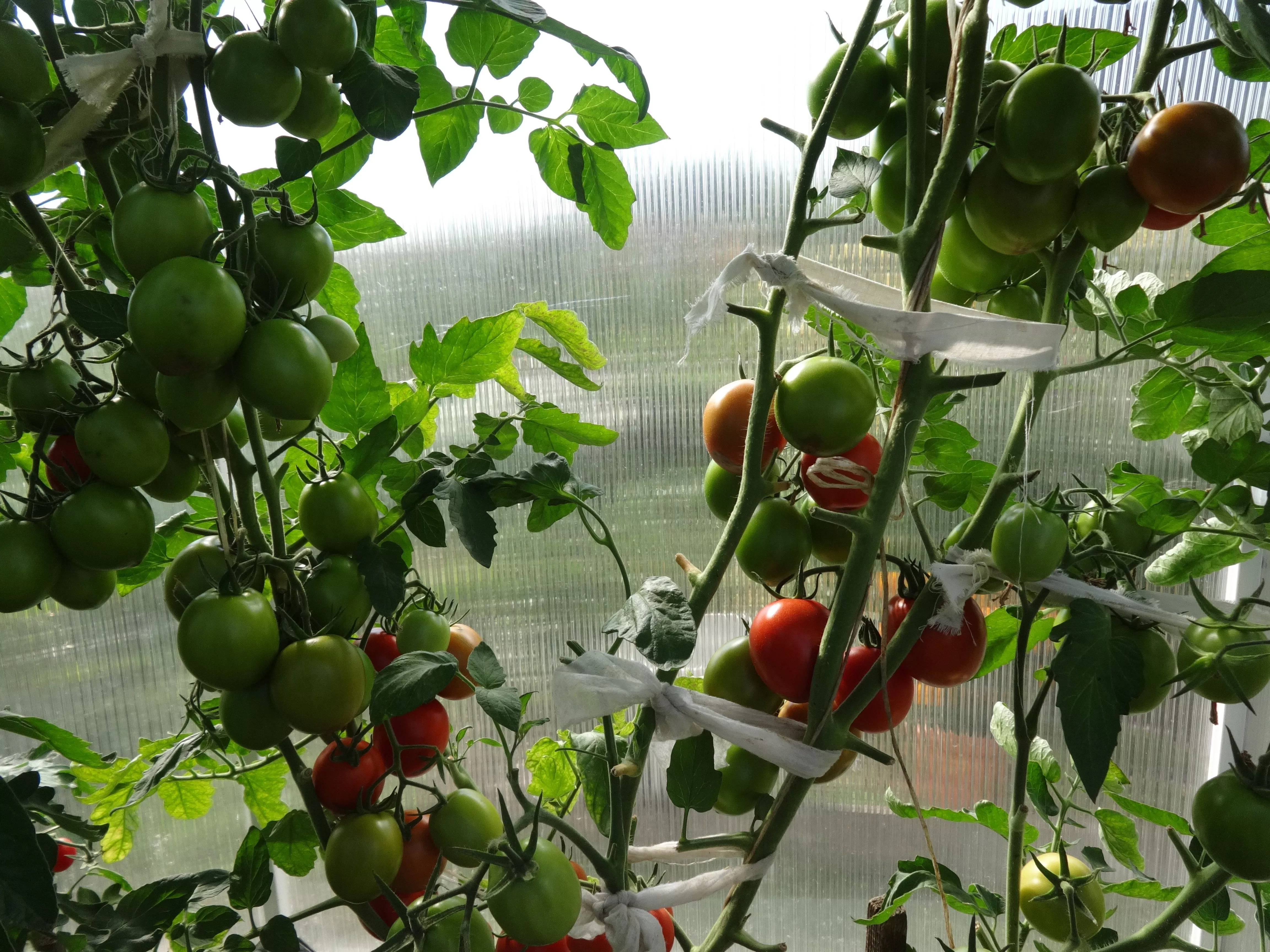
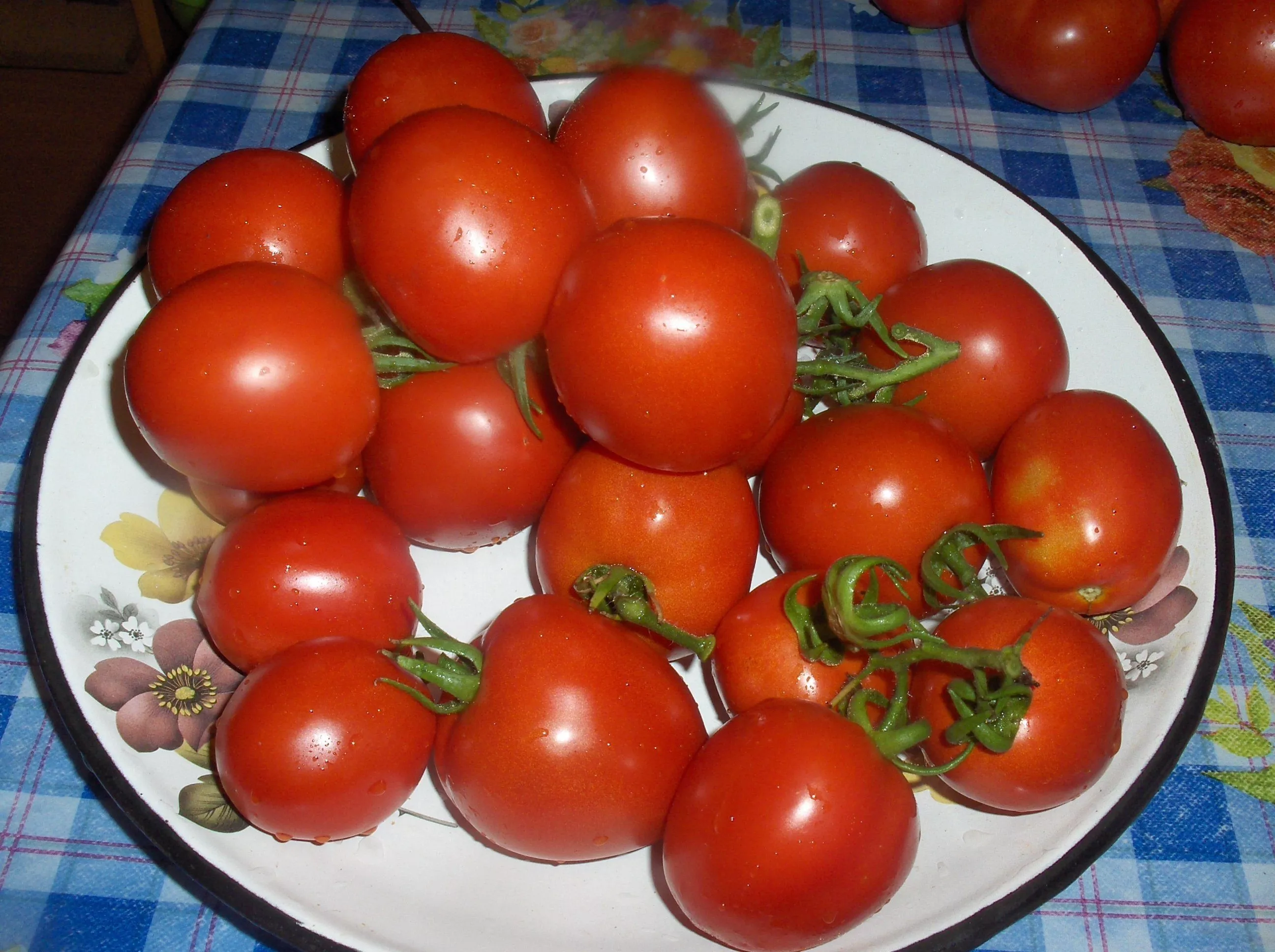
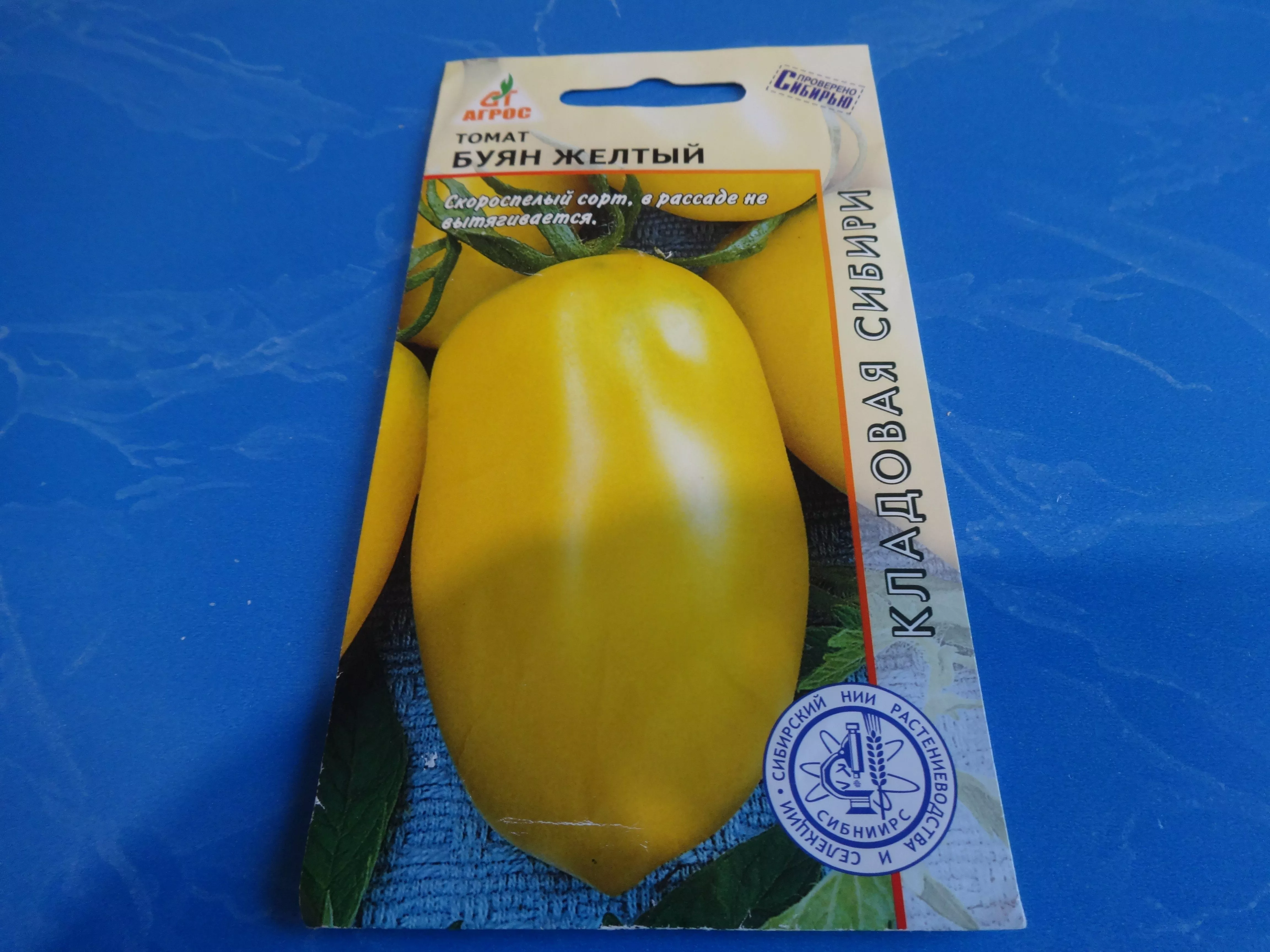
In 2019, I bought four new tomatoes: Buyan Zhelty, Puzata Khata, Sibirskie Shan'gi, and the President 2 F1 hybrid. I'll tell you how they performed in the greenhouse.
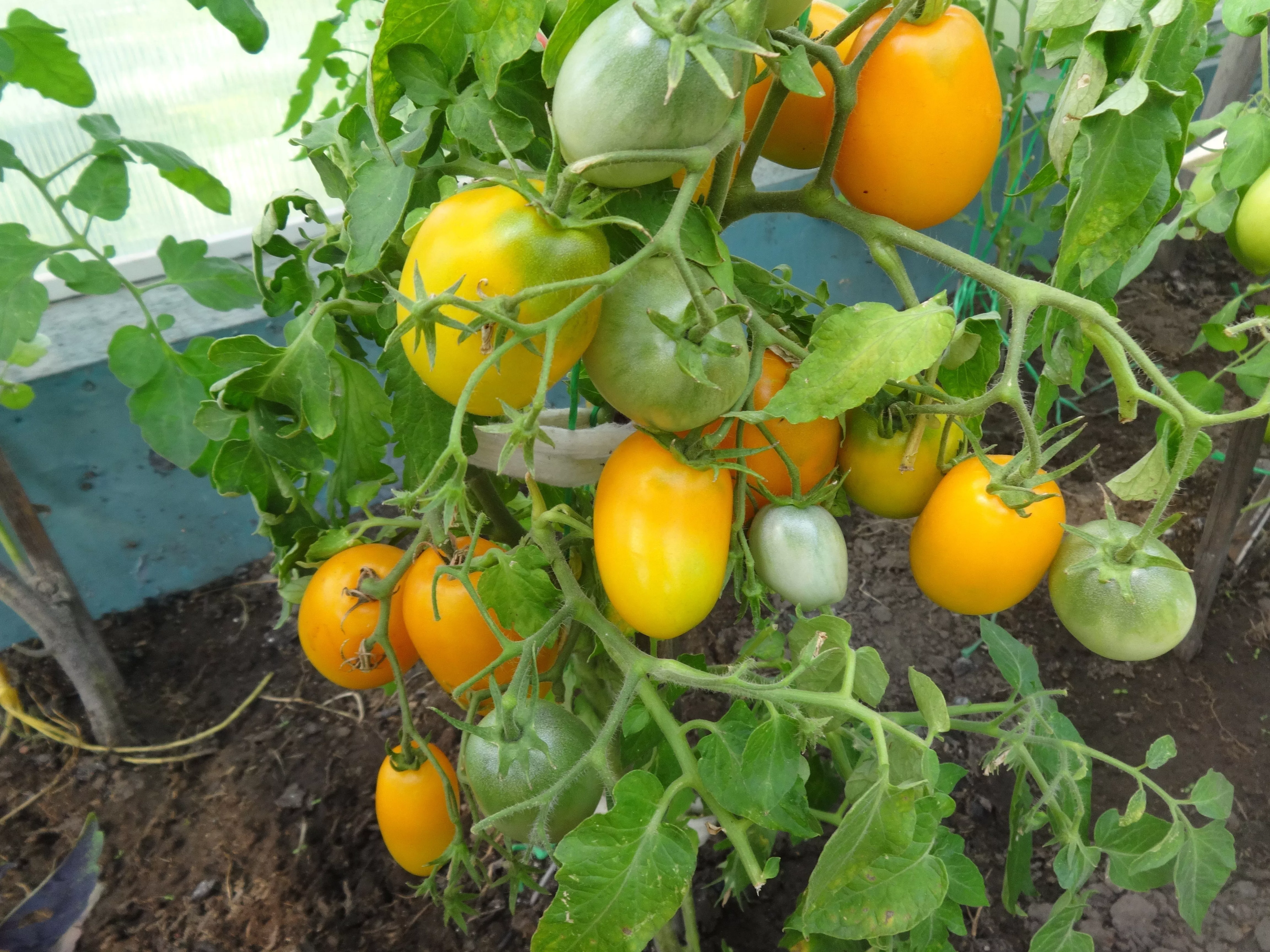
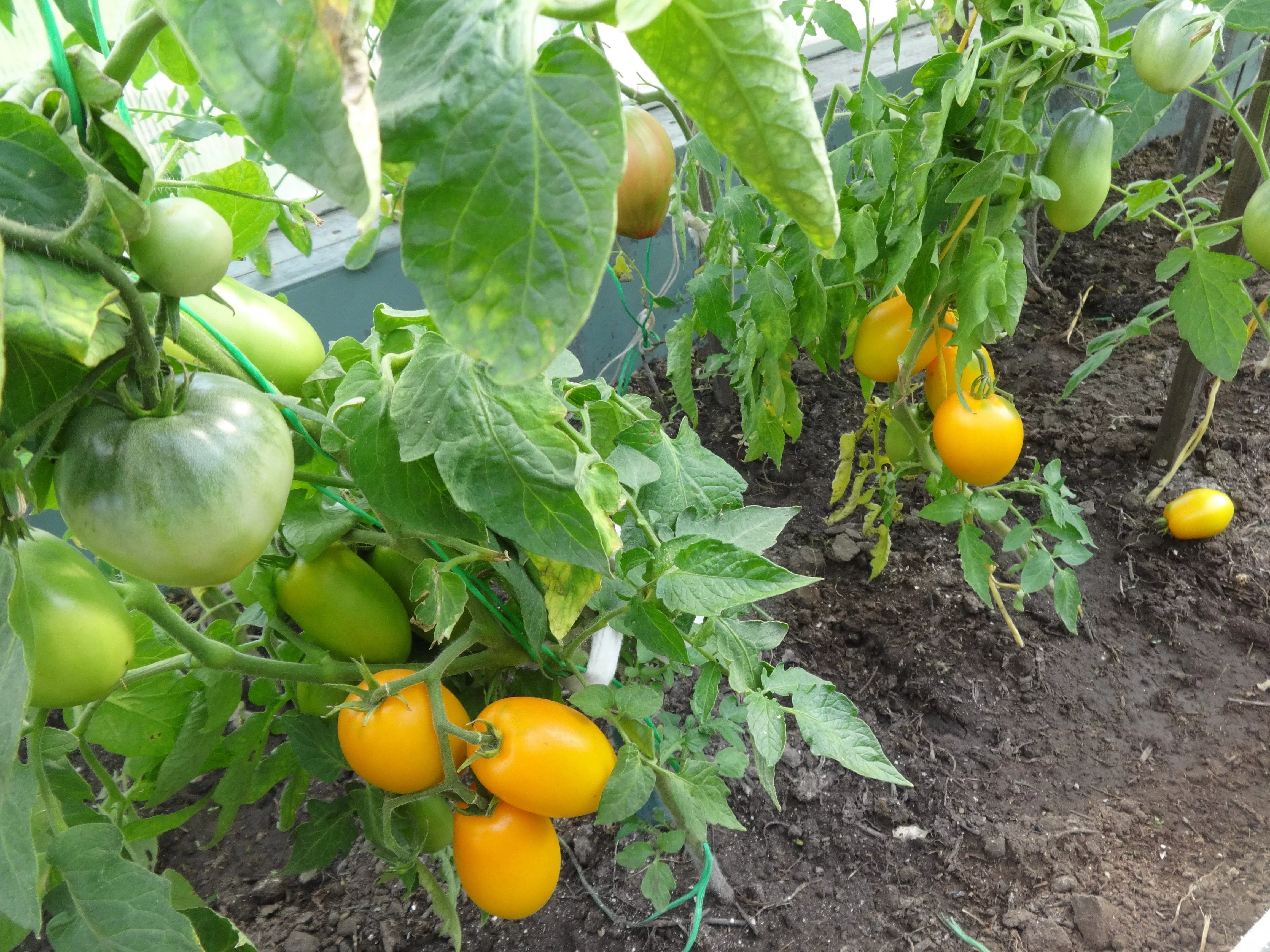
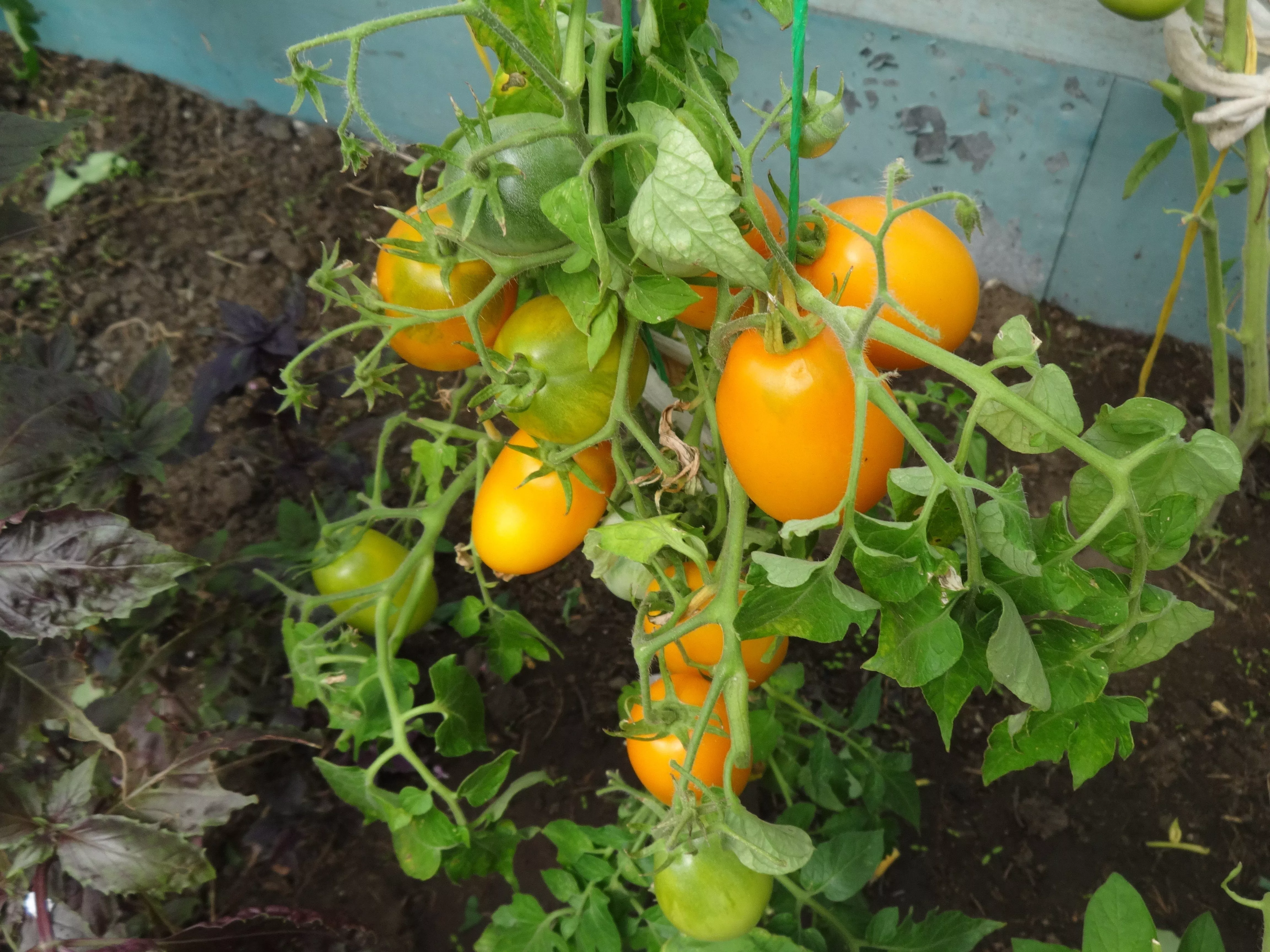
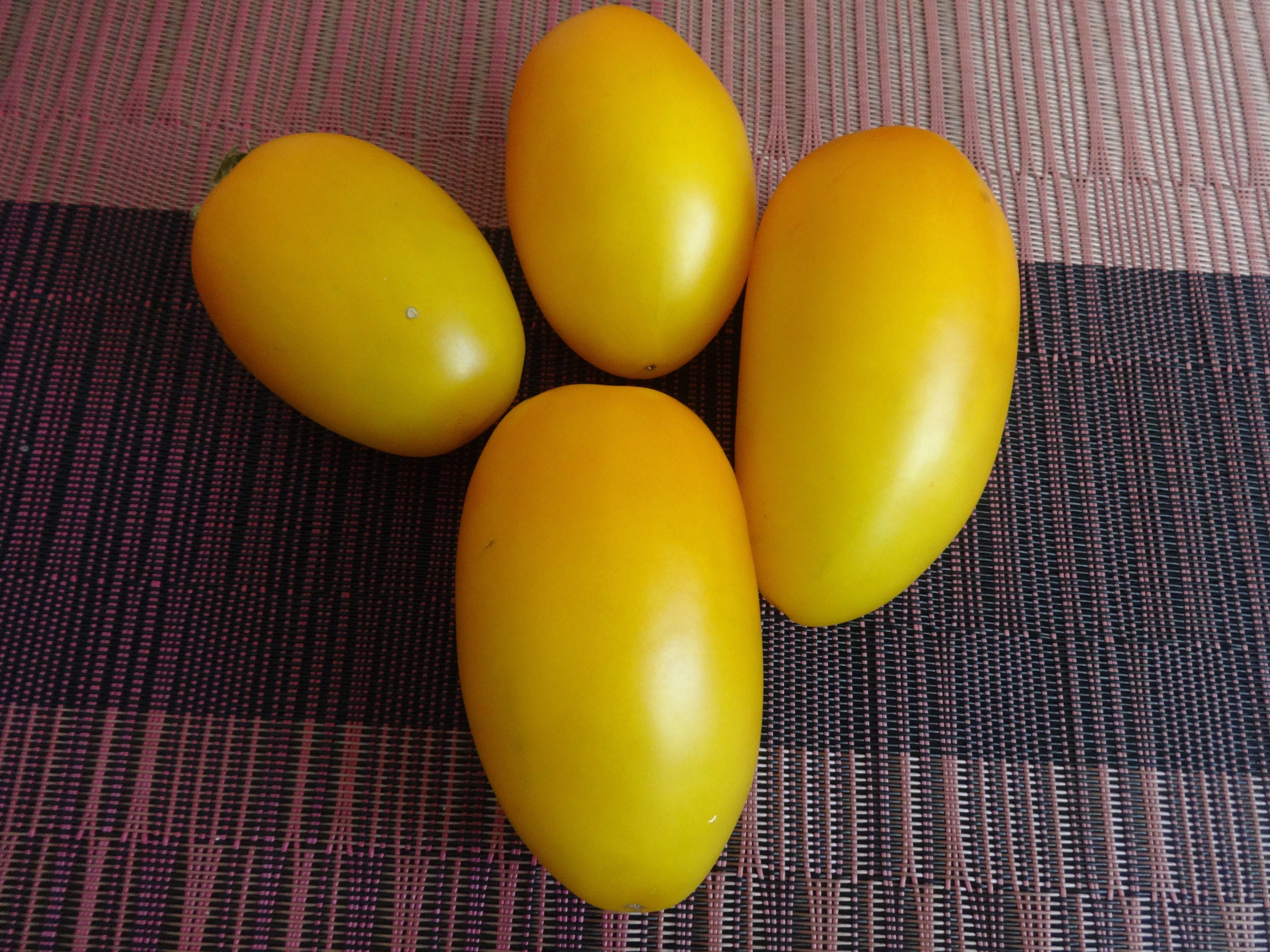
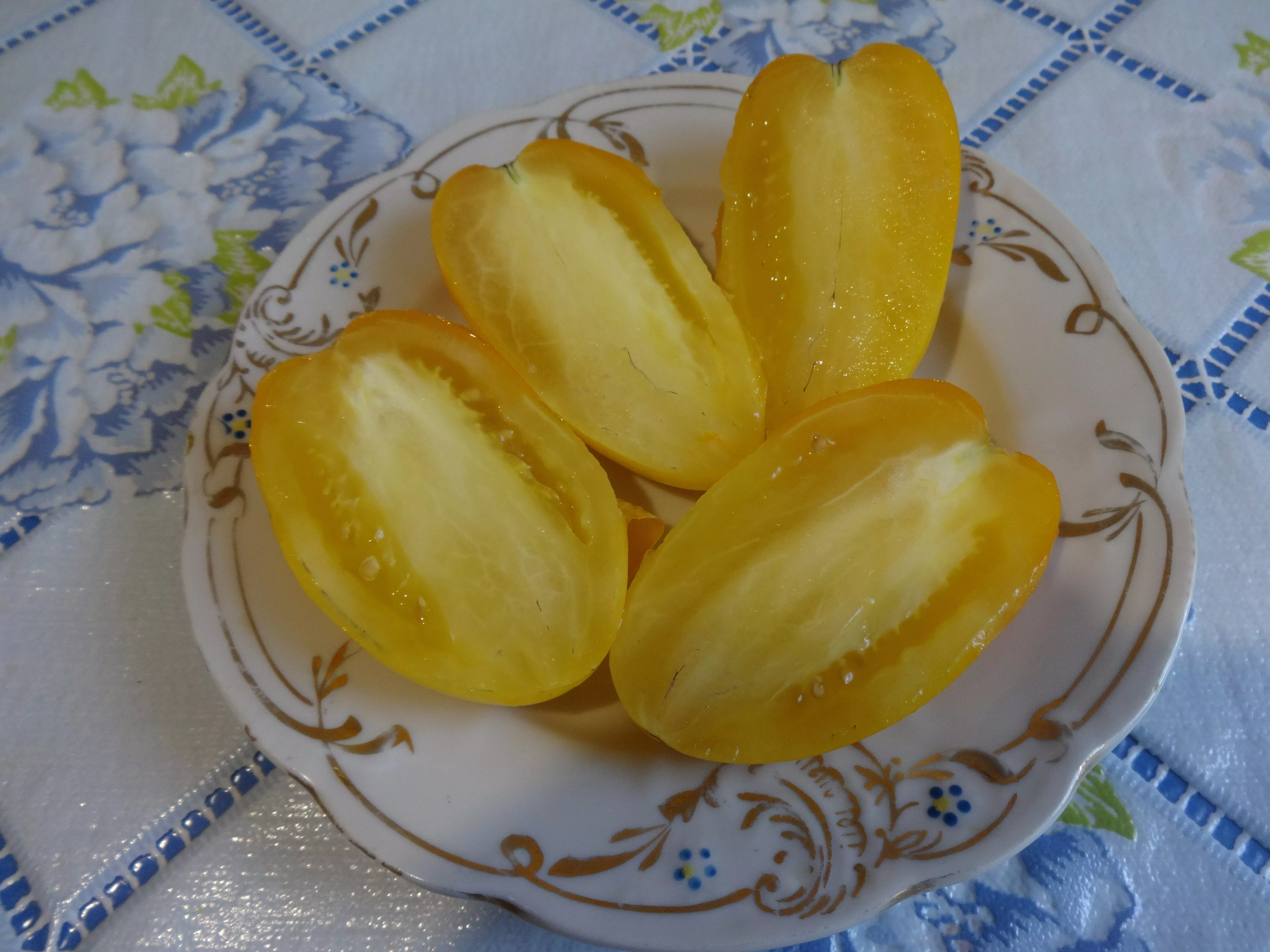
Buyan yellow
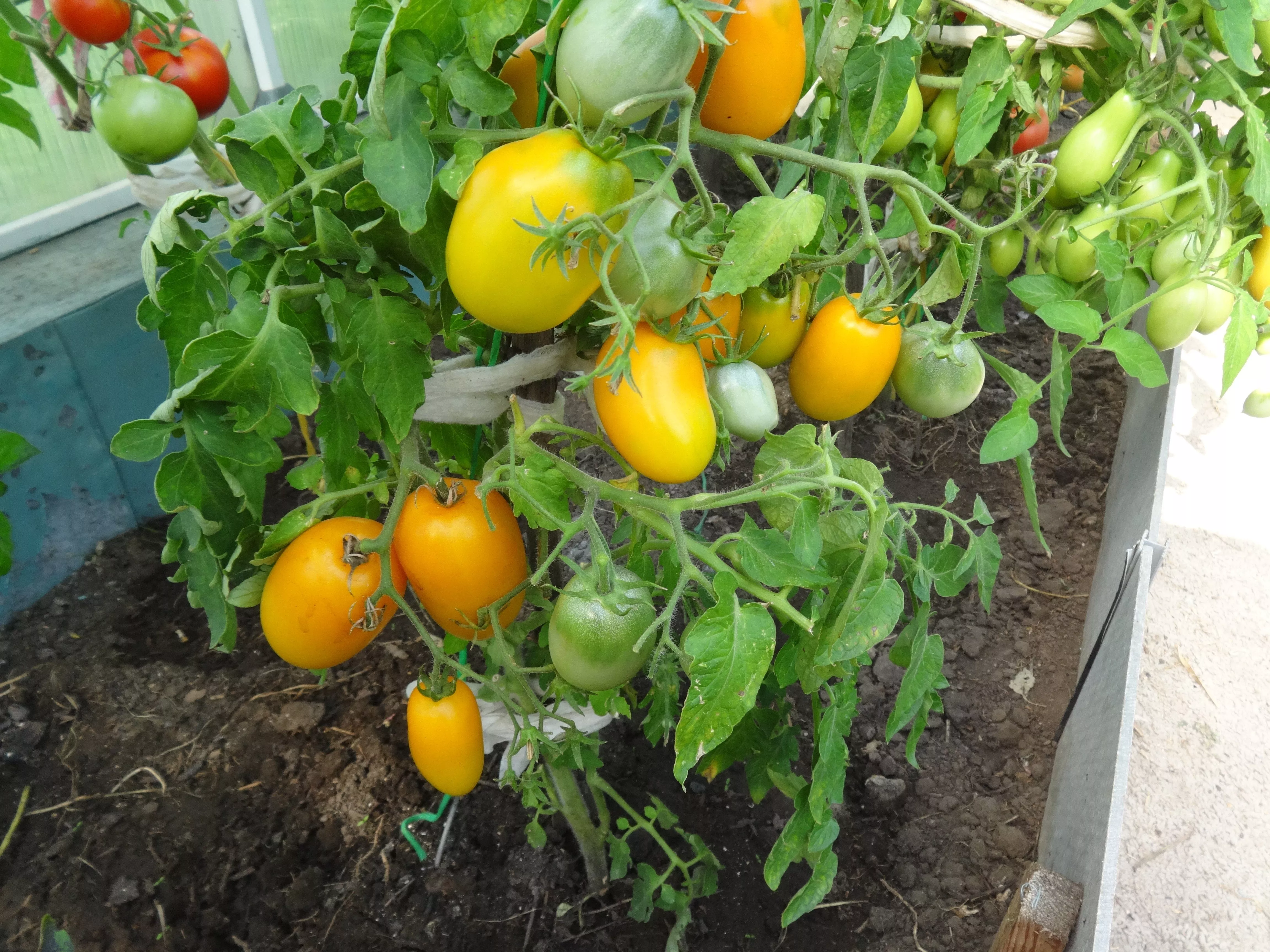
I planted several bushes in the greenhouse, but the seedlings didn't grow very well. Some bushes grew well, but two remained puny. The bushes are low-growing and compact, with some bearing a lot of tomatoes, while others have very few. The tomatoes are oval, elongated, and lemon-yellow. They are very sweet, and everyone in the family loved them, but the skin is thick. The leaves don't look very attractive at the beginning of August; some have yellow spots, which could be sunburn or a disease.
I've decided that next year I'll also plant the yellow Buyan. I'll save the largest tomato from the best bush for seed. I hope the seedlings will grow well from my own seeds. I also realized that these tomatoes can be planted closer together, more densely. I've ended up with a lot of empty space between the bushes.
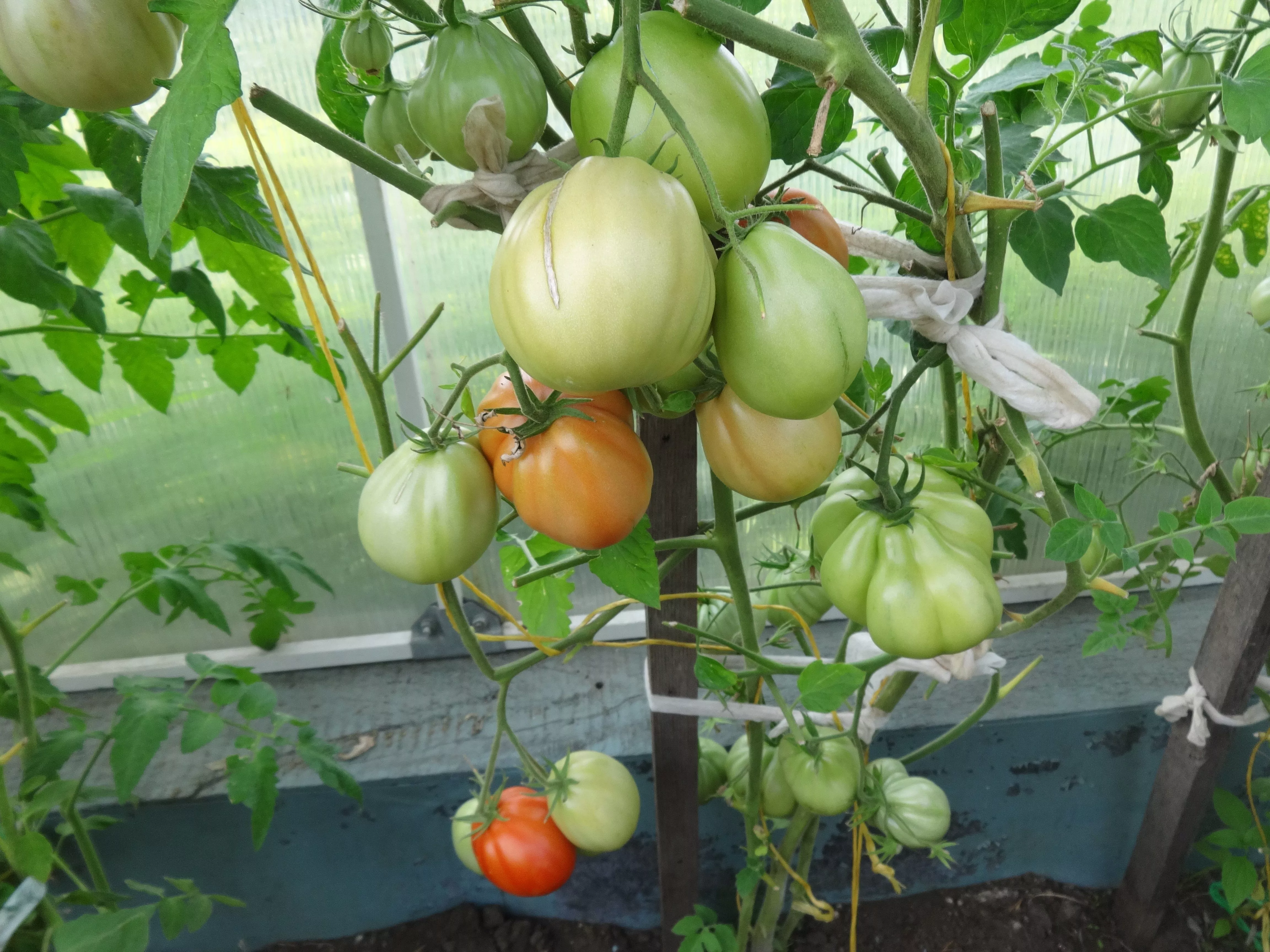
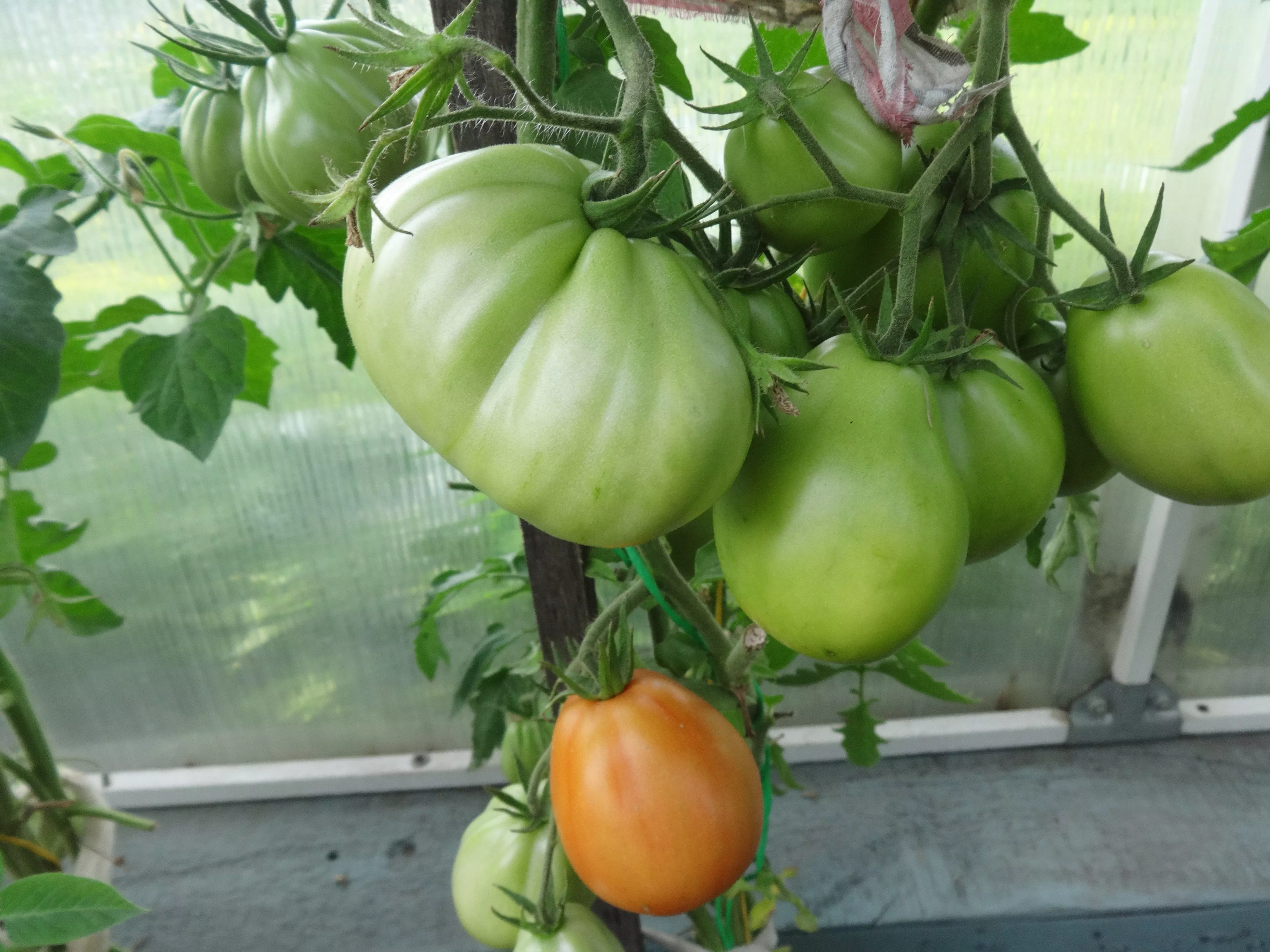
Tomato Puzata Khata
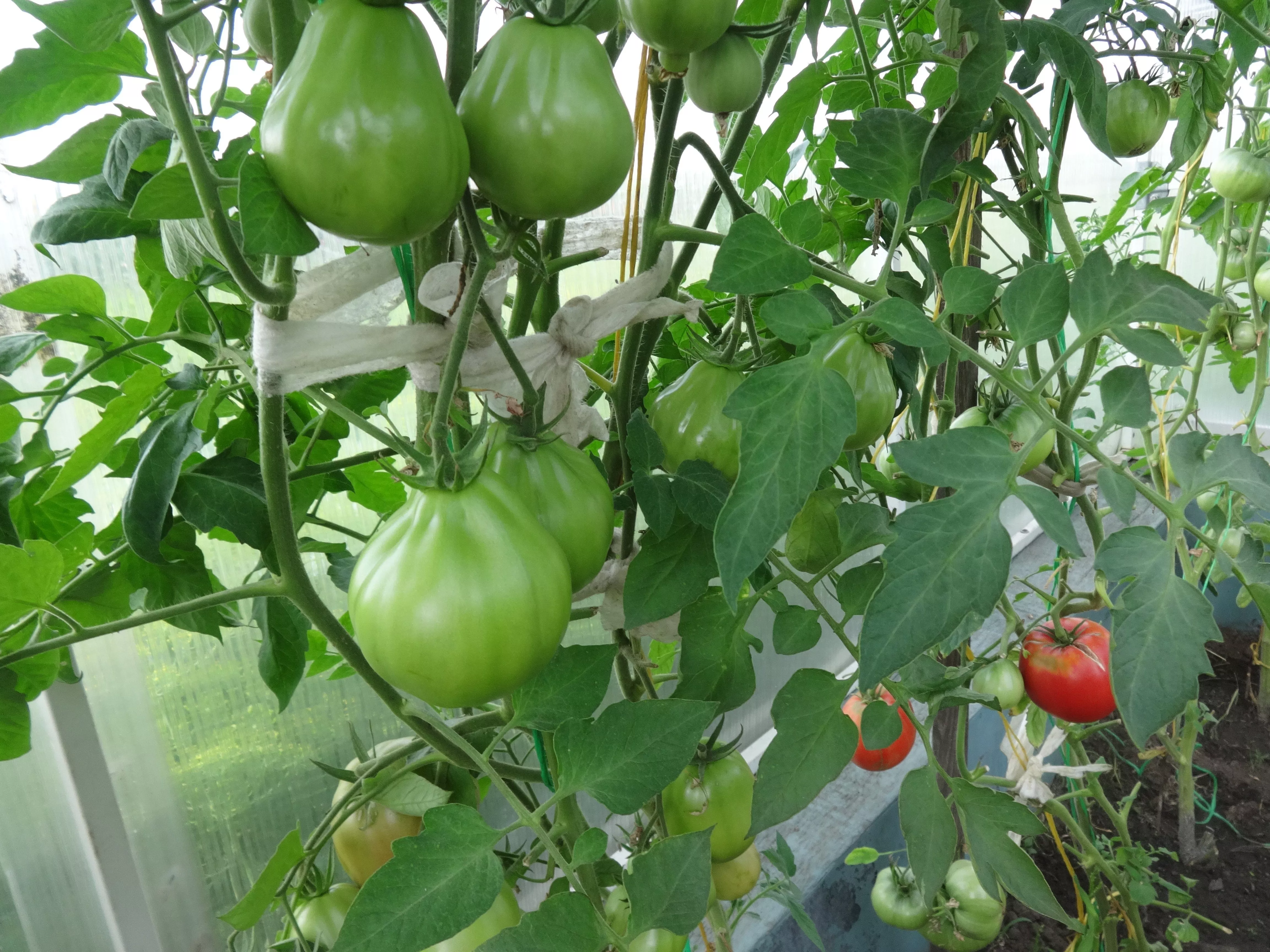
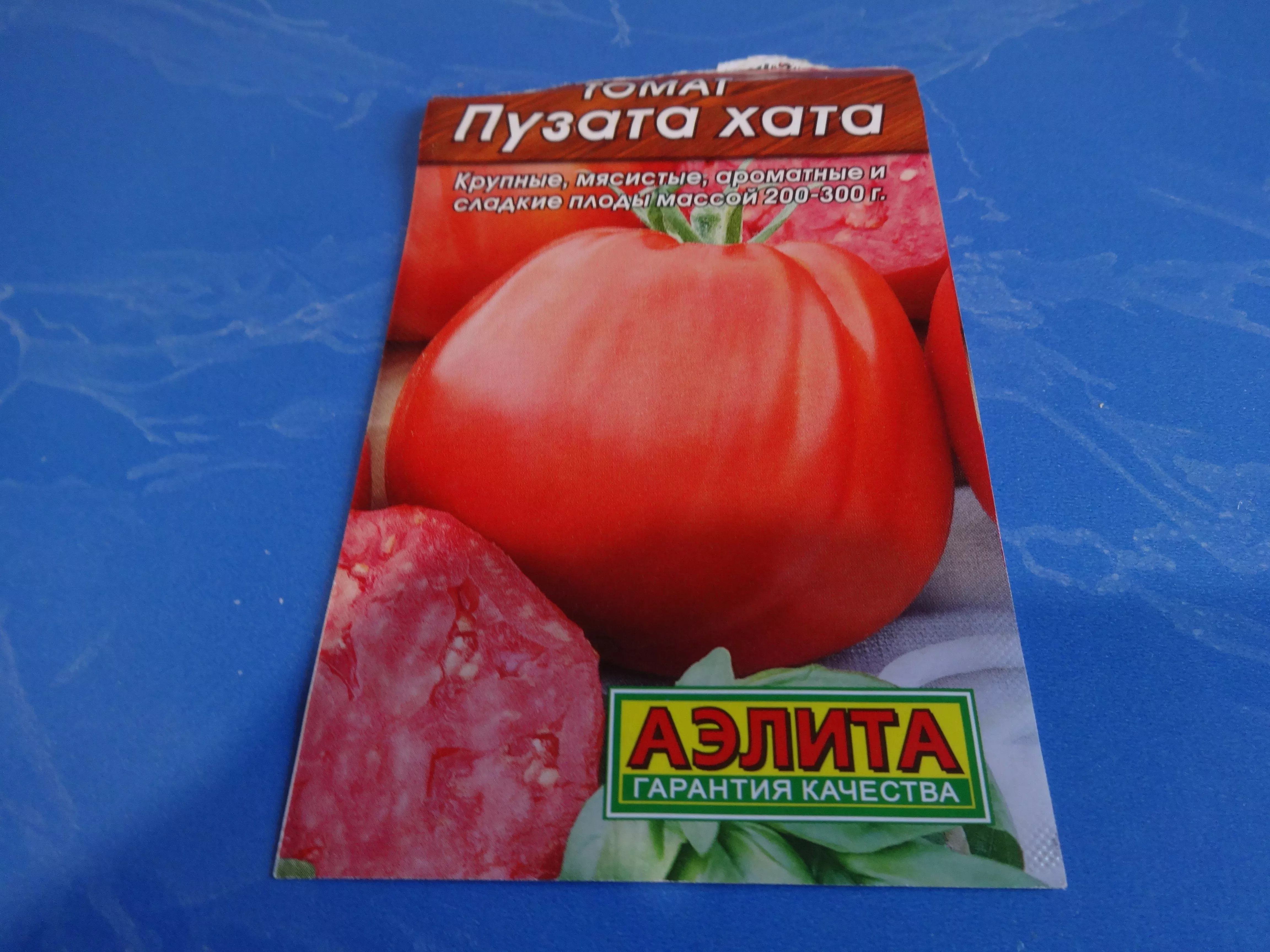
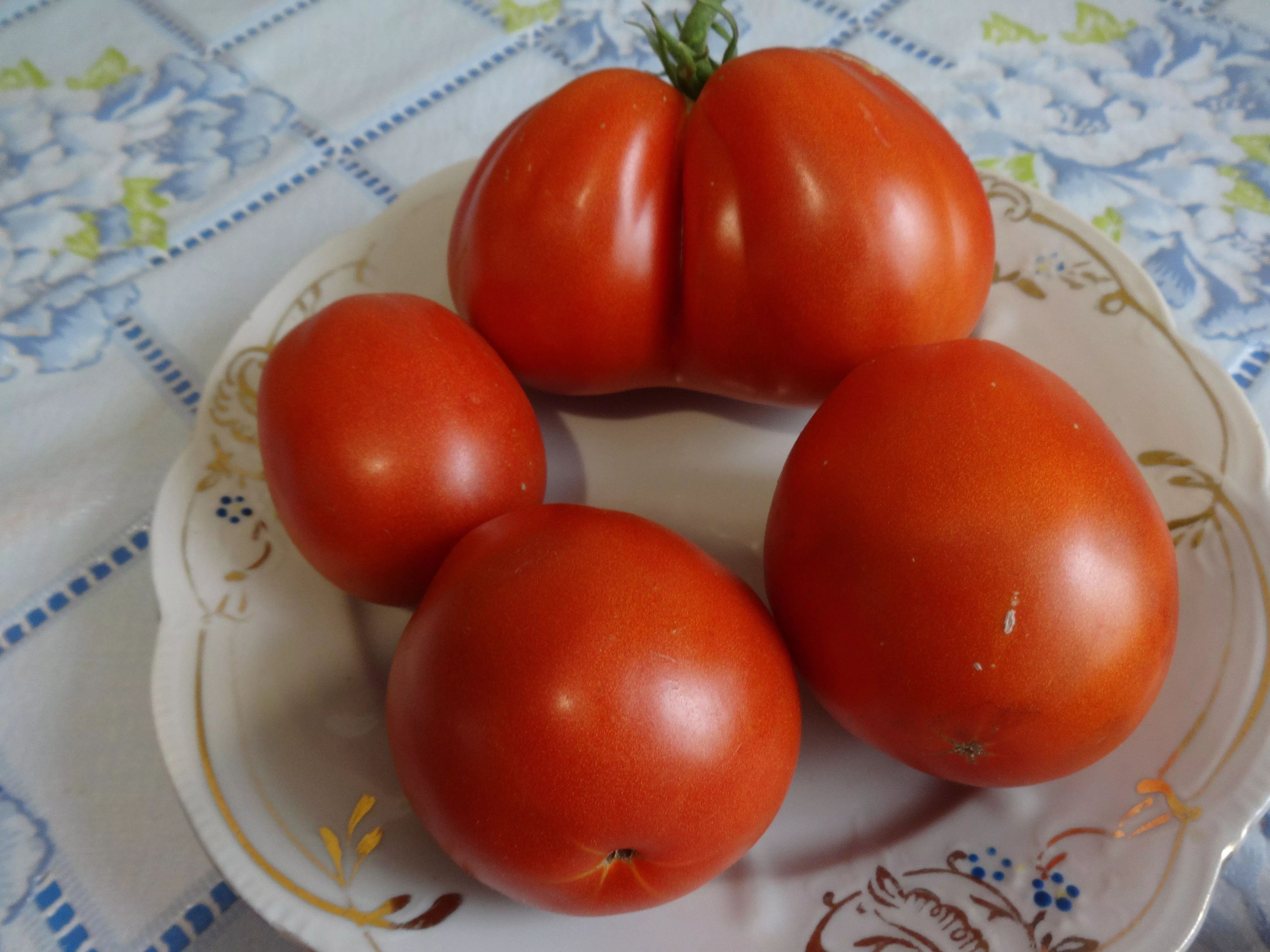
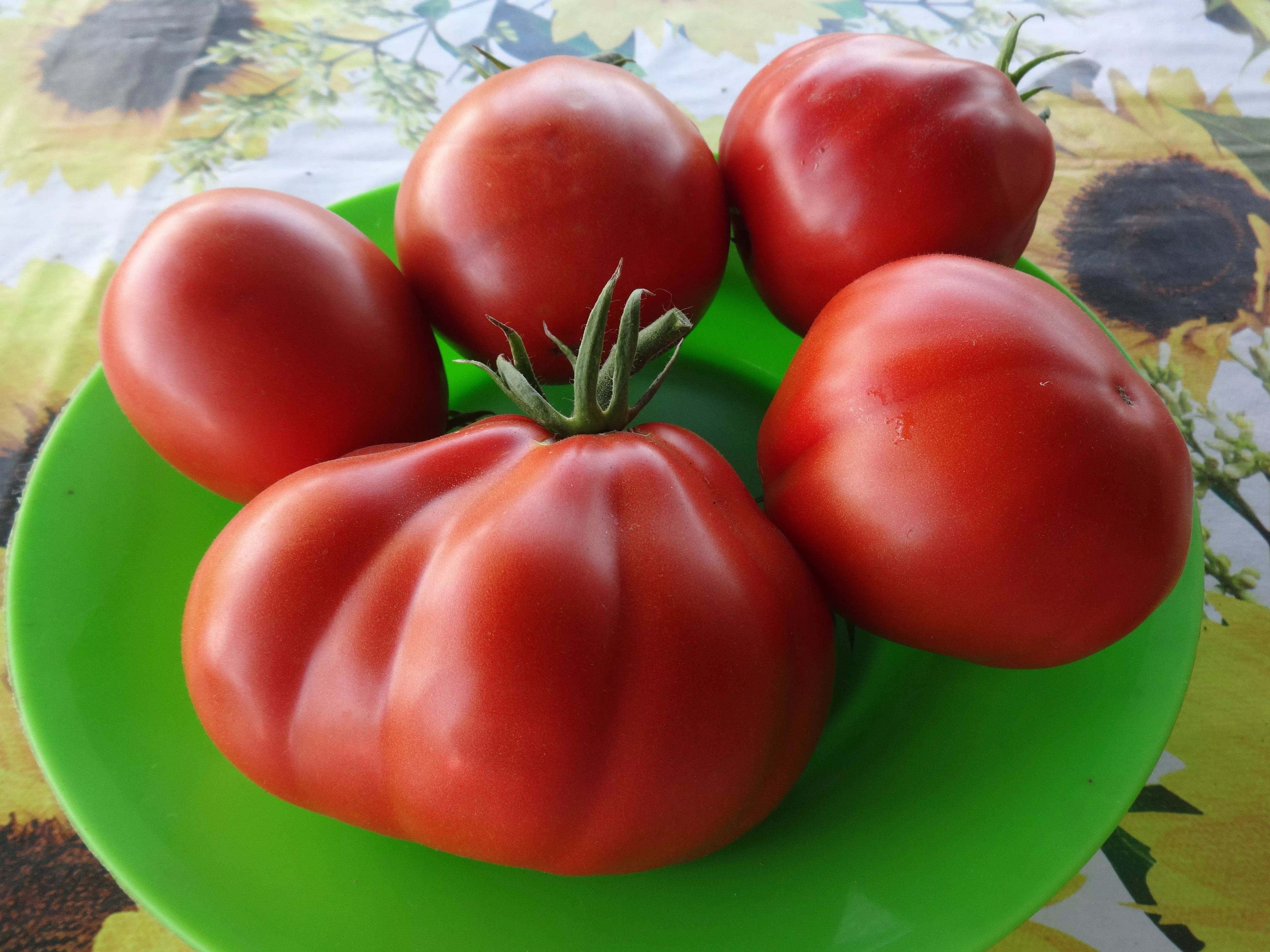
I bought this variety because of its funny name. I planted three bushes in the greenhouse. This variety is tall. The fruit set well, the tomatoes are a variety of shapes—some barrel-shaped, some ribbed, various sizes, red, and beautiful. The taste is sweet and juicy, the flesh is meaty and the skin is thin. The tomatoes ripen early. I'll definitely plant this variety next year.
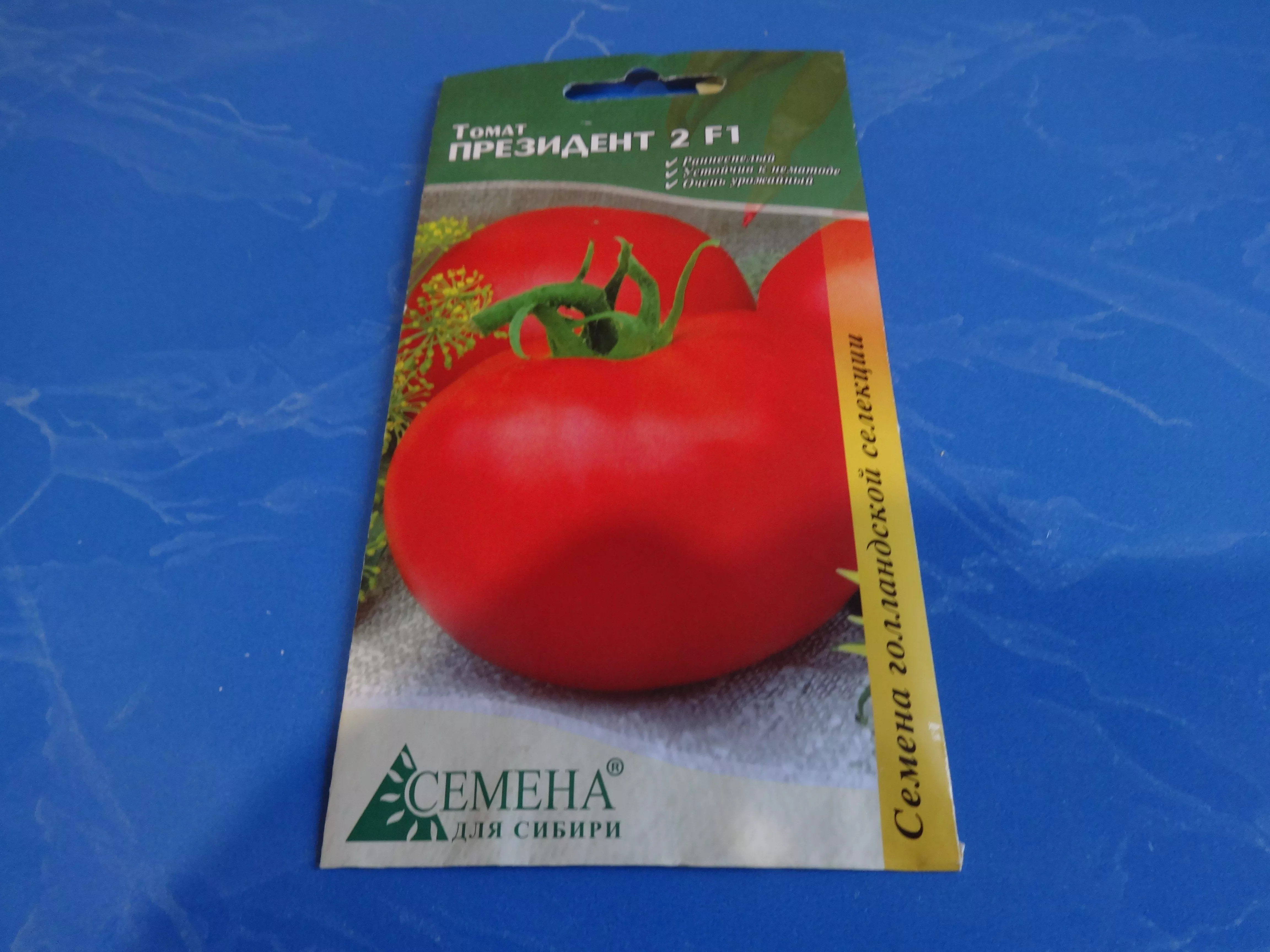
President 2 F1
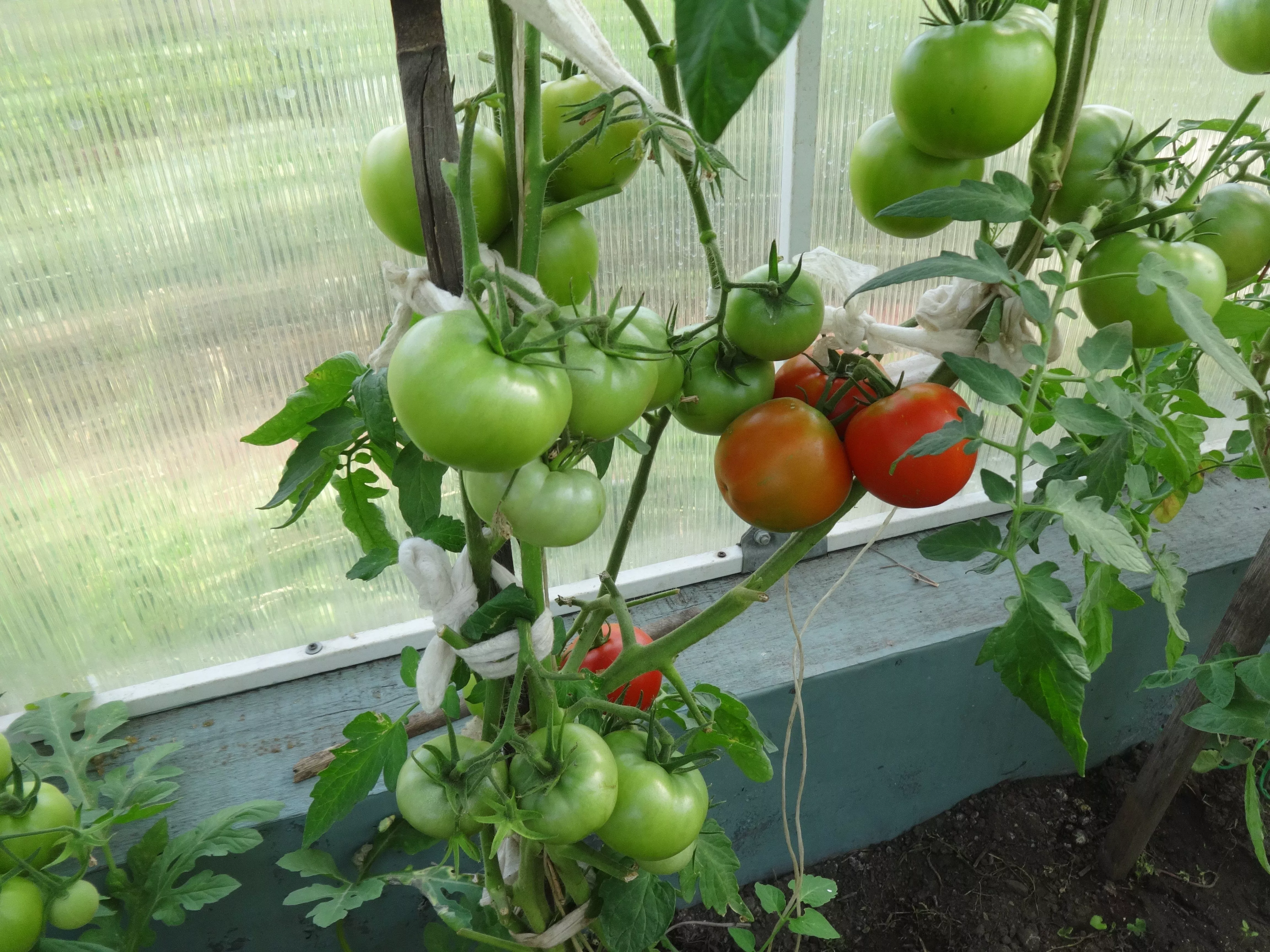
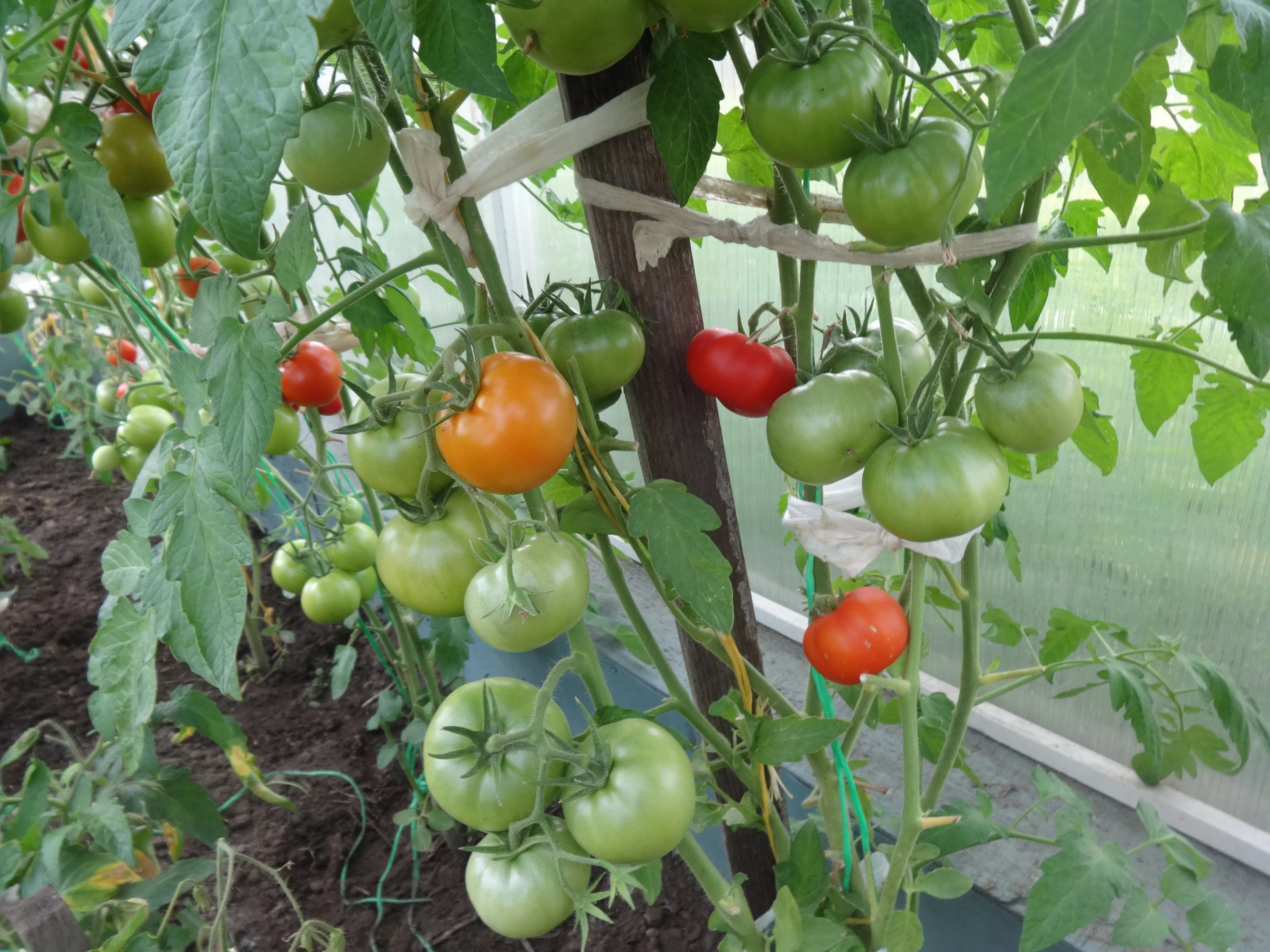
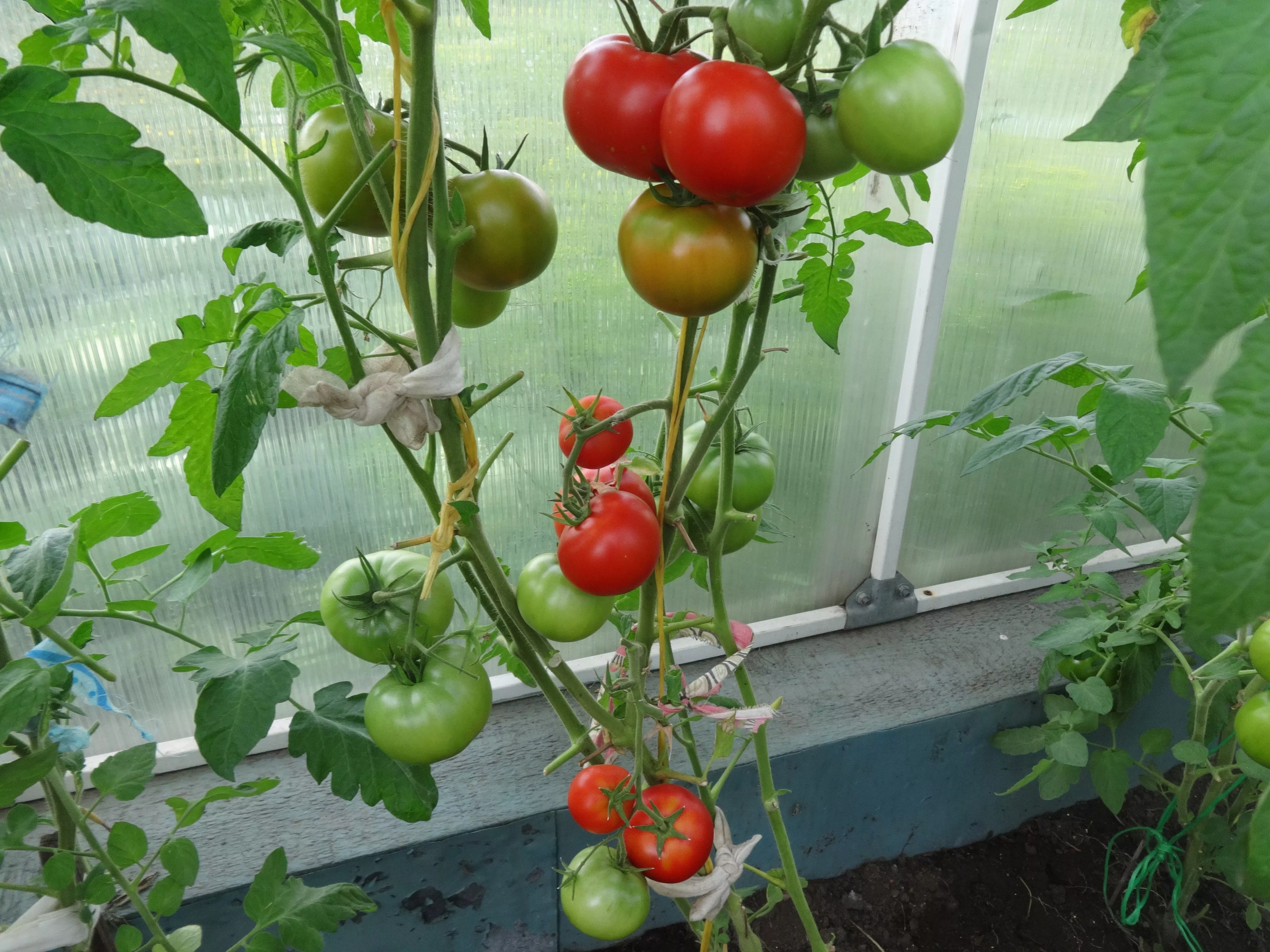
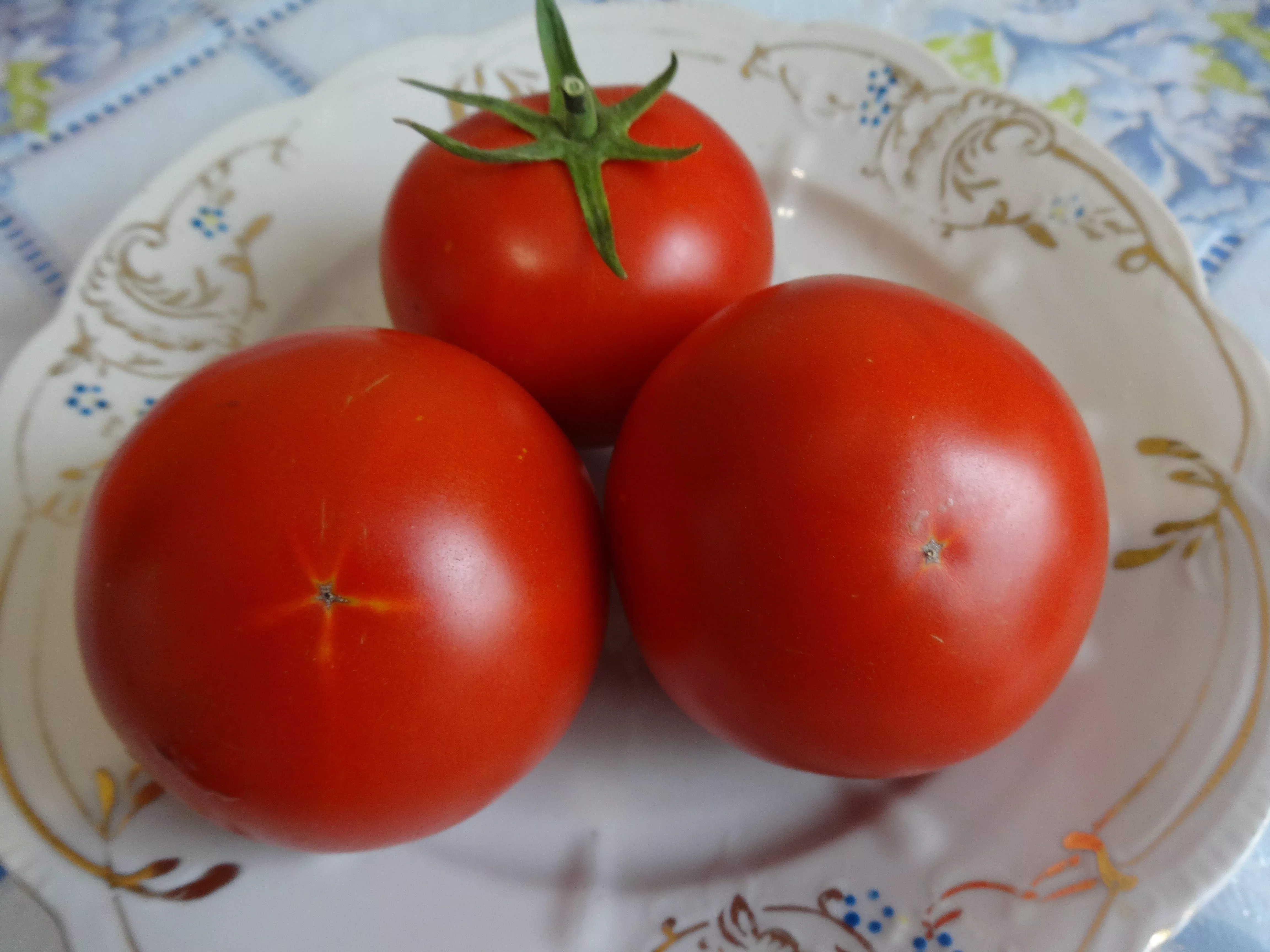
President 2 F1 is a hybrid. The bushes are tall and vigorous, similar to the Tolstoy hybrid, but the tomatoes are larger, with 3 to 5 on a vine. The fruits are deep red and round. The tomatoes are tasty, juicy, and fleshy, with a firm skin. I think these tomatoes will make wonderful, delicious tomato juice.
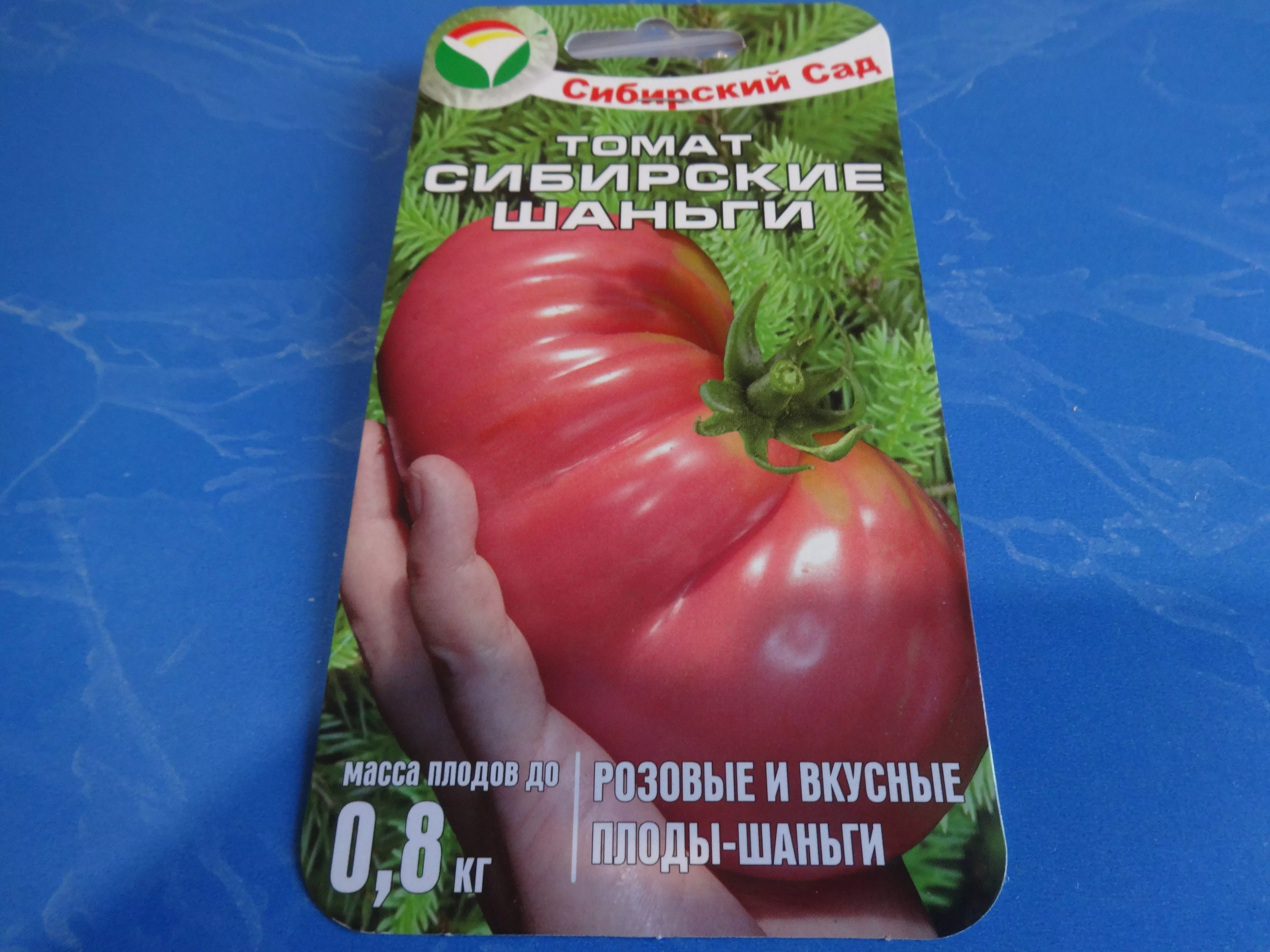
Siberian Shan'gi
This variety attracted me with its beautiful packaging. And I, too, wanted to have a tomato like this one, one that doesn't fit in the palm of your hand.
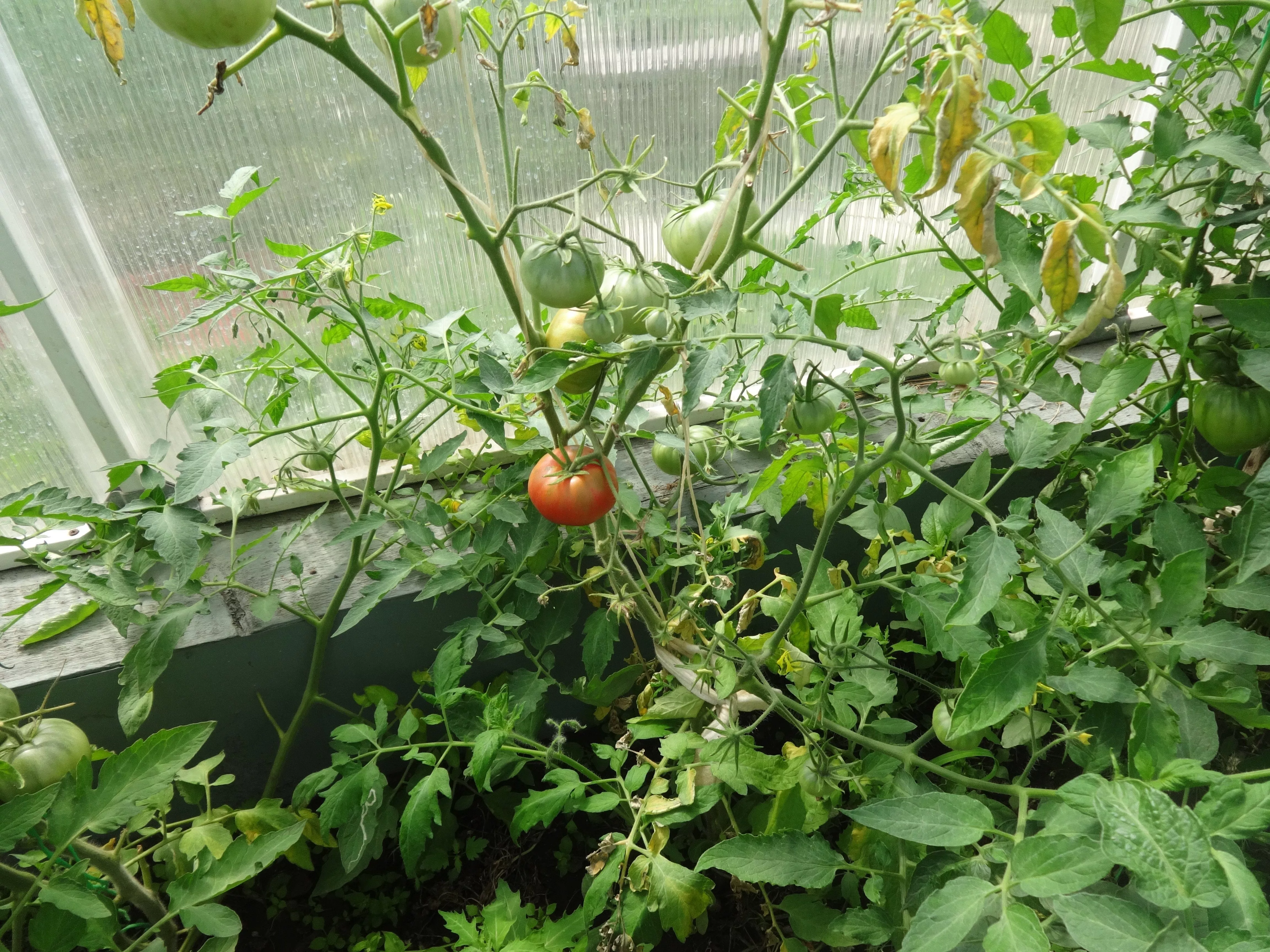
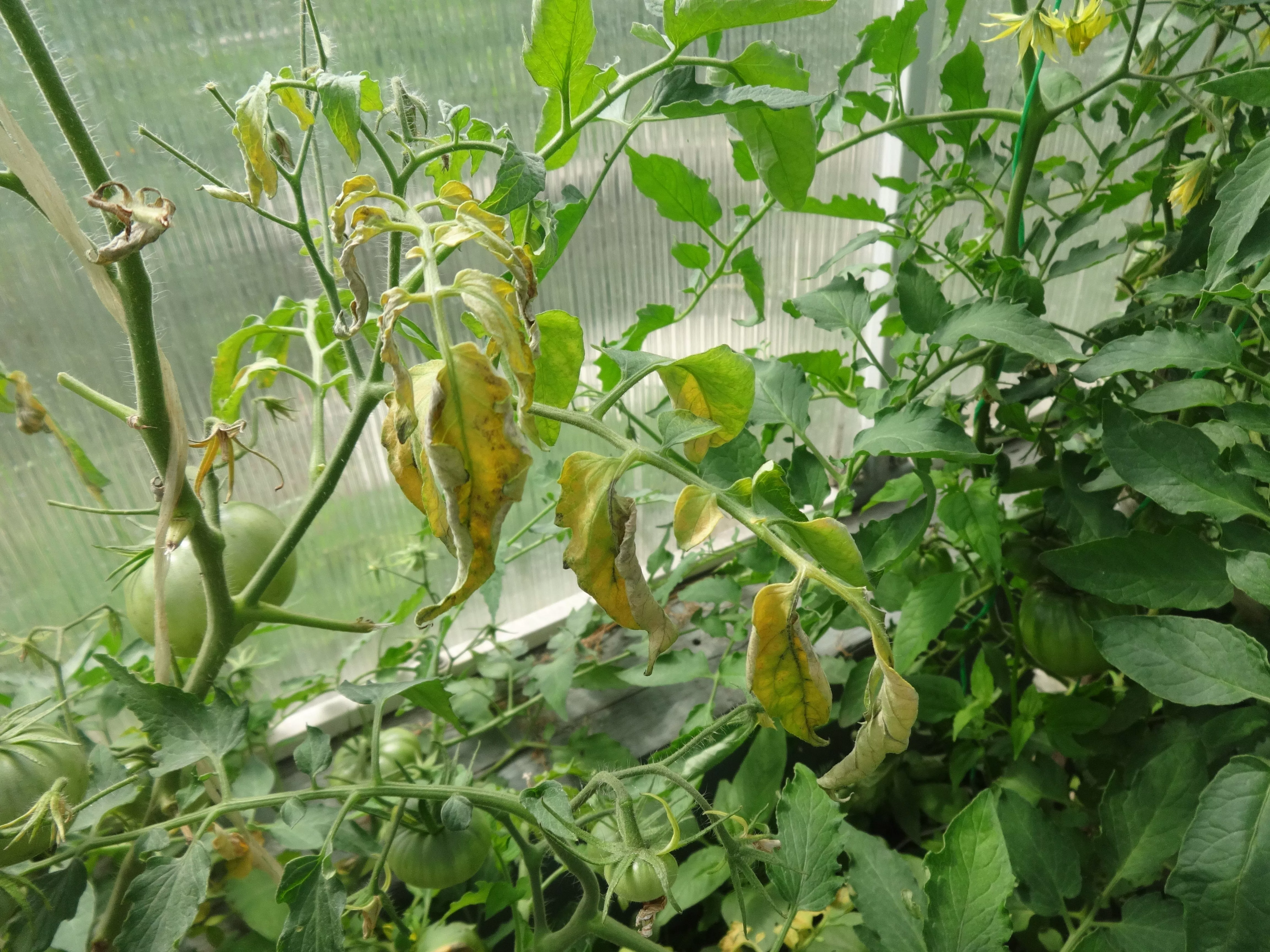
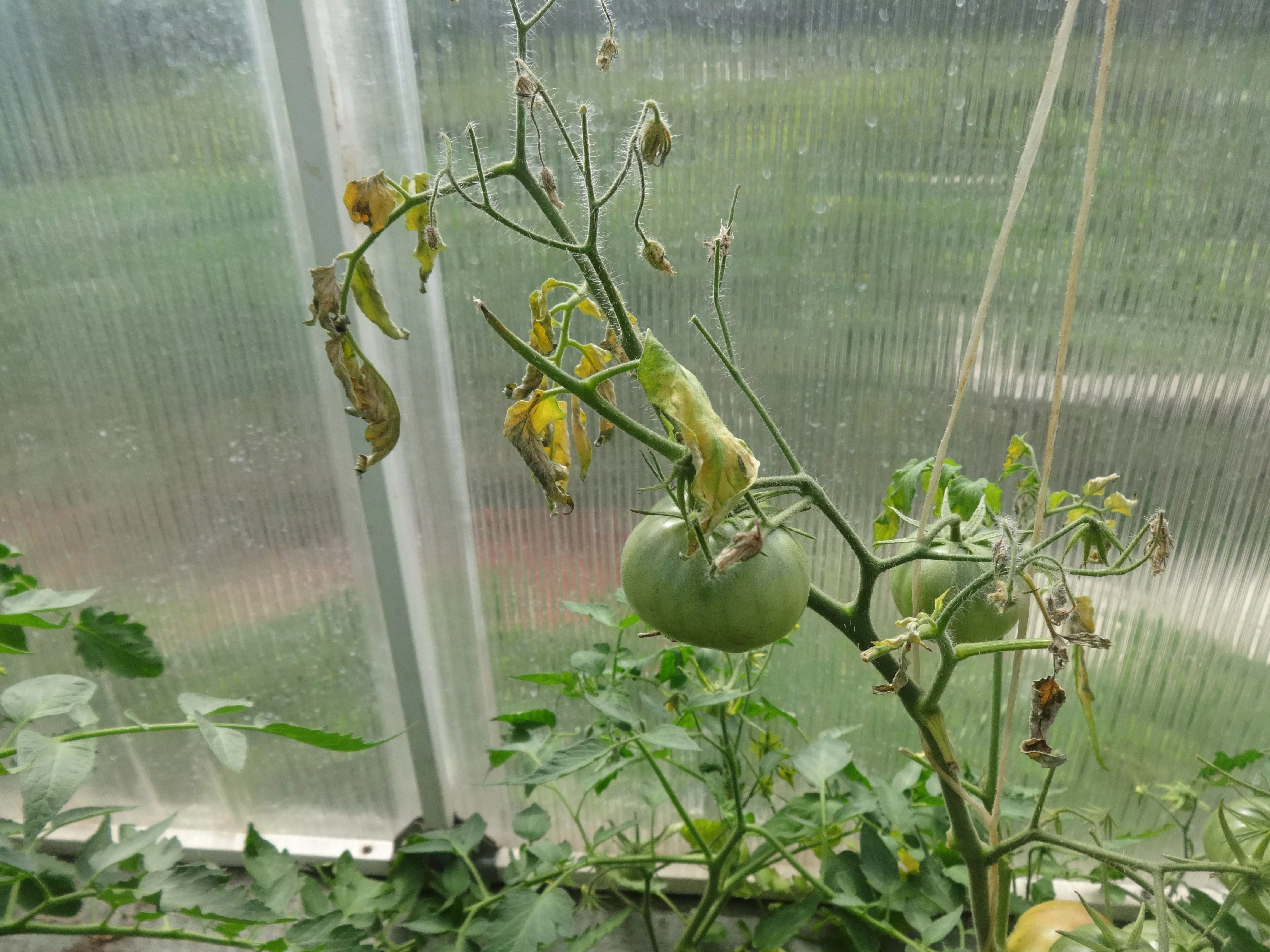
The seedlings of this variety looked great, not stretching much. But in the greenhouse, when flowering time arrived, the bushes began to experience problems. The lower leaves first wilted, then turned bright yellow and dried out.
It was very hot here at the time, and I thought it was because of the heat; the soil was very dry, which is why they wilted. I picked off all the leaves and watered the plants well, but the other leaves behaved the same way. Tomatoes started to form on the top clusters, but the other clusters didn't have time to set fruit because they also dried out. The leaves on the side shoots, however, were green, so I didn't remove them.
I treated the tomatoes with phytosporin, watered the soil, and sprayed the bushes. As a result, the tops of two bushes completely dried out, while the side shoots grew and produced a harvest. I also treated the third bush, but some leaves and blossoms still dried out. The fruits on two bushes were medium-sized, some very small, and on the third bush they were larger, but not like the ones in the picture. They might have been larger, but the most productive clusters broke off.
In short, I had a total problem with the Siberian Shan'gi. I did like the taste, though. The tomatoes are pink, juicy, and sweet. But I won't be planting them next year.
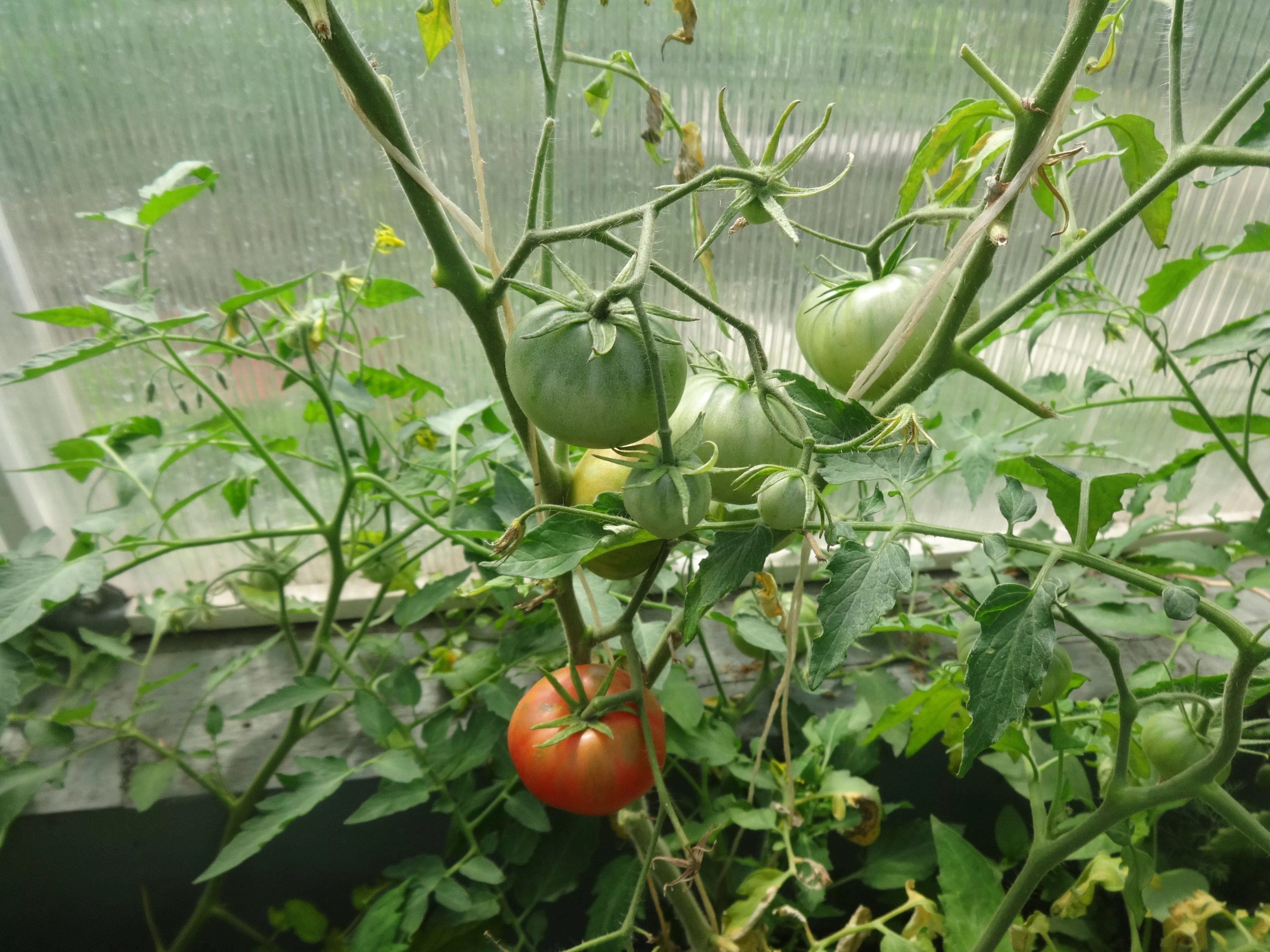
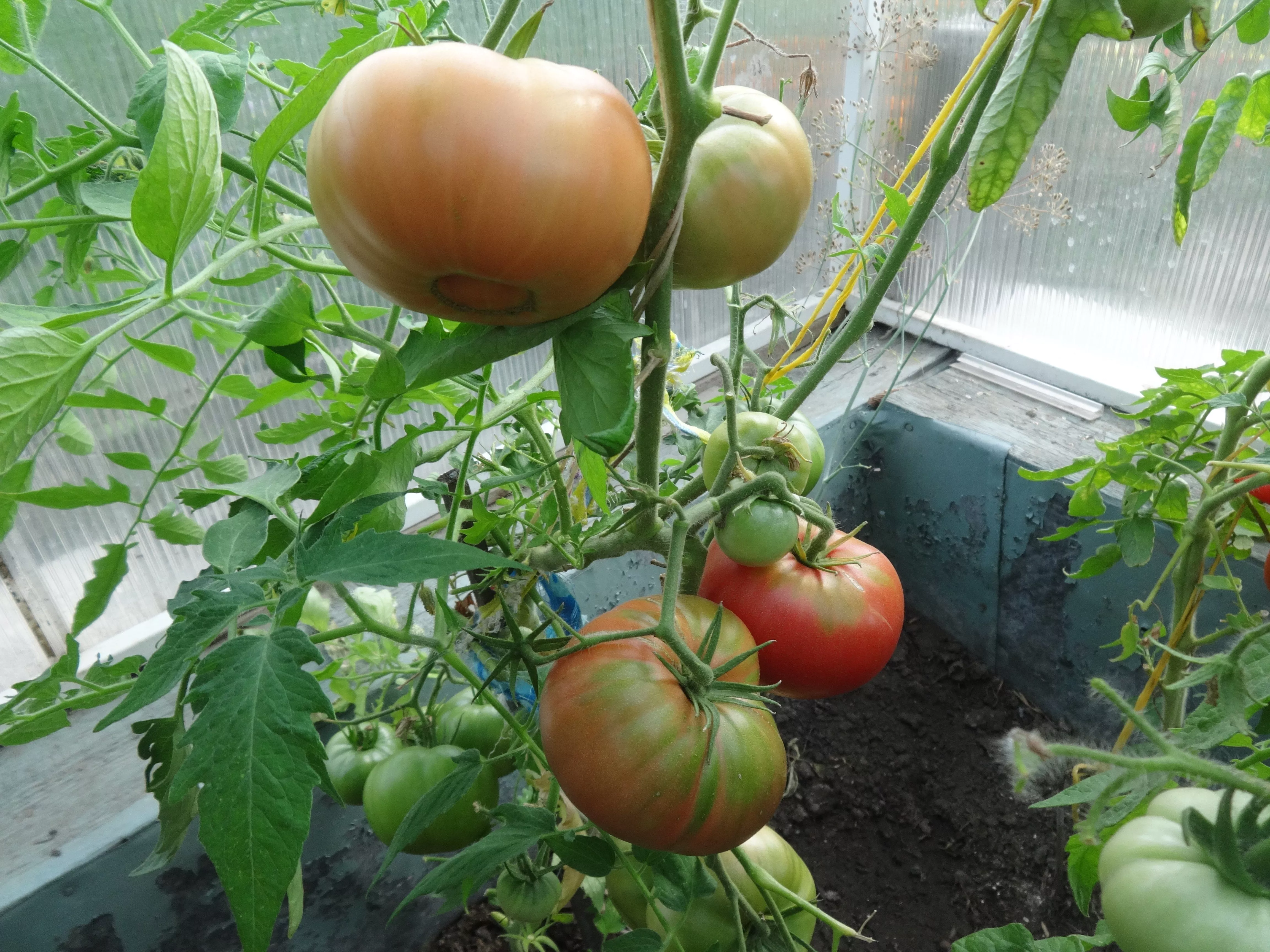
This year, some friends gave me seedlings of two tomato varieties. One was an apple variety, and the other was unnamed. I called it Grandma's Tomato. Here's how they turned out.
Apple
This tomato plant grows tall, with strong stems and large, broad leaves resembling potato leaves. The fruits are large, pink, thin-skinned, juicy, and delicious. During the hottest periods, some of the blossoms fell off, but when the heat subsided, the ovaries reappeared.
There are three tomato plants growing in the greenhouse, and one outside. It's quite puny, having been broken off at the root, so I put it in water. When the roots appeared, I transplanted it into the ground. It's caught up with the other plants, but it's producing very few fruits. I'll collect seeds from the largest tomato and see how they perform.
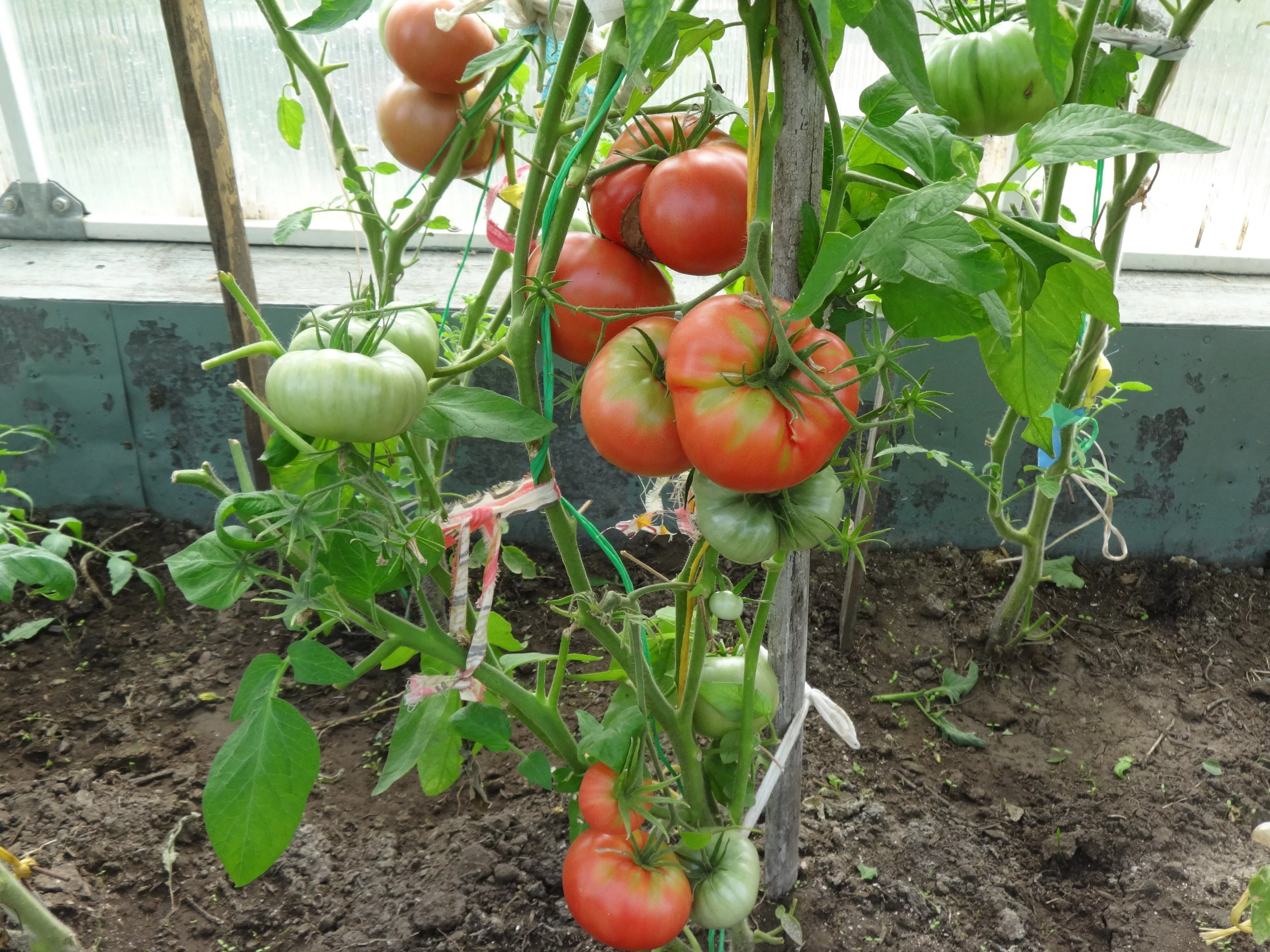
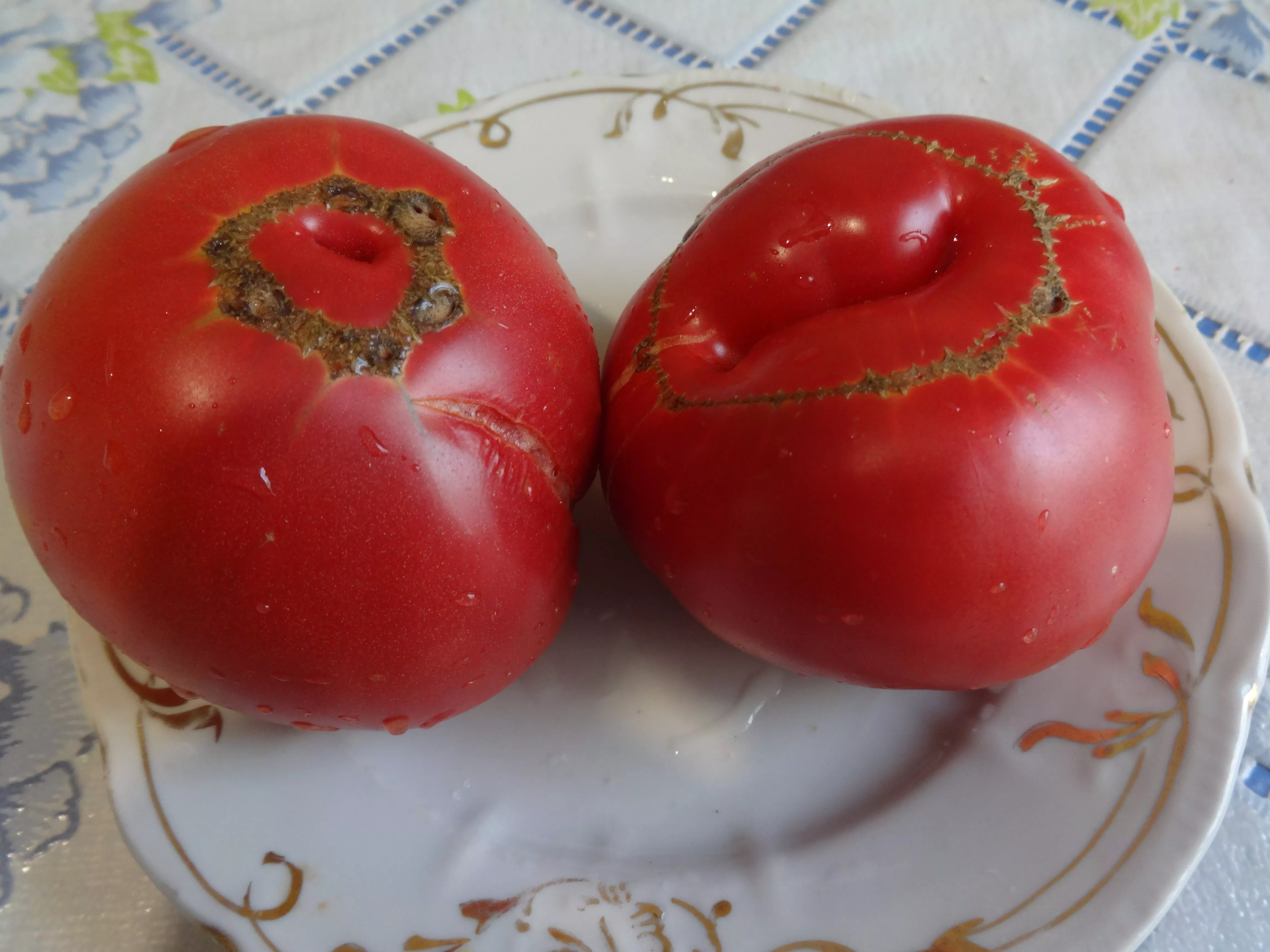
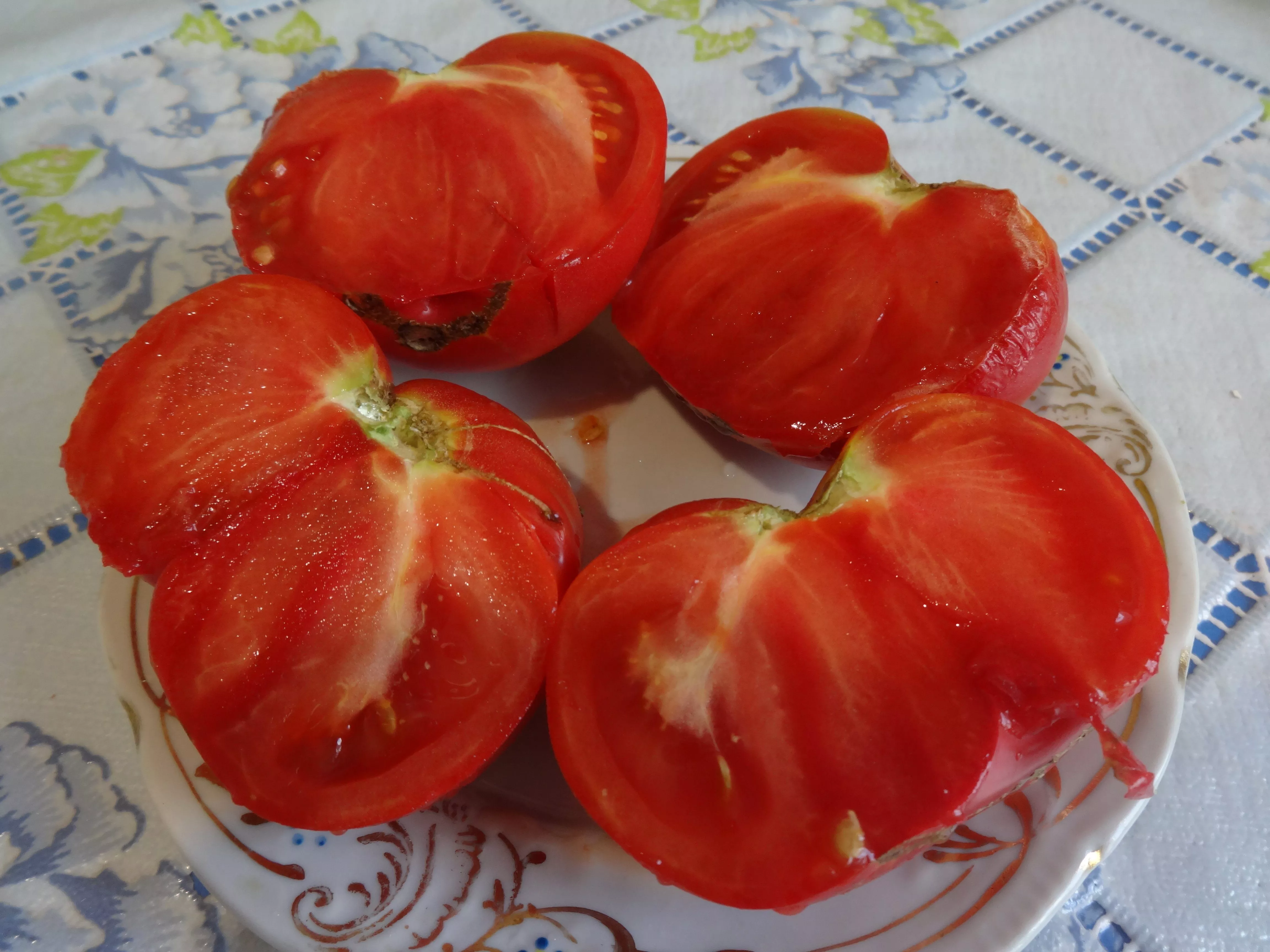
Grandma's
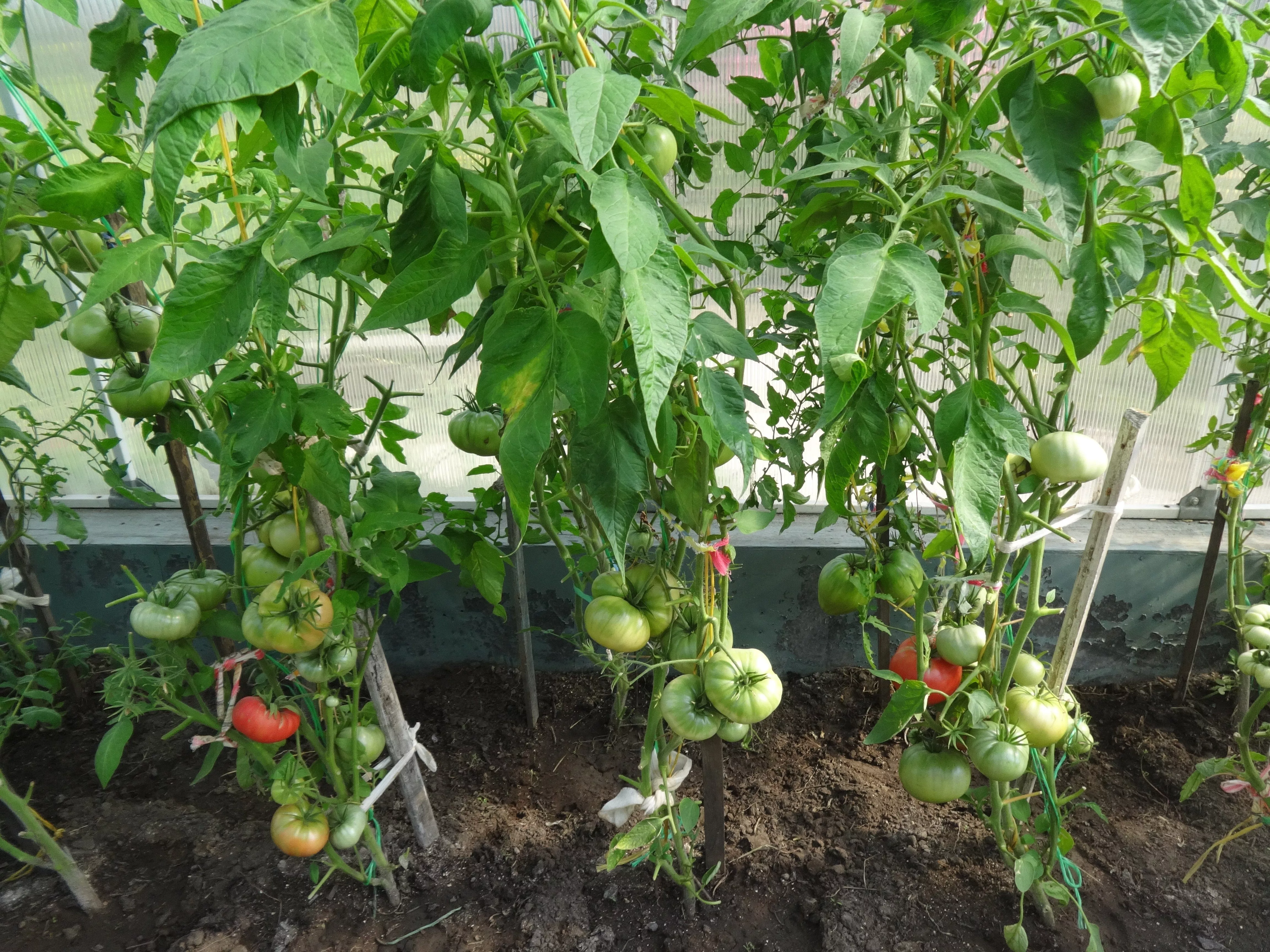
I called this unfamiliar tomato "Grandma's" because a grandmother I knew gave me the seedlings. I planted two of the plants in the greenhouse and the rest outside.
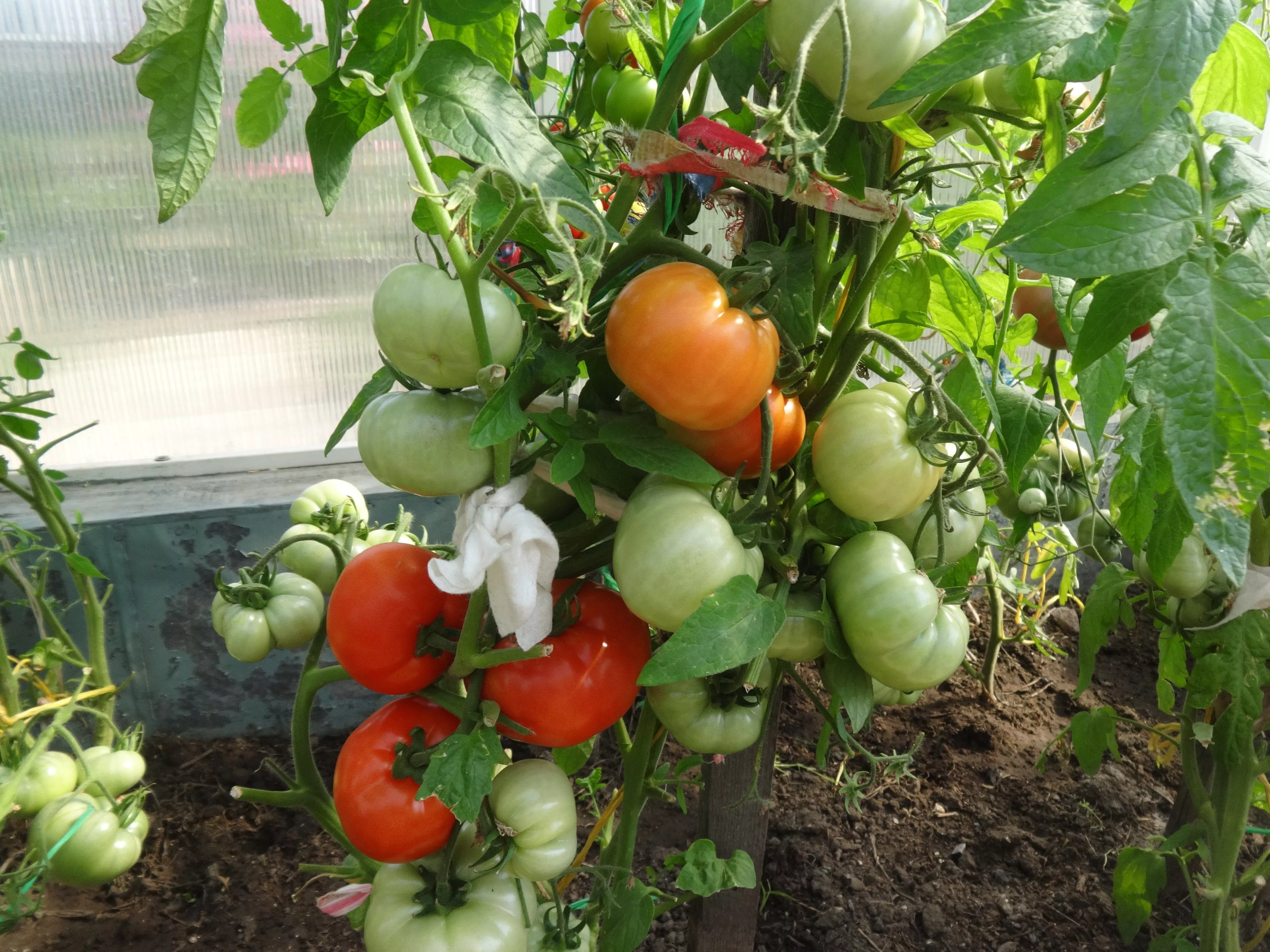
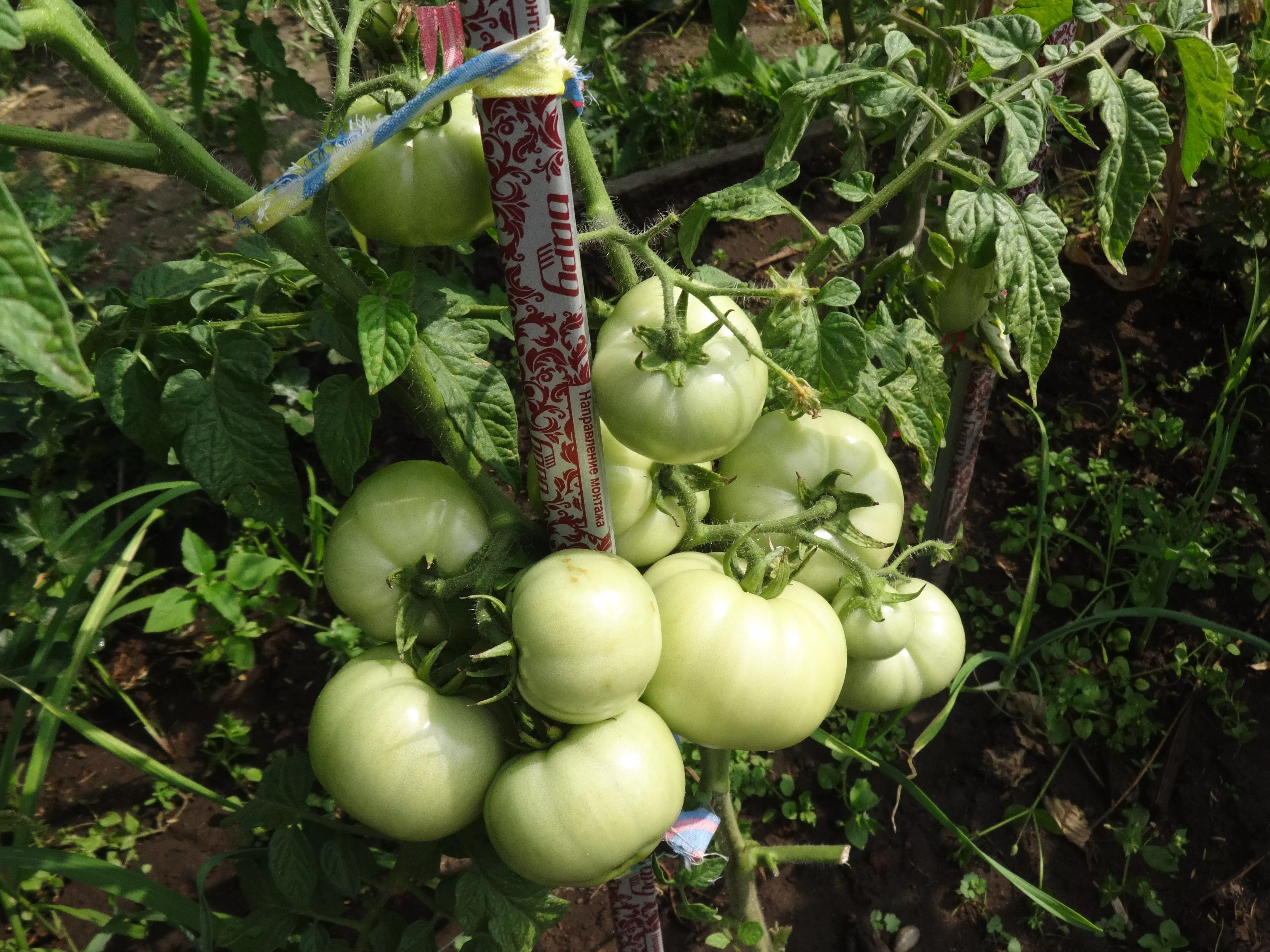
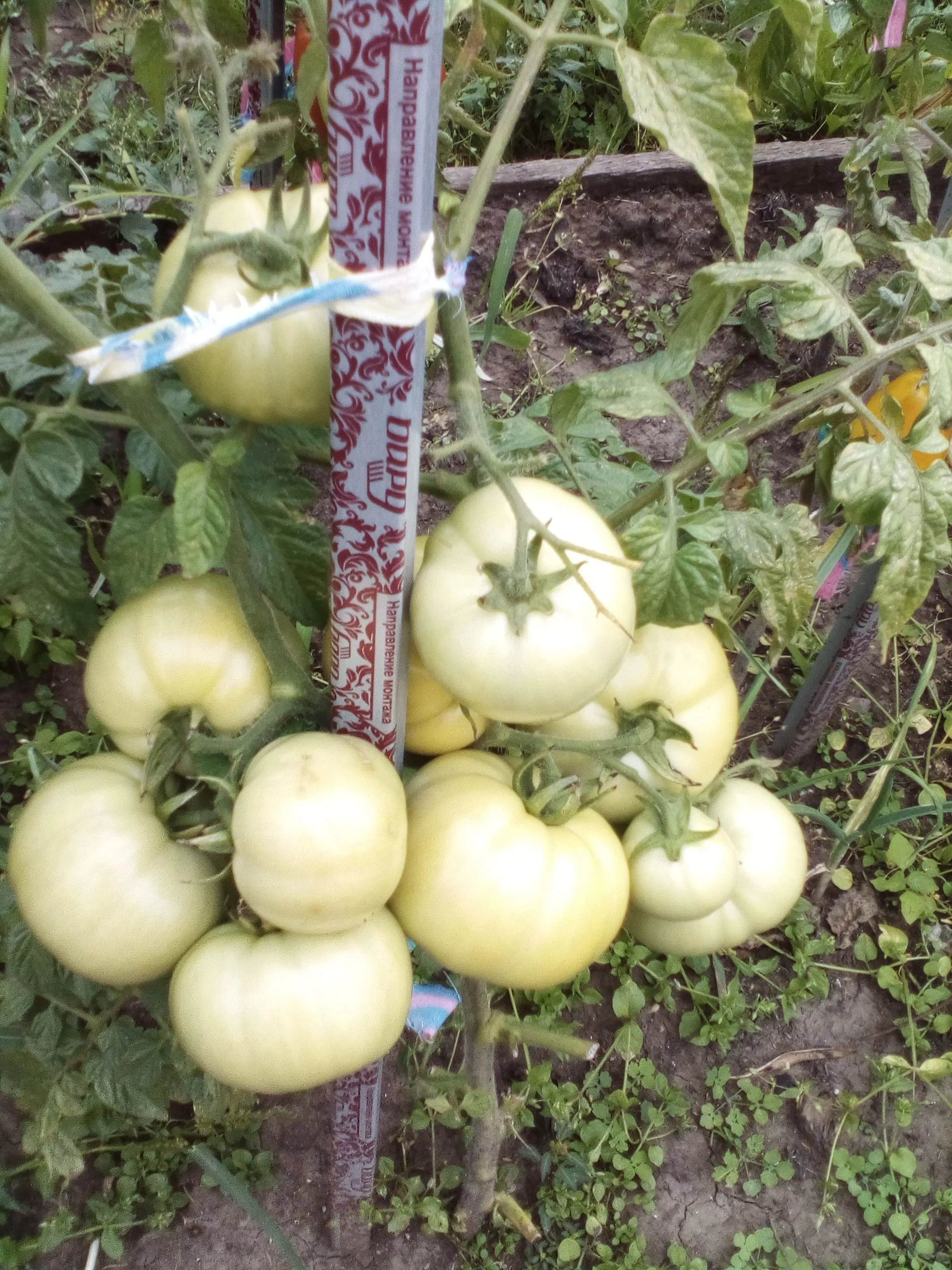
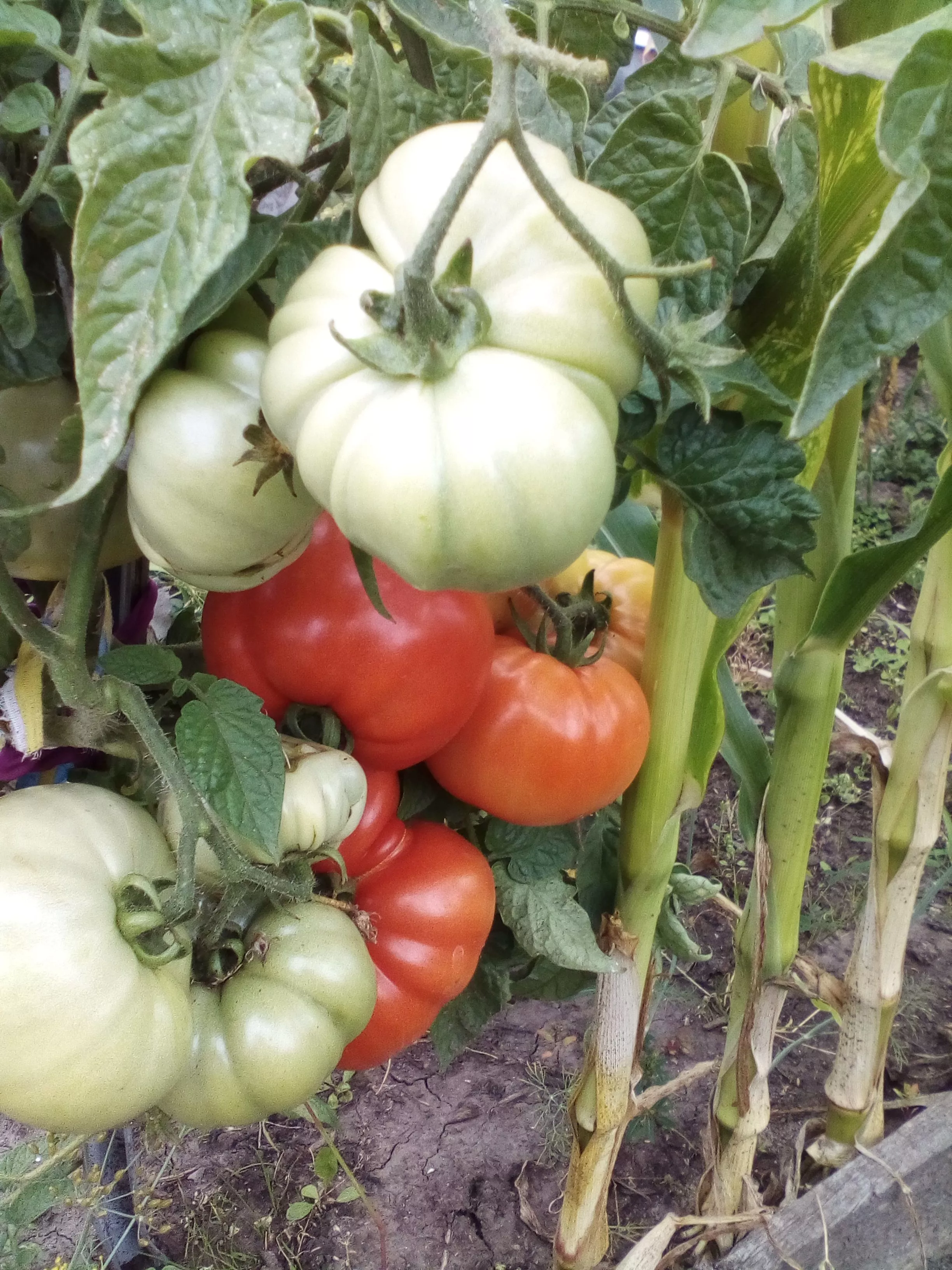
This tomato plant grows low and compact. I didn't remove any side shoots from the ones in the greenhouse, but I did remove them from those growing in the open ground. The fruit set well, and the tomatoes in the clusters are of varying sizes, some small and some quite large.
The fruits look beautiful on the bushes; they're light green, almost white. Ripe fruits are red, slightly tart, juicy, and have a crispy flesh, somewhat reminiscent of the tomatoes you buy in winter. My husband said they're plastic. But I'll still collect the seeds and plant a couple of bushes outside next year.
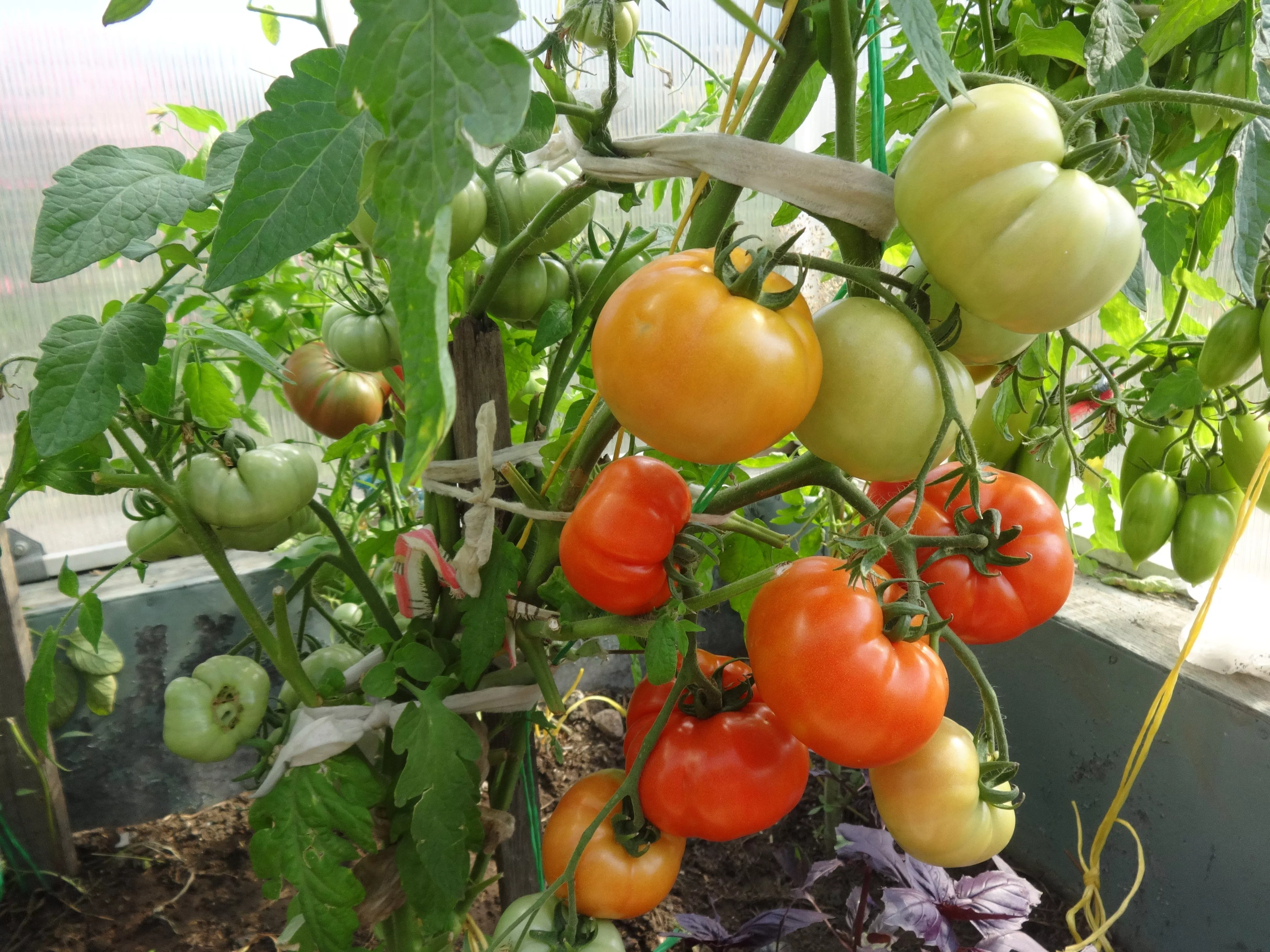
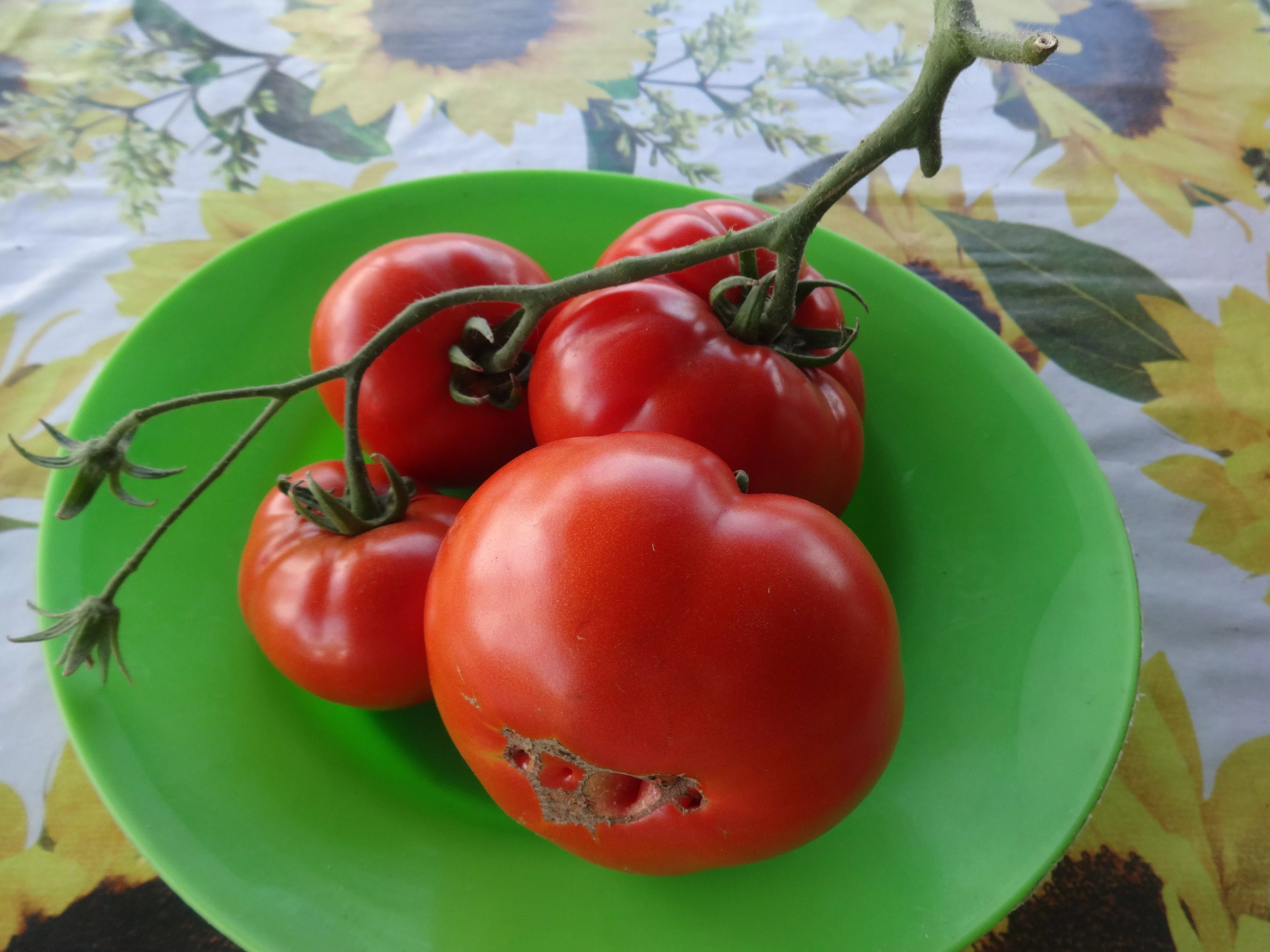
These are the tomatoes we grow at our dacha. Tell me what varieties of tomatoes you grow at your place. I'm very interested.