

Foreigner Sanvitalia
She moved in with me.
Maybe originally from Italy?
No, she's from Mexico!Golden daisies,
Like suns burning,
There are dark spots in the center
My gaze is drawn to them.
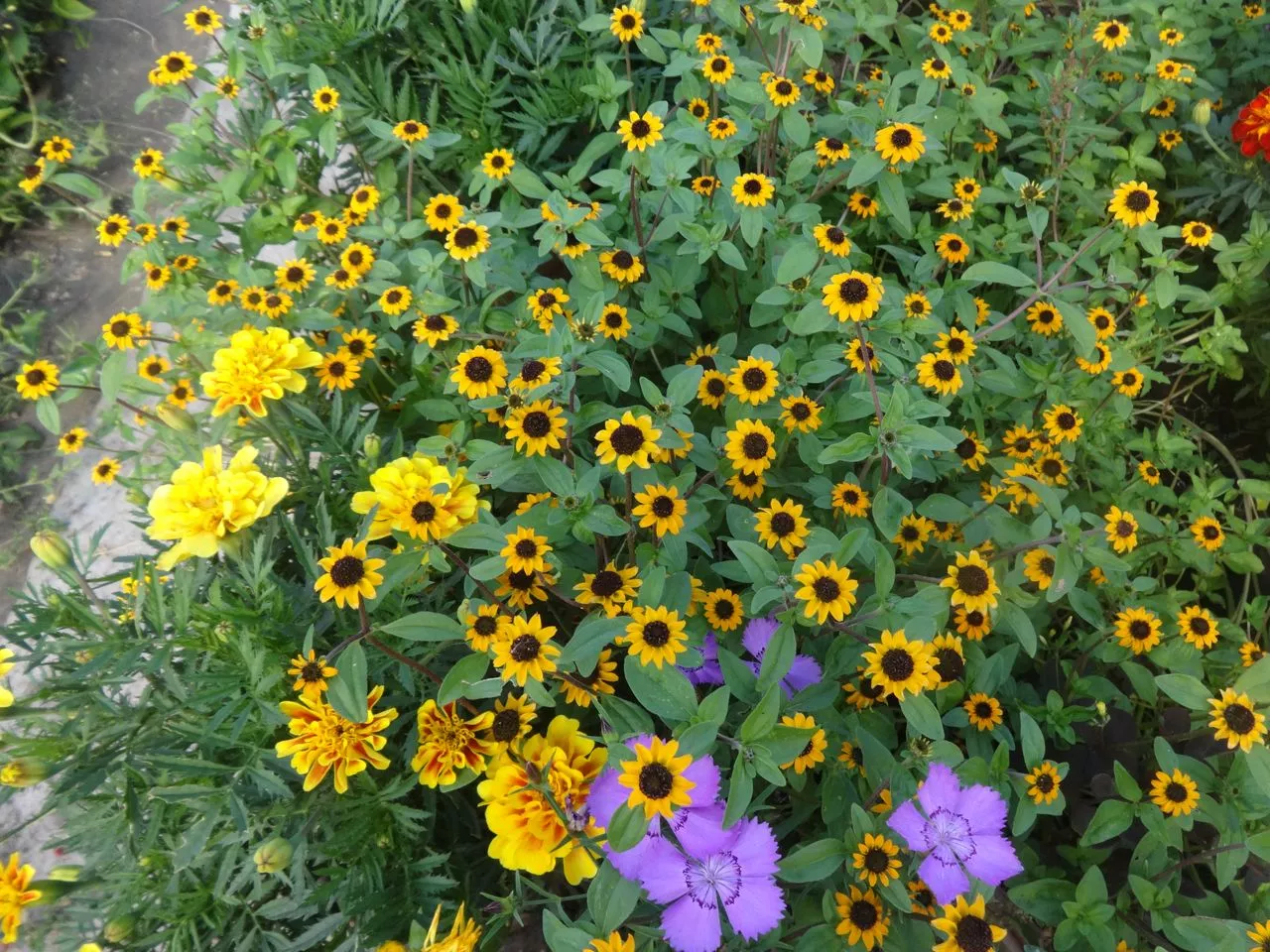
Sanvitalia is another new flower I planted this spring. Sanvitalia procumbens, a member of the Asteraceae family, is native to Mexico.
I had never seen a flower like this before and bought it because I liked the little sunflowers with dark centers inside that were pictured on the seed packet.
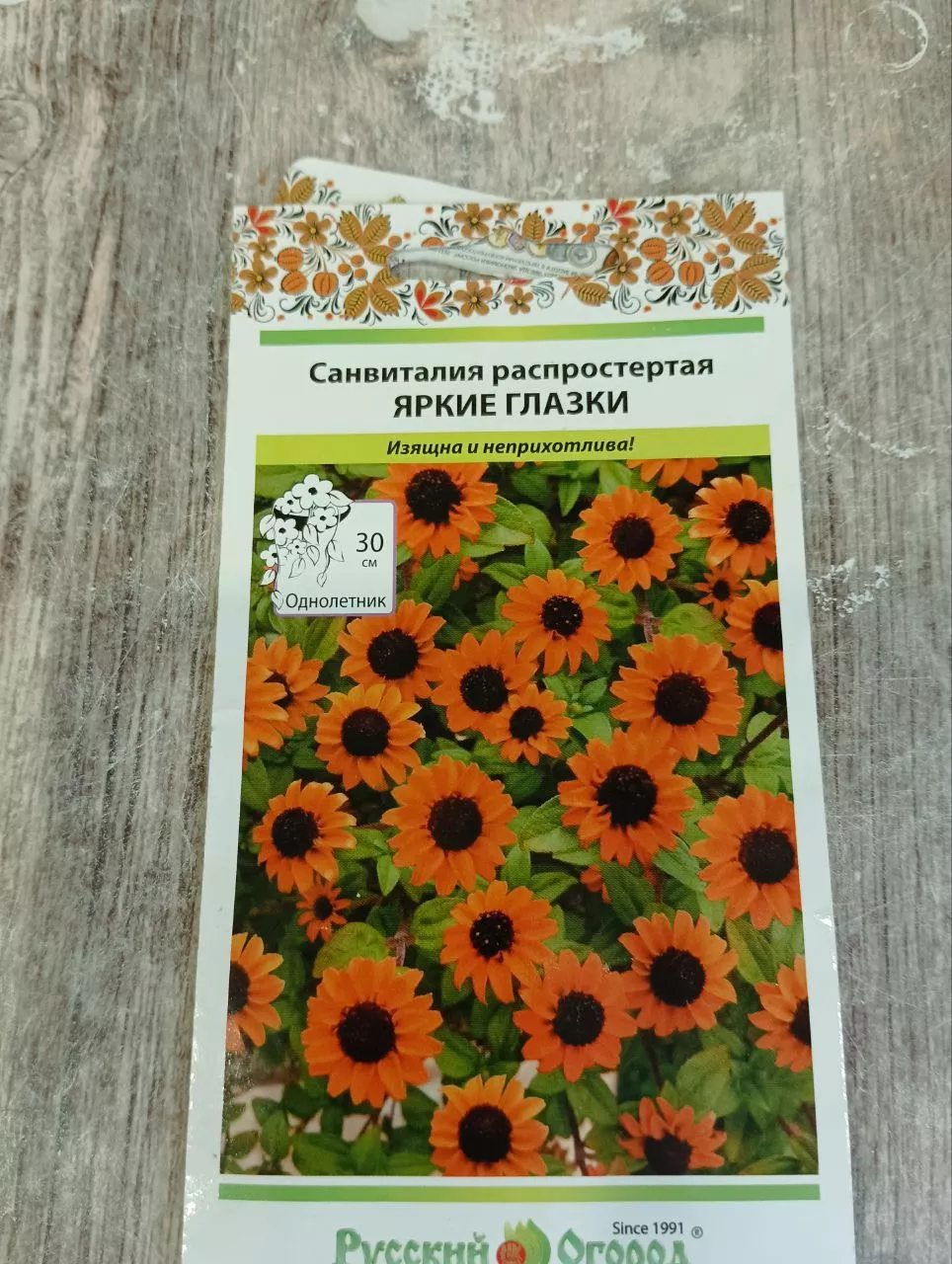
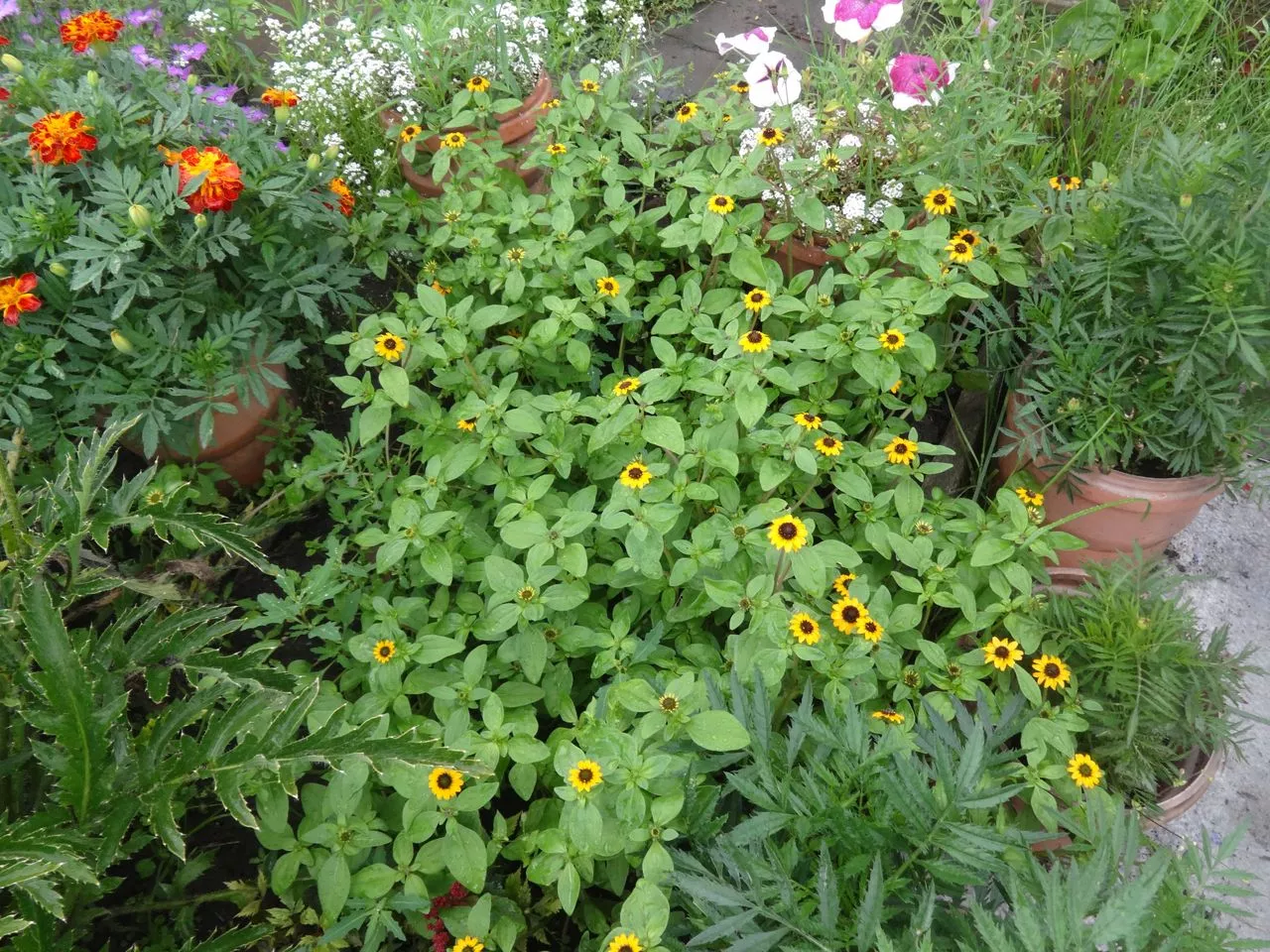
The Bright Eyes variety is a low-growing, creeping annual plant, reaching up to 30 cm in height. Its branched stems spread outward, and my plant quickly expanded beyond the flowerbed, spreading its stems with numerous small, brightly colored flowers into the surrounding space.
Sanvitalia somewhat resembles zinnia; the leaves are similar, but small, green, and slightly pubescent. The inflorescences are small, bright yellow heads with a large, dark eye; it's no coincidence that the variety is called "Bright Eyes."
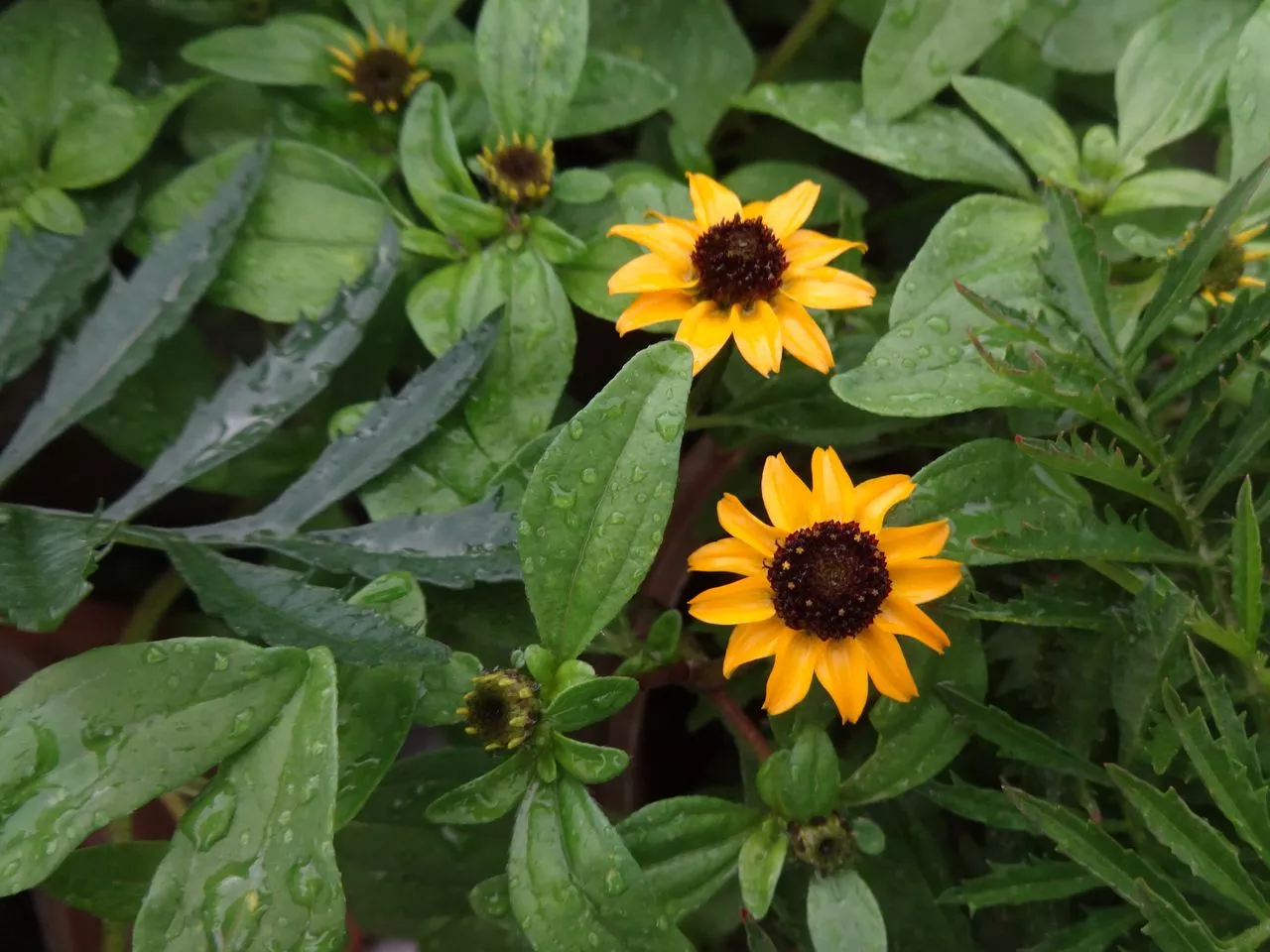
My sanvitalia started blooming in mid-June.
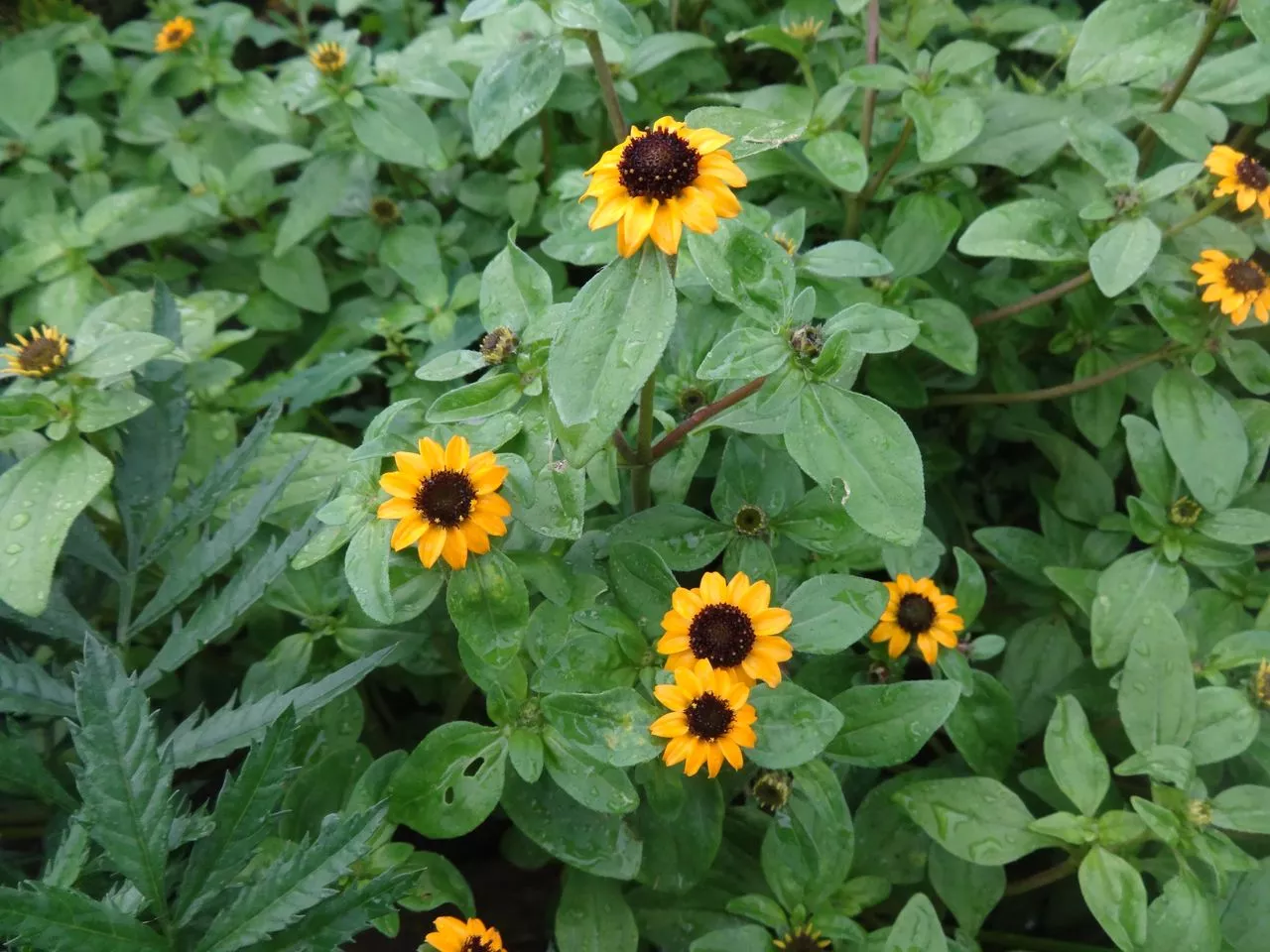
This is an unpretentious flower and very beautiful. It has survived our capricious, rainy Siberian summer, which alternates between hot and cool.
At the end of August it blooms profusely and I think it will bloom until the first frost.
I grew Sanvitalia from seedlings. I sowed some of the seeds indoors, but the seedlings were thin, stretched out, and fell over, despite growing under a grow light. An attempt to transplant them into a separate container was unsuccessful. Even in a larger container, the stems fell to the ground and bent; I had no idea it was a trailing plant. So I simply threw out the capricious seedlings.
In April, I sowed the seeds in the greenhouse. The seedlings grew well in the greenhouse and were strong, compared to those grown indoors. At the end of May, I planted them in open ground in the foreground of the flowerbed, next to white alyssum and lilac carnation.
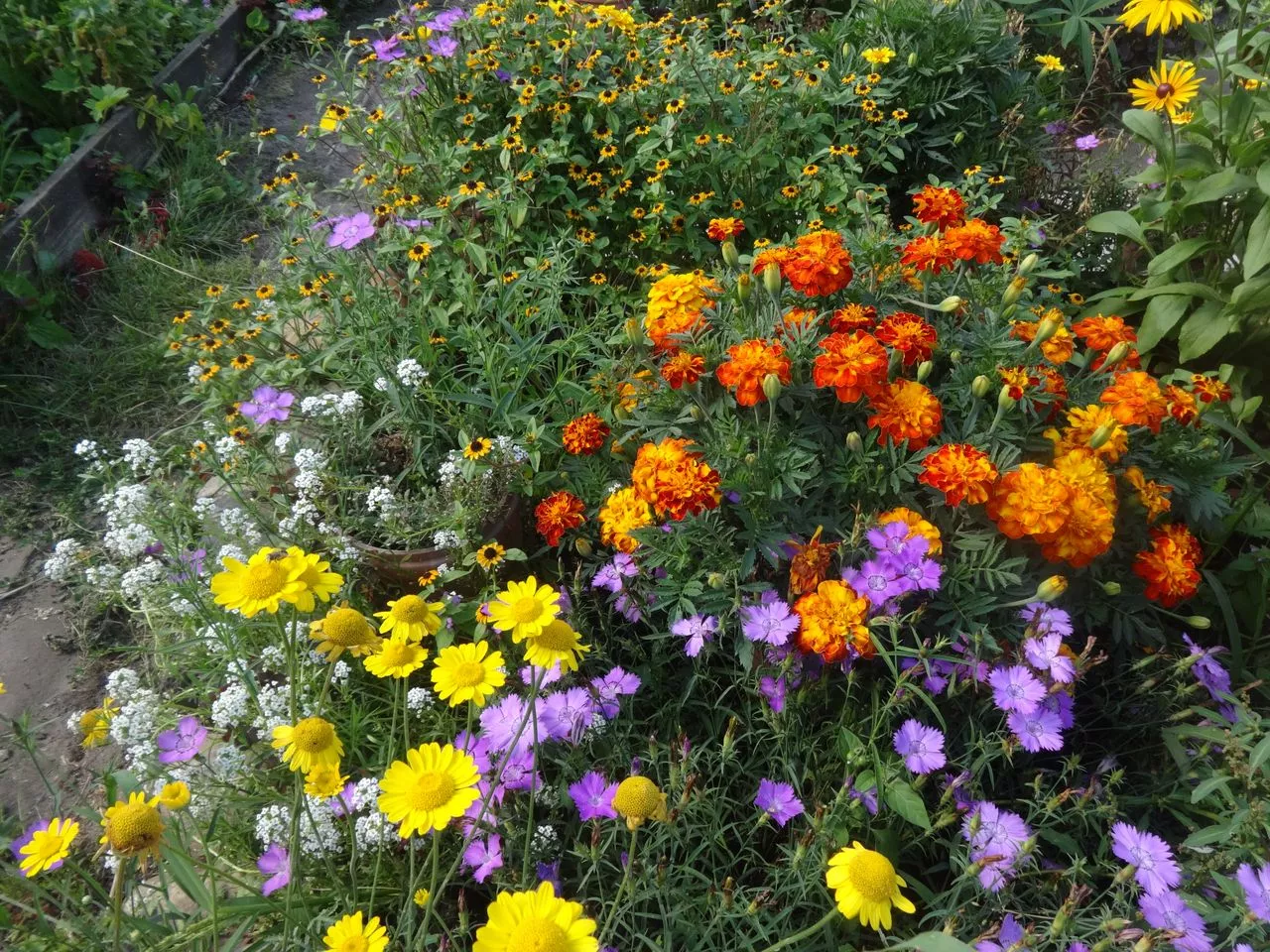
Sanvitalia grows quickly, and soon it took over a large space, its stems spreading onto the marigold pots growing along the path. Some of the pots had to be removed and relocated.
I liked the Sanvitalia; it's easy to grow, grows quickly, and blooms profusely. Rain didn't harm it, and there were no diseases. No aphids or other pests nibbled at the leaves. It requires minimal care, just watering in the heat, and I didn't fertilize it.
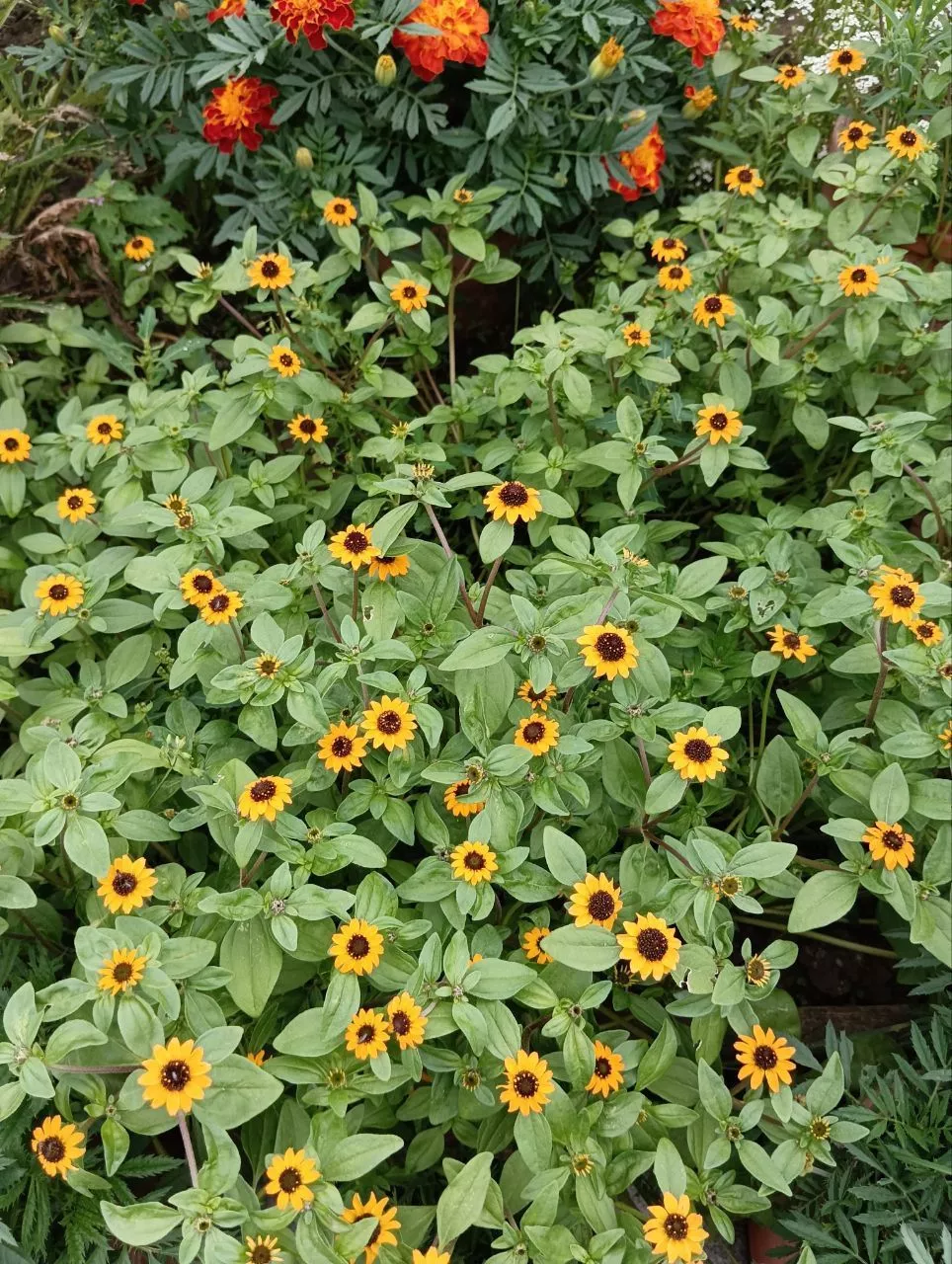
I even thought about trimming a few bushes in the fall, transplanting them into a pot, and taking them home. After all, it could easily be grown in a hanging planter. The long stems of the sanvitalia, covered with miniature yellow-orange flowers, would cascade down the edges of the planter, and it would be very beautiful.