

The Carpathian bellflower blooms all summer long,
It rings silently, calling the bees to itself,
The sky is reflected in its blue colors,
And the colored dewdrops tremble on the leaves,
They water it with mushroom rains in the heat,
Bellflower, handsome, I admire you!
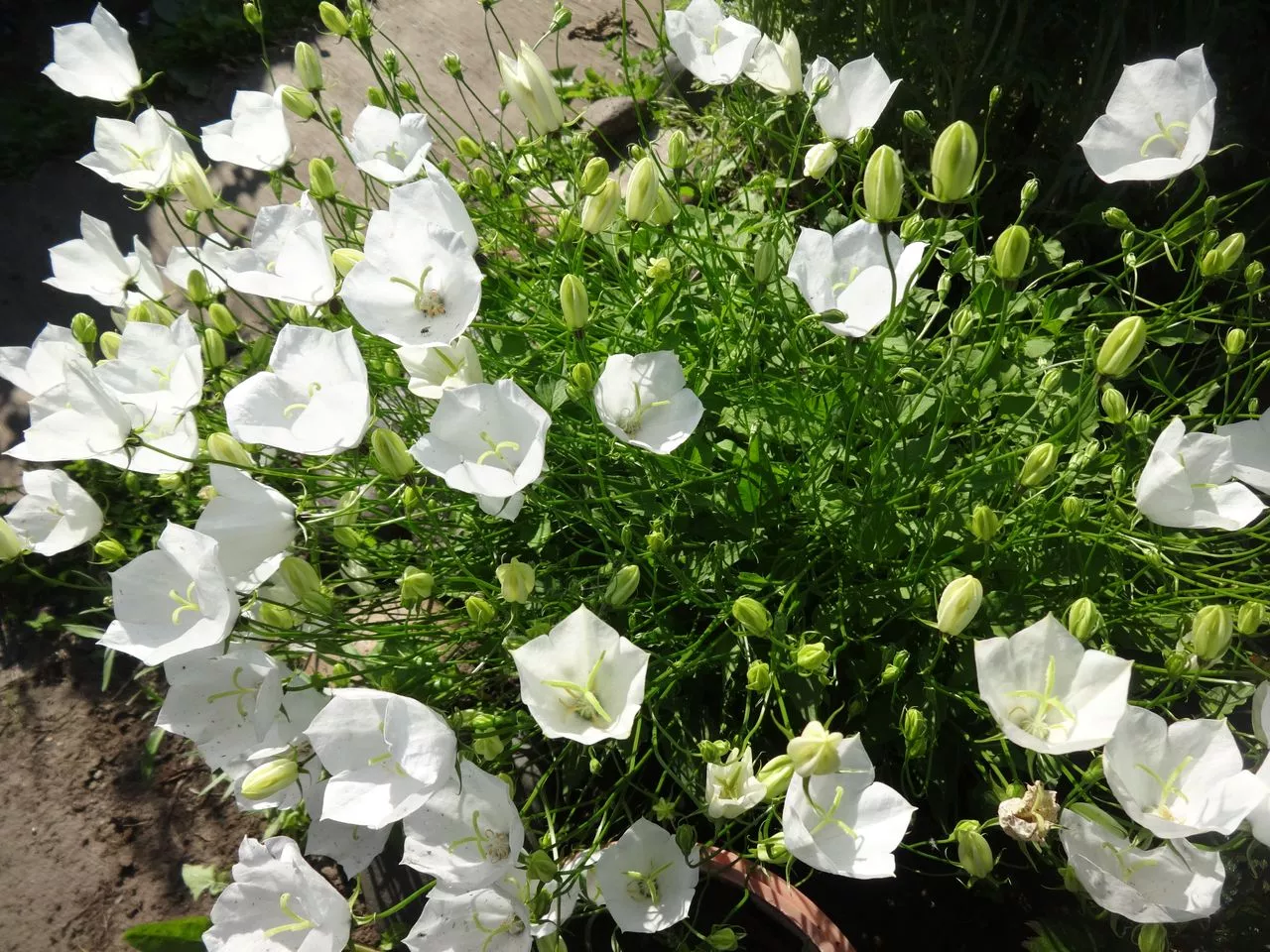
The Carpathian white bellflower has been growing at my dacha for several years now. It's a perennial, undemanding, and winter-hardy flower. For lovers of low-growing plants, it's a real find. The bushes reach 30 cm in height, are neat and compact, and bloom all summer until frost. If you prune off the faded shoots and buds, new shoots quickly grow, and the bush blooms again.
This plant looks beautiful in the foreground of a flowerbed or rock garden. It can also be used as a border plant. It loves full sun and will bloom profusely if planted in a sunny spot.
I used to grow Carpathian bluebells at my old dacha. I'd always wanted to buy some seeds, and this spring I finally did.
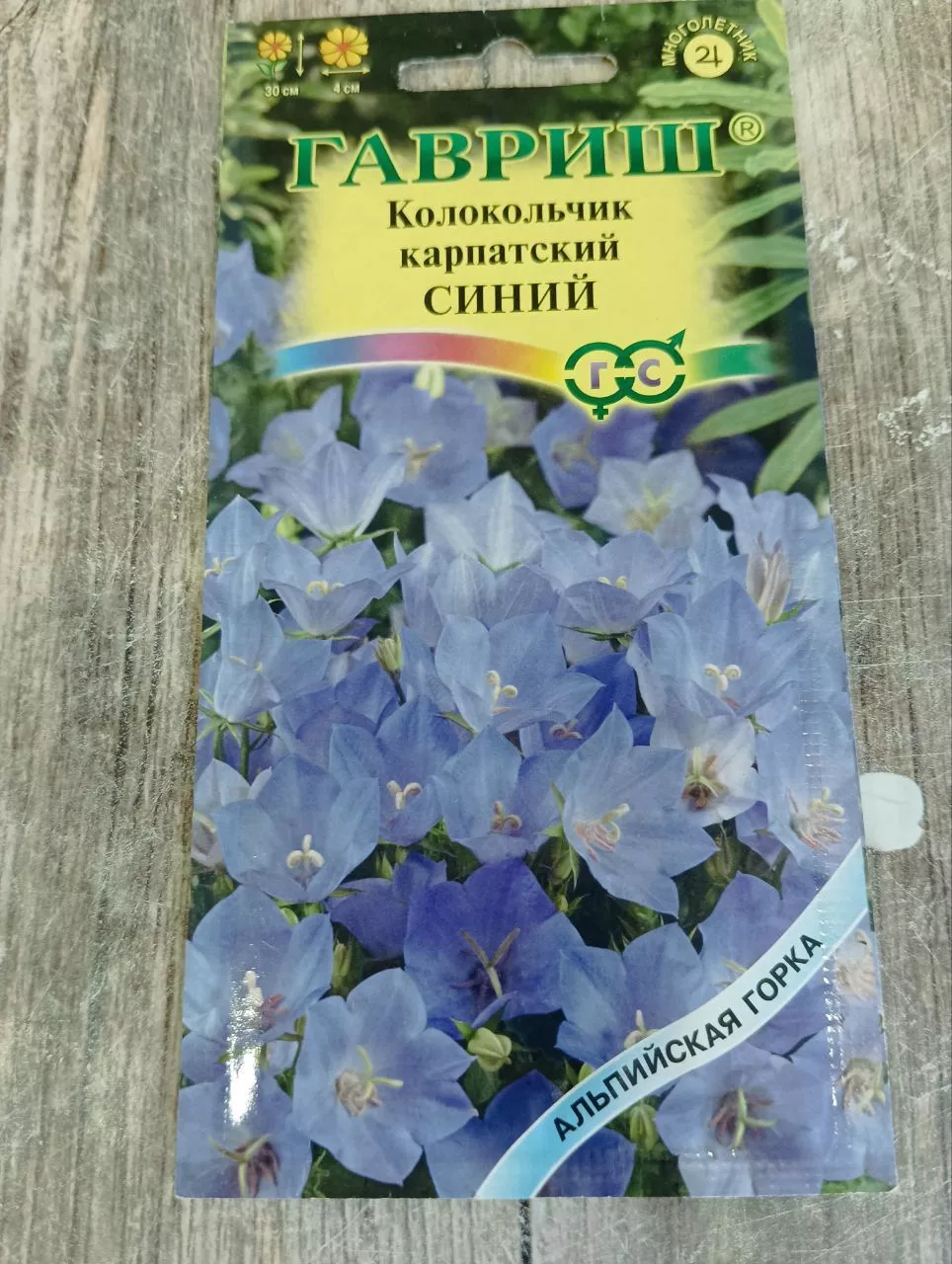
I decided to try growing bellflowers from seedlings. I sowed them at home in a small flower box with other flowers. Bellflower seeds are very small and don't need to be covered with soil; just sow them in damp soil and cover with a plastic bag or glass. The seeds sprouted quickly. The seedlings were tiny and stretched out, even though they were grown under a grow light.
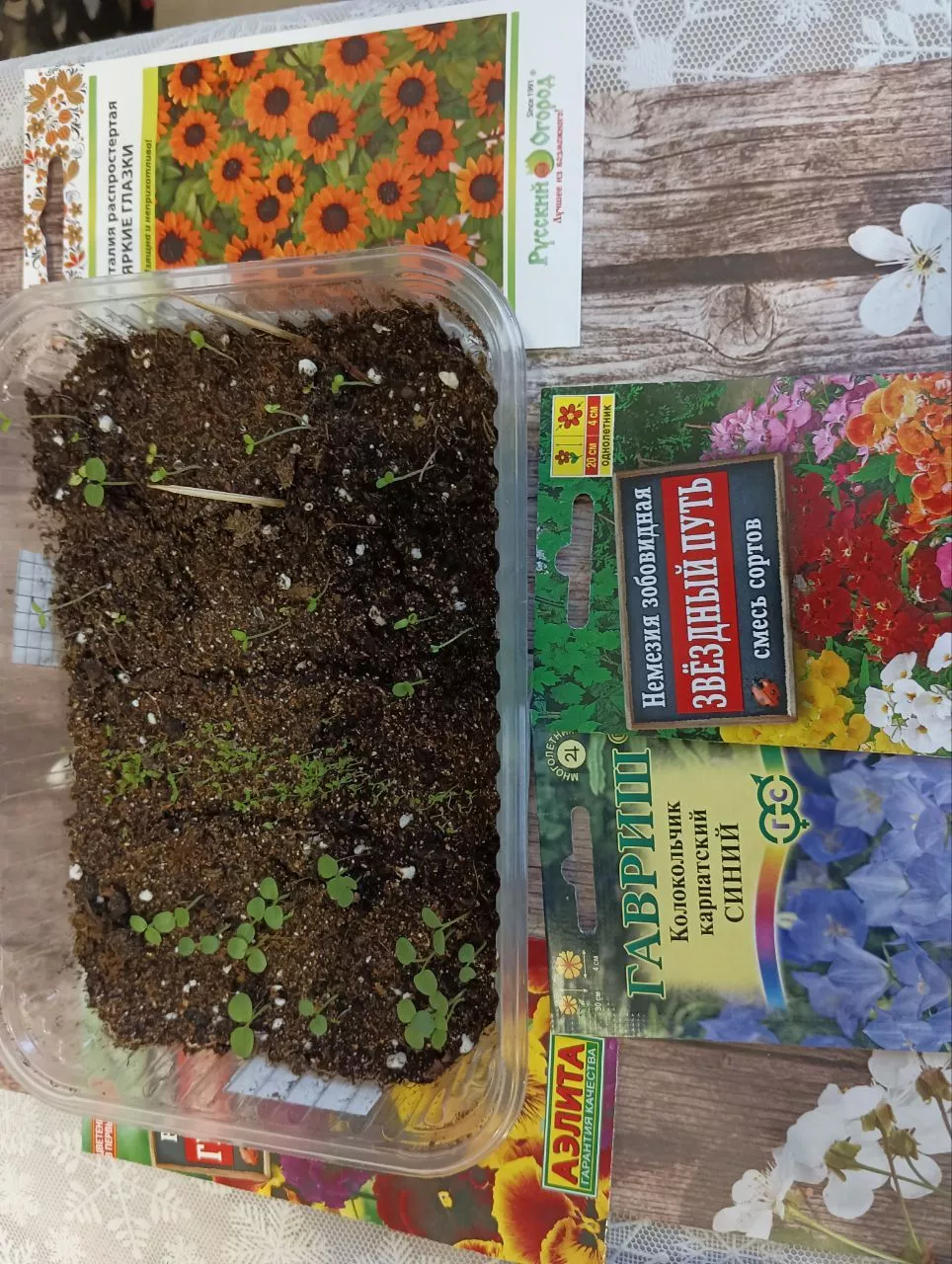
Later, when they grew a bit, I decided to transplant them into a separate container. The seedlings grew tall and fell over, and I soon threw them out. I decided to sow them outdoors in May.
But in April, I sowed them in the greenhouse with other annuals, separate from all the other flowers. And the bellflowers grew weakly in the greenhouse. But I so wanted them to bloom this summer. And I continued to care for the "sickly" seedlings. I planted them in open ground, transferring them from the pot to the ground in June, and I was constantly worried that the rain would kill my tiny bellflowers.
But in the open ground, they began to grow quickly. I planted the bellflowers along the edge of a small flowerbed with three lilies, and next to them I added white bellflowers and yellow rock alyssum, which I also grew from seedlings.
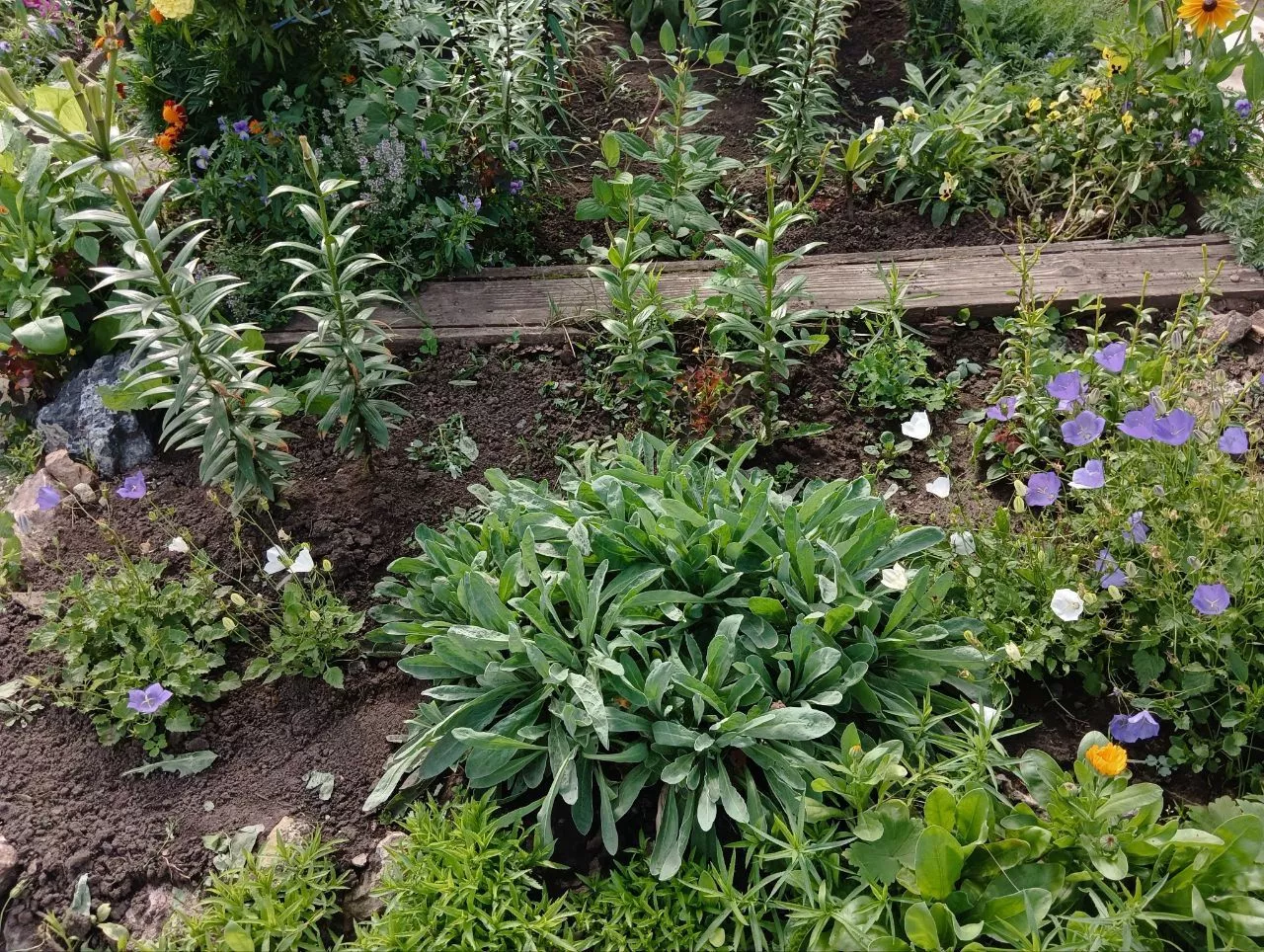
At the end of July, the bluebell produced its first buds and at the beginning of August, its first flower opened.
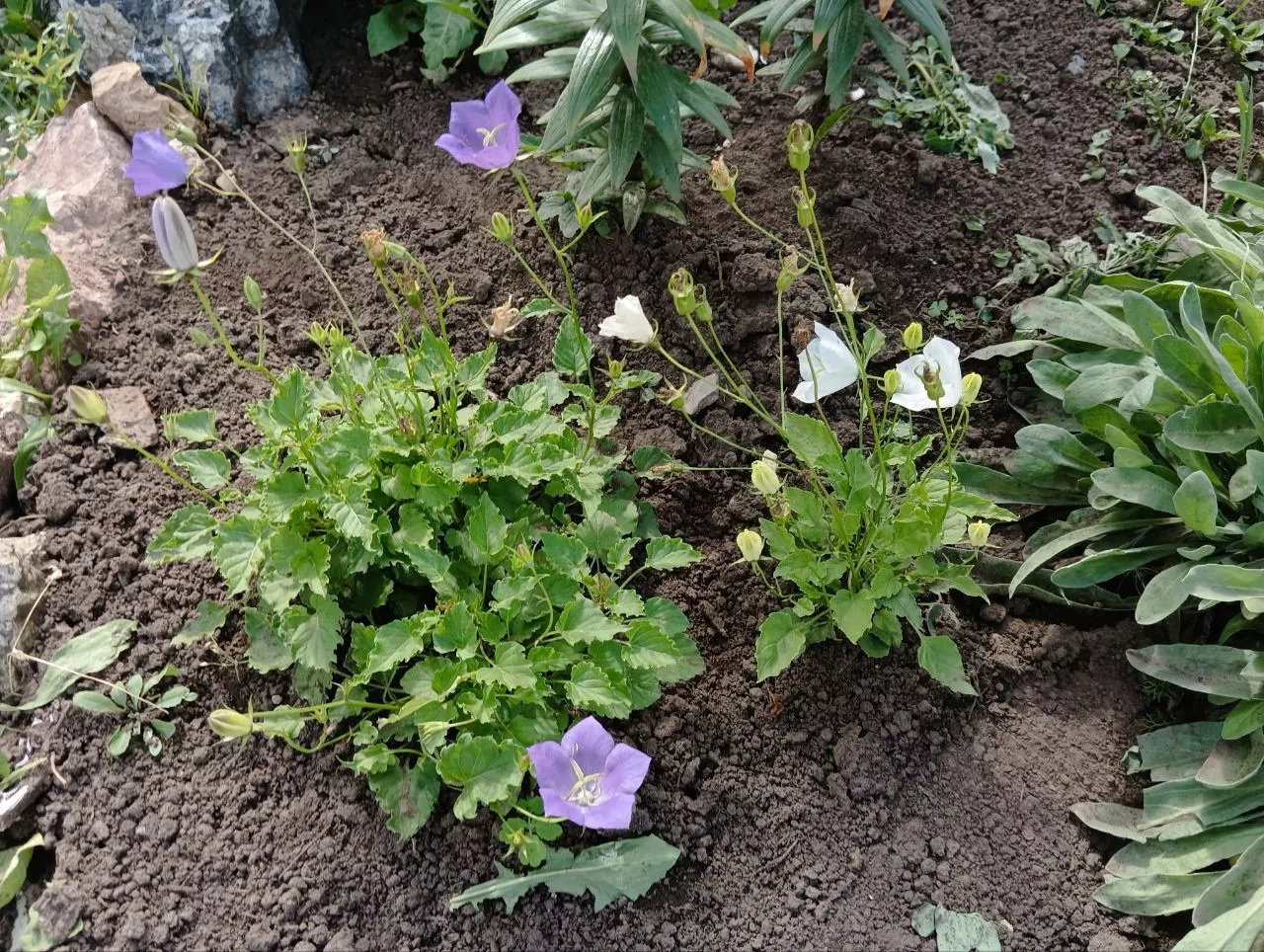
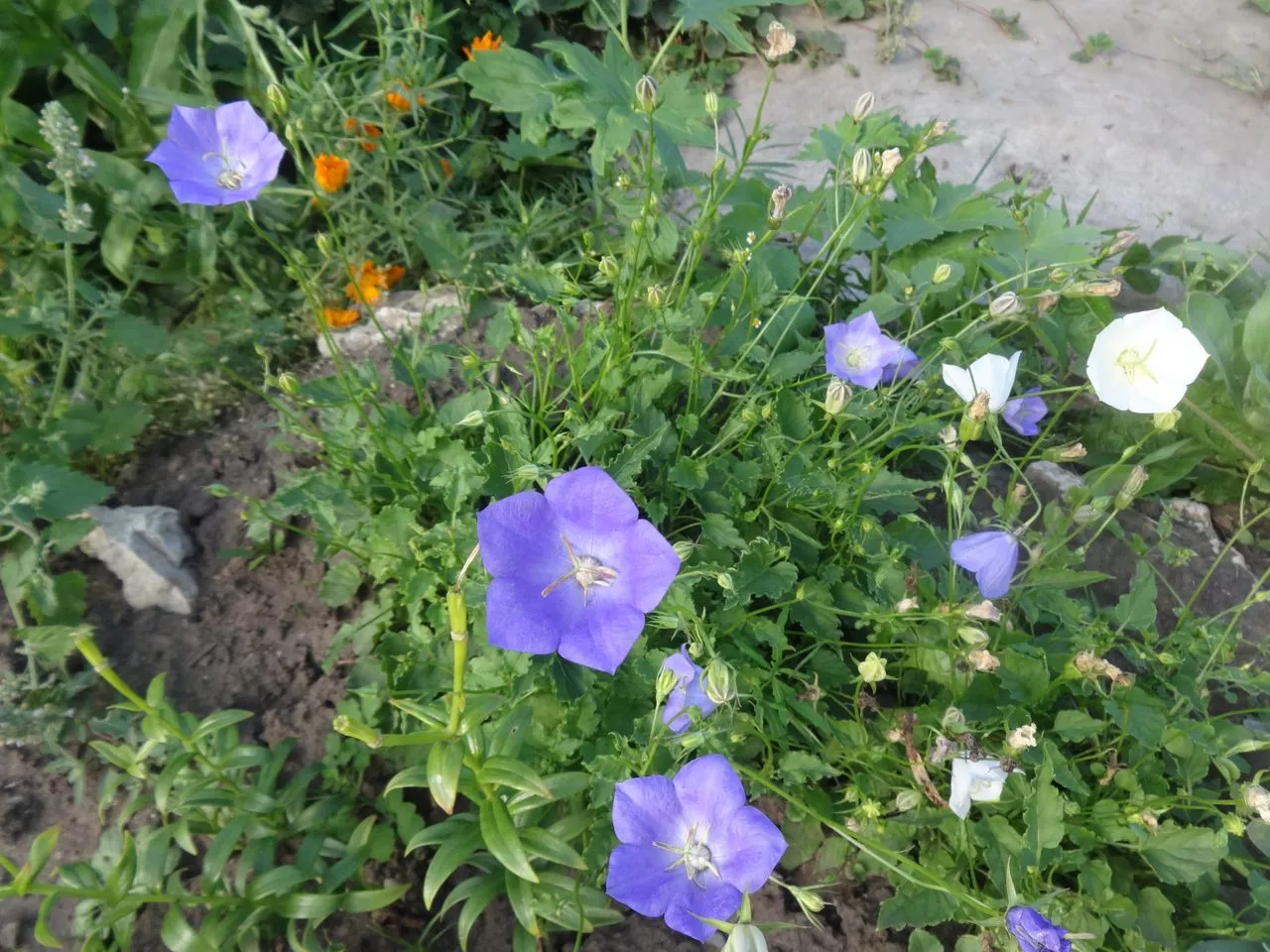
I now have these bells, a beautiful bright blue color. Every day, more and more of them bloom.
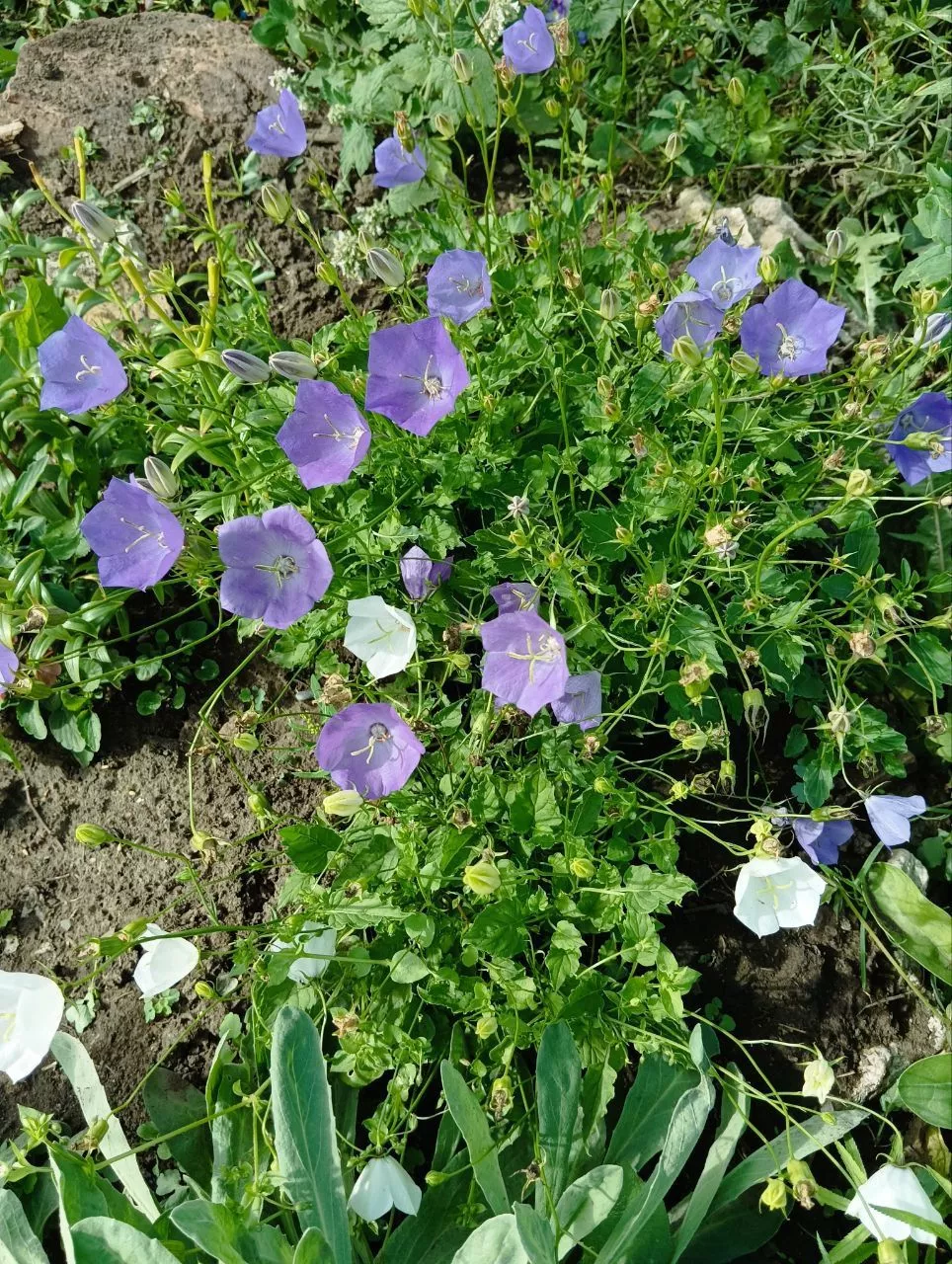
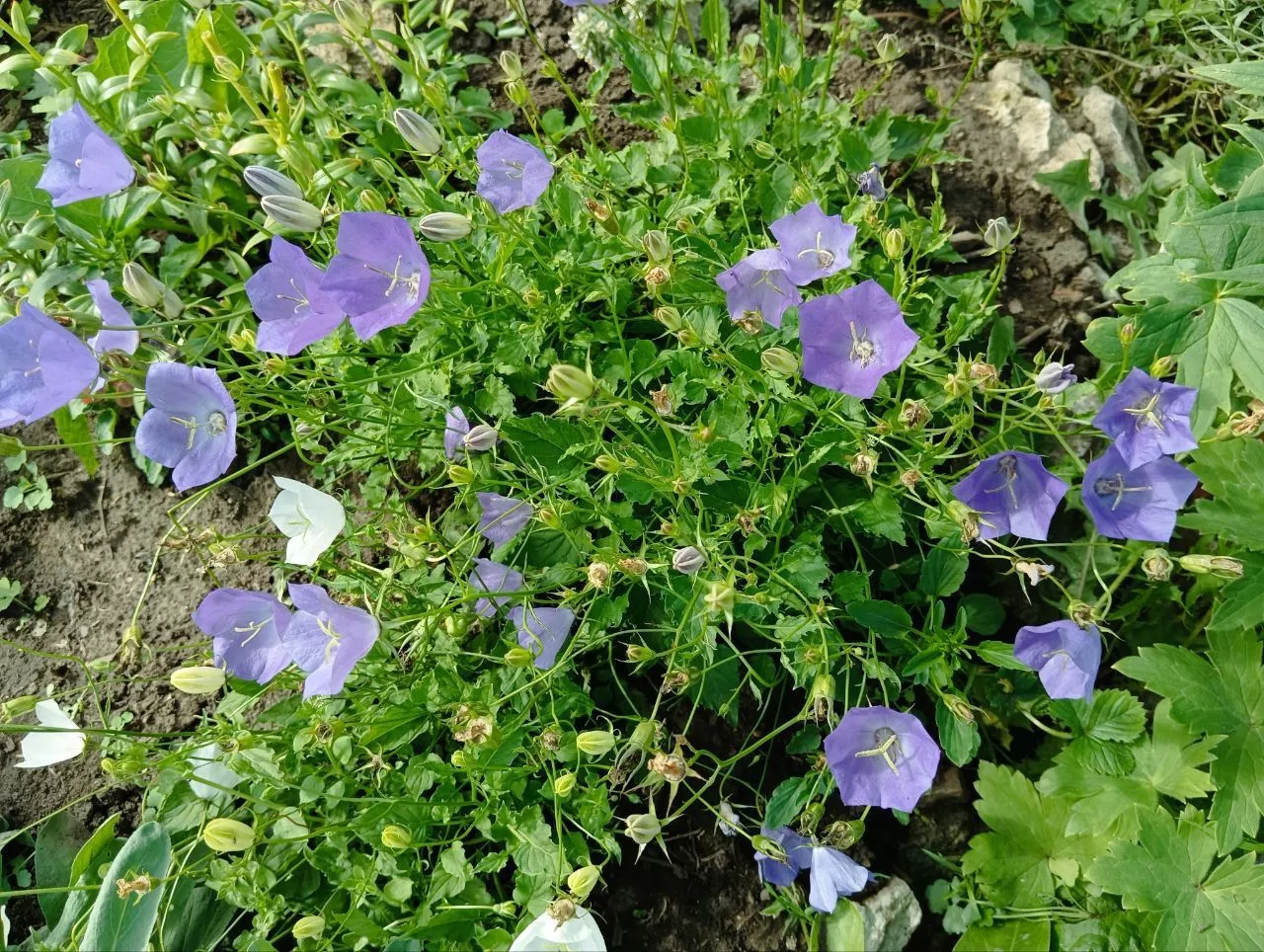
In the fall, I'll add some well-rotted humus under the bushes; this will provide nutrition for the plant and protection from frost in the winter.