
I have echinacea blooming in my flowerbed.
I've been admiring her since midsummer,
It's not just a panacea for colds,
But also a beauty, worthy of a poet’s pen!She attracts with fragrant nectar
Bumblebees, beautiful butterflies, bugs
And all the guests at the dacha are surprised
A large bouquet of pink daisies!
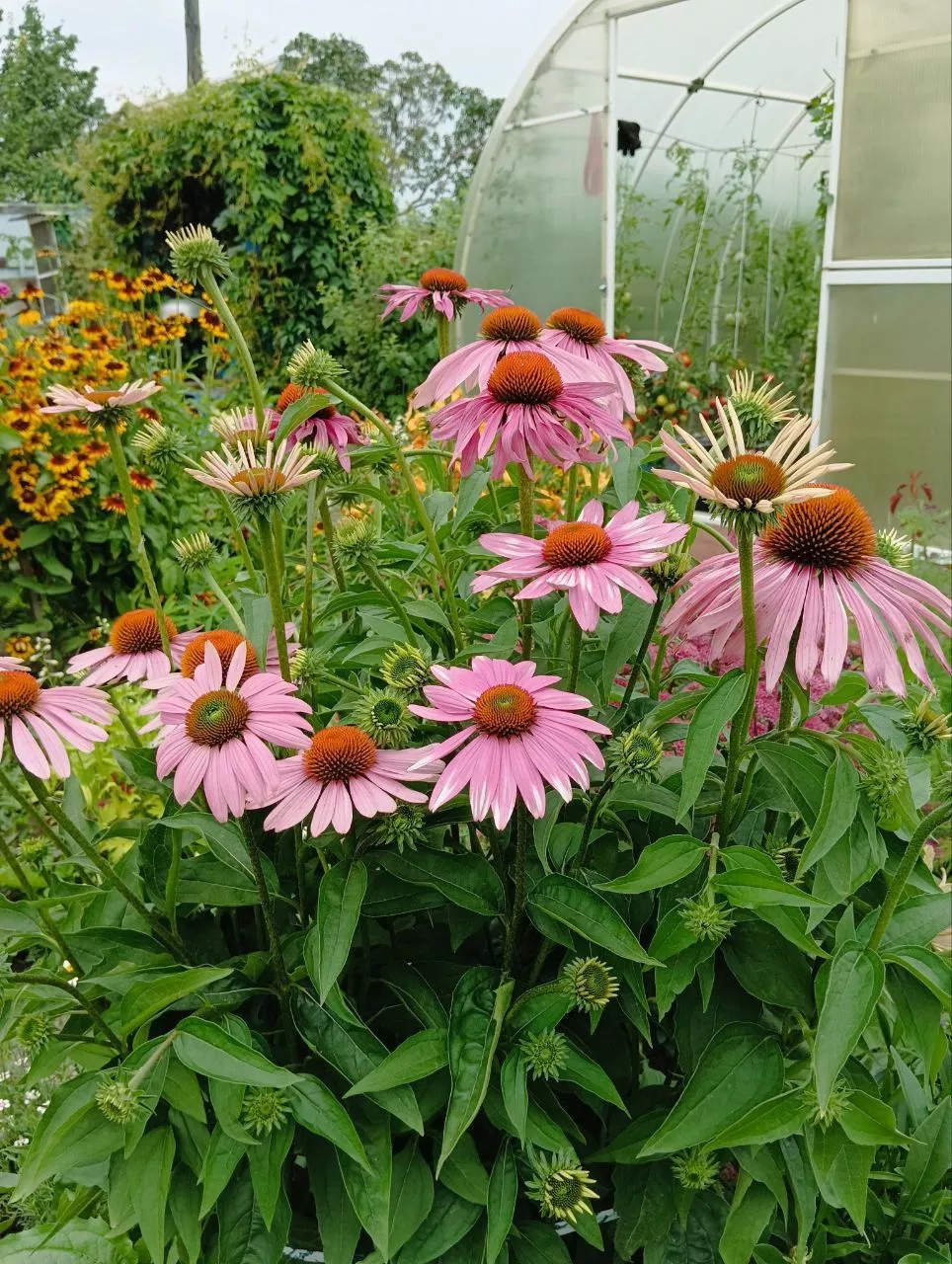
Purple coneflower is another new flower at our dacha. I grew it from seed, using seedlings. The variety is called Livadia. I sowed the seeds indoors in early March 2023, in a small pot.
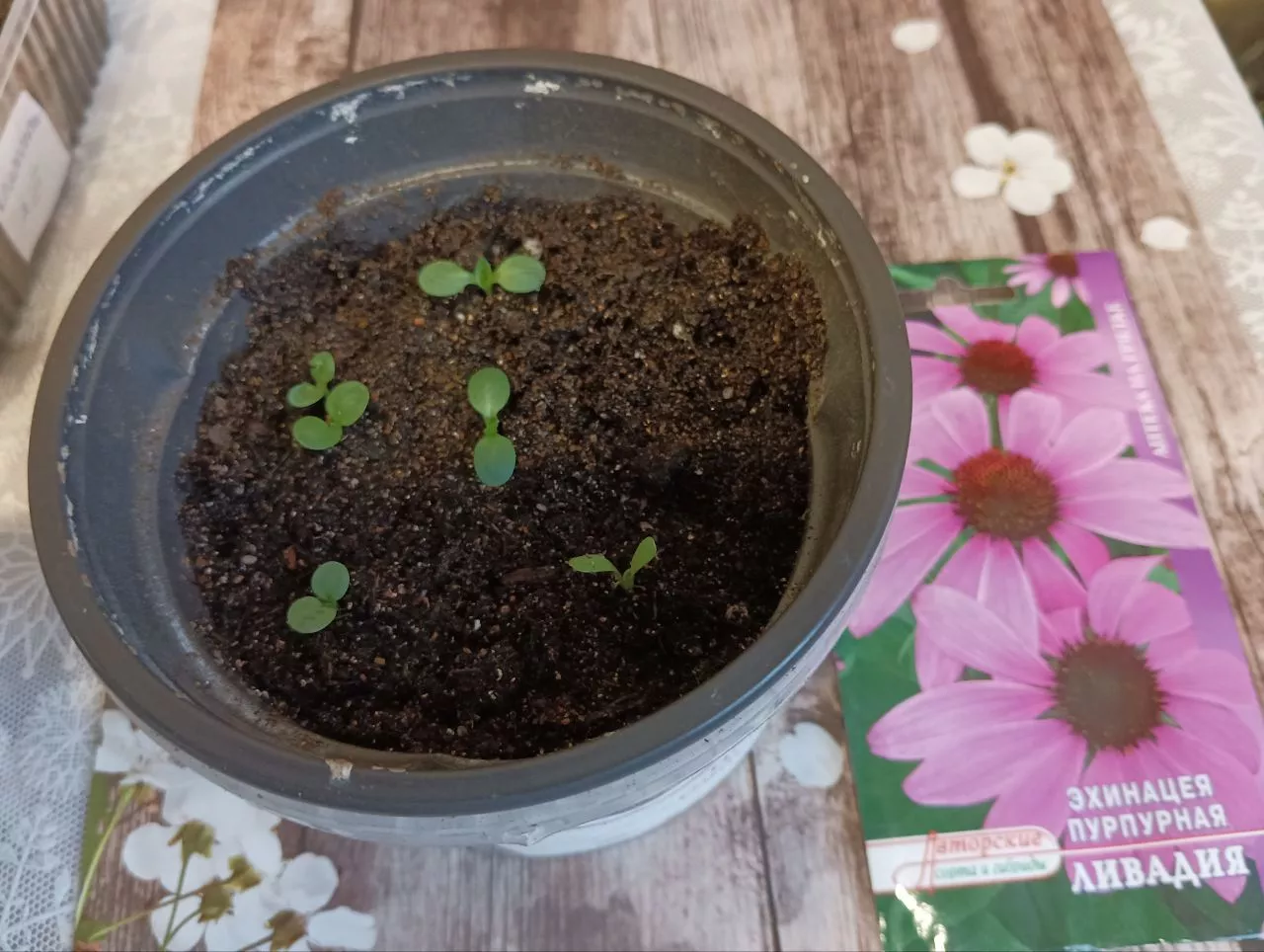
The seedlings appeared quickly, the sprouts were strong and grew without problems.
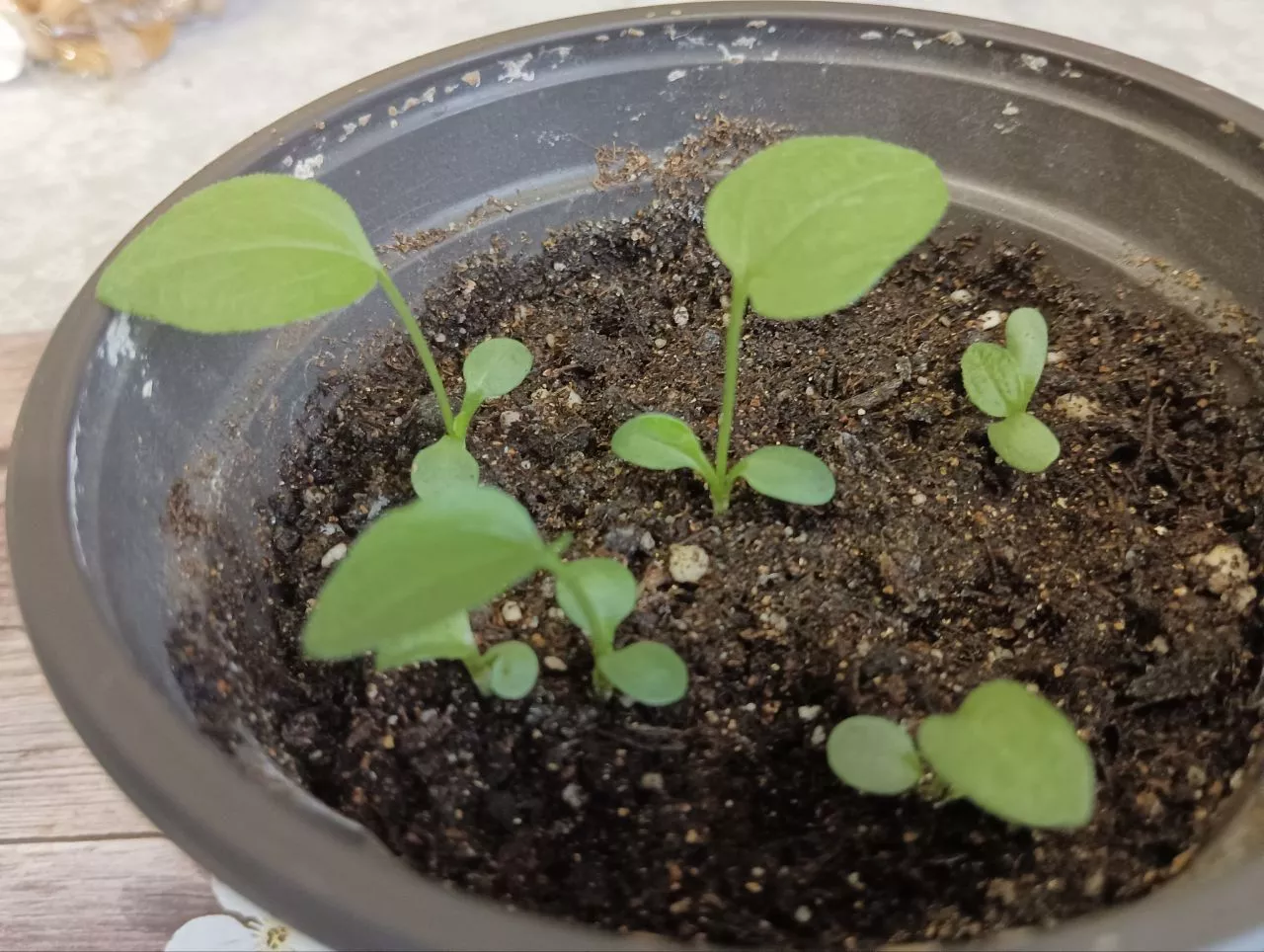
In April, I transplanted the seedlings into a box.
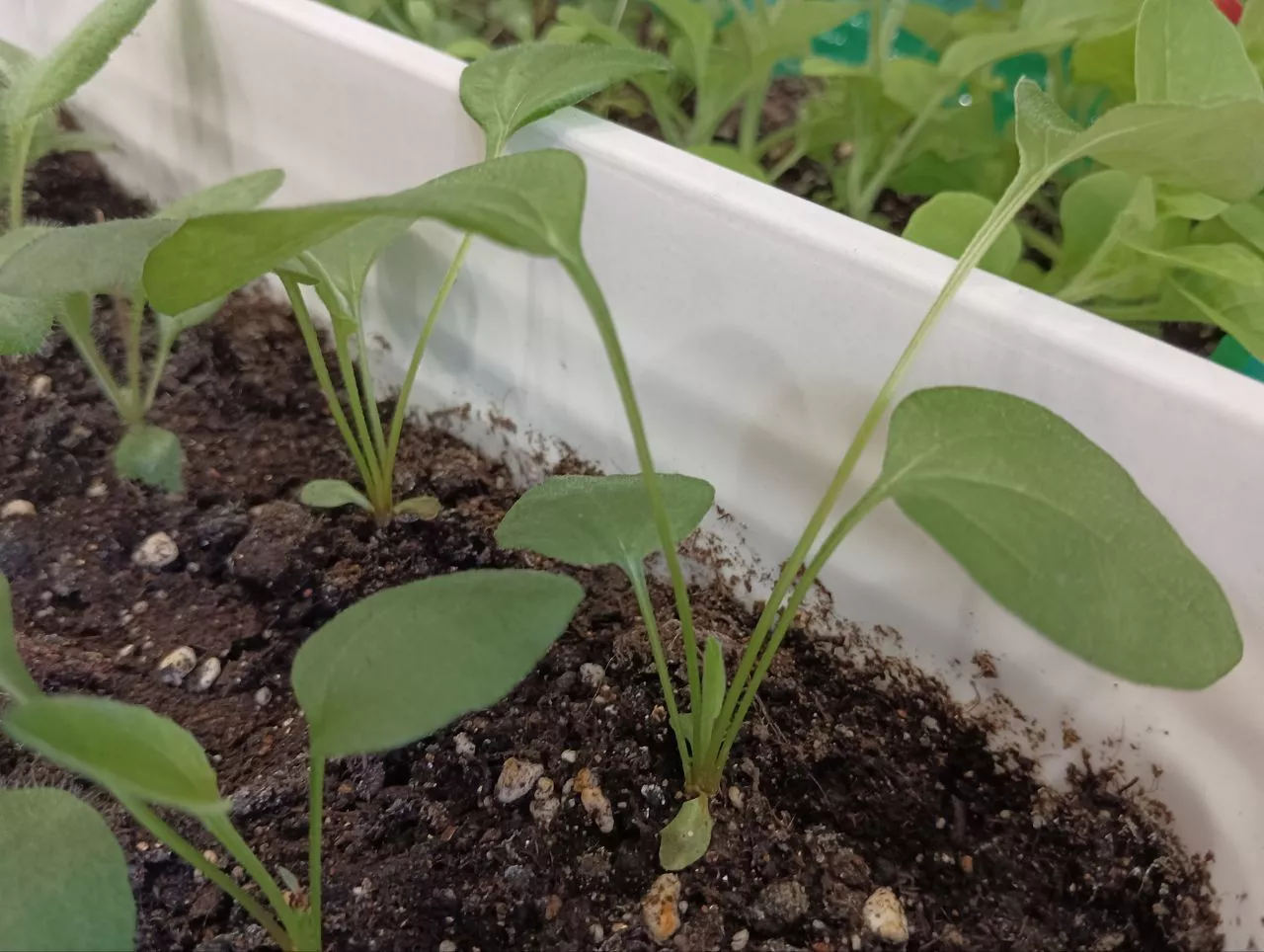
The echinacea seedlings resemble rudbeckia seedlings; the leaves are just as stiff. At the end of May, I transplanted the seedlings into the flowerbed.
Over the summer, my flower grew well, survived the winter well, and at the end of June 2024, it produced flower stalks.
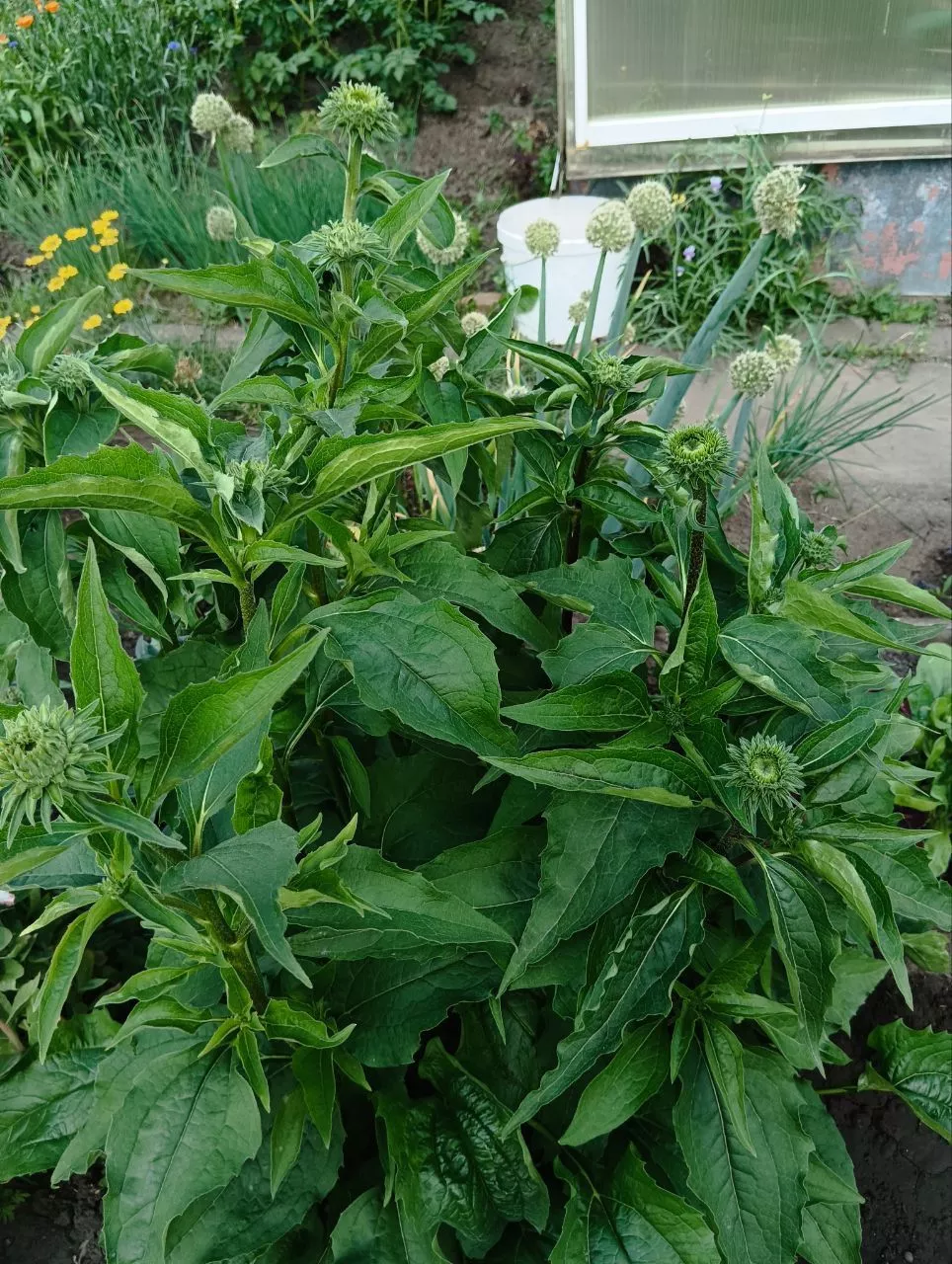
The first flower bloomed in mid-July. Purple coneflowers grown from seed begin blooming in the second year.
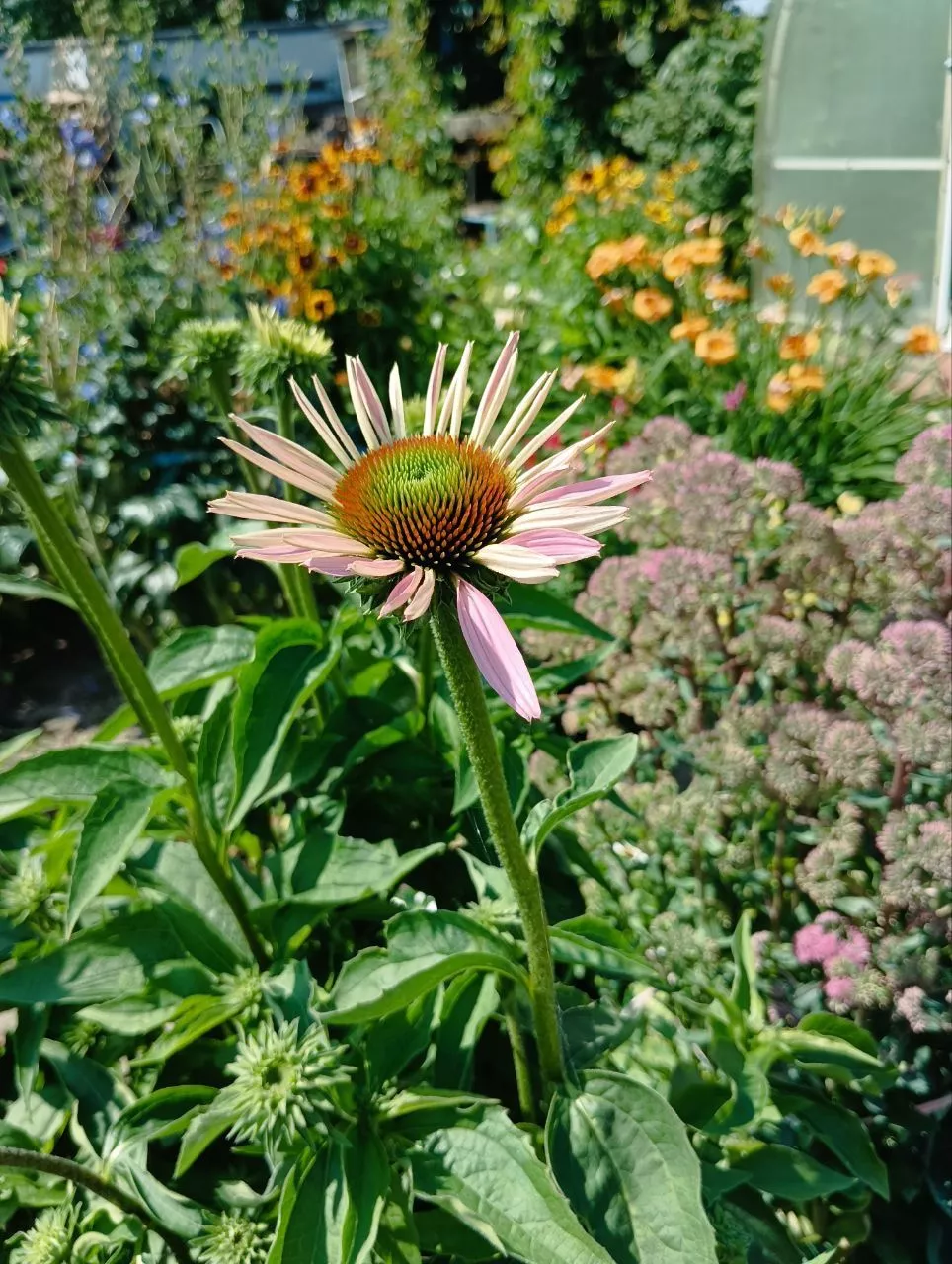
What does echinacea look like? What kind of flower is it? It's a perennial herbaceous plant, up to a meter tall, and belongs to the Asteraceae family. It has strong, sturdy, upright stems, a rosette of large, elongated leaves at the base, and smaller leaves along the stems. The leaves are stiff.
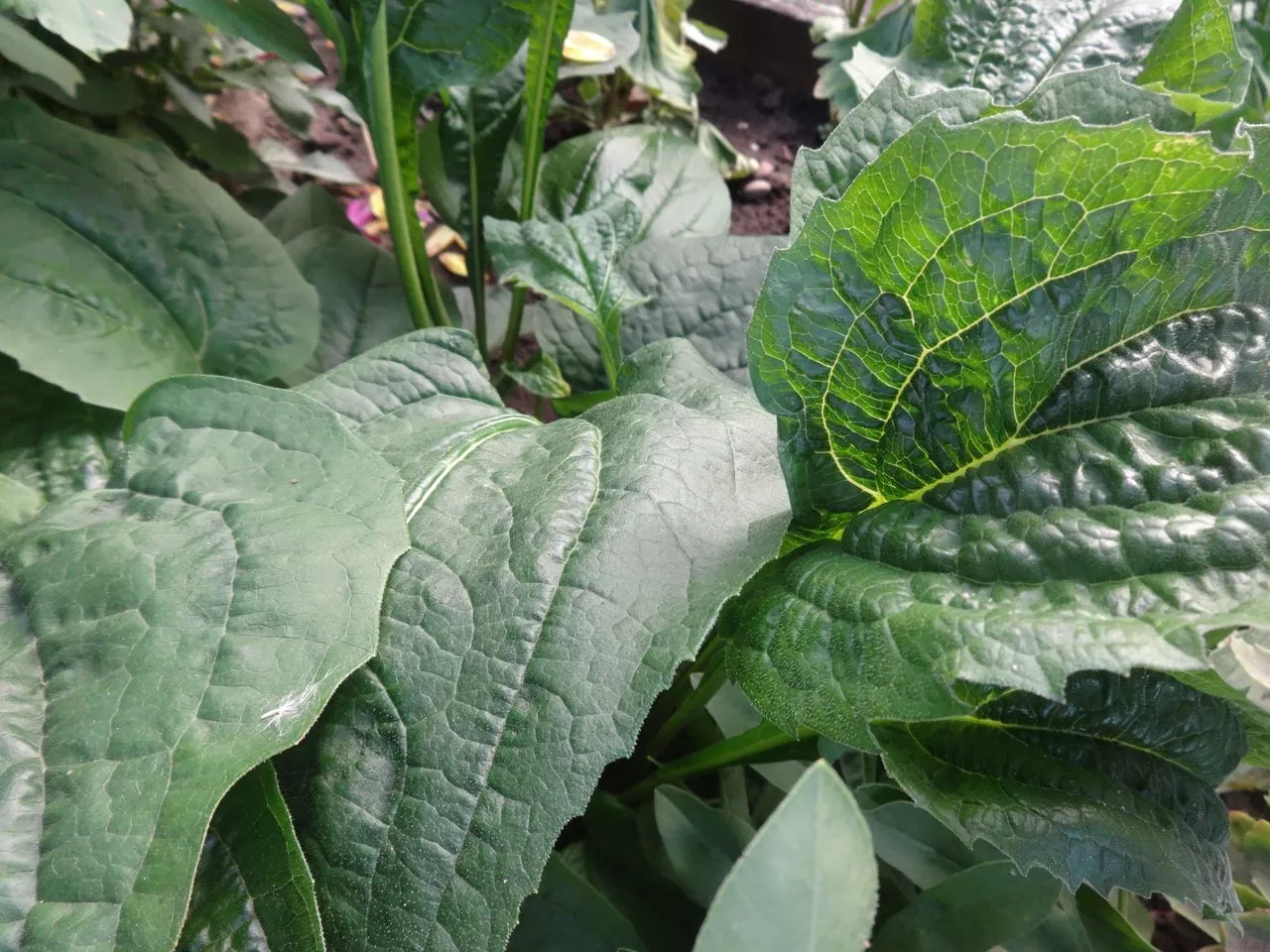
The plant has a branched rhizome with numerous roots that extend deep into the soil. The roots and rhizome are used as medicinal raw materials; they have a very pungent taste. Medicines are made from the roots and stems to boost immunity and prevent flu and colds. The juice from the plant is used to heal wounds.
The first buds appear at the tops of the stems. Numerous side shoots form on the stems, and buds also appear on each side shoot.
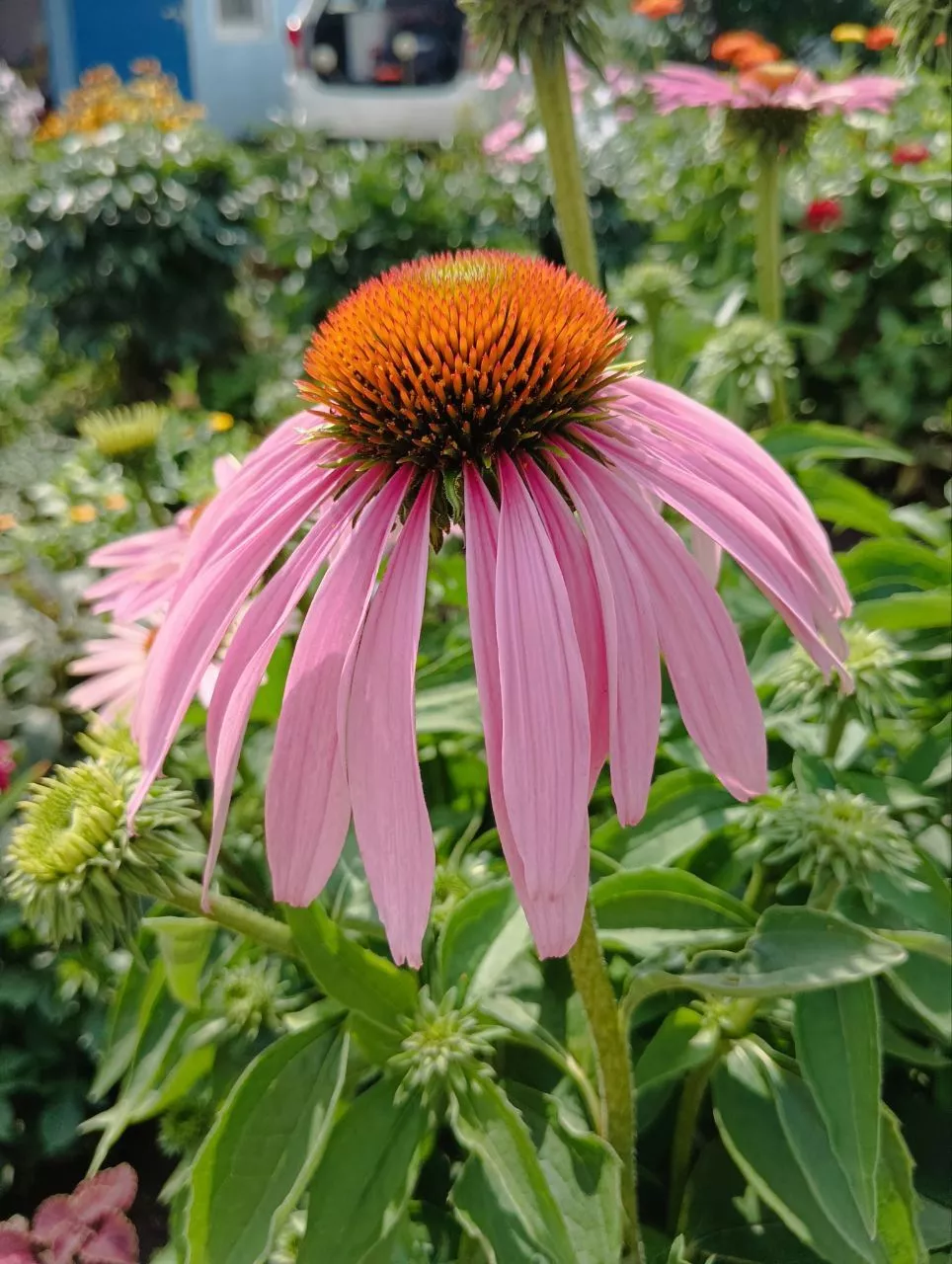
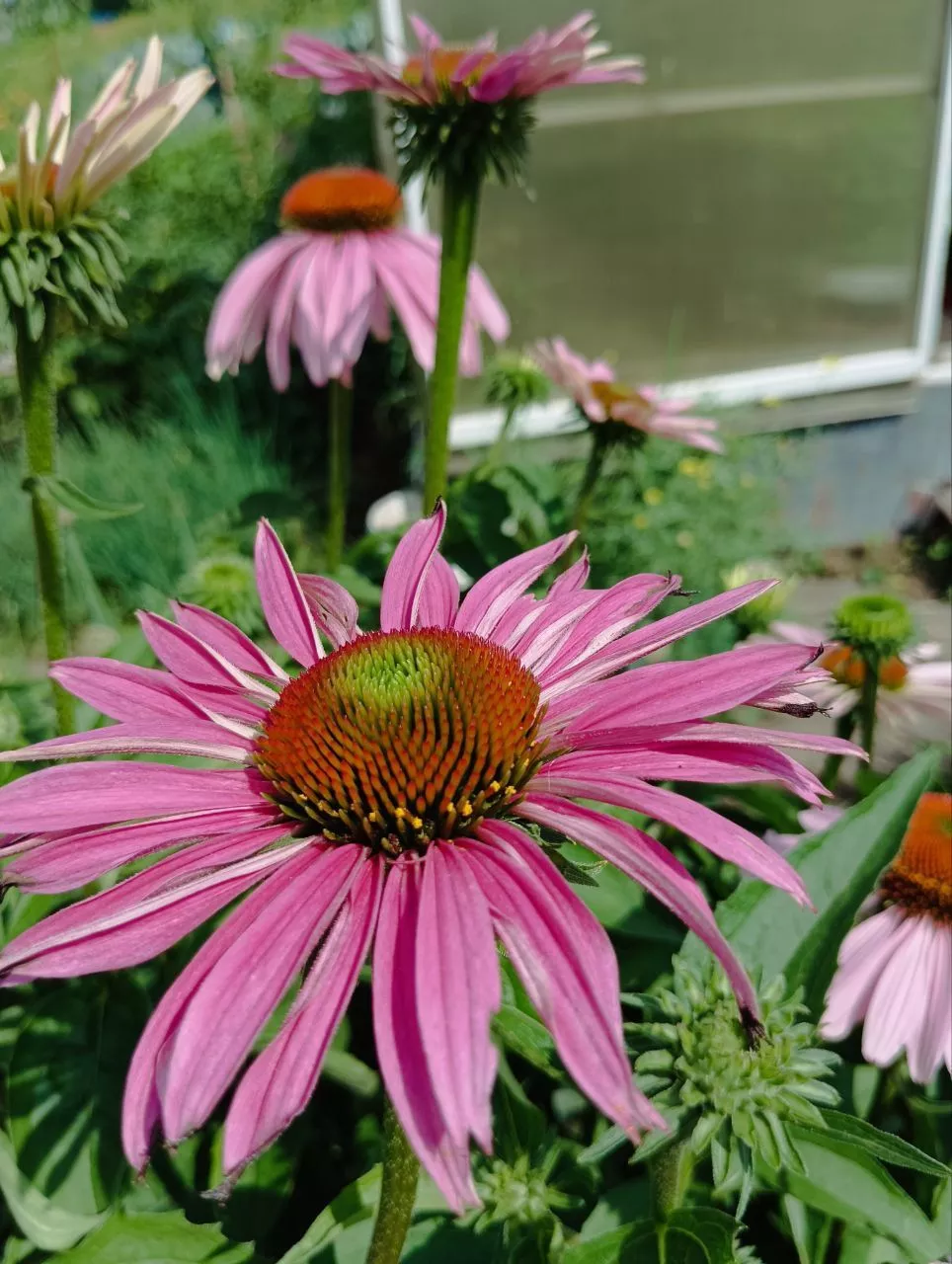
 My echinacea flowers are pink, some are light pink, some are bright pink.
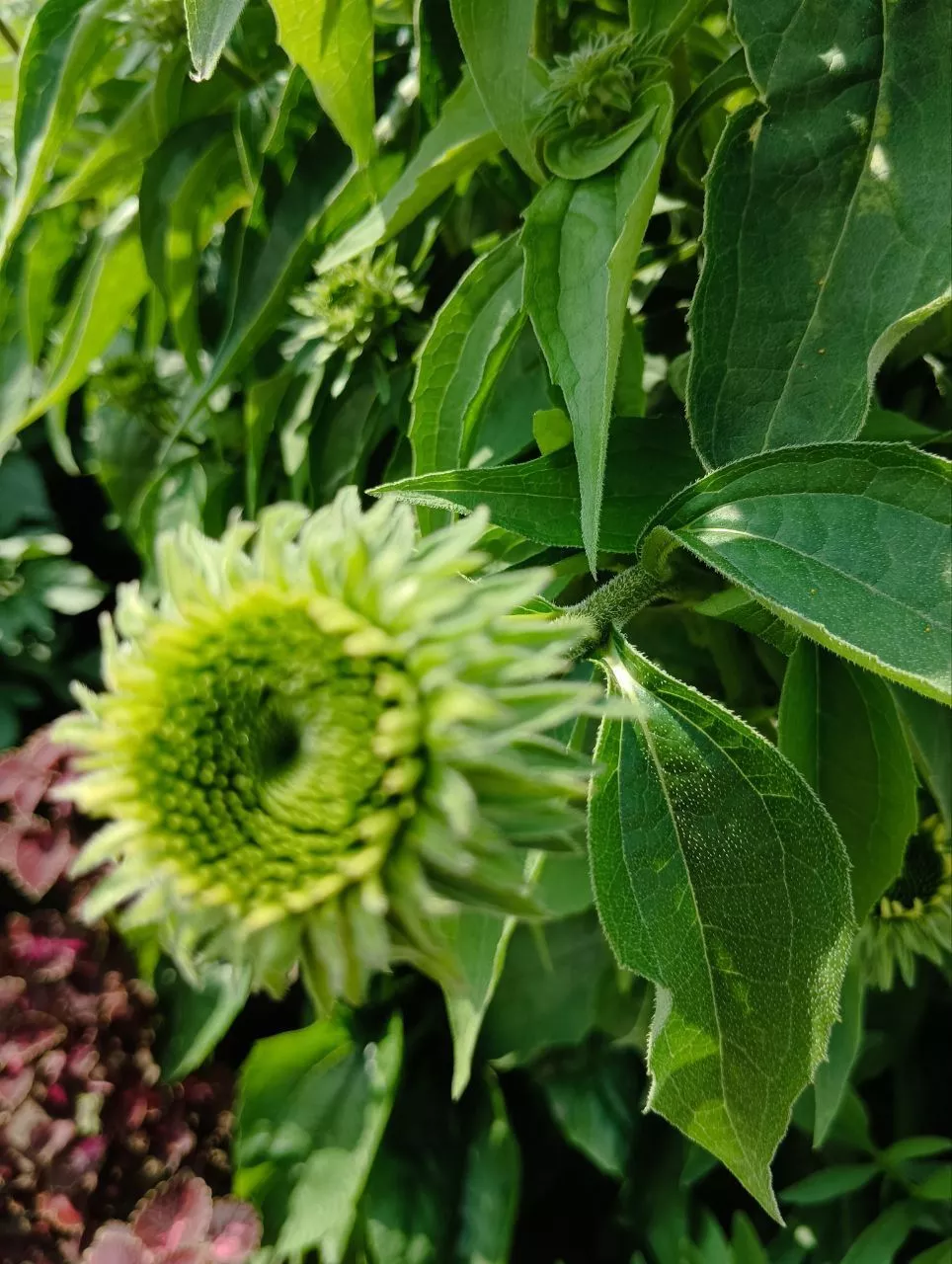
But there are echinaceas with yellow, white, orange, and even green petals, and even double ones. Where can you find such beauty?
The inflorescences are fairly large, very beautiful, and long-lasting, with a flat center of tubular flowers framed by long, downward-facing pink petals.
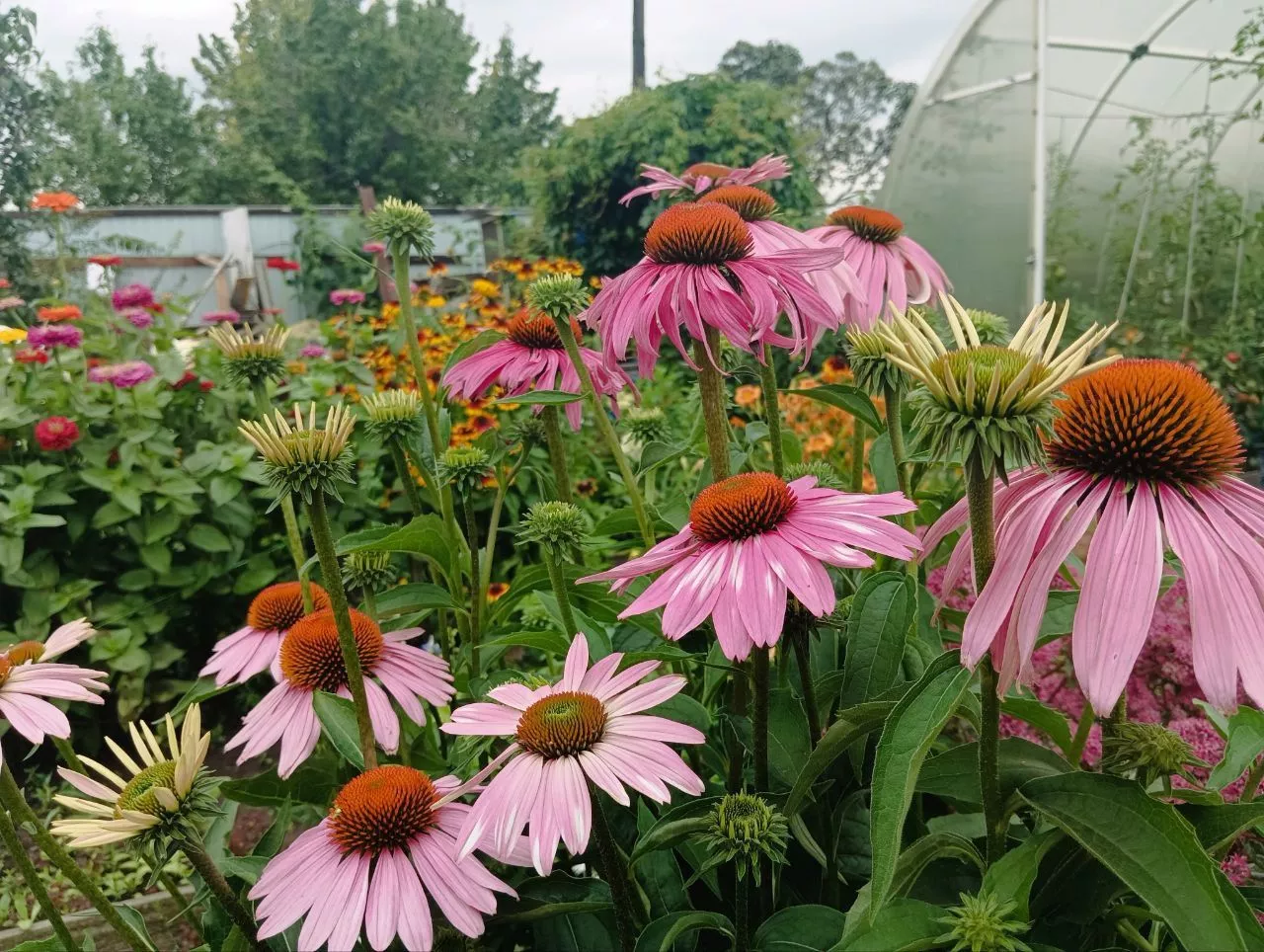
As the flower grows, it increases in size, the flat center turns into a round, spiky ball, which gradually stretches out and becomes cone-shaped.
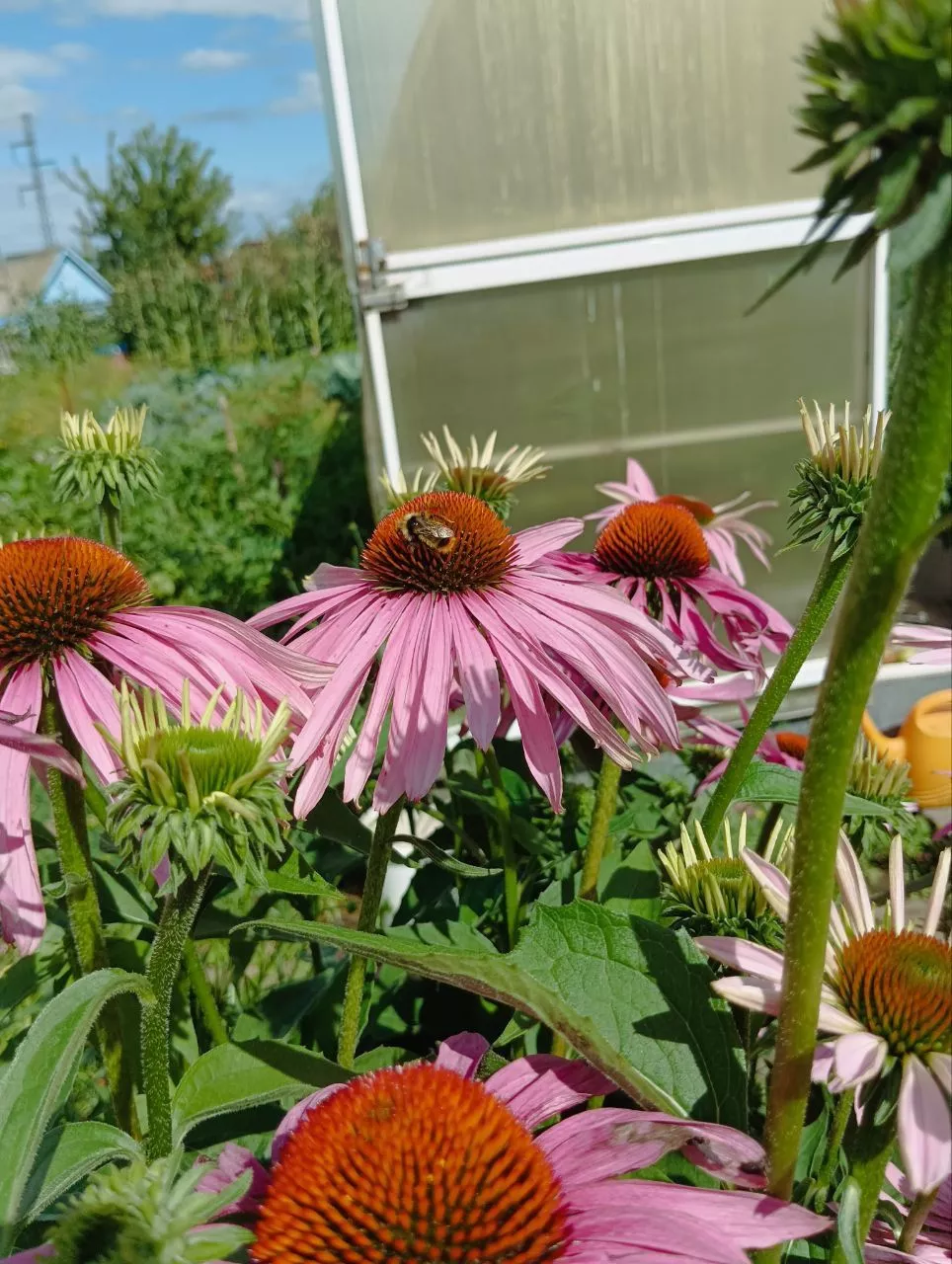
The seeds ripen in it. I read that birds really love the seeds in winter, so it's best not to cut the shoots in the fall.
Echinacea is an excellent honey plant. The flowers are very fragrant and attract a variety of insects. The nectar is enjoyed by many species, including hard-working bees, dignified, furry bumblebees, slender-waisted wasps, beautiful butterflies, and all sorts of insects whose names I don't know.
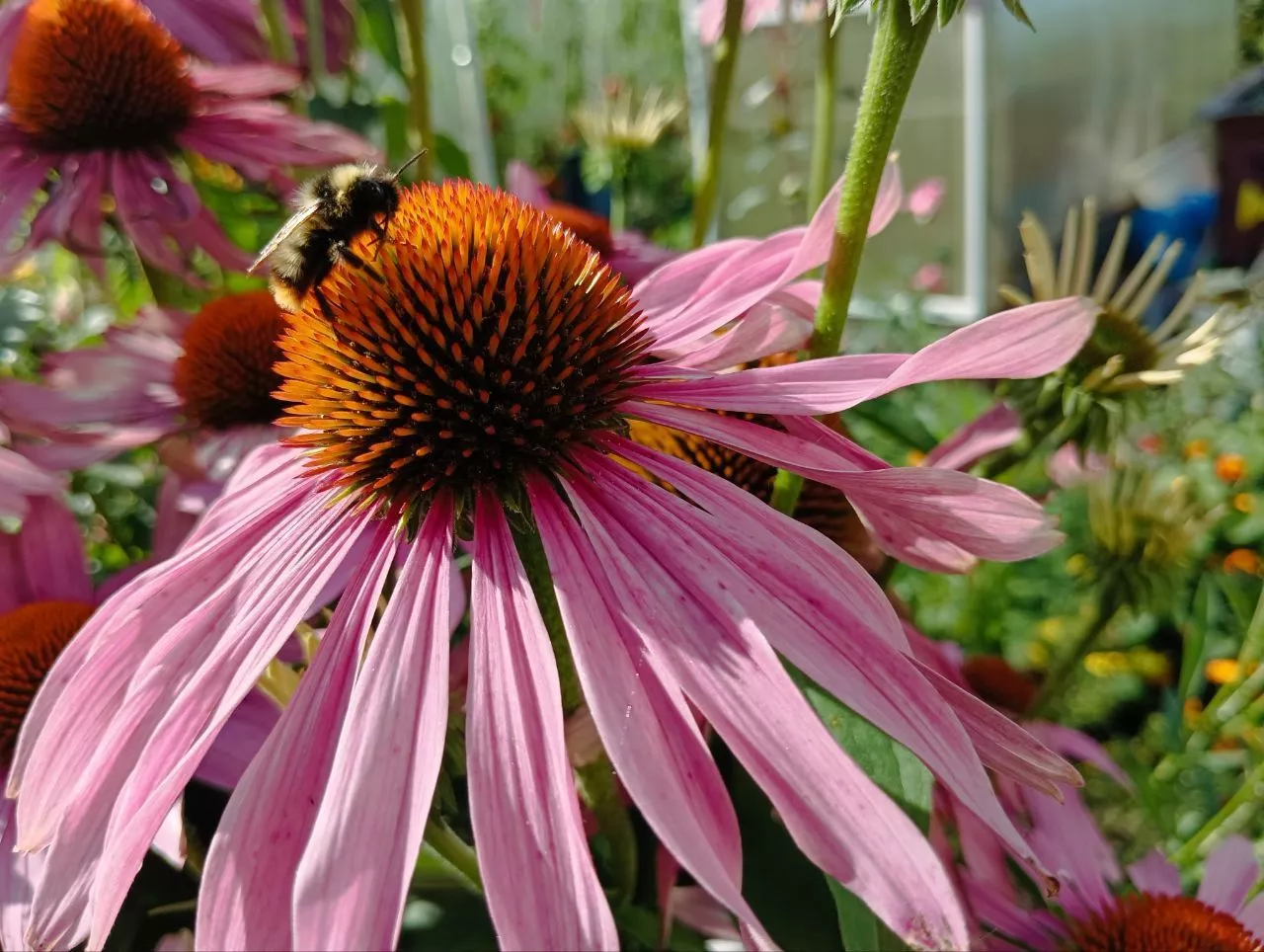
Where is the best place to plant this flower?
Preferably in a sunny place, but the plant will also feel great in light partial shade.
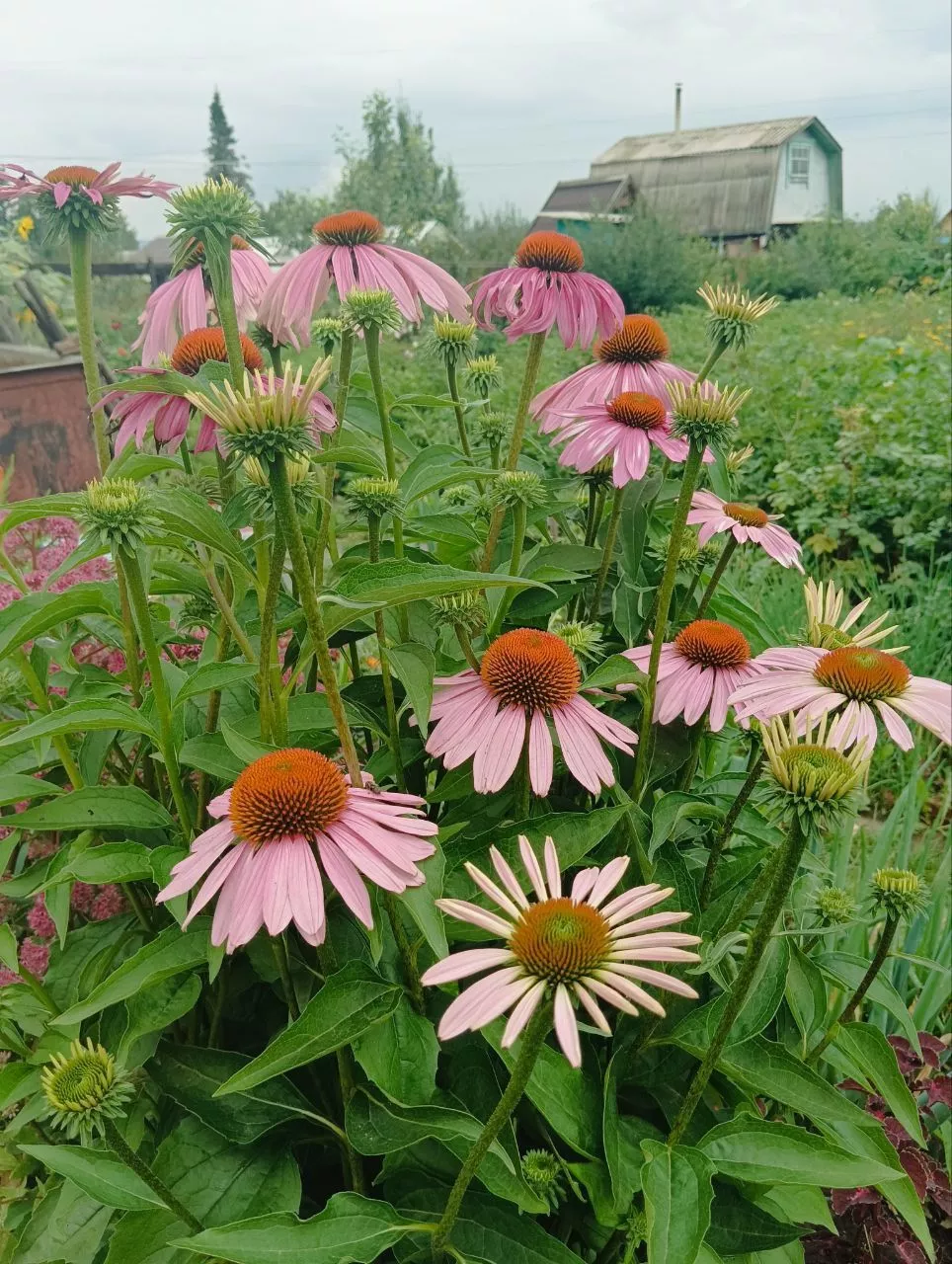
Echinacea doesn't like dense, clayey, acidic soil where water can stagnate, so add dolomite flour or wood ash to the planting hole. I also added a little nitrophosphate and loose, well-rotted manure. A handful of bone meal is also recommended.
Echinacea is a very winter-hardy plant and doesn't require shelter, but I still mulched the bush with humus for the winter. And my beauty survived our Siberian frosts well.
It's already the end of August, and my echinacea is still blooming new flowers, and the first flowers are still blooming, their petals are not falling off.
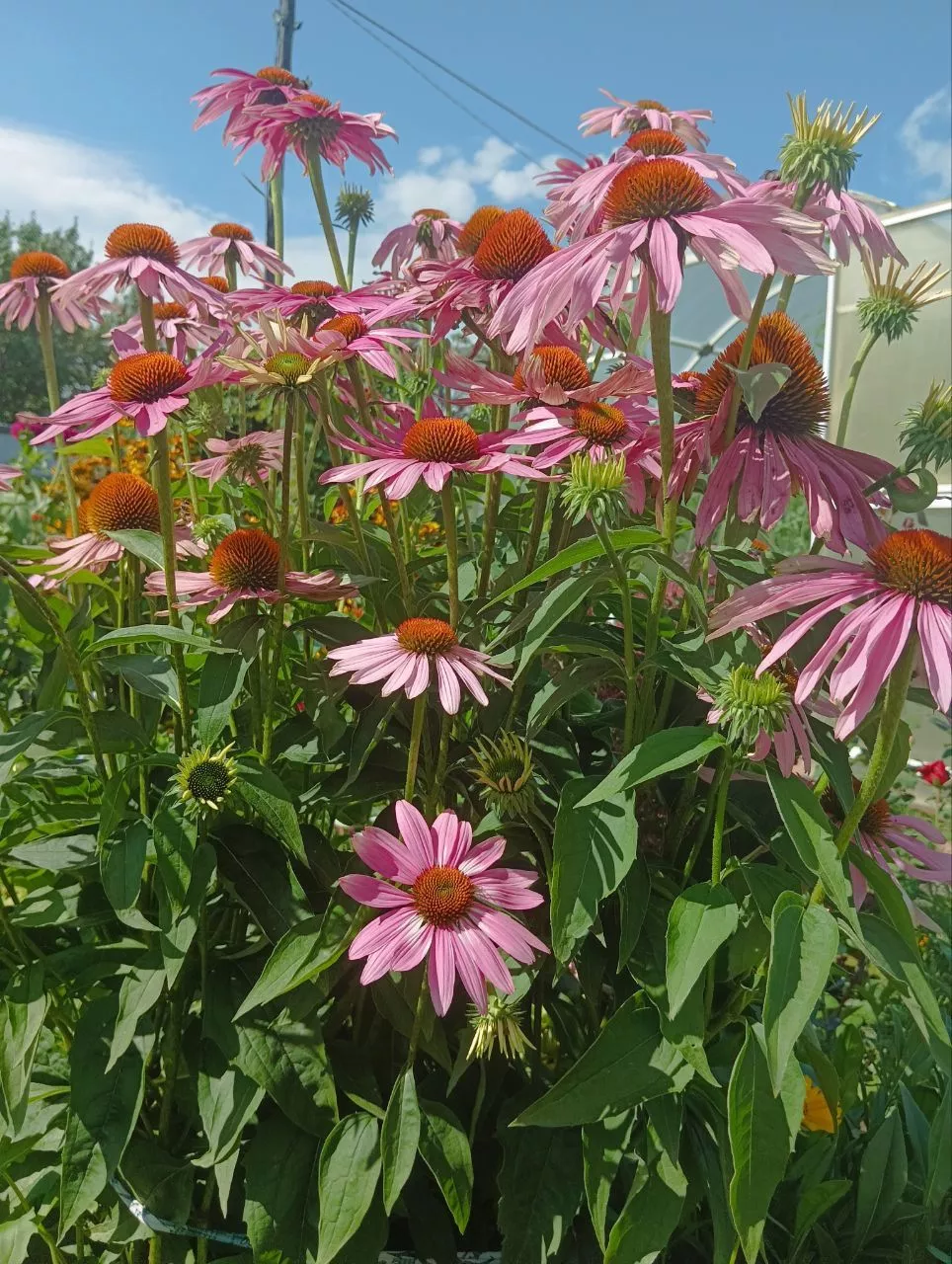
My pink, very beautiful bouquet is getting bigger and bigger!