

Why are you shedding tears, willow-leaved loosestrife?
And why do they call you weeping grass,
Because you are so beautiful and radiant,
I am forever enchanted by you!Let the breeze blow away your tears,
The sun will give a golden ray,
Let your ears of corn bloom pink
And the sky will be blue above you!
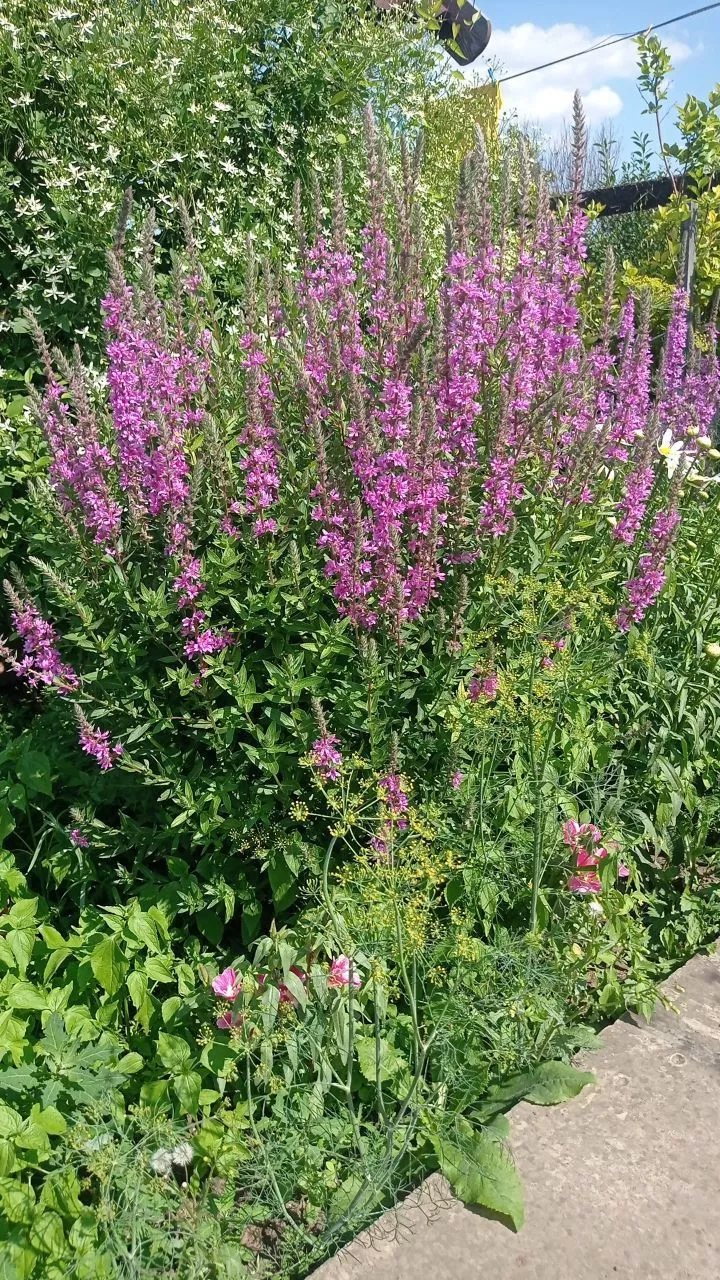
The willow-leaved loosestrife is another new flower that I planted at our dacha.
A neighbor's summer cottage has been growing loosestrife for several years now. They bloom for a long time with pink flowers, beginning in July and continuing until the end of summer.
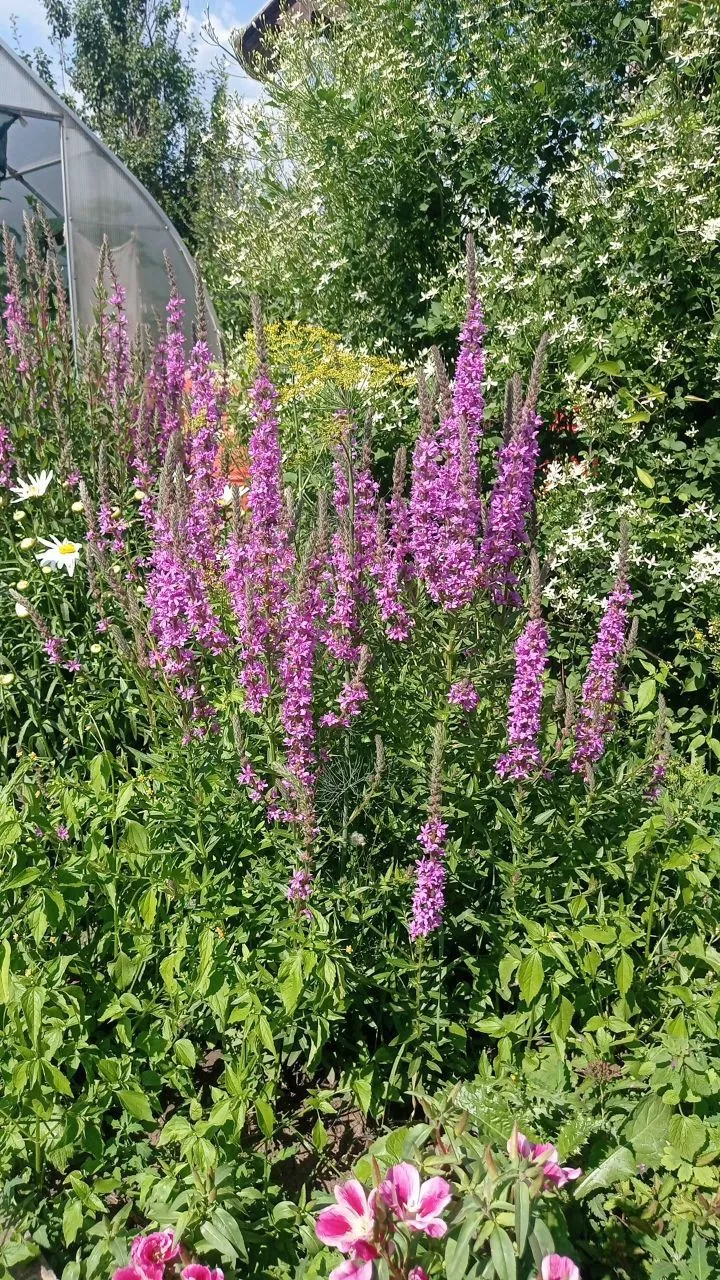
I always admire the slender, long inflorescences covered with bright pink flowers. I want such beauty in my flowerbed. I had never seen seeds in the store, nor had I found loosestrife seedlings in flower shops. It was only at the end of June 2023 that I bought a small loosestrife seedling, a variety called Robert. As usual, it was unplanned, just a chance encounter. There was no free space in the flowerbeds, so I had to dig up the self-seeded calendula and plant loosestrife in the space.
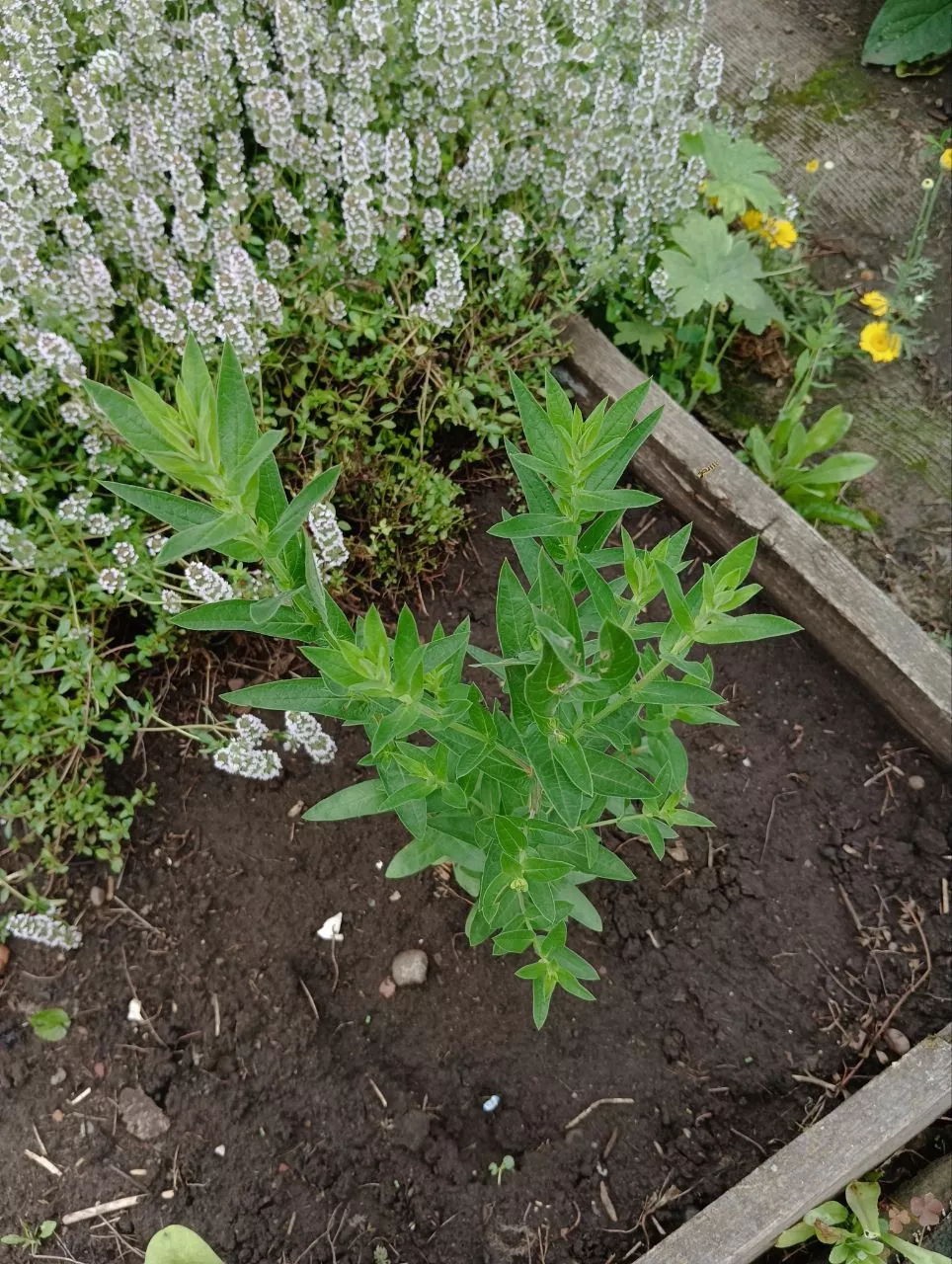
Since I had a loosestrife plant, I wanted to know what kind of flower it was and how to care for it. I learned online that loosestrife is also called willow herb, which is more familiar to me. But I had no idea what the plant looked like.
What does willow-leaved loosestrife look like?
This is a herbaceous perennial plant with tall, straight stems. The stems bear elongated green leaves, similar to those of the willow.
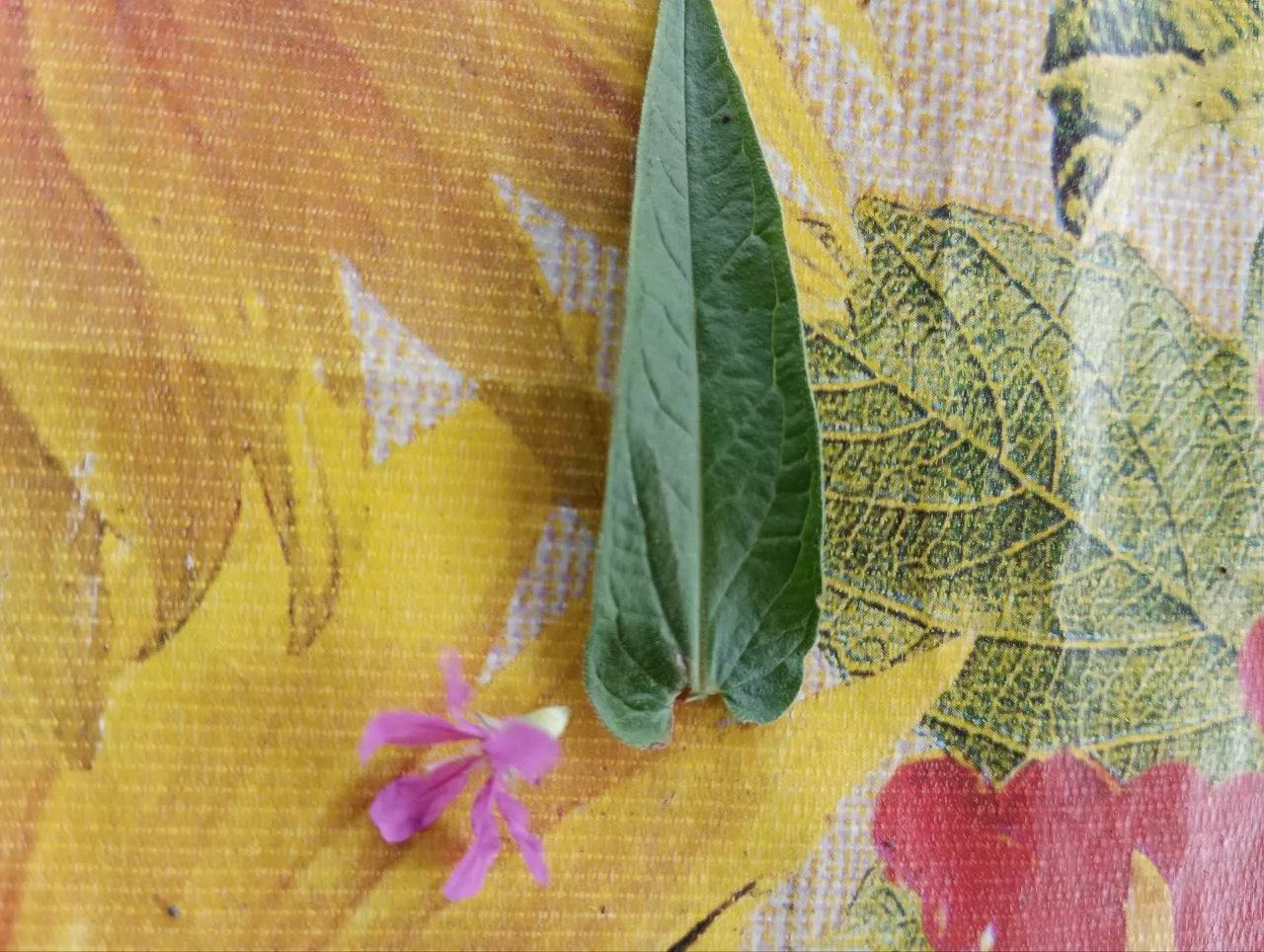
The leaves contain special glands that release excess moisture. Loosestrife grows naturally along riverbanks and lakes, preferring damp places.
In the morning, droplets of water drip from the leaves, thus ridding the plant of excess moisture. Drops of water also appear before rain, several hours before the storm, so the willow herb can warn of rain coming soon.
The flowers of the loosestrife are small, with six petals, bright pink in color, collected in dense spike-shaped inflorescences.
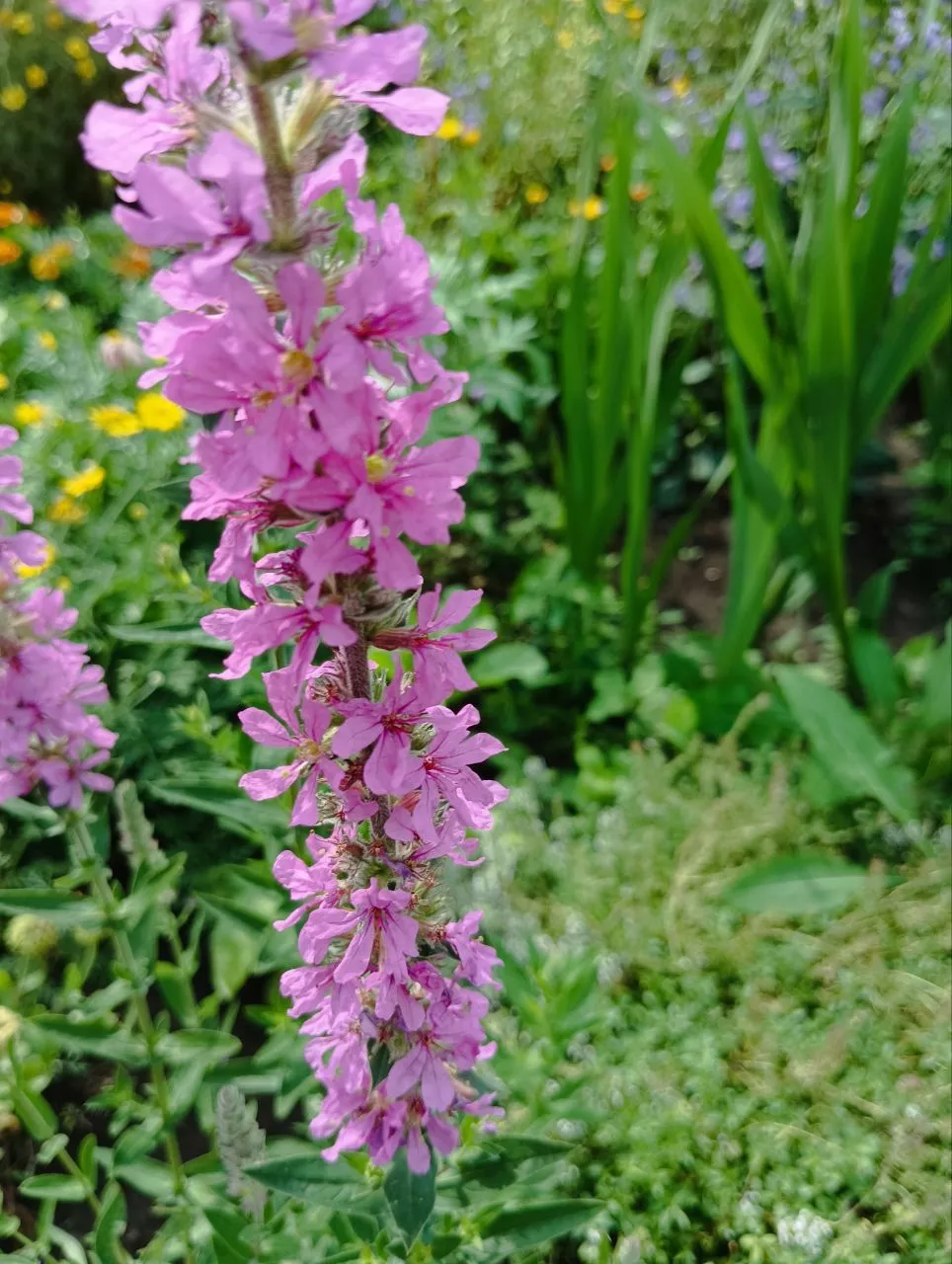
Flowers bloom from the bottom up.
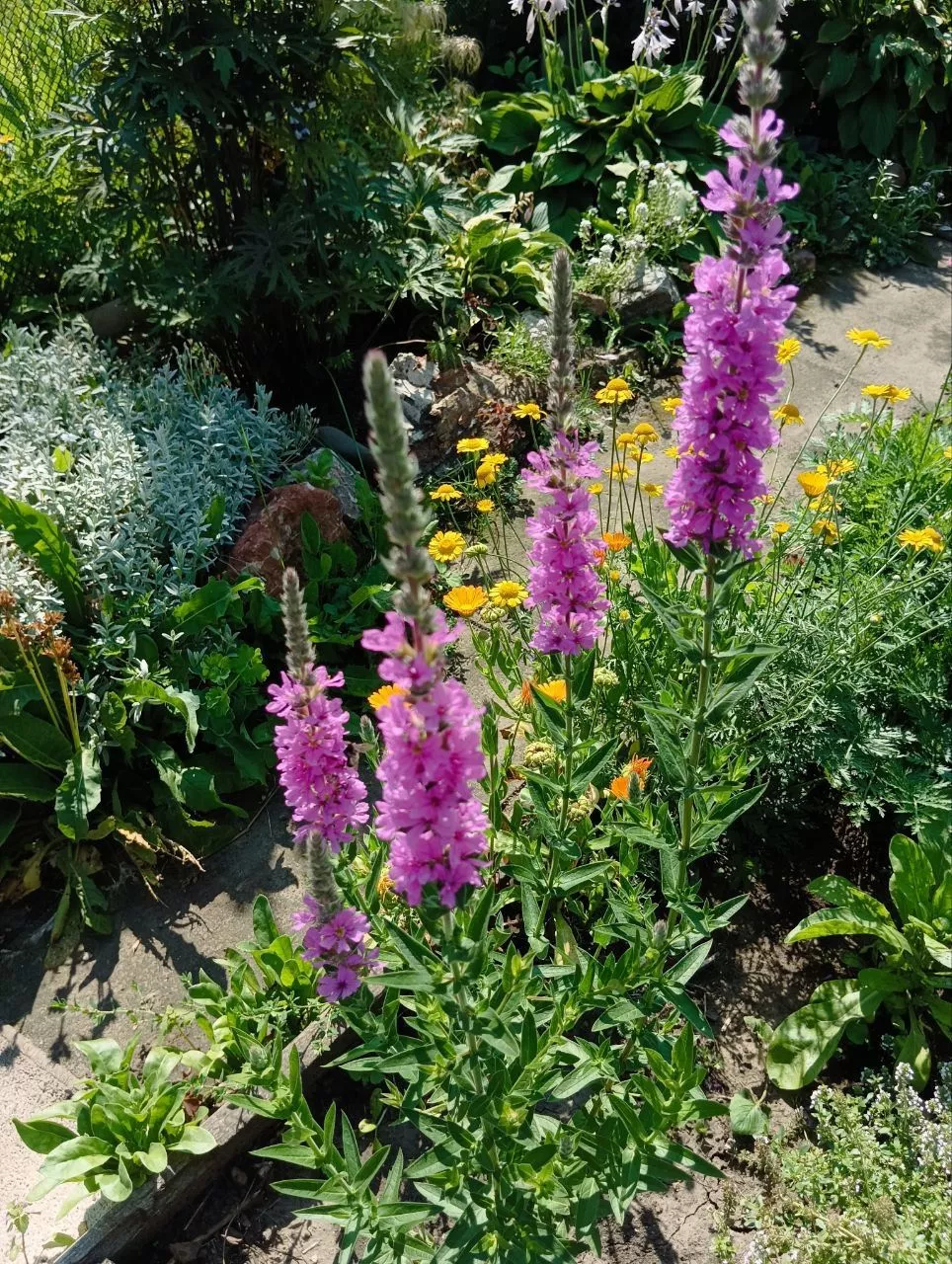
The color of the flowers depends on the variety.
The roots are powerful, thick, woody.
The plant is cold-hardy and overwinters well without cover. However, it's best to trim the stems in the fall and cover the loosestrife with them. My neighbor does this and has no problems with frost. Loosestrife reproduces by seed and by dividing the rhizome.
Blooming loosestrife is an excellent honey plant; hard-working bees fly over the inflorescences all day long, collecting nectar and pollen.
Loosestrife is a medicinal plant used in folk medicine as a hemostatic and astringent, stopping bleeding, and treating hemorrhoids. Fresh leaves and juice are applied to wounds. Loosestrife helps with depression, jaundice, and eye diseases.
My loosestrife is still quite small. A year ago, it had only two short flowering stems.
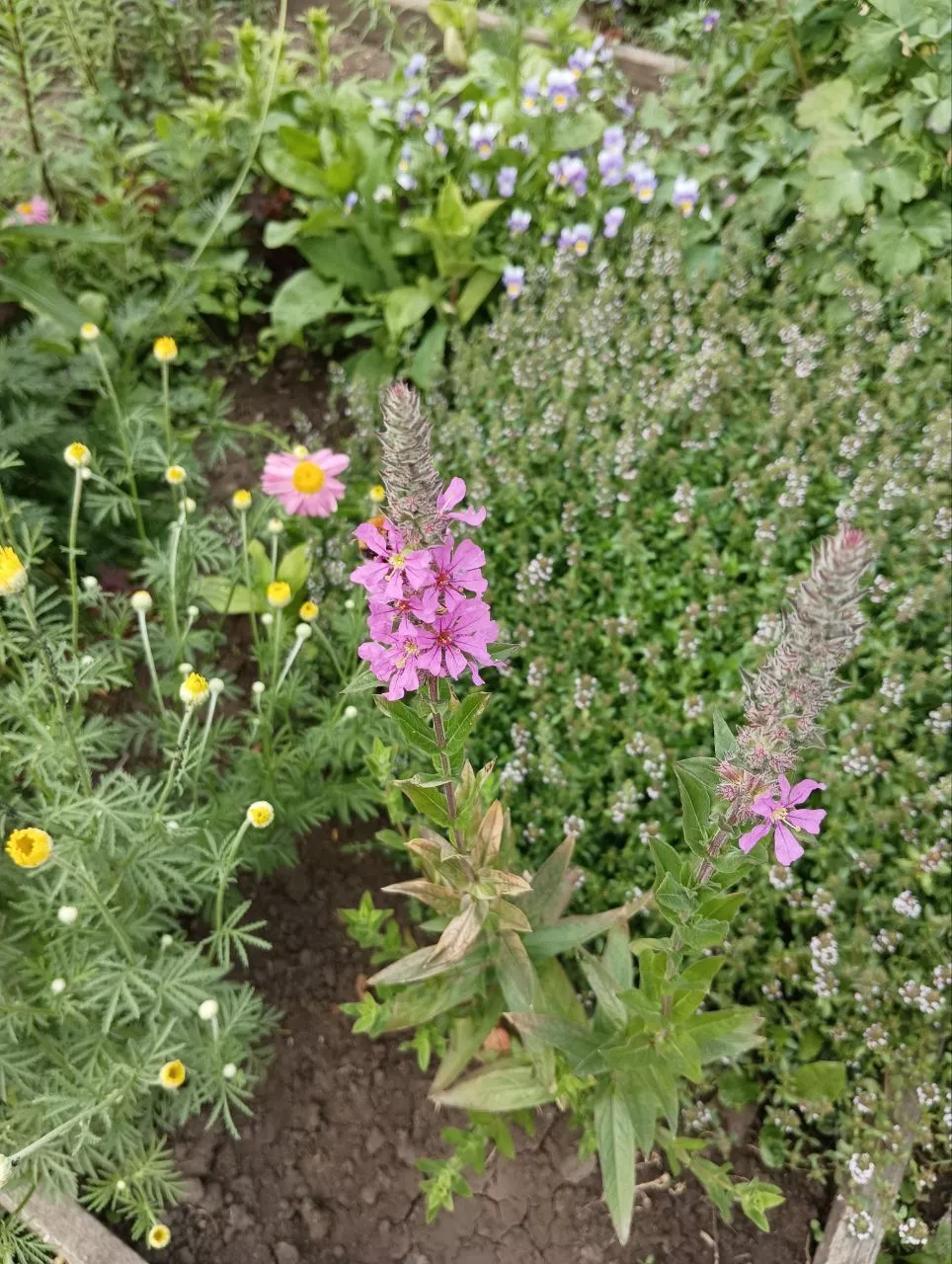
This year, there are already five blooming inflorescences, and they are quite tall. The stems have side shoots, and soon they, too, will bloom pink flowers.
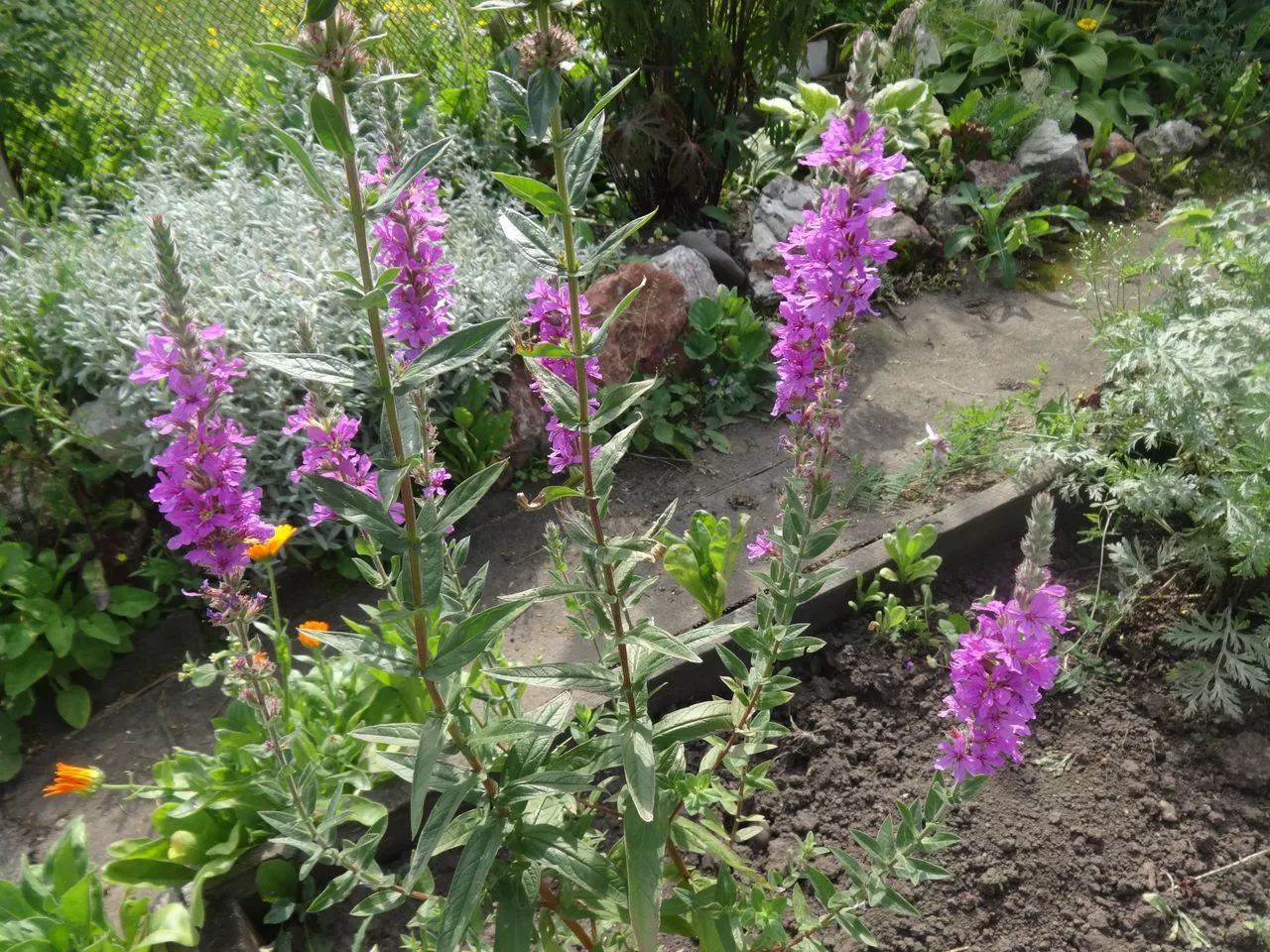
For now it grows on the edge of one of the flower beds next to thyme in a sunny place.
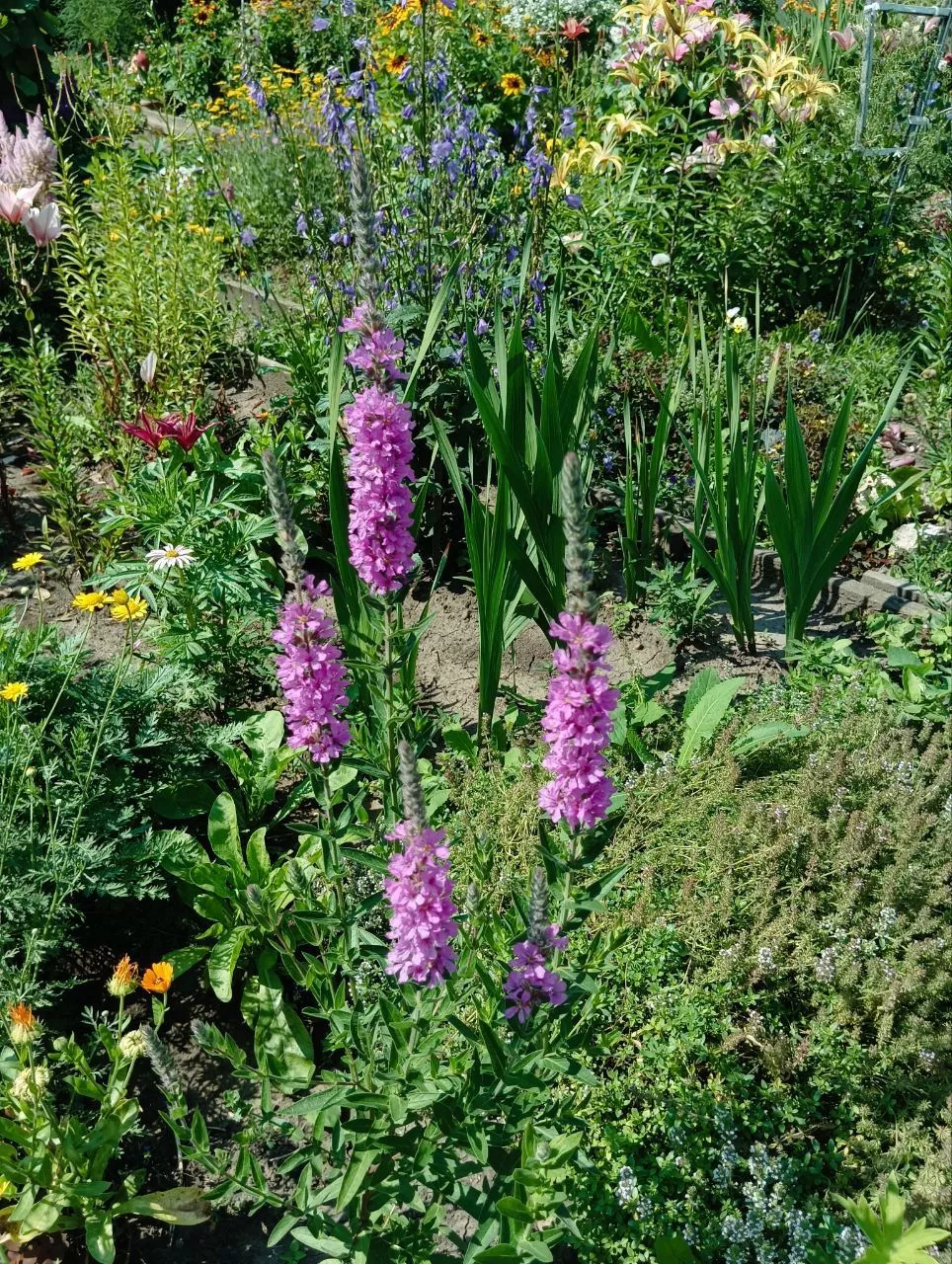
But it definitely needs to be repotted. So I'm wondering where to plant it and what flowers to place nearby to make it look pretty.