
Begonia is blooming in the garden,
Planted by me
And there is harmony in the soul
Both joy and peace.The sultry summer is in full swing,
There is beauty in the flower beds,
And red begonia
Shine like a star
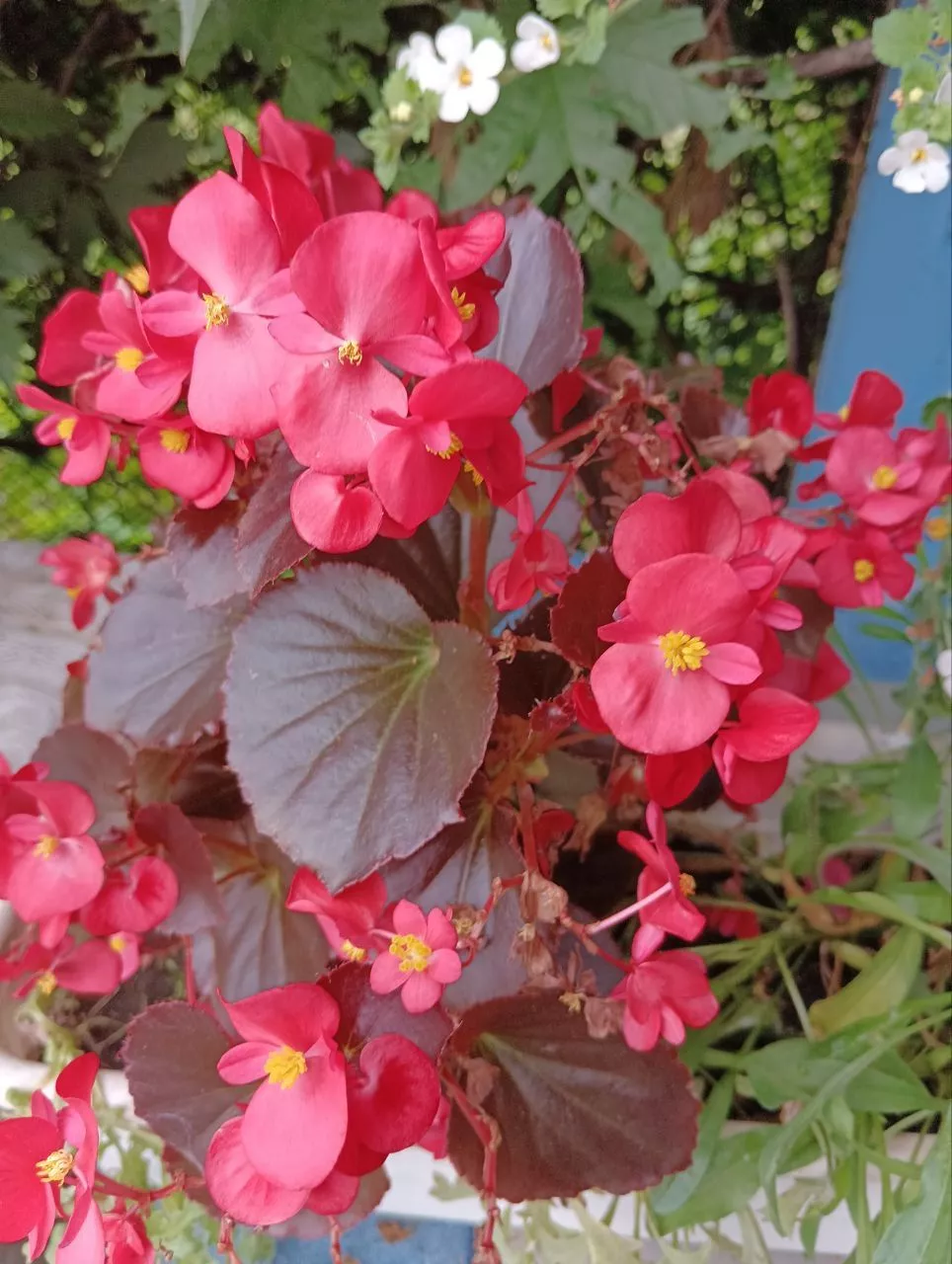
Begonia semperflorens is another new flower I planted at my dacha this spring. I bought two tiny seedlings: one had red flowers, and the other hadn't bloomed yet. The flowers were supposed to be pink, but later the bush also bloomed with red flowers. I chose the ones with brown leaves.
I planted them in a box along the edges, planted an alpine aster in the middle, and planted a nemophila between the aster and the begonias. This is the mix I ended up with.
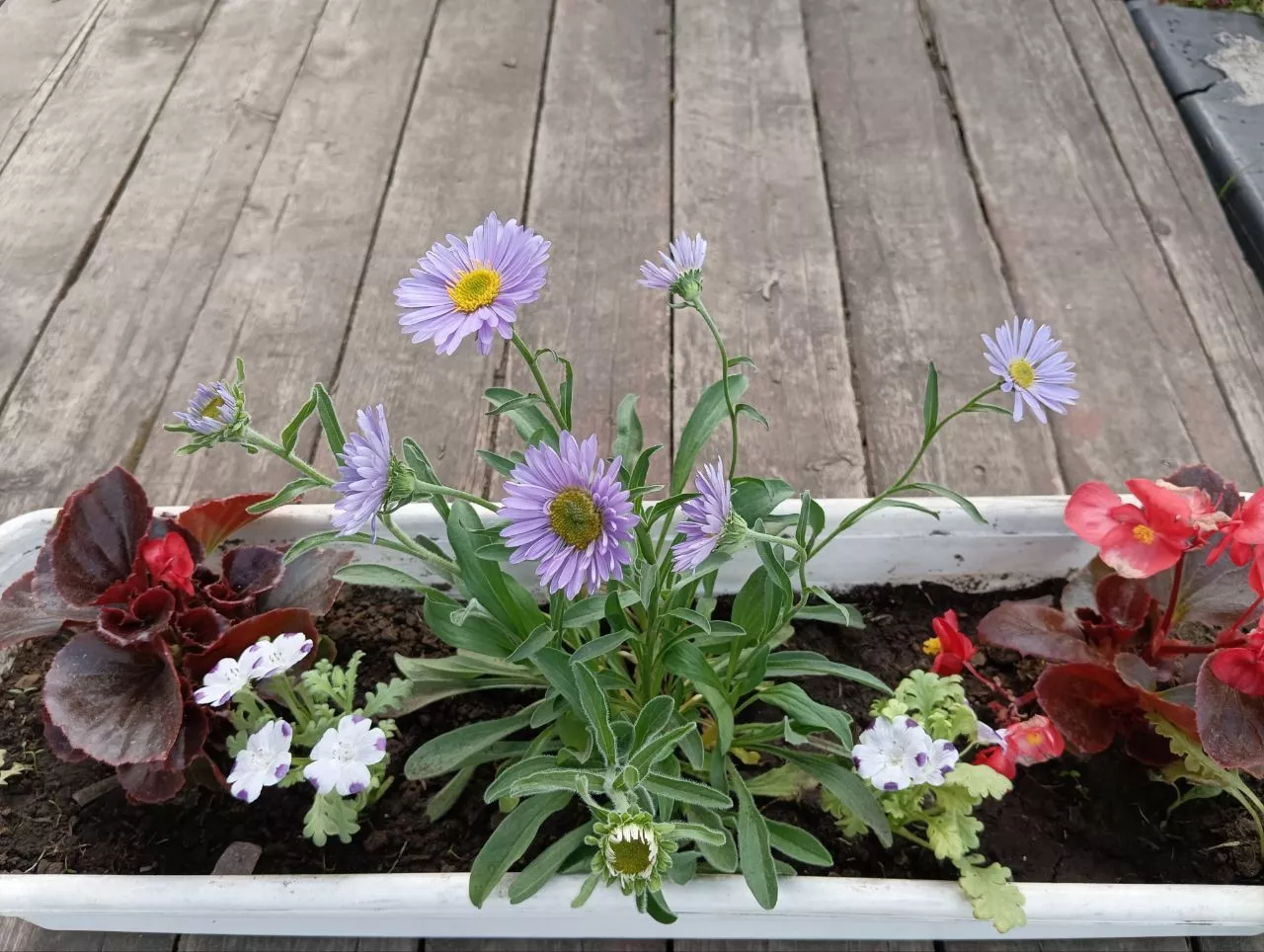
Soon the alpine aster finished blooming. But the begonia grew and bloomed profusely until the frost.
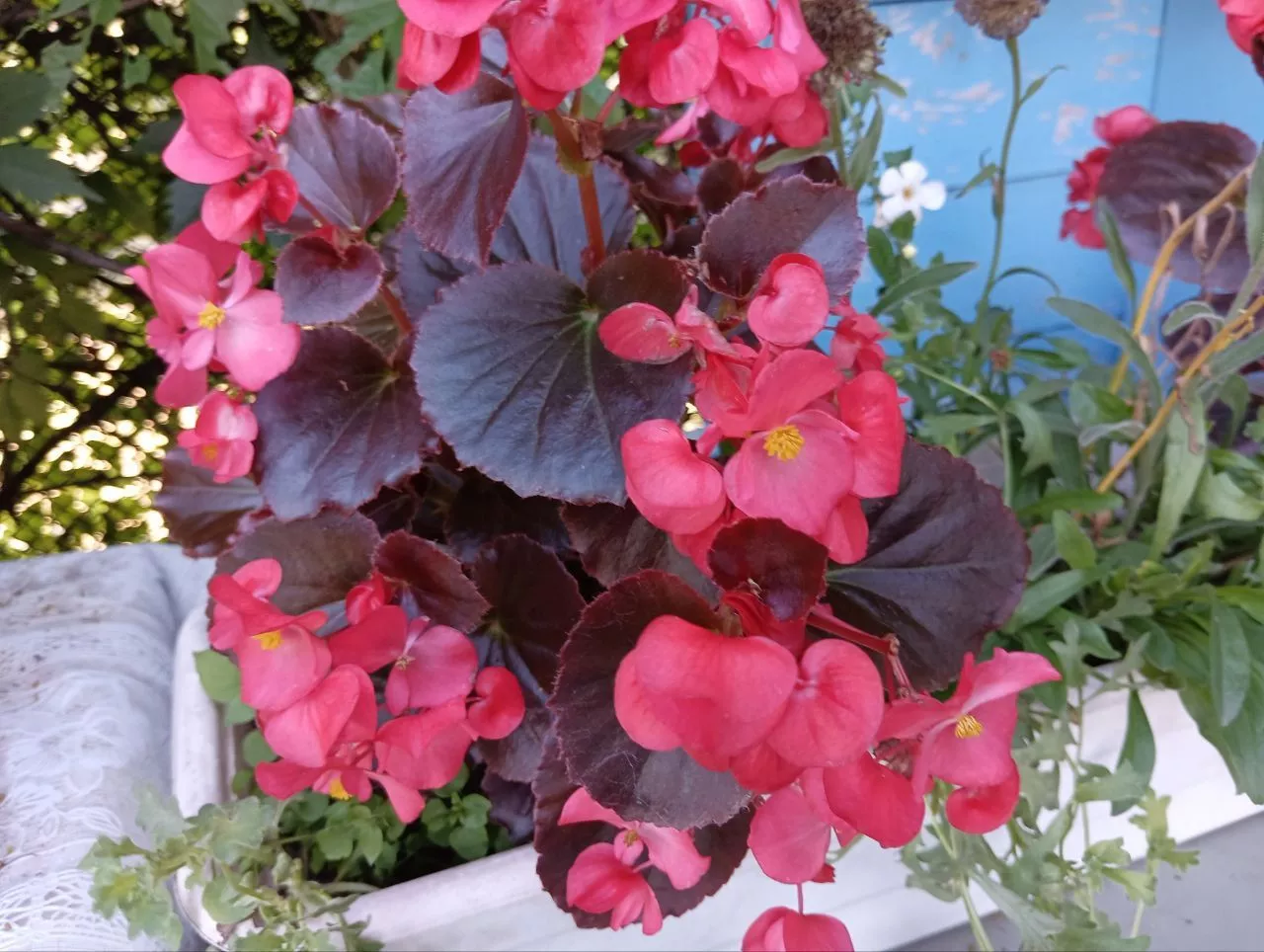
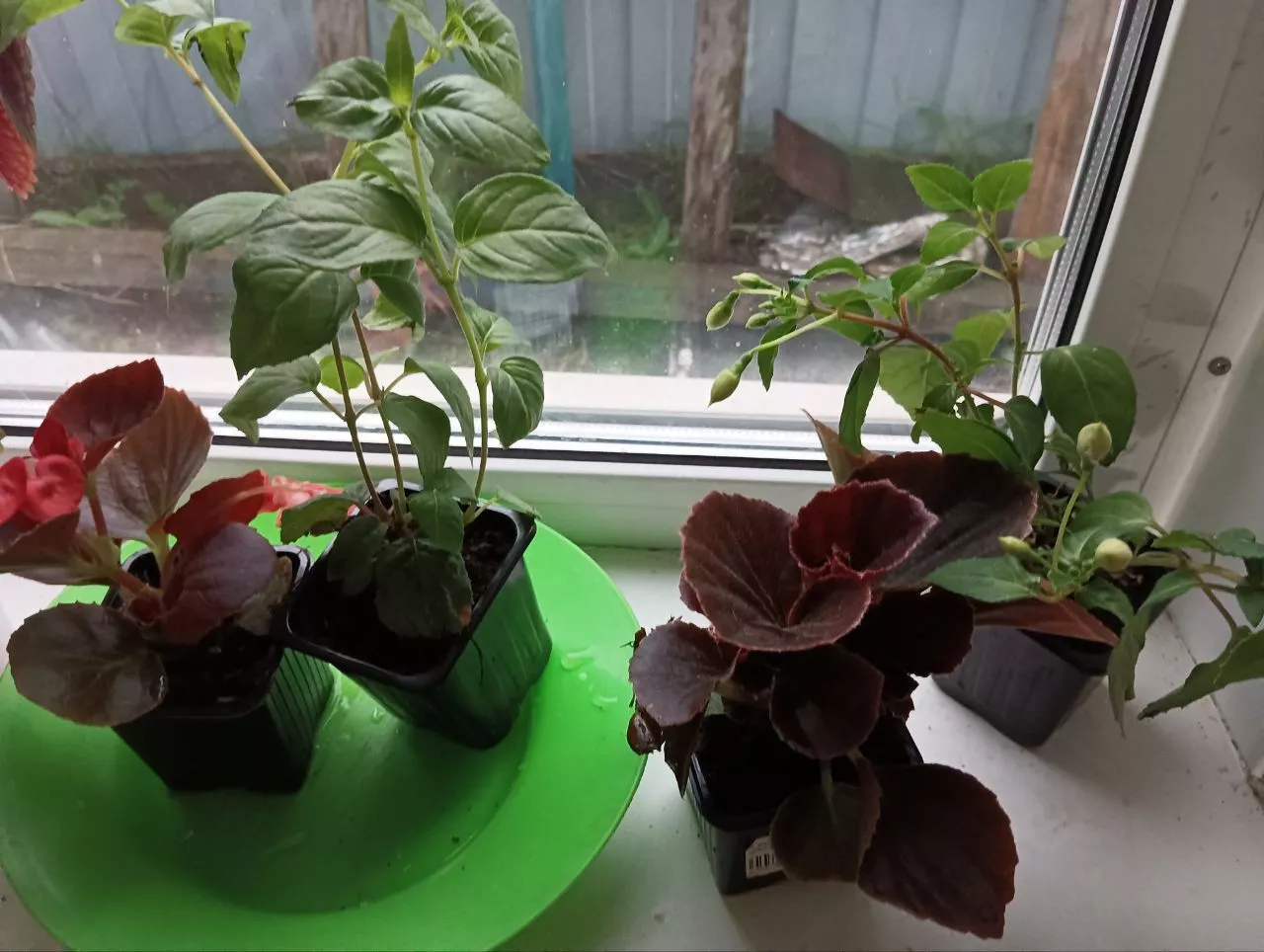
In mid-September, I transplanted the begonia bushes from the box into flower pots and moved them to the greenhouse. October was warm, and the begonias grew and bloomed beautifully in the greenhouse.
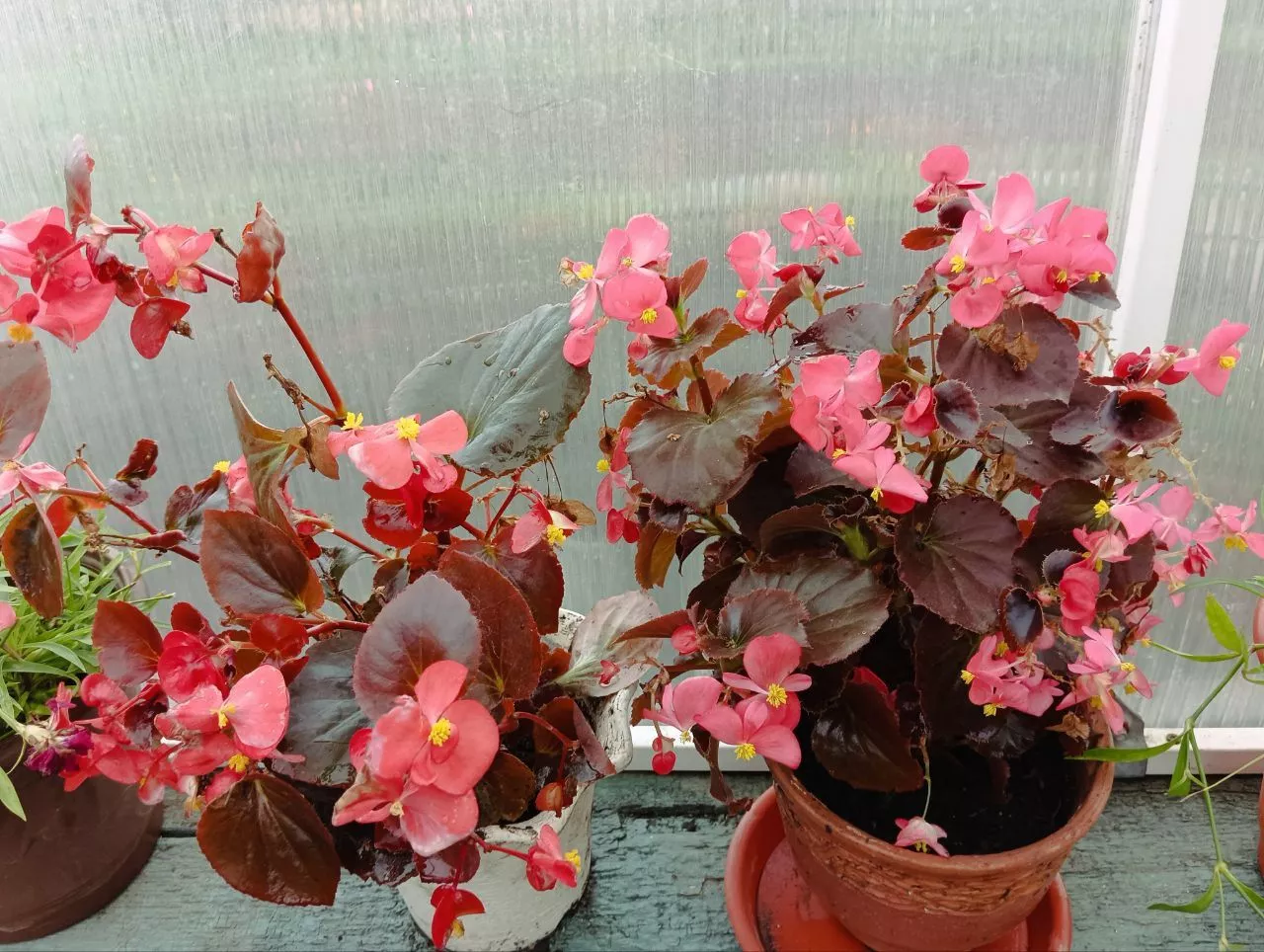
In mid-October, when the nighttime temperatures were already below freezing, I took one begonia home and gave the other to a neighbor at my dacha. And my begonia became a houseplant. I removed the faded blooms and old leaves, added new soil, and fed the bush with flower fertilizer.
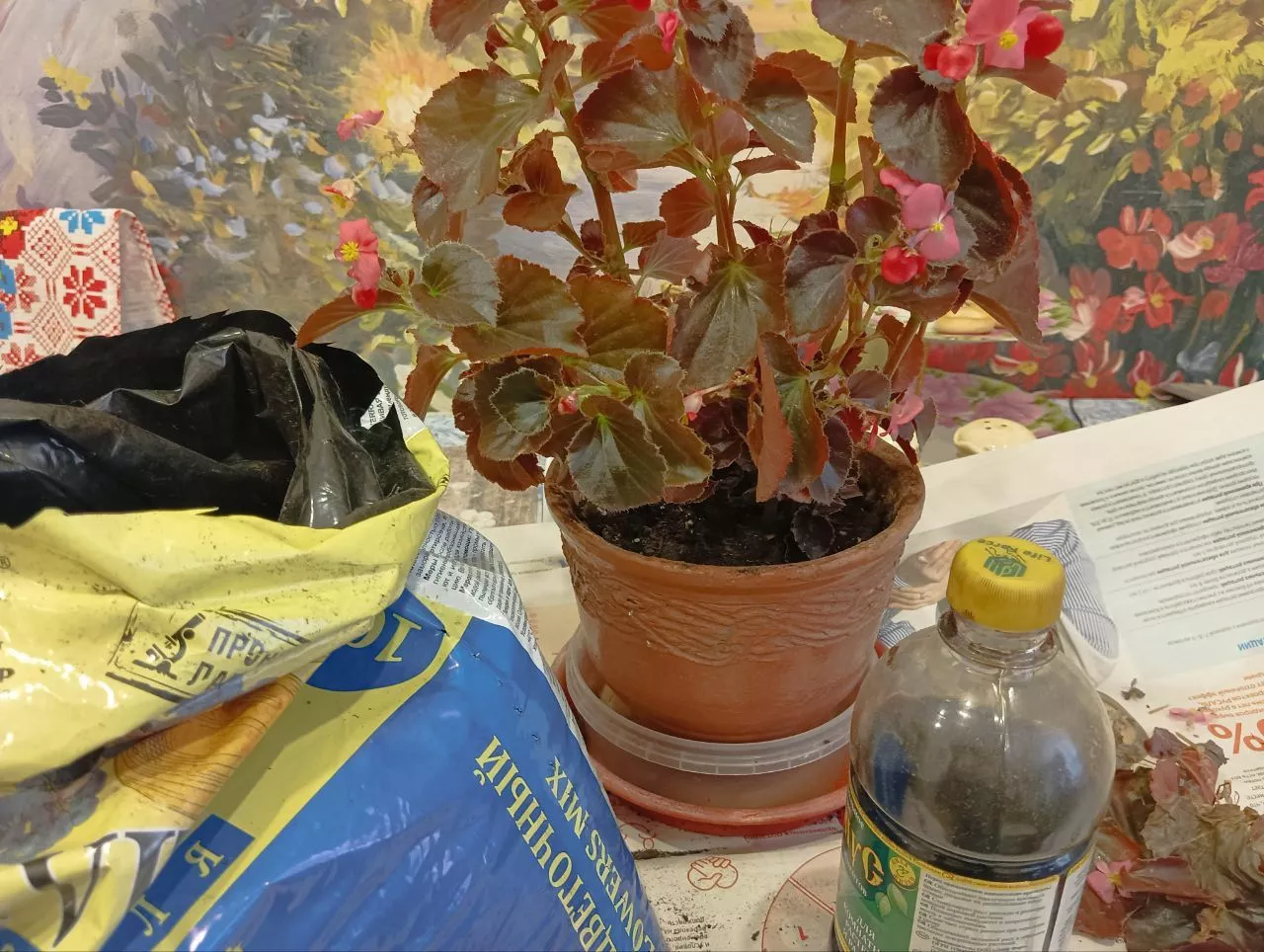
When I was a child, a flower like this grew on my grandmother's windowsill. Its leaves were green and its flowers were pink. We called it "sorrel" because its flowers tasted sour, and we kids would sometimes pick them and eat them. And my grandmother would lovingly grumble at us, "Well, those goats, they've eaten the whole flower." So, as a grandmother myself, as soon as the begonia bloomed, the first thing I did was taste the flower to make sure it was indeed the begonia my grandmother had grown.
What kind of plant is a begonia? Begonia semperflorens is an easy-to-grow, low-growing herbaceous plant. It belongs to the Begoniaceae family. My begonia is 30 cm tall.
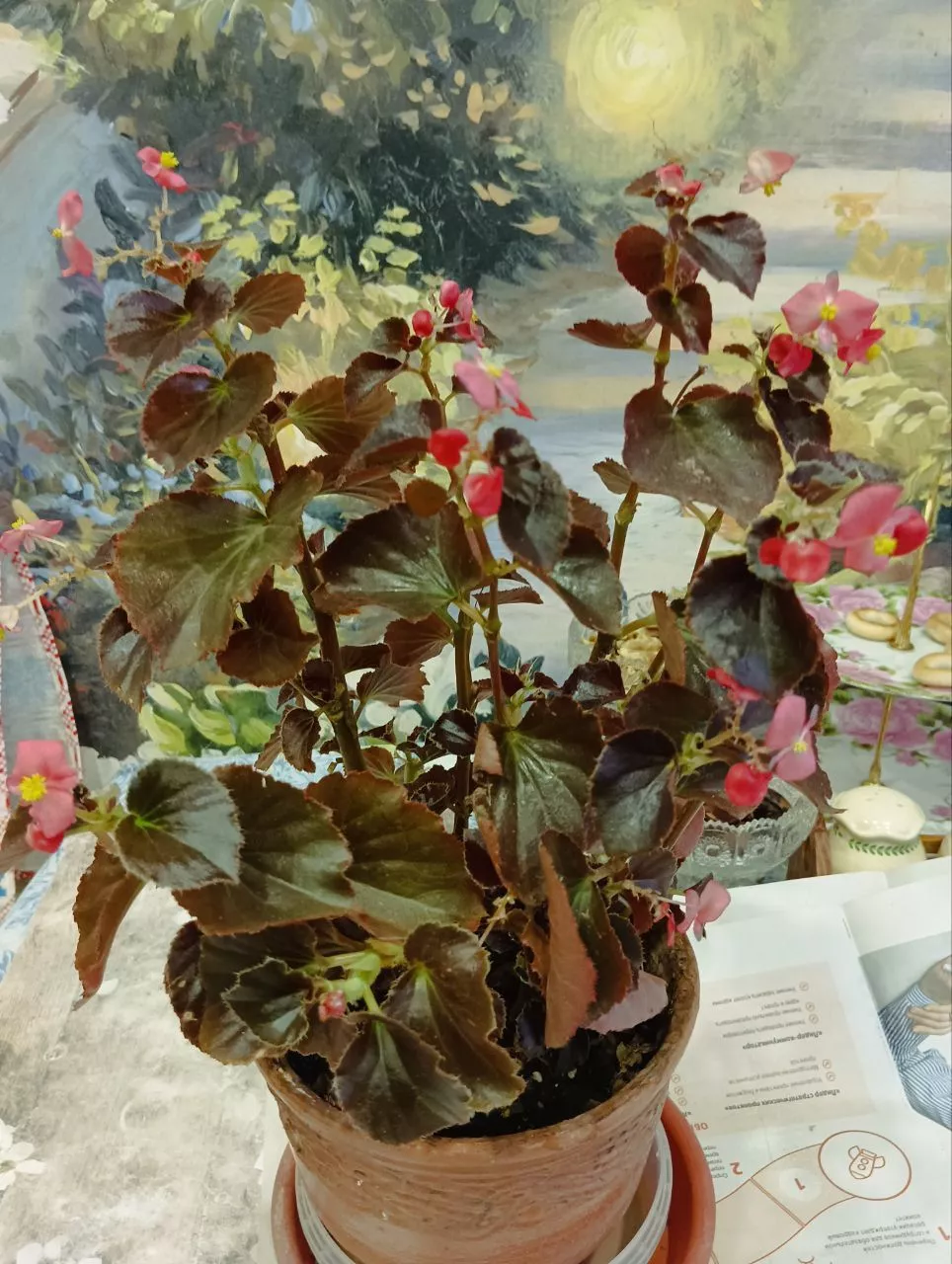
The stems of the flower are fleshy, smooth, shoots grow from the base of the bush.
The leaves are entire, dense, elastic, and smooth. The foliage color varies depending on the species and cultivar, ranging from bright green to burgundy. The inflorescences are racemose, with a variable number of flowers per raceme, depending on the cultivar. The flowers are small, with four simple petals. In the summer, the flowers were bright red, but now they are lighter, and there are very few flowers.
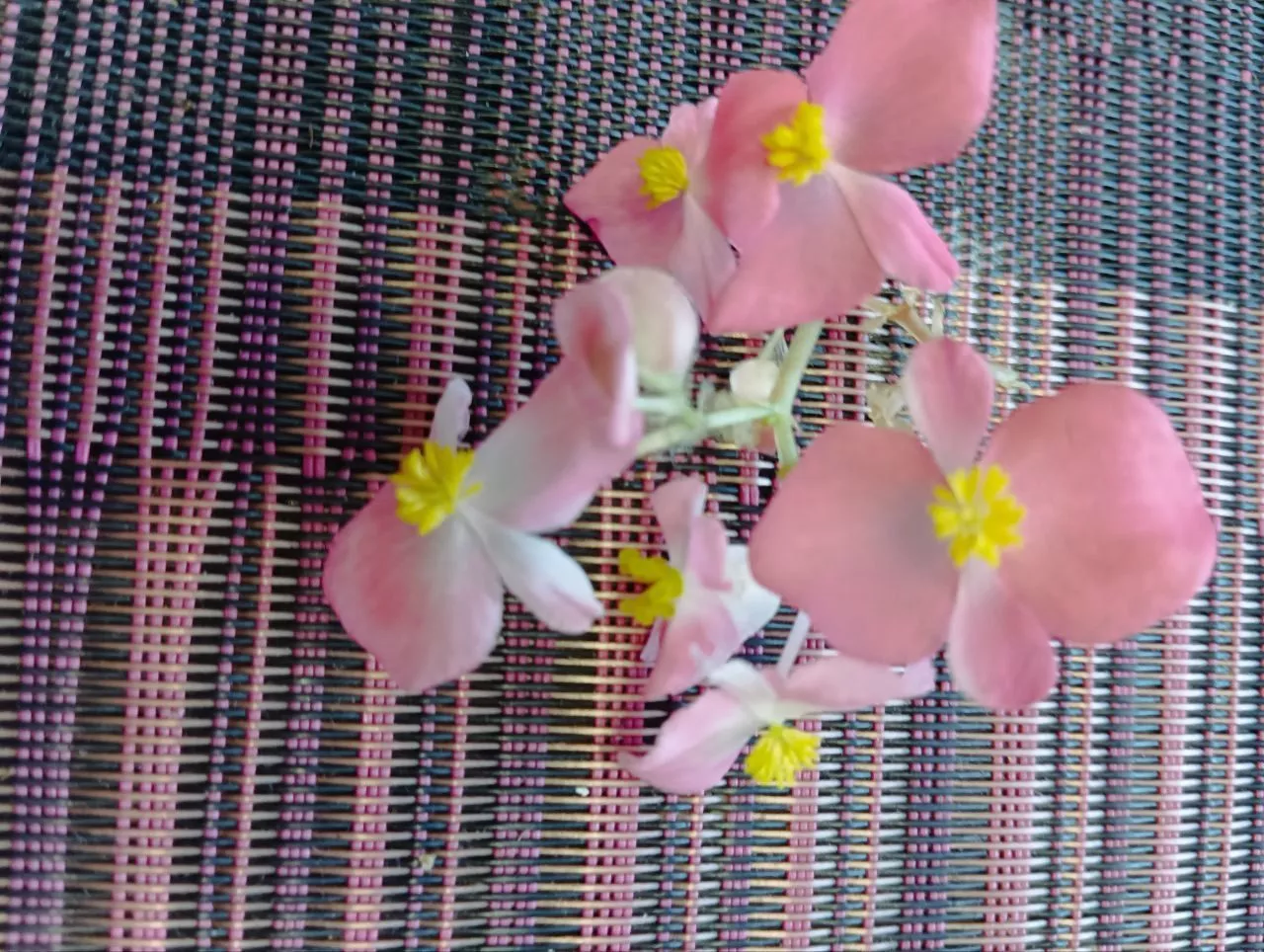
There are double varieties with rose-shaped flowers. The colors range from white to bright red.
Begonia semperflorens is considered a perennial when grown indoors. However, in gardens and parks, it is grown as an annual and used by gardeners to decorate flowerbeds and flower gardens. It blooms profusely and continuously all summer until the first frost. The bushes are simply covered in tiny flowers, so much so that even the leaves are invisible.
Begonias are easily propagated by seeds, leaves, and cuttings. So, you can always dig up a bush in the fall and bring it home to get new plants from cuttings in the spring, and at the same time, do some rejuvenating pruning. I hope I'll be able to grow a begonia semperflorens from cuttings.
But I couldn’t grow a tuberous begonia from cuttings; my neighbor gave me two cuttings of begonias - a yellow terry one and a white-pink one.
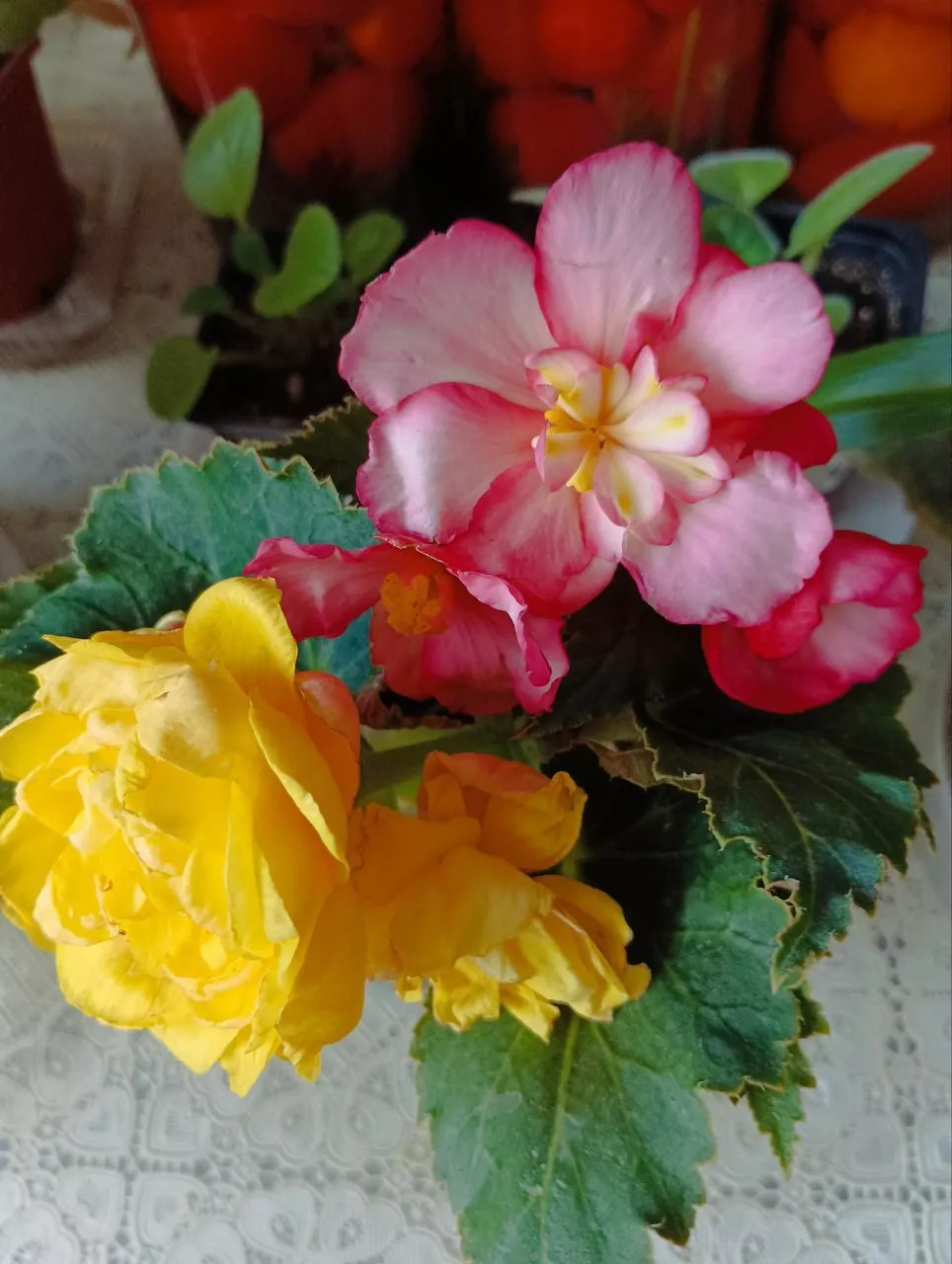
I picked the flowers and put the cuttings in water, but they soon rotted.
I grew a tuberous begonia from seed. It hasn't bloomed yet; it should have double red flowers.
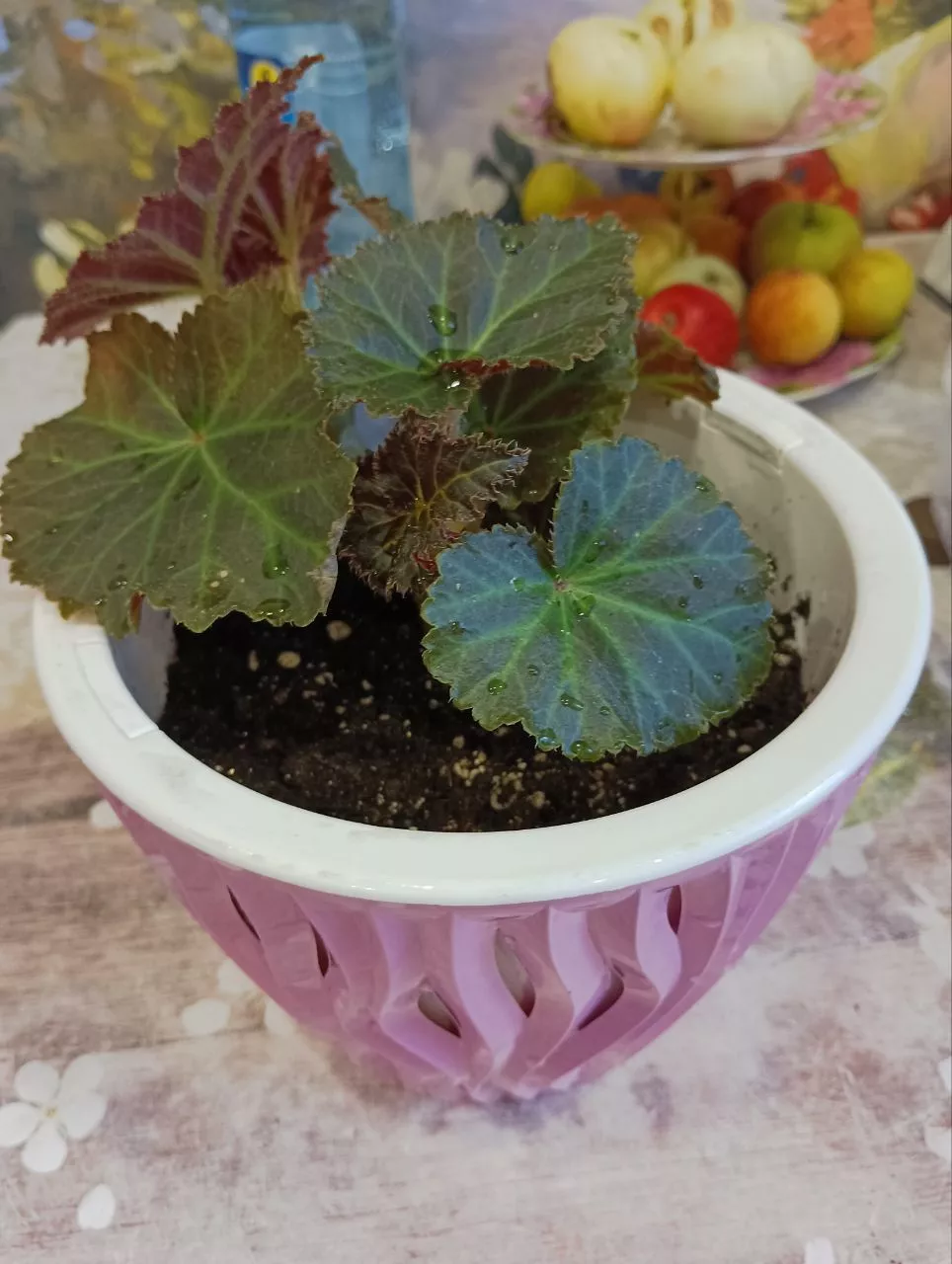
I planted a begonia at my dacha for the first time, caring for it like I do with any other flower. It bloomed profusely, its flowers were vibrant, its leaves were shiny and healthy, indicating it was getting just the right amount of water, nutrients, and sun.
But in the apartment, the flowers have become pale, the bushes have stretched out, and they lack sunlight, even though the plant is on the windowsill. It's already November, the days are cloudy, the sky is increasingly overcast, and the sun-loving begonia is starved for light.
Winter is coming! The ground is already covered in snow, and there are frosts overnight. The other day, I showered all my houseplants, removed any old, dry leaves, fed all my flowers, and added fresh soil. Now they won't be afraid of winter, and my flowers will survive the dormant period just fine.