

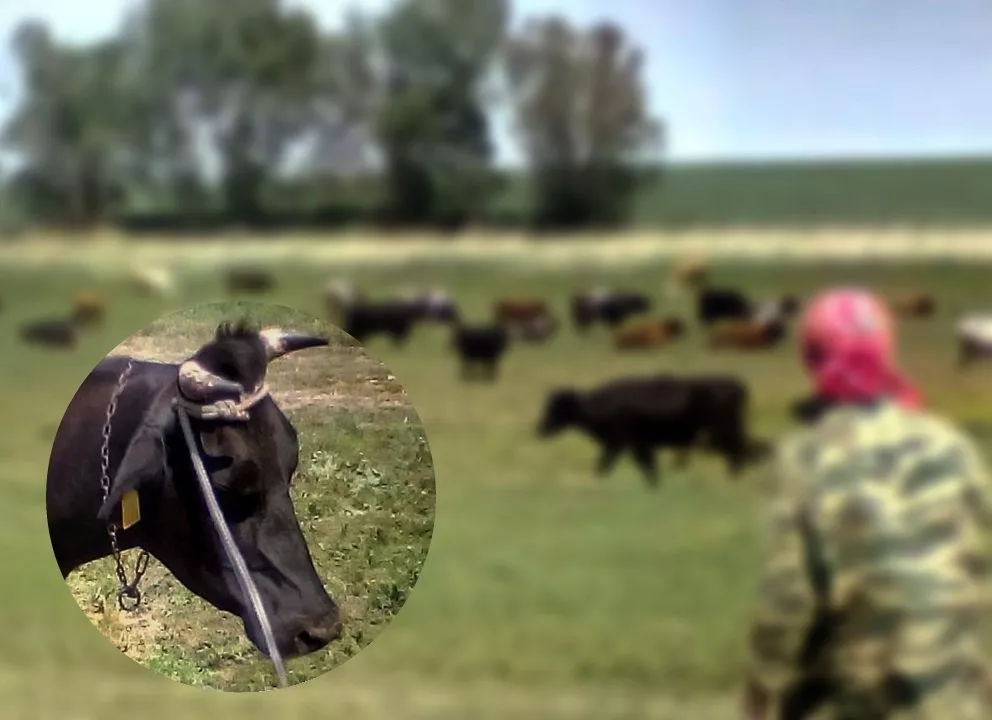
This is our Nochka. We've had cows on our farm for a long time—my parents got their first wet nurses even before I was born. So the whole family has a fair amount of experience raising them, plus my mother worked as a milkmaid on a dairy farm, sometimes in a regular shed, sometimes in the maternity ward.
In our village, there's a veterinarian who helps out in difficult situations involving animals. It's not always free, but we're grateful for that—it's always better to have a professional as your backup. But even they make mistakes sometimes...
Our Nochka was about to calve for the fourth time, meaning she and we had some experience with her. There were no signs of trouble. That day, my parents went away for a couple of days on business in a neighboring region, leaving my aunt to take care of the farm. That evening, she called and said the cow would likely give birth soon—she was standing around, not eating anything.
I must say, our barn was cramped: perfectly adequate for housing cows, but difficult to accommodate a calf, so in such cases we either moved the cow to a paddock (in the summer) or to a special calving barn (in the winter). For some reason, my aunt didn't do that this time.
She spent half the night running near Nochka. The fetus was large and couldn't pass through the birth canal. Furthermore, the calf's front legs had initially turned inward, but the relative was able to straighten them out. Realizing she wouldn't have the strength to pull the calf out during the cow's next contraction, she called a neighbor and a veterinarian.
Nochka's strength was waning, so she couldn't get up. By the time the vet arrived, things were really bad. They gave Nochka some supportive medication. The calf was practically dry inside, and its breathing was alarming. The vet poured sunflower oil inside and tried to coat the calf so it would slip out during the pushing process. They tied a rope around its legs to make it easier to pull out. But the pushing stopped... And five minutes later, the calf died.
This story ended with the cow being sent to the slaughterhouse—they couldn't help her. The main factors here were a lack of time and overconfidence. If a veterinarian had been called sooner, perhaps both the cow and the calf would have survived. As luck would have it, the parents had to leave, and no one expected the disaster.
It's very scary and unpleasant to remember, but there's no agriculture without such incidents. Rare, but they do happen.
This is all very sad... Could you describe how calving normally happens, so that we understand “this is normal, but this is already strange, we need to keep our ears open”?
Every cow has her own NORMAL signs. These can vary significantly, so it's important to monitor your milkers. It's difficult with first-calf heifers, as you don't yet know how they'll behave during calving.
The main general signs that a calf is about to be born are:
• The pelvic bones on either side of the base of the tail diverge and collapse before calving. In their place, pits literally appear.
• The udder fills up, and the teats become smooth and shiny. (Nochka’s udder only filled up after calving).
• The cow behaves unusually: she may suddenly drink a lot or refuse food and drink altogether.
• Some individuals throw hay out of the feeder, placing it under their feet - the “nesting” principle is evident.
• The cow frequently changes its body position: sometimes lying down, sometimes standing up. At the same time, its breathing is frequent and labored.
Cows typically give birth in a side-lying position. The normal process takes 40 to 60 minutes. However, if the cow is distressed, mooing, or restless, it's best to call a veterinarian.
It's best to call a specialist even if you're new to calf delivery. Sometimes you might need to turn the fetus in the womb or adjust its legs (as happened to us). You might not need a veterinarian, and the cow can handle it on her own, but having one present will give you peace of mind. Even if the cow decides to calve standing up, a knowledgeable person will help the calf emerge without hurting itself on the floor.
The most important thing to remember is that during such a critical period, you should not disturb the animal. Your presence could cause harm. Observe and assess the situation from a distance. Intervene only if necessary.
Thanks for the reply! As a newbie, this will be useful to me.