
In the early 1990s, my parents were still working on the state farm: my father was a tractor driver, my mother a milkmaid. However, due to the economic situation in the country, wages were paid in kind, not cash. In the fall, my parents would bring home a year's supply of grain, a couple dozen sticks of smoked sausage, and a few bags of Gulliver candies. Thus, money was always tight. It was decided to expand the household.
We started with cows. With our next paycheck, we bought a heifer from the farm and borrowed an adult dairy cow from my mother's mother. So we had three milking cows, a heifer, and a bull—our start-up capital. Naturally, the question of building barns for them arose, as there was no longer enough space. We built summer sheds, which were well insulated for the winter. We boarded them up, caulked the cracks, and lined the outside with bales of hay and straw. It worked out well—an all-wood structure retains heat better than the concrete building on the farm.
At first, it was hard to manage the farm and garden, but we got the hang of it. I was about 10 years old at the time and could do all the work myself. Milking the cows and caring for them was often part of my responsibilities.
By the 2000s, our herd had grown to six cows. We tried to sell the young animals immediately after calving, so as not to feed them milk. This wasn't profitable: you raise them, feed them milk, and ultimately, it wouldn't pay off when you sell them. The barns were cramped and scattered throughout the yard; your arms got tired from milking, and cleaning the manure was so exhausting that your legs buckled... We decided to build a permanent barn closer to the manure pile and hayloft, away from our own house. We started saving money.
It wasn't until 2005 that concrete blocks for the walls were delivered, sand and cement for the masonry were purchased, along with floorboards and beams and slate for the pitched roof. A sturdy strip foundation was poured. The walls were quickly raised. The roof was installed. Concrete feed troughs were installed inside. The barn looked like a palace! In the photo: the entire building, up to the green and blue door, is a cowshed.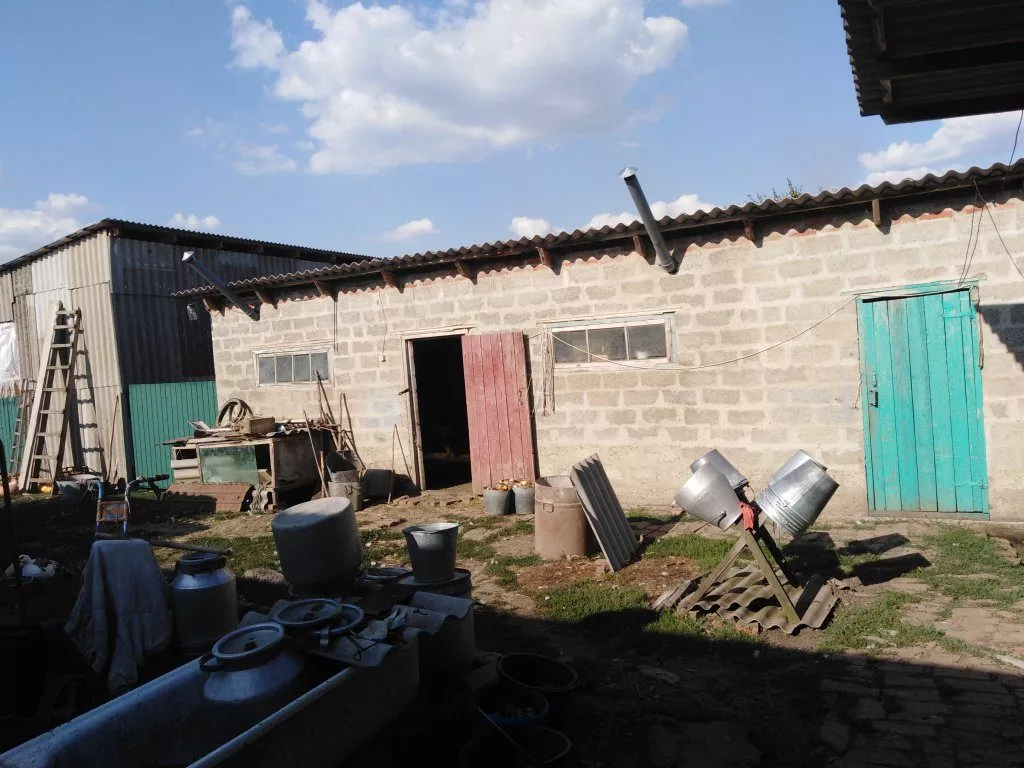 At first, the cows also got used to not having to crowd each other and sleep in stacks. The barn has space for six cows and a small shelter for newborn calves.
Winter arrived. The walls and slate became wet from condensation. Water trickled down them. They consulted with the people who ran the barn, and they advised opening one of the parallel doors slightly for ventilation. This had no effect. The following year, the wooden floorboards had to be replaced—the boards had rotted. The ceiling was lined with a special film (and it was very expensive) and boarded up, and the bird feeders were replaced with wooden ones.
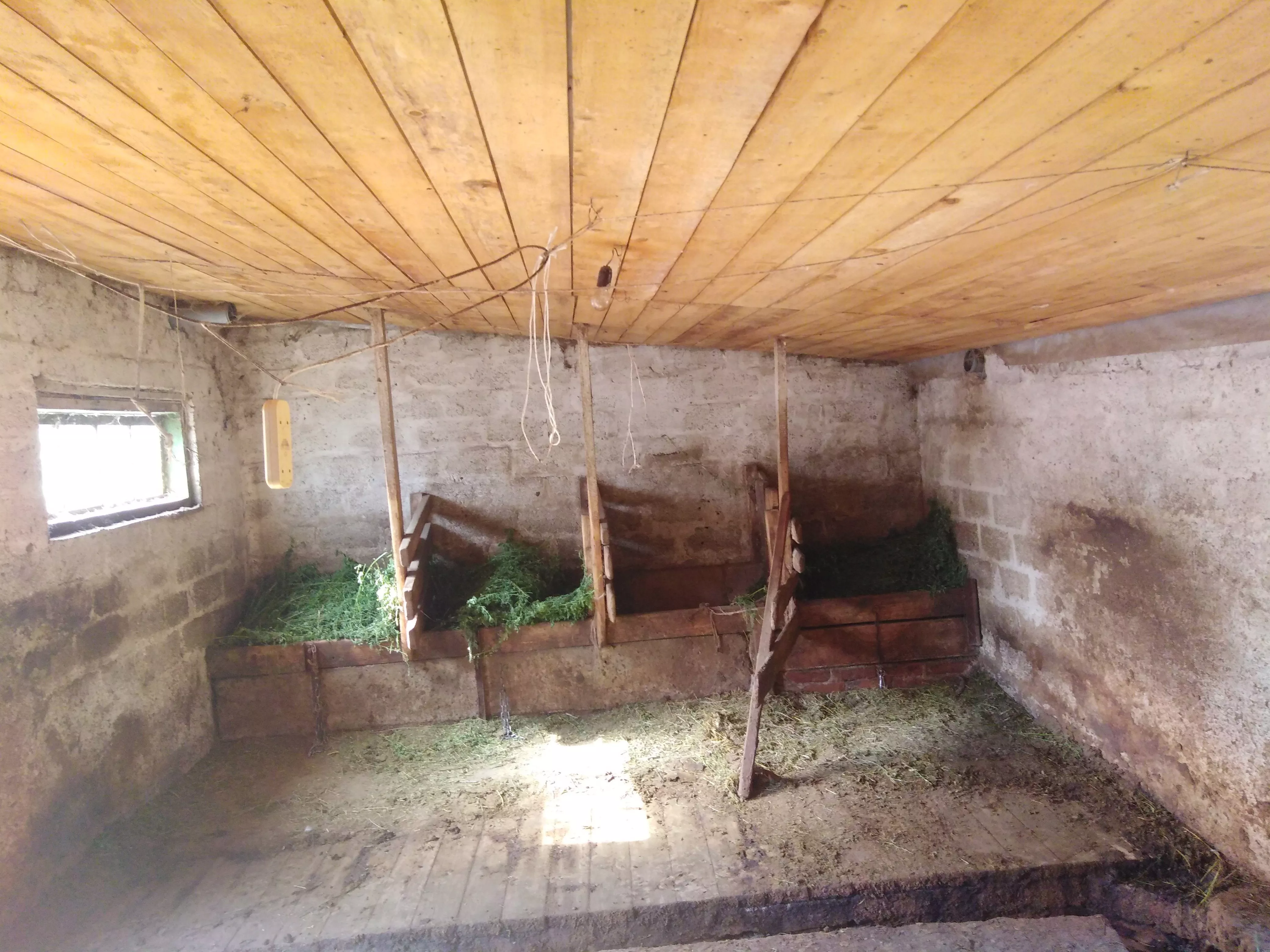
The following winter, it turned out the work hadn't been enough—the barn was warmer, but still damp. The builders told them about natural ventilation through the sewer pipes. They installed an intake pipe and exhaust elbows on opposite walls.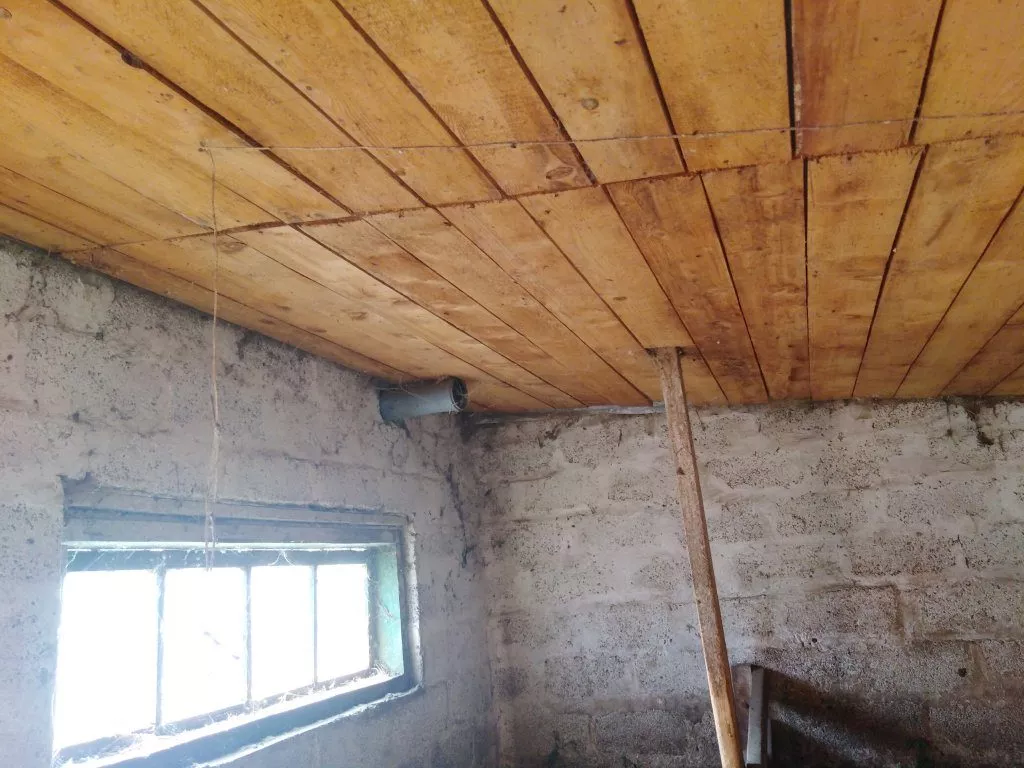
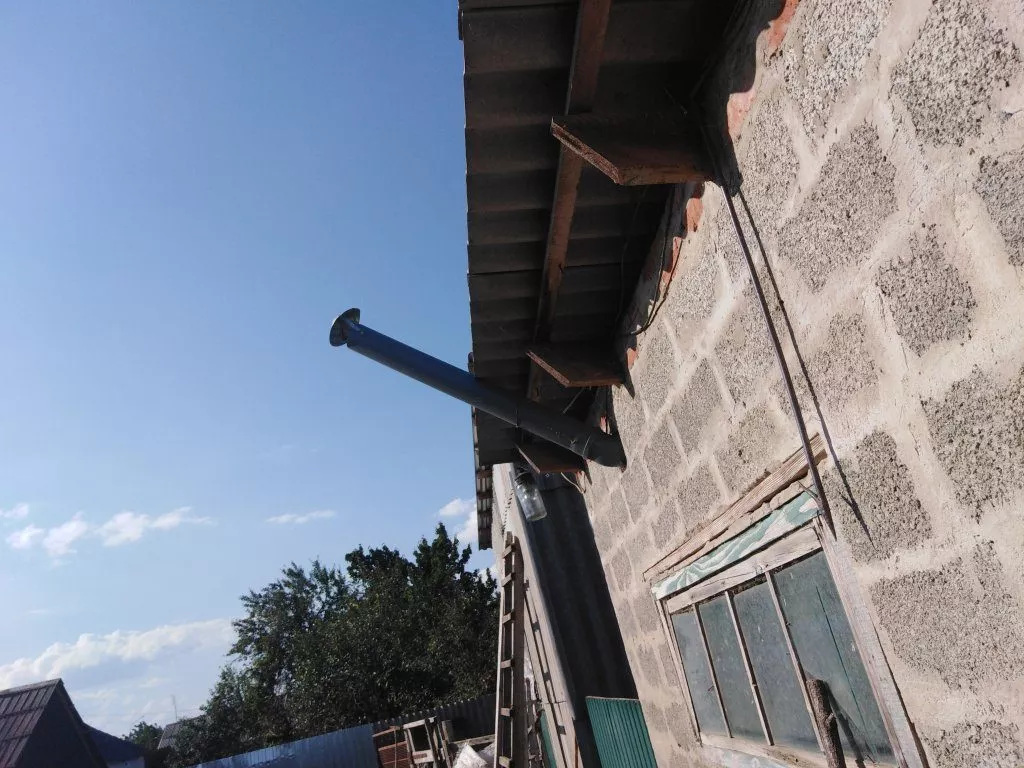
The humidity in the barn has dropped significantly. But I'd still like to plaster the walls. Next year, there will be a general cleaning and disinfection of the barn, and that's when we'll start. In the meantime, during severe frosts, we'll install heaters for the cows.
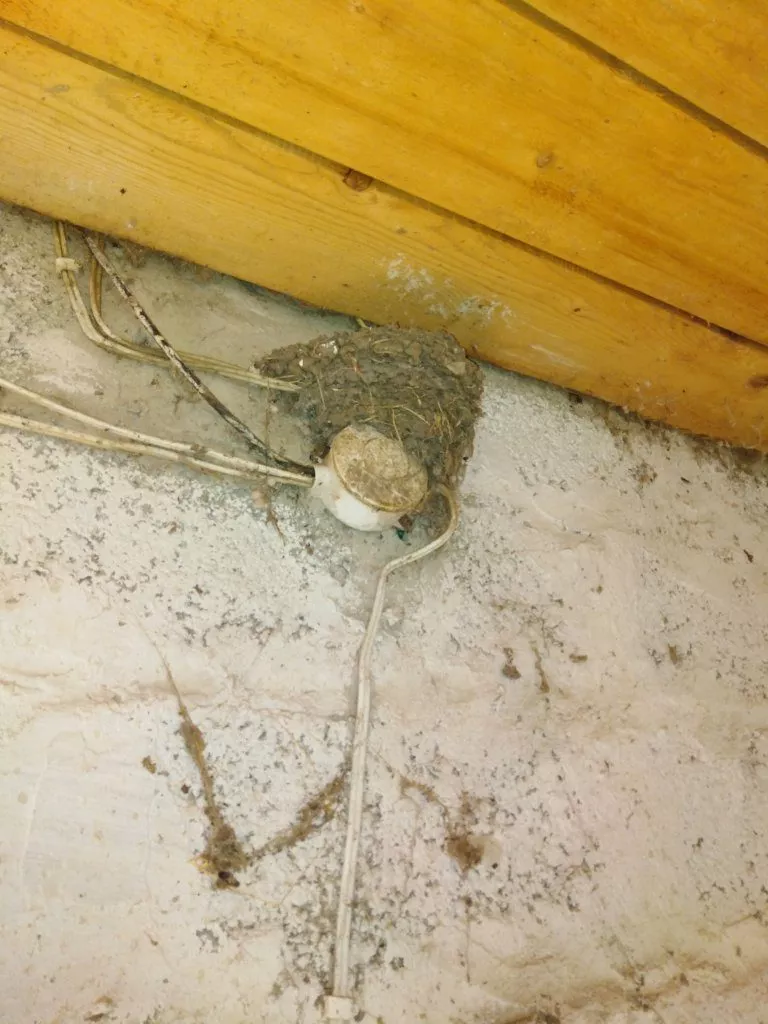
Swallows and cats have taken a liking to our barn, so we think it turned out quite well.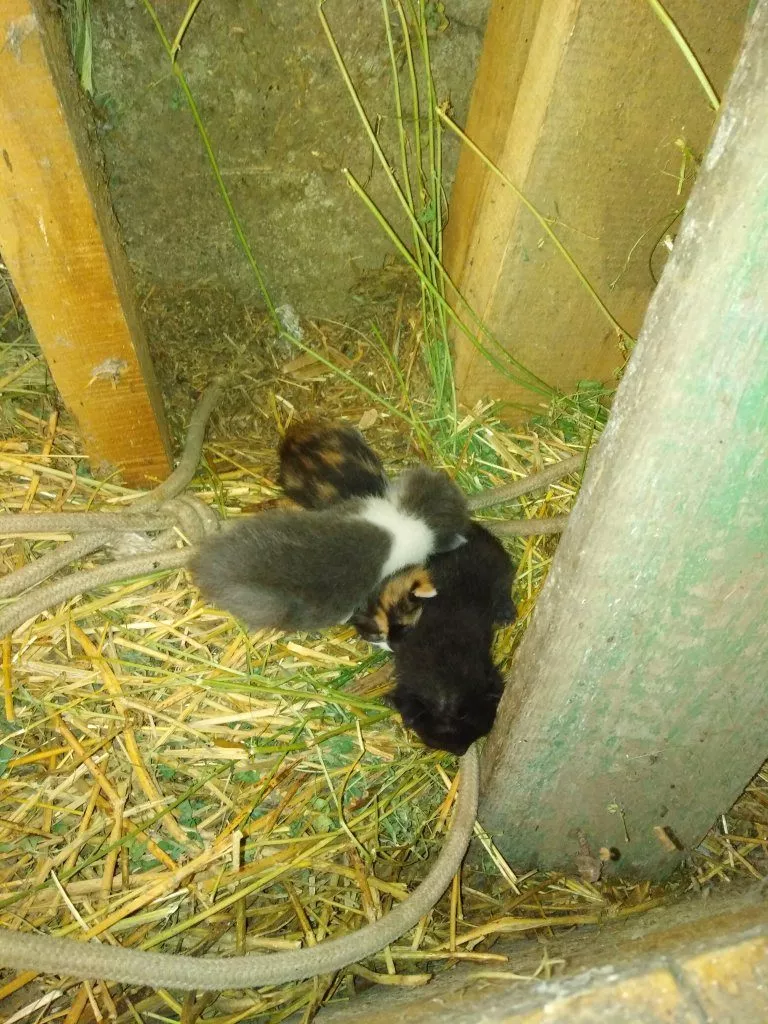
The following conclusions were drawn from the entire construction experience:
- You shouldn't build stone barns for cattle - they are cold and attract moisture;
- thick block walls need to be insulated both from the outside and from the inside;
- a wooden insulated building is warmer, although it would take more money and time to build;
- alterations are more expensive than the initial inclusion of these works in the construction estimate;
- You need to think through all possible problems right away so as not to suddenly solve them in an already populated barn.
I hope that our experience will help other farmers.
Are winters in Maykop really as cold and brutal as in Yakutsk? Excessive care for cows—block walls and wooden floors—can be detrimental to their health. Dampness is bad for cows. I know that in the Tula region, cows are kept under sheds year-round (the shed is covered with boards on the outside to protect them from the wind)—a cow can easily withstand temperatures down to -15-20°C, and nothing will happen to her or her udder. But drafts are harmful!!! You might want to consider the wisdom of such excessive care.
By the way, I'd like to suggest that the feeding and watering area should be separated from the stalls. Why? Because cows mostly defecate when they eat and drink. Separating the stalls from the feeding area keeps the bedding clean, the cow clean, and the udder clean—which ultimately means clean milk without a shitty taste. Cows are also smart animals; they'll quickly learn to defecate where it's dirty and lie where it's clean—in the stalls on the bedding. Incidentally, soft rubber mats for stalls aren't a luxury, but a necessity. They're a sensible alternative to sawdust and straw for bedding. Unlike boards, mats don't rot or absorb moisture, and they're easy to clean. A 1.2x1.8m mat costs approximately 3,000-4,000 rubles. For thrifty people, the mat lasts for 6-8-10 years (but if you rake the mat and shovel it to remove the shit, it can be torn in a week)
Why use such unpleasant language? This is a decent website, not some kind of party!