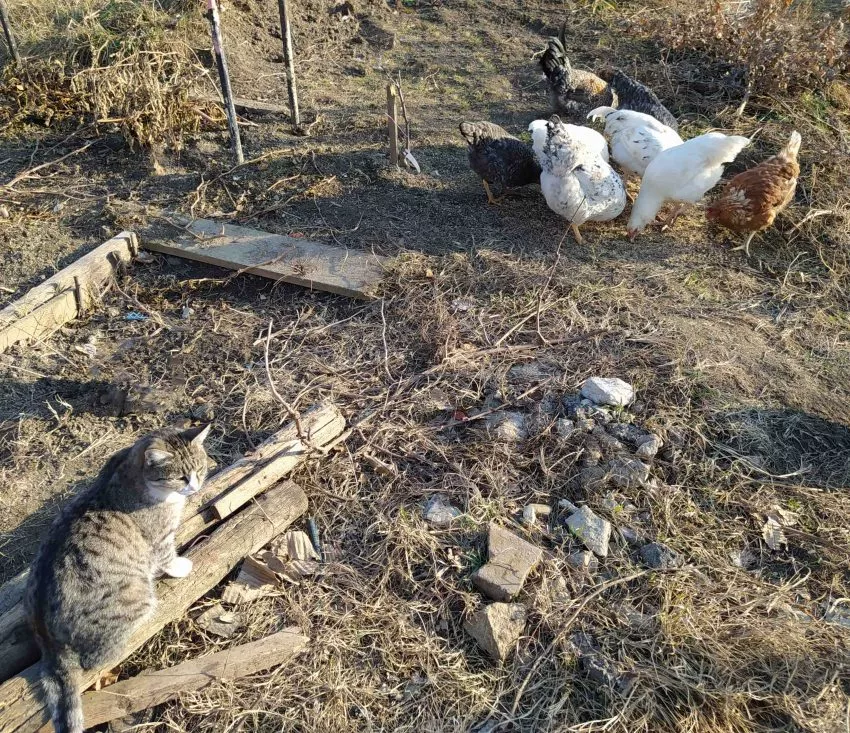
Good afternoon
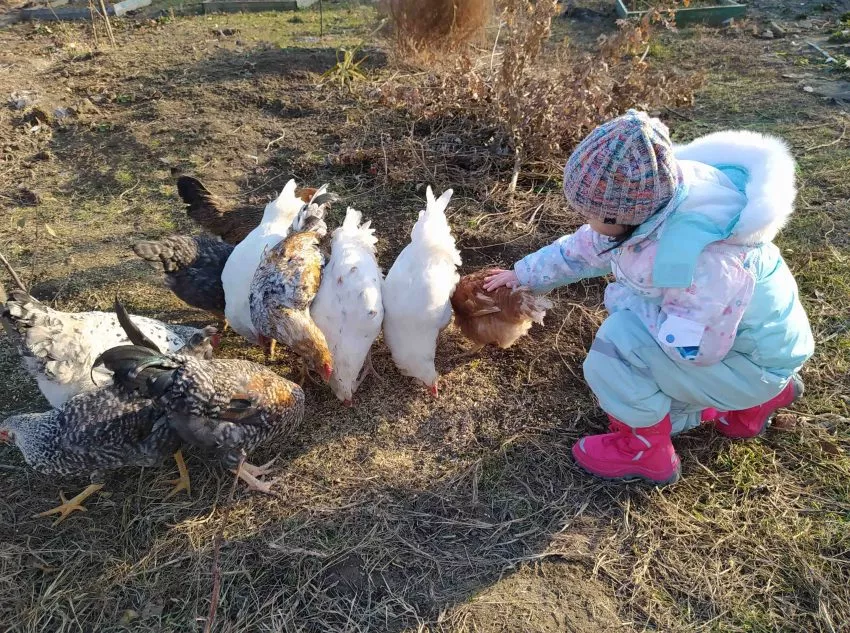
I'll continue our story with the chickens. They've grown from chicks into young hens.
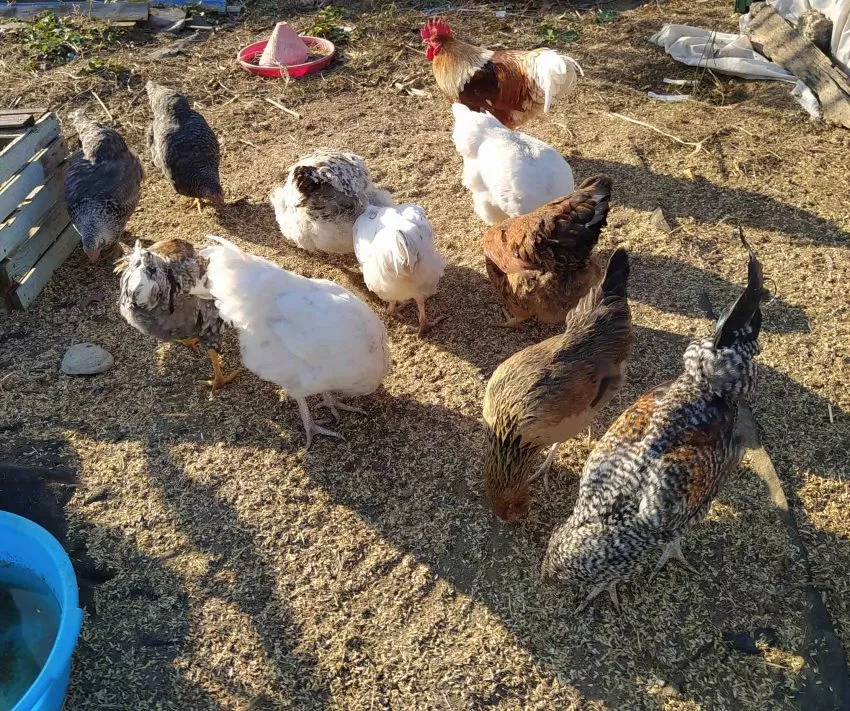
There are also a few roosters. They've started crowing and stealing hens from the older rooster. Those eight American chicks have grown up (last time I told you about a friend's hen who hatched them, but since she didn't plan on keeping the chicks, she gave them to us).
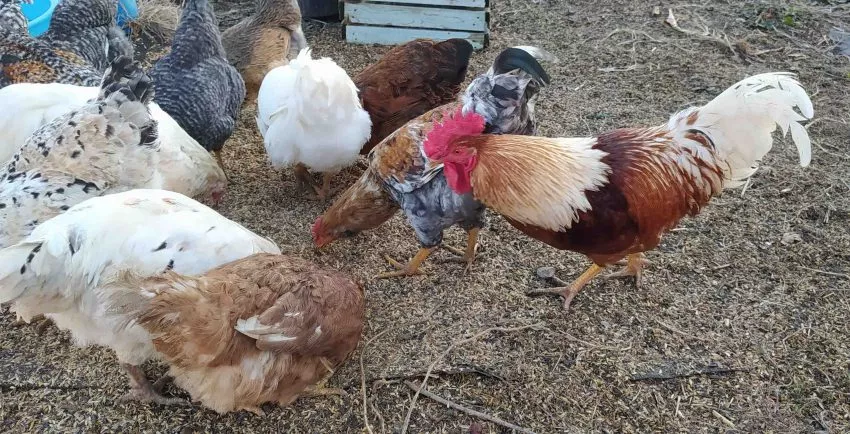
The entire bird family is tame; once you go out to them, they almost never fly onto your head.
Three hens are already laying eggs – that's two eggs a day. Just right for a family of three.
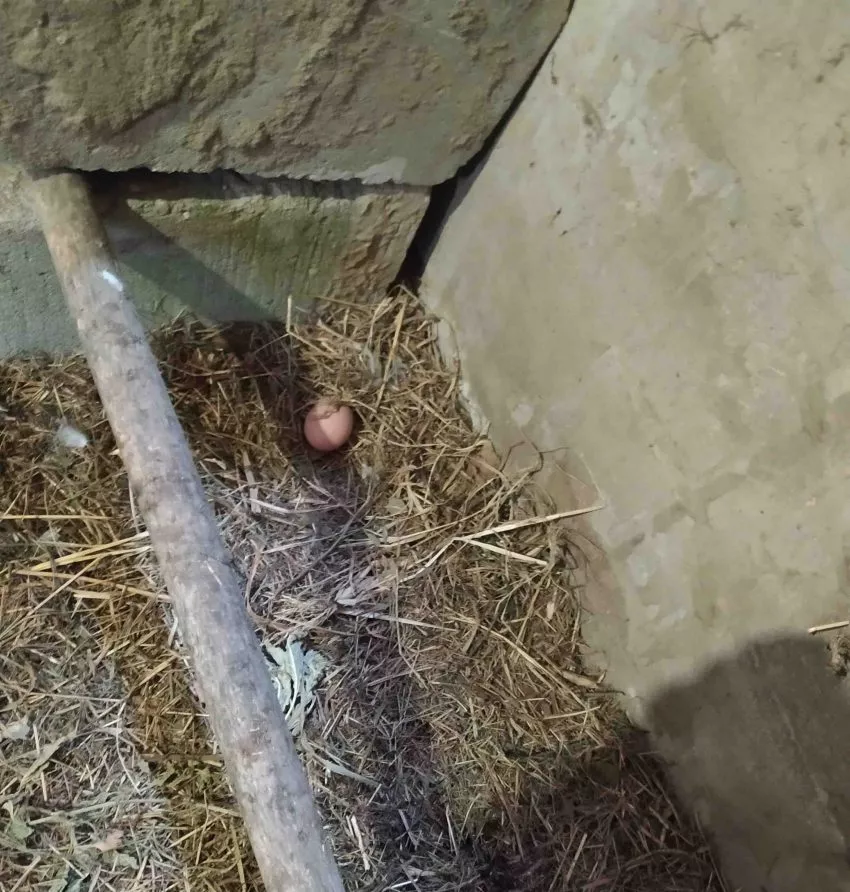
The rest are not yet grown up, but should soon start laying eggs.
Some friends gave us their red hen. They were dismantling their chicken coop, and they had only one left, but they didn't want to chop it up. The hen also turned out to be tame, and now my daughter has another pet – when we go to feed them, she pets everyone and gives them treats. The chickens are easy to handle.
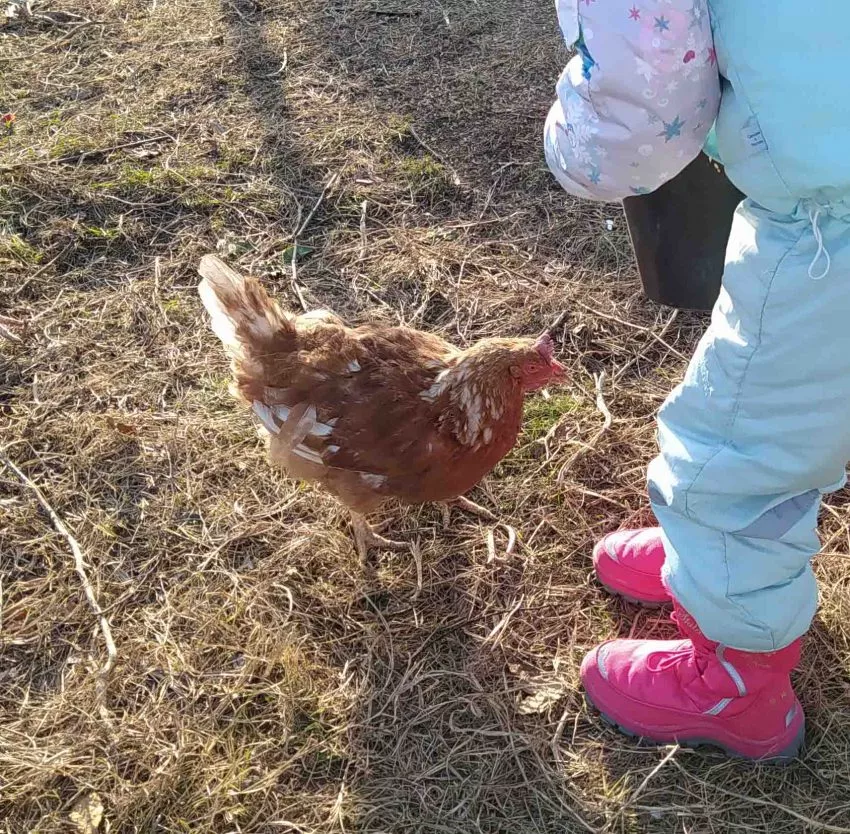
Among the young roosters, there's one unusual one, also very tame—when my daughter runs around the garden, wherever she goes, he follows her as if on a leash. He doesn't attack, though, just keeps her company and begs for tasty treats. This rooster is a bit wild, though; when frightened or excited, he starts to turn his head strangely, losing his bearings—a very funny sight.
The adult rooster has been showing a bit of a temper lately. I had to teach him a little lesson. But he's a good owner, and I hope he doesn't become aggressive; it would be a shame to send him to the soup. I'm thinking of selling him and keeping some of the growing cockerels, but who knows what kind of character they'll show when they get older?
In the fall, we added another small room—a warm one—to the summer chicken coop. Long flower pots like these turned out to be very convenient for watering bowls. One was placed in the coop. The other is in the aviary. They're quite stable. The birds don't tip them over, but they don't put their feet in them either. I also tied the one in the outdoor aviary to the fence mesh, drilling a couple of holes in the top edge.
To enter the room, they made a hole in the wall.
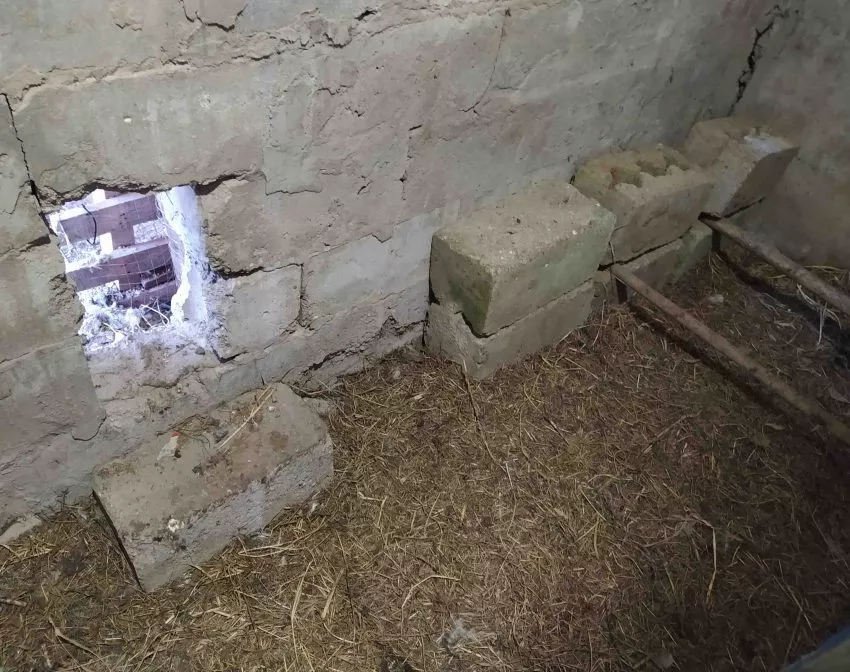
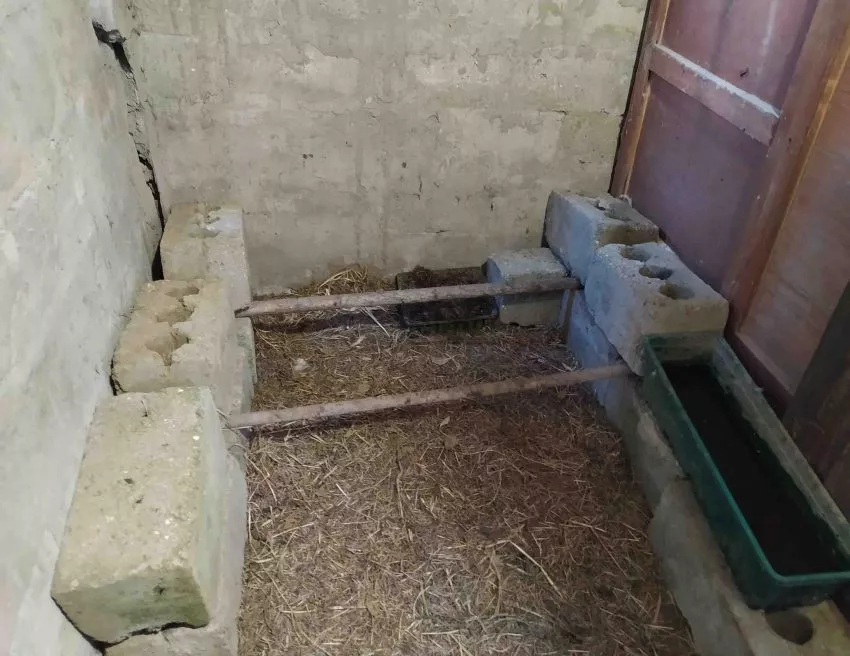
We set up a winter chicken coop in an old building—the barn was already leaning and we'll be tearing it down, but we've given it over to the birds for this season. We partitioned off a small room, as we only have a few hens and the space is enough for them to roost, and a smaller space is easier to heat. We laid hay, and for now, we secured the perches to cinder blocks, pressing them down so they don't shift. In the future, I want to build proper, higher perches.
We haven't made the nests yet, as the hens themselves chose a corner and started laying eggs there. We're just laying some straw down.
While it was autumn, we let the chickens out to roam freely in the garden every day. They'd nip at the weeds, weed out the pests, and fertilize the soil. But over time, the birds grew bolder and began to wander off into adventure. Our property borders an ownerless one—or rather, that property has an owner, but he's been unable to build a house, and there's no fence between us yet.
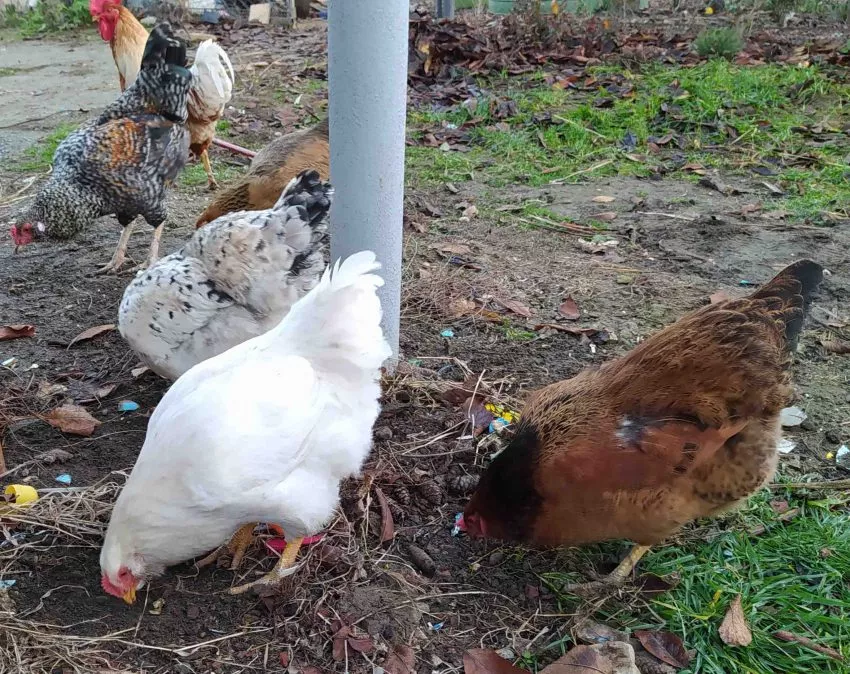
I had to confine them to an enclosure. This was also a budget option.
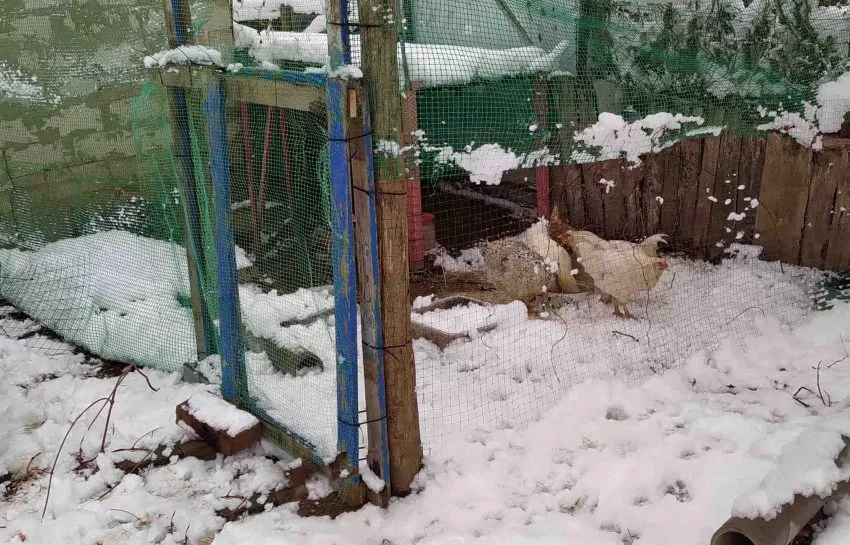
Now I let them out into the wild once every few days, so they get used to it a little and start walking nearby.
We can't afford to buy good materials for the chicken coop right now, but we have a lot of old materials (boards and poles) from dismantling old buildings, so we're using them. And since we're in the southern part of the region, we don't need much insulation. So far this winter, the coldest daytime temperatures have been -6°C, with one nighttime temperature of -10°C. The rest of the time, temperatures have been above freezing or around freezing.
Before the New Year, snow fell for the first time this winter, much to the delight of the children. It stayed for three days, but gradually melted. Now, while most of Russia is under an Arctic cyclone and freezing temperatures prevail, we're experiencing unusually warm weather, with temperatures hovering around 10 to 13 degrees Celsius for a week now. Of course, freezing temperatures can still occur in January and February; it's even been as low as -15 degrees Celsius. That's when constant heating of the chicken coop will be essential. But even then, these cold spells aren't constant here—a week or a week and a half at most, followed by another break and a warmer weather.
I alternate rice scraps with sunflower seeds when feeding them, and I brew mixed feed with potato broth and peelings. I also feed them small shells, zucchini, and pumpkin. I simply cut the zucchini in half, and they peck it out themselves.
The only thing we can't agree on is moving them to the winter chicken coop—the barn—to sleep overnight. I leave the lights on there, and I give them treats there occasionally (but not much, so as not to attract too many rodents—I try to feed them outside). They hang out there during the day, turning over the straw, and lay eggs there… but at night they settle down in the light summer house.
Maybe it's not cold enough yet, and when it freezes they'll move to the barn. At least that's what I hope.
The cats apparently sensed that where there are chickens and grain, there are also mice, so they regularly keep watch on the roof of the chicken coop.