

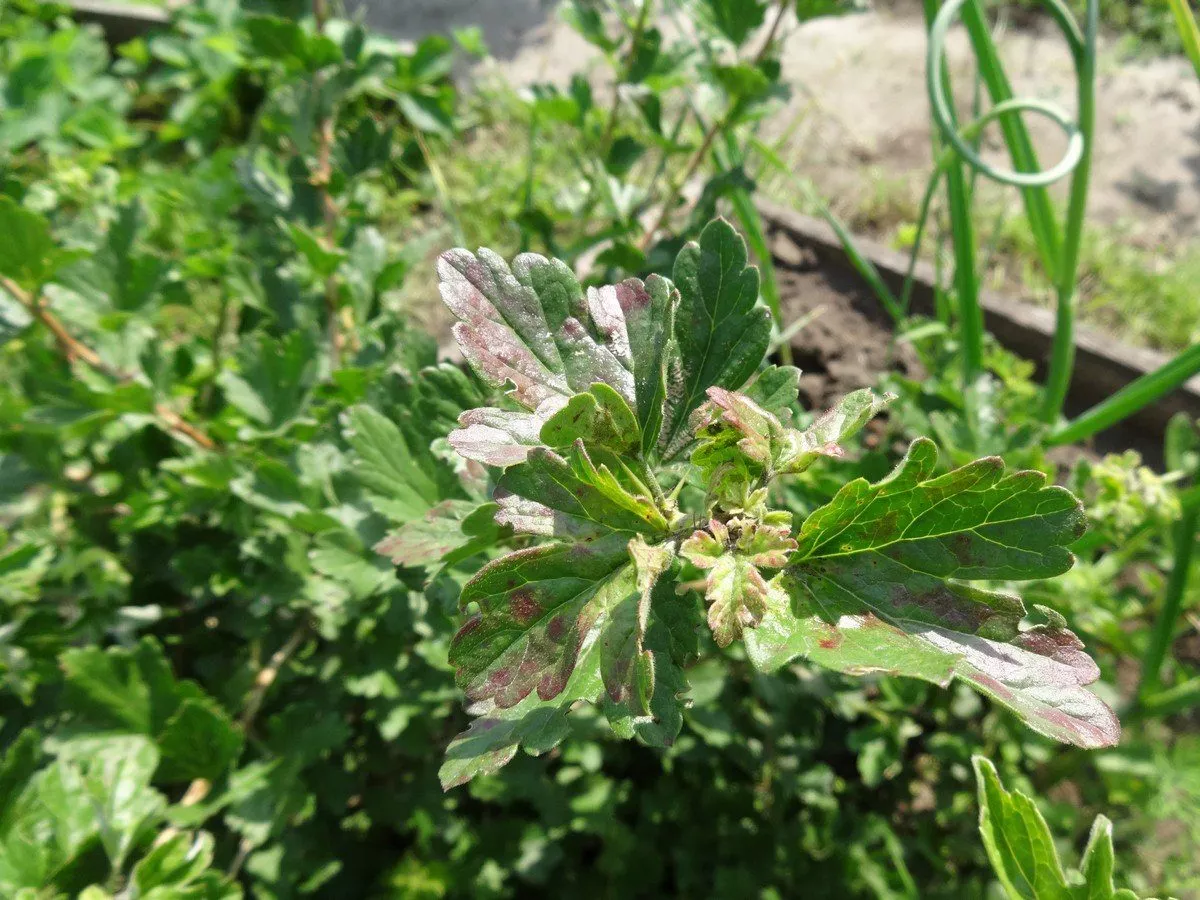
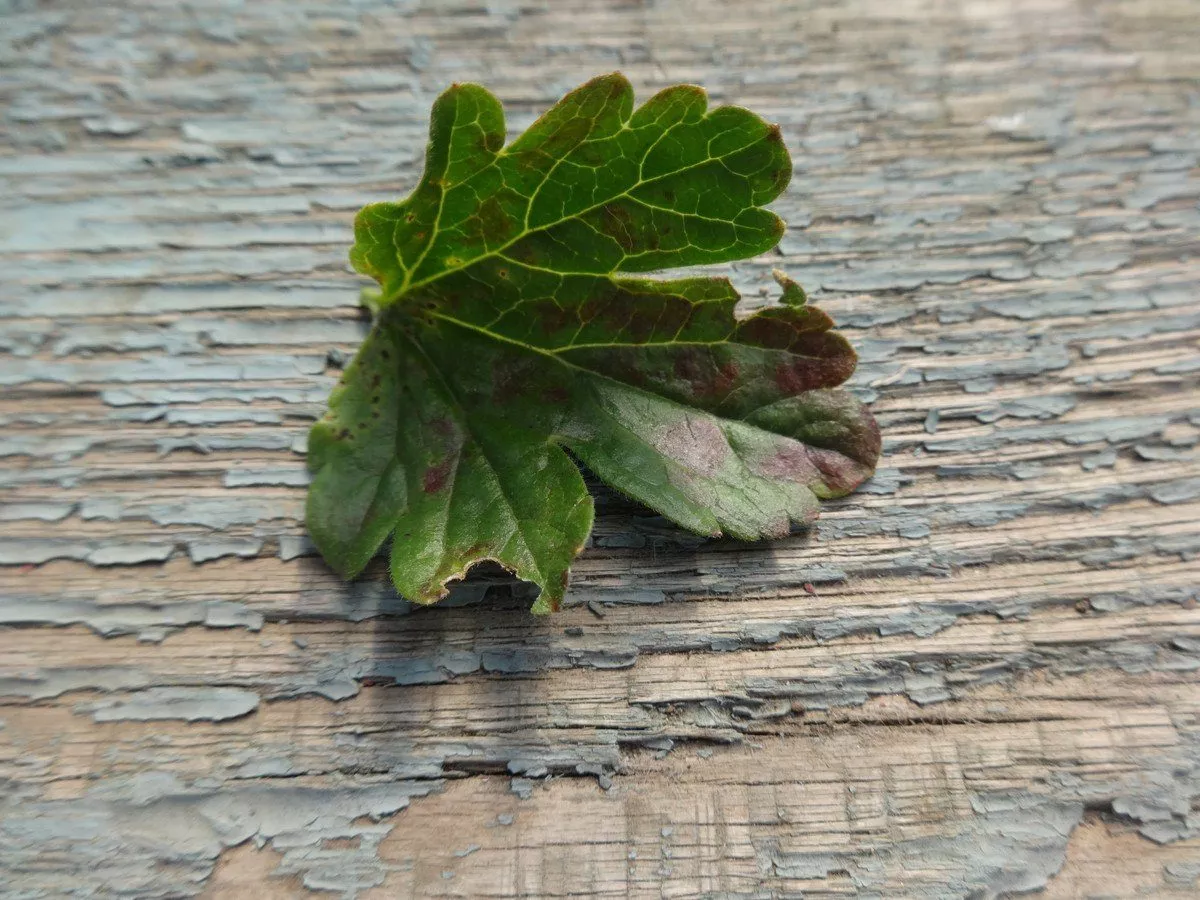
A rainy and cold June took its toll. The constant moisture and cold nights are causing the garden and vegetable crops to suffer and become ill. The gooseberries, too, have been affected. First, burgundy leaves appeared at the tops of one bush, and then I discovered a white, powdery coating on the stems and leaves.
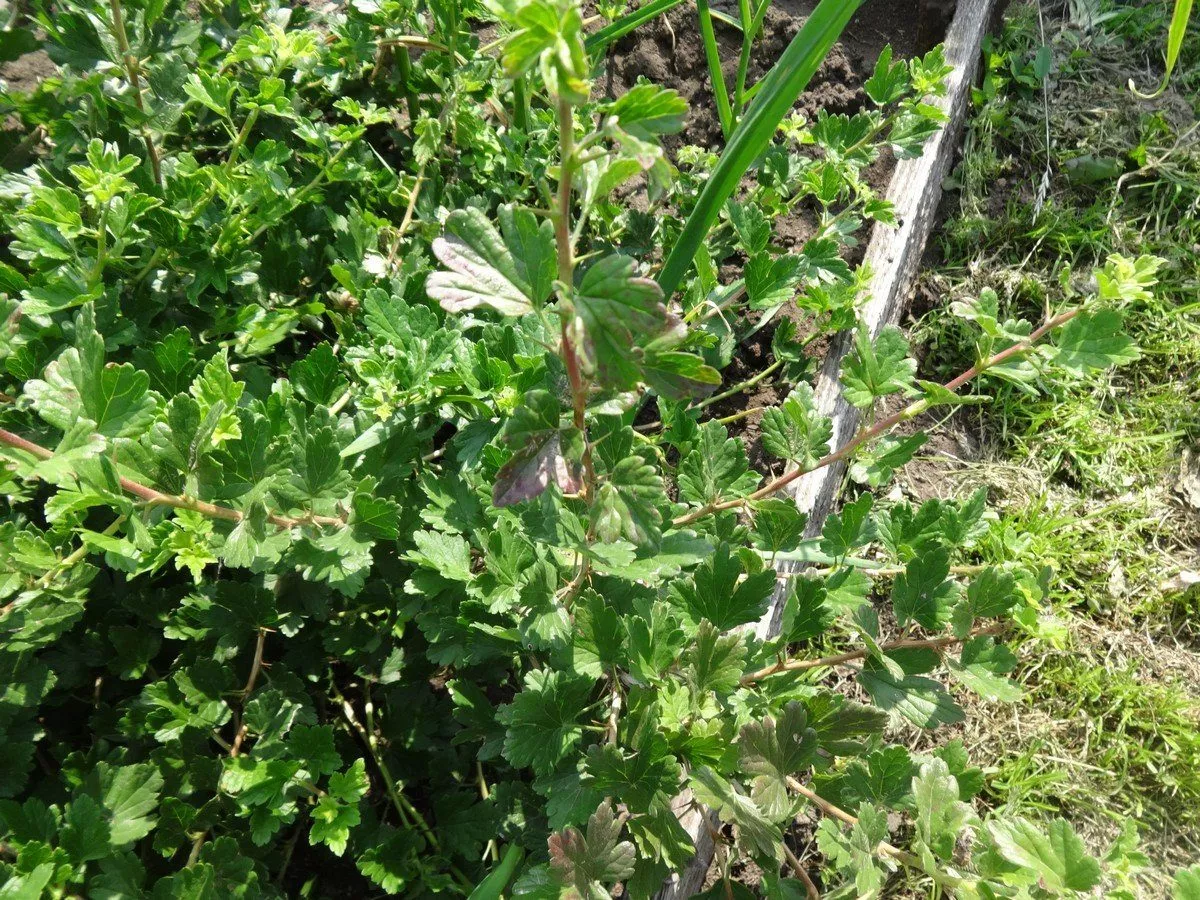
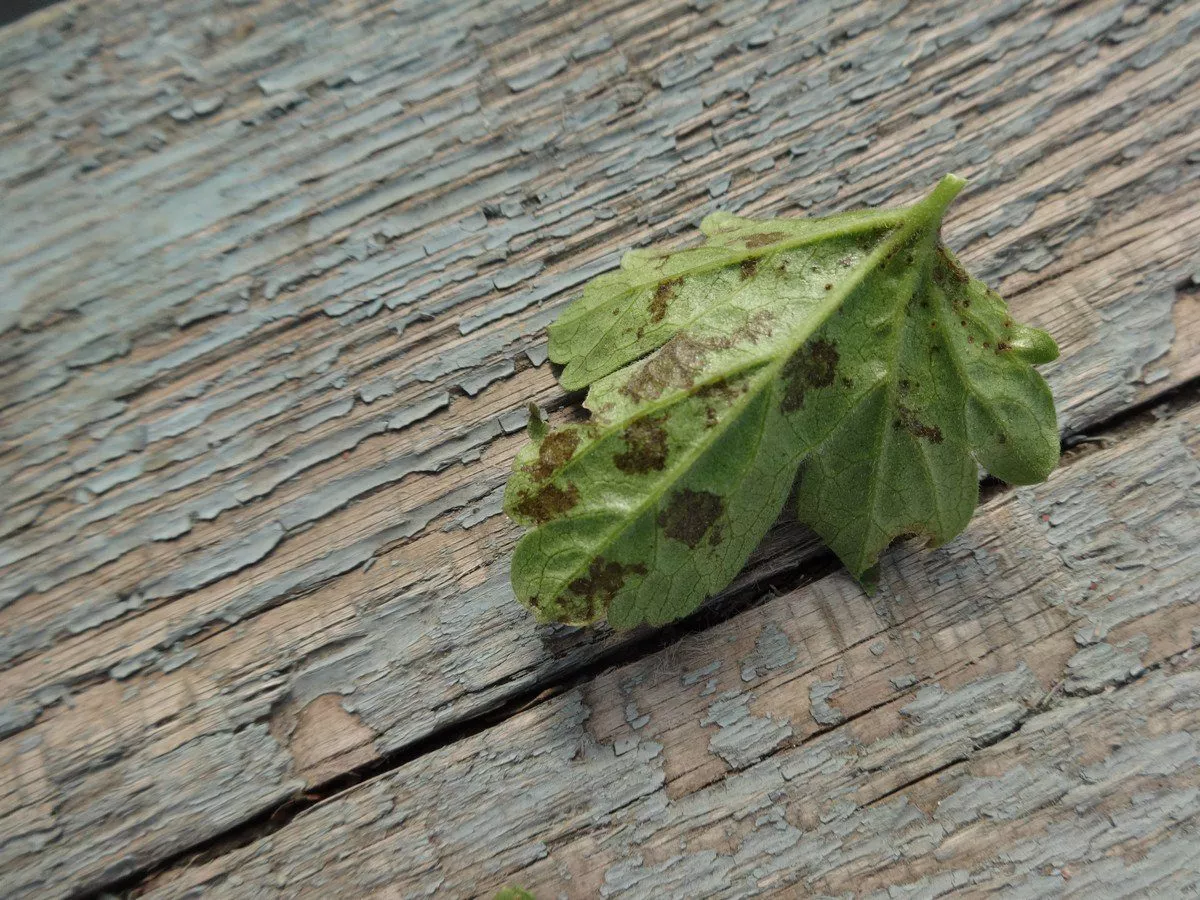
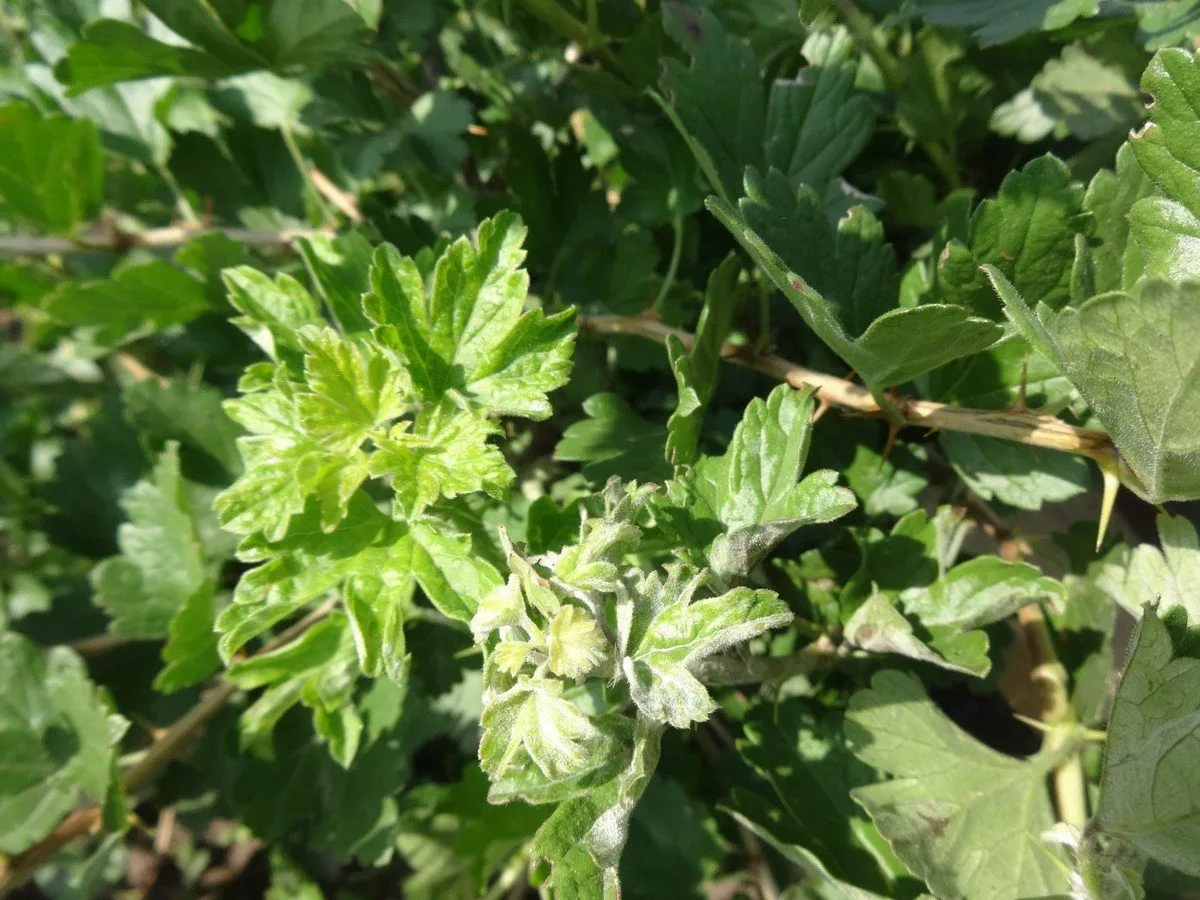 The burgundy spots on the upper leaves are also disturbing; I don’t know if this is a consequence of powdery mildew or another disease.
Our gooseberry bush was planted in 2019. One variety, "Konfetny," produces large, delicious berries. It yielded its first harvest the year it was planted, just a few brownish-pink berries.
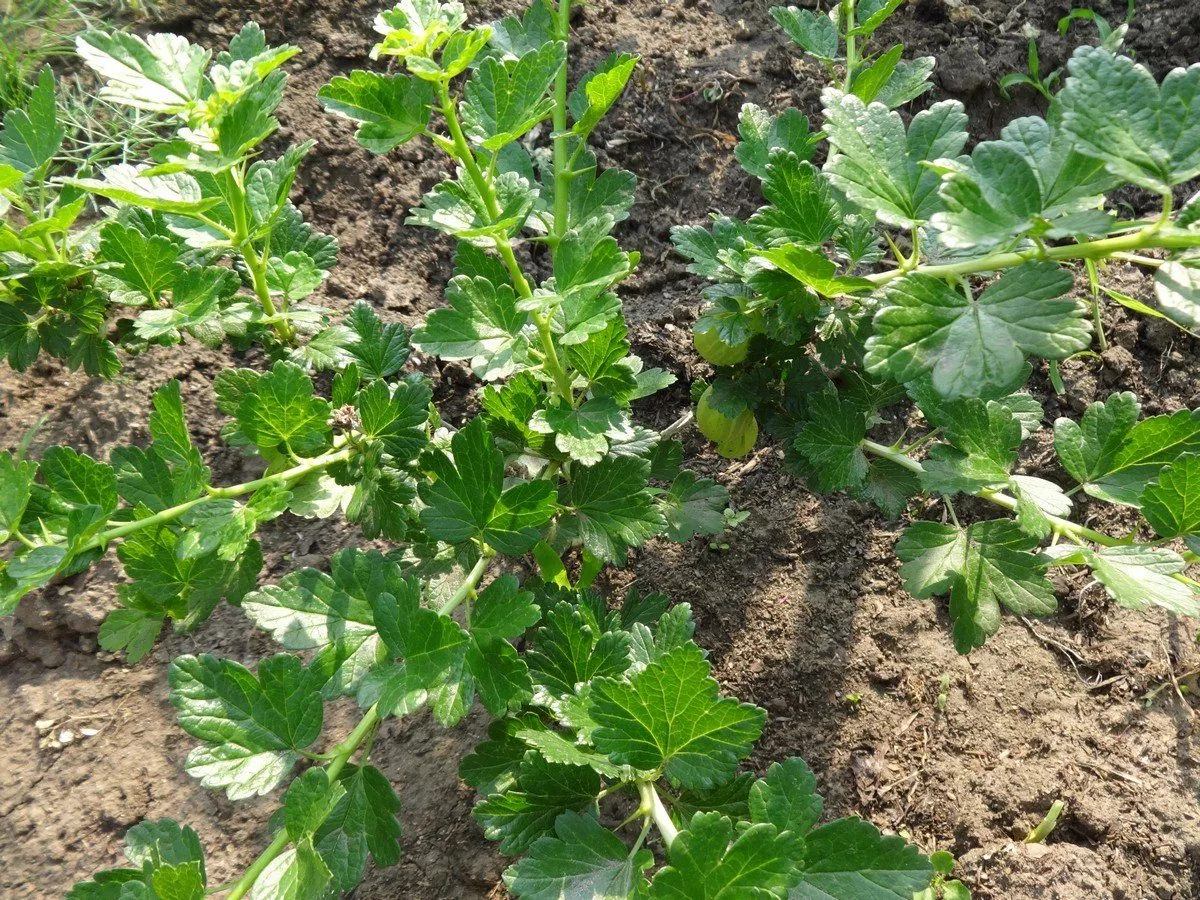
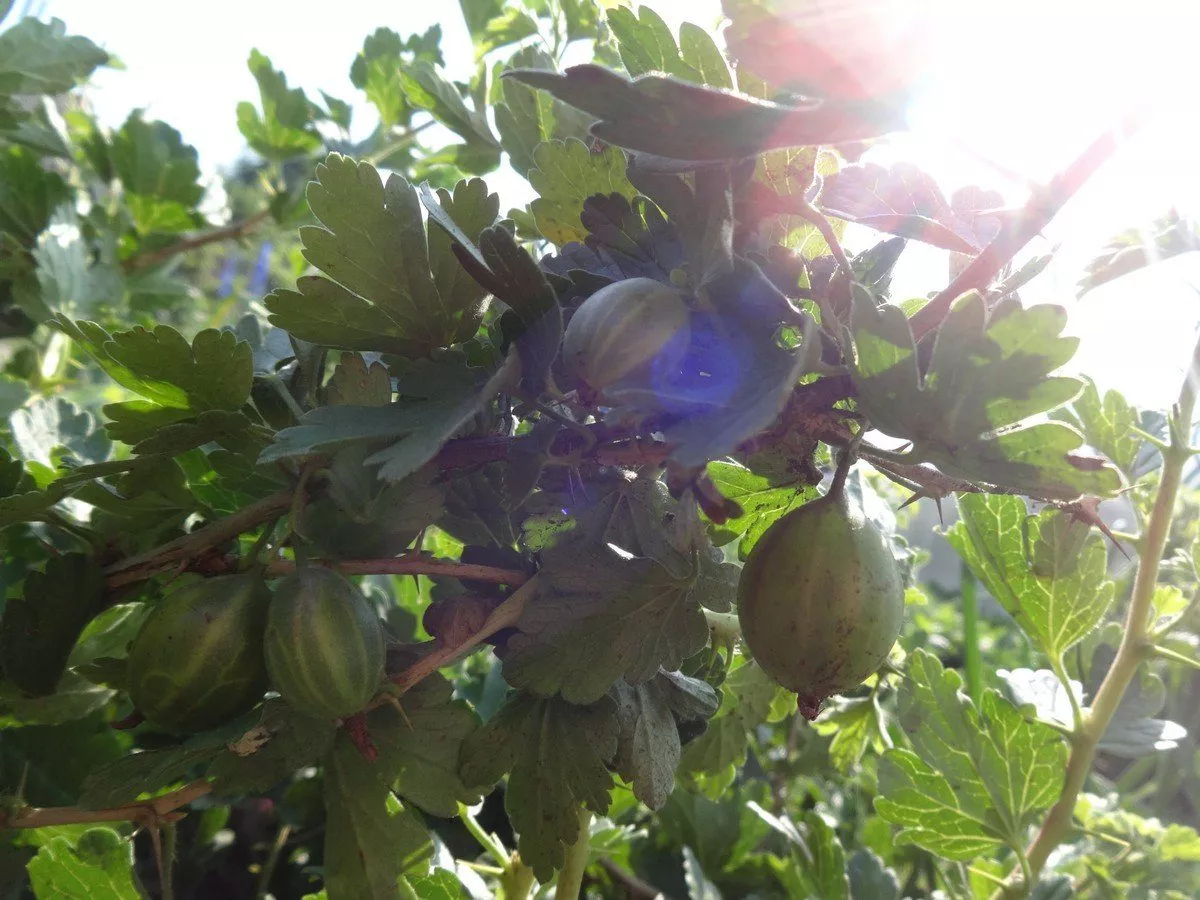
The second variety has no name, it grew from old bushes.
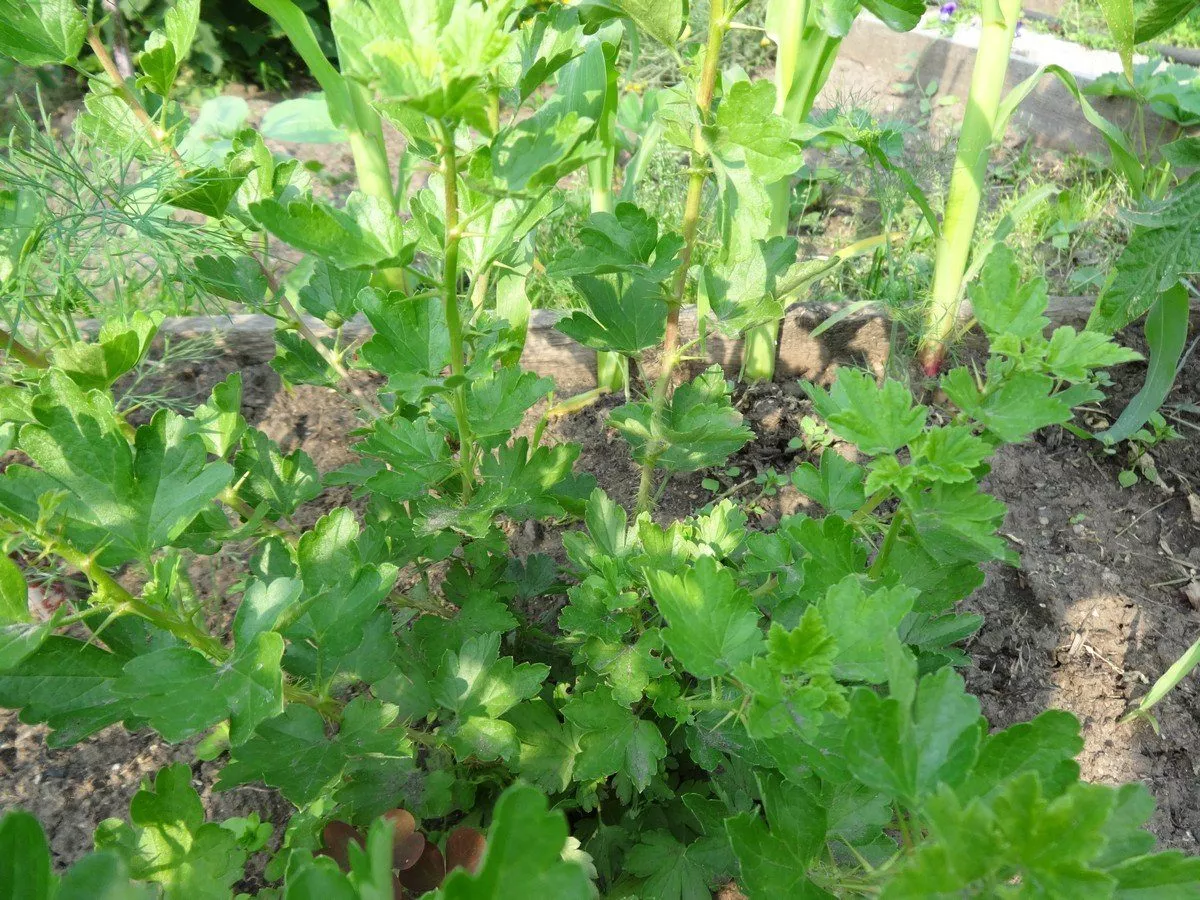
When we bought our dacha, there were four bushes growing there. They were old and neglected, planted densely and in the lowest spot. They produced few berries, and they were all covered in a brownish coating. Every year we tried to combat powdery mildew, but eventually we simply uprooted all the bushes. After some time, we discovered a young gooseberry seedling; most likely, parts of the roots remained in the soil, and the sprout had grown. I transplanted this sprout to a sunny, open spot, and it started growing. This year it will produce its first small harvest. The berries are green.
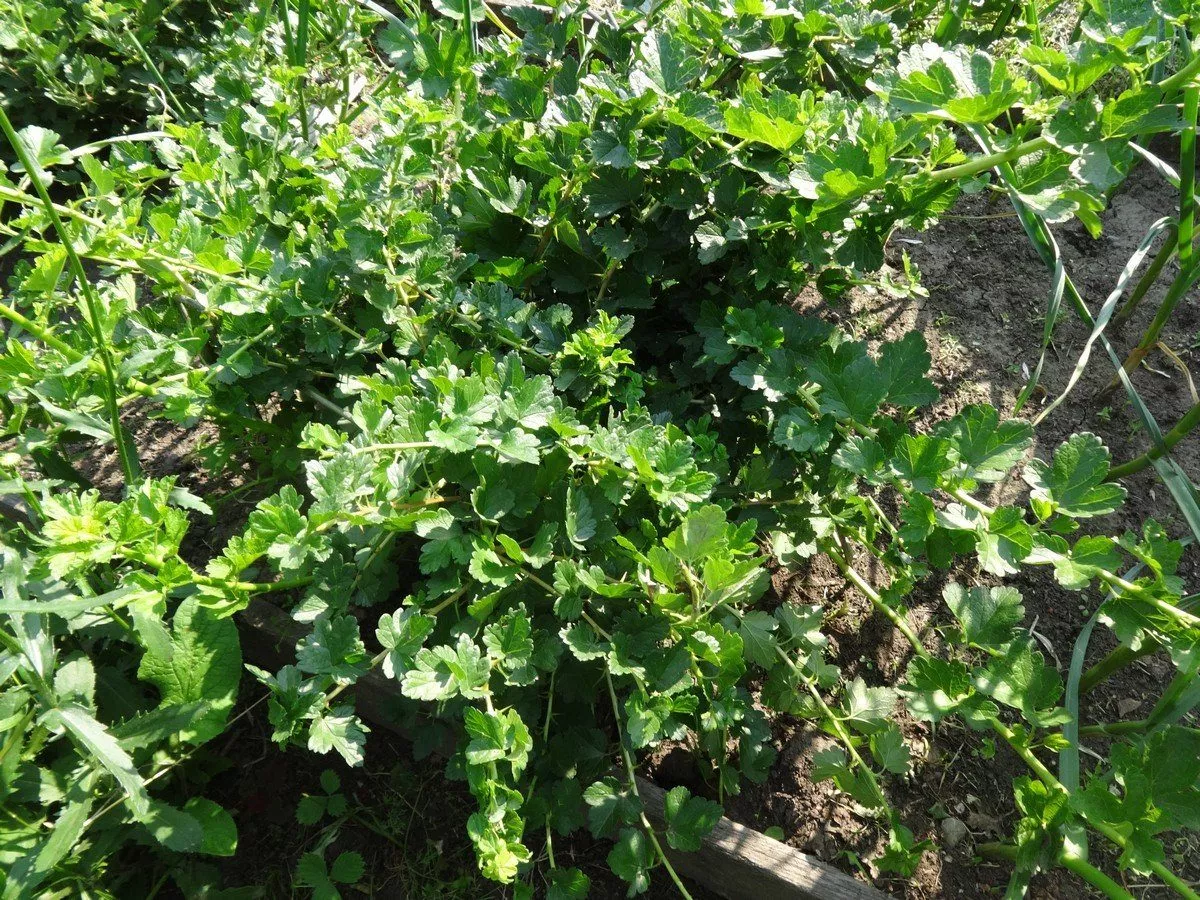
In the spring, these two bushes grew a lot of new shoots. When we pick the berries, I will trim off the excess, weak branches and shape the bushes.
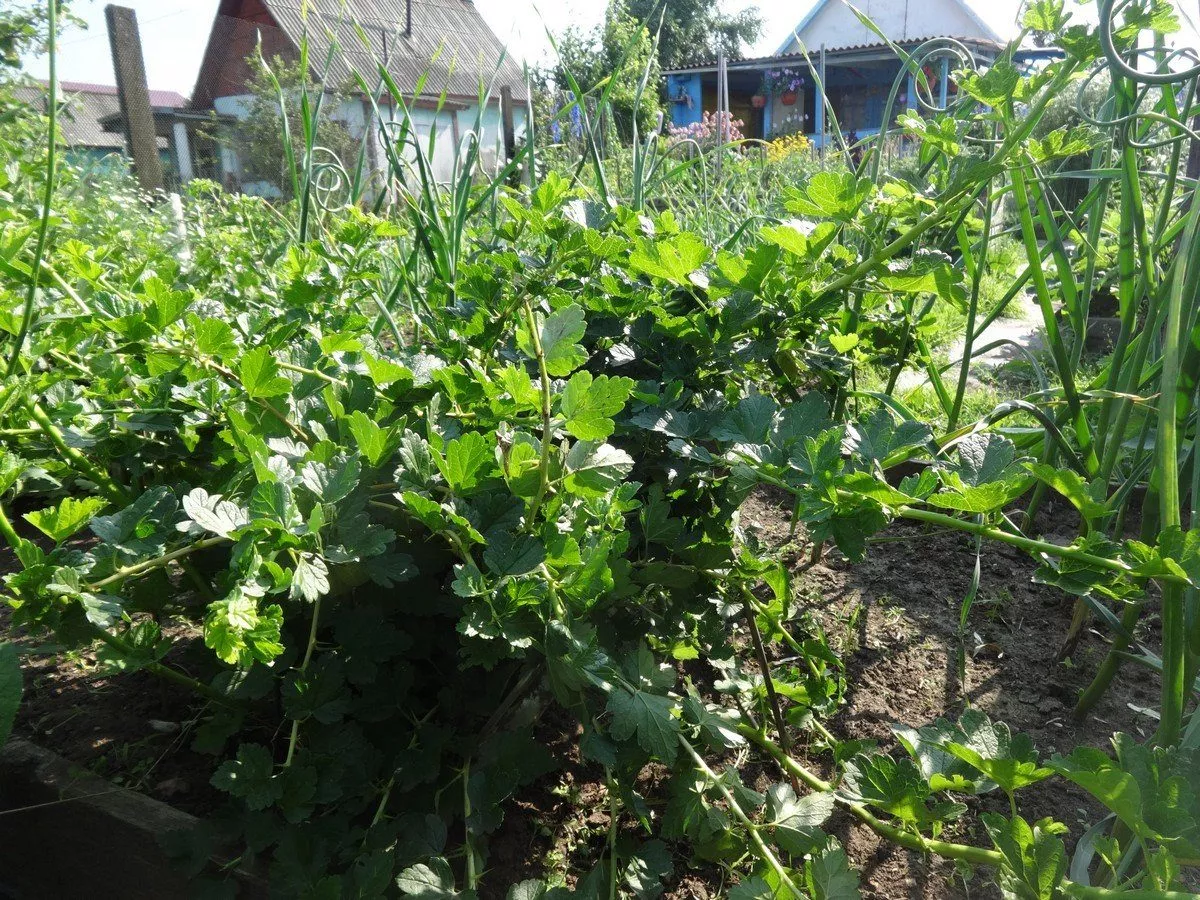
The husband will make supports for the branches, but in the meantime, we put various pieces of wood under the young shoots so that they don’t lie on the ground.
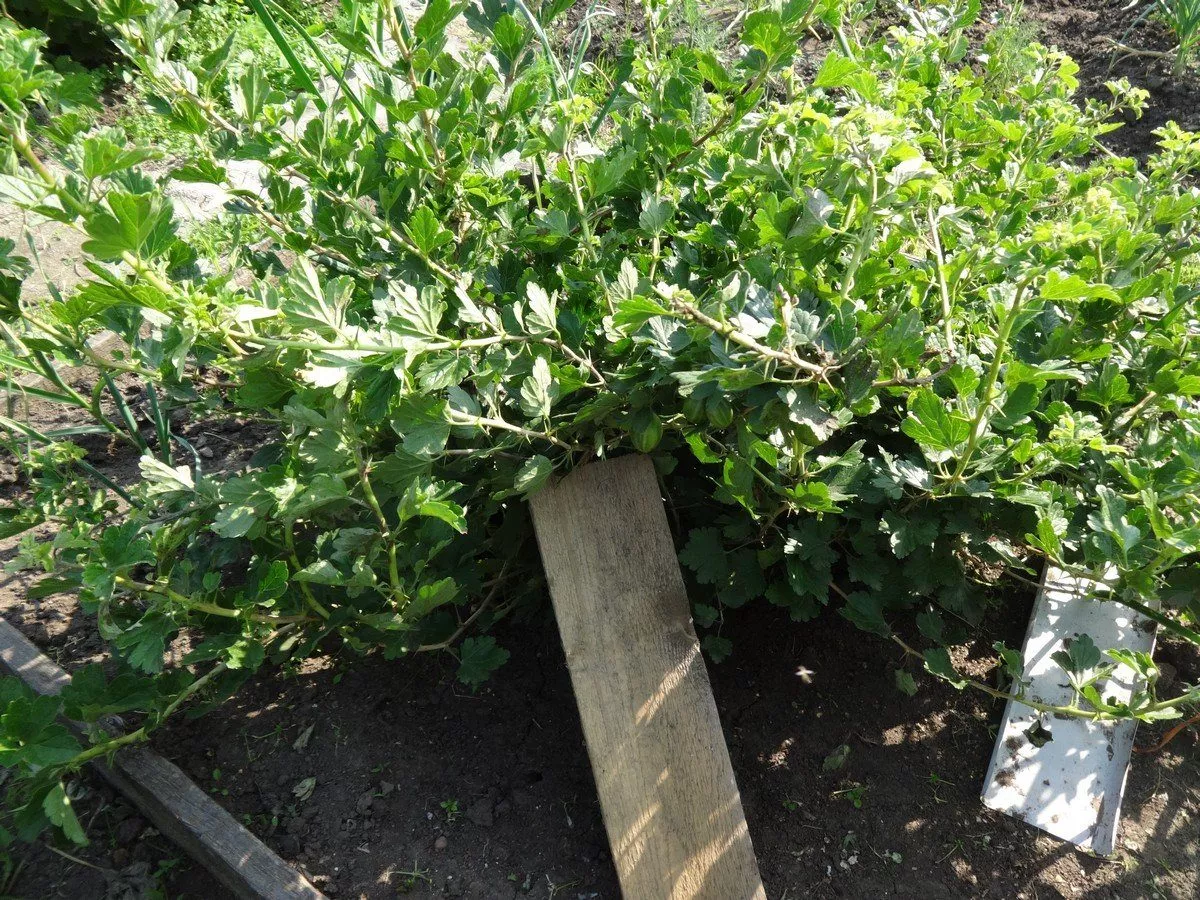
Last year the bushes were healthy with green, shiny foliage, they grew well and we did not treat them for pests or diseases.
What I did now is to start by spraying the gooseberries with a solution of phytosporin-M-1 (1 tablespoon per 10 liters of water). I also thoroughly treated the branches, stems, and soil beneath the bushes. I hope the powdery mildew doesn't spread to the entire bush and the berries, or to other plants—there's a currant bush nearby. As a preventative measure, I also treated all the currant bushes.
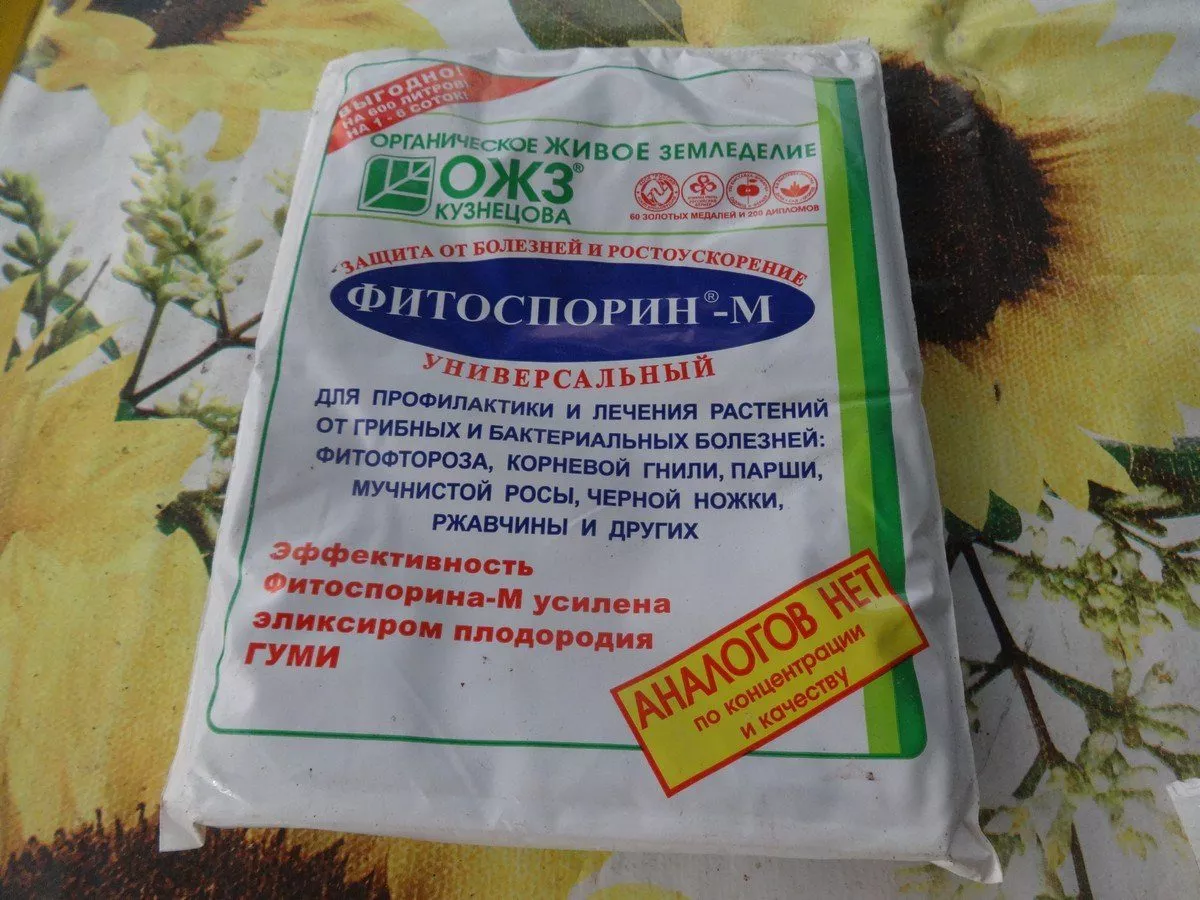 I found advice online that the dose of phytosporin can be doubled or tripled (2-3 tablespoons per 10 liters of water) and applied several times. I'll see if I can stop this insidious disease.
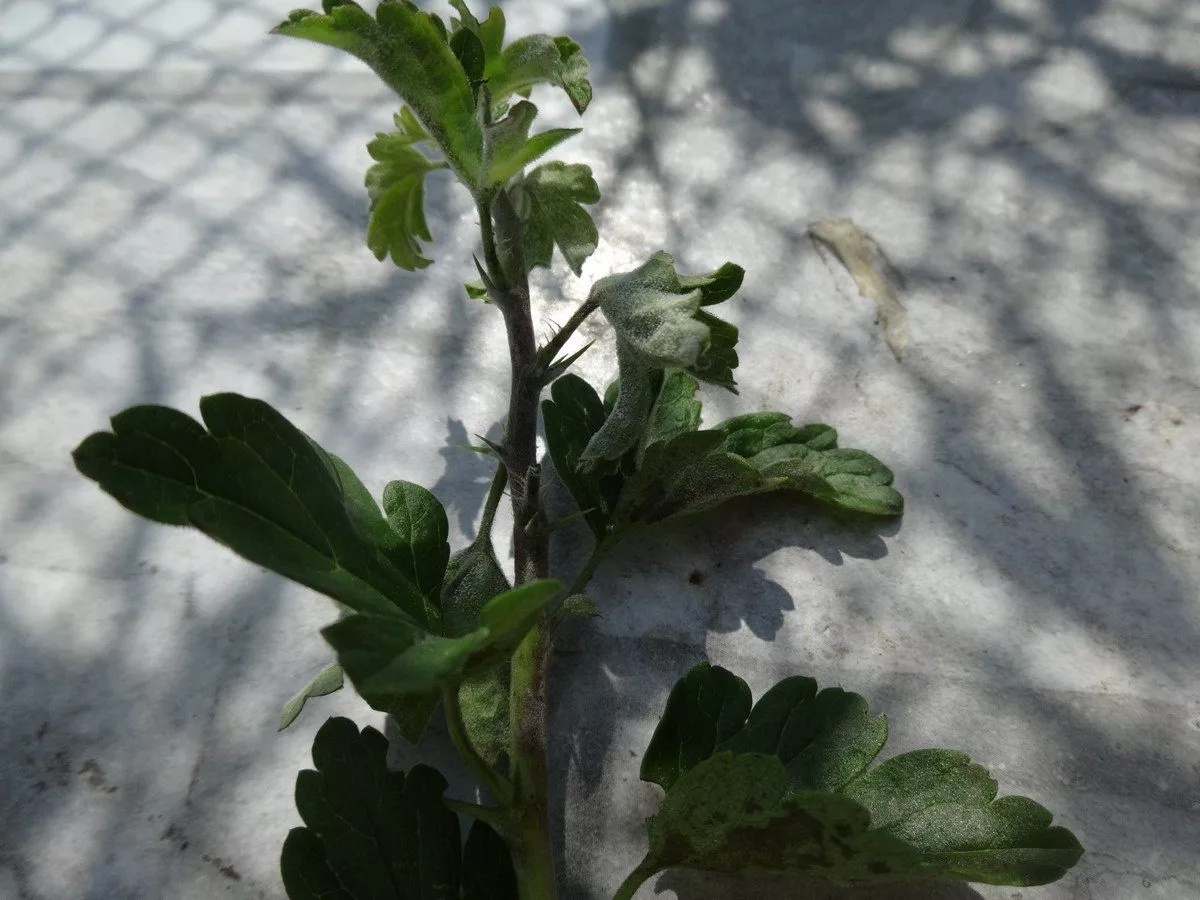
Powdery mildew is a fungal disease. Under unfavorable conditions—rainy, cold weather, damp, waterlogged soil—the fungal spores spread rapidly, and a white, powdery coating appears on the surface of green leaves and shoots, berries, and stems. This is the first conidial stage of the disease. Gradually, the coating turns gray, the leaves and young stems of the plant dry out, and some of the berries fall off.
In summer, the disease enters its second stage—the marsupial stage. The bloom turns brown, and the berries become covered with dark, dense spots that can be easily scraped off with a fingernail. However, these berries should not be eaten. If left untreated, the plant will suffer, grow poorly, and the yield will be meager. Furthermore, the bush will look unattractive.
What's recommended is to treat gooseberries with powdery mildew control products such as HOM, copper sulfate, and Topaz in the spring before flowering and after harvesting. As a preventative measure, early in the spring, while snow still lies, water the bushes with hot water containing potassium permanganate; the water should be a light pink color.
Traditional methods
Folk remedies for powdery mildew can be used when the bushes are bearing berries. I've chosen the following:
- Wood ash solution: 1 liter of ash and 30 grams of laundry soap, dilute in 10 liters of boiling water, let sit for two days, and spray the bushes, repeating after ten days. My bushes are small, so you can reduce the amount of ingredients: use a cup of ash and 2.5 liters of boiling water.
- Garlic scapes – cut and soak in water for 24 hours, then spray the leaves thoroughly on both sides. Now's the perfect time to remove the scapes from winter garlic.

- Mustard powder – dissolve 2 tablespoons of dry mustard in 10 liters of boiling water, cool, stir and apply to gooseberries.
- Iodine solution - dilute 10 drops of iodine in 10 liters of water, spray the bushes twice with a 3-day break.
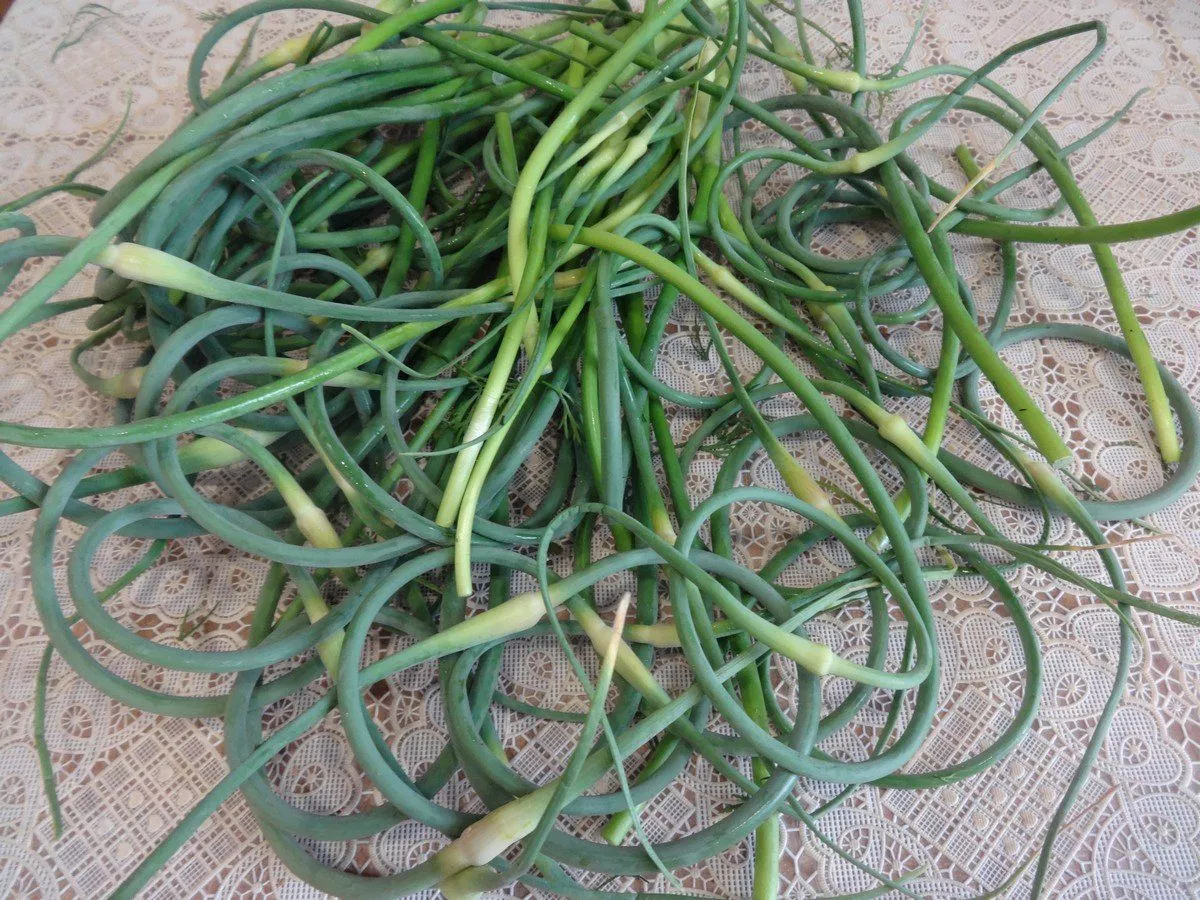
I hope that these methods will help stop the spread of powdery mildew.
It's also important to maintain proper spacing between bushes to ensure adequate sunlight exposure, and avoid overwatering. Choose varieties that are not susceptible to powdery mildew, as older varieties are generally susceptible to this disease.