
How clean, transparent, fresh the air is,
The sky is covered with clouds,
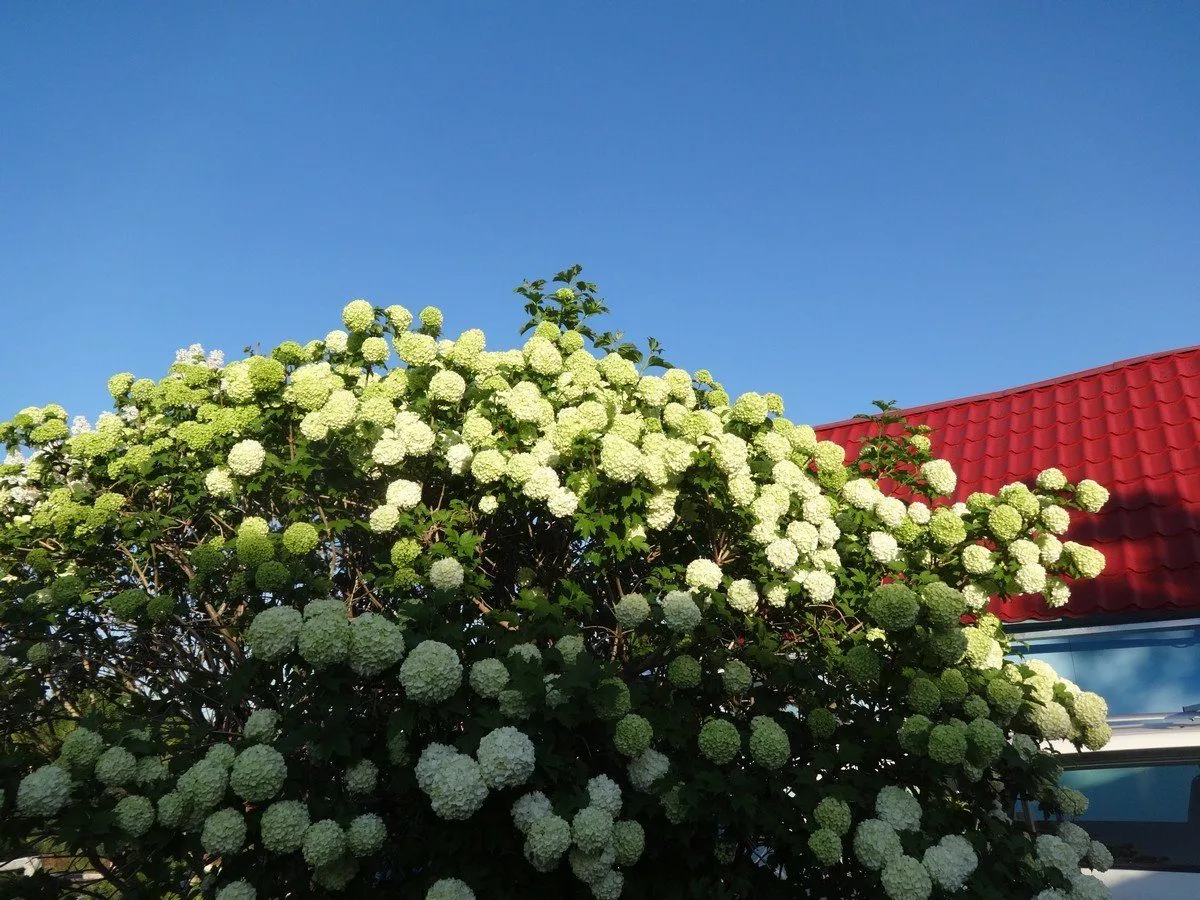
The bullion blossomed at the dacha
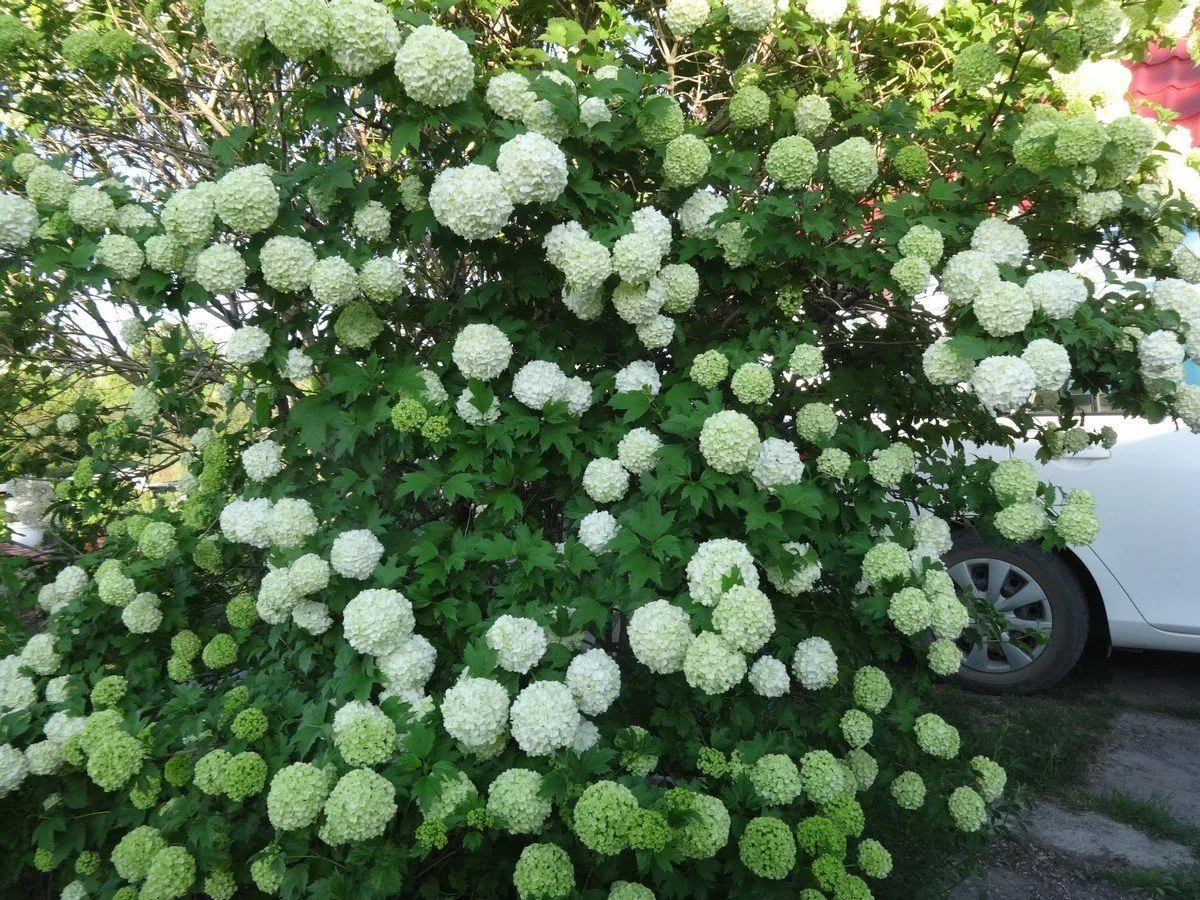
With big snow globes.Under the weight of white inflorescences
The branches bowed to the ground,
Each flower flies away
The bumblebees are buzzing contentedly.
Kalina buldenezh
We have a wonderful ornamental plant, the Viburnum buldenezh, growing at our dacha. Every spring it blooms profusely, delighting everyone with its beauty.
At the end of May, delicate green balls—inflorescences—appear on our viburnum, and then they increase in size and turn pure white.
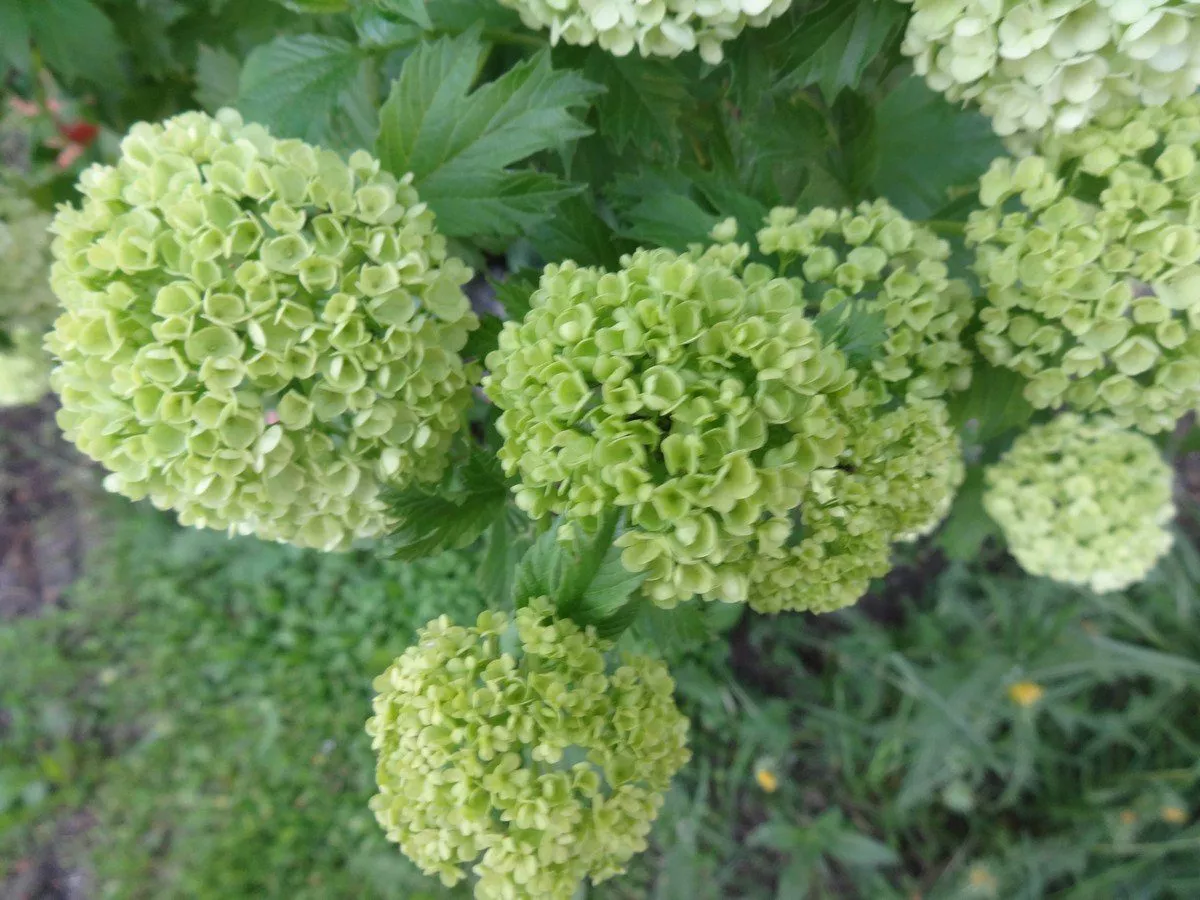
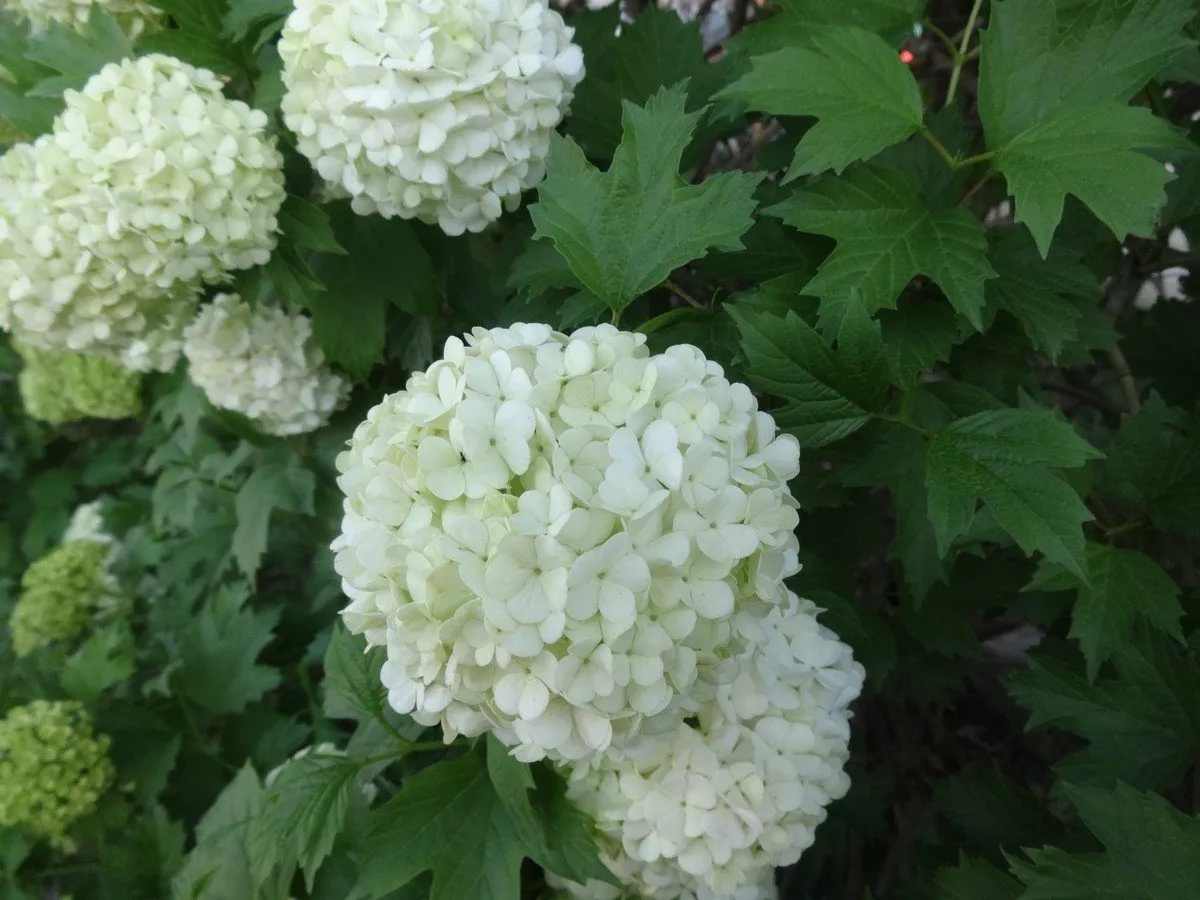
The flowers themselves are small, five to four petalled, numerous, attached to the inflorescence by a thin stalk.
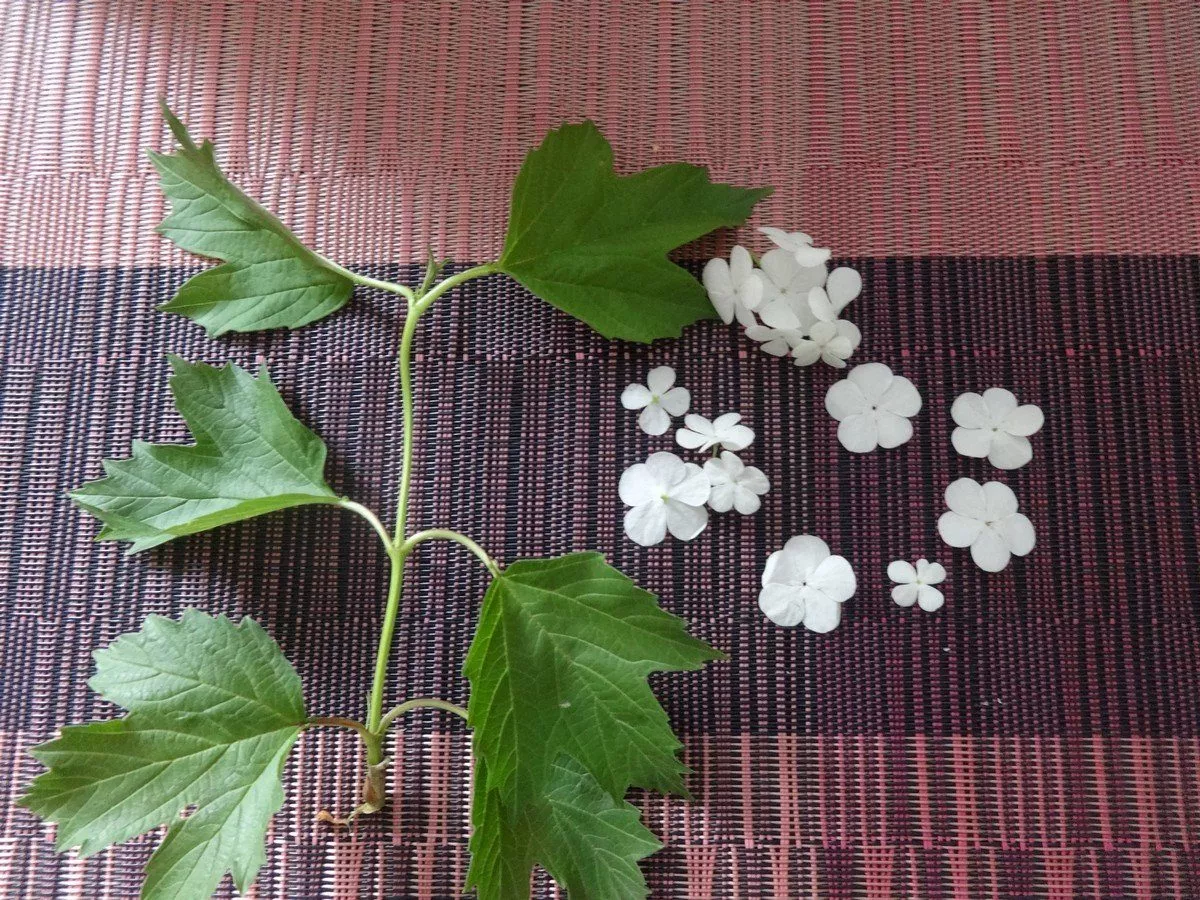
The branches, weighed down by the snow-white balls, bend down to the ground.
The viburnum grows quickly. When we bought the dacha, the viburnum was very small, but now it is a tall, luxurious bush, you could even say a tree, with a spreading crown higher than the roof of our dacha.
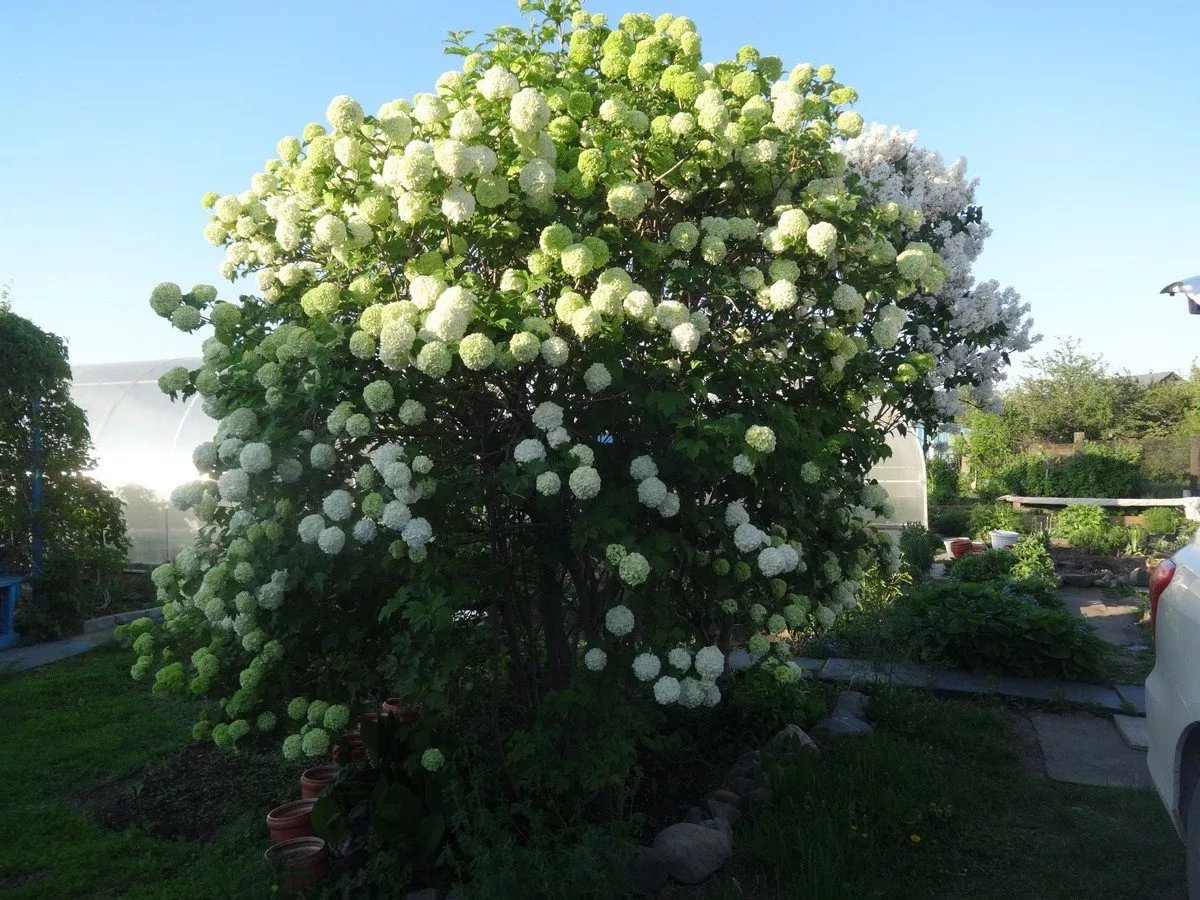
The branches of the viburnum are flexible, the leaves are carved, light green, three-lobed, and in late autumn they acquire a crimson hue, making the viburnum bush look very decorative.
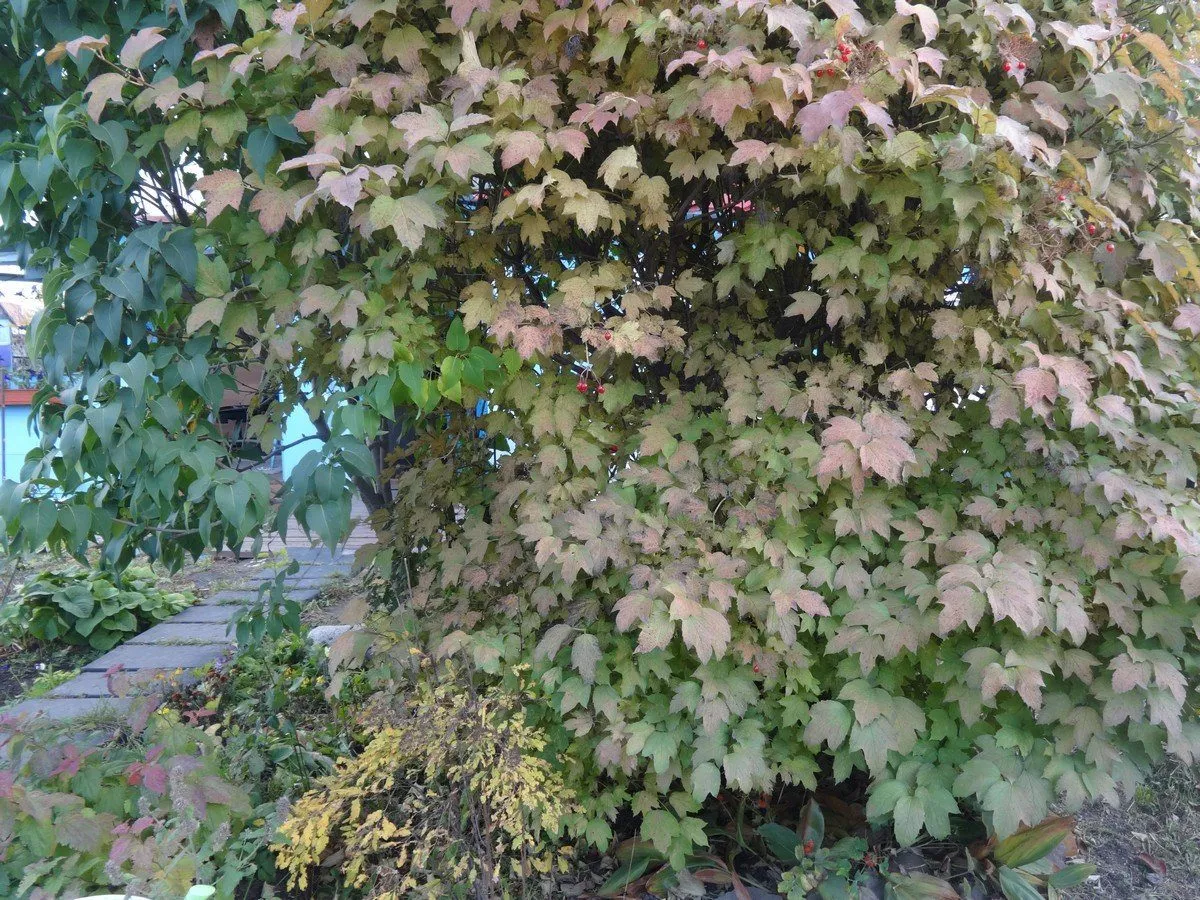
Unlike the common viburnum, after flowering the fruits are not formed en masse; single large red berries appear.
The plant is unpretentious, frost-resistant, and requires little care. It will grow and bloom well even without fertilizing. However, in the spring, when the viburnum is in bloom, its young shoots and inflorescences are attacked by small black aphids. The young leaves curl, and a continuous stream of nasty ants crawls along the stems. We have to treat our viburnum with aphid control products like Inta-Vir or Biotlin, and soon the aphids disappear.
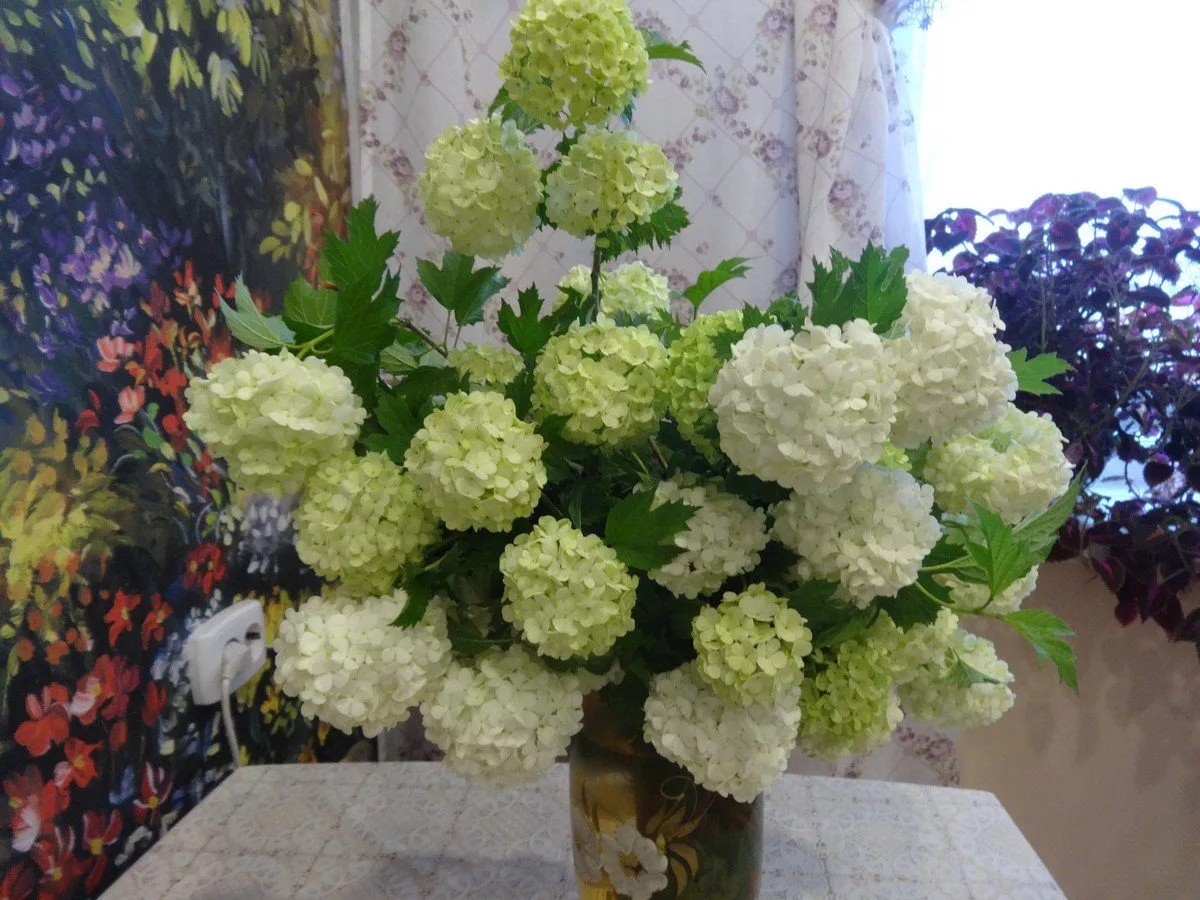
In the spring, I trim away dried or broken branches. We have lilies of the valley growing under the viburnum; they get enough sun and bloom earlier. When the viburnum blooms and its branches bend to the ground under the weight of their buds, I trim them like snow globes for bouquets.
The lower branches can be buried in soil; after a while they will take root and you can get a new young viburnum bush.
Viburnum loves plenty of water, especially in hot weather. In the spring, I add fermented grass to the water to nourish it, although it grows beautifully without any fertilizer. Sometimes in the fall, I add phosphorus-potassium fertilizer to the crown—how can I not thank our beauty for its lush blooms?
Red or common viburnum
We also have a common viburnum growing here. The bush is quite old, but it blooms and bears fruit every year.
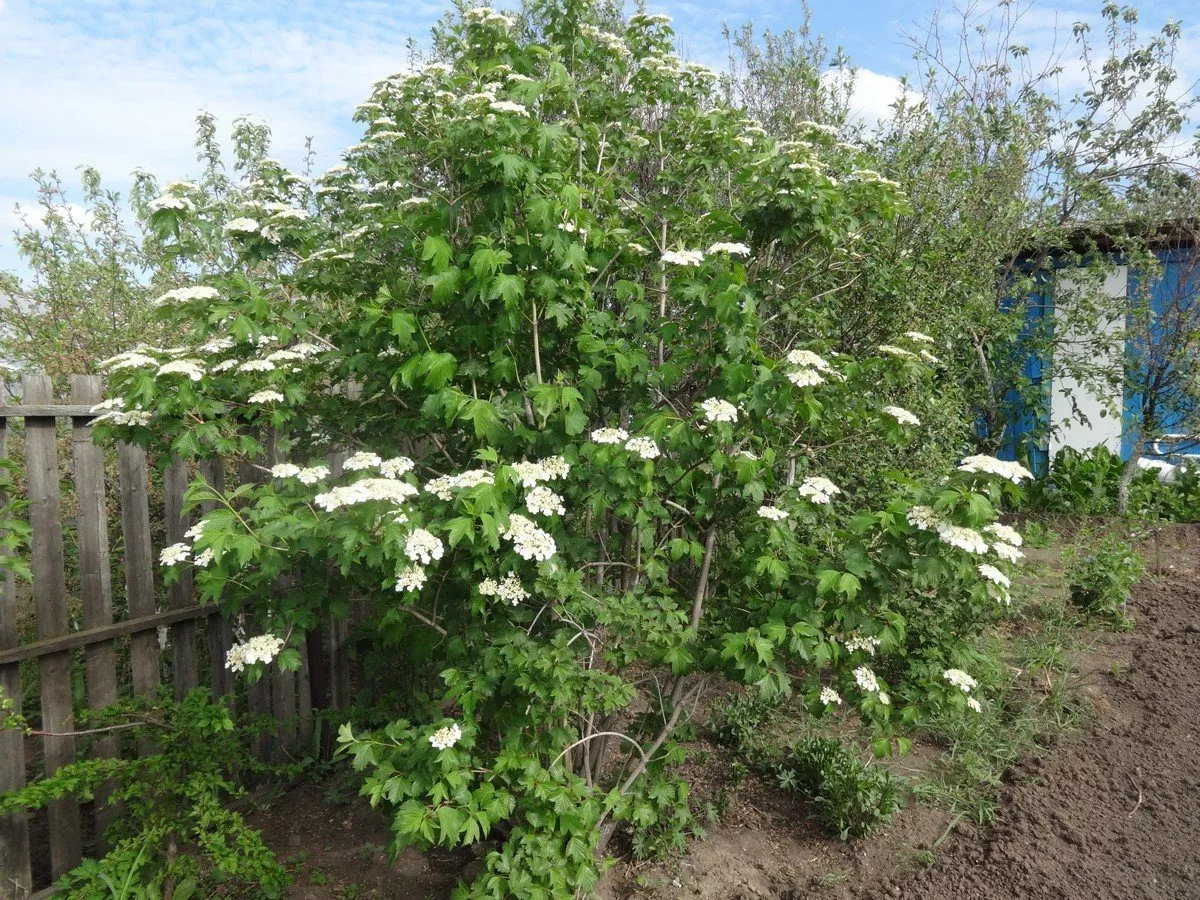
A young bush grows near the fence; it self-seeded. This year it blooms for the first time.
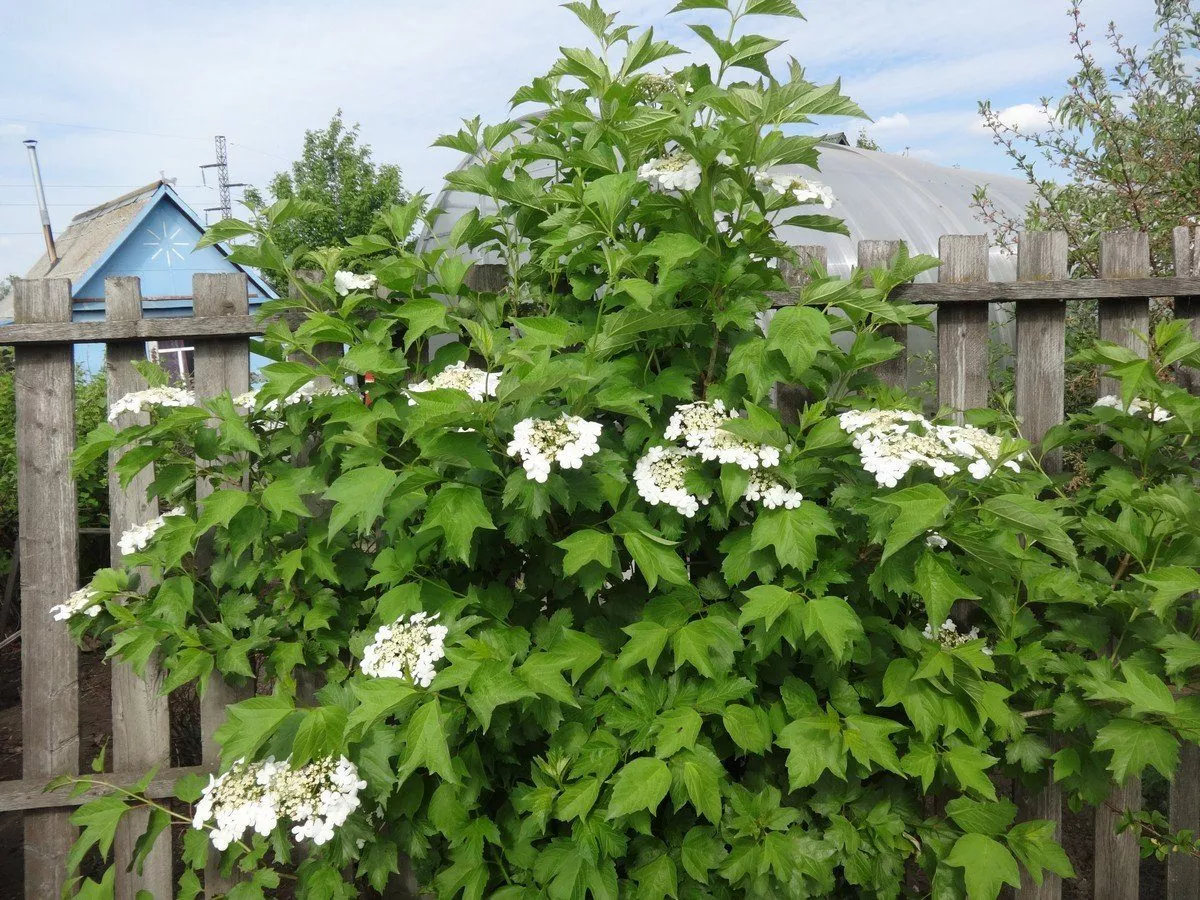
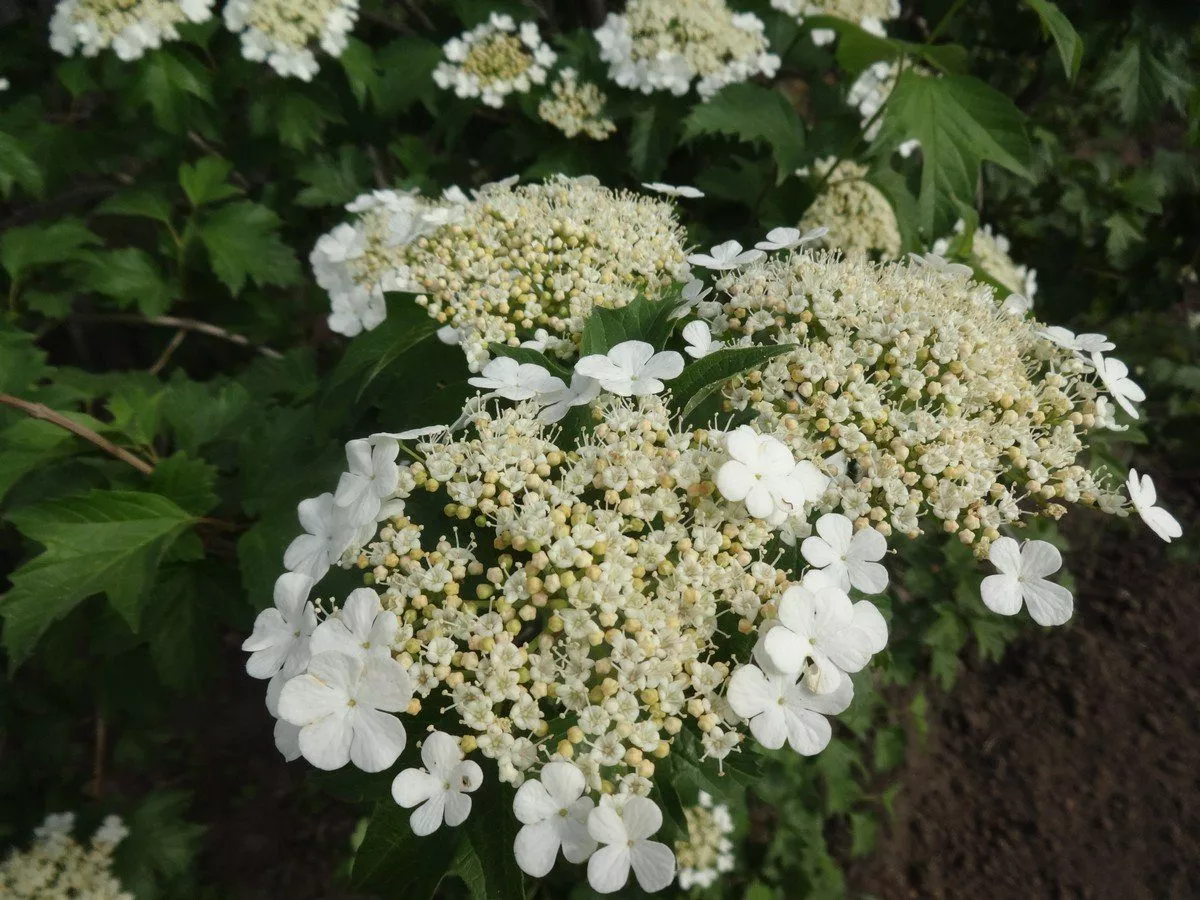
The leaves of the red viburnum are similar in appearance to the leaves of the viburnum buldenezh, but the inflorescences are completely different - not balls, but corymbs, along the edge of which there is a wreath of larger, pure white flowers with five petals, and inside there are small flowers.
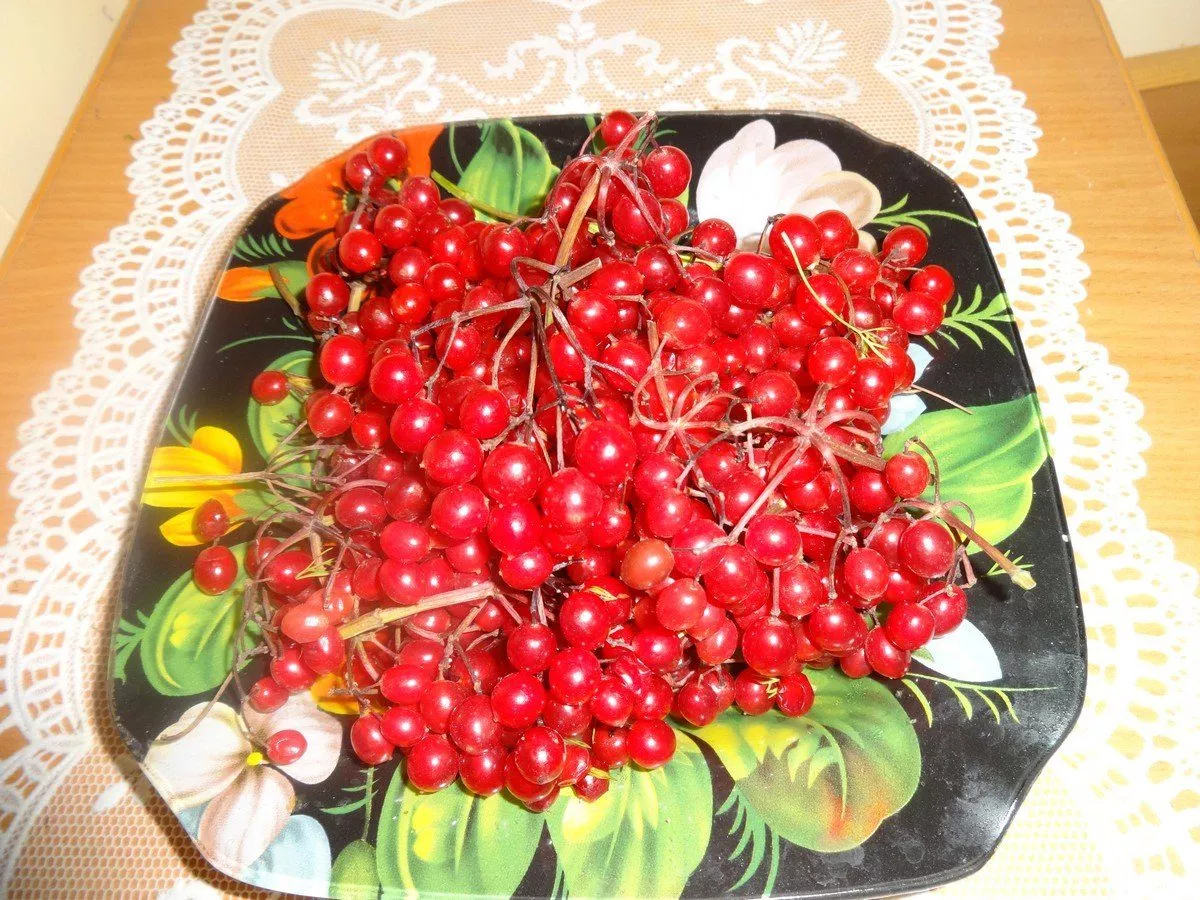
Viburnum berries begin to ripen in late August. They are bitter, but after frost, their flavor changes and they become less bitter. The berries are rich in vitamins, but all parts of the plant—the leaves, bark, and flowers—have medicinal properties and are used to treat various ailments.
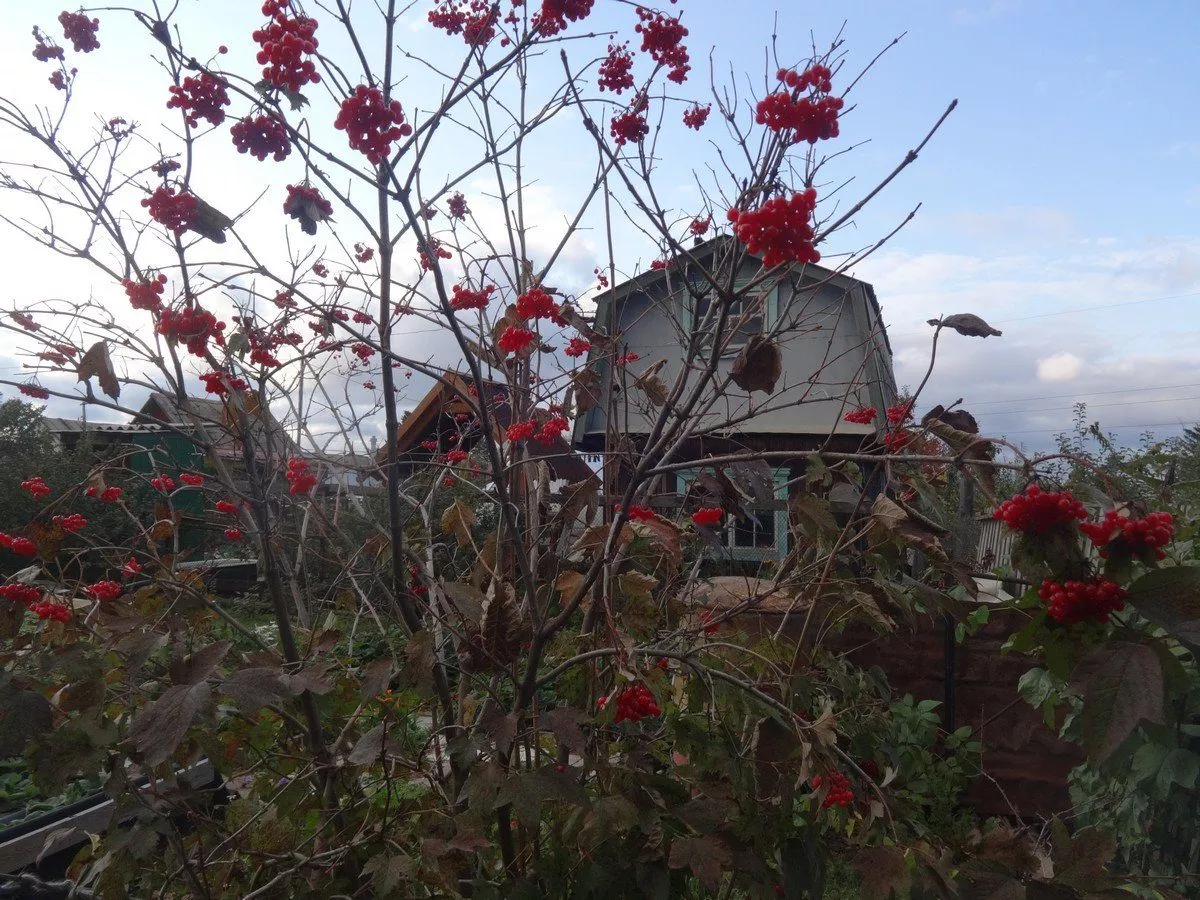
In the fall, when light night frosts occur and the leaves have withered and begun to fall, we collect viburnum berries, freeze them in the freezer, make a healthy vitamin supplement from them, and mix the berries with honey.
Like the buldenezh, the red viburnum is very beautiful - in the spring during flowering, in late summer when the berries ripen on it, and in late autumn when the leaves turn orange-red.