

It's mid-June. It's sunny and hot here in Krasnoyarsk. Poplar fluff flutters across the city streets, like a thin layer of fluffy snow covering the sidewalks.
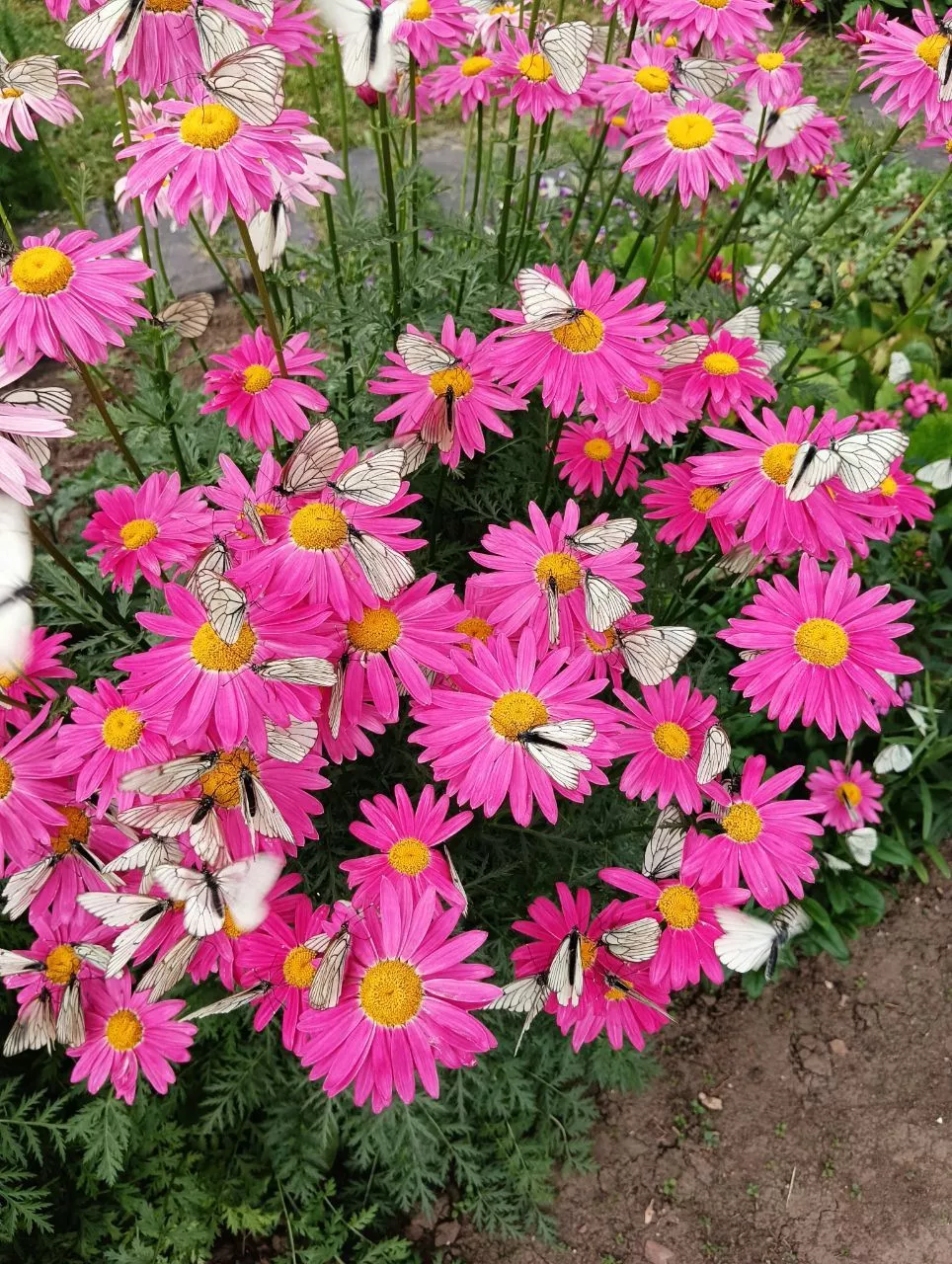
And at the dacha, white butterflies are flying around. There are so many of them, they fly around the garden and vegetable patch, clinging to the flower bushes, the blooming strawberries and raspberries. They flit joyfully and carefree from flower to flower, drinking the sweet nectar. It's very beautiful.
Here they are, simply attacking the red chamomile-pyrethrum:
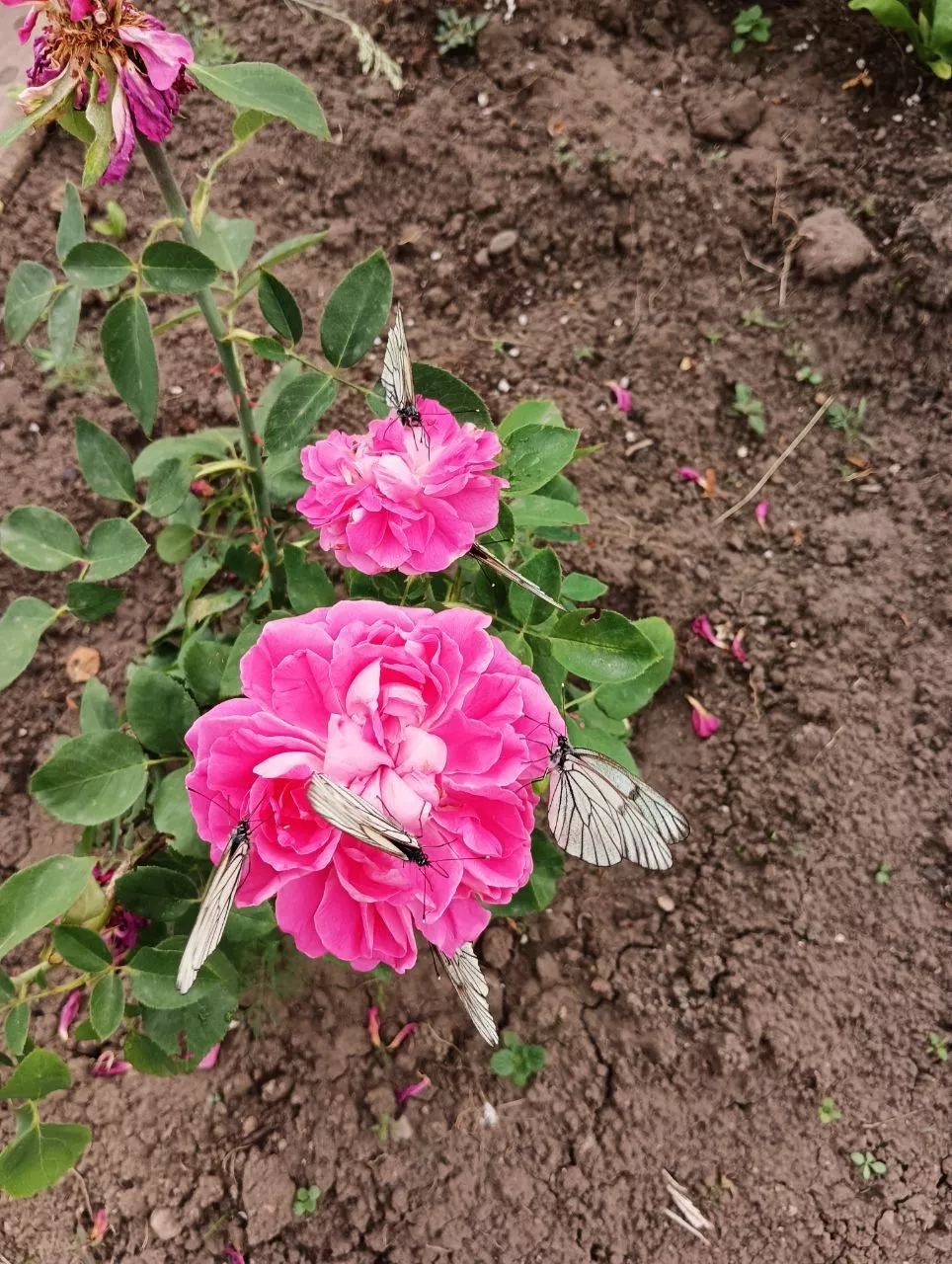
Roses enjoy nectar with pleasure:
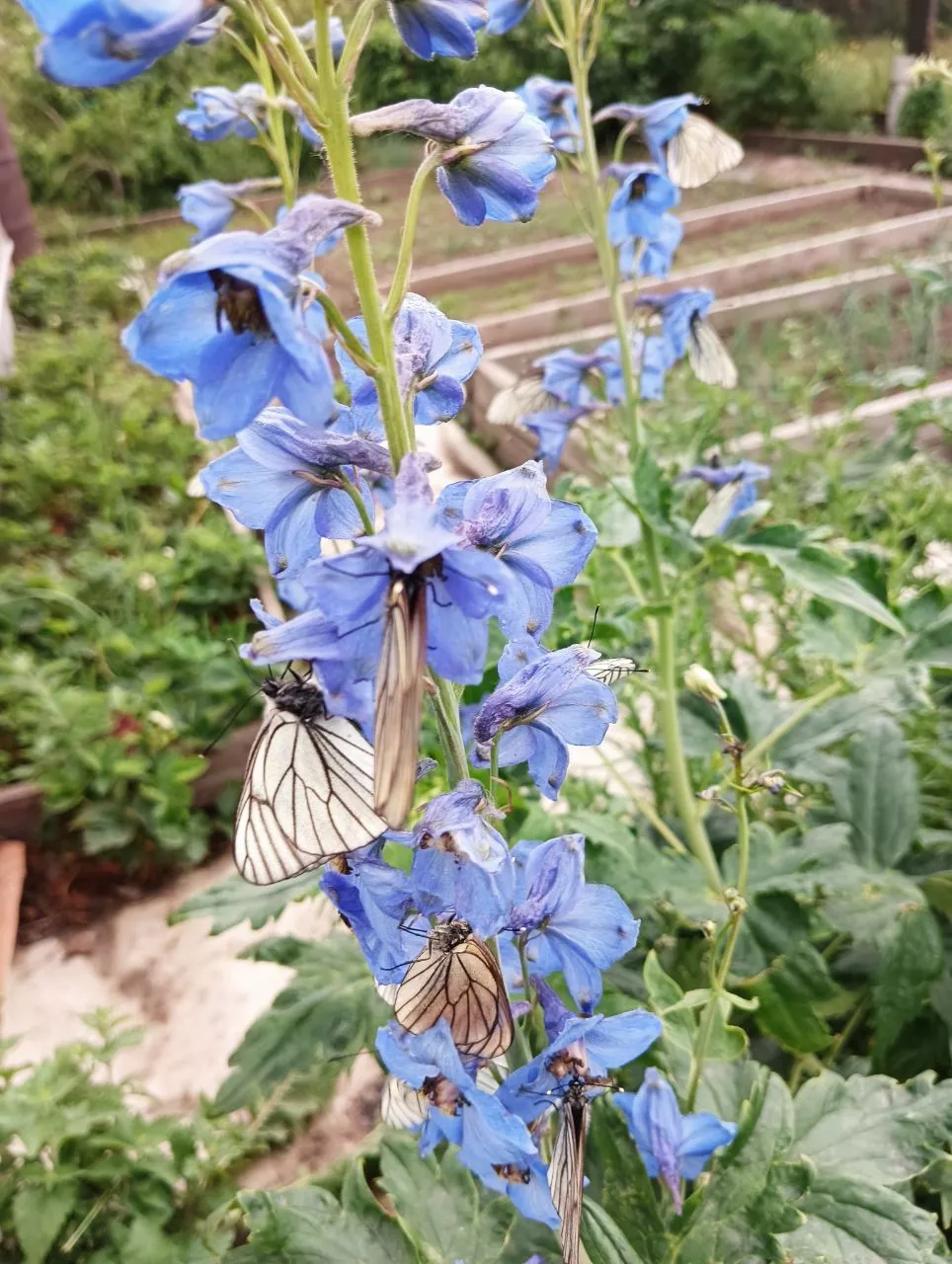
And they also like Delphinium nectar:
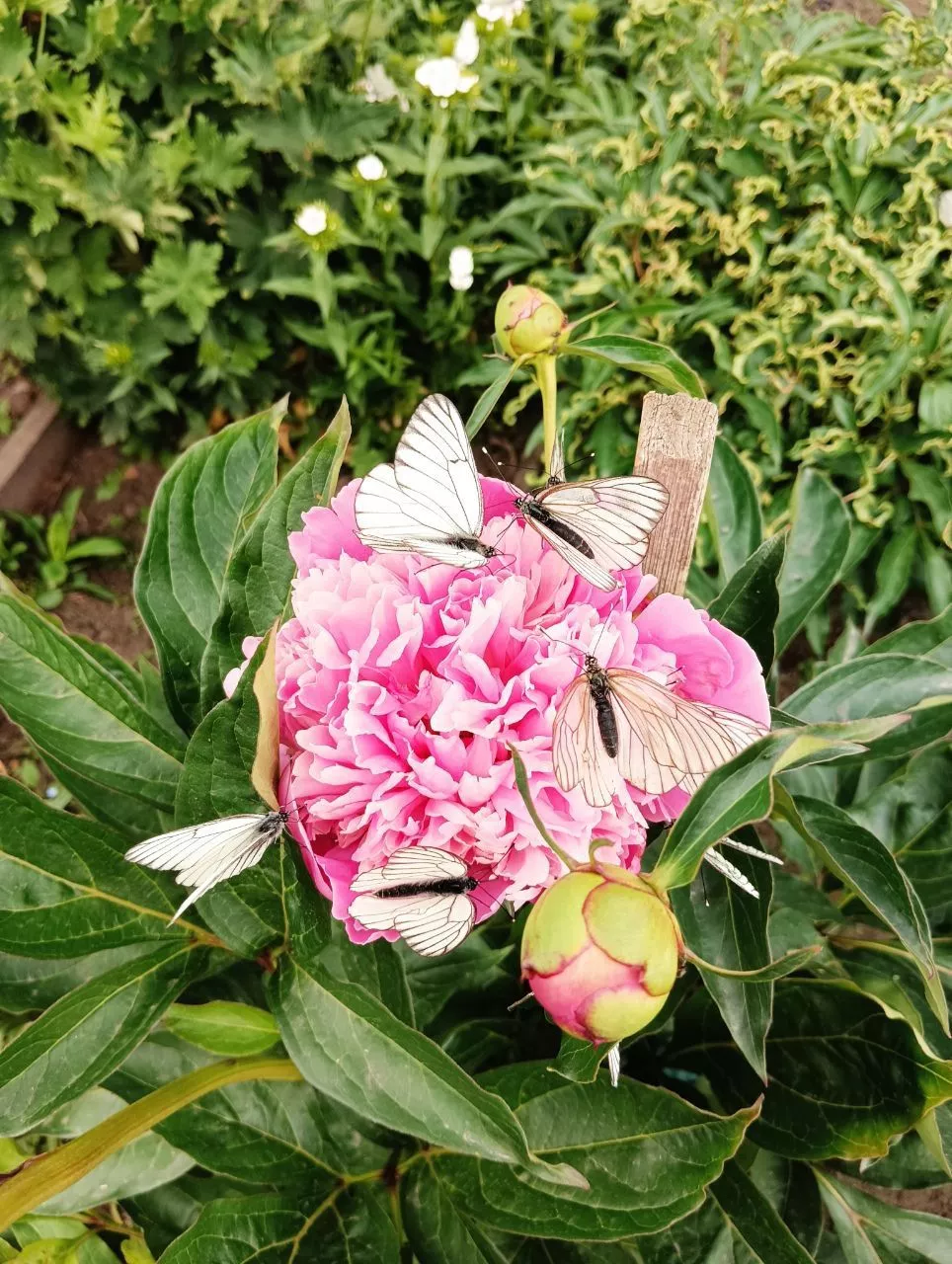
They covered the peony bud:
But most of all, Hawthorns like onion inflorescences:
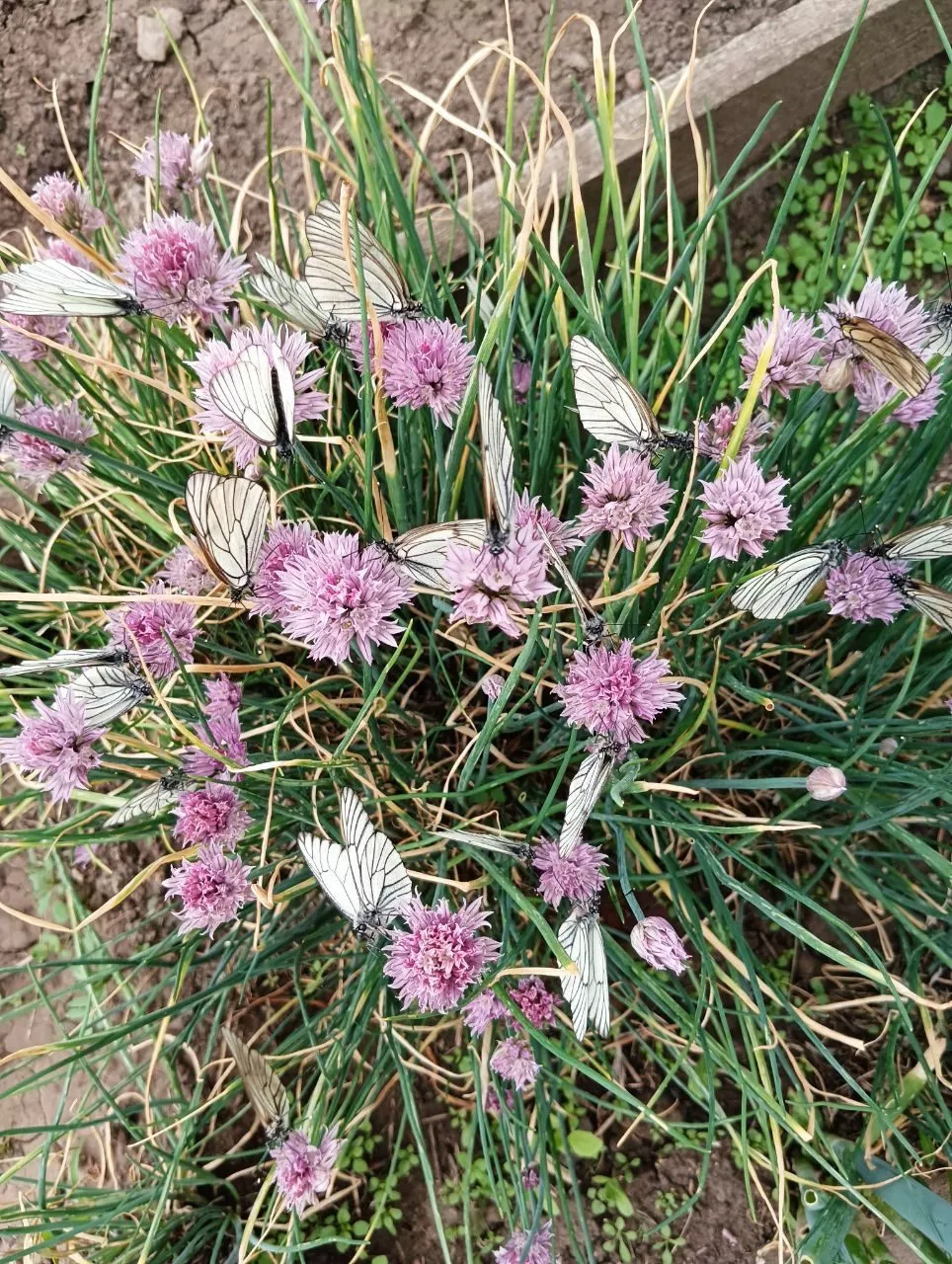
Intoxicated by nectar, they hang there and don’t even move, they aren’t afraid of human presence, they don’t fly away, they’ve become as if tame.
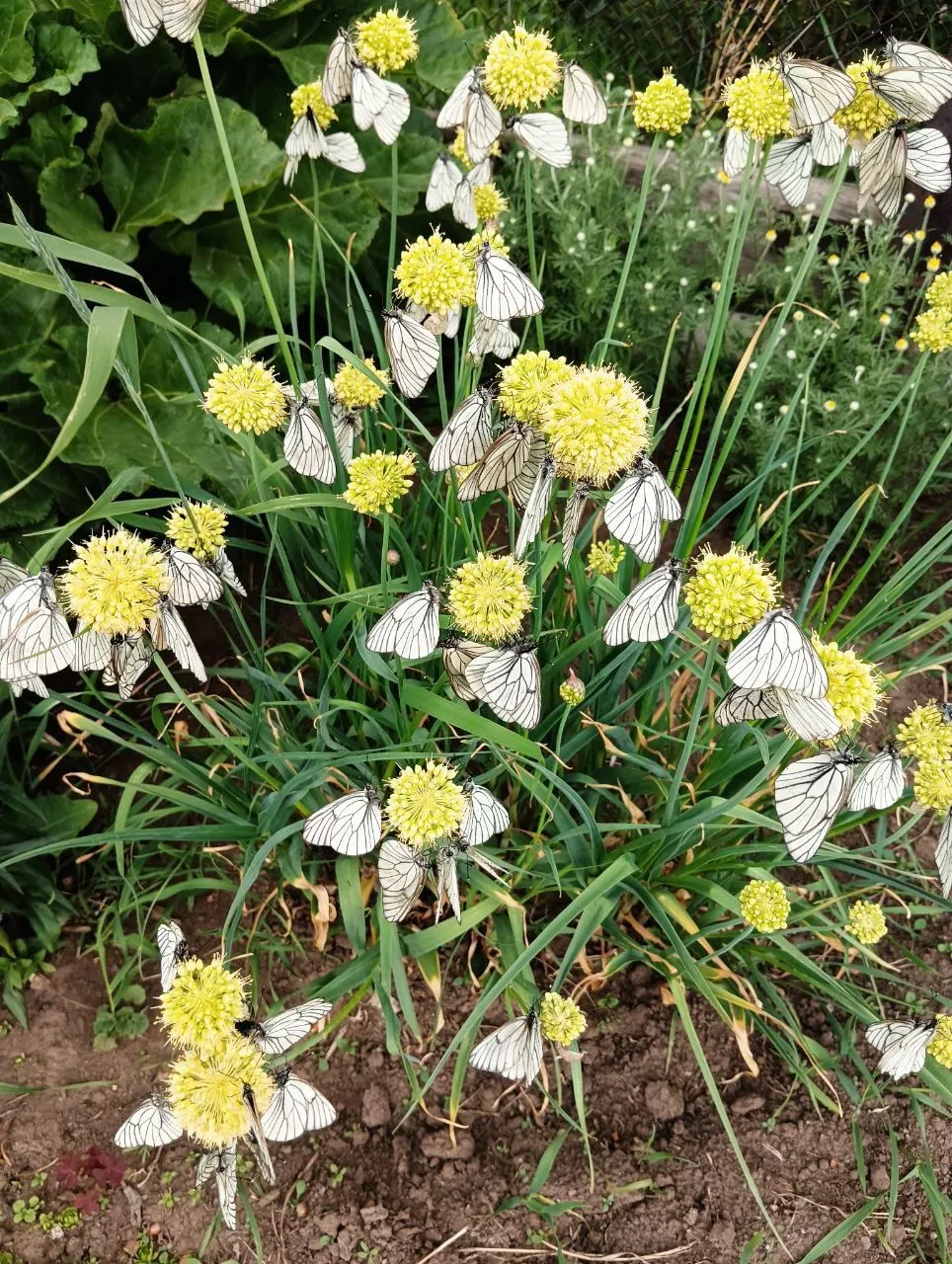
Outside the city, in nature, there are even more of them. Hundreds of thousands of butterflies sit on the damp ground in open areas, near bodies of water. Children, and even adults, delightedly frighten them, and the butterflies fly and fly.
They are large, with white wings covered in black stripes. They belong to the cabbage white butterfly family, a cousin of the cabbage white butterfly. However, they do not harm cabbage.
Fruit trees—apples, pears, cherries, plums, bird cherry, hawthorn, and rowan—can be affected. The moths themselves cause no harm. They lay eggs, which hatch into caterpillars that feed on the buds, foliage, and flower buds of fruit trees. So, now it's important to be vigilant and ensure that the hawthorn caterpillars don't harm apple trees and other fruit trees.
You know, I'm very familiar with your situation. We had a terrible infestation in our garden at our dacha for a couple of years in a row. The butterflies certainly look unique, but they also cause colossal damage. The hawthorn moths first eat the young leaves, then the older ones, and when there are almost none left on a bush or tree, they move on to other plants. They do this in the caterpillar stage.
This is what leads to consequences. Personally, I noted the following:
crop yields are greatly reduced;
crops become susceptible to diseases;
They have a harder time surviving the winter (my apple trees froze).
And I'm not even mentioning how unsightly the garden becomes. I've also noticed that there are fewer butterflies and caterpillars during extreme heat, but that's rare in our region.
Experienced gardeners recommended me to carry out effective preventative measures. I've been using these methods for six years now, and, knock on wood, I haven't had any major problems with my hawthorns. Here's what I do:
Immediately after the snow melts, I spray the trees with a solution of urea or copper sulfate (depending on which I have on hand, but there's not much difference between them). But it's best to make a combined solution. Here's the recipe I use (by the way, I found it online somewhere).
I mix 1 kg of urea with 10 liters of water, add 200 g of copper sulfate, and then add the same amount of water. Then I just spray.
I'm treating the plants for the second time during flowering. I'm really short on time at this time because planting the garden takes up all my time. So I just buy a ready-made product. There are many available – Inta-Vir, Kinmiks, Gerold, etc. I used Accord and Thiofos – I liked the effect. However, these are all chemicals, and it's better to use them for treatment.
A neighbor recommended using biological products. She sprays with Bitoxybacillin, but I couldn't find one—the only one I could find at the garden center was Actofir. It's also basically fine, so I'm going with that.
By the way, I read that you can introduce various insects that will destroy eggs, caterpillars and butterflies themselves, but I didn’t risk doing that.
I can also recommend trying folk remedies. There are plenty of recipes for them, but my mother personally tried this one in her garden:
I chopped the garlic, crushed the shag leaves and mixed it with onion peel (500 g of each ingredient).
Afterwards, I poured in 12 liters of very boiling water (my mom says you can’t boil it because it will change the smell of the garlic and there will be no effect).
She leaves this mixture to steep under a closed lid for about an hour and a half.
Next, she diluted it all in water (about 35 liters). She also added three bars of laundry soap. Then she sprayed the trees.
Yes, there are no hawthorns in my mother's large garden, but she sprays them 3-4 times, not twice like I do. But it's very safe. Well, you decide for yourself what exactly to use. The methods I've written are proven by experience. I wish you good luck and a bountiful harvest!
Thank you, Alina, I'll definitely take your advice into account. As soon as we harvest, we'll be sure to treat our young trees for pests and diseases.
Our apple trees have been a joy this year. We recently fertilized all the trees in the garden to help them withstand our Siberian frosts. In the fall, we'll mulch the soil under the trees with compost and whitewash the trunks.
A butterfly invasion is a beautiful sight, and it's rare here. But the consequences are immediate. The butterflies laid eggs on apple tree leaves, serviceberries, and bird cherry trees. The leaves curled up, and tiny worms hatched in them. We had to pluck and burn the damaged leaves.
And on the tall trees, the leaves with the pests still hang, just out of reach. And tiny, thread-thin caterpillars are already appearing. Of course, you can treat the trees with biological products and folk remedies, but it rains constantly here, and it's no use; everything gets washed away.