

I make adjika in two ways – in a hurry, which I already wrote about here and ultra-spicy, which everyone in our family and many friends love. My tomatoes and bell peppers were already ripe in the garden, but the hot one was still a bit green. I didn't really want to wait for the first two vegetables to ripen, so I decided to cook with what I had.
Let me warn you right away that the green tint changes the color of the finished adjika slightly—it becomes lighter and loses its rich red hue. However, this doesn't affect the taste.
This is the harvest I collected – I can’t say exactly how many kilograms there are, since I have nothing to weigh it with:
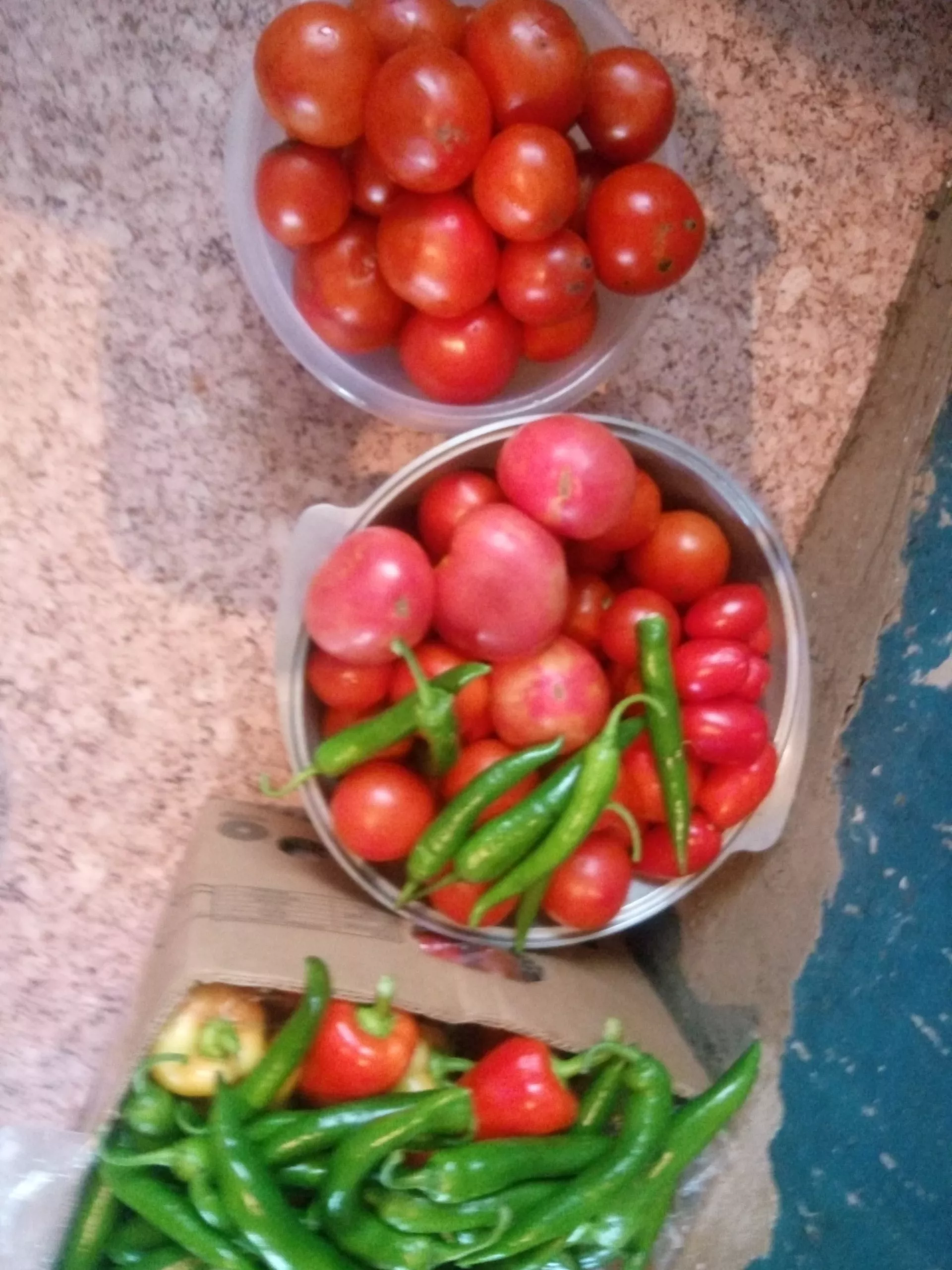
I picked the tomatoes that were ripe for tomato growing:
- cream;

- regular reds;
- and a little pink.
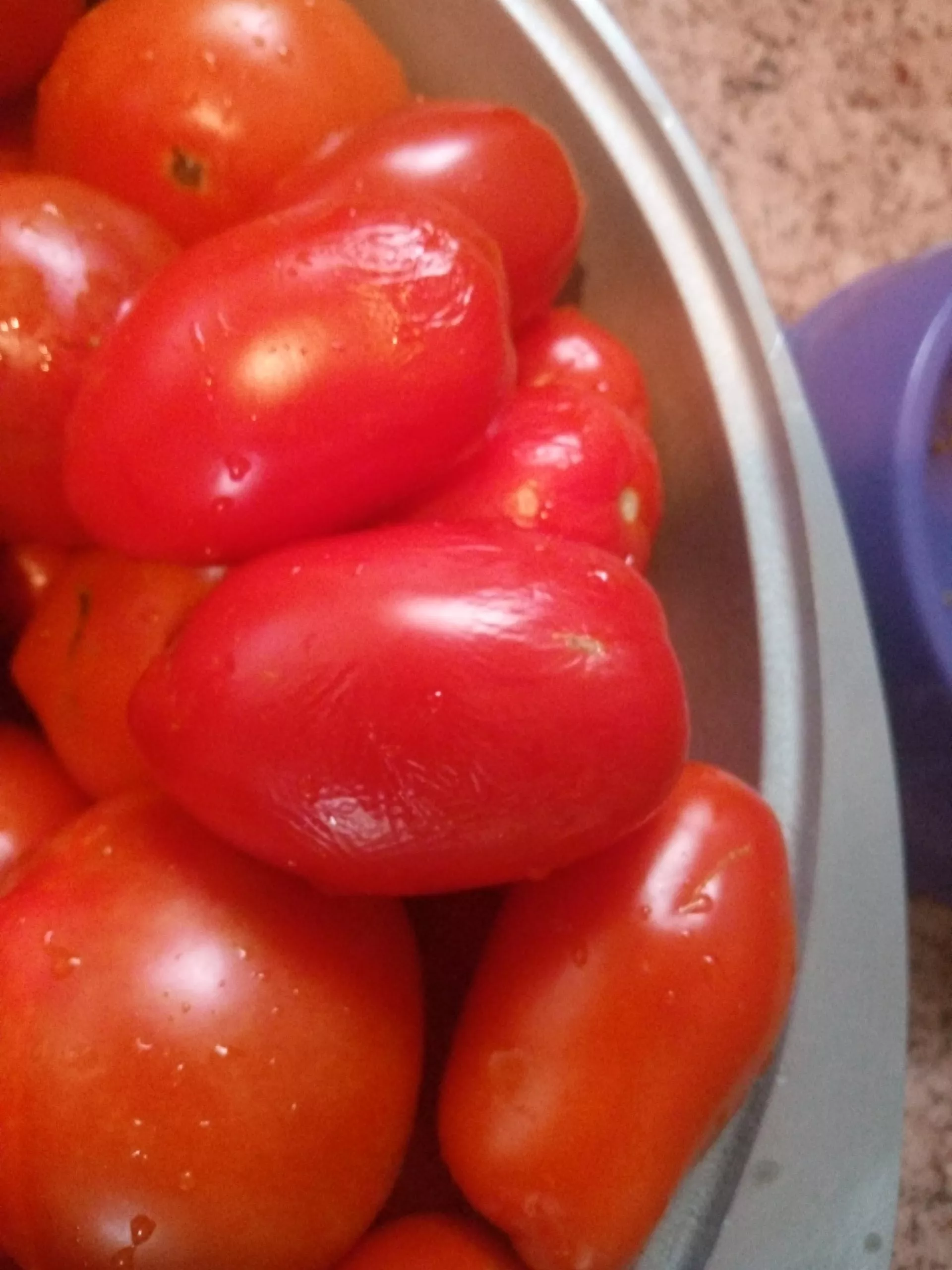
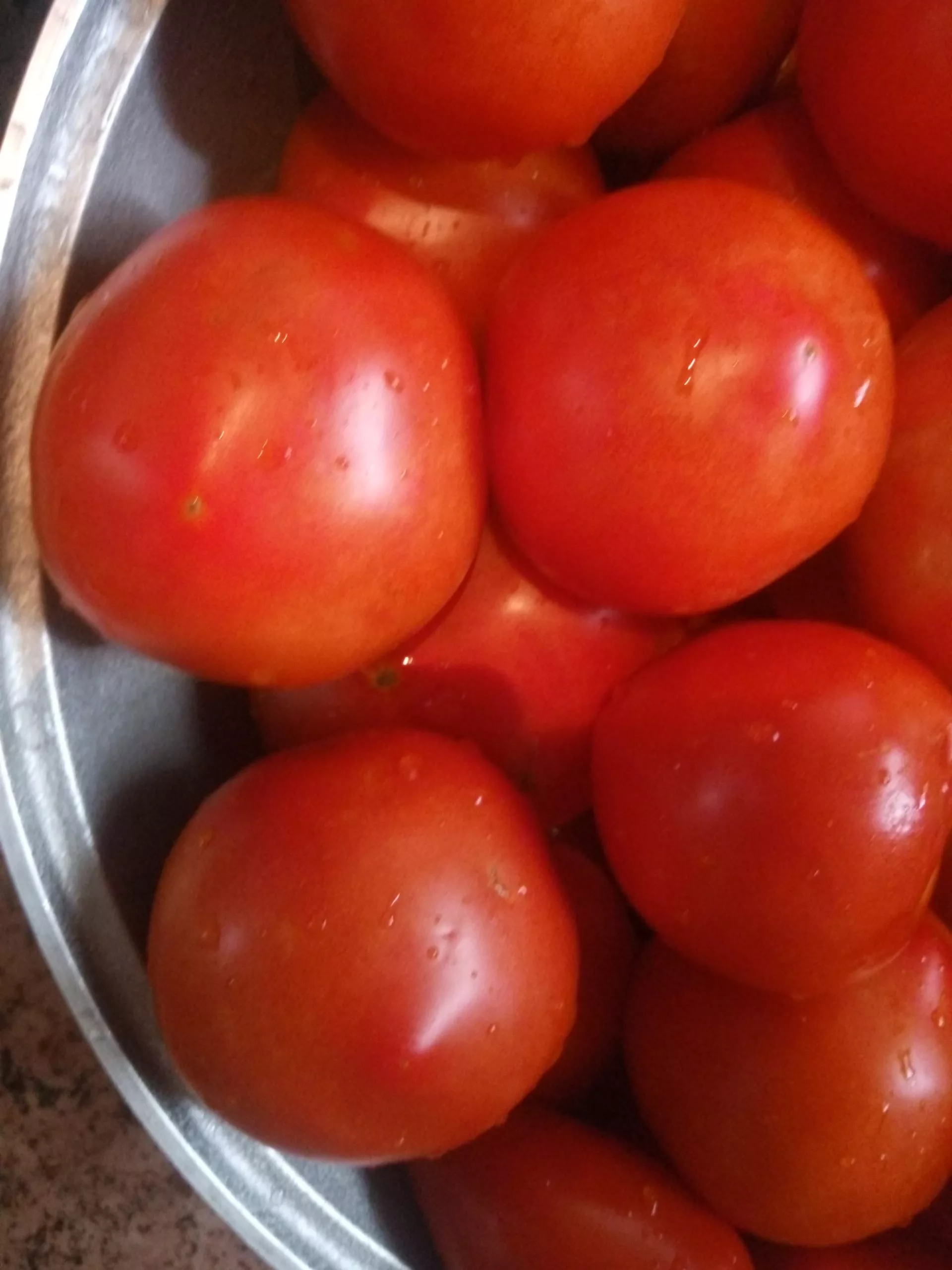
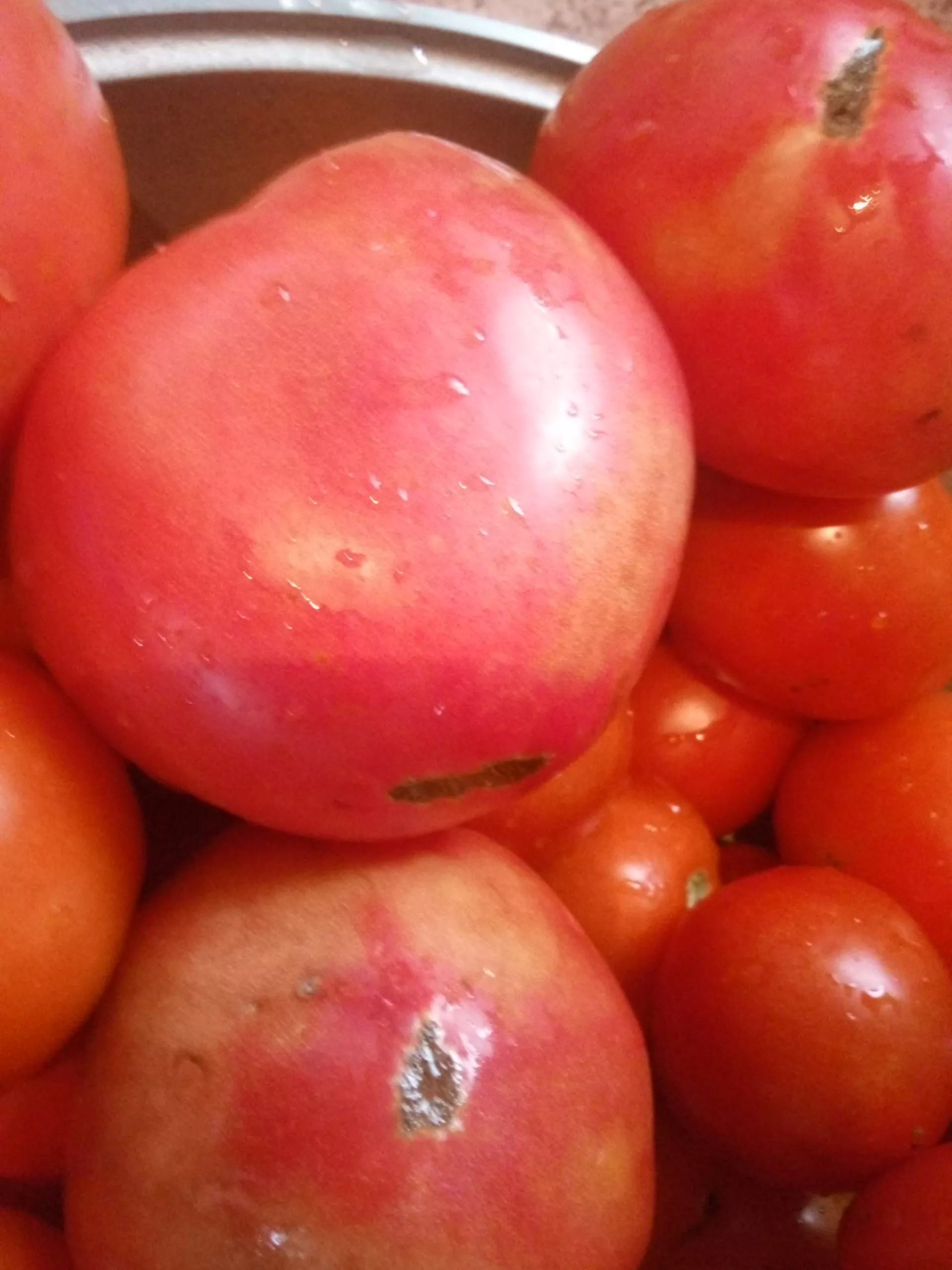
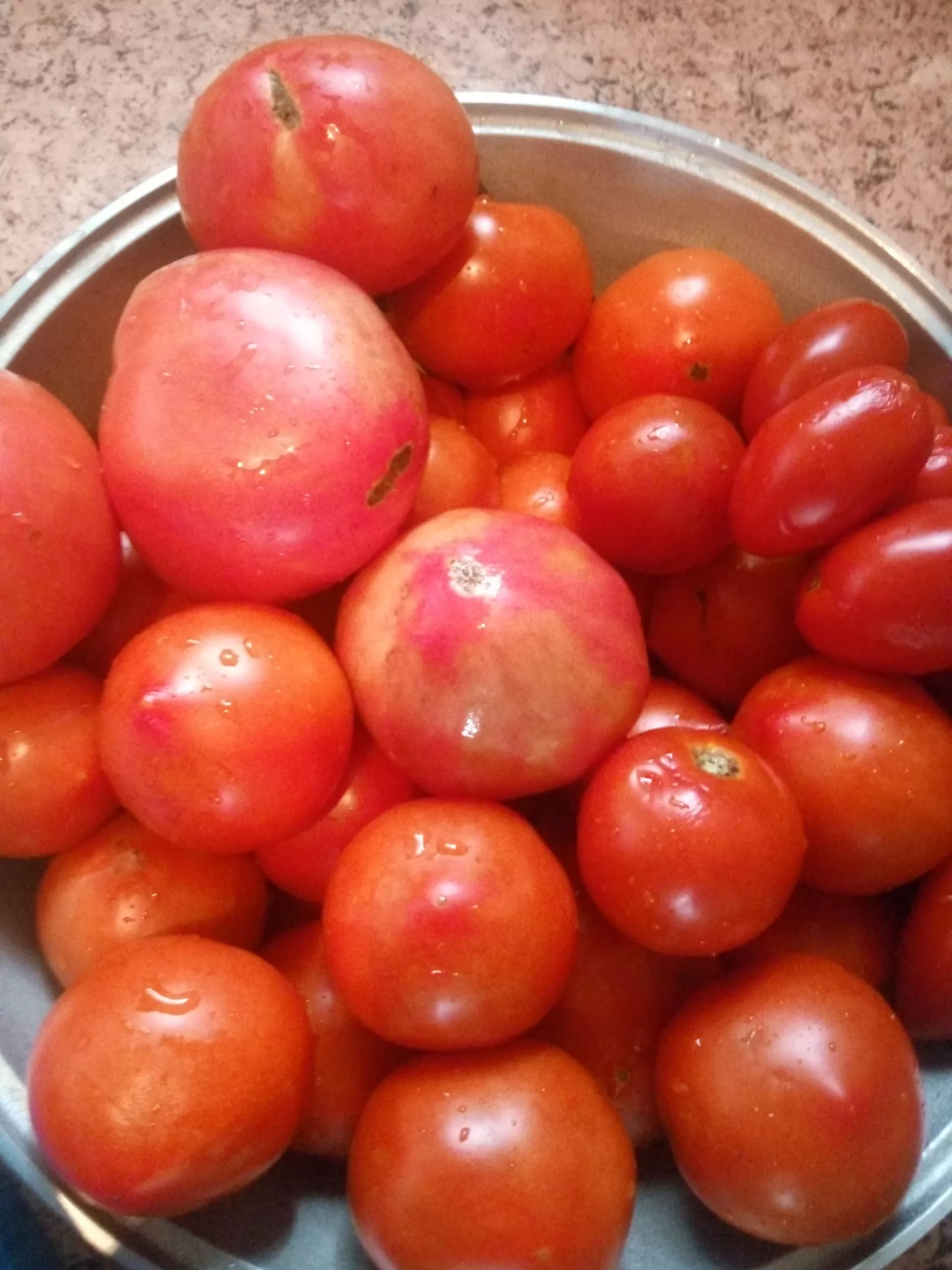
But in general, the volume of a 12-liter cauldron was obtained:
The dirtiest ones were the bell peppers, because I started picking them after it rained:
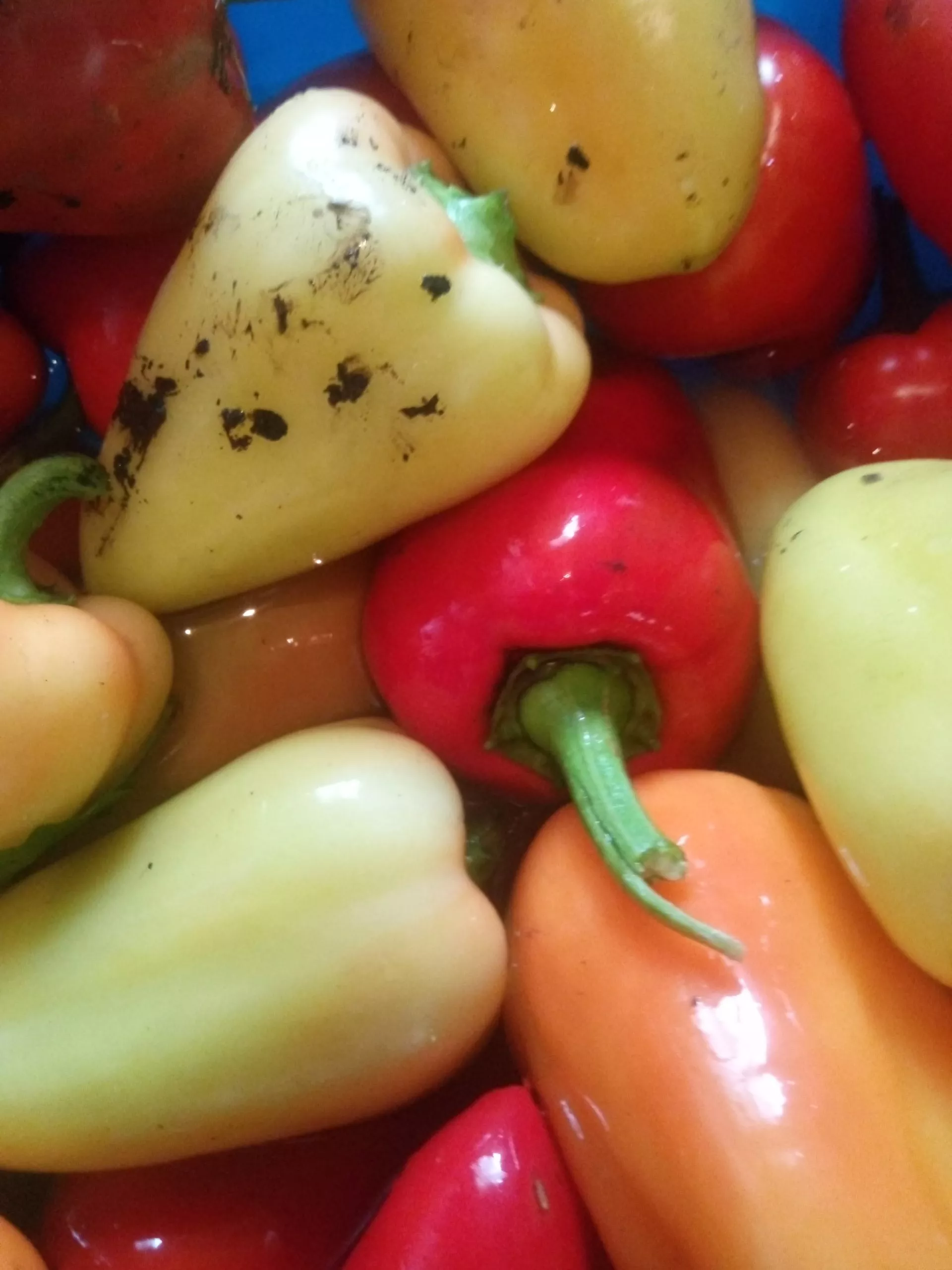
I washed and peeled everything thoroughly. The tomatoes suffered the most from the scorching sun, so I had to cut out all the burnt parts.
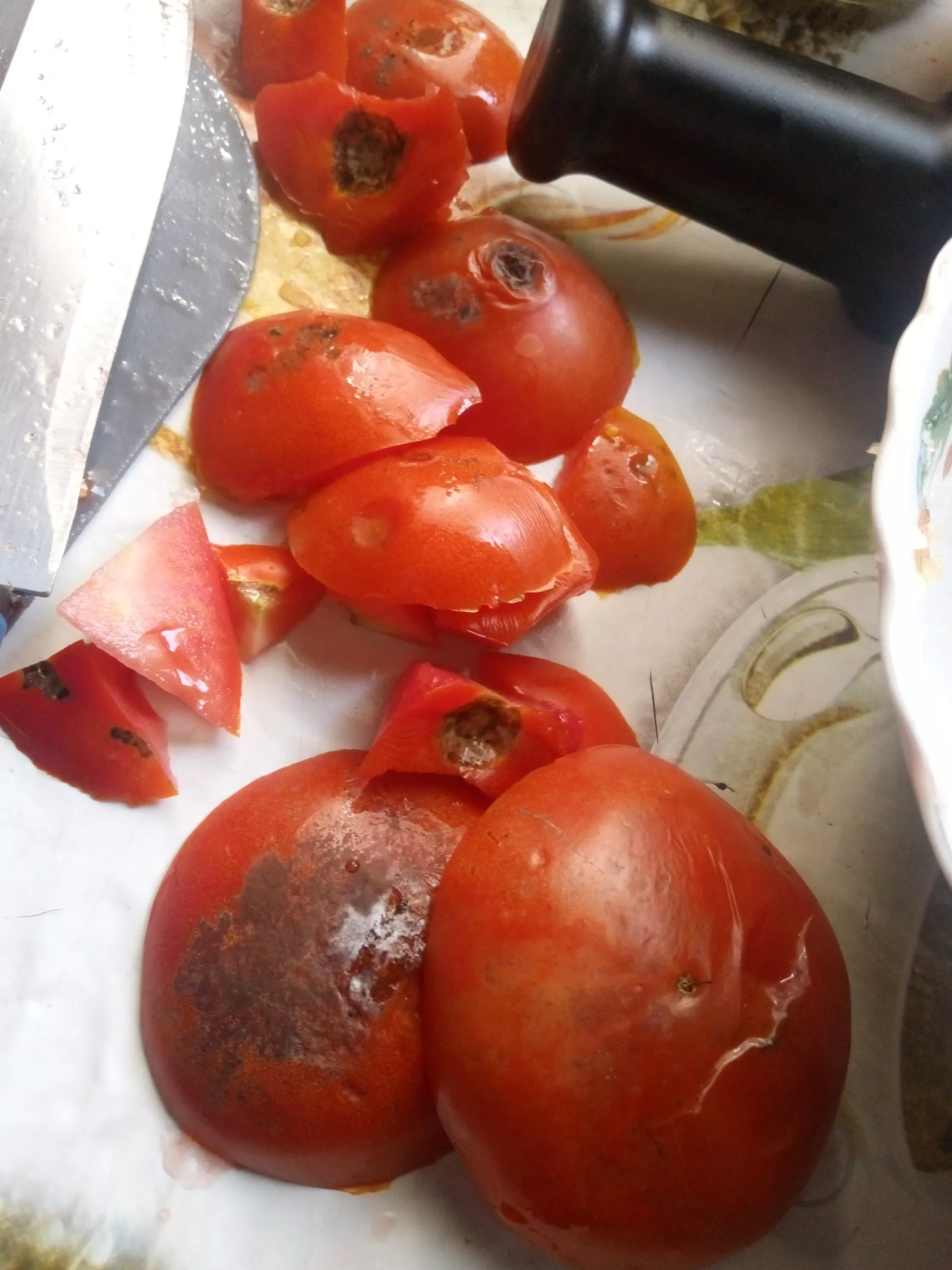
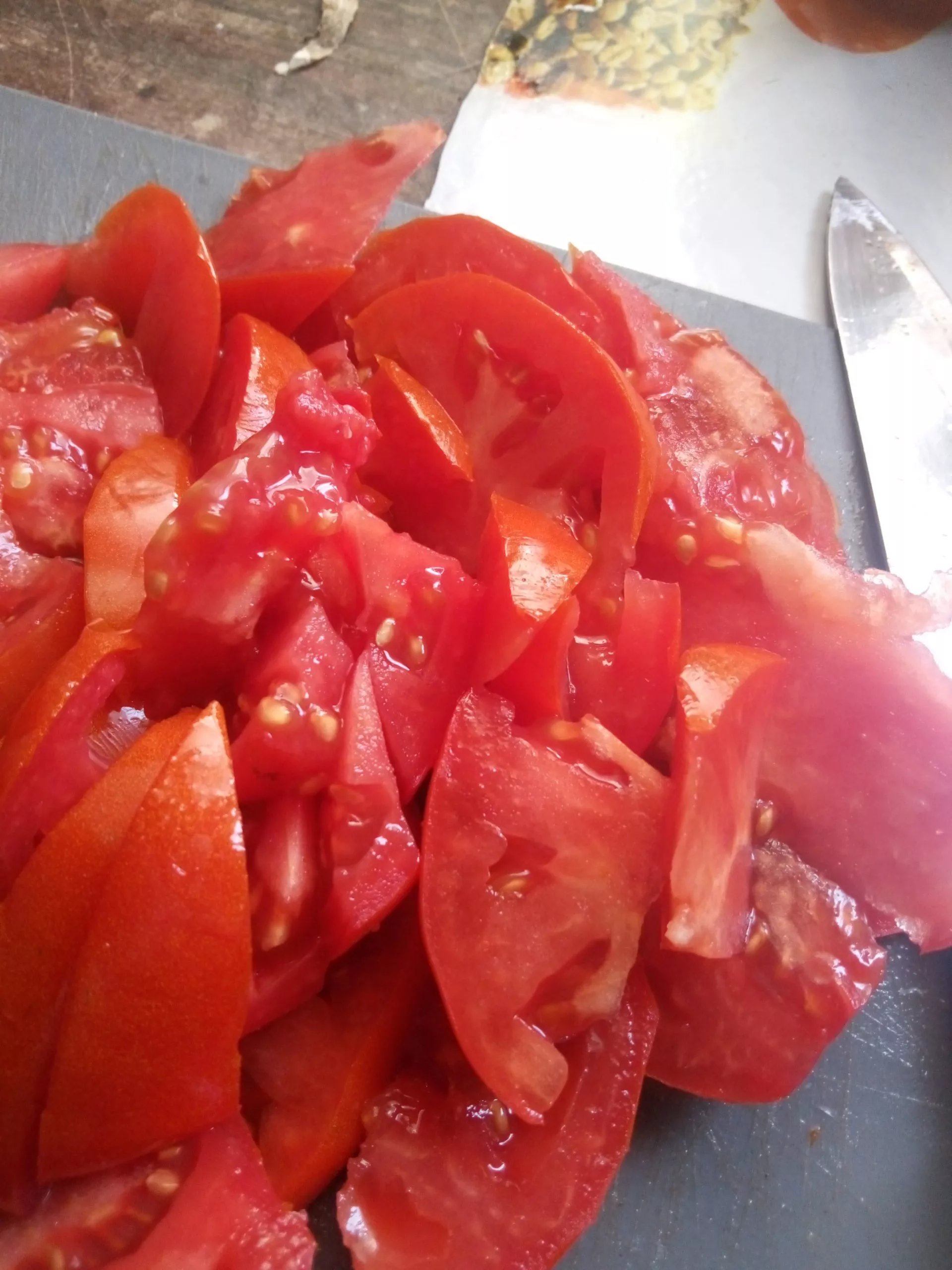
I cut the tomatoes into random shapes.
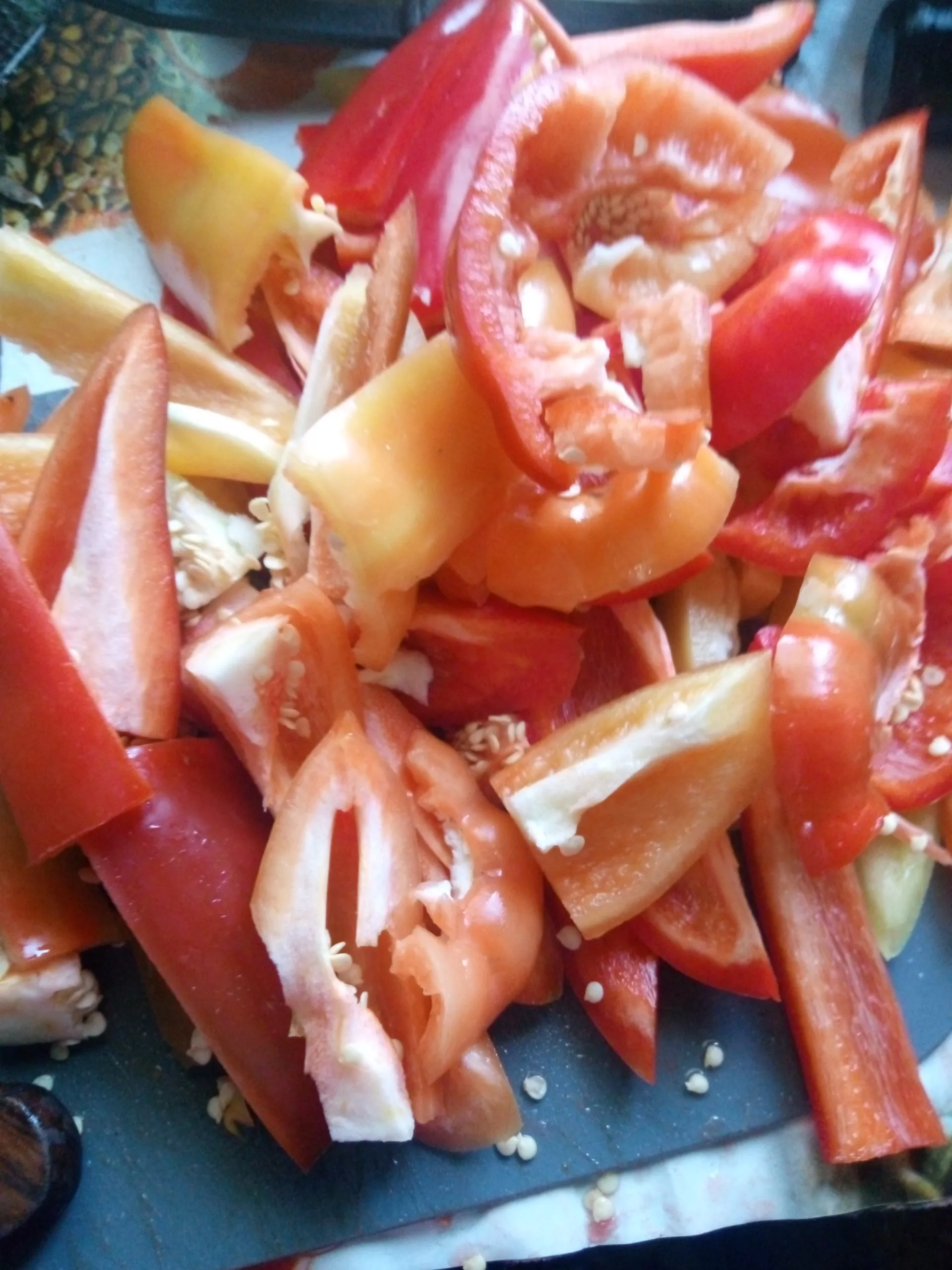
Just like the bell pepper, from which I removed the seeds.
But I only cut off the stem of the hot pepper, since the seed part is considered the hottest.
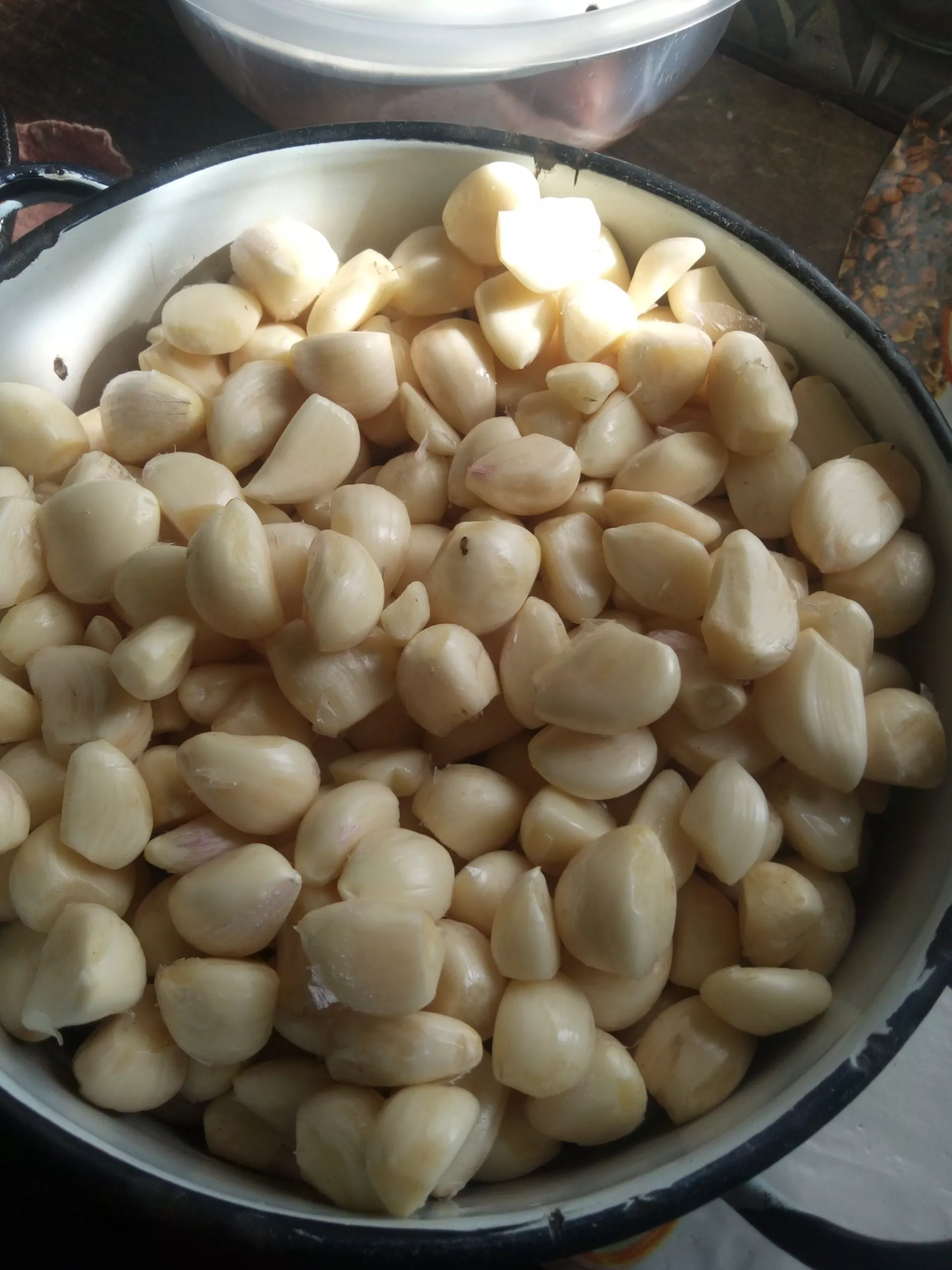
I left the garlic in cloves.
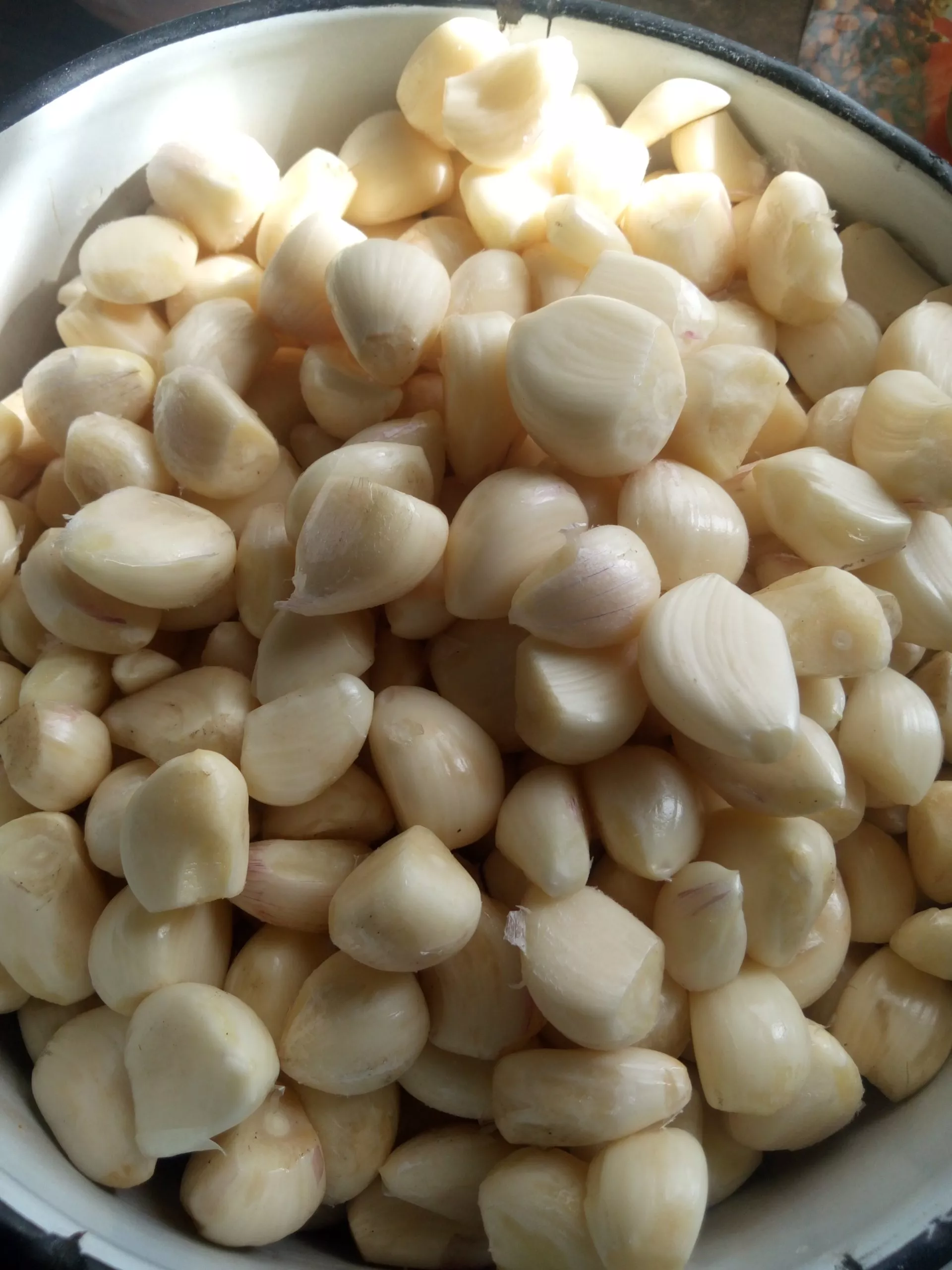
Passed through a meat grinder:
- tomatoes:
- sweet pepper:
- hot pepper:
- garlic:
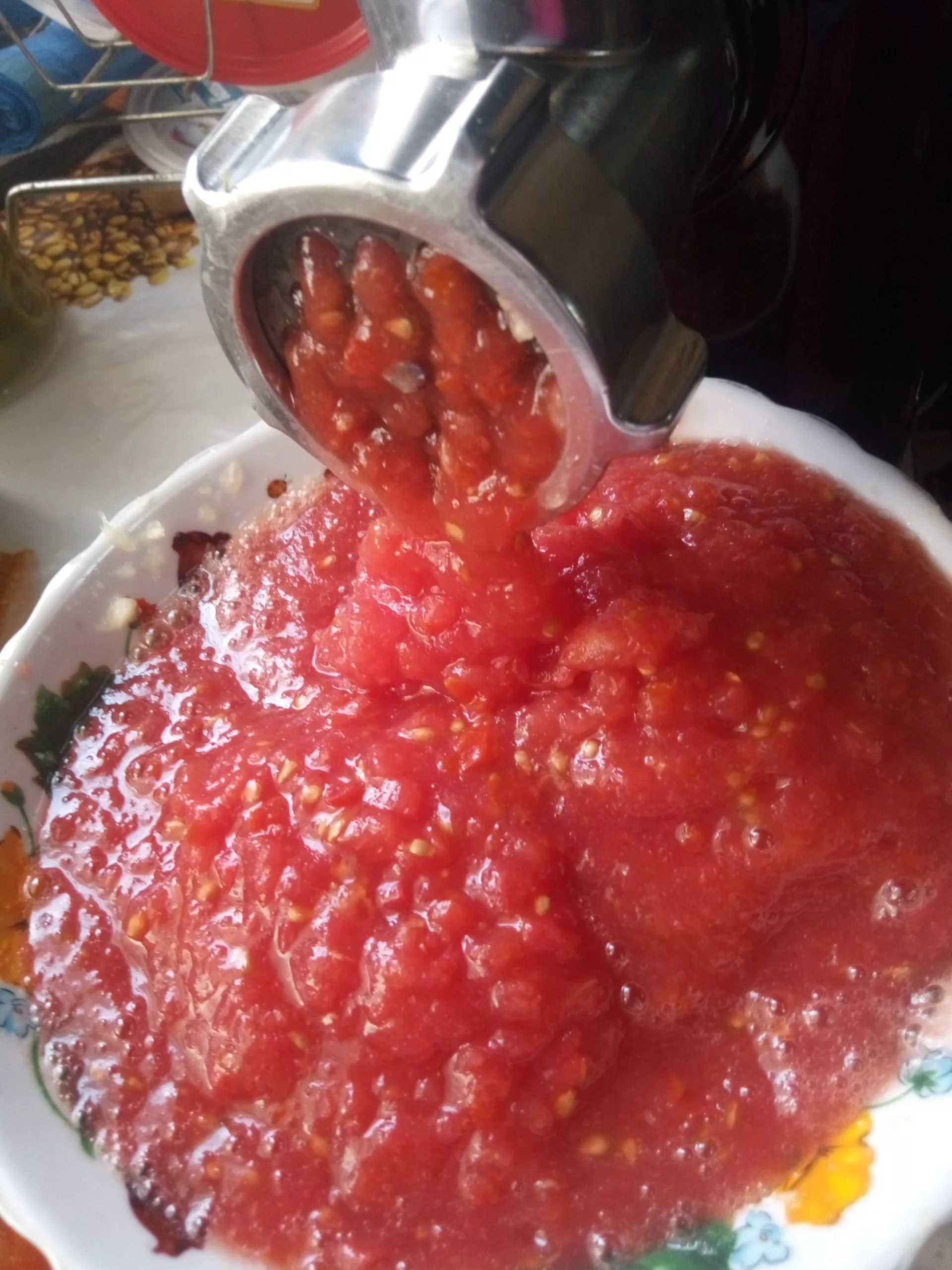
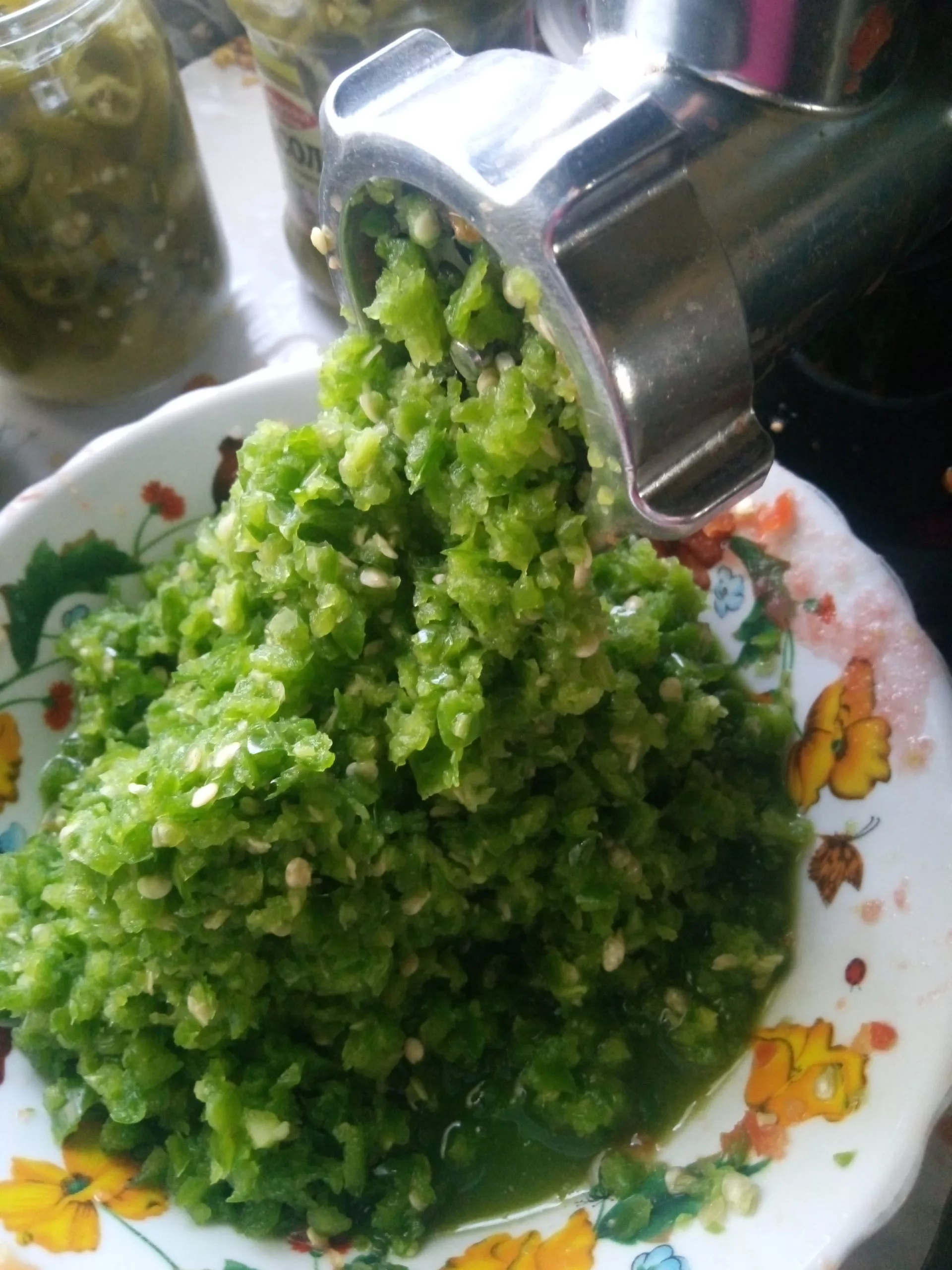
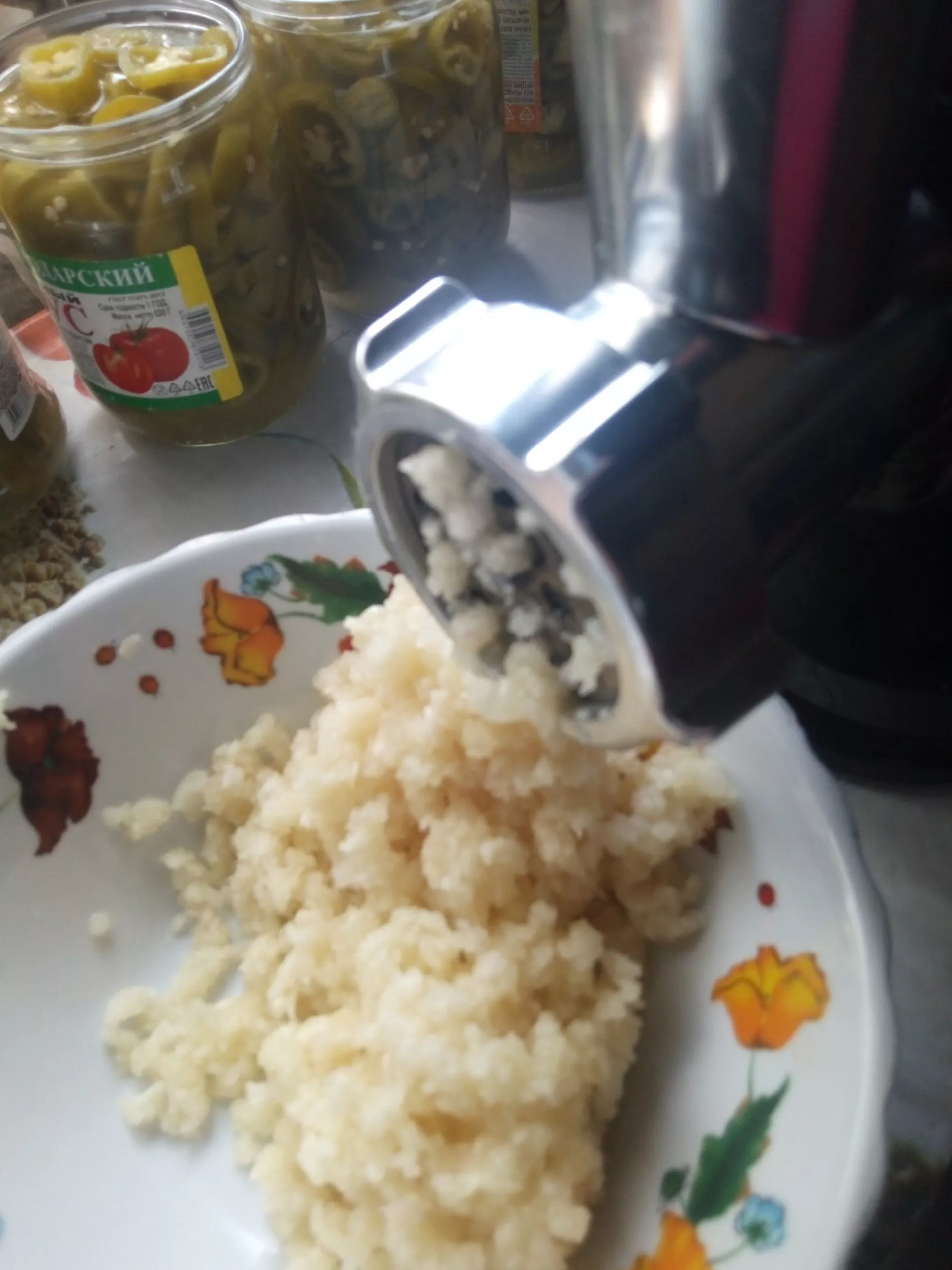
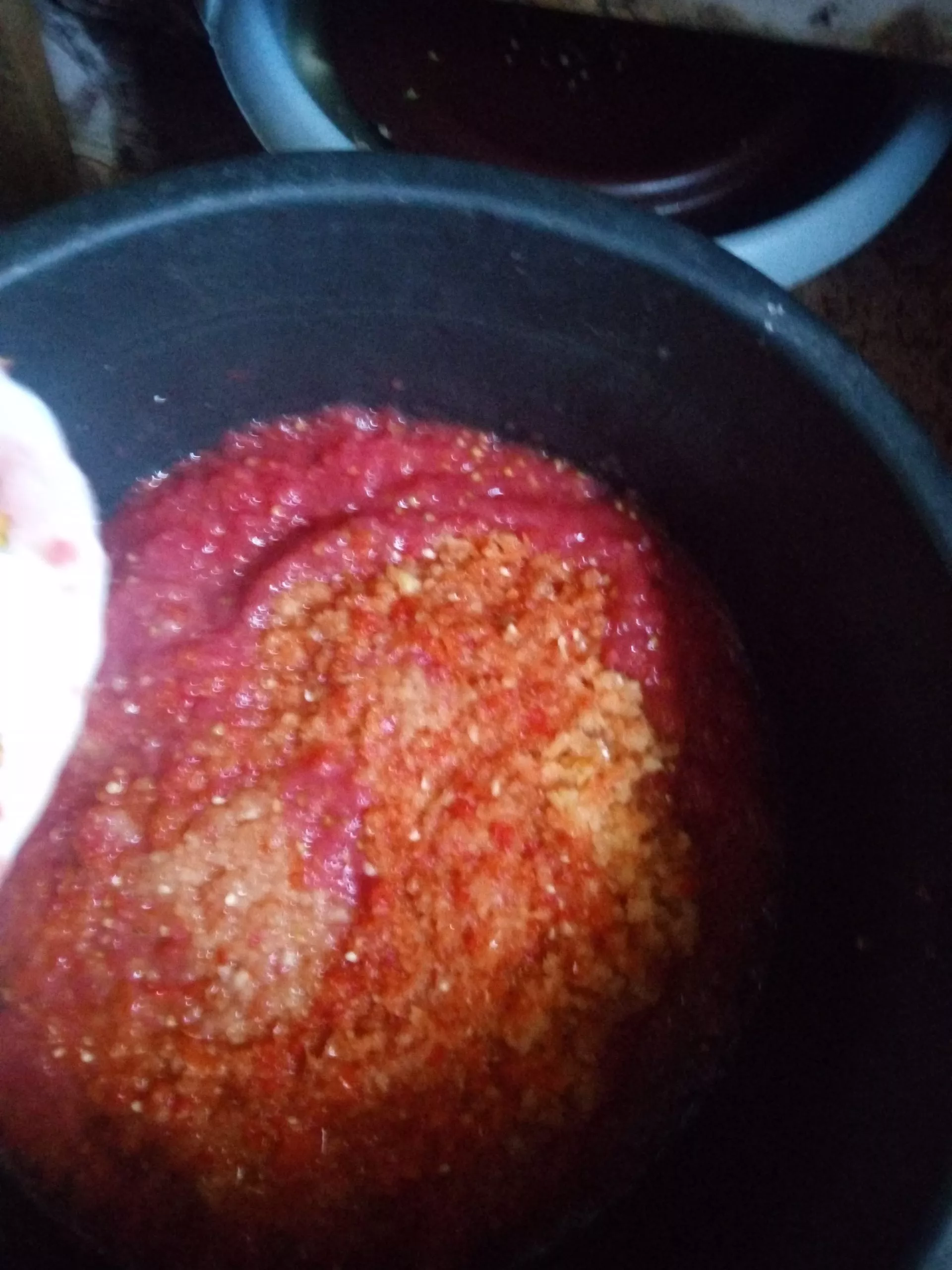
I combined all the ingredients together in an Uzbek cauldron:
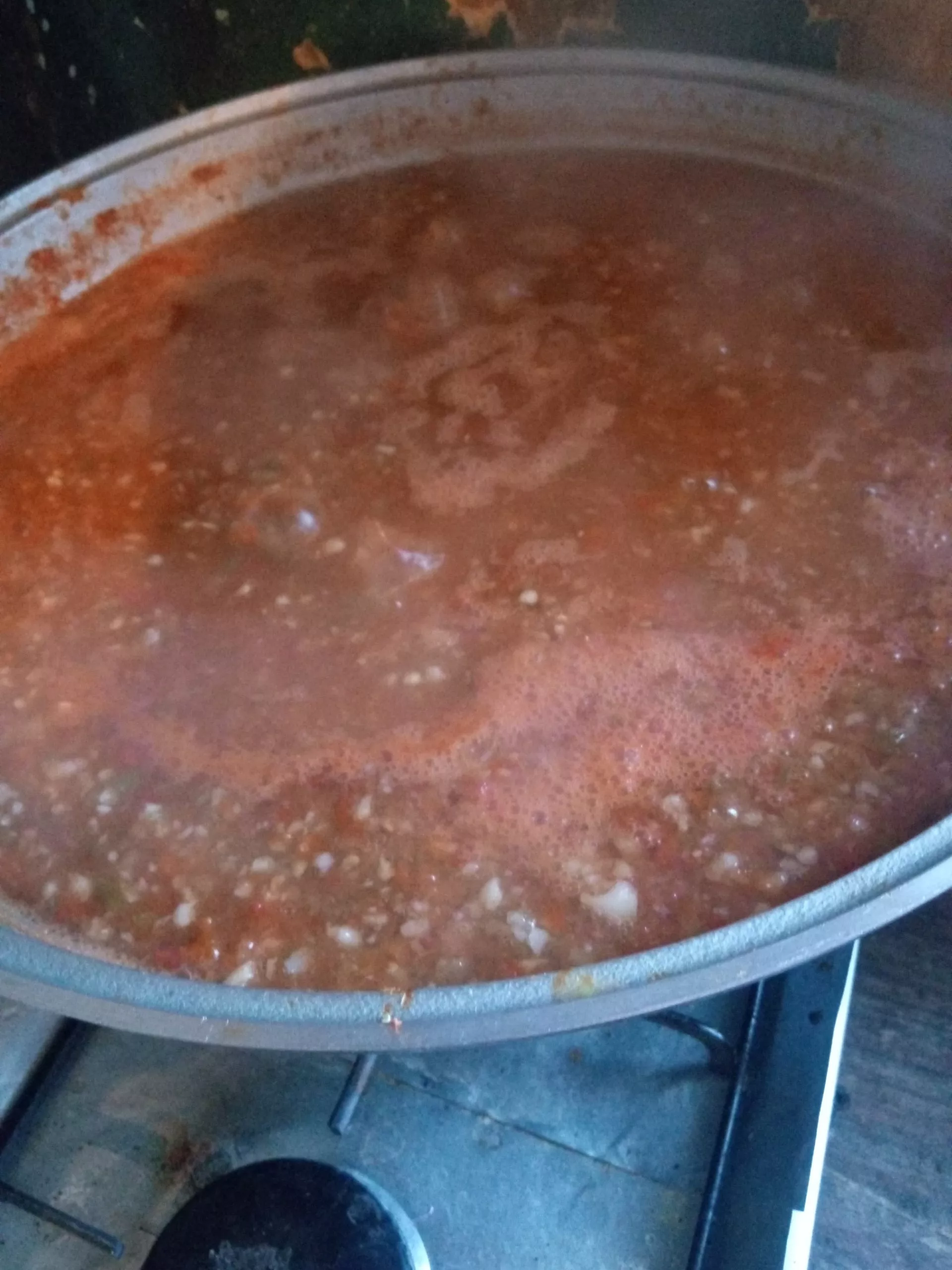
I put it on the stove. After it boils, I cook it for about half an hour:
Then I add salt, sugar, and chop the parsley. (Dill is optional, but it gives a completely different flavor, so I don’t add it.)
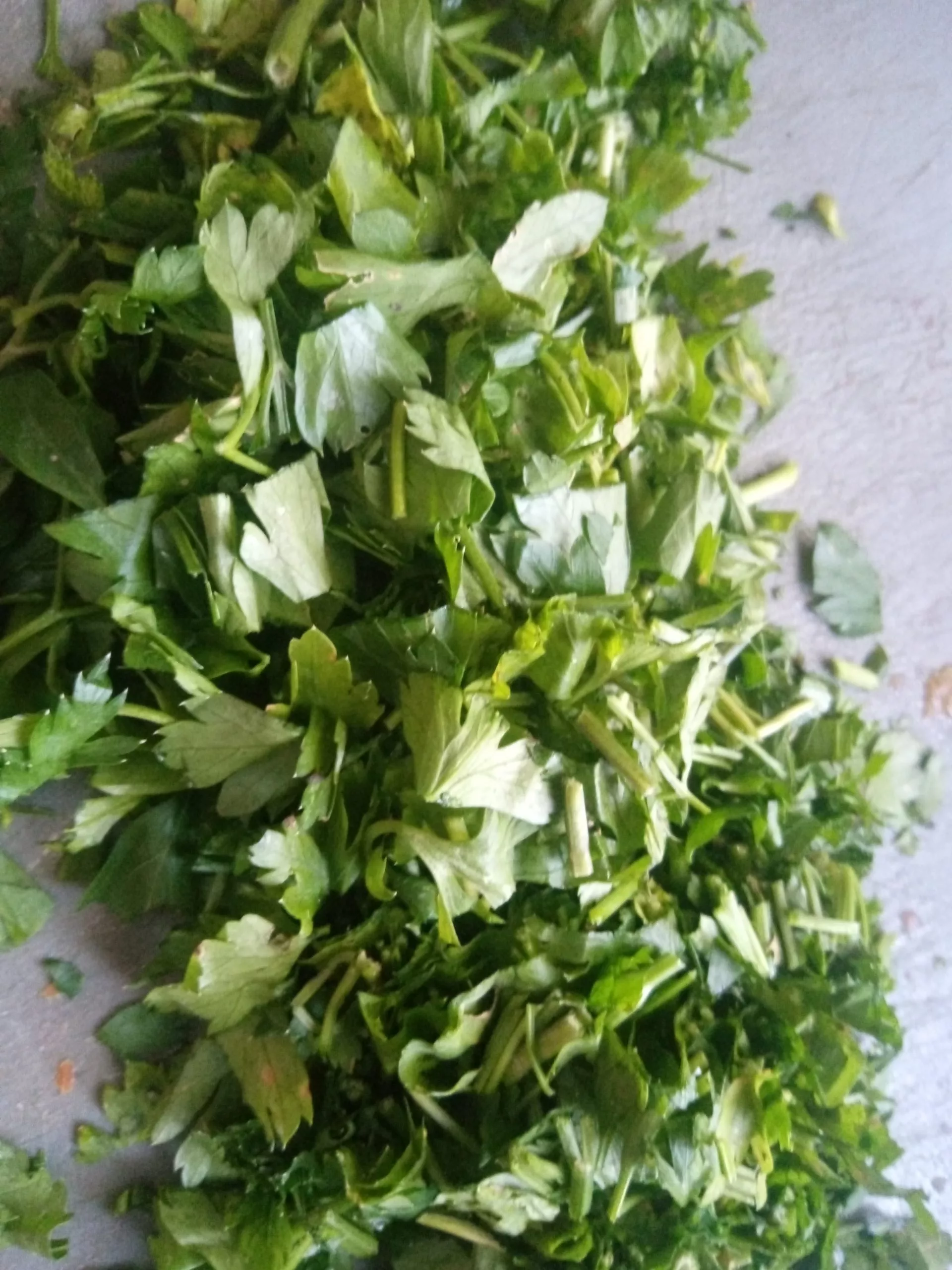
I add the greens and continue cooking.
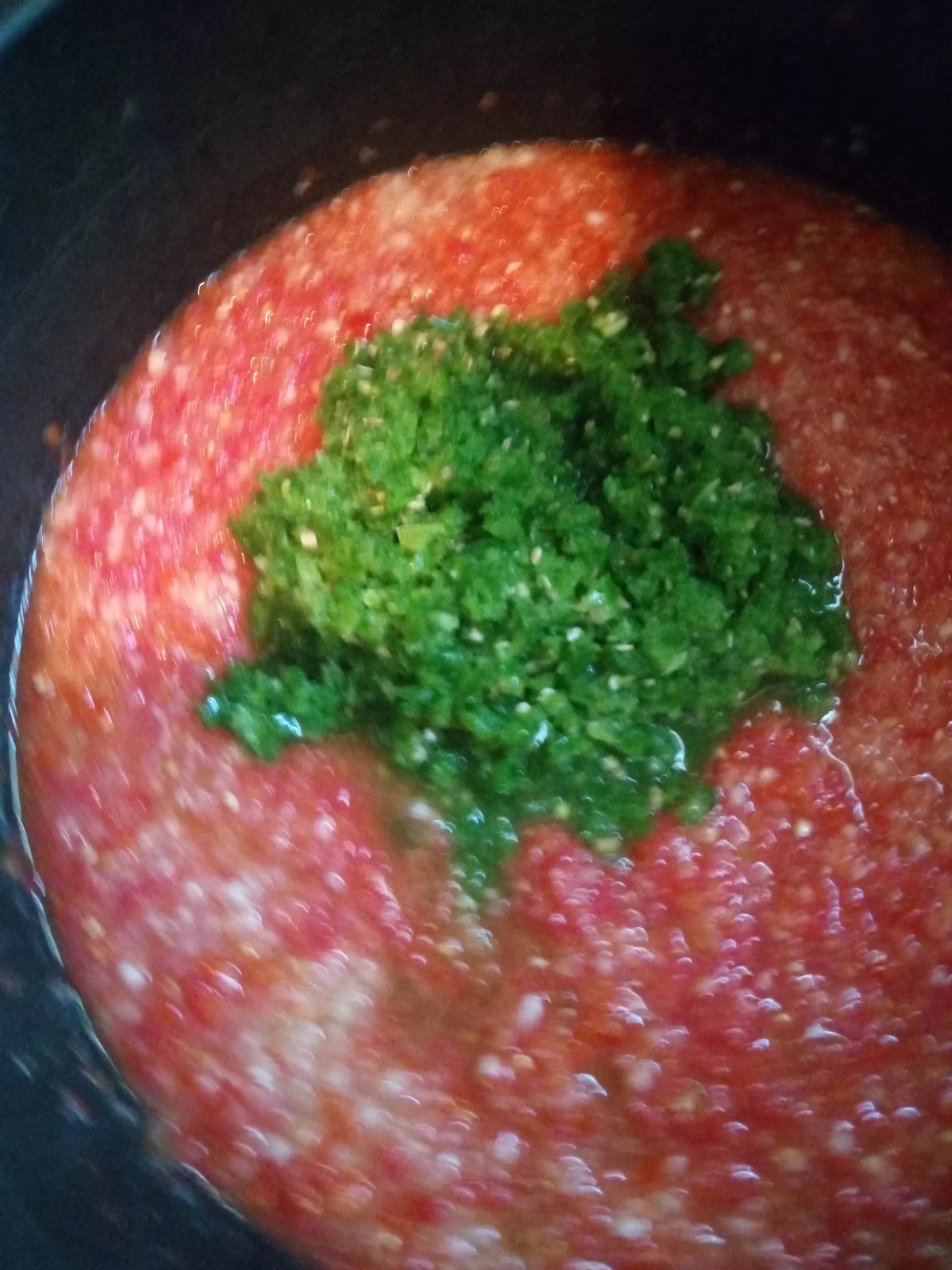
I don't overcook the parsley to prevent it from losing its color. This is what it should look like (this takes about 7 minutes):
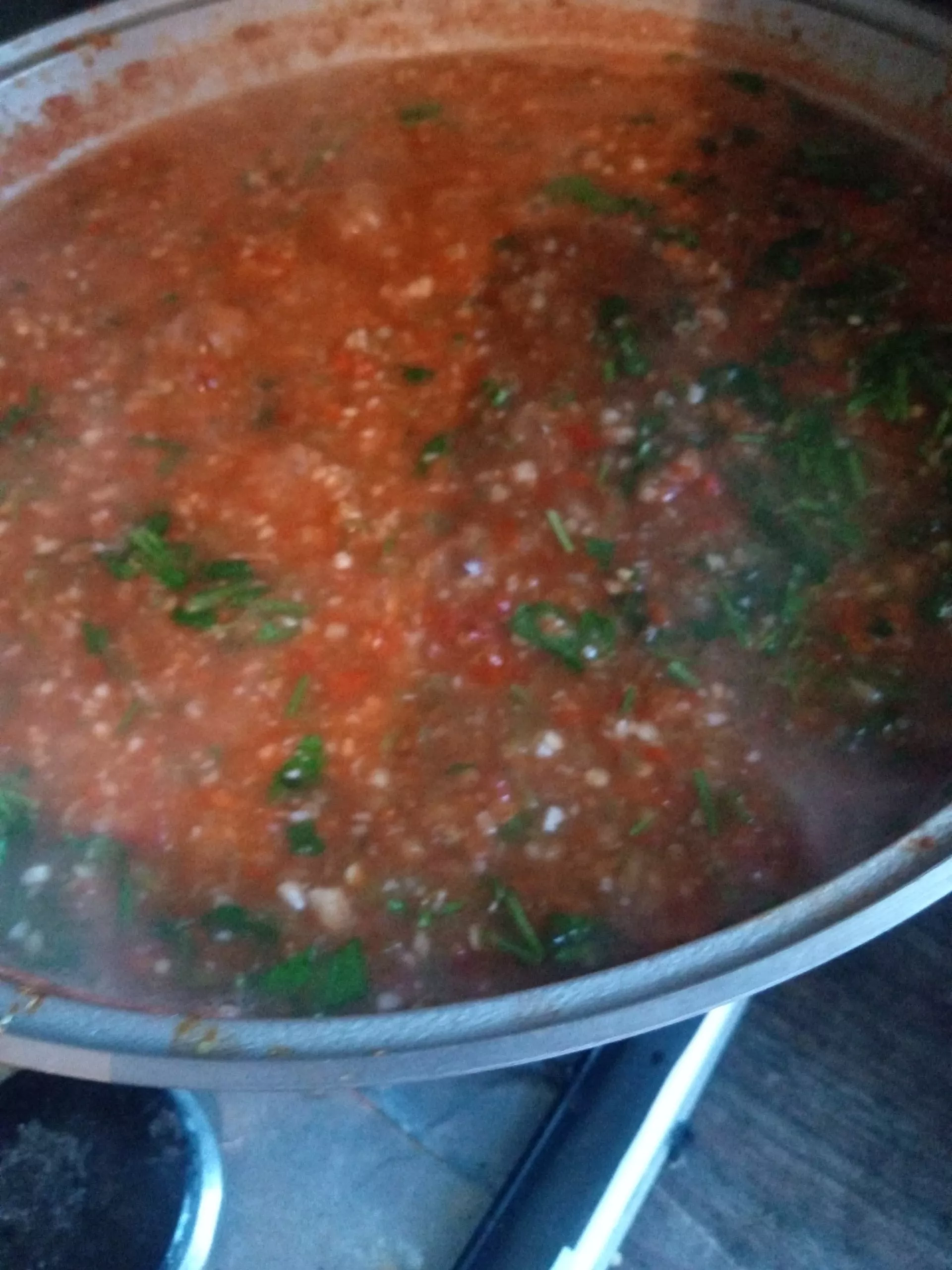
I always add black and allspice peppercorns and a bay leaf (just a little). While the adjika was cooking, I washed the jars and lids,roasted them.
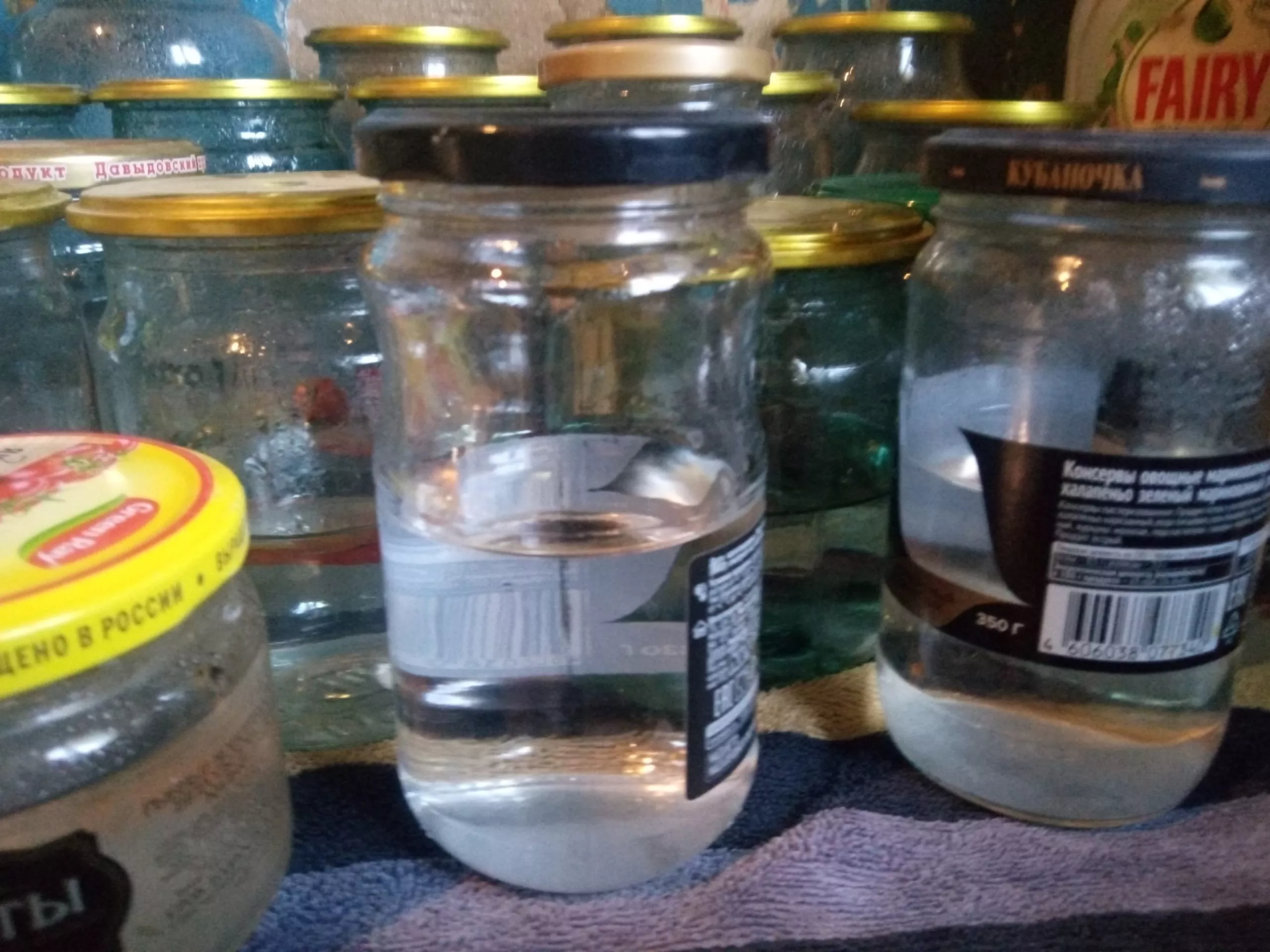
For the last 12 years, I've been doing it the easy way: I just pour boiling water over the jars and quickly cover them with the lids. The jars sit like that for about 20 minutes. It never explodes or bulges the lids—it's foolproof.
I pour the boiling mixture into jars and roll them up.
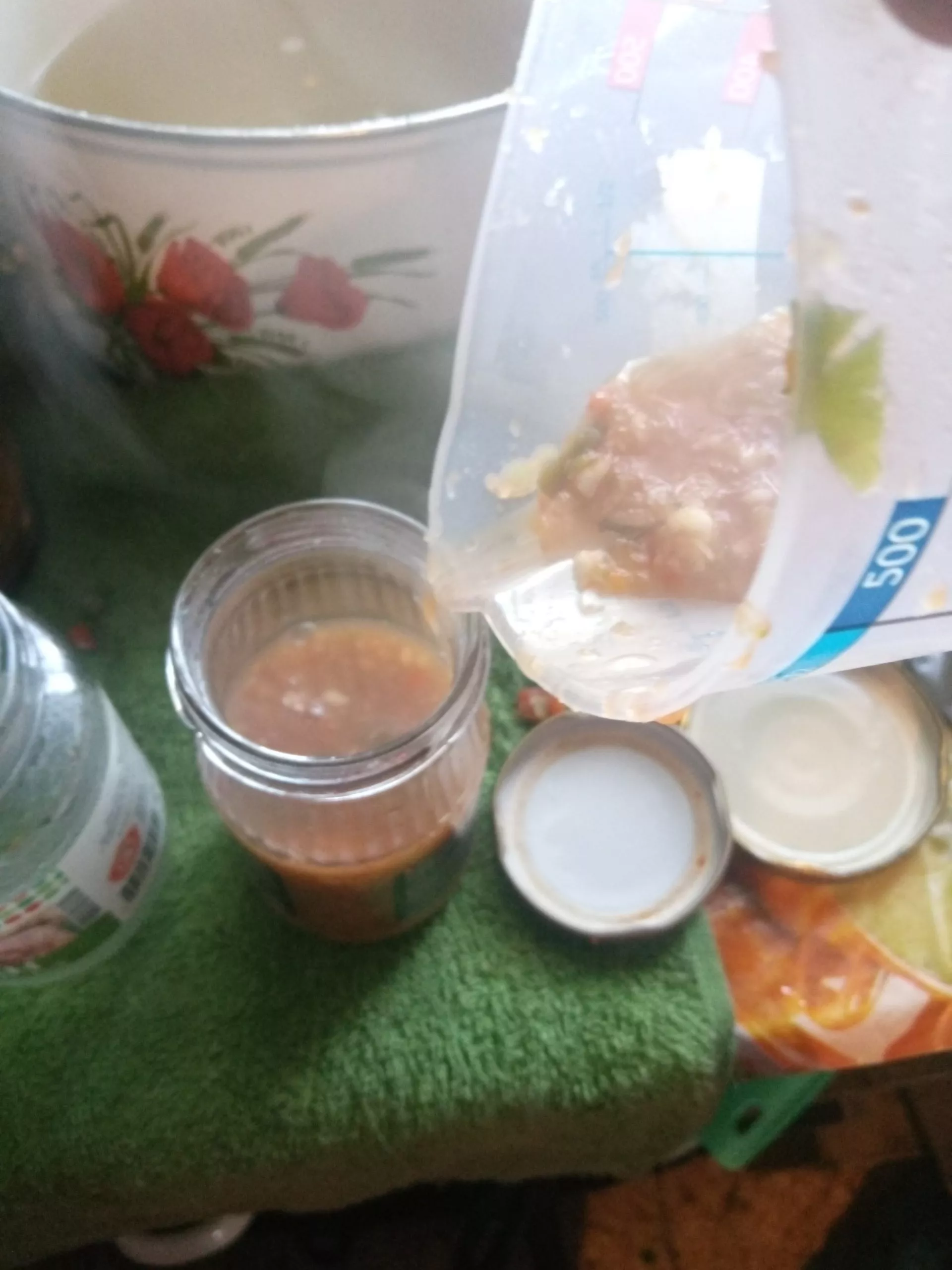
I turn it over and check for any leaks. Then I wrap it in a warm blanket and leave it like that for two days.
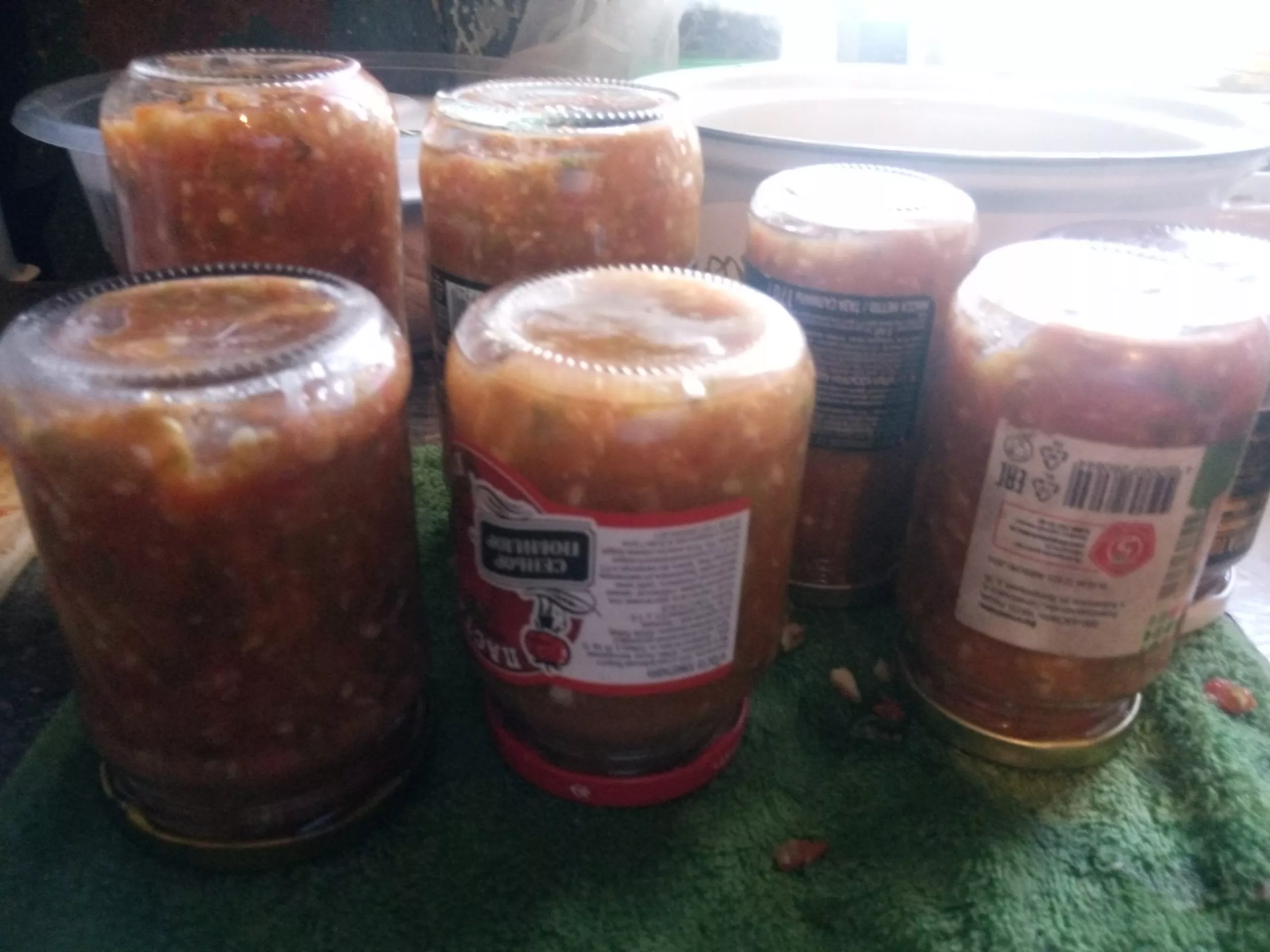
This is how bright and rich the adjika turns out, but if there had been red hot pepper, the color would have been even more juicy.
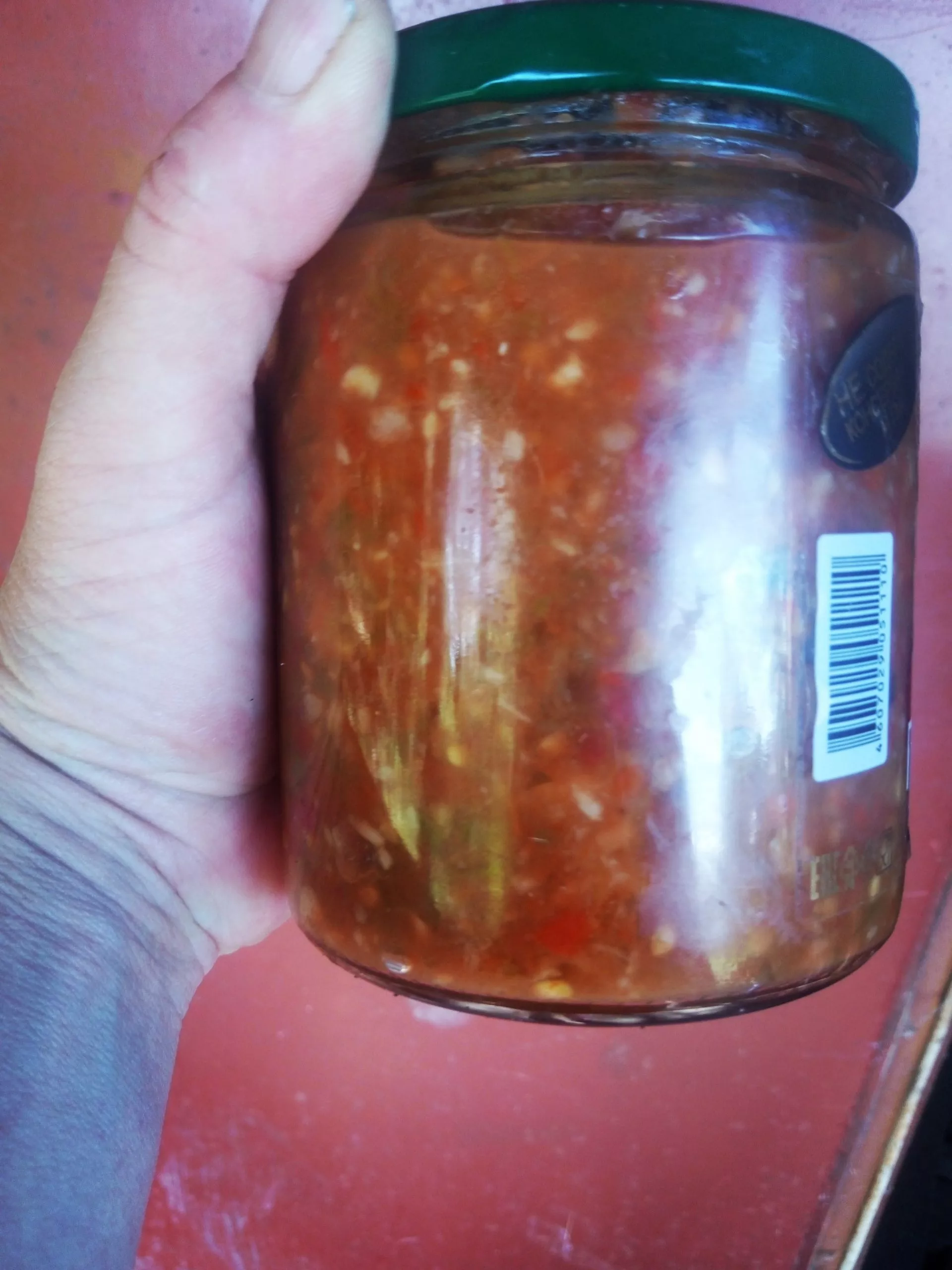
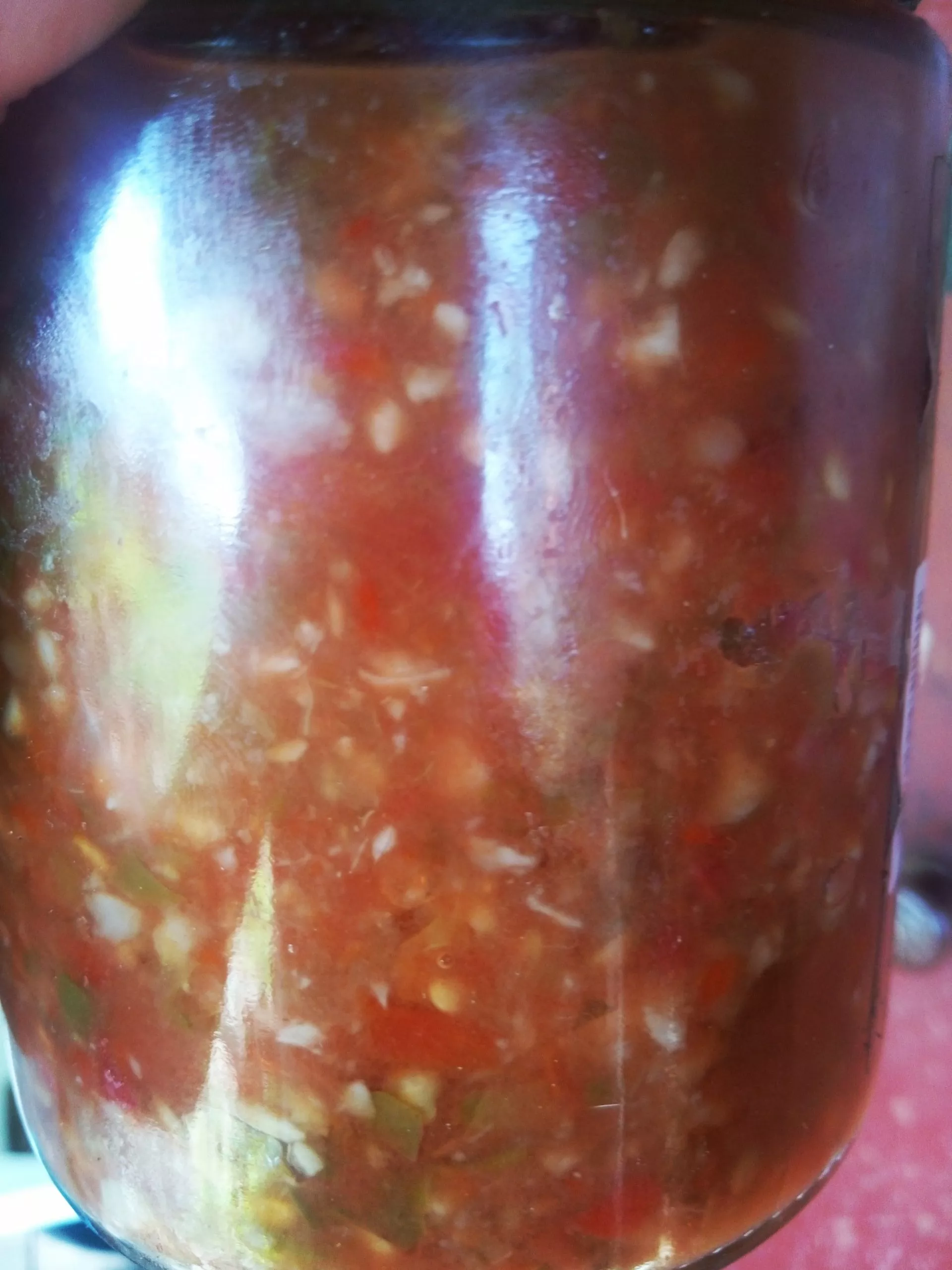
By the way, sometimes I add khmeli-suneli to a small portion of adjika—it gives it a unique flavor. You can add any herbs you like—cilantro, basil, etc.
Now, let's talk about the proportions to make adjika that's truly not just spicy, but very spicy. For 5 kg of bell peppers, I add the same amount of tomatoes and 3 kg of hot peppers. You also need a lot of garlic (the flavor will be rich) – also 3-3.5 kg. Salt and sugar – strictly to taste. I never add vinegar – it ruins the flavor, and the acidity is already present, and natural (from the tomatoes). Add herbs to taste – I add a lot – about 1-1.5 kg for the total amount listed.