

If you don't care for the crop or don't do it properly, you won't get a decent harvest or a sweet vegetable. I've personally learned this from experience. The agronomic requirements for beets are quite simple.
Thinning
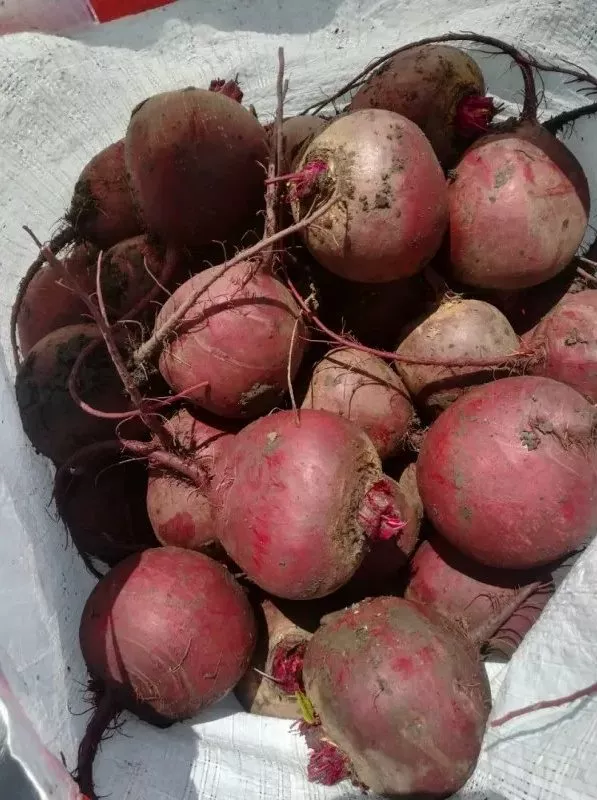 Root vegetables thrive in plenty of space, especially larger varieties. If planted with strict spacing, thinning is not necessary. Thinning is especially important for multi-seeded varieties, as they produce several shoots simultaneously.
Rules:
- carry out the first thinning 5-7 days after the formation of 2 leaves when the seedlings are 9-10 cm high;
- the second time after 20 days when the tops are 13-15 cm high;
- Thin out beets after rain or watering to prevent damage to the root system;
- detach the stems carefully;
- Throw away only the weakest elements, simply replant the rest.
Watering
Without enough moisture, root vegetables don't reach the desired size, becoming coarse and lacking in sugar. How to water properly:
- Before the first deep watering, monitor the soil to ensure it doesn't dry out. This is the time before thinning.
- Water the beets thoroughly when thinning them. This will make them easier and safer to pull out.
- Then, add plenty of water every 5 to 8 days, depending on the weather. However, if it's too hot outside, water more often.
- Stop overwatering the vegetables completely 8-14 days before harvesting. Otherwise, they will become too watery. This is especially harmful for root vegetables, which I store for long periods.
- Try using sprinkler attachments to ensure that the water falls on the foliage and prevents the soil from washing away, exposing the roots. Keep in mind that at high temperatures, it's best not to wet the tops.
- The optimal time is early morning or evening.
You can check the moisture level yourself. To do this, stick your finger into the soil a couple of centimeters deep. If the soil is dry at this depth, it needs water.
Fertilizing
Beets don't require a lot of organic fertilizers, particularly nitrogen (which I'm certainly happy about). There's a vegetative-fertilizing schedule that should be followed:
- Beets are fertilized for the first time after the first thinning, when the true leaves have formed. Nitrogen is added during this period. This can be organic matter (chicken manure, mullein, herbal infusions) or urea or ammonium nitrate. Fertilizer is added in small quantities, depending on the soil type.
- Potassium will be needed a second time. The time for application is when fruit sets. Use commercial fertilizers, potassium chloride, potassium sulfate, potassium salt, or wood ash. Fertilize three times, every 10 days.
- I use superphosphate and boron-based products (boric acid, Mag-Bor) once or twice during the growing season. A combination product, Borofoska, is also a good choice.
Follow the proportions indicated on the fertilizer packaging. Therefore, when reading the instructions, check for beets among the vegetables listed.
Weed control, loosening
Remove weeds as they grow. At the same time, loosen the soil. Remember that beets prefer loose, open soil, so the beds should be clean and the soil loosened.
Helpful tips for growing beets
It's difficult for novice gardeners to master all the basics of growing crops right away, but they really want to get tasty and sweet fruits. I know this from personal experience. I remember how difficult it was the first couple of years... So, take advantage of these tips from an experienced gardener:
- to improve sugar content, water occasionally with salted water (1 tbsp per 10 l);
- boron will make beets sweeter (fertilize twice at the rate of 10 g of the substance per 10 liters of water);
- Don't worry if the root vegetable sticks out upwards – it is gaining sweetness and color;
- To retain moisture, place mulch of grass, peat, etc. under the bushes;
- To make the fruits smaller and tastier, plant them closer to each other and vice versa, to make them larger, increase the distance.
What to do if the root vegetables are too large?
When growing any vegetable, gardeners strive for large fruits. This is undesirable with beets, as the flesh of large root vegetables is too coarse and fibrous, producing an unpleasant taste.
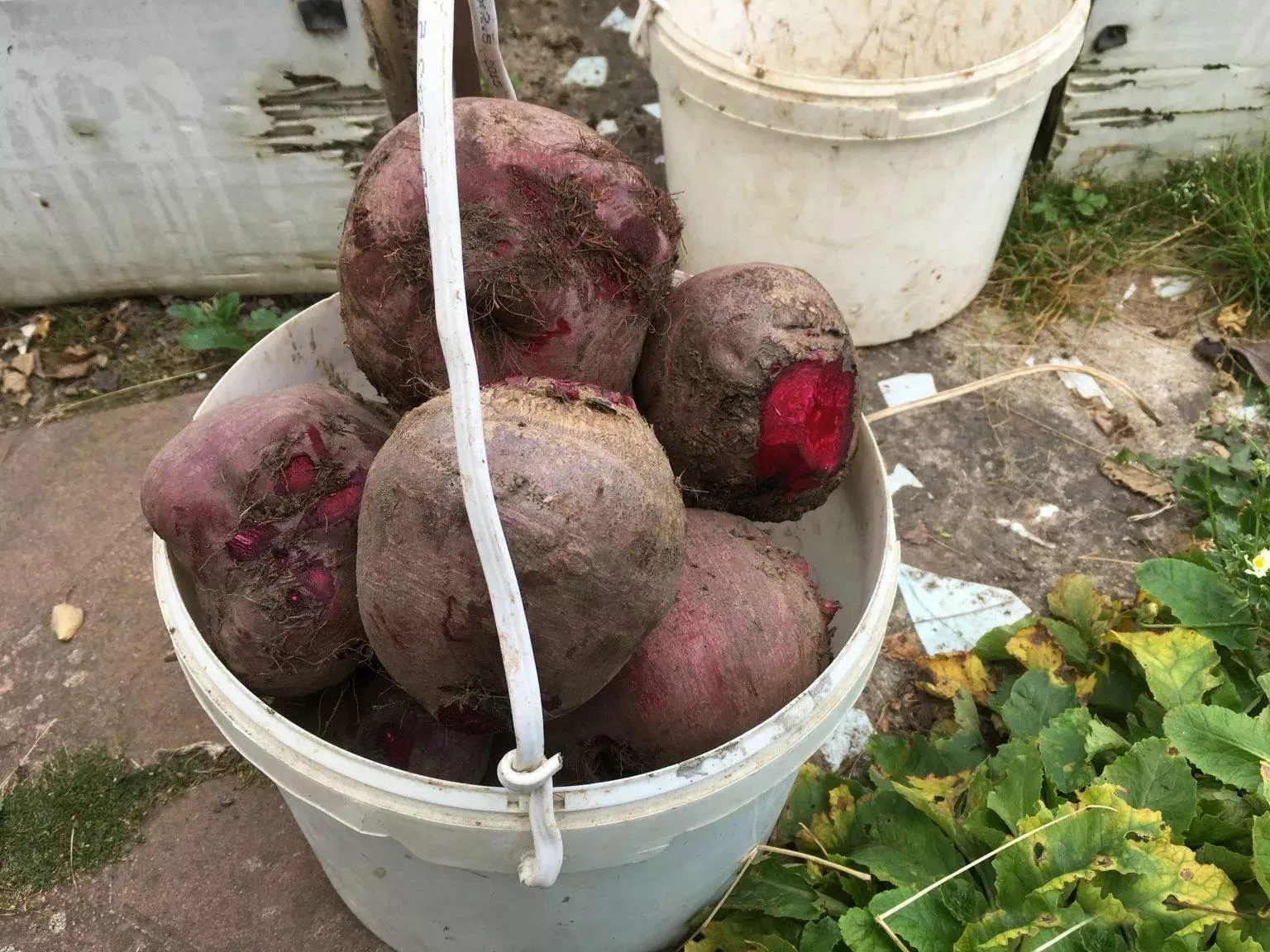
To prevent this, dig up the beetroot in a timely manner (consider the variety's size and early maturity). Maintain a planting distance appropriate to the beet variety.
If the root vegetables do become overgrown, they can be fed to livestock. Cooking with fibrous fruits is pointless, as they won't be tasty.
Harvesting and storage
I harvest beets strictly according to the variety, but before the cold weather sets in, as they thrive in warm conditions. Harvesting, preparation, and storage guidelines:
- To carefully remove the fruit from the bed, use a small shovel or knife. Gently lift the soil and pull the tops.
- Clear away soil, but do not hit it with a shovel or other surface.
- Cut off part of the stem, leaving a small crown. If you plan to store it until spring, the length should not exceed 2 cm. If you want the vegetable to last longer than 7-8 months, cut it off completely, as this will prevent sprouts from sprouting.
- Place the vegetables in a ventilated area or outside for a couple of days to dry. The temperature should range from 10 to 12 degrees Celsius.
- Sort the root vegetables and discard any damaged ones. For long-term storage, use only whole, undamaged or cut parts.
- Place dried fruits in a cellar at a temperature of +2 to +5 degrees in wooden boxes or sand.
- During the storage period, be sure to check them for rot.
Personally, I find this type of care completely hassle-free, so the beets in our garden always seem to grow naturally. That is, we don't have to put in any special effort.