
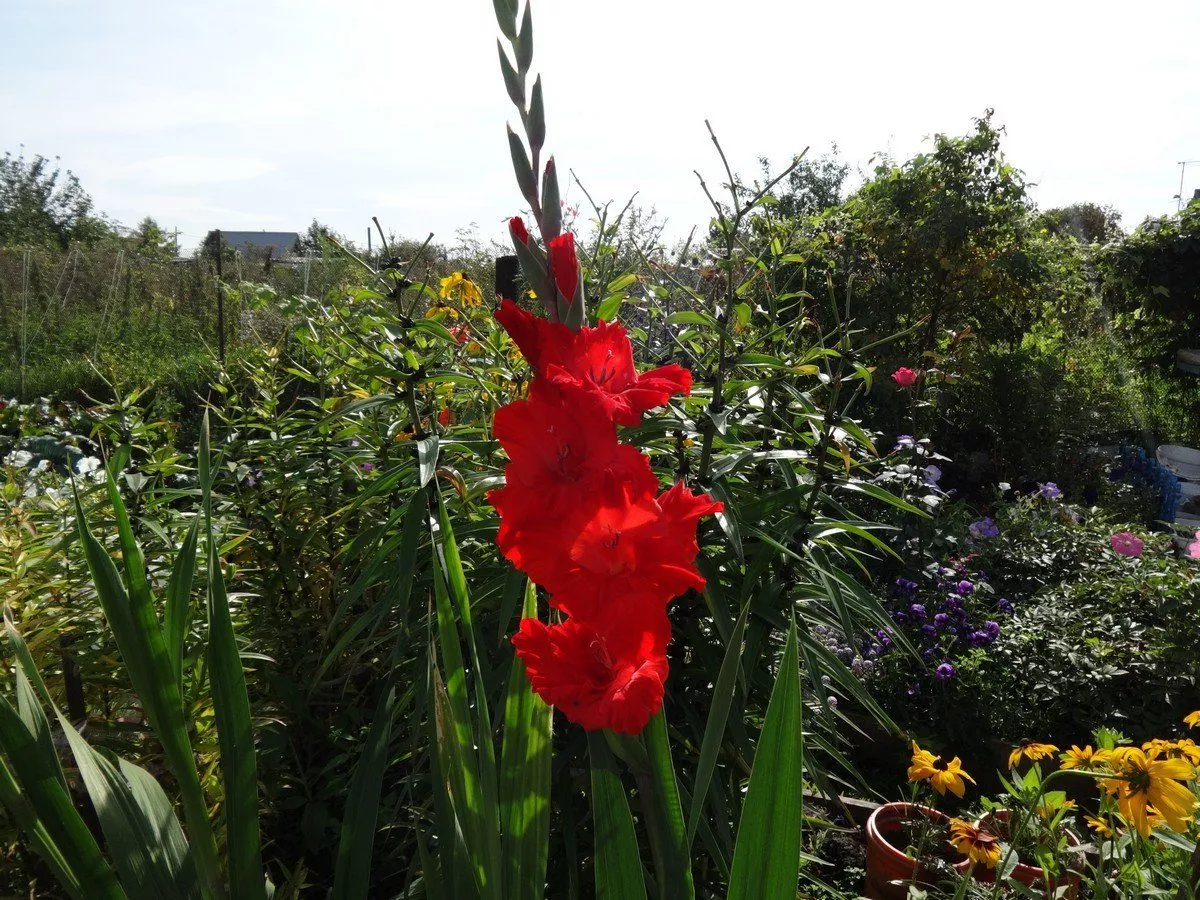
A gladiolus flower blossomed in the flowerbed,
How beautiful, bright and tall he is,
It flies up and rushes into the sky,
Its flowers are red like sails,Like shells from the depths of the sea,
Like ballerinas' silk tutus,
And on top of the ear the bud is not open,
Who knows what secret he is keeping.
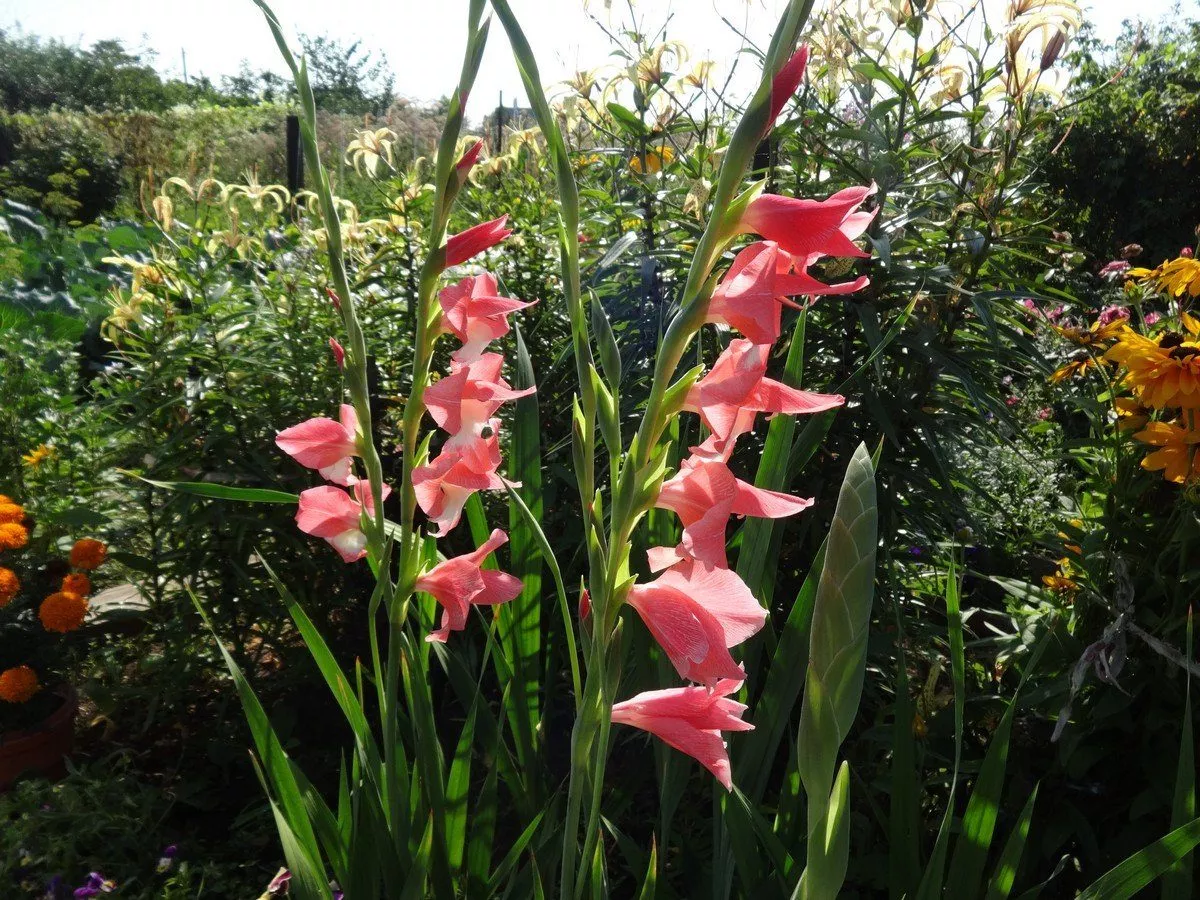
We always had gladioli growing in our garden, but for some reason they were all the same color, pale pink and somehow unattractive. Every fall, my mother dug up the bulbs and stored them in a shoebox, then peeled them in the spring and planted them in the flower bed. I didn't like these flowers.
I'd never grown gladioli myself, and I didn't even pay attention to them until one spring, when my dacha neighbor, Vera—may she rest in peace—offered me a few sprouted bulbs. I refused, but she persuaded me to plant them, assuring me they were very beautiful.
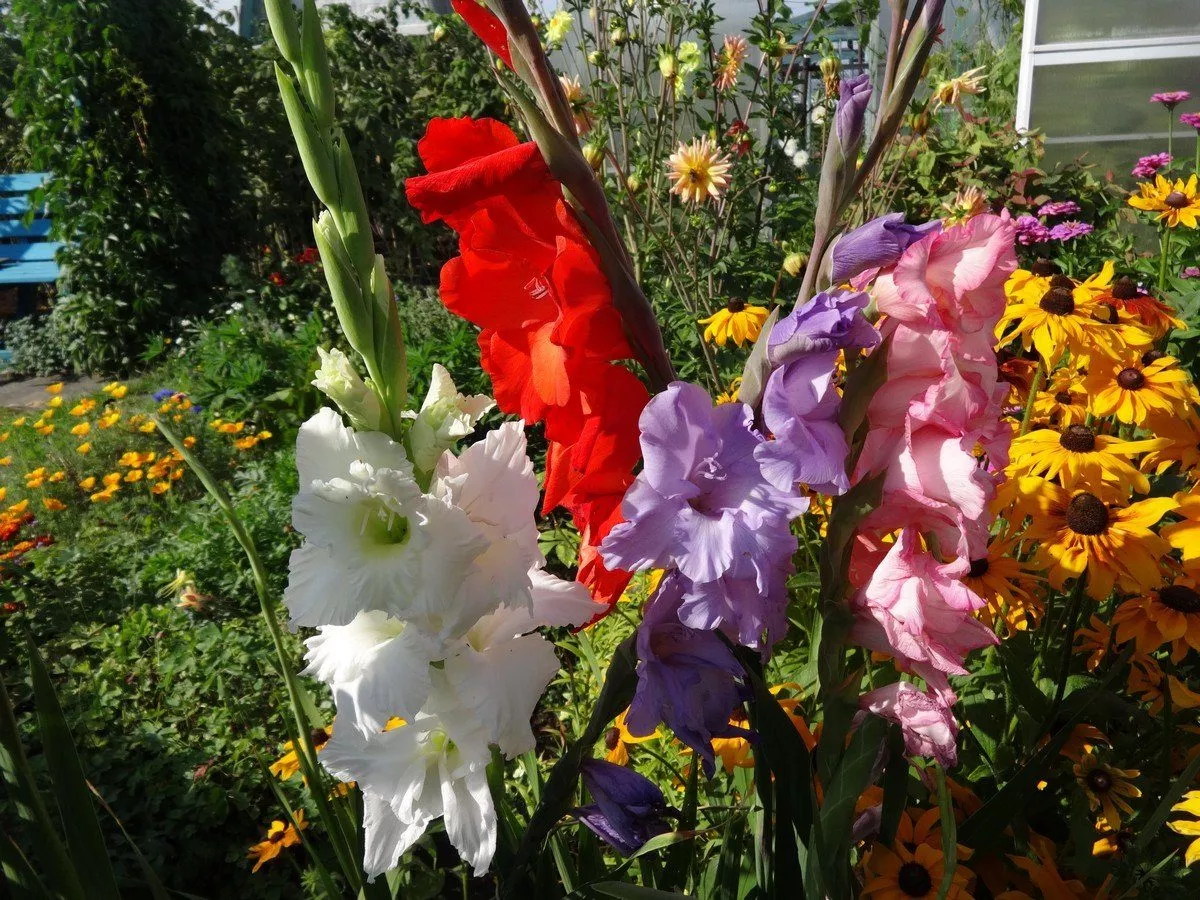
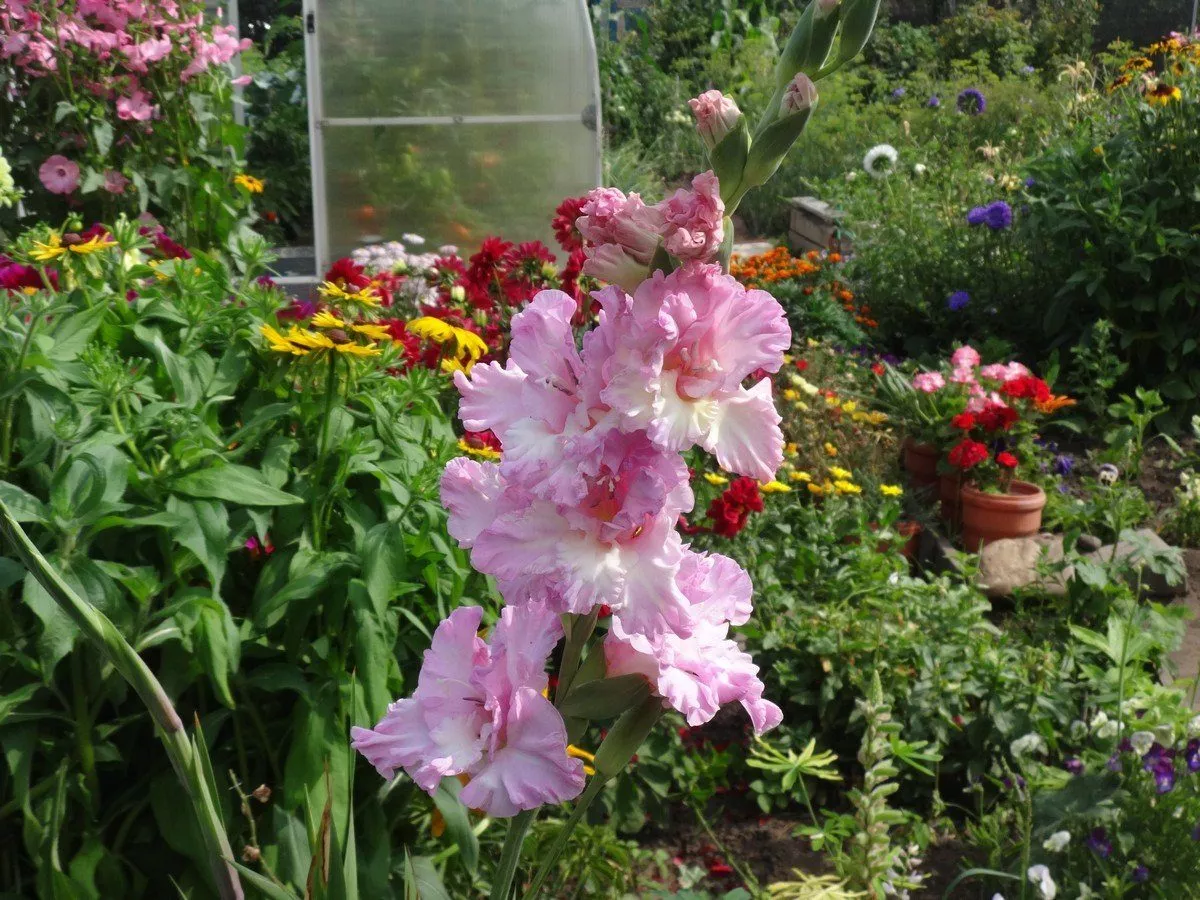
I planted them at the edge of the flowerbed. Soon they sprouted their long leaves and flower stalks—swords. By the way, gladioli are also called gladiatorAnd then red, pink, white, and white-greenish flowers bloomed, incredibly beautiful. Here's what a beautiful bouquet it was:
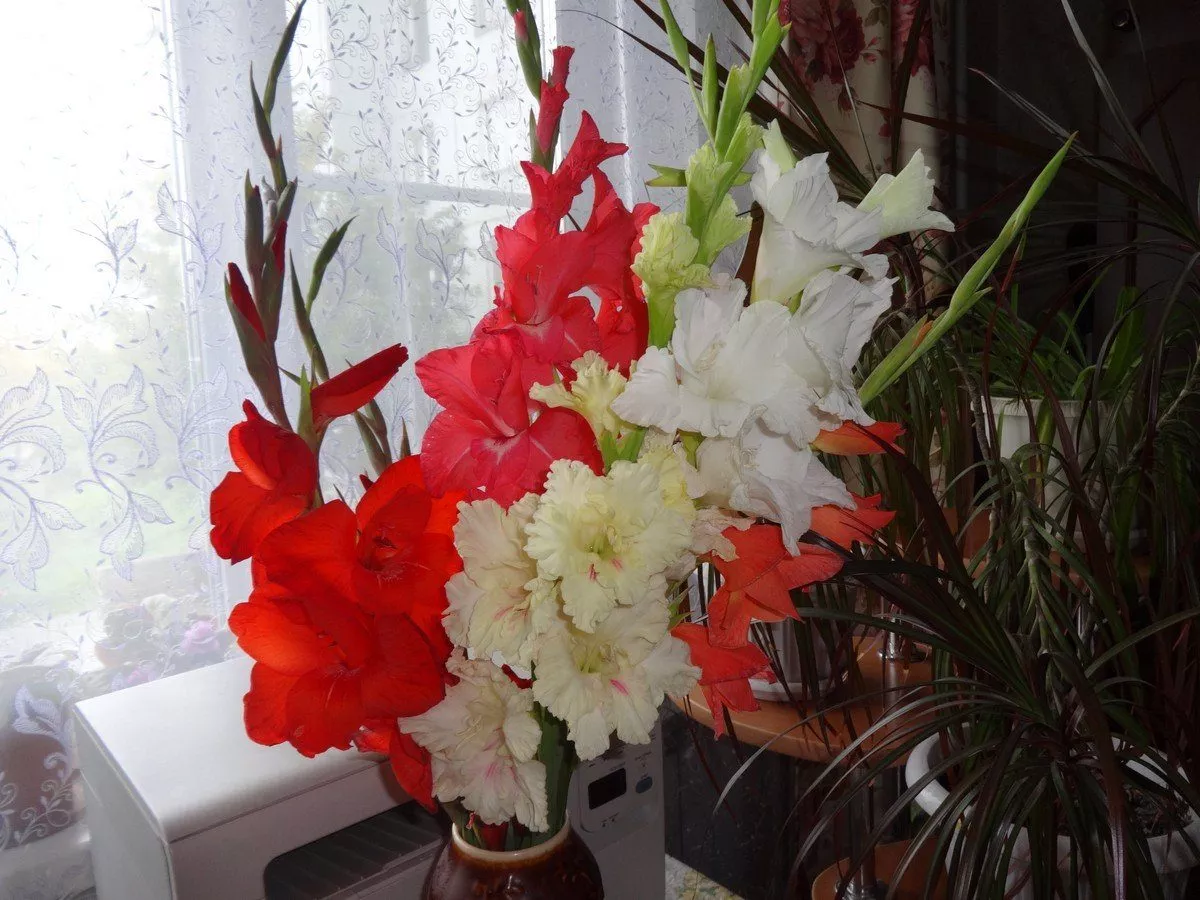
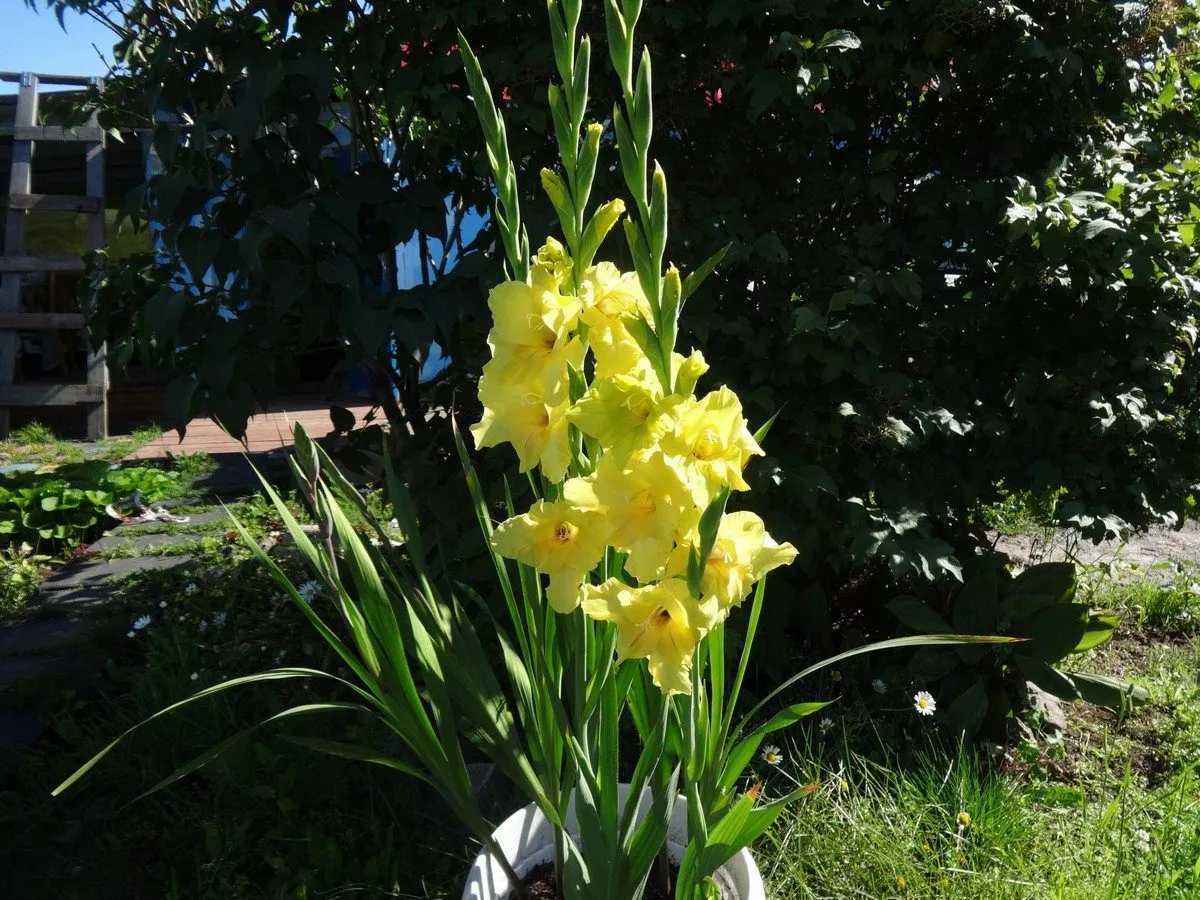
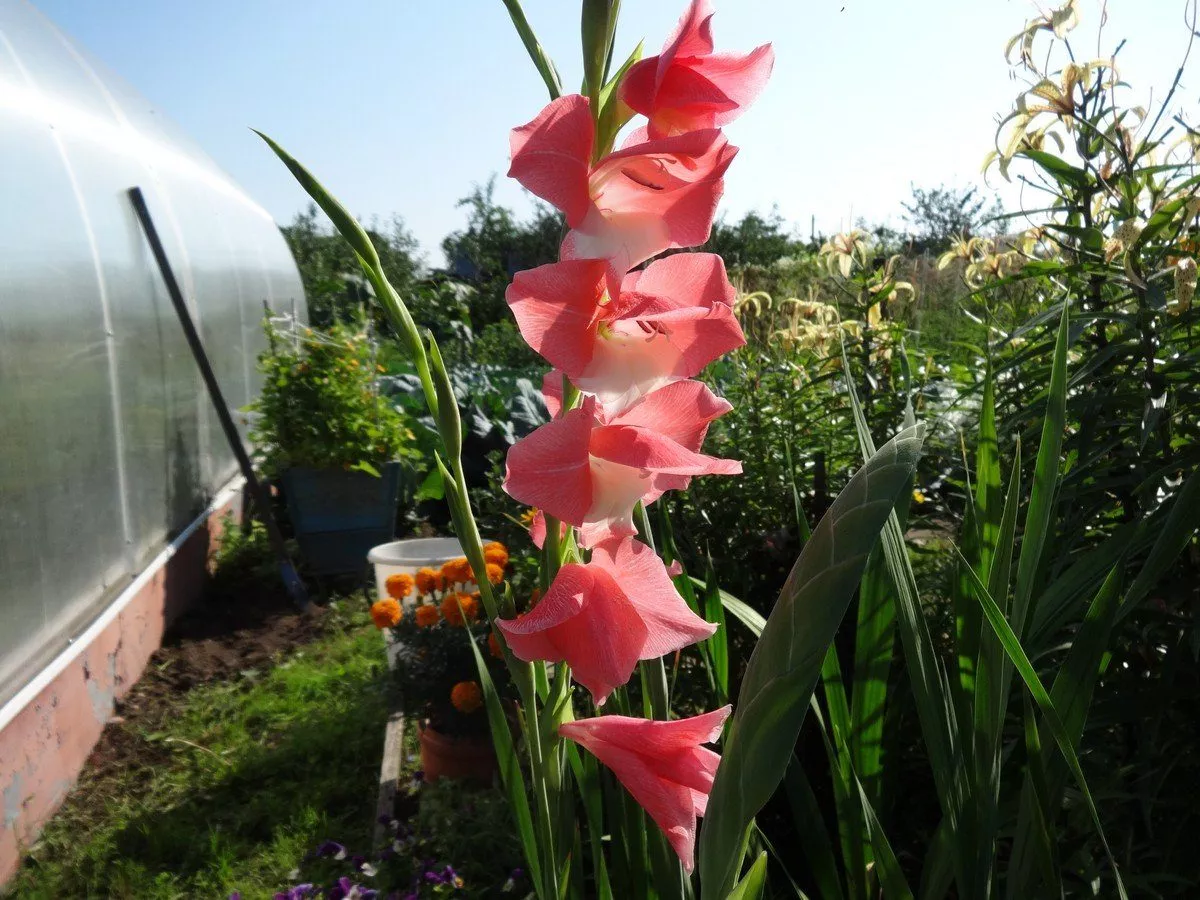
And ever since, gladioli have been growing at my dacha. I have pink, red, lilac, purple, burgundy, white, and yellow ones. They begin blooming in August and continue until frost.
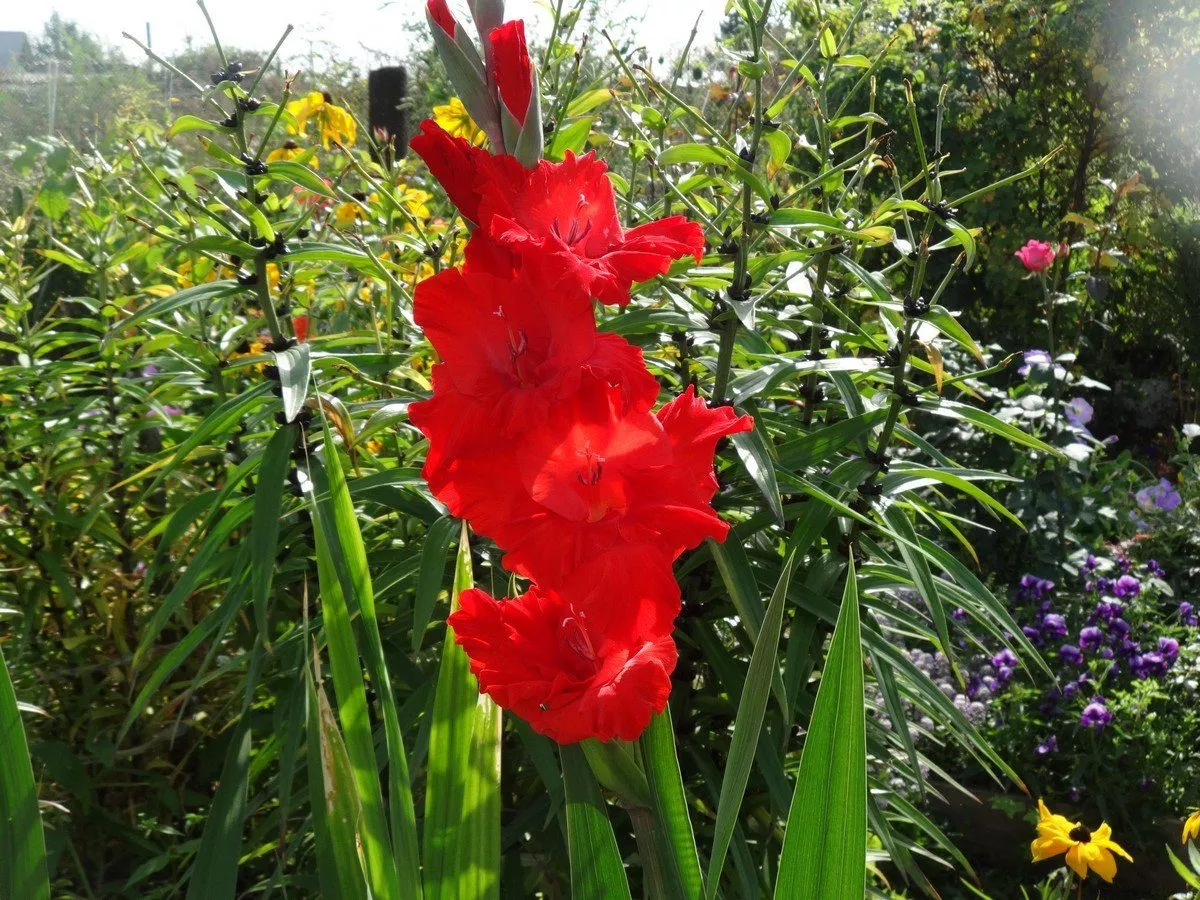
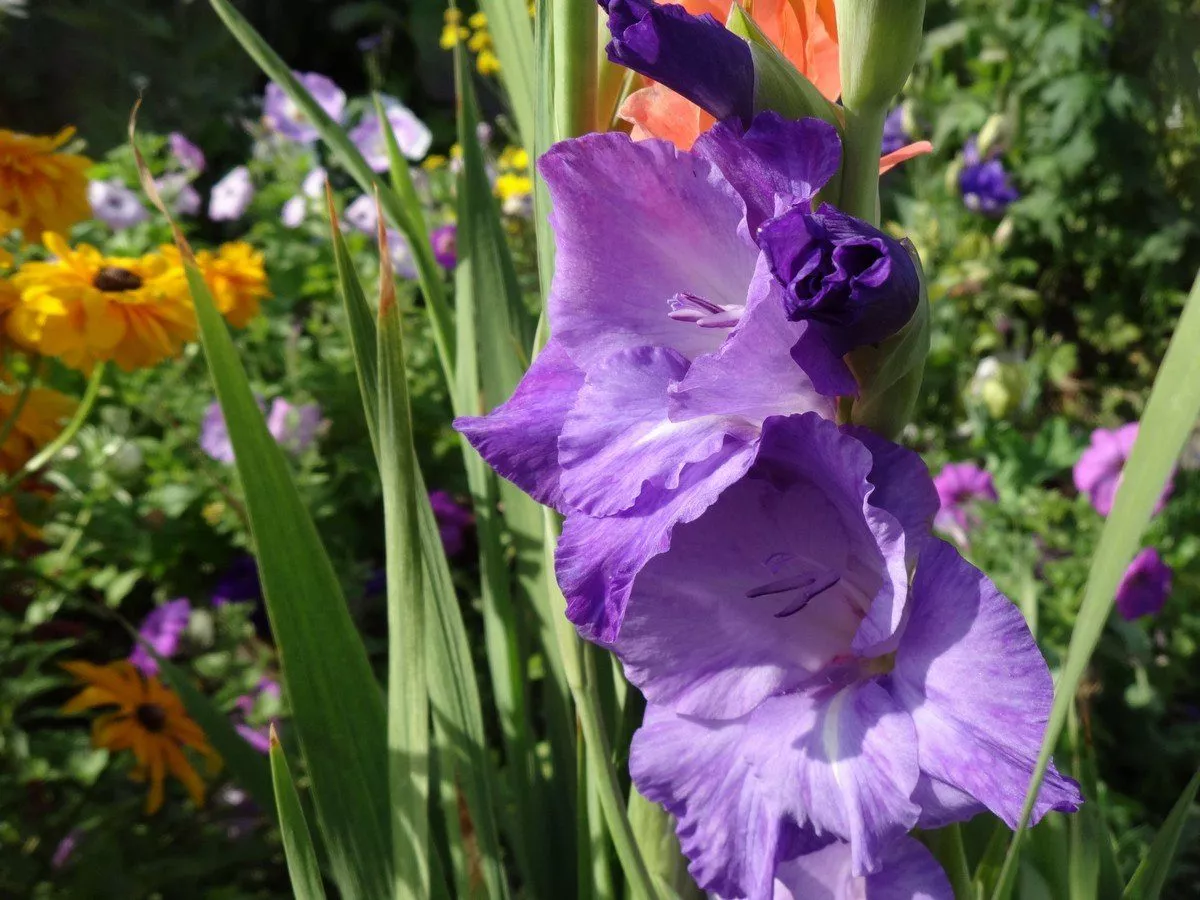
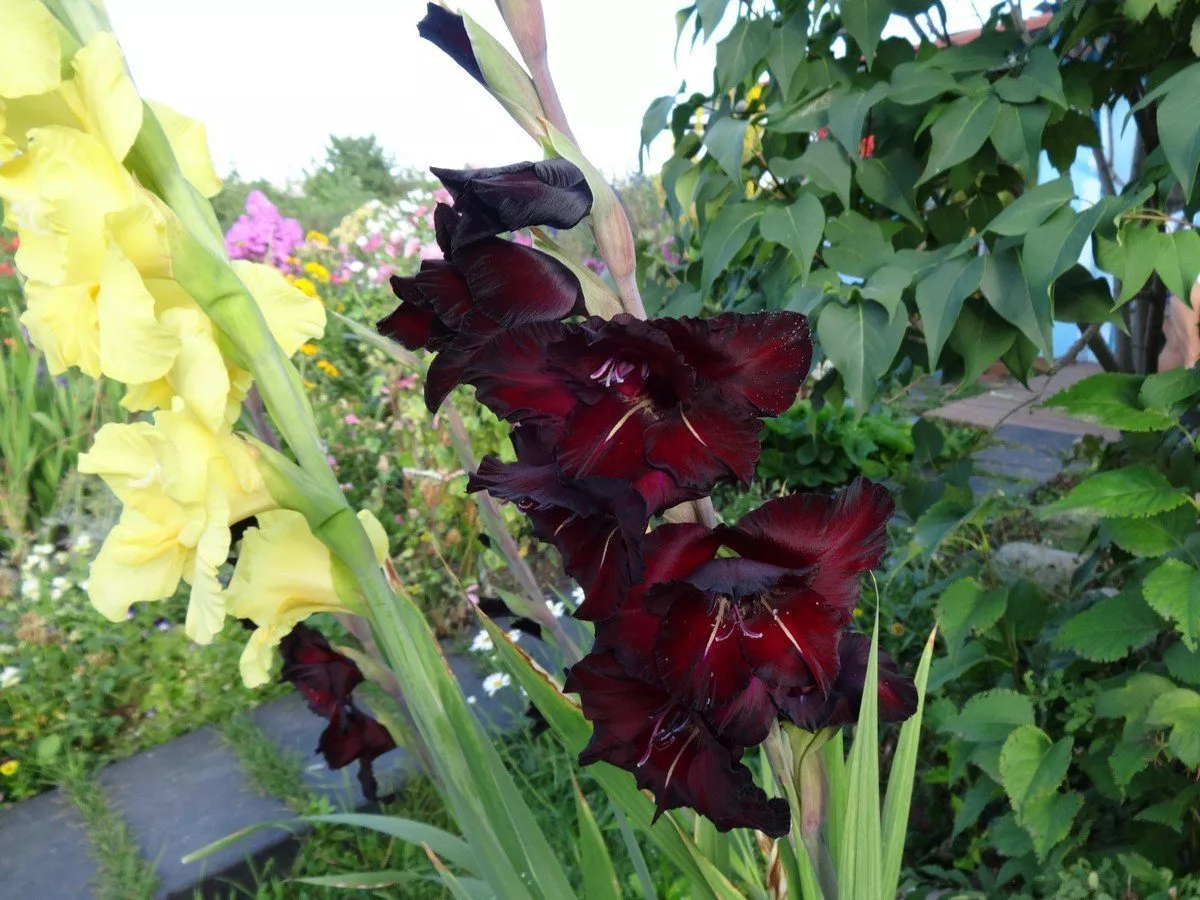
Then I dig them up, cut the stems, shaking off the soil, separate the babies, wash them, treat them for pests, dry them and store them in boxes, for some time in the apartment in a closet, then put them on the bottom shelf of the refrigerator so that the bulbs do not dry out.
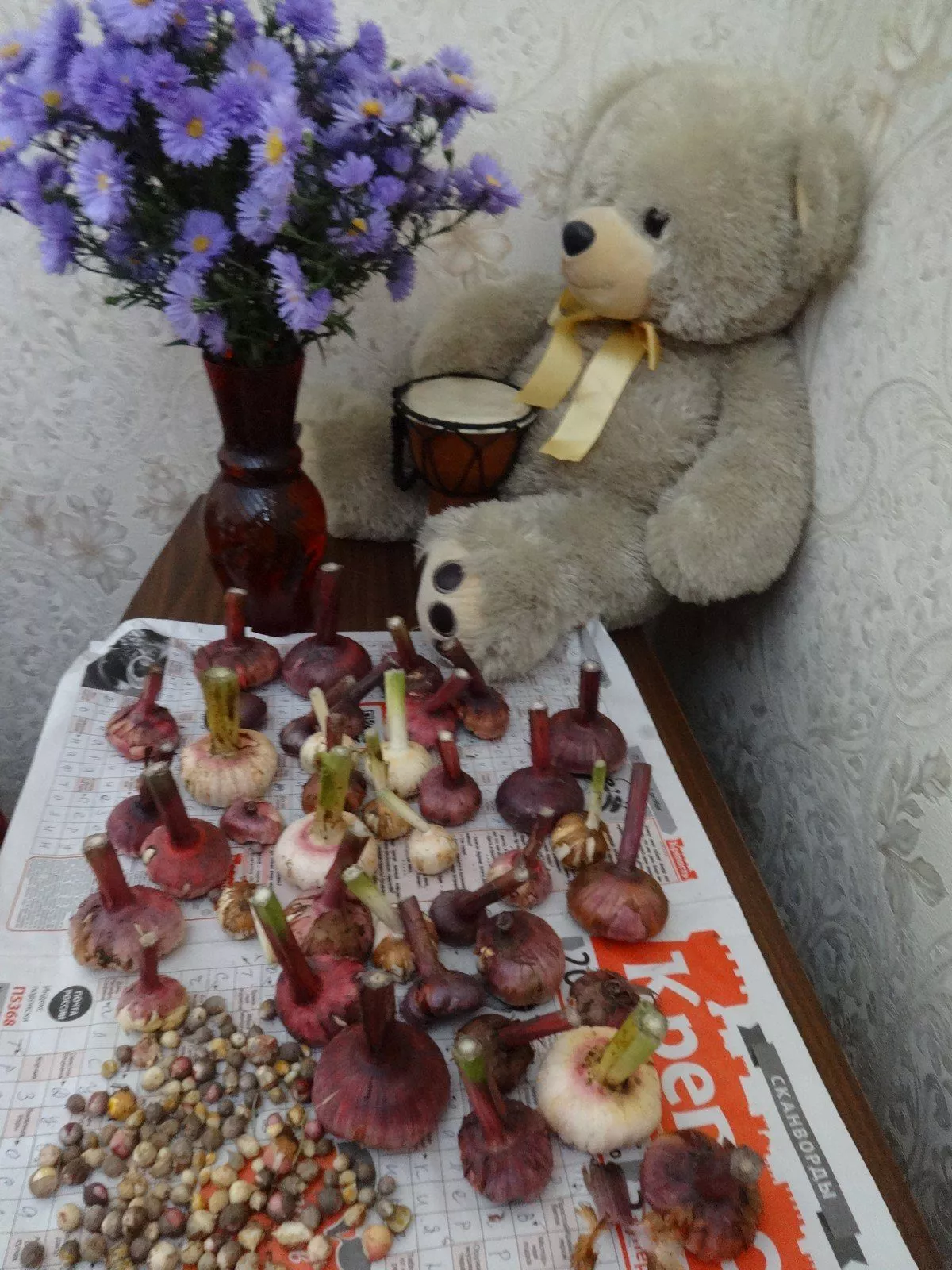
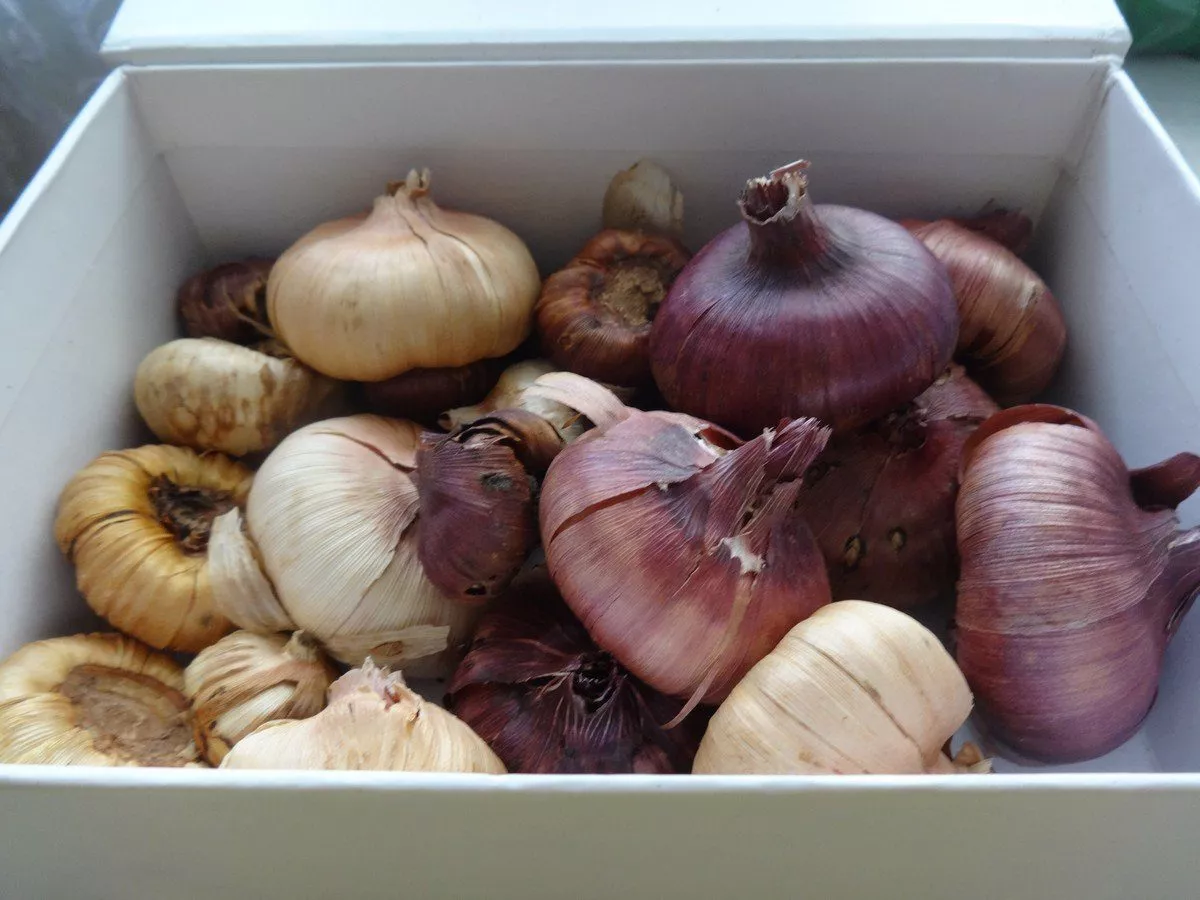
In April, I take them out of the refrigerator, peel them, and if there are any damaged areas, carefully scrape them off with a knife and treat them with brilliant green. I place them in a bright, warm place to germinate.
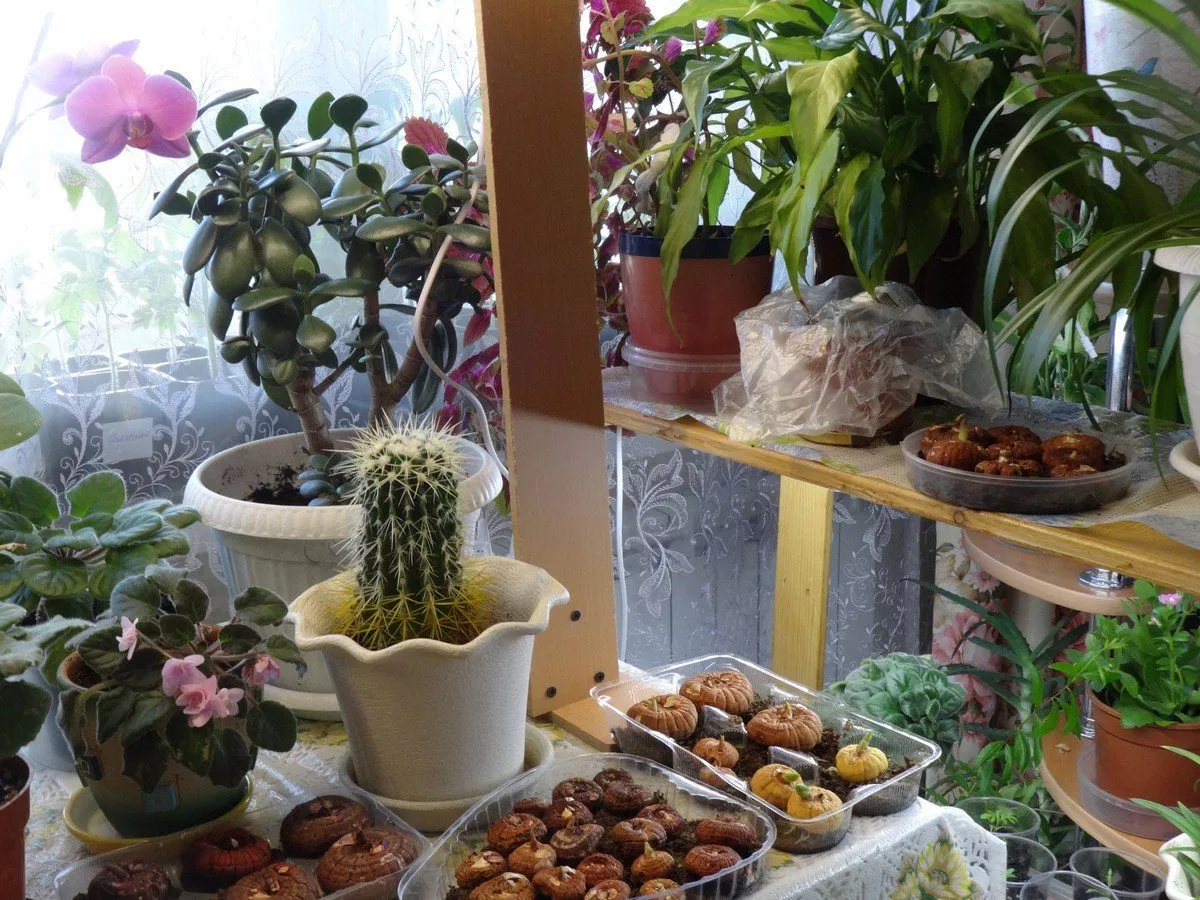
In mid-May, I plant them in open ground, after immersing the bulbs in a pink solution of potassium permanganate for about 30 minutes. This is done to prevent fungal diseases and pests.
Wireworms sometimes damage the bulbs as a pest. I've never seen any other pests. I haven't encountered any diseases either; I've read that gladioli often suffer from fusarium wilt.
I cover it with plastic film or covering material to let the soil warm up. It can still get cold at night here in mid-May.
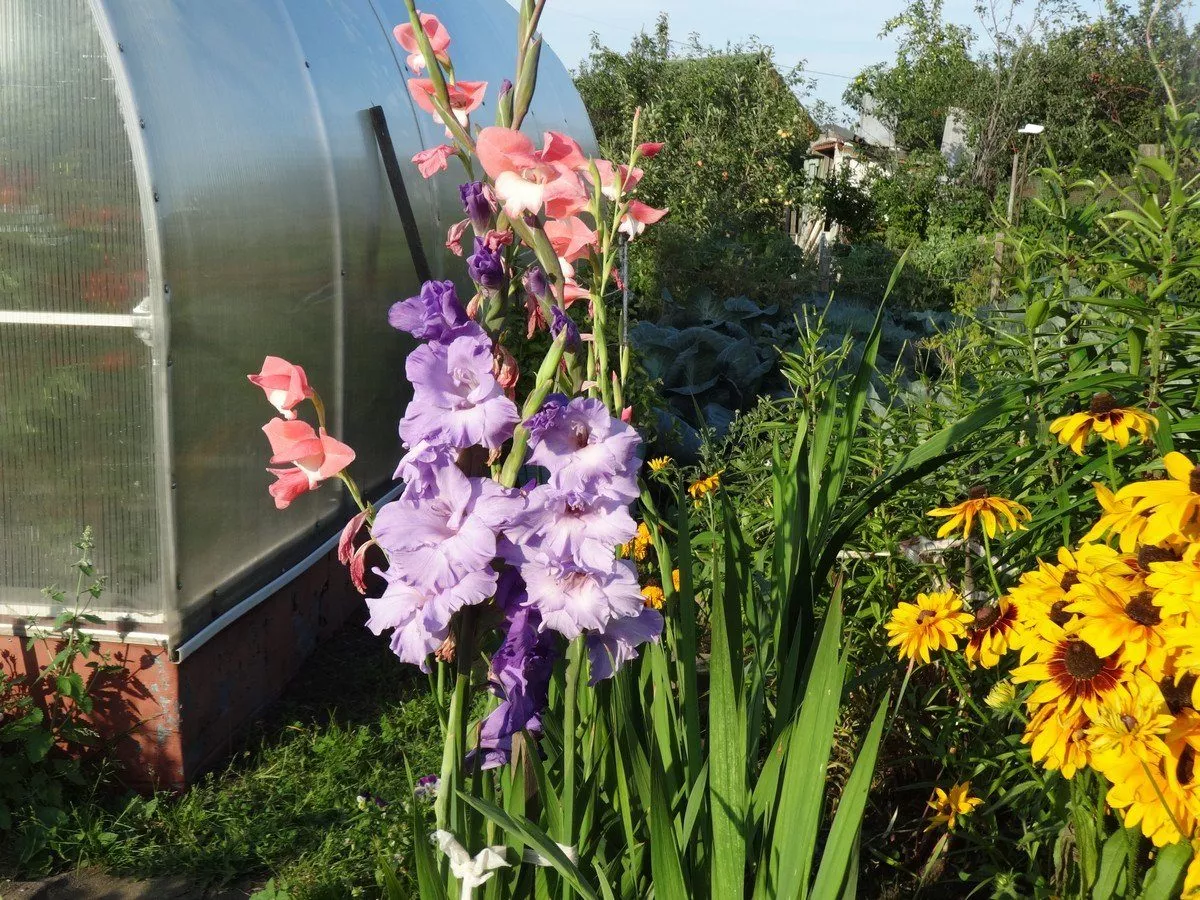
Every year I try to plant them in a new spot, making sure they get plenty of sun so they bloom brightly. I dig the gladioli plot and add dolomite flour, which deacidifies the soil; flowers don't grow well in acidic soil. If the spot isn't fertilized, I fertilize it with humus and complex mineral fertilizers, sprinkle sand on the bottom of the hole, and water it with a phytosporin solution.
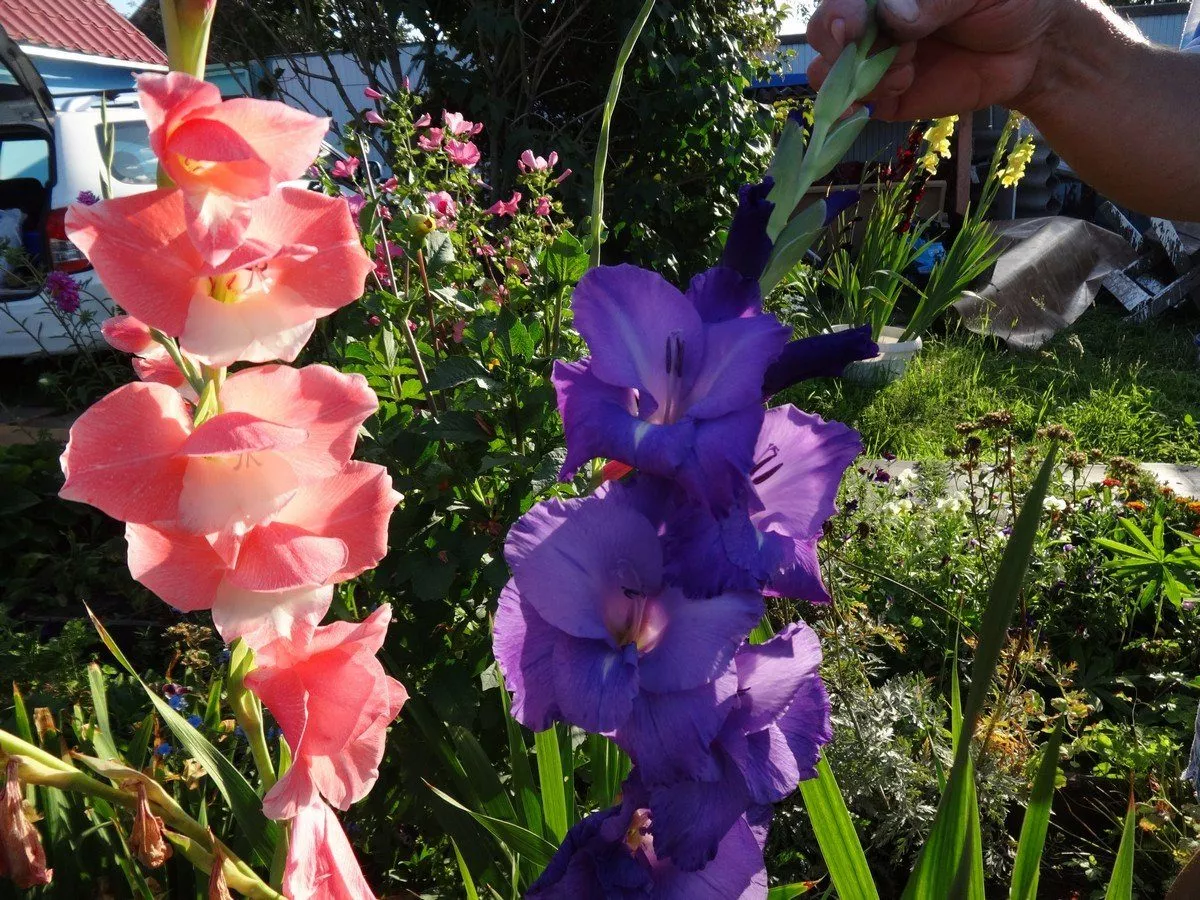
If there are baby bulbs, I plant them separately in a pot so the bulbs can grow. I grow some flowers in a large pot, planting the bulbs in early May and keeping them in a greenhouse. They germinate faster and start blooming earlier.
Throughout the summer, I water, fertilize, loosen the soil, hill up the soil, mulch with compost, and remove weeds. I always tie my gladioli to stakes to prevent the wind from breaking off the blossoms. It's always windy at our dacha in the summer.
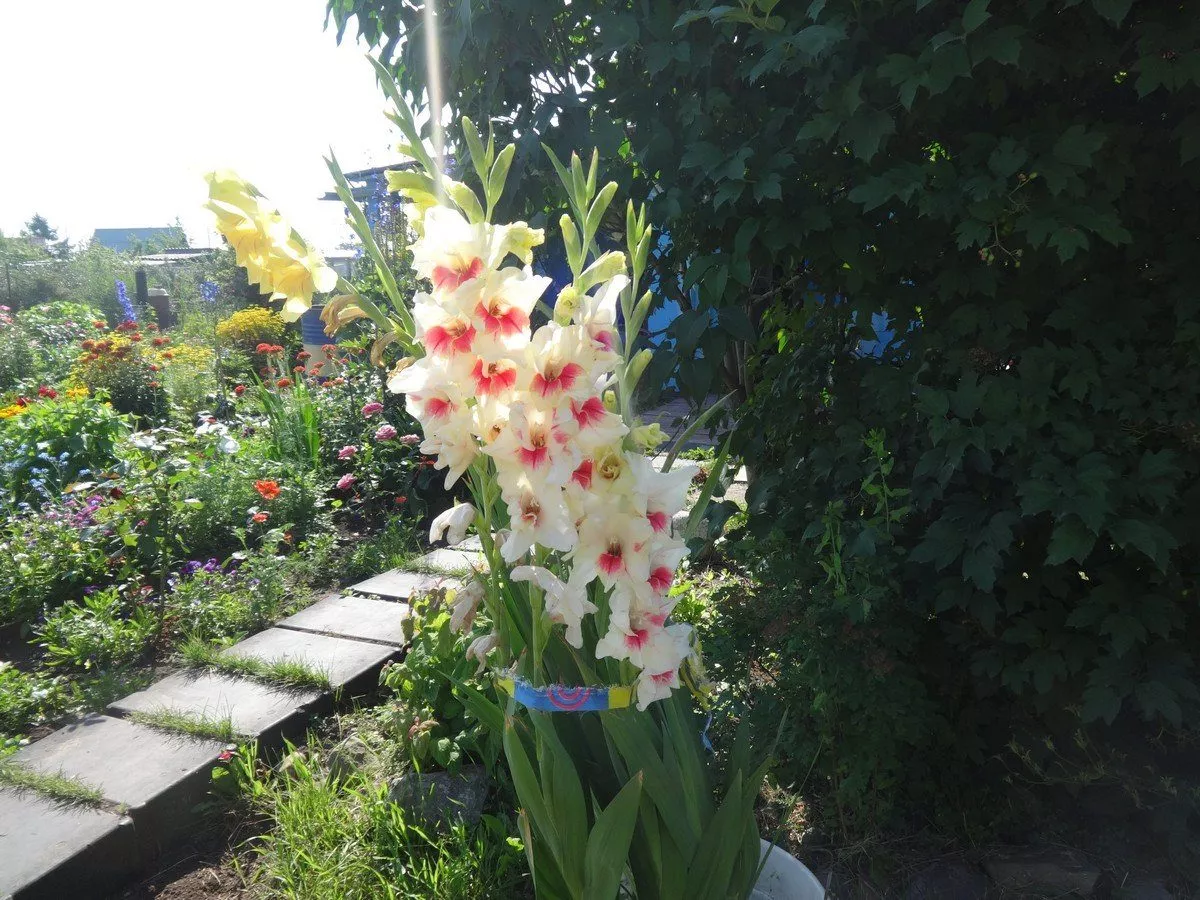
There's a huge selection of gladioli in stores right now—gladioli in all sorts of vibrant colors: single- and two-color, large-flowered, double, with wavy petals—it's simply overwhelming. I couldn't resist buying three more packages of gladioli.
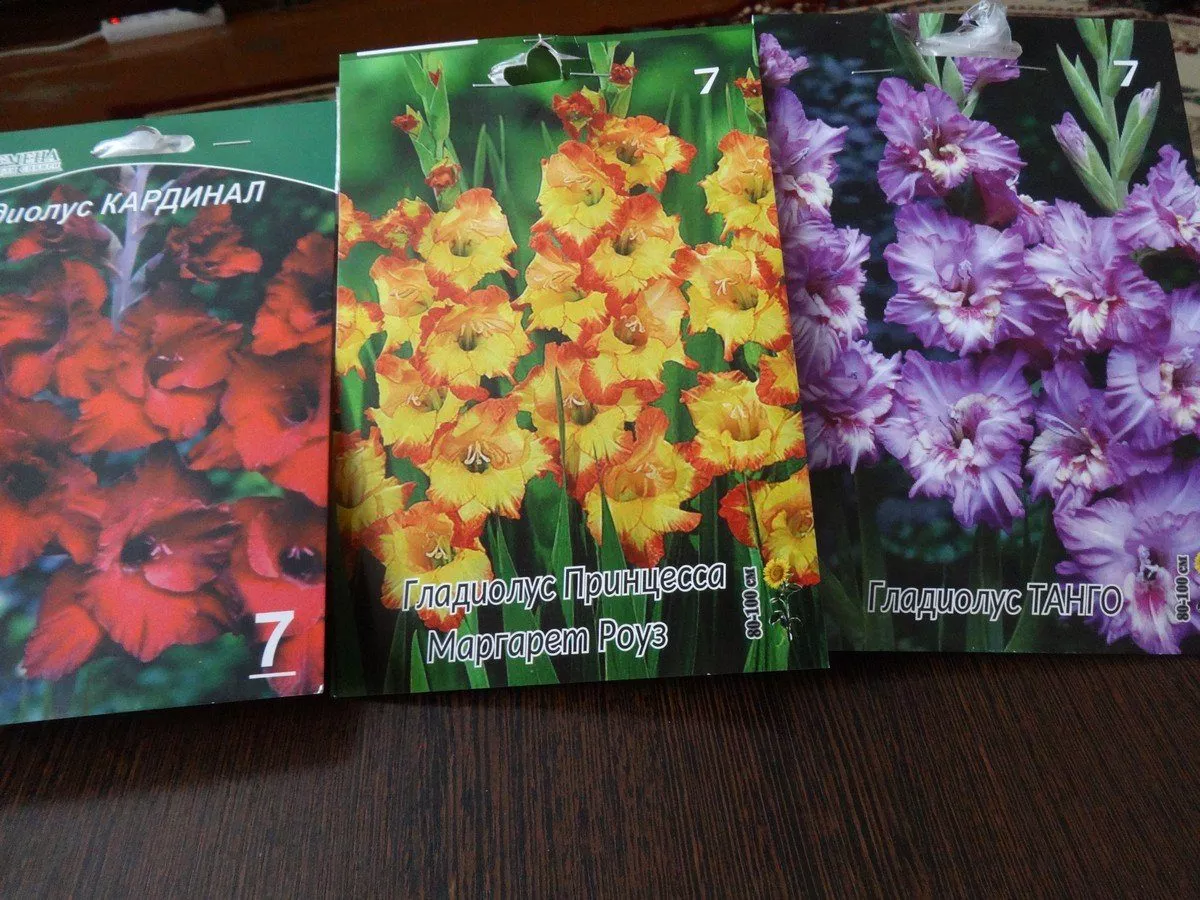
I'll plant them in a large pot. I can already imagine how beautifully they'll bloom.
Do you grow gladioli?