
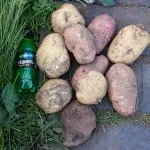
This year (2020) has messed up all our harvest plans: the cabbage was eaten by caterpillars, the cucumbers weren't that great, and although there were a lot of potatoes, they were attacked by butterflies... And now the watermelons are in the same boat!
We planted watermelons on a large 2-hectare plot. Since we were already predicting a dry summer in the spring, we purchased hoses and a pump and installed a drip irrigation system. We fertilized the crop twice during the growing season: first for growth, and then to promote the formation of sweet fruit. We hired people to weed and till the soil. Overall, we worked hard to ensure the watermelons grew healthy and delicious.
The first harvest began in mid-July. They picked the berries and rejoiced—they were plump and sweet! They rubbed their hands in anticipation of selling them at the wholesale market or to resellers straight from the fields. They waited for the watermelons to ripen en masse, and in the meantime, they treated family and friends.
How happy our children were!
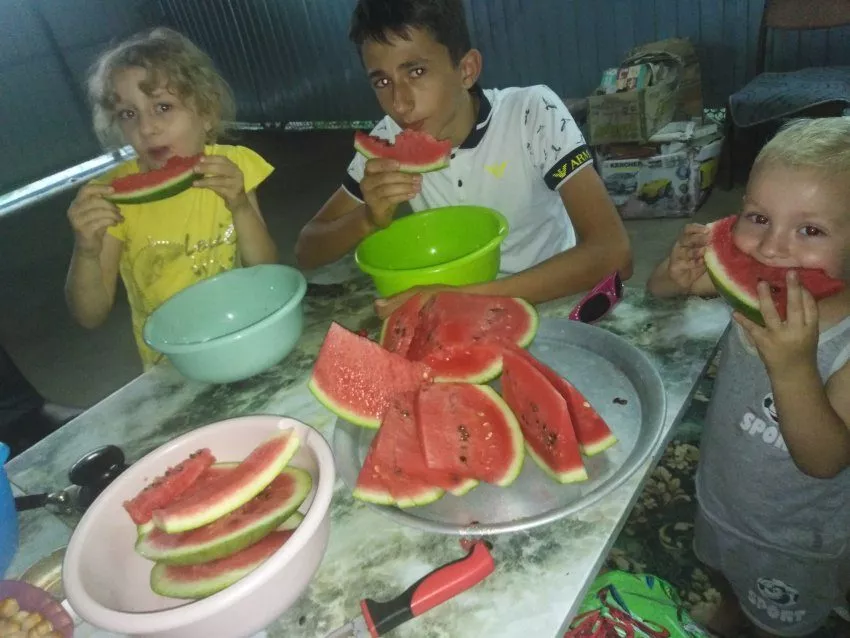
Dirty, but happy
But during the most crucial period, the height of the drought, our irrigation pump broke. Ensuring water supply to the crops in the field was simply impossible without it. Our watermelons began to wilt quickly. It took eight days to repair the pump, but by that time the crop had suffered irreparable damage. We've adjusted the irrigation system, but the time has already been lost.
Of the three varieties of watermelon grown, only one was allowed for sale. The others were wilted inside, fermented by the hot sun.
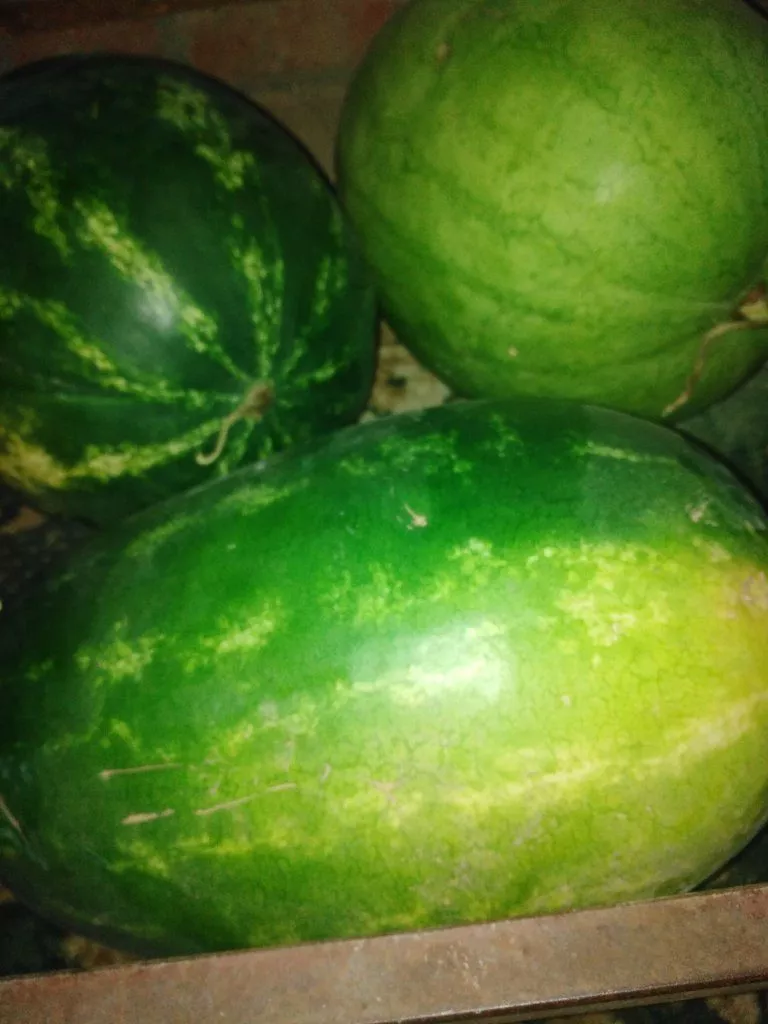
Three types of watermelons
Of course, if we were speculators, we could have sold the entire harvest to a buyer! But why invite negativity? The remaining watermelons were left to feed the cattle and fill the compost bin.
After the watermelon is eaten, if it's very tasty, collect the seeds from the tray and dry them. They will then be used for seeds. Of course, the harvest will be somewhat less in quality, but it's perfectly fine for personal use.
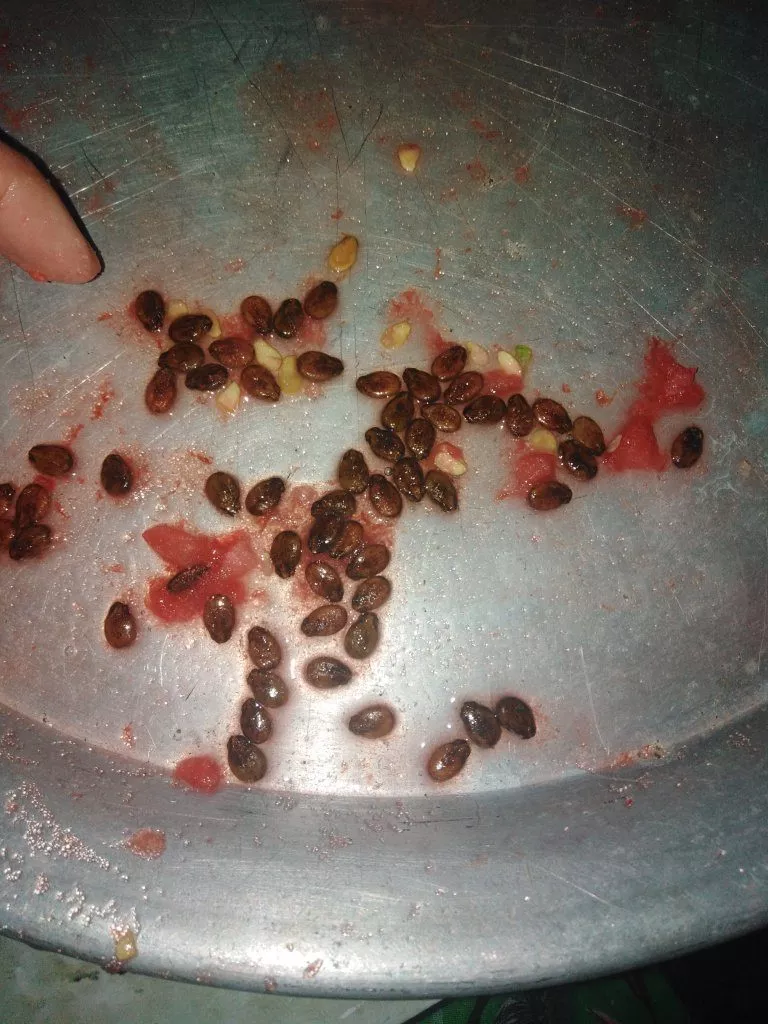
We don't throw away seeds from the best specimens.
We feed the rinds to cows, goats, nutria, and rabbits. We break up the wilted watermelons to feed the birds.
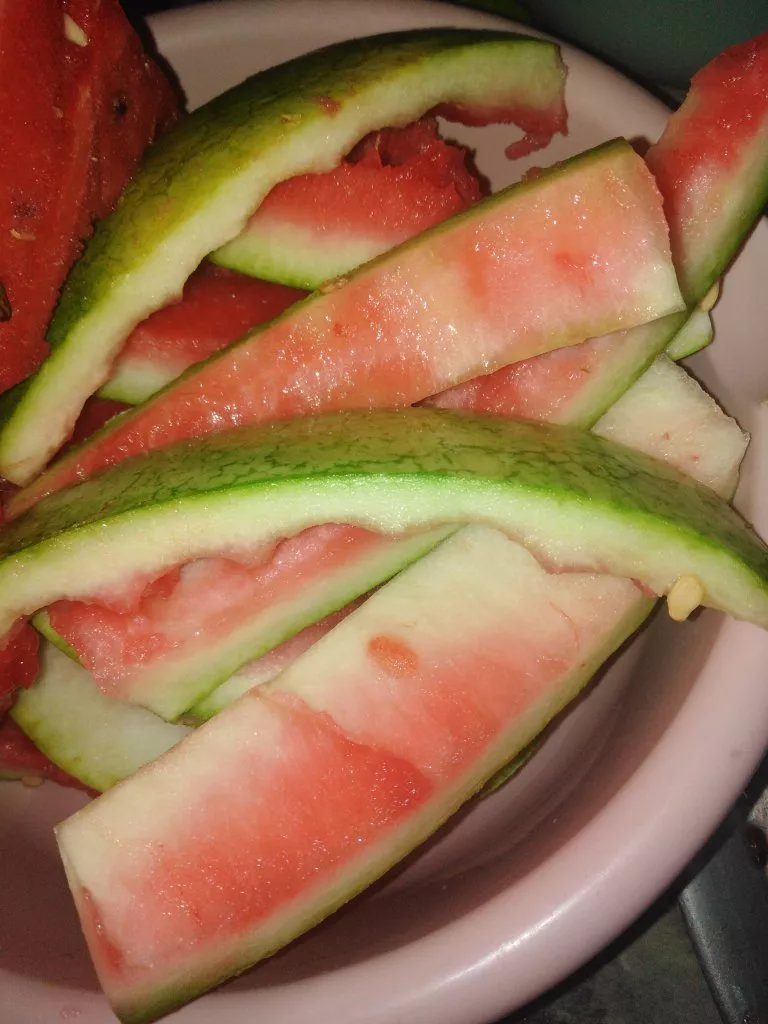
The cows will be happy!
Some of the watermelons go into compost. We pile them in a layer in a hole, crush them with a spade, and cover with a layer of soil. Watermelons release moisture and rot quickly, making them a valuable component of future fertilizer.
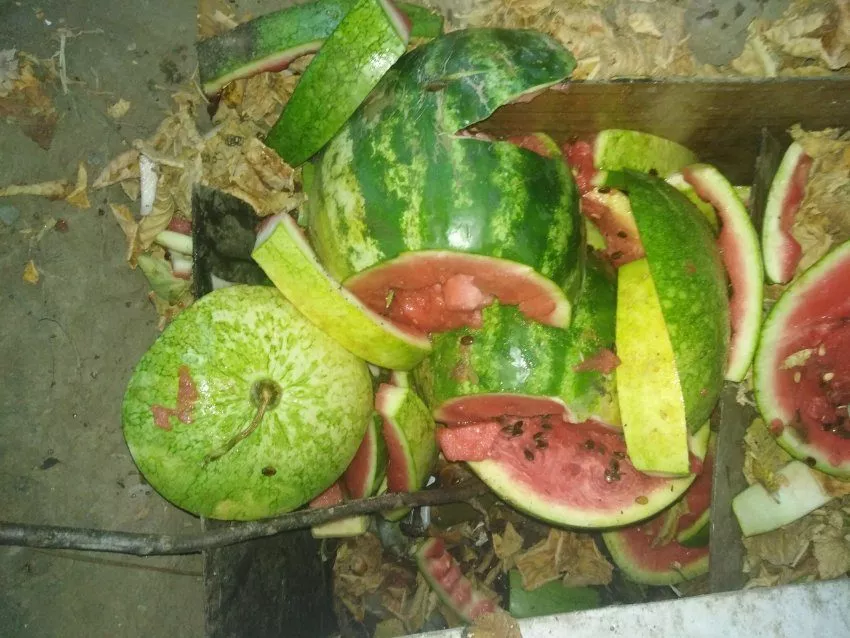
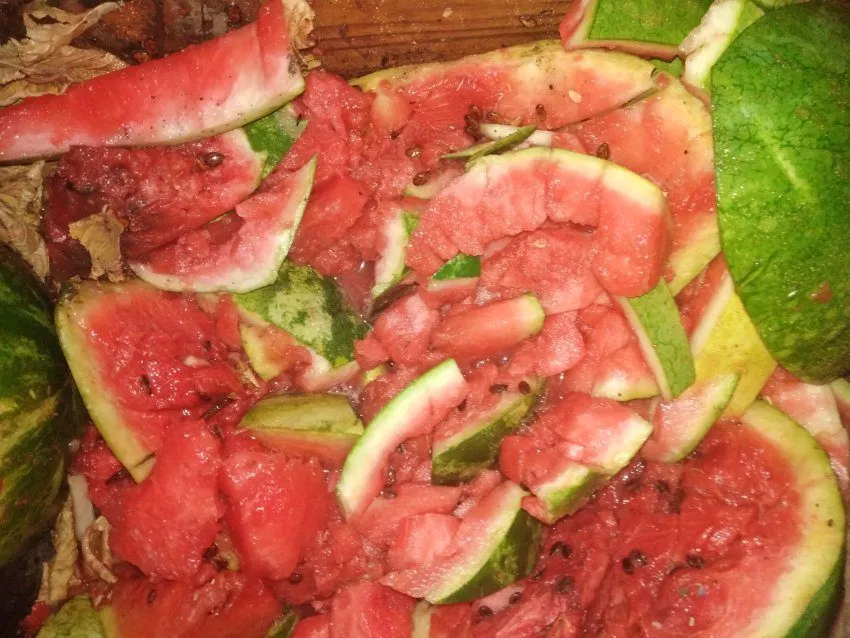
That's how we survive in the village: if we can't sell it, we leave it for the cattle. There's always some profit in everything, at least a little. The pumpkin didn't grow, so now there's a ton of watermelons!