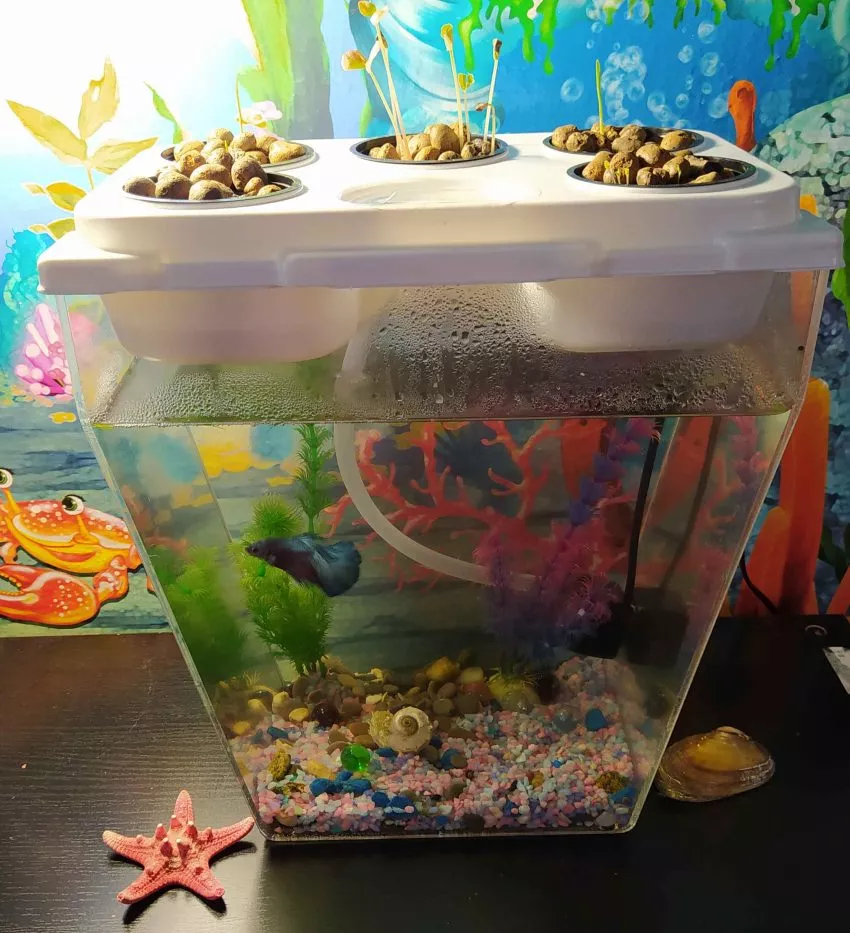
Today I'll tell you about an interesting and unusual aquarium – an aquafarm – that Father Frost gave my daughter for New Year's.
This aquarium is based on hydroponics. The lower part, the aquarium bowl, is home to fish, while the upper part, with its special tray and pots filled with expanded clay, is sown with plants.
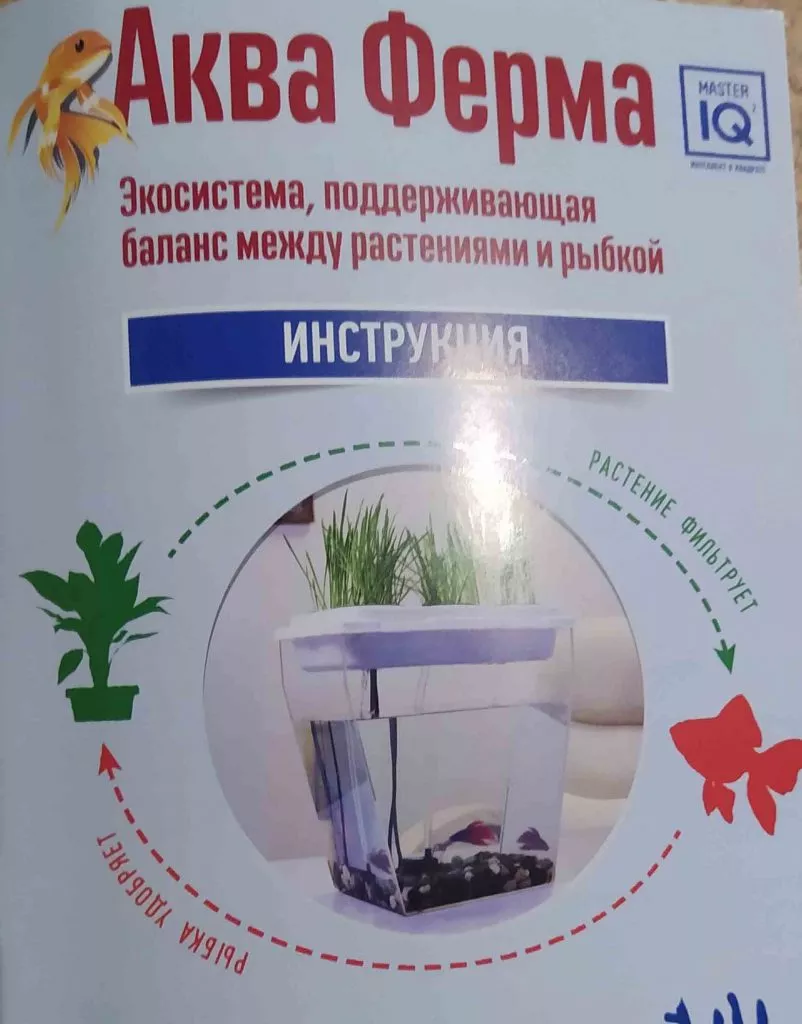
Theoretically, with constant water circulation, fish waste and uneaten food fall into the top tray and are absorbed by the plant roots as fertilizer. The plants, in turn, purify the aquarium water for the fish.
Here are the instruction pages:
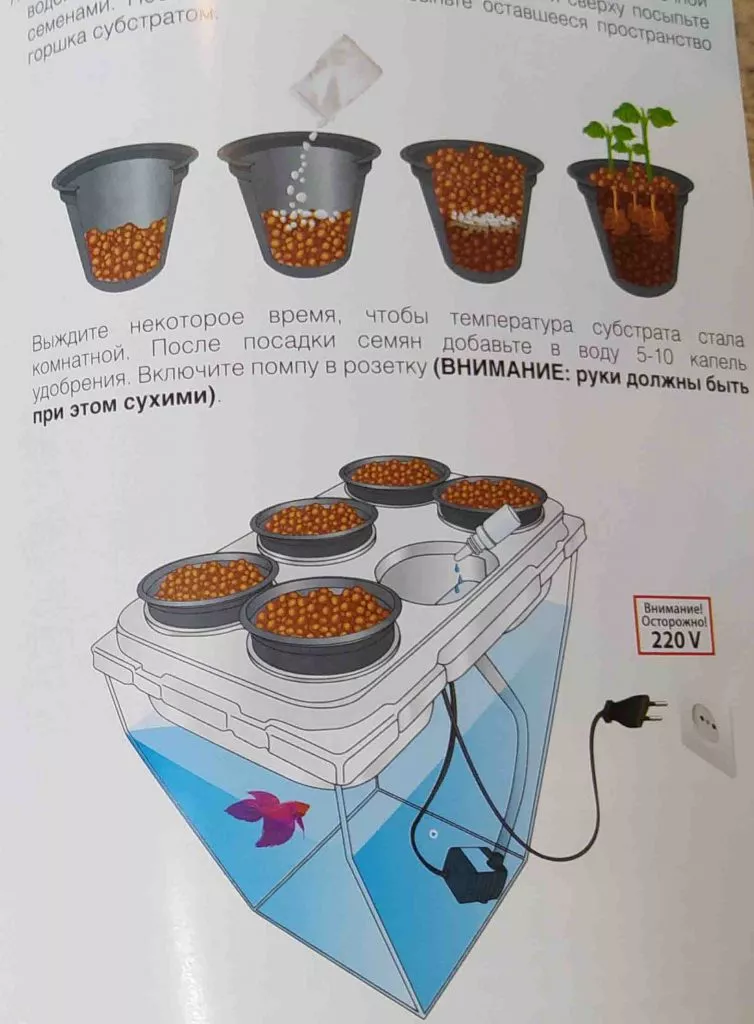
I can't comment on the quality of this cleaning yet, as testing requires more time. But the aquarium itself is a good resource for introducing a child to the basics of hydroponics, while also giving them the opportunity to grow their own pet fish and a mini-garden. It's both educational and useful.
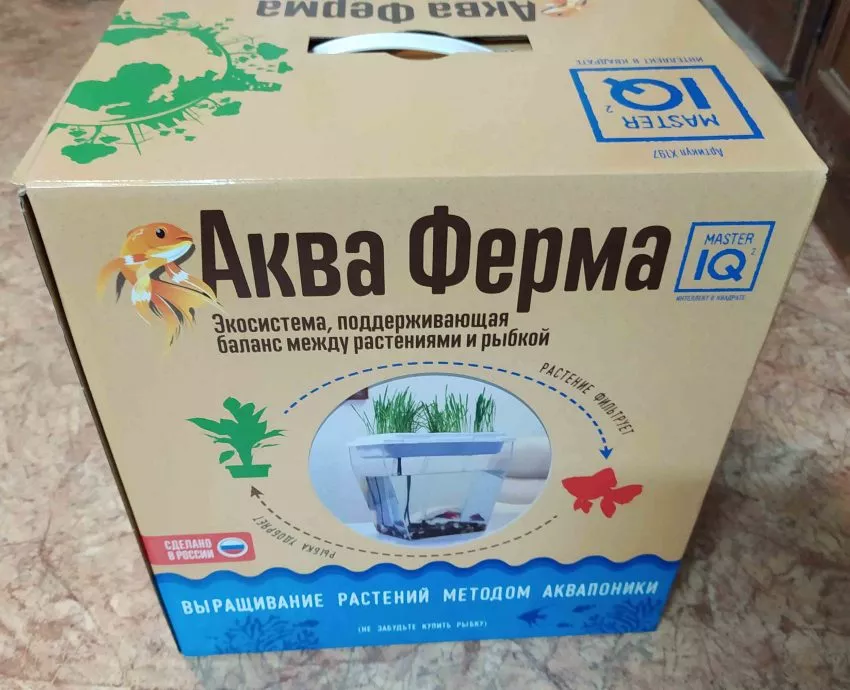
Now let me tell you more about this wonderful aquarium. It comes packaged in a thick cardboard box like this.
The cup itself isn't glass, but plastic, or perhaps plexiglass. Here's a photo with the mug, to give you an idea of the size.
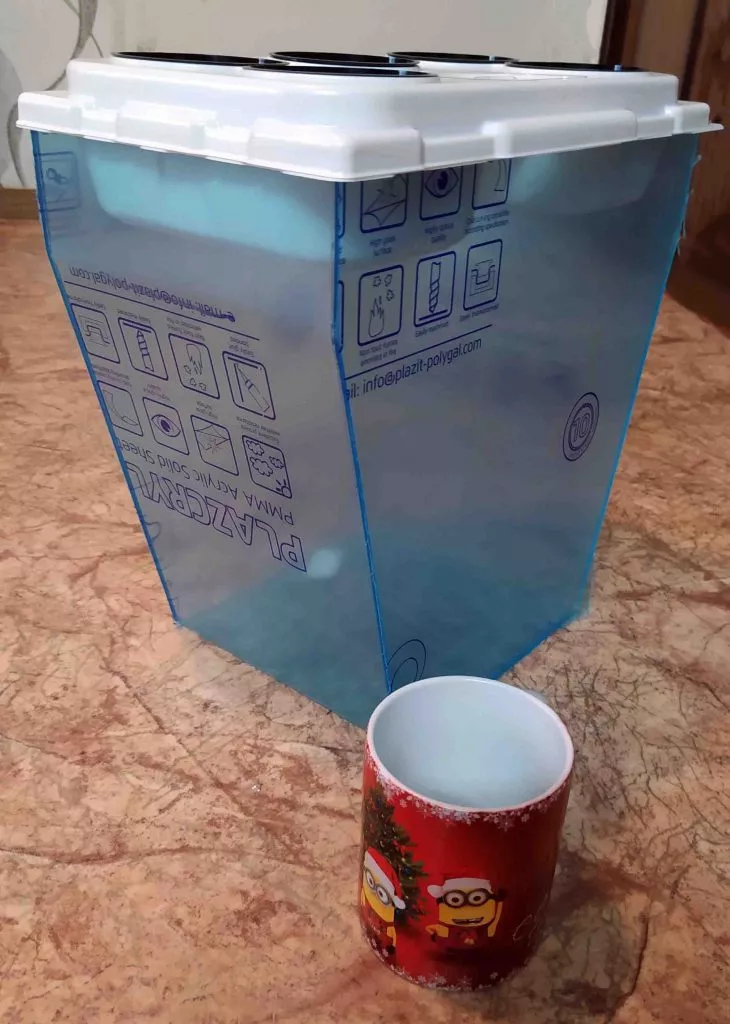
The approximate volume is 10 liters, but water is poured up to the level of the bowl bend, that is, in fact, it will probably turn out to be 8 liters.
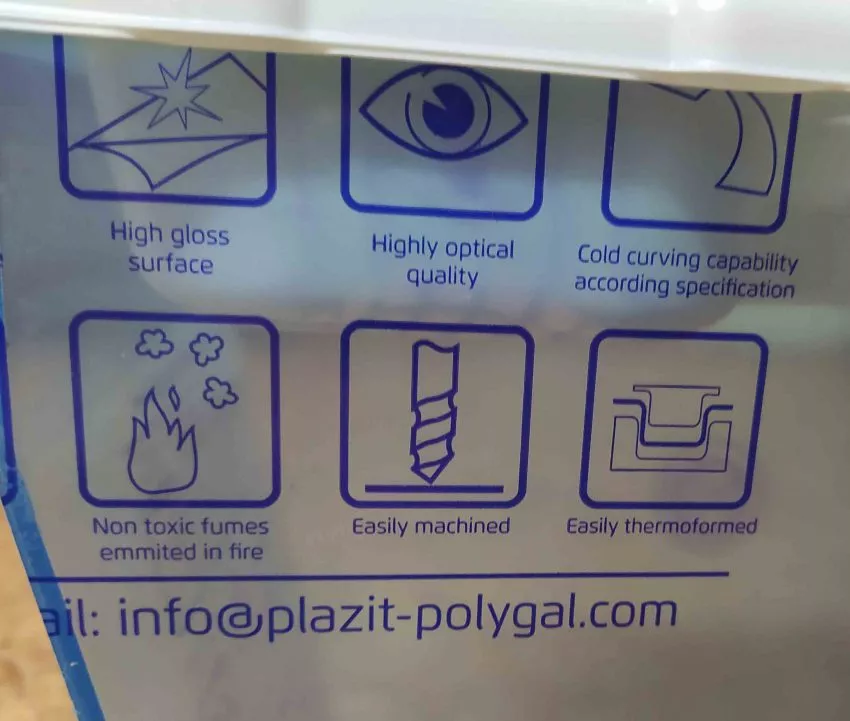
The outside is covered with a thin blue film with the following icons:
While there are some imperfections, it's clear the manufacturers took a responsible approach to assembling the components. All parts and components are packaged in individual bags and boxes, which are then placed in a cardboard box shaped like the aquarium bowl itself.
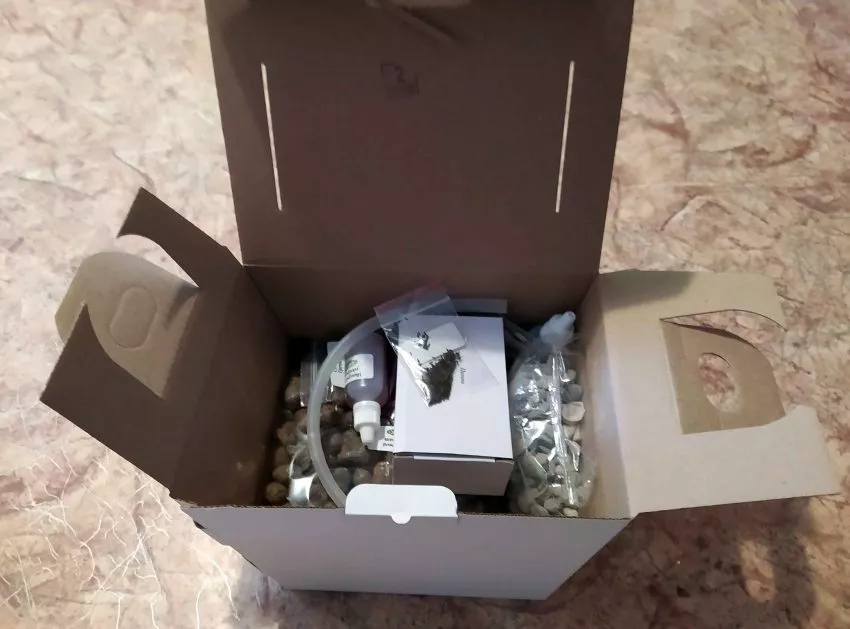
Everything is well thought out. Everything has labels and a detailed instruction booklet.
Here's a photo of what's included. I've removed the company name from the labels because it might look like advertising. I want to show the aquarium itself, and I've seen several companies that make these types of aquariums:
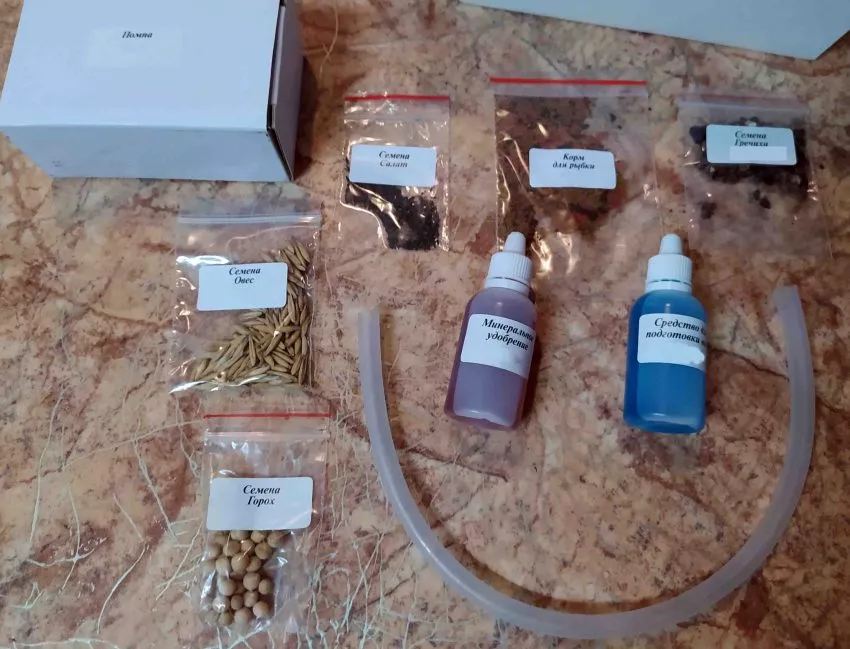
Everything is in accordance with the instructions:
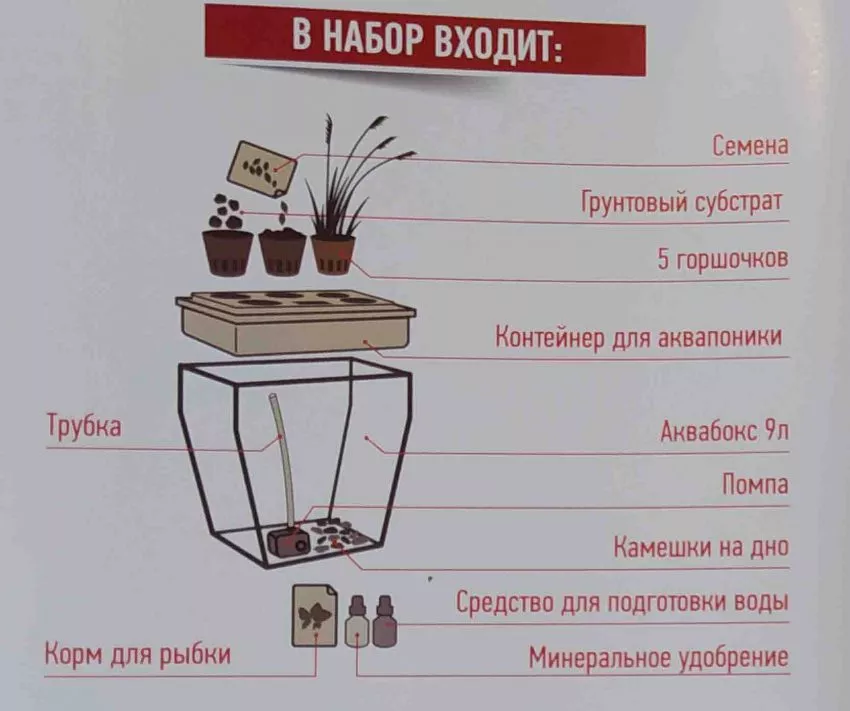
The set included four types of seeds (peas, lettuce, oats, and buckwheat), a bottle for preparing aquarium water, a bottle of plant fertilizer, expanded clay, pebbles, a bag of fish food, and an air pump. Silicone feet were also included separately, as stickers for the bottom of the aquarium.
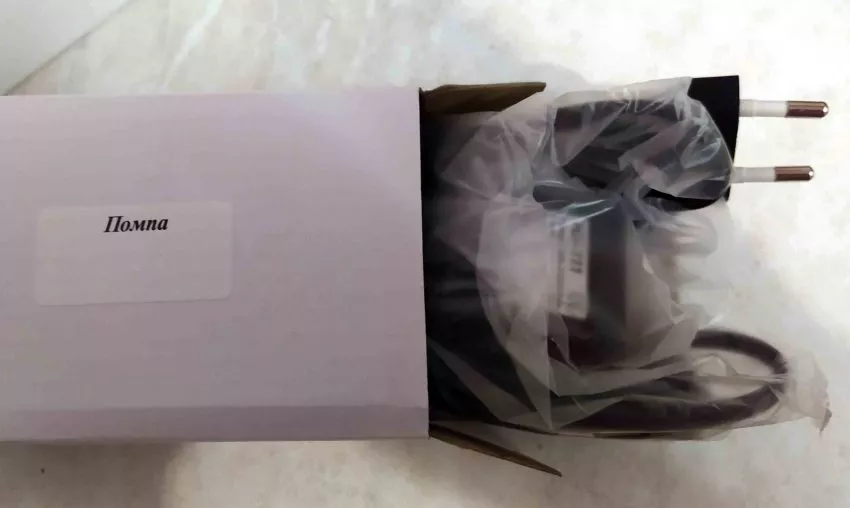
The pump is packed in an additional bag, it is quite small.
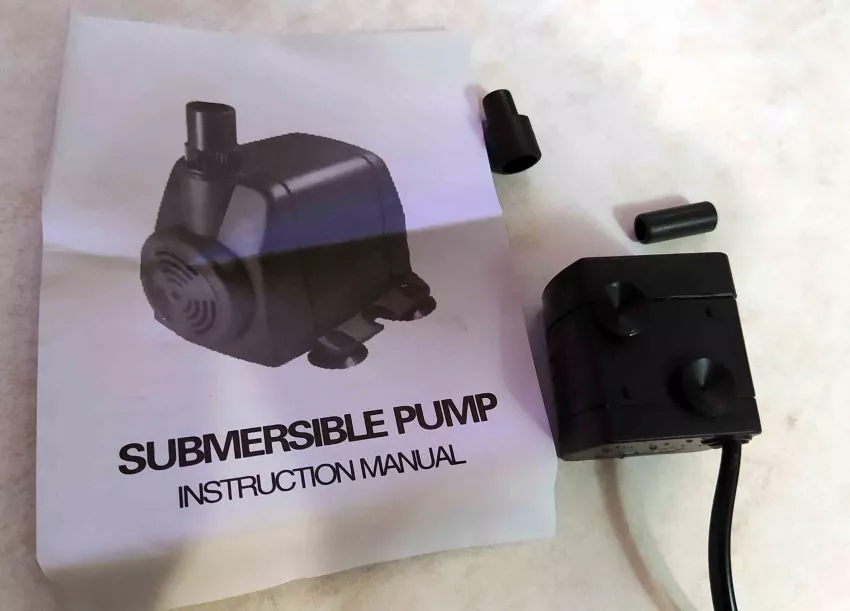
They included 2 adapters for connecting a flexible tube.
Here's the plant filler – expanded clay. Following the instructions, we thoroughly washed it to remove dust:
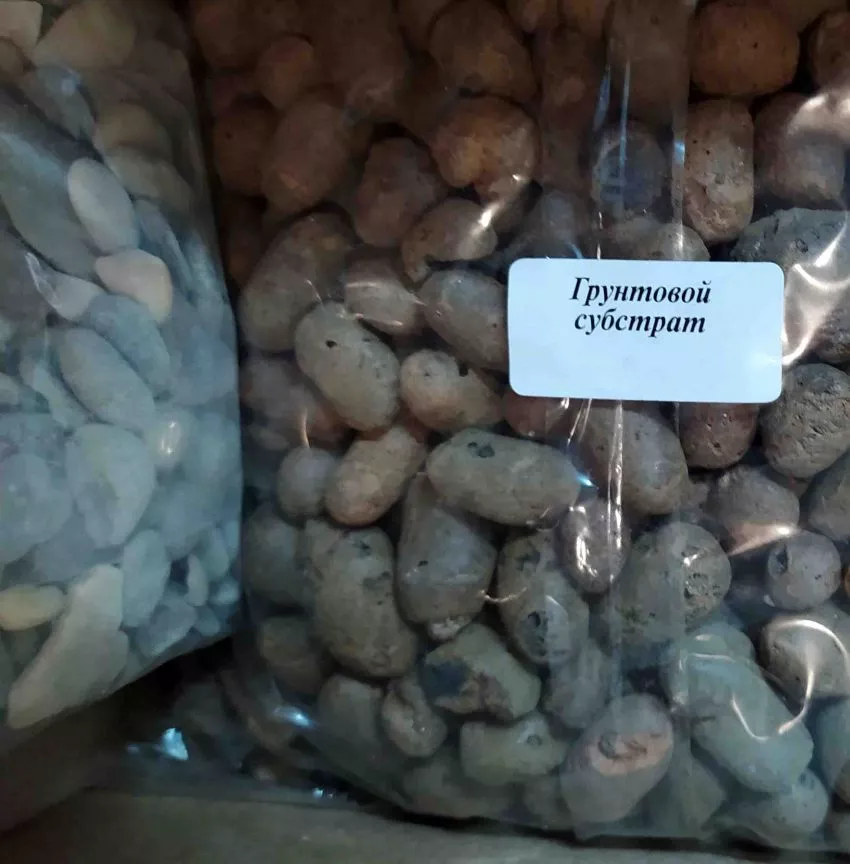
It is stated that the required fraction size is 3-5 mm, but in fact the manufacturers have used very large ones.
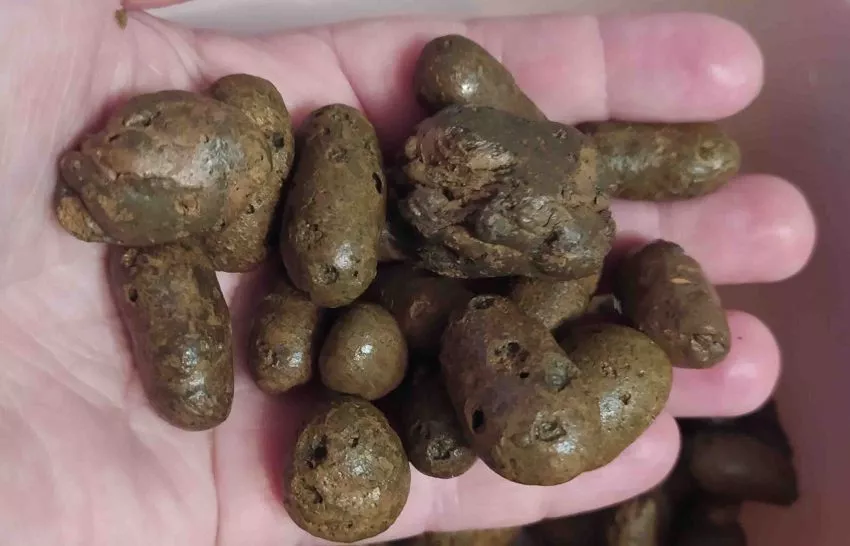
I had to sort through it, choosing smaller stones for the pots.
For plants like peas, a coarse grain size would be suitable, but lettuce seeds are small and, unable to stay in place between these "boulders," they sink to the bottom of the cup when sown and are washed into the aquarium by the water. In the future, I plan to replace this expanded clay with one-third perlite or find and add a finer grain size of expanded clay.
The tray and plant panel are secured on top. Extensions are provided in the corners and along the edge of the feeder window to accommodate the pump's wire.
The plastic the tray is made of initially seemed very thin and unreliable, but in reality, it's holding up well. I wouldn't even call it plastic; it's more like a dense polyethylene, somewhat reminiscent of the material used for mayonnaise, sour cream, and other plastic container lids. It looks solid in the photo, but in reality, it bends easily and is very light.
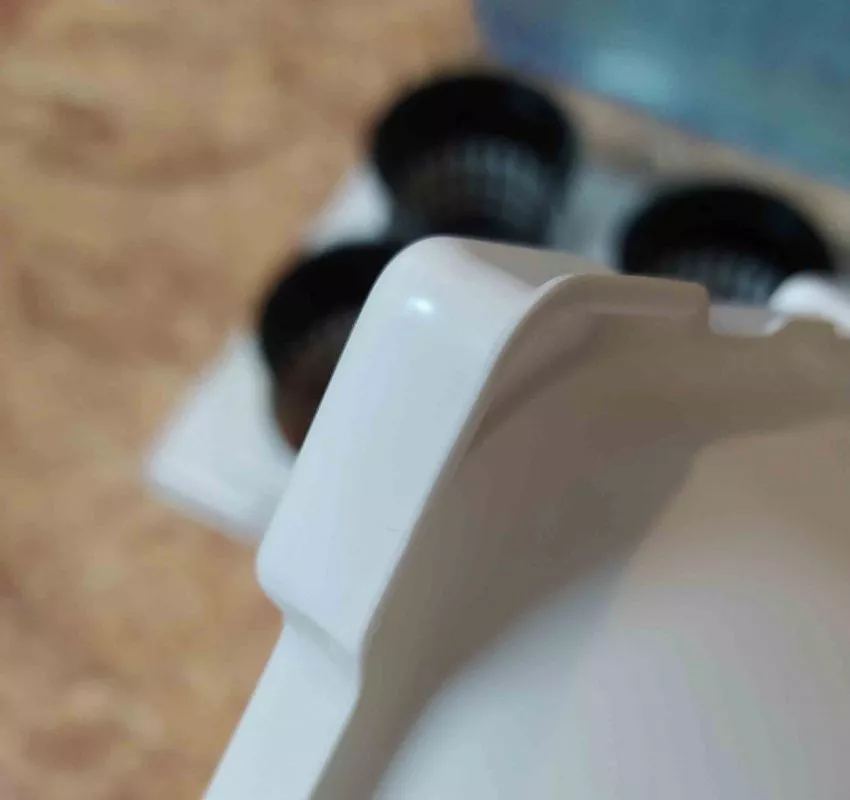
Overall, the pallets didn't inspire confidence at first glance; it seemed they wouldn't last long. Well, let's put them to the test...
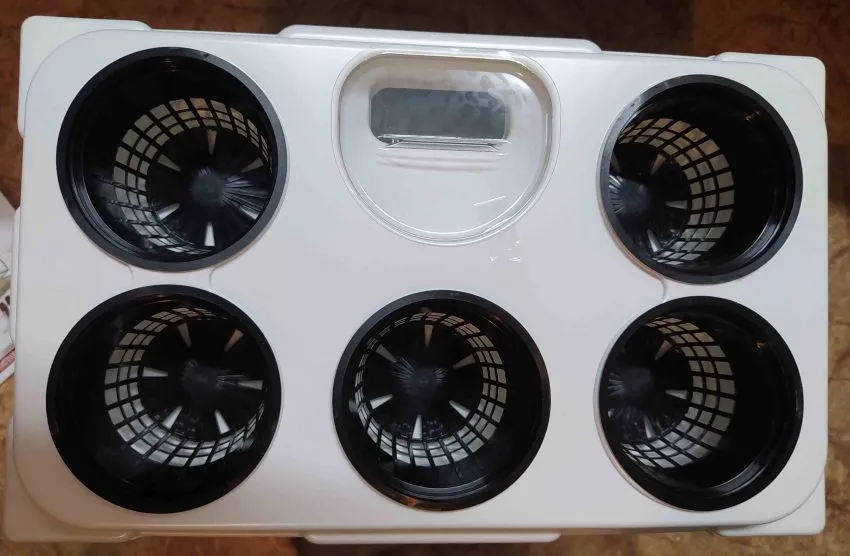
This plant tray consists of 2 parts:
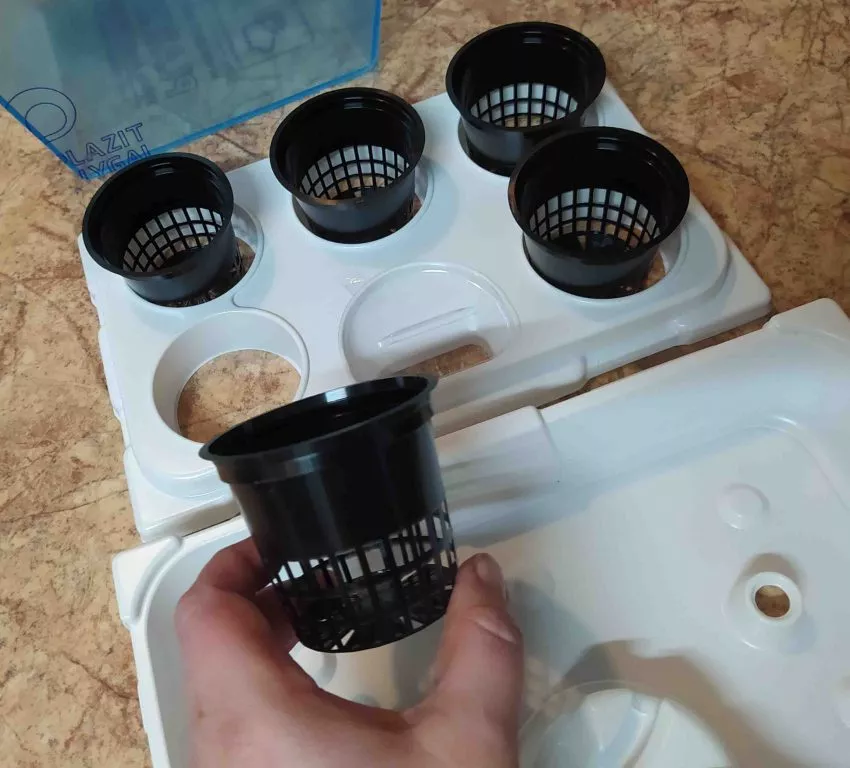
Lids on which cups with soil and a hole for feeding fish are installed:
And the tray itself, into which water from the compressor flows through a tube. Excess water drains through two other holes, maintaining the desired water level in the tray.
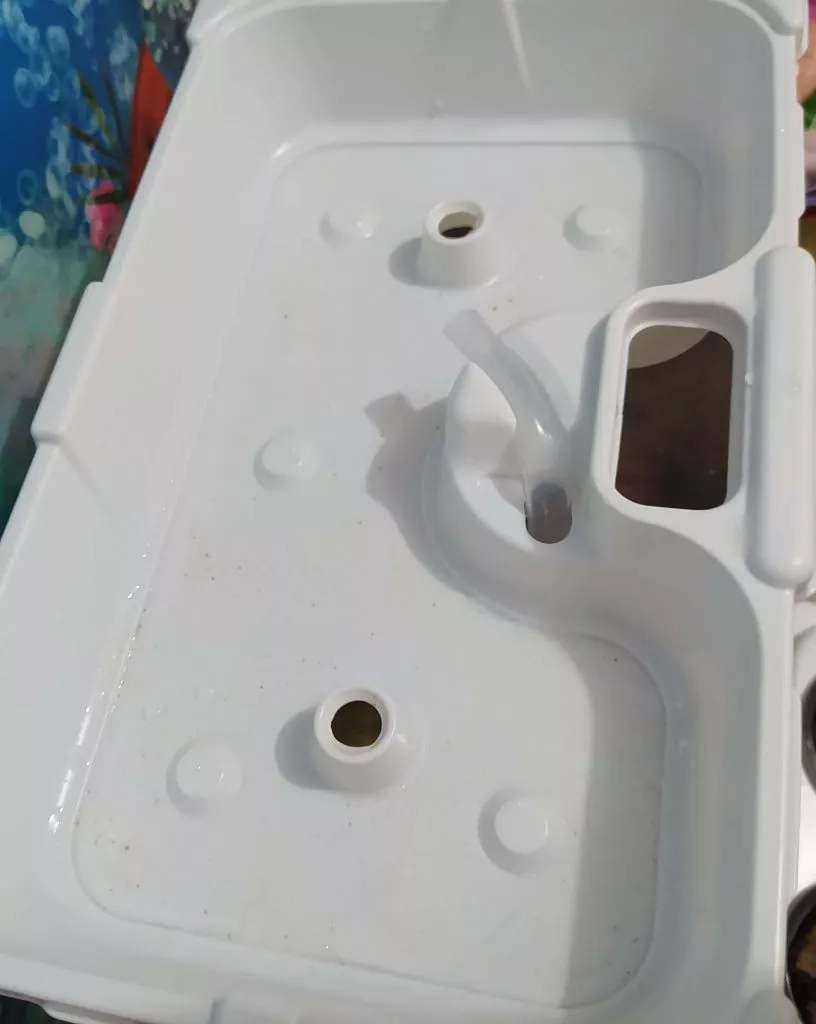
The tube also developed a problem: it turned out to be quite stiff, making it difficult to route and secure from the compressor to the oil pan hole. This tube either wants to slip off the compressor or pop out of its mount in the oil pan.
After some experimentation, we moved the compressor itself from the bottom (as indicated in the instructions) to the side wall. This turned out to be even better; the hose wouldn't fall off, and debris and stones wouldn't get clogged in the compressor's water intake. We had to secure the tube to the tray with tape.
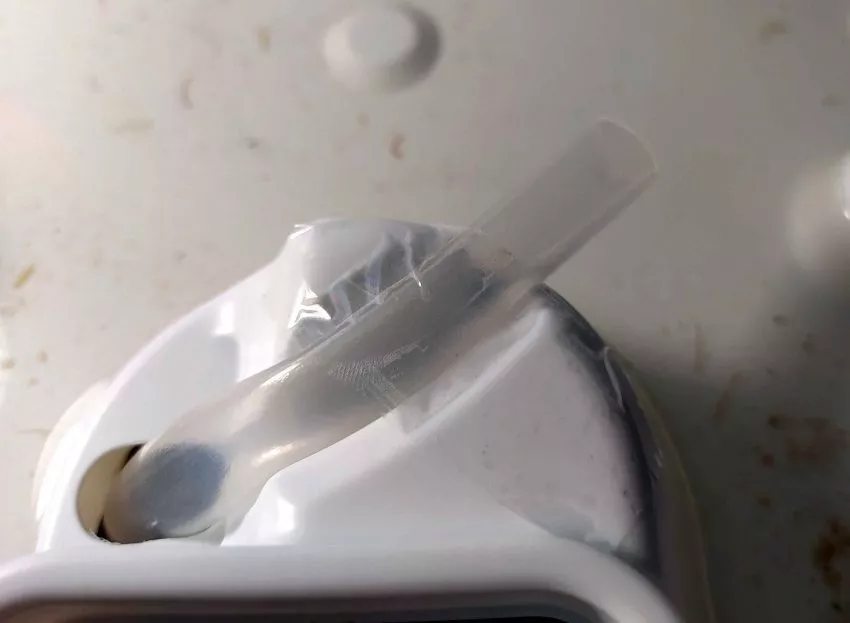
But this isn't a very good option either—the tape peels off when wet. And getting into the aquarium bowl requires another rigmarole. So I'm planning to buy a soft silicone tube of the same diameter; I hope that will solve this problem.
The stones in the set are the simplest, with an admixture of shell:

They were also thoroughly rinsed before being added to the aquarium bowl. We also added a few of our own colorful stones for decoration.
This is the aquarium already prepared for fish. We filled the substrate, installed the air pump, and added water. We added water treatment drops to the water as per the instructions. As I understand it, this removes excess chlorine from tap water. However, we didn't add our fish right away; we let the water settle for a day and then diluted the tap water with water from another, existing aquarium to populate it with the necessary microorganisms. Otherwise, you'll have to wait at least three days for the biobalance to be established. During this time, the water will become cloudy and then clear. Ours also became a bit cloudy, but not for long.
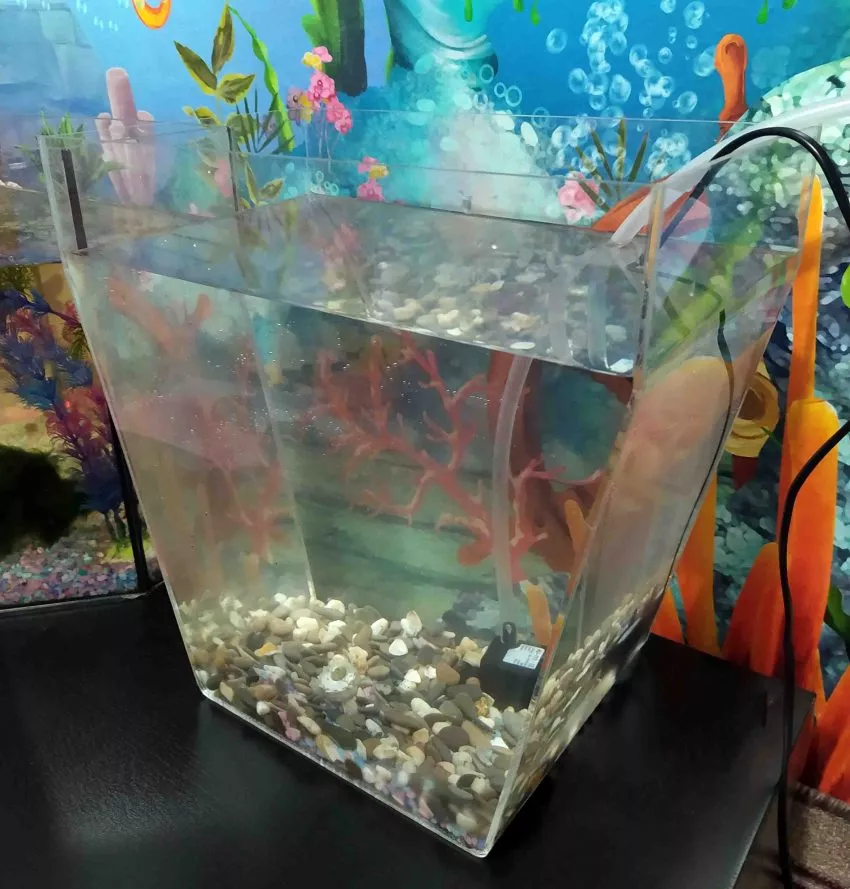
We sowed the plant seeds, added plastic algae decorations to the aquarium, and covered it with a lid. We also added a few drops of fertilizer to the plants.
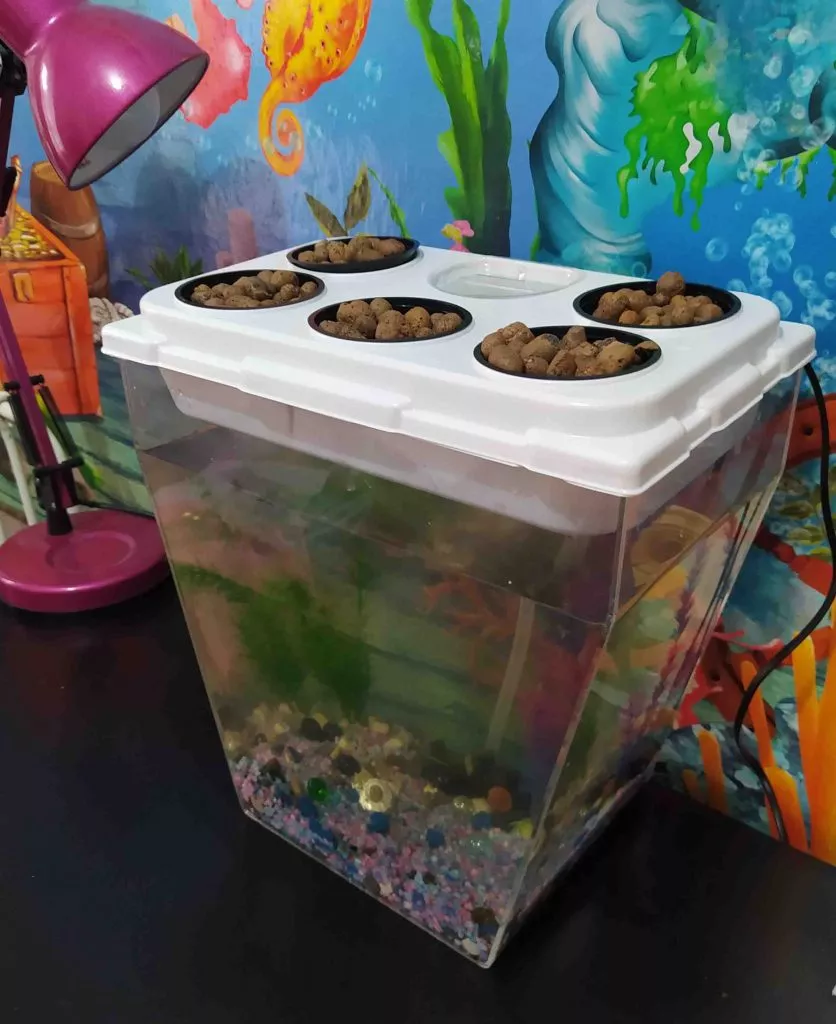
When the water became clear, we added our new resident, a cockerel, and turned on the compressor.
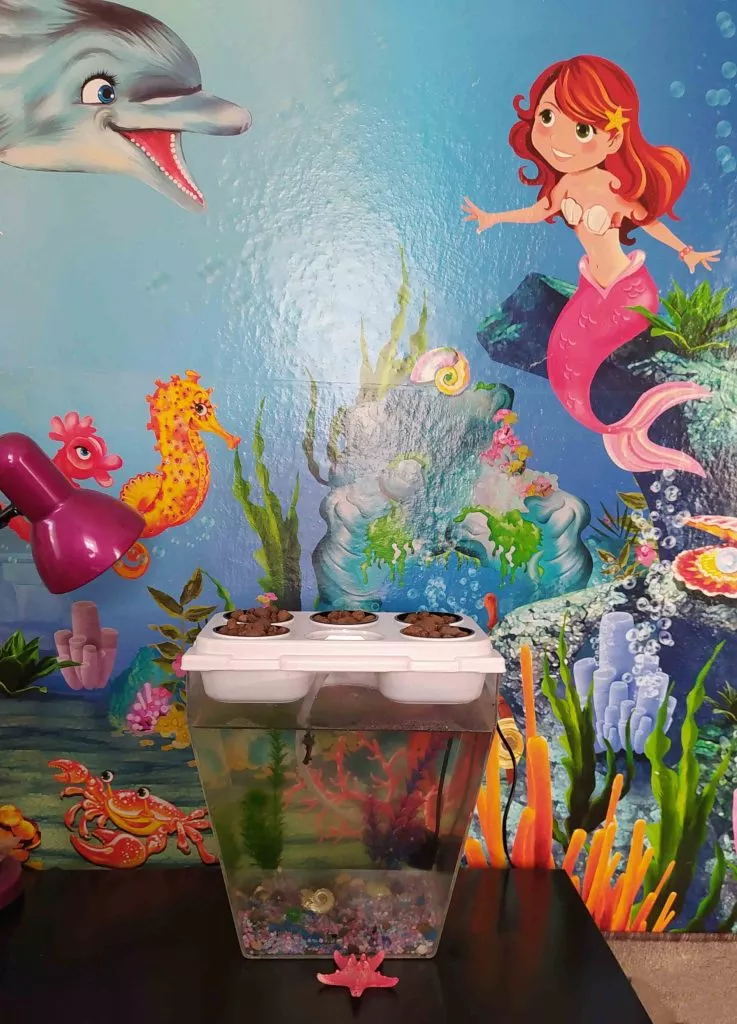
It's not recommended to add more than one fish of this type to a tank of this size. If you're adding guppies or danios, a few would be fine.
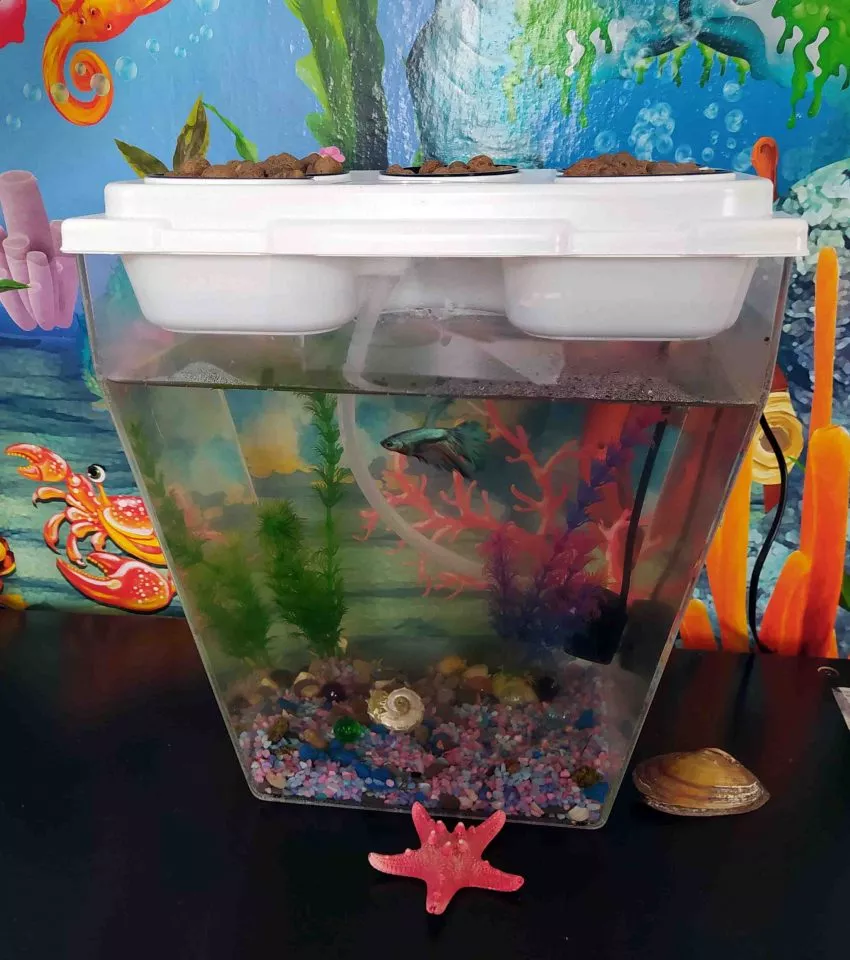
Since the betta needs fresh air, which it swallows from the surface of the water, we did not fill the aquarium to the very top.
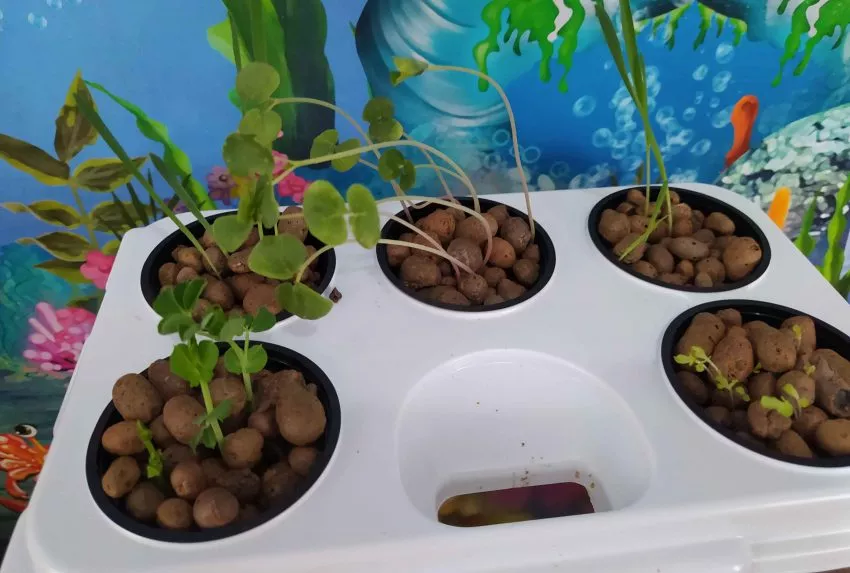
After a couple of days, the sown plants began to sprout:
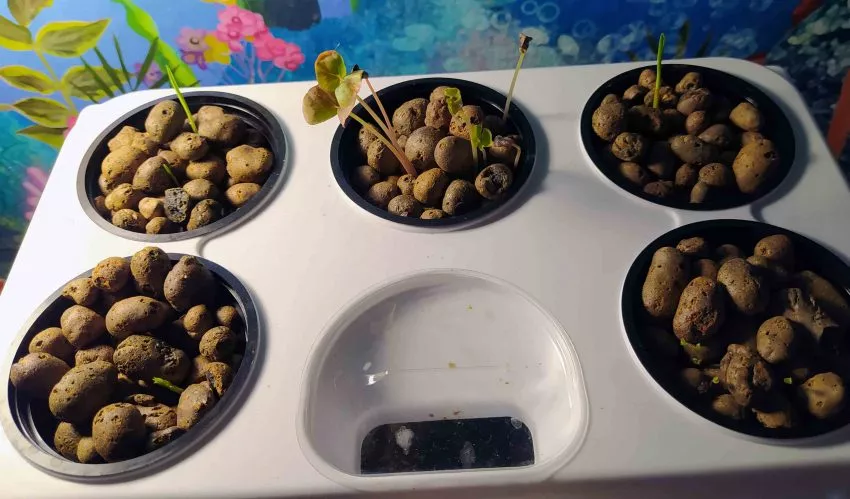
My daughter loves this aquarium; she keeps an eye on the fish to make sure it's not hungry, opening the plastic lid and adding food. The fish even has a name – Petal. And the pet already recognizes its little owner, immediately swimming up to the side of the aquarium to greet her.
The bottom line is that this experiment is very interesting, but as always, nothing is perfect. The aquarium requires some modifications to ensure it functions properly. I've already covered the technical aspects of replacing the hose, substrate, and so on. Additionally, additional lighting for the plants is needed, as placing the aquarium near a window is not recommended, as green algae will begin to grow in the water. And indoors, even with supplementary lighting from a table lamp, the plants will stretch considerably.
You need either a brighter and more convenient lamp above the aquarium or, even better, a phytolamp.
It's also dark under the fish's lid. While this isn't important for the fish itself, you want to see fish, algae, and pebbles in the aquarium, not dim light. Therefore, an underwater light is also necessary.
The plants are quite tall now, especially the buckwheat. So far, the peas are growing best. Once they've completely died, we'll think about what to sow instead. One option would be microgreens for cutting into salads. Or some small indoor plants like spiderwort.