
Good afternoon.
Today I decided to take a walk around the garden and show what I have growing, to give a short tour.
In May, we experienced a transitional period when the first spring flowers (tulips, daffodils, primroses, and hyacinths) had already faded, but the second wave of blooms (lilies, roses, peonies, etc.) had not yet arrived. Fruit trees had also shed their blooms and were gradually building up their future harvest.
So, I'll start with apricotThe "Triumph Severny" variety has long since finished blooming, but it looks like we won't see a harvest from it this year. The winter was very warm, and we saw almost no snow—at least, only three times during the entire winter, and it didn't even last a day.
Spring warmth arrived early, but just as the apricot trees were in bloom, frost returned. There were three cold waves. While after the first one, there was hope that at least some of the flowers would survive, the subsequent frosts killed them off.
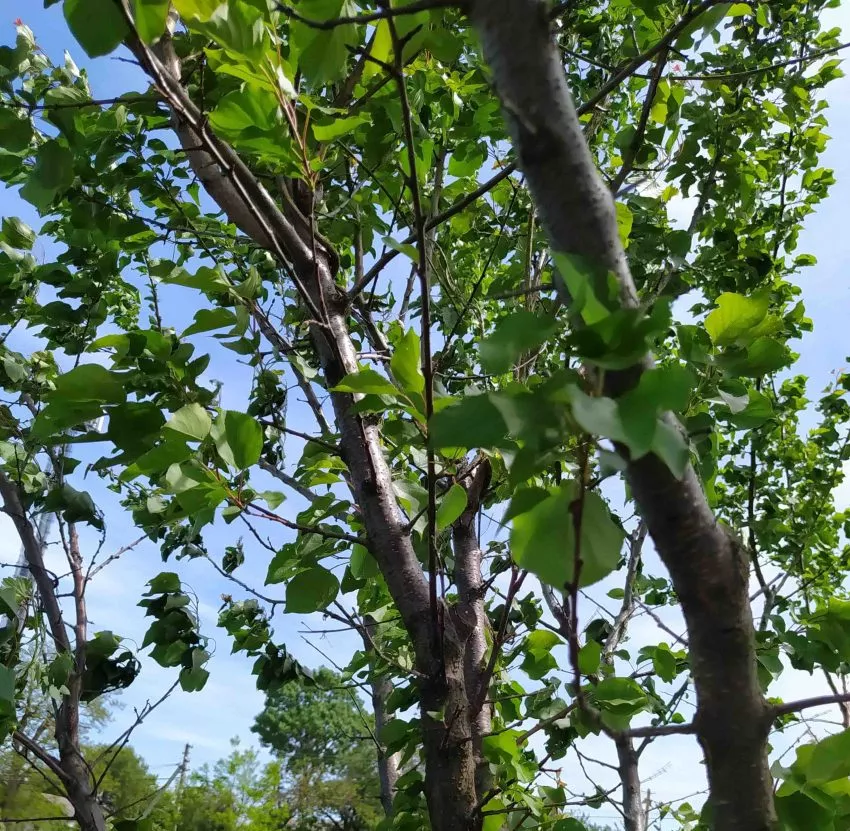
I hope that after resting this year, the tree will delight us with a bountiful harvest next season.
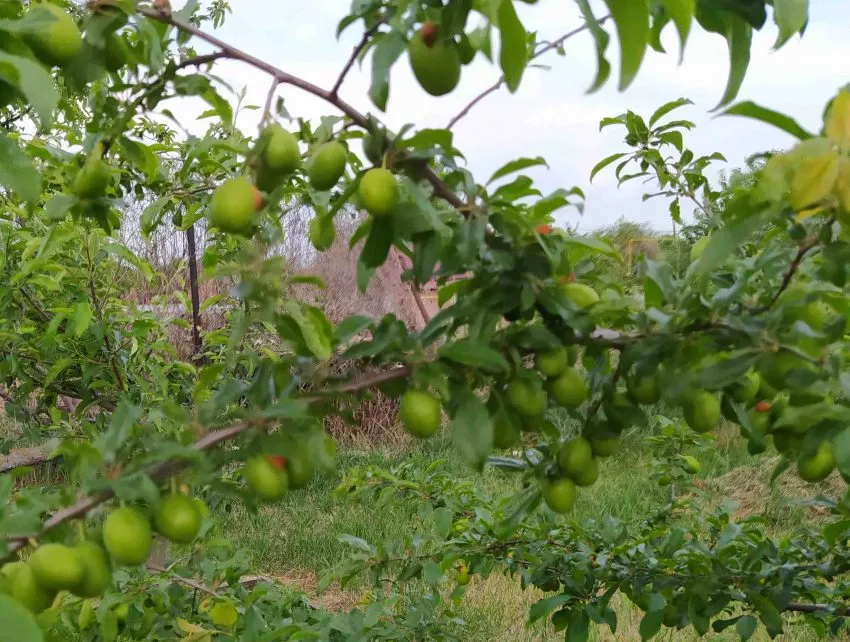
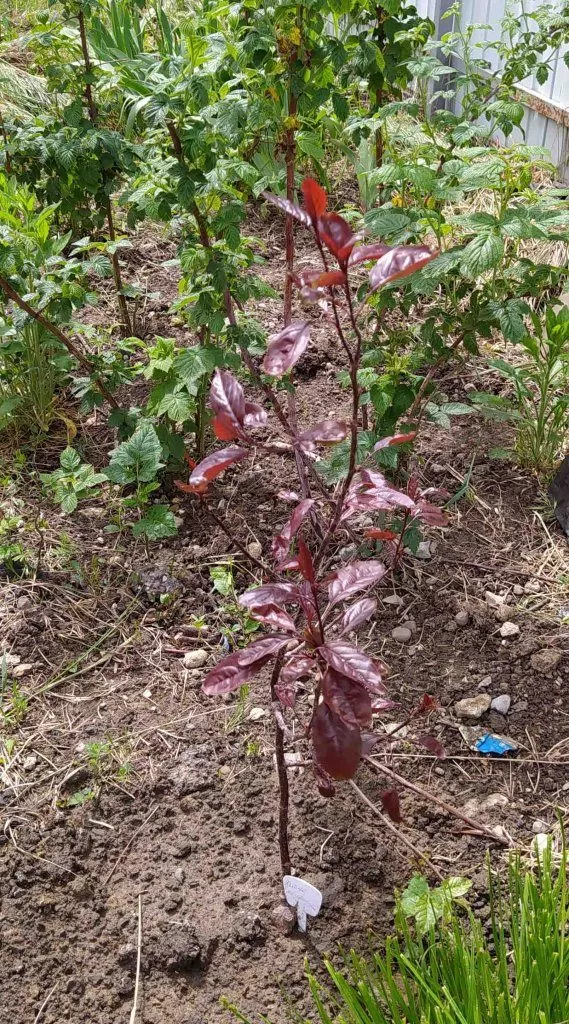
But cherry plum Frost isn't a problem! This is the "June Rose" variety, with early and fairly large fruits that ripen as early as June. Right now, this rowan tree is standing:
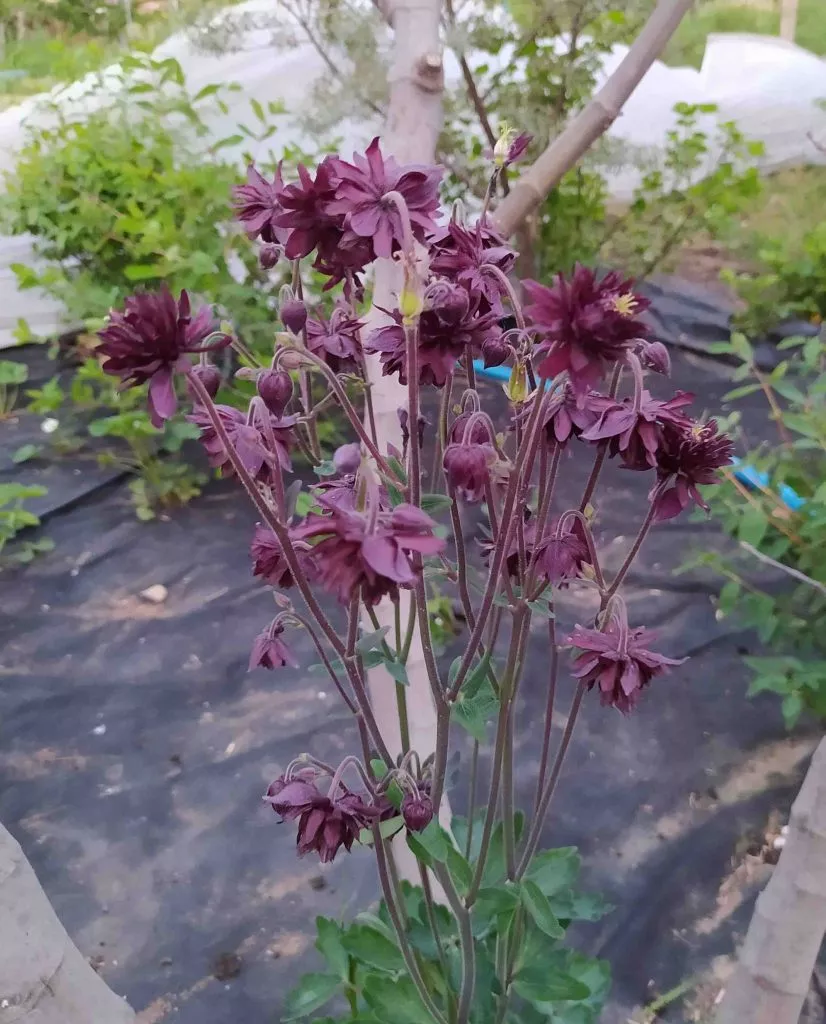
Below in the photo columbineWhile other flowers are few, they decorate the garden.
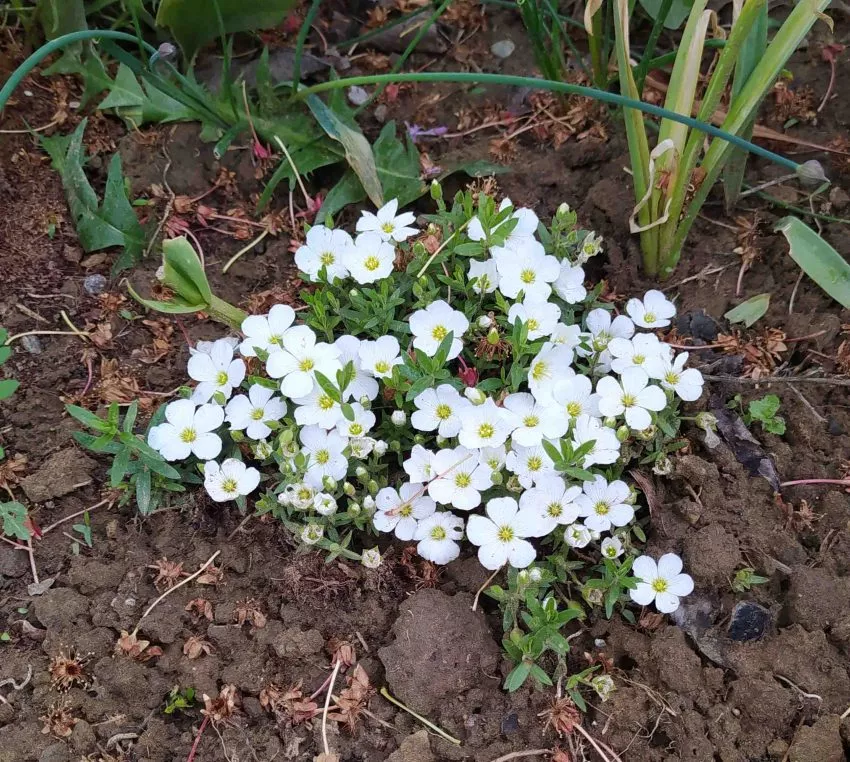
Arenaria Mountain Sandwort, or Sandwort. A beautiful groundcover plant. Despite its modest size and small leaves, it blooms so profusely that the plant itself is almost invisible. It looks great in borders and garden paths.
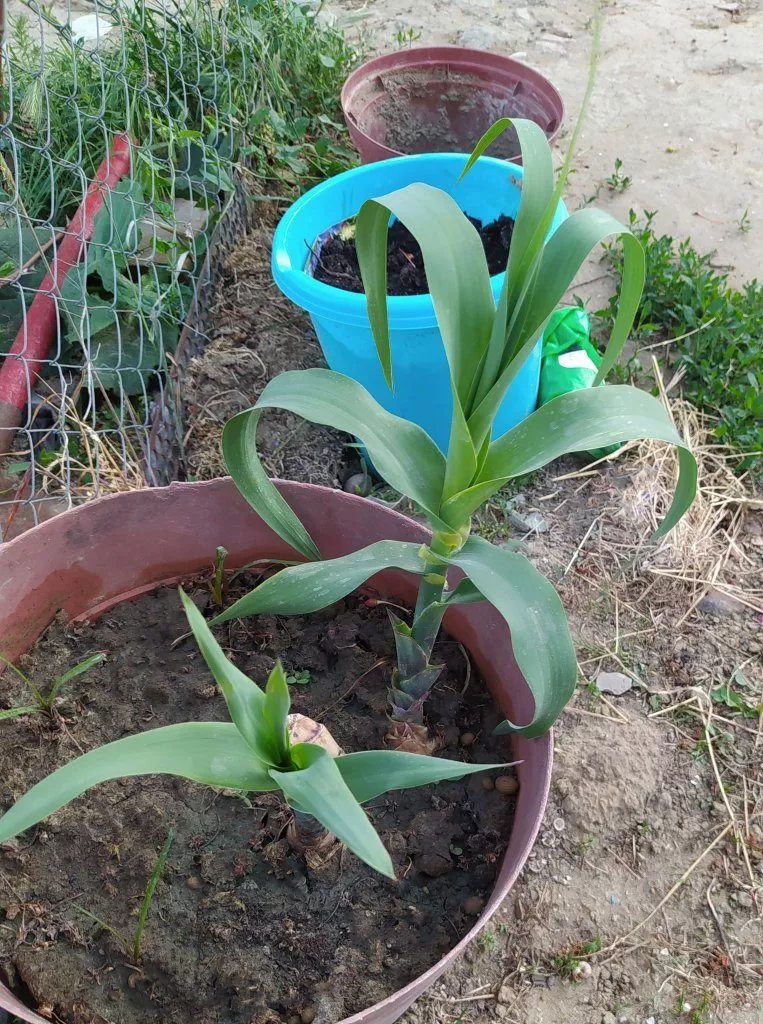
And this is my experiment - a real one. bambooThey said it's a frost-resistant variety, but I haven't yet decided to plant it in the ground, I'm afraid it will sprout rhizomes and end up as a bamboo grove.
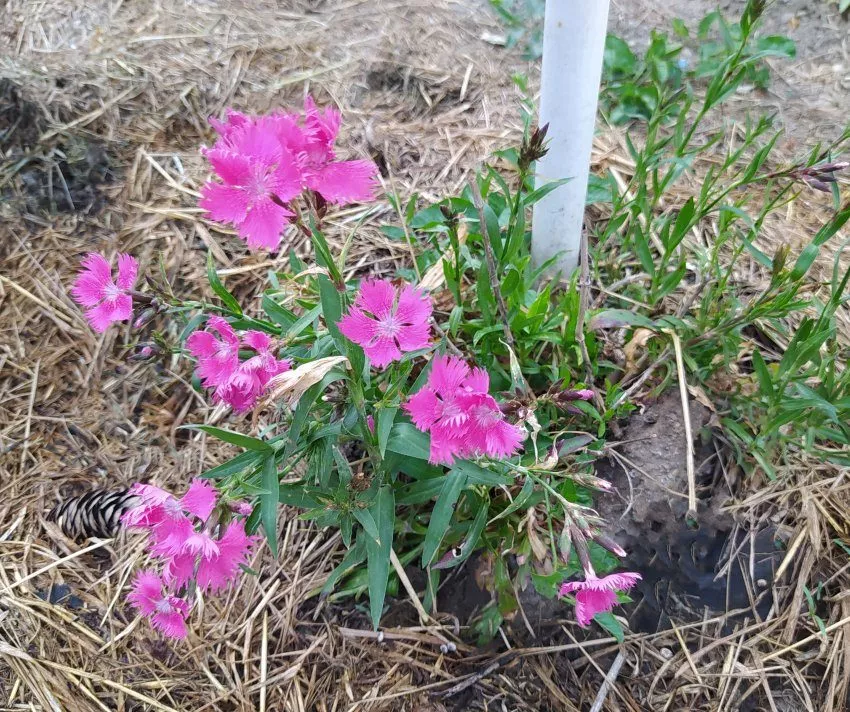
Another beautiful flower, just beginning to bloom, is carnation.
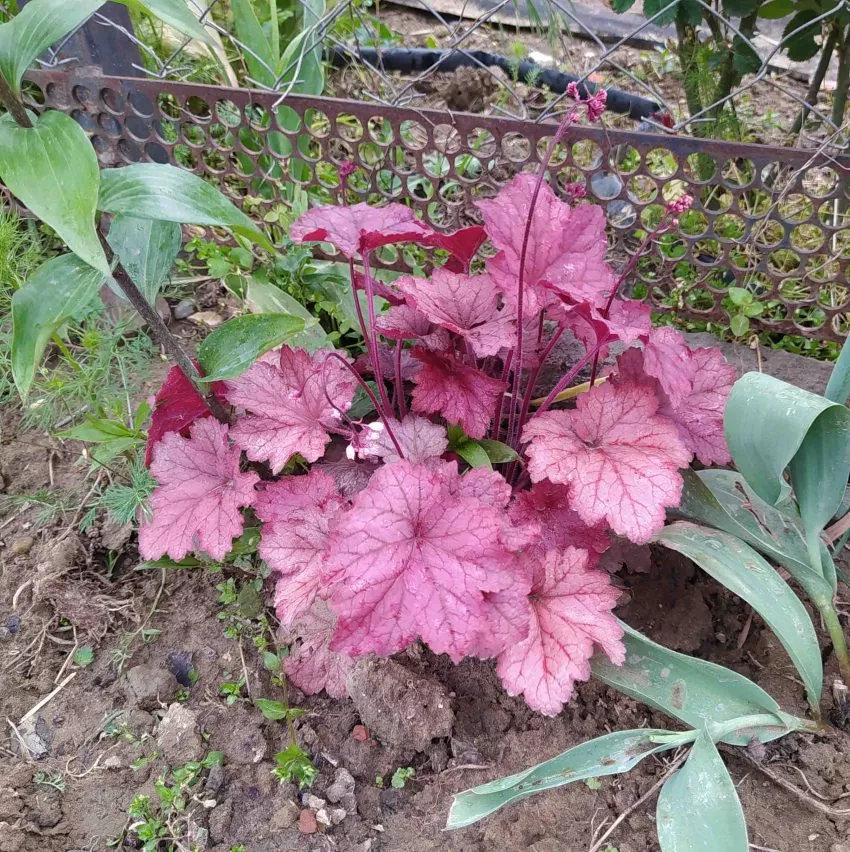
Among plants with brightly colored leaves, I really like heucheras. Here they are:
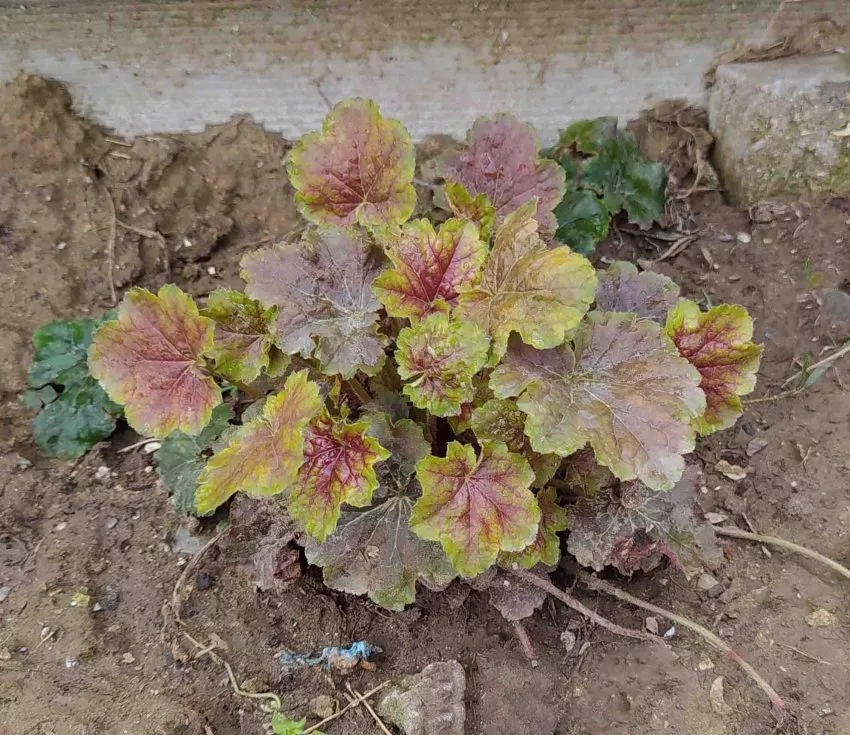
This one has already produced flower stalks, but the main charm is in the spectacular leaves.
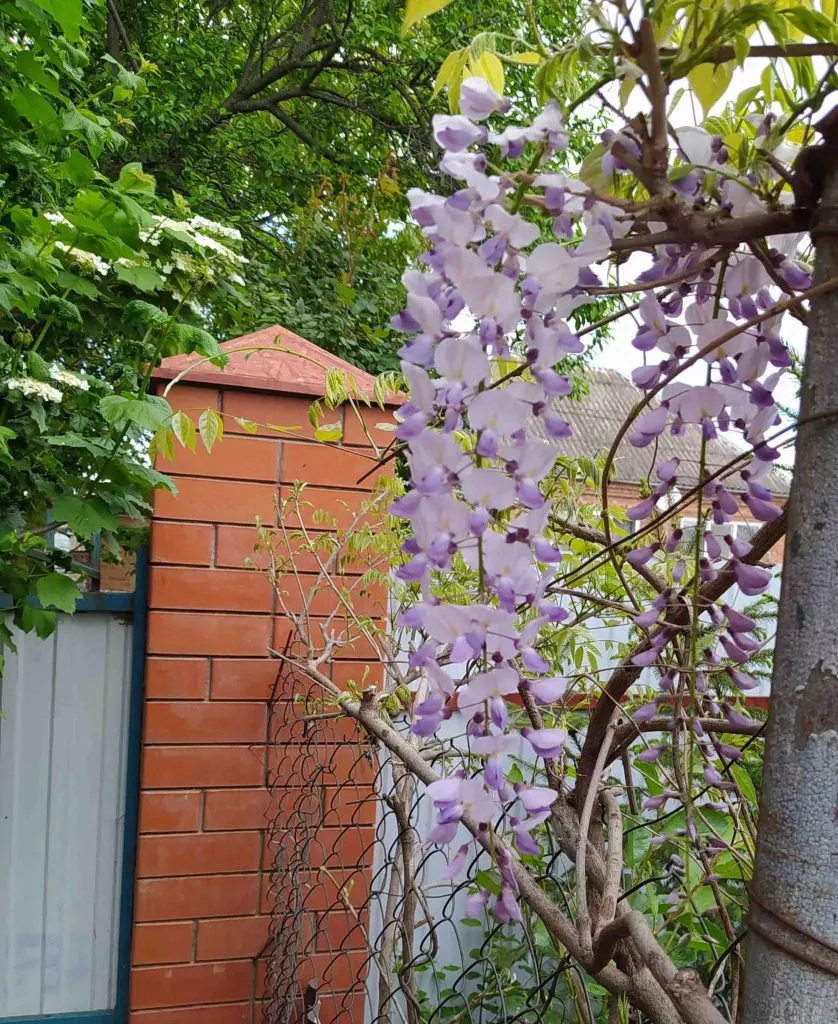
Wisteria, a liana. It blooms beautifully, like a lilac rain, but it's too vigorous, quickly growing several meters long. In the summer, you'll have to trim it to keep it from taking over the entire house.
You can already see how the shoot has stretched towards the viburnum:
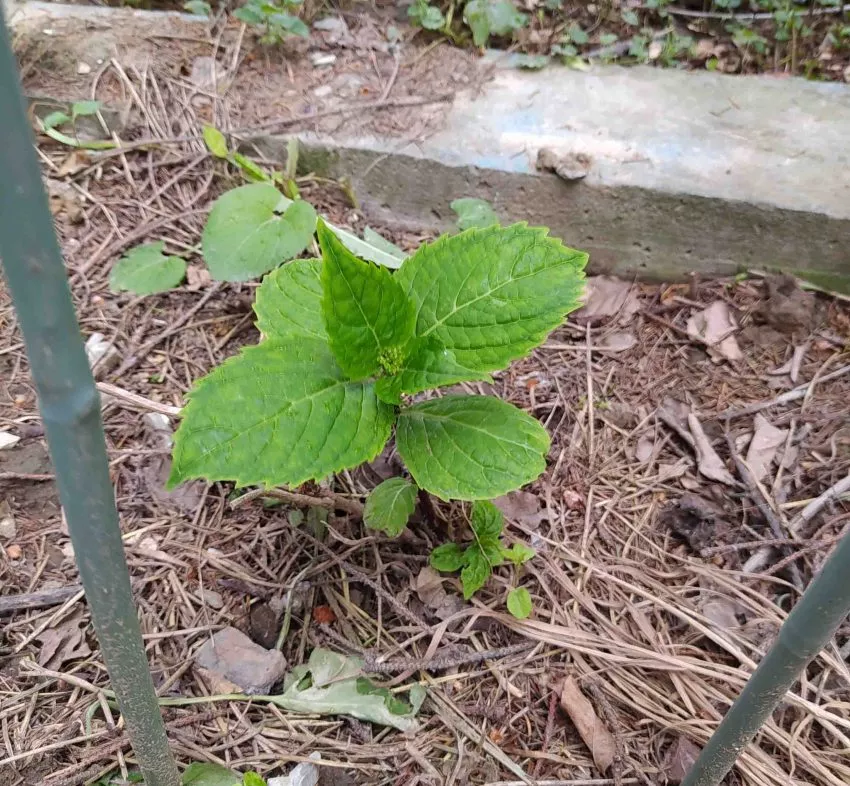
Below in the photo hydrangeaAlthough the winter was warm, the plant survived it and, just as its buds were opening, was hit by a recurrent frost. The trunk froze and died. Fortunately, new shoots emerged from the root. And it's even about to bloom.
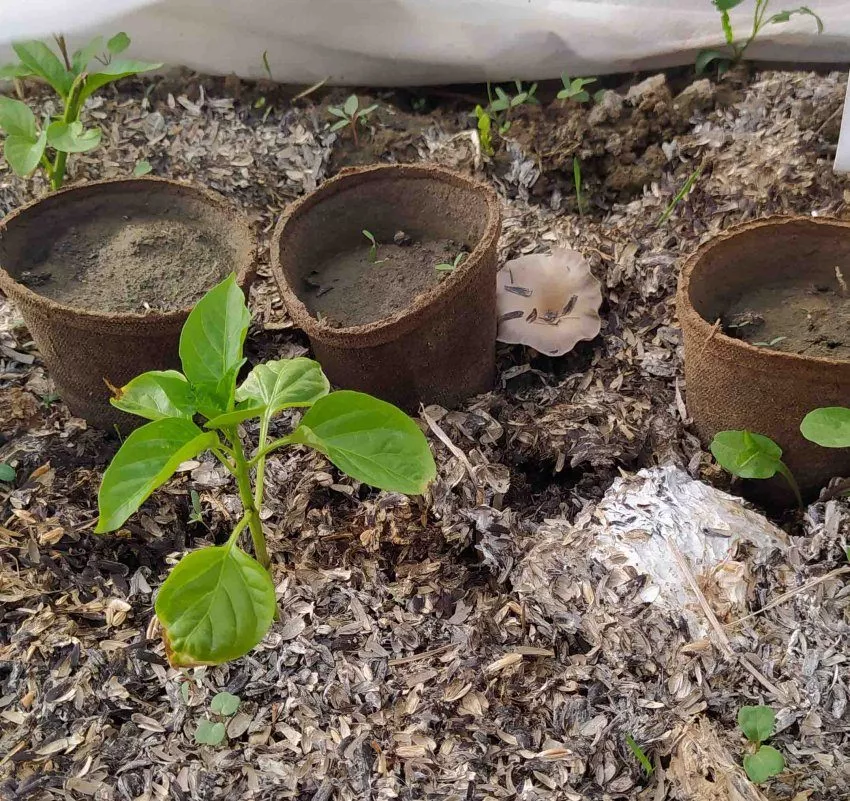
On the way, I'll pop into the greenhouse to see the peppers and eggplants. I want to show you the side effect of mulching with the husks from used mushroom blocks. There's a mushroom lurking behind the pots of soil. It's time to harvest the oyster mushrooms:
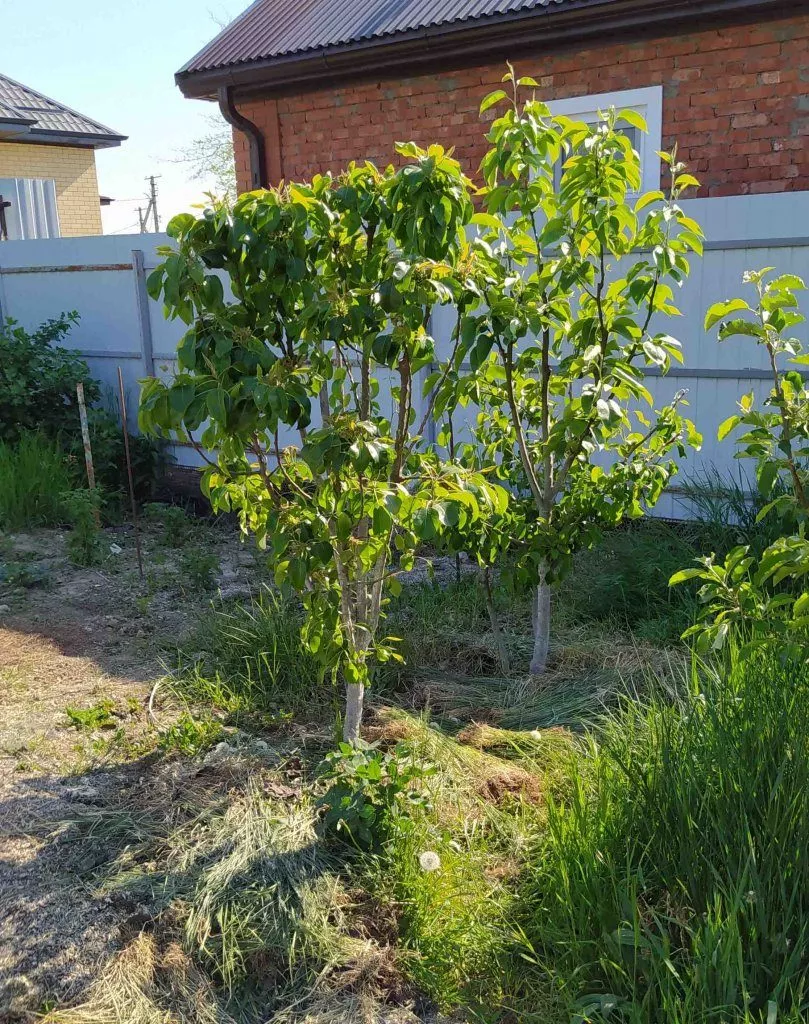
PearsOne columnar, a little further away a regular one, several different varieties grafted onto the regular one.
I've noticed that almost all of the grafts on pear trees take very well. They grow together so tightly that after a year, it's difficult to see the graft site. On apple trees, however, the graft site is very visible, and the survival rate is lower.
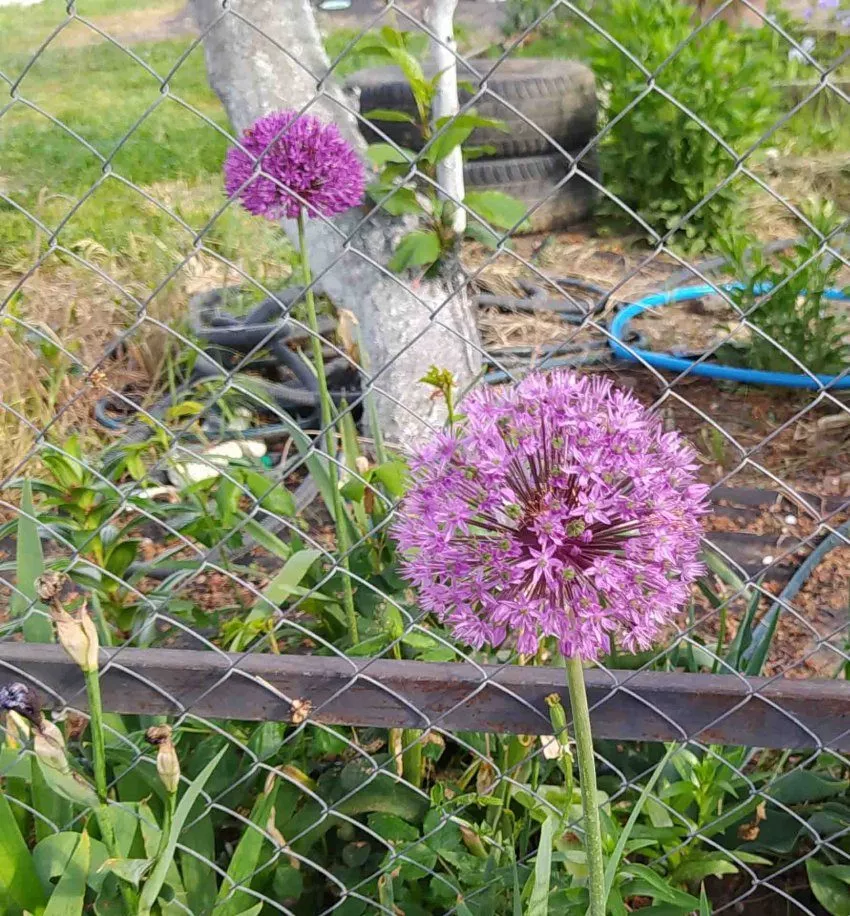
Ornamental onion – pleases with beautiful lilac inflorescences:
Below in the photo rose gardenEvery year I think about stopping, but I keep planting new varieties. A little closer is a young cherry tree.
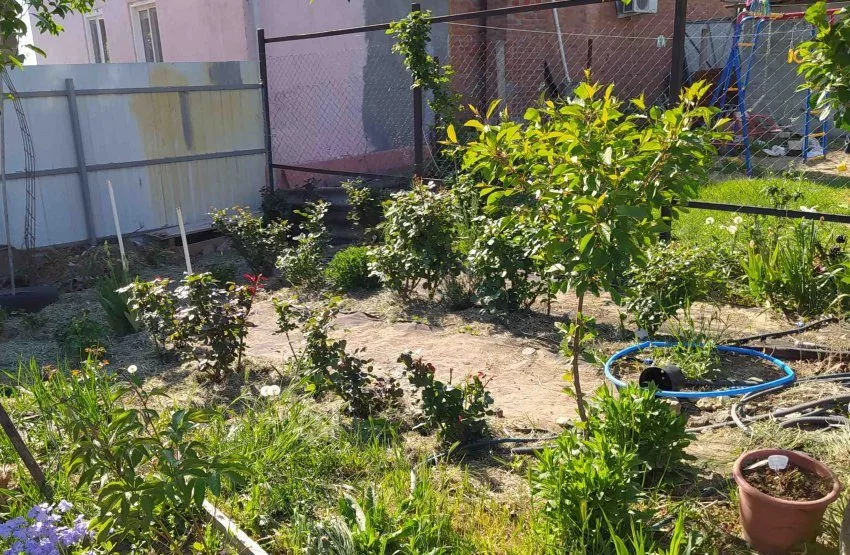
So far they are only growing, as they were cut back for the winter.
This climbing rose The 'Rosarium Juntersen' variety is a favorite. It's already in full bud, holds its flowers for a long time, and blooms until late autumn, right up until the frosts.
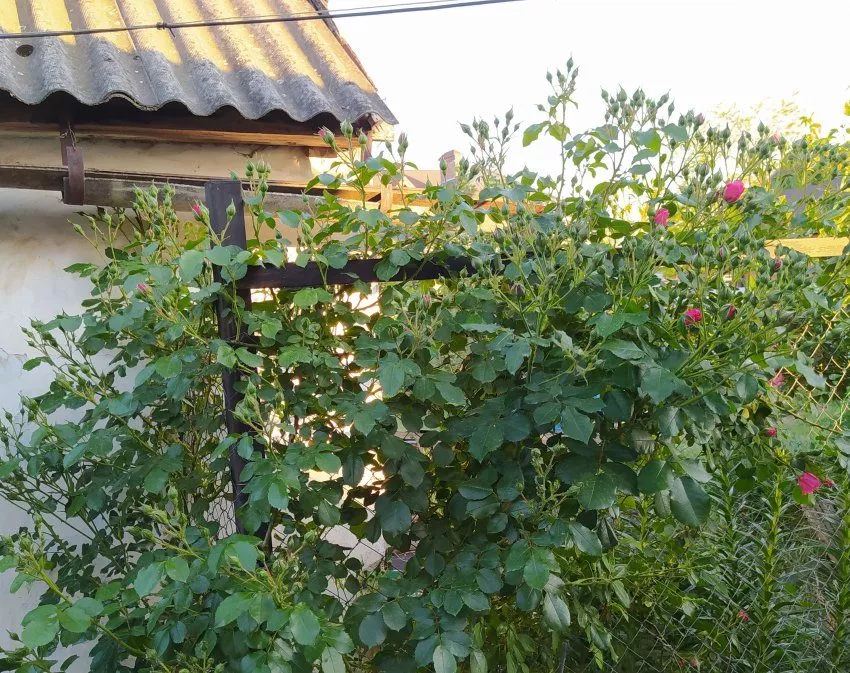
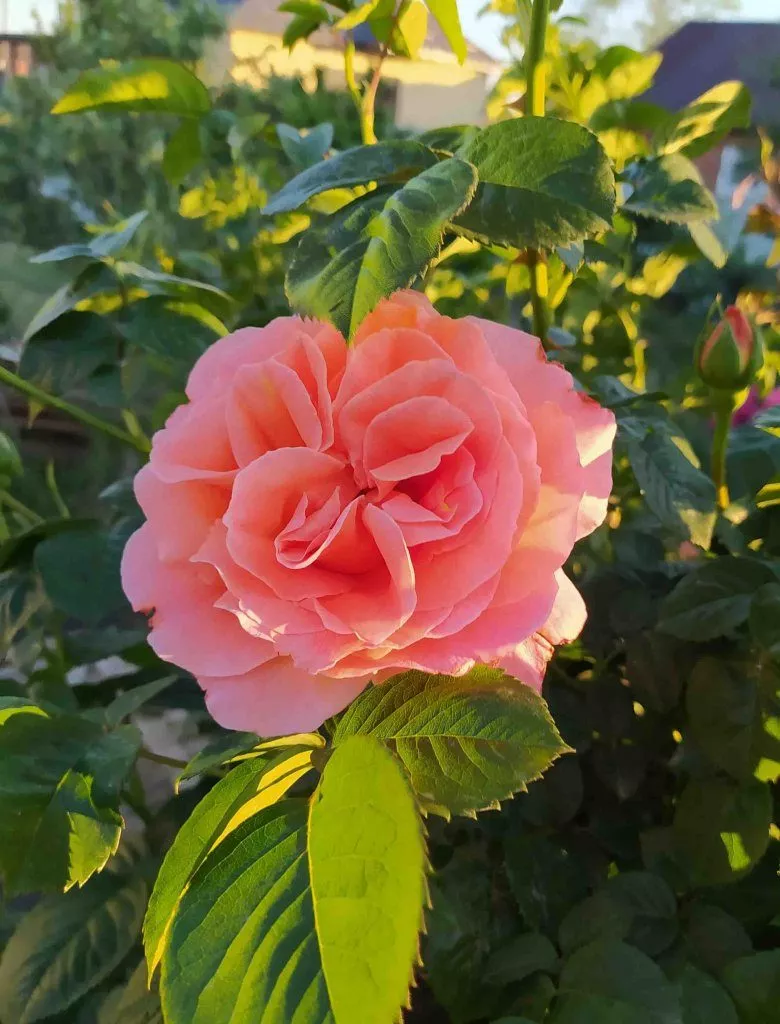
I don't know the name of this rose, but it's also a climbing rose with large, soft peach-colored flowers (see photo below). If anyone can identify it, please let me know.
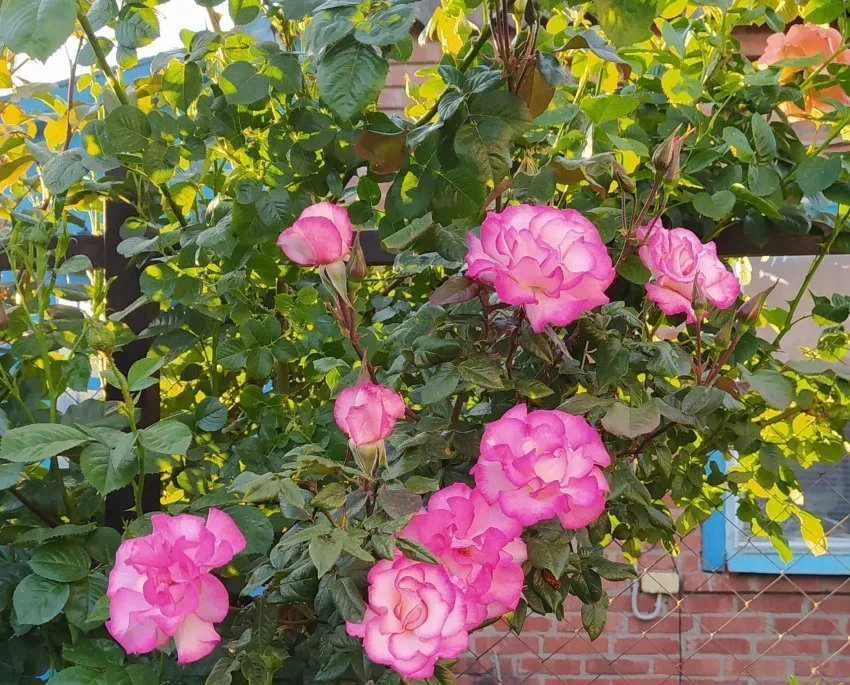
And the third climbing rose, the 'Handel' variety, has just begun to bloom. It has beautiful, watercolor-like petals. In autumn, it likes to shoot out very long "rods," measuring 3-4.
Low plants are hidden at the feet of the roses.
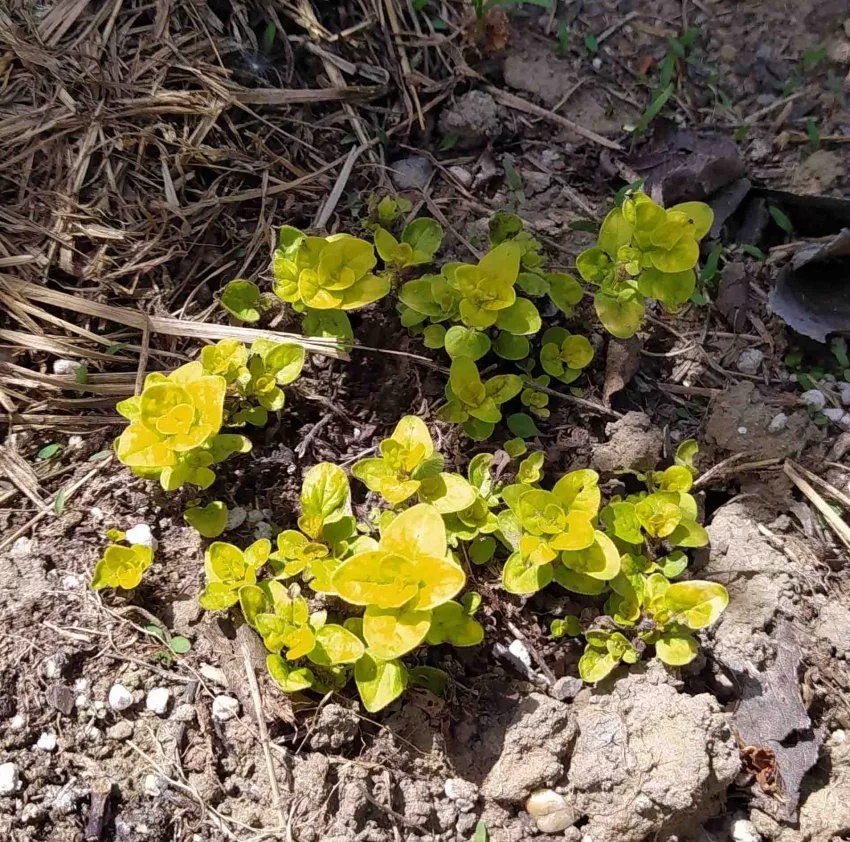
Oregano - aromatic and healthy:
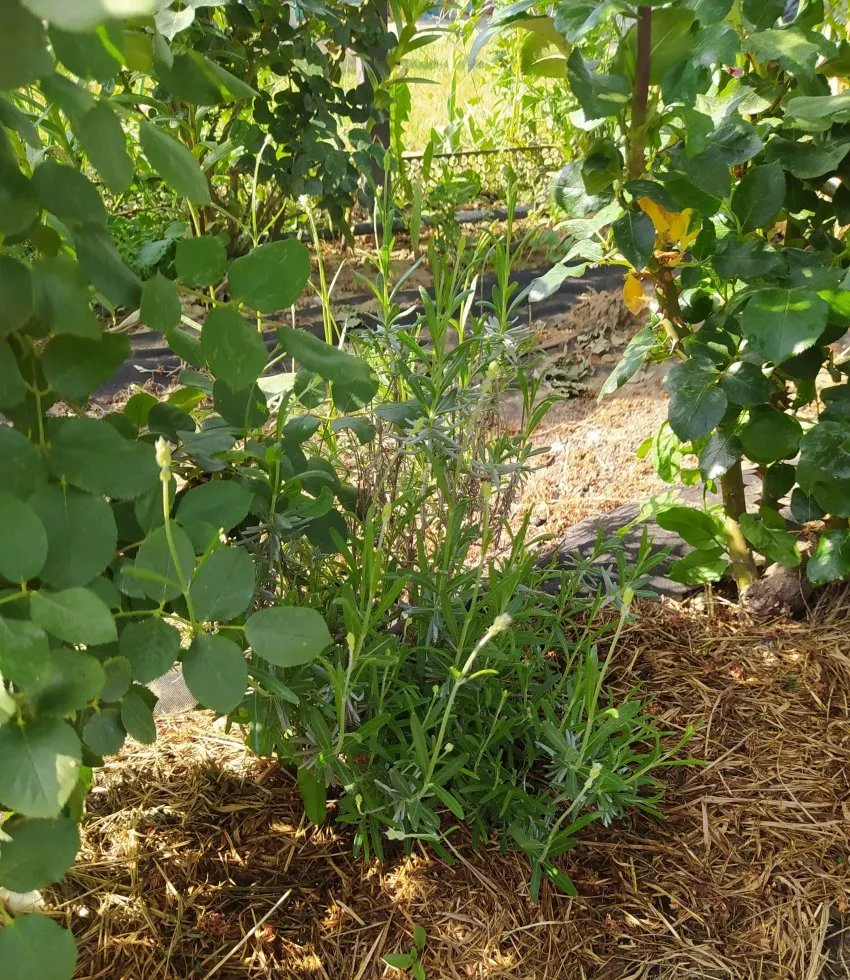
Lavender – it hasn’t bloomed yet, but it has already released buds.
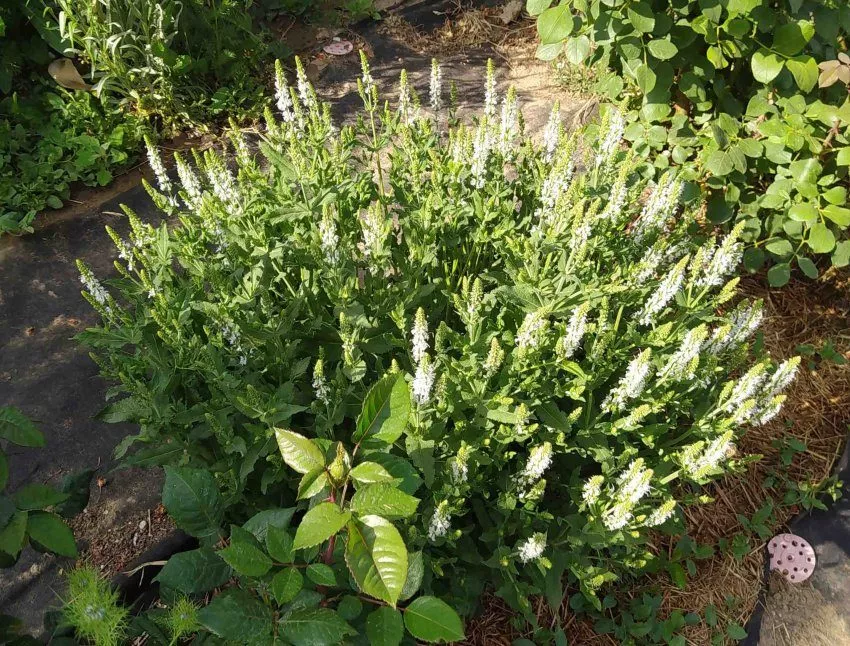
Sage — you can’t go anywhere without it during the cold season!
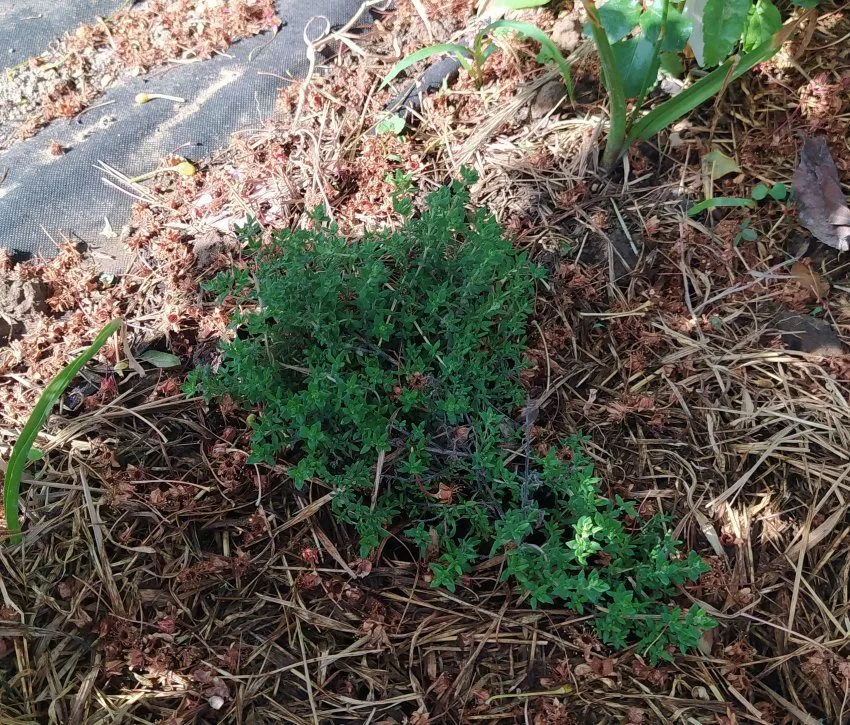
Thyme — it makes a sweet, aromatic tea for immunity.
And on honeysuckle The berries are already ripe. I have three varieties, all three years old.
- Bakcharskaya Jubilee – the berries are smaller, but sweet.
- The Bakcharsky Giant (that's him in the photo), the berries are larger, but they have a little more sourness.
- Third grade - Dobrynya, has not yet borne fruit.
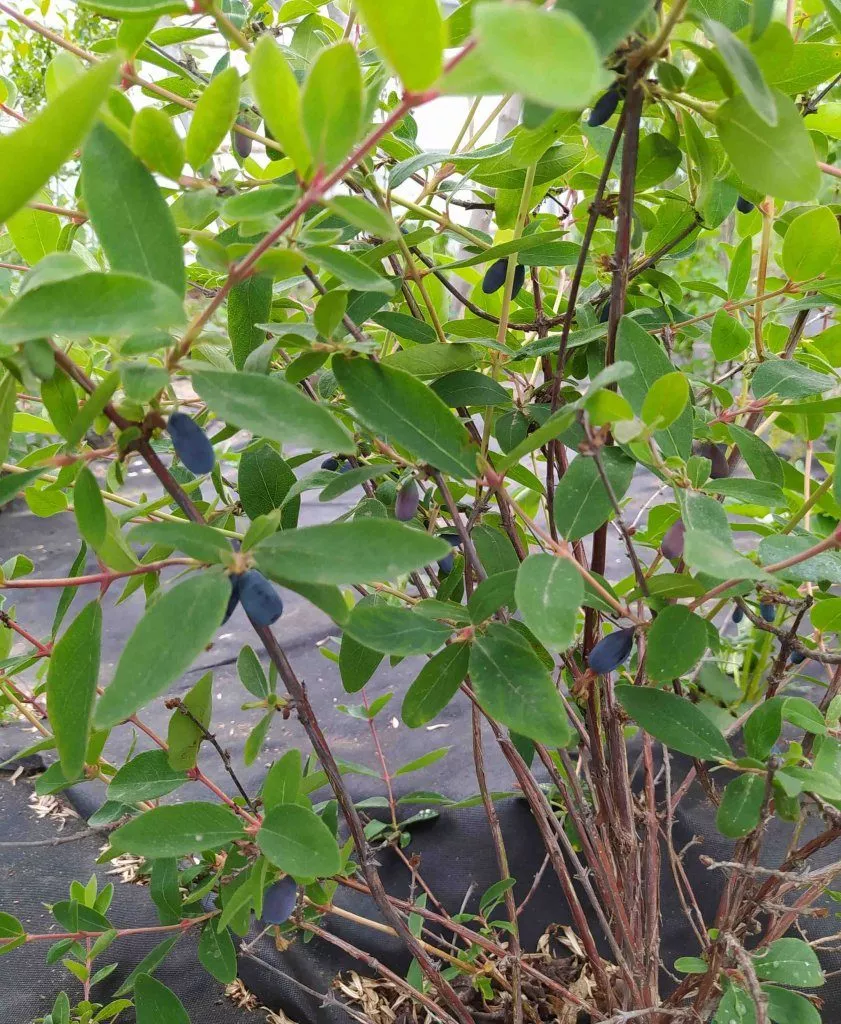
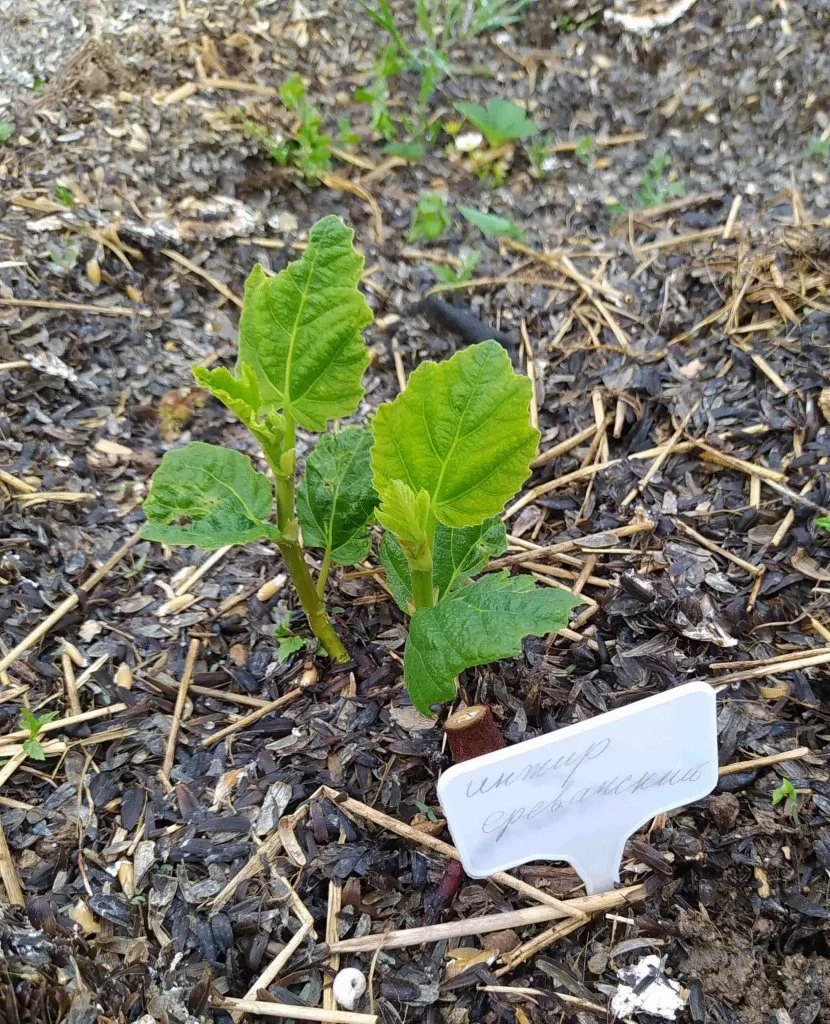
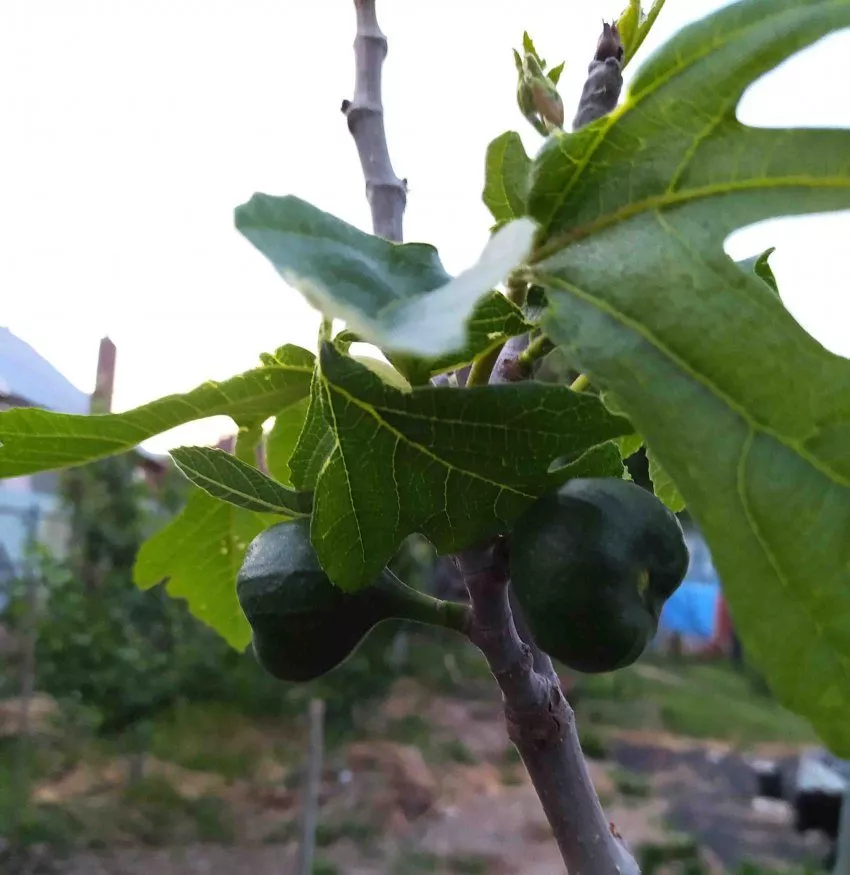
Fig "Yerevan" Planted two years ago. It also froze over the winter and spring, but started growing from the roots. It's in its second year and hasn't borne any fruit yet.
And this one fig variety "Pear" It's more frost-resistant, surviving temperatures down to -2 degrees Celsius. Its first fruits are not very large, around 100 g, while the second autumn wave fruits are around 50 g. The first figs have already appeared on it.
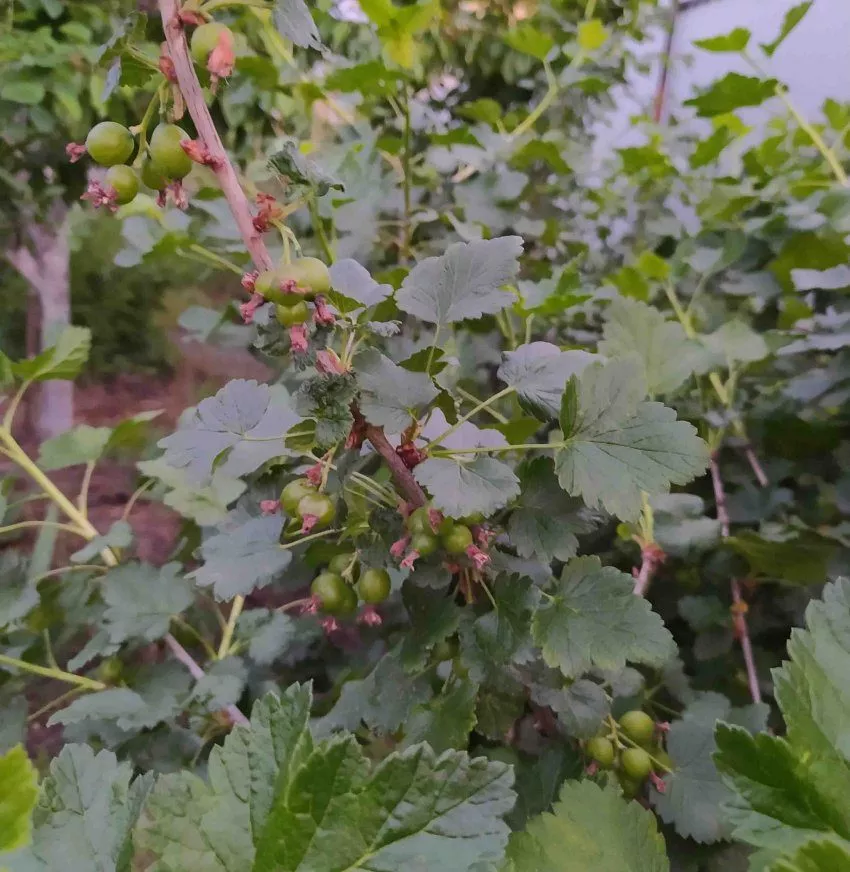
Yoshta. An easy-to-grow gooseberry-currant hybrid. It blooms early and already produces berries. However, the yoshta tree has a very slow ripening period.
In July and August, the berries turn black, but don't rush to pick them. They're still very tart. Only by late August and September do the berries acquire sufficient sweetness and become truly ripe.
The taste is reminiscent of not very aromatic currants, and the density is closer to gooseberries.
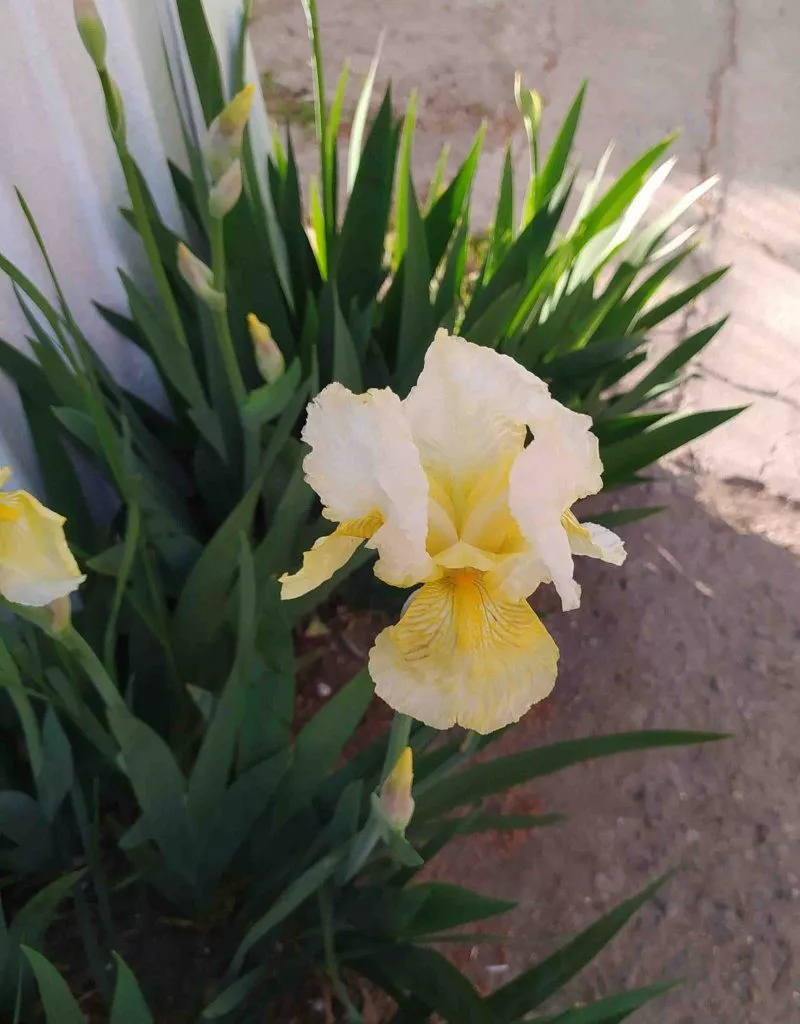
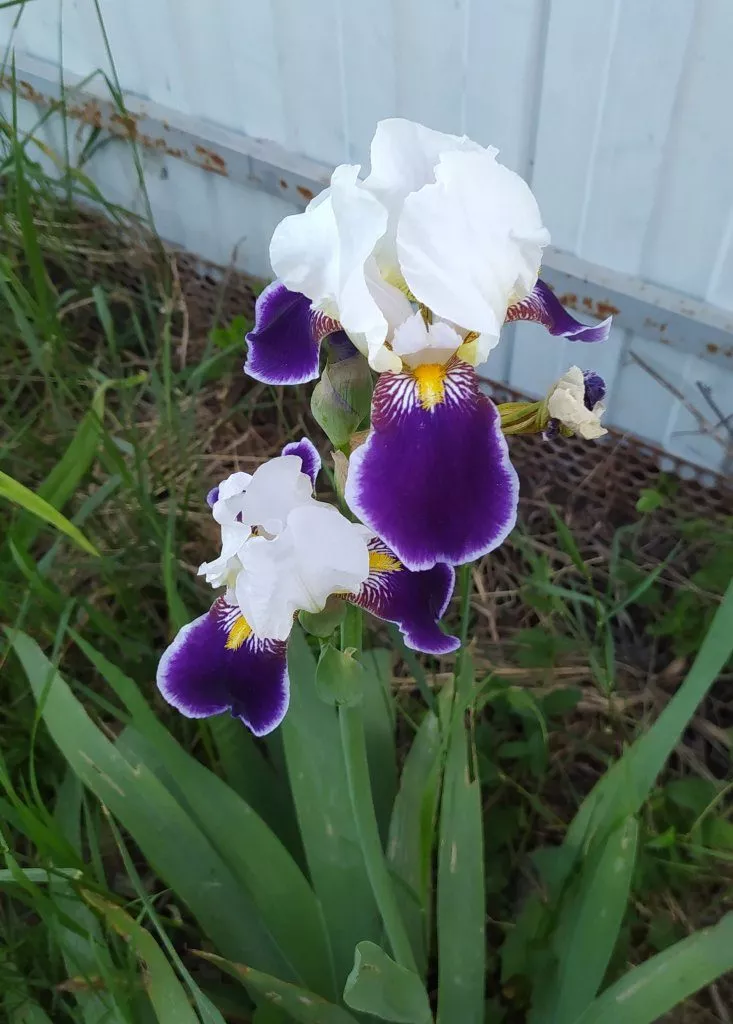
Another flower that blooms in May is irisesI have many different colors growing, but the most charming ones are these:
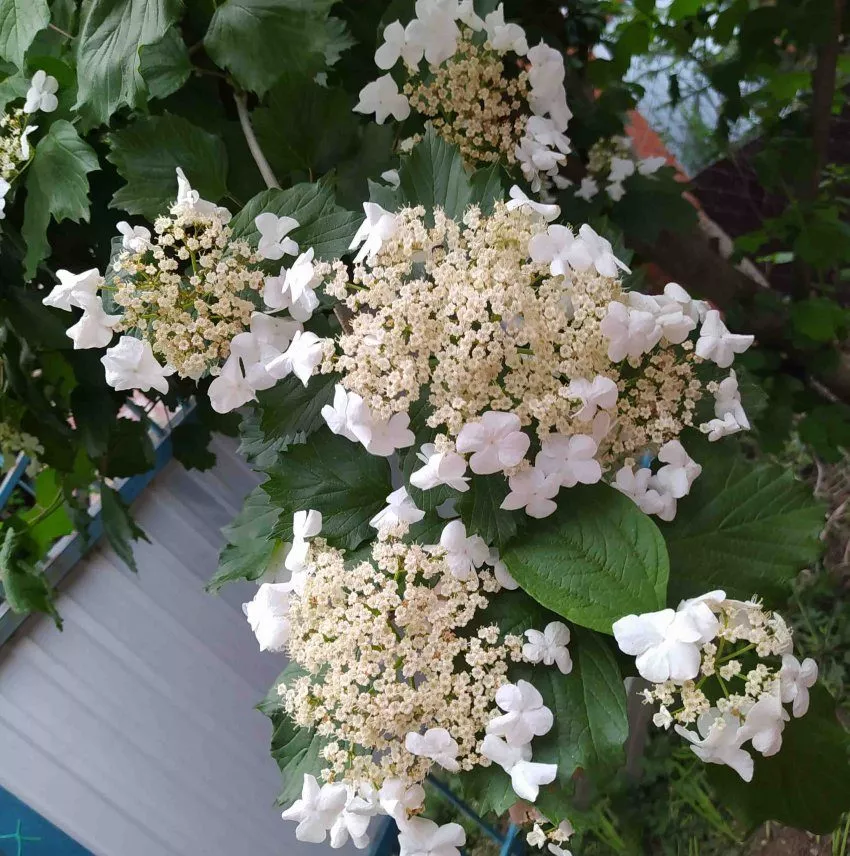
I'll show you more viburnumIt's just in full bloom. I don't know the variety's name, but the berries are large and almost without bitterness.
These little plates-inflorescences look like white butterflies have settled along the edge:
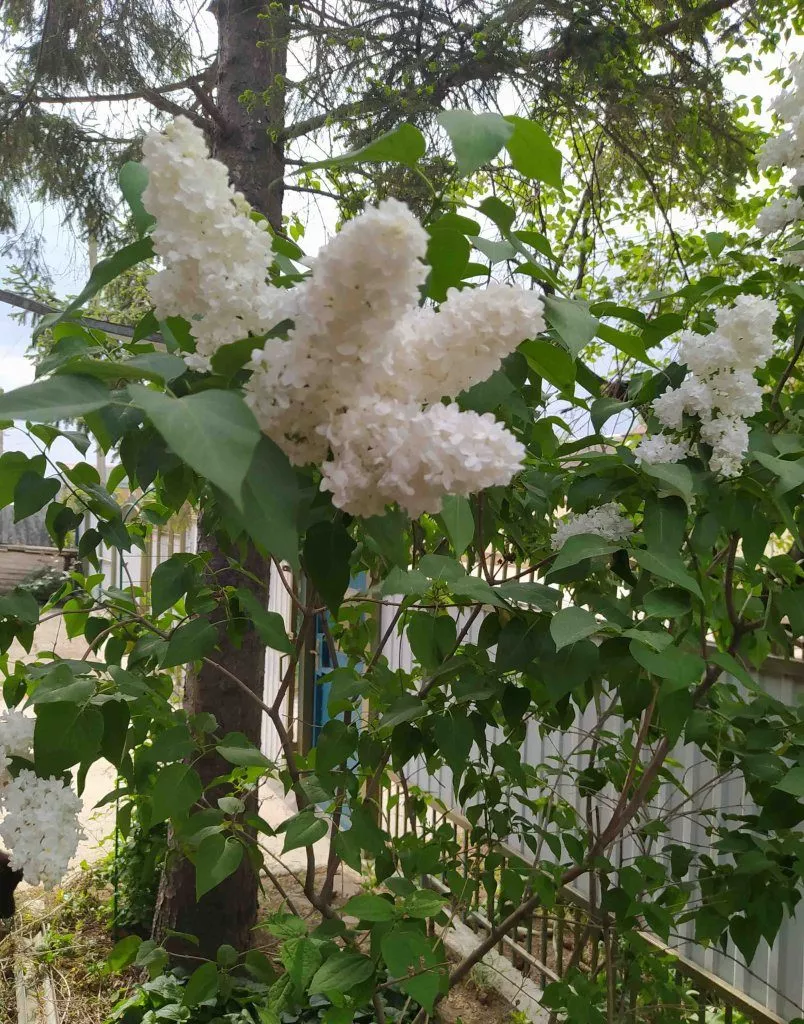
Lilac It will soon fade, but it continues to delight the eye. And the aroma emanating from it is divine!
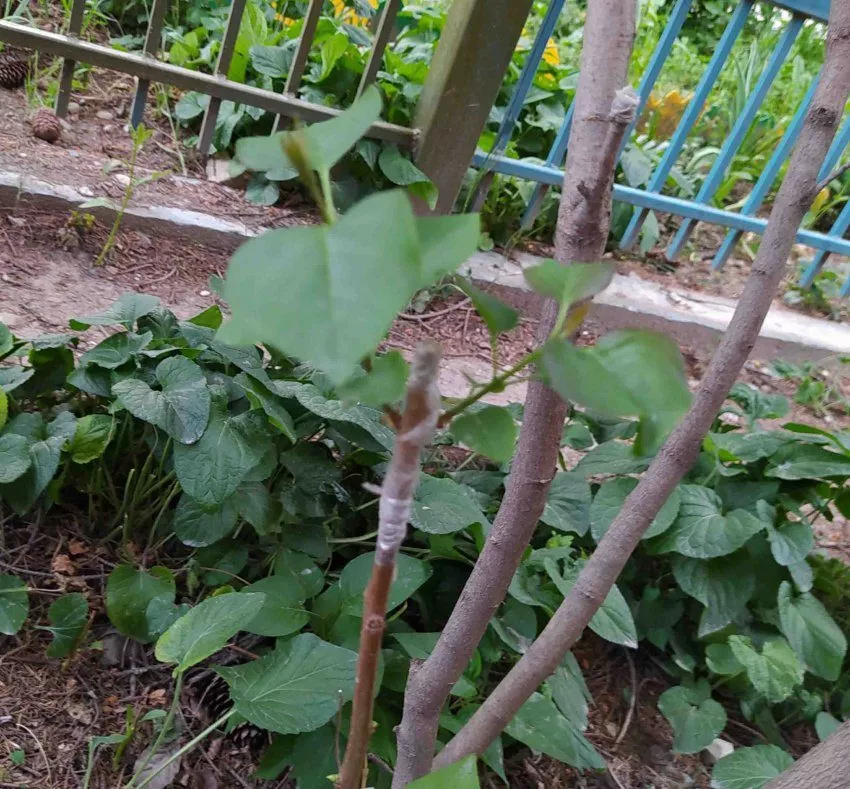
I grafted blue lilac onto white lilac this spring, and new shoots have already emerged. I'm planning to create a multi-colored lilac.
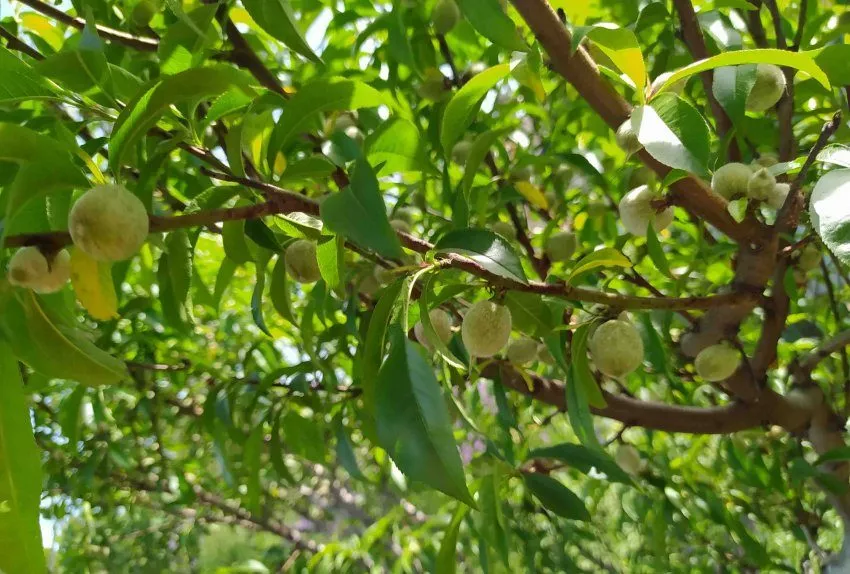
I'll come back to the fruit trees again. This is peach, with still green fluffy fruits:
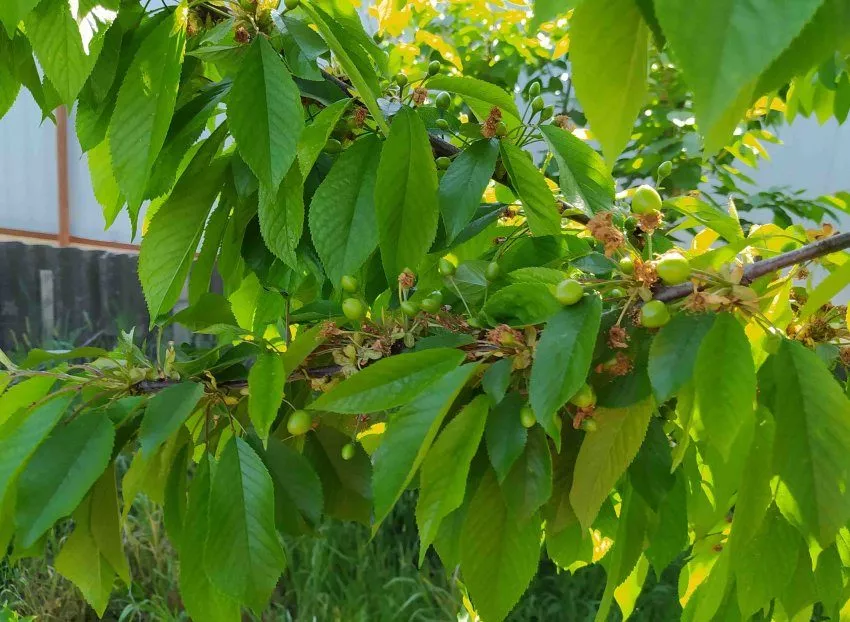
Cherries. The harvest should be good this year. The berries are very sweet.
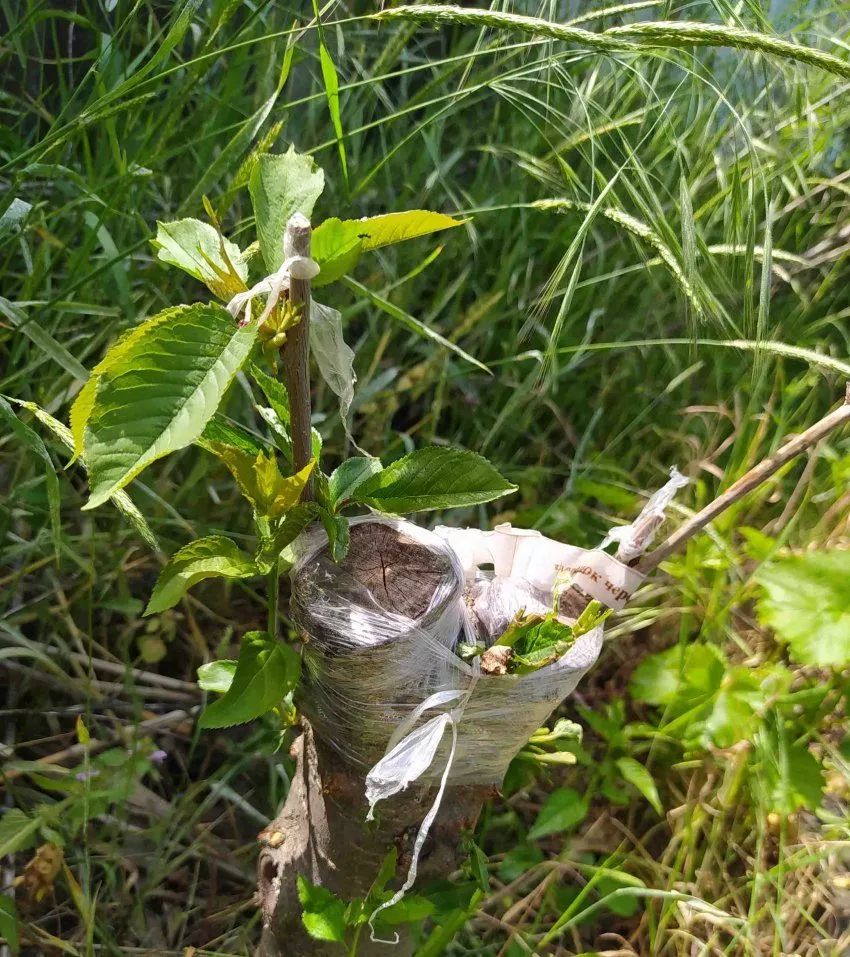
Another experiment of mine. Out of nowhere appeared wild cherry plumApparently, the birds brought the seed. At first, I couldn't figure out what kind of tree it was, but when last year it produced small, yellow, very sour fruits, everything became clear.
I cut it down, but in the spring, shoots sprouted from the remaining trunk. I decided to try grafting something useful onto this wild tree. That useful thing turned out to be the "Ispolinskaya" cherry variety.
Nedzvedsky apple treeI was charmed by its foliage and bright pink spring blooms. I couldn't resist planting one in my garden.
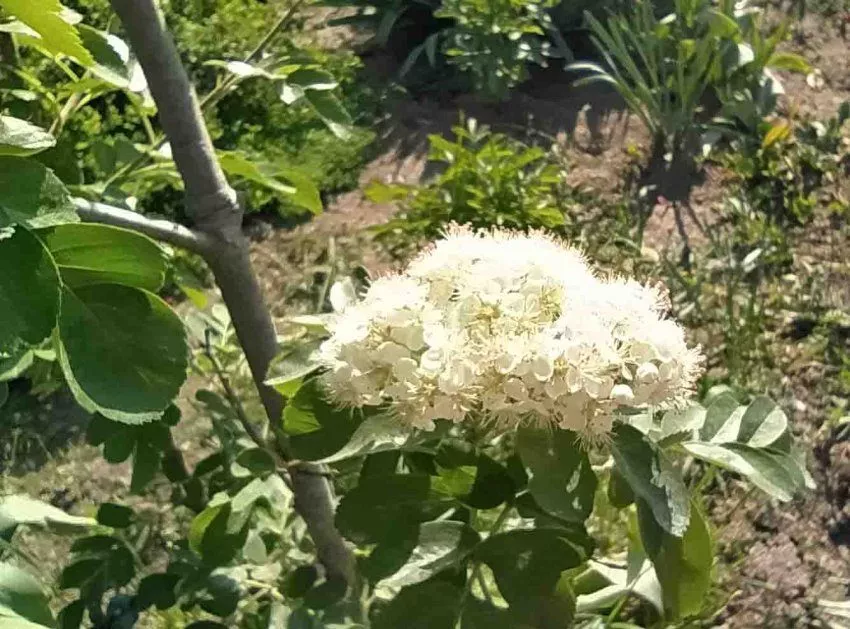
Rowan pomegranate. A hybrid of rowan and hawthorn. Delicious and aromatic berries ripen in the fall.
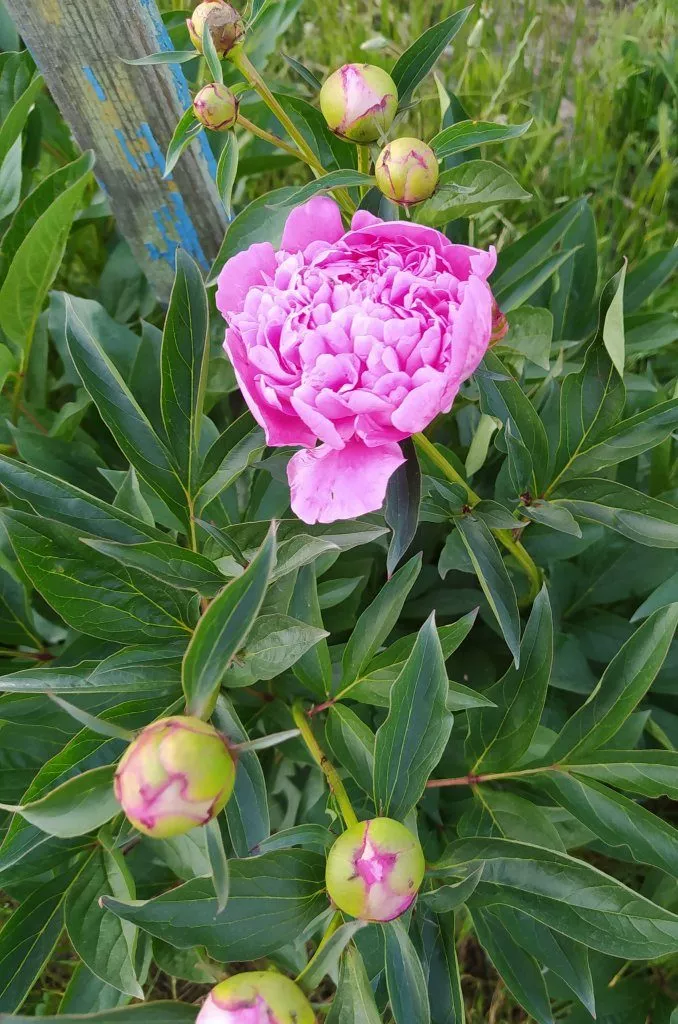
Well, and a few more flowers. Peonies -The buds have grown tight and are about to open. The ants are already on duty; they apparently really enjoy the sweet nectar of the flowers.
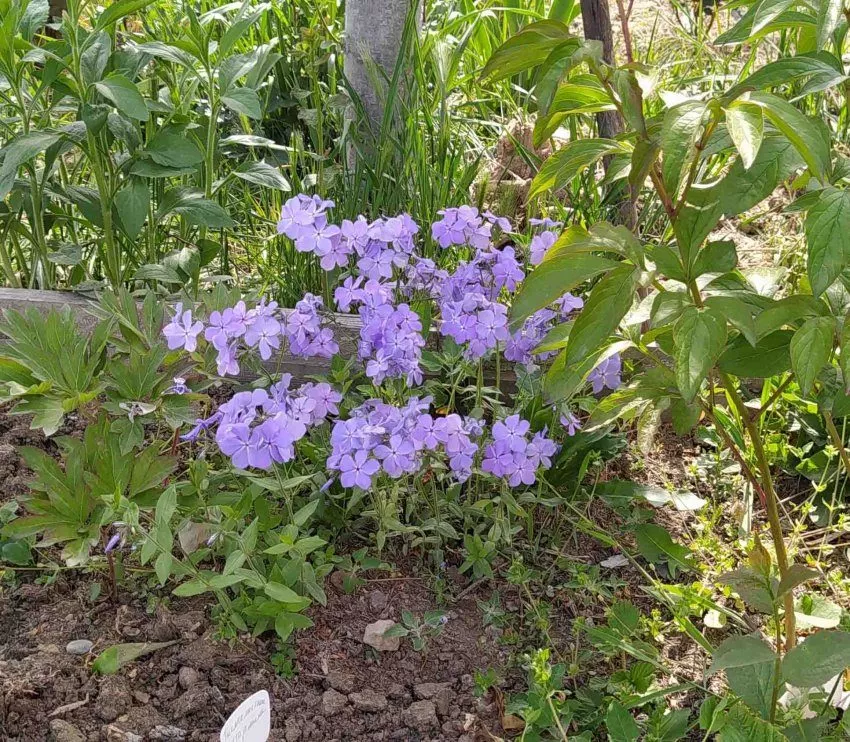
And bright Phlox distended:
That's the kind of walk I had, and I hope it wasn't too tiring. If you're interested in any plants or varieties, please ask, and I'll try to answer in more detail.