
Here is the ligularia in bloom
With carved emerald leaves,
God created this beauty,
To share joy with usThe shaggy bumblebee drinks intoxicating nectar,
It hums, flying from a flower,
And the ligularia is blooming
And my garden is filled with aroma.
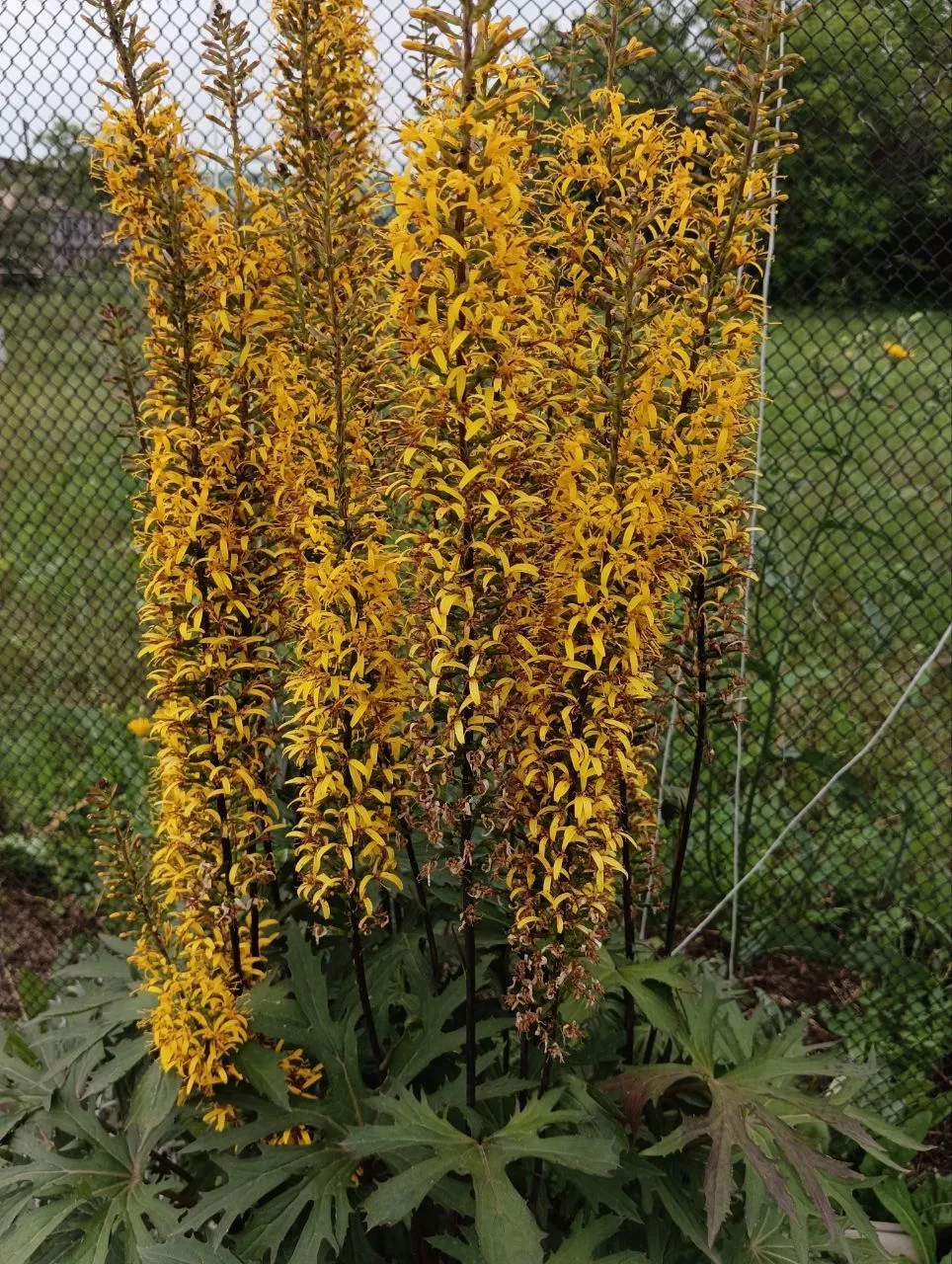
Ligularia Ligularia, or Ligularia, is a perennial herbaceous plant from the Asteraceae family. Ligularias are cold-hardy and tolerate our Siberian frosts well.
Shade-tolerant, they grow well under the crowns of tall trees, near summer cottages, but they also develop well in sunny areas, if they receive enough water.
These are easy-to-grow plants; they'll bloom even if you don't fertilize them. But if you do feed them, they'll reward you with a riot of blooms. The inflorescences will be tall, strong, and the blooms will be vibrant.
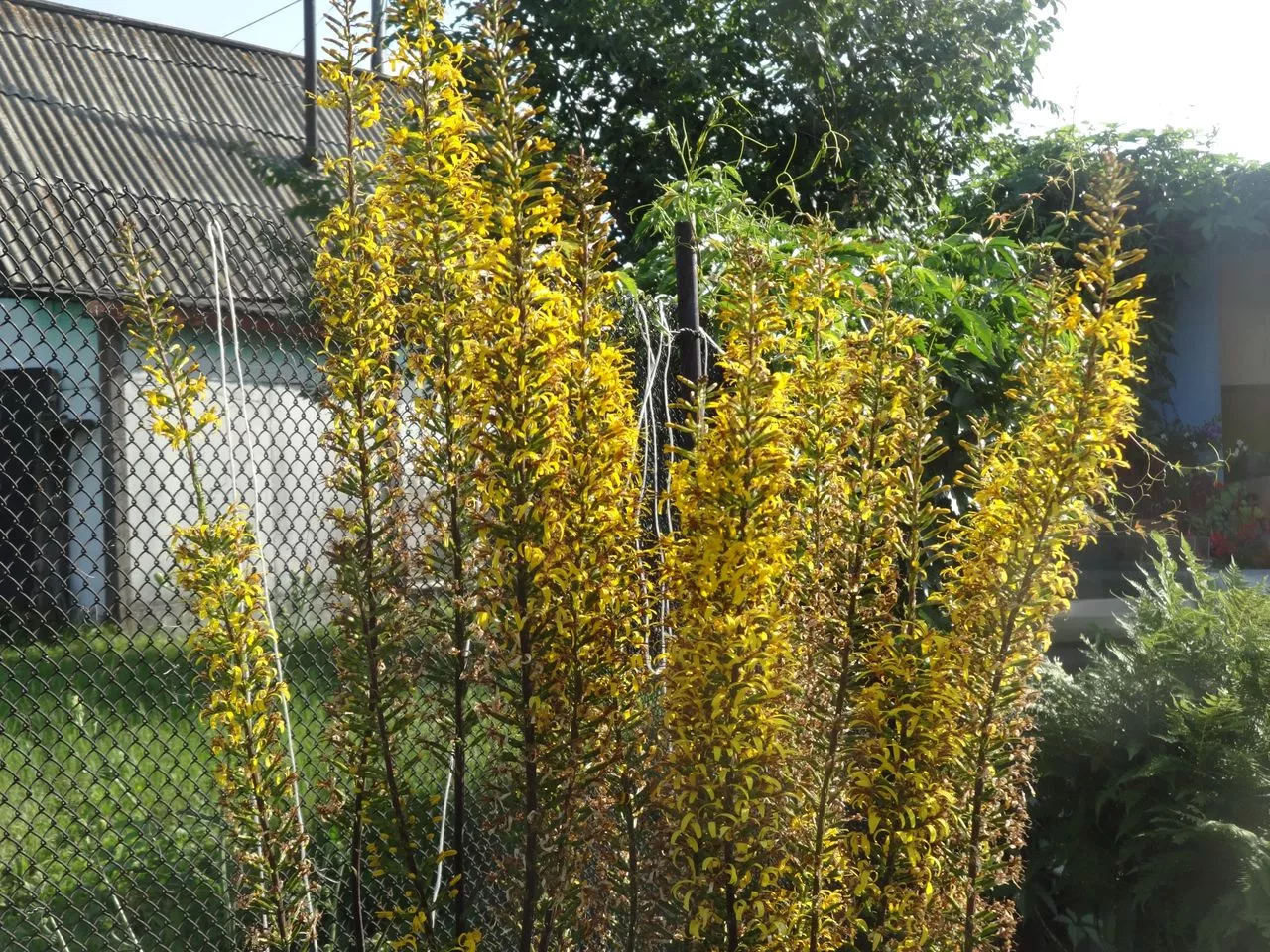
I bought my second ligularia at a flower shop. The pot listed the variety as Rocket. It also has spike-shaped inflorescences, which are also long but thin, with brownish stems and flower stalks up to 70 cm tall. The bush itself is about 50-60 cm tall, slightly shorter than my first ligularia, approximately 1.5 m including flower stalks.
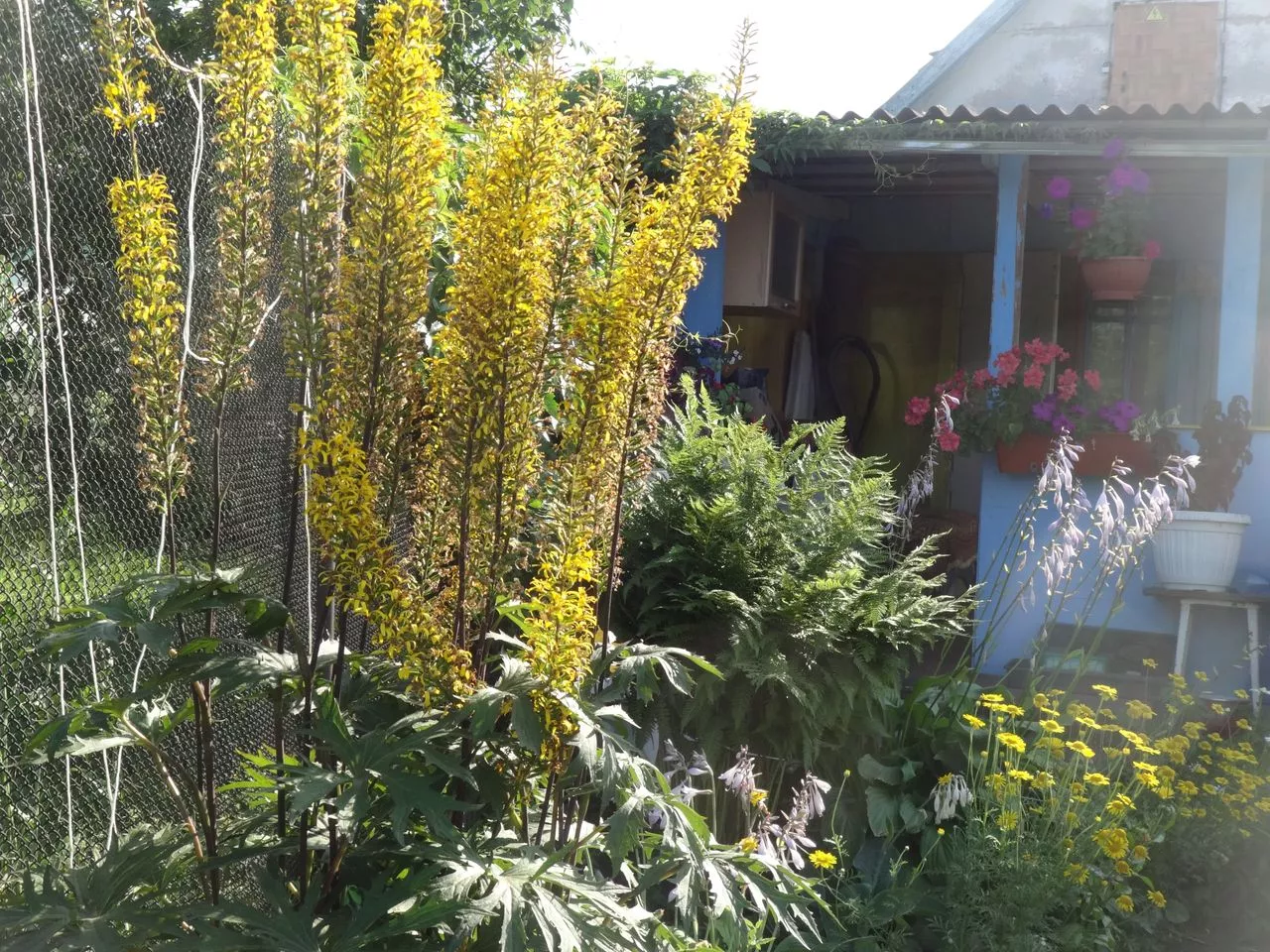
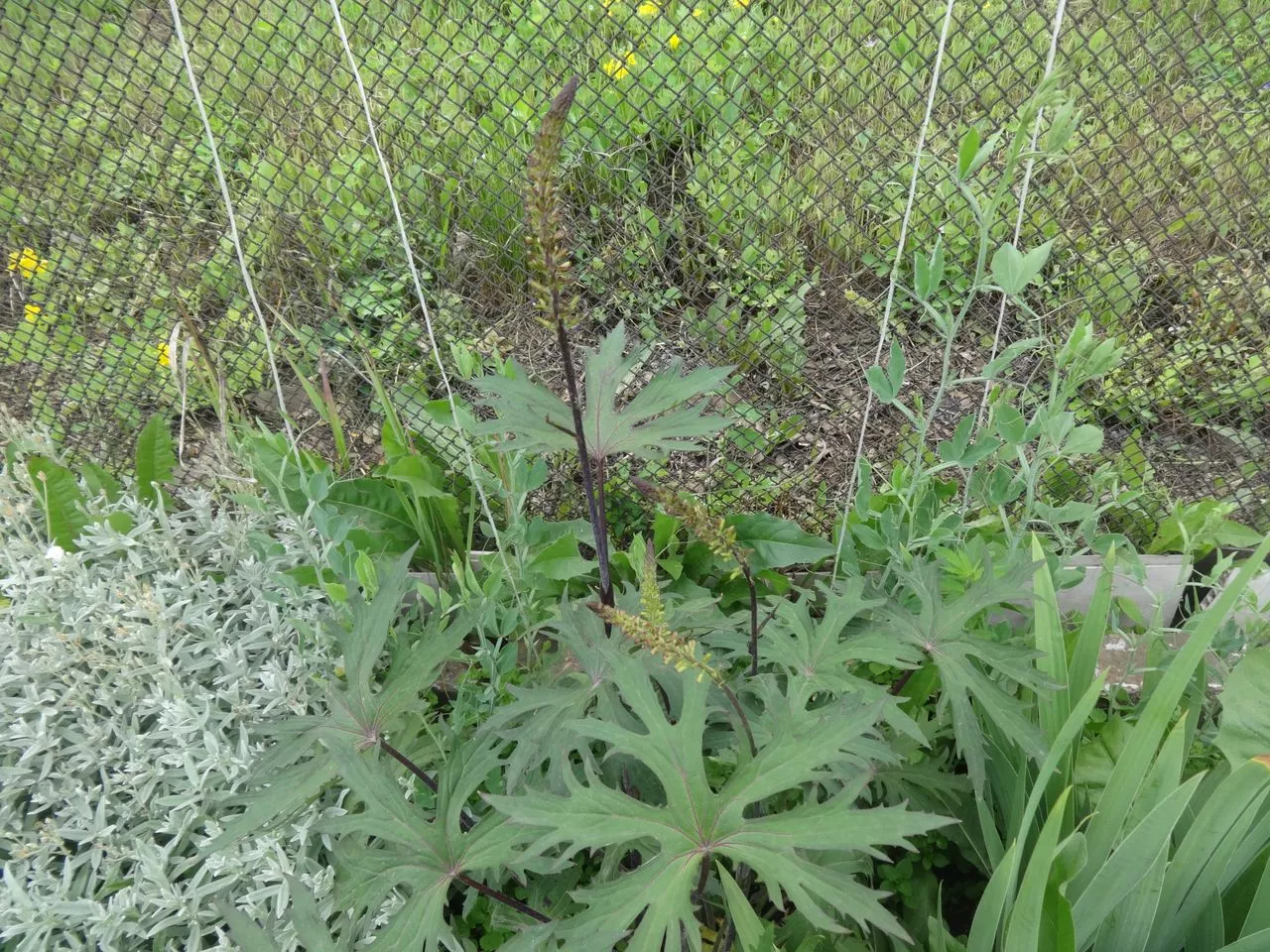
The leaves are large, carved, deeply dissected, light green with dark veins, the stems and spikelets are dark brownish.
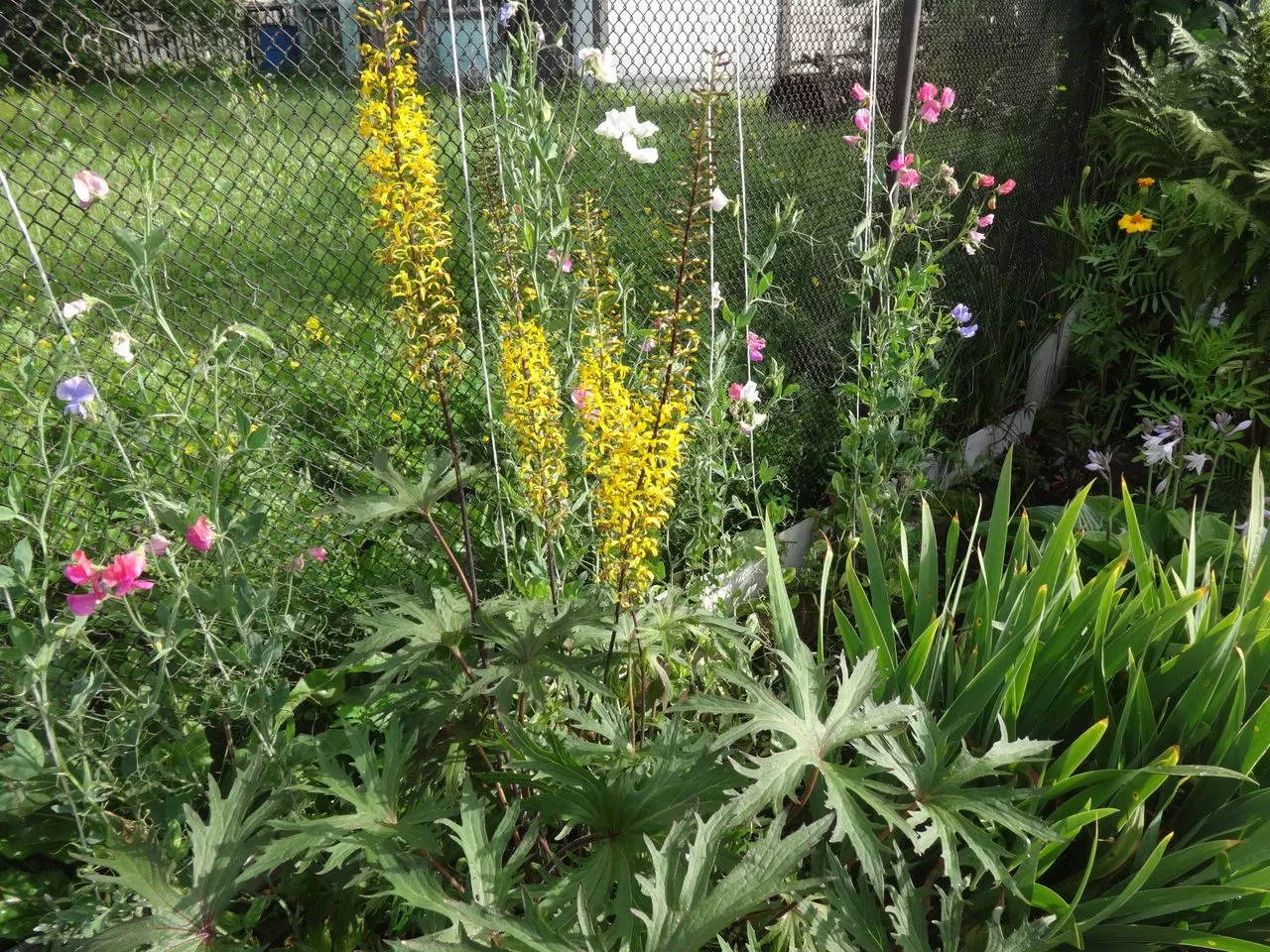
This Ligularia variety is early-blooming, producing stems in late June or early July. The stems emerge curved and downward-pointing, but straighten as they grow.
Flowering lasts about a month; the flowers are small and daisy-like. The center is dark brownish-yellow, and the petals are sunny yellow and elongated. The flowers open from the bottom up as the spike grows. At the end of flowering, the leaves change color, turning bronze-brown.
The plant loves moisture and prefers shady, moist spots. Mine is growing in a sunny spot near a chain-link fence, but it's doing just fine. It gets plenty of water; rain is common here. However, if it's very hot, the ligularia will droop its leaves and wilt, but a little watering is all it takes.
This is a very beautiful variety of Ligularia—a delicate, delicate bush. Hostas, irises, and yaskolka are growing near this Ligularia. But this isn't the final version. I plan to replant it in the spring.
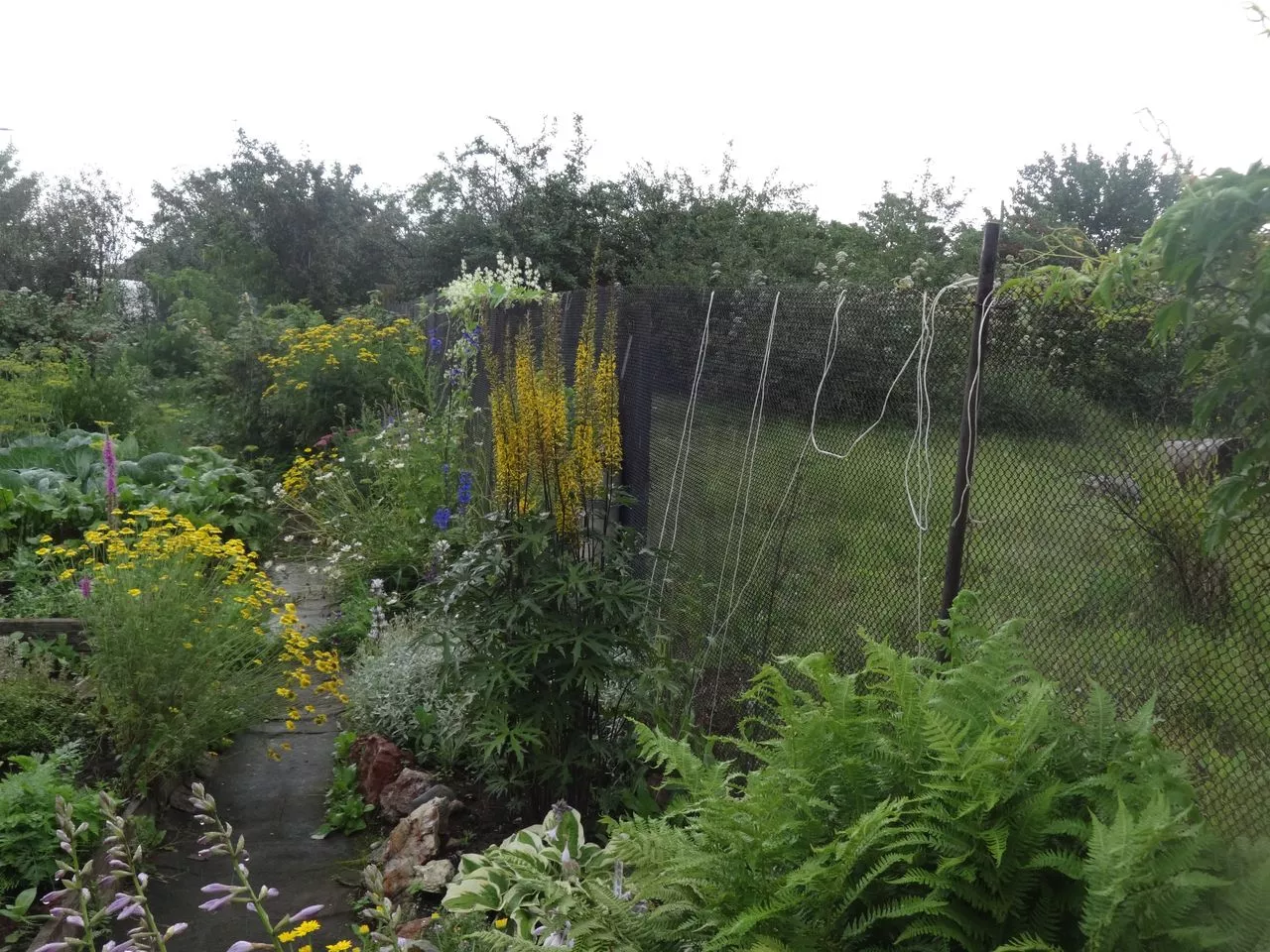
Caring for the Rocket Ligularia is the same as for other Ligularias, but I water it more frequently. You can read about other Ligularias here. here And here.
But slugs do not chew holes in the leaves, since it grows in a sunny area, and these pests like to hide in dark and damp places.
When ligularia produces flower stalks, small black aphids may appear on them. Young flowers are juicy and sweet, and the aphids simply swarm over the stalks. It's important not to miss the moment the aphids appear, otherwise you might not even see the flowers.
Here, aphids usually appear first on the buldenezh. We have to fight the pest, spraying with aphid control products, as the aphids suck the plant's juices, which will prevent it from blooming properly.