

We've harvested our cabbage. It's been a bountiful crop this year, with large, clean heads.
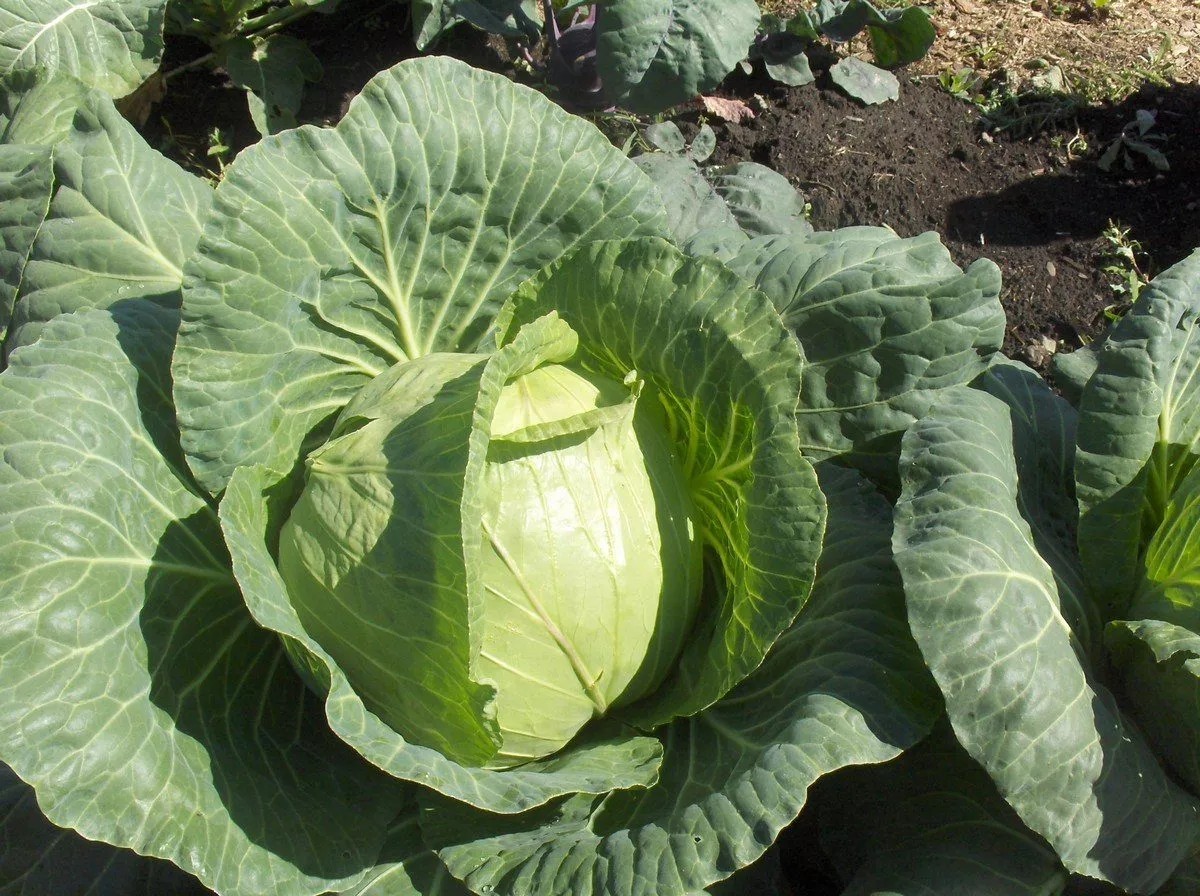
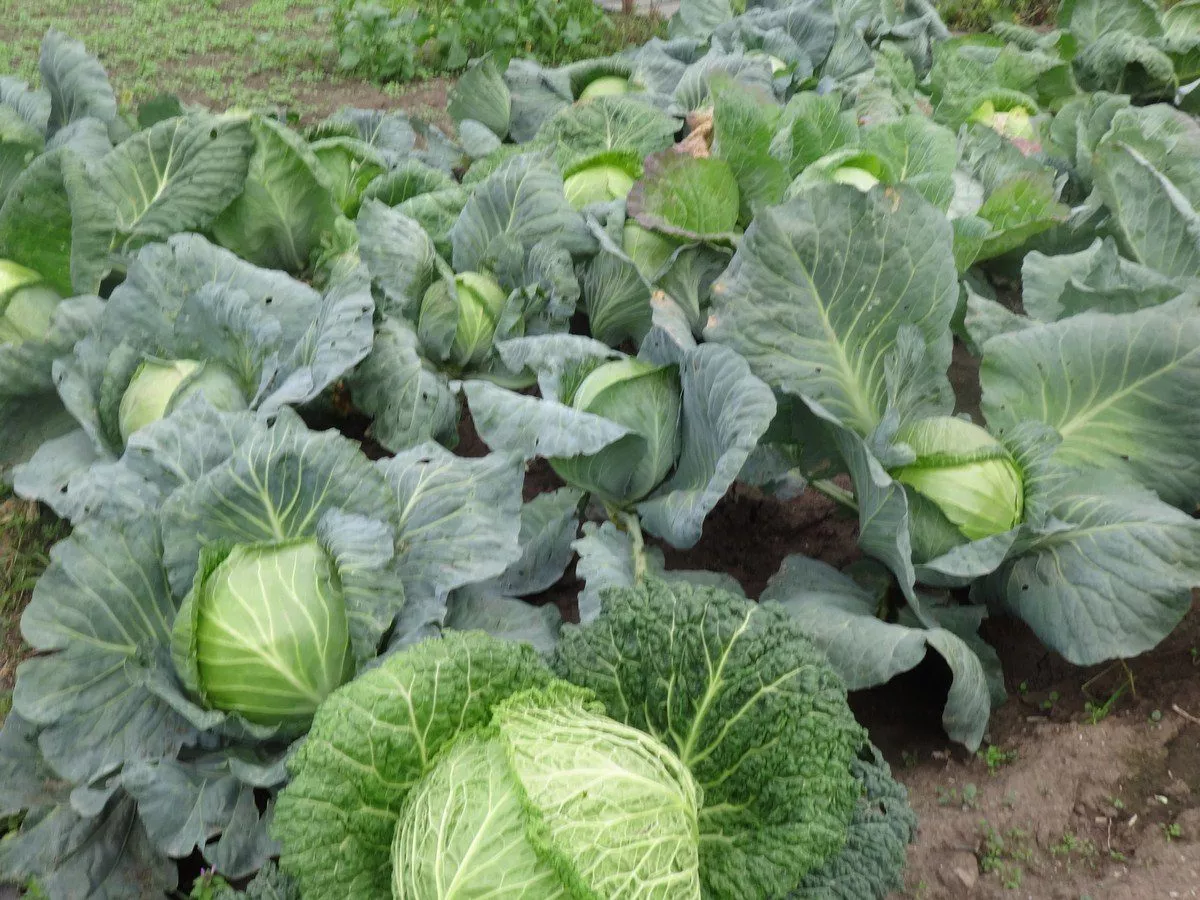
Despite the rainy summer, the cabbage heads didn't crack. We wrapped most of the harvest in newspapers, taped it up, and stored it in the cellar—mostly the Zimovka and Kolobok varieties.
We gave some of the cabbage to friends for pickling. For this purpose, we plant the Podarok and Belorusskaya varieties, and the Rinda hybrid. Rinda is also good for storage.
Now it's time to salt the cabbage.
We used to ferment it in large vats. We'd shred it, sprinkle it with salt, and knead it with our hands on the table to release the juices. We'd sprinkle it with grated carrots and dill seeds. We'd place whole cabbage leaves on the bottom of the vat, pack the cabbage down tightly, and top it with more leaves. We'd press it down with a large flat plate and place a weight on the plate—a large, heavy stone wrapped in a clean cotton cloth, placed it in a plastic bag, or place a large bottle of water on the plate.
The cabbage fermented for a while in a warm place. Every day, they pierced it with a wooden stick. Then they took it out to a cool place. This is how my grandmother, my mother, and I fermented cabbage when we lived in our own house.
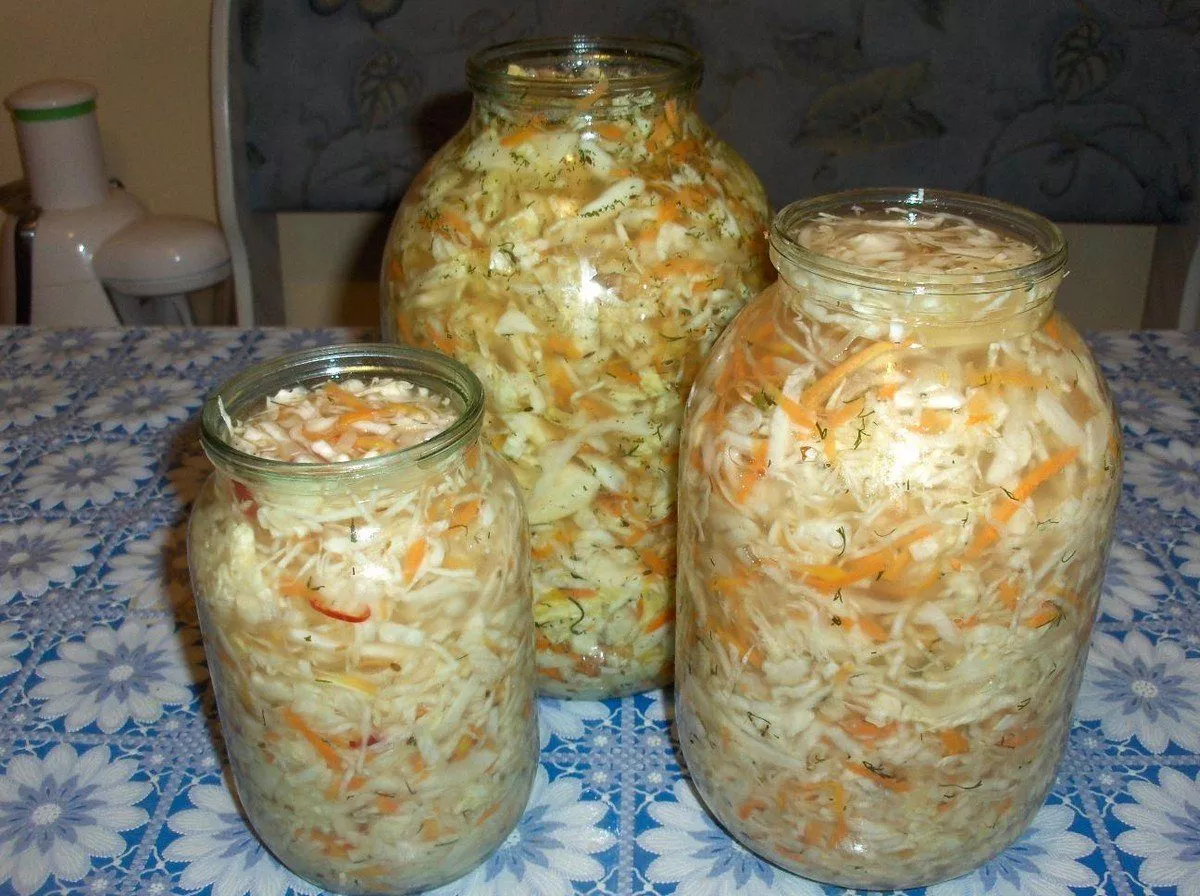
But now I don't make so much cabbage; I use a different, quick and easy recipe for pickling it. There are countless recipes for sauerkraut, salted cabbage, and marinated cabbage. I chose the easiest one for myself.
The ingredients you'll need to make cabbage according to this recipe are cabbage, carrots, salt, and brine—2 tablespoons of salt per liter of water. You can add 1 heaping tablespoon of sugar or honey if desired. I salt my cabbage with honey.
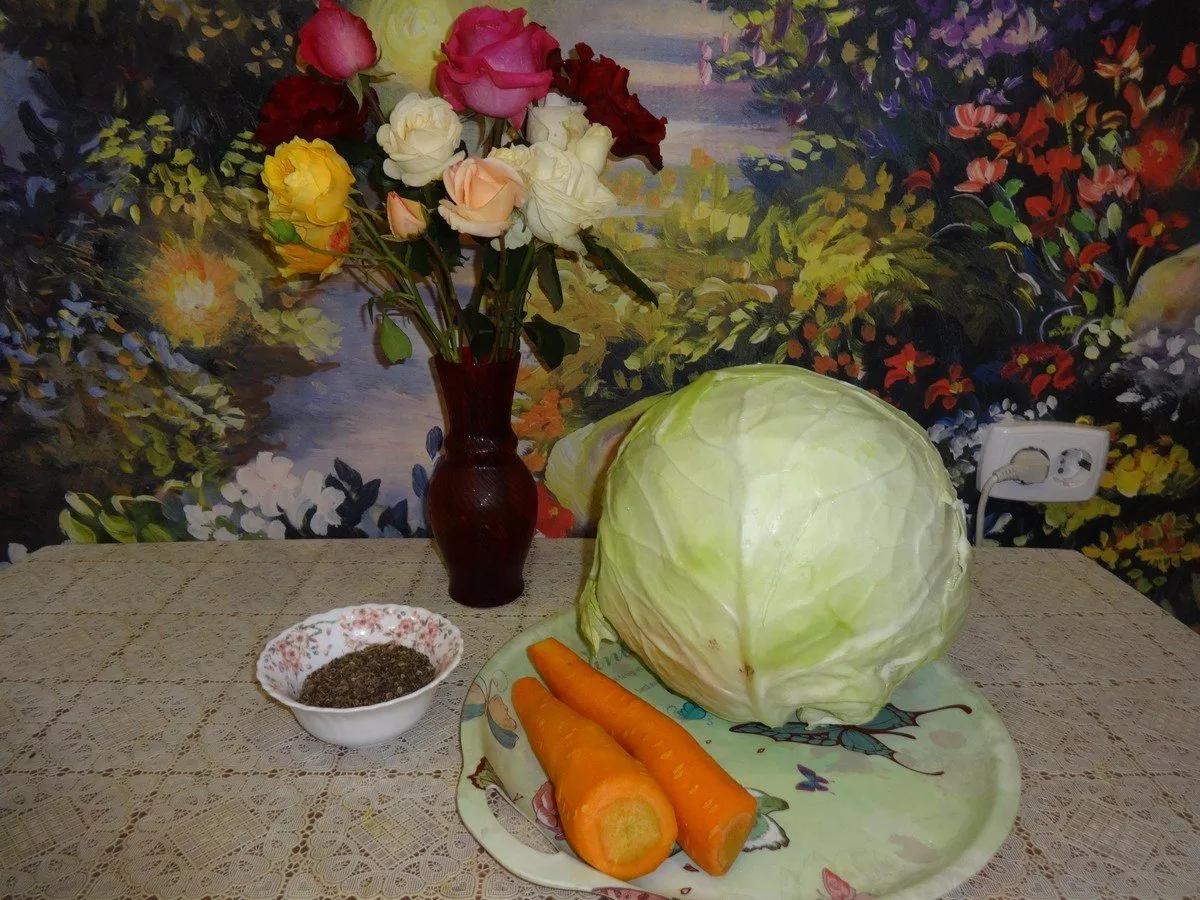
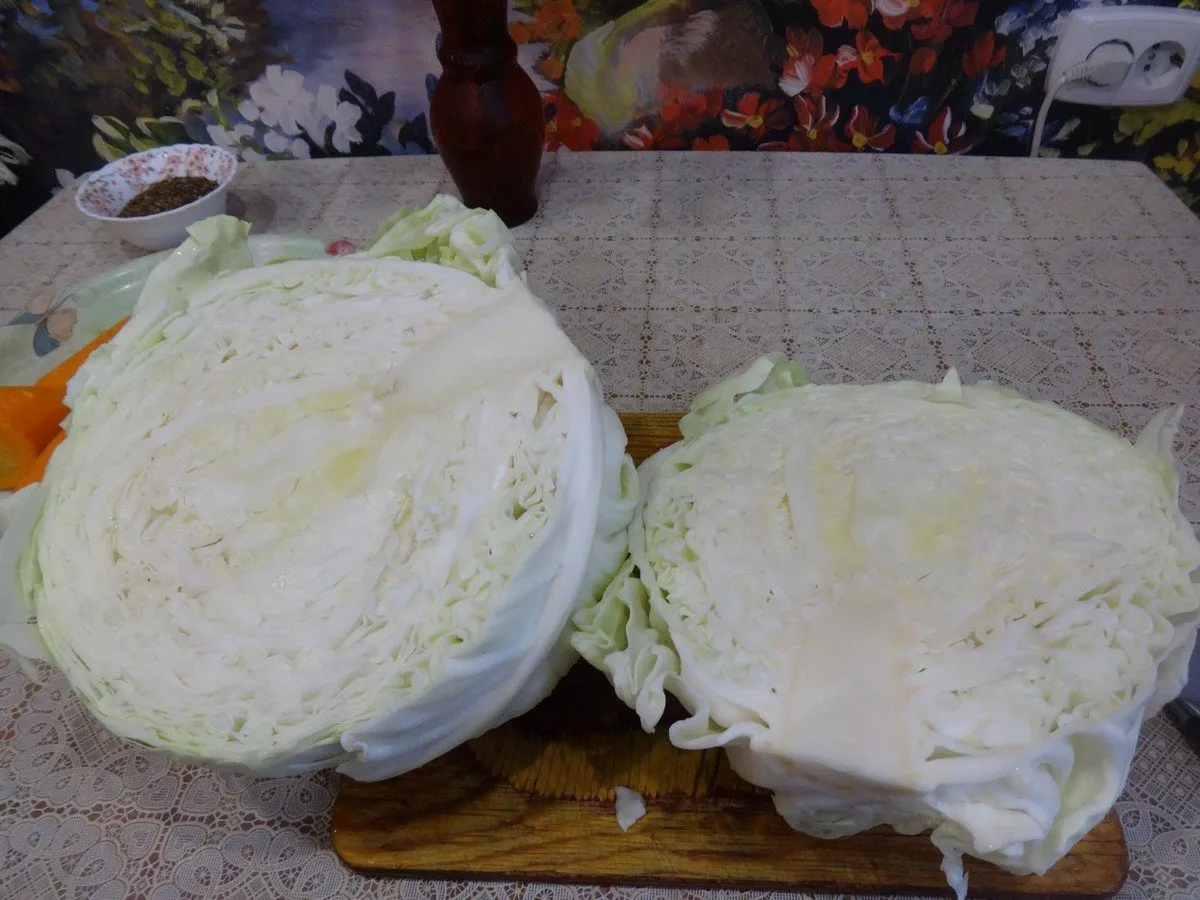
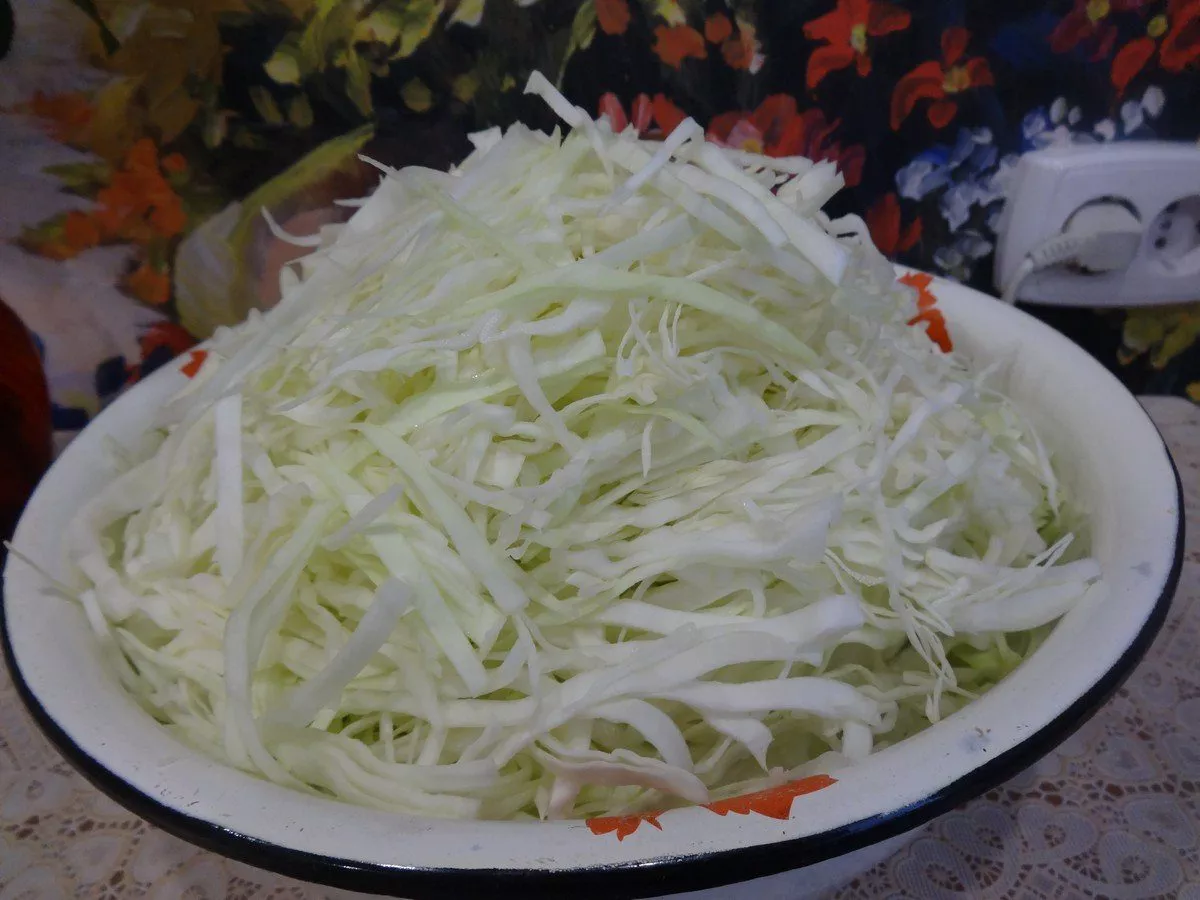
I cut the cabbage into thin strips into a large bowl, add the carrots, also cut into thin strips.
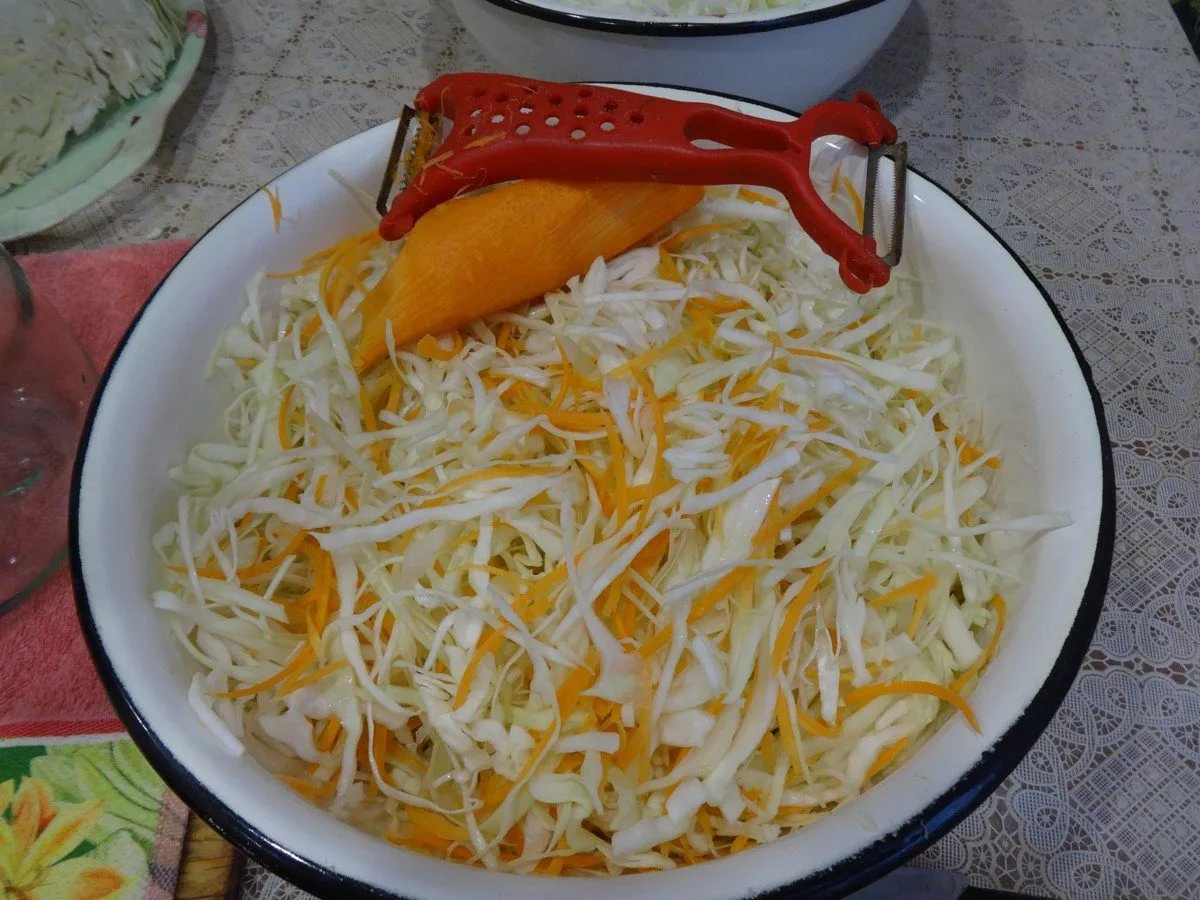
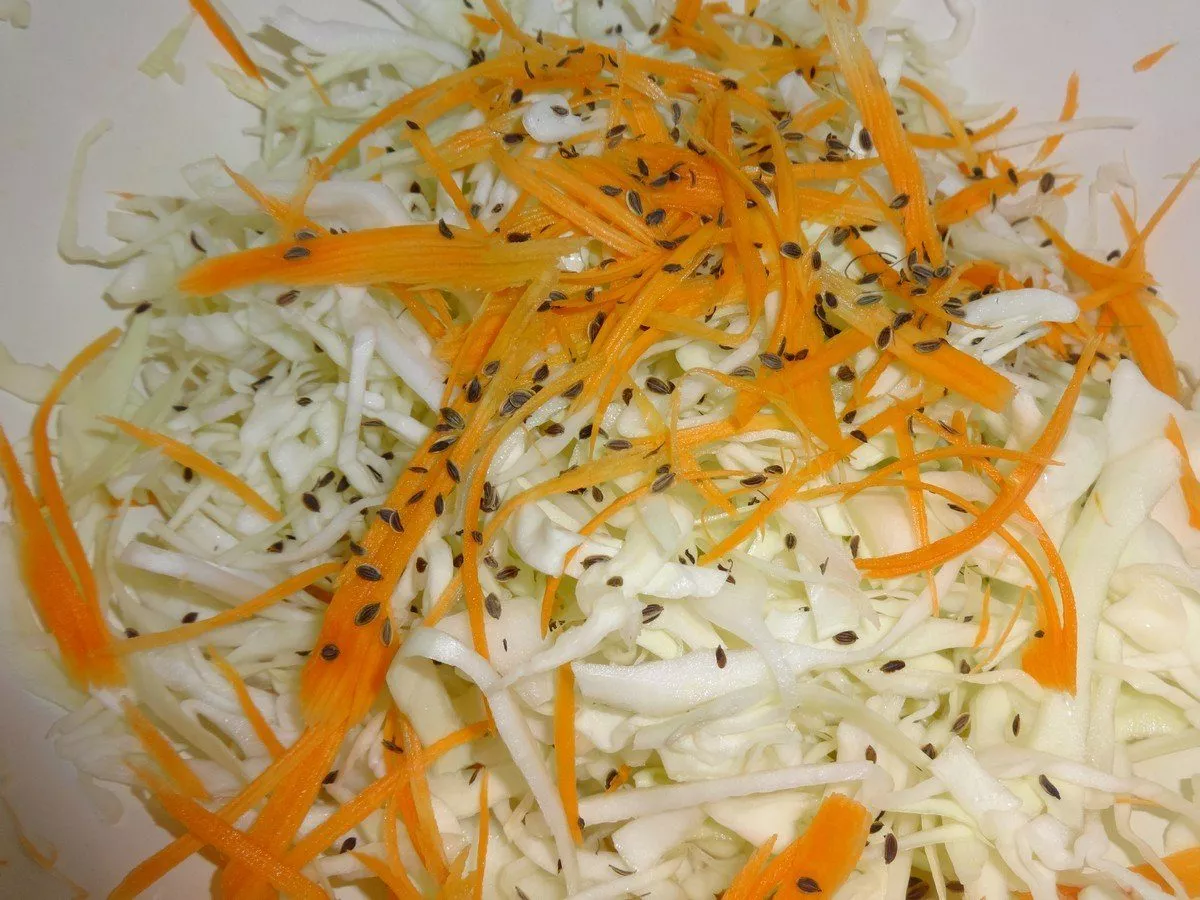
I mix it, put it into clean jars, and pack it tightly.
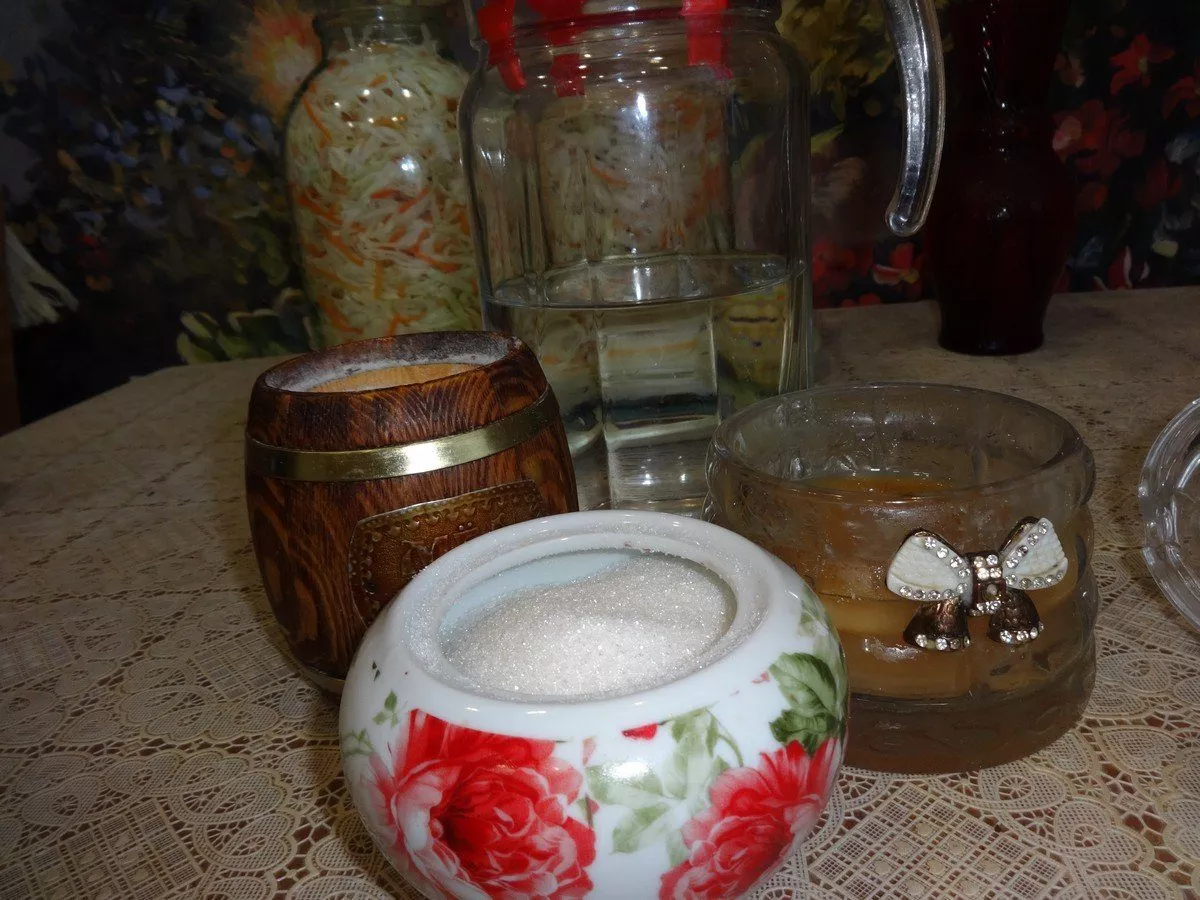
I prepare the brine, adding 2 tablespoons of coarse salt to each liter of water. When the brine boils, I turn off the stove. Let the brine cool.
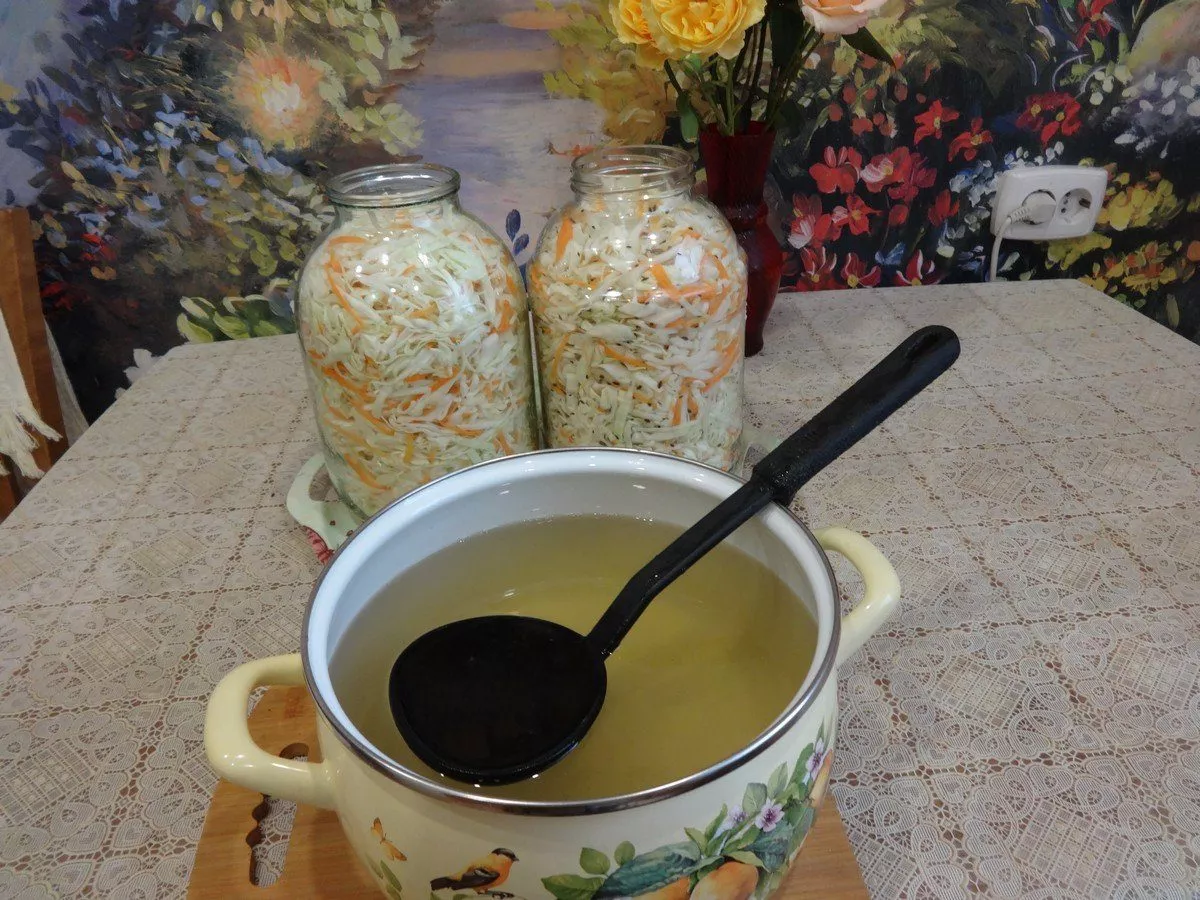
I dissolve honey in a glass and add it to the warm brine, stir well, fill the jars with brine up to the shoulders, and leave in a warm place for two days. Soon, foam will form in the jars, and the brine will fill them to the top, so I place the jars on a plate or tray to prevent the brine from leaking onto the table.
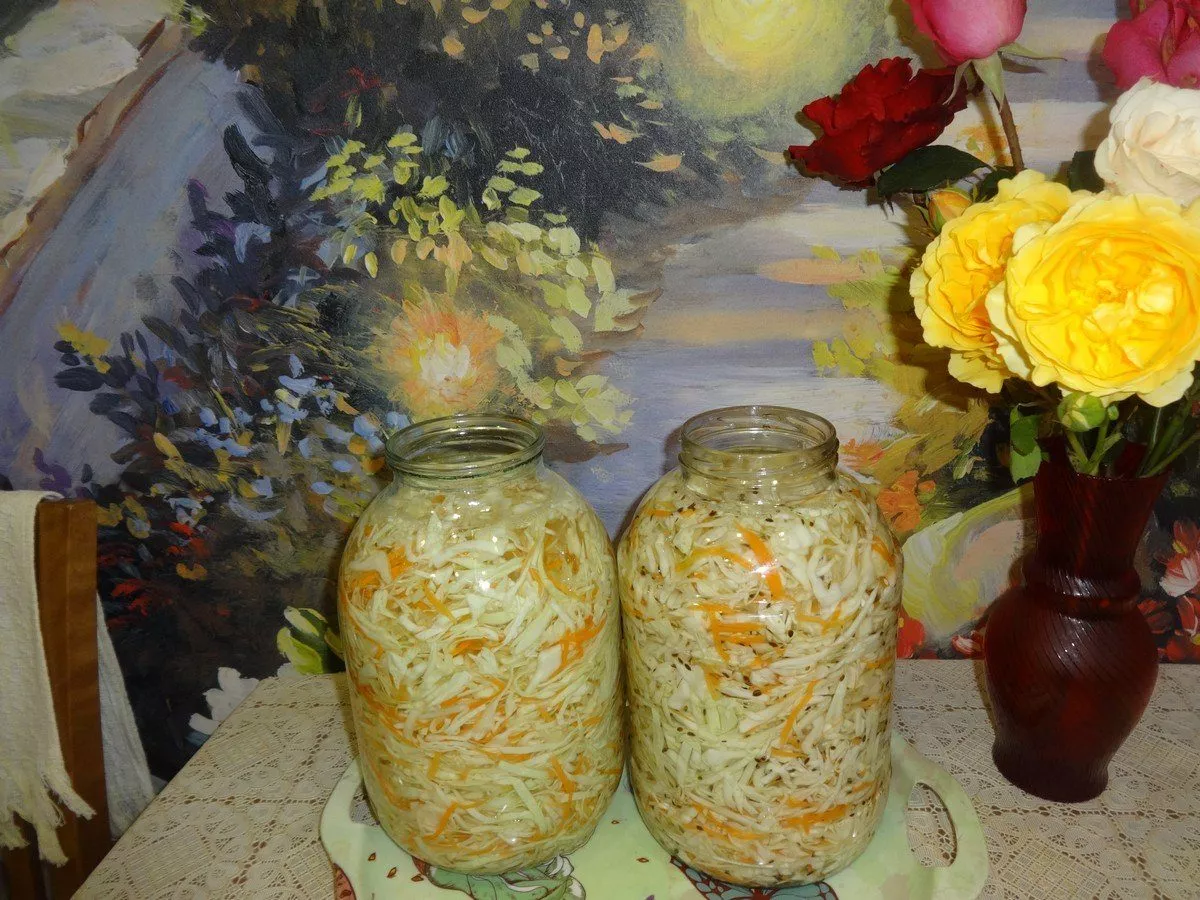
If there's a lot of it, collect it in a separate jar. Then pour it into the cabbage. I periodically prick the cabbage with a wooden skewer to release the gases produced during fermentation. After two days, seal the jars with lids and put them in the refrigerator. The cabbage is ready to eat after two days; it will be lightly salted, delicious, and crunchy. It will become more flavorful and richer as it ages.
This recipe can be used with any type of cabbage: spicy cabbage, adding julienned red bell pepper, hot pepper, and garlic; or savory cabbage, adding bay leaf, dill seeds, caraway seeds, coriander seeds, and other seasonings.
I make two or three jars at a time and store them in the refrigerator. When the cabbage runs out, I take the forks out of the cellar and make another batch of healthy and delicious cabbage.
We love eating cabbage with aromatic sunflower oil, green or onion, and lingonberries. We add it to vinaigrettes, make borscht, stew it, and fry sauerkraut pies.
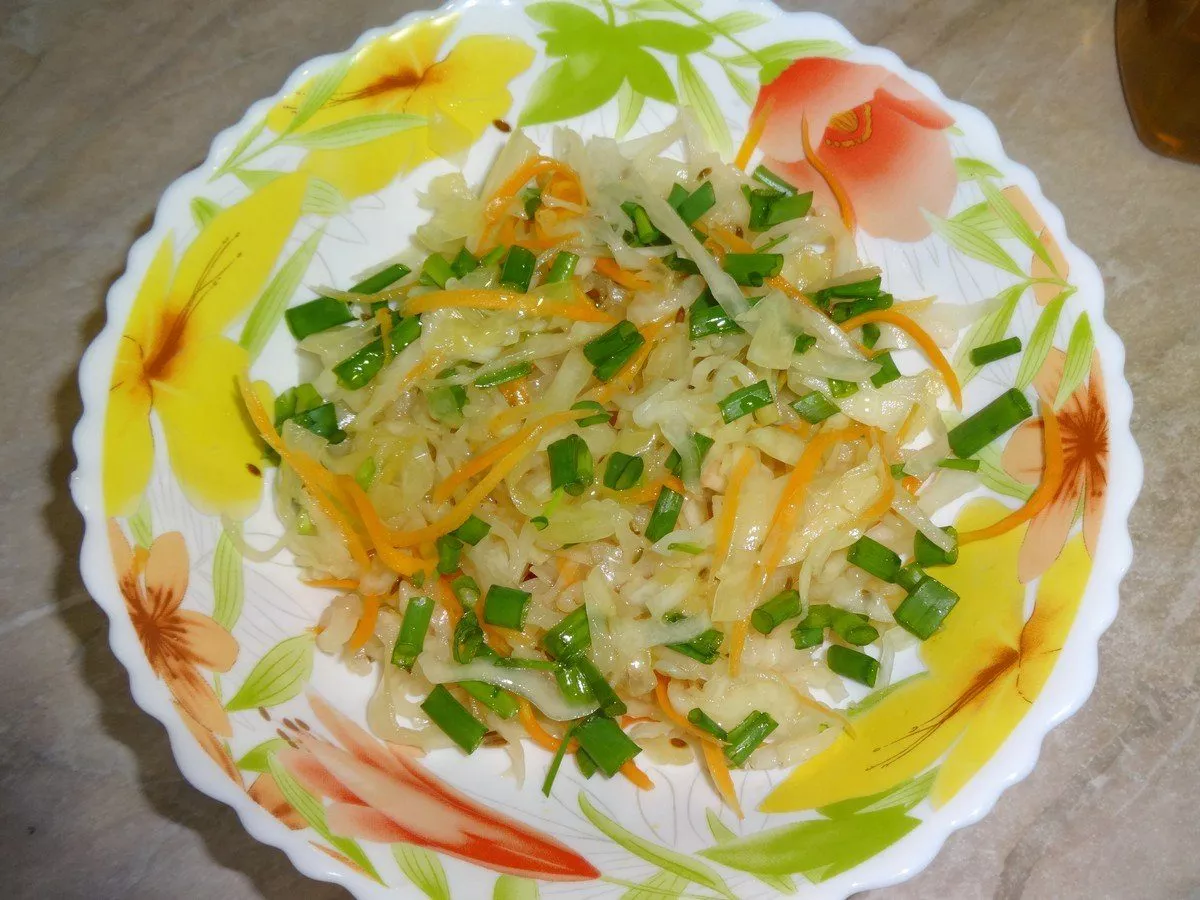
Sauerkraut contains many vitamins and minerals that strengthen blood vessels and bones, prevent the development of cancer, and promote the formation of new cells.
During the fermentation process, beneficial microorganisms multiply in cabbage, which have a beneficial effect on the functioning of the gastrointestinal tract.
Sauerkraut strengthens the immune system and helps fight infectious diseases. So pickle it, eat it, and boost your immunity!