
Who's that by the path?
Put out funny horns?
Aquilegia flower,
A long, slender stalk,Bells flowers
Of incomparable beauty.
Mine attracts the eye
Multicolored catchment area.
Aquilegia or columbine is another unpretentious flower that can grow and bloom on its own without proper care.
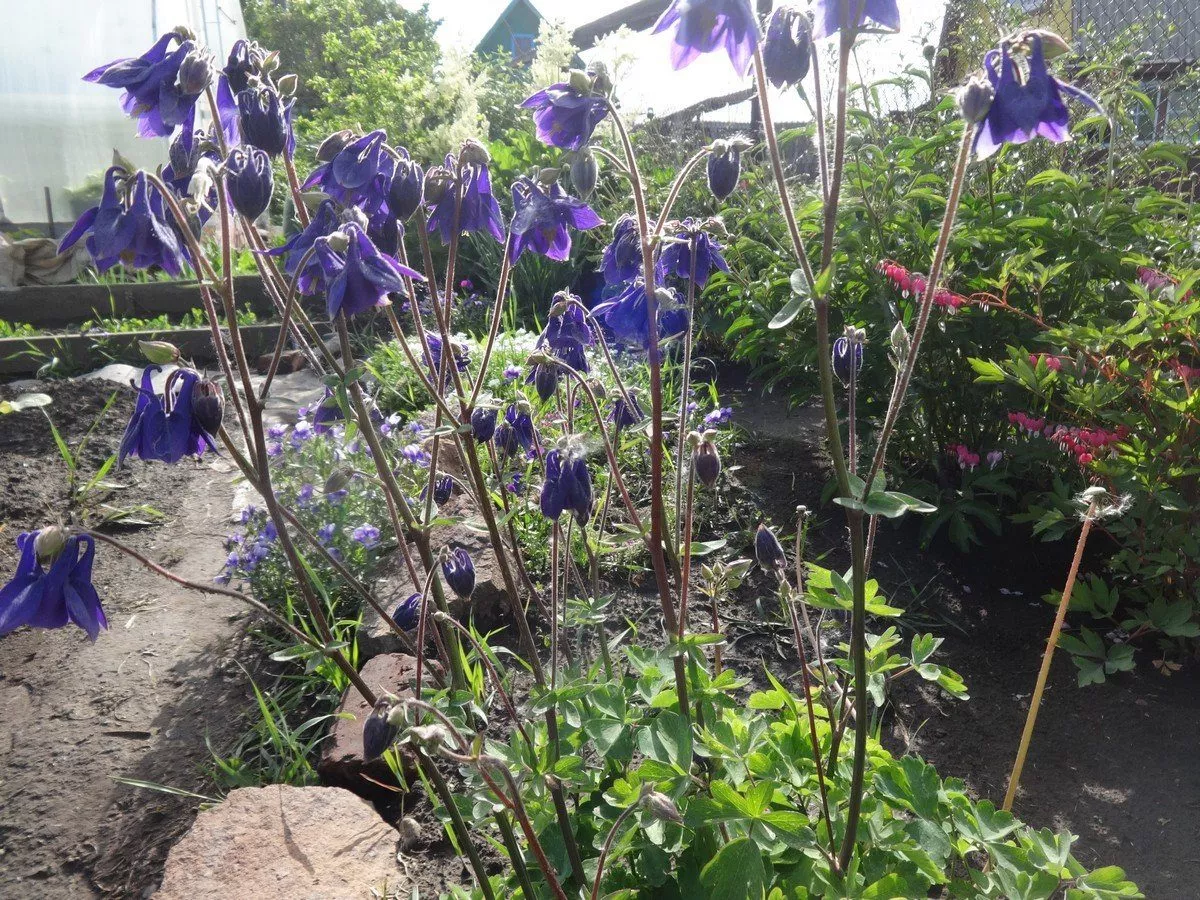
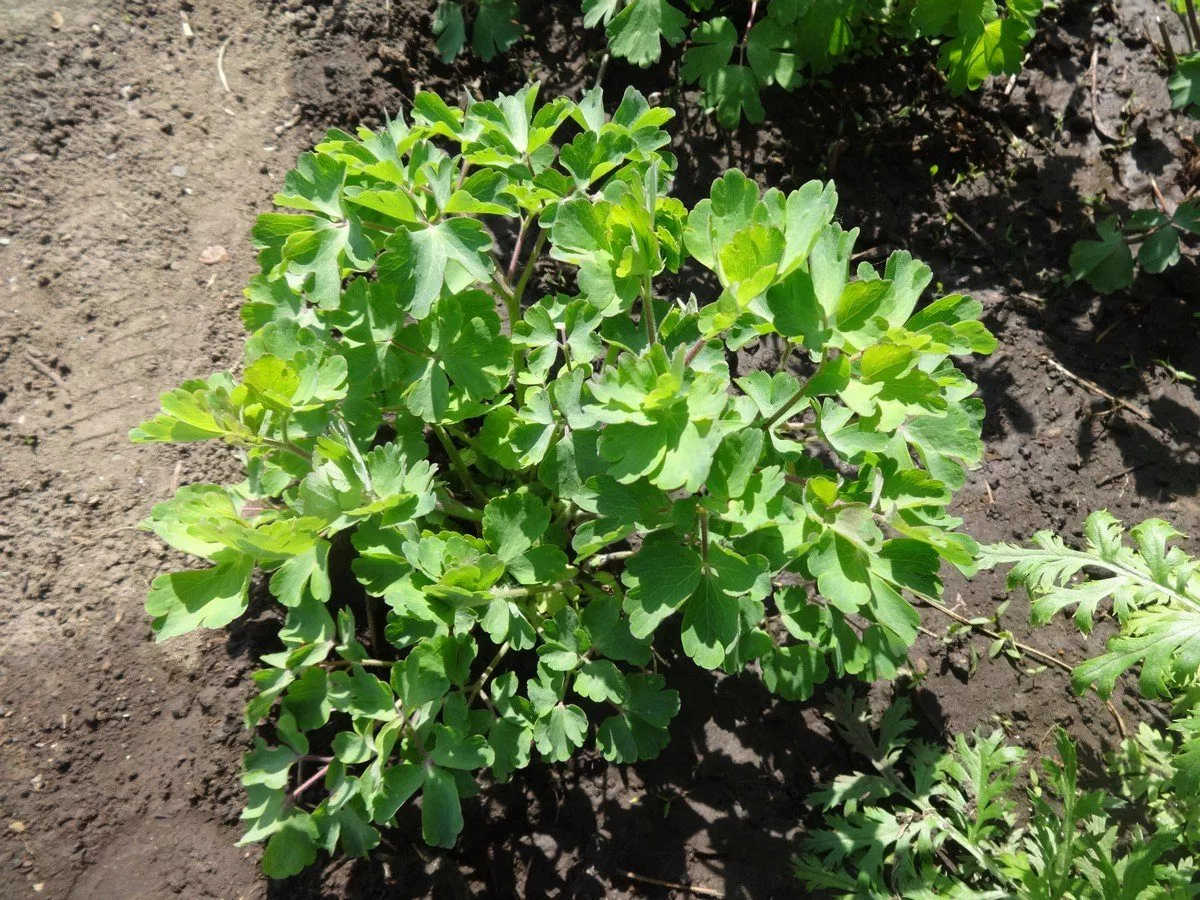
This is a beautiful perennial plant with decorative, lacy foliage. It overwinters well, is frost-resistant, and sprouts very early, as soon as the soil warms slightly.
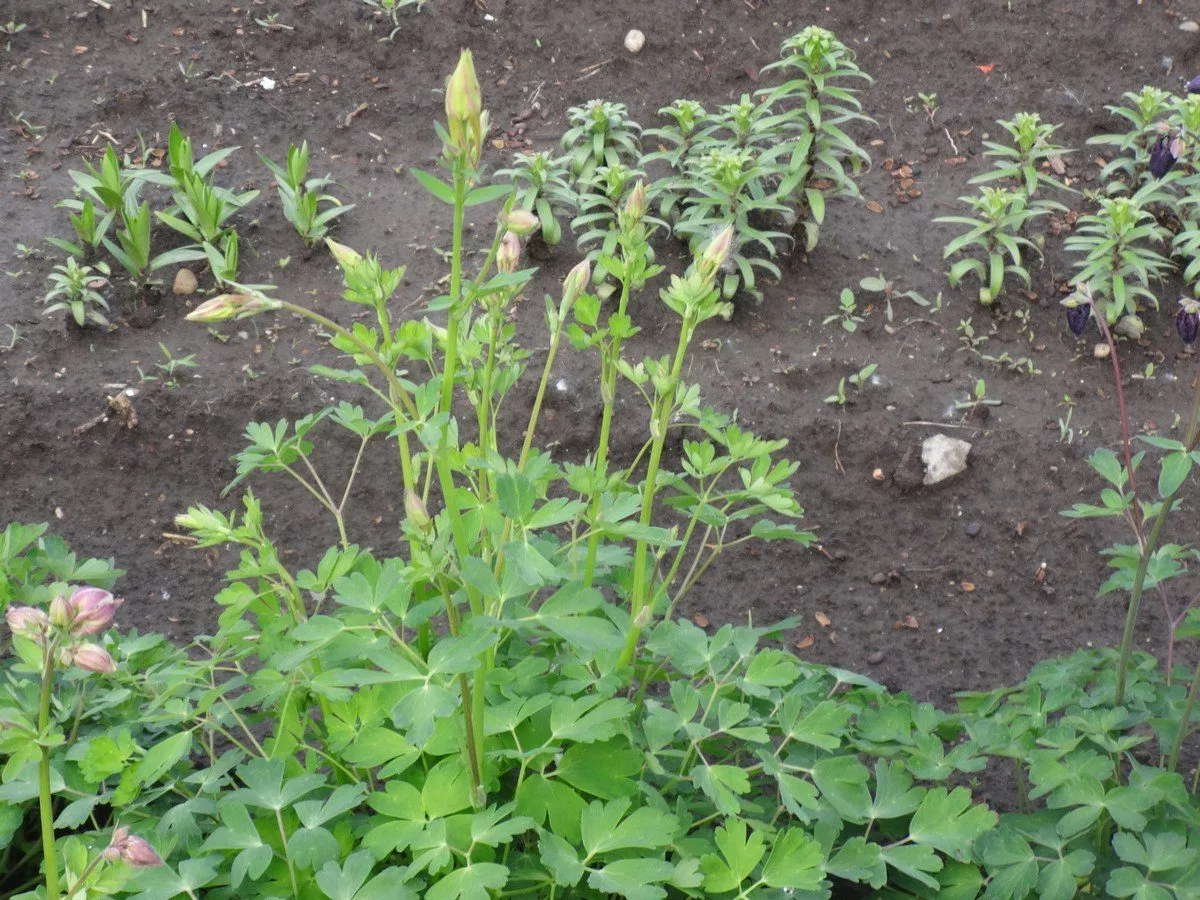
In mid-May, flower stalks appear, they grow quickly, become tall, and from June, abundant flowering begins.
At my dacha, I have the most common columbine plants with pink, purple, and lilac flowers. They've been growing there since before we arrived. These columbine plants have bell-shaped flowers, with small spurs at the top of the bell, which I call horns.
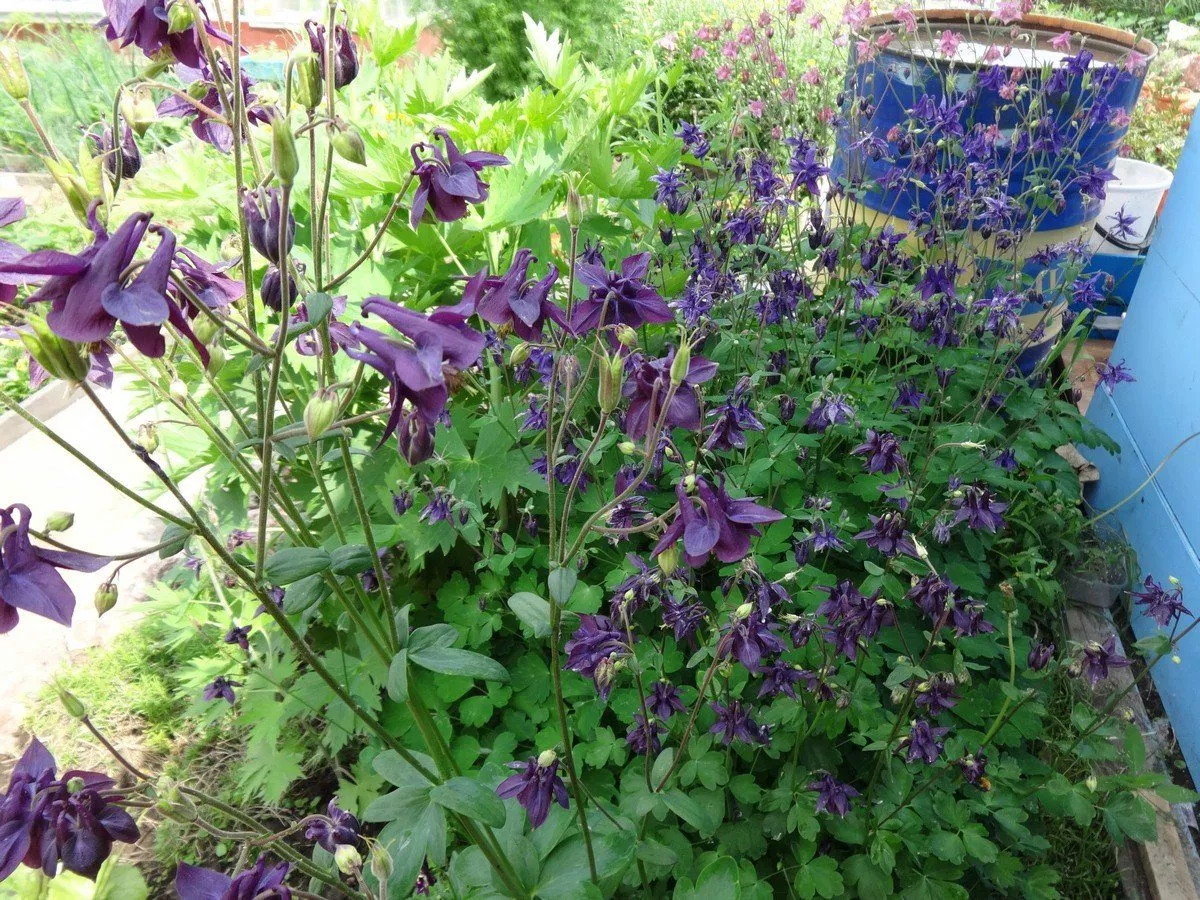
Later, I sowed other seeds of different varieties—double, bicolor, multicolor—they were beautiful and vibrant on the packets. Only the seeds with the mixed columbine varieties sprouted.
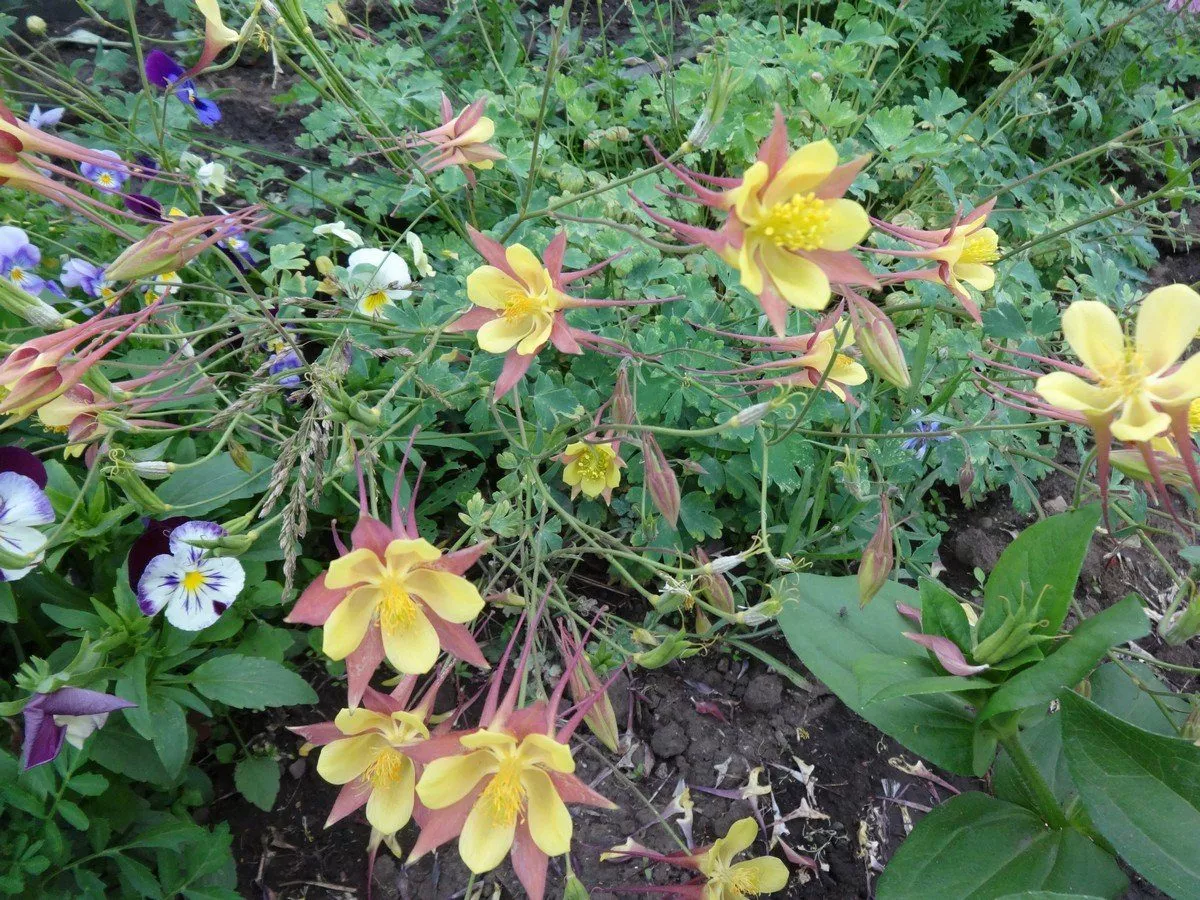
Pure white, yellow and two-colored - pink-yellow flowers grew.
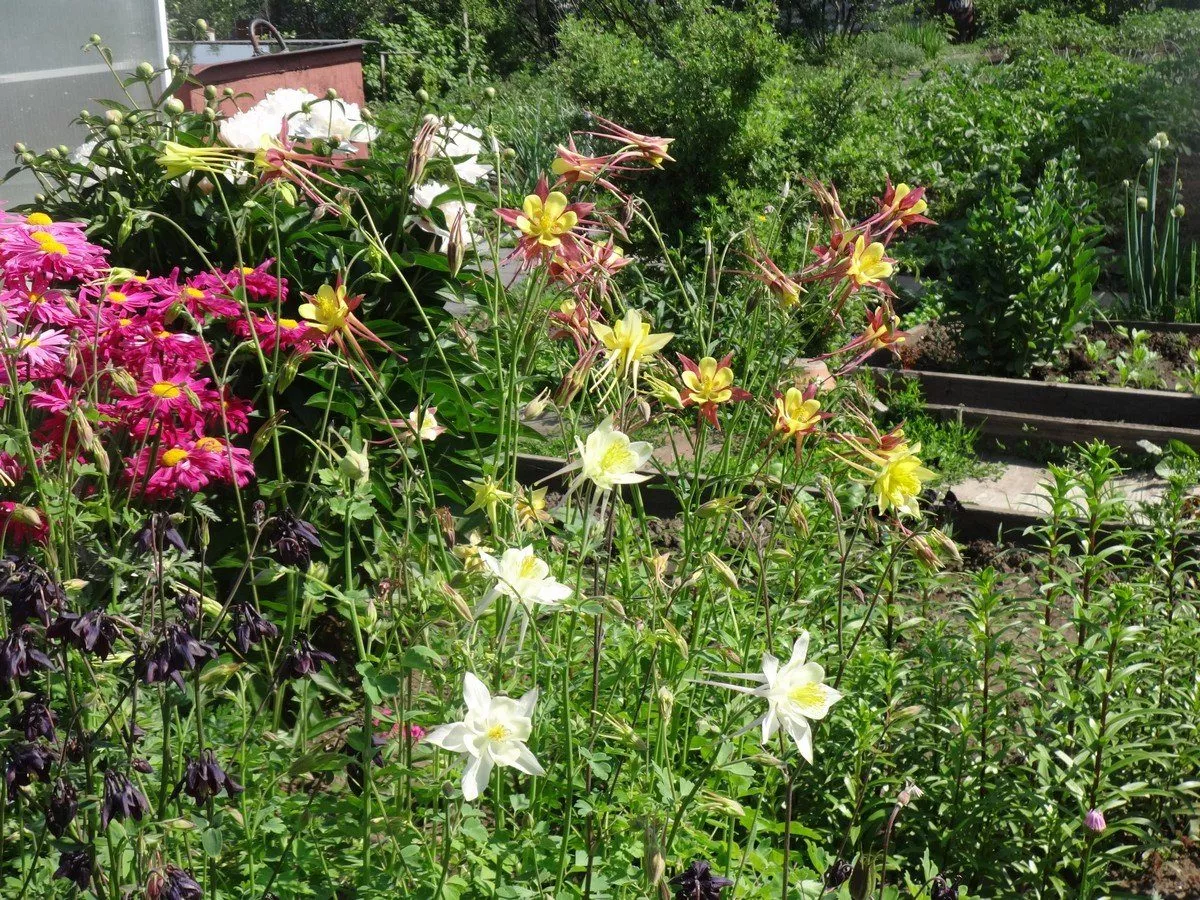
This variety of columbine has star-shaped flowers with five outer and five inner petals, and long, thin, and sharp horns at the top.
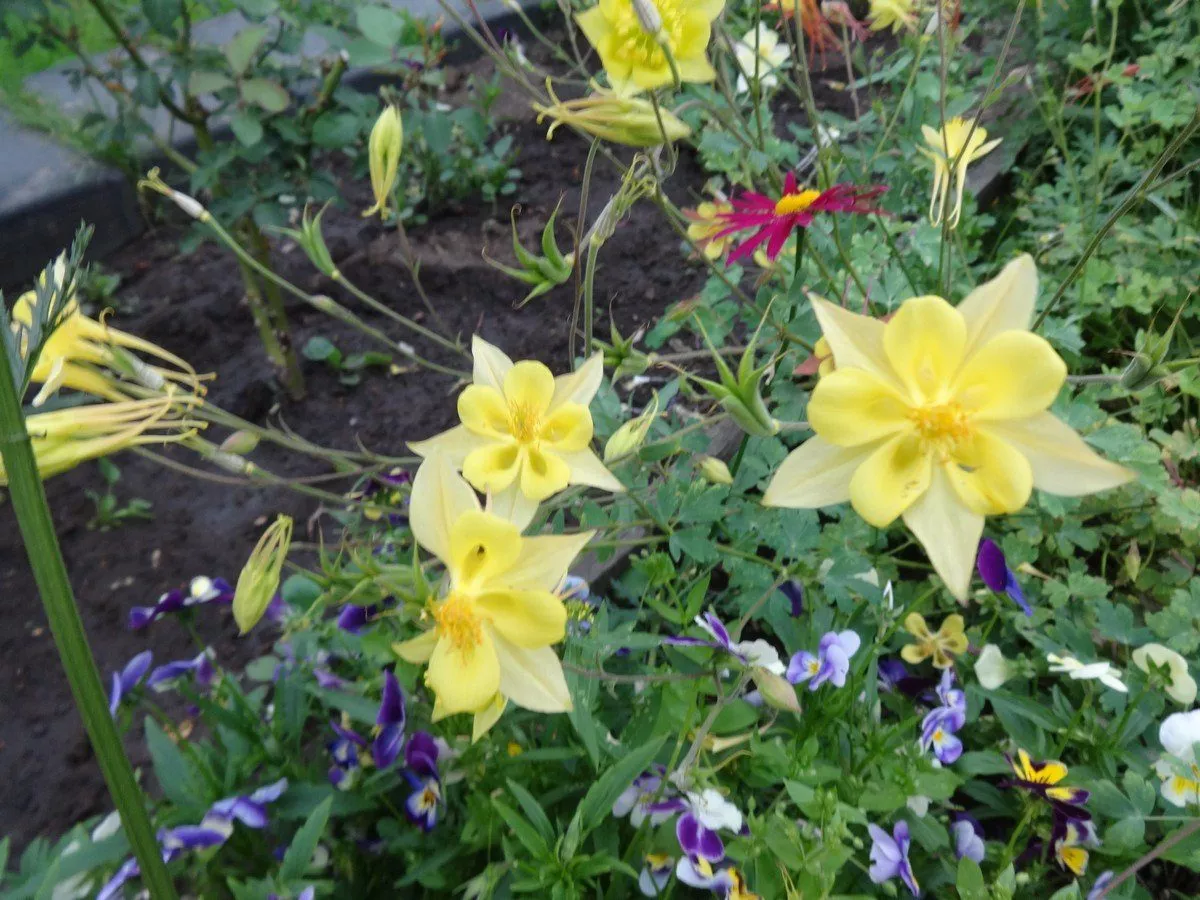
Then I sowed the double-flowered varieties again, but they didn't germinate either, so I abandoned the idea. Most likely, the seeds needed stratification (which involves placing them in moist peat and storing them in the refrigerator for a month), but I didn't bother and sowed them directly outdoors.
I love these flowers; they constantly self-seed, so if a bush is already quite old, you can always replace it or transplant a young seedling to another location. However, it's not advisable to transplant mature plants, as this can damage the root system and the plant will die. Young seedlings tolerate transplanting well.
We have columbine plants growing in several places—near the terrace in partial shade, where we have a water barrel. During rain, water runs off the roof into it, so there's always more moisture there. The columbine is doing well; it has taller bushes, larger leaves and flowers, and taller flower stalks.
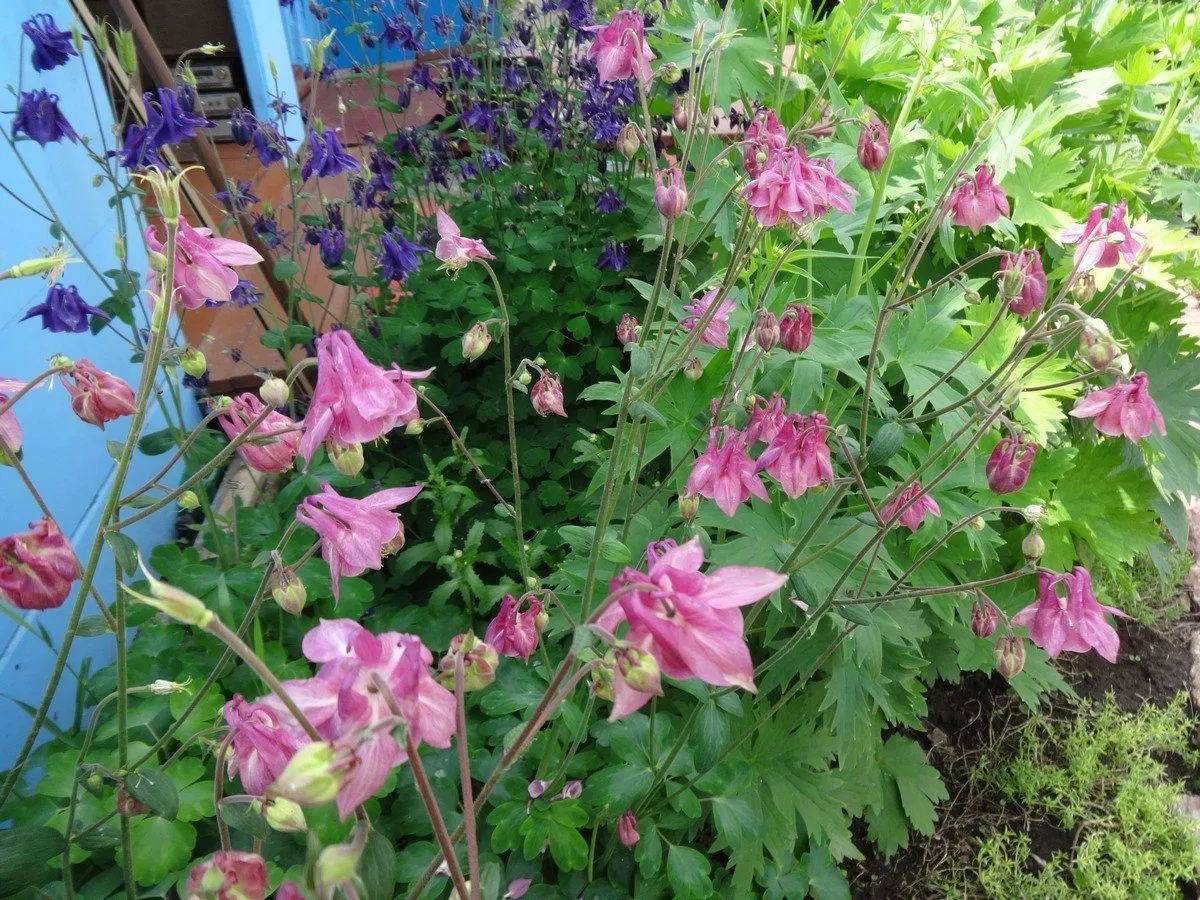
Several bushes grow in a sunny spot; they are shorter and more often suffer from lack of moisture. Their lower leaves begin to yellow and dry out, requiring more frequent watering. It's believed that columbine will always find moisture because it has a strong root system and doesn't require abundant watering. However, this isn't entirely true: if the bushes aren't watered in hot weather, they will grow poorly and dry out.
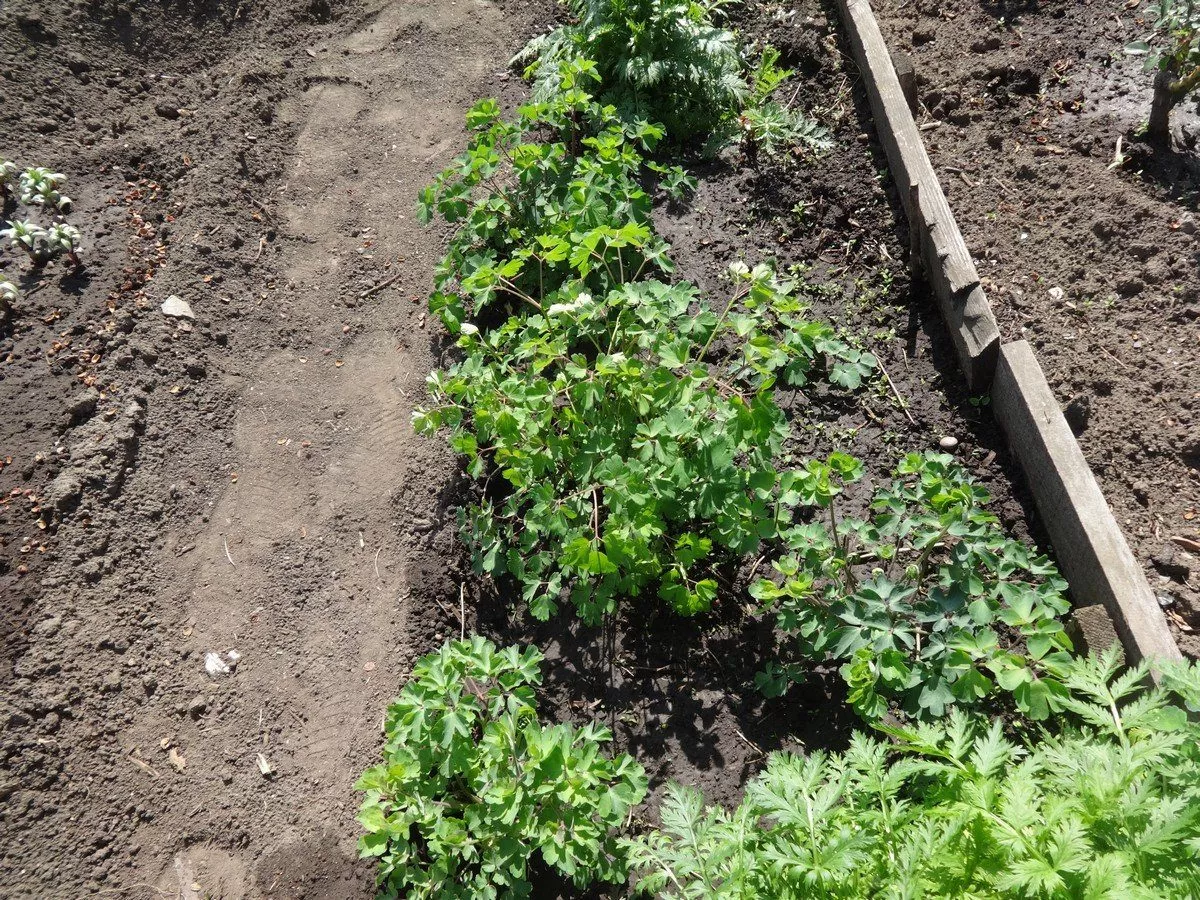
And here is a handsome guy who grew on the path, growing without care, I wonder what color his flowers will be.
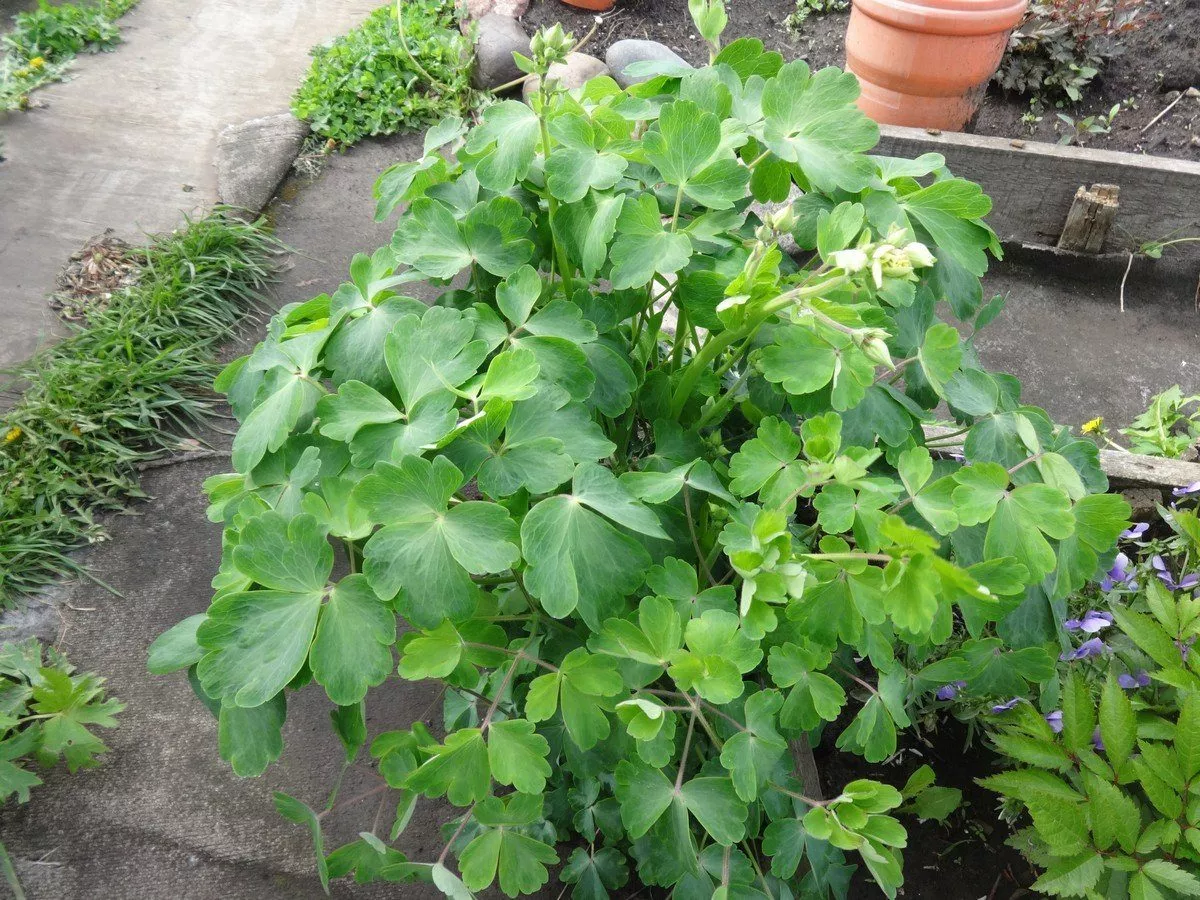
After flowering, I cut off the flower stalks, sometimes leaving a few for seed. I don't trim the leaves for the winter, and I don't cover the bushes with anything—they overwinter just fine.
There are no pests or diseases on the aquilegia, although the plant is susceptible to some fungal diseases. Aphids also enjoy feasting on the succulent leaves. We simply spray all the flowers against aphids in the spring as soon as we see them appearing.
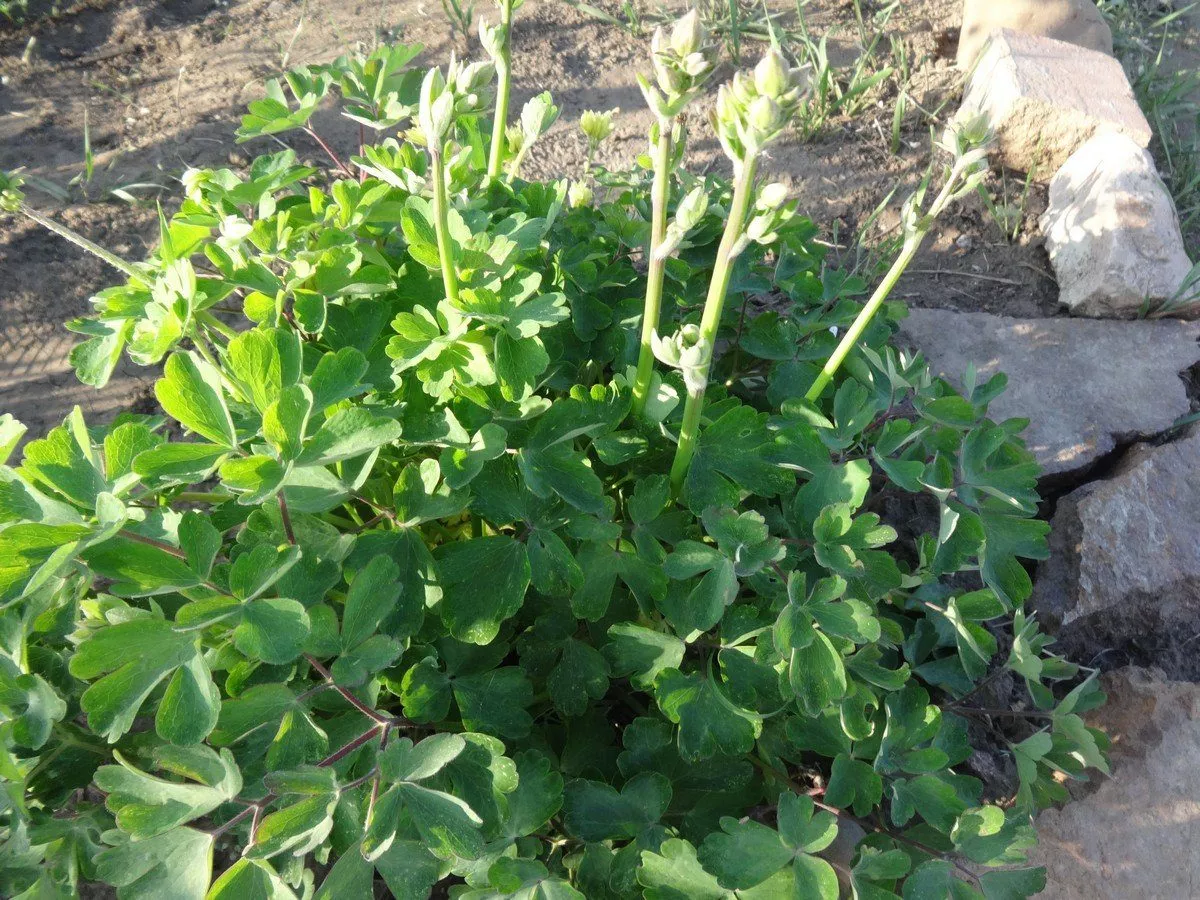
In early spring, I feed it with nitrogen fertilizer, like all my perennials. In the summer, if I have time, I feed it with potassium humate. Even if I forget to feed it, the columbine still blooms, decorating the flowerbed.