

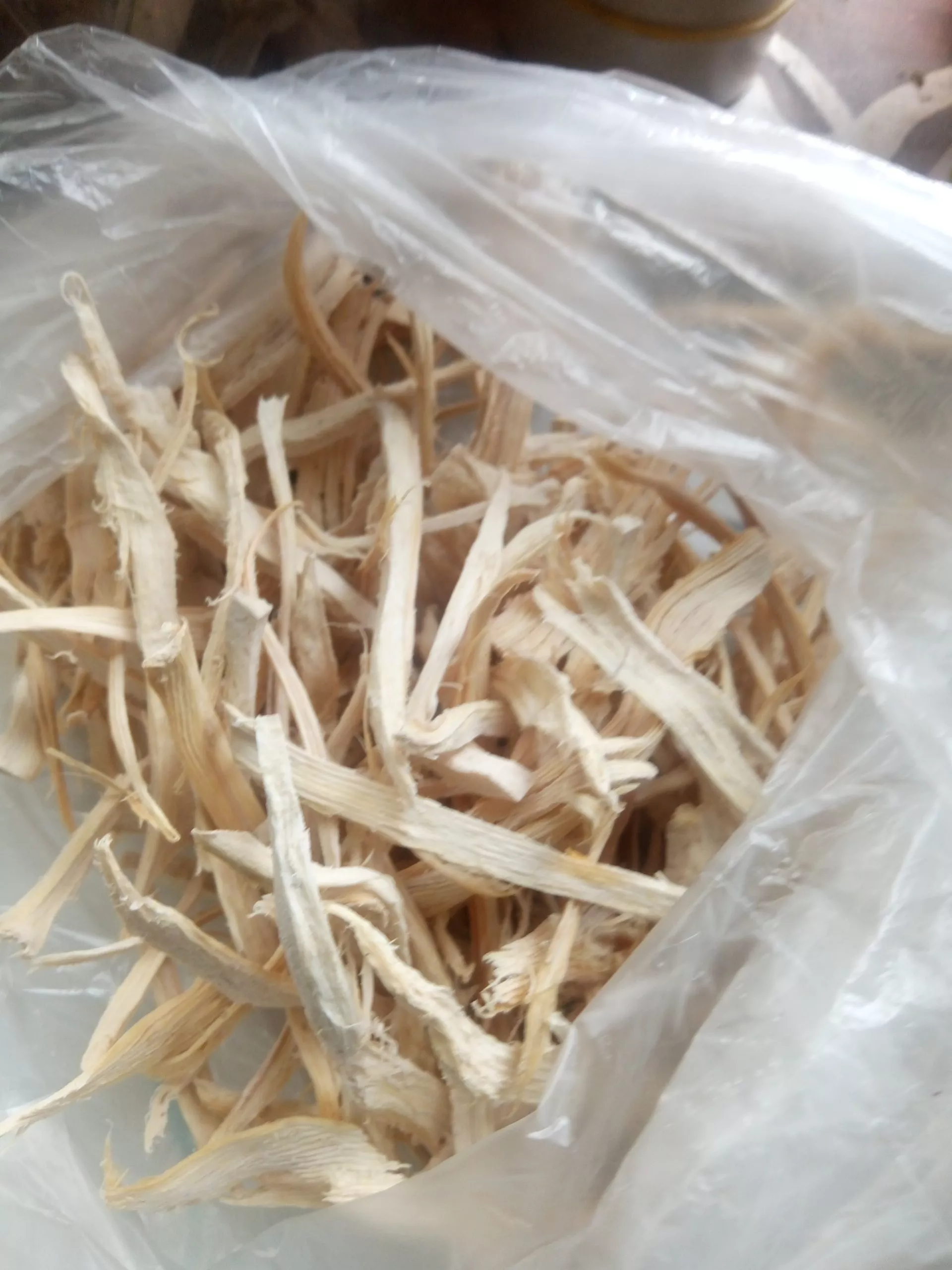
I've harvested cucumbers—there's a huge crop this year. But I'll start by saying that after moving to the village, I was struck by one thing: people here don't grow horseradish in their gardens, without which pickling cucumbers is impossible. But that's just my opinion; they apparently think differently. From my own experience, horseradish leaves and roots add a special crunch to pickled vegetables. In fact, dill is also hard to find here, which also seems odd.
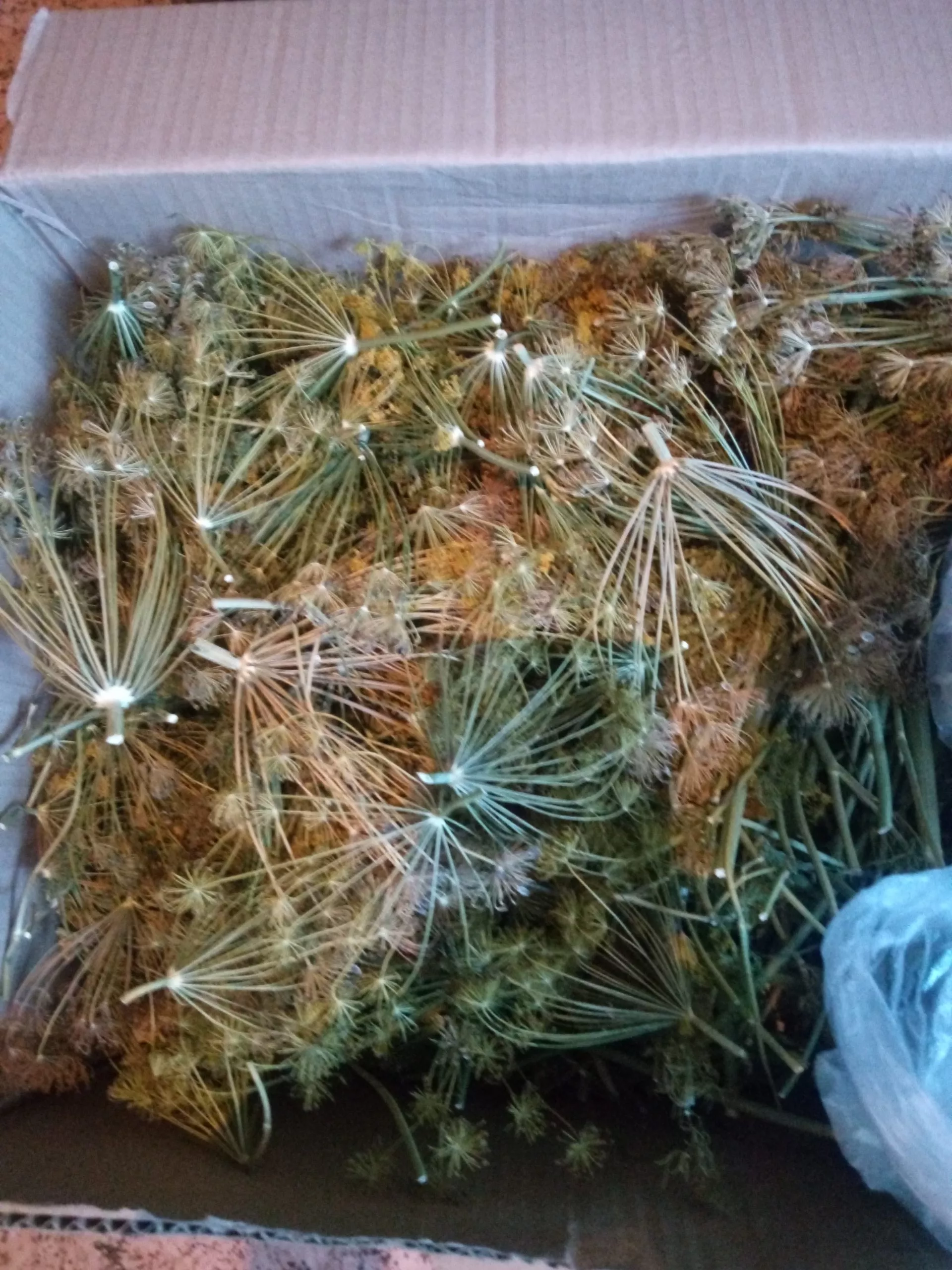
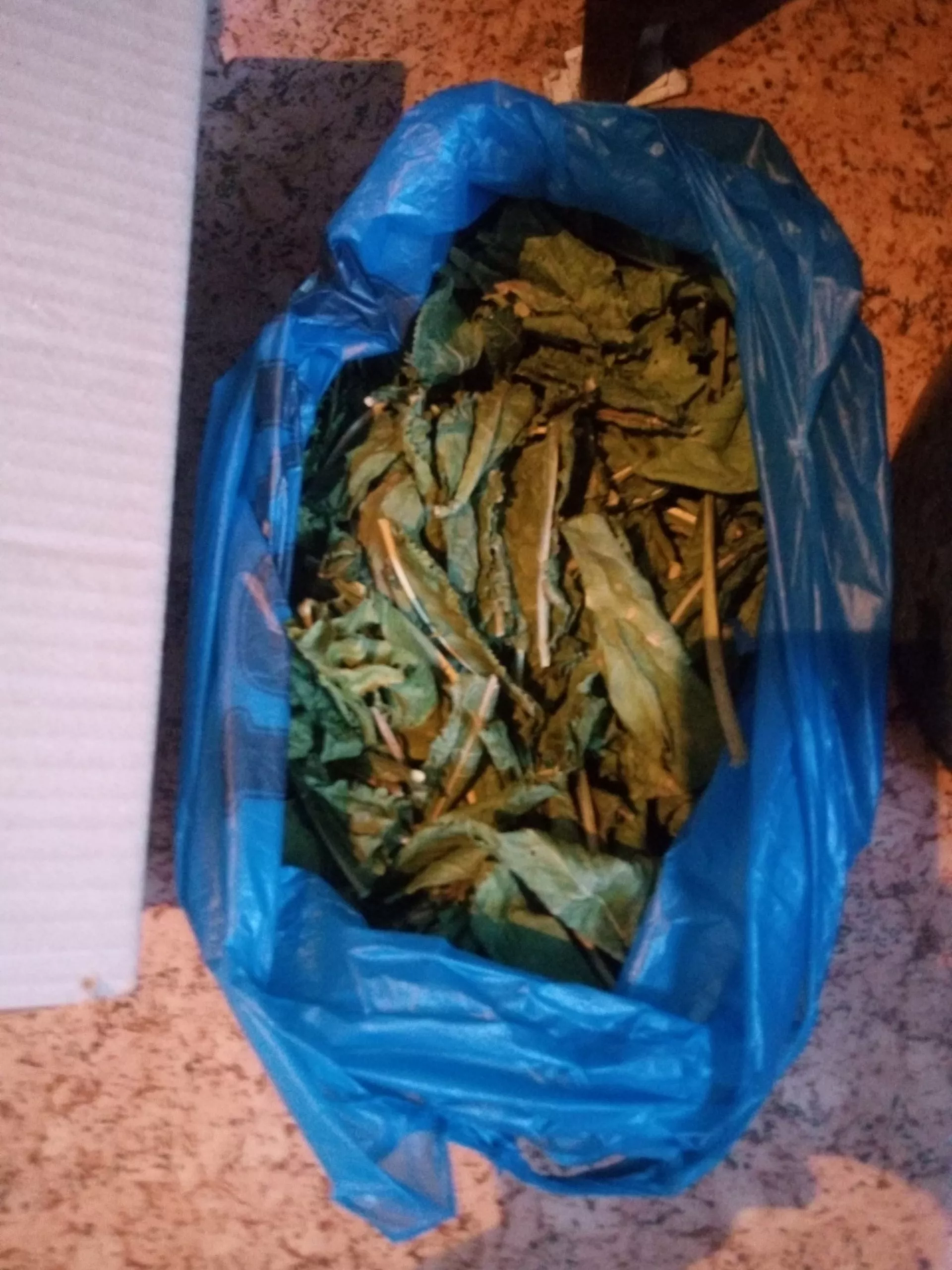
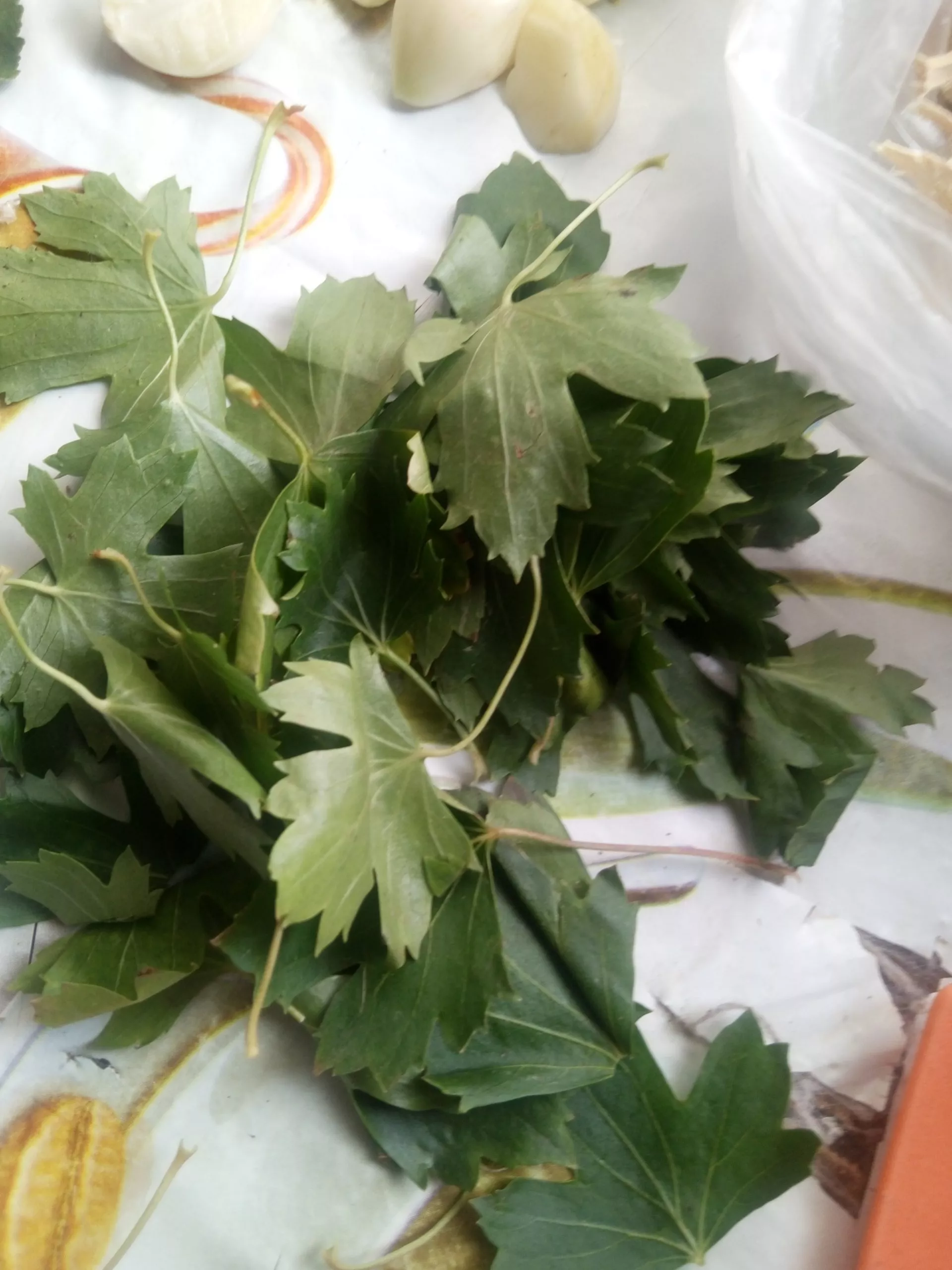
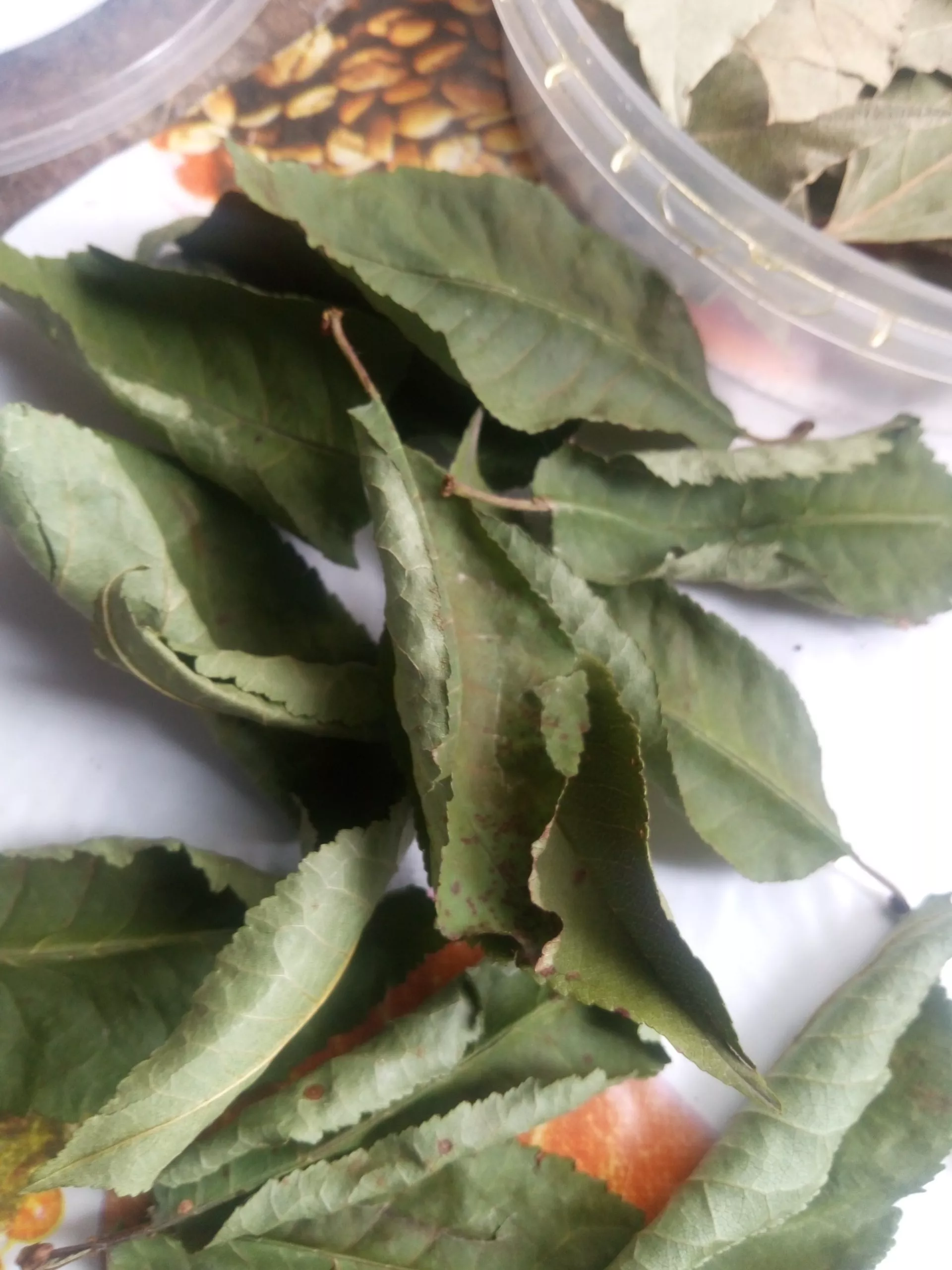
So I had to go to another village to visit friends for horseradish, but I still managed to find dill locally. I ended up drying it all. I also dried cherry and blackcurrant leaves, which I also use for preserves.
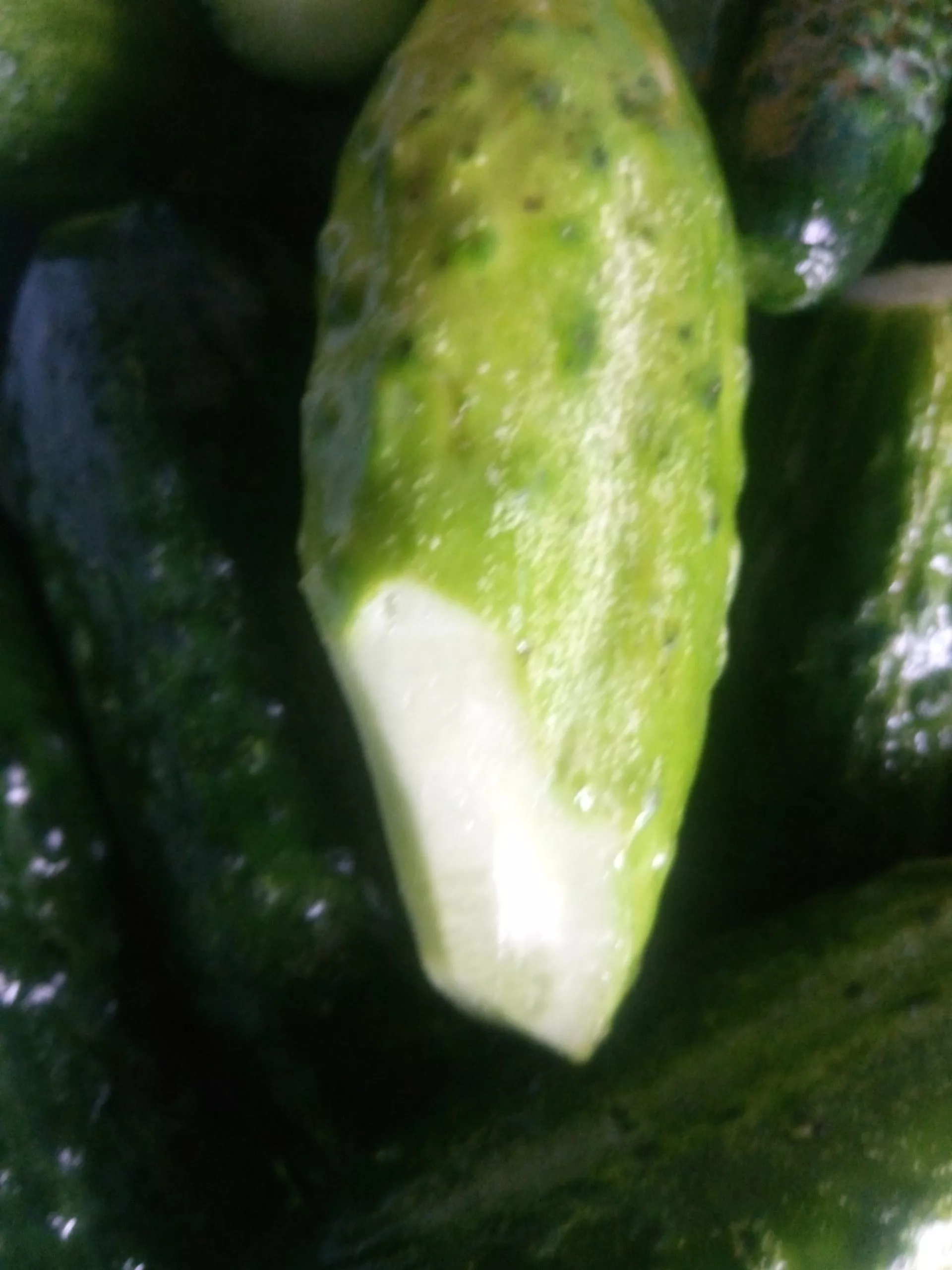
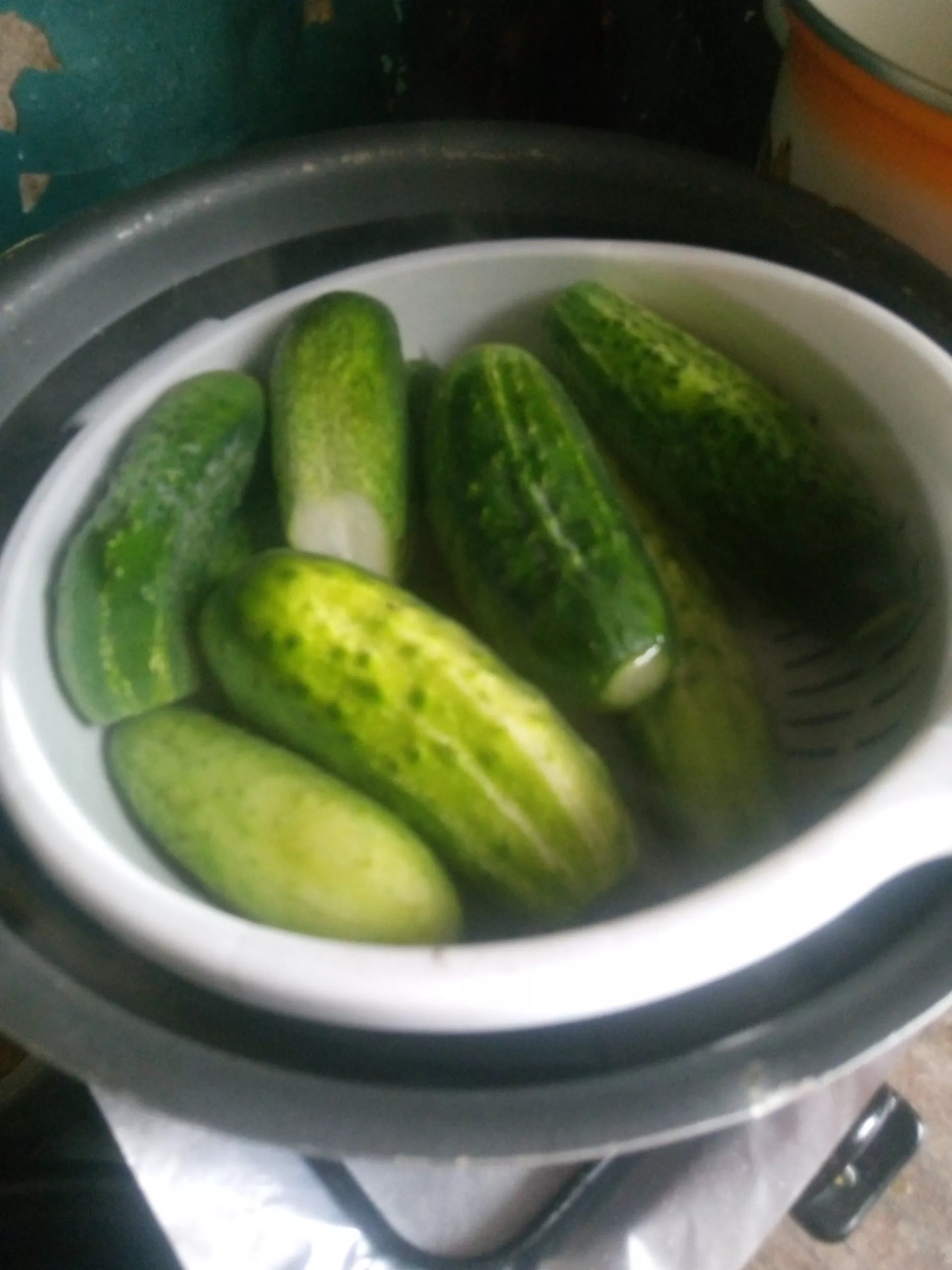
I harvested two full bowls of cucumbers in one go (one 25 liters, the other 15 liters). I made sure to soak them:
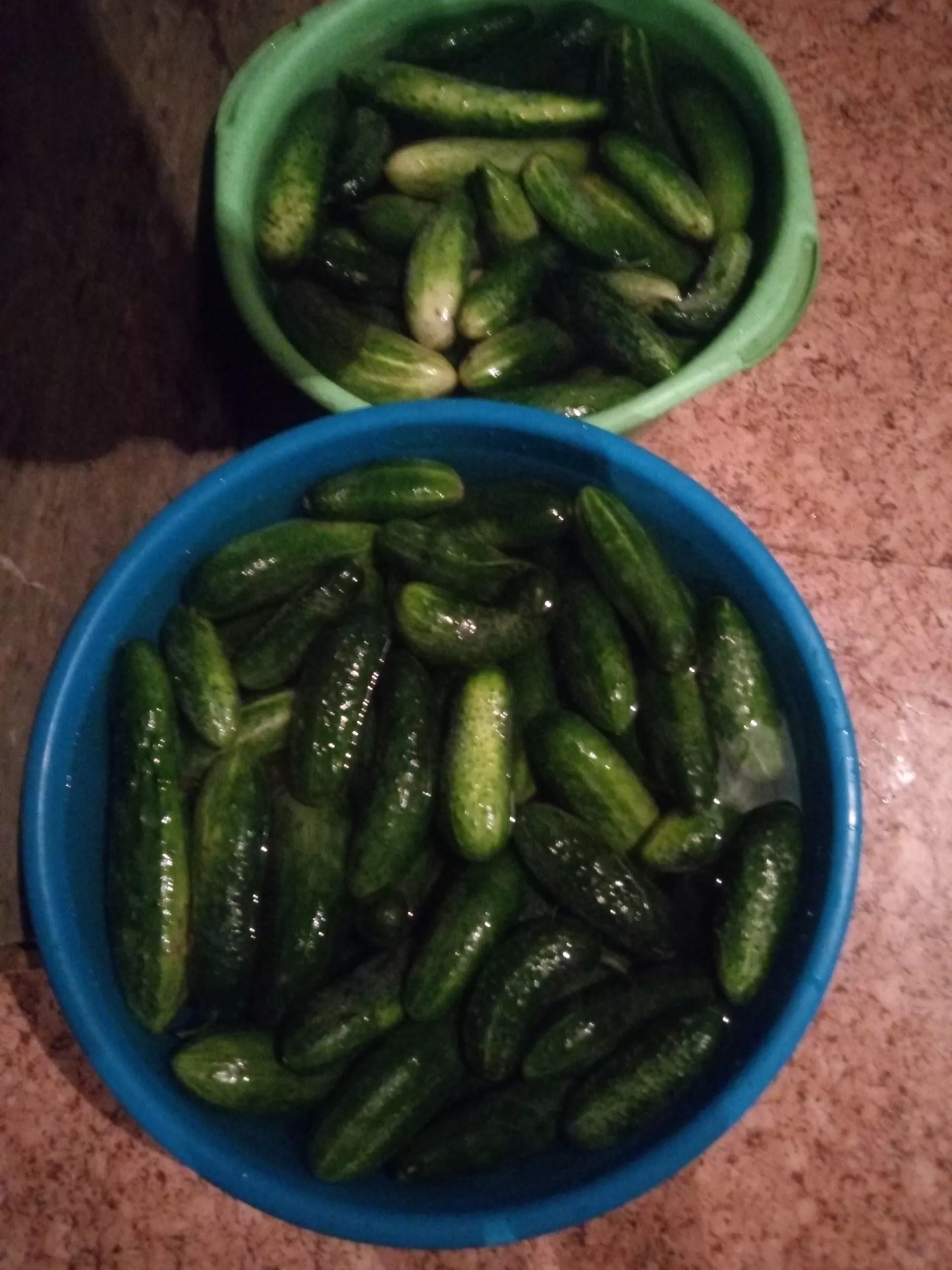
Remember, the longer you soak the cucumbers, the firmer they will be—water, like horseradish, also adds crunch. If you seal them without soaking, the cucumbers in the jar will be limp.
I soak them at least overnight. Afterwards, I drained the water and rinsed the cucumbers under running water. I trimmed off all the stems, but not too much—I try to avoid cutting the part of the cucumber where the seeds are, otherwise too much liquid will seep in.
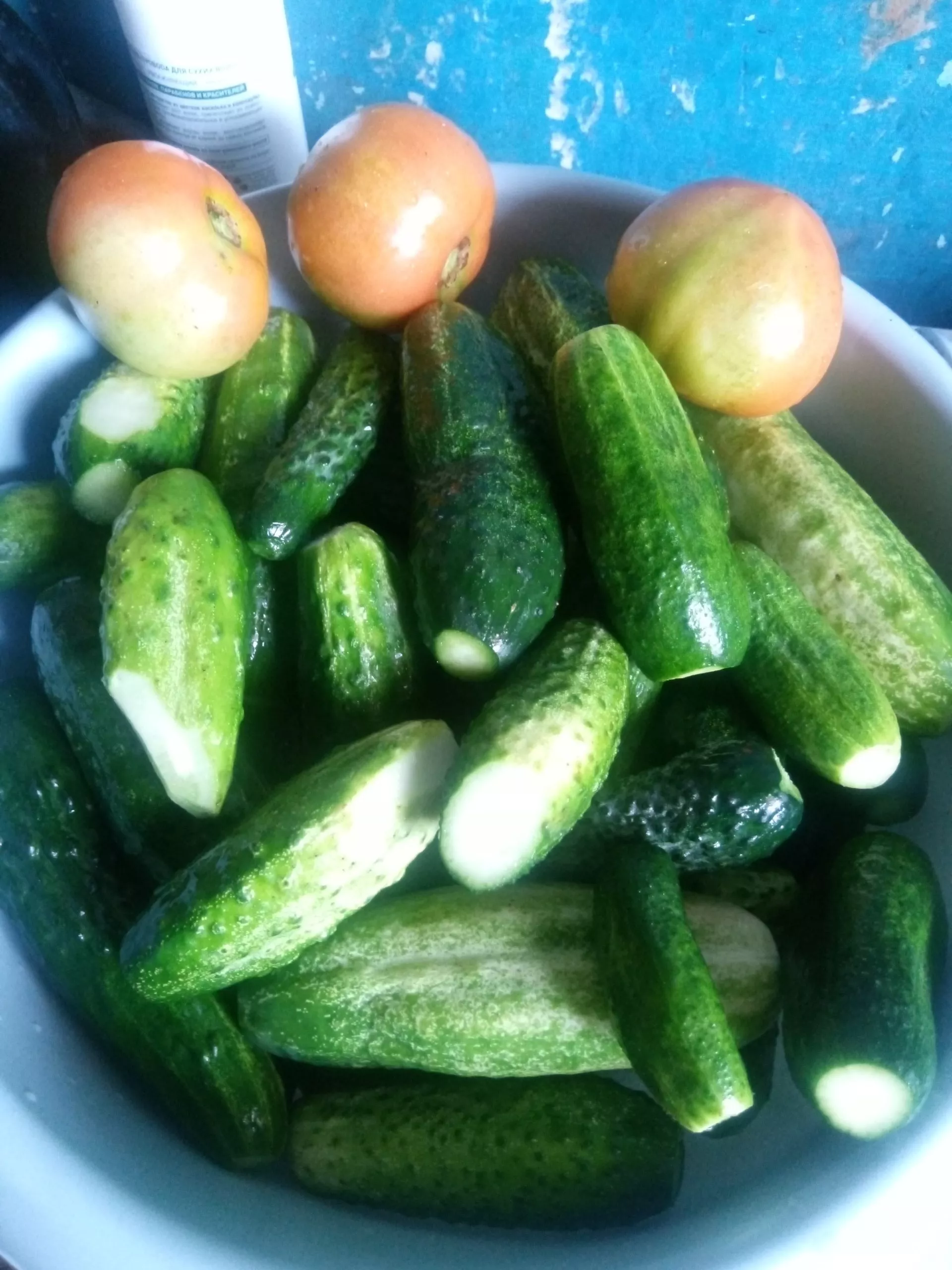
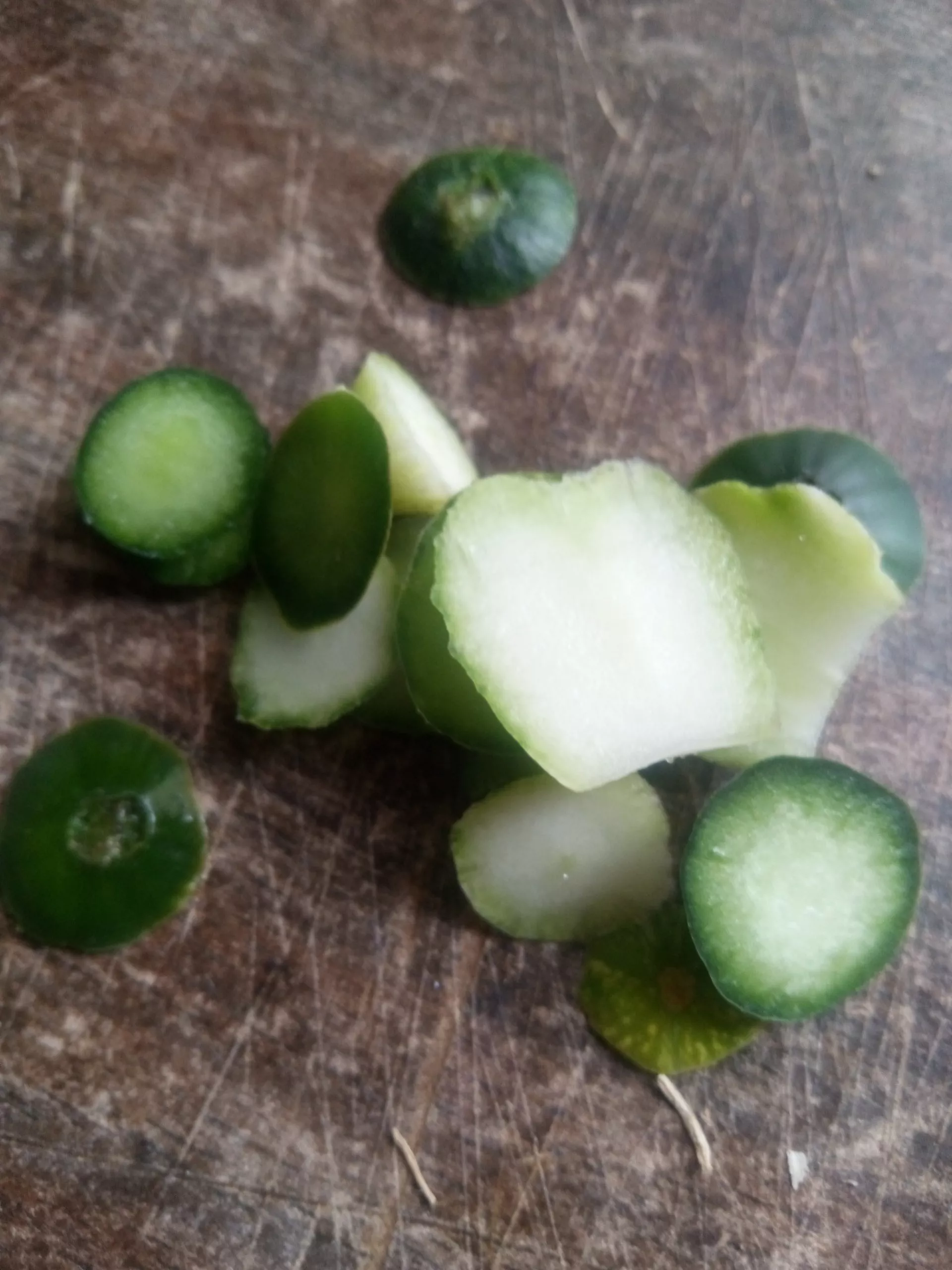
Some cucumbers had damaged skin - I cut them out.
I washed, peeled, cut and prepared the other ingredients:
- garlic - too large cloves cut in half;

- bay leaf;
- hot pepper;
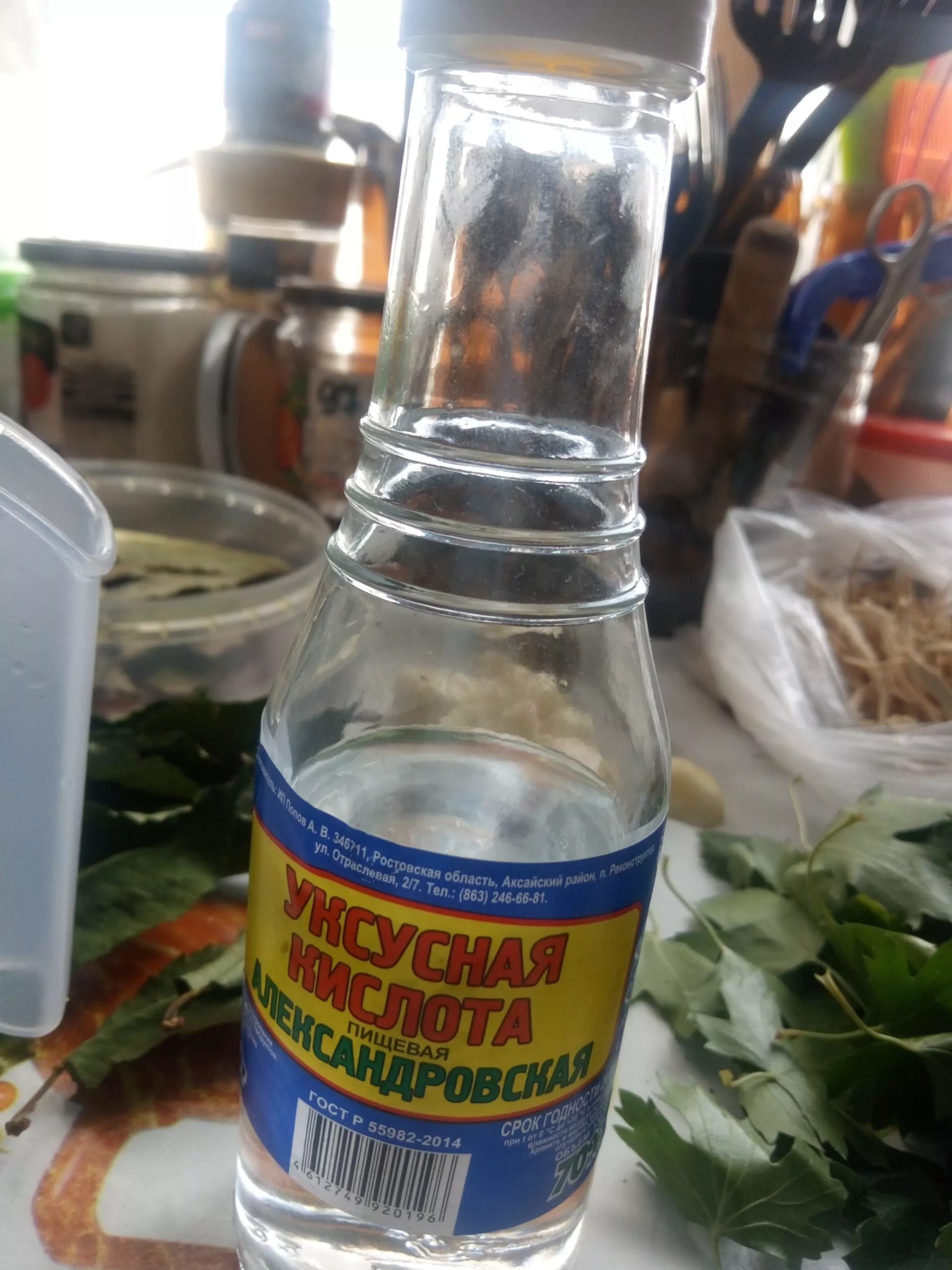
- Vinegar - there was no regular vinegar in the store, so I took 70% acetic acid, diluted it with water so that the vinegar was 9% (this is a 1:7 ratio), and poured it into an empty vinegar bottle;
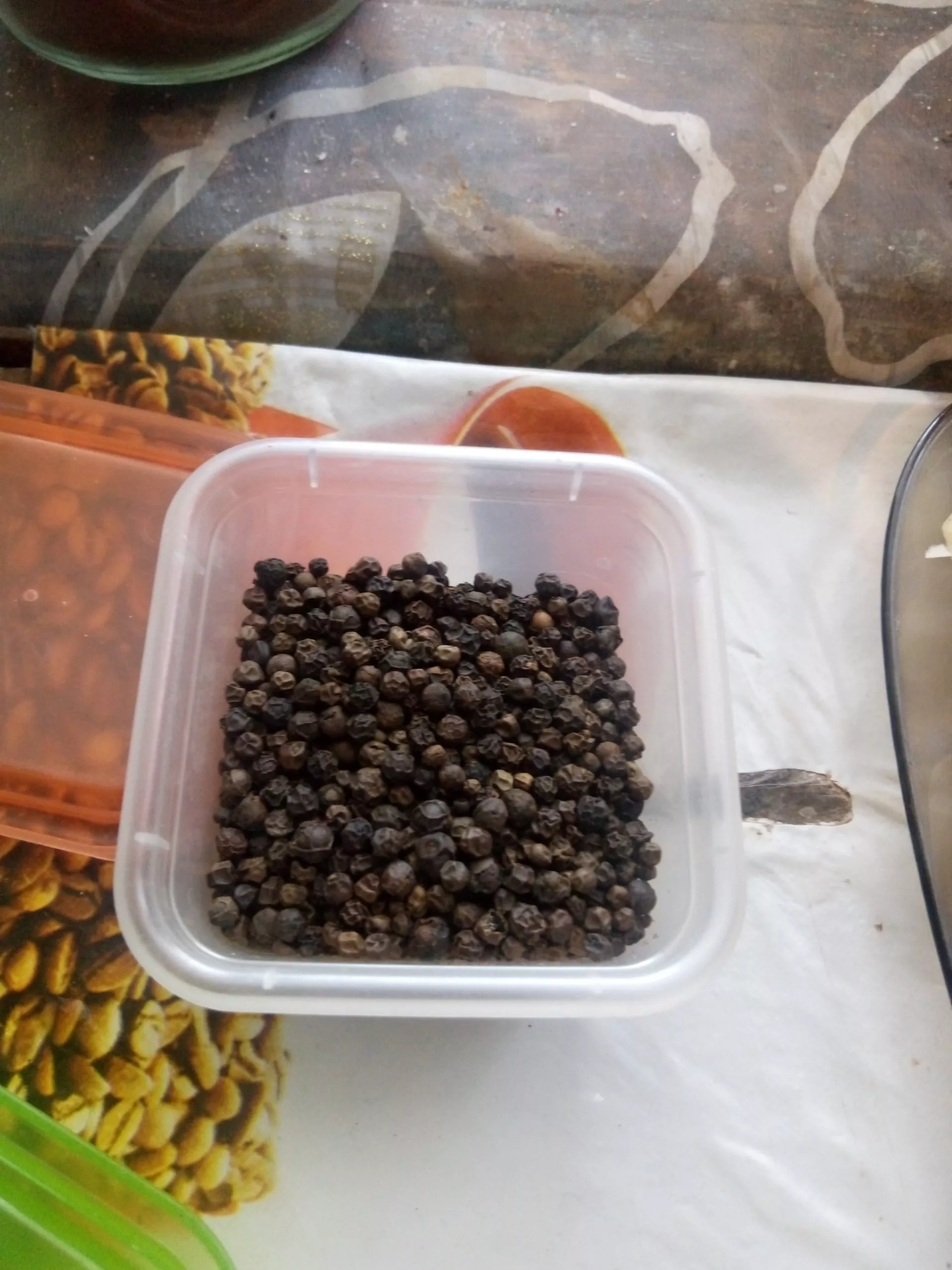
- black peppercorns;
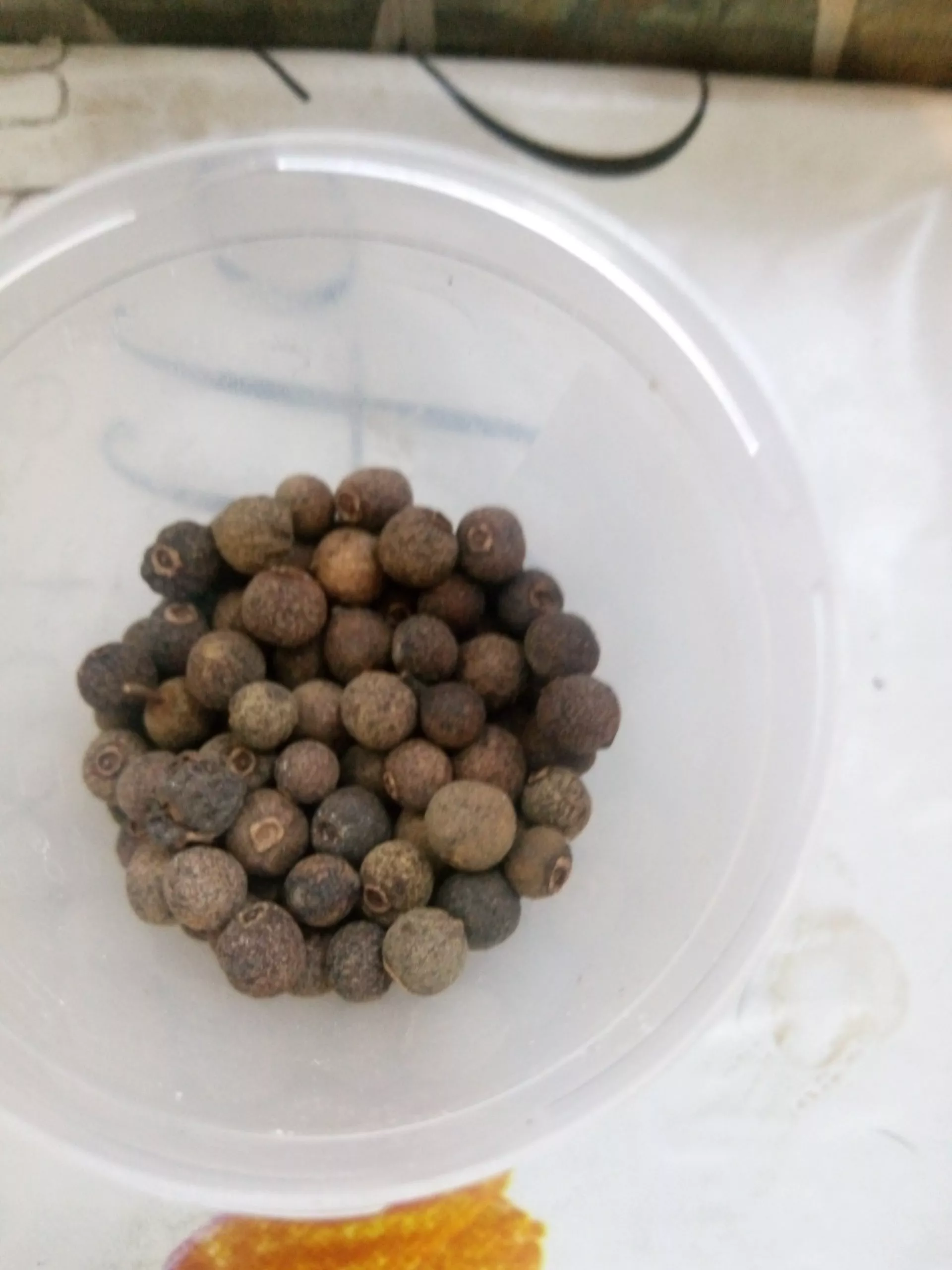
- allspice peas;
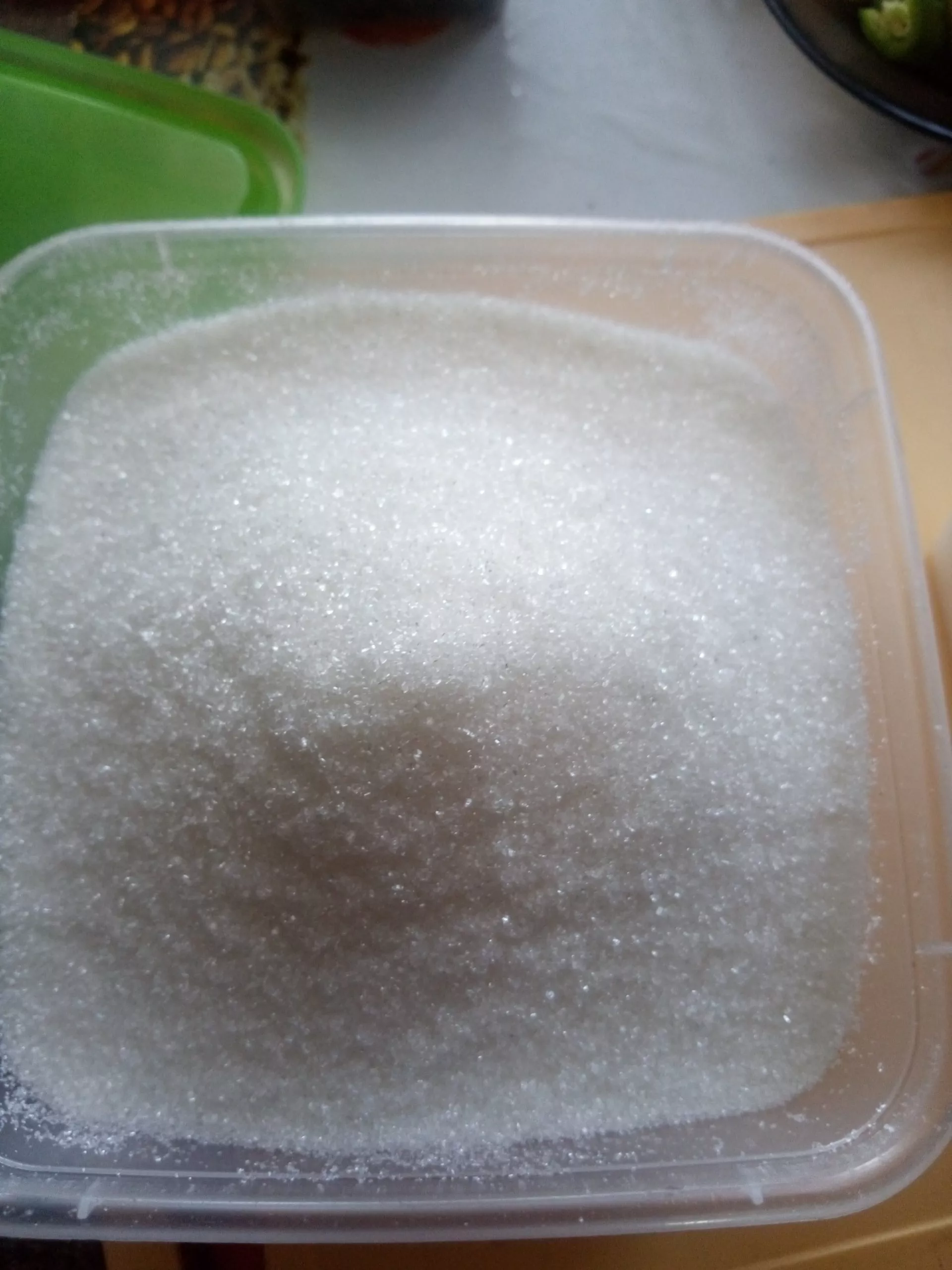
- sugar;
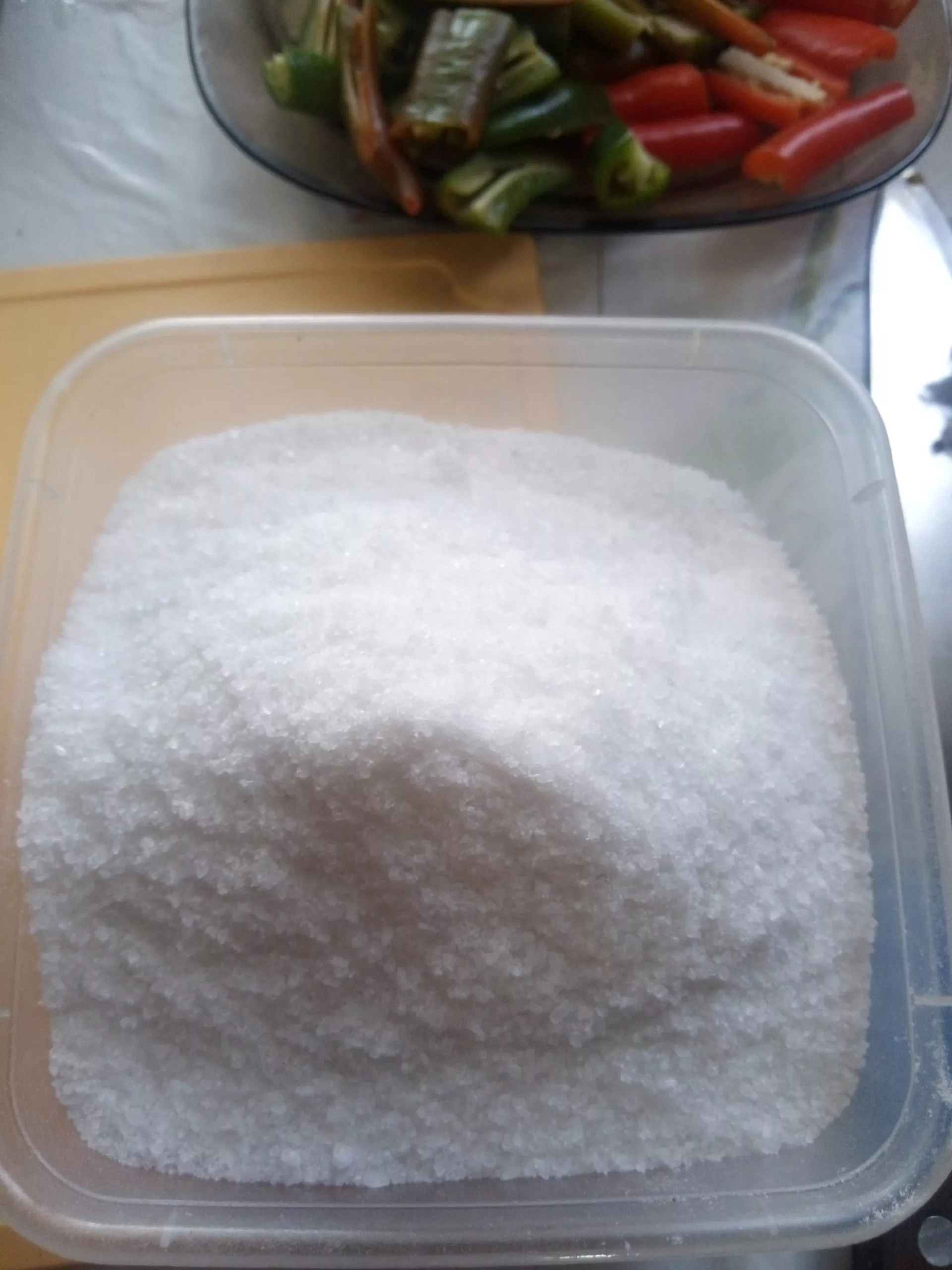
- salt.
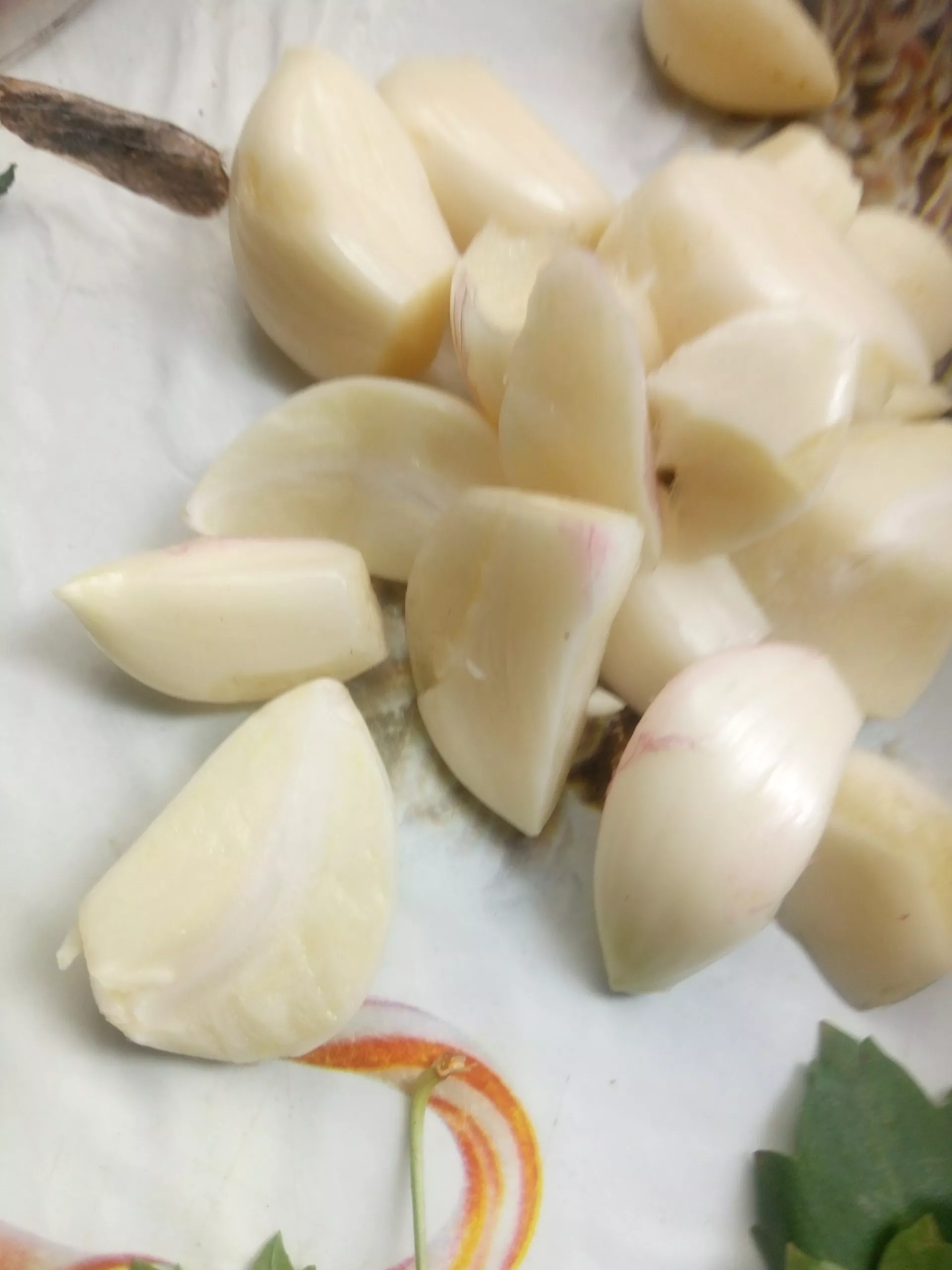
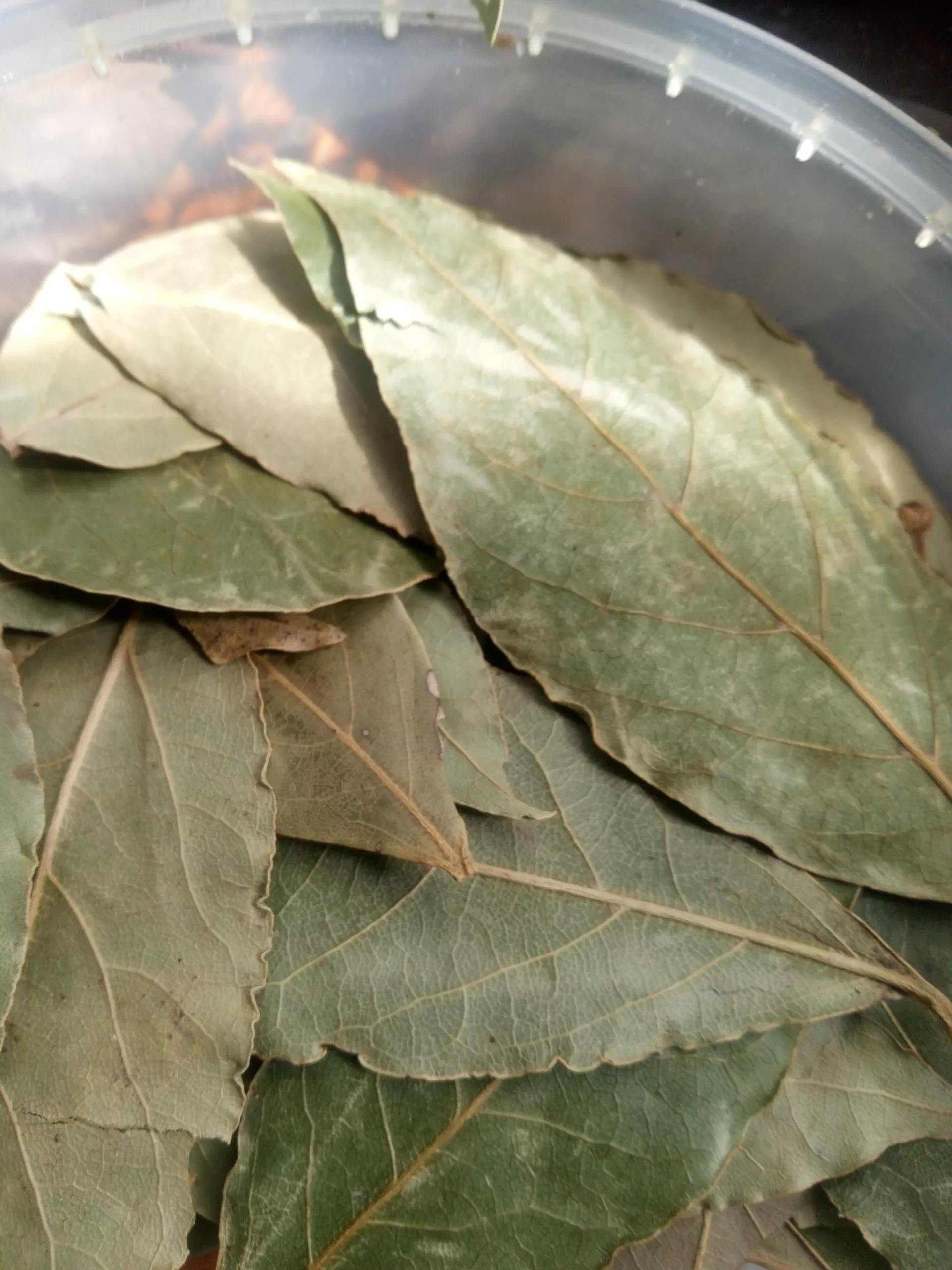
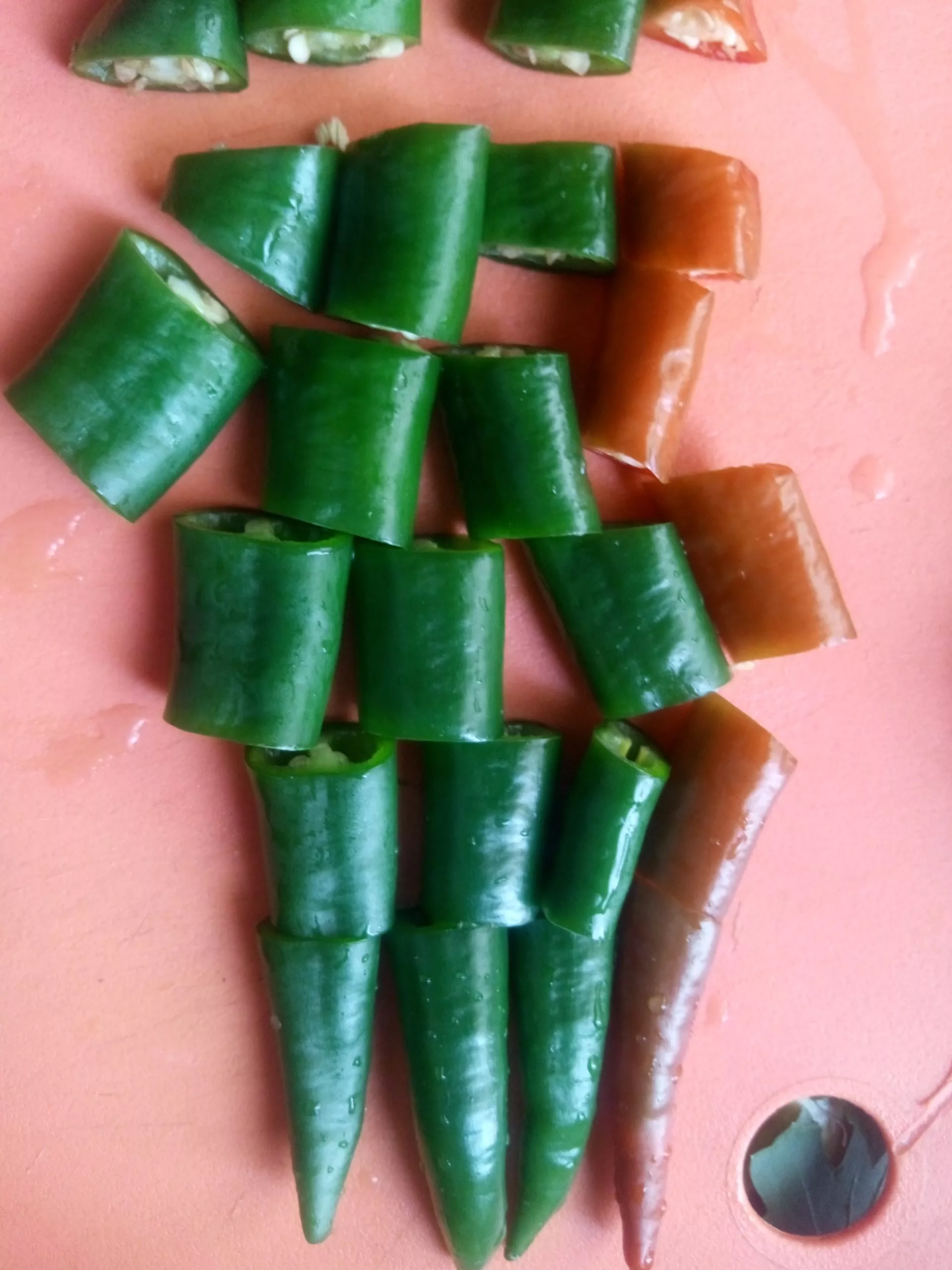
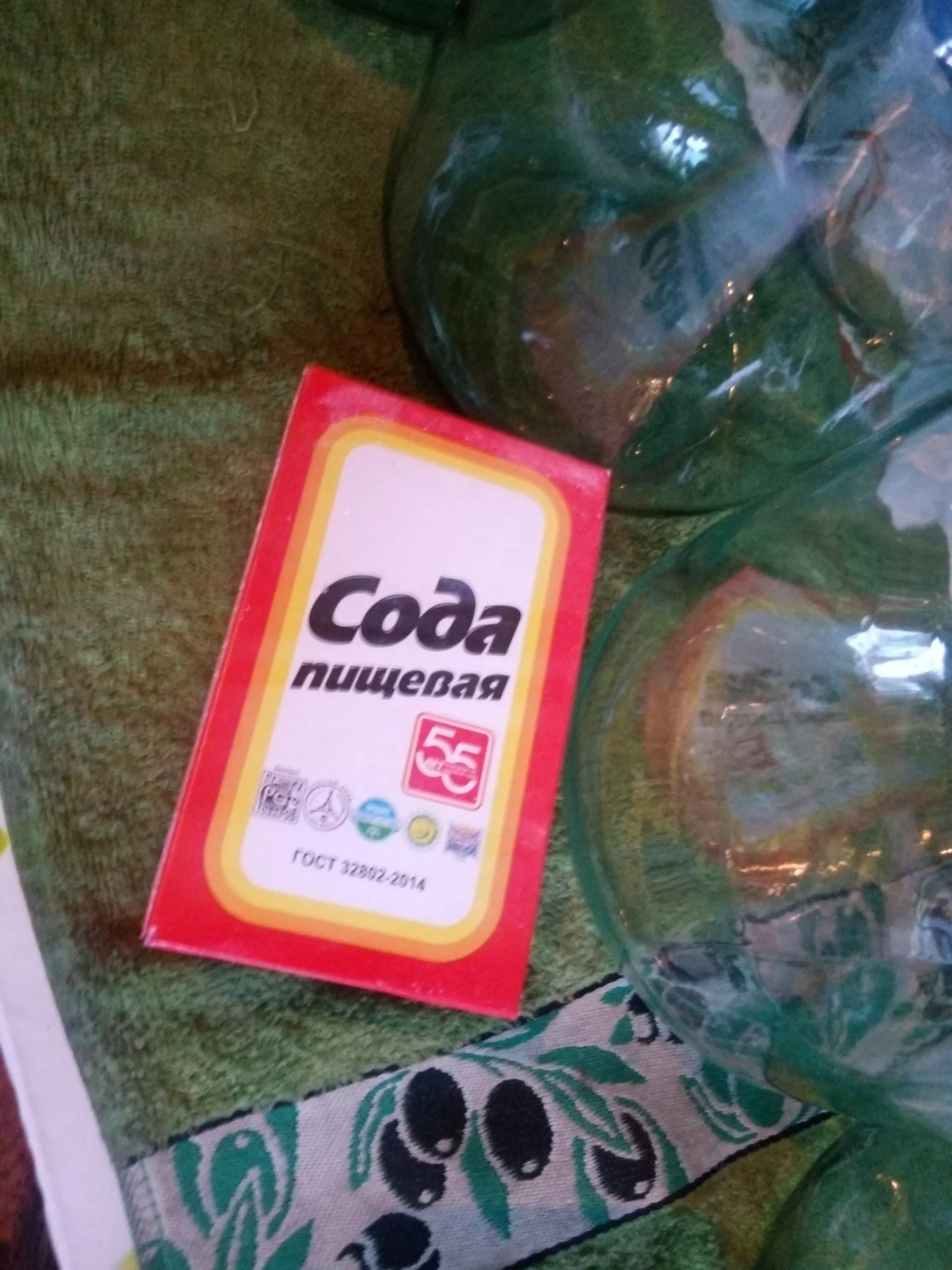
I washed 3-liter jars and lids – I always use both detergent and baking soda.
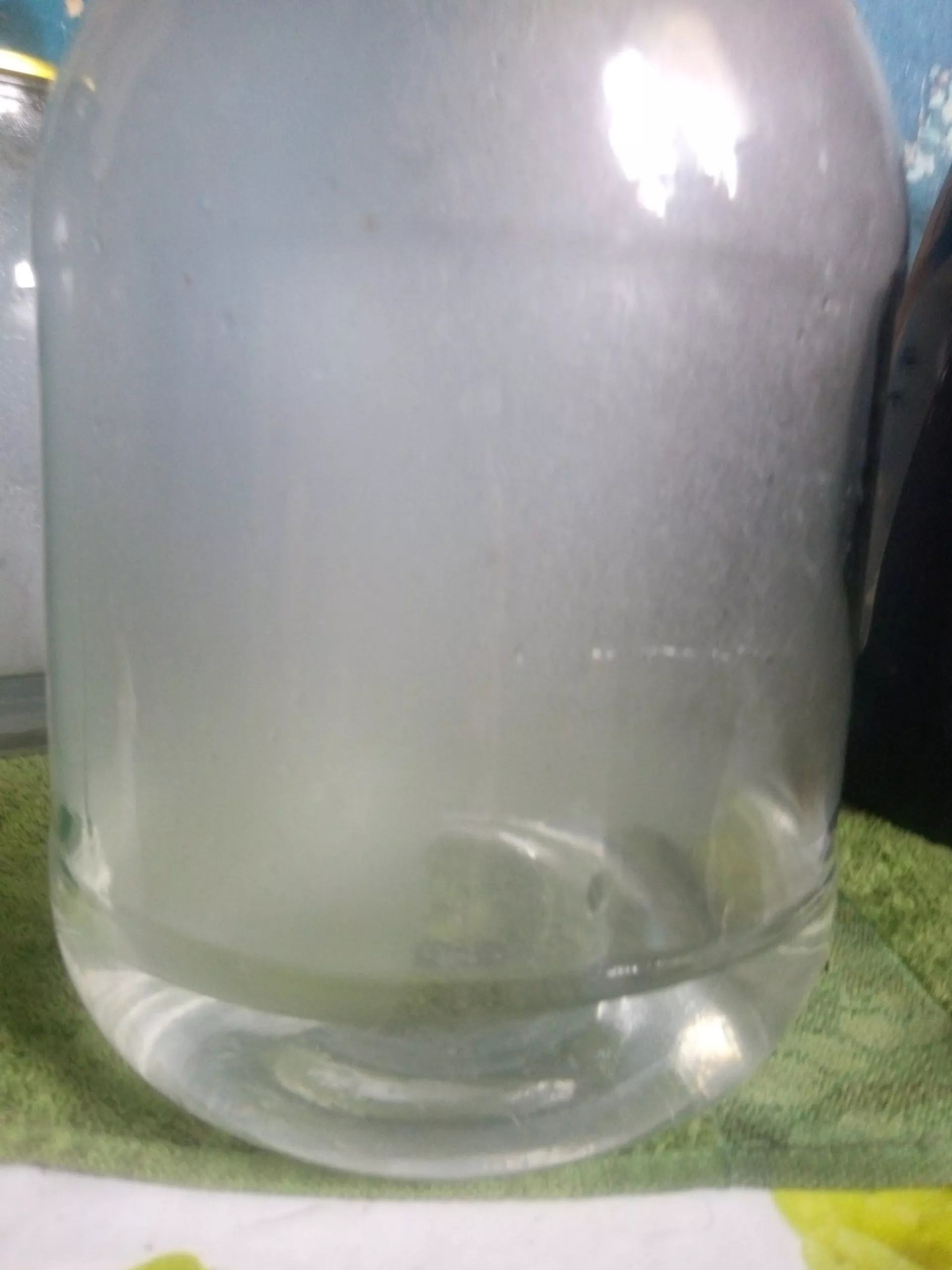
I boiled the lids for 15 minutes and sterilized the jars. I do this by pouring boiling water over them and quickly covering them with the lids – this should create steam:
Another secret to successful pickling is that I always blanch the cucumbers—dropping them in boiling water for 1-2 minutes. Let me explain what this does: firstly, the skin's color becomes brighter; secondly, it instantly kills all germs, so the brine in the jars never becomes cloudy; and thirdly, the sudden temperature change also contributes to the crispness of the peel.
After 15-20 minutes, I started laying out all the ingredients—everything except the cucumbers—at the bottom. Then I filled the jar halfway with vegetables, then added bay leaves, peppers, garlic, dried dill, leaves, and horseradish (roots and dried green parts) to the middle. Then added cucumbers again, and then dill and garlic on top.
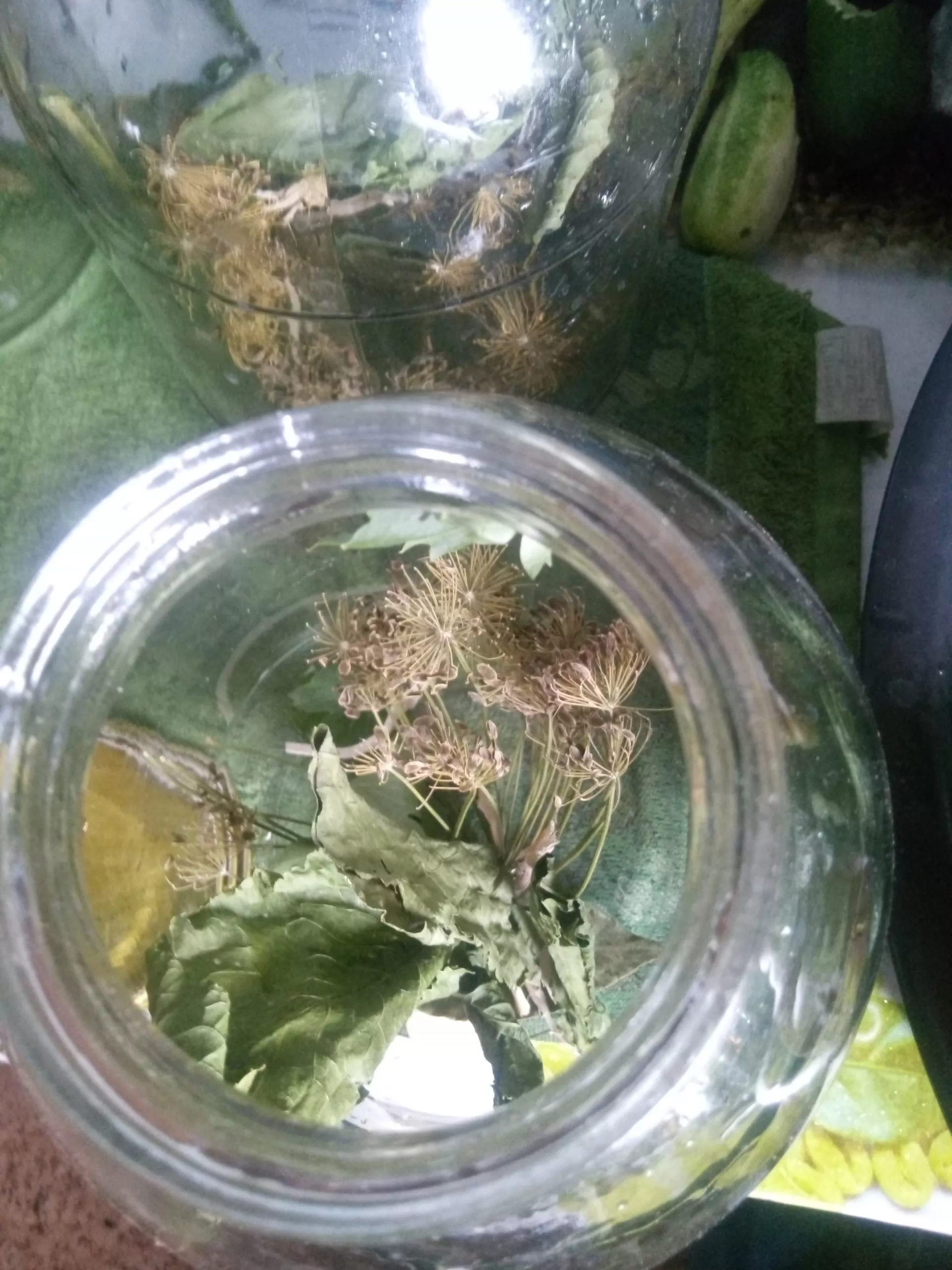
The next step is to pour boiling water in twice – that is, pour it in, let it sit for 15-20 minutes, drain the water, bring it to a boil again, etc.
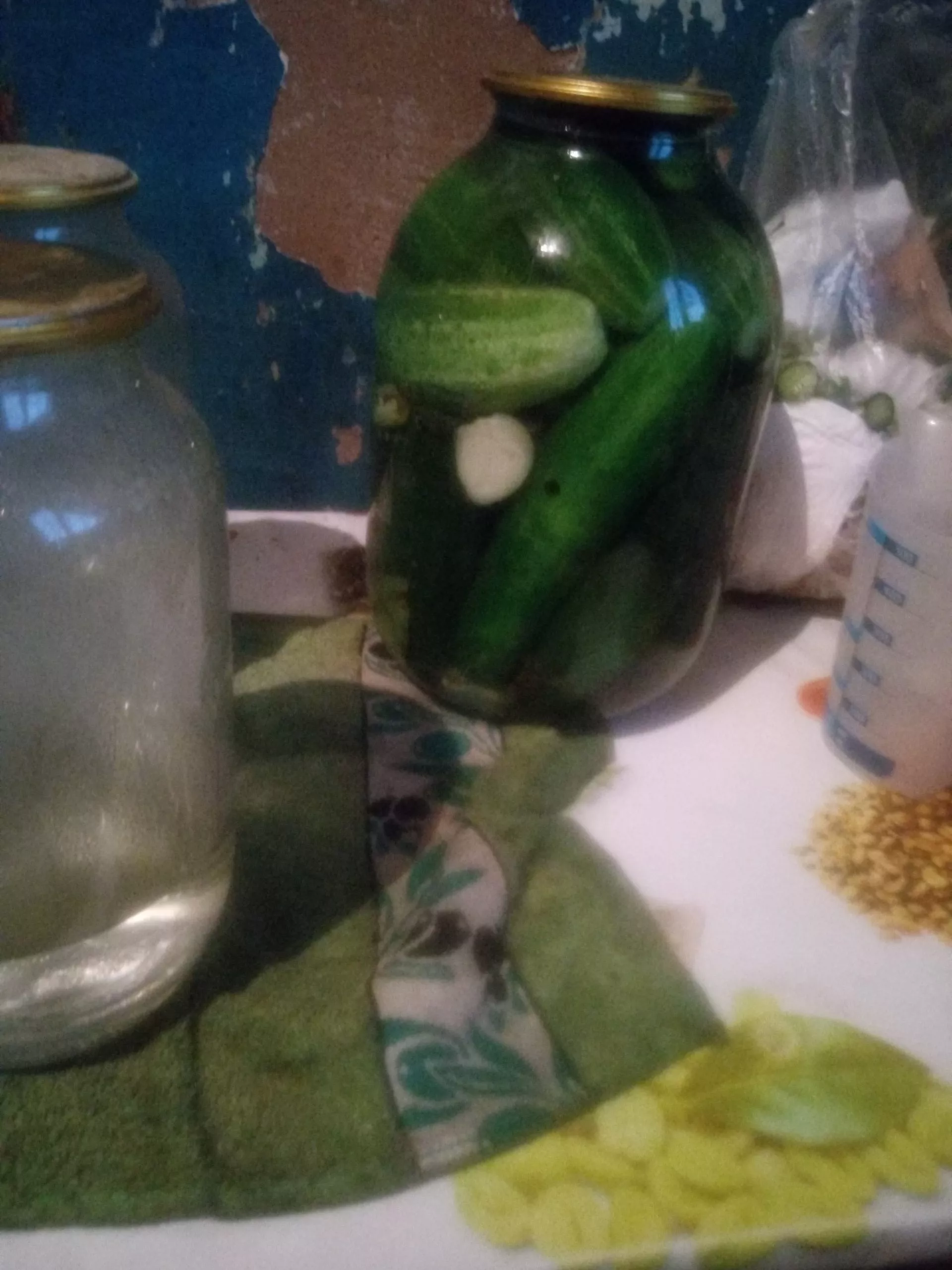
Don't forget to cover the jars with lids immediately after draining the water!
The final step is to add sugar and salt to the drained water. Once the brine has boiled for 5 minutes, add the vinegar and pour the marinade over the cucumbers. Immediately seal the cucumbers and place them upside down in a warm place.
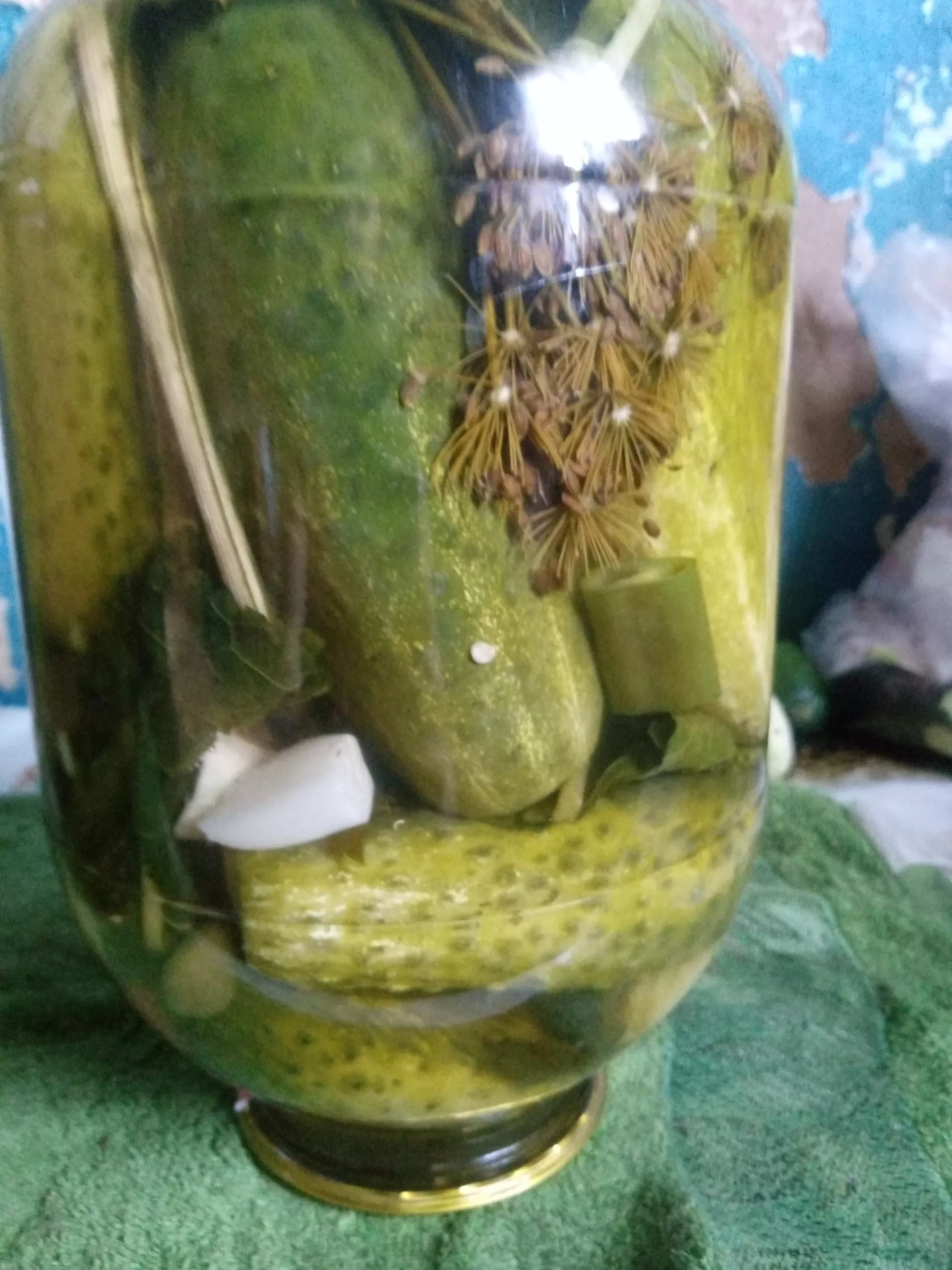
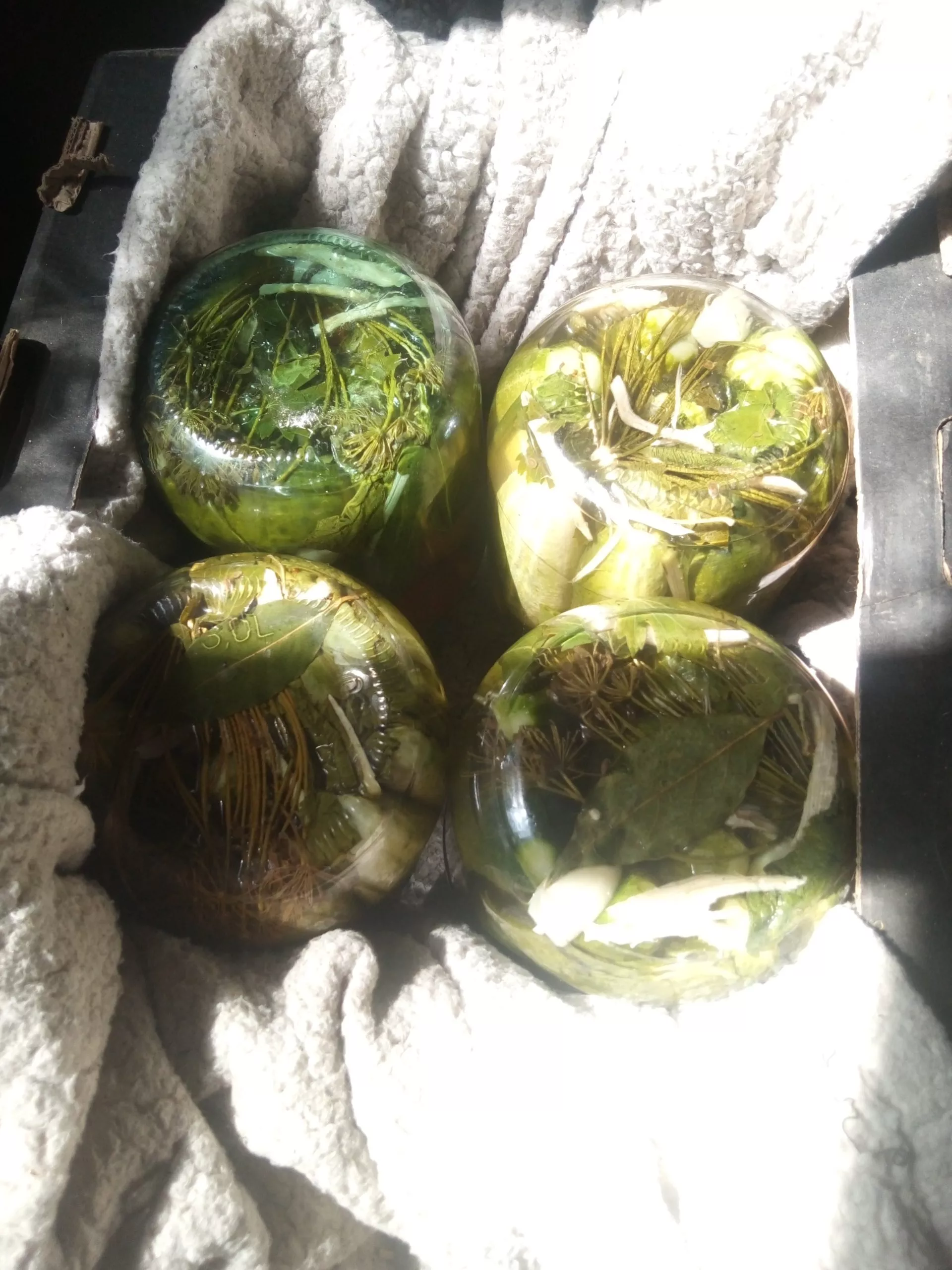
Proportions for a 3-liter jar:
- 1.5 liters of water (that’s how much it holds);
- 3 tablespoons of salt without a slide;
- 2 tbsp. sugar with a slight heap;
- 80 ml vinegar.
You can replace vinegar with citric acid—in this case, just add it to the jar before adding the brine. You'll need 1 level teaspoon.
In winter, these cucumbers will be very crispy and without any water inside the vegetable.