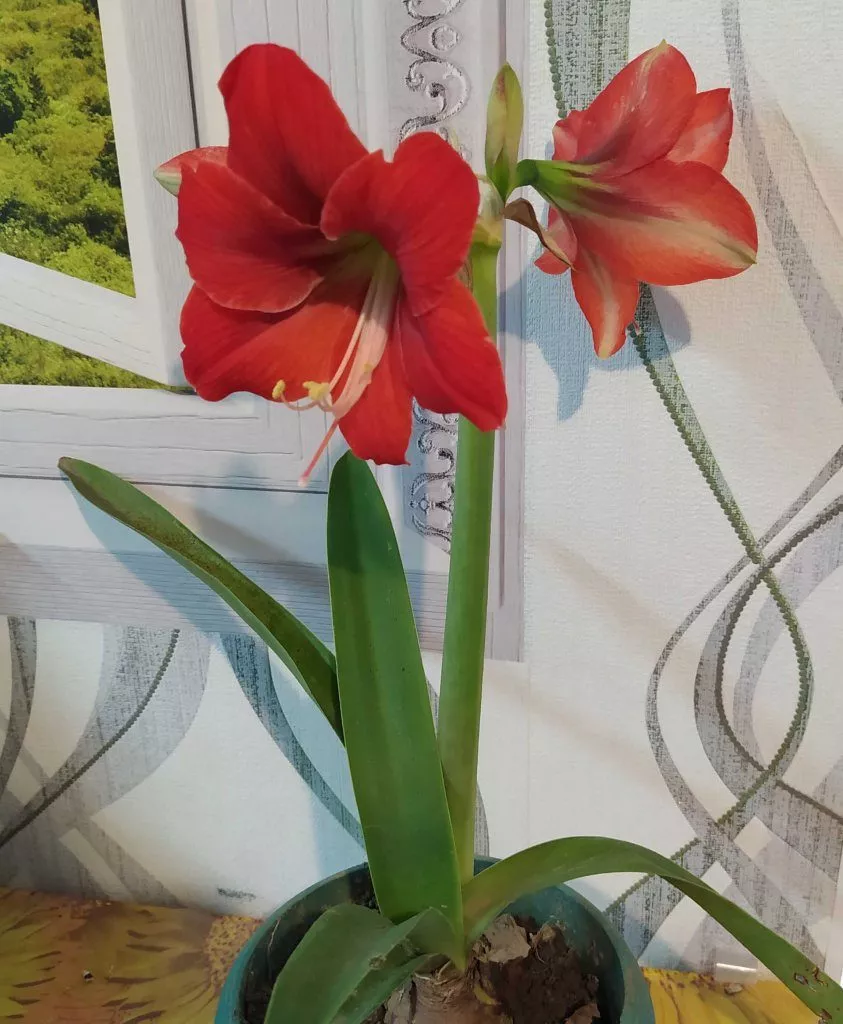
A few years ago, I was given a couple of hippeastrum bulbs. That's how my acquaintance with this flower began. It wasn't an immediate success. Although it's not particularly picky, understanding its needs isn't always easy.
At first, my hippeastrum started actively multiplying bulblets. After a few months, instead of two, there were four, then eight, and as time went on, the number grew. None of the bulblets stubbornly refused to bloom, even though I was eager to see what kind of flower they would produce.
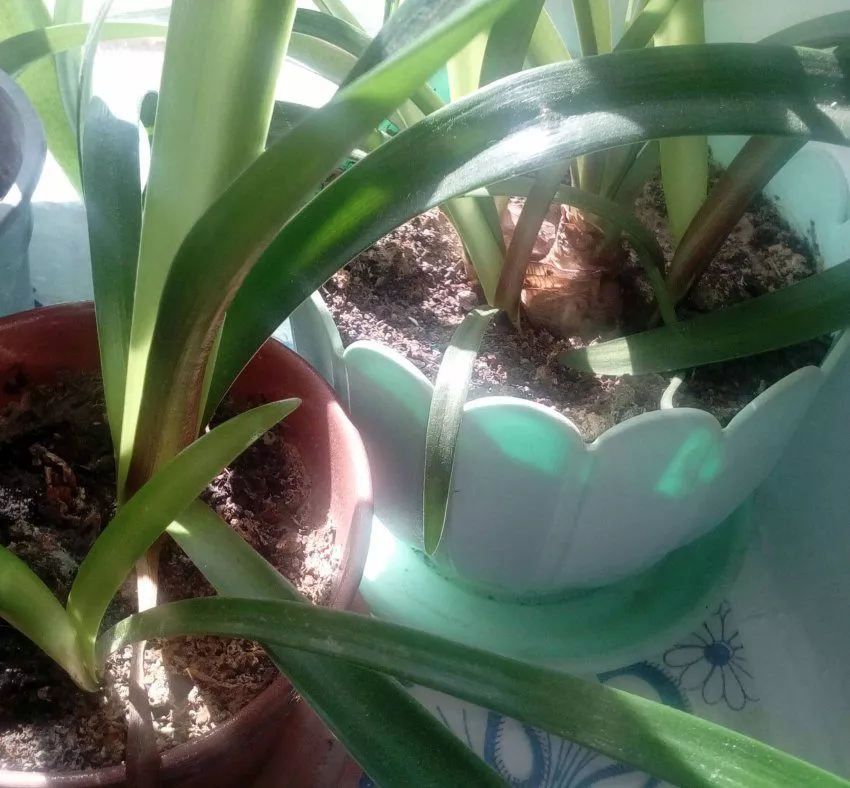
Scientifically, it's not all that complicated—you need a small but tall pot. There shouldn't be too much space around the bulb, but plenty of room for the roots. A rest period is necessary—when the plant is stopped from being watered, maintaining only a slight moisture level in the soil, and placed in a cool, dark place. A specific soil composition is also required.
Another important point: if you need many bulblets, you should plant the bulb more than halfway down. If you want the bulb itself to grow in size and produce a flower stalk, you should plant it no more than a third down, leaving the rest of the bulb above ground.
But that's just theory. In reality, my hippeastrum stubbornly refused to shed its leaves even when I stopped watering them. They were wilted, but still green. If I trimmed them, new ones grew.
Another problem with storing dormant bulbs is a cool location. The house is warm, but our shed and summer kitchen are unheated and freeze in winter, which isn't ideal. I tried drastic measures: removing them from the pot, cutting off the leaves, shaking off the soil, wrapping them in newspaper, a plastic bag, and putting them in the refrigerator. After a month or two, I'd take them out and put them back in the ground. The leaves started to grow, but the plants refused to bloom.
Despite all my efforts, the bulblets proved resilient—not a single one died over the winter, but they also refused to bloom. So I gave them their freedom. I planted them in a flowerbed in the garden for the summer, and in a pot in the fall. In the open ground, the flowers gained green mass very well over the summer and produced many offspring.
In the fall, I gave away both the baby bulbs and the grown bulbs to everyone I knew and didn't know who wanted them on the local forum. But my planting stock wasn't running low—I could easily start a hippeastrum farm. But I couldn't tell anyone what color they were blooming, and I was beginning to doubt they were blooming at all.
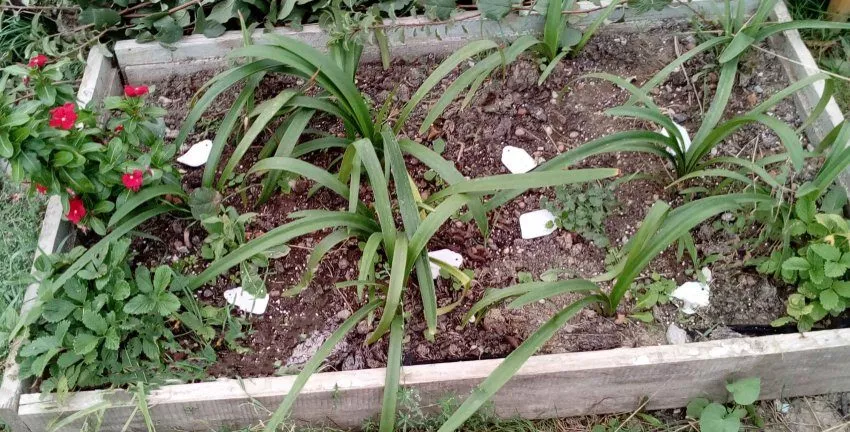
And so, in the spring, one bulb, awakened from winter, sprouted a flower stalk. The flowers were bright red. The hippeastrums spent the summer in the flowerbed again, and in the fall, right there in the same flowerbed, another bulb sprouted a flower stalk.
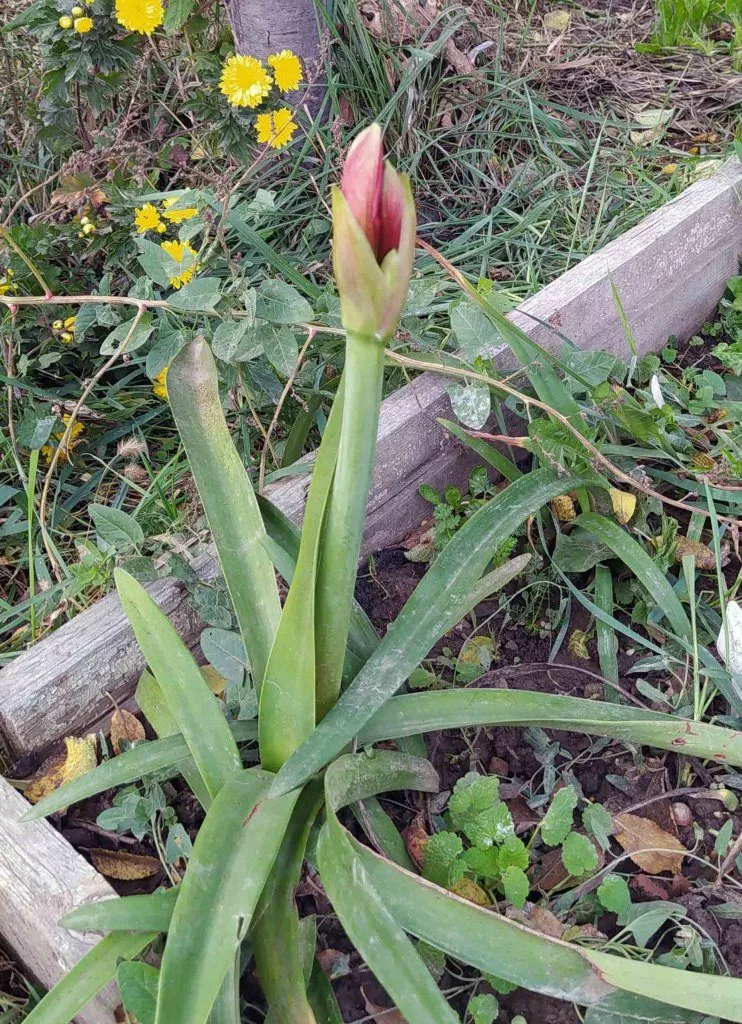
But since autumn was already approaching, I brought it into the warmth along with the others.
This is how she blossomed:
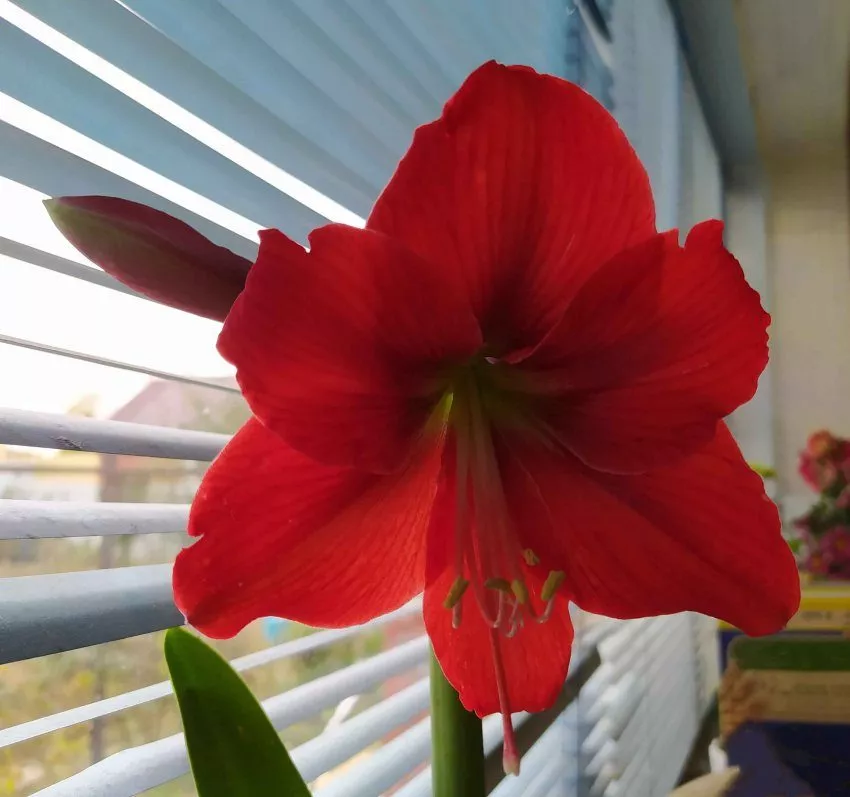
The bulb that bloomed in the spring also produced an arrow and bloomed again.
It seems I've finally found a way to appreciate these flowers. For the second year now, they've been delighting me with their bright little gramophones.
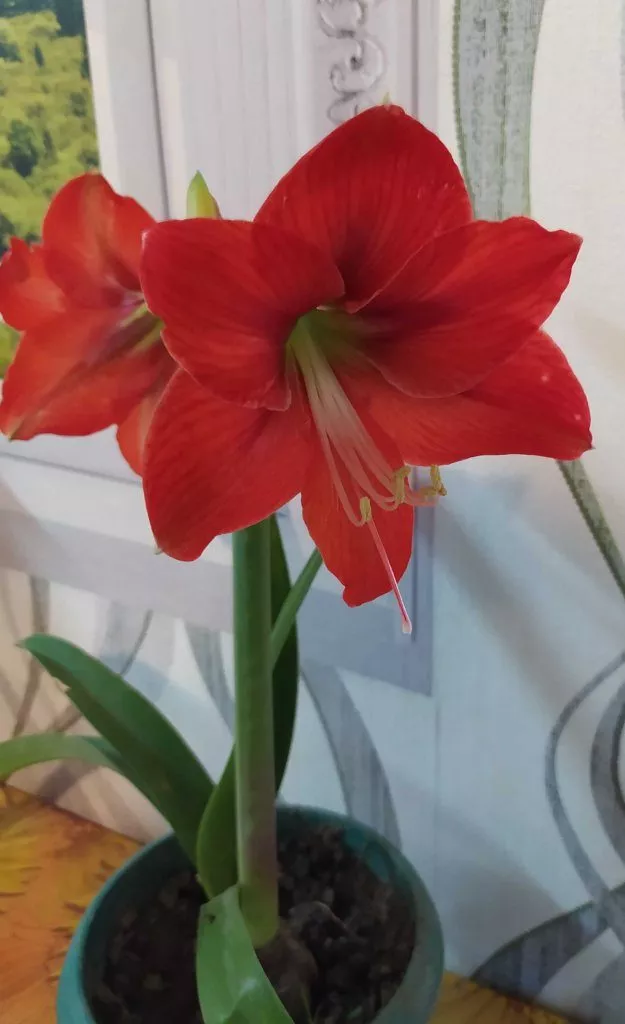
Here are the basic rules that I now follow when caring for these flowers:
- When planting, you need to leave about a third of the bulb above the ground.
- When watering, make sure the water falls on the soil, not the bulb. Otherwise, the bulb will begin to form scales, which will rob it of its energy for flowering.
- Water infrequently - only when the soil begins to dry out.
- When an arrow appears and it grows by 10-15 cm (approximately the height of a palm), stop watering.
- Resume watering when the buds begin to burst for flowering.
- Feed periodically. You can buy a complete feed from the store, or use old, rotted bird droppings (about a tablespoon per liter of water).
- But don't fertilize too often. Mainly during the period leading up to flowering and when the buds burst. But not every watering.
Now there is a temptation to exchange for other colors.
This is the autumn transplant of bulbs:
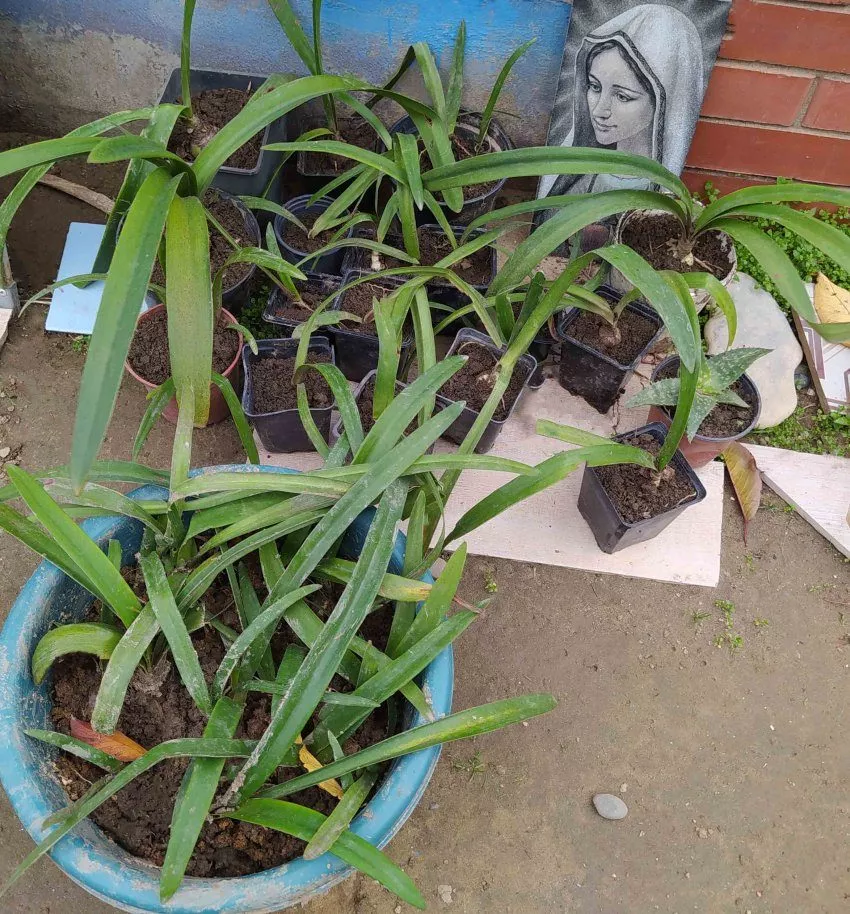
And another question for the experts: the girl who gave me my first bulbs called them amaryllis. But we had an amaryllis when we were kids, and I remember it had a different leaf growth pattern. These bulbs have leaves that grow flat. But that bulb's leaves curled around the center at the base.
Judging by the descriptions I found online, I currently have a hippeastrum (this is confirmed by the hollow flower stalk—I specifically noticed it when I cut it), but I still have doubts. Anyone who knows much about these flowers, could you tell me if I actually have an amaryllis or a hippeastrum?