

The flower, "Female Happiness," appeared recently. In the spring of 2018, my youngest children (my son and wife) went on vacation for two months and brought their houseplants with them. Among them was a dusty, spreading bush with large leaves. It was cramped in its pot, and numerous new shoots with protruding roots were struggling to survive. Many of the leaves were pale yellow.
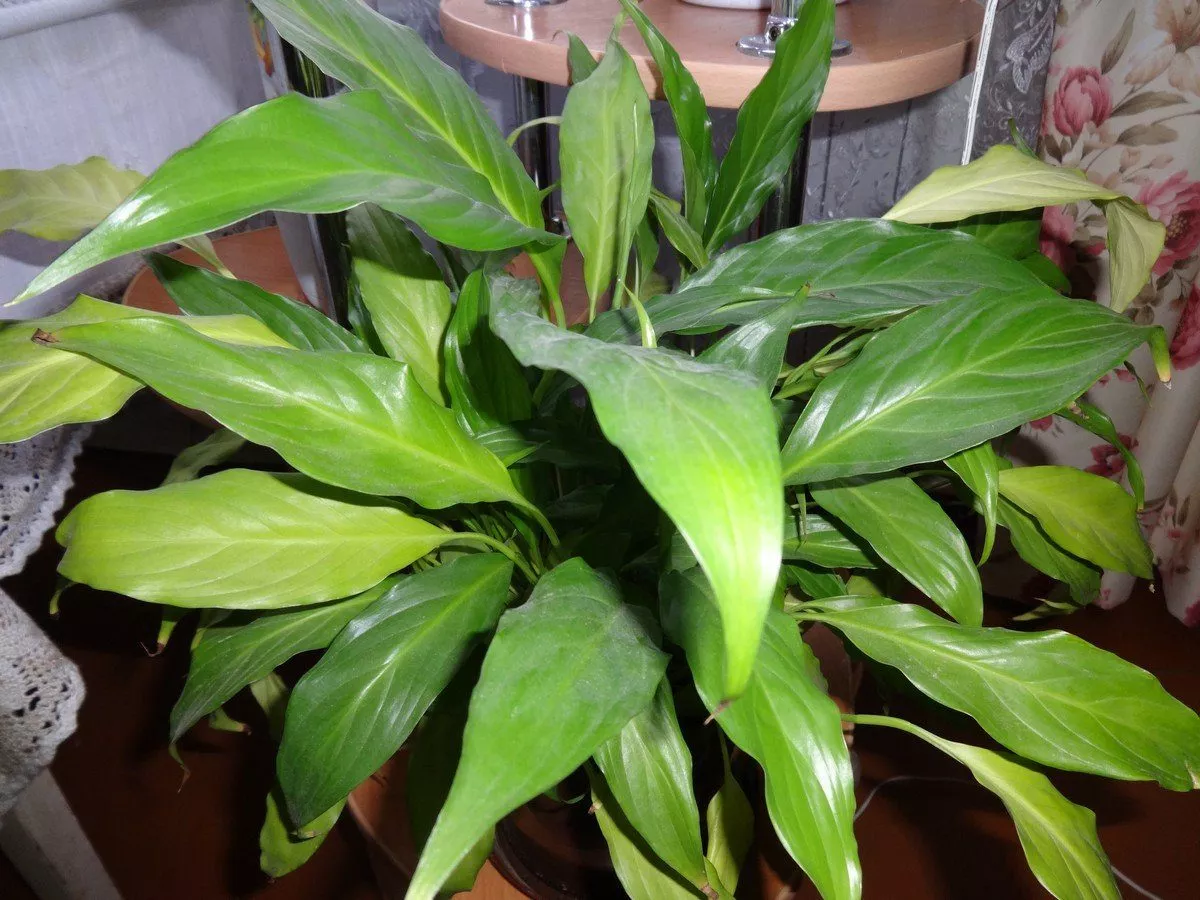
I didn't know the name of this flower back then. After searching online, I found some information about it. It turned out it was a beautiful flowering houseplant called Spathiphyllum, commonly known as "women's happiness." My boys never had this plant bloom.
I decided to thin the plant out a bit, removing the weakest shoots and yellowed leaves, and adding some nutritious soil to the pot. I washed the dust off the leaves, and while it was staying with me, I applied some special indoor plant fertilizer. I also planted a small sprout for myself. I, too, wanted to have a woman's joy in my home. My new plant grew well, and new leaves appeared periodically.
In January 2020, at Christmas, I discovered that instead of a new leaf, it had produced its first white bud.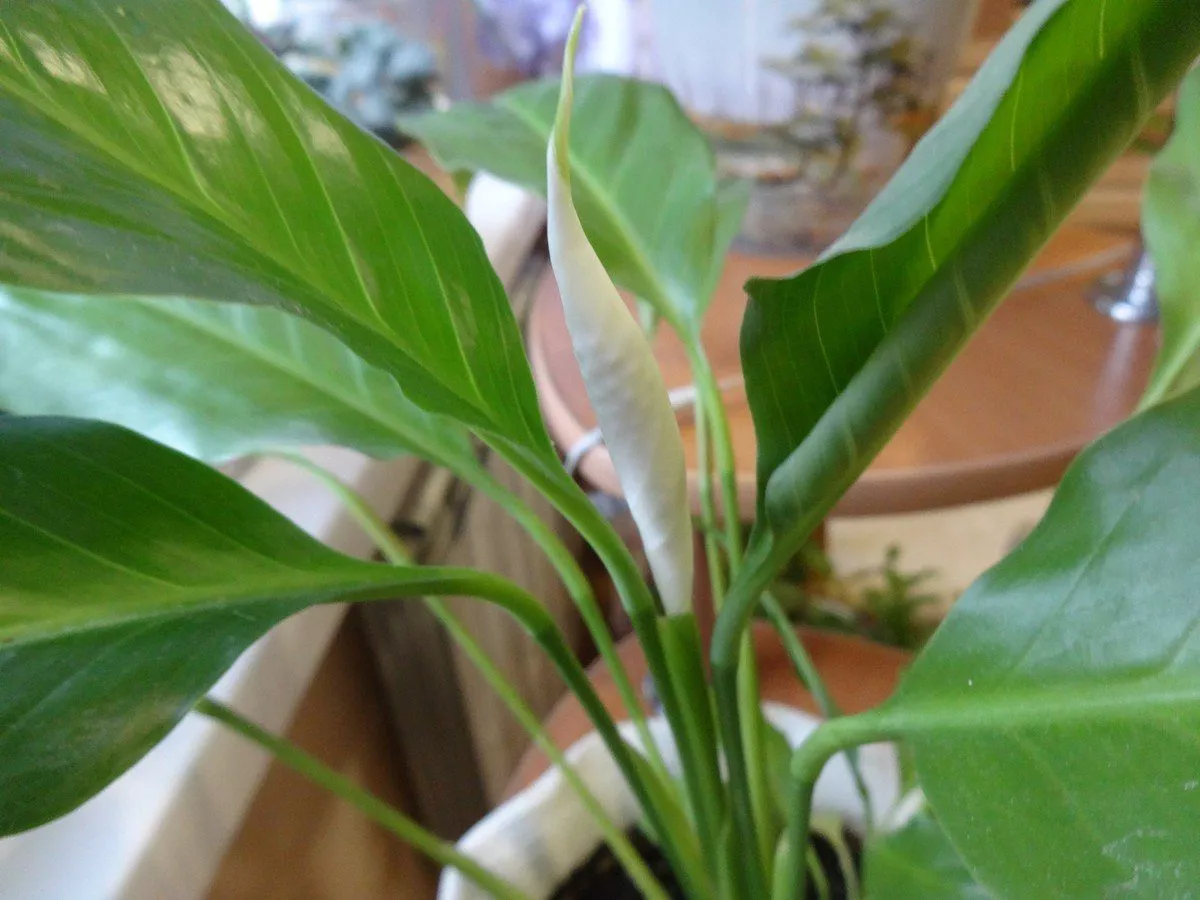
And then a white sail on a long stem unfurled on it.
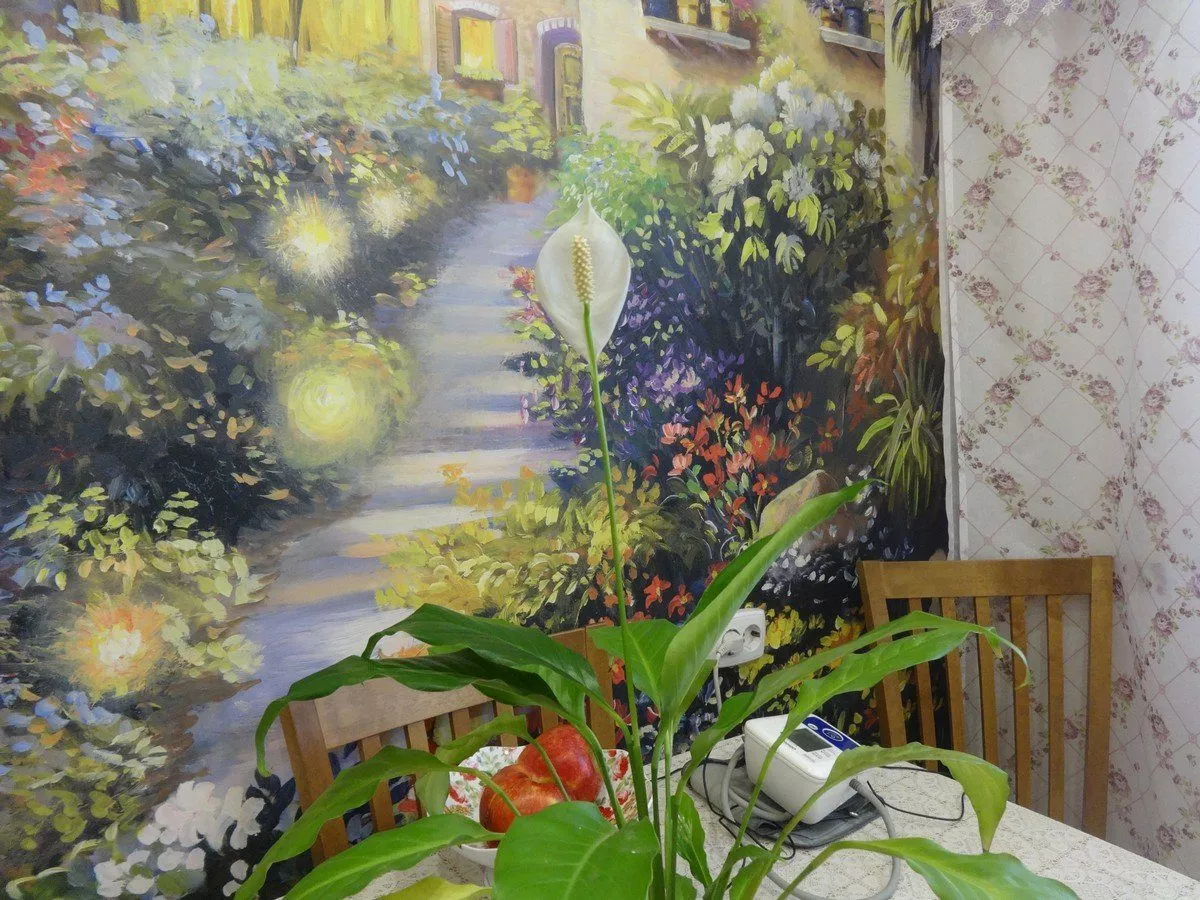
At the end of September, the spathiphyllum gave me a surprise: for my birthday, it gave me another flower.
It's already December, my feminine happiness looks like this.
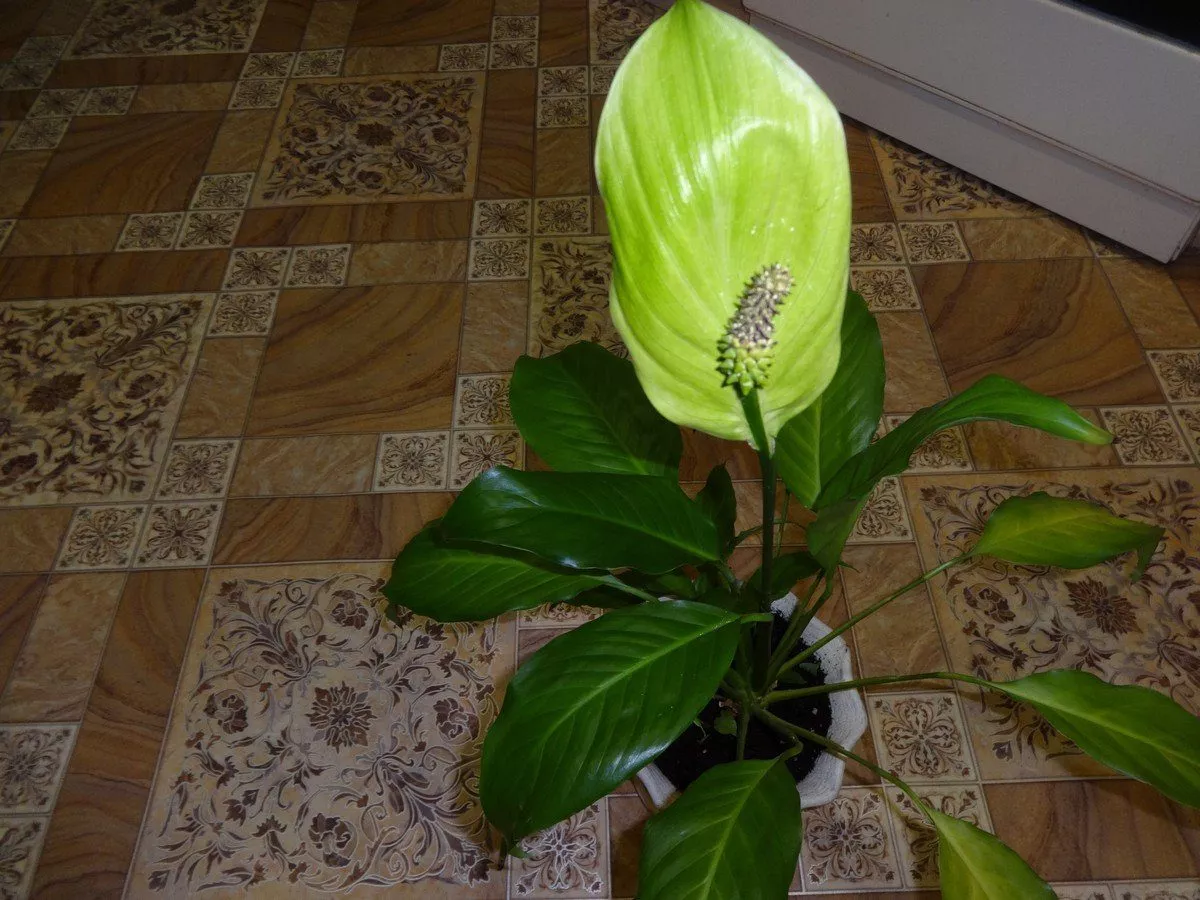
And this is the flower of my youngest children; in November, three flowers bloomed on it.
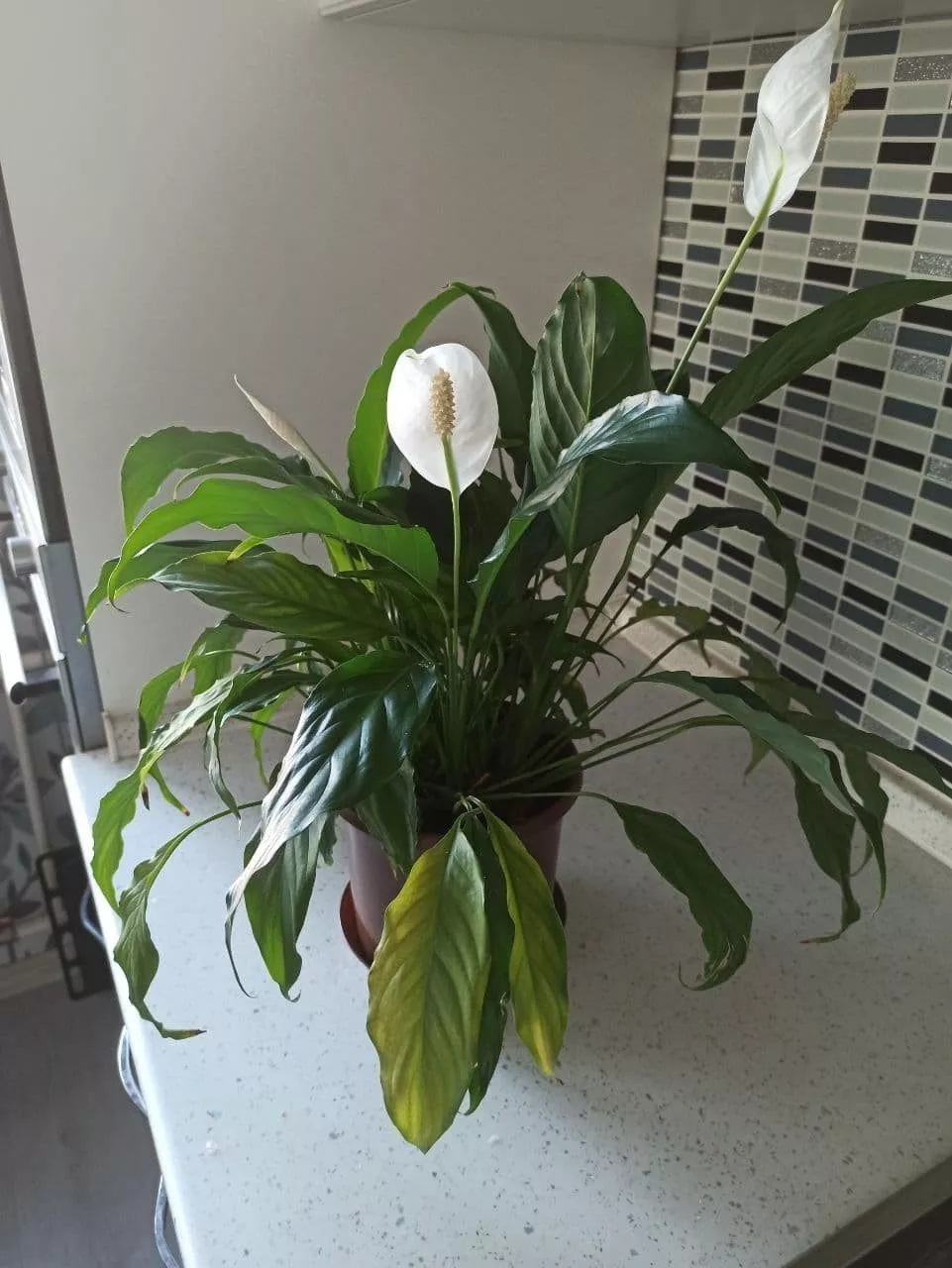
What kind of plant is this female happiness?
Spathiphyllum is a perennial evergreen flowering plant from the Araceae family. It has a short stem from which grows a cluster of large, dark green, oval-lanceolate leaves up to 20 cm long.
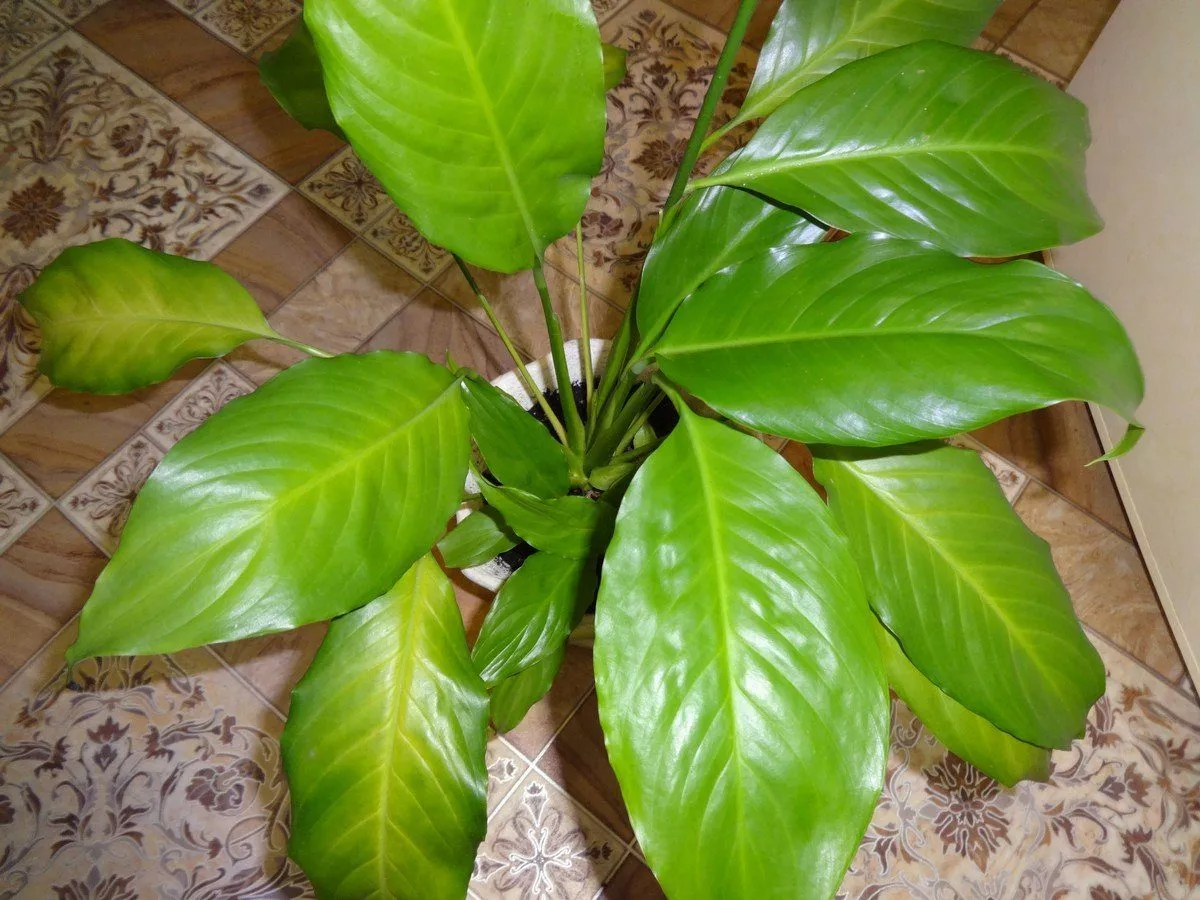
First the leaf is rolled into a long tube, then it unfolds.
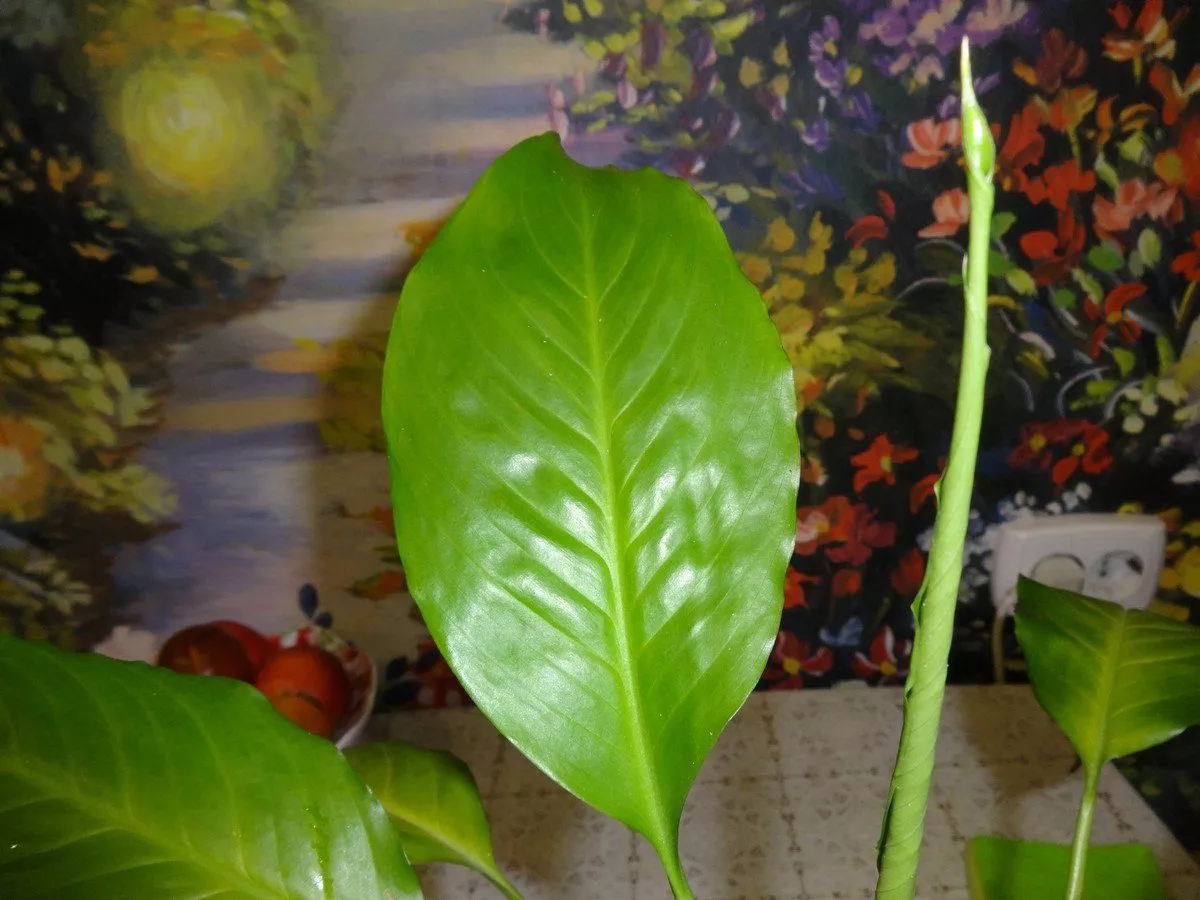
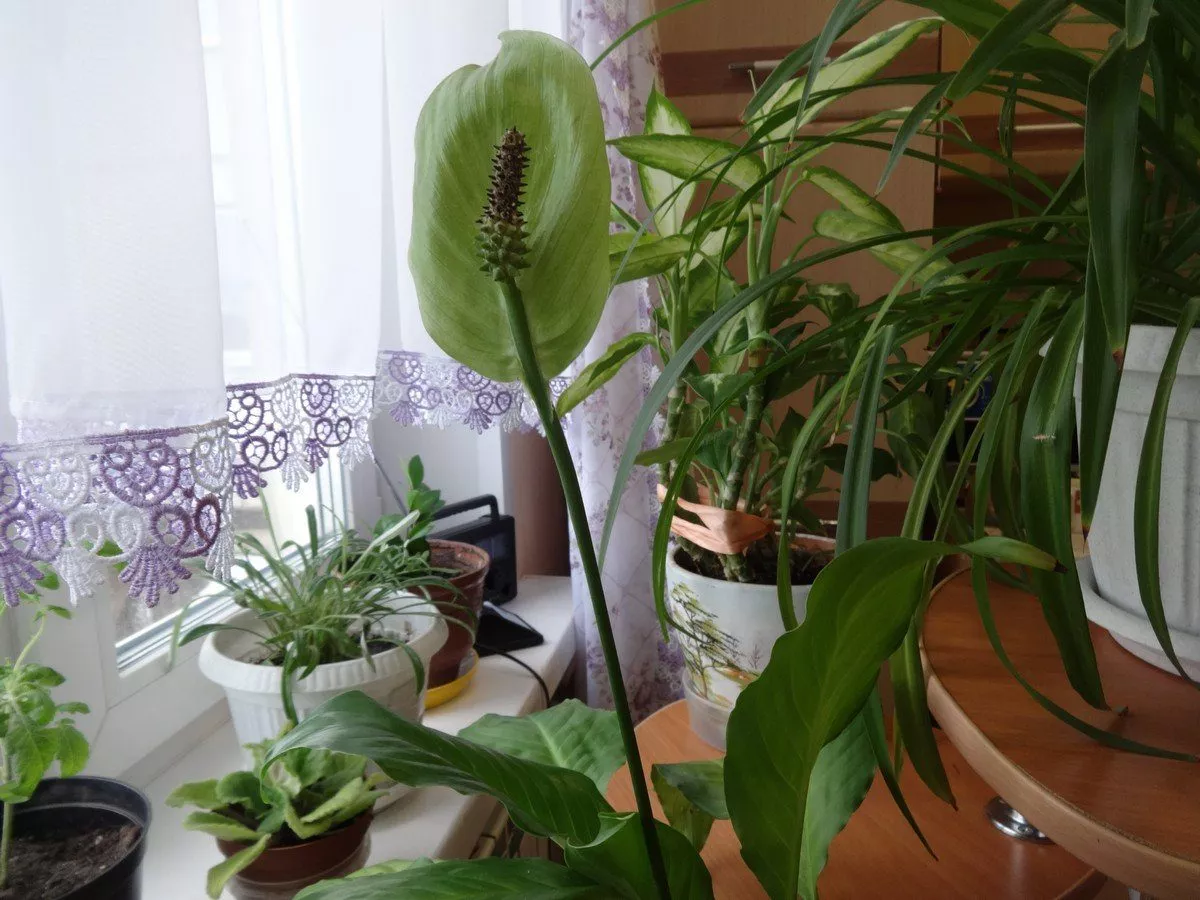
The flower stalk rises high above the leaves and opens to reveal a beautiful, spadix-shaped flower of light cream color on a snow-white spathe.
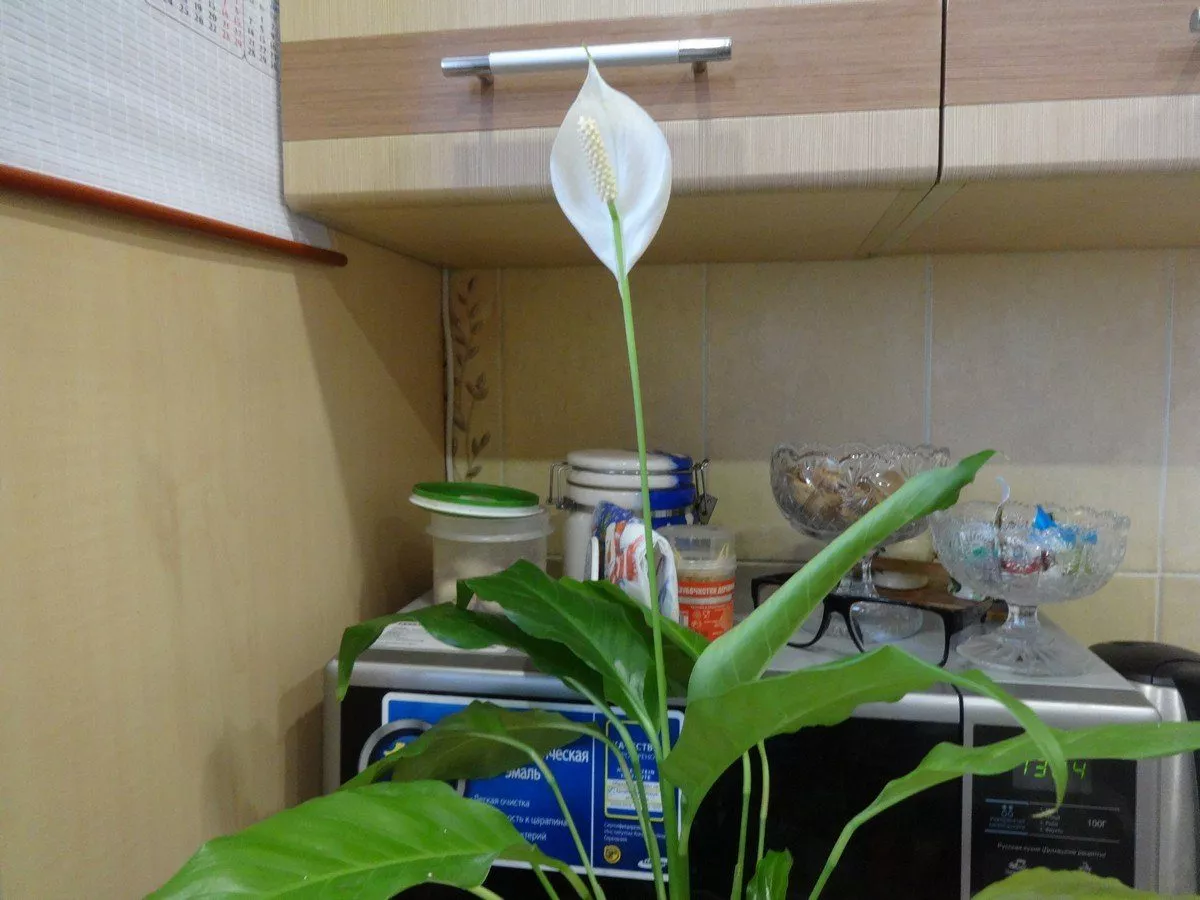
The flower lasts a long time, up to three months, and gradually the white color of the covering leaf takes on a light green hue.
How to care for spathiphyllum
It's recommended to repot the young plant annually in the spring into a larger pot, 2-3 cm larger than the plant's root system. The potting soil should be light, loose, and permeable, with a slightly acidic or neutral pH, and a drainage layer at the bottom. A ready-made potting mix for Araceae is ideal. It's crucial not to bury the plant's crown when repotting, otherwise flowering will be impossible.
Women's Happiness is a moisture-loving plant; from spring to fall, it requires generous watering with settled, room-temperature water. However, overwatering is not recommended, as this can cause root rot.
If the air is dry, the plant's leaves should be periodically sprayed with a spray bottle.
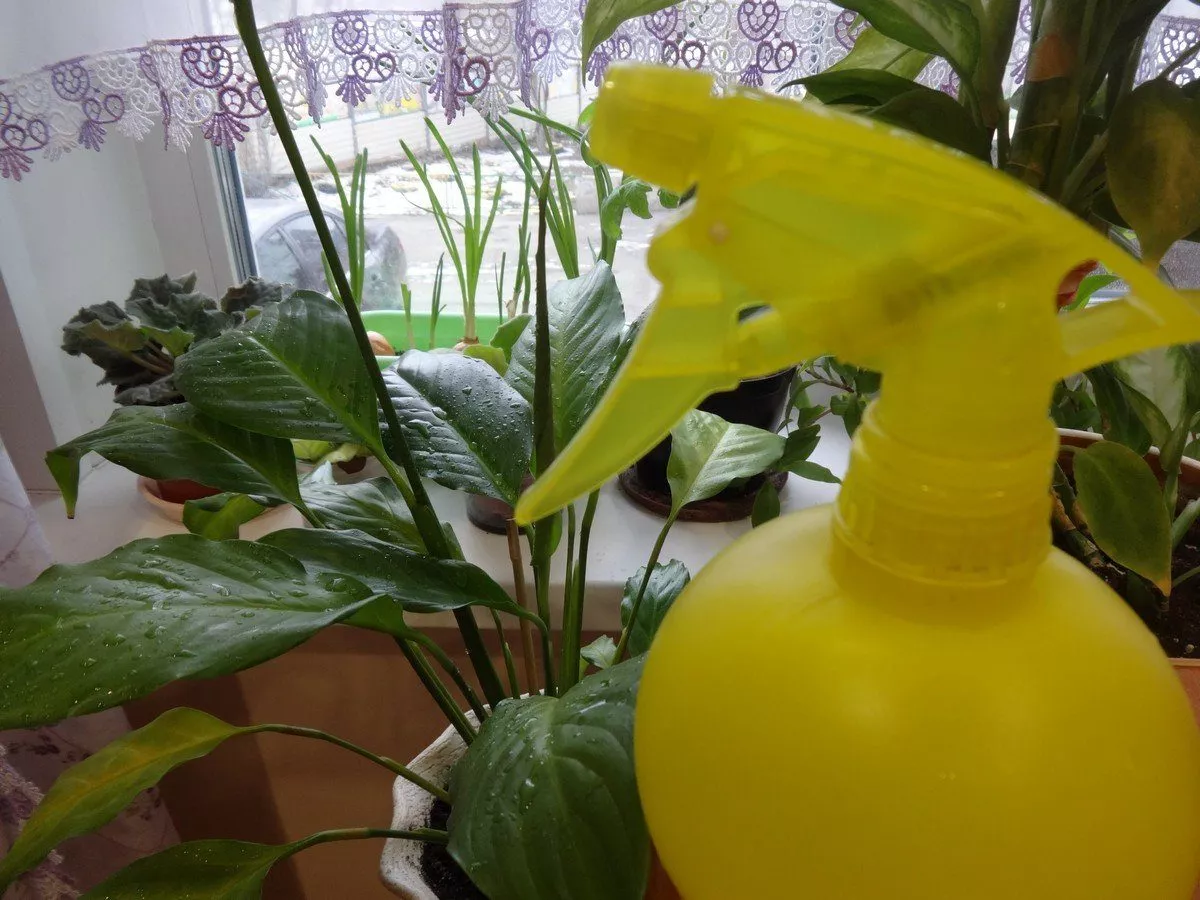
The plant also needs to be fed with special fertilizers for ornamental and flowering plants twice a month. To encourage more buds, it needs to be fed more frequently—once a week.
For feeding, you can use an infusion of wood ash, which contains a lot of phosphorus, potassium and other microelements. You can simply add dry ash under the bush, loosen the soil and water the plant.
In winter, the plant requires good lighting; this is when it's actively growing, forming flower buds and adding leaf mass. You can move it to a south-facing window or provide additional lighting with a grow light. However, be sure to protect your plant from drafts and frosty air.
Women's happiness is a poisonous plant, containing substances that irritate the skin and mucous membranes of the eyes. When repotting the plant or trimming old, yellowed leaves, exercise caution, wear gloves, and wash your hands thoroughly with soap.
My spathiphyllum grows in the kitchen near the window on the southwest side.
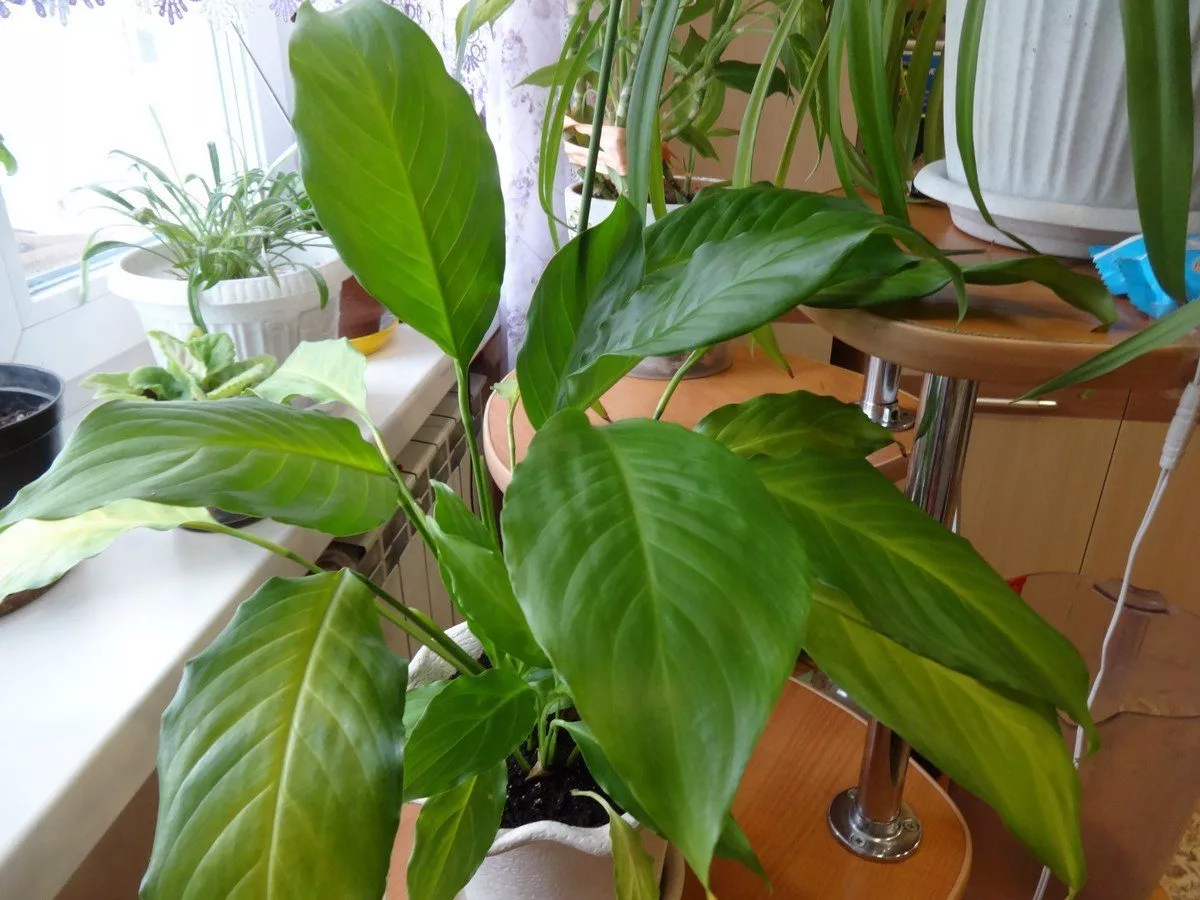
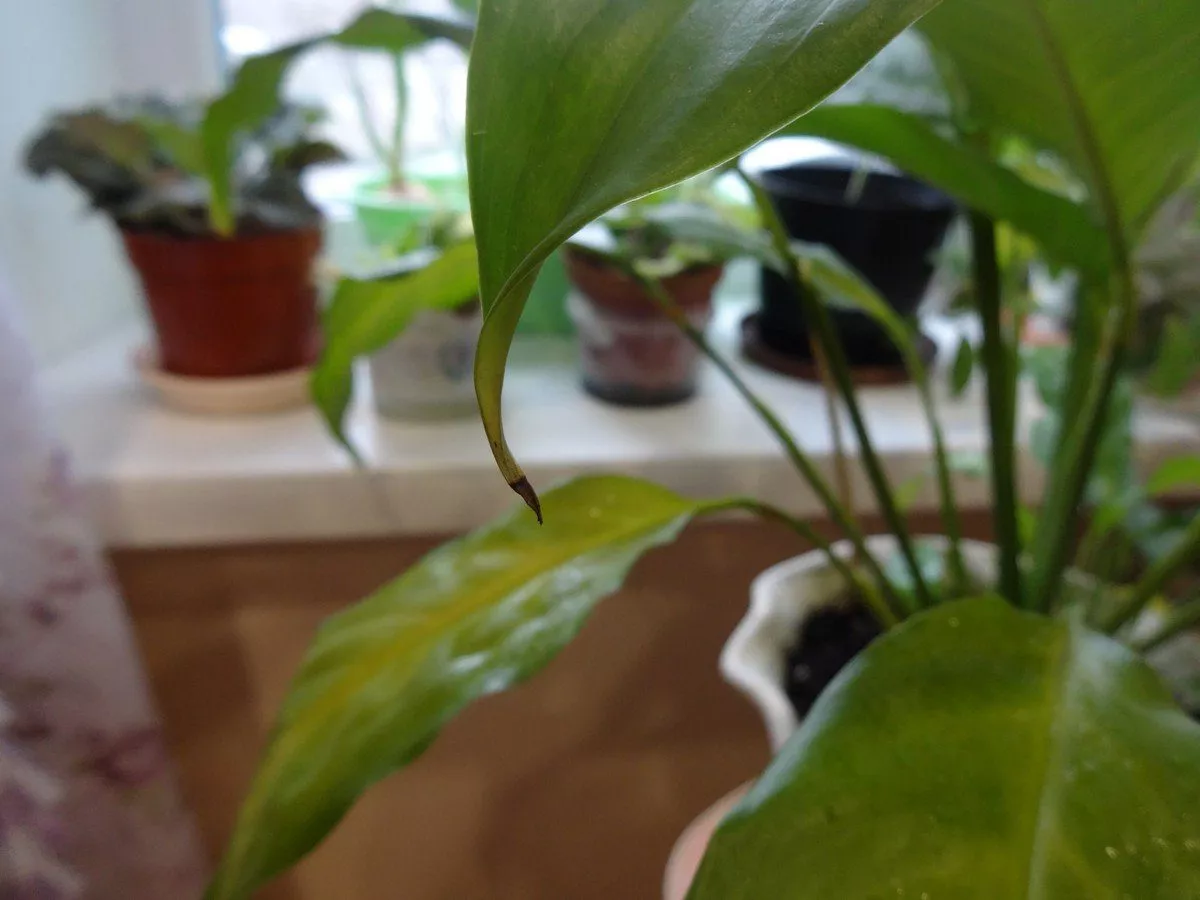
In summer, it gets plenty of sunlight, but in winter, it struggles with less light. The plant shelf is located near a radiator, and the hot air dries out the leaf tips.
I can't create ideal conditions for every houseplant in an ordinary apartment, but I try to help mine grow and bloom. I make sure my little plants don't get dehydrated, that the soil doesn't dry out, I water them regularly, mist the leaves, and fertilize them periodically. I really want my little plant to be covered in a profusion of beautiful blooms.
Useful properties and signs of female happiness
Women's happiness is a beautiful, low-maintenance flower that can decorate any corner of the apartment.
Peculiarities:
- Like many indoor plants, it produces oxygen and absorbs carbon dioxide, destroys mold spores, and helps purify the air of chemicals and bacteria.
- Relieves stress and nervous tension.
- It is believed that blooming spathiphyllum brings harmony, happiness, and peace to the home, and improves relationships between spouses and other family members.
- Blooming feminine happiness is a good omen for unmarried women; the flower helps them find their man, and for those women who dream of a child, it promises a happy conception soon.
- If several flowers bloom on a plant at once, this is a sign of great luck.
- If you place a plant in a room where money is kept and place a coin under the pot, this action will help attract money into the house.
- Withered leaves and dry tips are a sign of deteriorating financial well-being, but if you place a banknote in a pot of feminine happiness and sprinkle it with soil, your financial situation will soon improve.
This is the unusual flower that we have growing here.