
The bellflower is blooming again.
The bees collect honey,
Shaking the air with a roar
And they carry them away to their hives.And when it starts raining,
A bell like an umbrella
It will open its dome -
It will cover the bees with itself.
What easy-to-grow perennials can I plant in my flowerbed that won't freeze, require minimal care, and still bloom profusely with vibrant colors? I decided to plant bellflowers.
At my old dacha, I had low-growing Carpathian white bellflowers, Portenschlag's bellflowers with purple star-shaped flowers, a large bush of tall, broadleaf bellflowers with white flowers, and medium-sized biennials with blue and pink flowers. I didn't take them with me to the new dacha.
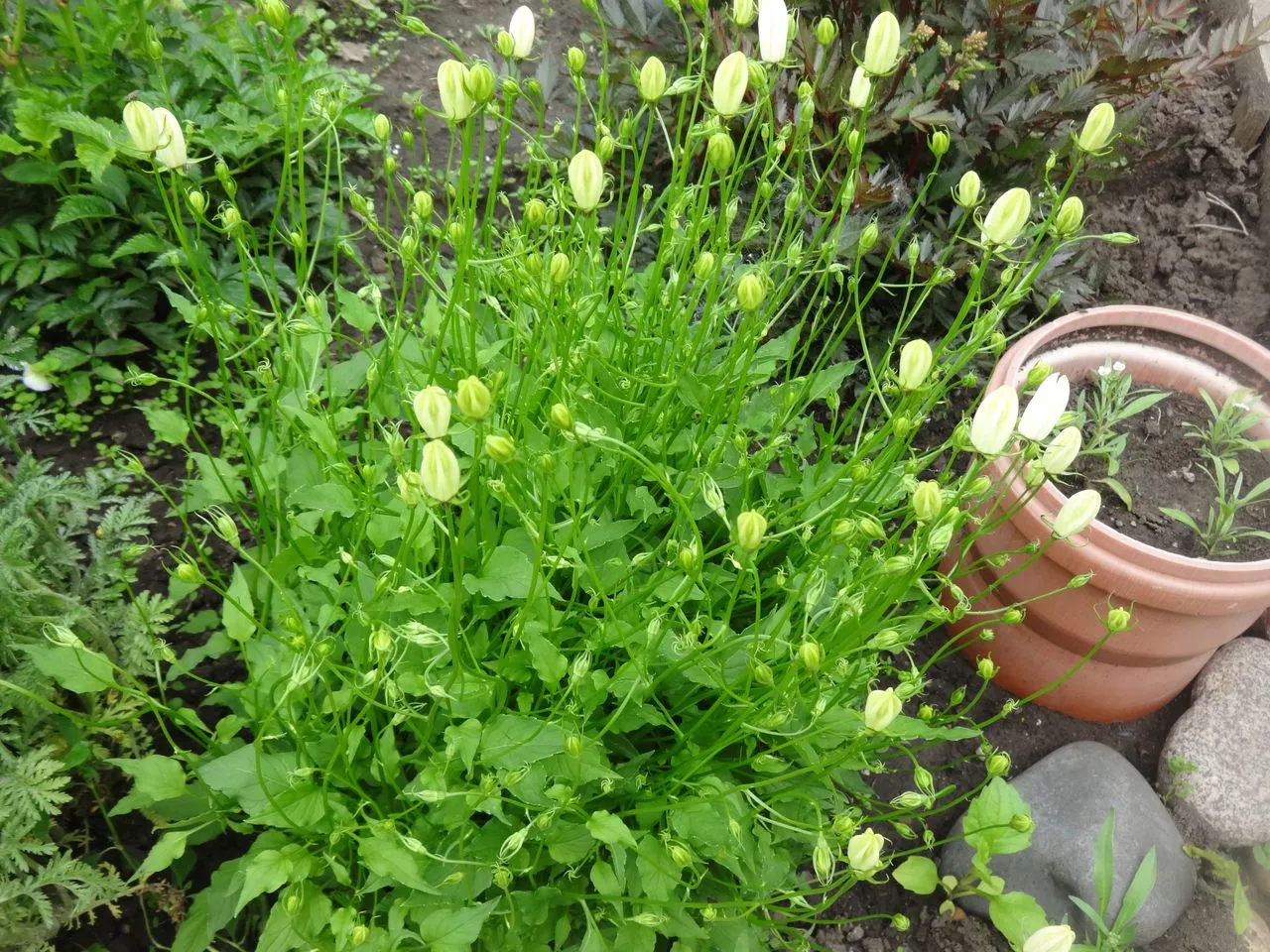
In the summer of 2019, I bought a packet of mixed perennial bellflower seeds. Of all the seeds, four sprouted. But I was lucky: they were all different—two had wide, rough leaves, identical to each other, a third had elongated, smooth leaves, and the fourth was a low-growing Carpathian variety with white flowers. I transplanted it the following spring into the flowerbed, in the foreground of the white astilbes.
I'm thinking of planting another Carpathian bellflower next to it, only with blue flowers, or Portenschlag's bellflower. While the self-seeding chamomile flowers are growing there, it would be a shame to pull them out. Let them bloom for now - they make the bees happy. Later I'll pull them out and sow the bellflower seeds.
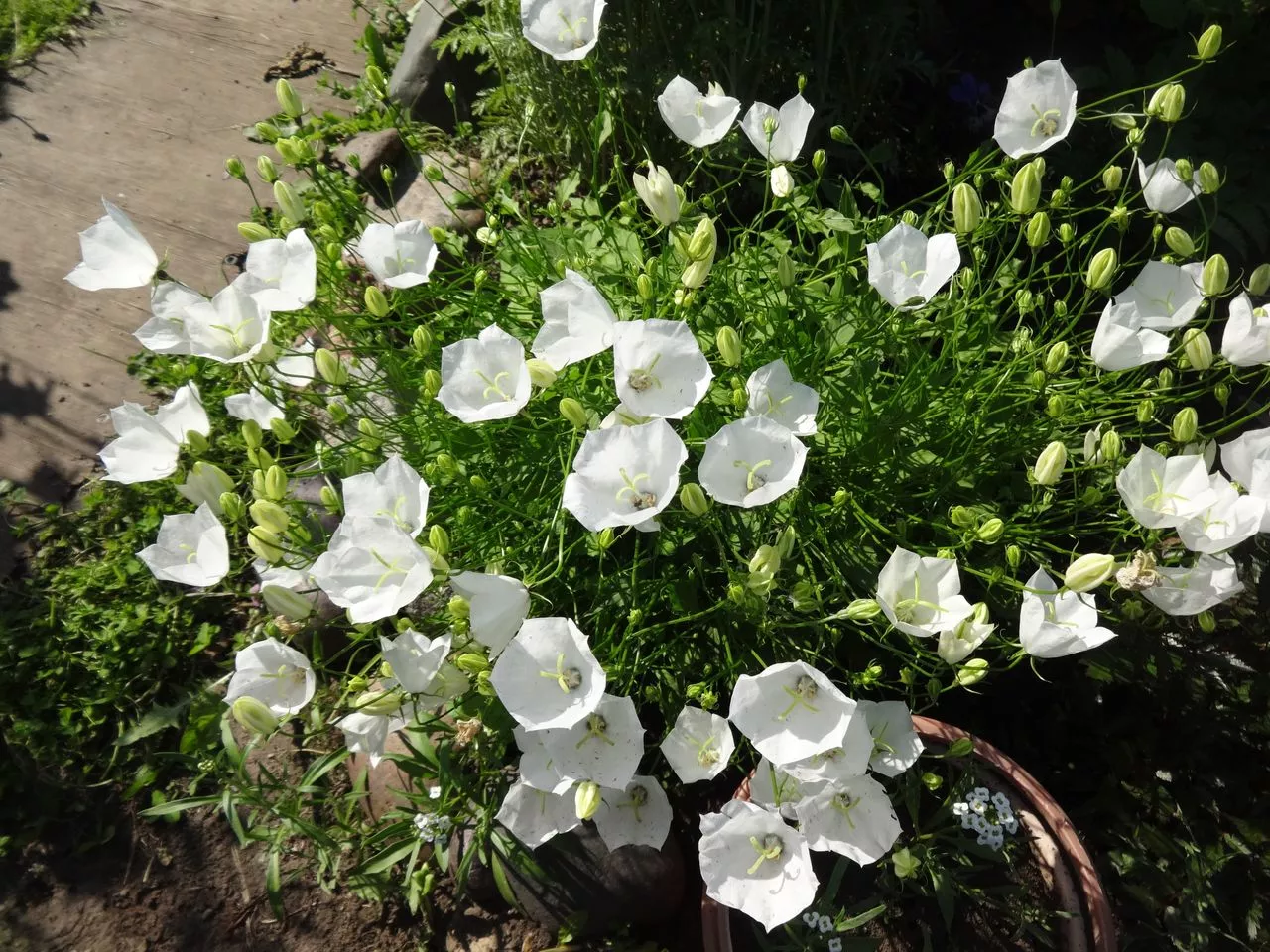
Carpathian bellflower or Campanula carpathica
The Carpathian bellflower is a low-growing, very compact shrub, about 20-30 cm tall, with small, oblong-rounded, soft-green leaves. It has numerous slender stems—inflorescences—each bearing a single, fairly large, cup-shaped flower, about 5 cm in diameter, made up of five fused petals.
The color of the flower depends on the variety - white, light blue, blue, purple.
This easy-to-grow bellflower thrives in both partial shade and full sun. It grows quickly in fertile soil. These flowers need to be replanted every 5-6 years. It bloomed in the second year after sowing.
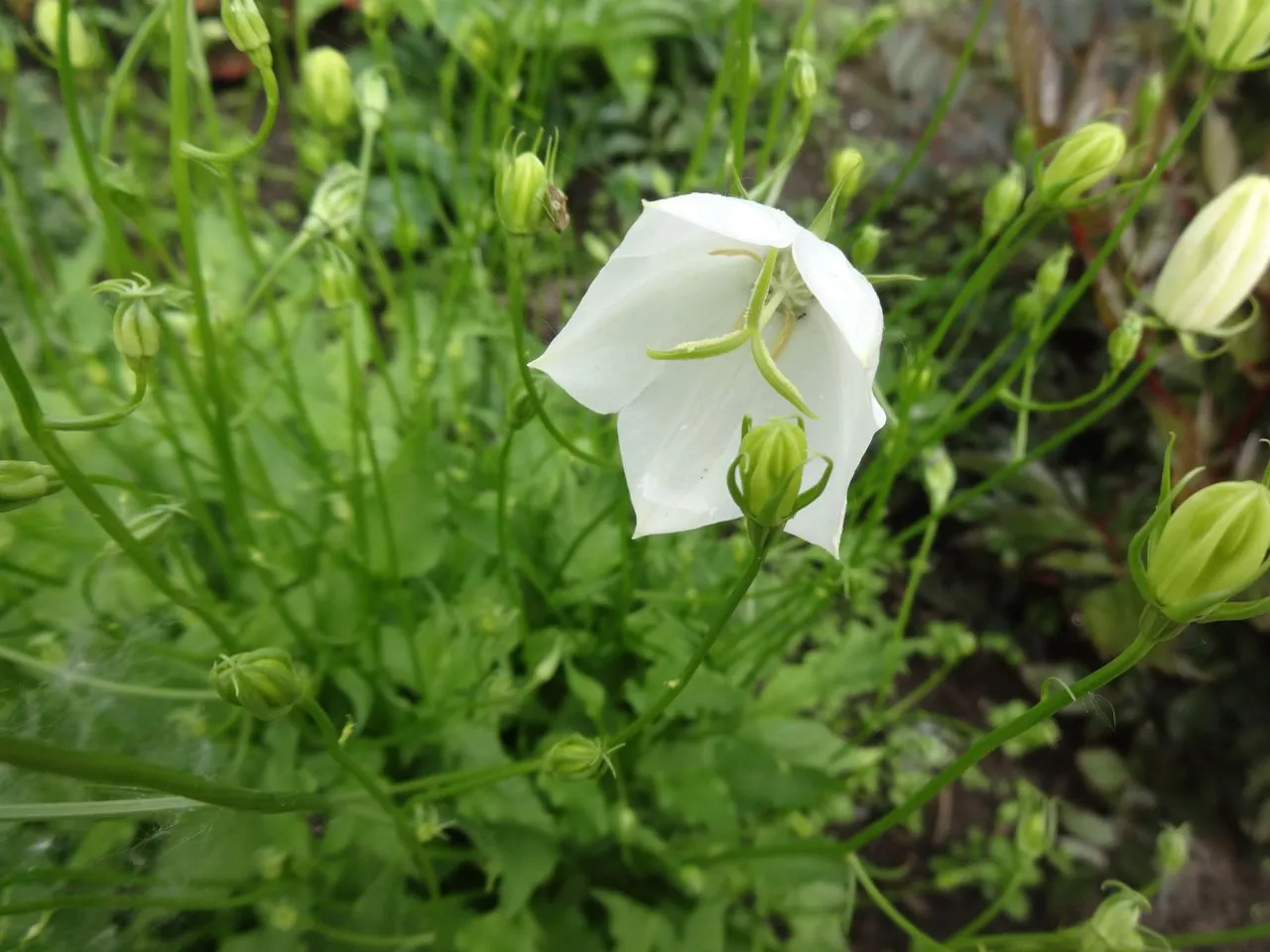
The plant has high winter hardiness, does not freeze even at -40 degrees Celsius, and overwinters without shelter.
It blooms profusely and for a long time. Here in Siberia, it begins blooming in mid-June and may bloom again in early autumn, but less profusely. After flowering, the bush produces seedpods. It easily propagates by self-seeding. It can also be propagated by dividing the bush in May or late summer, or by sowing seeds outdoors in spring.
Care for the flower is minimal; in spring, you can add some loose humus under the bush. During dry periods, periodic watering and loosening of the soil are required. For more lush flowering, you can water the flower with superphosphate, but even without fertilizer, the bellflower still blooms profusely.
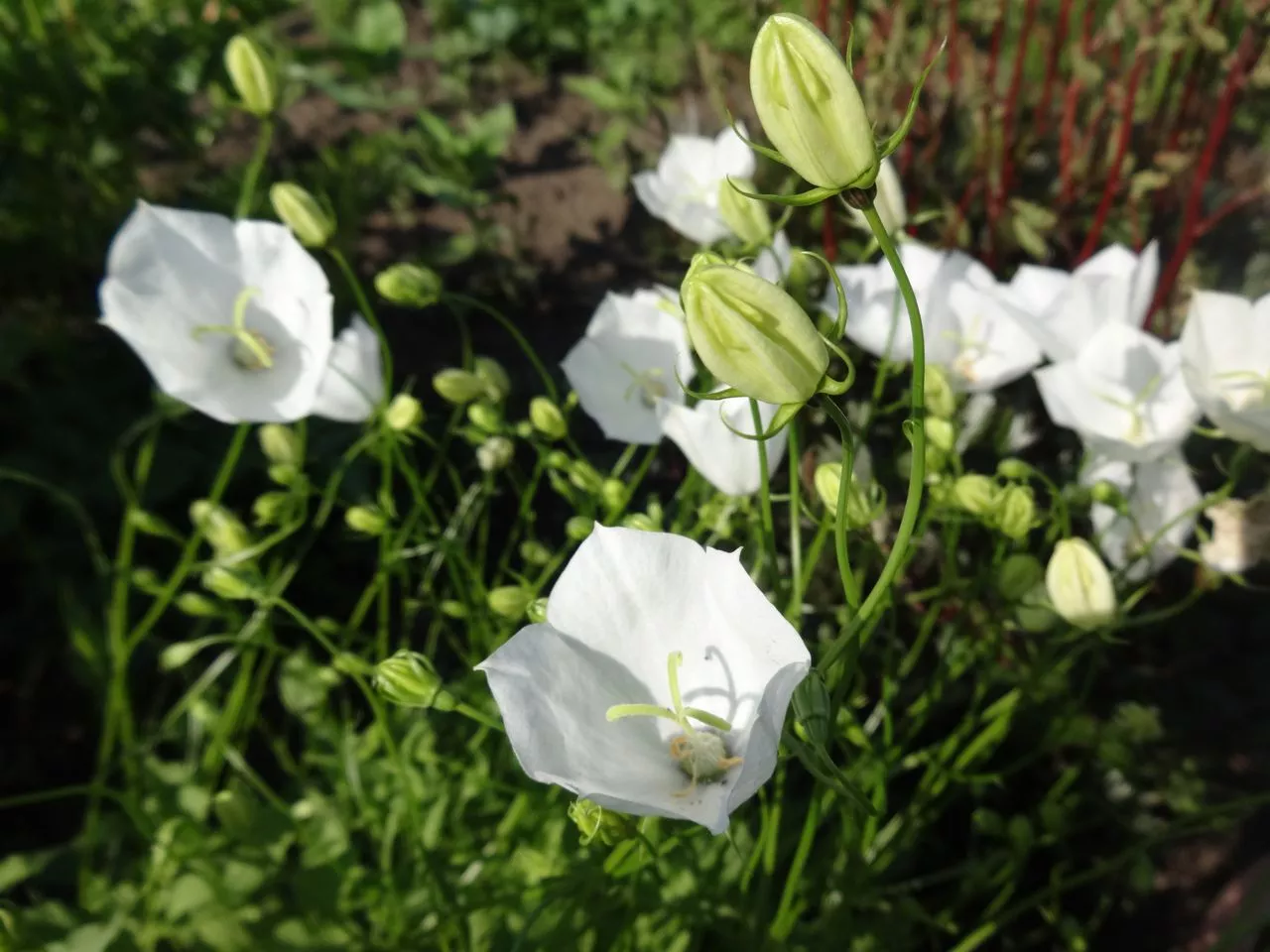
It is better to cut off faded inflorescences, which will promote longer flowering, but if you need to propagate, you can leave several capsules so that the seeds can ripen in them.
Bellflowers are almost pest-free. Sometimes, spittlebugs appear, which can be identified by a saliva-like clot on the stem. This is the spittlebugs' nest, where the larvae develop. If pests are numerous, treat the plant with a malathion solution. Folk remedies, such as soapy water and garlic infusion, also help. Slugs can also damage young leaves. I've never encountered any pests or diseases on the Carpathian bellflower.
Other bells
The second bellflower, or rather two identical ones, has broad leaves. The leaves are stiff and covered with fine hairs. The bush is medium-sized and has grown well; this spring, new shoots have sprouted around it.
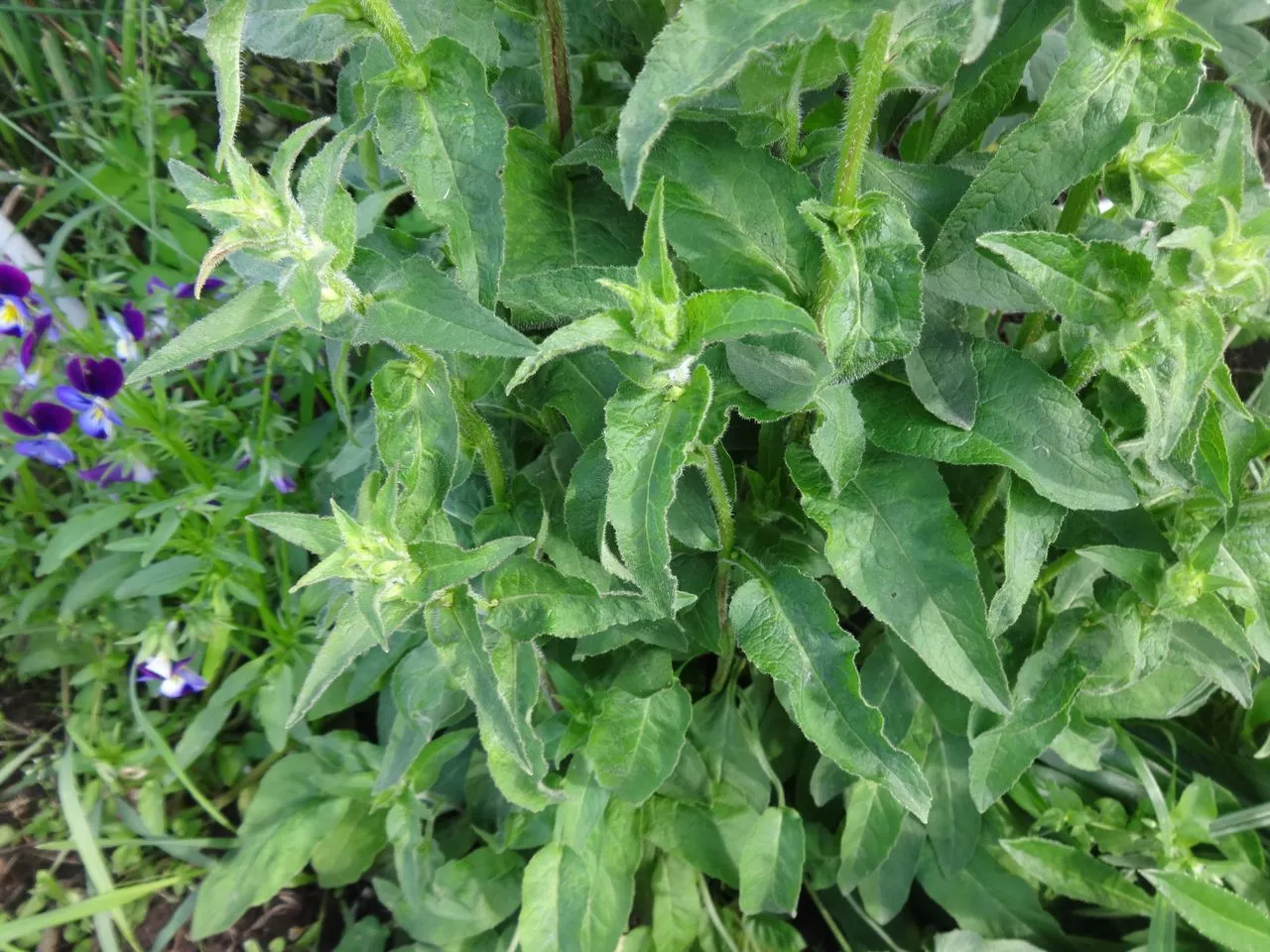
In June, the bush produced multiple flower stalks. They are strong, plump, and green, with some having a brownish tint. The stalks bear numerous inflorescences, clustered together.
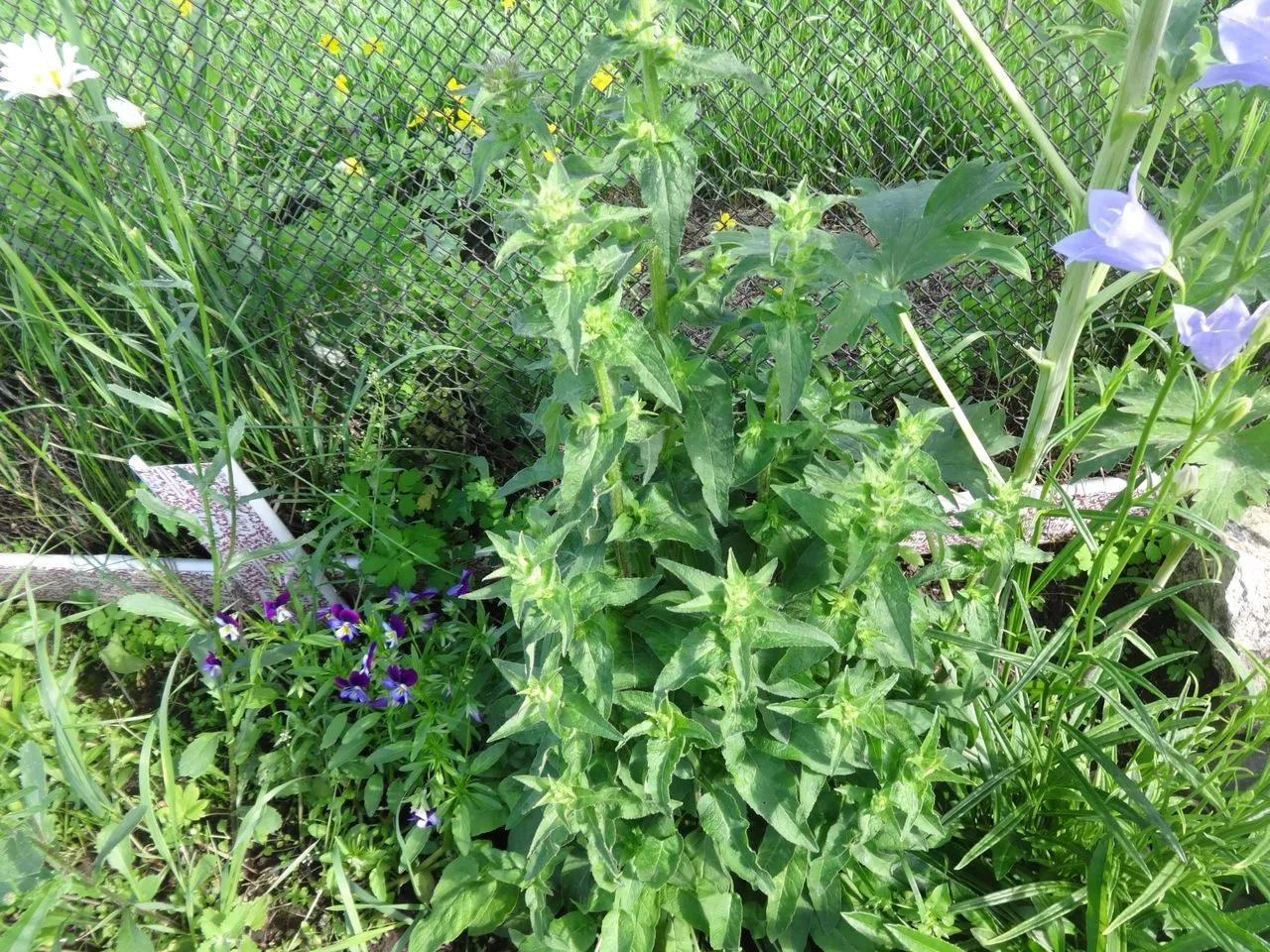
Most likely, this is a clustered bellflower. I had light, whitish-pink bellflowers blooming on one shoot, and purple ones on the other flower stalks.
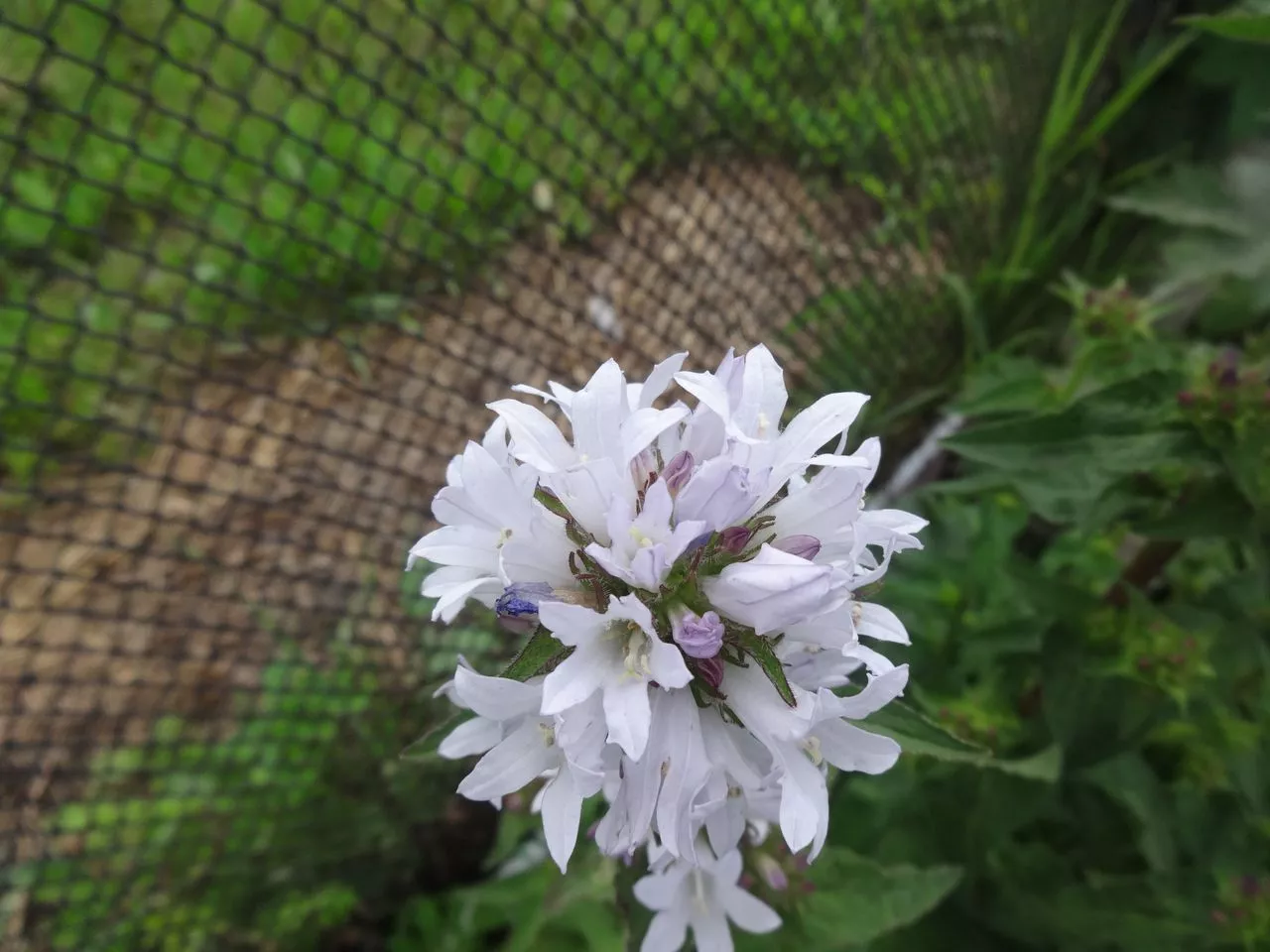
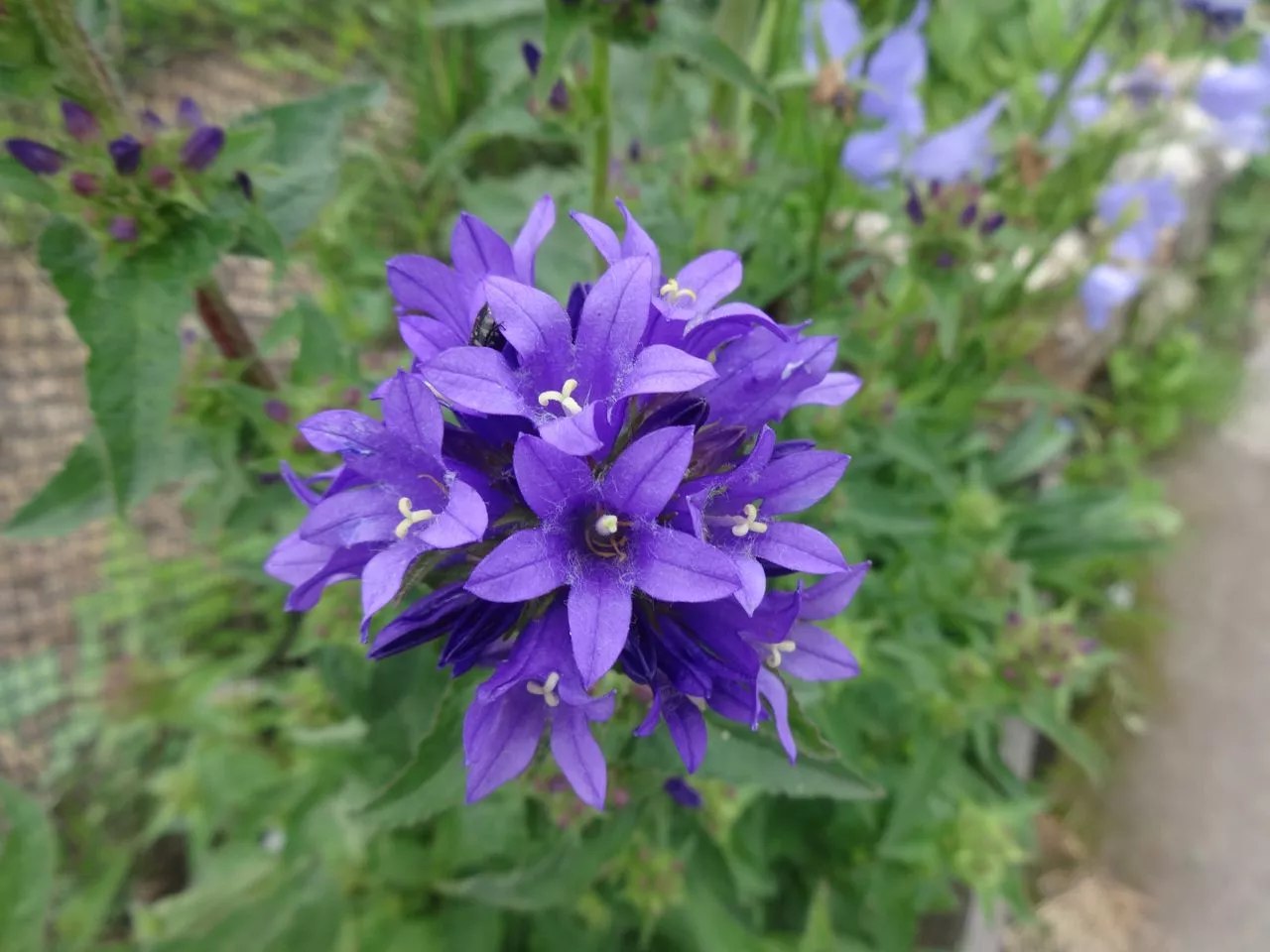
The flowers are small, five-petaled, multiple, and arranged in clusters on peduncles. They are a favorite among bees and other bugs. The bells close during rain.
The third bell has thin, long leaves with small teeth along the edges of the leaves.
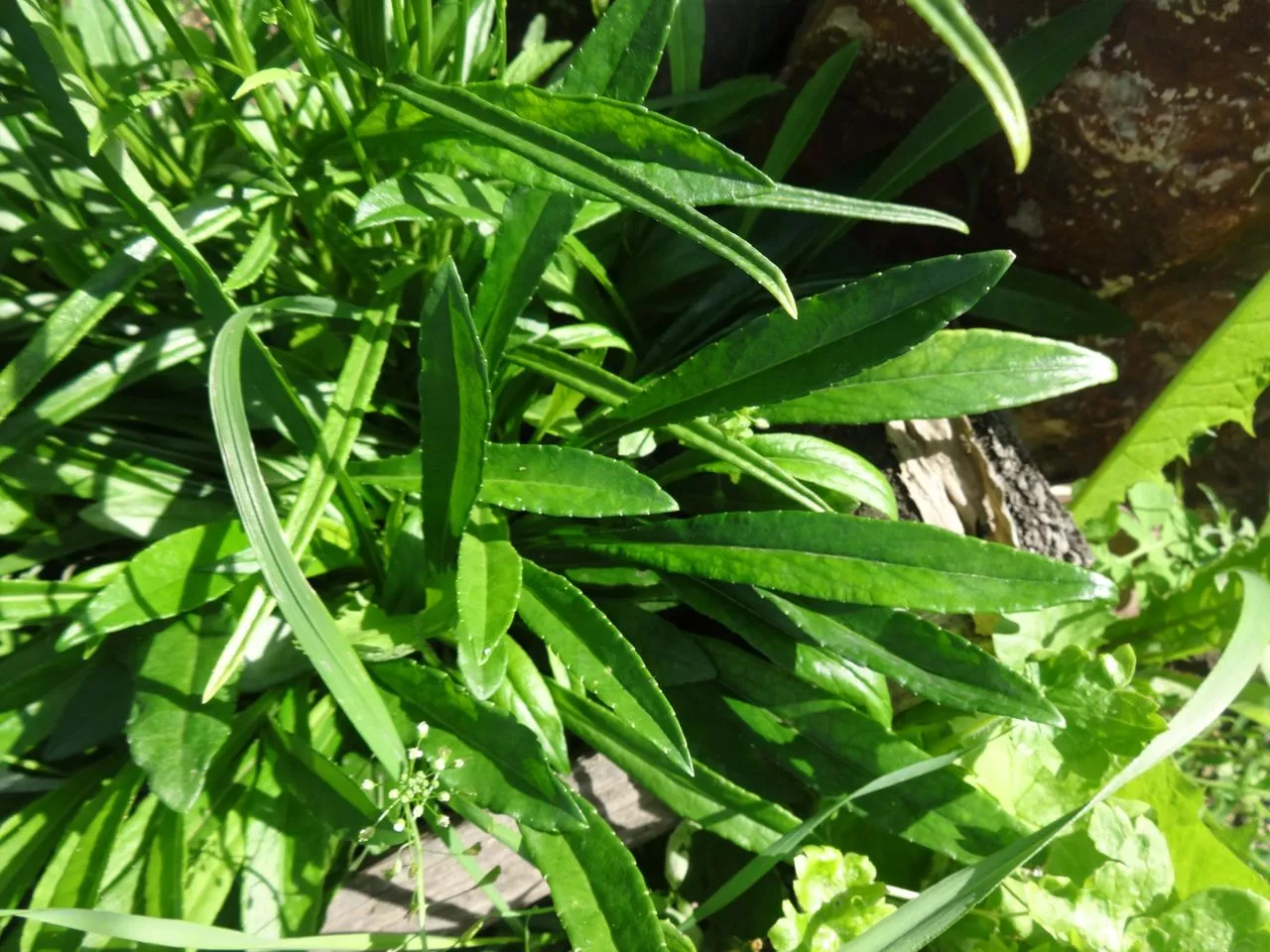
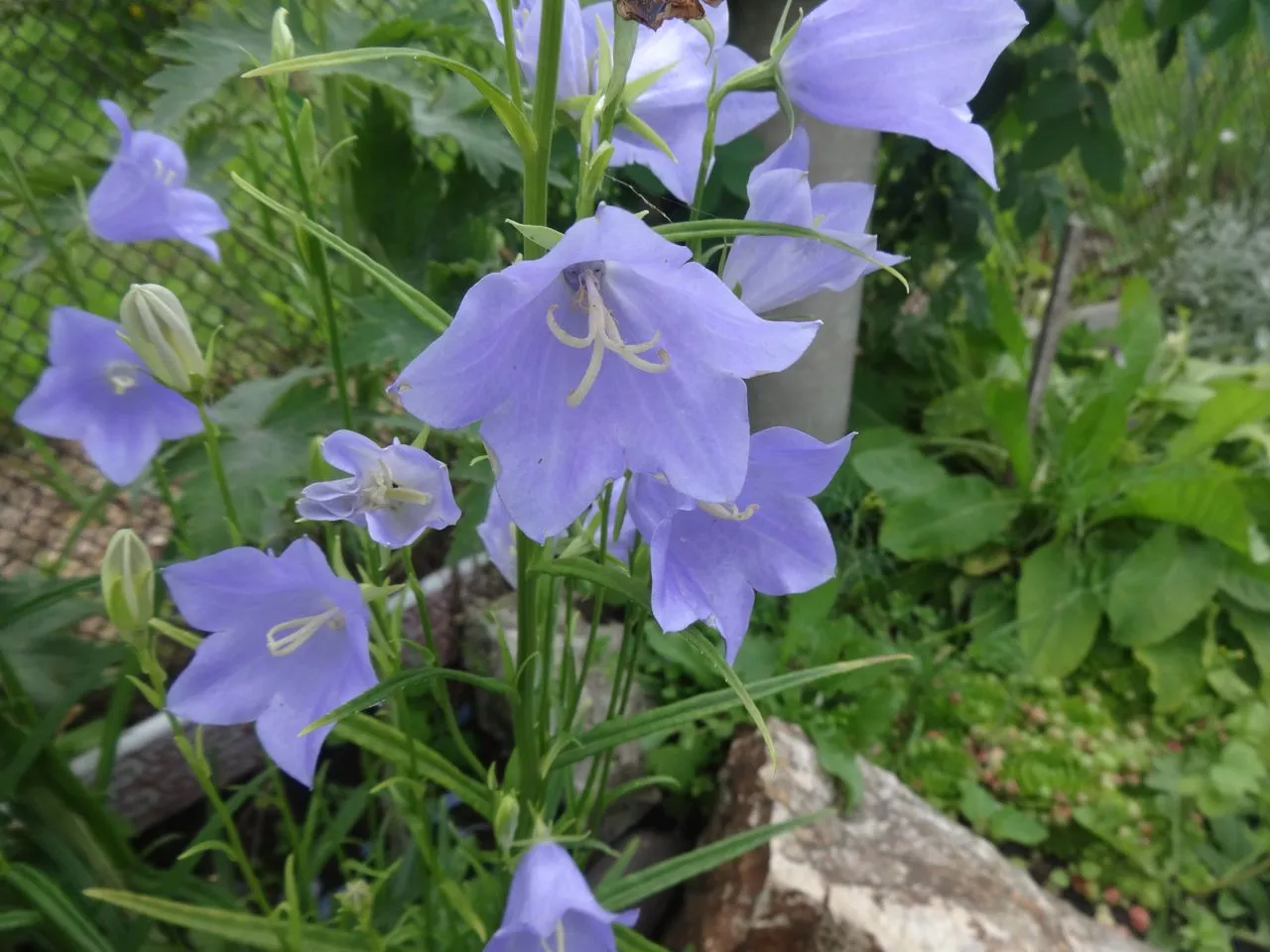
Mice gnawed at its leaves in winter. In the spring, new leaves sprouted, and it looks great. It also produced long flower stalks, and in early July, delicate lilac flowers bloomed. I think it's a peach-leaved bellflower; its leaves resemble those of a peach tree, and they're spaced widely apart on the flowering stem.
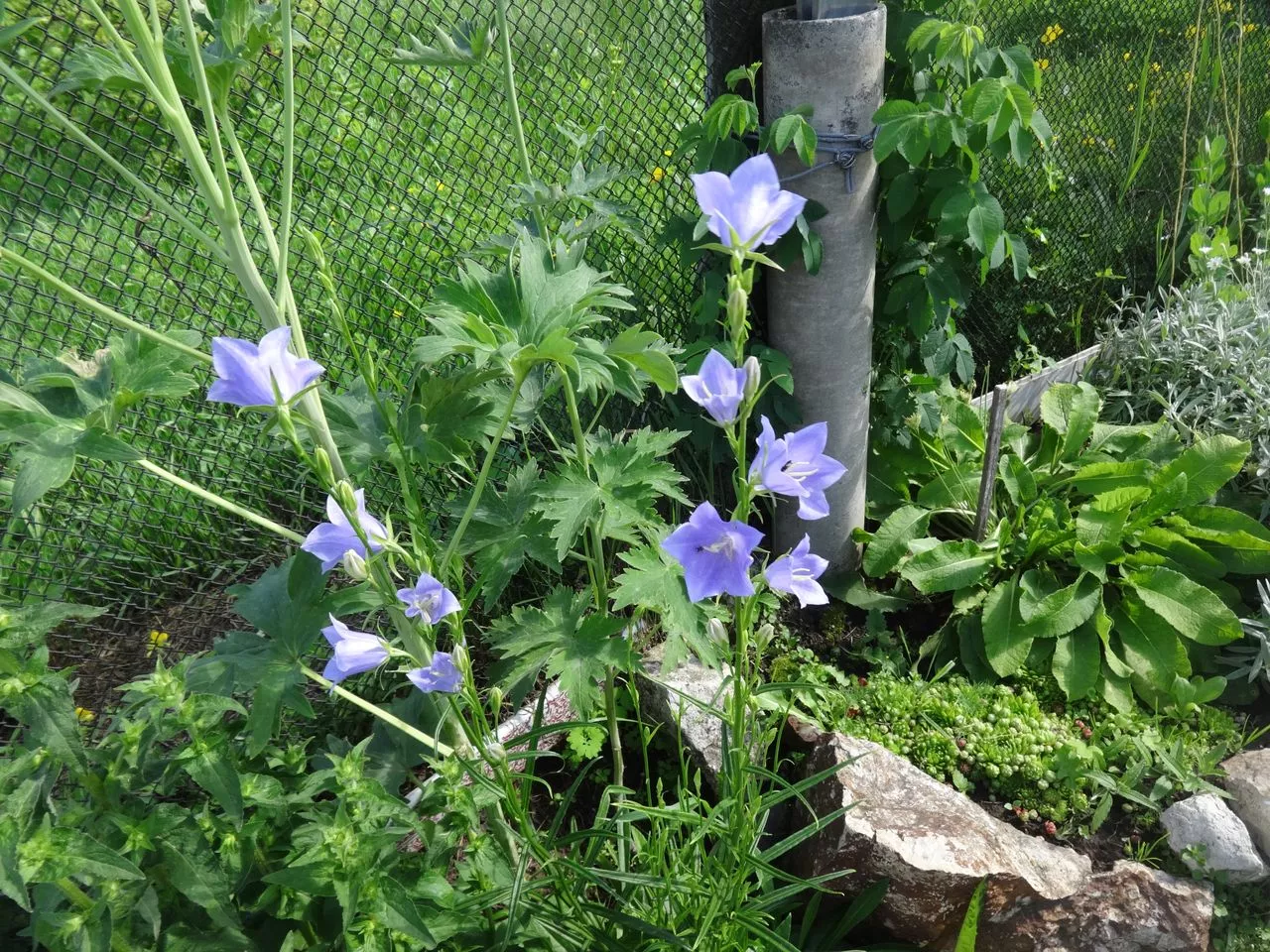
The flowers are about 5 cm in diameter and consist of five delicate petals on a short stem.
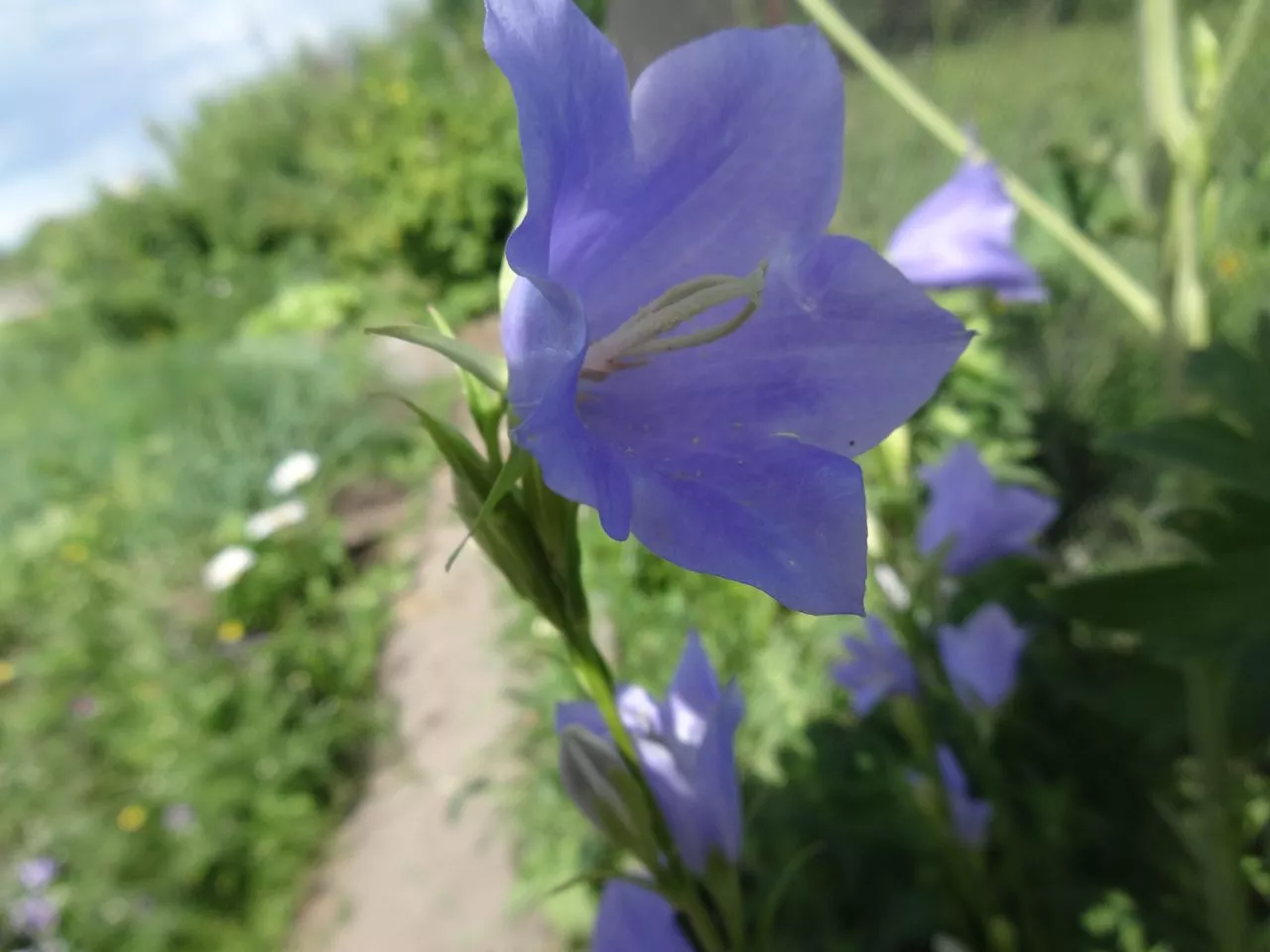
There are always some bugs in the flower's funnel on the stamens, probably enjoying the tasty nectar.
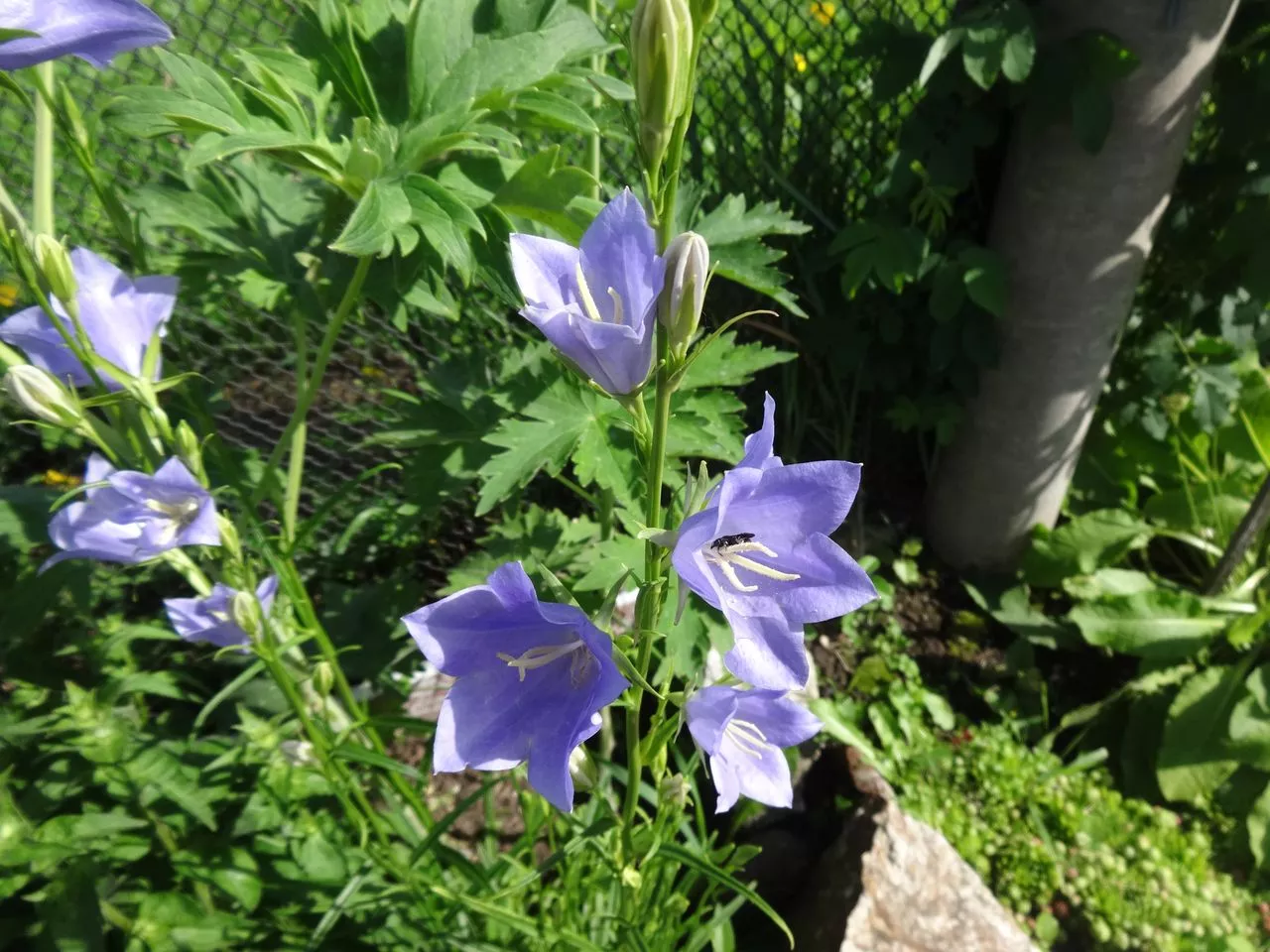
I think these bellflowers need a new spot. They've grown quite wide, especially the second one. They bloomed in the third year after planting. This is their first bloom. We need to find other flowers that will complement them, but for now, the ubiquitous delphiniums have crept in.
All my bellflowers are winter-hardy, they overwintered well both in a winter with little snow, when there was no snow left in February, but the frosts were very strong, and in a frosty one with an abundance of snow.
The first flowering was not as abundant as I would have liked, I think next year they will grow and delight me with bright flowering.