

Coleus, or ornamental nettle, is another favorite houseplant of mine. It's a beautiful and easy-to-grow plant. It doesn't require much care and grows quickly.
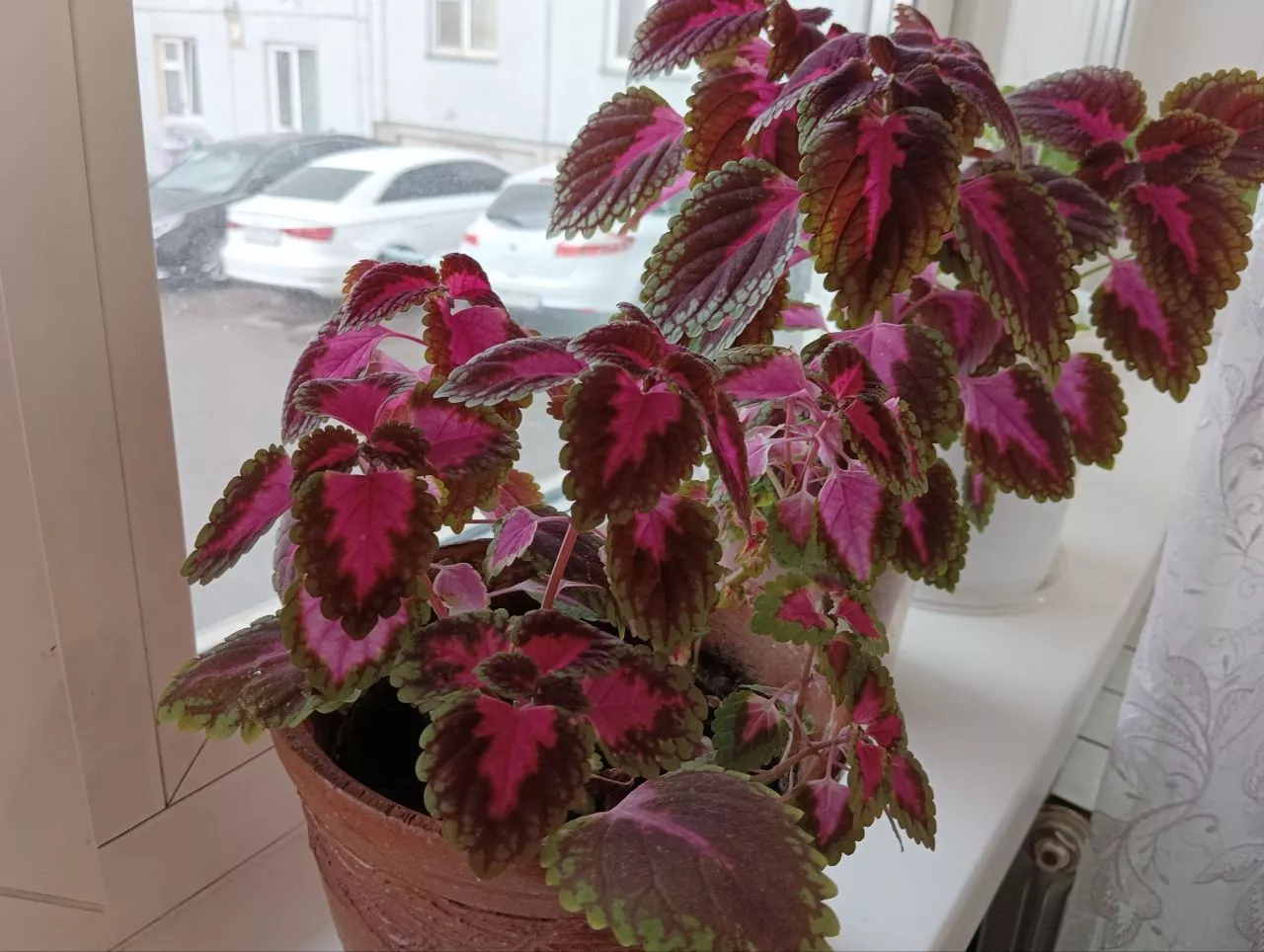
It needs to be watered when the soil dries out. Occasionally, feed it with houseplant fertilizer; I think it will still grow well even without it. But with flower fertilizer, the coleus will have larger leaves and brighter colors. I sometimes add wood ash and fresh soil to the pot.
I've been growing coleus as a houseplant for many years, and recently, in the spring, I've been bringing the potted plant outside to my dacha, where it grows and beautifies the garden all summer. In the fall, before the frosts, I bring the plant back inside.
I constantly rejuvenate it when the bush grows and falls apart in different directions.
I trim the branches and root them in water. The branches root very quickly, and when the cuttings are well established, I plant them in soil. I use store-bought all-purpose potting soil or plant them in seedling soil; I don't worry too much about whichever one is in there.
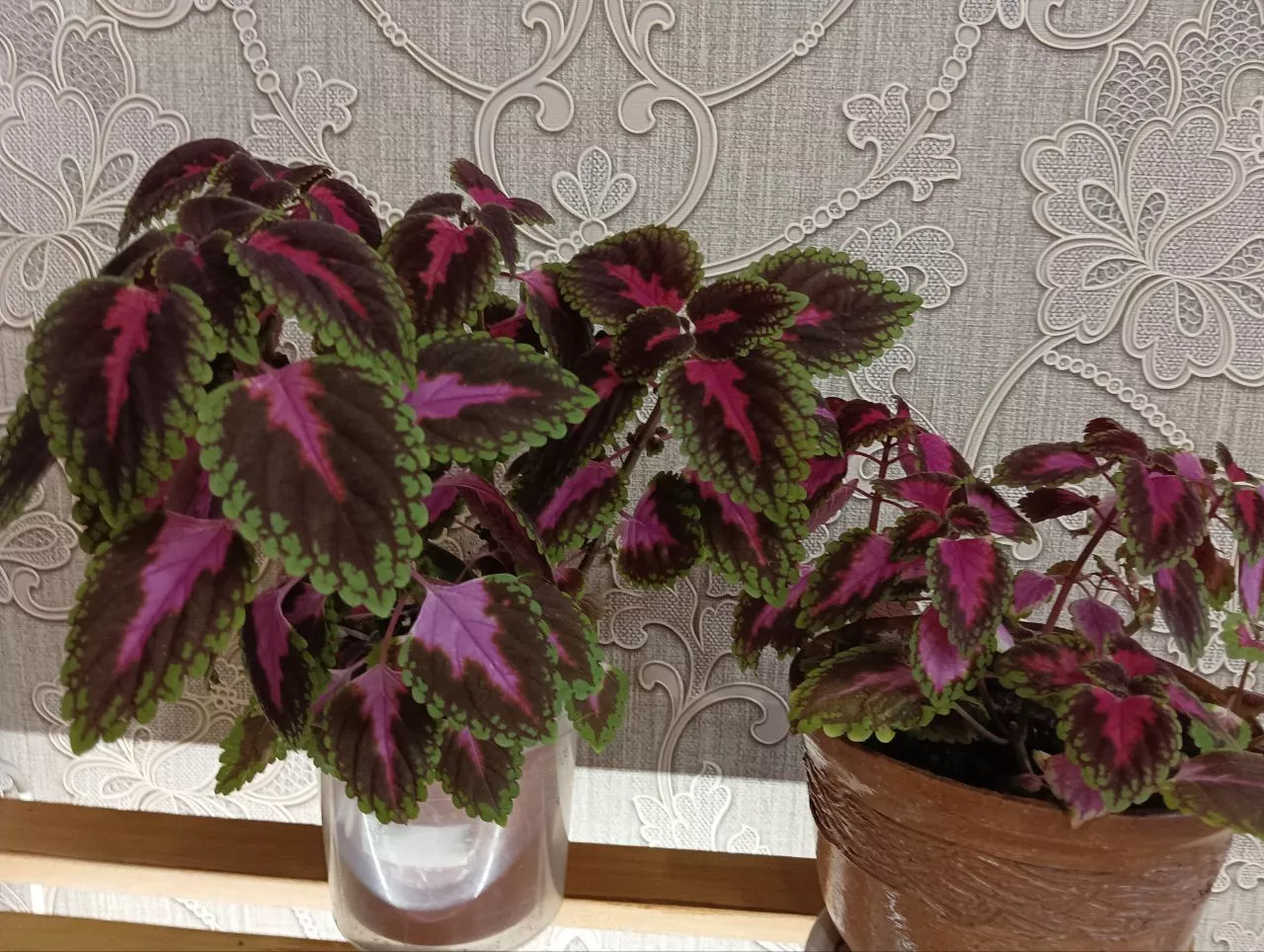
I water when the top layer of soil dries out. My day begins with a walk-through and inspection of all my houseplants; some require watering more frequently than others. Coleus doesn't like overly dry soil; its leaves begin to dry out, and waterlogged, wet soil is also dangerous for the plant; its leaves wilt and fall off.
I read online that sometimes you need to add 3-5 drops of lemon juice to the water for the leaves to become vibrant. Hydrogen peroxide (20 ml per liter of water) will have the same effect. I've used lemon juice, but haven't tried hydrogen peroxide.
The coleus grows on a kitchen windowsill on the southwest side and gets plenty of sunlight.
Once, when in the spring I had filled all the windowsills with seedlings, I moved the nettle into the living room onto a shelf near the window. It grew very large then, the vines almost reaching the floor.
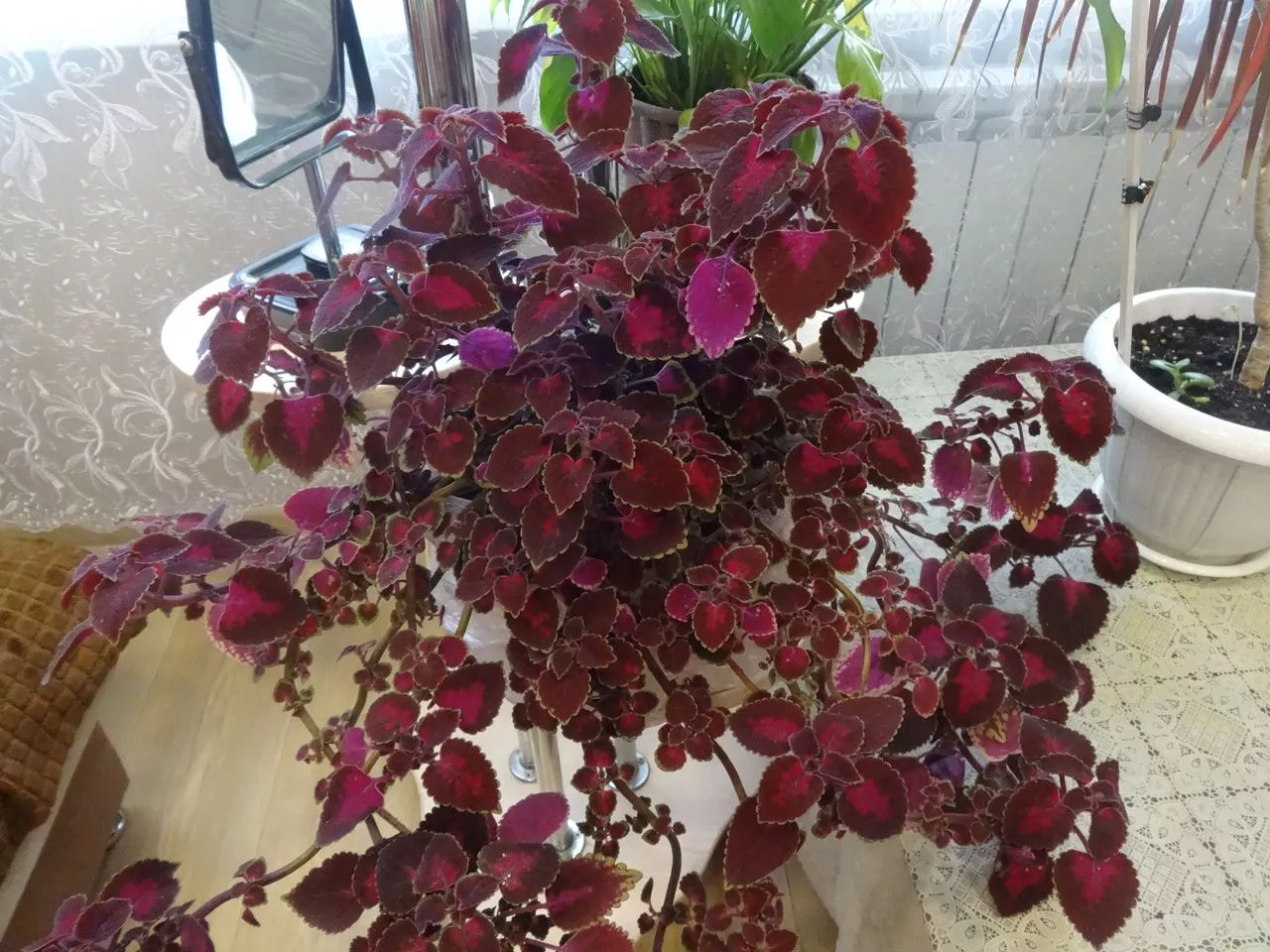
But near the window, the coleus lacked sunlight, and the vibrant colors of its foliage faded. Soon, I took it to the dacha.
My coleus blooms periodically, producing tall, thin spikelets with small, light lilac-blue flowers.
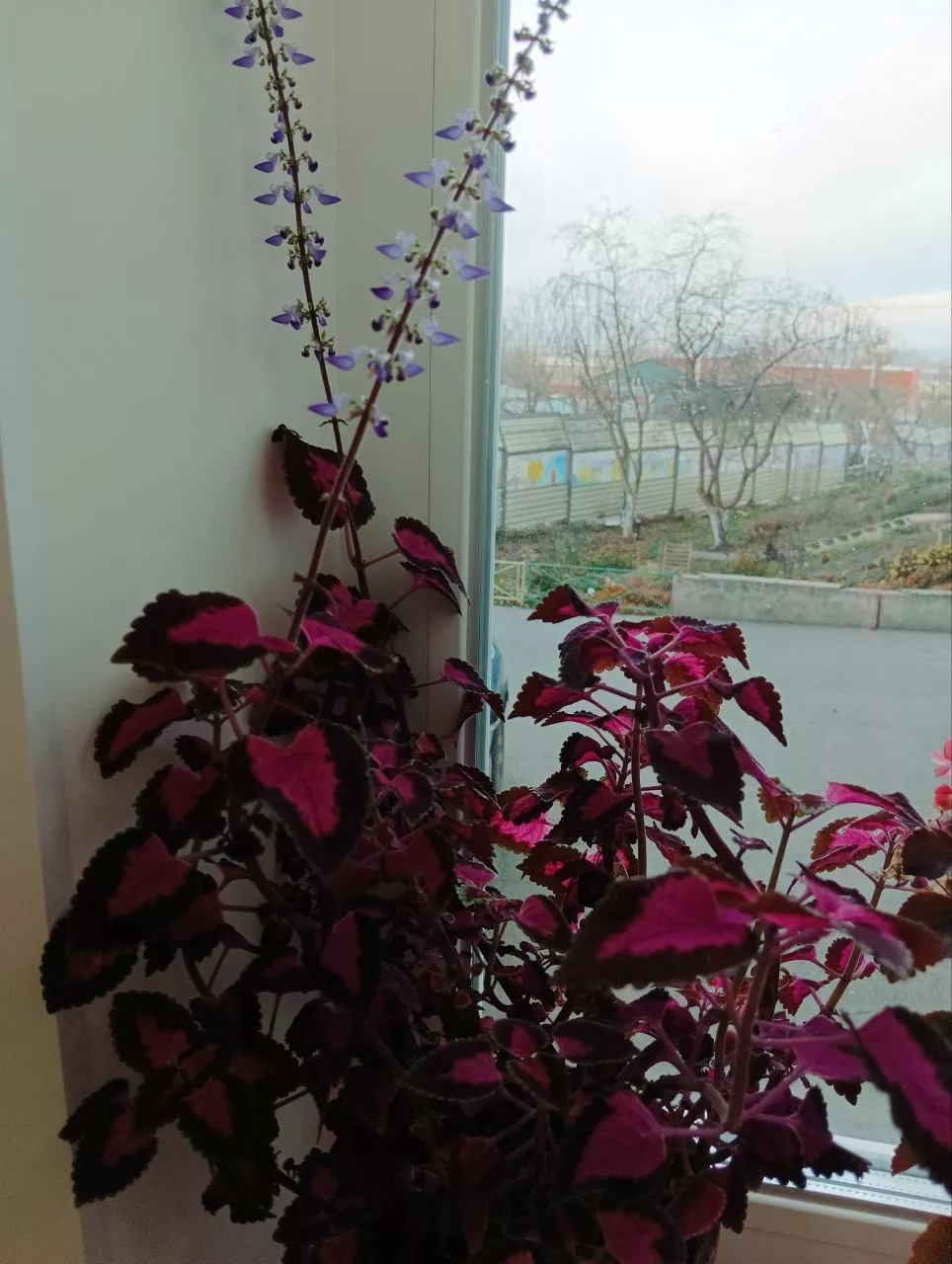 But I always pick off the inflorescences, because the flower's beauty lies in its vibrant foliage. Coleus blooms, however, are unimpressive; the flowers are inconspicuous and fall off quickly.
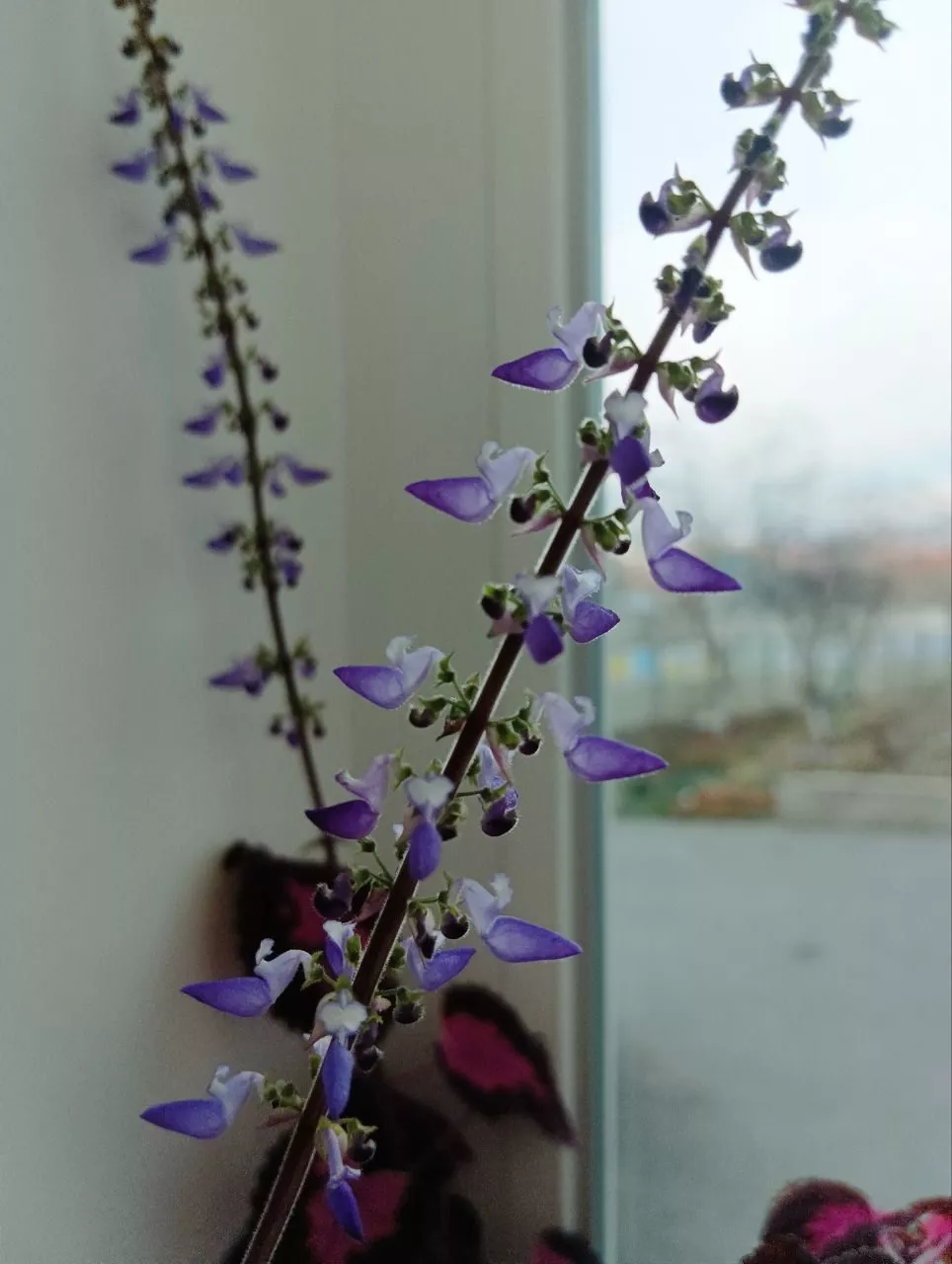
In October, I picked off the spikelets, and at the end of November, inflorescences formed again on the tops of the branches.
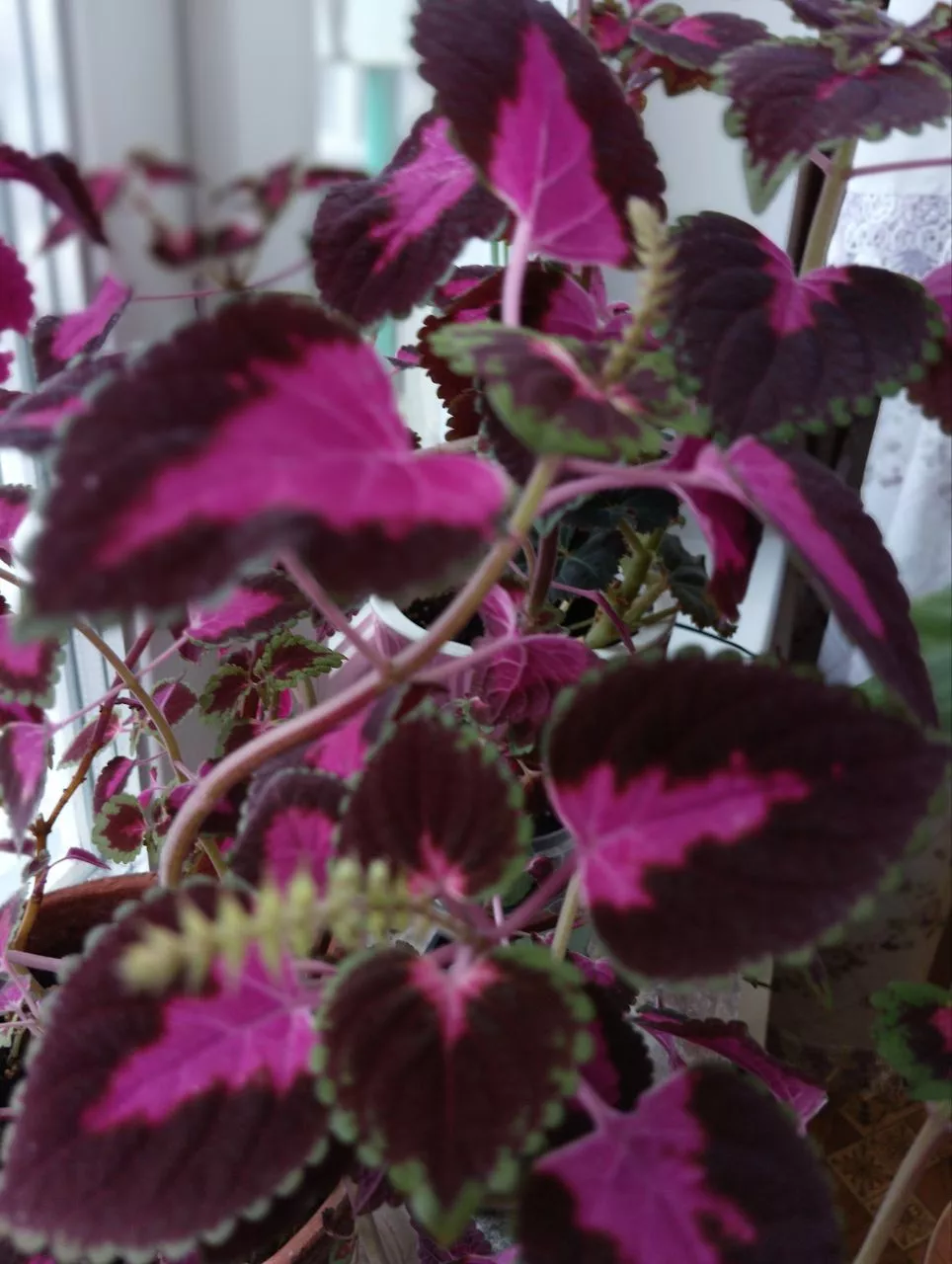
The appearance of domestic nettle varies: sometimes it grows as a tall bush with large leaves, sometimes it is spreading, with shoots hanging down, as if it were an ampelous plant.
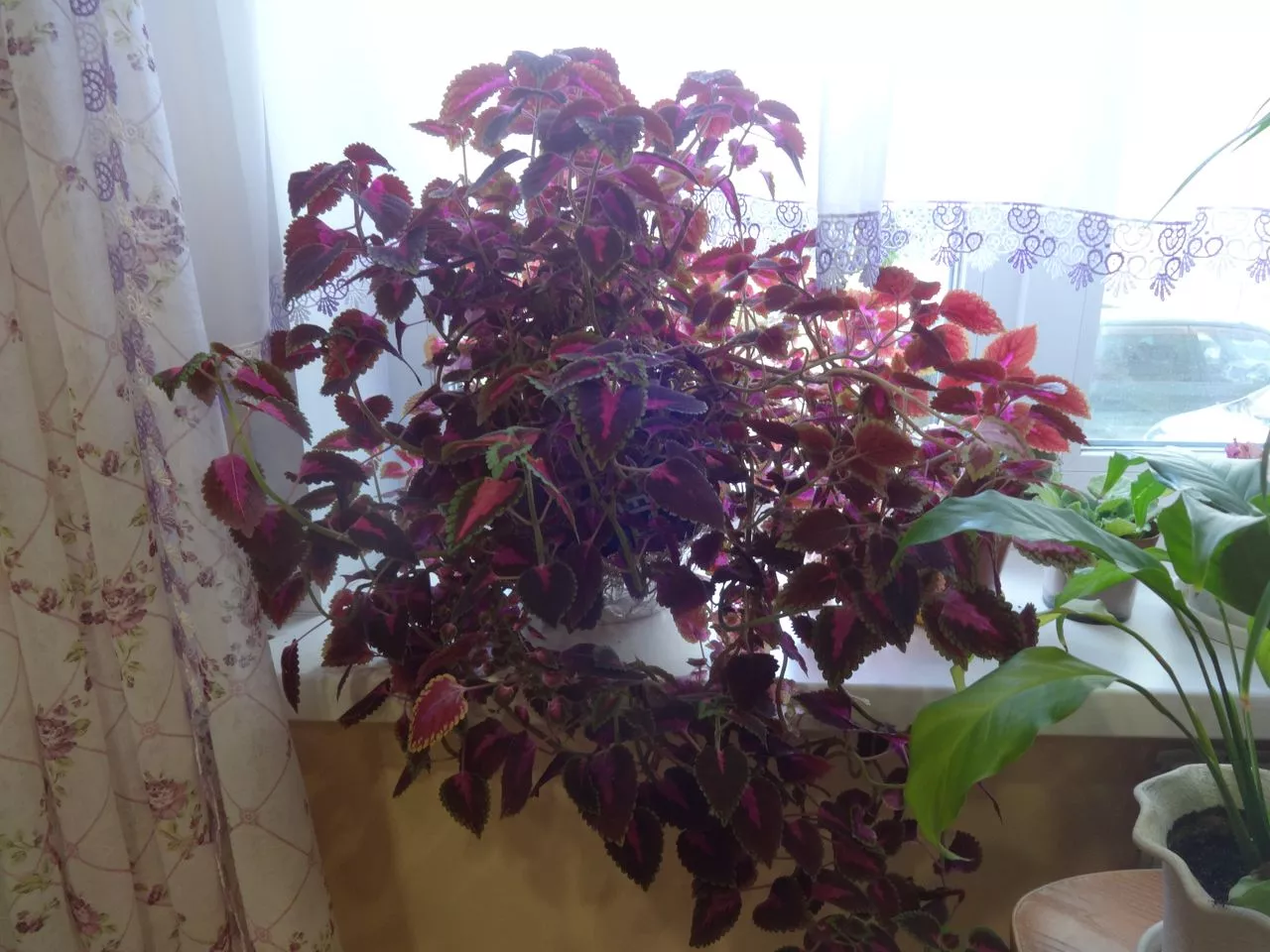
Then suddenly all the stems are densely covered with small leaves. The coleus forms itself, I don't touch it. I just pluck off the flower stalks; they leave a lot of debris.
Coleus leaves are shaped like nettle leaves, only they come in different colors. My coleus is tricolor—green, brown, and pink.
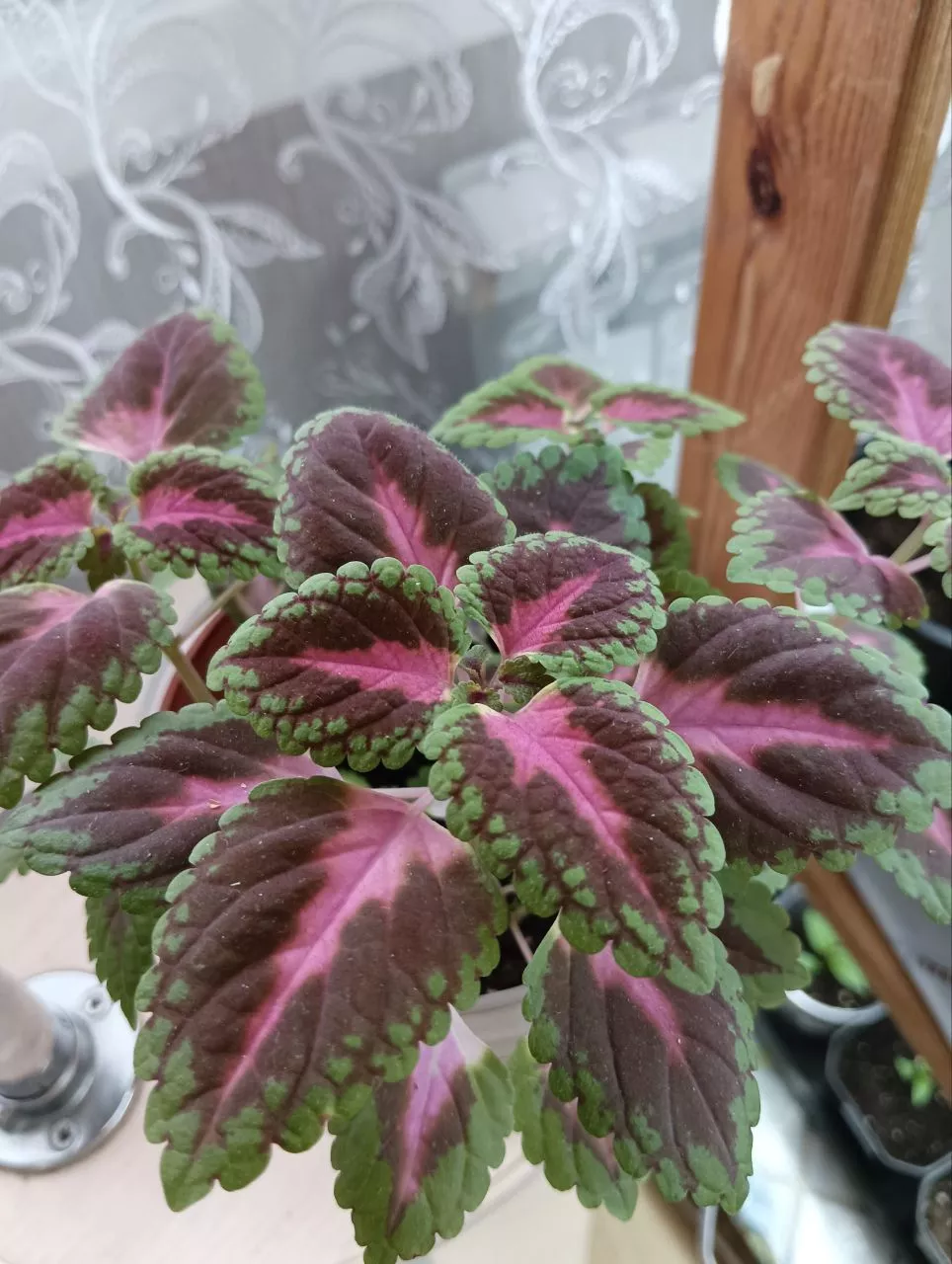
Just like the shape of the bush, the color of the leaves can be different - sometimes there is more green along the edge of the leaf, sometimes there is very little green, and more pink and brown.
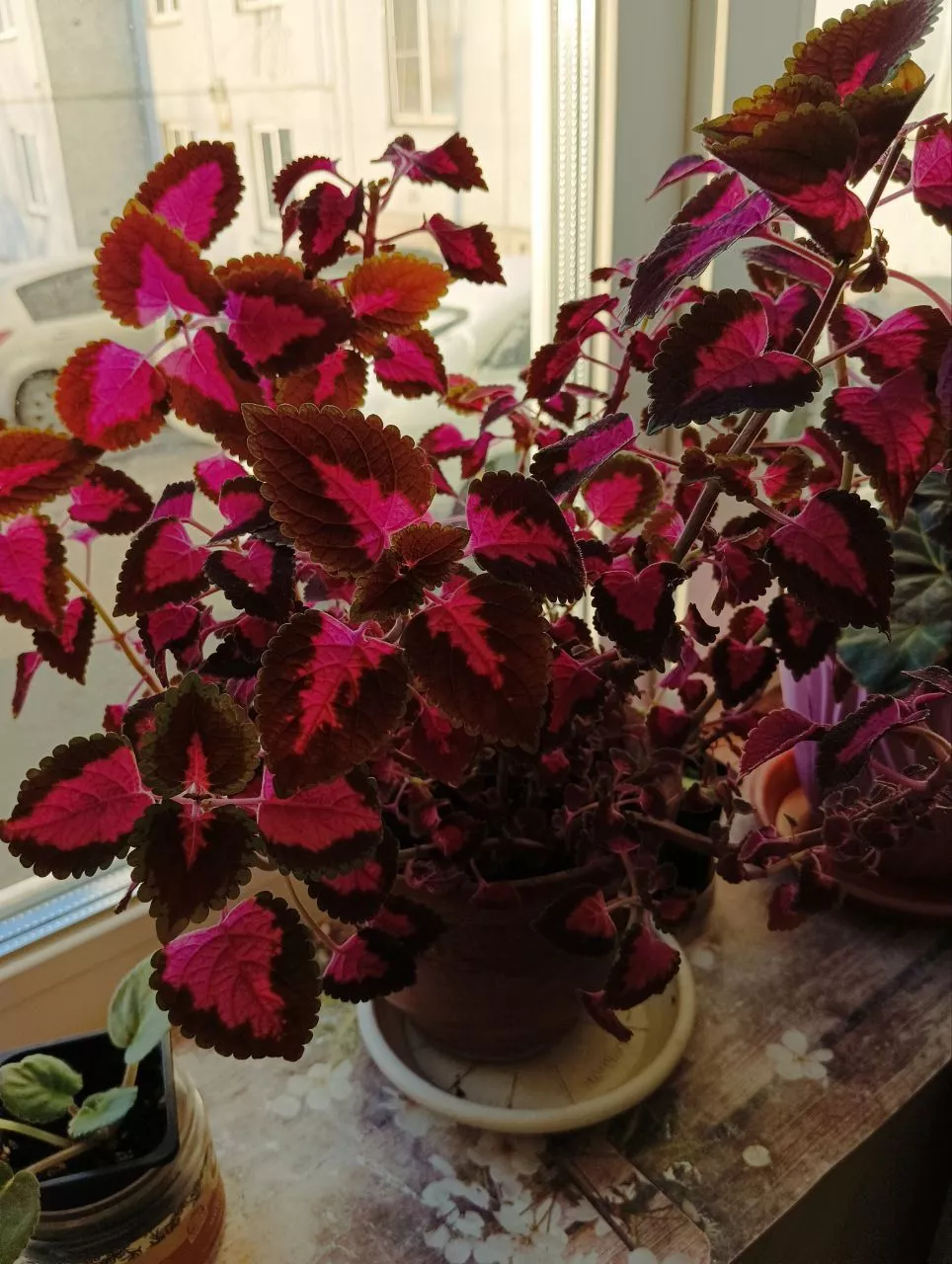
And sometimes the center of the leaf is bright pink, and the brown rim is also brightly saturated, and there is almost no green color, only the teeth on the leaf are faintly colored green.
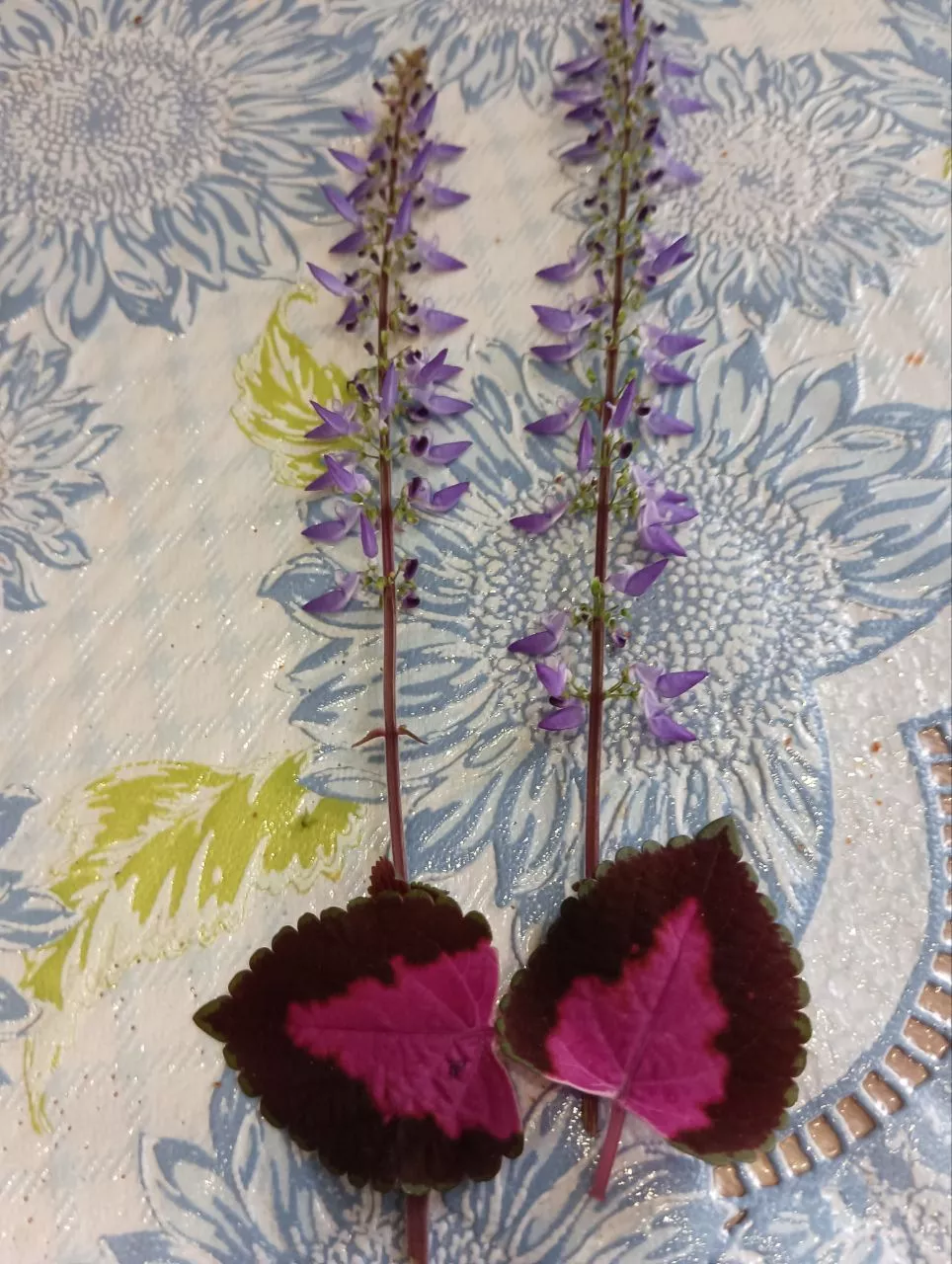
I'm not sure why the leaves change color, but I suspect it's related to the lighting. If there isn't enough sunlight, the central pink part will fade. Plants grown in the garden and exposed to full sun all day have very vibrantly colored leaves, with almost no green.
My coleus is a very common, widespread plant; I don't know what species or variety it is. There are many different types of coleus available for sale, including seeds and already grown seedlings. Of course, I'd like to have coleus with different leaves, but I don't have the space. Maybe in the spring I'll buy other types of nettles to grow at the dacha. They're so bright and beautiful!