

We have a red viburnum growing at our dacha, an ordinary-looking berry, bitter in taste, but very healthy.
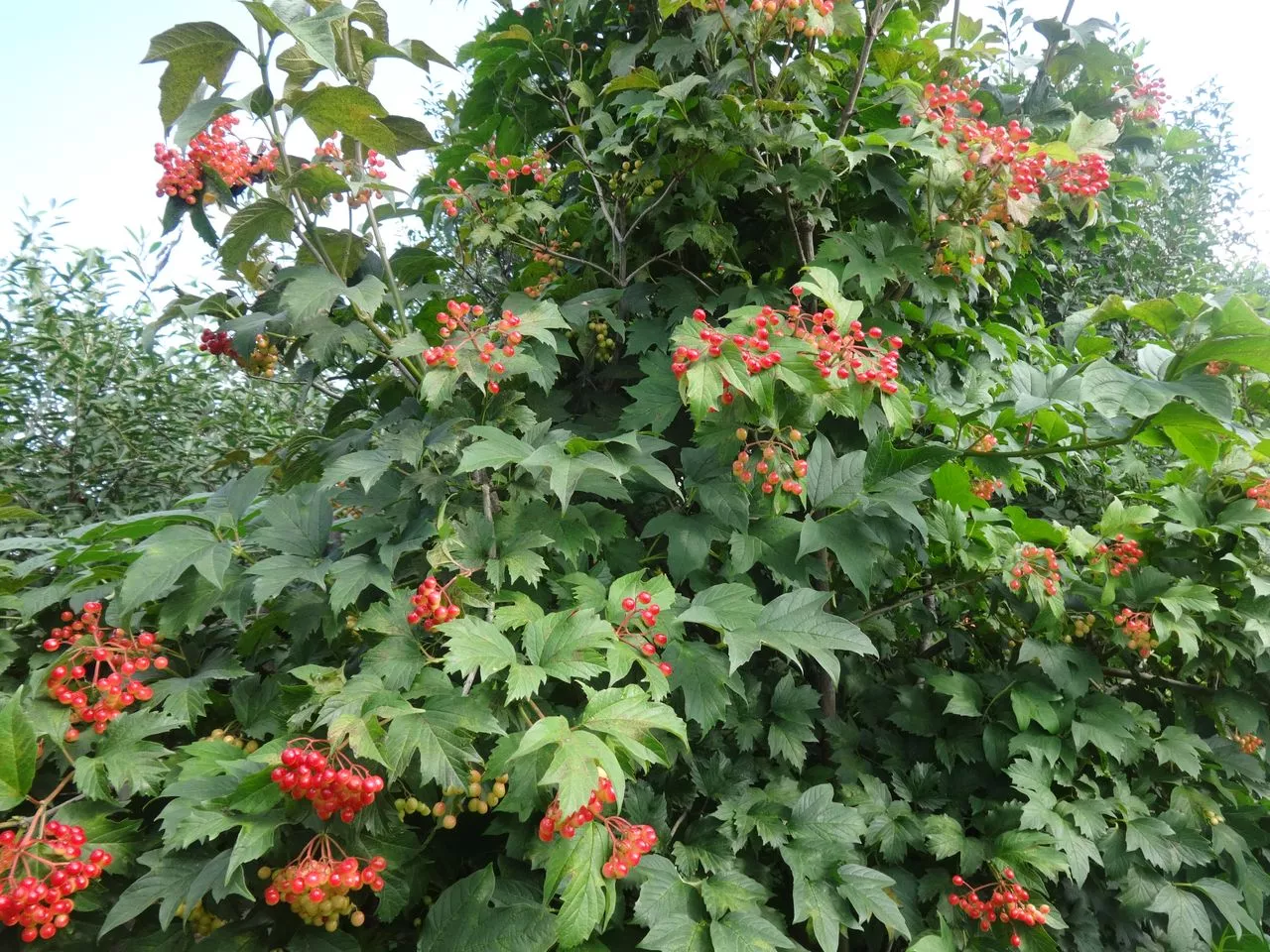
We have two bushes. One is ancient, pruned many times, and covered in stumps. But it still blooms and bears fruit every spring. The other bush is young and strong, having grown by self-seeding near the fence. In the spring, it was covered in snow-white flowers, and in the fall, we picked berries from it—dense, juicy, and much larger than those from the older bush. We left the berries from the older bush for the birds.
Viburnum berries hang on the bushes for a long time in winter, and one winter, I saw waxwings happily eating the berries at my dacha. Since then, I try to leave half the harvest for our garden's winter guests. Just in case they come.
Medicinal properties of red viburnum
Viburnum berries have numerous medicinal properties. They contain many vitamins, minerals, and trace elements that are essential for our bodies, making them a valuable food choice for improved health.
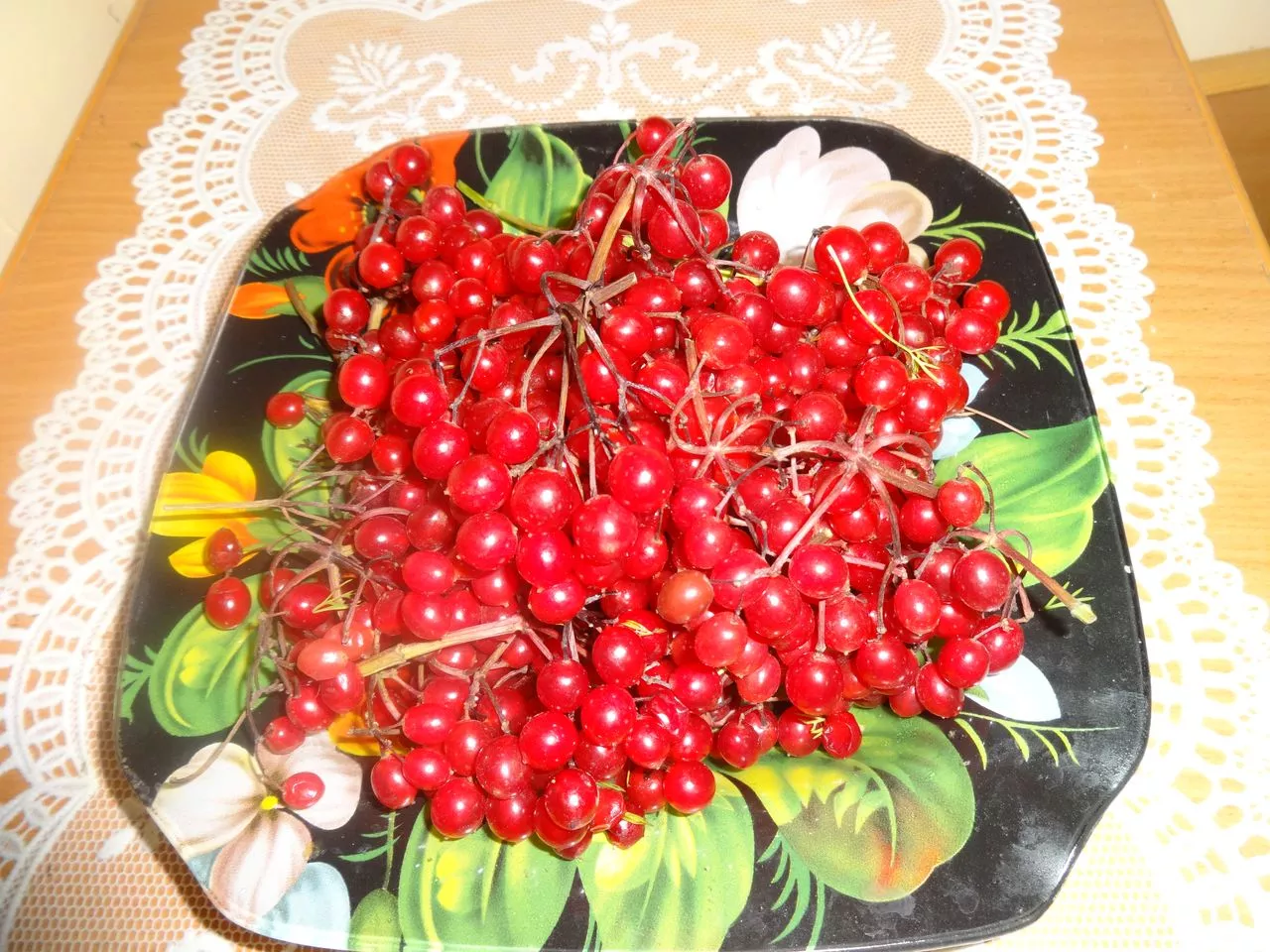
We pick berries in the fall, in October, when the nights are already cold and there are occasional light frosts. We prune the viburnum berries into clusters, including the tassels. At home, we rinse them in warm water and separate the berries from the stems. Be sure to remove any bruised or damaged berries. Dry the clean berries on a towel. Once dry, place them in small batches in plastic bags and store them in the freezer.
The bark, young shoots, and flowers are also used as medicinal raw materials. The bark is harvested in early spring during sap flow and thoroughly dried. Decoctions, infusions, and tinctures are prepared and used as an astringent and hemostatic agent.
The flowers are harvested during flowering and dried in the shade or in a dryer. They are used for sore throats, mouthwashes, and wound cleansing.
Prepare an infusion: pour 1 tablespoon of dried flowers into a glass of boiling water, let it steep for 2 hours, wrap it in a warm scarf or pour it into a thermos, strain and use as directed.
This is an excellent remedy for the treatment of colds, bronchopulmonary diseases, and coughs.
Viburnum is a well-known and widespread folk remedy for the treatment of cardiovascular diseases such as hypertension, atherosclerosis, and coronary heart disease. Viburnum-based remedies lower "bad" cholesterol levels in the blood, improve vascular health, and relieve heart pain.
The following medication is common among heart patients:
Grind the berries with the seeds in a meat grinder, add sugar in a ratio of 2 parts viburnum to 1 part sugar, and mix. Grind the mixture a second time. Transfer to a glass jar and store in the refrigerator. Drink by diluting it with cold water.
Viburnum also helps people suffering from gastrointestinal diseases, as it has a beneficial effect on digestion.
My husband and I also use viburnum berry for treatment. If our blood pressure rises or we catch a cold, we immediately prepare a remedy from the red berry. We always have it frozen.
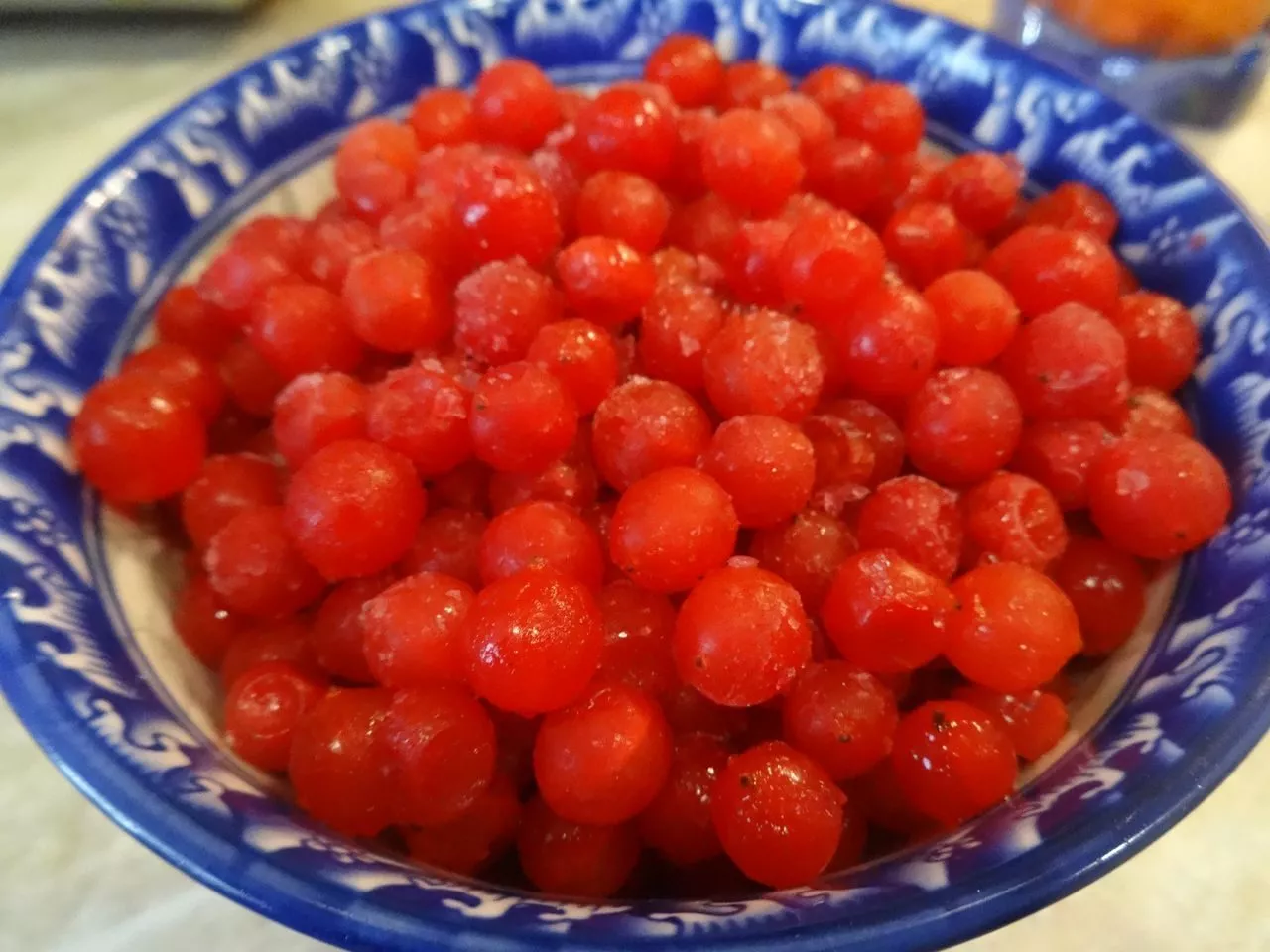
Place the berries in a small container, add a couple of spoons of honey, after a while the viburnum will release juice, you can crush the berries with a potato masher to release the juice faster.
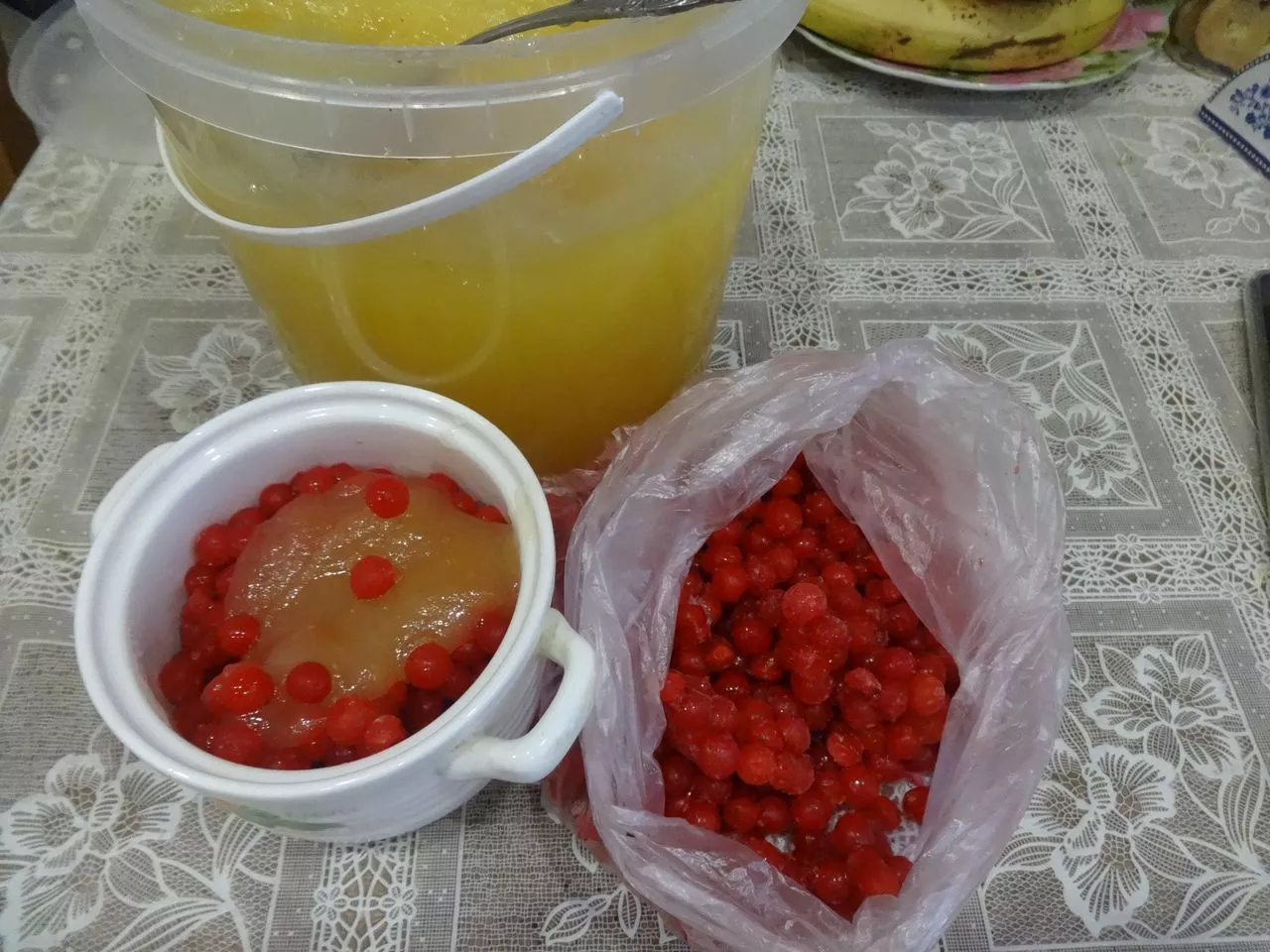
So, we treat it: drink 1-2 tablespoons of juice 3-4 times a day and eat the berries. For colds, drink warm berry juice with honey.
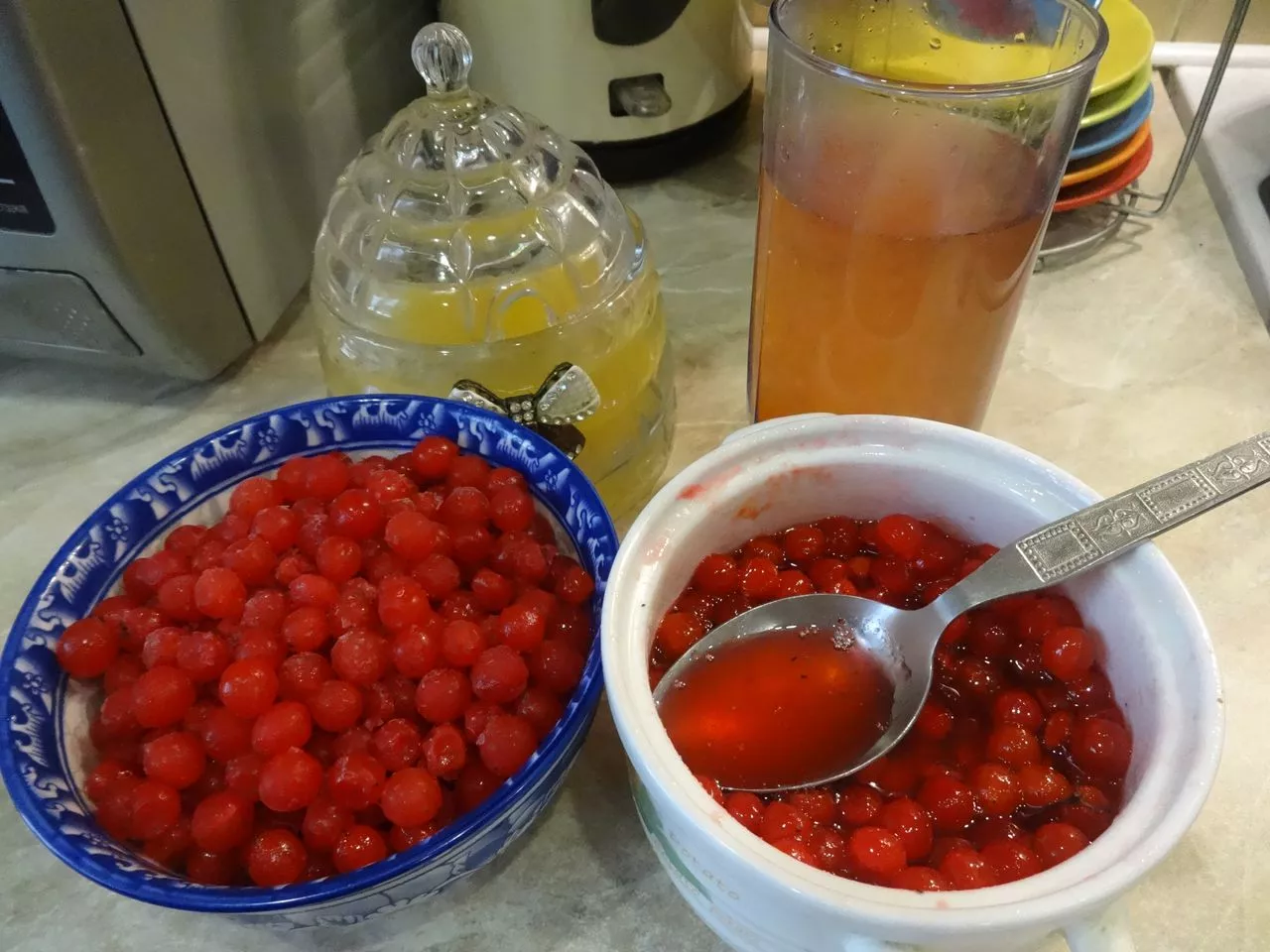
And a tasty home remedy quickly alleviates the condition.
Viburnum is a medicinal plant and, like any medicine, has contraindications for use. Therefore, it is important to consult your doctor about whether viburnum can be used as a medicine.
I wish you all good health!
I grow viburnum for the birds. In the spring, in March, when there's still a lot of snow and the weather is hungry, the birds peck at the berries, although they're not so keen on them in the fall. They probably have tastier food. I noticed this a long time ago, so I stopped picking berries and always admire the flocks of waxwings and bullfinches. And they sing loudly in March, too. It's a wonderful experience. Unfortunately, I don't have any photos, but I'll fix that. Nadezhda.