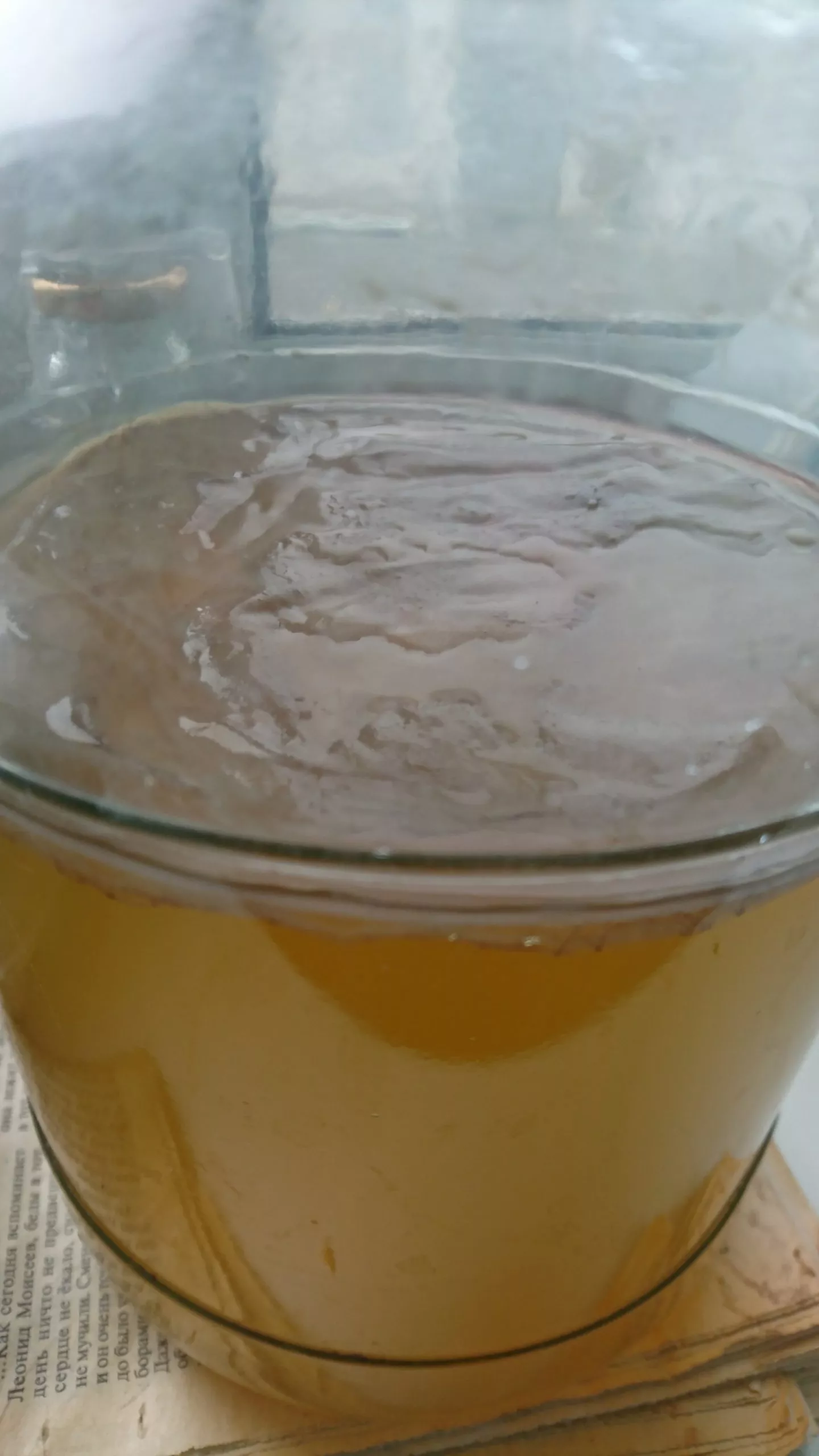
Kombucha produces a delicious carbonated drink that has medicinal properties. propertiesIt's just grow up independently, drinks are prepared from it in different ways recipes, it's not difficult to follow him to look afterDespite this, jellyfish mushrooms can get sick. And today I'll talk about the problems that can arise.
But it's important to learn to recognize the disease itself. For example, if whitish or grayish mold-like spots appear, this is normal. They form as a result of a symbiosis between yeast and acetic acid bacteria.
Main problems – causes, symptoms
Among the many troubles that may occur are the following:
- Brown spots. These indicate that a sugar crystal or a piece of brewed tea has fallen onto the surface of the jellyfish mushroom. This can lead to disease and death, so immediately remove these areas with your fingers and discard them. Rinse the mushroom thoroughly under boiling water and place it in fresh, sweet tea leaves.
- Green algae. Yes, even this can happen, as paradoxical as it may seem. This happens due to improper preparation techniques. Most often, if the air temperature is below 17-18 degrees Celsius, the water pH is high, and the mushroom is exposed to sunlight.
The algae have a bluish-green tint and spread both along the walls of the jar and throughout the liquid, causing the drink to become cloudy. The procedure should be the same as in the previous case. - Presence of flies. This can happen in both summer and winter. Well, in summer it's understandable—it's hot, which encourages fruit flies to form, which require the fermentation process. In winter, this most often happens when the cheesecloth on the jar has residue from the drained drink. Never leave the jar uncovered, as if the flies lay their eggs in the mushroom, you risk infection.
- Real mold. It shouldn't form at the optimal acidity level of the drink, so it's almost never seen in mature mushrooms, but it can occur in young ones. The negative factor here is the mushroom's surface coming into contact with oxygen. Therefore, I recommend ensuring that the entire mushroom is covered with tea leaves.
To get rid of it, wash the mushroom, then rinse it in an acidic solution, such as vinegar mixed half and half with water. Afterwards, I sterilize the jars and refill them with fresh tea. Incidentally, heat and smoking in the room can also be factors. - Mushroom stratification. It’s not dangerous because the mushroom is telling you – undress me, I’m already old!!!
- No fermentation. There are several reasons: not enough sugar, it’s cold.
- The mushroom does not lie horizontally, but becomes vertical and falls to the bottom. The cause here lies in a bacterial imbalance, as the necessary microorganisms in the entire mushroom or the portion immersed in liquid have simply died. This precludes the fermentation process.
The cause is the drink's souring and overexposure. Standard measures can be used to remedy this: rinsing and refilling with fresh liquid. If, however, you notice mold due to improper storage, discard the product without hesitation—it's already dead.
As you can see, problems most often arise when we don't follow proper growing and maintenance guidelines. I encountered all of this myself when I first started growing kombucha, but now I only have healthy specimens like these, and I wish the same for you!
This is what healthy kombucha looks like: