

Today I'd like to share the basic tools you'll need as a hobby gardener when starting a small garden. I'm not talking about a professional orchard with numerous fruit trees intended for commercial sale. I'm talking about a few different fruit trees in your garden or dacha, intended for enjoying your own fruit in the summer and preparing the harvest (dried fruit, jam, preserves, etc.) for the winter.
So, the site is prepared, you've decided which fruit crops you want to plant, or you've already planted them. Now comes the question of acquiring the tools to care for the trees.
It's not enough to simply plant seedlings and let them grow as they please. To ensure a good harvest, they need care—shaping the crown, spraying against pests and diseases, and so on. So, what tools will be needed in the early stages, while the trees are just gaining strength and the tops are still within reach without a ladder?
Hand pruner
A good, high-quality pruning shears turned out to be essential and important for me. Two, actually: a small one for trimming small branches and a large, long-handled lopper. In the future, as the tree's crowns grow taller, I plan to also purchase a pruning shear to reach the upper branches and try to limit the tree's growth through pruning.
Before I found the right pruning shears, there were some unsuccessful attempts. Here's the arsenal I have now; let's take a closer look at them:
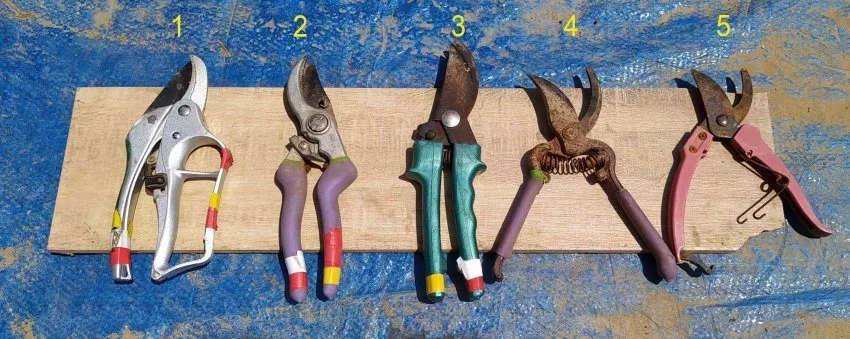
Pruning shears No. 1
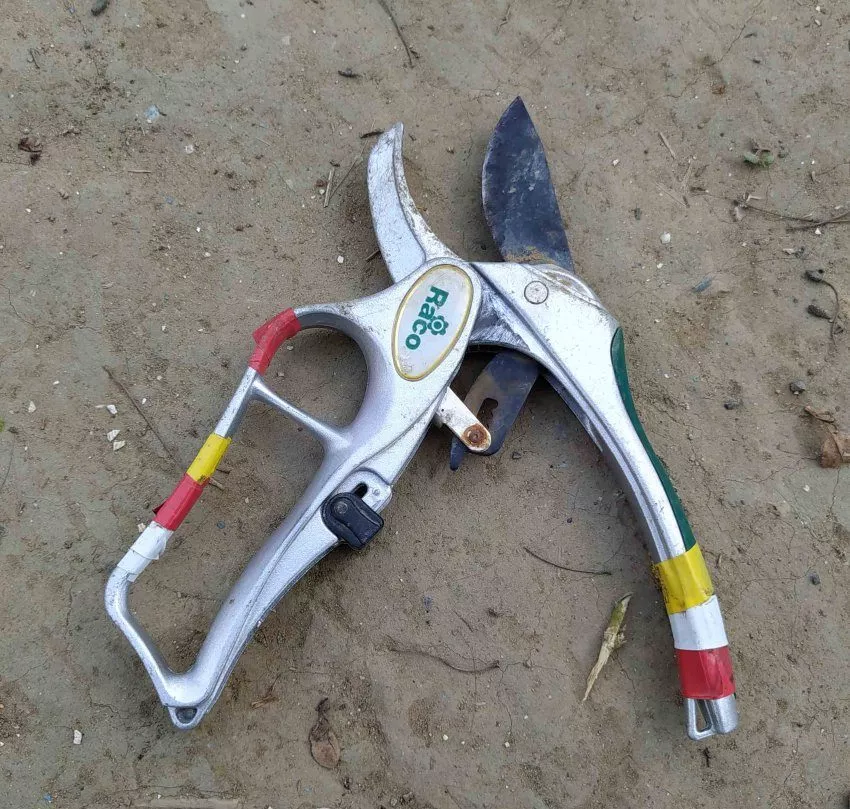
The best one so far. I bought it two years ago. The aluminum handle is corrosion-resistant, lightweight, and comfortable in the hand. The ratchet mechanism allows you to cut even thick and hard branches, as it increases the force required by your hand several times. You can see it in the photo.
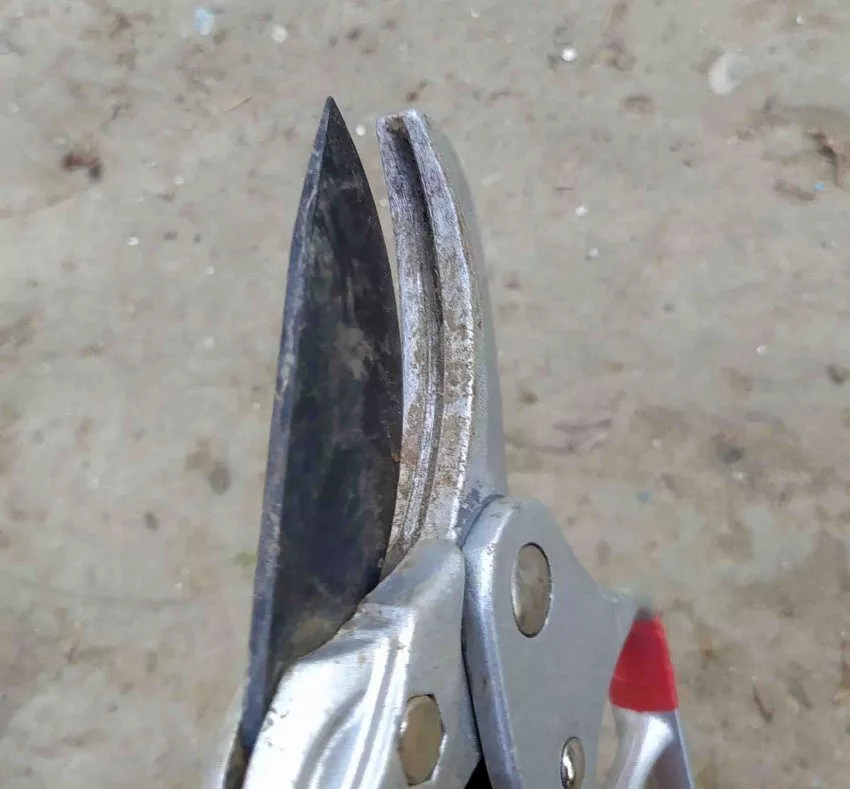
The blade sort of fits into the groove when it's closed. It felt odd at first, but now it feels convenient.
Of course, pruning shears need regular cleaning and lubrication. Since I just finished pruning the cherry tree shoots, I still need to clean them. Generally, when changing activities (for example, if I pruned roses and then need to prune fruit trees), the pruning shears' cutting blades should not only be washed but also disinfected in a potassium permanganate solution or other disinfectant.
In general, this should be done at regular intervals to prevent the transmission of diseases from one plant to another. It's also important to regularly lubricate moving parts.
Pruning shears No. 2
This is also a pretty good option. The handles are aluminum and lightweight. It worked great for several years.
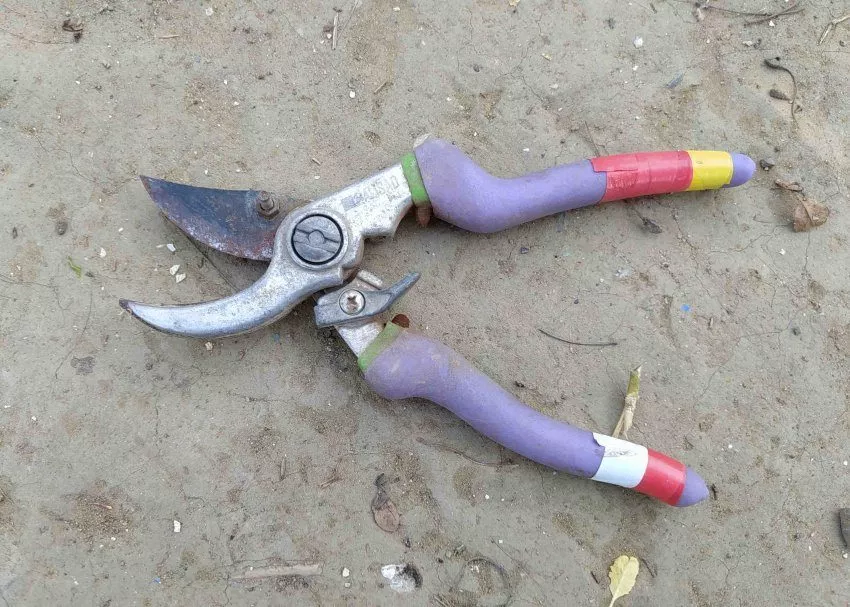
Its first drawback became apparent almost immediately: the anti-slip coating on the handles began to peel off and had to be constantly adjusted.
Next, you can see that the metal blades started to fall out, so I had to modify the pruning shears by securing them with an additional bolt. You can see it in the photo.
And another drawback - the latch that secured it in the closed position would easily come loose, and it would lock in place at the wrong time, so I had to tighten it regularly.
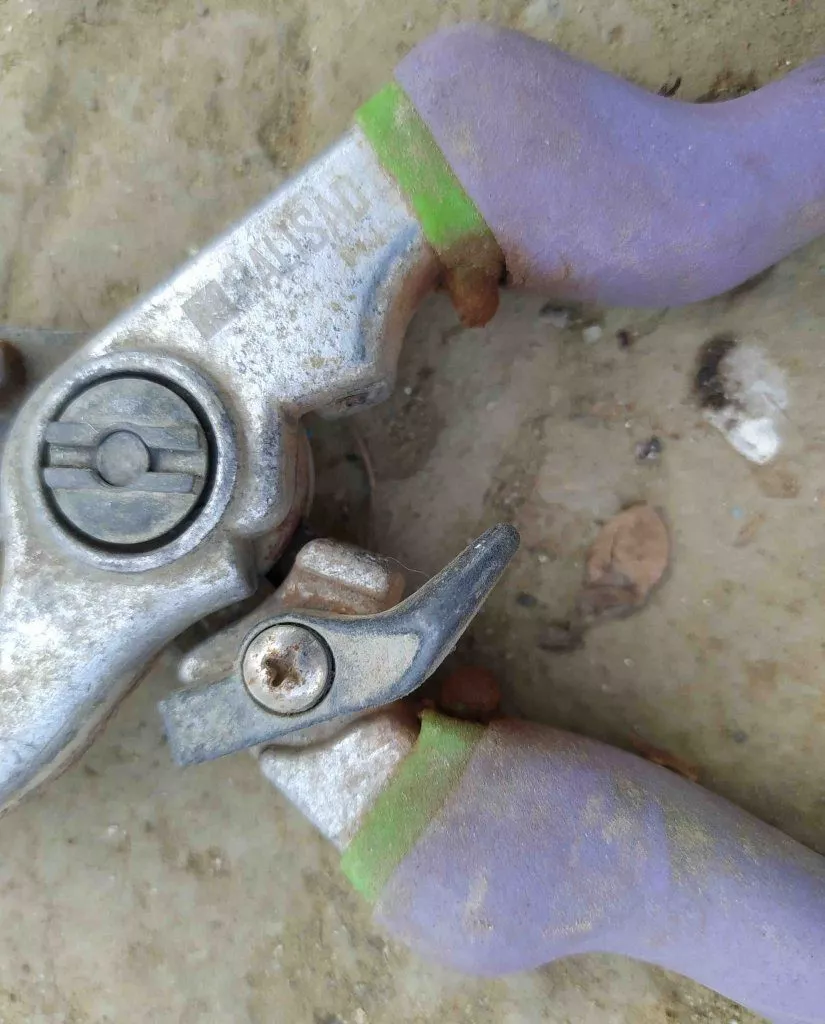
And lastly, after long-term use, the blades came apart.
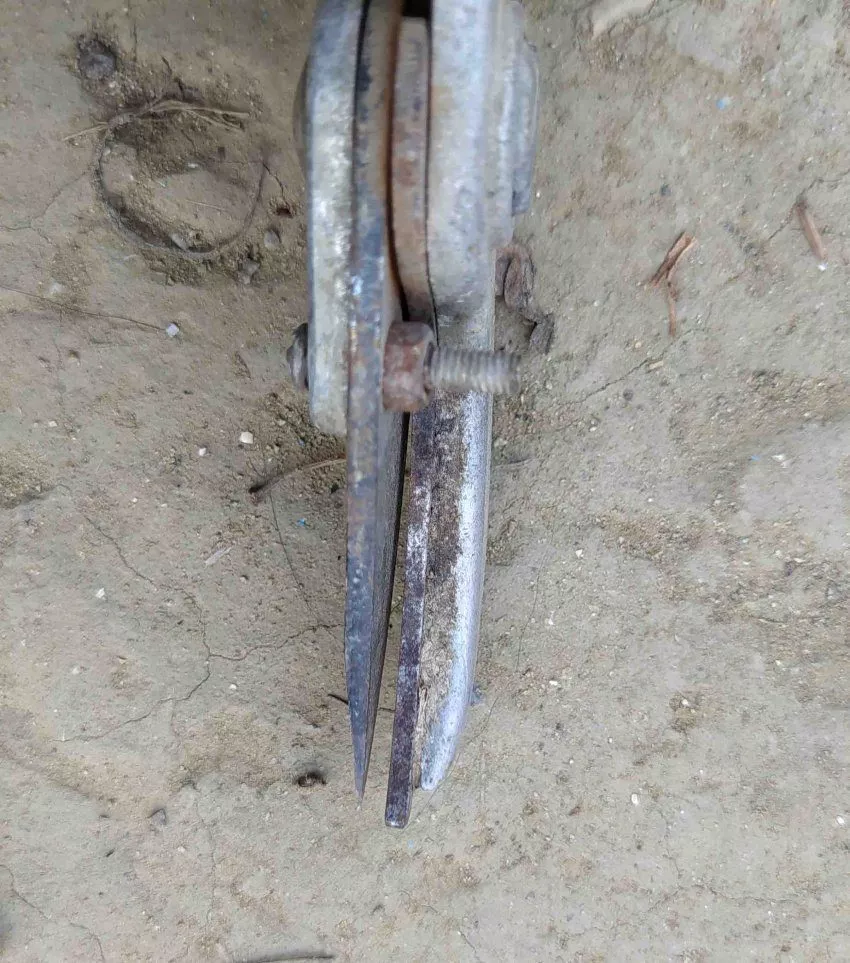
I hardly use it anymore, the spring has also worn out, but sometimes, if I need to cut something, and I'm using a good pruning shears instead of pressing, I pick it up again. Because it has nothing to lose, and despite all its shortcomings, it's still capable of cutting branches.
Therefore, I highly recommend this type of pruning shears. They have served me well for a long time.
Pruning shears No. 3
A good option, although inferior to the first one. Convenient when you need a scissor-like cut.
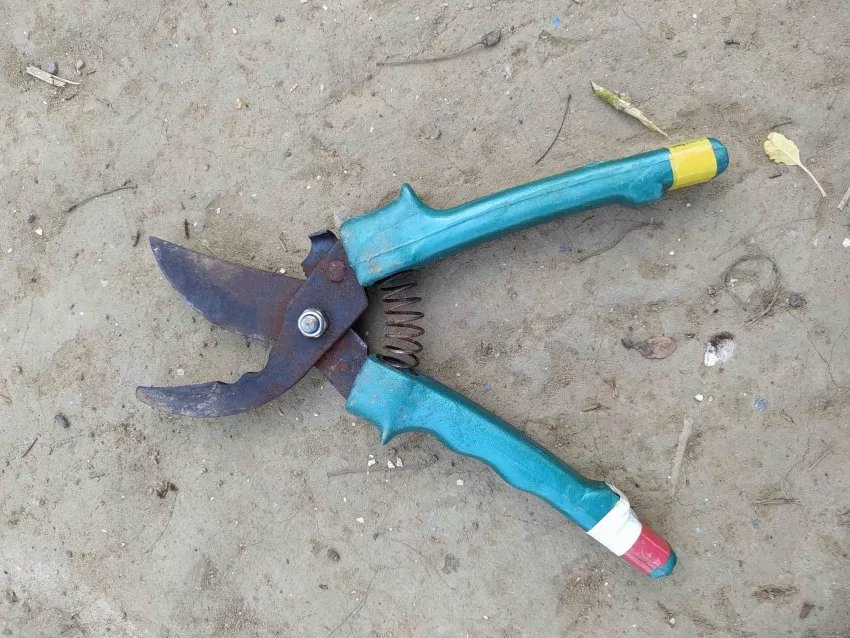
It's quite durable and locks securely when closed. It cuts well. A convenient, budget-friendly option.
Pruning shears No. 4
One of the first pruning shears I bought. It's been rusting in the shed for a while now, but I pulled it out for a review.
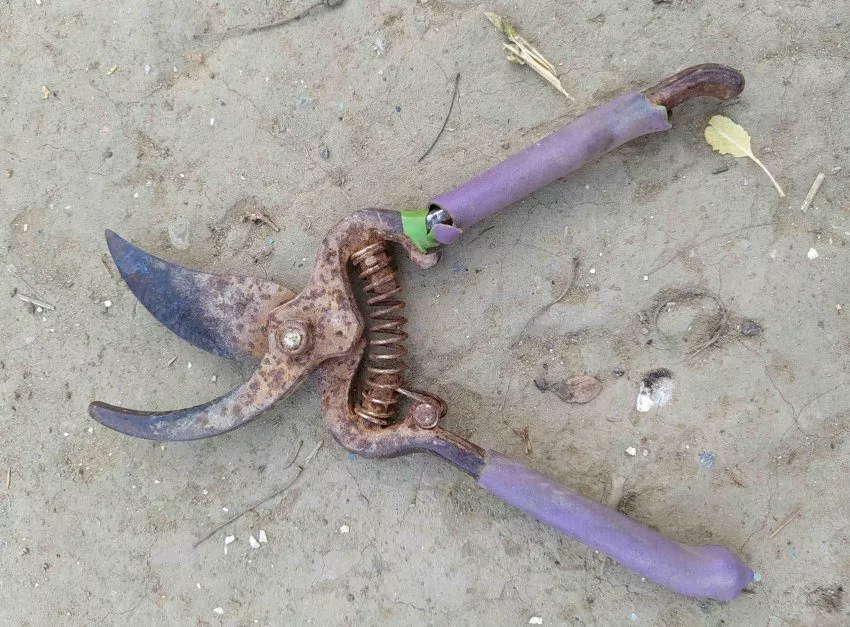
It worked well in its time. It's quite sturdy, and the spring still works. But I didn't like the handles—they were too thin, uncomfortable to grip. And the locking mechanism was poorly designed—it's a small metal triangle, designed to fit over the hook opposite. But in reality, it kept getting caught in the spring, preventing the blades from closing when cutting.
Pruning shears No. 5.
An unsuccessful purchase.
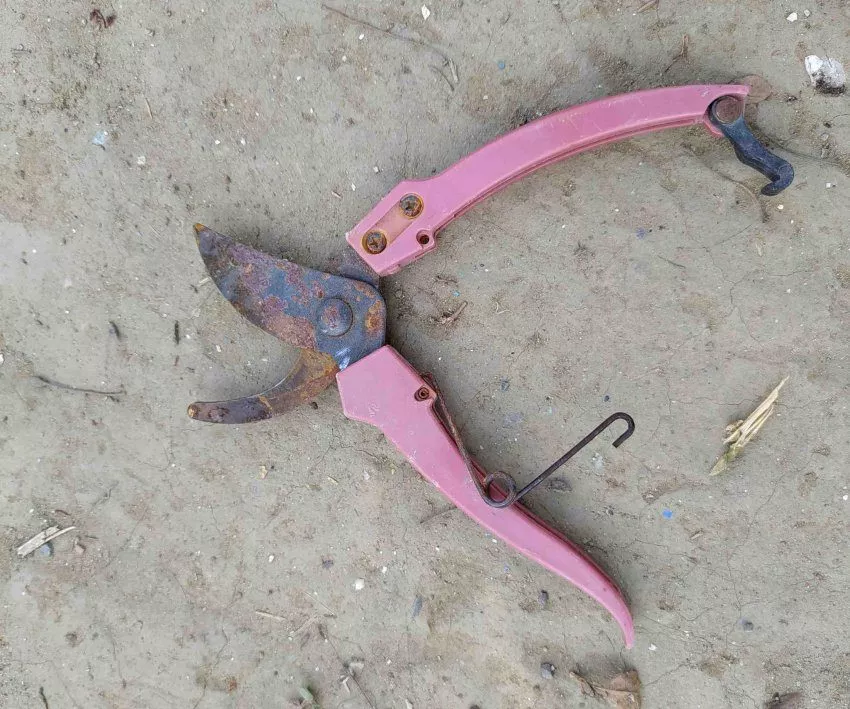
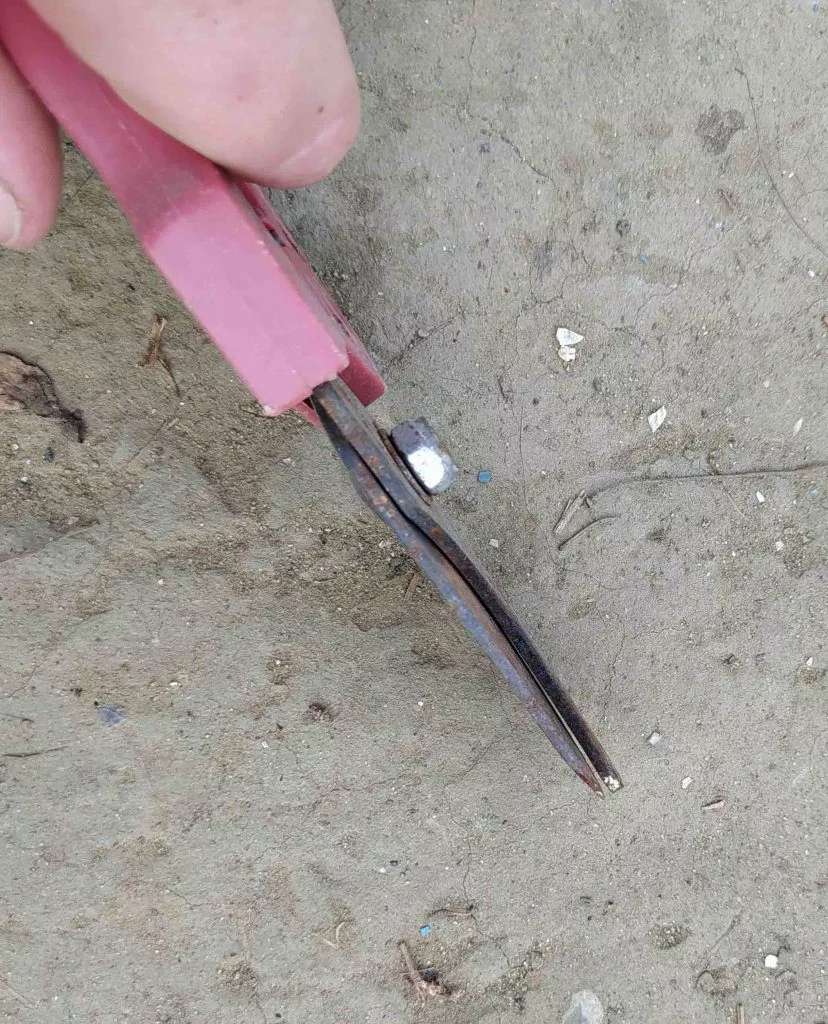
It turned out to be very thin and flimsy. It's probably better suited for trimming soft grassy plants, as even thin branches were difficult to cut and got caught between the blades. It's also rusting in the shed. Here it is from a different angle.
Large pruning shears (loppers)
Here it is better to pay a little more, but get a quality one.
My first lopper, or what's left of it:
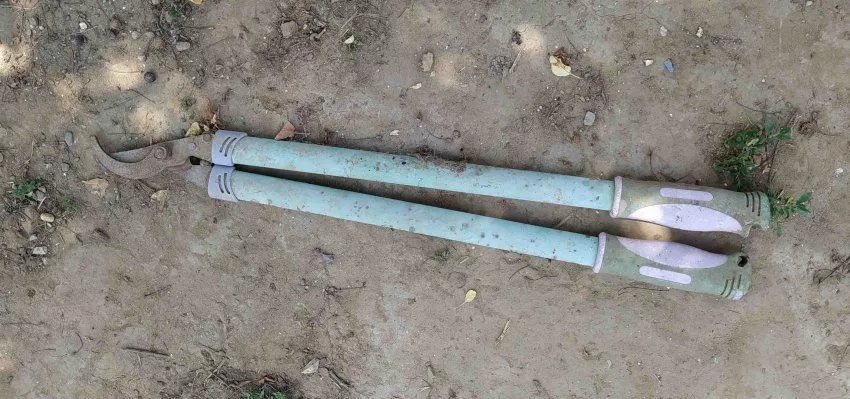
It served me well for a long time. It's all-metal and has long handles. It cut through fairly thick sticks (up to 3-4 cm).
It had one drawback: a thick rubber stopper was screwed on to prevent the handles from touching after cutting. When it broke off one day, the handles snapped shut as the pruning shears cut a branch, painfully pinching my fingers. It couldn't be repaired.
Afterwards I bought this inexpensive one at Sima-land.
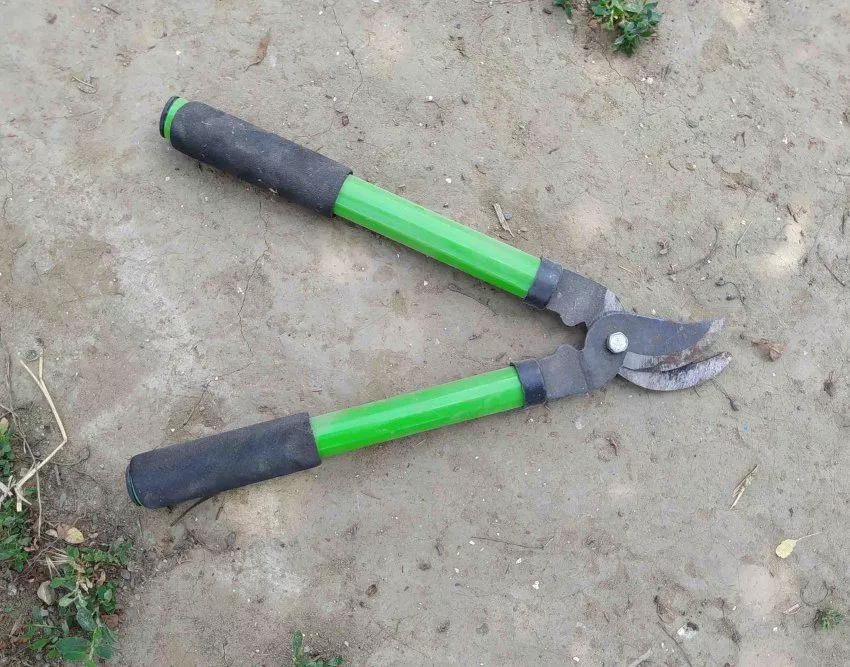
And, as the saying goes, "a miser pays twice." After the first use, it turned out that this lopper's purpose was purely decorative. This is how the blades bent when trying to cut a rose branch the thickness of a finger.
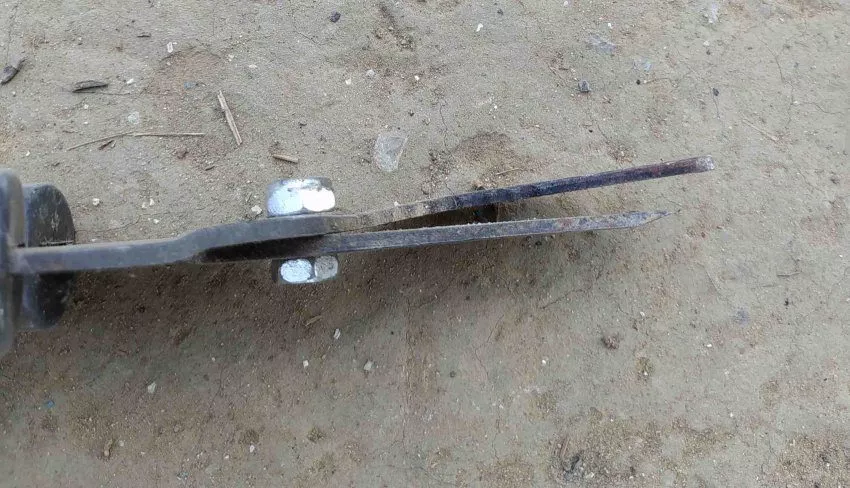
So, I don't recommend buying this one. The metal is so soft that it bends easily, even with a woman's hands.
So, I decided to buy a more expensive pruning shear. Like this one.
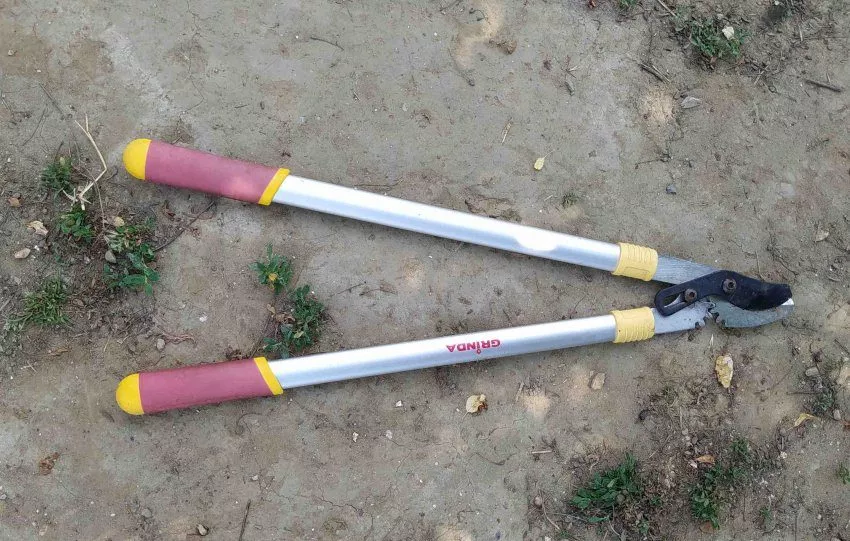
So far, it's convenient in every way. It's aluminum, so it's lightweight. It has a ratchet mechanism that allows you to cut even the thickest branches. And the ridge that prevents the handles from hitting each other during cutting is cast in one piece.
Of course, there's always room for improvement. There are pruning shears with telescopic handles. Our neighbor bought one and let me try it. It cuts great, and the long handles require almost no force. But there's a downside: if you need to cut something high up, you have to extend the handles to a greater angle, making it harder to reach the branch you need in a tight space.
Now that the trees have grown quite tall, I've started thinking about pruning shears. These are the kind where the pruning shears are attached to a long pole. But for a novice gardener, in the first few years of planting seedlings, a simple pair of hand pruning shears and loppers is sufficient.
Sprayer
While I'm not a fan of unnecessary chemicals in my garden, sometimes they're unavoidable. There are also many biological treatments available for treating plants against diseases and pests. For now, a regular 2-3 liter bottle is enough.
I bought different ones, but most often the cheapest one from Fix Price was enough.
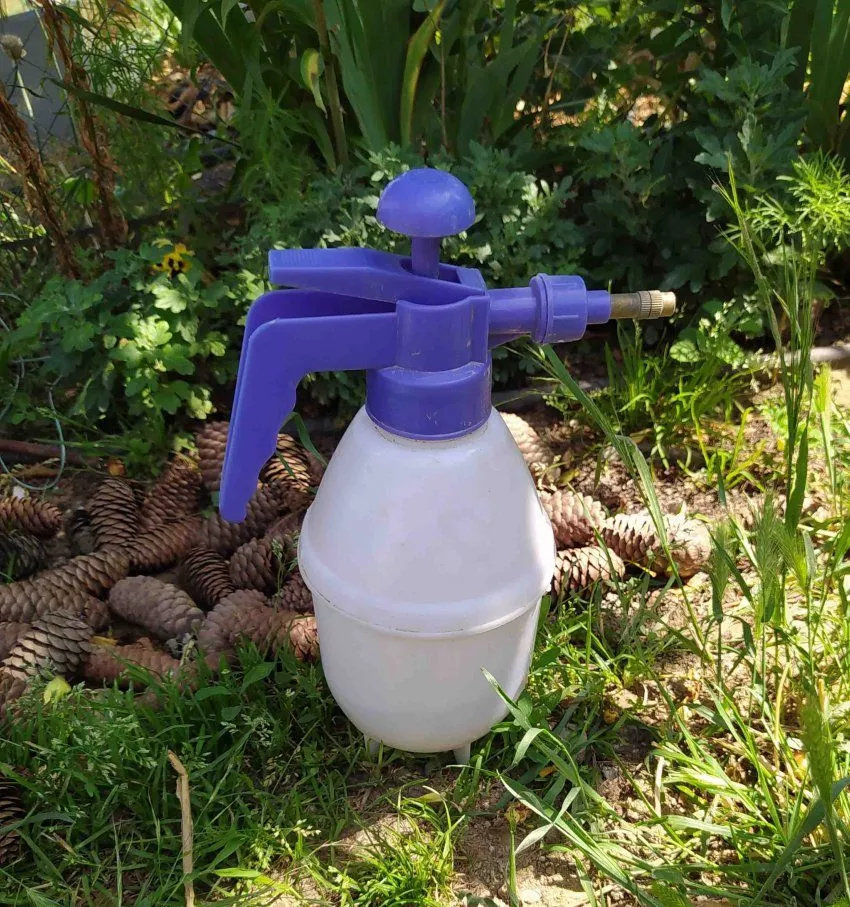
I currently have three standby sprayers. The small one is a universal one, for non-aggressive solutions or water, and holds 1.5 liters.
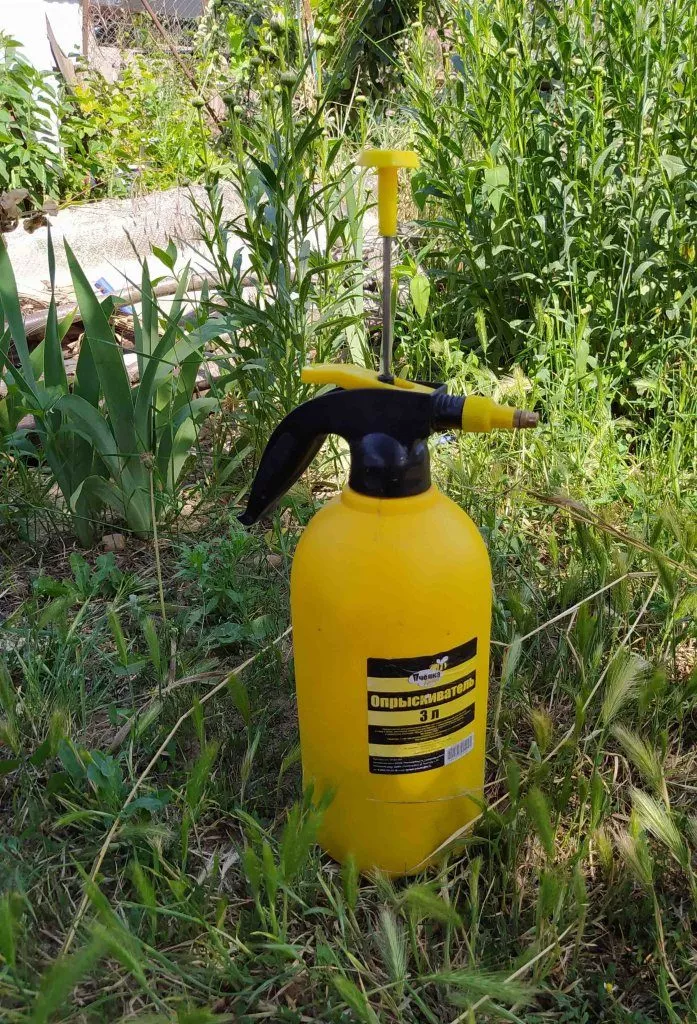
This yellow one is for 3 liters and is used to treat plants from pests and diseases.
And red for 2.5 liters for strong solutions that can damage plants (Tornado, Roundup, etc.).
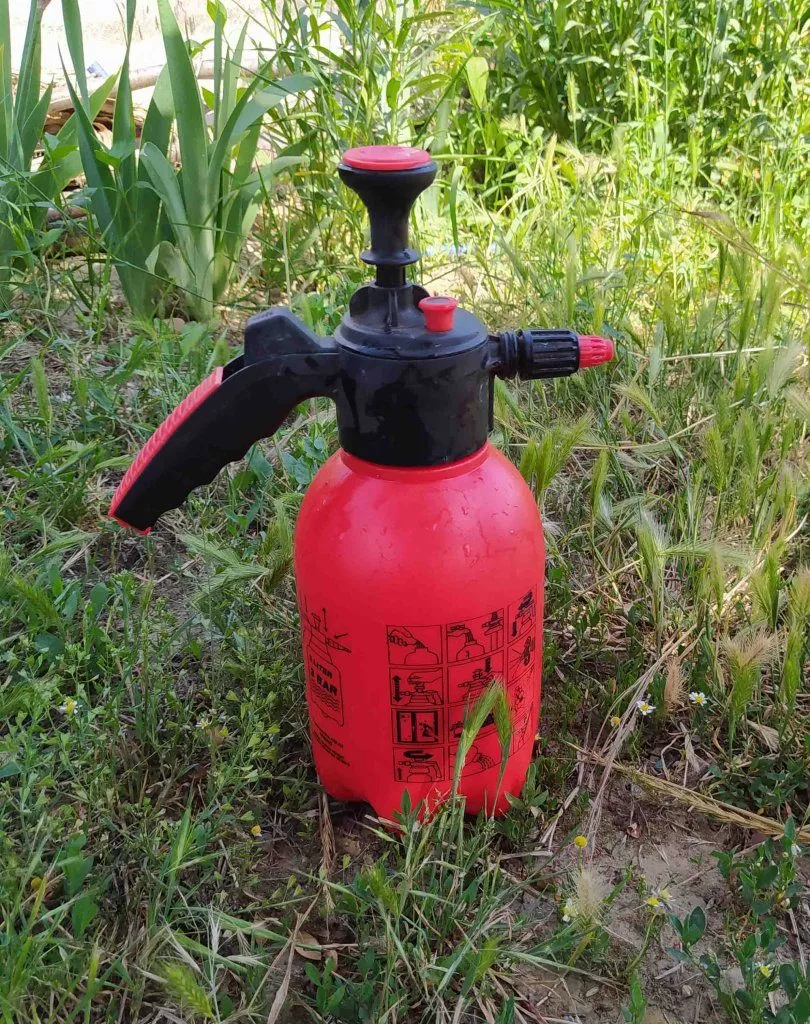
I used to use one, but after using Roundup, I always had to spend a long time thoroughly cleaning the sprayer. Although I don't use such solutions specifically for the garden, I do use them to eradicate stubborn weeds like hops on the fence or along the roadside.
Before using it for other purposes, I was still worried that something might be left behind and end up on my crops. Now, by distinguishing their intended use by color, I simply rinse the sprayer after use.
But as the trees grow, a backpack sprayer with a 10-liter capacity and a long handle becomes necessary. Because the tree canopies have expanded, it's difficult to cover all the leaves with the solution using a handheld sprayer.
Saw
Another tool I want to mention is a saw. I rarely use it. I mostly make do with pruning shears and loppers. But sometimes I need one.
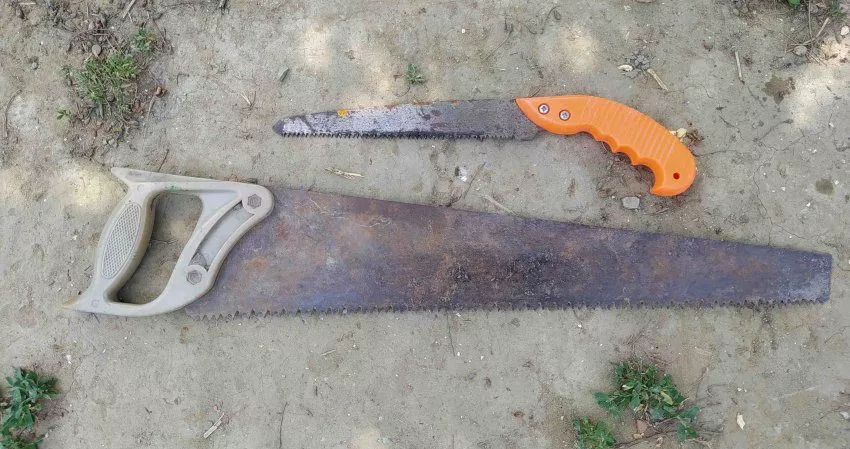
I have two of them. One is a small garden pole. It's great for getting under small branches. And the other is a regular carpenter's pole. It's for cutting large branches and trunks. For example, this fall, it came in handy when I was cutting down a cherry tree that had been blown down by the wind.
Shredder
I'm also starting to seriously consider a branch shredder. Even light pruning and shaping leaves a lot of branches behind. Some plants, like jujubes, pomegranates, and roses, are also thorny. Burning these branches in our city is quite difficult, as our property doesn't meet fire safety regulations, and that would result in fines. And I don't want to "burn" my neighbors.
I've done everything with the branches. I've even cut them into short sticks, which I've placed in the holes for the raspberries. But this requires a lot of time, patience, and a pair of pruning shears.
I wove garden bed fences from branches. This wasn't a very good use for the branches, as not all of them were used for such fences, only the most suitable ones. Most of the branches ended up unclaimed.
Ordering a vehicle to remove branches is not a cheap pleasure, and the volumes are not the same in a private garden.
Now I want to buy a branch shredder and chop them up, using the resulting chips for filling paths and mulching.