

Once upon a time, many years ago
You gave me a tea rose,
I remember her scent,
She was extraordinary,You can't find such a rose,
Even if you walk a hundred thousand miles,
She was shining from within,
Having absorbed the light of the southern stars.
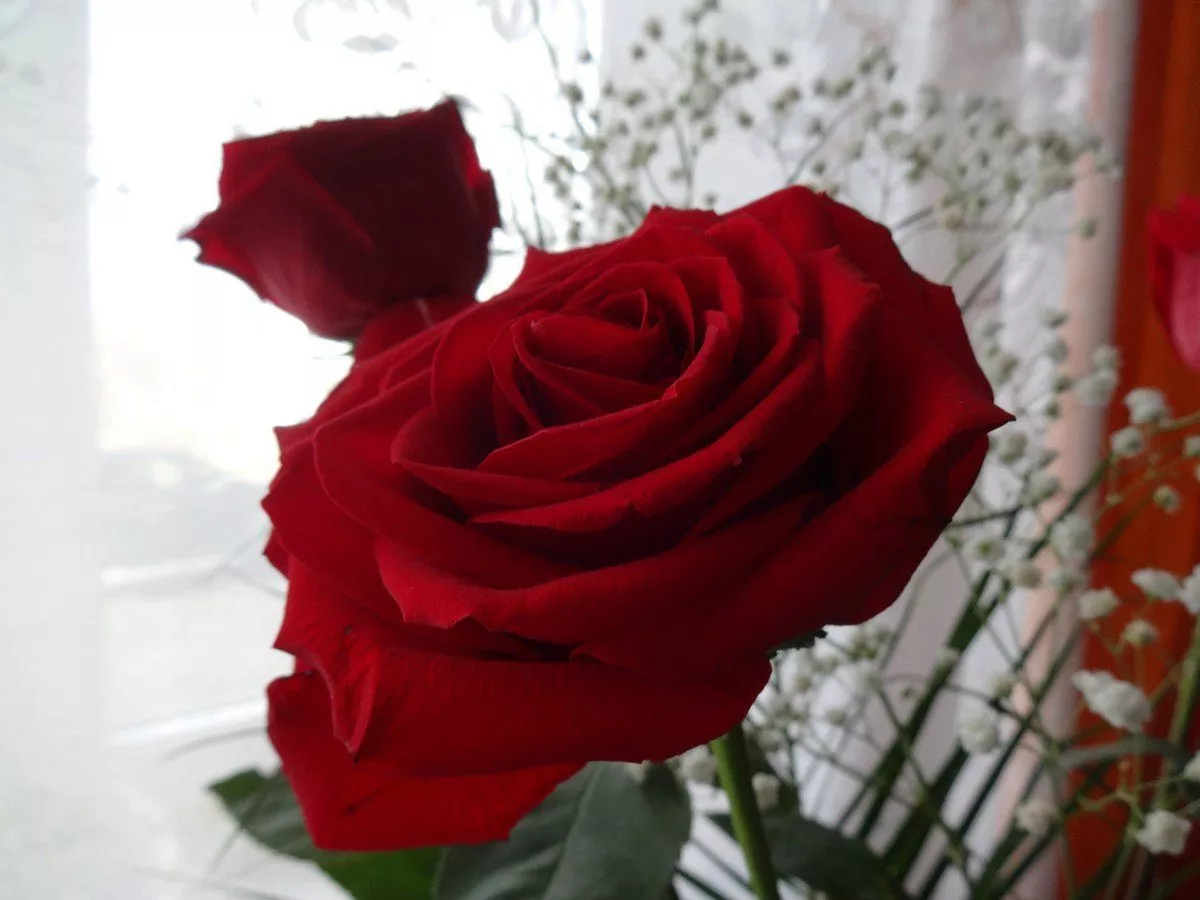
Like many people, I adore roses. From my earliest childhood, I remember the large rose garden under the windows of my parents' house. My dad loved roses. When I started my own family, I also planted many roses. My favorites were the Kazakhstan Jubilee, with very large, dark red flowers with a black tint, and the Gloria Dei, with large, double, lemon-yellow roses with carmine-pink edges. There was also a beautiful rose, pink with a lilac tint, I don't know the variety, but we called it Lilac.
My dad had a book about roses, and whenever I visited them, I'd read it, copying out information on how to care for roses, how to prune them properly, and how to deal with pests and diseases. It described the different rose varieties in detail.
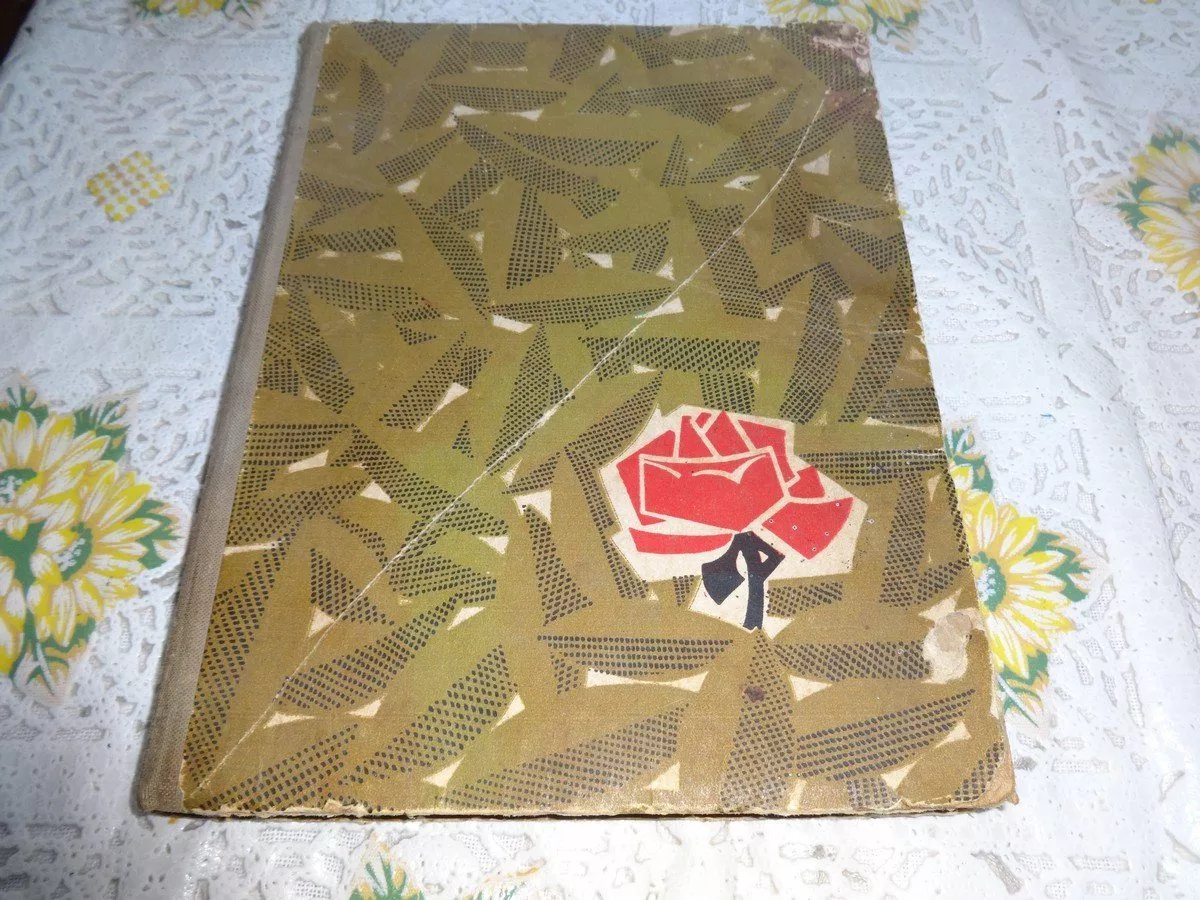

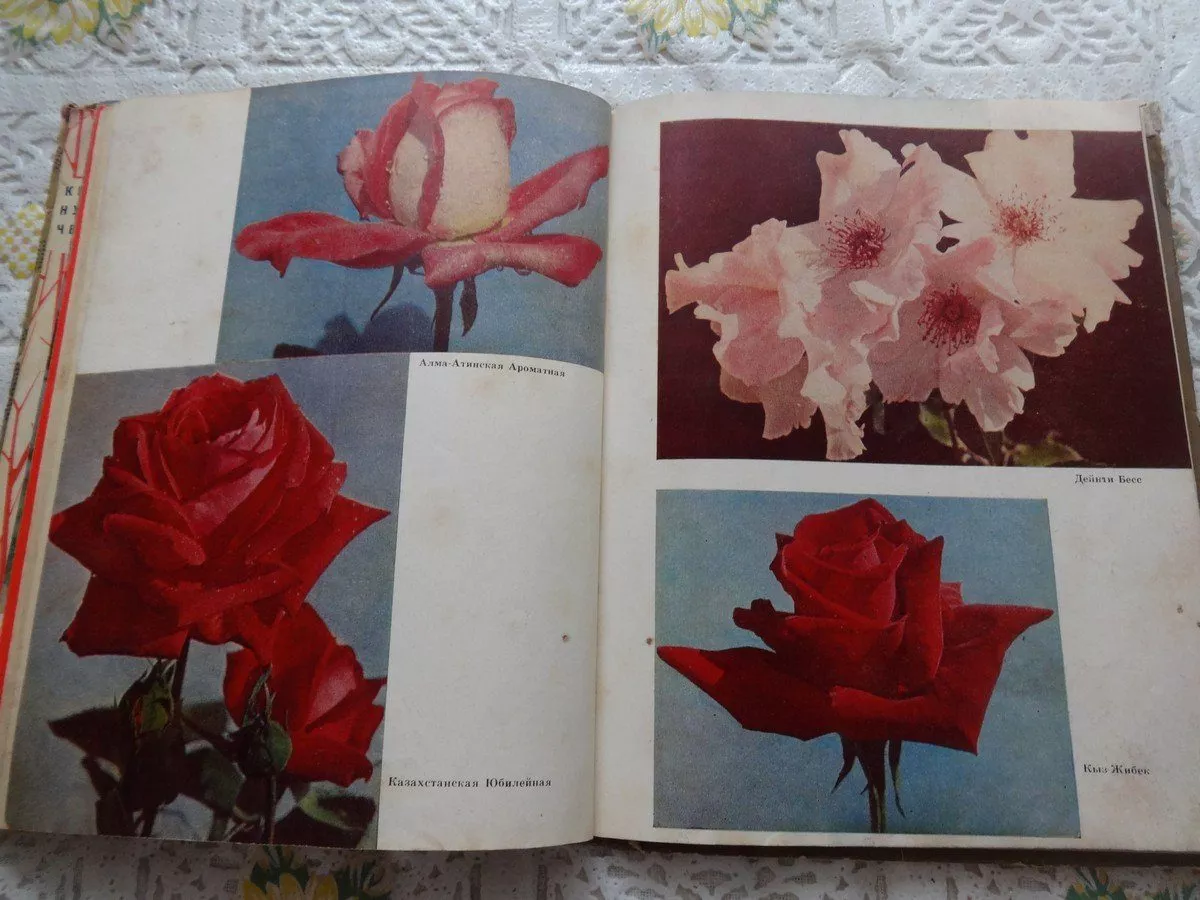

Later, when Dad passed away, Mom brought me this book. I keep it as a memento of Dad and as a source of useful information.
After moving to Krasnoyarsk, I really missed my roses.
In the fall, I was given a miniature red rose in a pot. But it didn't like growing on the windowsill in my apartment at all: it was constantly drying out, spider mites were attacking its leaves, the hot air from the radiators was detrimental, and when the windows were opened for ventilation, the bitter frost scorched its petals. In the summer, I took it to the dacha, but it didn't survive the transplant and died.
We had a large bush of a common rose at our dacha. It bloomed profusely in the spring, but its flowers were somewhat diseased. Most of the buds didn't fully open, drying up, and those that did had a scruffy appearance. The center looked as if someone had nibbled it. The bush was too old and growing in the wrong place, so we removed it.
We transplanted a young rose shoot to a new location, but when it bloomed, the flowers looked the same as on the old bush. At first, I thought the rose was being attacked by pests, so I sprayed it in the fall and early spring, fertilized it, and cared for it. But it still remained so unsightly.
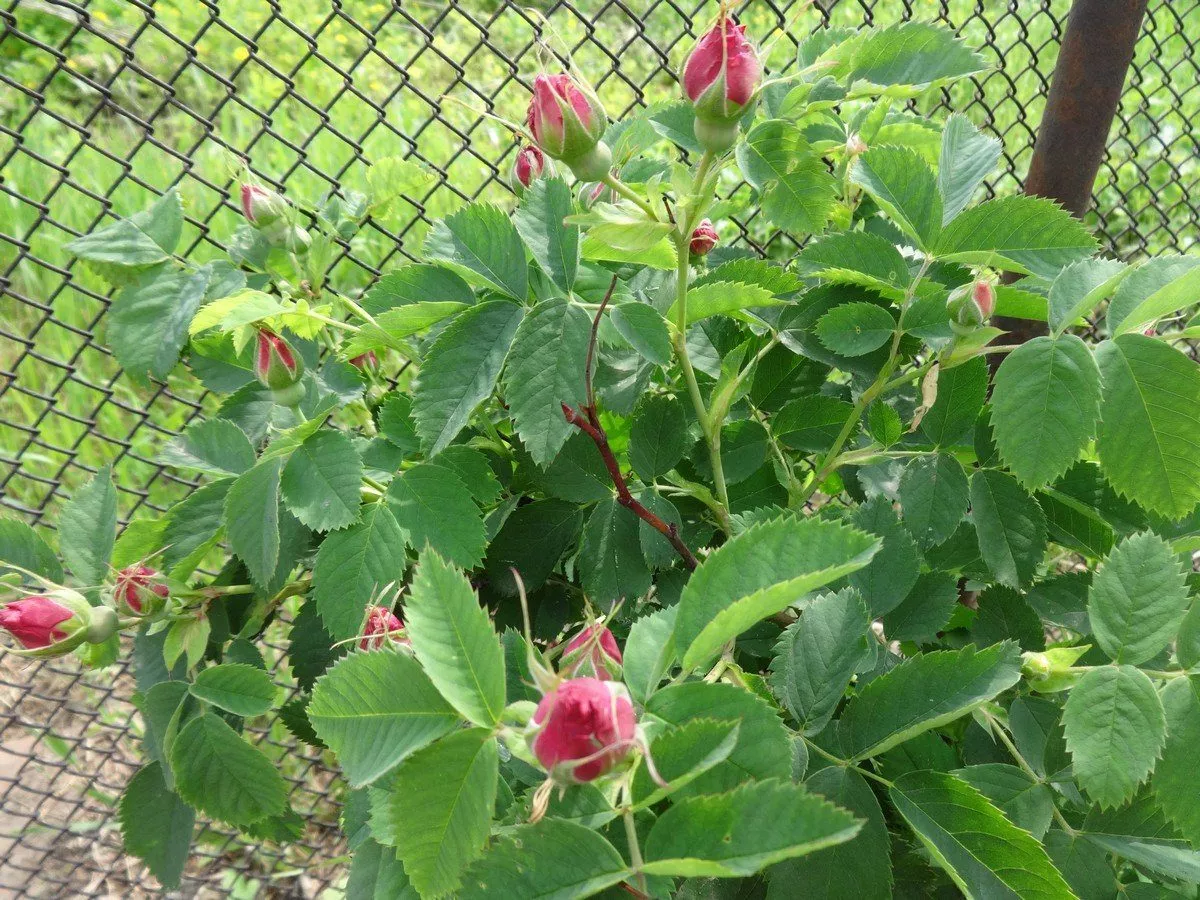
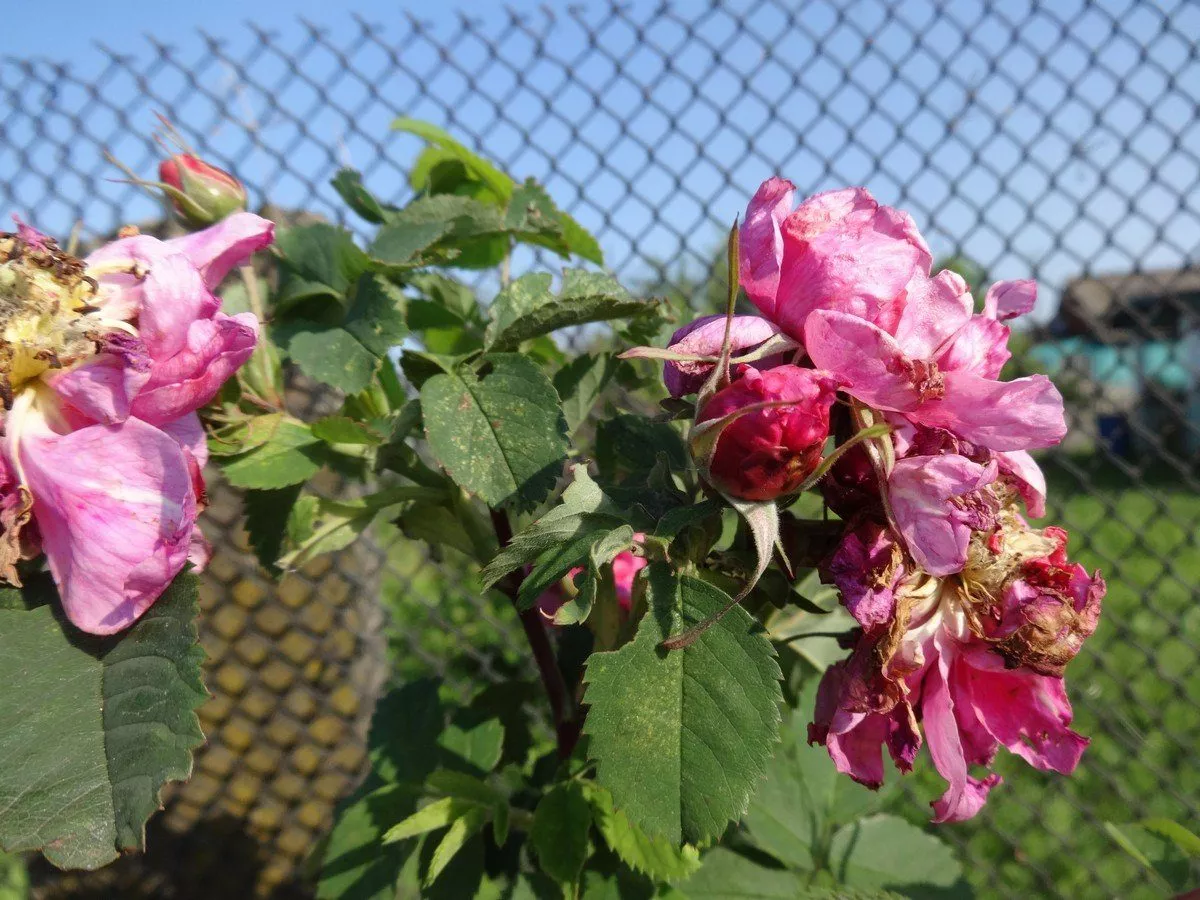
And I wanted beautiful roses to grow on my plot.
In 2013, I decided to plant my first roses. In the spring, I bought two red and yellow roses from a Serbian grower at a flower shop. The roses were packaged in colorful cardboard boxes with photos of the roses. I transplanted them into pots, and they grew on the windowsill until the end of May. I transplanted them to my dacha, and the roses bloomed and grew well all summer.
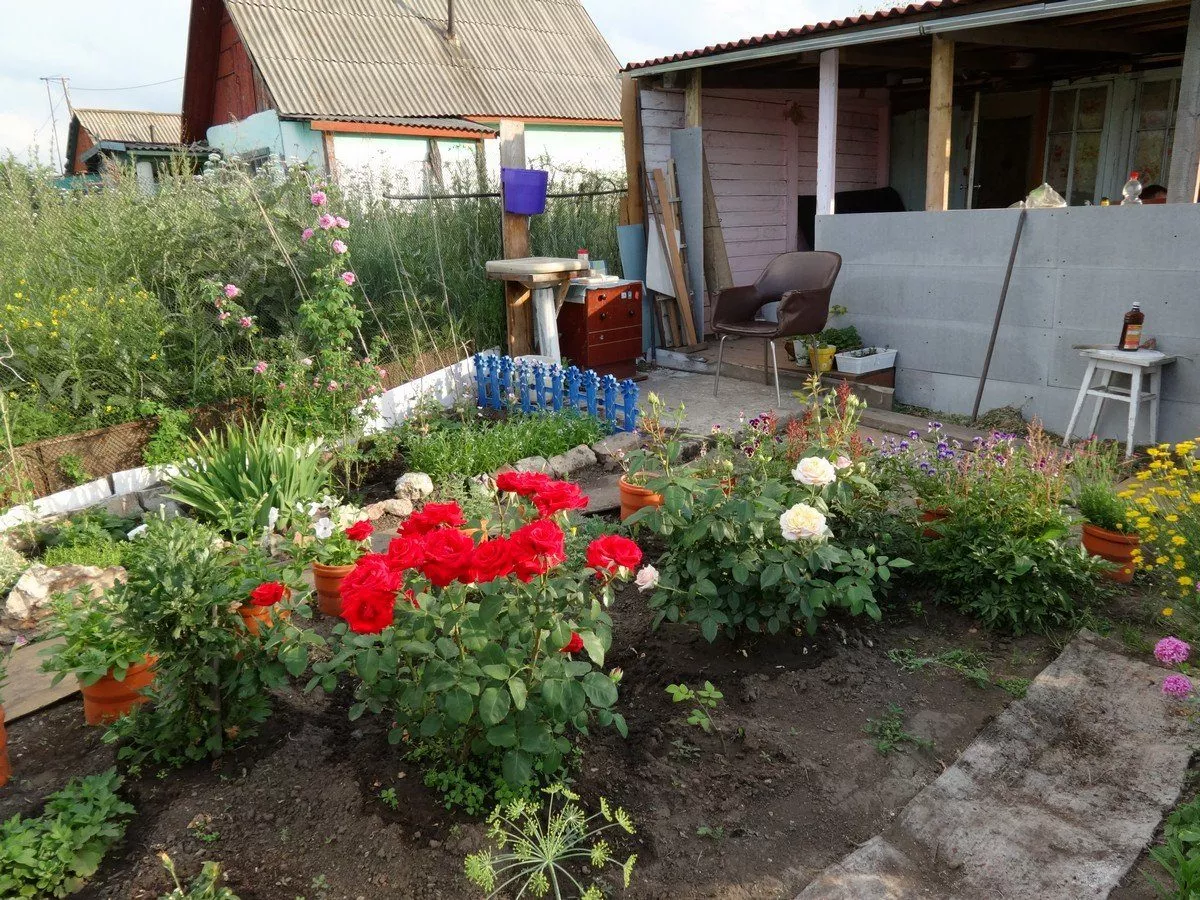
The red rose was just like the picture. But the second rose didn't match the photo. Instead of a rich, bright yellow, it was a pale yellow, almost whitish yellow. But it was still very beautiful and large.
In the fall, I made a shelter for them. I set up arches, stretched covering material over them, and then covered them with thick plastic film. They overwintered under a thick layer of snow.
In the spring, I gradually lifted the cover and was thrilled when buds began to appear on the bushes. My roses survived the winter. In the summer, I trimmed a few branches and planted the cuttings in a box, covering it with plastic. Some of the cuttings turned black and died, but two took root and sprouted new shoots, which I replanted with my roses. My roses that survived the winter were beautiful.
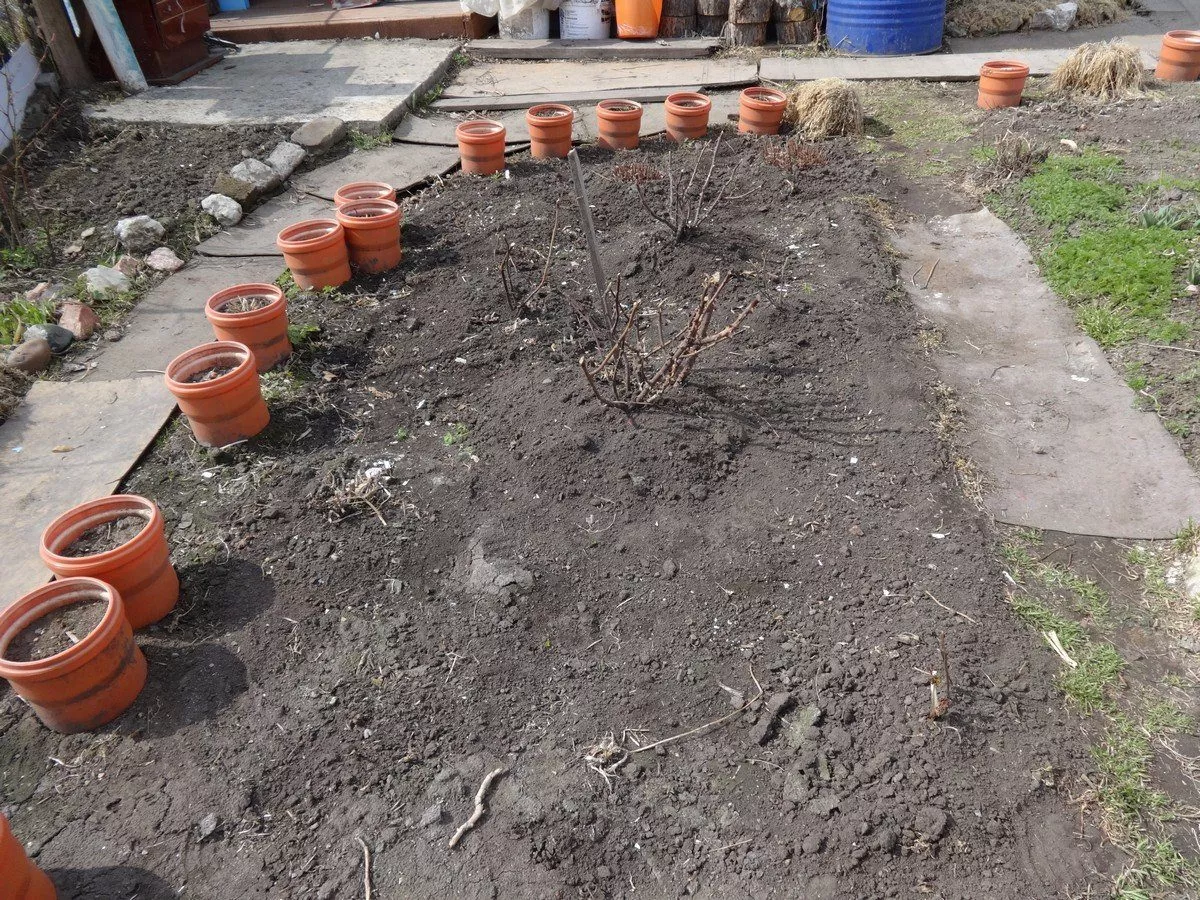
In the fall, I covered the roses again. But they didn't survive the harsh winter, and by mid-May 2015, four rose bushes looked like this: dried-up, dead bushes. The chrysanthemums froze along with them.
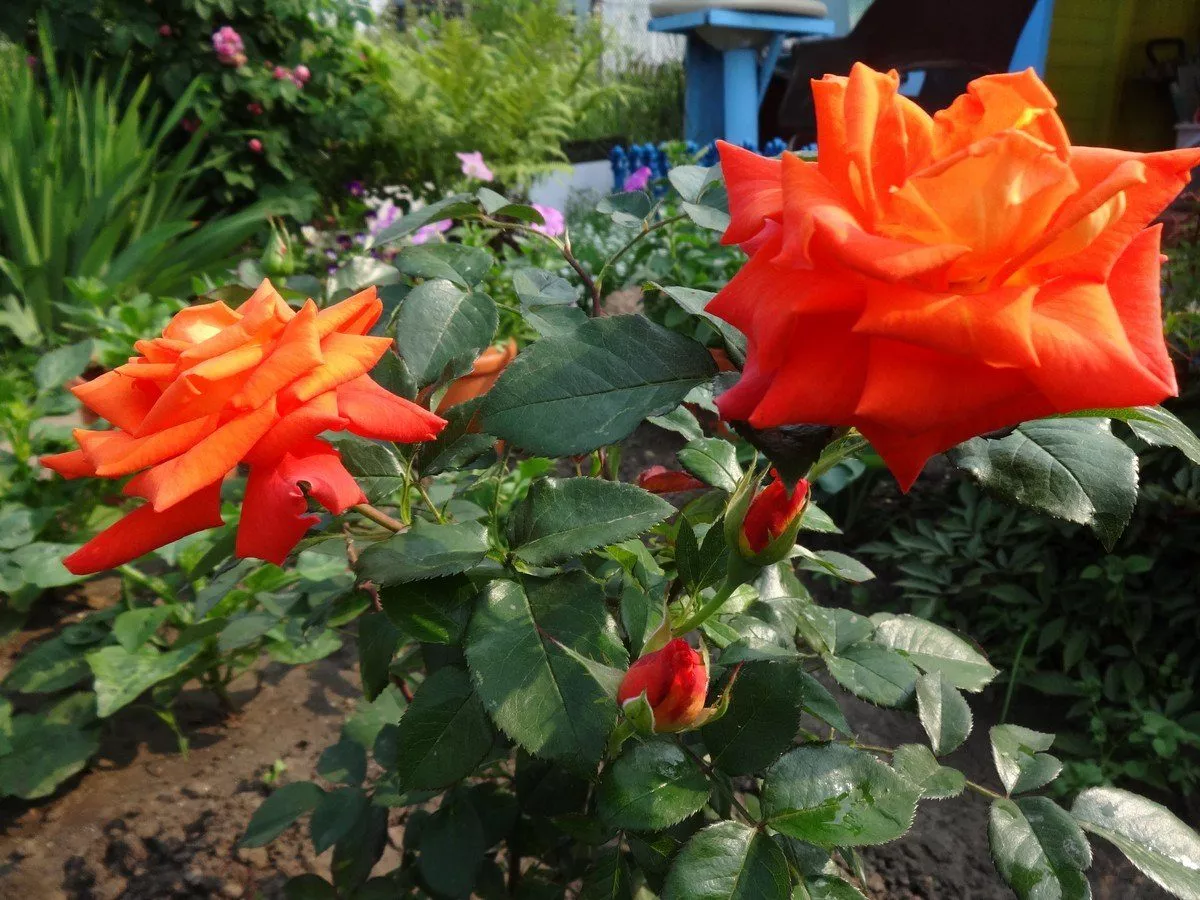
I decided not to give up and bought one miniature orange rose at a flower shop. A little later, I bought four more rose seedlings at the market. The boxes the seedlings were in had cards of roses attached to them. I chose roses in pink, burgundy, yellow, and white. The seller honestly said he couldn't guarantee the color of the roses, as the seedlings are constantly moved and rearranged for watering.
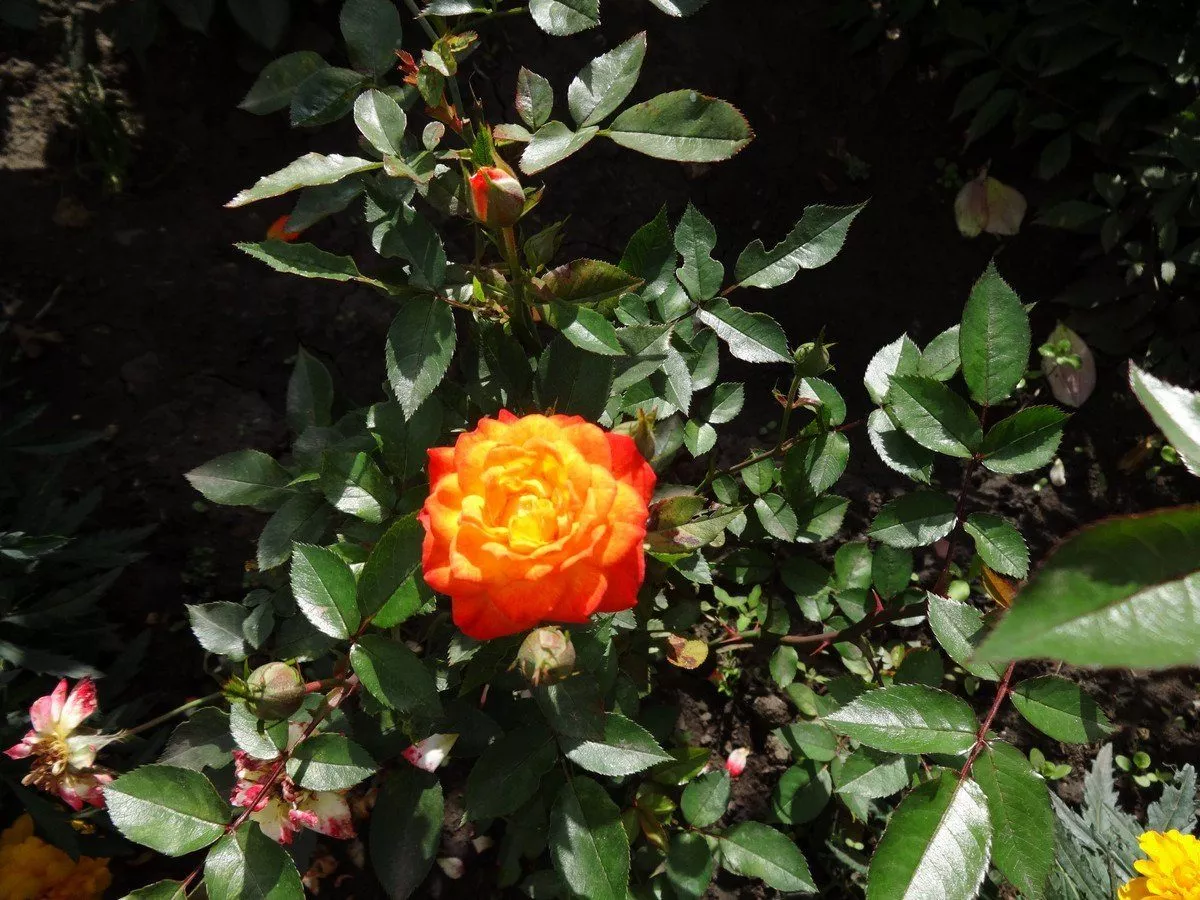
I planted the roses in a sunny spot. I eagerly waited for them to take root and begin to bloom. One rose bloomed orange buds.
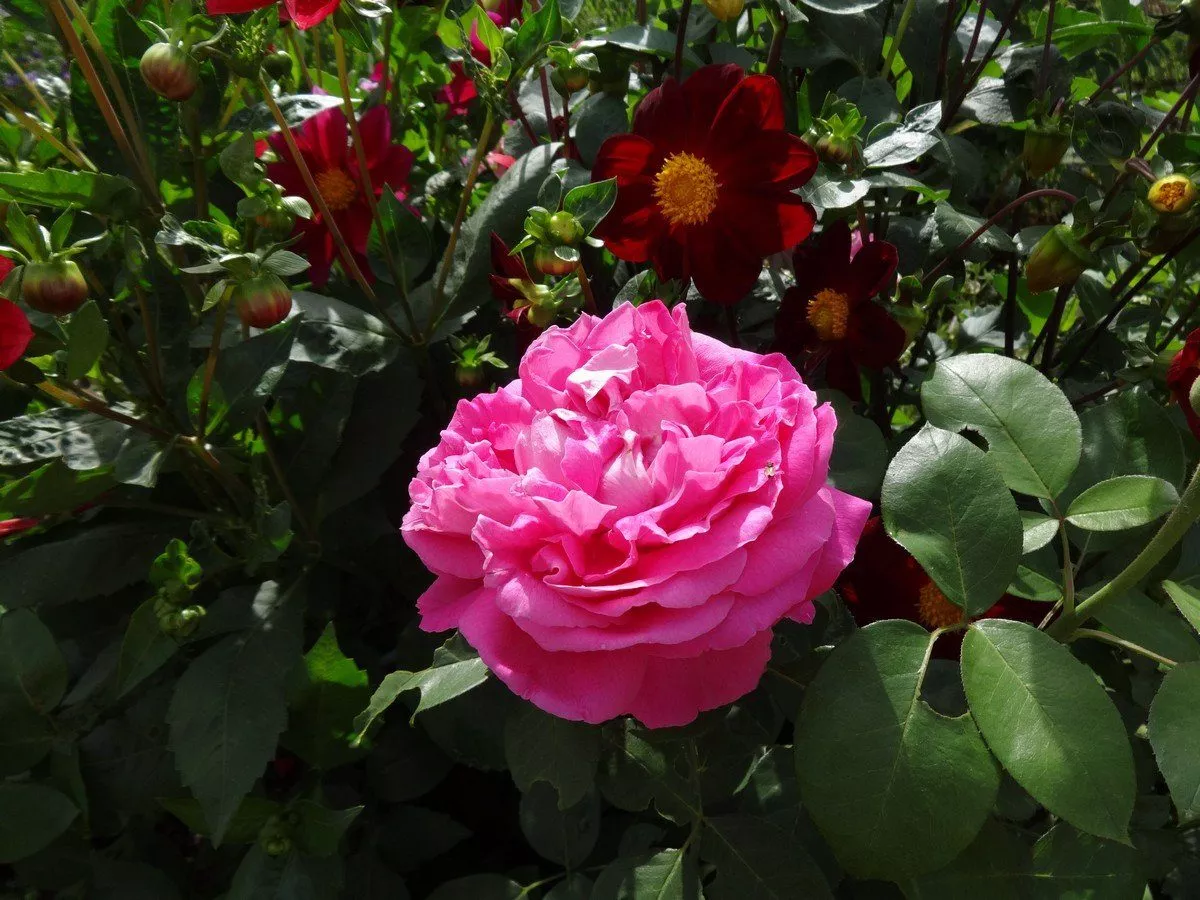
The second one was pink and looked like a peony.
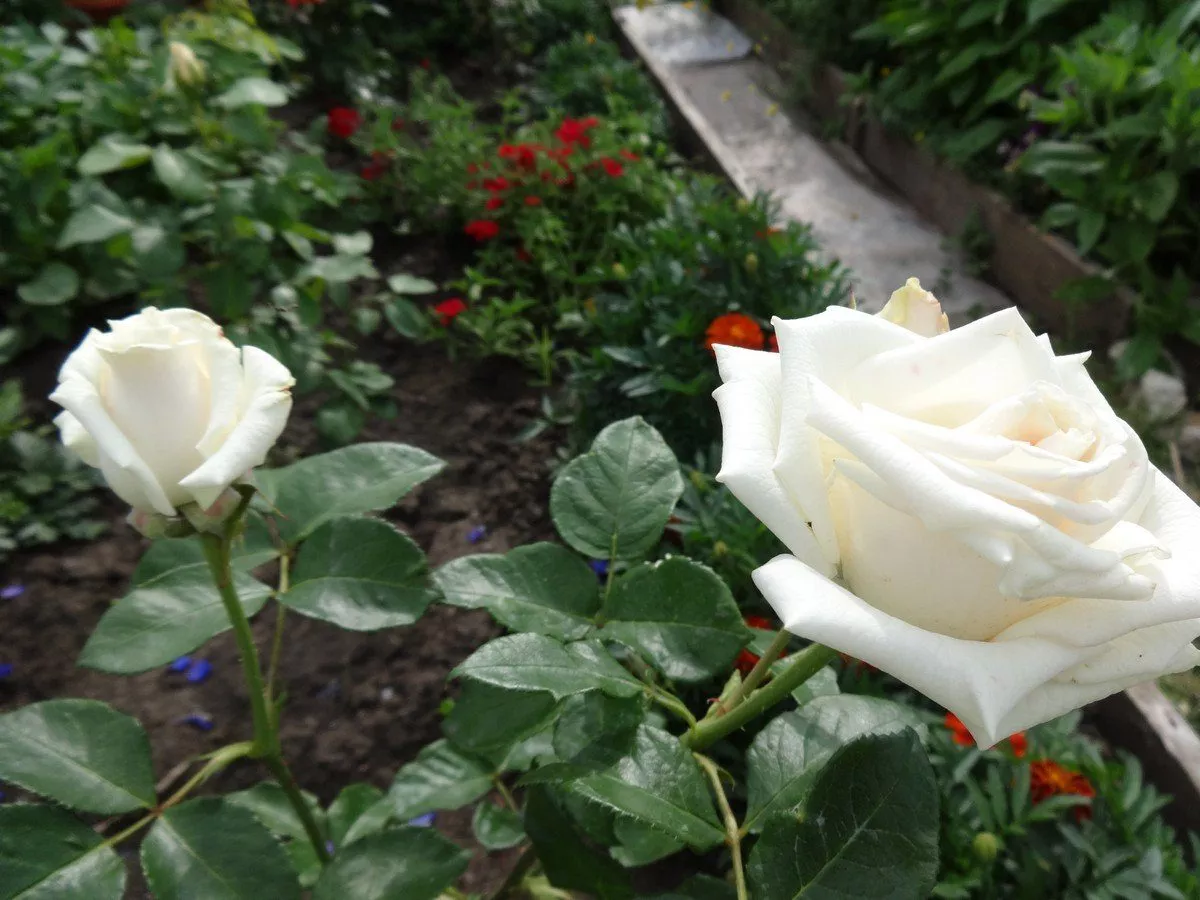
On the third bush, white roses have bloomed.
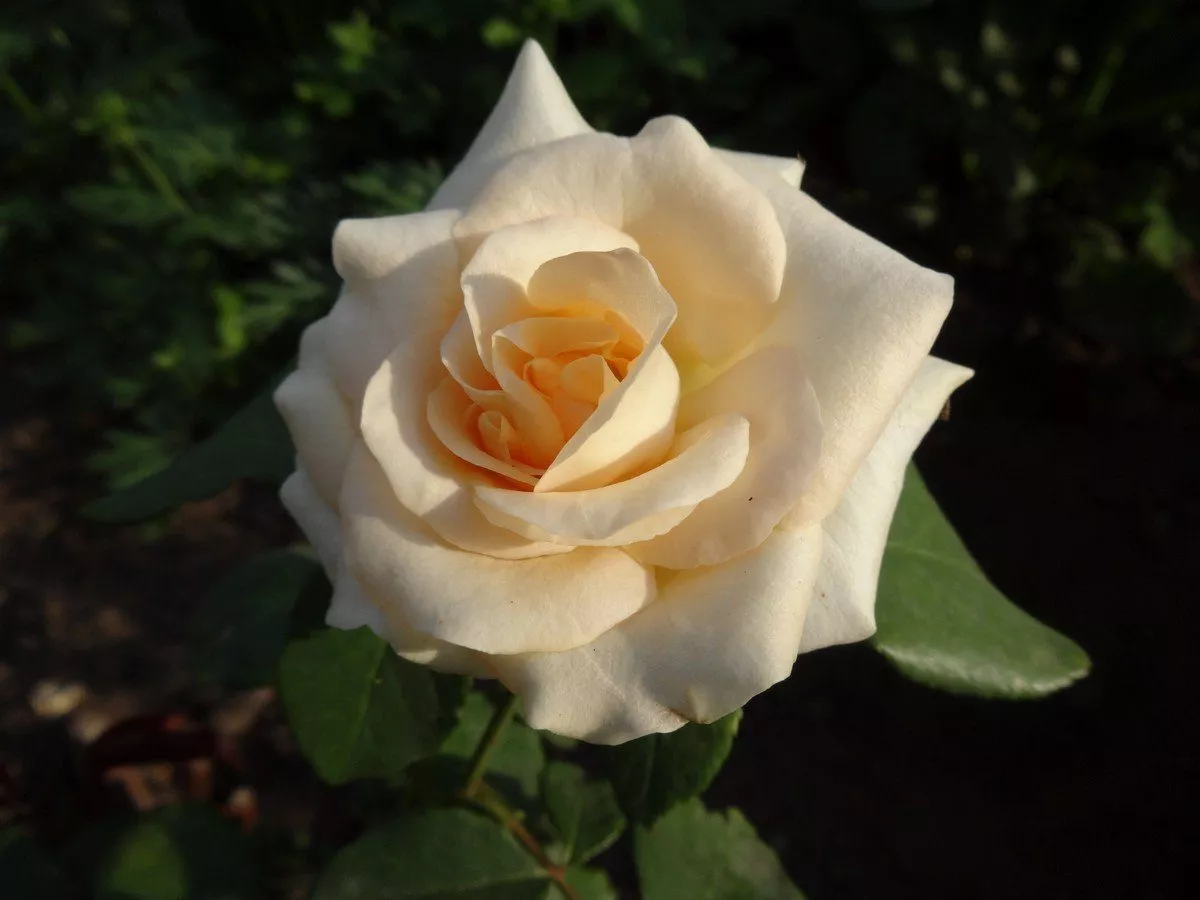
And the fourth was soft beige.
The roses were wonderful, three bushes grew well, put out new shoots, and bloomed until autumn.
Only the beige one was weak.
The miniature rose also delighted with its small, bright orange flowers.
Here is a September bouquet of my roses.
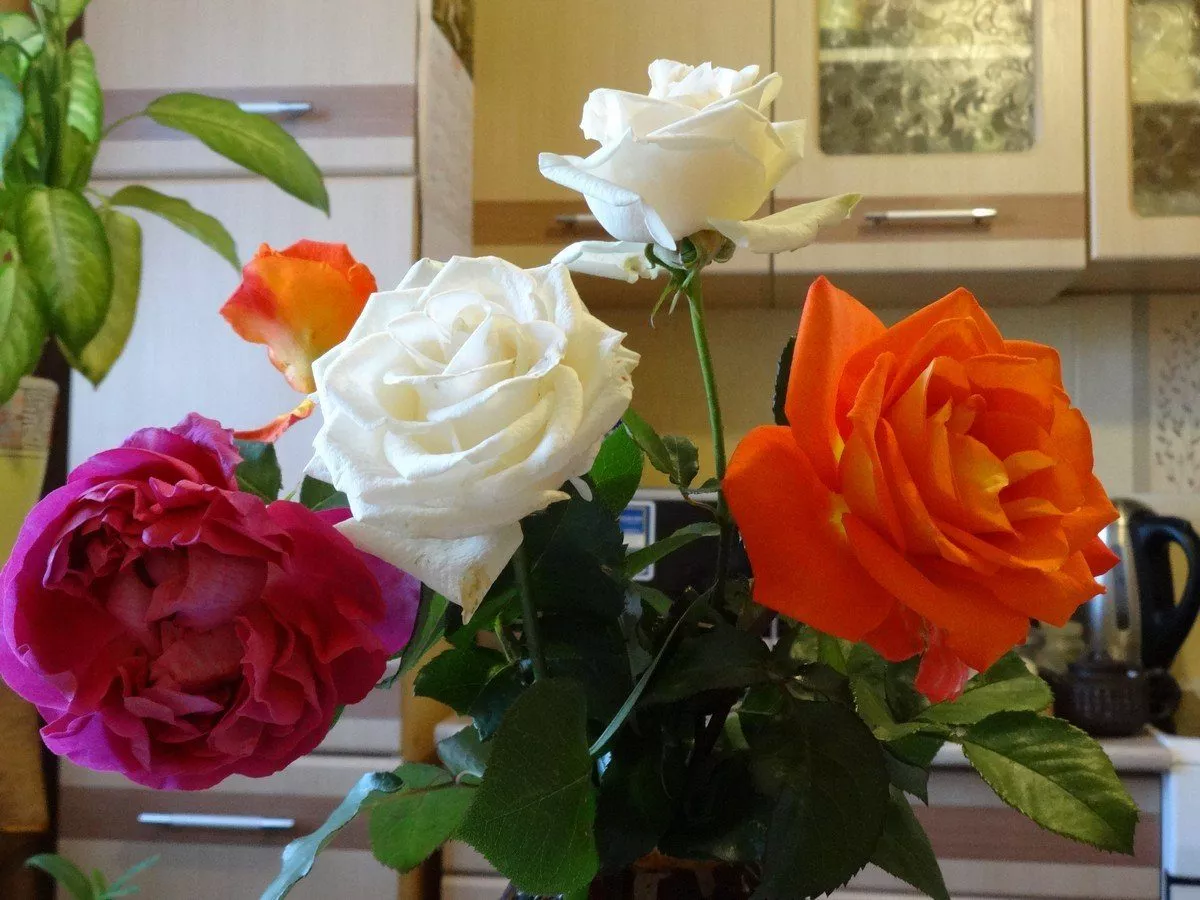
In the fall, when there were already light frosts at night, I began to prepare the roses for winter: I removed all the leaves from the branches, cut off all the buds, trimmed the high branches, dug up the bushes, and treated them with phytosporin.
I transplanted the bushes into a large pot, wrapped it in newspaper, and tied it with twine. The pot was taken down to the cellar.
During the winter, I made sure the soil in the pot didn't dry out. At the end of April, I moved the roses to the greenhouse, trimmed the pale shoots they'd sent up in the cellar, and cut off damaged and blackened branches. This is what they looked like at the beginning of May.
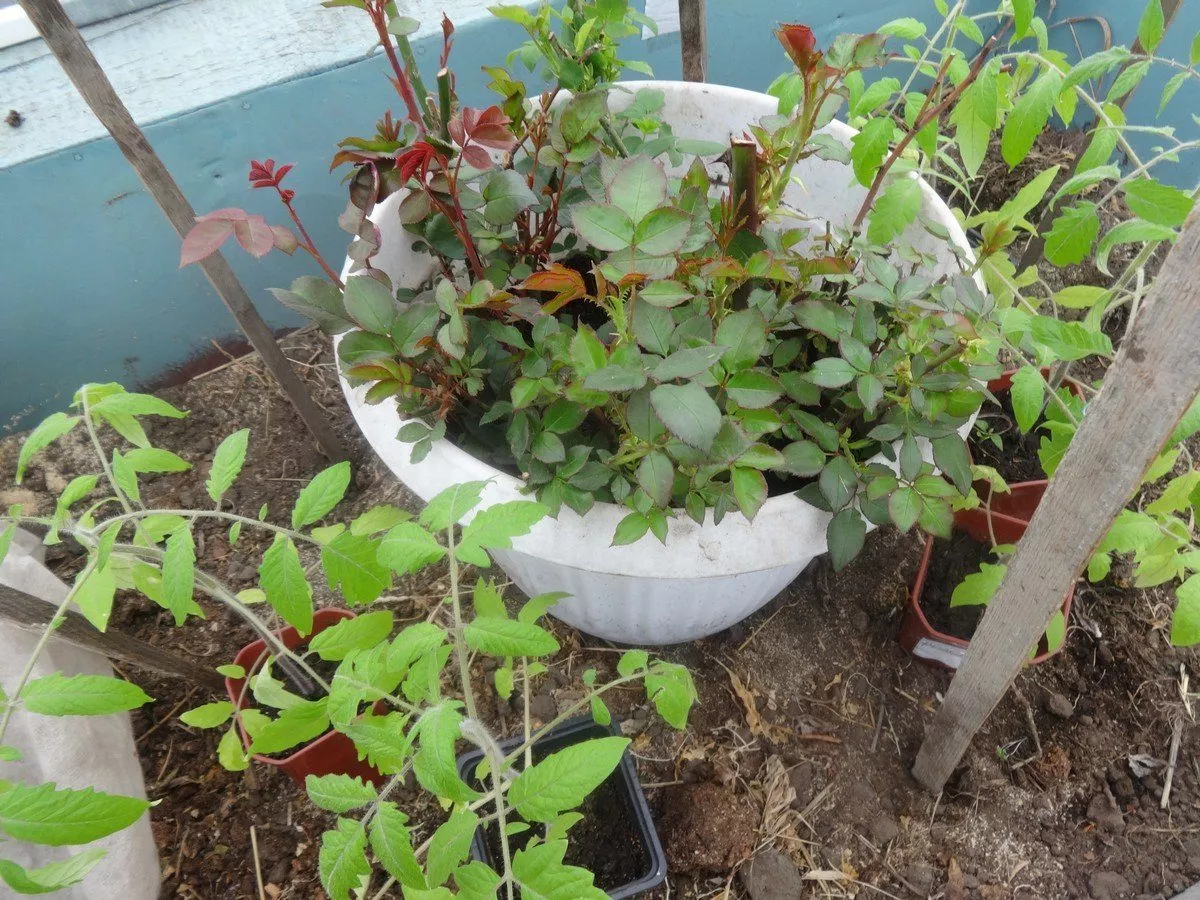
And from mid-May I planted them in a flower bed and they bloomed all summer.
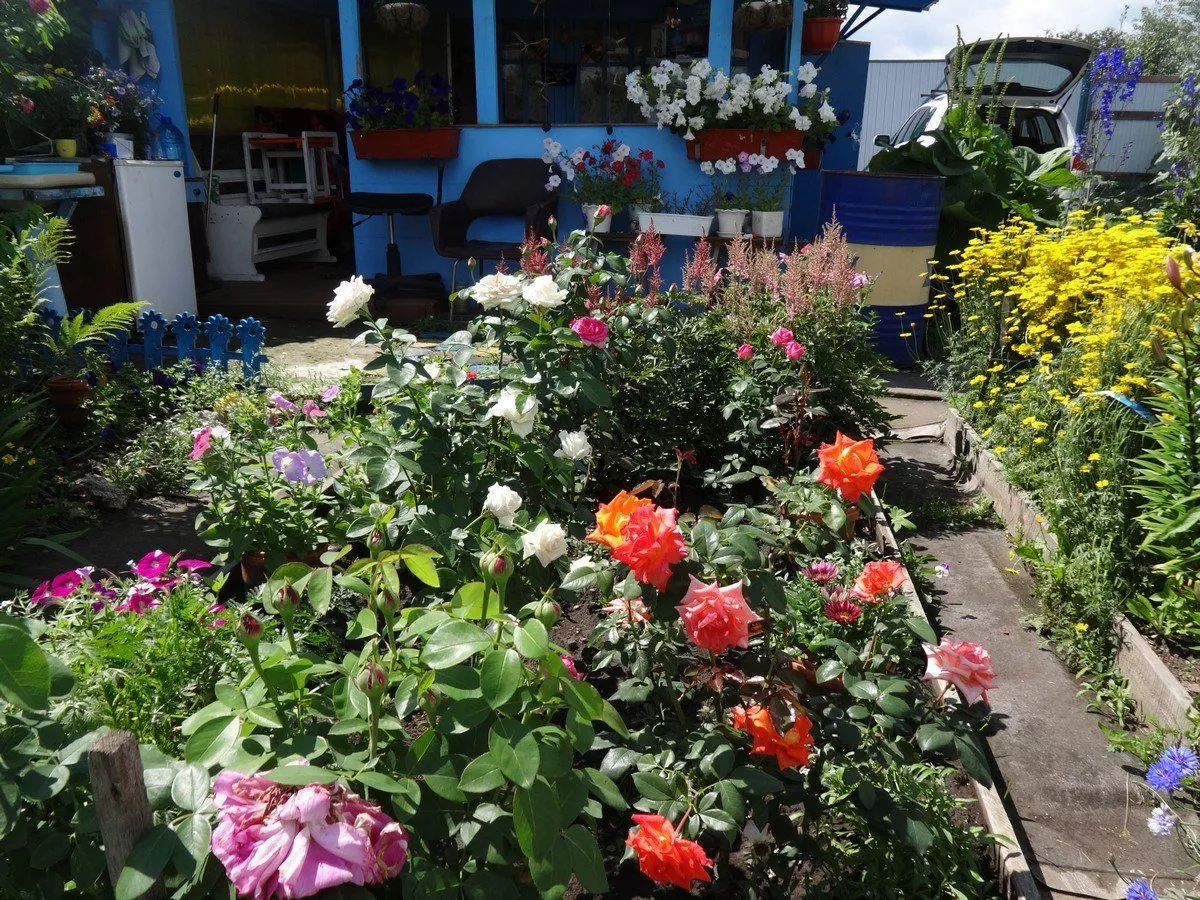
In April 2016, I bought a yellow rose at the store and repotted it, but it died. In mid-May, I bought three more bushes at the market—red, burgundy, and yellow. This is what I ended up with—two identical pink bushes.
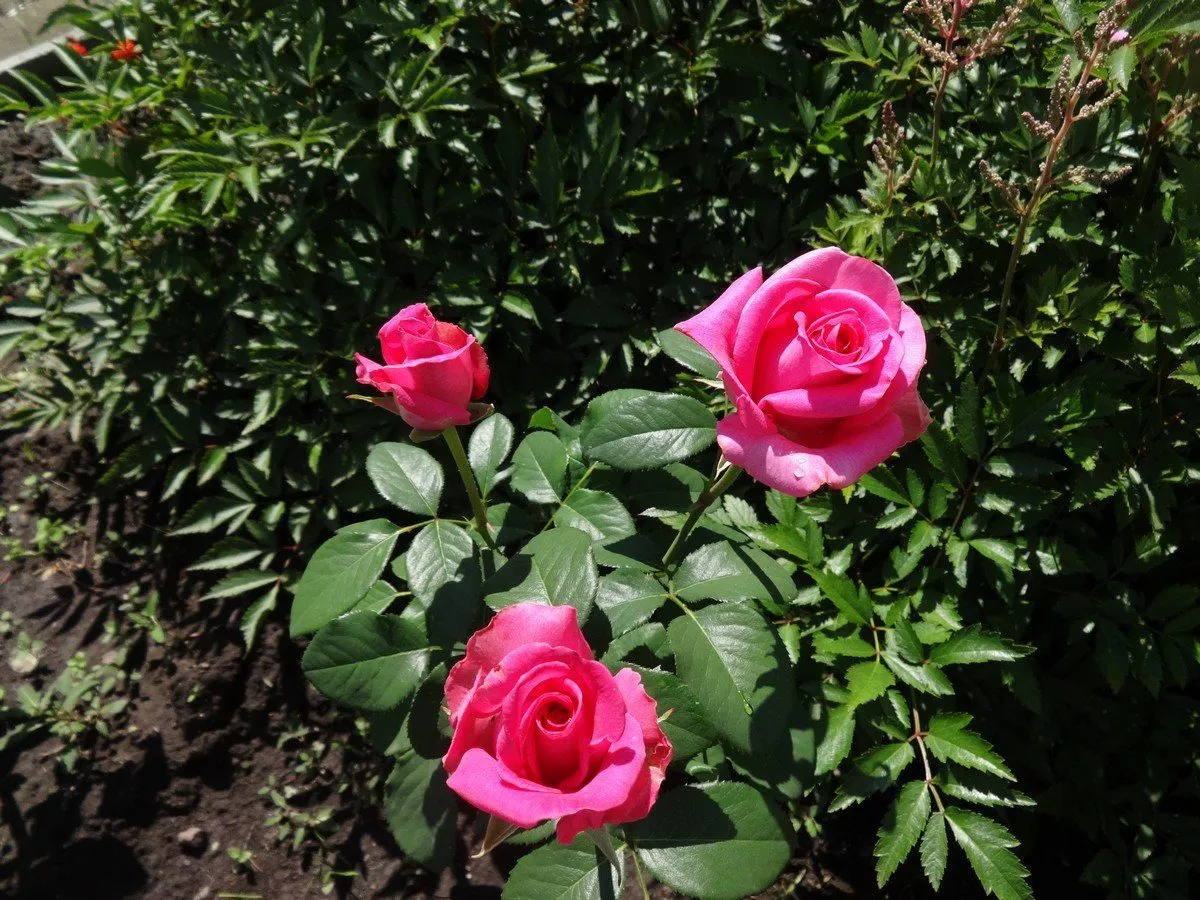
The third one is red.
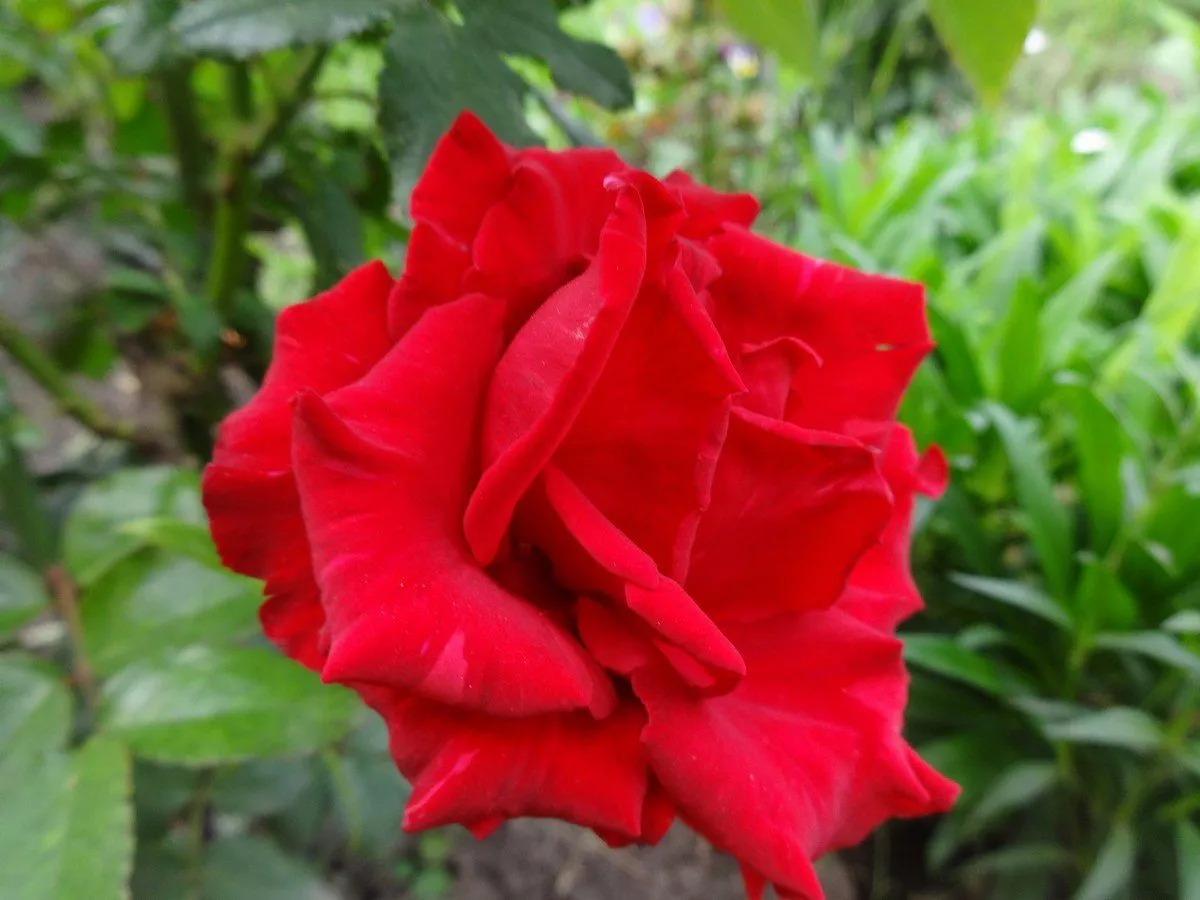
I had no luck with yellow roses again.
All the roses were blooming profusely, except for the beige one; she didn't like something about it. The miniature rose got sick, all its stems wilted, and soon it dried up, so she had to throw it out.
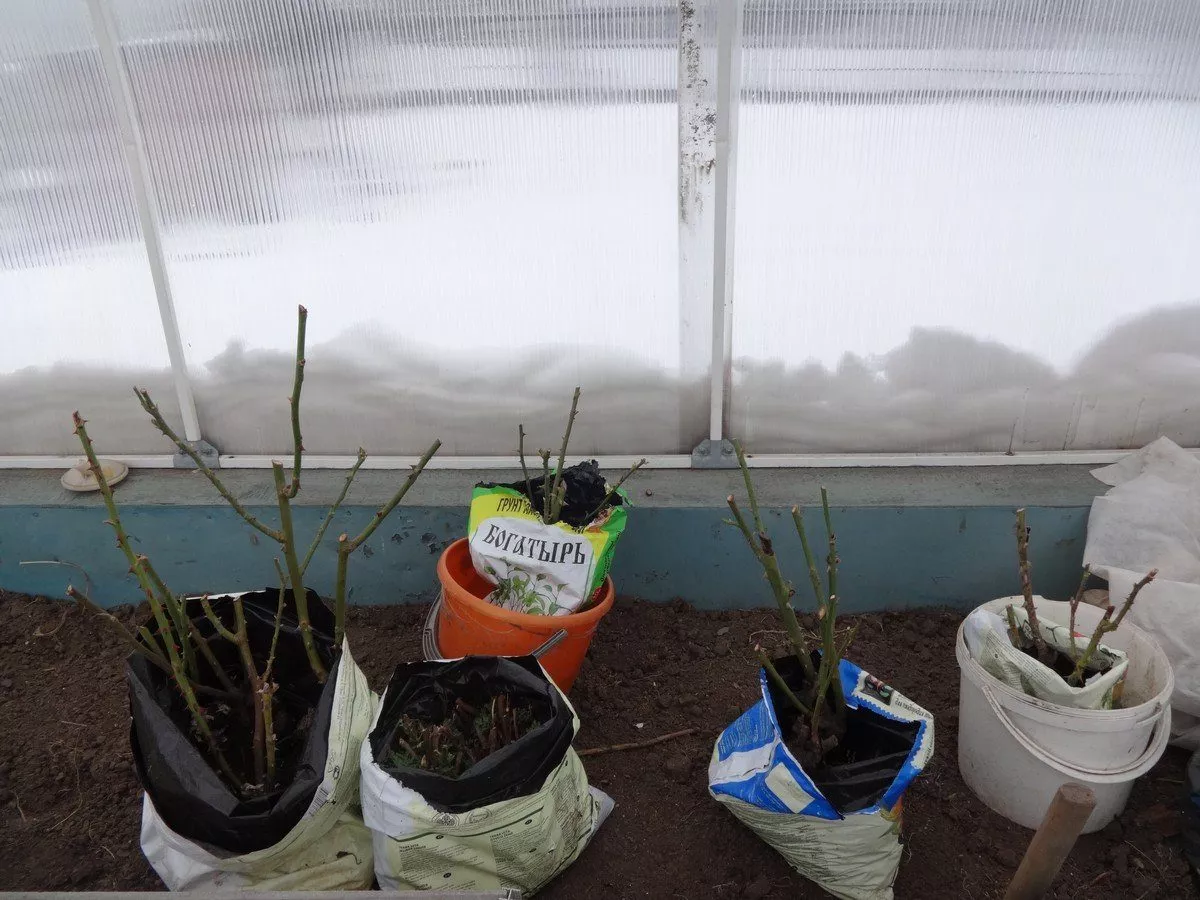
In the winter, I stored roses in the cellar again, but not in a pot, but in seedling soil bags. And they overwintered beautifully. Since then, I've been storing roses and chrysanthemums this way in winter.
This is what they look like when I take them out of the cellar. It's the end of April. They'll grow in the greenhouse until the end of May, and then I'll plant them in the flower beds.
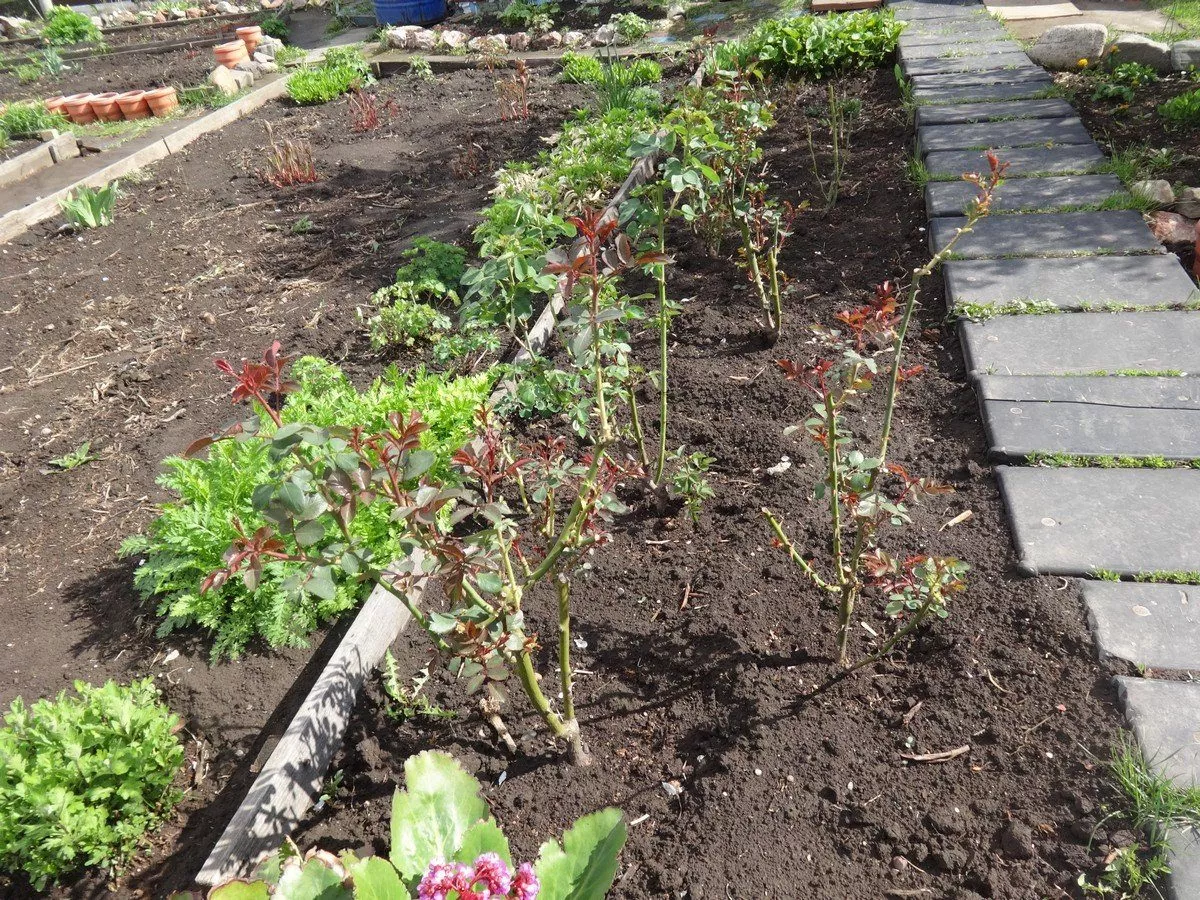
In 2019, I planted all seven of my bushes in a new location along the path.
Once again, I couldn't resist buying a yellow rose bush at the flower shop. The seedlings were growing in small pots and standing in boxes, with the color and name of the roses written on them. I was sure that I had finally acquired a yellow rose.
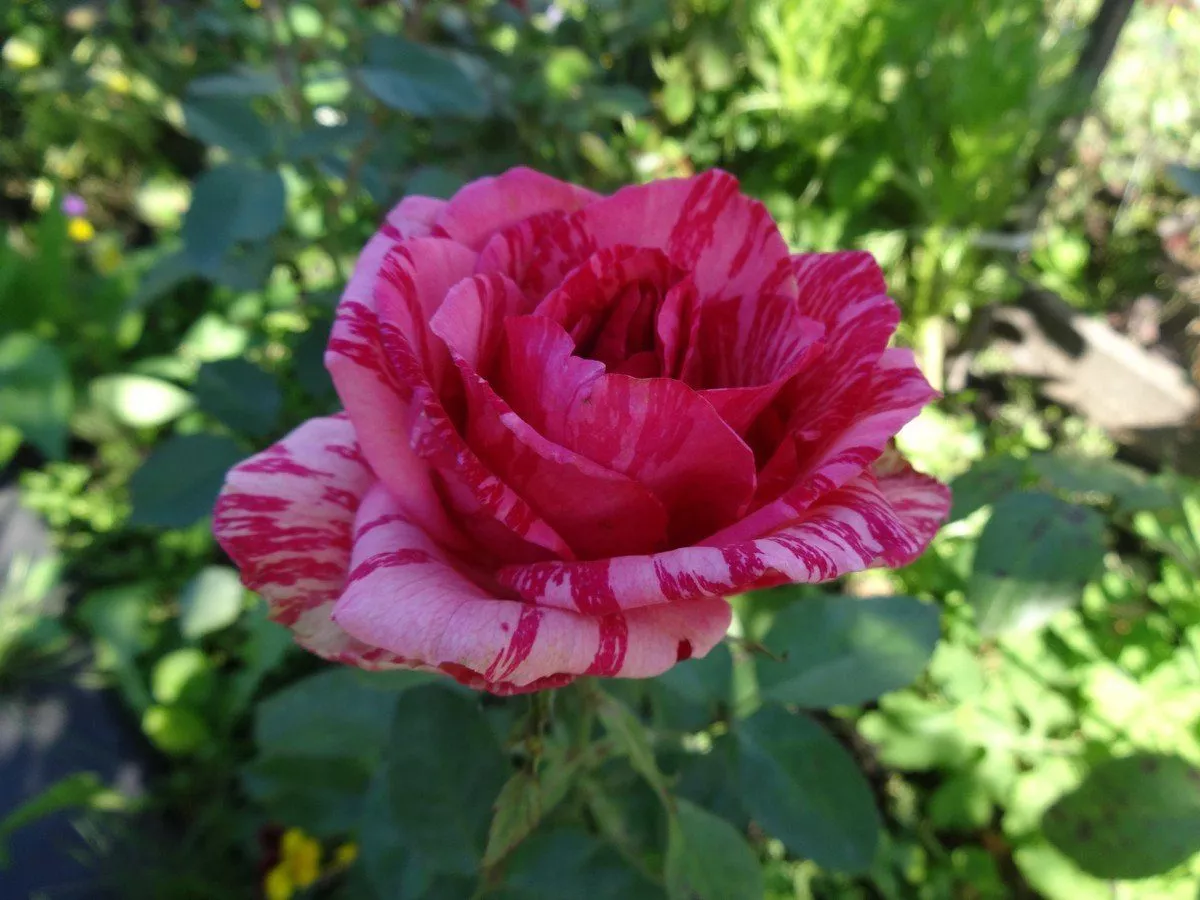
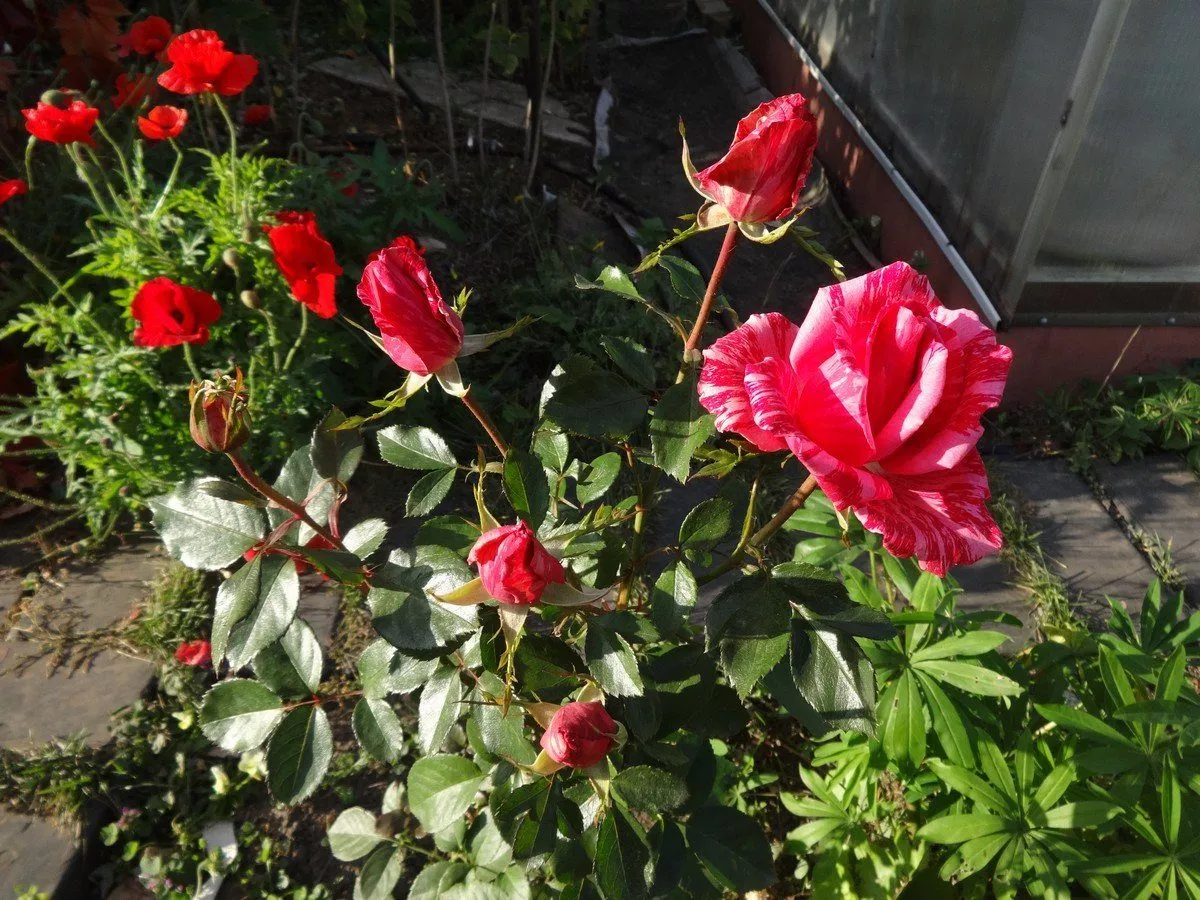
When the rose formed its first bud, I was disappointed—it was pink. When it fully bloomed, it was a wonderful, marbled rose with pink petals and raspberry highlights. From pictures online, I determined it was a hybrid tea rose, the Pink Intuition variety.
In February of this year (2020), I bought a yellow hybrid tea rose, Ilios. I put the rose box in the cellar with the other roses. In mid-April, I took it out of the cellar, and all the roses survived the winter well.
I took a new yellow rose out of its box, and buds were starting to emerge from the branch. Its roots were wrapped in black plastic. Unwrapping the plastic, I discovered a layer of sawdust covering the roots. The main root had been cut off, and there were very few lateral roots, dark and dry. I transplanted the seedling into a separate pot, but after a while the branches turned black and the buds dried up. I didn't throw the rose away, but watered it, and soon new buds appeared from below.
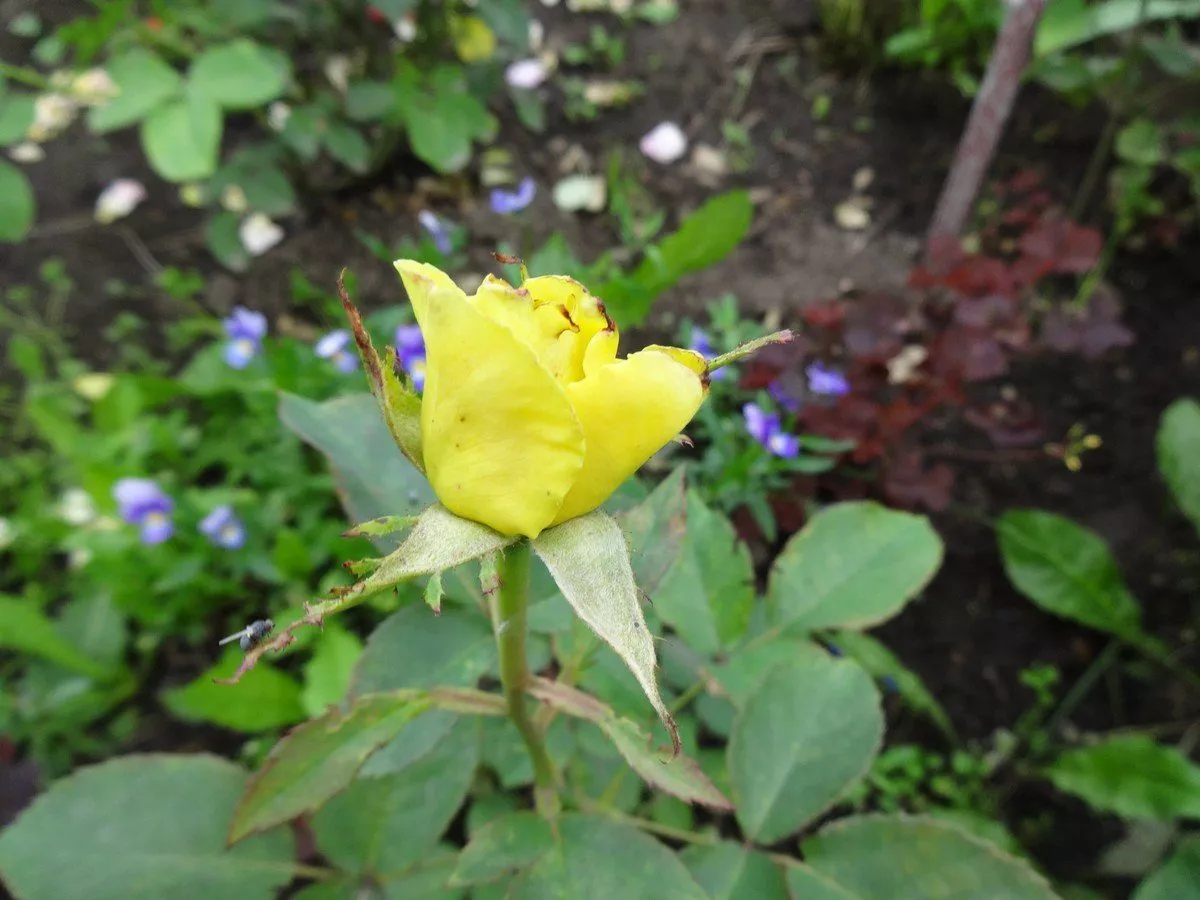
At the end of April, I transplanted it, like all the roses, into the flowerbed. In early June, it sent up new shoots, and by early August, a bright yellow rose had blossomed on the weak bush.
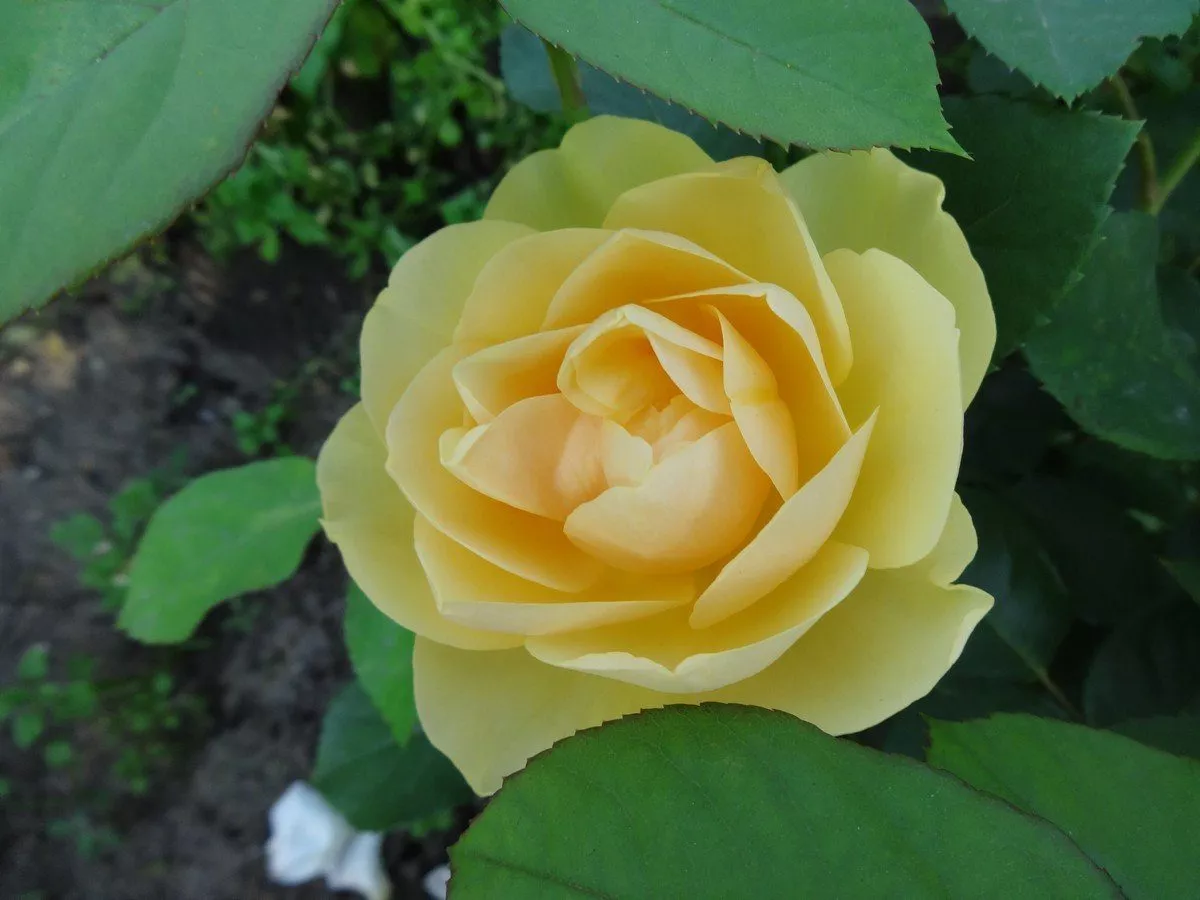
In May, I also bought another yellow Dutch rose, the Bogamy variety. The rose's root was also wrapped in a dark plastic bag. But unlike the first rose, the bag contained loose, nutritious soil, the central root was strong and healthy, and the lateral roots were light and vibrant. This rose took root quickly and bloomed all summer.
To ensure abundant blooming of roses, I add well-rotted humus, ash, and a little azophoska to the hole in the spring, or I buy special fertilizer for roses from garden stores.
In summer, I periodically feed the plants with phosphorus-potassium fertilizers, add wood ash under the bushes, water them, and trim off faded buds.
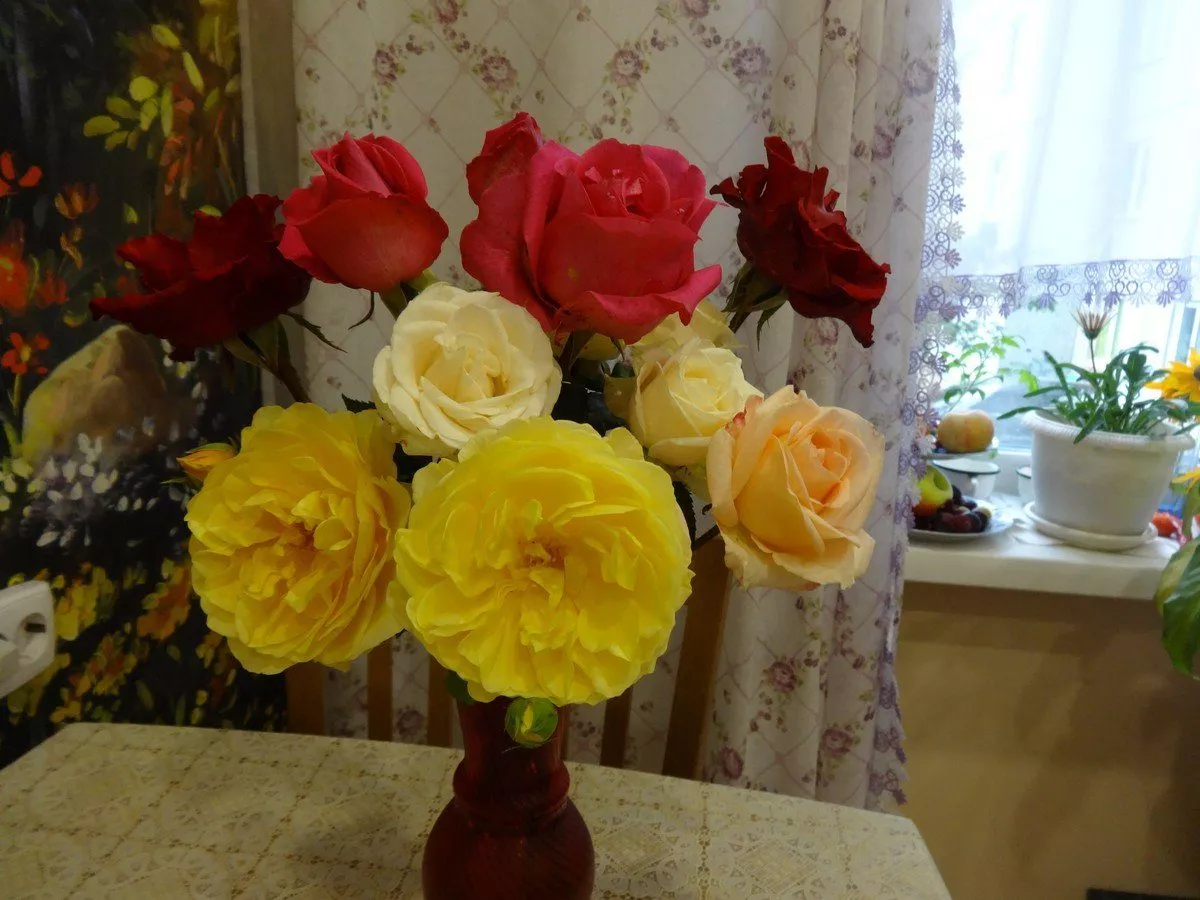
If aphids or small caterpillars appear on the buds, nibbling at the leaves, I spray them with Fitoverm or Biotlin. And they bloom until the first frost. I picked this bouquet on September 28th. The roses bloomed just in time for my birthday.
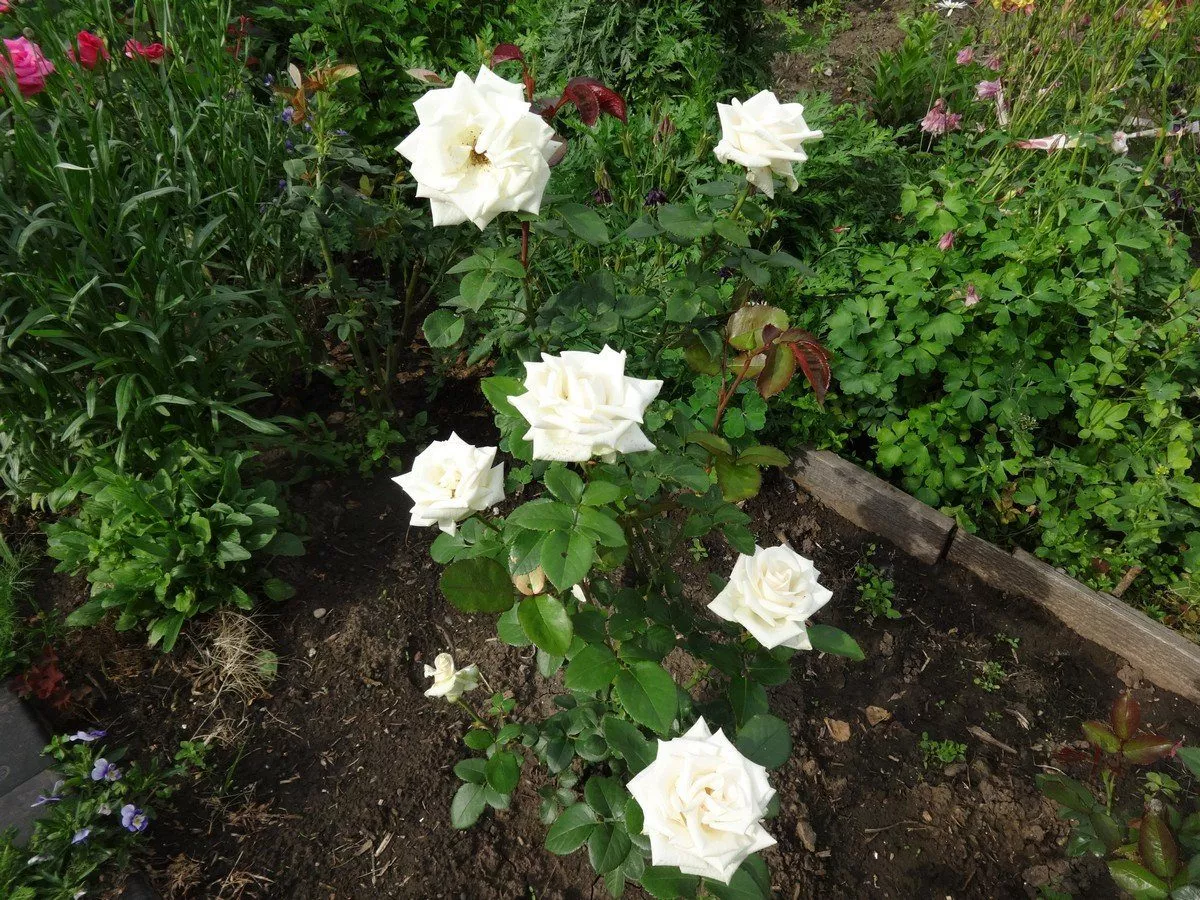
Now I have 10 rose bushes - one white:
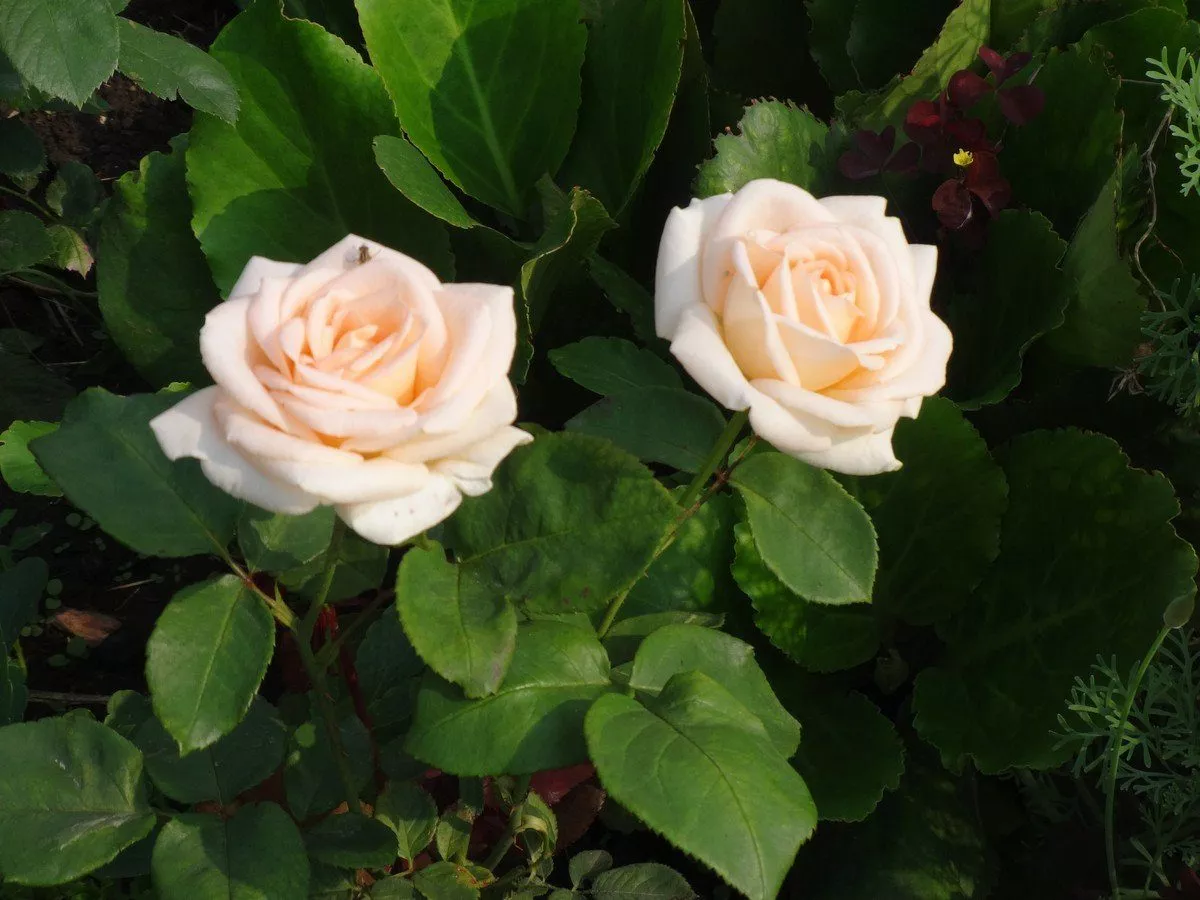
One beige:
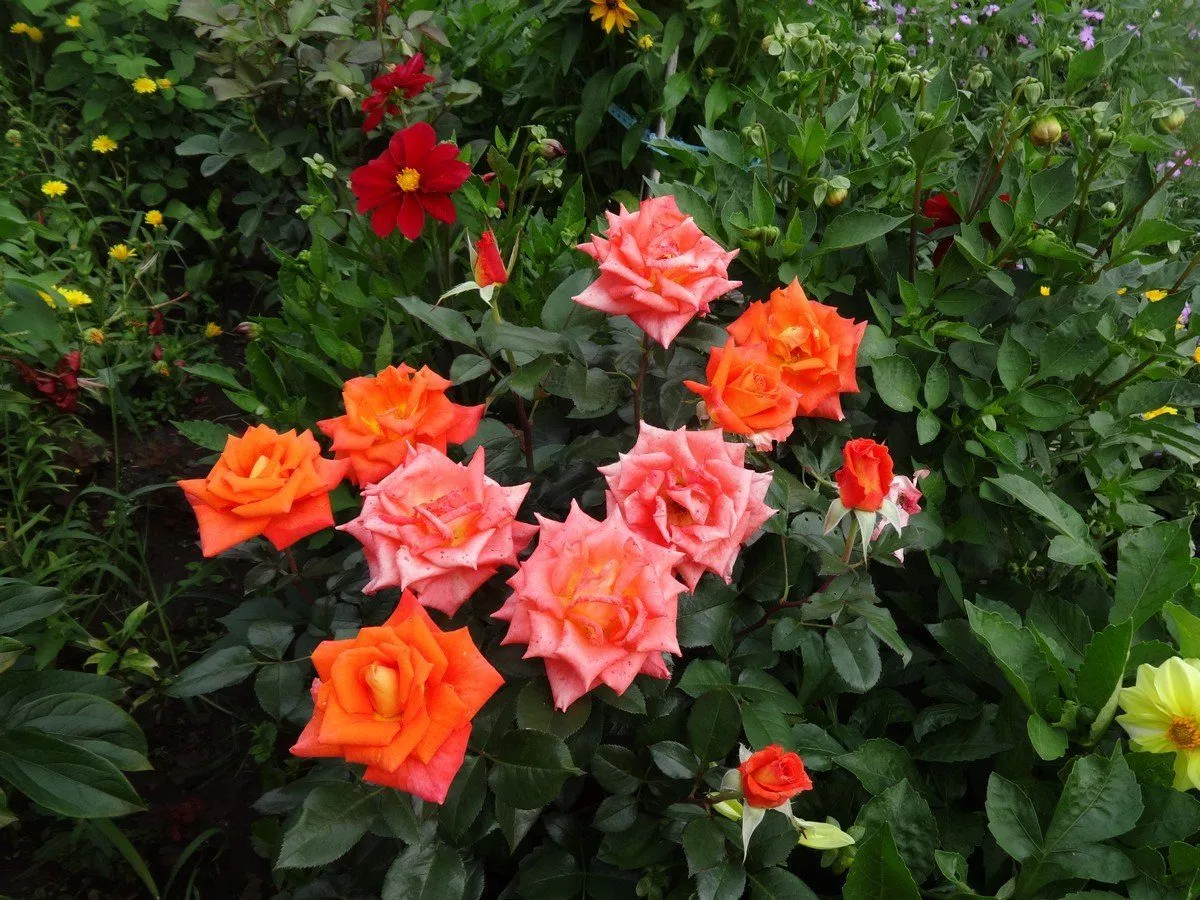
One orange:
One variegated pink-raspberry color:
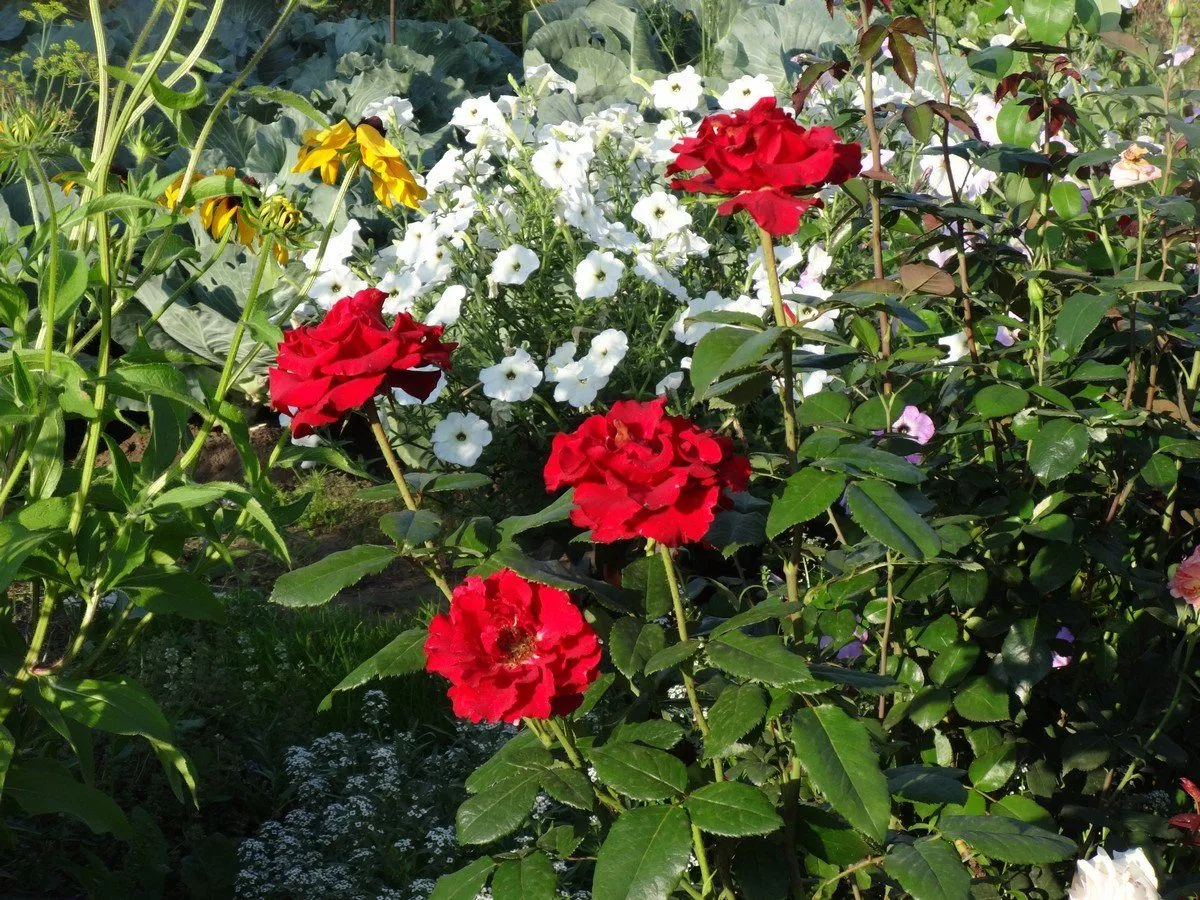
One red:
Two yellow ones:
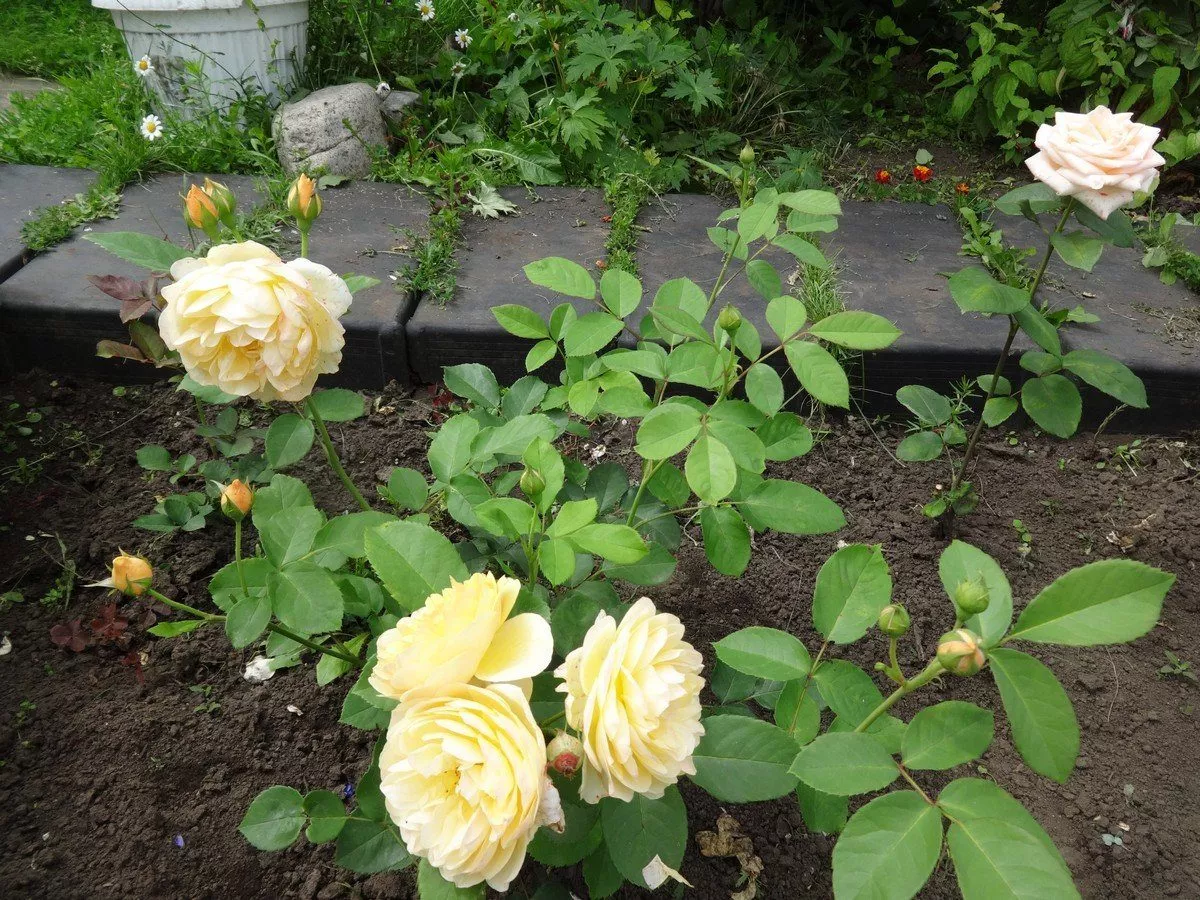
Three pink ones:
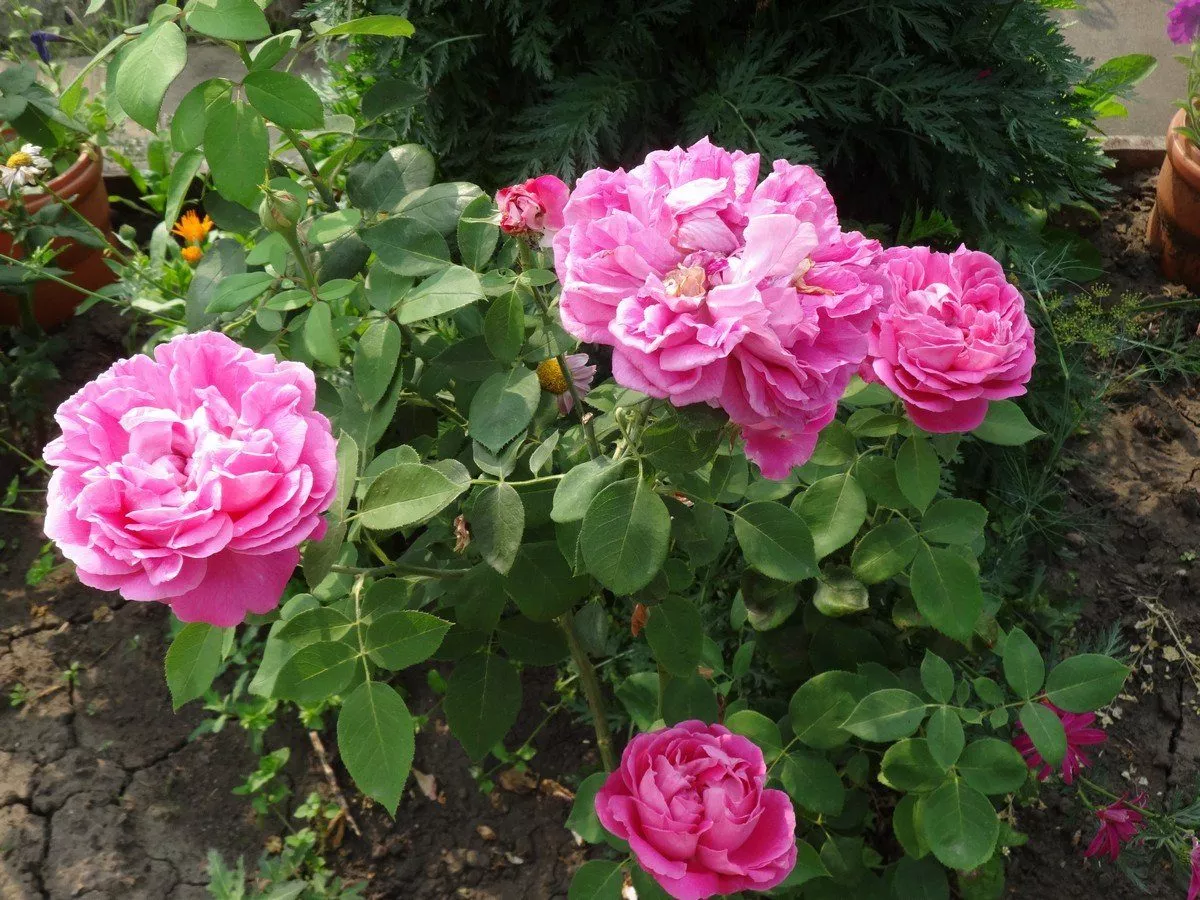
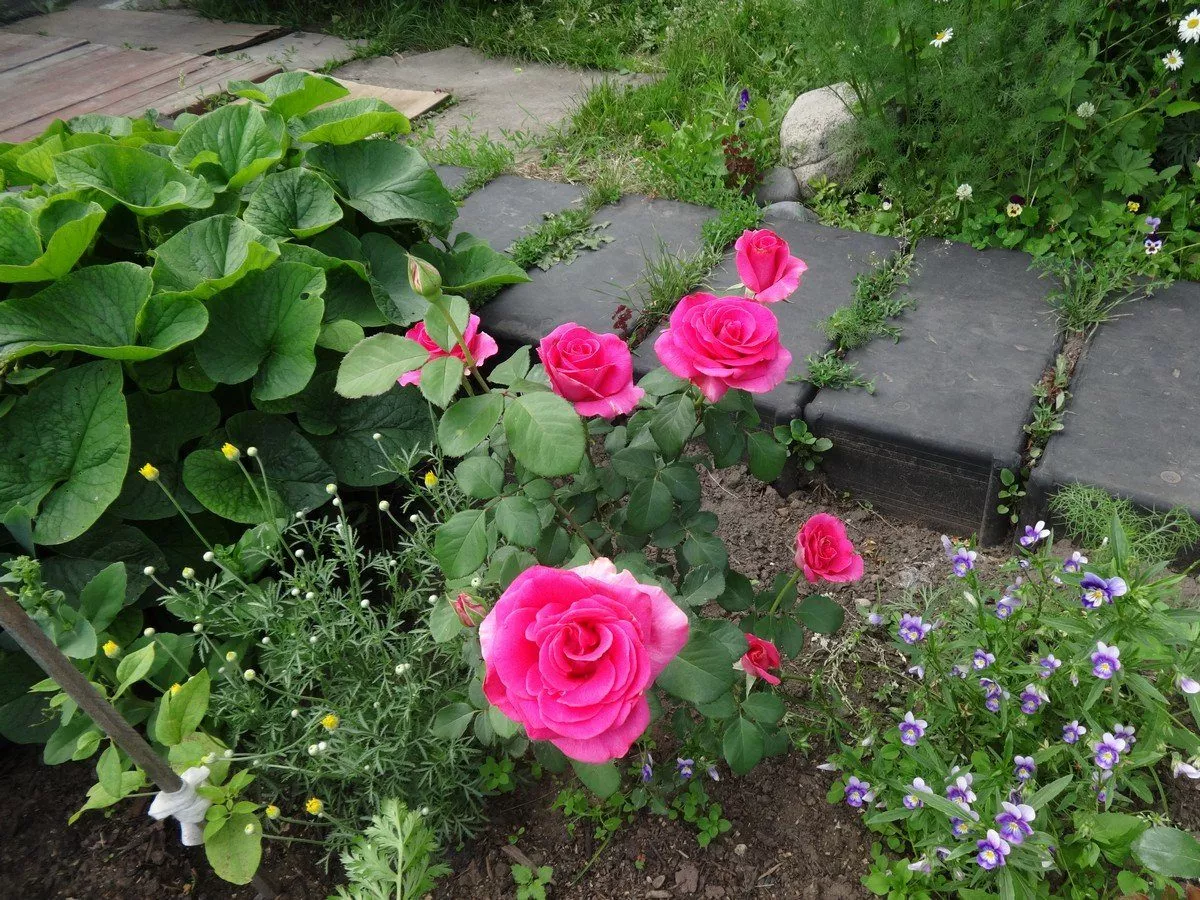
Now I dream of a dark burgundy rose.
Beautiful roses! But so much work! Why don't they overwinter under cover?
At our dachas, they don't overwinter; they freeze under cover, perhaps because there's little snow and the soil freezes deeply. Although there are varieties that overwinter without cover, such as the rugosa rose or the rugosa rose. But it's not at all difficult for me to dig up the bushes and store them in the cellar over the winter. That way, I'll be sure the roses won't die and will bloom all summer.