

I already wrote, What is Kombucha? And how it benefits the human body. Now, about the most important thing: how to grow it. In fact, there are countless recipes, but I'm only sharing those I've personally tried. Incidentally, after browsing the internet, I tried to master new kombucha recipes, but most of these recipes turned out to be completely useless—either fermentation doesn't occur, or the taste is disgusting...
Preparatory activities
You know, I like to do everything in advance, having everything prepared. I do the same with kombucha. First, I thoroughly wash the 3-liter jars. I always use dishwashing liquid, rinse them thoroughly under running water, and then pour boiling water over them.
Let me explain why this is necessary—to prevent unwanted bacteria from remaining inside the container, which would ruin the entire tea kvass. I also scald other items—the strainer, the funnel, the spoon…
Cooking process with fermented mushroom
If you're lucky enough to have a kombucha cutting, growing it will be quick. But you need to know how to make the starter. I'll tell you, based on years of experience:
- Boil 3 liters of water.
- Add 300g of black tea. I always use loose leaf tea. Firstly, I can see what I'm adding, and secondly, it's easier to strain (no need to line the strainer with cheesecloth).
- Add sugar. I use 90 to 180 grams per 3 liters of water. It's up to you—the more you add, the sweeter the kvass will be, and the better the fermentation. Dissolve the sugar very well, as any sugar particles should never come into contact with the mushroom's body (it could die).
- Let it steep until it cools, strain and pour into a 3-liter jar.
- Place the shoot.
- Cover with clean gauze. I usually fold it in four layers – this way, even the smallest gnats won't get inside.
- Attach a rubber band to the neck of the jar to prevent the gauze from slipping. Never cover the jar with a lid, as the mushroom is a living organism and needs to breathe.
It should look like this, as in my photo:
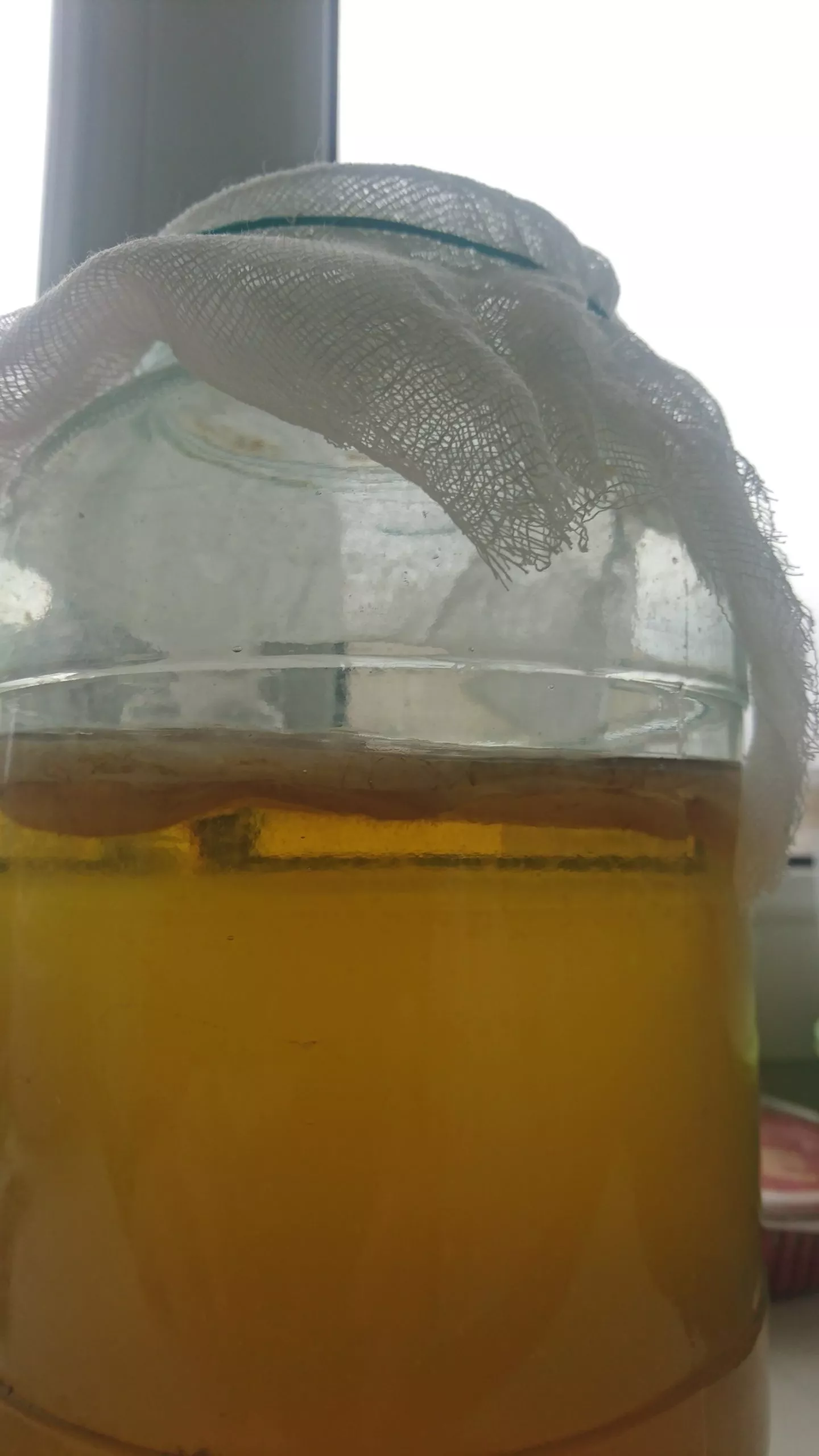
Next, I place our starter on the windowsill, preferably in the kitchen. The mushroom needs both light and warmth. The kvass will be fully ready in 1-2 weeks. The time depends on the amount of sugar and the growing conditions, which I've written about in detail.
Recipe with tea leaves
This recipe doesn't call for the use of mushroom shoots. It's not always easy to find neighbors or friends who grow kombucha. I had a situation when we moved to a new house and had to give our mushroom to a neighbor, as we were moving between regions, and lugging an open jar around with us, as they say, wouldn't be comme il faut.
I started searching for information on how to make kombucha without a sprout. There were tons of tips, but I only managed to pull it off on the sixth try (and that's with my experience growing this mushroom!!!).
I am pleased to share the most proven and accurate recipe:
- In this case, I prepare the jars in a special way: I wash them not with just detergent, but with baking soda, and then sterilize them. Basically, just pour boiling water into a dry container, cover with a lid (I use a seaming lid), and let them sit for 10 minutes.
Why exactly this way, you ask? Because this destroys unwanted bacteria that would otherwise interfere with fermentation and, in general, the development of fungi. - I boil one and a half liters of water in a saucepan. I add about 5 tablespoons (but no more) of tea. By the way, I've experimented with green tea, too; it turns out interesting. But I prefer either pure black tea or a mixture with green tea (I use 3 parts black tea, 1 part green tea).
- Separately, I boil 200 ml of water and add 5-7 tablespoons of sugar. I dissolve it thoroughly and pour it into the tea leaves.
- Now I strain everything and pour it into a 3-liter sterilized jar.
- As usual, cover with gauze, secure with a rubber band, and place in a dark place, not on a windowsill. It should be warm, with a minimum temperature of 24 to 25 degrees Celsius.
- I keep it like this for about 1-1.5 months (the duration also depends on the conditions).
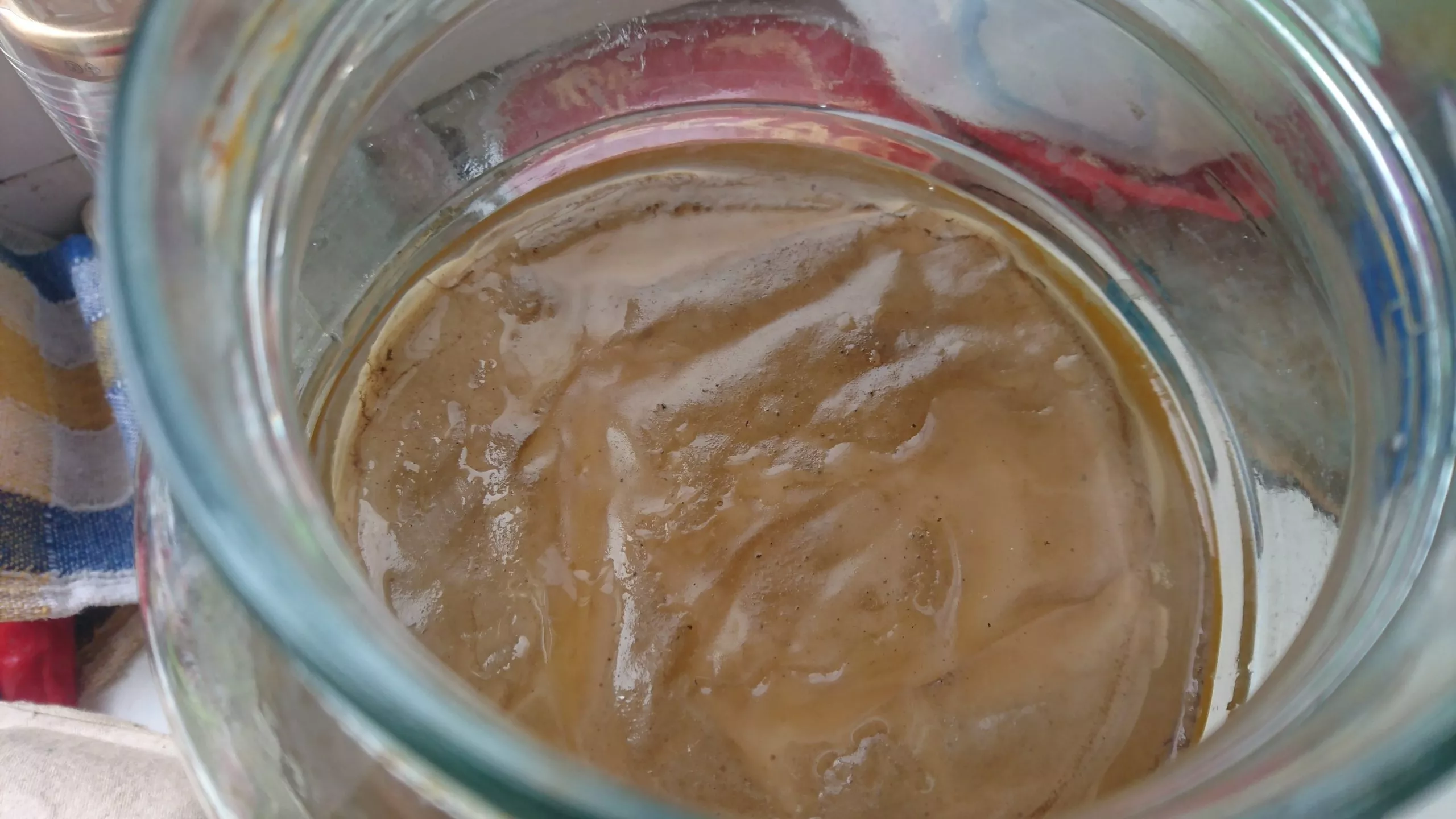
- After about a couple of weeks, you'll notice a vinegar smell coming from the container. Don't be alarmed; this is normal. There's no need to take any action. The smell will disappear once the medusomycete, a young fungus that appears as a light-colored film, forms.
- When the film thickens (you can feel it if you touch it with two fingers (the mushroom is between them)), remove it from the jar and rinse it in water. Tap water is fine, but only at room temperature. In summer, you can use it right under the tap; our tap water isn't cold at this time of year (and how we'd like it to be!!!).
- Now you need to place the jellyfish mushroom in a new and definitely clean jar, make another tea solution for one and a half liters and fill it to the top.
After this procedure, the mushroom will not float to the surface for approximately 4-7 days, and this is normal. Once it ripens, it will rise to the top and begin to actively grow.
The best herbal kombucha recipes
I use this recipe most often in the spring or fall, when vitamin deficiencies and exacerbations of chronic illnesses occur. Believe me, the effect is amazing. By the way, you can use any herbs, but I've personally found the best ones for my own health and taste. The key is to follow the correct dosage to avoid any harm.
How to do it – step by step, especially for you:
- Make a herbal mixture. I take equal parts raspberry or blackberry leaves, plantain, yarrow, nettle, birch, strawberry, tansy, coltsfoot and linden flowers.
- I brew about 2 teaspoons of the mixture in 2 liters of boiling water.
- I add 7 tablespoons of sugar.
- Then I proceed as in the previous case.
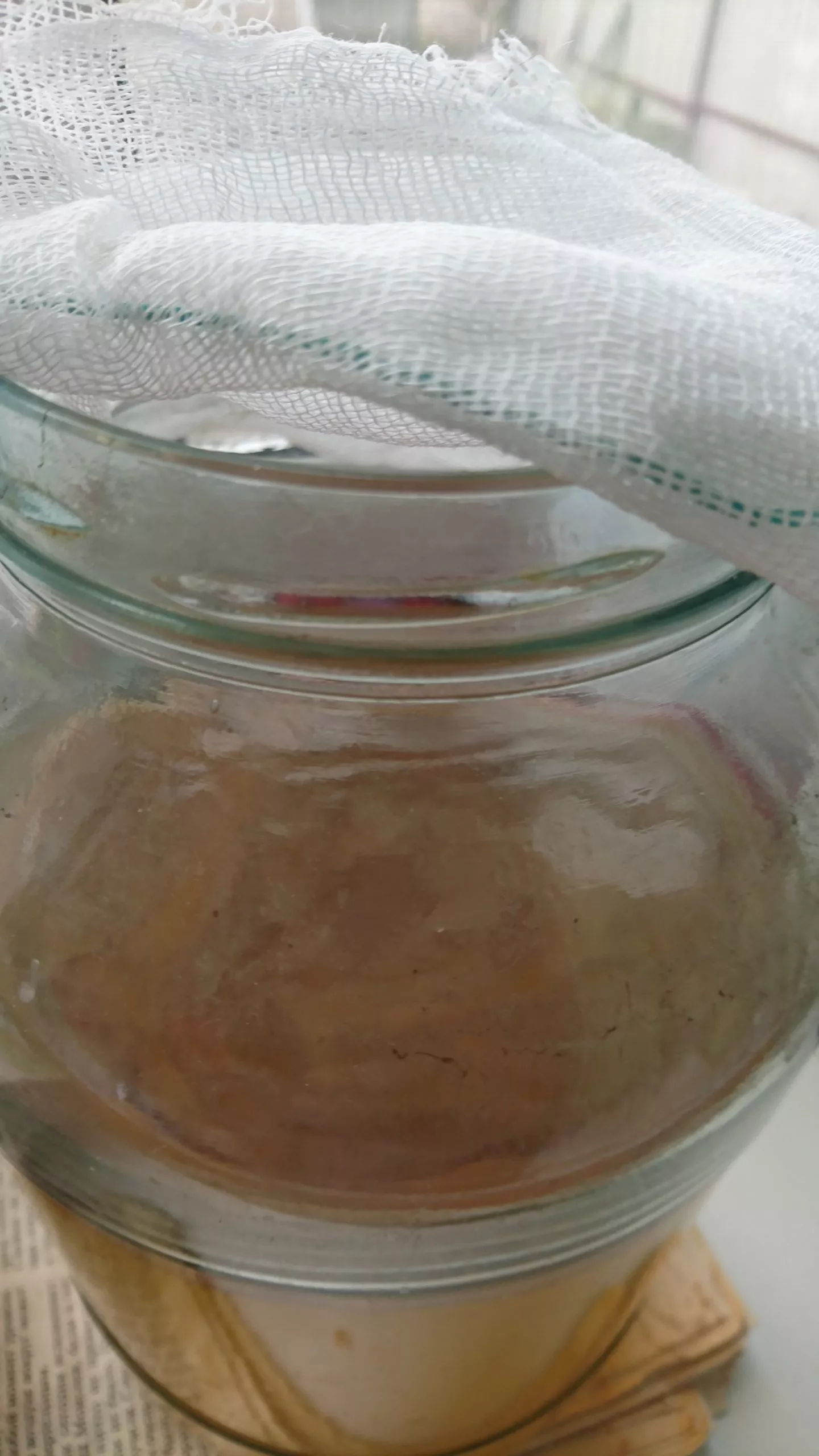
It's delicious and healthy! Just a word of caution: avoid ingredients that contain a lot of essential oils, as they can negatively affect the jellyfish fungus. This includes currants, sage, chamomile, and others.
I have a couple more recipes in store—one based on rosehip tincture and one with other additives, as well as interesting variations for flavor variety. Pay particular attention to the growing conditions and guidelines. I know from personal experience, even when I first started making kombucha myself, what problems arise (many of which lead to the death of the mushroom or poisoning).