

Happy winter to you, flower growers, gardeners, and summer residents!
It's a gray, cold day today. It's been snowing since morning, fine as sand. There's also a strong wind blowing, and it's possible it's breaking up the snowflakes and turning them into fine white grains. I love it when big, fluffy snowflakes fall, the kind you can use to make snowmen.

Winter is not the best time for violets.
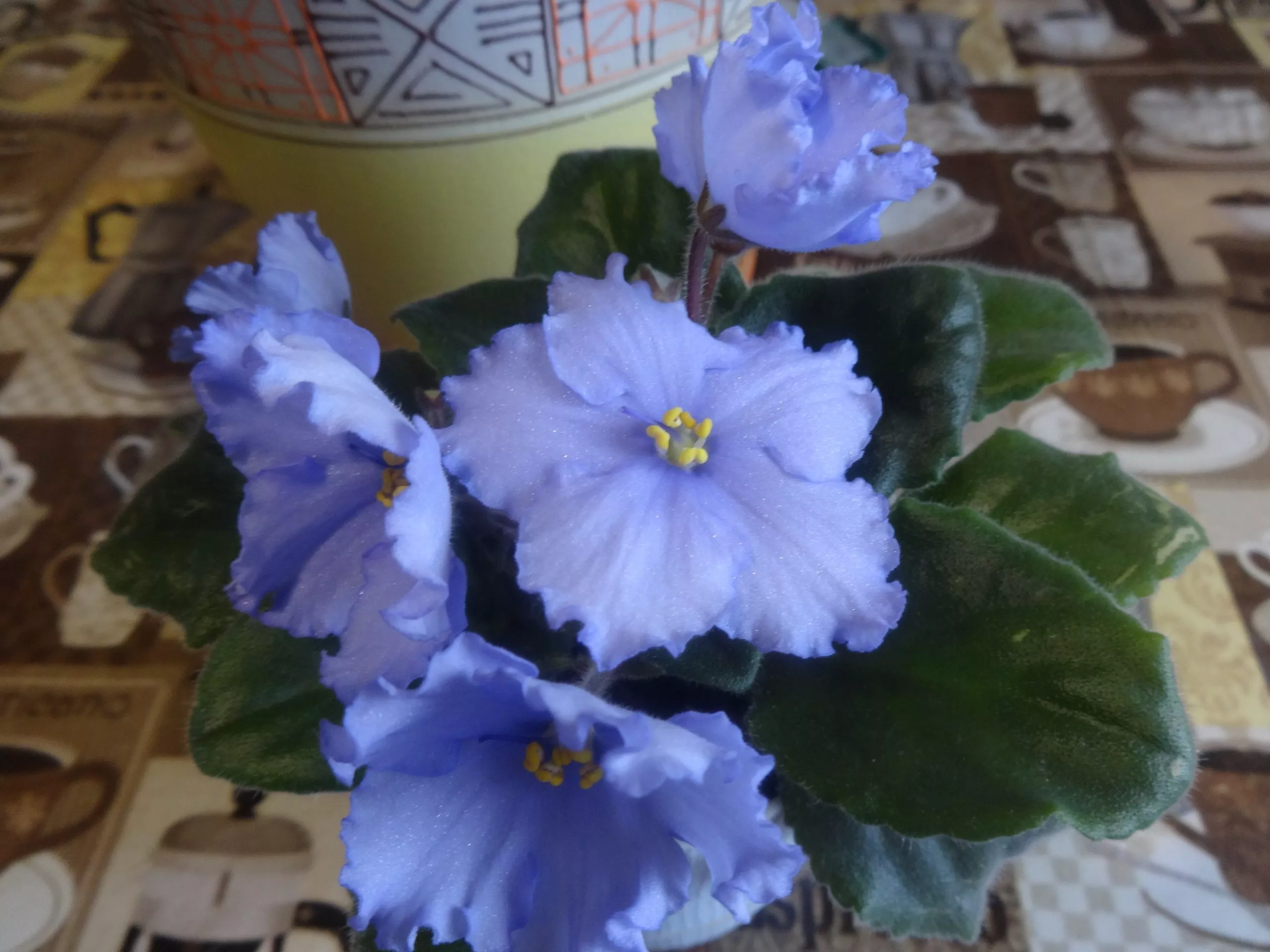
They suffer from icy air from the window when they have to ventilate the rooms, from cold glass and windowsills, and from hot air from heating batteries.
To prevent the leaves from touching the cold glass, you can cover part of the glass with protective film, cardboard, foil, or wall or floor insulation during cold weather. I covered the lower part of the window with old terry towels.
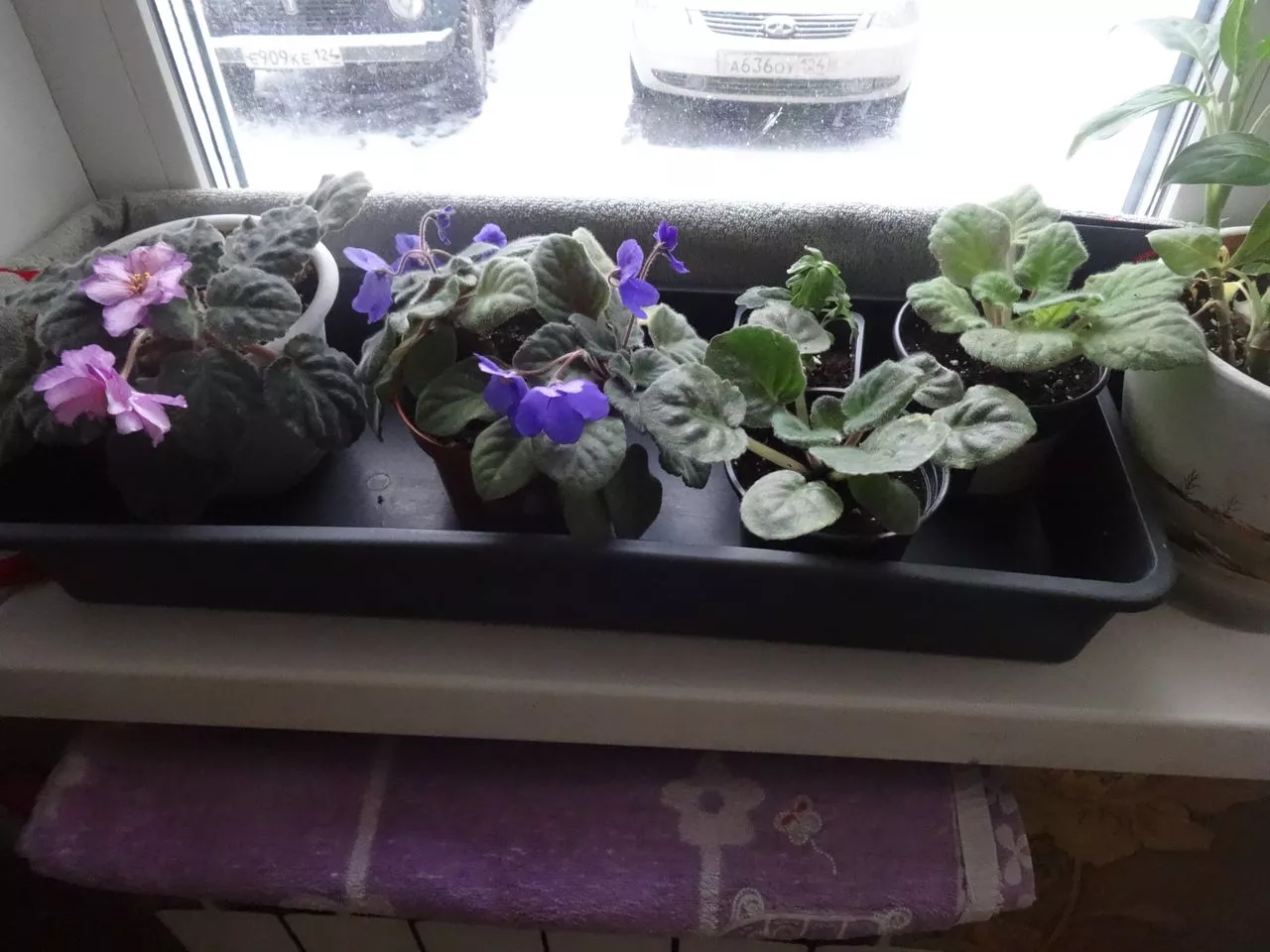
Place some foam under the pots; it will protect the flowers not only from the cold windowsill, but also from the hot air flow from the radiators.
You can place the pots in deep trays, and line the trays with covering material, old terry towels, or a warm scarf. Of course, the material should be removed during watering.
I wrapped the pots in a scarf.
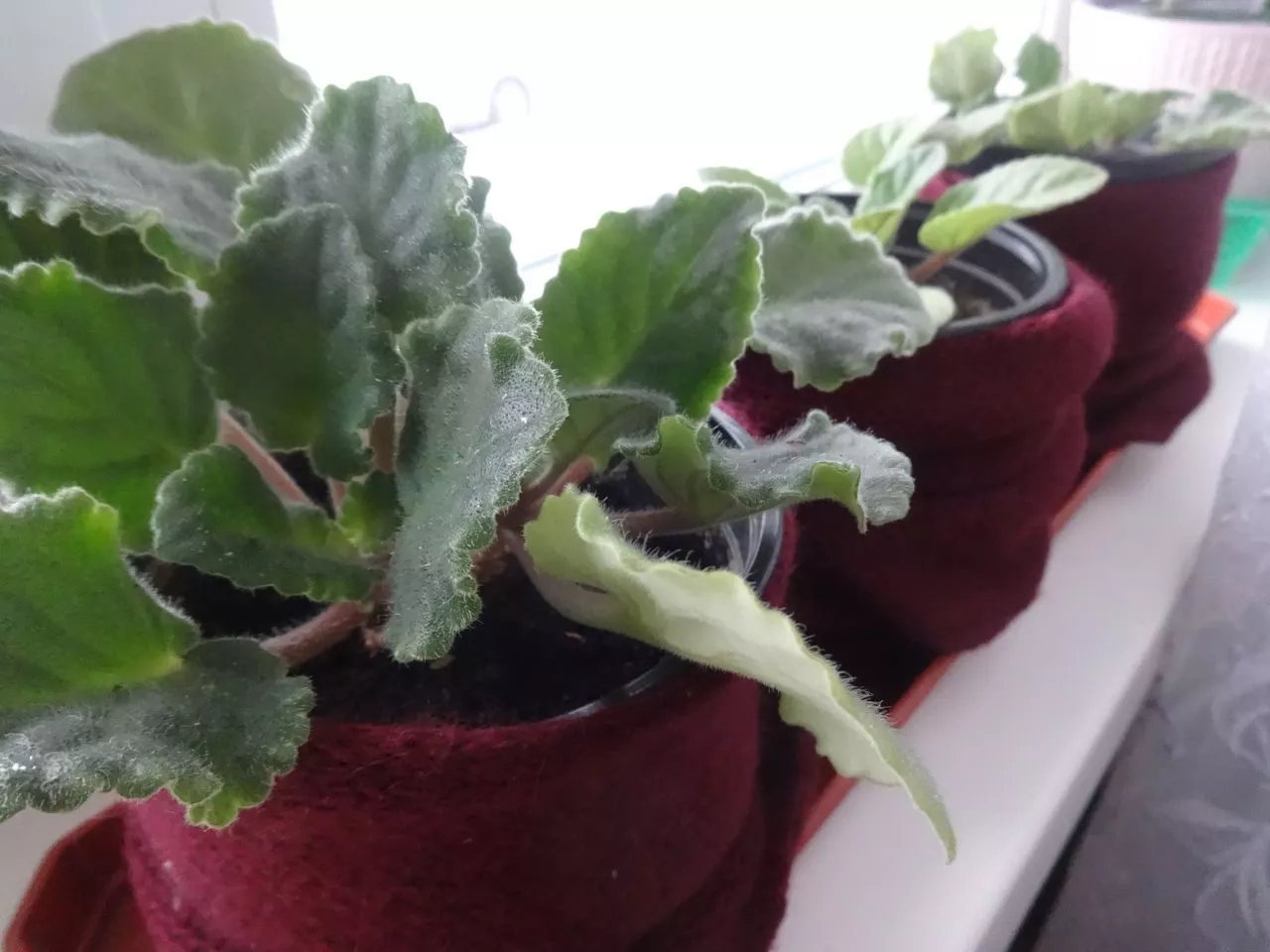
What can happen if the soil gets too cold? Cold, wet soil promotes the development of fungal diseases and root rot. In winter, reduce water usage during watering, watering only when the soil in the pot is completely dry. Don't overwater the soil; a shallow watering is sufficient. The water should be slightly warmer than room temperature, diluted with hot water from a kettle.
Hot air from radiators and extremely dry air in the apartment are also unfavorable for violets. In winter, humidity levels need to be increased. A humidifier works well for this purpose. I don't have one, so I simply cover the radiators with a wet towel, place containers of water near the flowers, and ventilate the apartment more frequently.
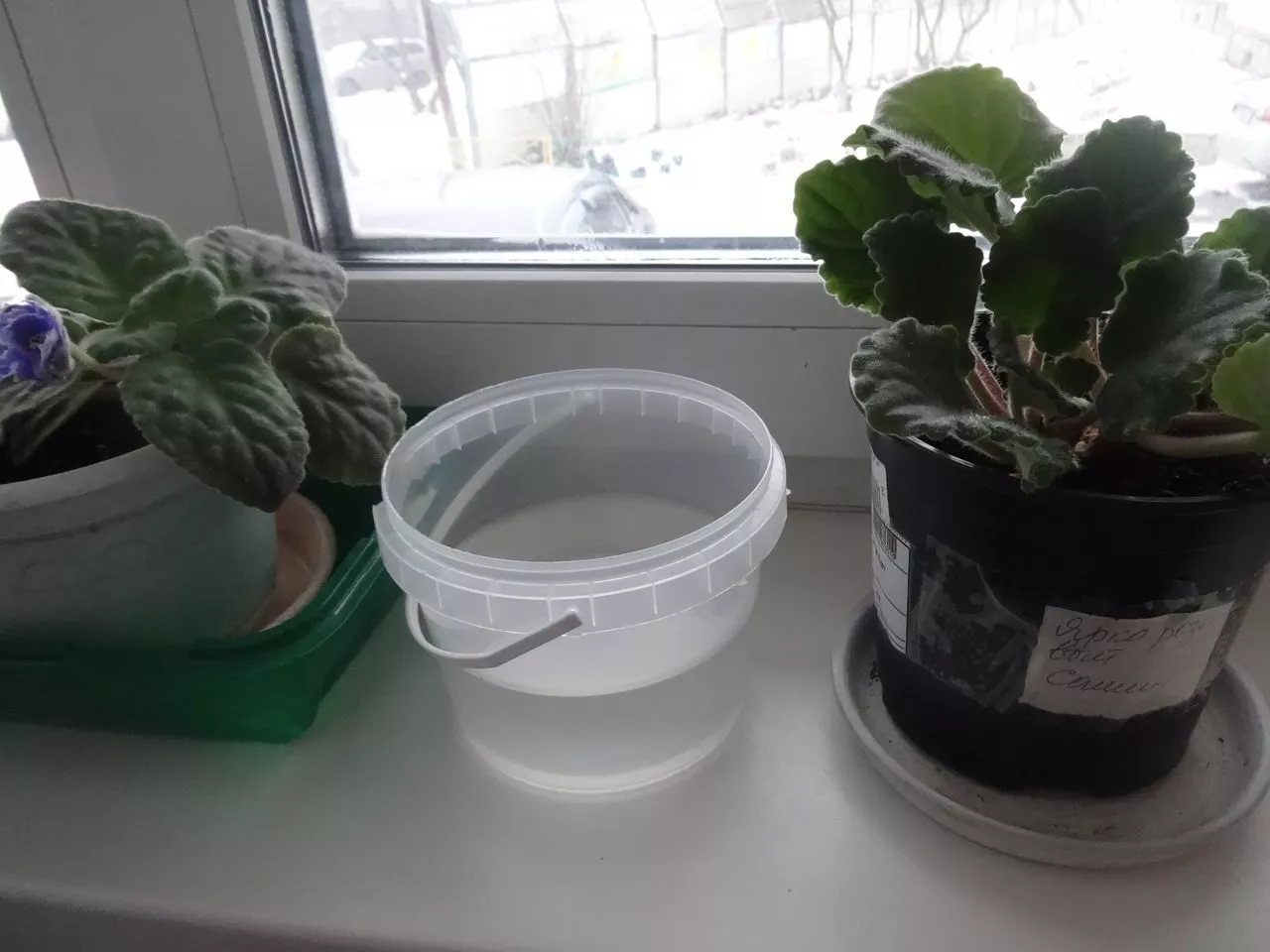
When airing the room, violets can freeze, so it is better to cover the flowers with covering material or remove them from the window for a while.
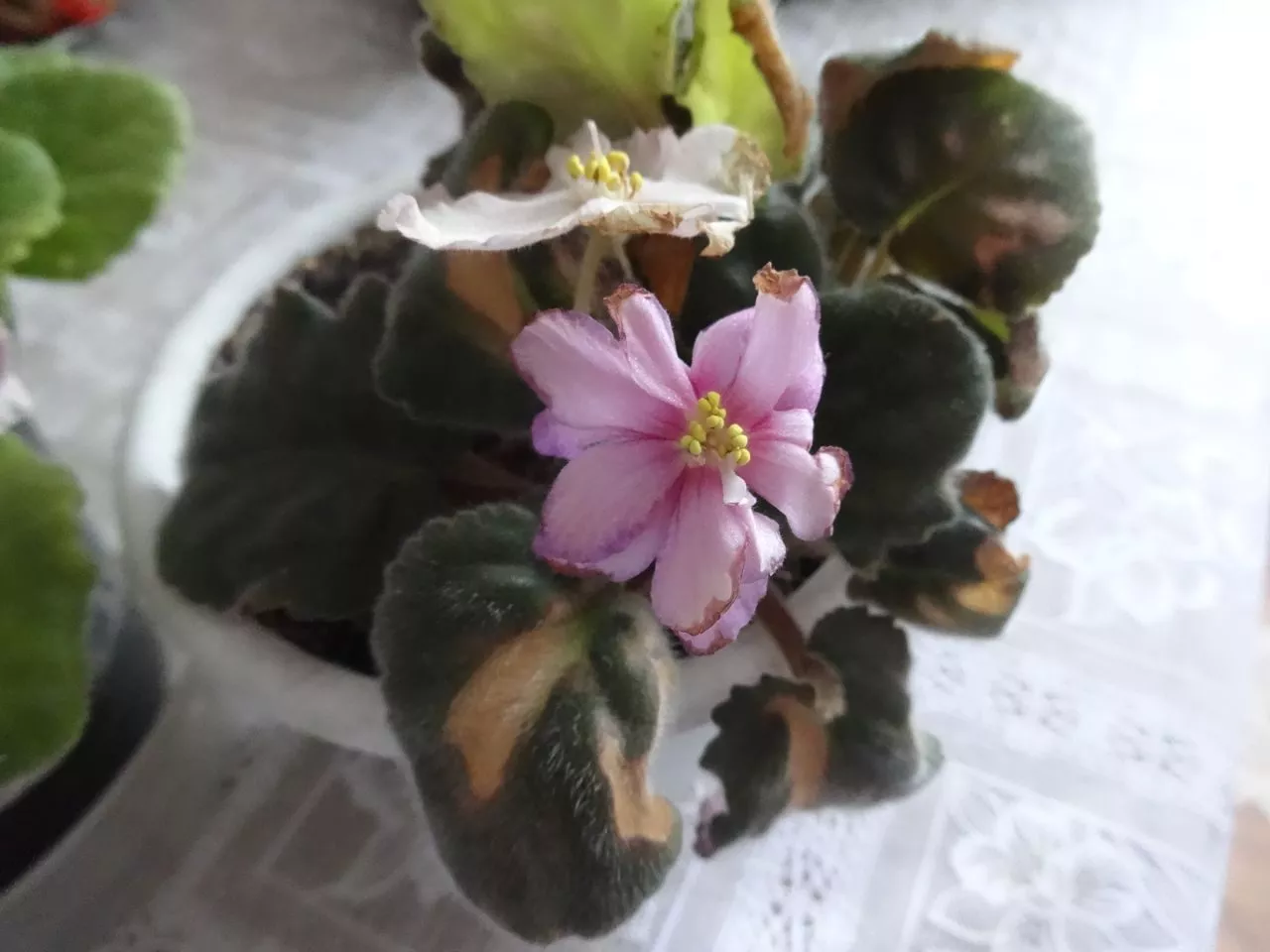
Of course, these procedures are a bit of a hassle, but there's nothing you won't do to ensure your beloved flowers grow well, are healthy, and bloom. Flowers are like children; they need to be loved and cared for.
During the winter months, I continue to fertilize, but less frequently – once a month.
In winter, daylight hours shorten, creating a problem called insufficient lighting. Additional lamps and lights can be added. Whether violets will bloom in winter depends on lighting; if daylight hours are extended, the flower will produce flower stalks and delight with winter blooms.
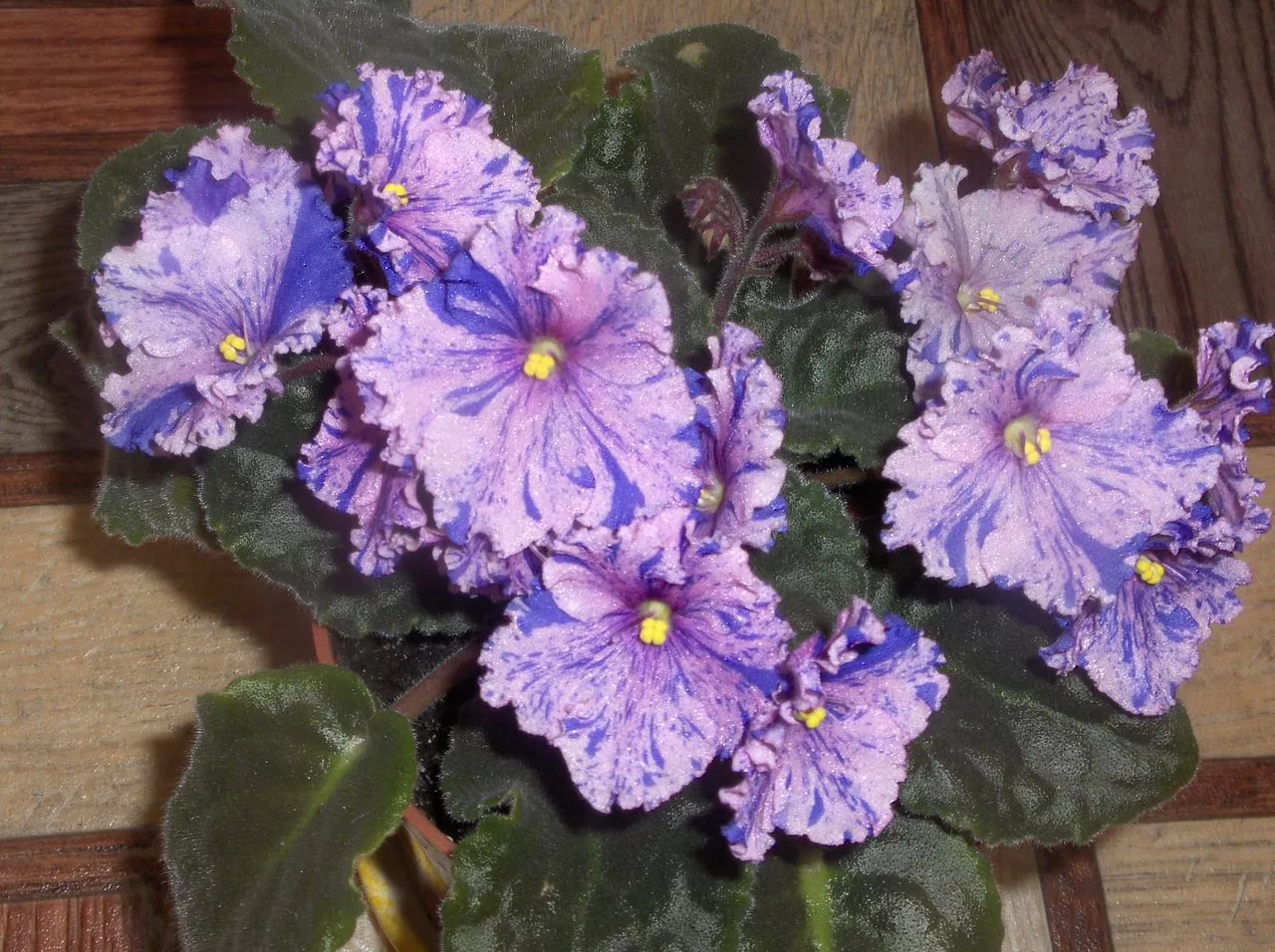
My violets sit on the windowsills, and in winter I don't turn on supplemental lighting. But as spring approaches, my flowers give way to seedlings, so I move them to a shelf and turn on fluorescent lights.
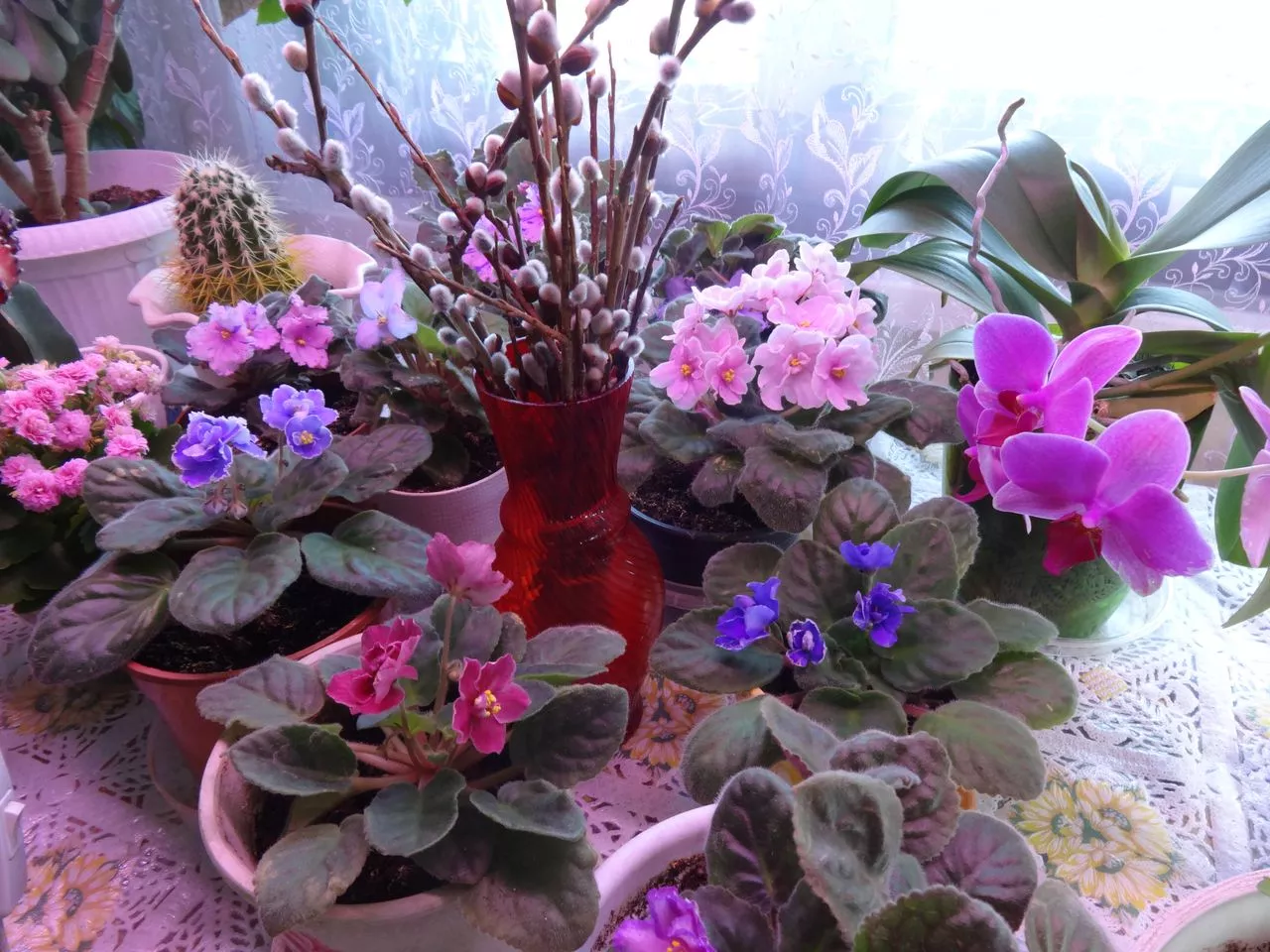
Violets begin blooming in March and continue to bloom until November. Let them take a break from blooming during the winter, gather strength, and in the spring, they'll send out numerous flower stalks and delight you with a lush display of blooms.