

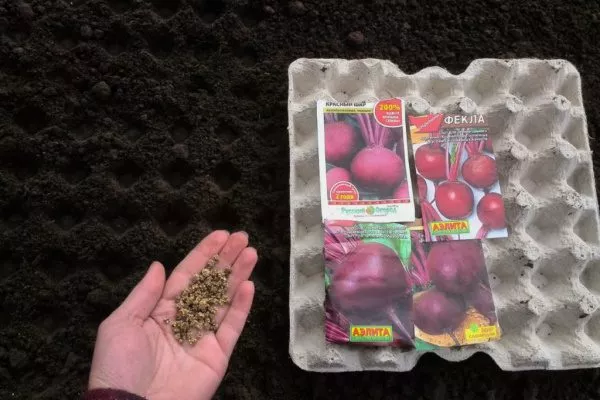
 My beets in my garden are my pride and joy (as are other crops)! Because I always adhere to all agricultural practices.
I pay special attention to timing, site selection, and, most importantly, the processing of the planting material. I recommend paying attention to all these factors.
Planting dates
Beets are a heat-loving plant that doesn't tolerate severe frosts. However, some varieties are planted in the fall, before the cold weather sets in. Early varieties are sown first, mid-season varieties second, and late varieties third.
The air temperature should not fall below 15 to 16 degrees Celsius, and the soil temperature should not fall below 6 to 10 degrees Celsius. Therefore, always consider the weather conditions. The region is also an important factor.
Planting times based on climatic conditions:
- from mid-March to April 20th – in the Southern latitudes;
- from May 1 to May 20 – in the Central Belt;
- after May 15-20 – in the Northern regions.
To accurately calculate the planting date, consider the technical maturity of the vegetable. Early-ripening varieties mature in 60 to 80 days, mid-season varieties in 80 to 120 days, and late varieties in over 120 days.
Pre-sowing activities
To obtain a high-quality and high-yield harvest, it is necessary to comply not only with agricultural practices, but also with pre-sowing preparation requirements.
Choosing a location
Beets thrive in sunny areas with nutritious, loose soil. The vegetable prefers loam, sandy loam, and peat soil. The beds should be spacious, meaning space between plants should be maintained.
Beets can be planted in a border or sown in a separate plot. The area should be well-drained, as they require plenty of moisture, but avoid standing water. Crop rotation rules are essential:
- The best predecessors are garlic, potatoes, cucumbers, peas, pumpkin, beans, and onions.
- It is acceptable to plant after peppers, zucchini, greens, radishes, tomatoes, and horseradish.
- You cannot sow seeds if the following crops grew in the garden bed last year: carrots, cabbage, celery.
Beets do not tolerate being planted in the same place every year, so at least 3 years must pass between plantings.
Seed treatment
To ensure quick germination, seeds require some preparation. Here's what you need to do (at least, this is what I do):
- Perform a culling process to remove any damaged or hollow parts. To do this, soak the beans in water for 15 minutes; the empty parts will float to the surface.
- Next, dry the seeds and place them in a cloth bag. Now they need to be heated. This can be done in two ways: by placing them near a heating element for 5 days or on a baking sheet in the oven for 2-3 hours (temperature maximum 60 degrees Celsius).
- To disinfect, which will kill pathogens and prevent further disease, soak the planting material in a weak solution of potassium permanganate (1%). Leave for 20-25 minutes, then rinse under boiled water.
- To enrich the water with nutrients, use a micronutrient solution. To do this, add 0.5 teaspoons of baking soda, zinc sulfate, and the same amount of potassium permanganate to 1 liter of water.
Add a knife-sized amount of boric acid and copper sulfate, 4-5 crystals each of ammonium molybdate and potassium iodide. If these ingredients are unavailable, use wood ash (1 tablespoon per 0.5 ml of water). Let it sit for about 24 hours. - To germinate, soak the seeds in warm water for 2 days, but replace the water with fresh water every 10 hours.
Preparing the soil in autumn and spring
To increase soil fertility and beet yield, the soil is prepared in two stages.
Autumn events:
- clear the beds of vegetation and dig to the depth of a shovel blade;
- add some organic fertilizer – compost or manure;
- if the soil is highly acidic, sprinkle with slaked lime (0.7-1 kg per 1 sq. m);
- Be sure to treat with minerals - 250-300 g of superphosphate or potassium sulfate per 1 sq. m;
- If the soil is poor, additionally enrich the soil with wood ash, dolomite flour or crushed eggshells.
Spring preparation includes the following actions:
- carry out a new digging;
- add sawdust or peat;
- additionally fertilize with a mixture of ammonium sulfate (25 g), ammonium nitrate (up to 20 g), potassium chloride (15 g), superphosphate (35 g) per 1 sq. m.
If your garden soil is very fertile, fertilizers can be applied sparingly, or not at all.
Sowing seeds in open ground in spring
After preparing the soil, it's time to create the beds. To do this, break up any clods of soil and level the soil with a rake. To prevent the risk of depressions forming due to soil settling, you can raise the beds by 8-10 cm.
Step-by-step instructions for planting seeds in open ground:
- Make rows 15 to 30 cm apart.
- Make holes 2 to 4 cm deep, depending on the variety and type of soil (10 to 20 cm between them).
- Moisten the furrows using a watering can with a spray nozzle (this will prevent the soil from being washed away).
- Spread the grains and cover with soil.
- Water the beds again.
That's the whole principle of planting. Sometimes I plant beets too. seedlingsBut only early varieties, to get the earliest possible harvest (I'll share a secret – you can make quite a good profit selling early vegetables).