

Lady cabbage is growing in the garden.
Be plump, be elastic, be crispy, be tasty.
So that fleas don’t gnaw at you, so that hail doesn’t hit you,
So that it would be like on the cover, thick and beautiful.
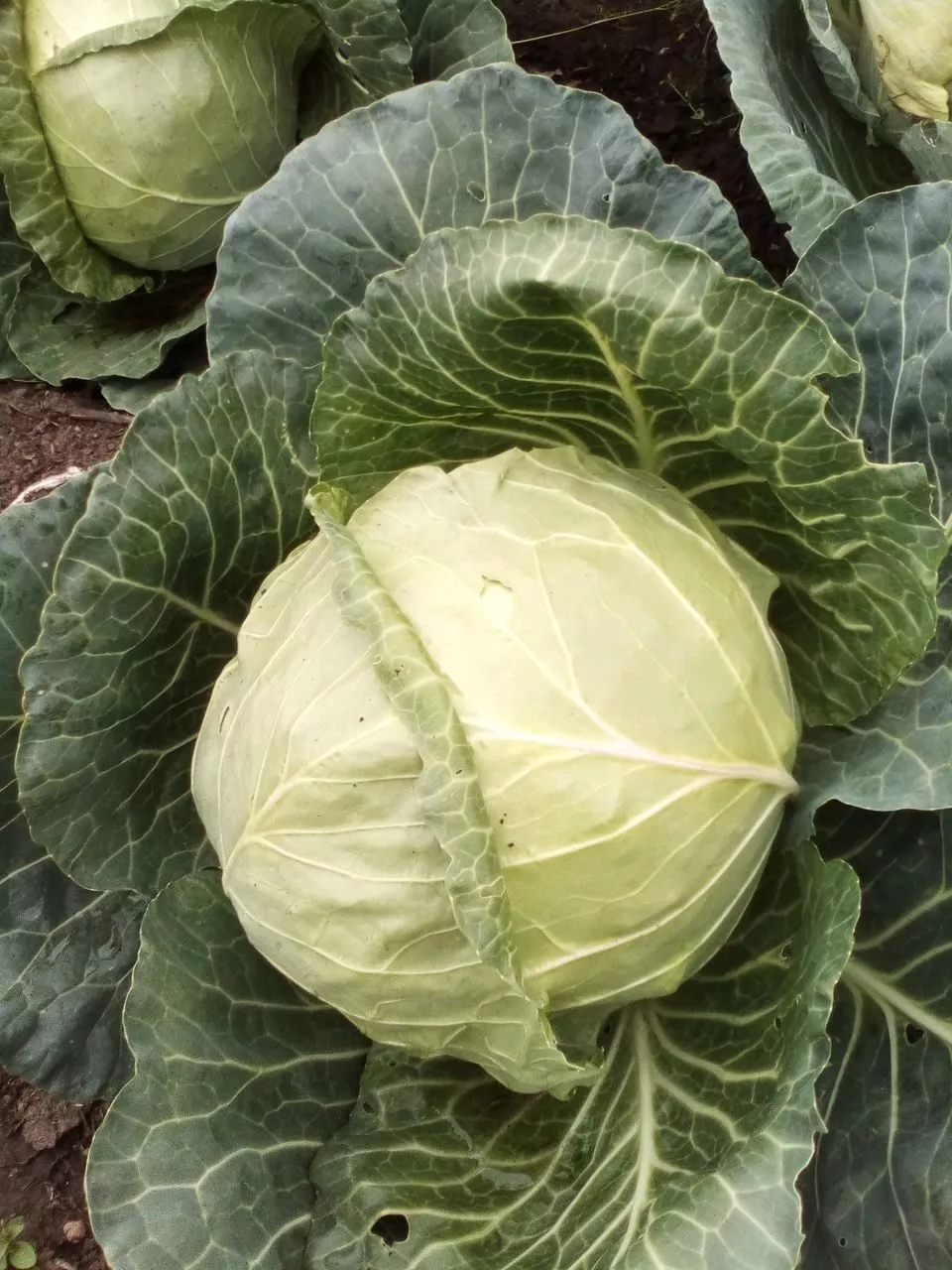
The most important vegetables in a Siberian garden are potatoes, cucumbers, carrots, beets, zucchini, and cabbage. It's hard to imagine a garden without cabbage.
Gardeners plant early cabbage and harvest the fresh young heads in the summer. They plant late cabbage for storage and pickling. We also grow different varieties of white cabbage and other species. A little bit of everything.
Every time I plant cabbage seedlings, I say: "Don't be leggy, be pot-bellied, don't be hollow, be thick, don't be red, be tasty, don't be old, be young, don't be small, be big." I read this saying a long time ago in the newspaper for summer residents, Fazenda. We had such a newspaper in Krasnoyarsk, and maybe we still have it.
This year, we planted the seedlings late; spring just wouldn't come. The soil took a long time to dry out and was cold. I'm planting early cabbage separately from other varieties.
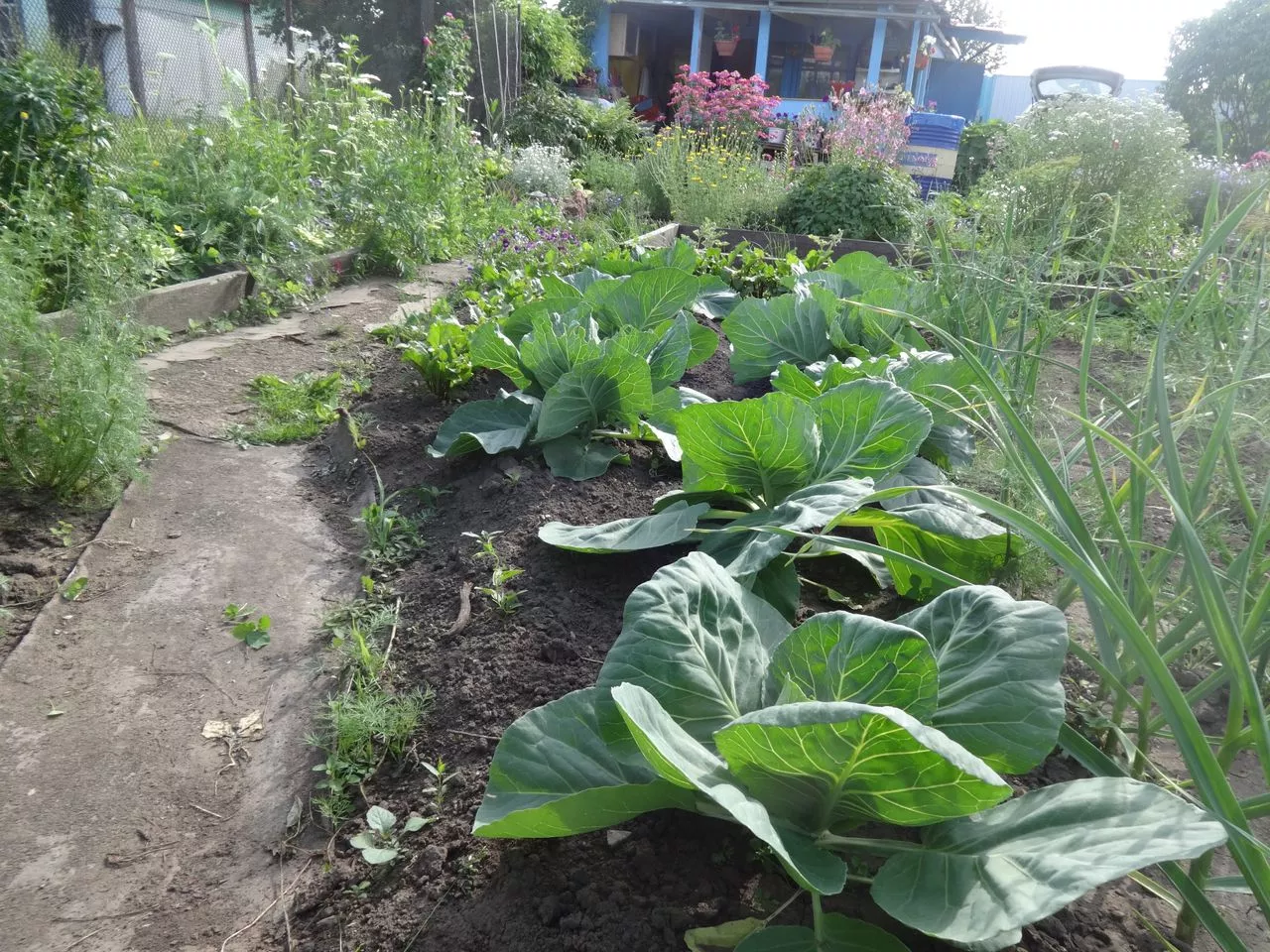
This year (2023), I planted the Gribovsky No. 1 variety. I usually planted the June variety. I have 10 early cabbages in total.
It's the beginning of July now, the cabbage is already starting to form.
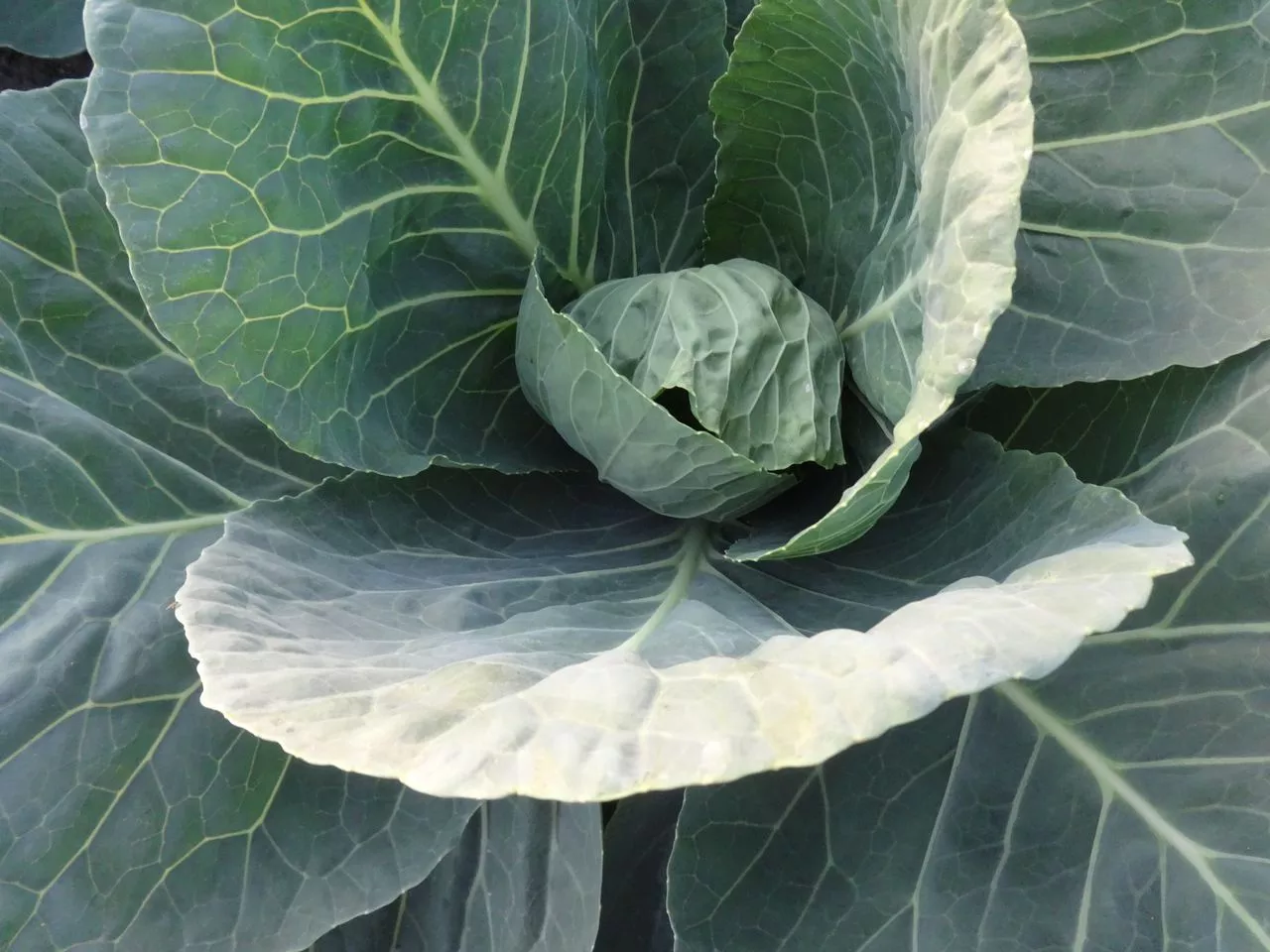
There are few pests in the cabbage beds this year. Perhaps the cold spring killed them off. But there are years when our cabbage is devoured by all sorts of insects: fleas, slugs, cabbage moths, cabbage white caterpillars, cutworms, aphids. And who knows what else.
This year, though, some pest nibbled at the stem of a healthy cabbage sprout, as if it had been cut with a blade. I dug around in the hole but couldn't find anything, so I think it was a cutworm. Later, similar damage occurred on a corn sprout, garlic, and zucchini. It was odd—the cut sprout wasn't in the hole, but some distance from the planting site. Surely a worm couldn't carry a fairly large seedling so far away from the hole?
I remembered the starlings stealing tomato seedlings and carrying them back to their nests when we lived in Kazakhstan. That's how they disinfected their birdhouses.
These unknown pests simply tore off or nibbled at the stems of the seedlings and dumped them nearby. Perhaps some birds or mice, or perhaps a gust of wind, carried away the broken sprout. It's unclear.
We also grow the Zimovka and Sibiryachka varieties—four rows. These are mid-late varieties for storage and pickling.
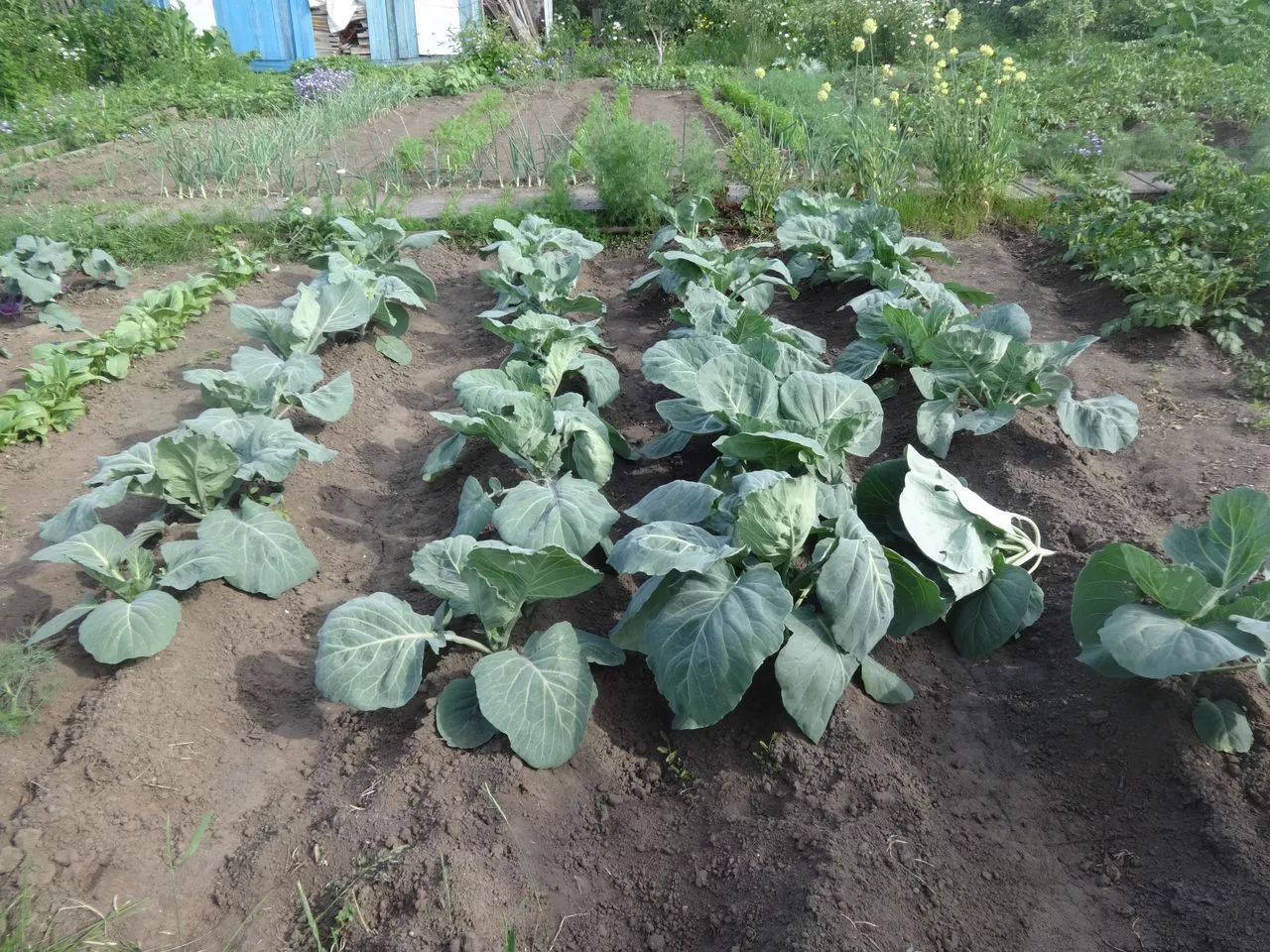
A row of Chinese Pak Choy is sown next to the white cabbage.
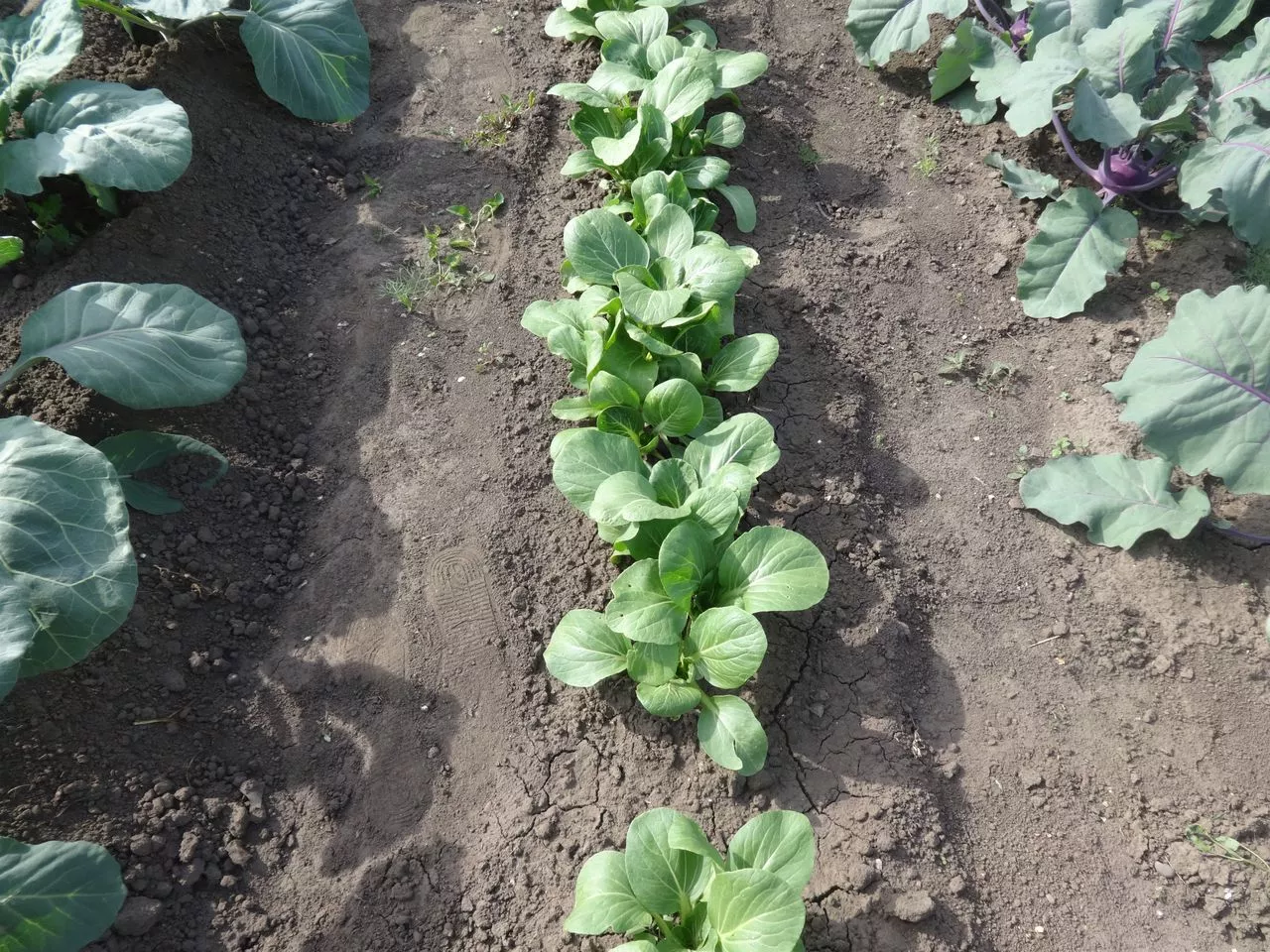
This is a leafy, early-maturing variety of cabbage. It has wide, dense leaves gathered in a rosette.
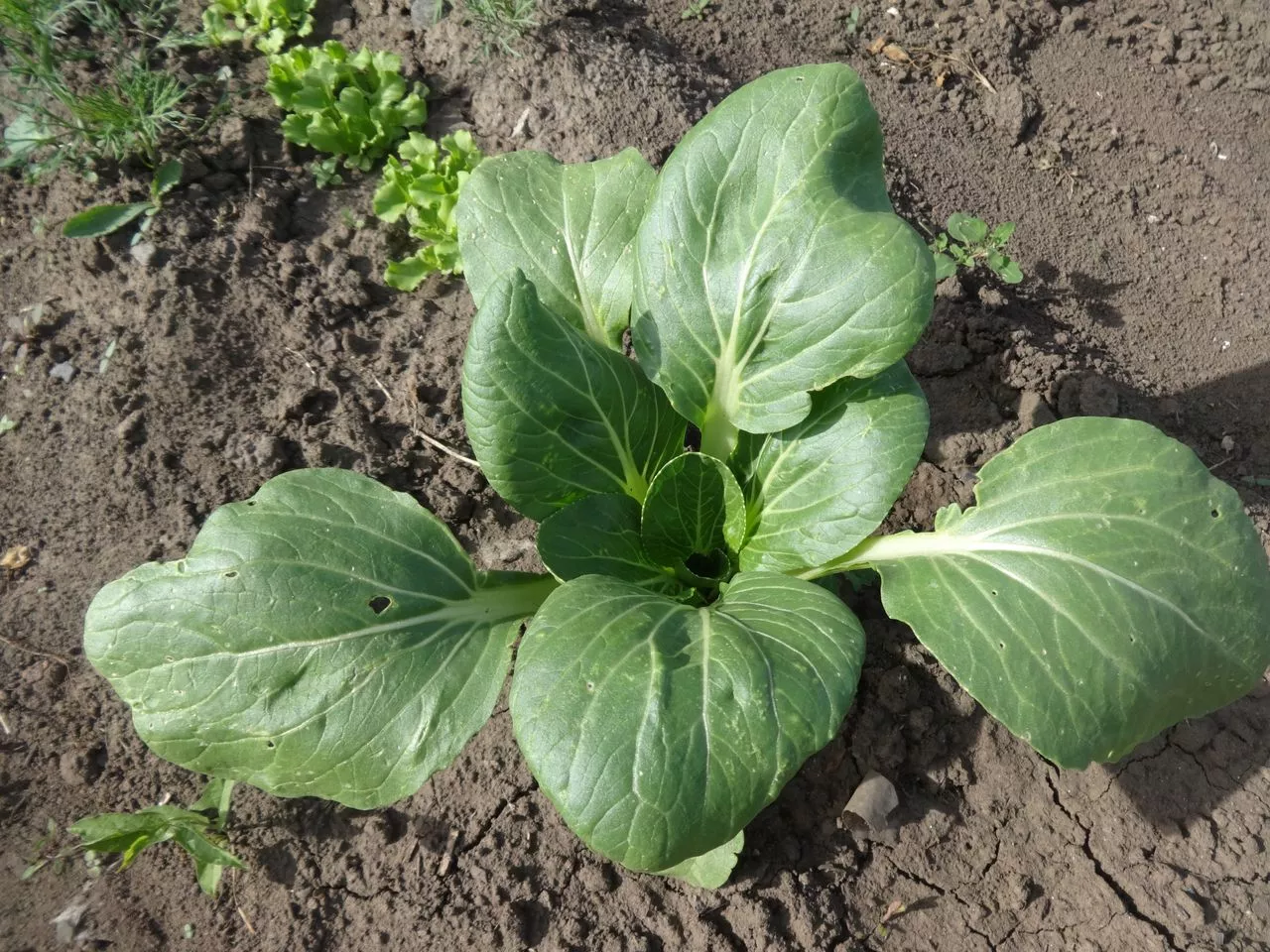
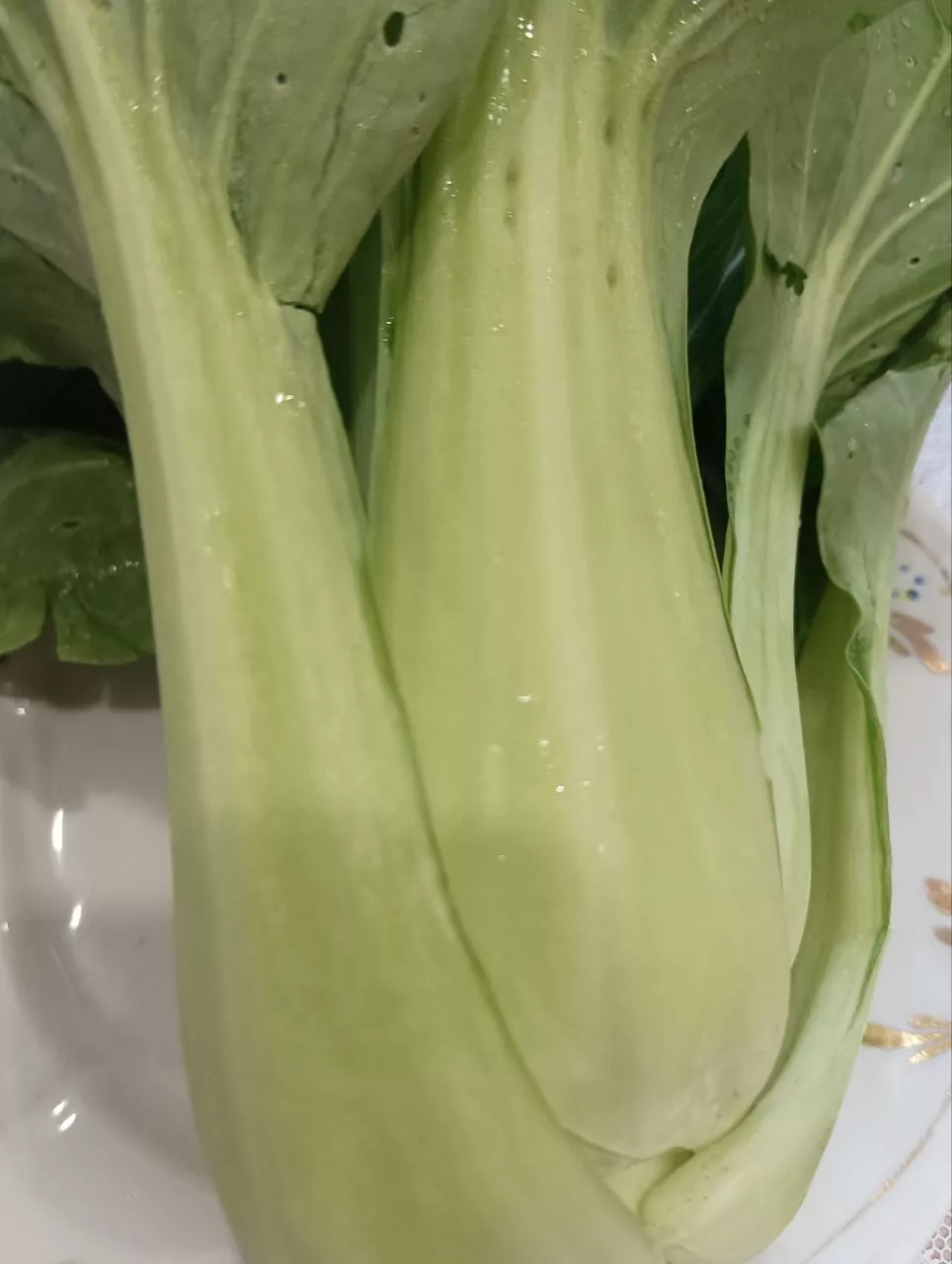
The leaves are located on thick, succulent petioles. The petioles are white and very crisp.
At the beginning of the growing season, cabbage kale was infested with flea beetles. The leaves developed lesions, including numerous small holes.
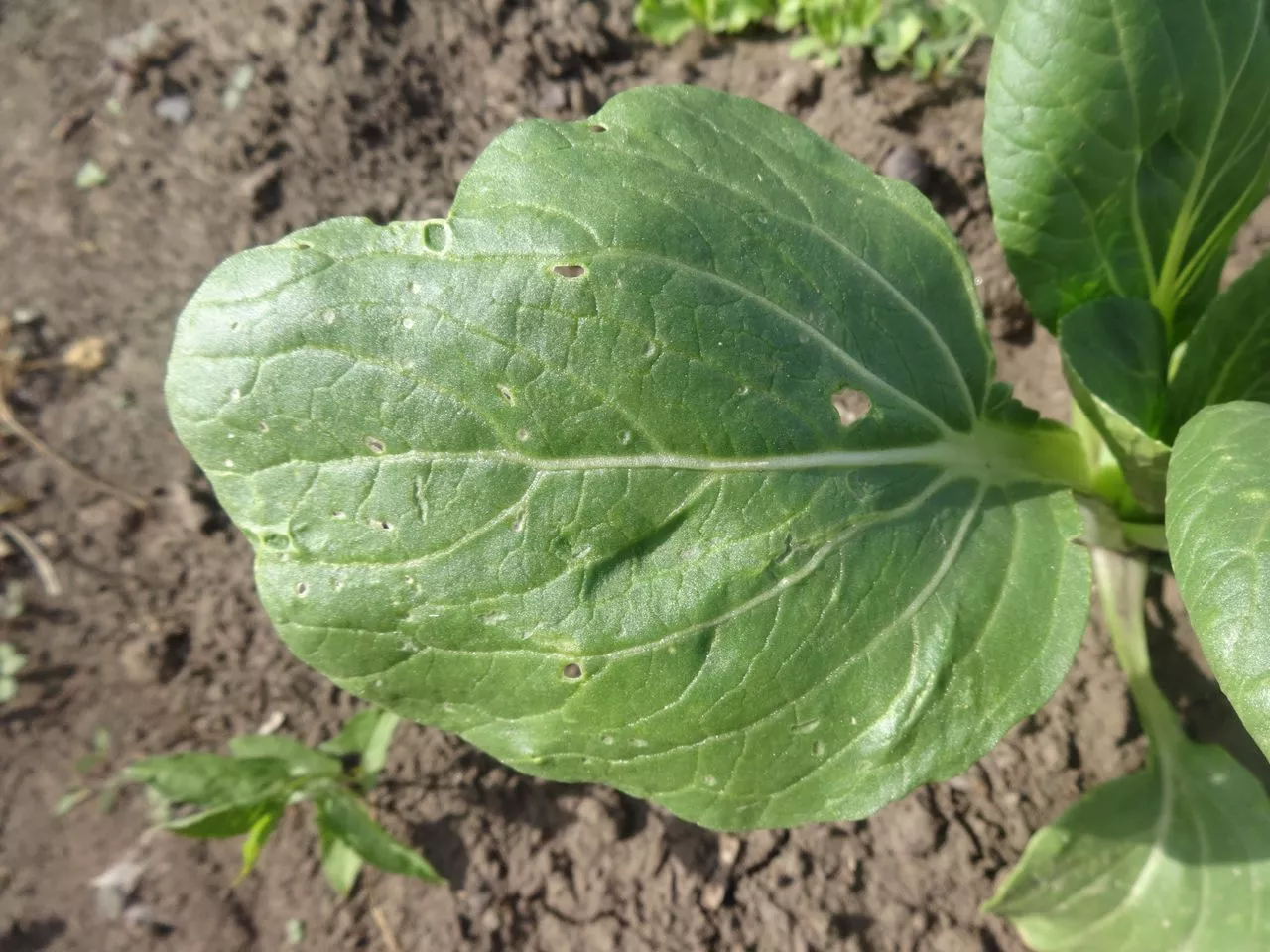
I had to use Fitoverm a couple of times.
Next grows purple and green kohlrabi cabbage - two rows.
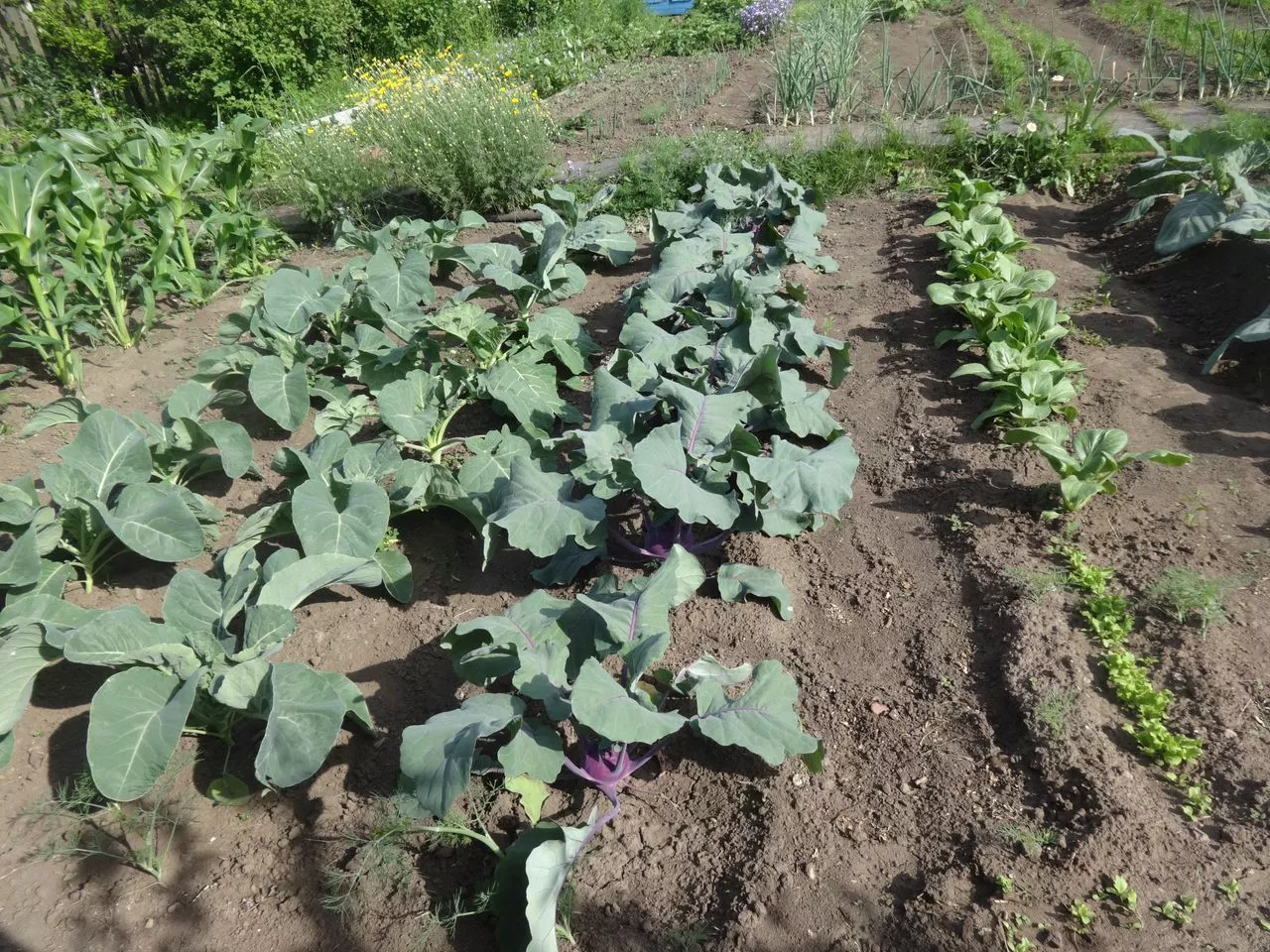
Kohlrabi is a cabbage that doesn't form heads. Instead, juicy, cabbage-flavored turnips grow on the stem. The purple ones are already forming turnips, while the green ones haven't yet. I wrote about my experience growing kohlrabi. here.
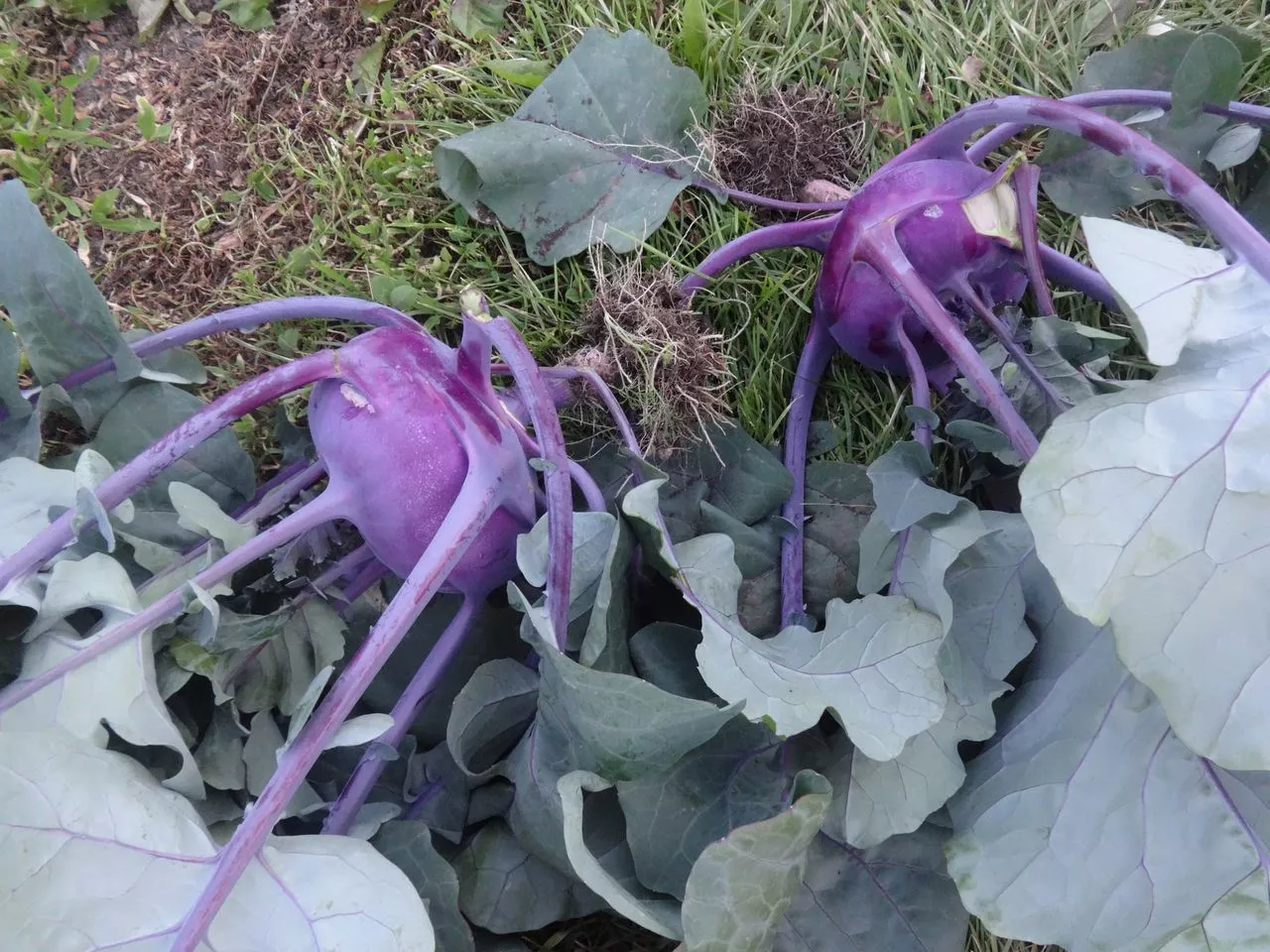
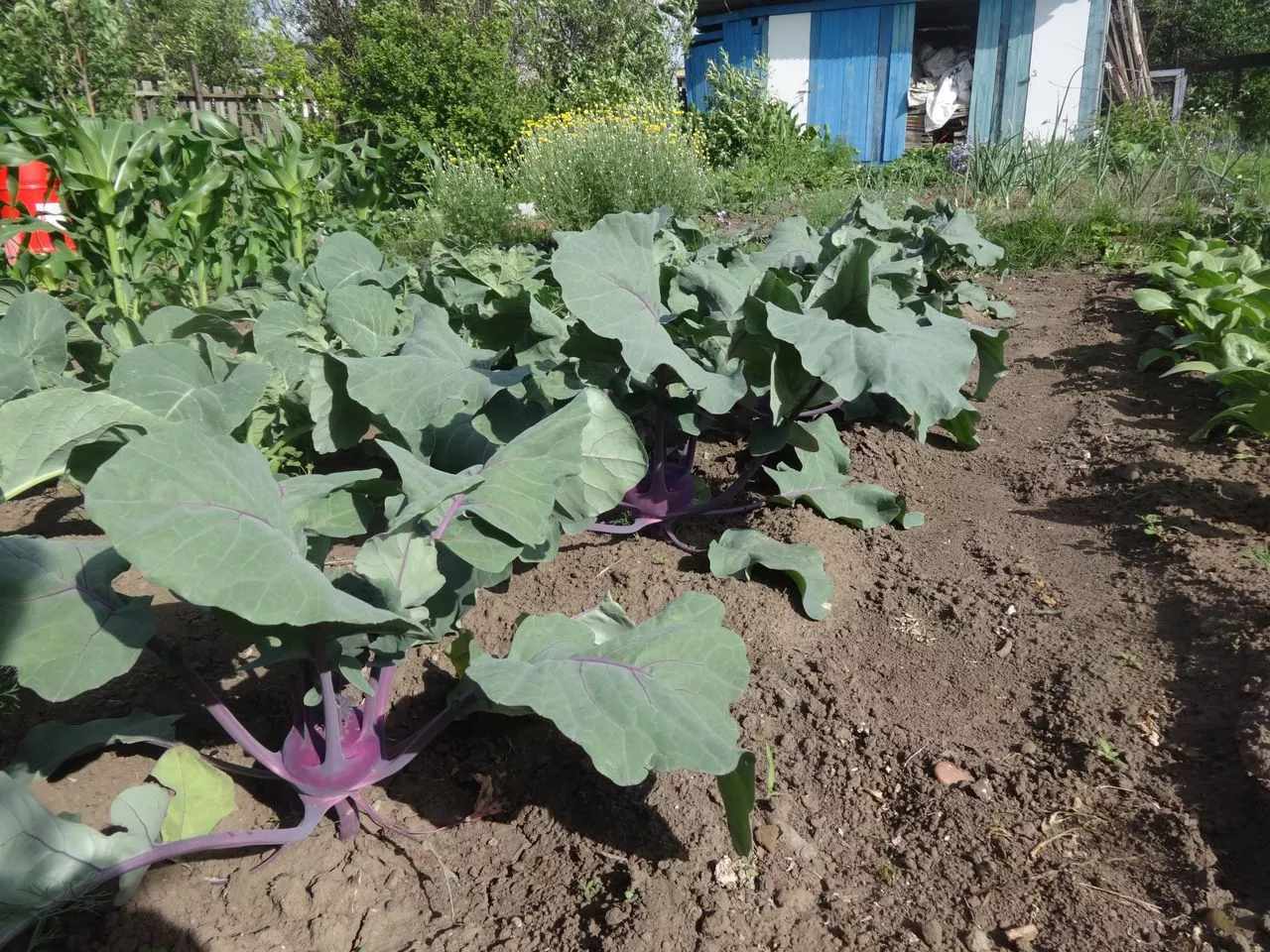 We picked some purple kohlrabi to try and see what it tasted like.
The last row is cauliflower. It hasn't formed any florets yet. This year, I didn't write down what variety of cauliflower I planted, and I threw out the bag, so I don't know what variety it was.
We grow all our cabbage, except Chinese cabbage, from seedlings. Our cabbage is growing well.
The planted seedlings were watered almost daily. After they took root, we fertilized all the cabbage with fermented grass, added compost to the holes, and later loosened the soil and added wood ash. A few days ago, we fertilized them with potassium humate. We watered them thoroughly and earthed them up. Now we'll water them in trenches between the rows. We won't be fertilizing them anymore. All the cabbage is growing well.
Kohlrabi and kale do not need to be hilled; it is enough to loosen the soil and remove weeds.
Well, you'll also need to keep an eye out for pests. Cabbage butterflies fly around the garden, hovering over the cabbage, and laying eggs under cabbage leaves. I found a clutch of eggs on the underside of a leaf.
What a gorgeous variety of cabbages at the dacha!!! You won't find this everywhere. And it grows quite well for Eastern Siberia... I was intrigued by the pak choy cabbage. I've never heard of it, I wonder what it tastes like—what exactly does it remind me of? And the seedling could have been carried off by birds; that happens here. Many in the village still place colorful scarecrows in their garden beds to scare them away. Incidentally, it's a pretty good idea. Some also hang what they call "chatterboxes" from the scarecrows, which make a sound when the wind blows.
Pak Choi cabbage has a cabbage-like leaf, slightly spicy, and a slightly salad-like stalk, very juicy and crunchy.
A very tasty salad made from Pak Choi leaves, young cucumbers, dill, soy sauce and soybean vegetable oil.