

In the backyard, further away from the vegetable gardens, we have a lot of dandelions:
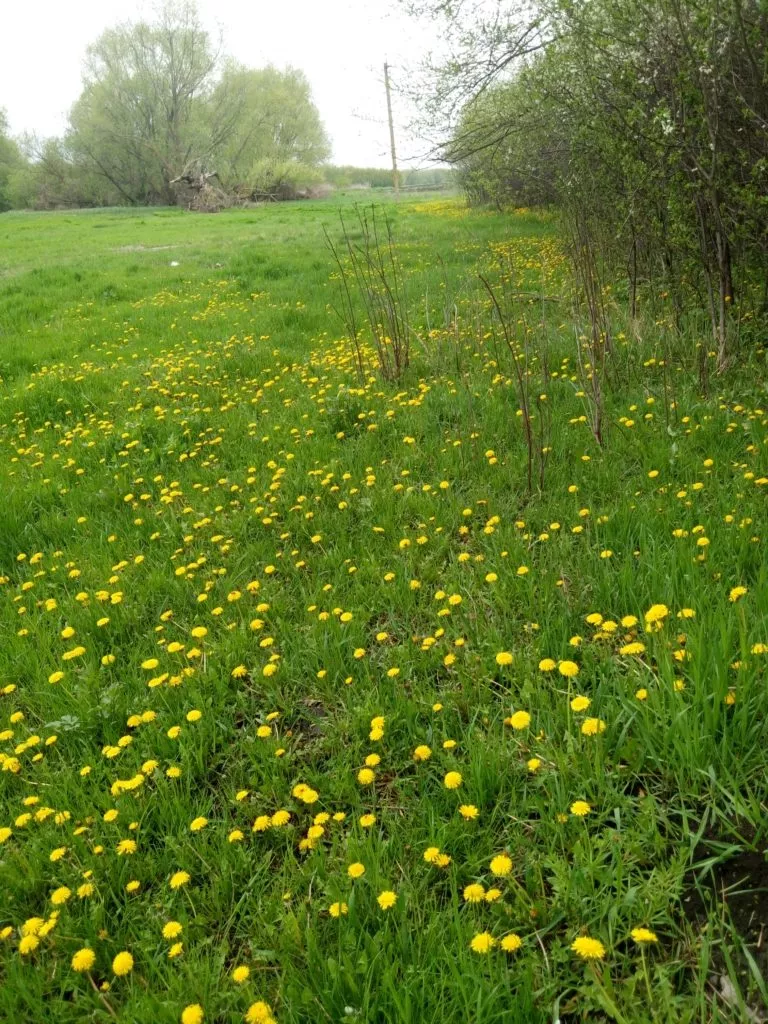
They grow very quickly, even though there is water there all year round:
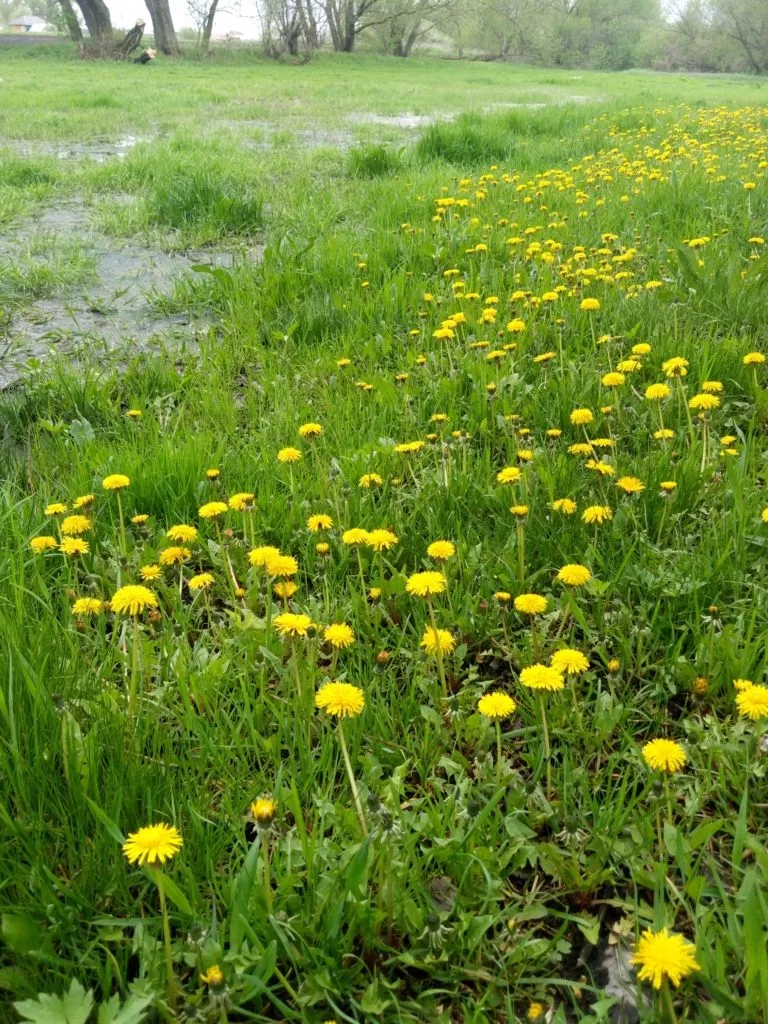
Naturally, the plants easily spread to the garden, even to the yard, which is quite a distance away. I understand that the reason is that these fluffy parachutes easily fly from place to place, and while the presence of dandelions outside the garden is a joy, it's a nuisance in the garden beds. Let me explain why:
- Dandelions interfere with the normal development of crops because they are considered a weed, absorbing minerals from the soil, thereby preventing other crops from doing the same. Therefore, in such areas, fertilizers must be applied two to three times more. Without this, there will be no normal harvest. Furthermore, the vegetables in the beds will wilt.
- Due to their extensive root system, there's not enough space for crop roots. And, as far as I know, dandelions reproduce not only by seeds from flowers, but also by roots that accidentally break off from the common root (for example, during weeding or digging).
- When dandelions are in the flowering stage, a lot of pollen is formed inside the flowers, which is often the cause of allergies.
For these reasons, we decided to get rid of most of the dandelions in the backyard and all of them in the garden. I found a ton of methods online, so I started testing them all. It's a shame I didn't take any photos (I didn't plan to write about it initially – the idea came much later, because I need to educate gardeners on what to use and what not to use).
So, the main methods:
- Weeding. This isn't a very good option, as the roots go down to almost 60 cm and won't be eradicated. On the contrary, it will encourage further reproduction.
- Digging. It's only effective if all the roots are removed at once. But this is impossible because the root shoots are very small.
- Root puller. I don't have this tool, so I can't say anything. But I think the same problem will occur—broken roots will remain, and they will start growing.
- Mulching. Many articles say that you can use straw, hay, grass, peat, leaves and similar organic materials. y material. Don't believe it, it's nonsense, especially if the summer is dry. Because dandelions still push through them. And many materials even provide additional nutrition.
- Shelter. This option is more or less suitable because photosynthesis doesn't occur. But the plots need to be covered throughout the growing season. We covered them with black plastic film. It sat there for over four months, and they didn't seem to grow anymore, but... it lasted until spring. As soon as the weather warmed up, the dandelion population remained the same. The only thing was that due to the lack of flowering, there were no new bushes.
- Pouring boiling water. That's complete nonsense!!! You're slightly scalding the above-ground part of the plant with boiling water, but the roots are starting to grow again. After all, by the time the water reaches the required depth, it will have cooled completely.
- Salt. A perfectly acceptable option for one season. However, it's important to first cut off the above-ground portion and then sprinkle it generously with table salt. The principle is simple: salt draws water from the roots, which then dry out. However, this has two drawbacks: the soil becomes too salty, and not all the roots die.
- Vinegar or essence. Using vinegar alone is completely useless! But acetic acid, at least 70%, really helps. The best way to do this is to cut off the dandelion tops, water the growing point and lightly around it. Repeat this process twice more. But keep in mind that there should be no rain during this period. This will simply burn the roots, and the sun will further corrode the plant. Within a week, the weeds will be gone. However, the soil will need to be deacidified after about 3-4 weeks.
- Burning. Another useless method, as it only affects the above-ground portion. After the upper portion quickly recovers, the roots sprout again.
- Herbicides. We tried Lintur. It's a great option, but you have to spray it twice a year. It's expensive and too toxic.
From all this experience, I realized that acetic acid is the most effective, so I recommend it. Plus, it works locally, so you don't need a lot of product. And I really hope my little experiment helps someone!
Good afternoon! Wouldn't it be easier to mow the dandelions before they bloom? That's what I do. Of course, I have to do it more than once or twice, but in May and June I still have to mow often. The main thing is to prevent them from blooming.