
Wonderful hydrangeas have blossomed
In the park, in full view of passersby
I don't have a single complaint.
To this beautiful flower.Branches, like young brides,
They covered themselves with a white veil.
The hydrangea bush grows in the best place,
Enchanting with its delicate beauty!
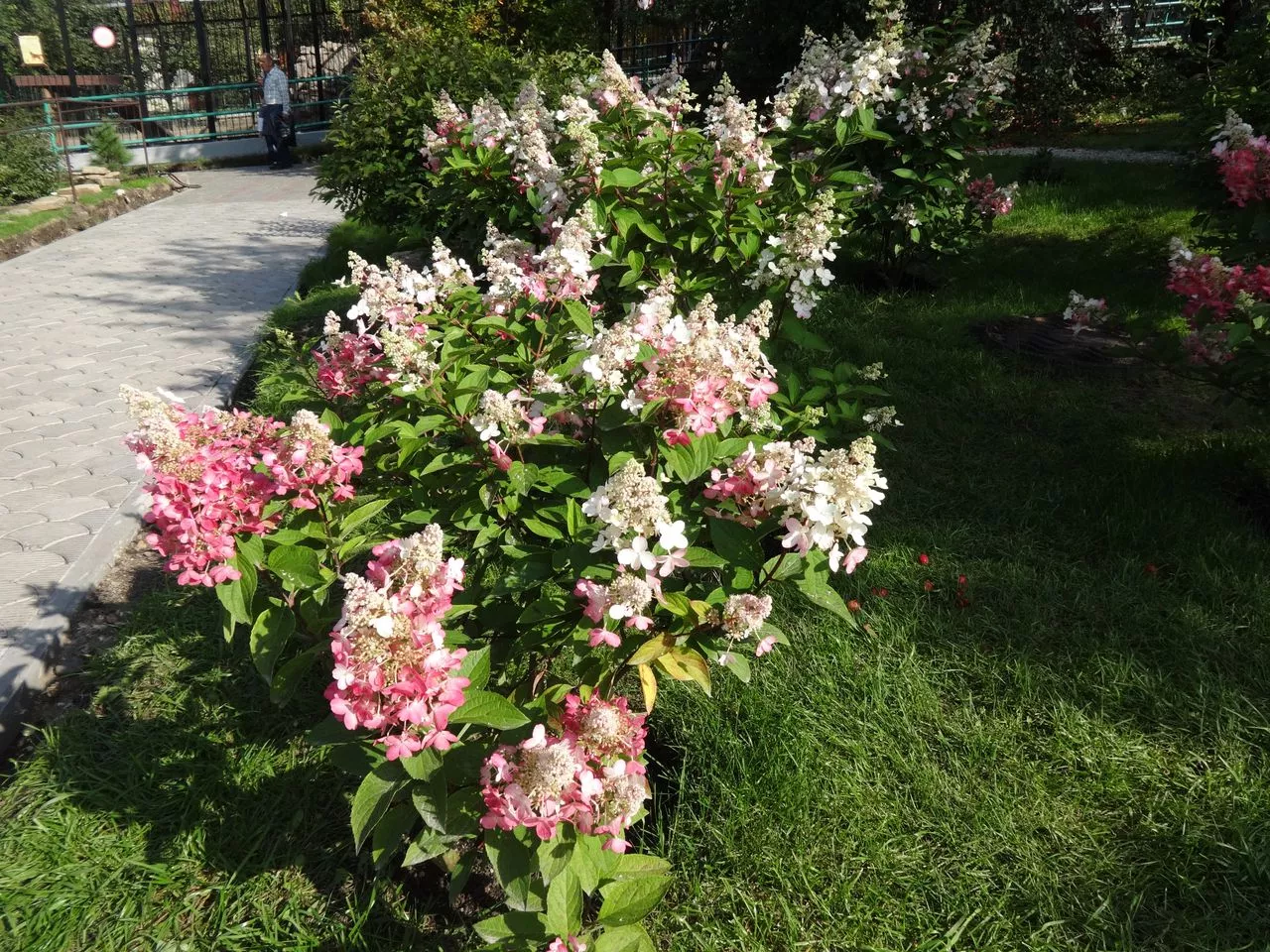
Last summer, I bought and planted a panicle hydrangea at my dacha. It was a spontaneous, accidental purchase. I was looking for loosestrife and visited several flower shops, but they didn't have it anywhere. I wandered through the rows of all sorts of seedlings and finally came across the hydrangeas. Customers carefully selected the small shrubs in plastic pots, telling me how wonderfully they bloomed, and, as usual, I was swayed by the brightly colored label and bought one. I bought a panicle hydrangea, the Vanilla Fraise variety.
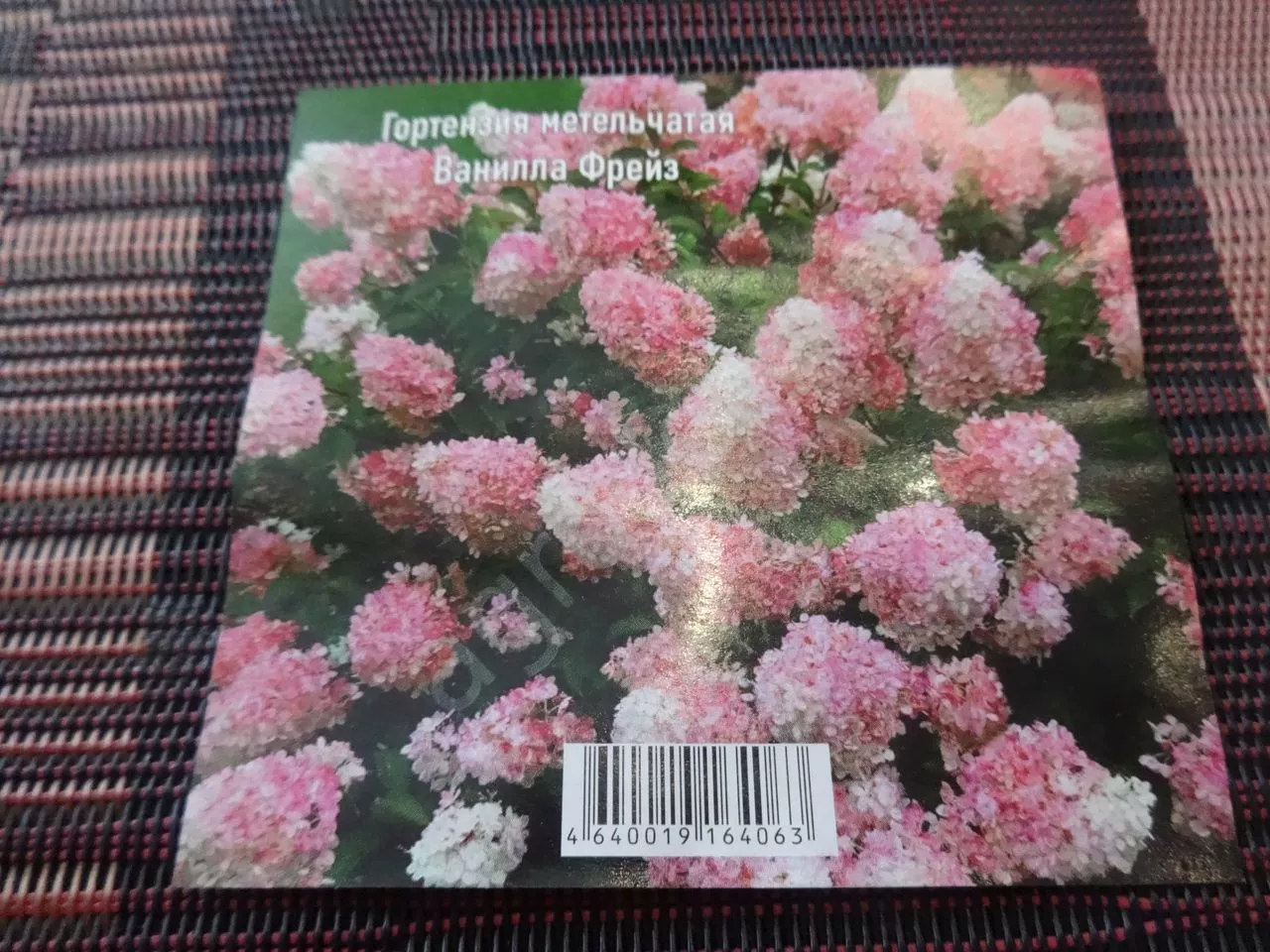
I saw this variety of hydrangea in our park. The bushes are low, about 1.2-1.5 meters tall, with large panicles of inflorescence. At the beginning of flowering, white flowers bloom at the base of the panicle, then turn bright pink. And when the entire panicle turns pink, the hydrangea looks simply stunning.
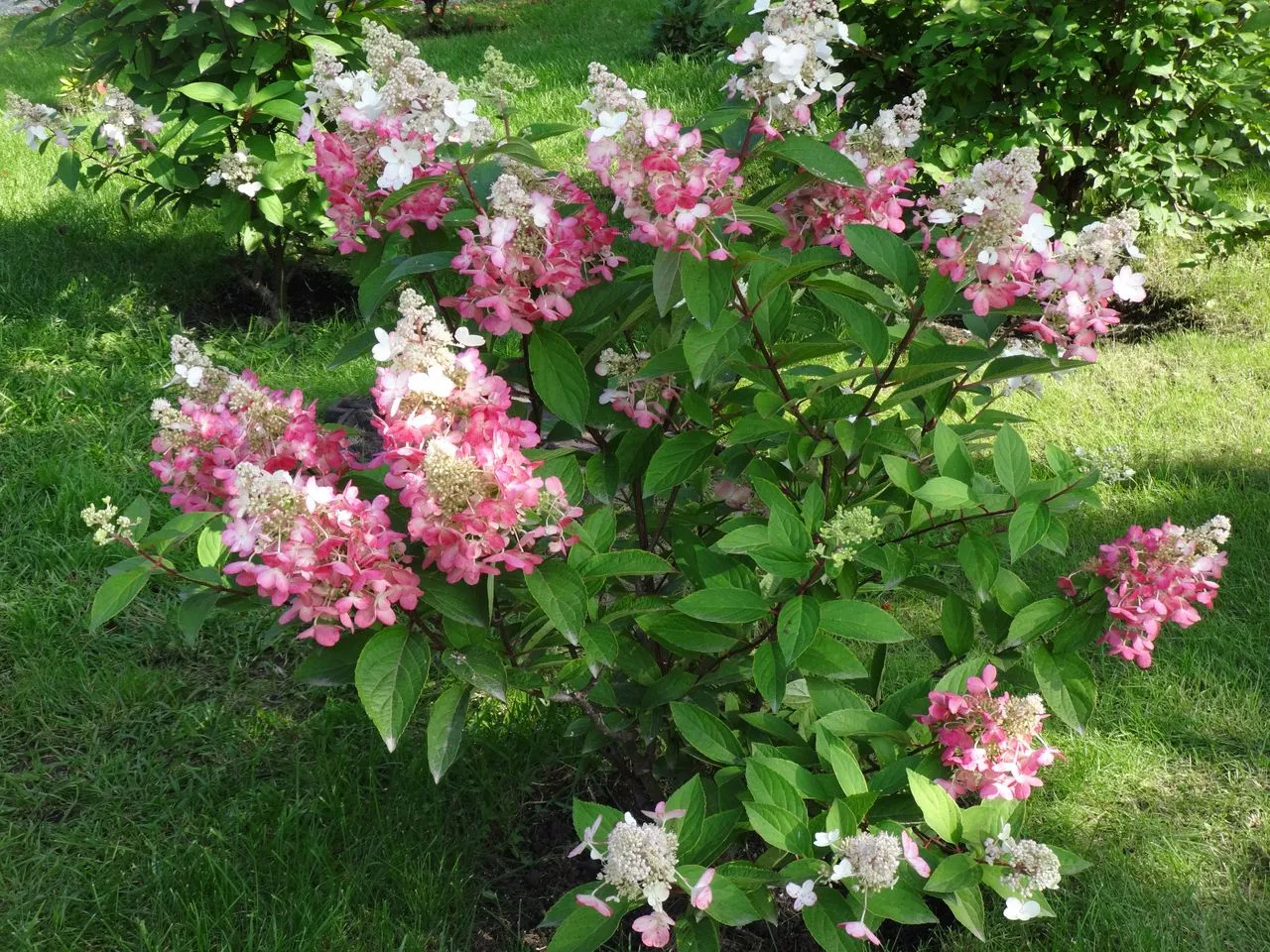
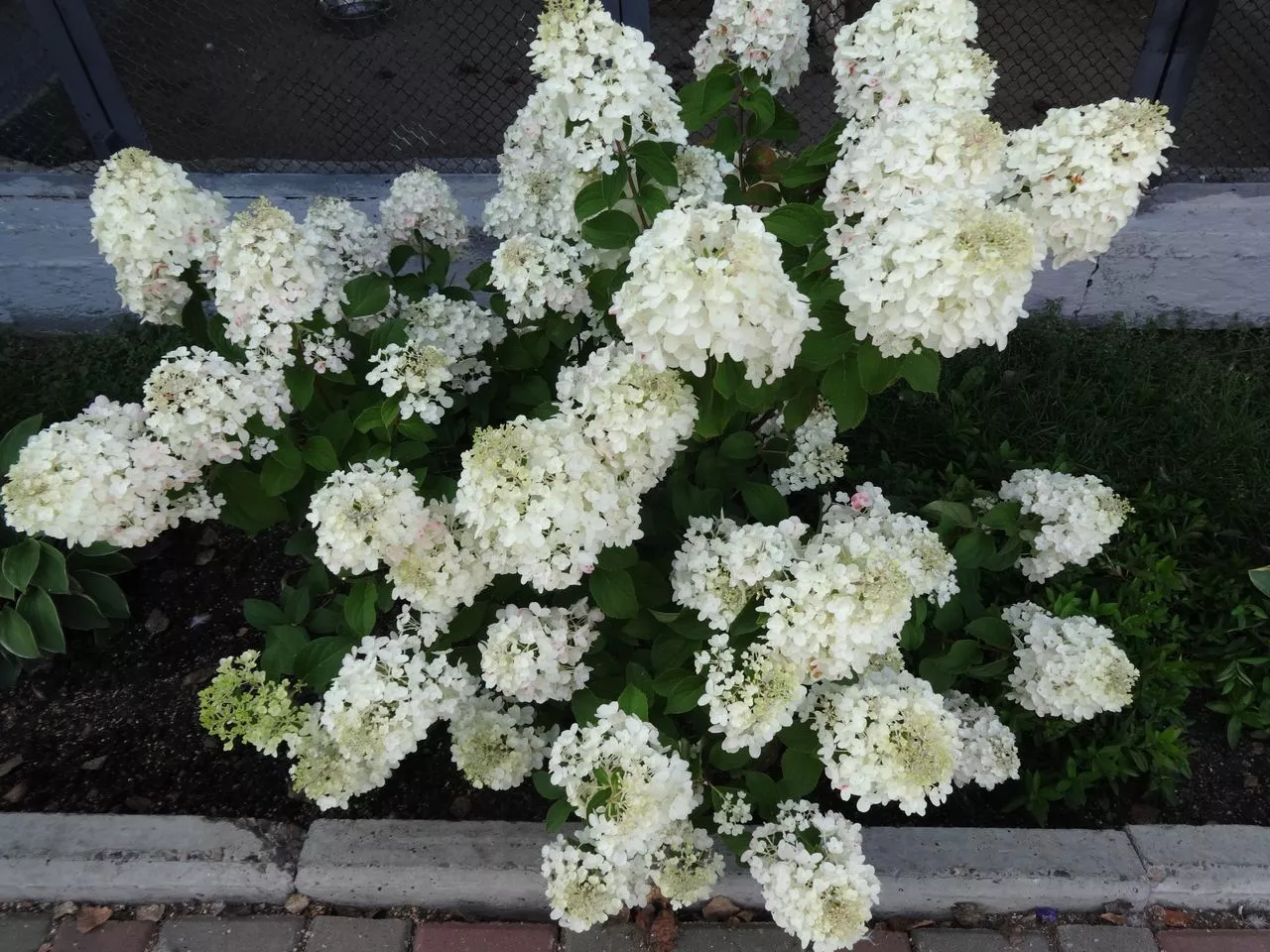
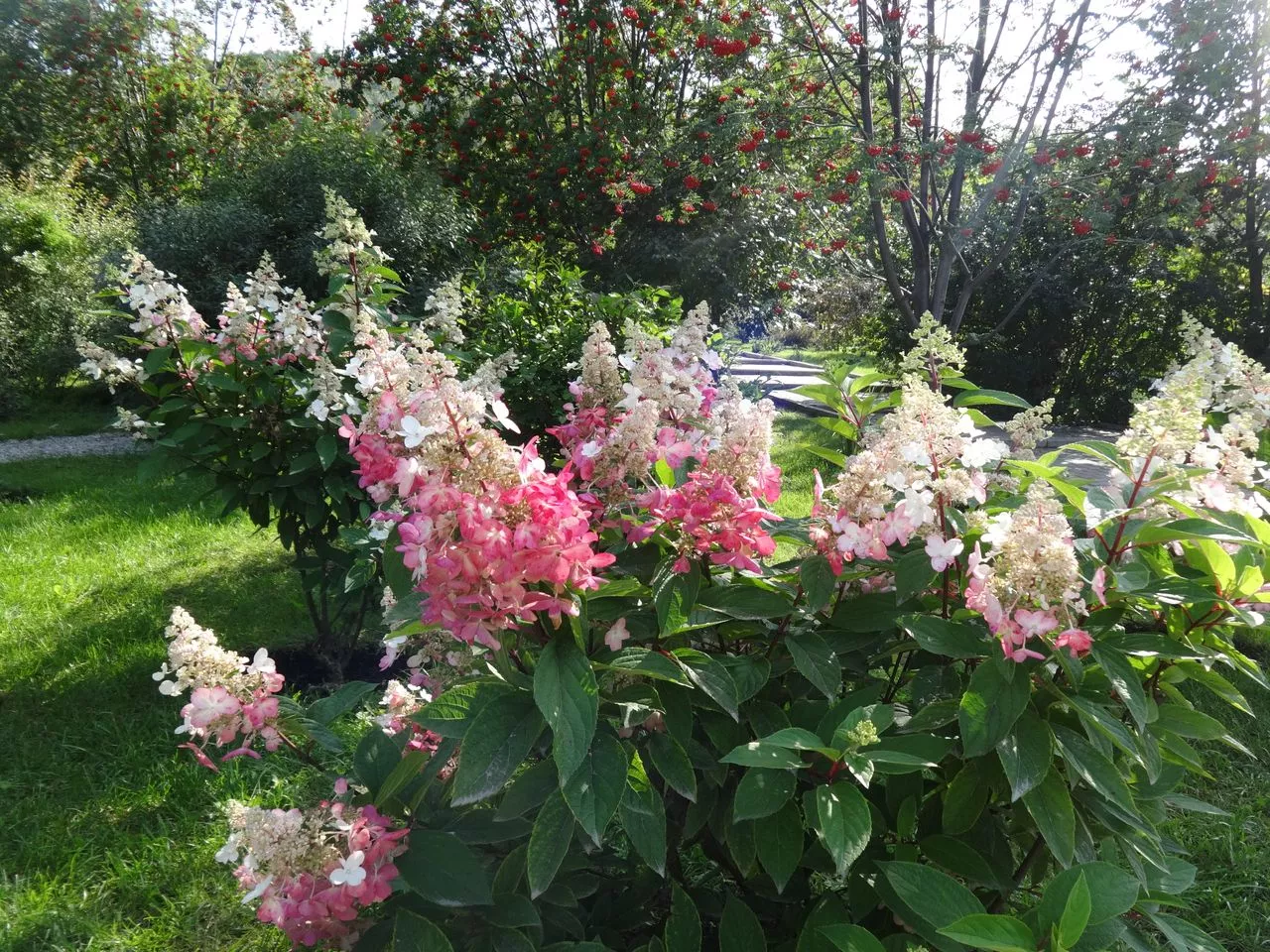
I bought my new flower in mid-June, when all the space in the flowerbed was taken. I had to dig up the marigolds growing near the spreading phlox to plant the hydrangea. Next year, I'll transplant it to a more suitable location if it survives the winter.
How to plant hydrangea correctly
Before planting the hydrangea, I read online about how to properly plant it. I prepared a hole, added sand, peat moss, and humus, mixed it with soil, and watered the hole thoroughly, then applied a solution of phytosporin.
I carefully removed the hydrangea from the container, along with the root ball. I placed it in the hole and covered it with soil. When planting, the root collar should be level with the soil; if you plant it too deep, the root collar can rot from excess moisture.
Hydrangea loves abundant watering, it is not without reason that another name for this plant is Hydrangea (Latin: Hydrangea), which can be translated as “vessel with water”.
I compacted the soil, watered it, mulched it with pine needles, and added a little pine bark (I collected some in the forest while mushroom picking last year). This is to increase the soil's acidity. The plant prefers an acidic environment, so once a month, it's recommended to add whey (2 liters per bucket of water) or lemon juice (1 teaspoon of lemon juice diluted in 10 liters of water) to the watering water. It's also recommended to water the hydrangea with a weak solution of potassium permanganate when new shoots appear in the spring. The soil under the hydrangea shouldn't dry out; it should be moderately moist.
First flowering
My new flower took root and thrived. In early August, inflorescences formed on two branches, and a little later, flowers began blooming on the third shoot as well.
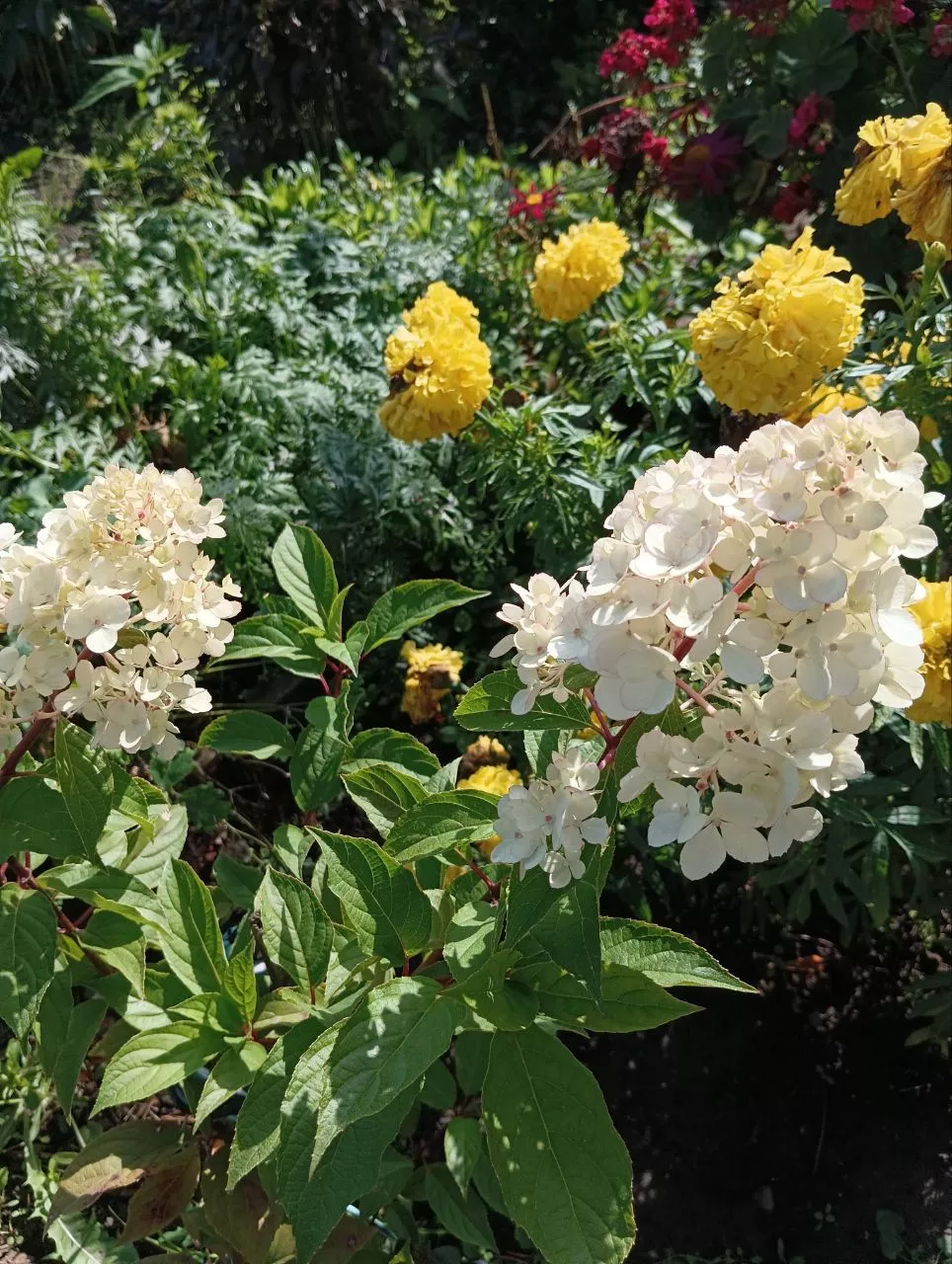
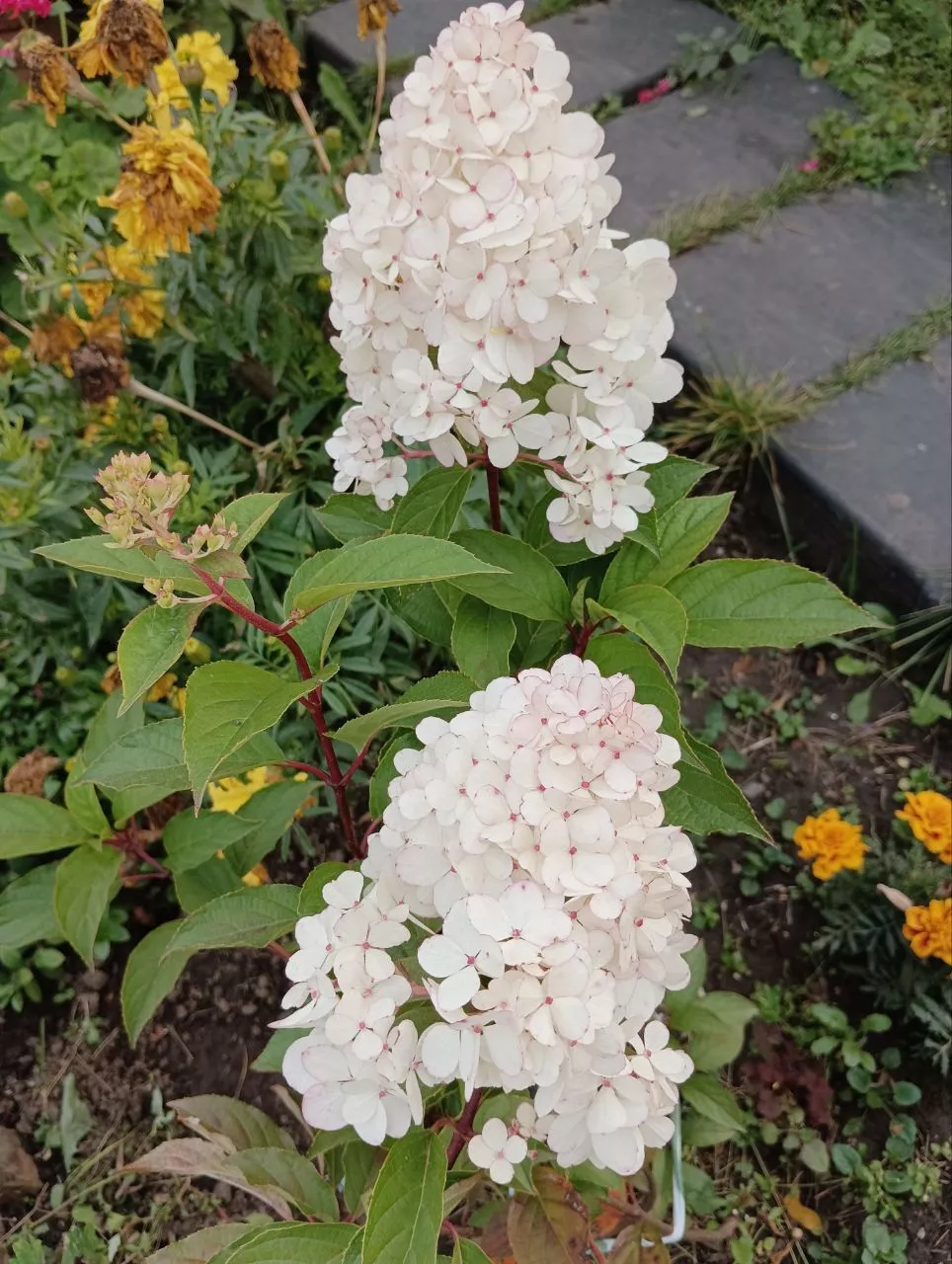
The panicles were quite large for a young plant. The blooms on my Hydrangea were small, consisting of four white petals with a pink border and a bright pink dot in the center.
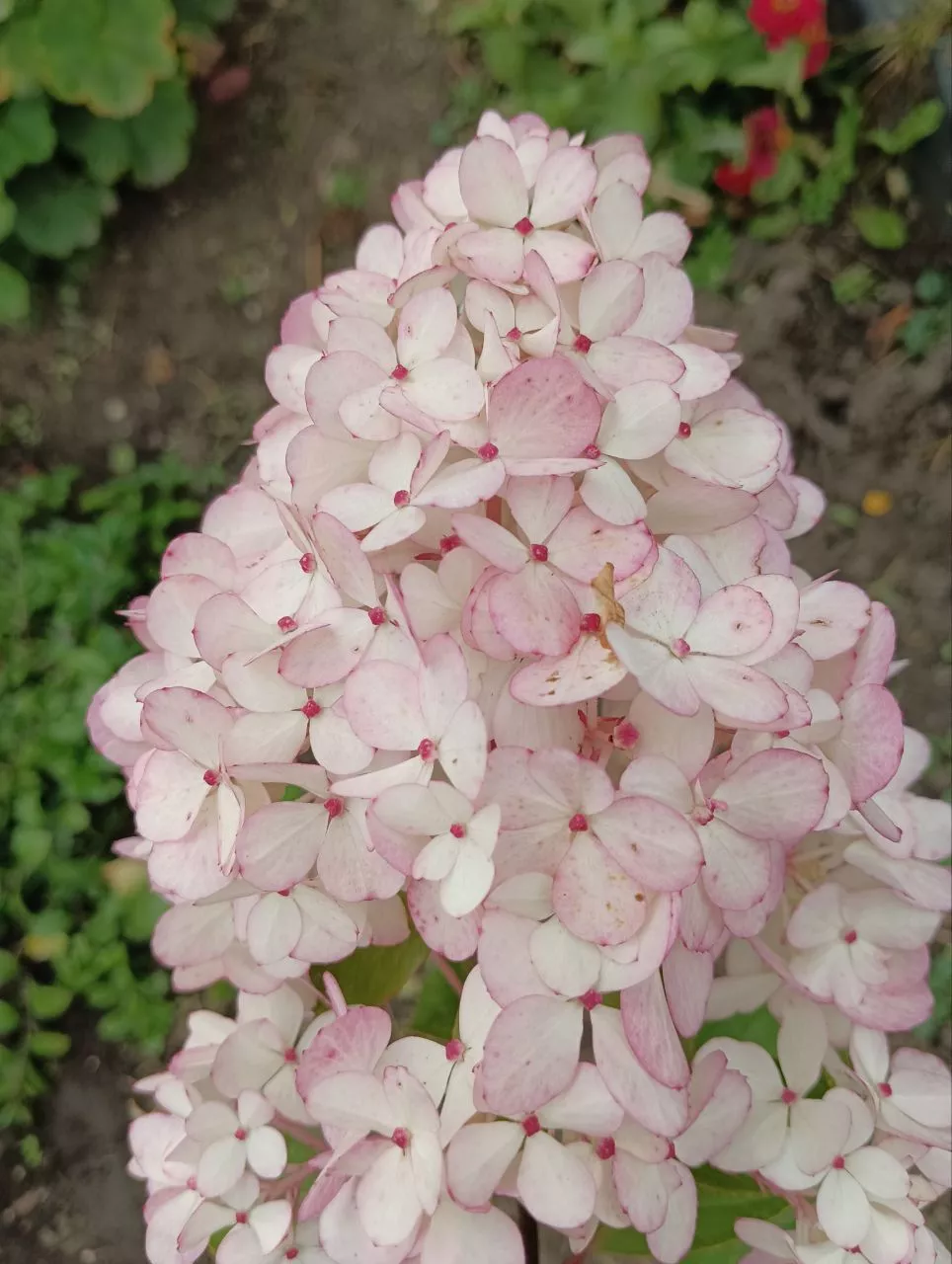
By the end of September the flowers had become more pink, but not as bright as on the label.
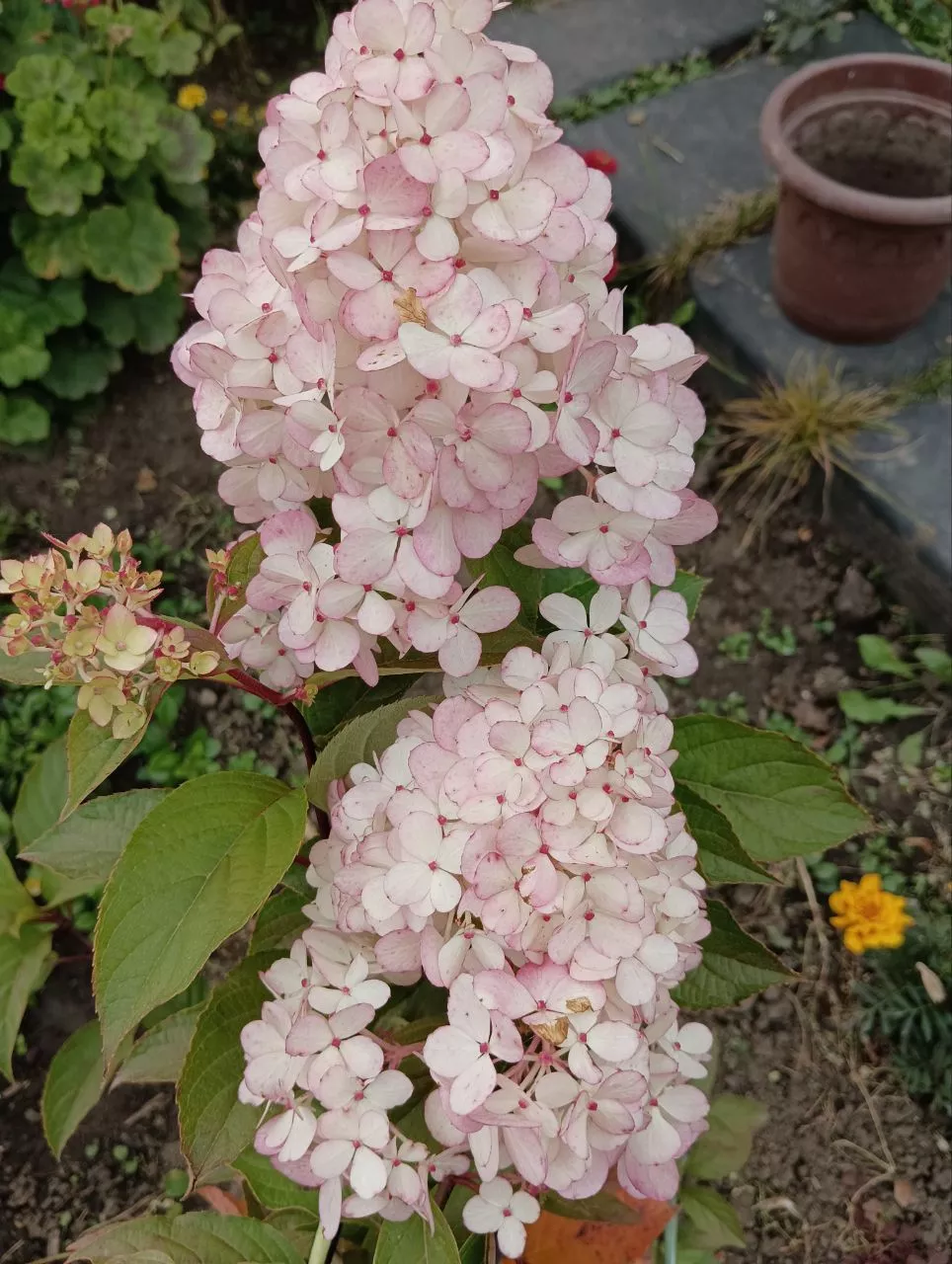
Perhaps the weather conditions—rainy weather, cloudy, sunless days, and even the lilac's shadow falling on the hydrangea in the afternoon—had an effect on the first bloom. Or perhaps it was a different variety. But my new flower still brought me great joy.
It's November now, it's still warm here, with temperatures above zero during the day and light frosts at night, and no snow.
Panicle hydrangeas are considered winter-hardy plants, but young bushes need winter protection. I added a bucket of well-rotted compost under the hydrangea and insulated the soil with dried marigold bushes. I made a wire frame; when the temperatures drop, I'll bend the branches to the ground and wrap the bush in several layers of covering material. My neighbor does this, and her hydrangeas have been growing for three years now, blooming beautifully.
Thanks for the review! Is it true that white panicle hydrangeas can mutate and change color from pink to white? I wanted to buy a hydrangea in September, ordered a pink one, but when I met the seller, the flowers were white, with a hint of green (and the centers, too). I had to cancel the purchase. I think maybe it was in vain.
I wanted a pink hydrangea specifically, we agreed on a pink one, but he brought a white one and assured me that it had transformed... I didn’t believe that it was pink and turned white... and if I plant it, then in a generation it will turn pink again, and then it might turn white again.
I can answer your question: hydrangeas are chameleons, so it's perfectly normal for the flowers to change color. This is due to changes in the acidity of the substrate/soil. But there's also another factor: as they mature, the color also changes—at first, for example, they're greenish, then beige, then white, and finally yellow. So, you shouldn't have given up on them.
Thank you for your attention to my question! Yes, I've also heard that hydrangeas change color, but I thought it mostly applied to the steepleaf varieties... and then there's the panicle hydrangea. But apparently, color changes can occur to varying degrees in both the largeleaf and panicle hydrangeas. There's also the arborescent hydrangea with large, spherical inflorescences. I read that adding aluminum sulfate to the water when watering makes the bush look incredible—as if it's adorned with blue pom-poms! If you like, you can look at photos online. It's so beautiful 😍
Hello! I read somewhere that white panicle hydrangeas don't change color, but bicolor varieties (white and pink) may have a greenish tint to their petals at the beginning of flowering, then turn white, and later turn light pink or even bright pink, or they may remain white.
The color of the petals of these varieties is affected by the acidity of the soil - with increased acidity, hydrangeas bloom with more pink panicles, if slightly acidic, the petals are white, and if the soil is neutral or more alkaline, the panicles are small, the petals are pale, nondescript.
Another factor influencing color is environmental influences. A late, cold spring or cool summer will result in paler petals, while a warm early spring or hot summer will result in more vibrant blooms.
The color and size of the inflorescences are also affected by care, watering, fertilizing, and pruning.
My hydrangea has only been growing for a short time, and I'm not sure yet how to properly care for it. Perhaps you were wrong to give up on it; even if it's white and won't turn pink, it's still a very beautiful plant.
Thanks for the reply! We've already bought white ones, so I wanted a pink one too. I read your reply, and then my neighbor also said that white hydrangeas can't change color. No matter how many she grew, they always stayed white. But the pink-and-white ones, as you said, changed the intensity of their color (from a barely noticeable pink, practically white, to a deep pink). I'll look for a pink one, and in the meantime, I'll gain experience with the white ones.
I'll be keeping an eye on your posts about hydrangeas :) Try asking my neighbor some tips. She says that if she tells everyone her secrets, people will stop envying her. And that's really important to her.