

I've been wanting to plant blueberries for a while. So, I decided to give it a try. I bought a few briquettes of acidic high-moor peat and soaked them in an old plastic tub.
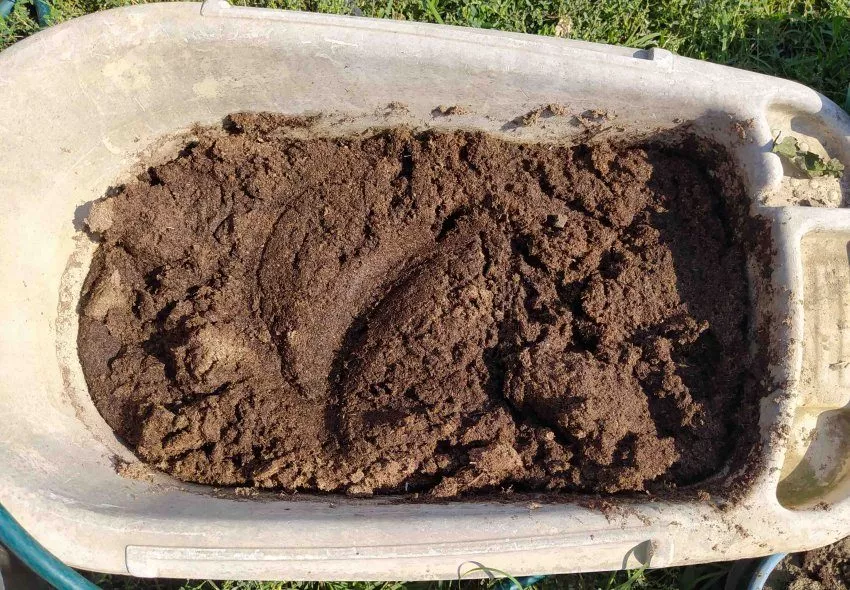
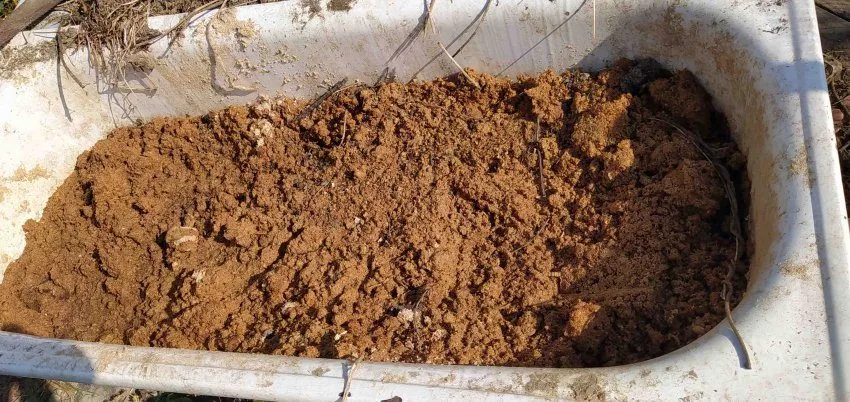
I prepared two bags of coniferous sawdust. Although I chose old sawdust, it wasn't fully rotted yet. These sawdusts are usable; they acidify the soil, but when they rot, they actively absorb nitrogen, which is essential for plants. Therefore, I prepared the sawdust in advance – I poured it into a large tub, moistened it, and mixed it with urea. I left it there for about two weeks.
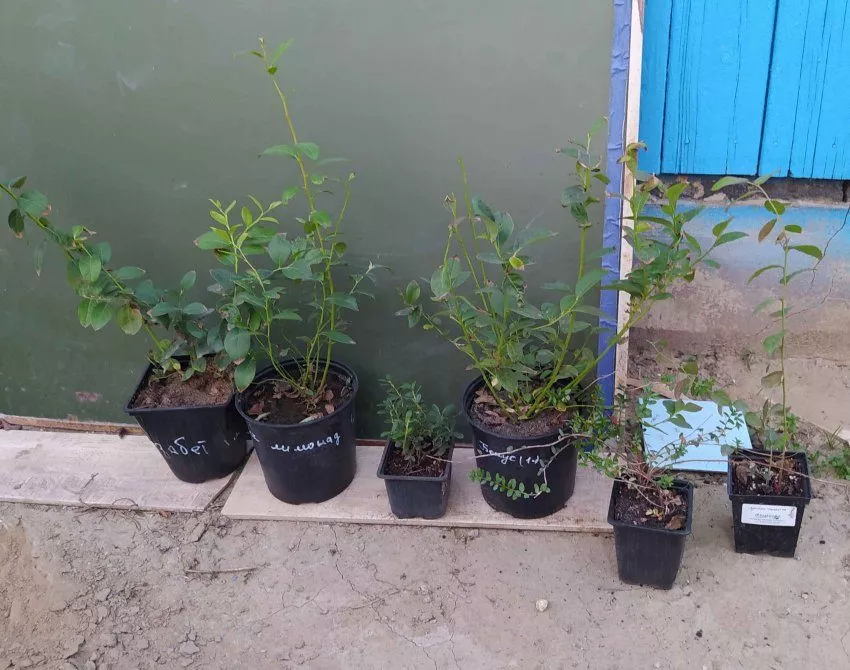
During this time, I found and bought blueberry seedlings, a cranberry bush, and a lingonberry bush.
I chose a spot in the garden with strange soil—this part of the garden has some kind of light-colored soil, or rather, not really soil, but either clay or sand. It's a very fine, yellowish dust that barely allows water to pass through.
I pour water into the hole—it's standing still. I want to mix the soil with the water, so I run my hand along the bottom of the hole—the same dry dust floats to the surface. It creates a kind of shell, repelling the water. But over time, this soil compacts, becoming a monolith that can only be dug by chipping away at it.
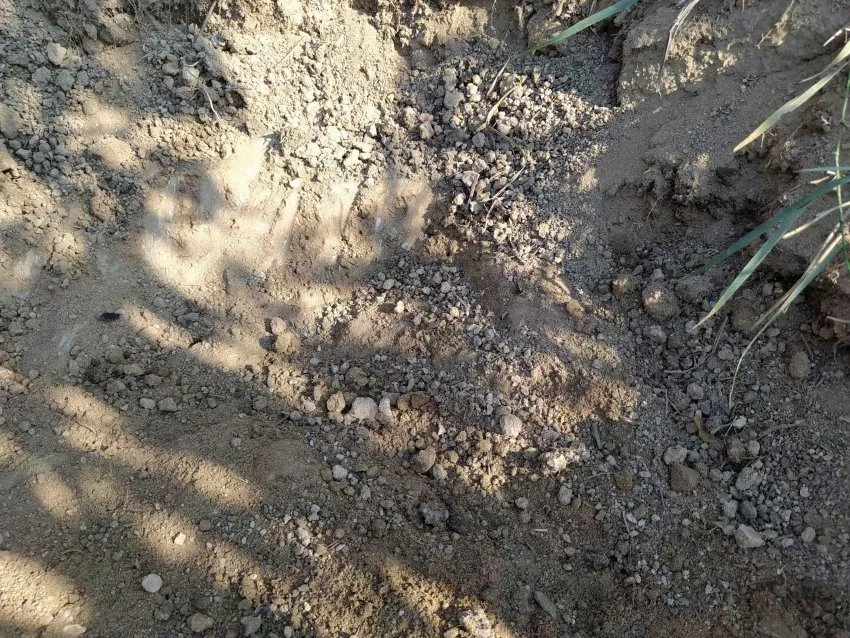
You can see in the photo that the soil on top was not compacted - I dug it with a shovel, but deeper down it was more compact and you can see traces of a flat cutter on the walls.
Overall, planting cultivated plants here isn't the best idea, but it's perfect for the hole I want to plant heathers in. I'm hoping the hole's walls, thanks to their properties, will retain moisture in the peat and prevent the acidic environment from escaping into the other soil layers. But we'll see how that plays out in practice.
I dug a trench.
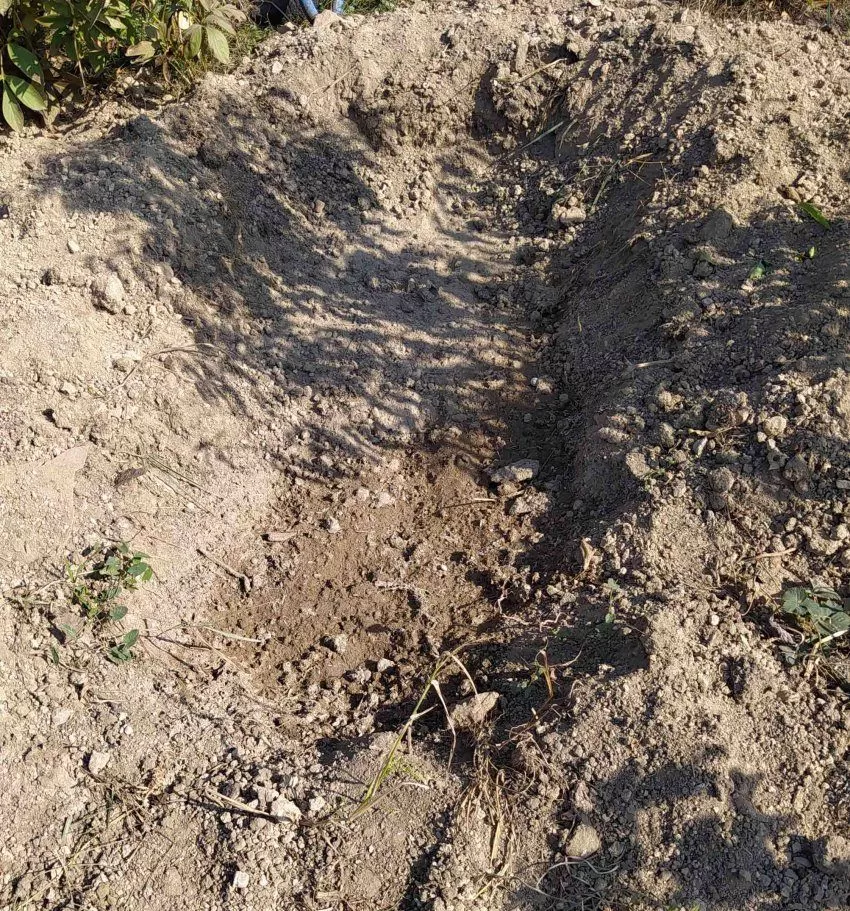
In the photo taken at midday, you can see the shadow of the almond tree on the trench; I positioned it this way so that in the hottest summer months my plantings would still be protected from the scorching sun.
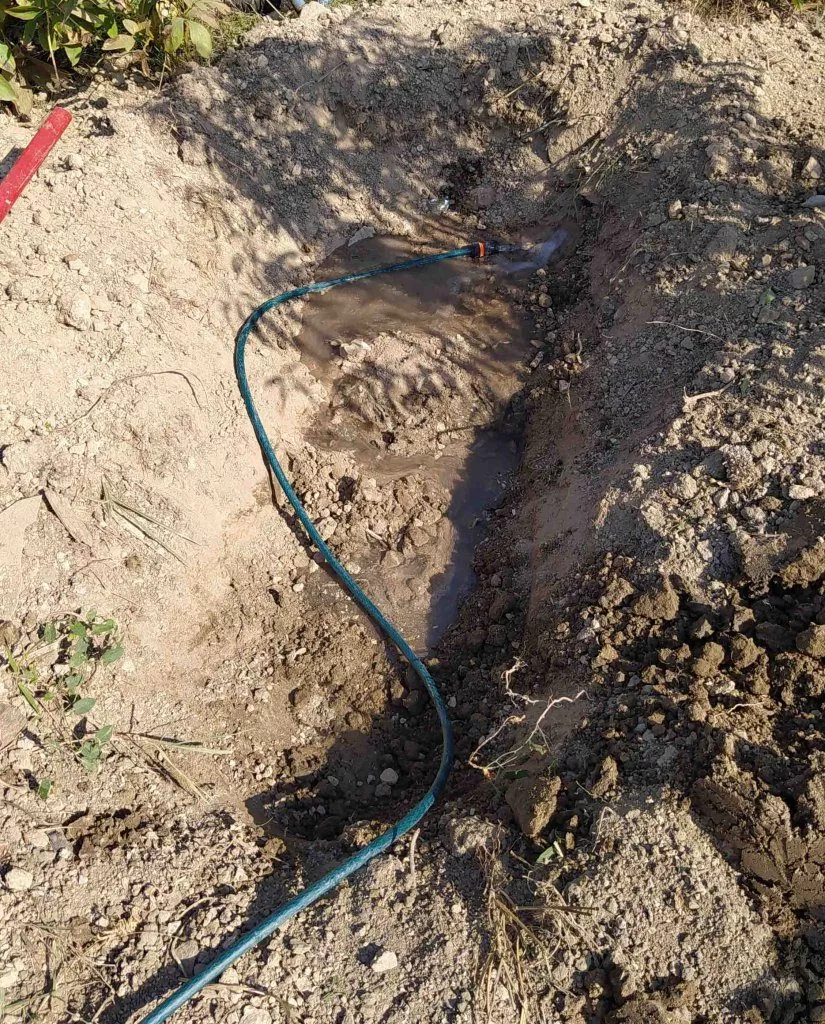
I filled it with water a couple of times and waited until it was completely absorbed.
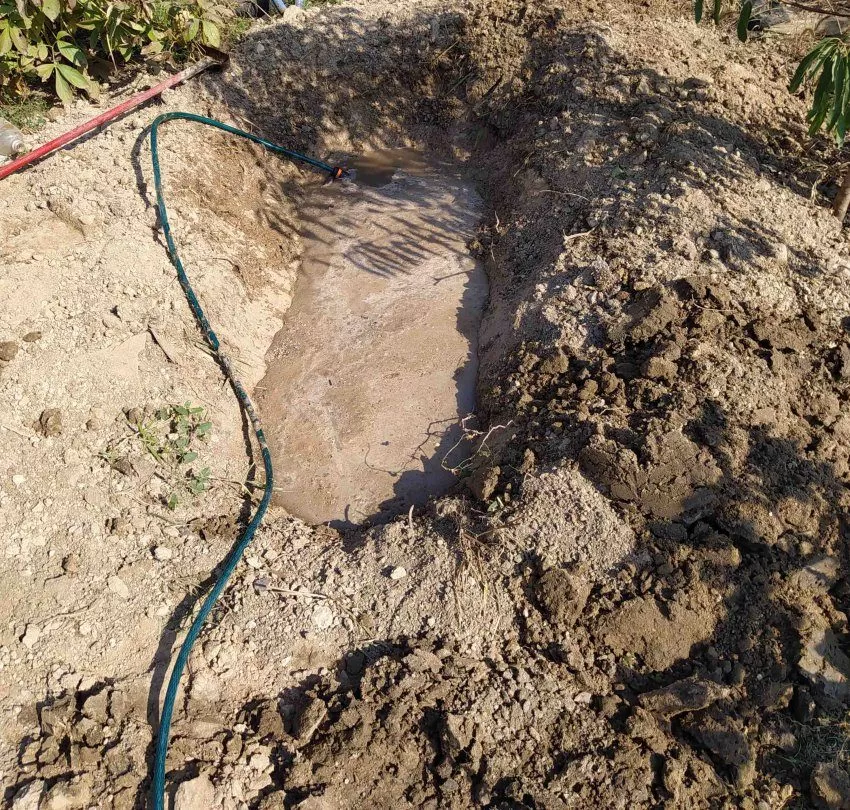
Next, I poured sawdust onto the bottom layer, mixing it with compost soil.
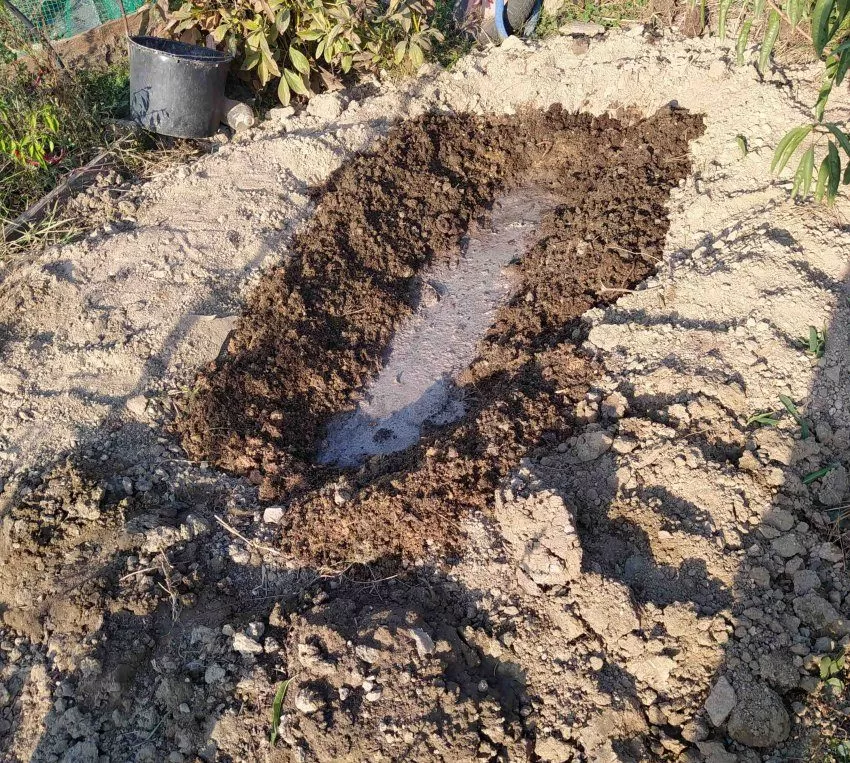
Then a layer of high-moor peat, also mixed with compost soil.
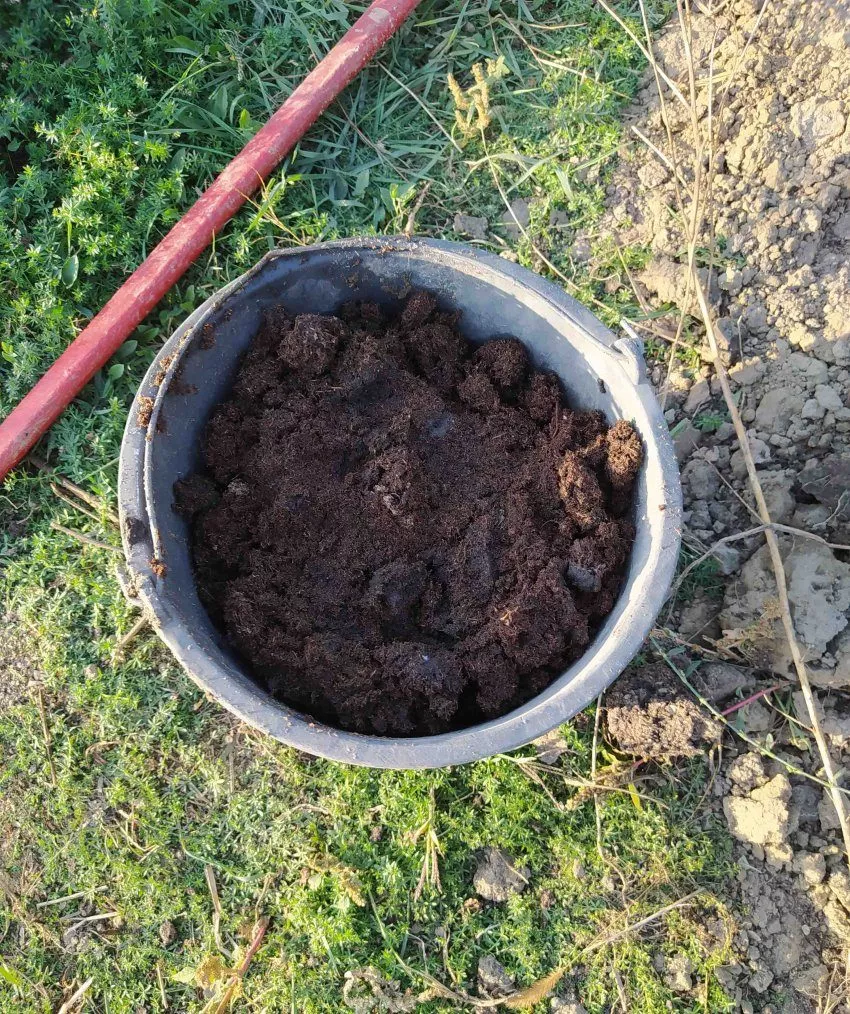
I planted the plants in the prepared soil.
To do this, the root ball was carefully tousled to spread the roots around the perimeter.
While researching blueberry planting tips, I read that if the roots aren't straightened, the plant will continue to grow them inside the root ball and won't be able to straighten them out on its own. And because blueberries have shallow roots, especially in light peat soil, the plant won't thrive. Therefore, it's important to carefully straighten the roots when planting. And if they're very tightly intertwined, make a cross-shaped cut with a knife underneath and then straighten the roots.
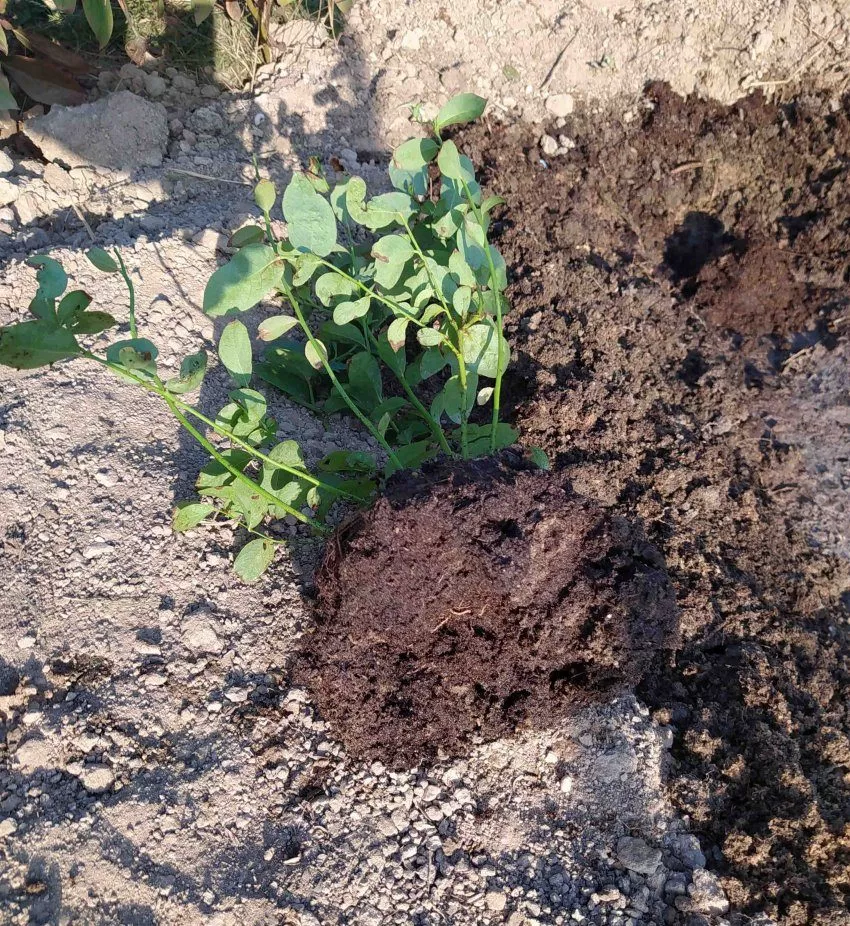
In the trench where the future bush will be, I formed a mound of soil like this one, and sort of “planted” the straightened blueberry roots on it.
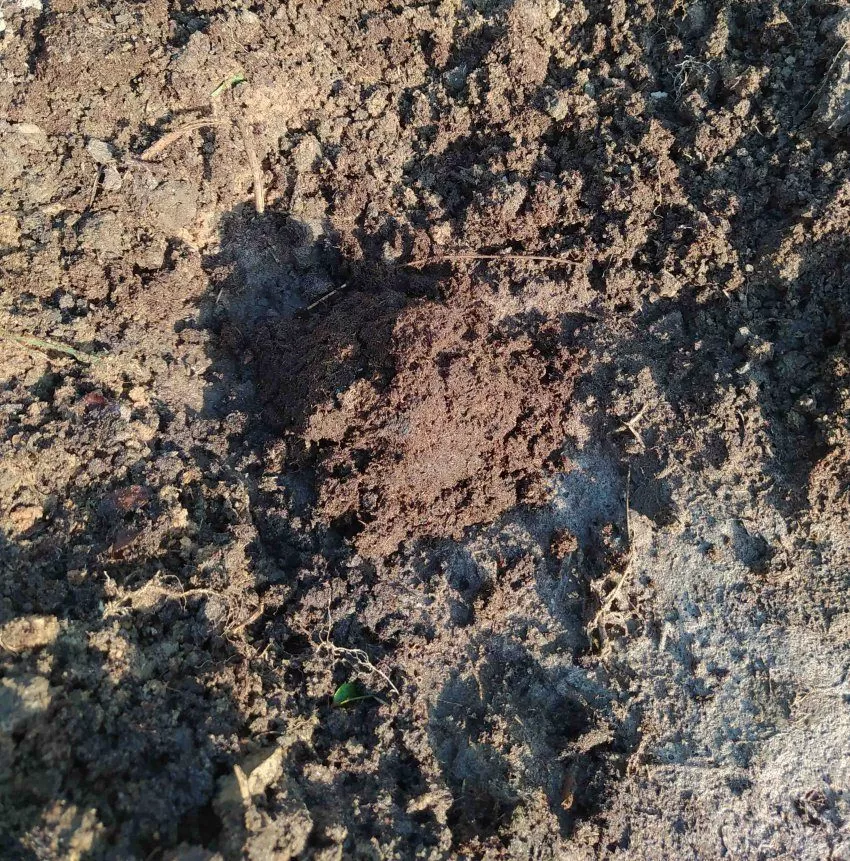
Sprinkled with earth.
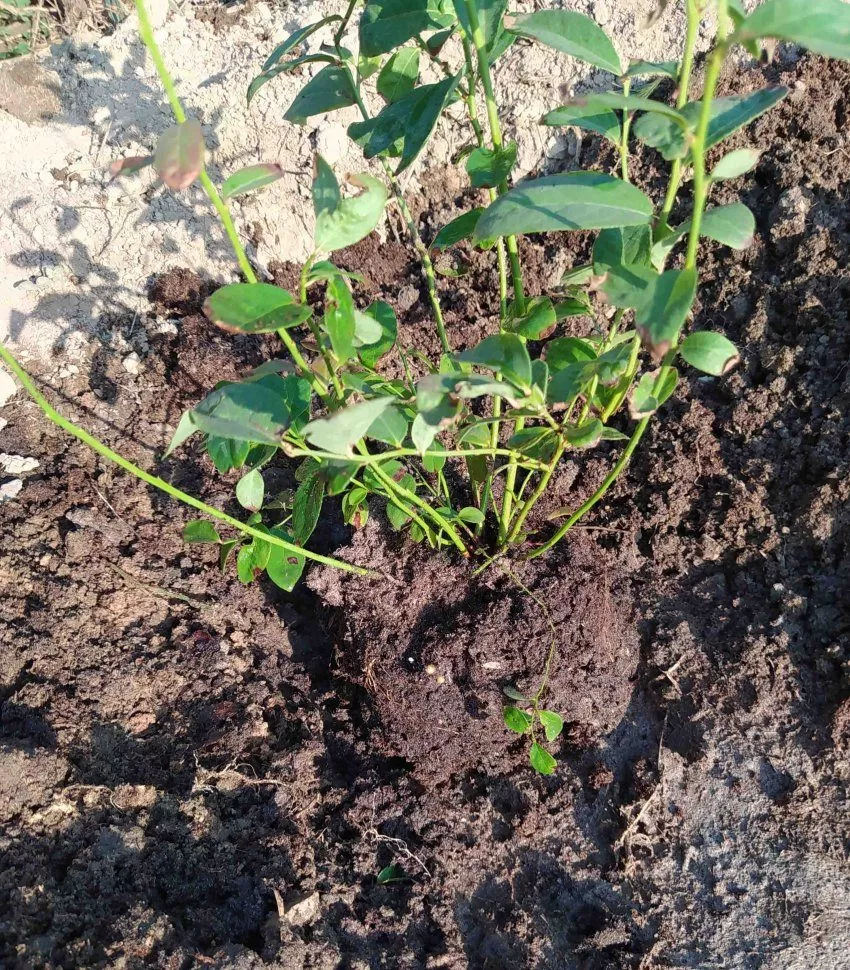
I planted the remaining two blueberry bushes in the same way, with a lingonberry and cranberry plant between them. These are heather plants that require soil of roughly equal acidity. Of course, the cranberries require more moisture, but I'll see how they grow. If anything, I'll create a second, separate bed for them in the spring.
According to the rules, it would be worthwhile to make a larger distance between the bushes, but for now I decided to leave this density and see how they grow next season.
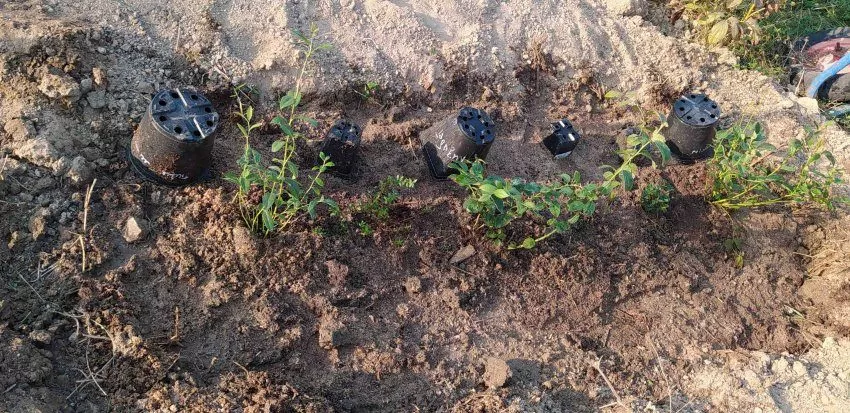
I didn't have the patience to dig a bigger trench, and I didn't have enough peat. Anyway, if the plants take root and I see them, they're getting crowded. Next season, I'll finish digging a second trench and plant a couple of bushes in it.
All that remains is to collect the pine needles and cones and mulch the surface with them, as the needles also acidify the soil.
Now the temperatures have dropped below zero and the leaves have turned red.
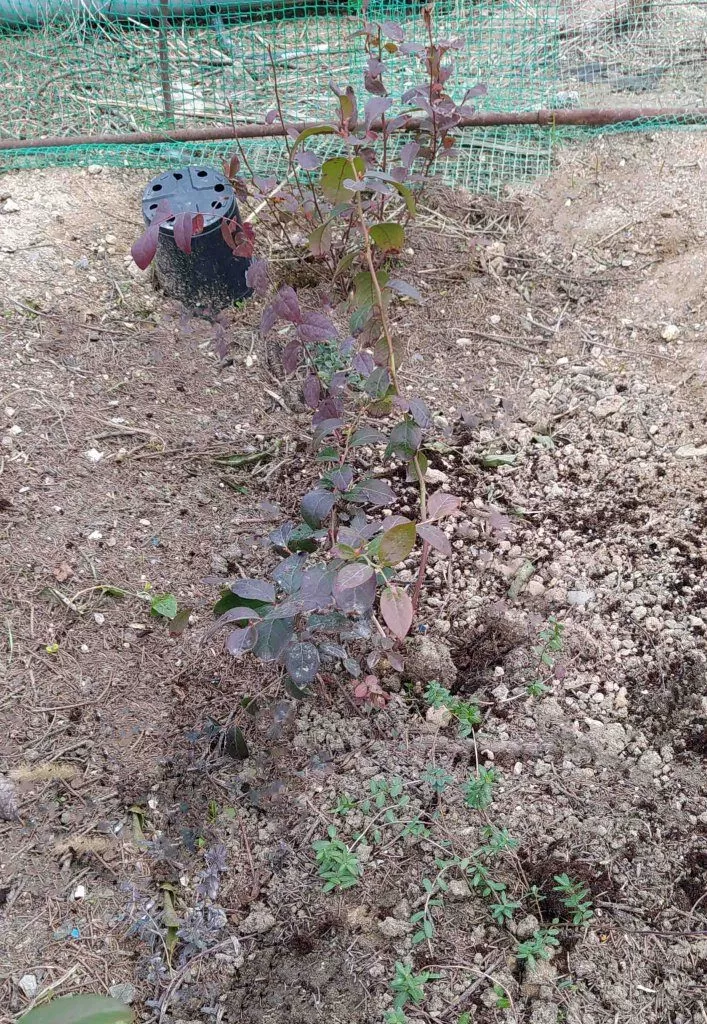
Well, I scraped up some pine needles and added some. Now let it sit until spring. I'll add more fallen leaves when they accumulate, and then we'll see. I really want to try some berries.
Blueberries are interesting. I can point out a few shortcomings with yours, though.
First, the plants are planted very densely. Blueberries grow to a considerable size, and each bush requires more space.
Secondly, there's very little substrate and very little depth. The hole needs to be at least 30-40 centimeters deep. If there's clay or high groundwater, it needs drainage.
Thirdly, from the photo, it looks like your soil is heavily limestone (white pebbles), and the edges of the hole aren't lined with insulating material. This deficiency will cause the soil's acidity to drop very quickly (i.e., its pH will begin to rise). This creates uncomfortable conditions for the plant. Furthermore, the peat will dry out very quickly, and the soil will draw moisture from it. That's how it works.
I was preparing a planting site for a blueberry bush in the fall, and I used three bags of peat moss (60 liters each) and two buckets of fine pine bark to fill the hole. After planting in the spring, I'll need another bag of pine needles just for mulch.
Thanks for the recommendations!
I'm trying to make friends with blueberries for the first time))
The photo doesn't really show the scale of the size (maybe because the edges are sloping and not clear). The hole was definitely about 30 cm deep, maybe even 40 cm—when I stepped into it, it was a little less than knee-deep. It's at least 1.5 meters long, maybe even 2 meters—I'll go and measure it tomorrow (i.e., the bushes are spaced 40-50 cm apart), not counting the lingonberry bushes between them. I know it's a bit small, but I'll see how they grow, because when I was planting, I was already planning, if they grew well, to dig another trench nearby and plant medium-sized blueberries in it, so they'd have more space. I didn't have enough time to dig the second trench in one go. )) And speaking of my experience with honeysuckle, I thought it would grow a lot when I planted it, but it's been bearing fruit for years now. But the bushes are small and compact. Either it's growing roots and then bursting upward and outward, or it's not happy with something, or I was expecting it to grow more, but everything is fine, and it's still producing fruit. Now the buds have awakened, and the green leaves are unfurling.
This year, I had to replant the felt cherry tree in the fall... I thought I planted it with extra trees, but it grew so fast that the crowns of the bushes closed together. I had to dig one up and replant it so they would have more space.
The white pebbles are the same soil, just sun-dried, plus there were some pebbles, but they don't look like limestone. It's more like some kind of clay soil in that spot. That's why I didn't build a border—this soil doesn't absorb water very well. When I watered it before planting, the water just sat there for a long time and wouldn't drain. I set up a chicken coop nearby, and they had a plot with similar soil. Now, with the constant dampness, rain, and snow, the soil in the garden is mostly heavy and damp, sticking to my feet. I tried digging up the beds in good weather to prepare them for spring, but the soil is heavy and damp, sticking to my shovel. And in that plot—where the soil is strange—the chickens rake up the top sod, creating sand baths. The soil there is completely dry, just like where I dug—very compact at first, but once you loosen it, it's like a dusty sand bath. And so, in this dampness, the chickens dig holes and bathe in the dry sand. I hope it won't absorb the moisture and acidity. Well, time will tell.
In terms of volume, I used about a bag of peat + 2 bags of sawdust, + fresh compost (if I use bags, it's probably about a bag, maybe more), and then spruce needles on top. I still add more regularly. So the mulch level is increasing. Because there's a large spruce tree by the gate, every time I sweep, I collect a couple of buckets of needles, which I now take to mulch the blueberries.
Just the other day, I bought some fertilizer specifically for blueberries and added it to the soil under the bushes. I'll be using it again this summer. I also bought a pH meter. I haven't tested it yet, but I'll report back once I do. If it's not enough, I'll add more acidity.
I'm more worried about our summer heat—making sure I don't miss watering, don't let it dry out, and make sure it doesn't burn. Sometimes it gets up to 40 degrees Celsius (104 degrees Fahrenheit) for a week, or even a month, at a time. I'll probably have to shade it. For now, I'm hoping the almonds will be covered by their leaves, but we'll see if that's enough.