

How beautiful are the gladioli in the garden –
These are the bright flowers of the rainbow.
Mighty ears of corn reach into the sky,
Flowers are woven into them like bows.Yellow, white, orange, red
They will be cut in September for a bouquet,
Beautiful asters will be added to them,
They will pack it in a shiny package.
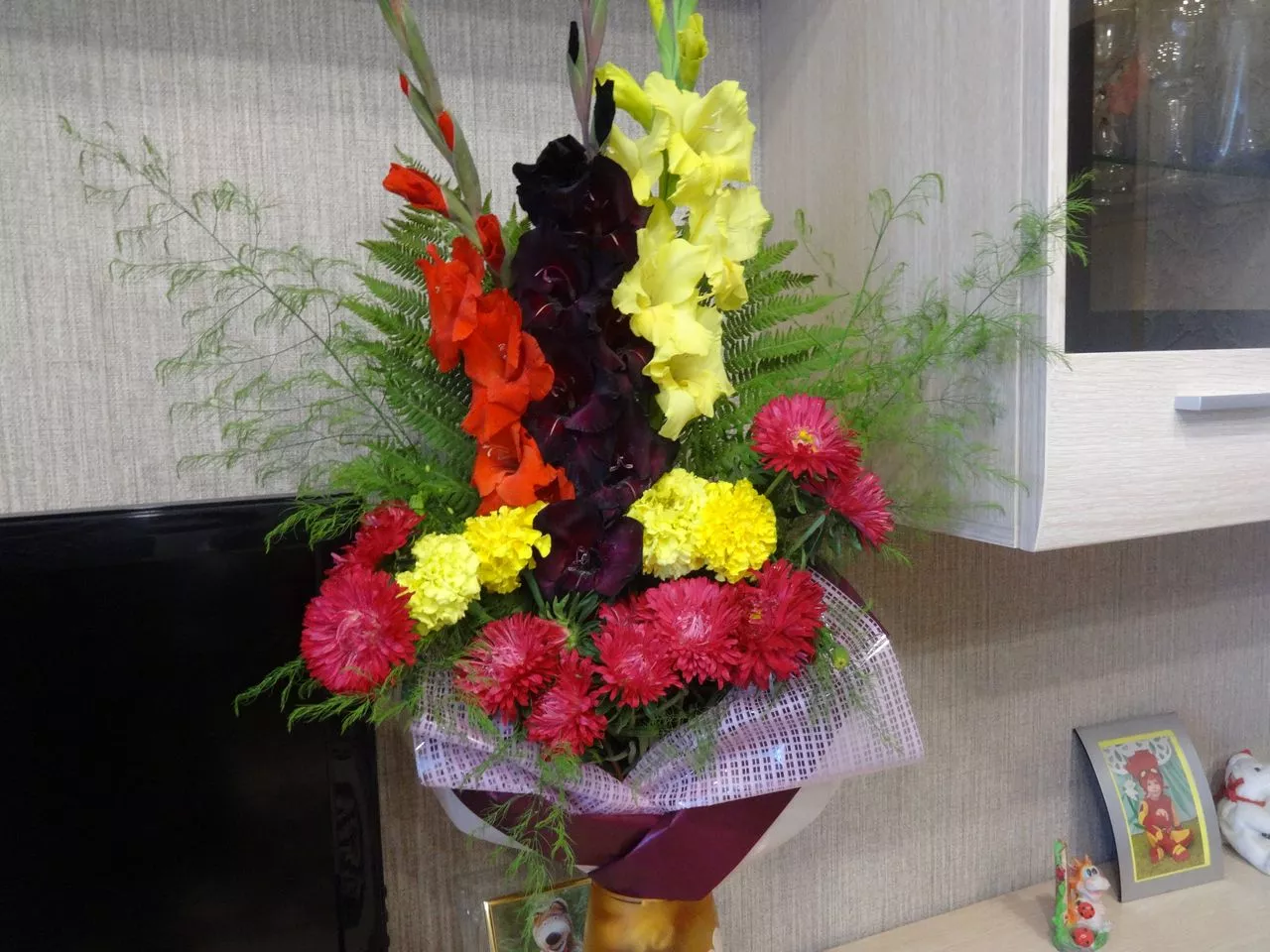
Gladioli look absolutely gorgeous in bloom. They are beautiful, majestic flowers, yet completely unpretentious.
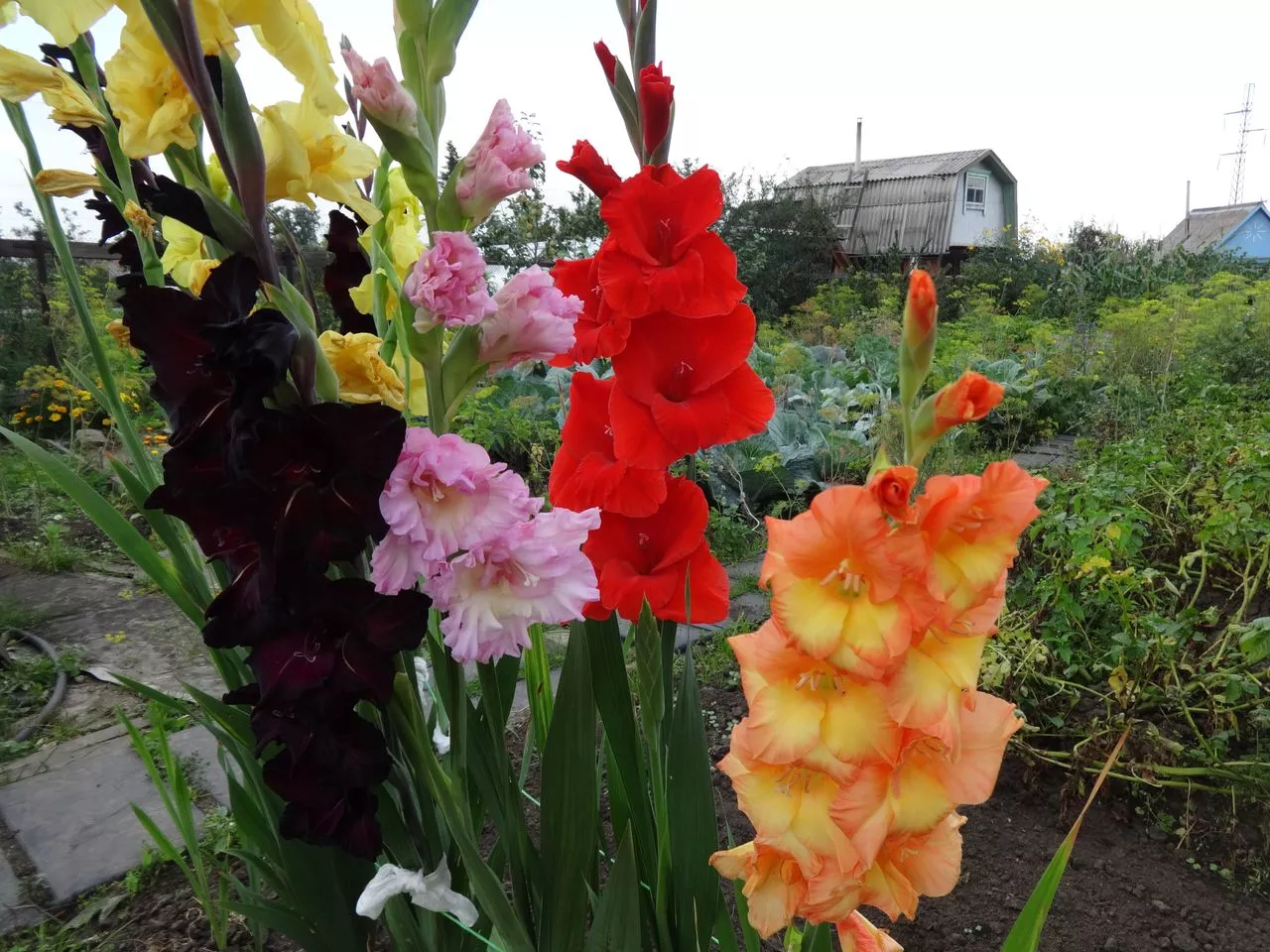
Gladioli bloom at different times, depending on the variety. Gladioli come in early, mid-season, and late blooming varieties. Early bloomers bloom in July, mid-season varieties in August, and late bloomers in September or even October. For our region (Krasnoyarsk), it's best to buy varieties that bloom from July to September. Late blooming varieties simply don't have time to ripen their tubers.
I'll tell you briefly what kind of gladioli I have.
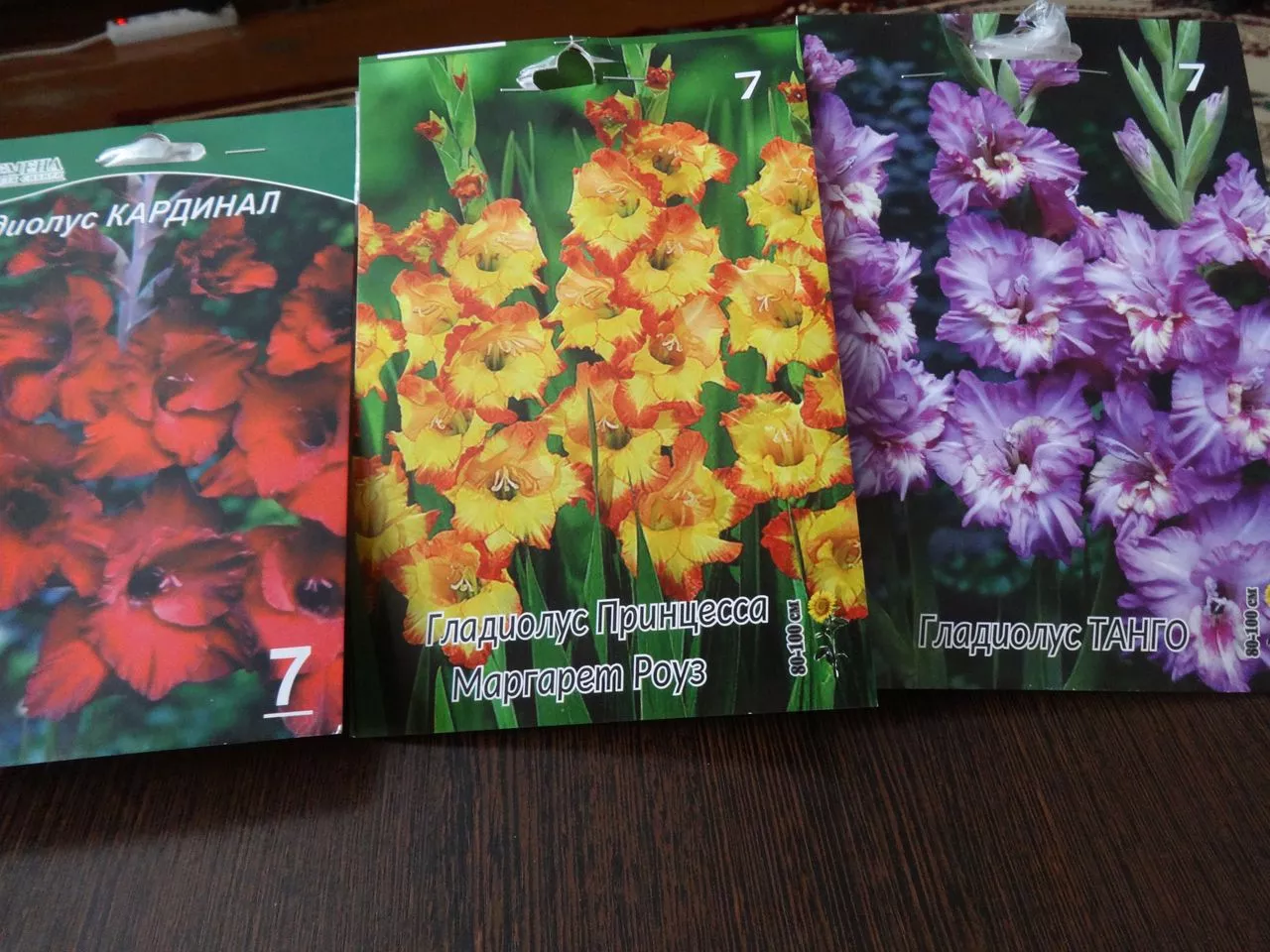
Early varieties bloomed at our dacha at the end of July. These are burgundy and orange.
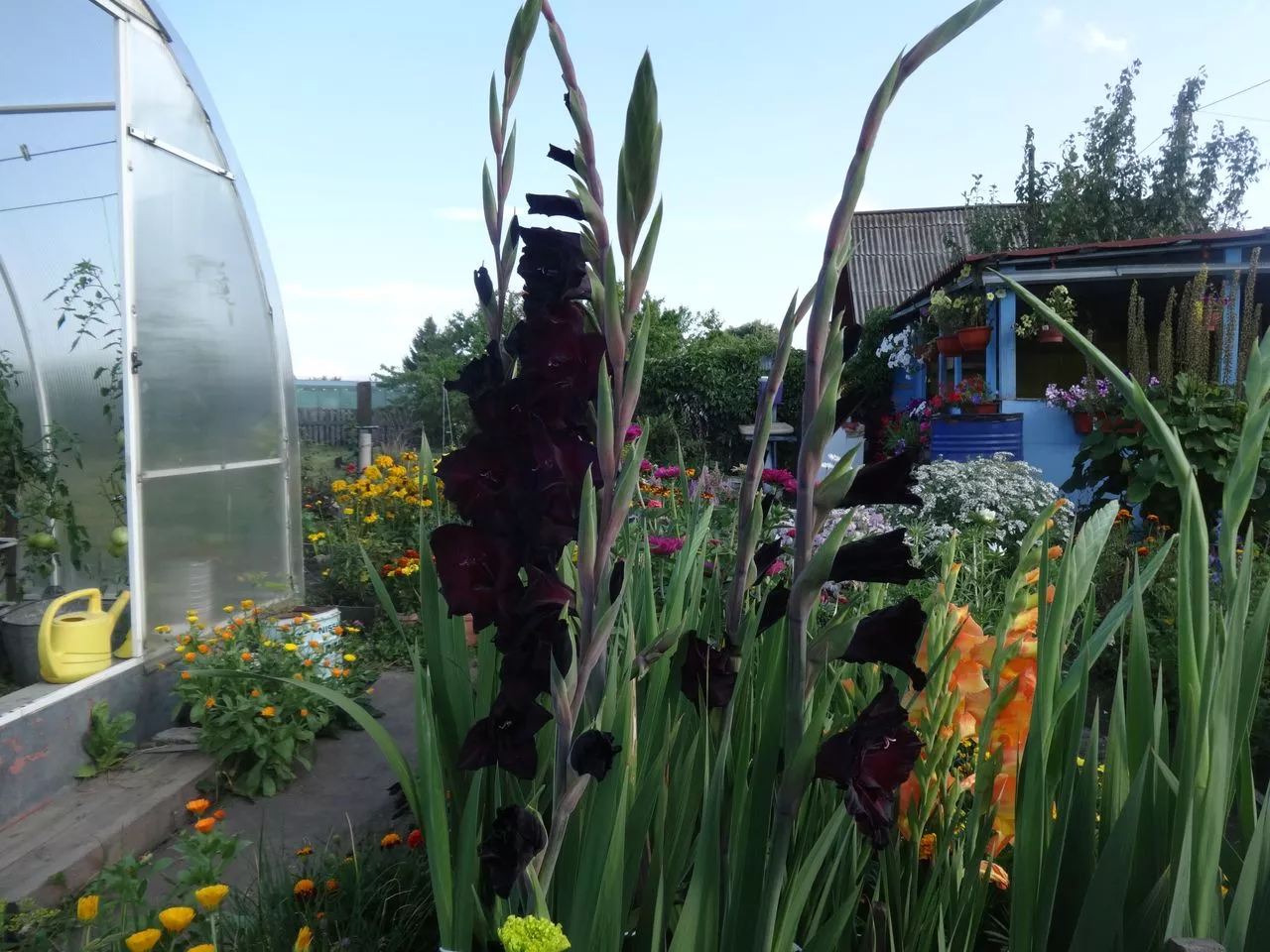
The burgundy Black Prince variety has tall leaves and long stems. Each stem bears large, dark burgundy flowers. Each stem holds 12 to 15 very beautiful, dark, almost black flowers.
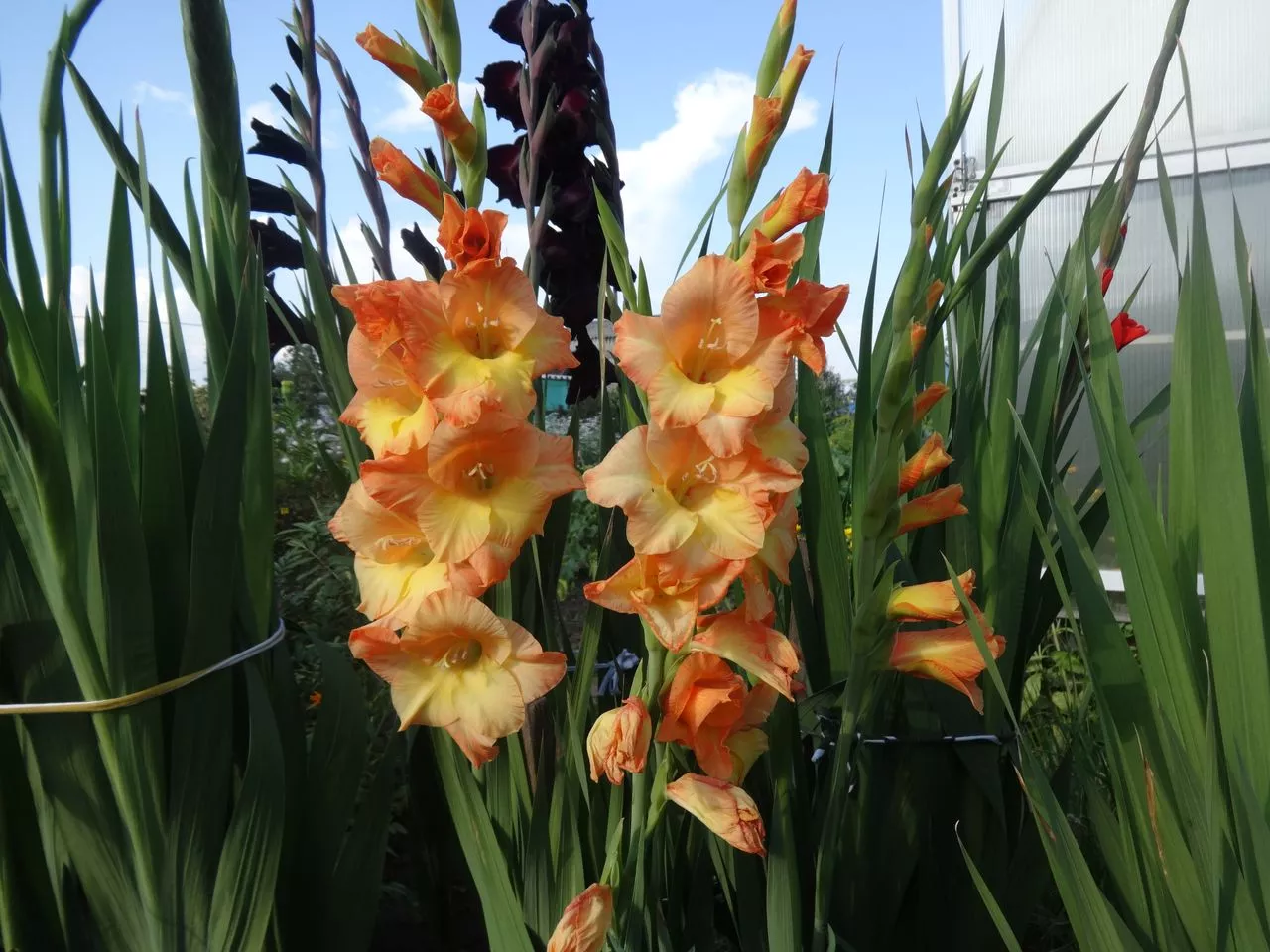
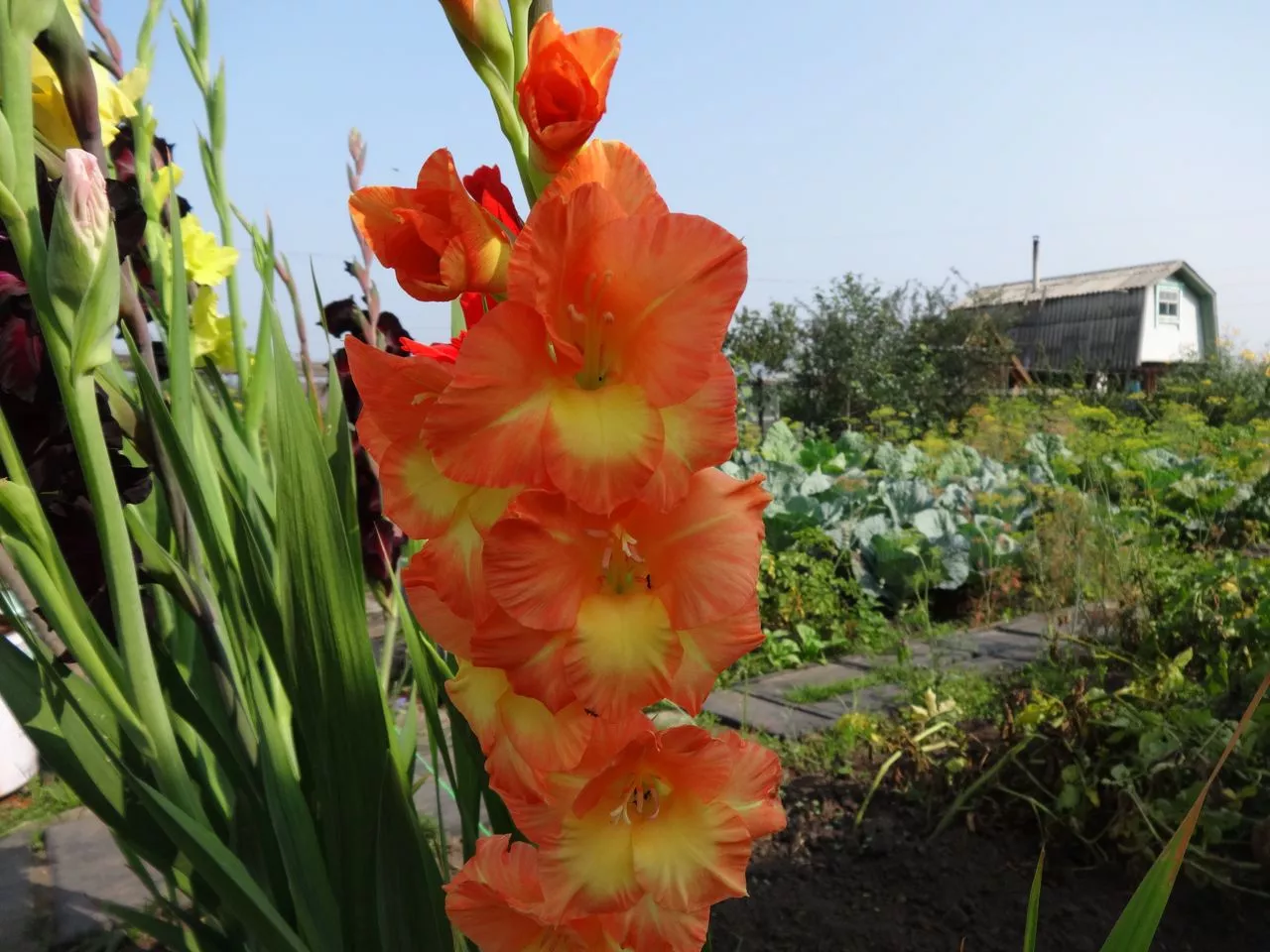
These orange gladioli are low-growing. The variety is called Princess Margaret Rose. The flower stalks are tall and bear delicate flowers in two shades: the upper petals are bright orange, while the lower petals are light yellow with an orange border. The flowers are large.
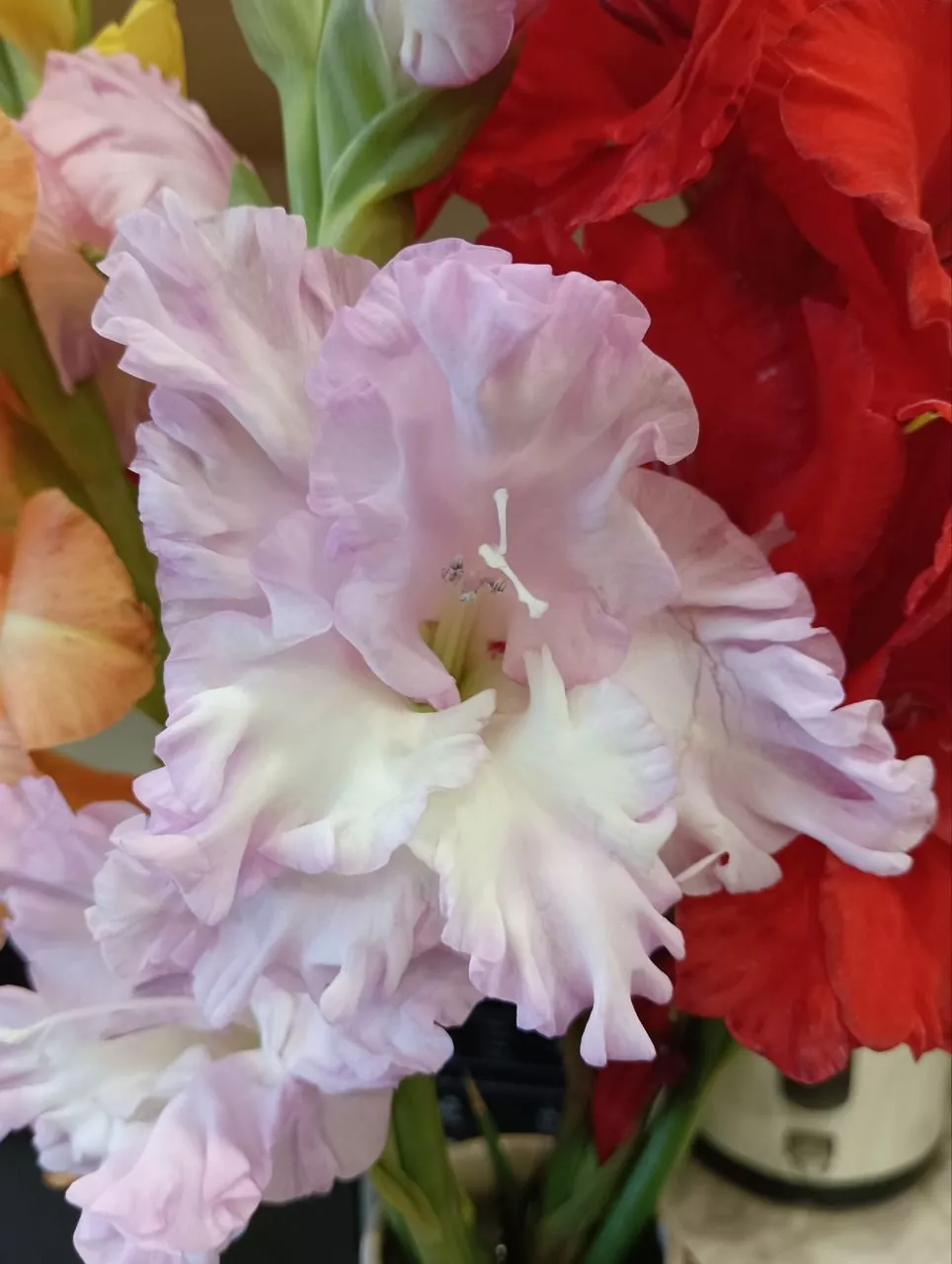
Gladioli of the Tango variety are pink with wavy pink and white petals, they are late.
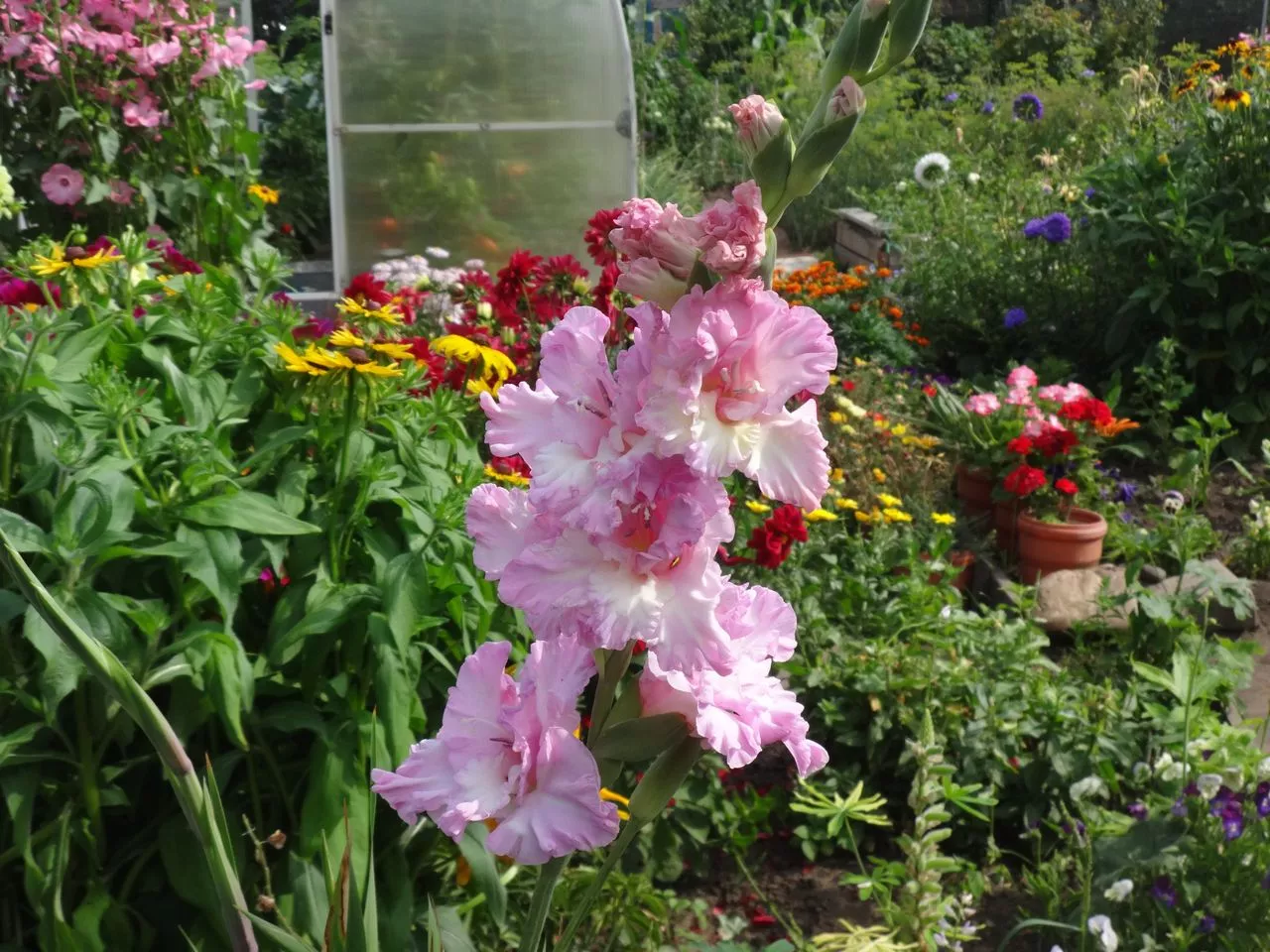
If the summer is cold, the flowers emerge in early September and don't have time to fully bloom. The flower stalks have to be cut off, and they bloom in bouquets at home.
My flowers are pink, but on the label they are darker, closer to a lilac shade.
The red-flowered gladioli began blooming in mid-August. The variety is called Cardinal. The flower looks slightly different in the picture; the flowers are darker, but mine are bright red.
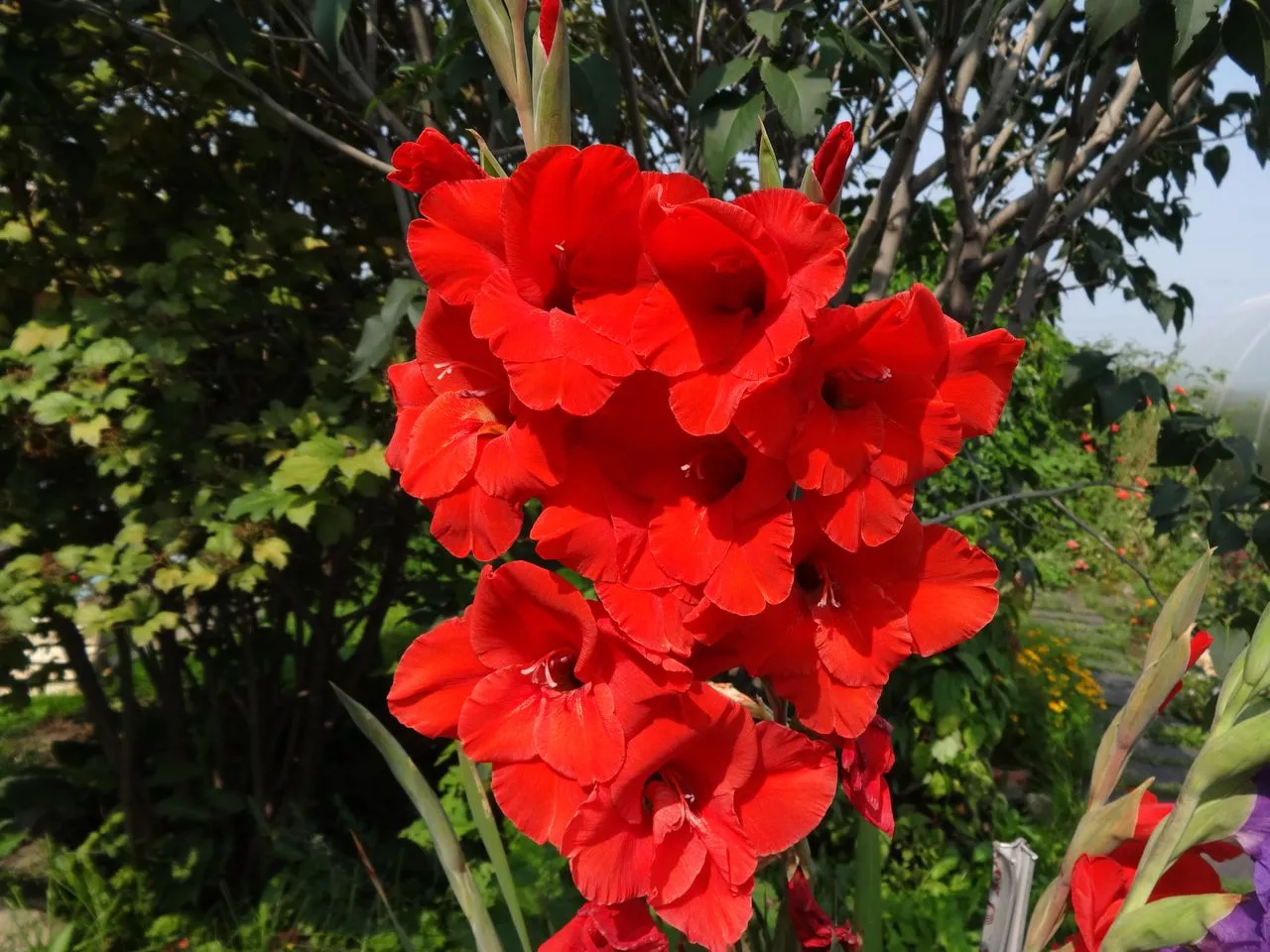
This is what they look like on the label.
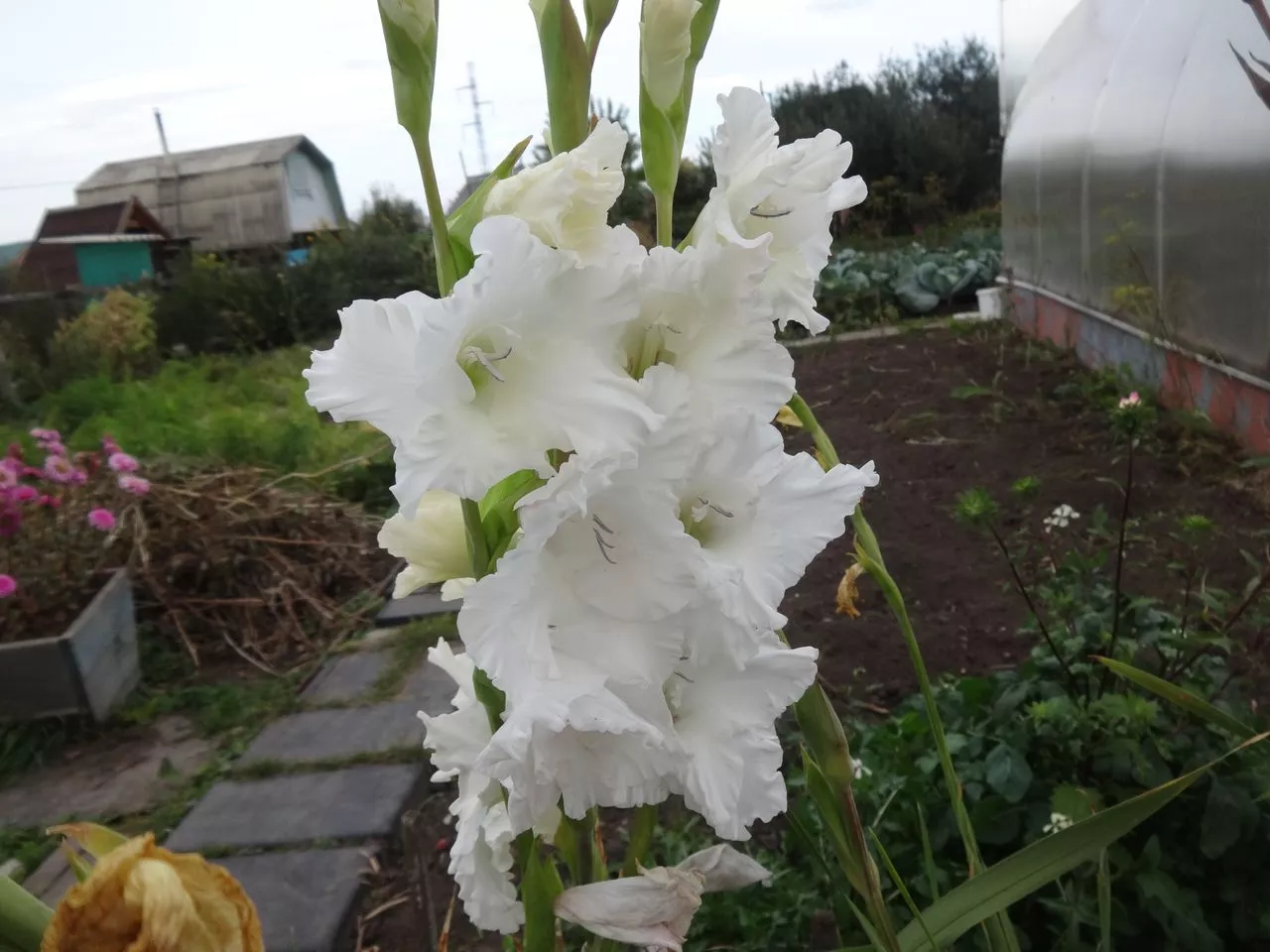
White gladioli of the Tarantella variety also correspond to the image in the picture.
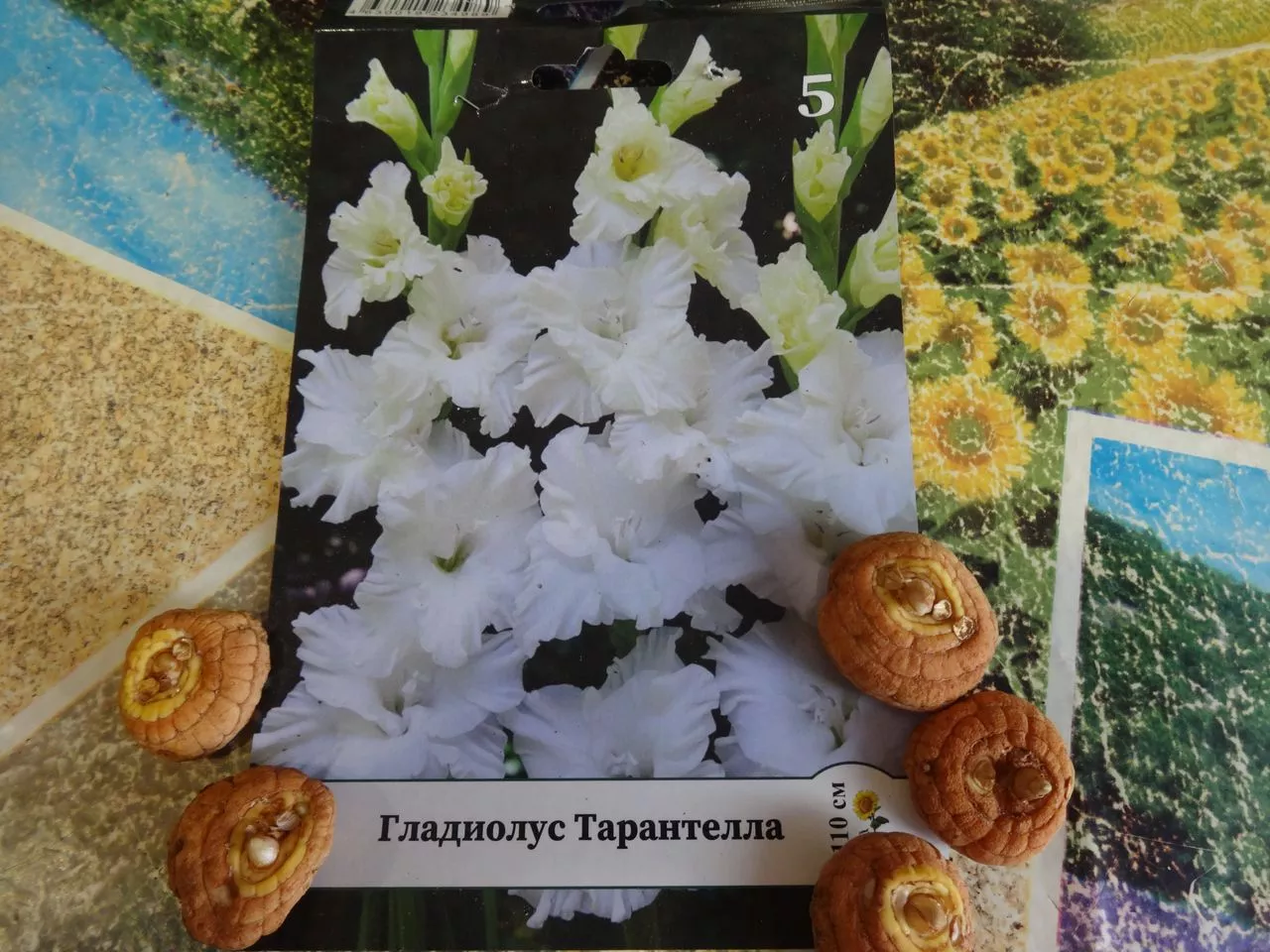
Here, they begin blooming at the end of August. The flowers are pure white, with the buds becoming light yellow at the beginning of bloom, and the fully open flower being snow-white.
The "Flower of the Sun" gladioli variety features large, bright yellow petals with a darker lower petal. They begin blooming in mid-August and continue to bloom until the end of September.
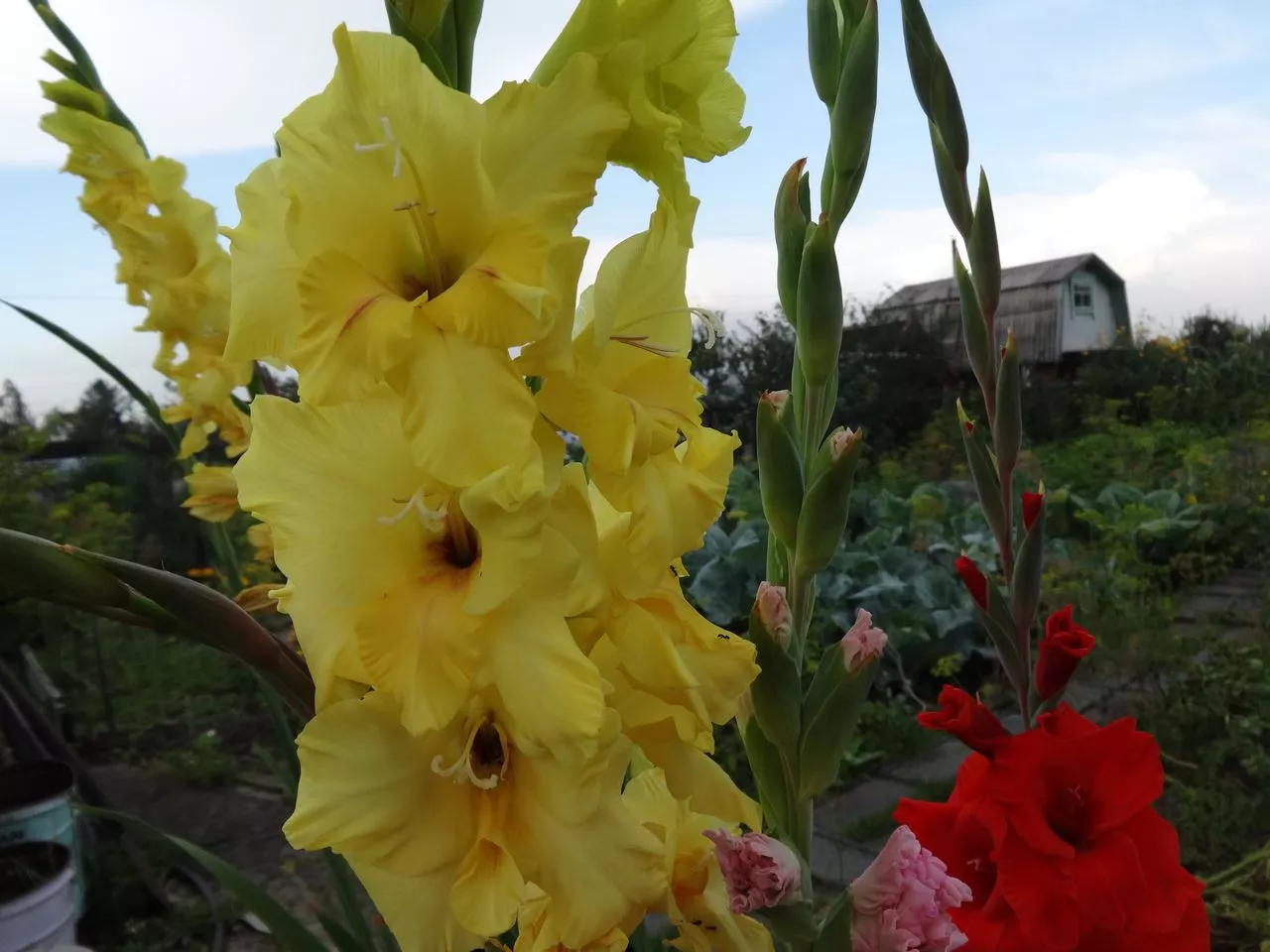
I cut the last bouquet of gladioli on September 27th.
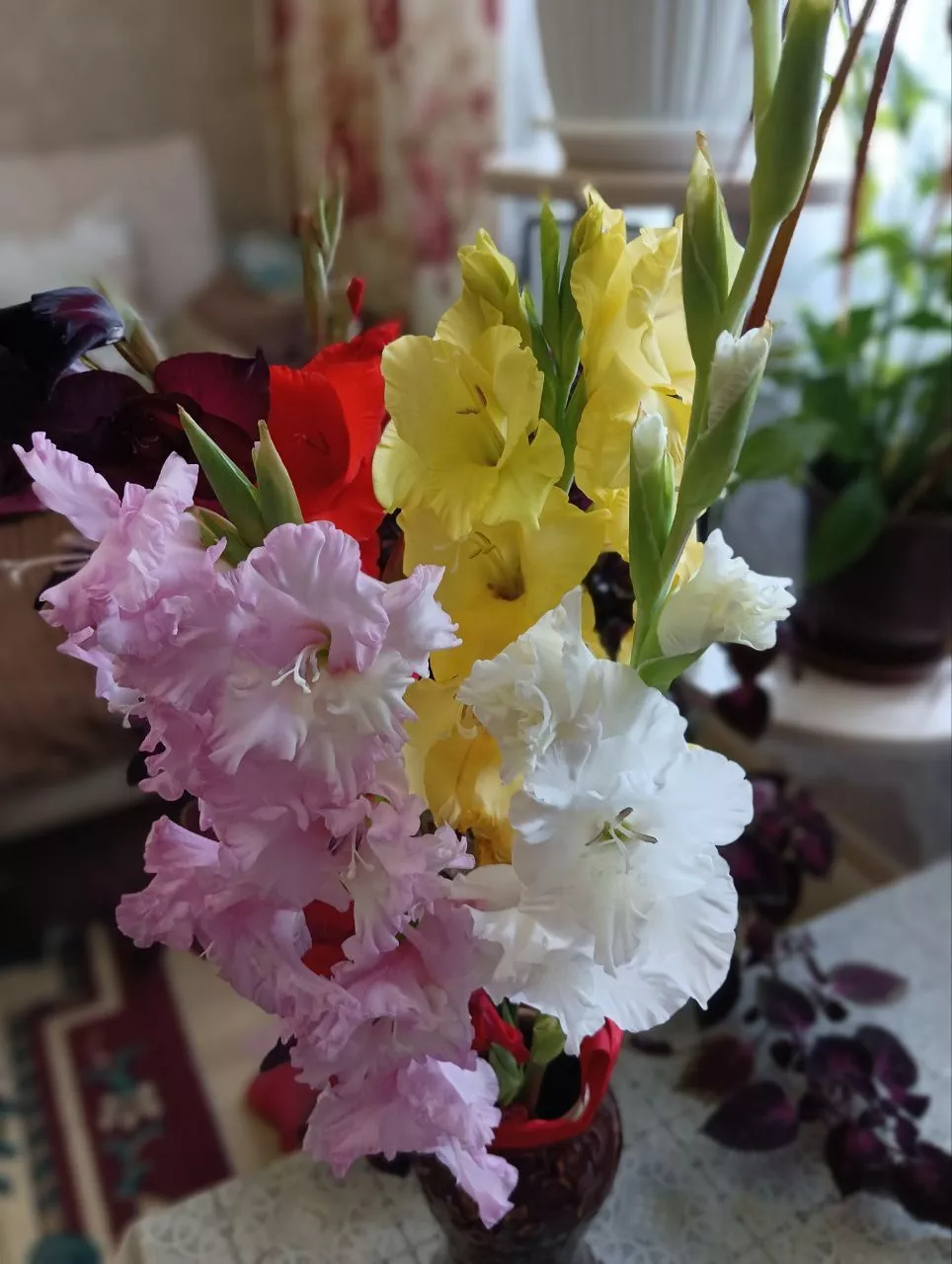
I also cut off the flower stalks with unopened flowers. I placed them in the greenhouse to see what color they were. All the stalks turned out to be pink.
It's already very cold here; frosts and the first snow are predicted in the coming days.
Basically, all my gladioli match the colors shown on the package.
But my purple, red and white and variegated gladioli have disappeared.
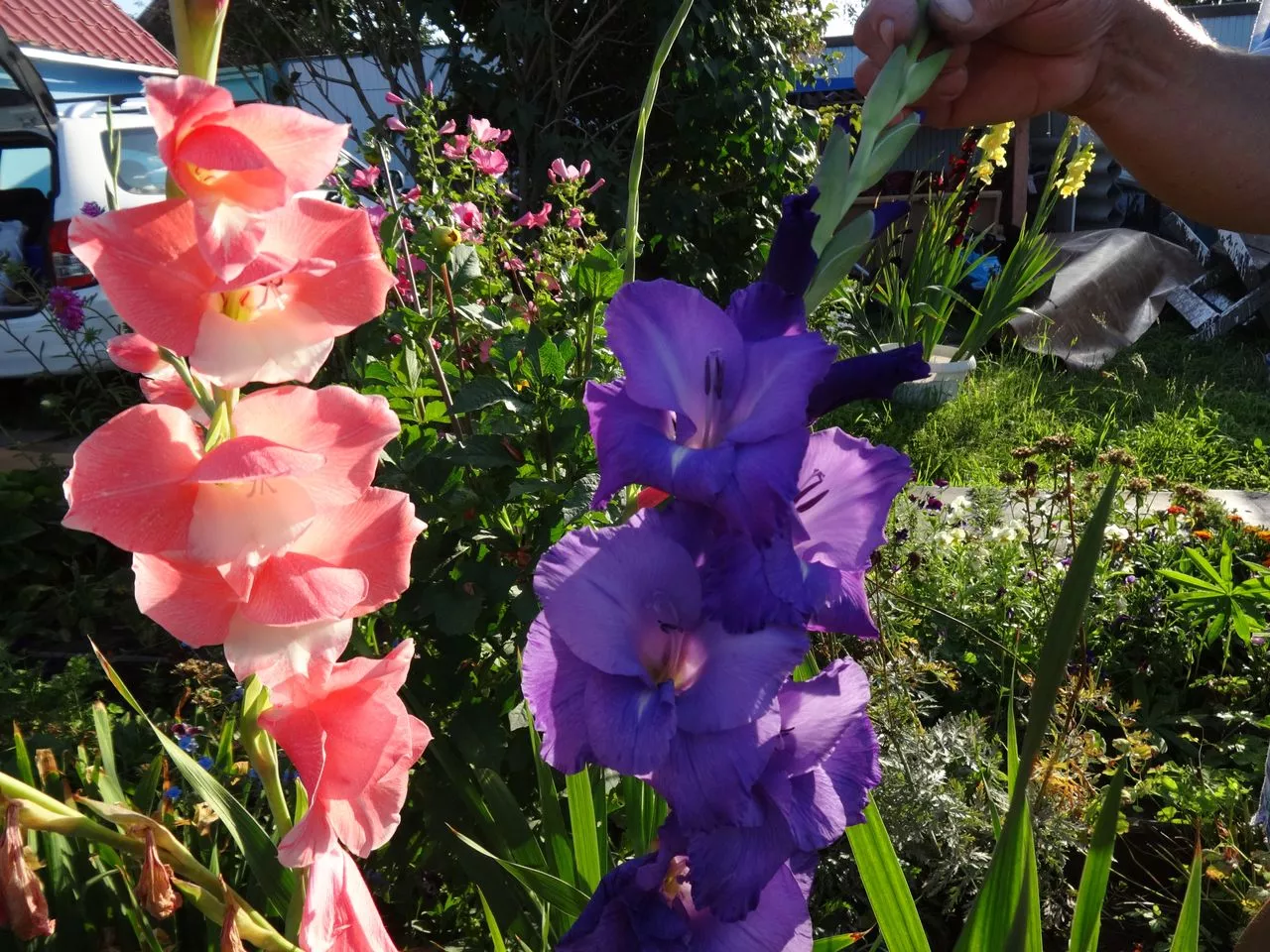
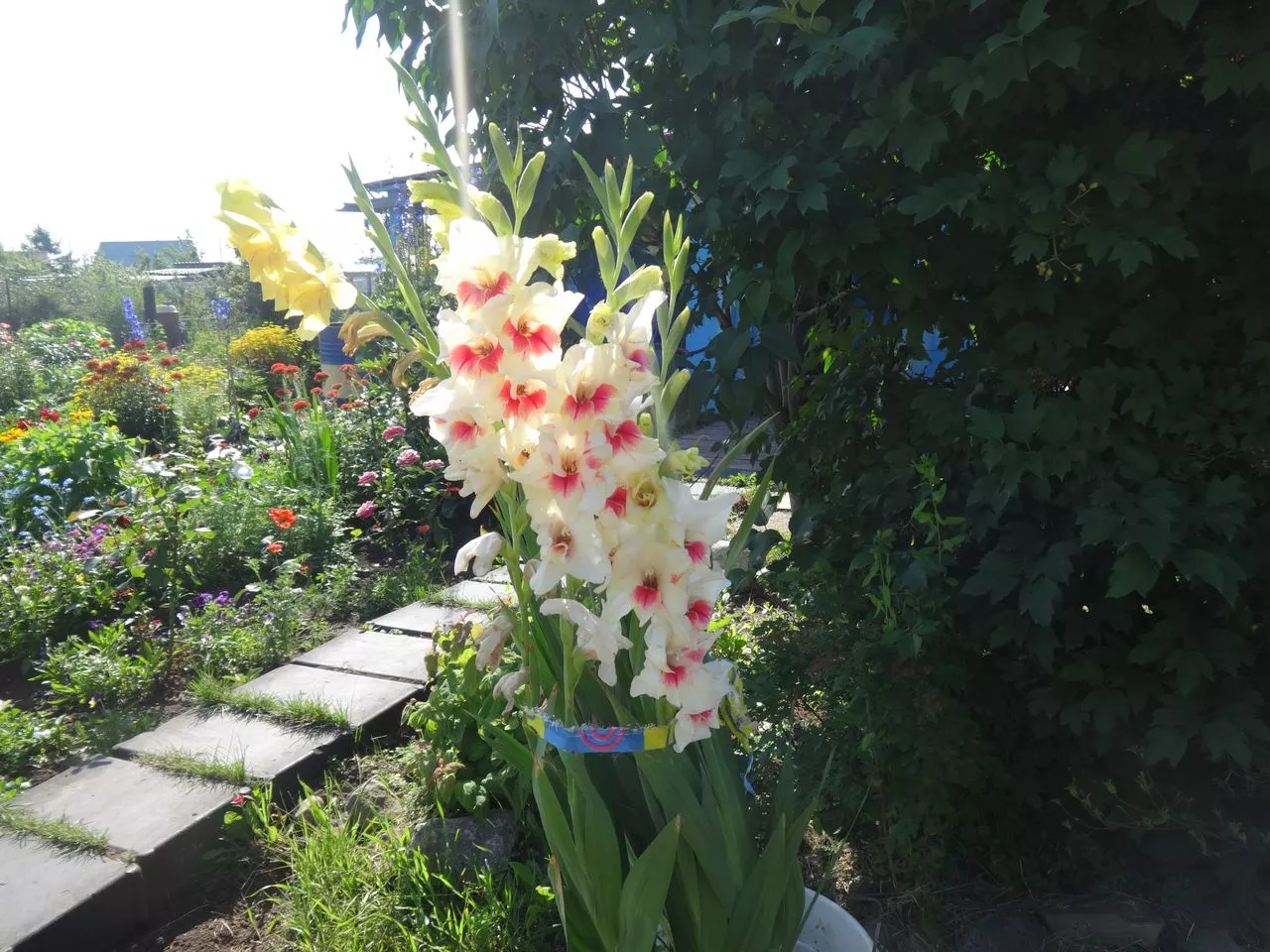
Most likely, the bulbs of these gladioli dried out during storage. One day, I forgot to put them in the refrigerator. And they sat at room temperature for too long.
What to do when gladioli have finished blooming
Gladioli have finished blooming and at this time they begin to grow bulbs, depositing nutrients into them.
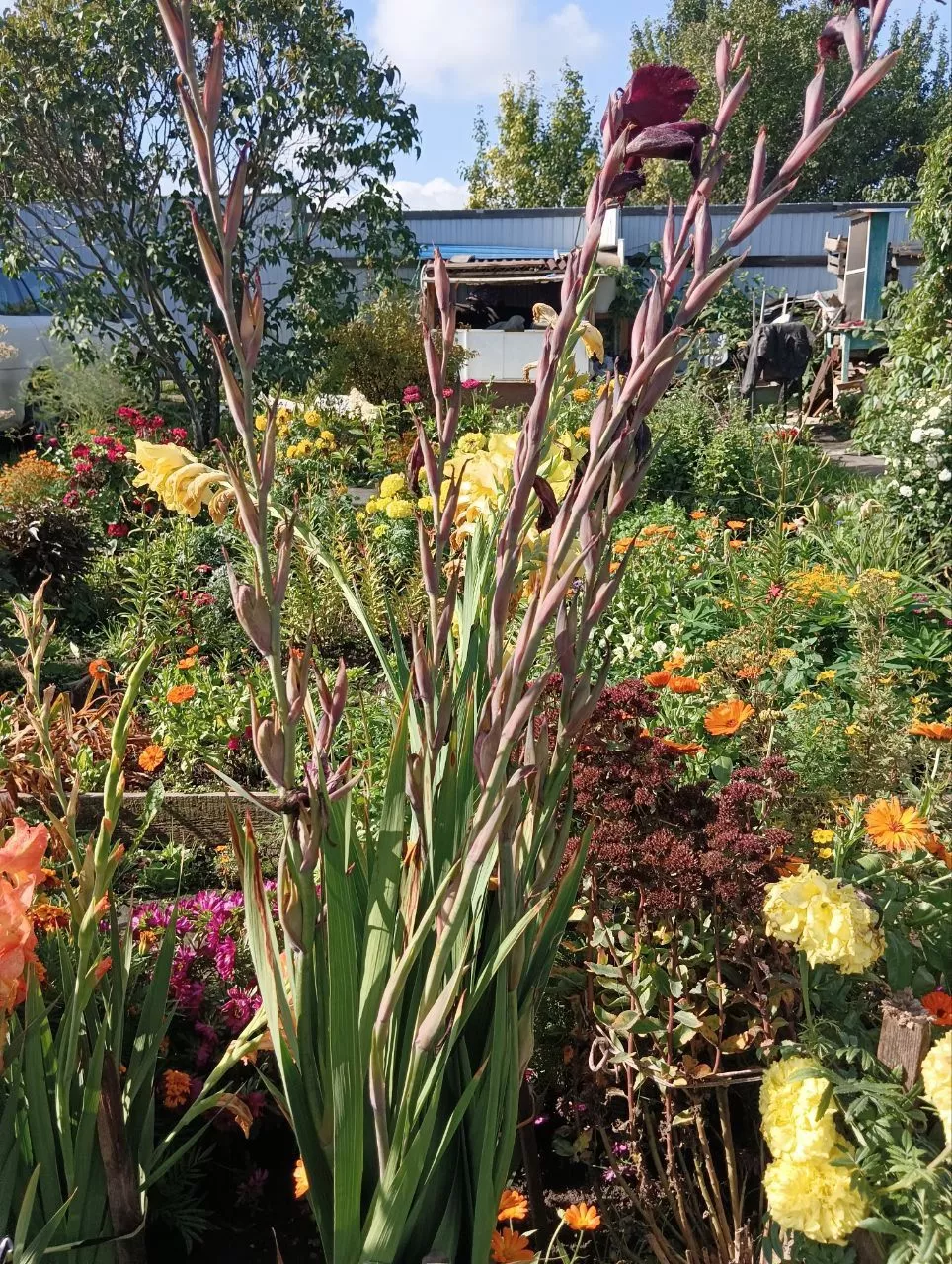
To ensure large gladiolus bulbs, feed them with phosphorus-potassium fertilizers. Superphosphate and potassium sulfate are suitable for this purpose. The fertilizers are diluted in water according to the instructions or dug into the soil. Water the soil thoroughly. Alternatively, you can use wood ash. Dissolve 2 cups of ash in water, let it sit for 24 hours, and then water.
To prevent diseases and pests, it is recommended to water the soil with a pink solution of potassium permanganate or phytosporin.
It is necessary to cut off the flower stalks and some of the leaves, leaving stems 30 cm high above the ground.
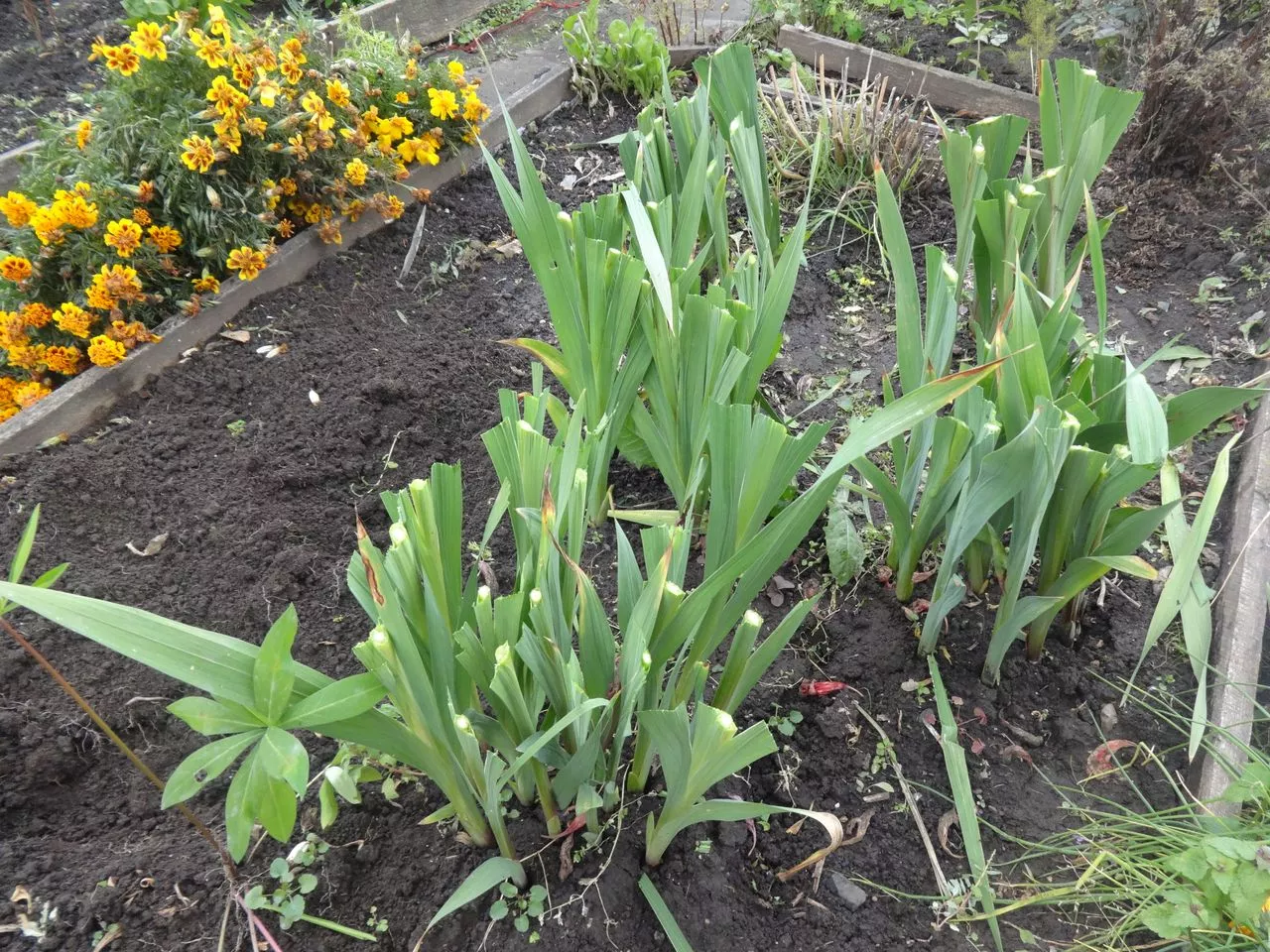
It's recommended to stop watering three weeks before digging. But this isn't feasible here—it rains constantly. Of course, you can dig up the gladioli with a lump of soil, put them in a bucket, and bring them into the greenhouse—it's drier and warmer there. But I never do that. Even though I sometimes think about it.
Late gladioli and young corms produced flower stalks too late. Perhaps the climate—the summer was cold and rainy—impeded the process of inflorescence formation. Such late flowers don't have time to form viable tubers and won't store well, often falling out. This is how my lilac and white-green flowers with wavy petals disappeared.
Many advise not to cut off the foliage of such gladioli when digging them up, but to wrap the tubers and stems in newspapers and keep them in a greenhouse, barn, or summer house for 3-4 weeks, as long as the weather permits and there is no frost.
It's also recommended to leave gladioli in the soil for as long as possible, until the first hard frost, as they're not affected by light frosts. The soil underneath can be covered with a covering material or a thick layer of compost.
If the weather is hot and rainless and the soil is very dry, the gladioli need watering after they've bloomed. But here, the rains haven't stopped, and the soil is very wet, with cool days and light frosts at night. So, I plan to dig up the gladioli on a weekend in early October.
Even my elderly mother found useful information on your site. She loves gladioli and hates the internet. Last year, she decided to get gladioli, but she didn't know what to do with them in the fall. Thank you for enlightening her—she was engrossed in reading. Now she's asking for a tablet so she can read all the articles, as she says, cover to cover. My mother really liked this article!