
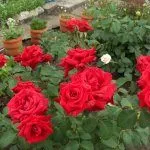
The Chinese rose, or hibiscus, is a beautifully flowering houseplant, an evergreen tree with large, elongated, oval, dark green leaves with serrated edges. It bears large, single flowers, either double or single, in a variety of colors—white, yellow, pink, and red.
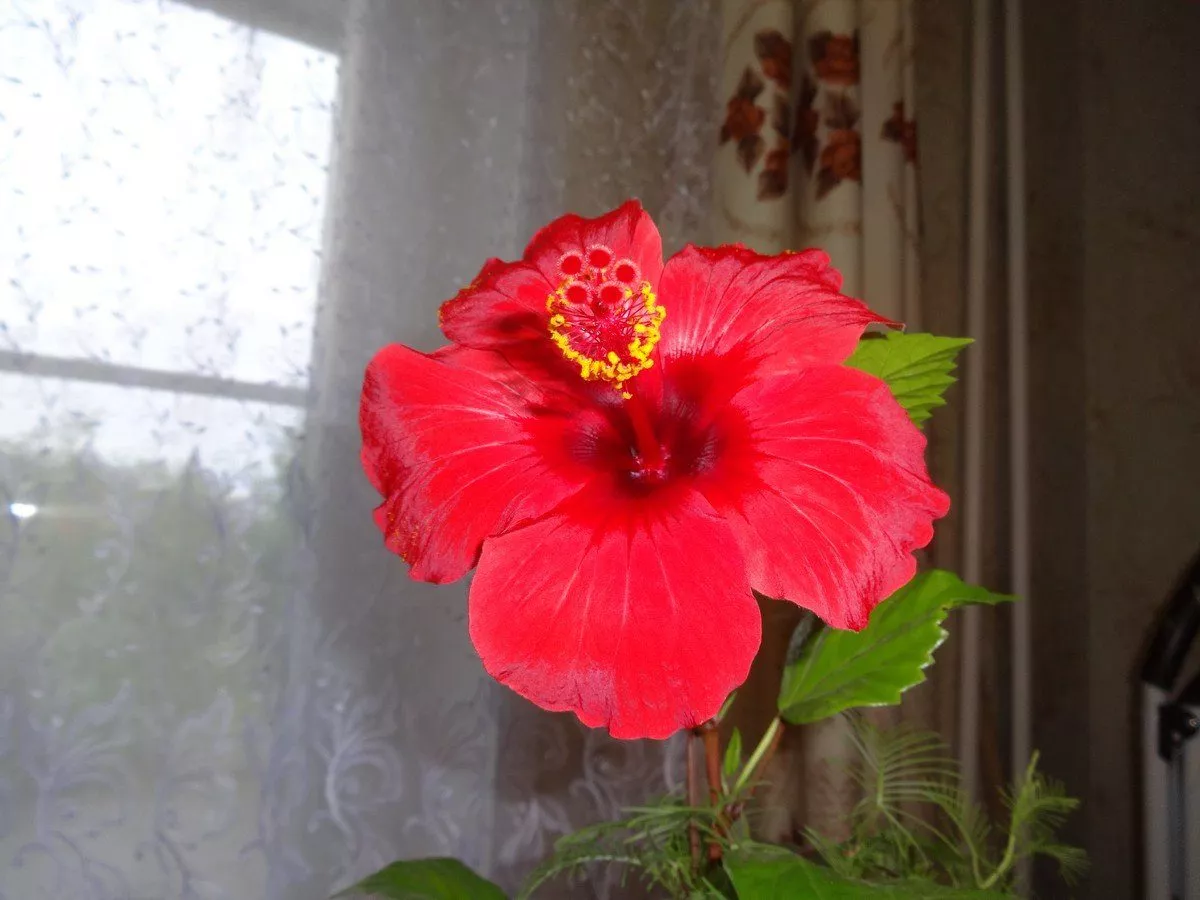
The flowers don't last long, fading within 1-2 days. However, since the plant continually produces numerous elongated buds, blooming lasts from spring to fall. Sometimes roses can delight their owners with winter blooms as well.
Caring for a Chinese rose
The Chinese rose is an unpretentious plant that grows well indoors with proper care.
It requires good lighting; if there is not enough light, the plant will bloom poorly or will not bloom at all.
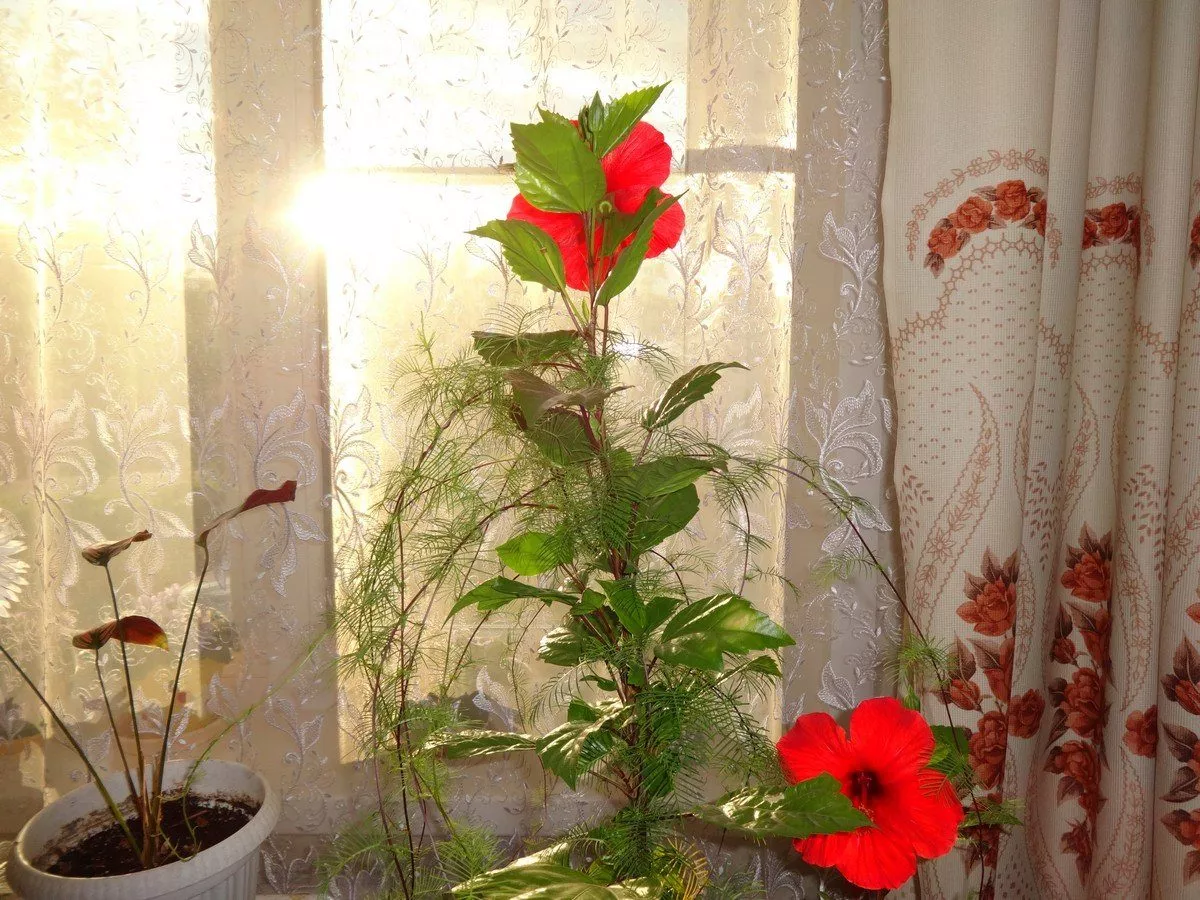
The flower loves humid air and needs to be sprayed regularly with a spray bottle.
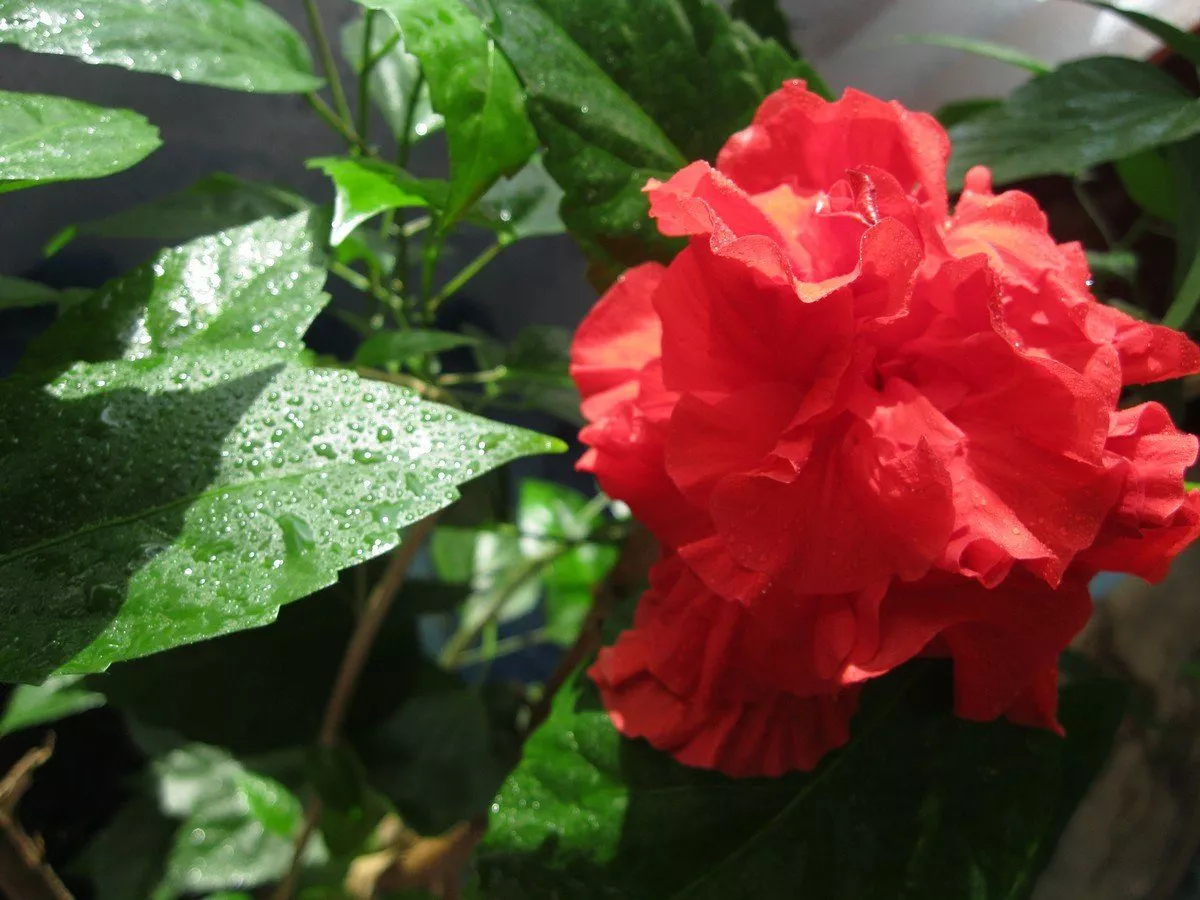
Water the rose with settled, room-temperature water as soon as the top layer of soil has dried. Avoid overwatering, as this can cause the roots to rot and the leaves to turn yellow.
From spring to autumn, the plant should be fed twice a month with fertilizer for ornamental flowering plants. If the China rose blooms in winter, it should also be fed with a weak solution of potassium-phosphorus fertilizer or an ash solution.
To form a proper crown, hibiscus should be pruned periodically, cutting off thin, curved, bare branches, so the plant will produce more flowering shoots.
As the tree grows, it needs to be repotted. The container should be 20-30 mm larger in diameter than the one it was growing in. Young plants are repotted annually in the spring, and after five years, every three to four years. Be sure to place a drainage layer at the bottom of the pot and fill it with nutritious soil.
The Chinese rose is easily propagated by cuttings. To root, cut branches can be placed in water with Kornevin or directly planted in soil, covered with film or a jar.
My Hibiscus Growing Story
Whenever I see a blooming hibiscus, I think of my grandmother, Lyuba. She had a Chinese rose growing in a large pot in her living room; it stood on the floor. The tree was covered with beautiful double roses, and my sisters and I would pick the flowers and put them in our hair. Childhood flew by.
Already in Krasnoyarsk, my youngest son became fascinated with photography. While learning photography, he took pictures of all his friends, acquaintances, family, objects around him, and flowers. He saw a blooming Chinese rose at one of his friends' houses and was absolutely delighted with it.
Soon, the flower began to fade, its leaves wilting, most likely due to overwatering. The girl's father had planted this flower; the hibiscus was dear to her, a memory of her father.
A girl was going on a long journey, and this dying rose was brought to my home for me to save. It looked terrible, bare, dry trunk and branches, only a few green shoots with drooping leaves at the top of the tree.
It was growing in a large blue box made of thick planks, the soil in the box was waterlogged. I took the tree out of the box—almost all the roots were rotten. I removed most of them, washed the remaining ones in a solution of potassium permanganate, and replaced the soil in the box. I repotted the tree, but it struggled for a long time, sending up new shoots, but they withered and dried out.
I trimmed the branches that were at the top of the rose and placed them in water with Kornevin. They were limp and weak, lacking the strength to root.
When I realized I hadn't been able to revive the rose, I decided to get a cutting from someone, but none of my friends or neighbors had grown it. And it wasn't available in flower shops, so I had to order it from a flower shop.
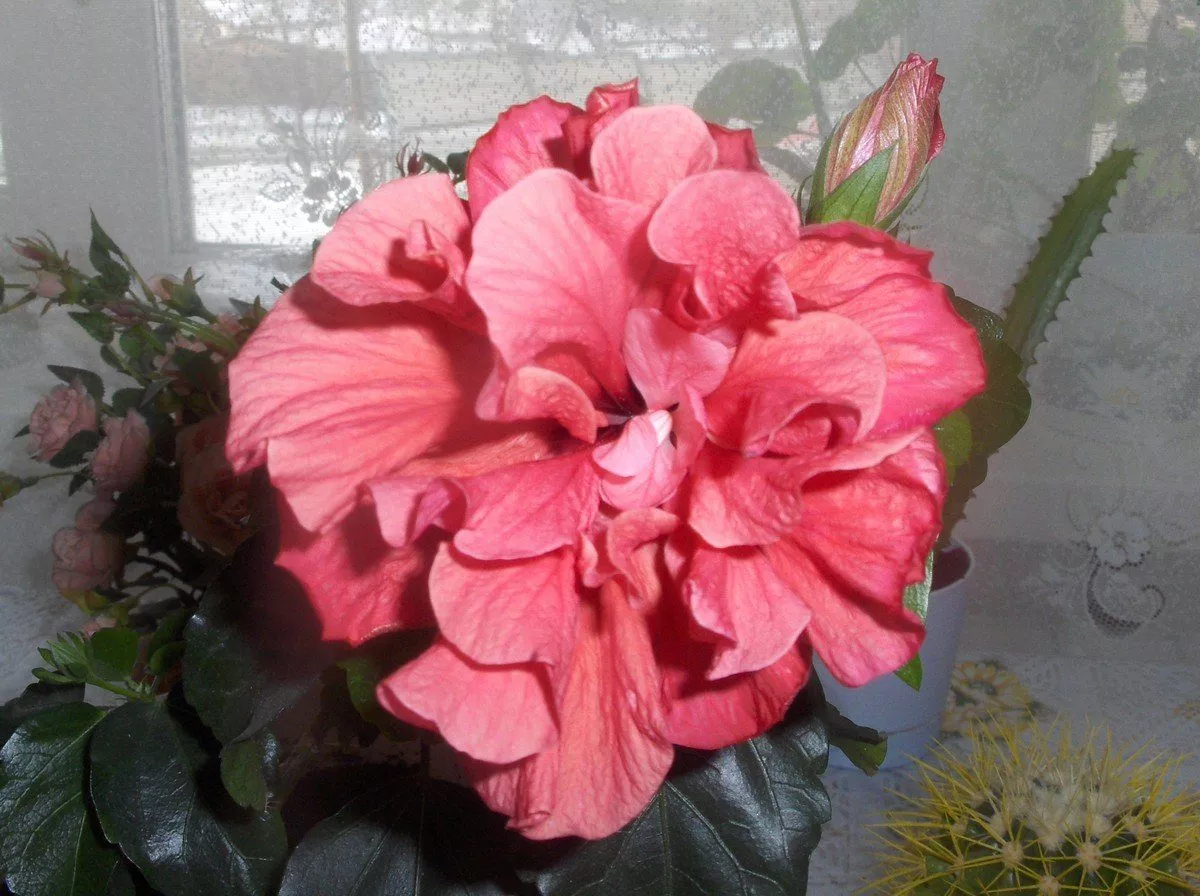
When the order arrived, I took the hibiscus bush home. Soon, the first buds appeared, and when it bloomed its first huge double flower, I realized it was a slightly different color.
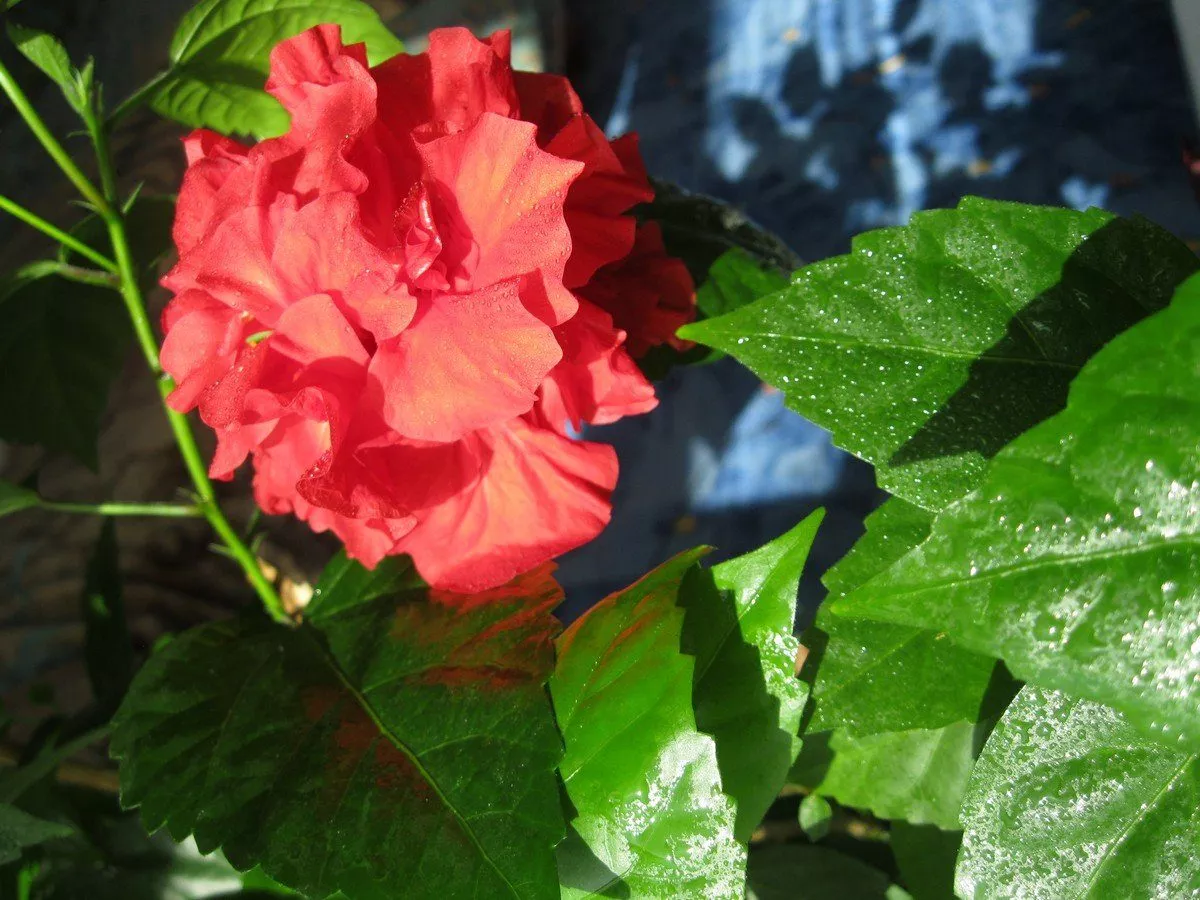
The flowers of the missing hibiscus were bright red - scarlet.
The petals of the newcomer I bought were lighter, with a pinkish tint.
Around the same time, my husband brought home a small hibiscus cutting he'd picked at work. It was a sprig with buds. I pulled the buds off and placed it in water. The sprig quickly took root and was later repotted.
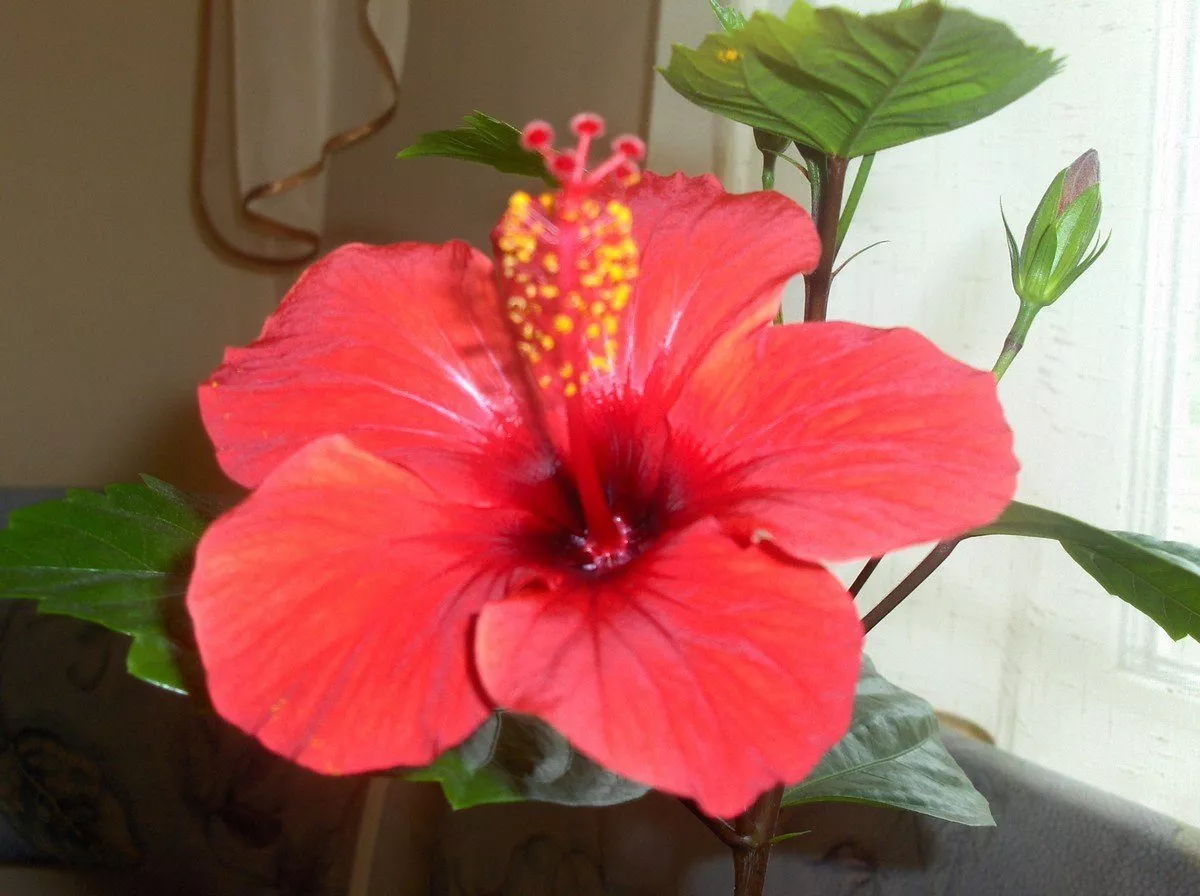
The little hibiscus grew quickly and soon produced a bud, from which a beautiful flower blossomed, huge, bright red, but not double.
The girl's son took the flower he'd bought her when she returned from her trip. I don't know what happened to this hibiscus after that.
The second flower grew in our house for a while. First, it was in the kitchen near the window, and it bloomed constantly in the summer.
When the pot became too crowded, I transplanted it into that same blue box and moved it to the floor in the living room, closer to the window.
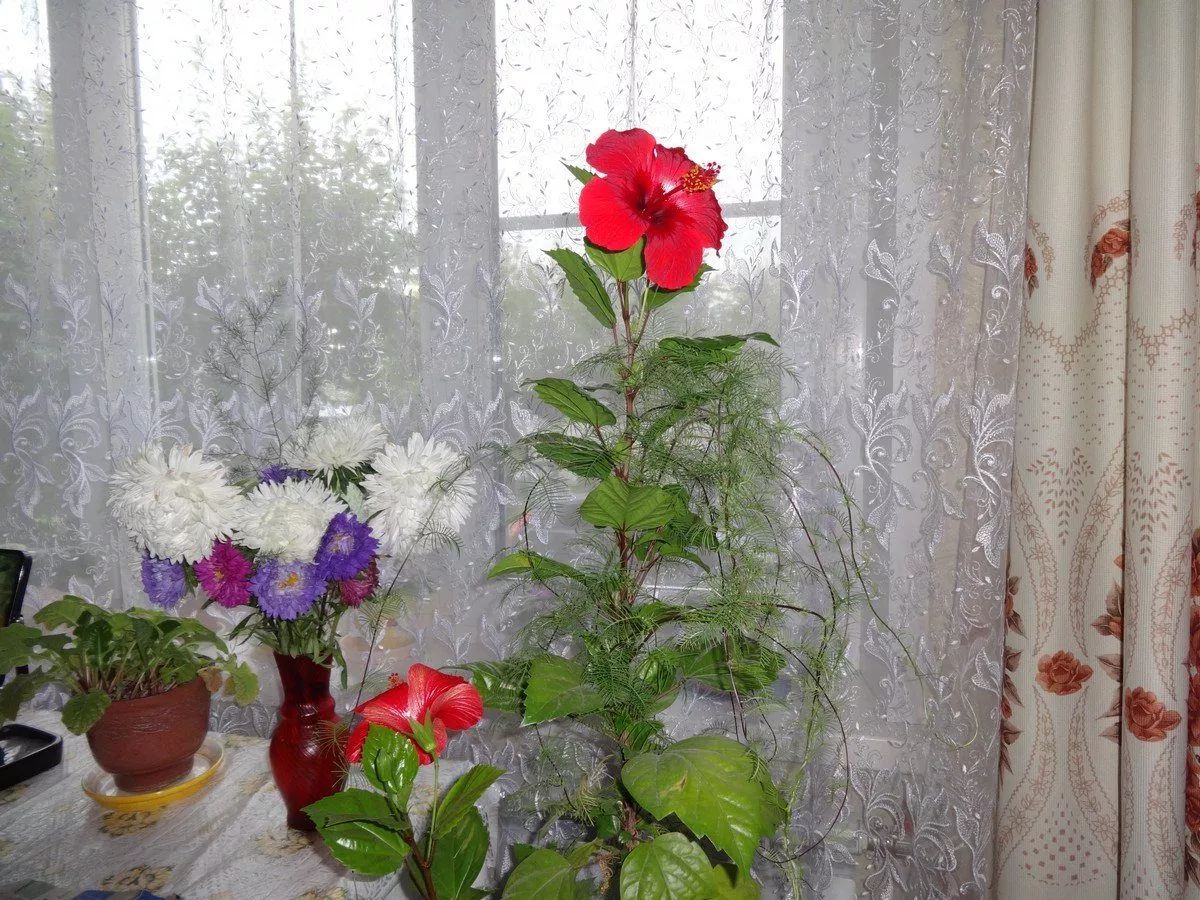
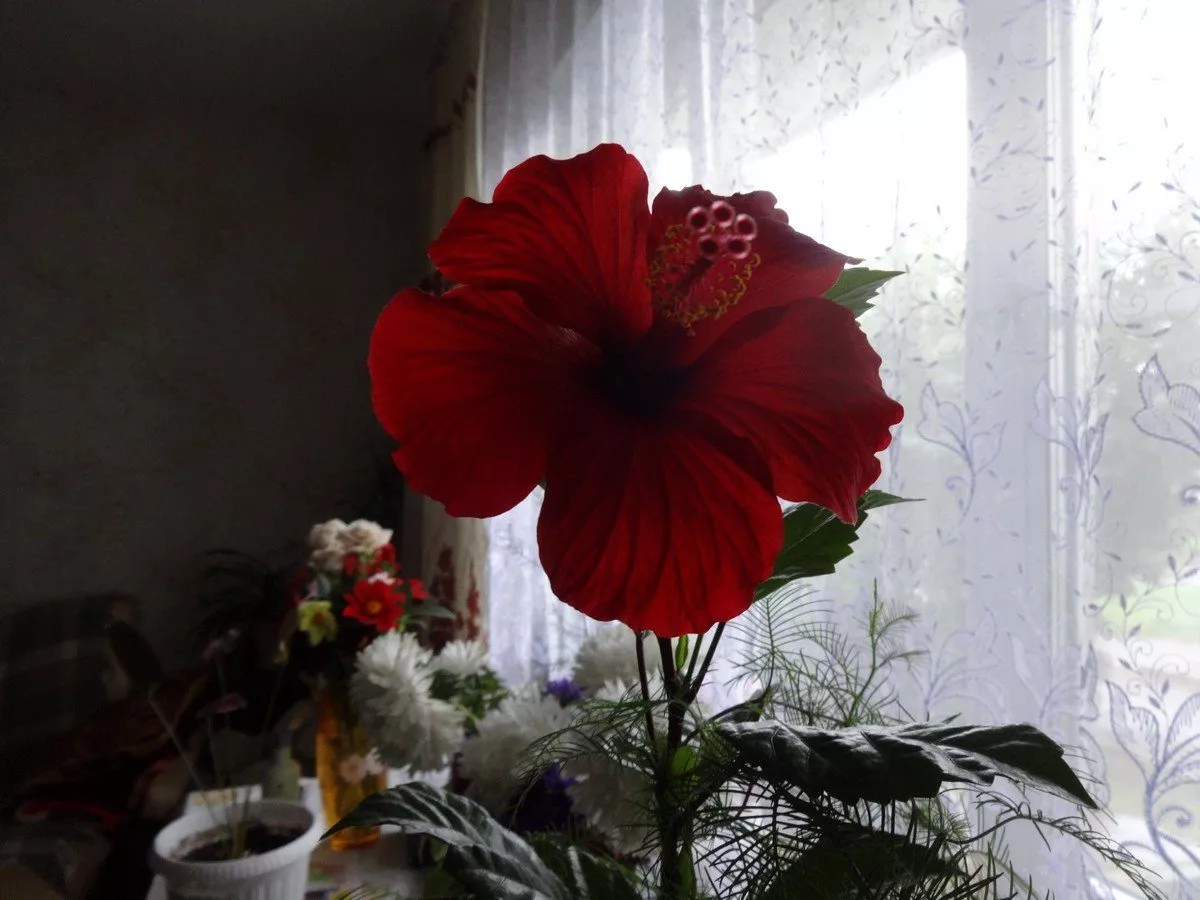
When my son bought an apartment, I gave him this flower, which had already taken on the shape of a tree. It grew on the balcony in the summer, delighting us with its abundant blooms; in the fall, he brought it indoors. Every spring, he brought the Chinese rose to us when he went on vacation, and in the summer, he picked it up. Then he got tired of lugging the heavy box around, so he left the hibiscus with us.
The flower had grown considerably, growing mainly in height. I had to break off the top of it so that the side branches would develop and the flower would grow in width, but it stubbornly grew in height, and in place of the broken branches new ones grew, quickly growing upwards, were thin and curved.
I soon got tired of fussing with the flower, so I took it to the dacha in the summer, thinking it would grow and bloom better in the open air. But at the dacha, it immediately dropped all its leaves, and it was cold at night. The plant suffered all summer, not even blooming. In the fall, I didn't bring the hibiscus home, and it froze completely.
And one more thing about hibiscus. I once bought some hibiscus tea—a flower tea made from dried hibiscus flowers. In the package, besides the buds and petals, I found several seeds. Curious to see what would grow from them, I sowed them.
After a while, round cotyledon shoots emerged, and when the true leaves emerged, I realized they resembled those of a China rose. I kept the best sprout; it grew and even began to bloom, revealing a small, light-lilac flower. It grew for a while, but then I got rid of it; I didn't like it.
Folk beliefs about hibiscus
When growing various houseplants, I want to know what superstitions and beliefs people have attached to each plant. Here are some conflicting superstitions about hibiscus I found online:
- A well-cared-for flowering plant has a powerful energy and charges the movement of those living in the house, increases their creative potential, and helps people with low blood pressure and heart disease cope more easily.
- Another belief is that the flower accumulates bad energy and multiplies it, rewarding household members with negativity and aggression.
- A tree that blooms profusely promises its unmarried owner many suitors, but there is another popular belief that the Chinese rose is a husband-killer flower.
- According to some signs, it revives the faded feeling of love between spouses, according to others, it attracts quarrels and discord into the family, even to the point of divorce.
- The Chinese rose can warn its owners of an approaching illness in the household; if the rose's leaves suddenly begin to wilt, then someone will soon become ill.
Everyone decides for themselves whether to believe in omens or not.
When I had hibiscus growing in my apartment, there were no negative effects. When they bloomed, they brought me only positive emotions. My grandmother's flower also took a long time to grow, and she and my grandfather lived happily ever after.