
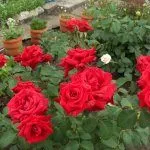
Hello to everyone reading this. The other day, I went to the garden center to buy some new gladioli. We have a variety of gladioli growing at our dacha: pink, burgundy, orange, yellow, red, purple. Last spring, I bought some white ones.
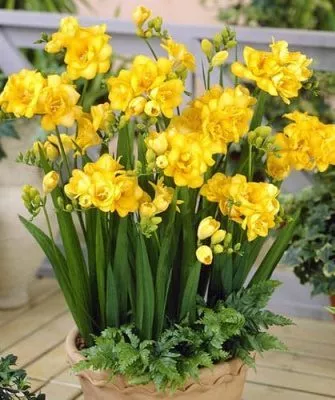 Of the wide variety of packages with bright pictures, nothing caught my eye, but my eye fell on pictures of freesias. I'd never grown these flowers before, though I'd been eyeing them for a while, researching them online. So, I decided to plant some at my dacha.
There are different varieties available – double, single, in all sorts of colors. I bought a double yellow freesia. I really love sunny yellow flowers! This is what it looks like. The package contains 15 bulbs, covered in light brown skins. The bulbs are not large, oblong, and sturdy.
Freesia is a perennial bulbous plant in the Iridaceae family, with sword-shaped green leaves reminiscent of gladioli. It bears double or single fragrant flowers, gathered in inflorescences of 10-12. The flowers are 8 cm in diameter. The plant's height depends on the variety. My freesias are low-growing – 30 cm – and can be grown in pots, containers, or in the ground.
I decided to plant this wonderful flower in a pot, all 15 bulbs. It's a heat-loving flower, requiring full sun for lush and long-lasting blooms. Here in Krasnoyarsk, we often have cool, rainy summers, and in the soil of a flowerbed, it would suffer from excess moisture. Potted freesias can always be brought into a greenhouse or placed under a canopy.
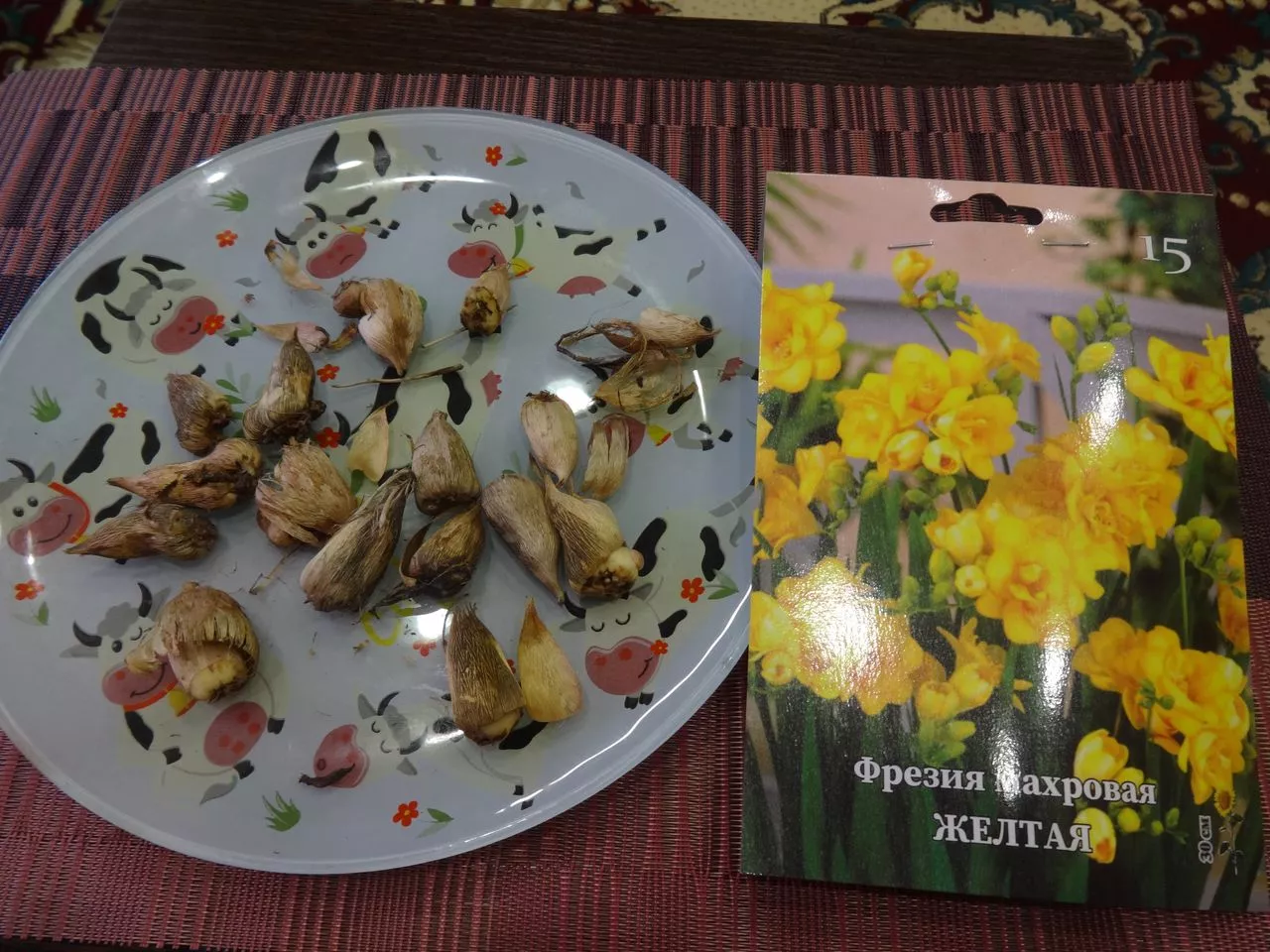
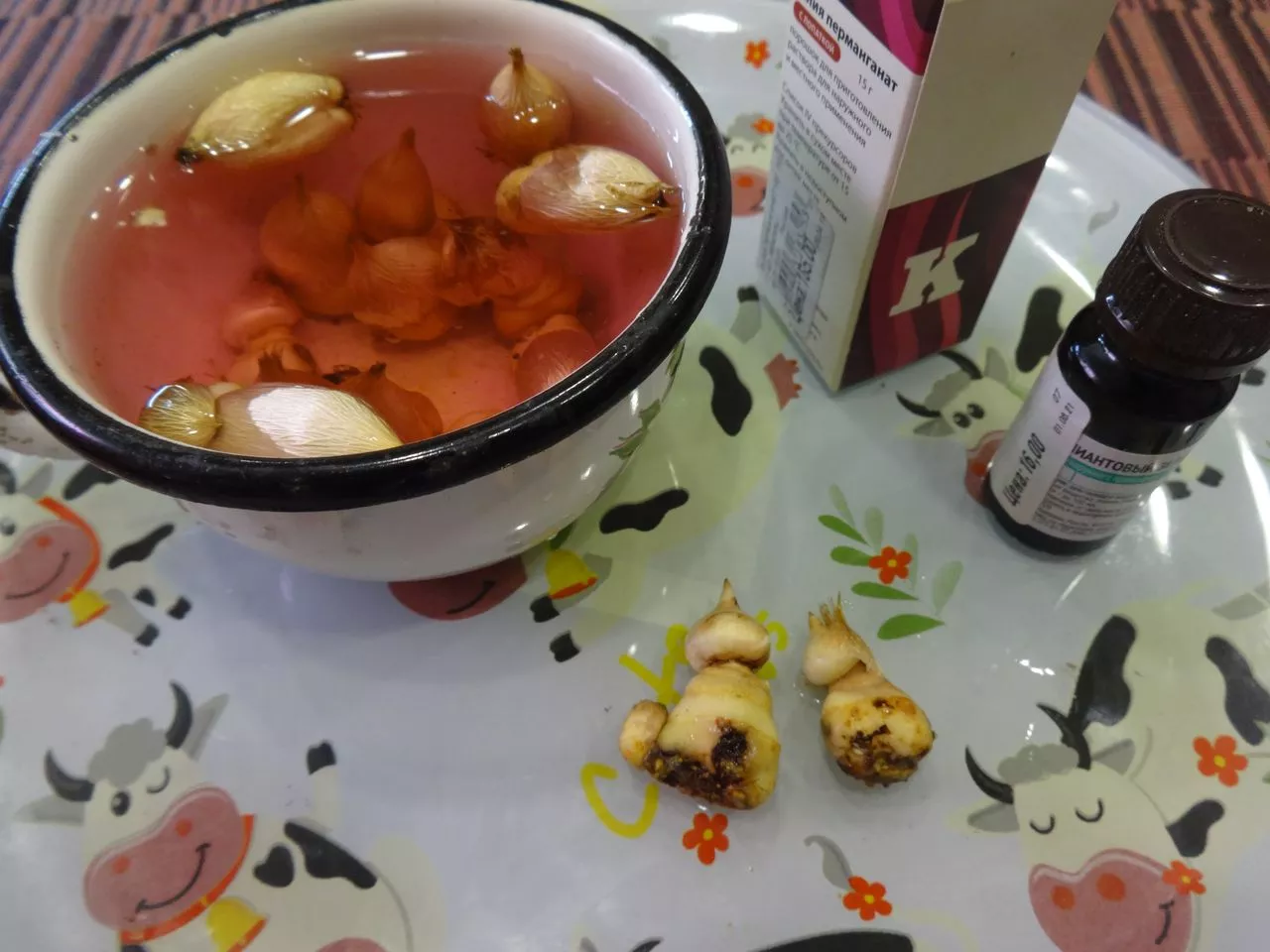
First, following advice from the internet, I peeled the onions. There's still some lighter skin underneath, but I didn't peel that. These are the cute little onions in their caps!
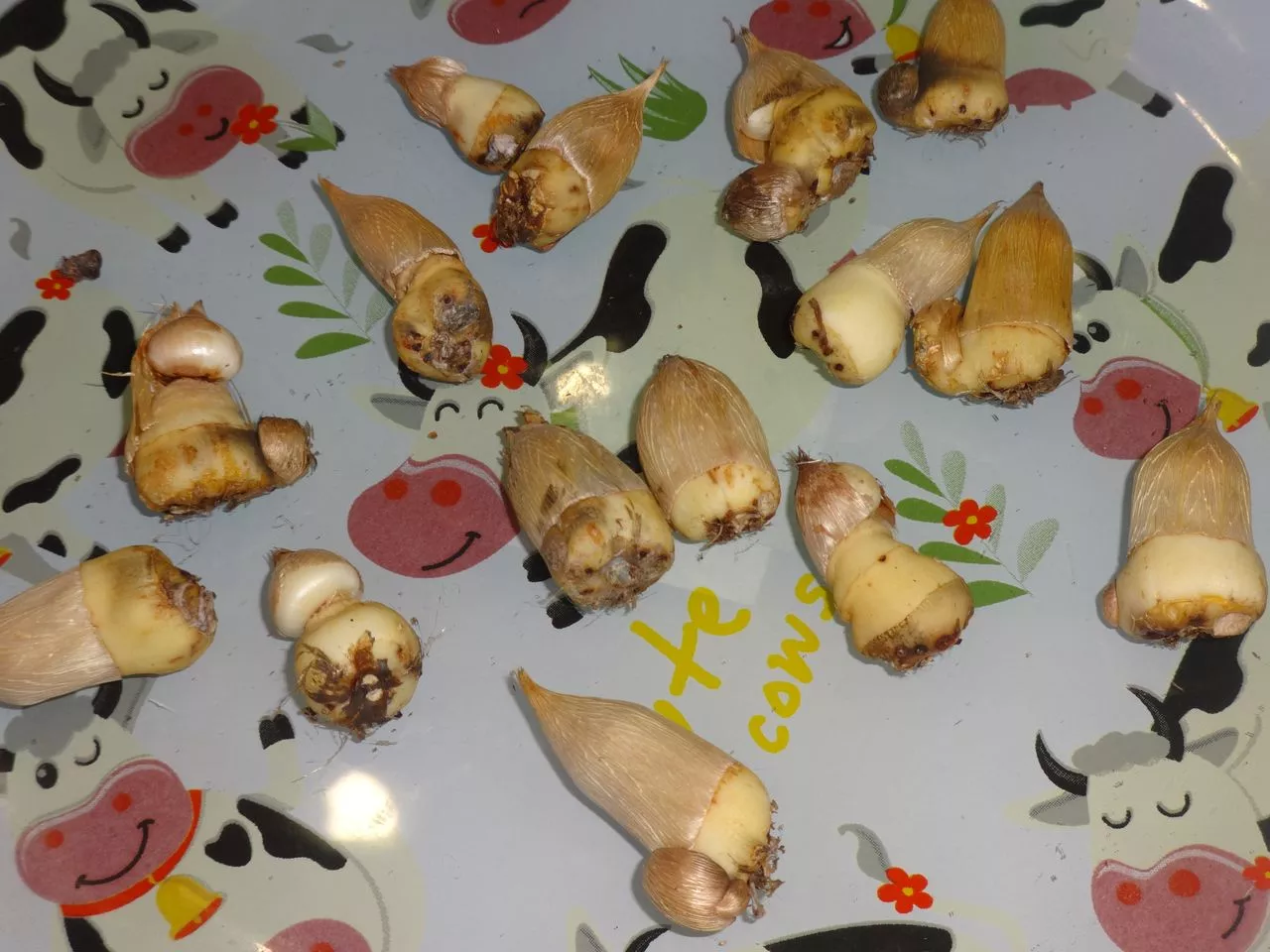
I examined the bulbs; some had little white roots sprouting from the bottom, and some had sprouts appearing on top. The bulbs were light-colored, firm, and healthy, but two had dark spots.
I soaked the freesias in a light pink solution of potassium permanganate for 2 hours. I treated the spotted bulbs with brilliant green.
I placed a layer of expanded clay at the bottom of the pot and filled it with loose, fertile soil. I planted the bulbs, covered them with soil, and watered them with water laced with phytosporin to disinfect the soil. I covered the pot with a plastic bag.
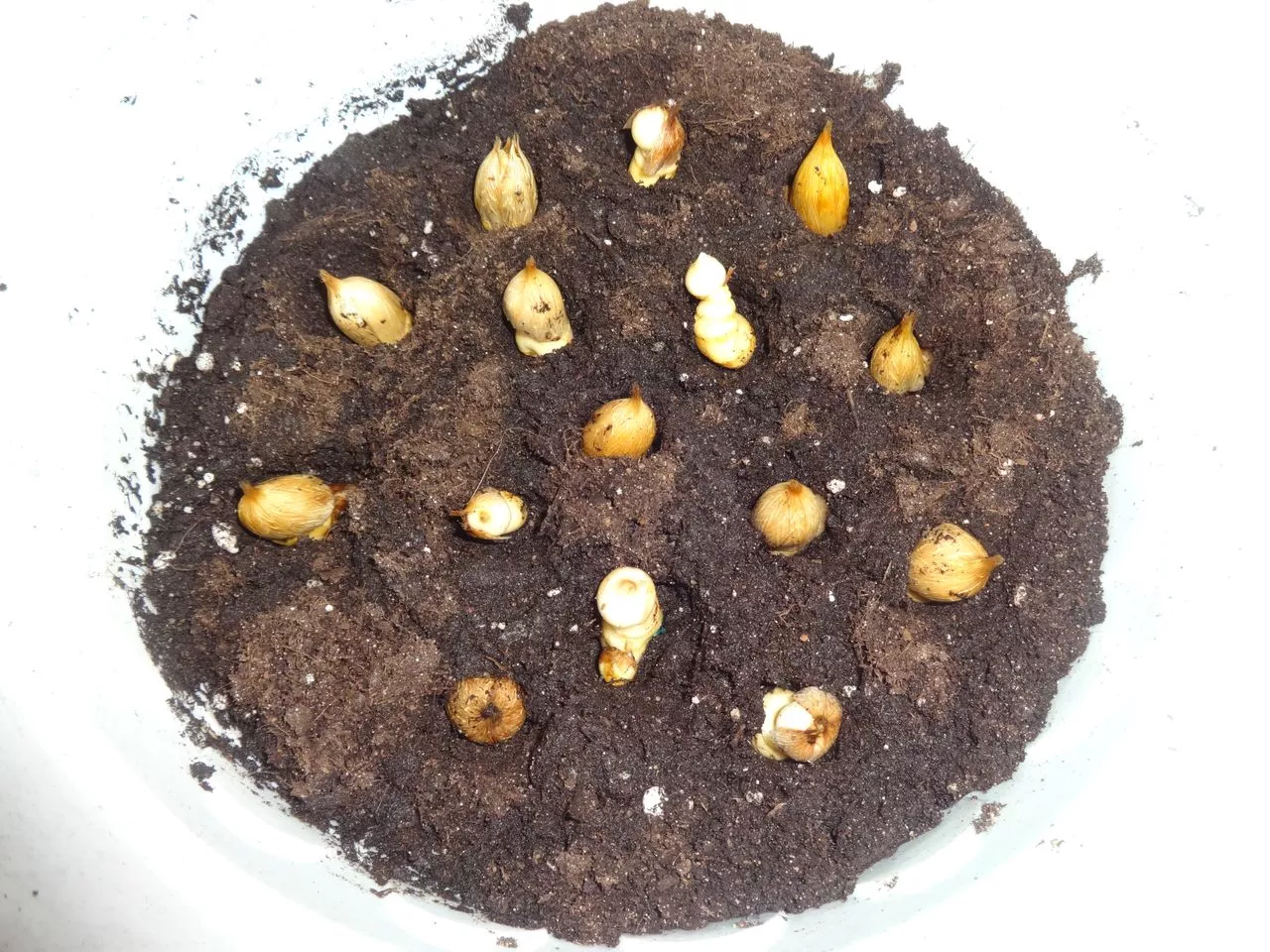
I'll wait for the shoots to appear. 