

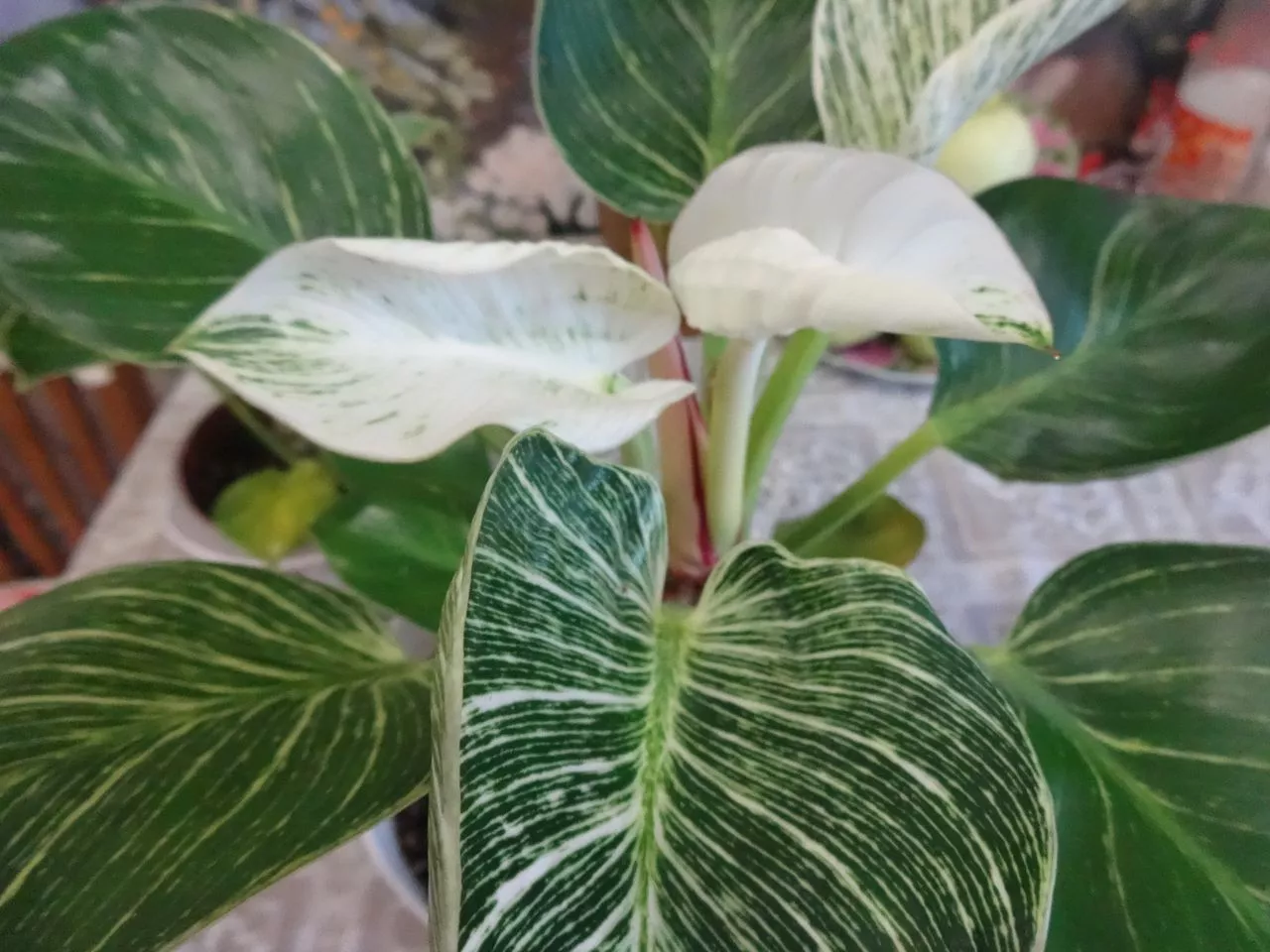
For New Year's 2022, I received an unusual houseplant as a gift. A tag was attached to a small plastic pot, revealing that the plant was called a White Wave Philodendron. I'd never seen such a plant with decorative variegated leaves before, and on one plant, the leaves varied: dark green at the bottom, then green with a sparse white stripe, and then numerous white stripes, alternating like a zebra. The top leaves were white with green stripes.
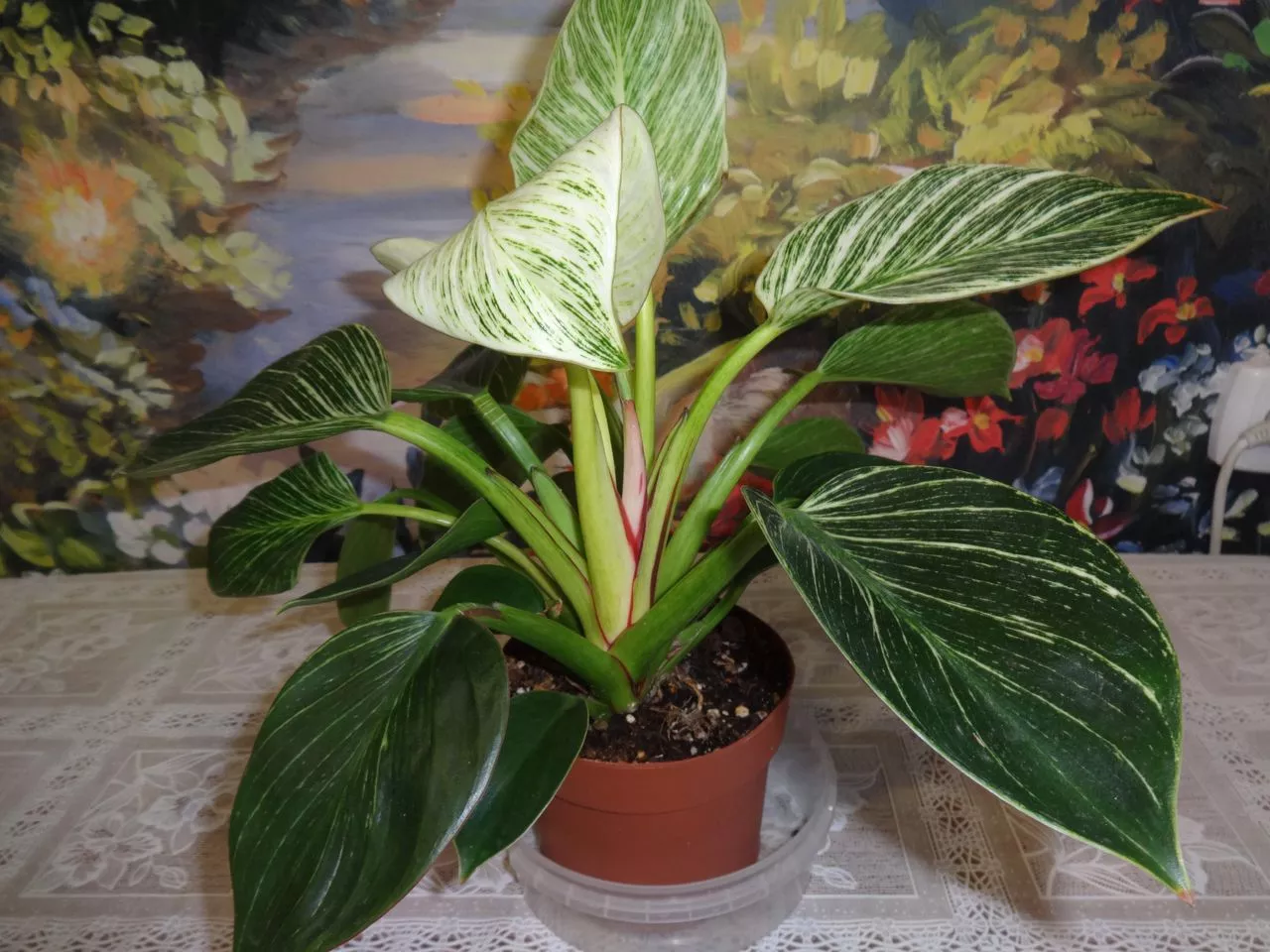
The flower was growing in a small pot. According to the tag, it was recommended to repot it in fertile soil in a larger container and keep it in the light. Water it whenever the top layer of soil becomes dry.
In February, I decided to repot it. There were three plants in the pot.
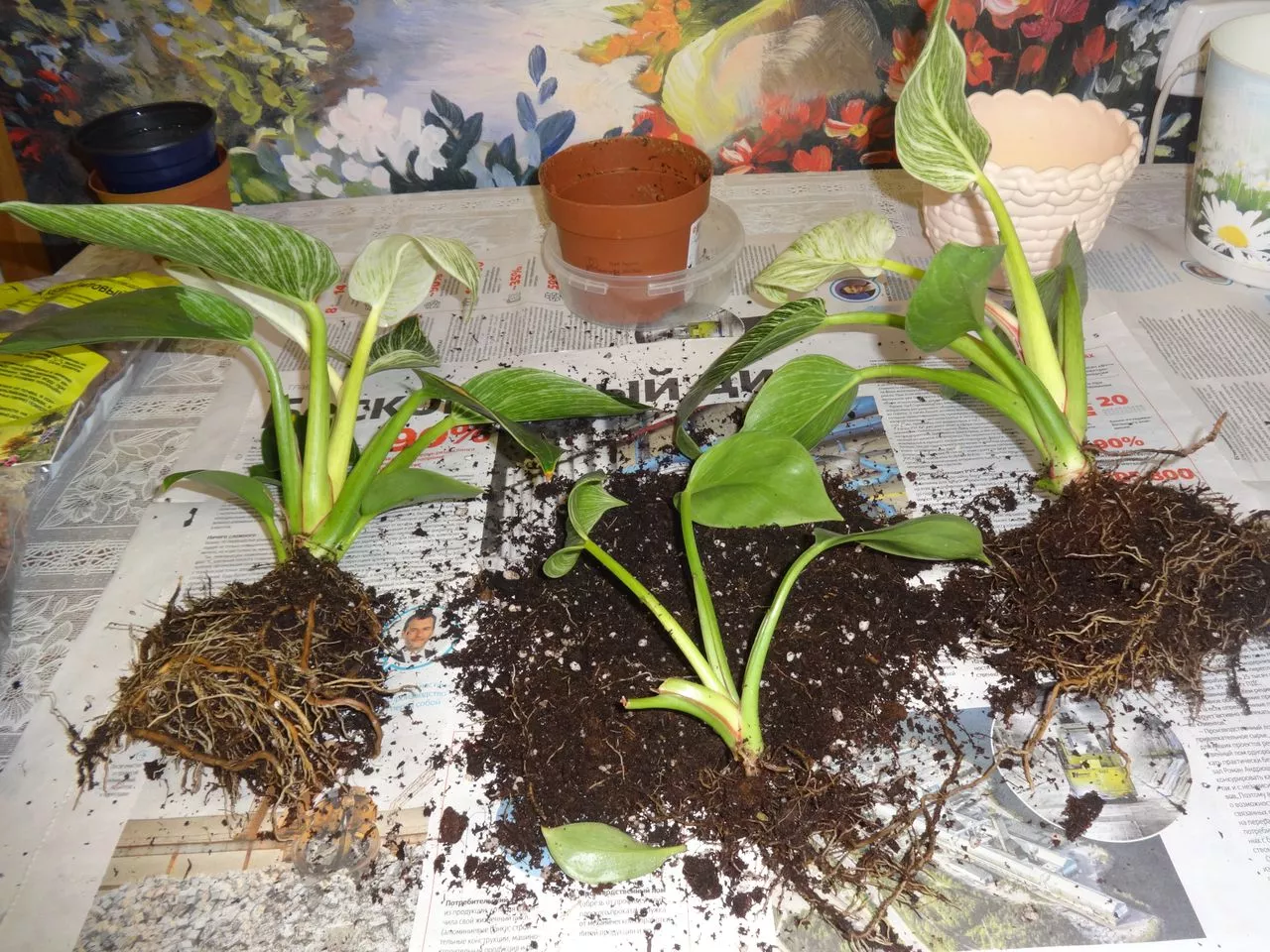
I learned online that it's advisable to add pine bark and needles, moss, and charcoal to the soil. I bought a special Orchid substrate kit for indoor plants at a flower shop.
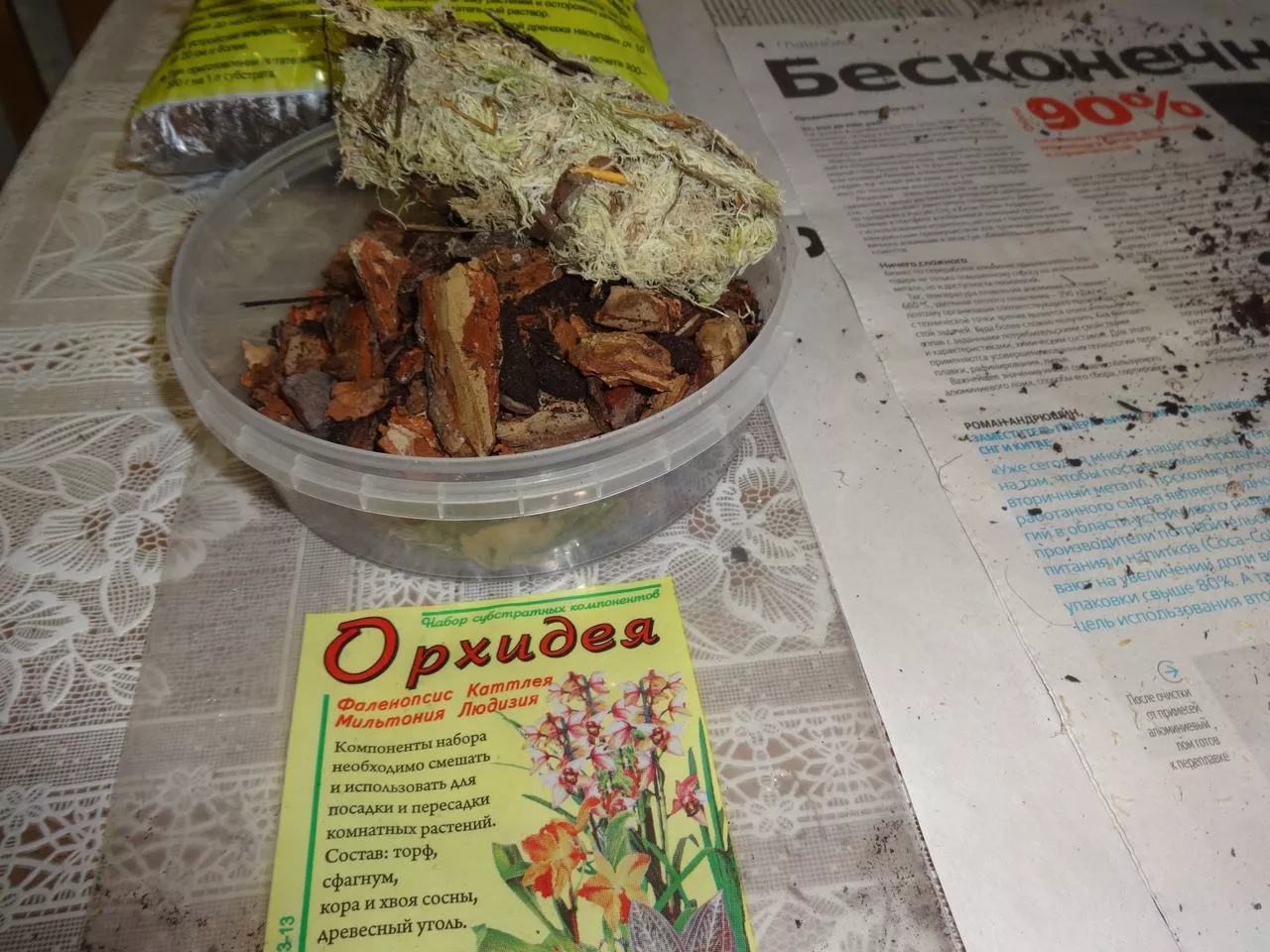
I added it to the prepared potting soil. I added a drainage layer of expanded clay to the bottom of the pots, filled them with soil, and planted each sprout in a separate container. I planted the largest one in a larger container. The medium-sized sprout went into a small but wide pot, and the smallest philodendron went into its original pot. I ended up with three philodendrons.
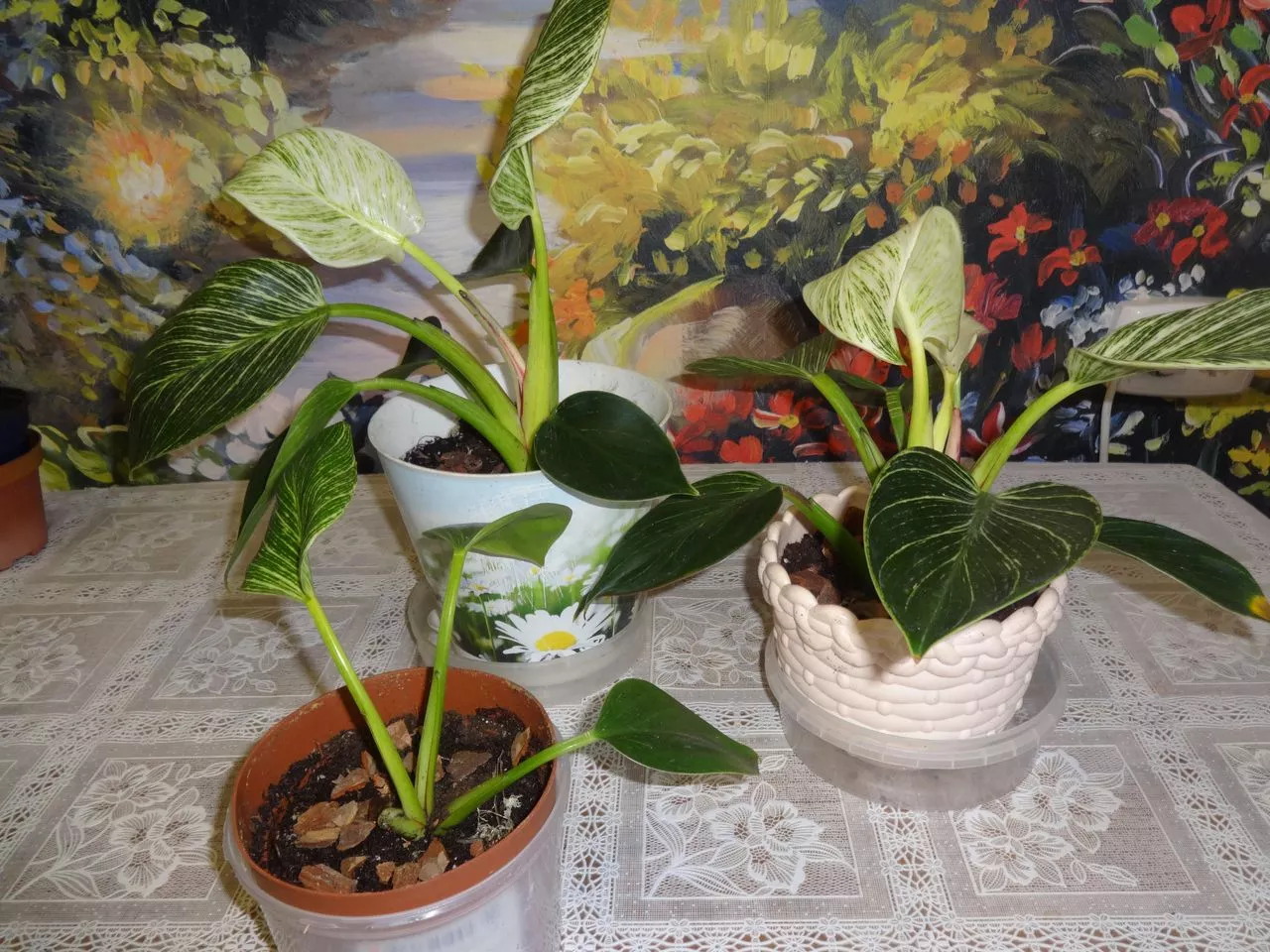
I kept the big and the small ones for myself.
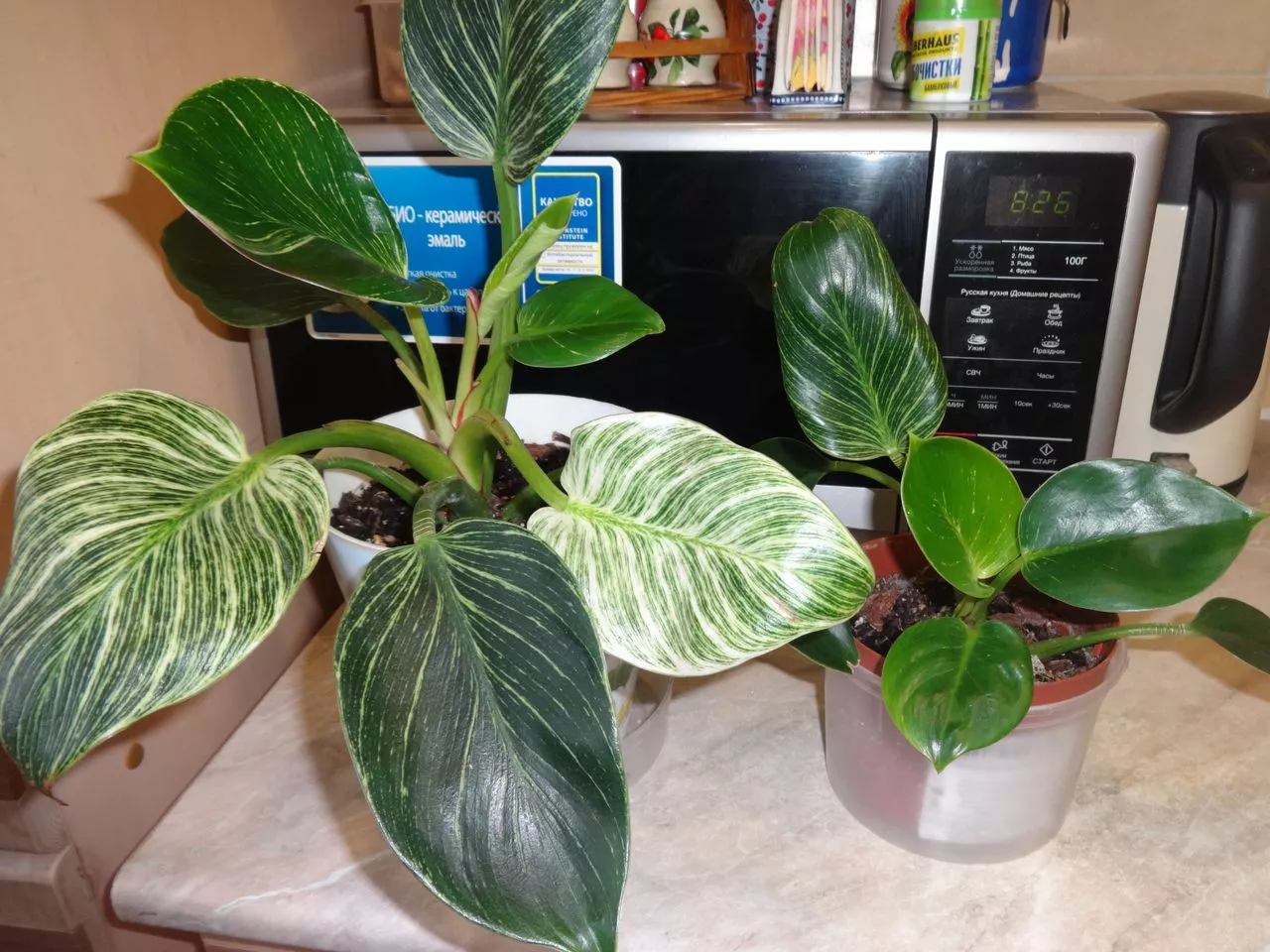
And the average philodendron grows at my youngest children’s house.
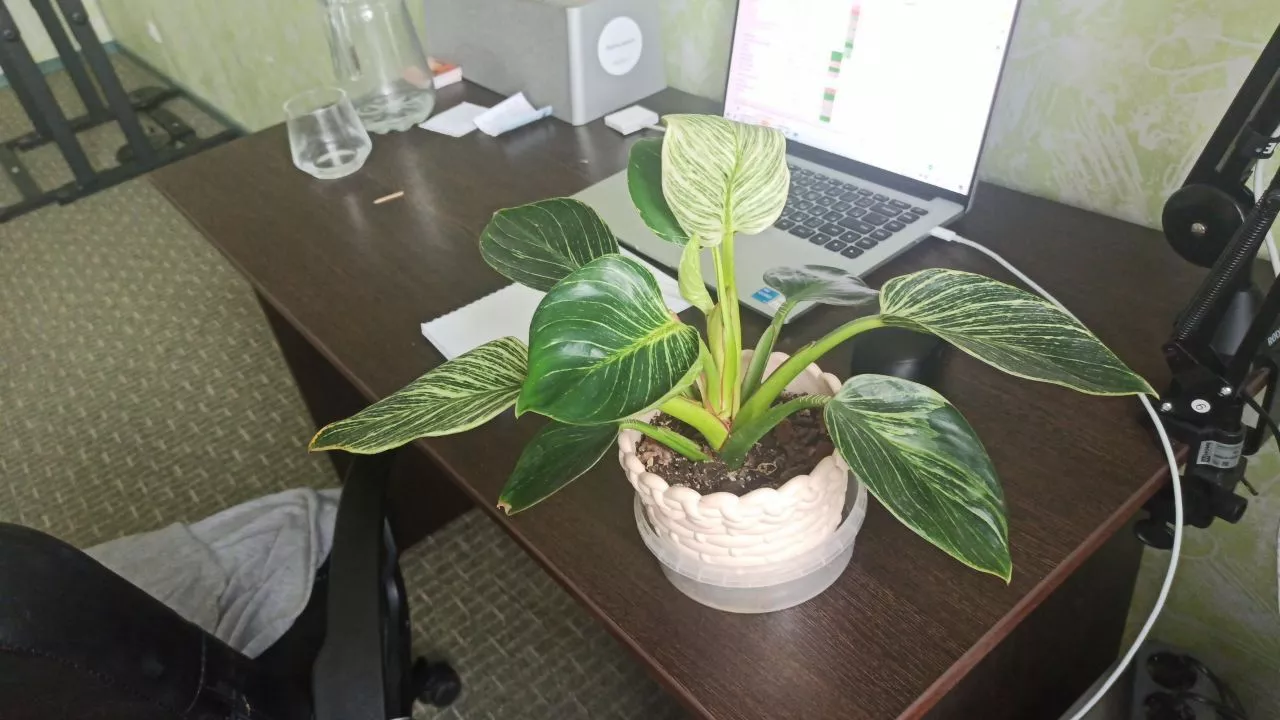
At first, my philodendrons grew on a flower shelf near the kitchen window, since the windowsills were occupied by seedlings.
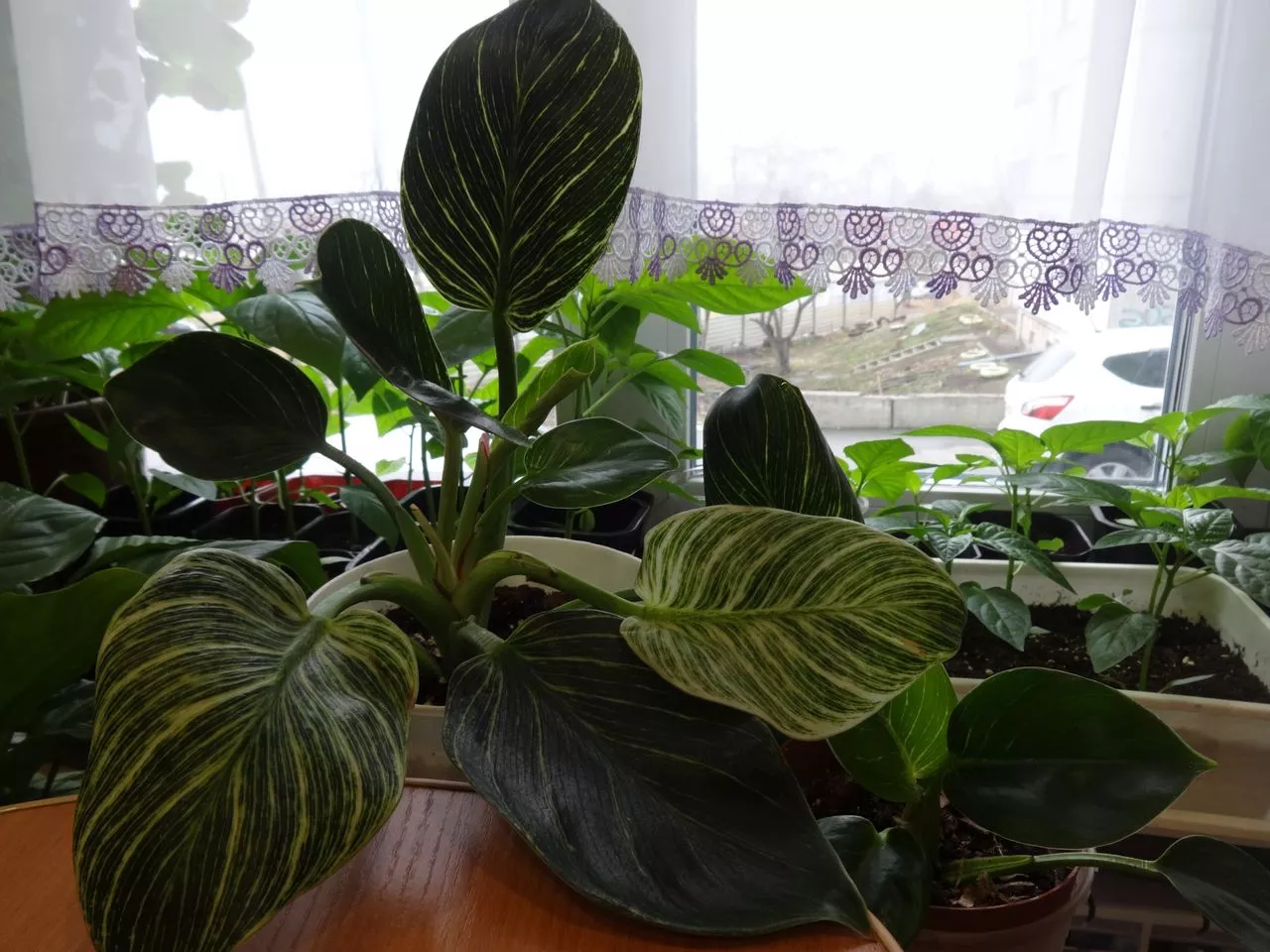
They're currently on the windowsill, but as soon as frost sets in and the cold comes in from the windows, I'll move them back to the shelf. It's already mid-November, and my flowers have grown a lot over the summer.
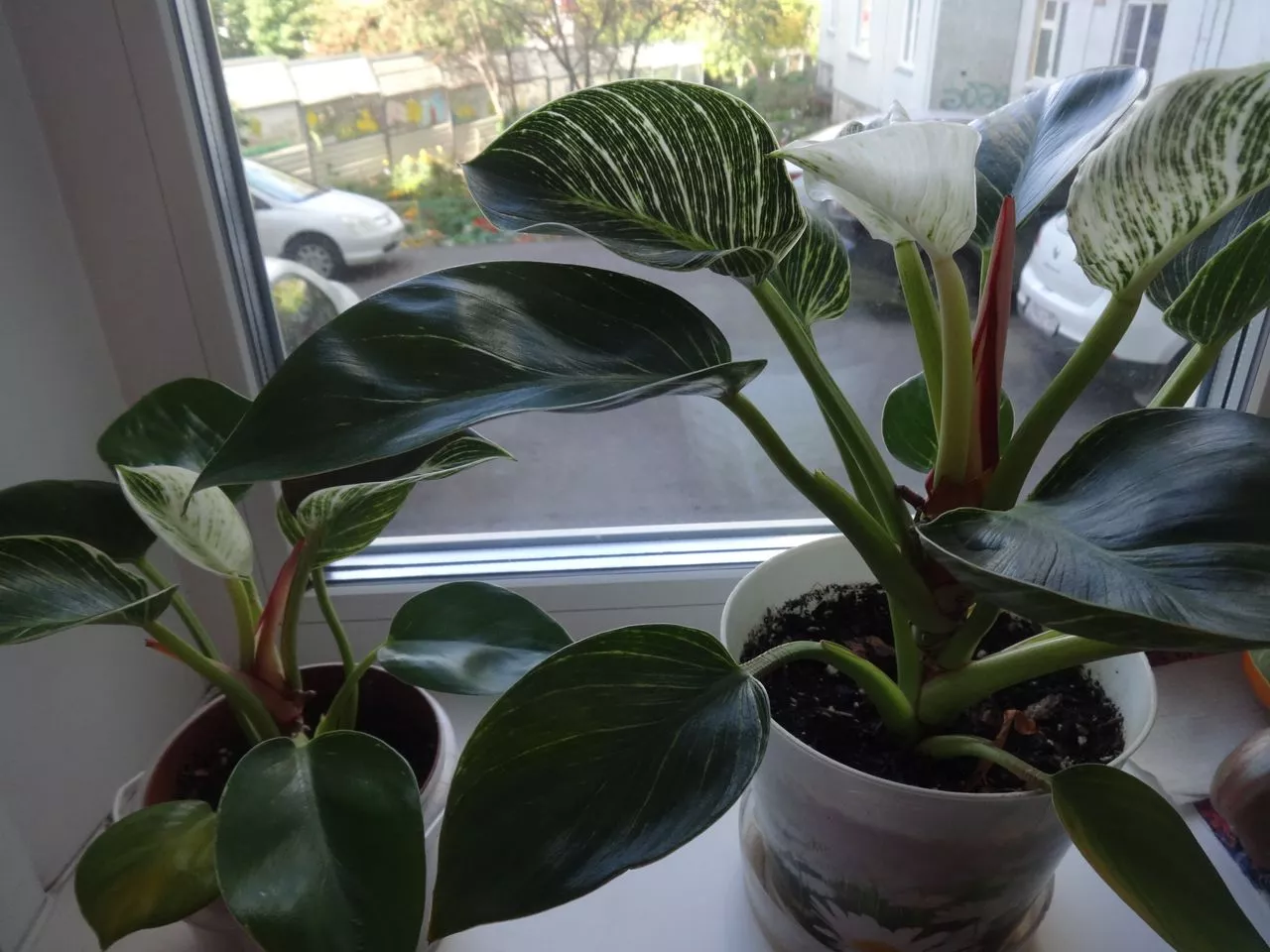
What kind of plant is this?
Philodendron is a tropical rainforest plant with approximately 400 species, including vines and subshrubs. Some species and cultivars thrive indoors. These are ornamental, evergreen, and very beautiful plants. Their leaves come in a variety of shapes, colors, and are variegated or striped, depending on the cultivar.
Philodendron Birkinii, a subshrub from the Araceae family, is a hybrid plant, meaning it was artificially created. Indoors, it grows up to 50 cm tall. The bush has glossy, striped leaves with various variations. Each new leaf emerges from the axil of the previous leaf.
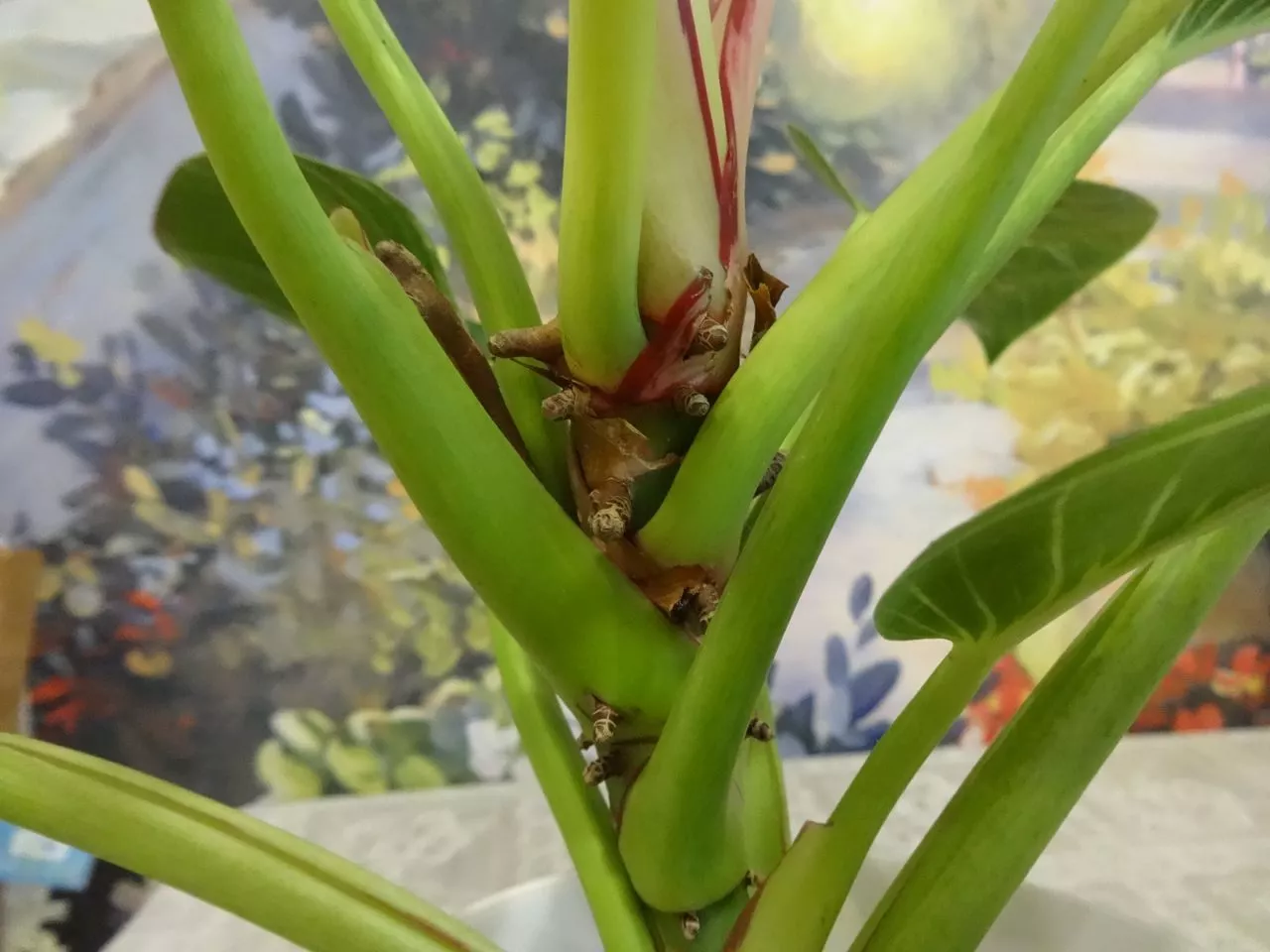
In addition to the roots in the soil, the plant also has aerial roots. Plants can be propagated using these roots by cutting off the upper part of the flower.
Although the flower is considered shade-tolerant, it requires diffused sunlight. Insufficient light causes it to lose its decorative appeal, and the leaves become smaller and fade.
If the air in the room is very dry, the plant's leaf tips may dry out. It should be misted periodically, and the soil in the pot should be kept from drying out too much.
But don't overwater the plant either. The roots will become waterlogged and rot, and the leaves will shrink and turn brown.
Philodendron does not like cold drafts or frosty air from the window, so in winter it should not be kept on the windowsill; it is better to place it near the window.
Like any plant, philodendrons can encounter pests. These include spider mites, scale insects, aphids, thrips, and mealybugs. To combat these pests, use traditional methods or specialized products.
My flower is doing well, delighting me with its beauty, and I really like its striped leaves. It's problem-free, and I care for it the same way I care for all my houseplants.
An interesting flower—and most importantly, the leaves are so different on the same stem. It looks unique. I think it would suit my interior. I wonder if you'll get a similar wonder for the New Year 2023? I understand you're into flower growing.