

Good afternoon! I'd like to tell you about another of my favorite houseplants. It's called epiphyllum or phyllocactus. Commonly known as forest cactus.
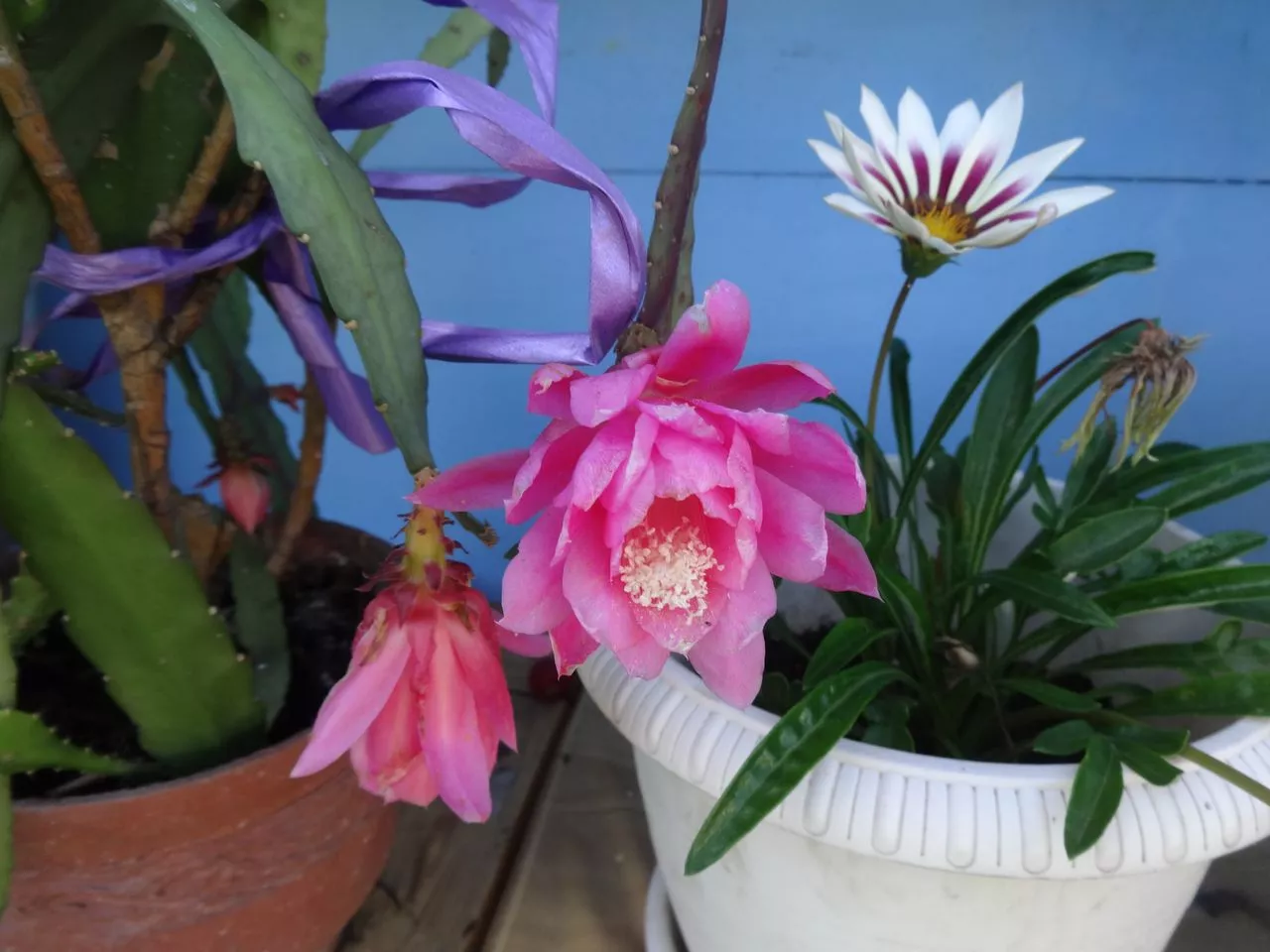
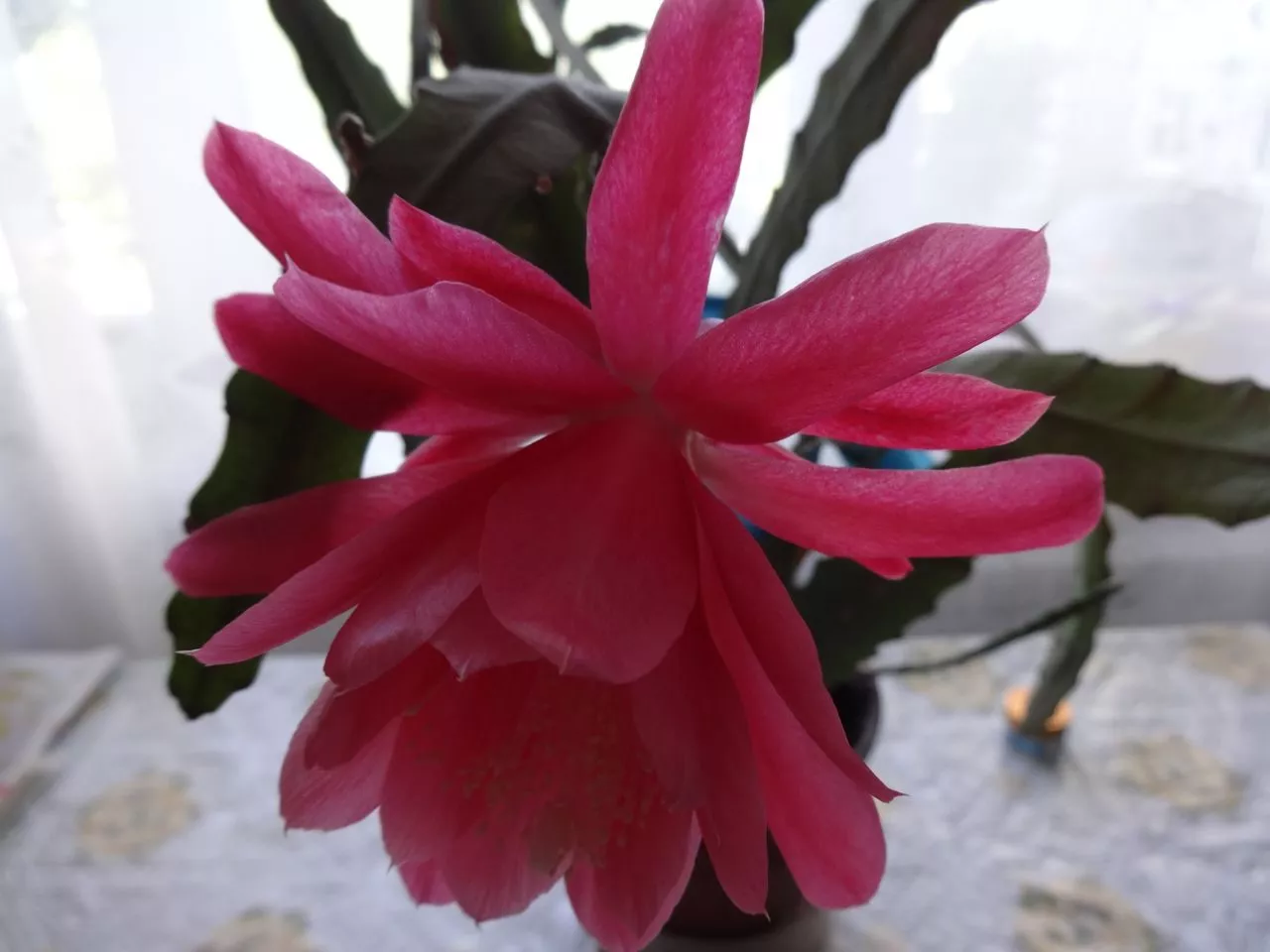
This is a perennial, beautifully flowering plant from the cactus family, a succulent. It has long, flat or triangular shoots with a wavy edge along the stems. Buds form at the edges of the shoots, from which large, funnel-shaped, very beautiful flowers open. Flower color varies by variety. Mine are pink.
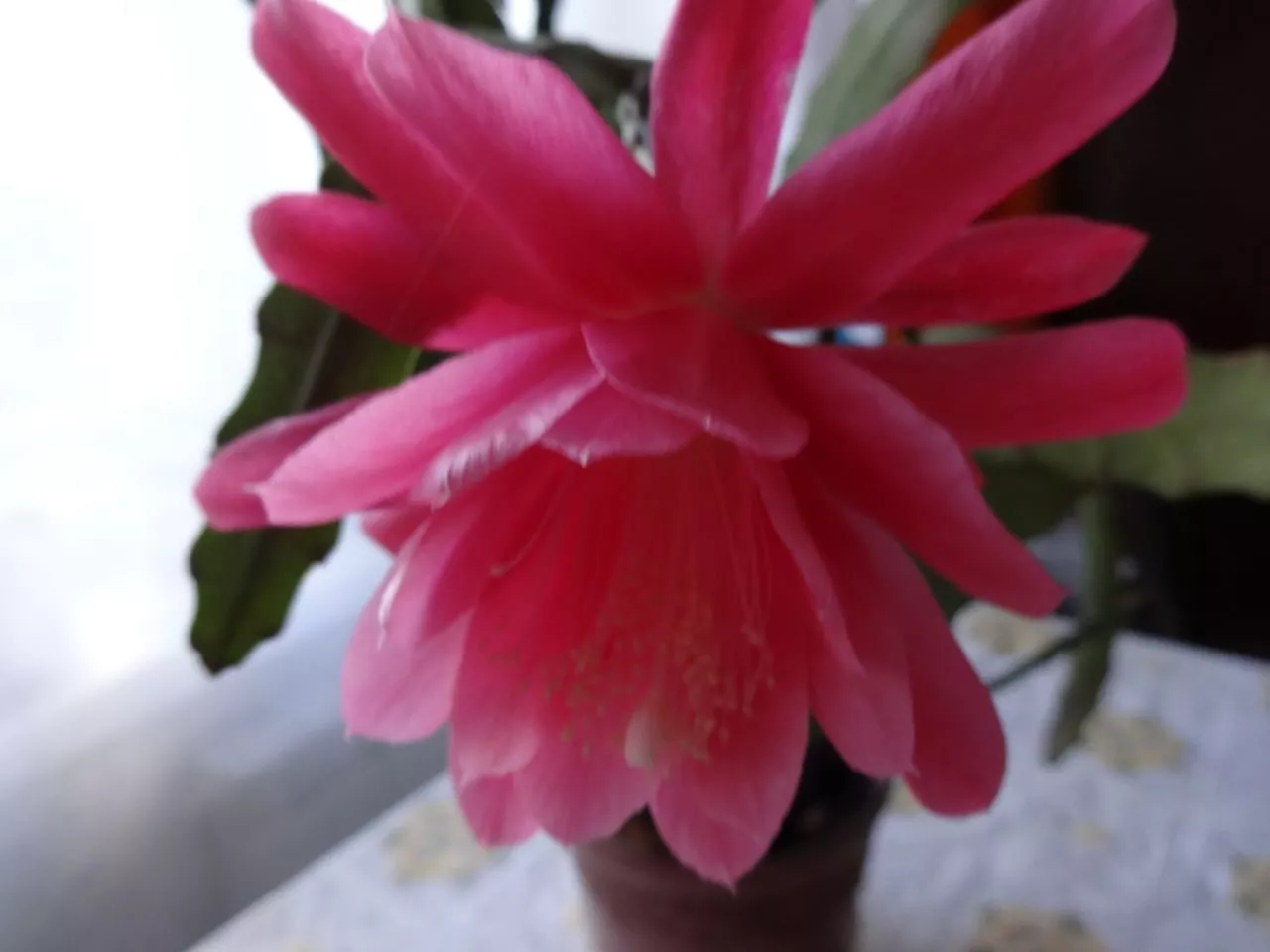
A woman I know brought me this flower, or rather, a small sprout. She said it was a cactus that bloomed every year with very beautiful, large flowers.
I don't like cacti. My youngest son was once a fan of growing them. His entire bedroom windowsill was filled with a variety of prickly cacti, supplied by his classmates. He himself, saving his allowance, would buy new specimens.
But soon my interest in the cacti waned, and all the care fell on my shoulders. They probably sensed my dislike for them; they withered, died, and didn't bloom, and gradually I got rid of them.
But one cactus turned out to be very resilient and still grows in our house. I barely care for it, watering it occasionally and removing dried shoots. Even the plastic sour cream cup it grew in has crumbled from age. It sits in the very corner of the windowsill, where the sun never penetrates. But it continues to grow, doesn't die, and hasn't bloomed for many years.
So I accepted my new pet without enthusiasm. But when it bloomed its first wonderful, incredibly beautiful flower, this phyllocactus became my favorite.
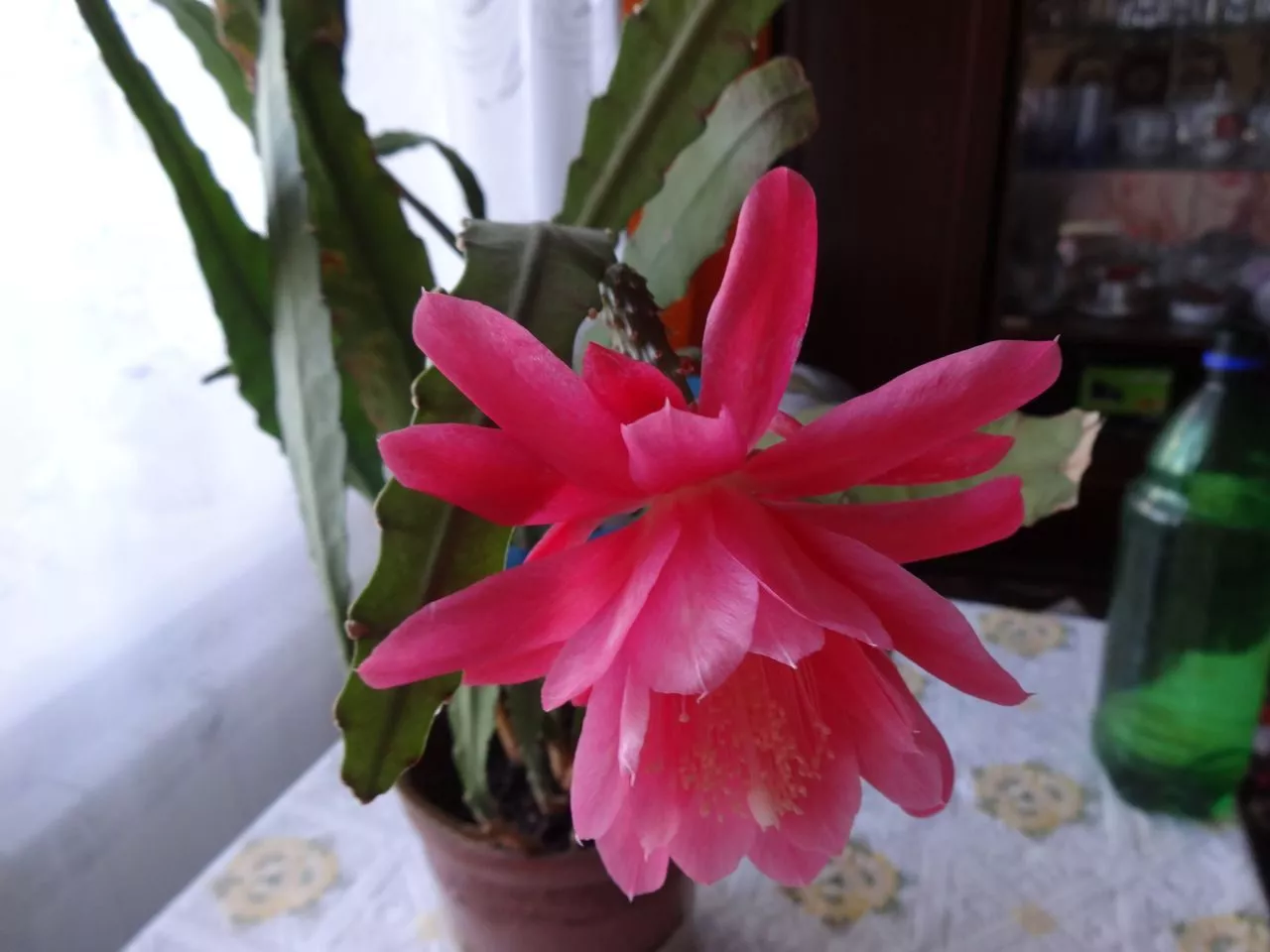
I found a lot of useful information on the Internet about caring for this plant.
Although epiphyllum is considered an easy-to-grow plant, it requires proper care to ensure it grows well and blooms profusely. The plant has a shallow root system and requires loose, fertile, acidic soil. You can prepare the soil yourself by mixing 1 part garden soil, 2 parts peat, a little sand, sphagnum moss, fine gravel, or expanded clay. To avoid the hassle of preparing the soil, you can buy ready-made cactus soil. It's best to plant the plant in a shallow, wide pot with a layer of expanded clay as a drainage layer at the bottom.
From November to March, during the dormant period, the plant should be kept in a cool room and watered infrequently, but avoid allowing the soil to dry out completely and the shoots to shrivel. This stresses the plant and forces it to develop flower buds to survive. This ensures a profuse bloom. This photo belongs to a friend who gave me an epiphyllum cutting.
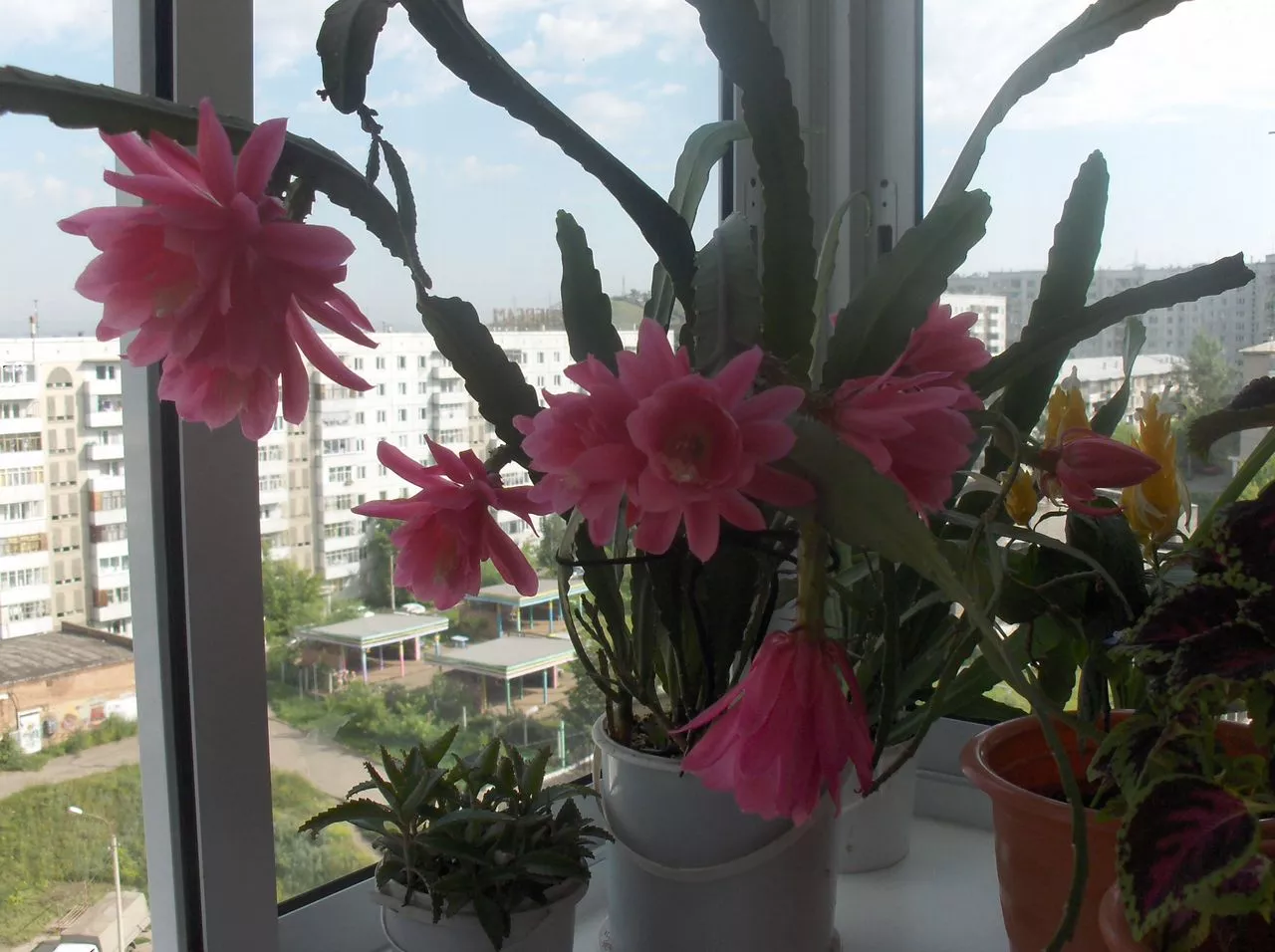
From March onward, the plant requires more generous watering with warm water, but avoid overwatering. Water when the top layer of soil dries out. In hot weather, the plant requires occasional misting. From early spring, the phyllocactus needs to be fertilized 2-3 times a month. A commercial fertilizer for flowering houseplants is suitable, but cactus fertilizer, available at flower shops, is best. Buds will soon appear on the stems, followed by buds. During this time, avoid disturbing the plant, turning the pot, or moving it to a different location, otherwise it will shed its buds. Flowering begins in April and continues through June. My phyllocactus began blooming in June and bloomed all summer.
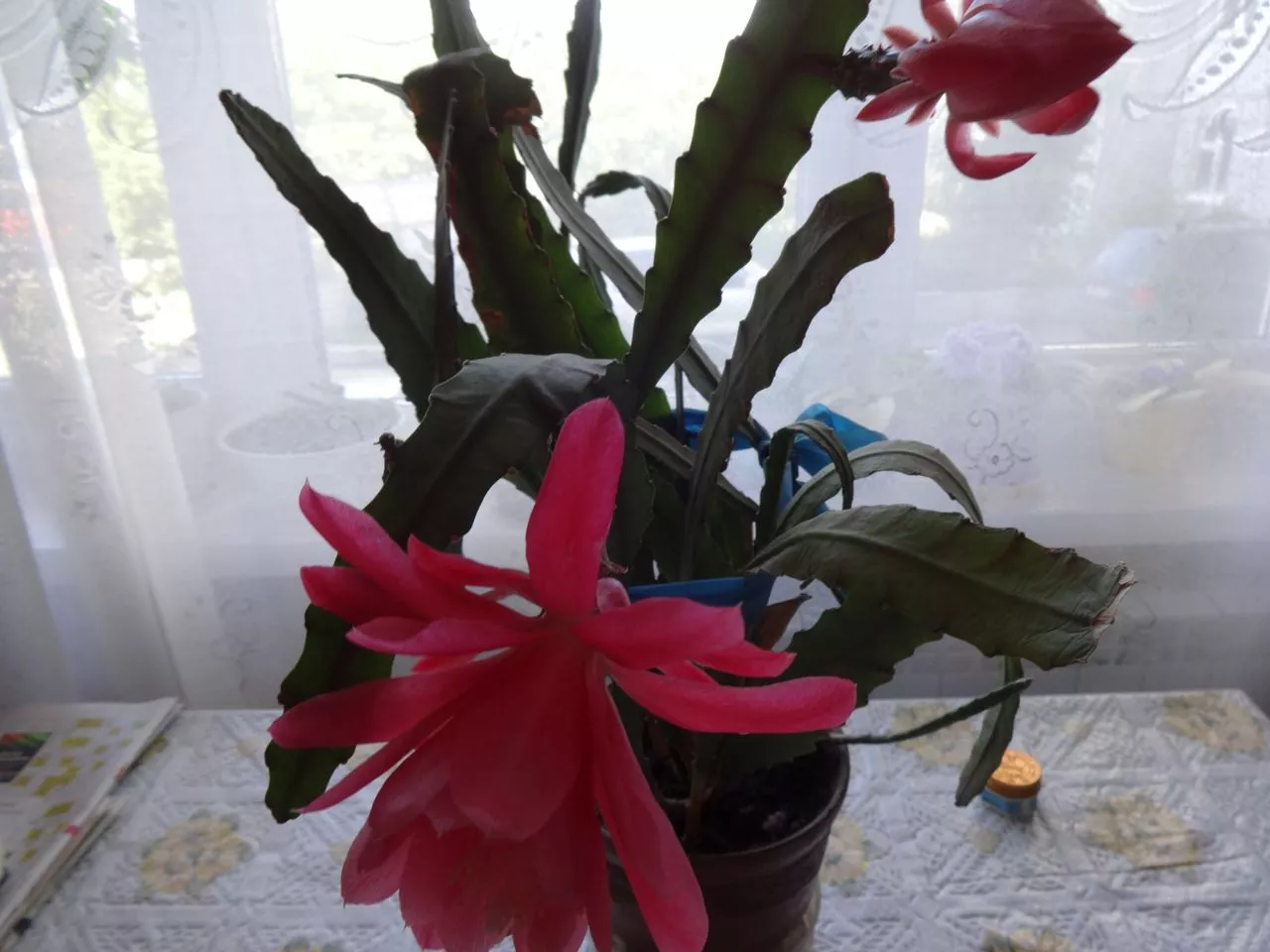
After flowering, it's recommended to stop watering for about twenty days to allow the plant to rest. After a brief rest, watering can be resumed, with fertilizing once a month until November.
Epiphyllum is easily propagated by stem cuttings. In April or May, take a cutting from a flat leaf. Keep it at room temperature for 24 hours to release the sap and dry the cut. Then plant the cutting in a small cup of sand and peat, water it, and place it in a shaded area. Once the stem cutting takes root, new shoots will appear on its leaves.
It's recommended to repot young epiphyllums every spring. When a mature plant has grown too large, it may feel cramped in its pot. The stems should be pruned periodically to rejuvenate and create a beautiful appearance, removing old branches that have bloomed for 2-3 years. Remove wrinkled and thin leaves, round or triangular shoots, or shoots that don't produce flower buds. These will weaken the plant and spoil its appearance.
Pests and diseases
If improperly cared for, phyllocactus can become infested with pests such as scale insects, spider mites, and aphids. To control these pests, spray the plant with pesticides or use folk remedies such as garlic infusion or soap solution.
Overwatering, waterlogged soil, and low temperatures cause diseases such as rust, black rot, fusarium, and anthracnose. Plants are treated with Fundazol, Fitosporin, and Topaz. Rotten roots are removed, plants are repotted, and the soil is replaced.
Where is the best place to place the plant?
The plant doesn't like direct sunlight, and on a south-facing windowsill, the leaves will scorch, the soil will dry out quickly, and the plant will suffer. It's best to place the plant near a windowsill in a bright spot, or on an east- or west-facing window.
In summer, it's recommended to take the epiphyllum to the dacha or garden. Last year (2022), I took mine to the dacha, into the fresh air. I've never seen my cactus bloom like this before; numerous buds formed on each stem, and new flowers appeared all summer long.
But our Siberian summer was again rainy and cool, and by the end of August I discovered light spots on the flower stems; most likely, the plant was sick.
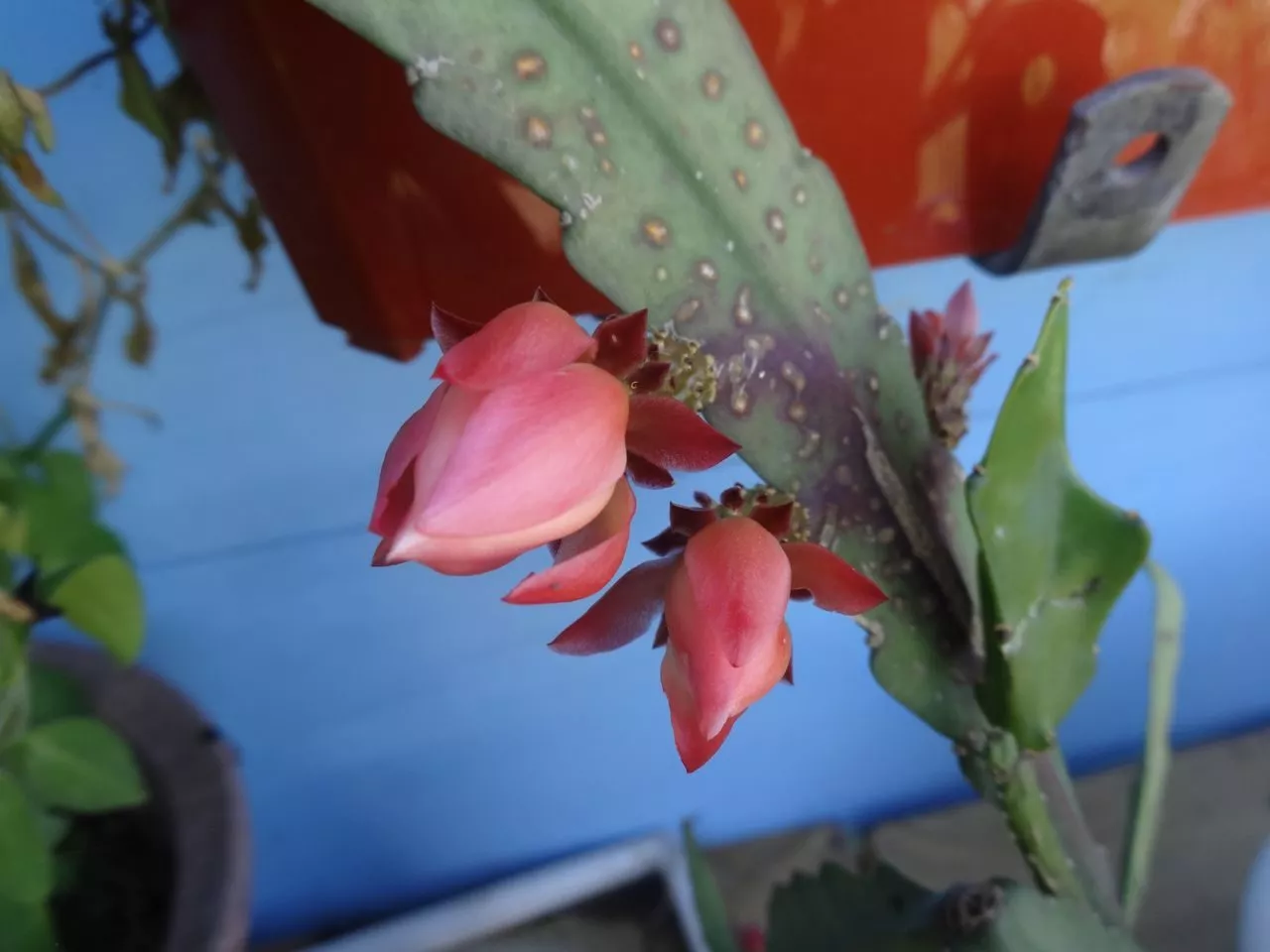
I treated it with phytosporin, took it home, and repotted it. My favorite plant kept drying up, first one stem, then another. I tried to replant a few shoots, but they also died. I couldn't save the flower.
My flower grew well and bloomed every year, despite the fact that I did not create the conditions for it to grow.
How can I keep it cool during its dormant period when we have very cold winters in Siberia, and the heating from the utilities is so intense that you can get burned by hot radiators? The house is very hot, even with the radiators turned off. Opening the windows for ventilation is problematic, and I have to remove all the houseplants on the windowsills or cover them to prevent them from freezing. And since the end of February, all the windowsills have been taken over by boxes of seedlings, and my houseplants are having a hard time. I move them to other places where there's no sunlight. Of course, I turn on supplemental lighting, but not all the flowers have enough space. Some plants are in unfavorable conditions until summer. But despite all this, my houseplants are growing and delighting me with their blooms.