
Flower beds made up of ornamental onions are not often seen in garden plots, although flowering onions look very beautiful.
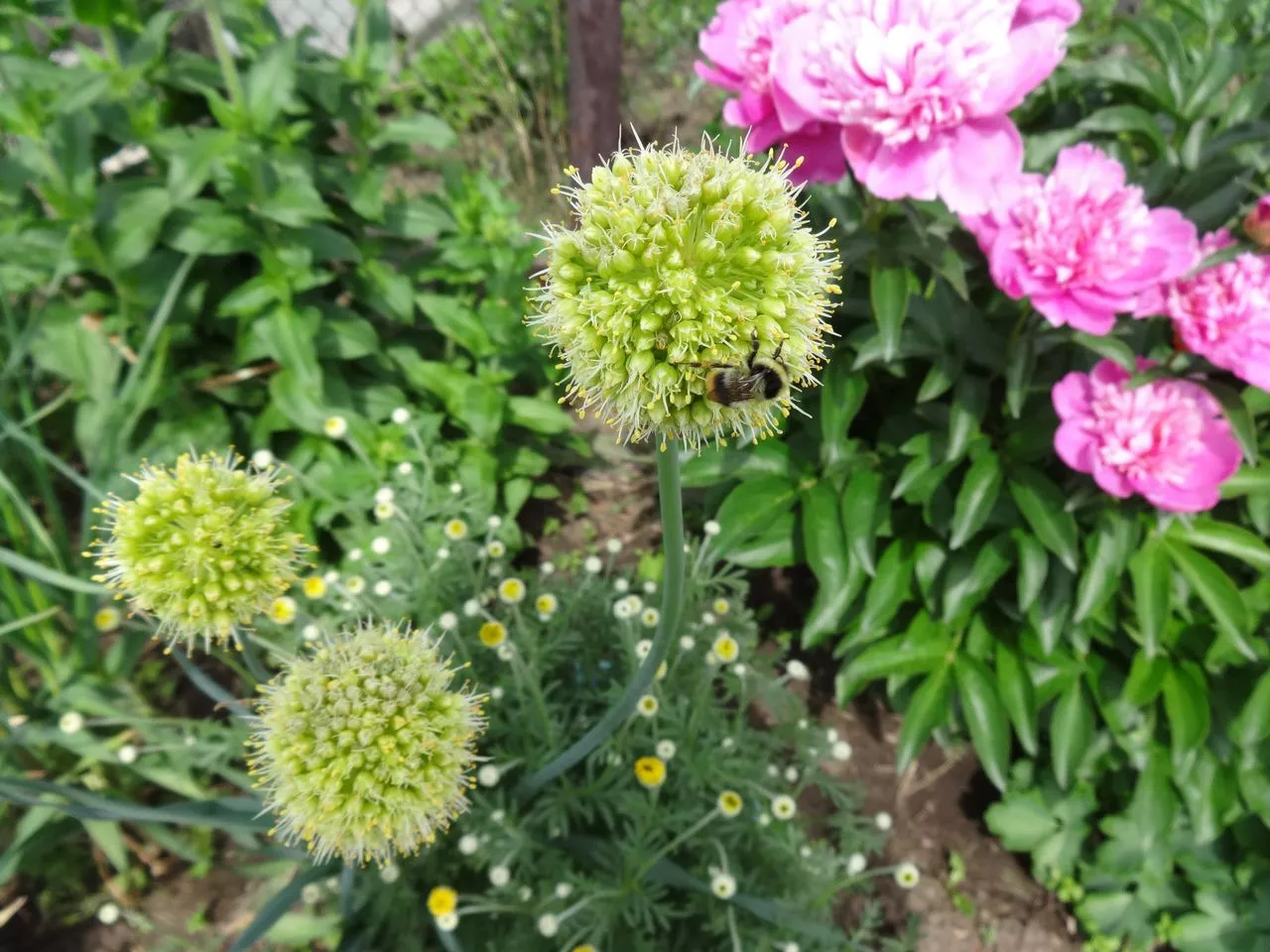
Not only decorative onions can decorate a plot, but also common onions and chives, which look attractive during flowering.
In the second year, the batun produces a flowering shoot - a long arrow up to 45 cm high, at the top of which is a large spherical inflorescence with many small white star-shaped flowers.
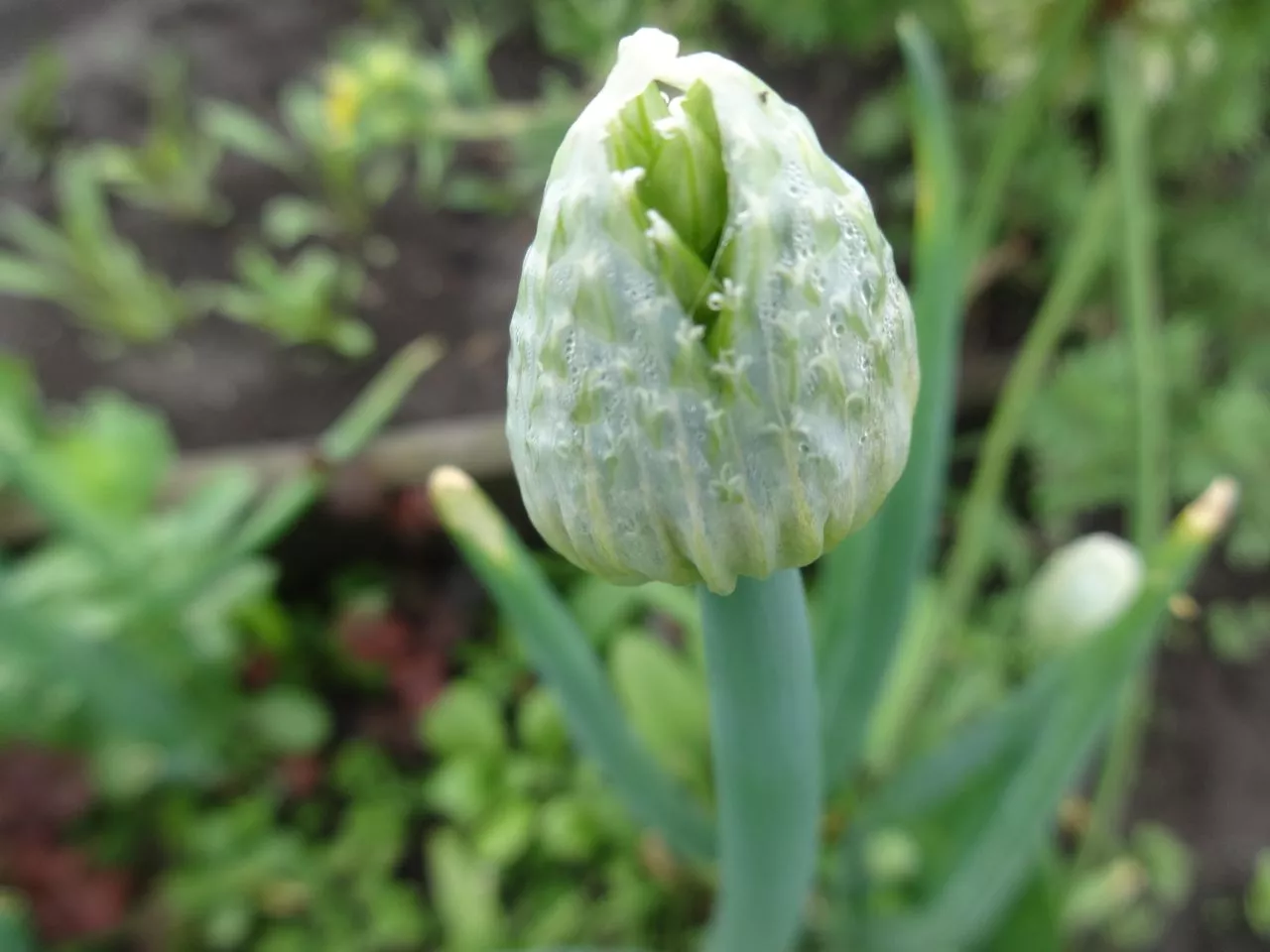
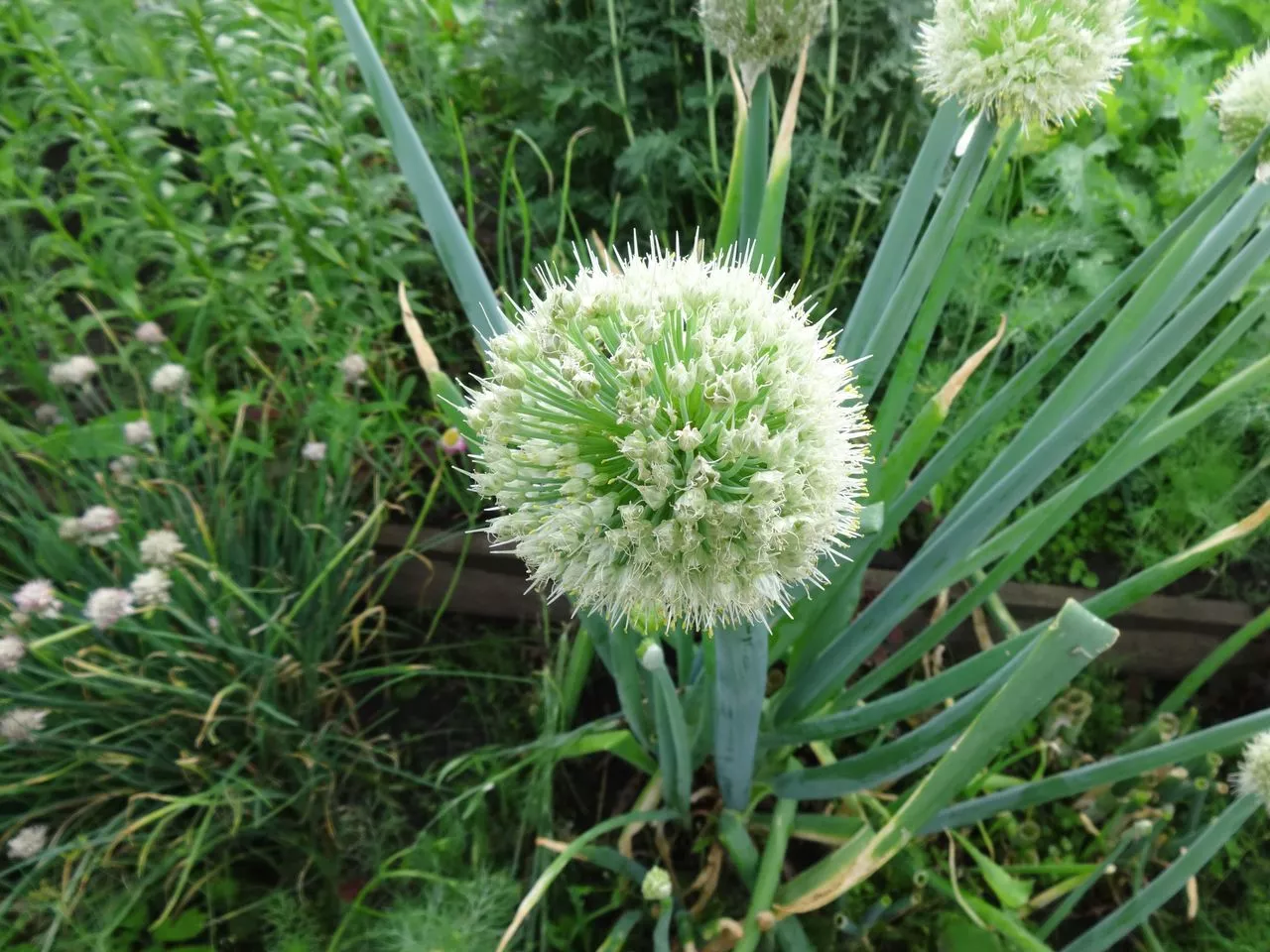
I always leave one bush of chives with inflorescences to enjoy its beauty.
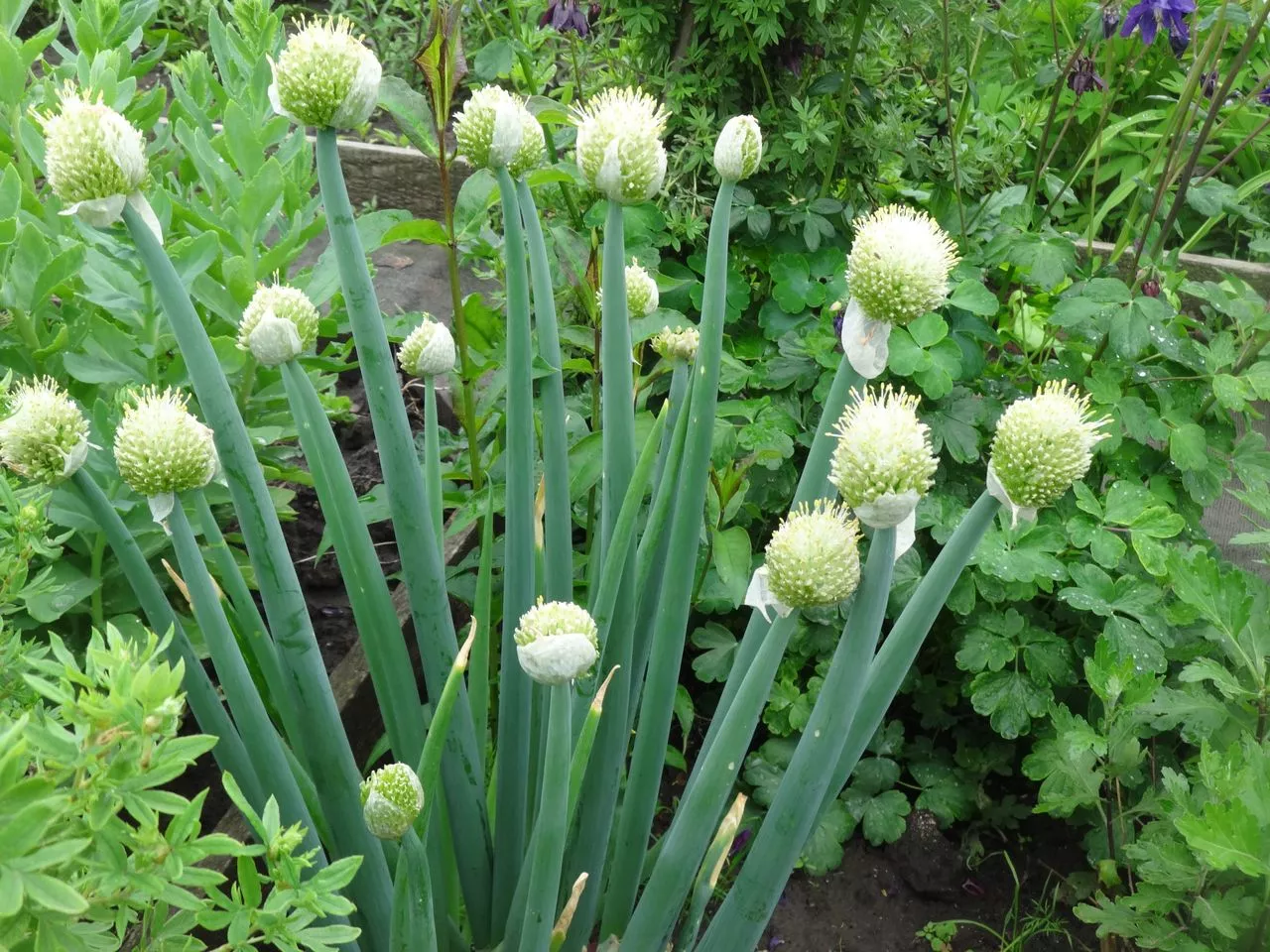
It grows in my small flowerbed. When the onion blooms, I cut off the inflorescences so that the seeds don't ripen and scatter.
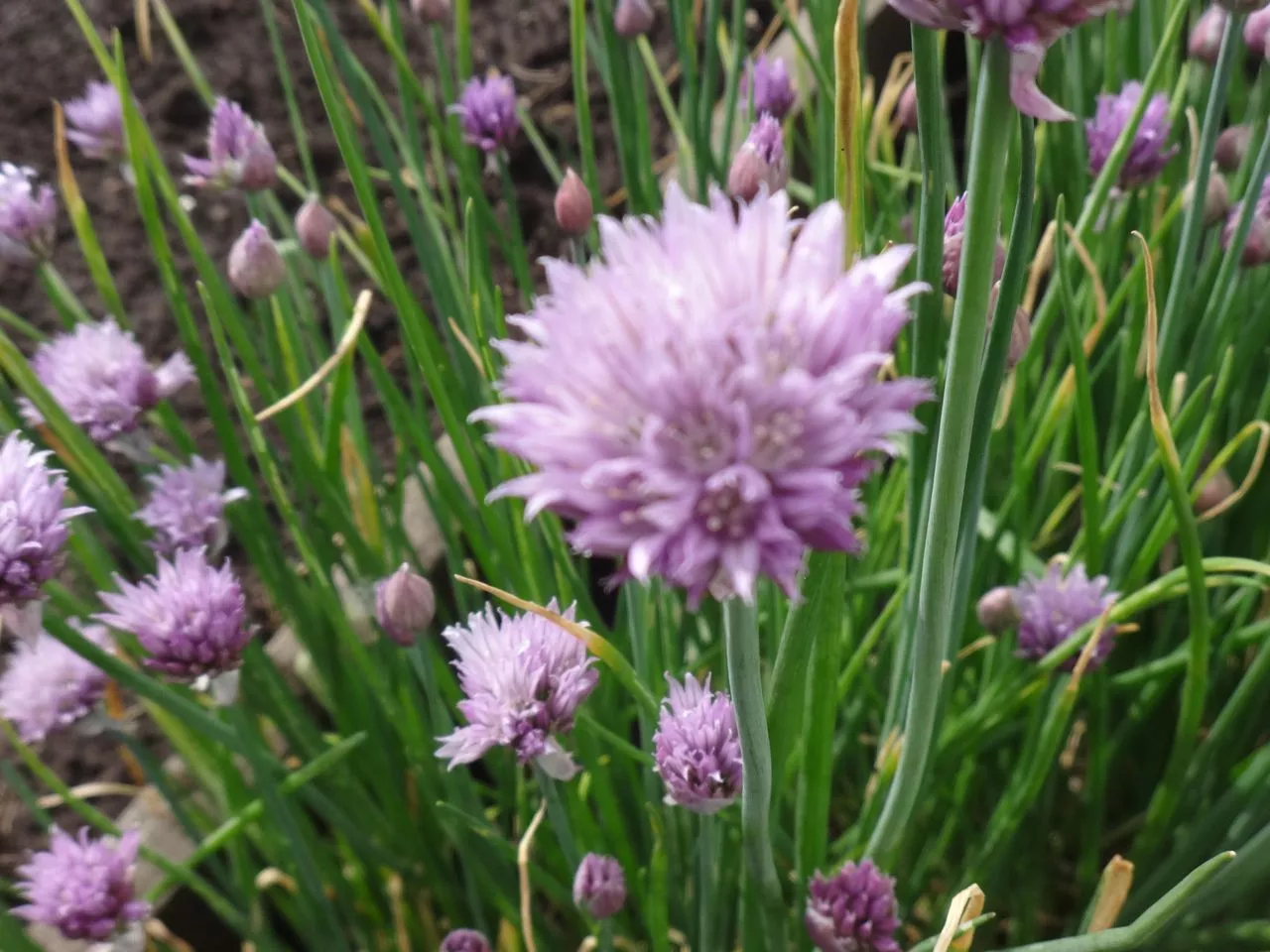
Chives look beautiful on their own.
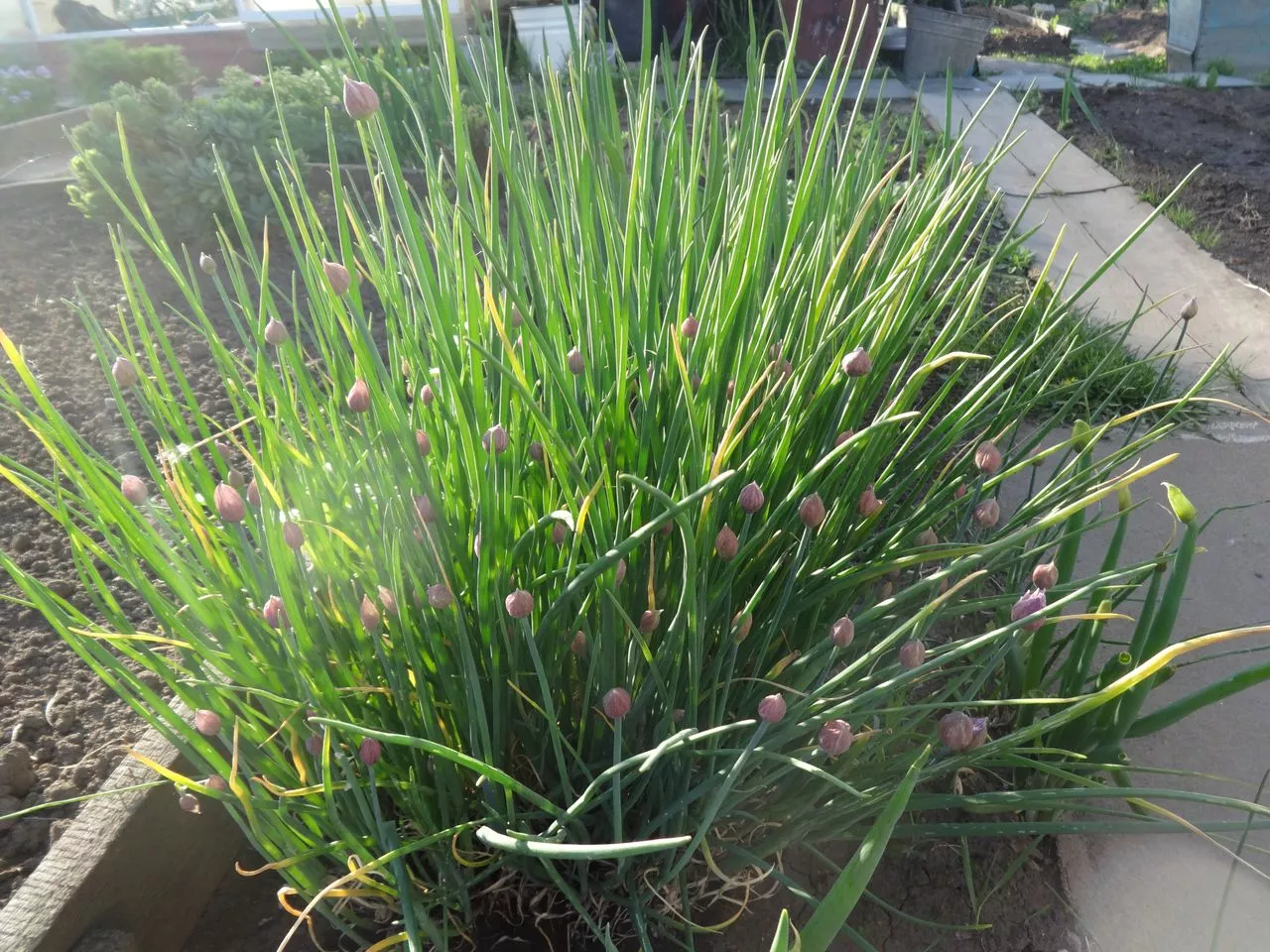
The bushes are compact with thin, dark green, shiny feathers and small pink-lilac inflorescences.
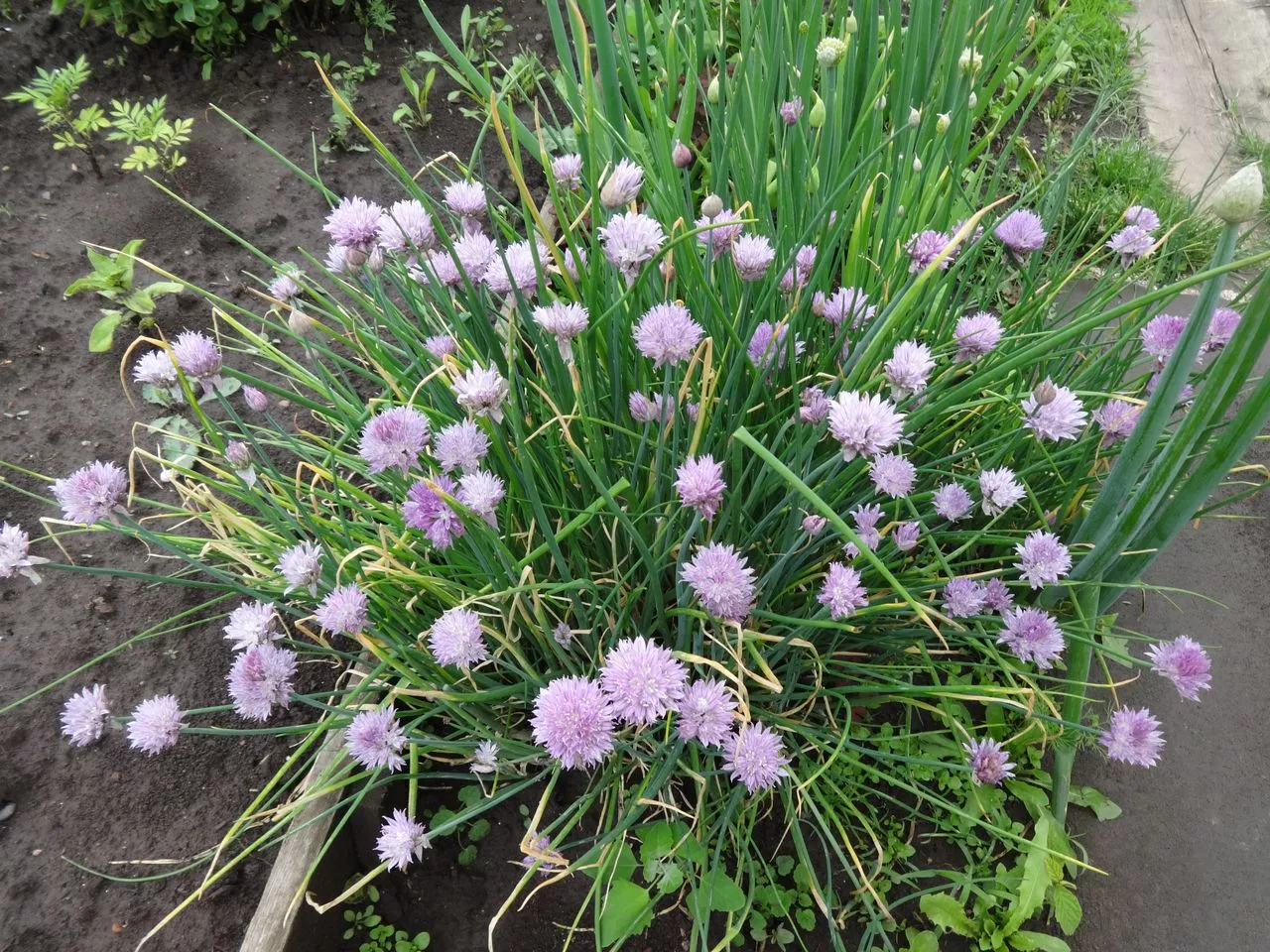
It can be planted along the edge of a flowerbed, as a border plant, or near vegetable beds, and it will repel harmful insects thanks to its bactericidal properties. Butterflies love its beautiful, fluffy flowers, which they flit over all day, drinking the nectar.
We also grow wild garlic, also known as bear's garlic. This plant has two oblong leaves on its stem, 3-5 cm wide, with a garlicky scent. Wild garlic doesn't look anything like an onion, but it is a bulbous perennial plant with spherical, zoinate inflorescences. The flowers are delicate white-green stars. The flowering bushes of wild garlic are very decorative. This wild garlic has already finished blooming, and seed pods have formed on it—very amusing green balls.
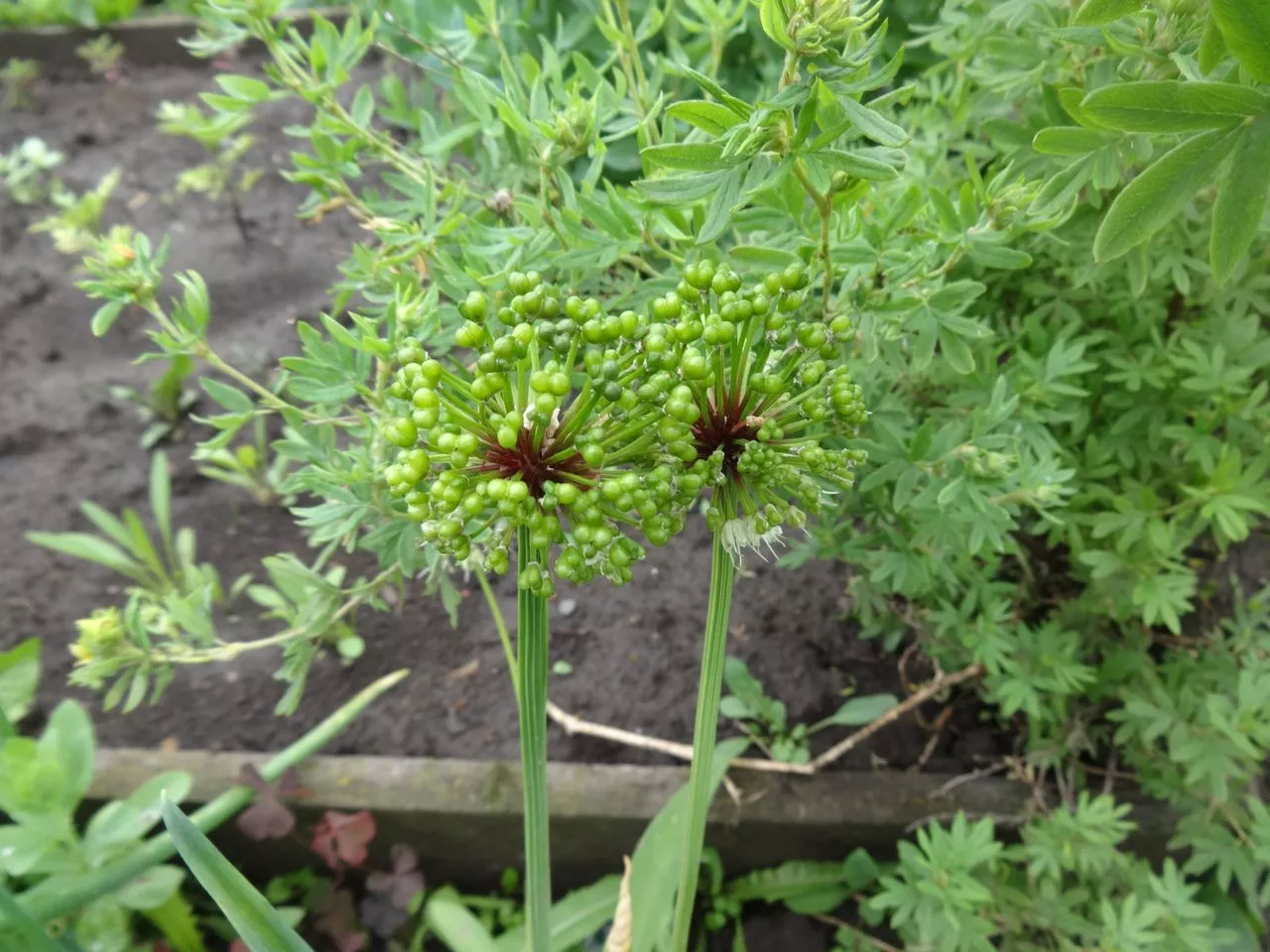
Wild garlic is not only a spice plant containing numerous vitamins, but also a medicinal plant. It is used to prepare medications for arthritis, neuralgia, bruises, and kidney disease.
Another representative of the onion family is the oblique onion or wild garlic, uksun, or garden garlic.
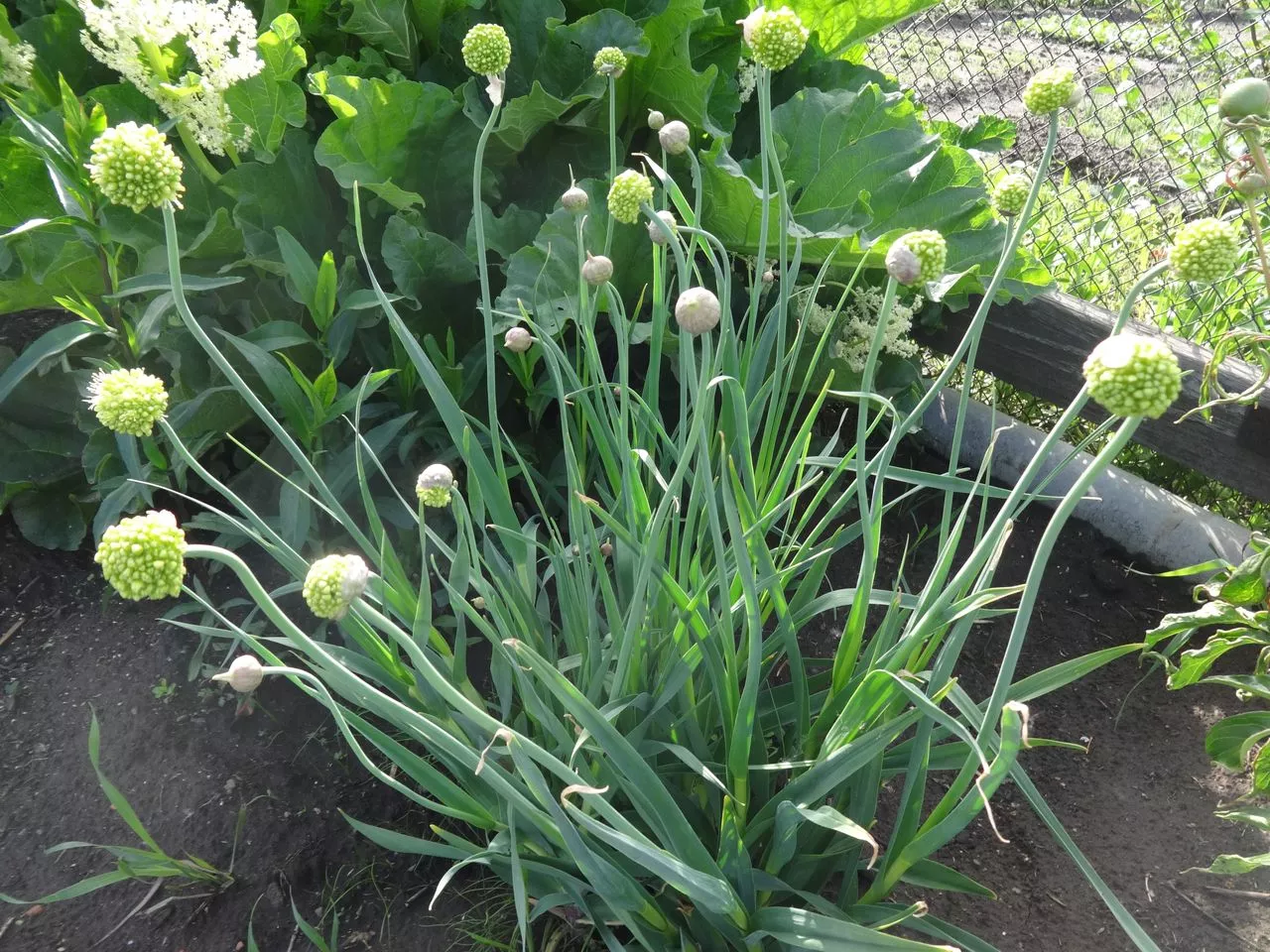
The leaves of this species are dark green, wide, and long, resembling garlic leaves, with a distinct garlic flavor and aroma. They are slanted from a tall stem. At the top of the stem are spherical inflorescences with numerous greenish-yellow, fragrant flowers.
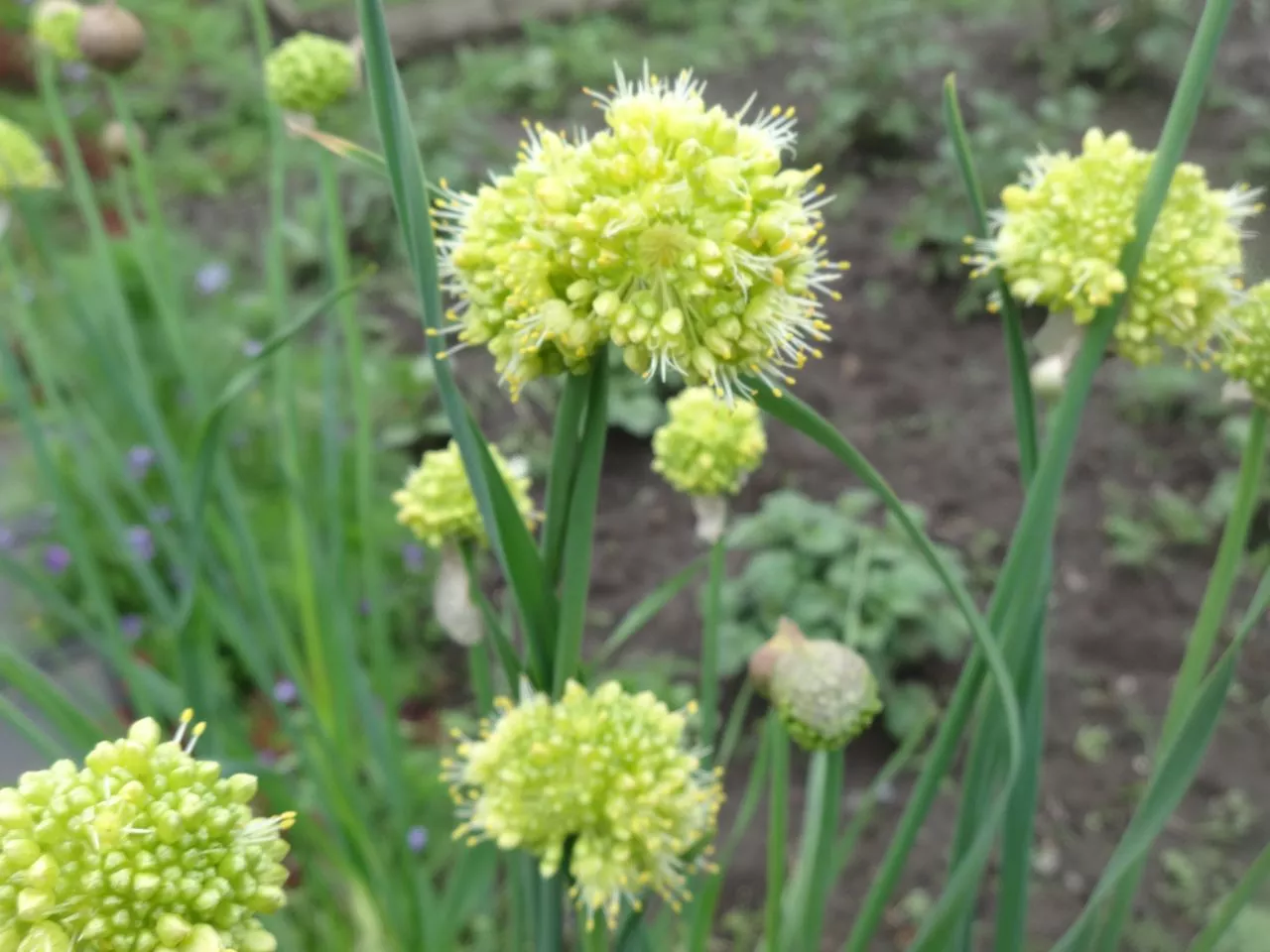
The plant is edible and contains a lot of vitamin C and minerals beneficial for the body. It is an excellent honey plant. The yellow, tender bulbs of the onion plant look beautiful in a flower garden.
Just recently I got another decorative onion - blue.
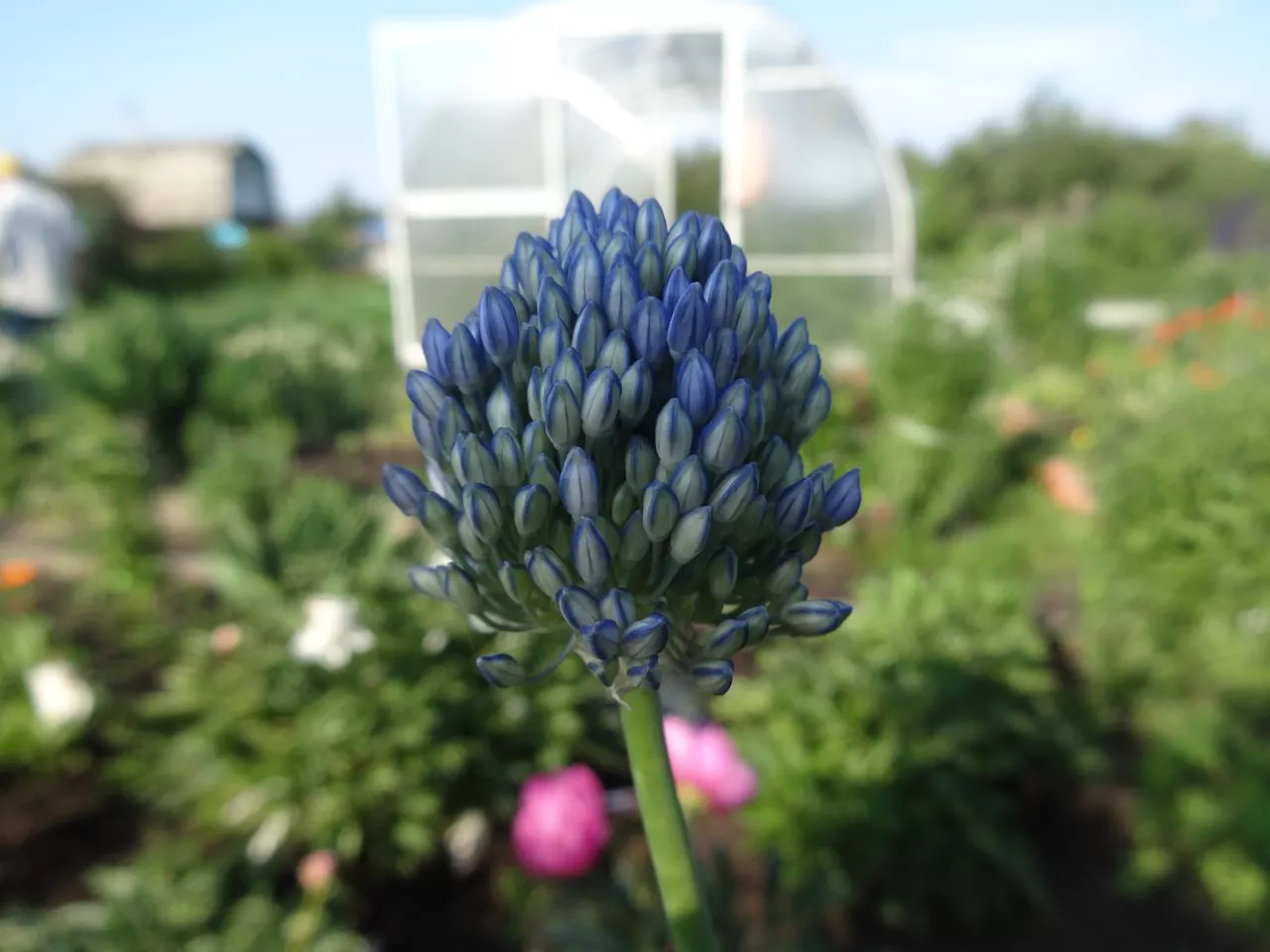
I planted it in the spring of 2020; a neighbor shared some with me. I didn't have any room in my flowerbed, so I had to remove a self-seeding delphinium. Last year, the onion sent up one long, straight stalk, and its large inflorescence blossomed with stunningly delicate blue star-shaped flowers.
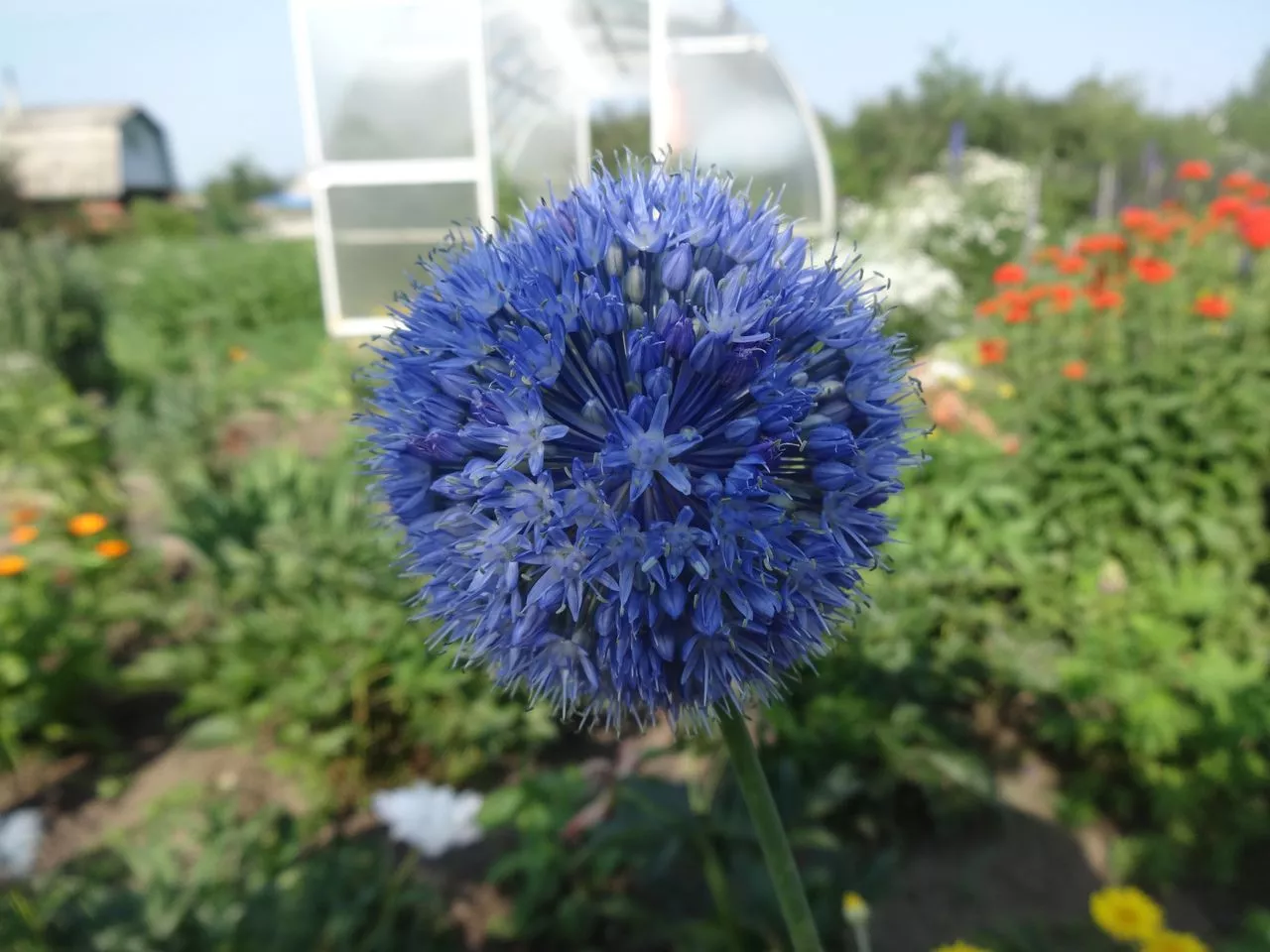
And this year it already has several inflorescences.
This onion is often called the "royal onion" by gardeners due to the beauty of its inflorescences. Its triangular, low leaves emerge early in the spring, followed by long, straight stalks, 50 to 80 cm tall. At the top of the stalk are the inflorescences, which are small at first, but as they grow, they enlarge, and by mid-June, they bloom into wondrous globes of sky-blue flowers.
The leaves and bulbs of blue onions are edible and contain many beneficial substances, minerals, and vitamins. The leaves are harvested in the spring, and the bulbs can be dug up in the fall. I can't imagine how anyone could eat such beauty.
Propagation occurs by bulblets, offshoots, and seeds. Onions are winter-hardy and tolerate frost well. They are easy to care for, but don't like overwatering; overwatering can cause downy mildew, leaf rust, and neck rot. Pests that can attack onions include onion flies, onion mites, and stem nematodes, but these are very rare.
And these are photos of purple onions, they are growing in the neighbors’ garden plot.
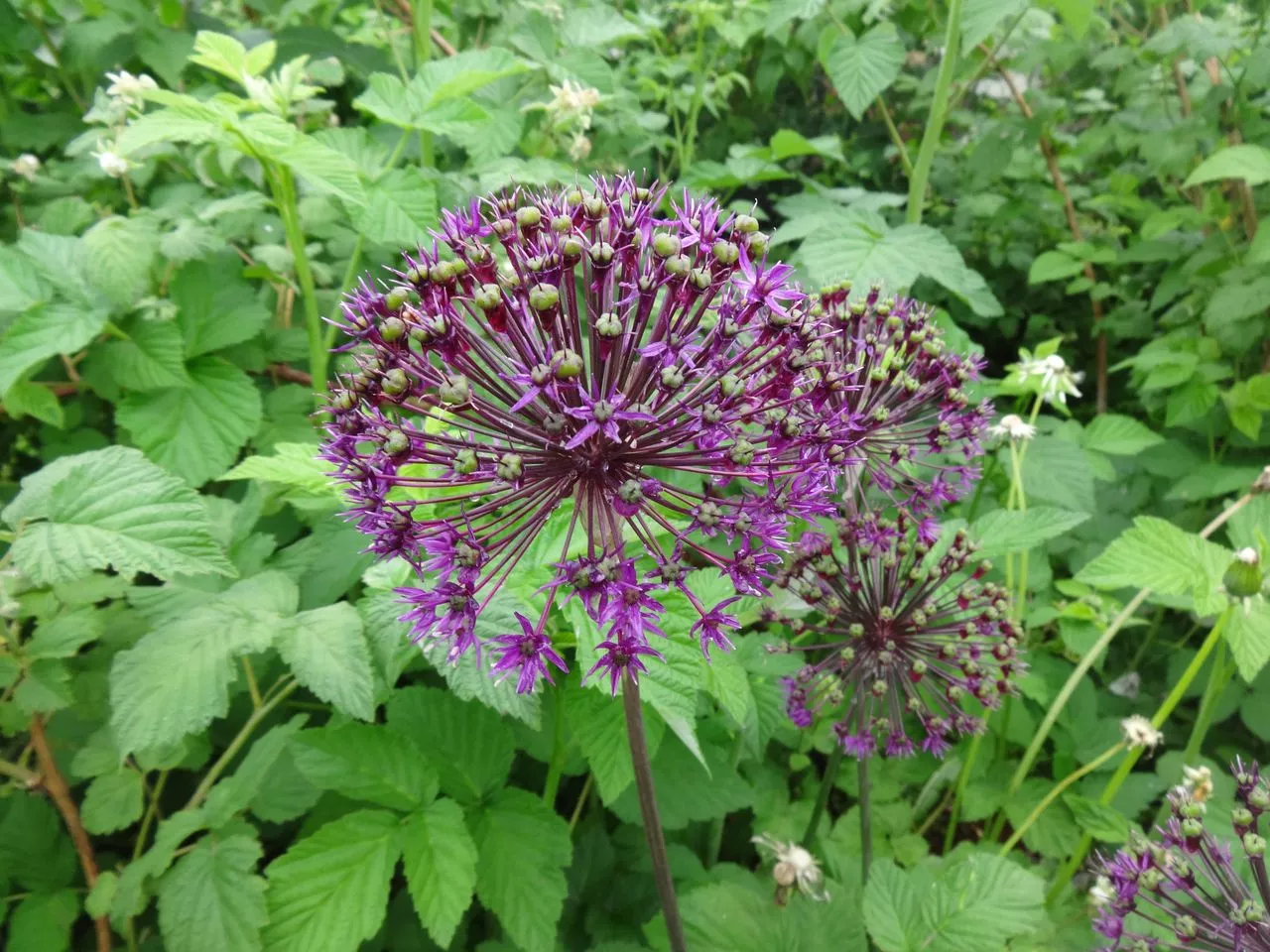
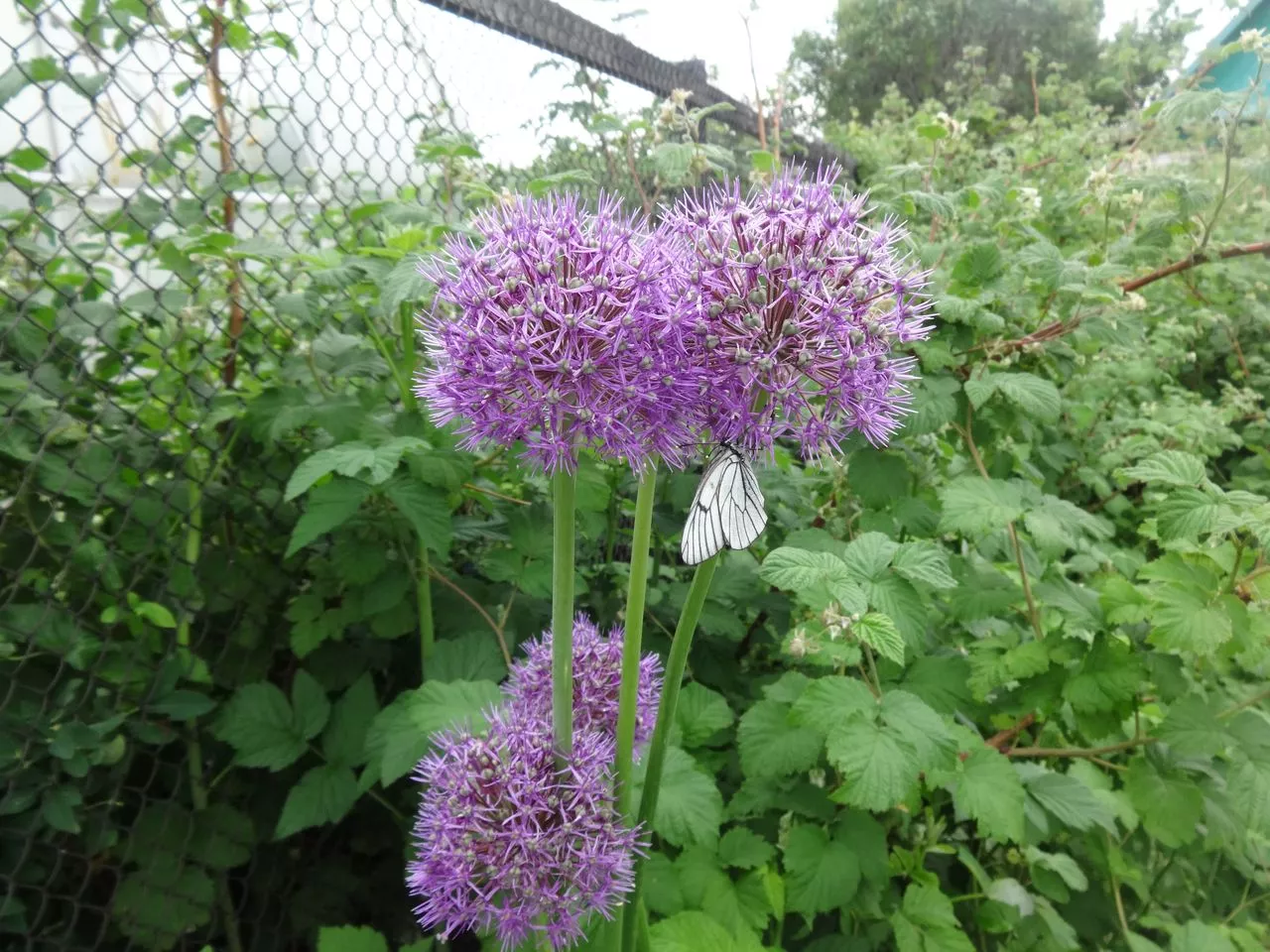
This is what decorative onions are like: healthy - they contain vitamins and beautiful - they will decorate any corner of your dacha.