

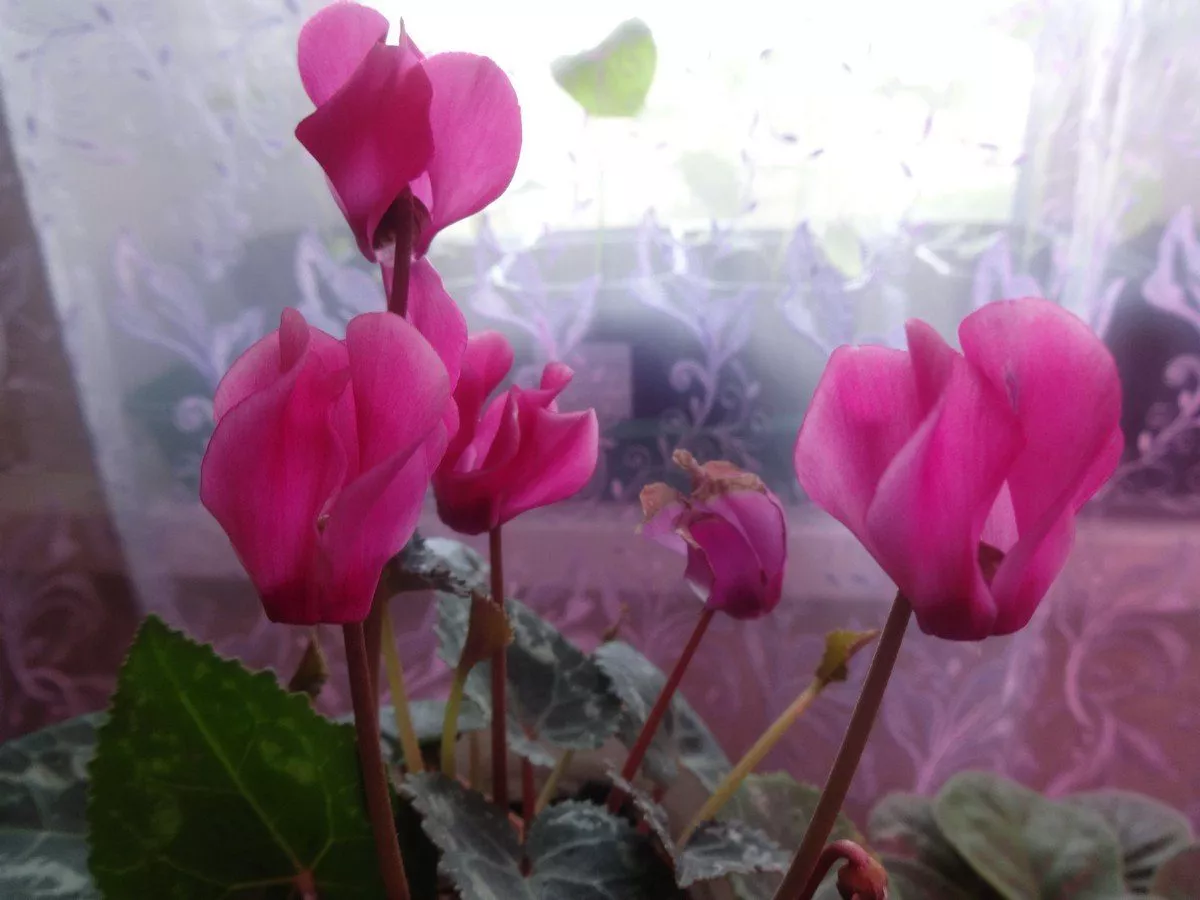
It's early December. It's been snowing since morning; at first it was falling in large flakes, but now tiny snowflakes are fluttering outside the window. And in my bedroom, bright pink butterflies are fluttering above the cyclamen on the windowsill.
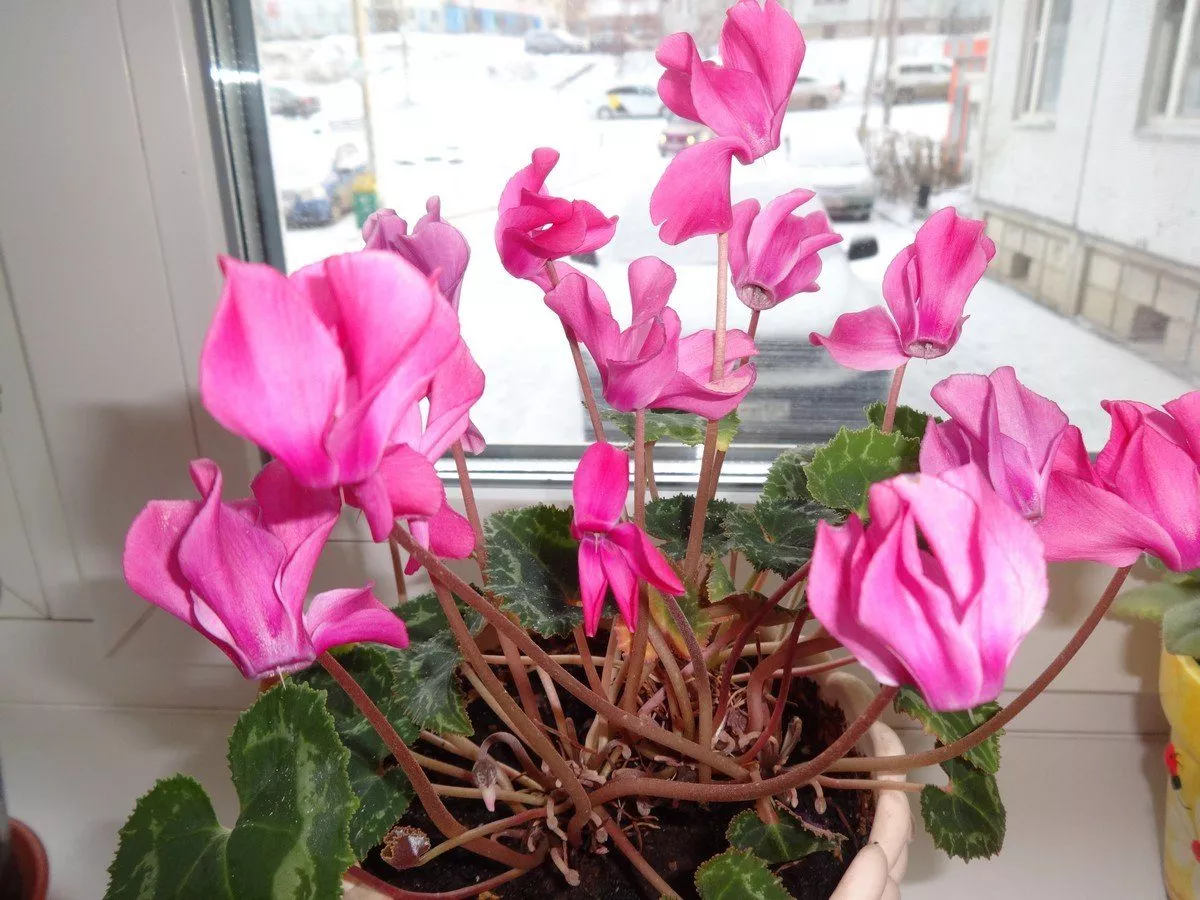
All my flowering plants have entered dormancy, with only a few violets still producing individual flowers. The cyclamen, however, is in full bloom.
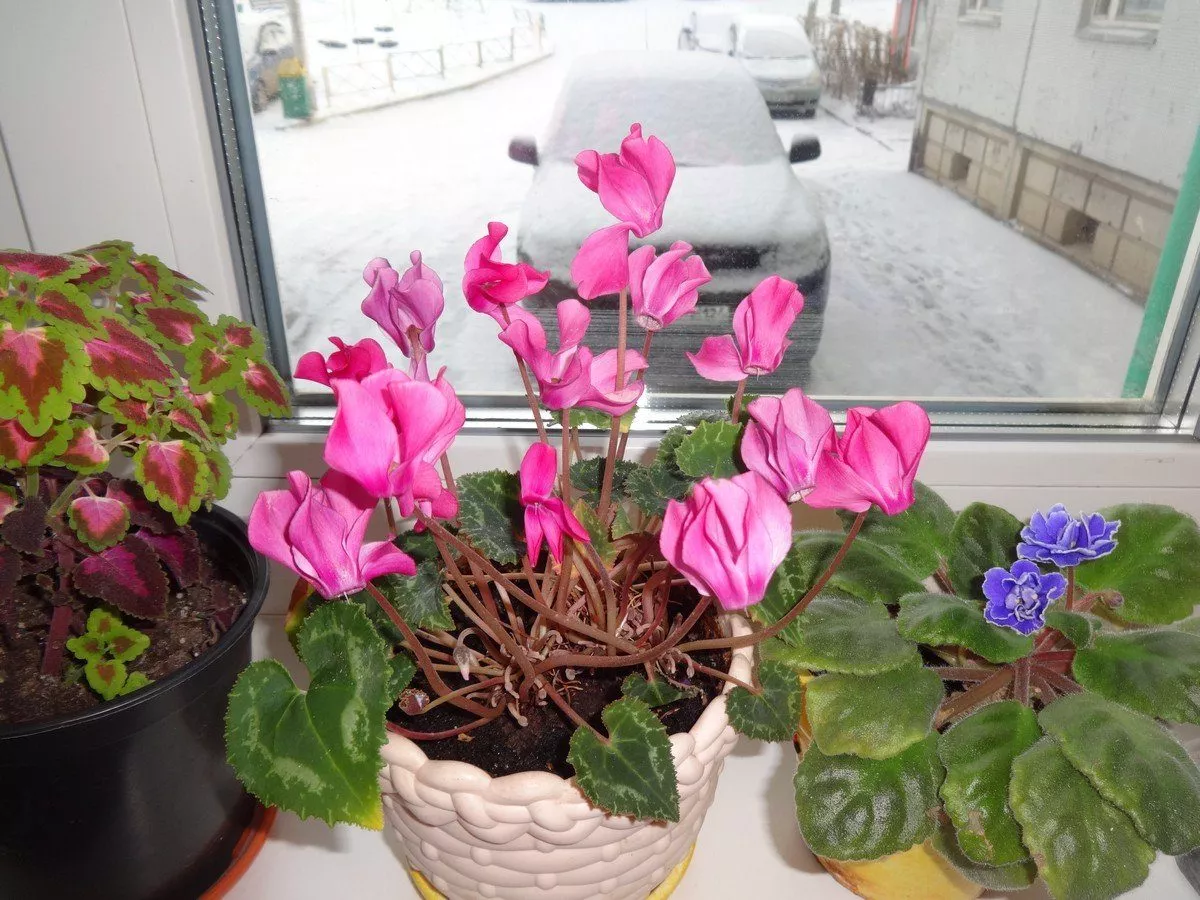
The first flowers have already faded; I cut them off; this is the second flush of blooming, and it's already ending. But my beauty has still produced many new buds, so the winter blooms will continue for a long time.
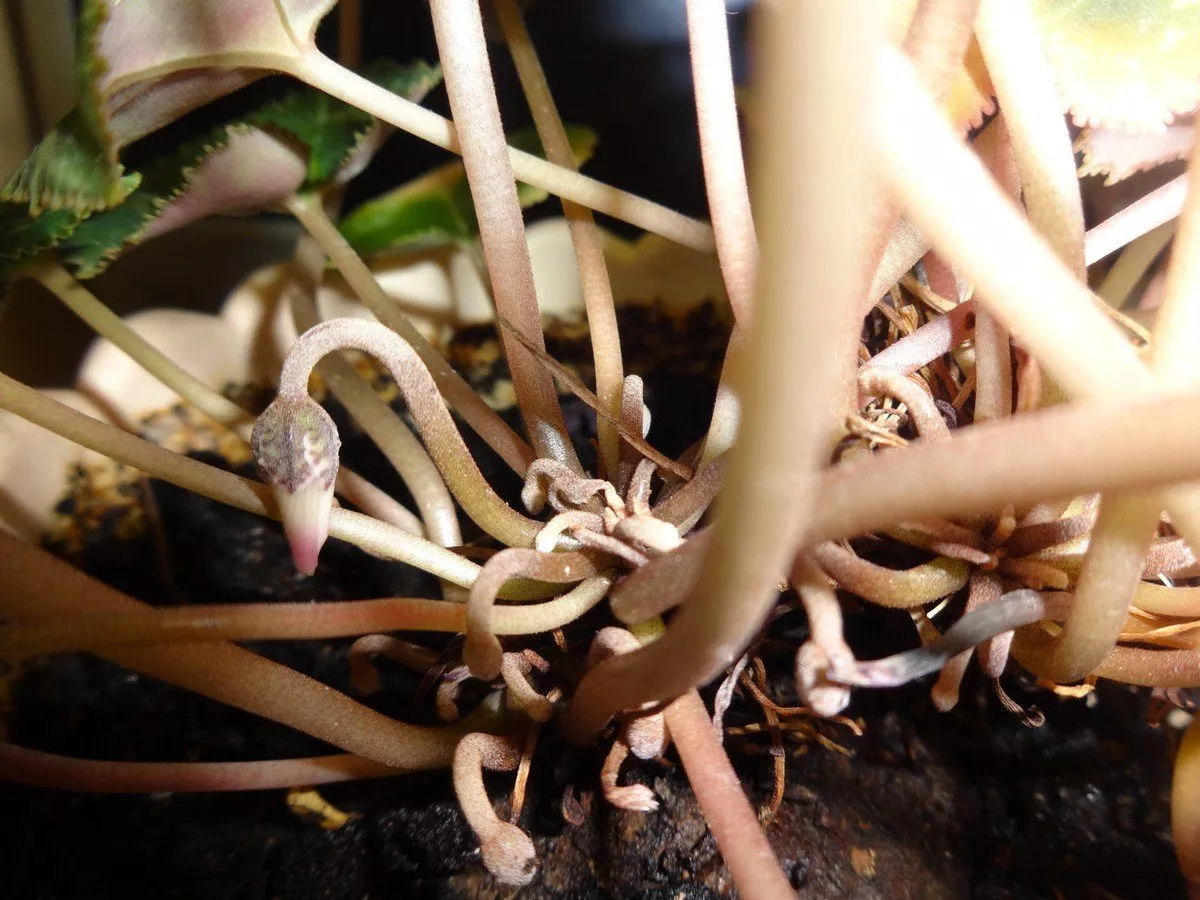
Cyclamen, also known as alpine violet or cyclamen, is an ornamental flowering plant from the Myrsinaceae family. Most species are found in the wild, but some cyclamen can be grown indoors.
This herbaceous plant produces small, round, brown tubers, growing up to 4-5 cm in diameter. Roots are located at the base of the tuber.
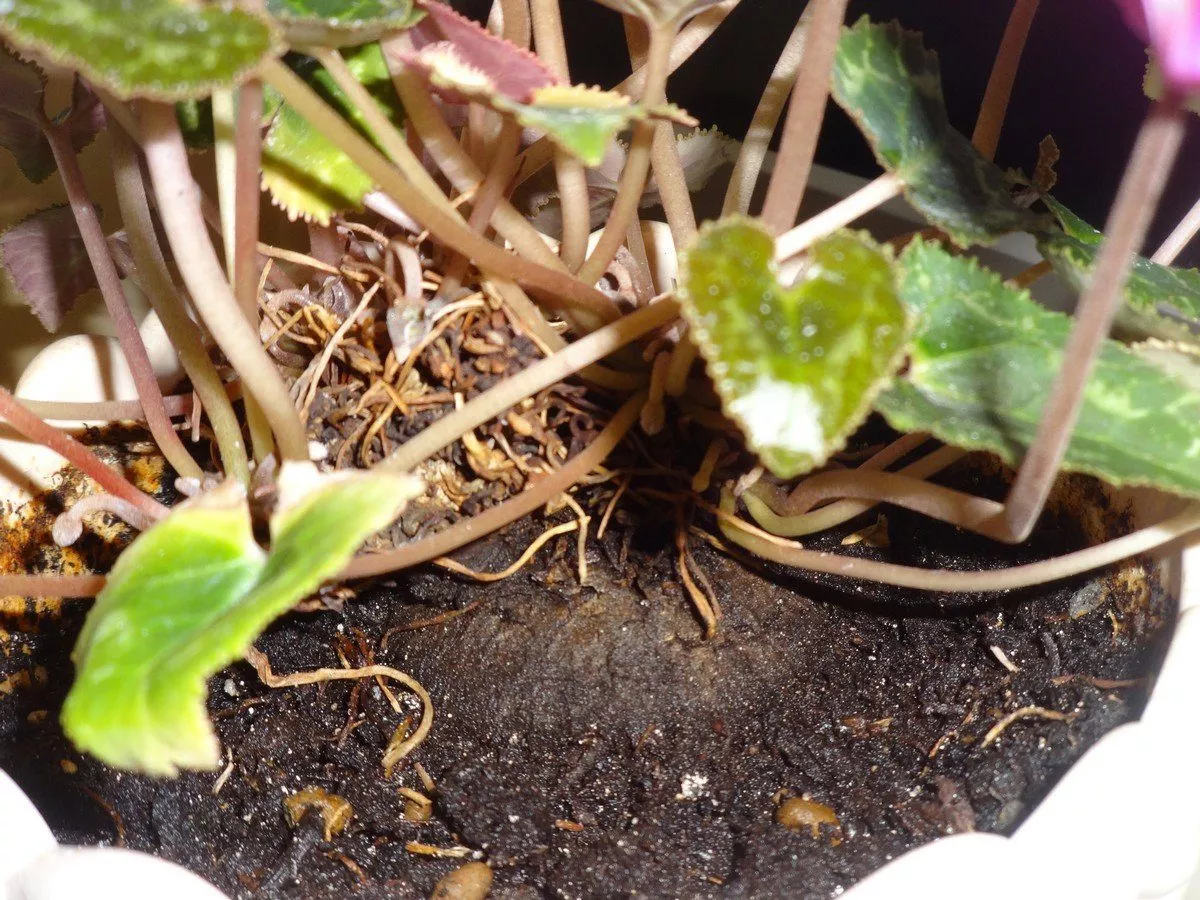
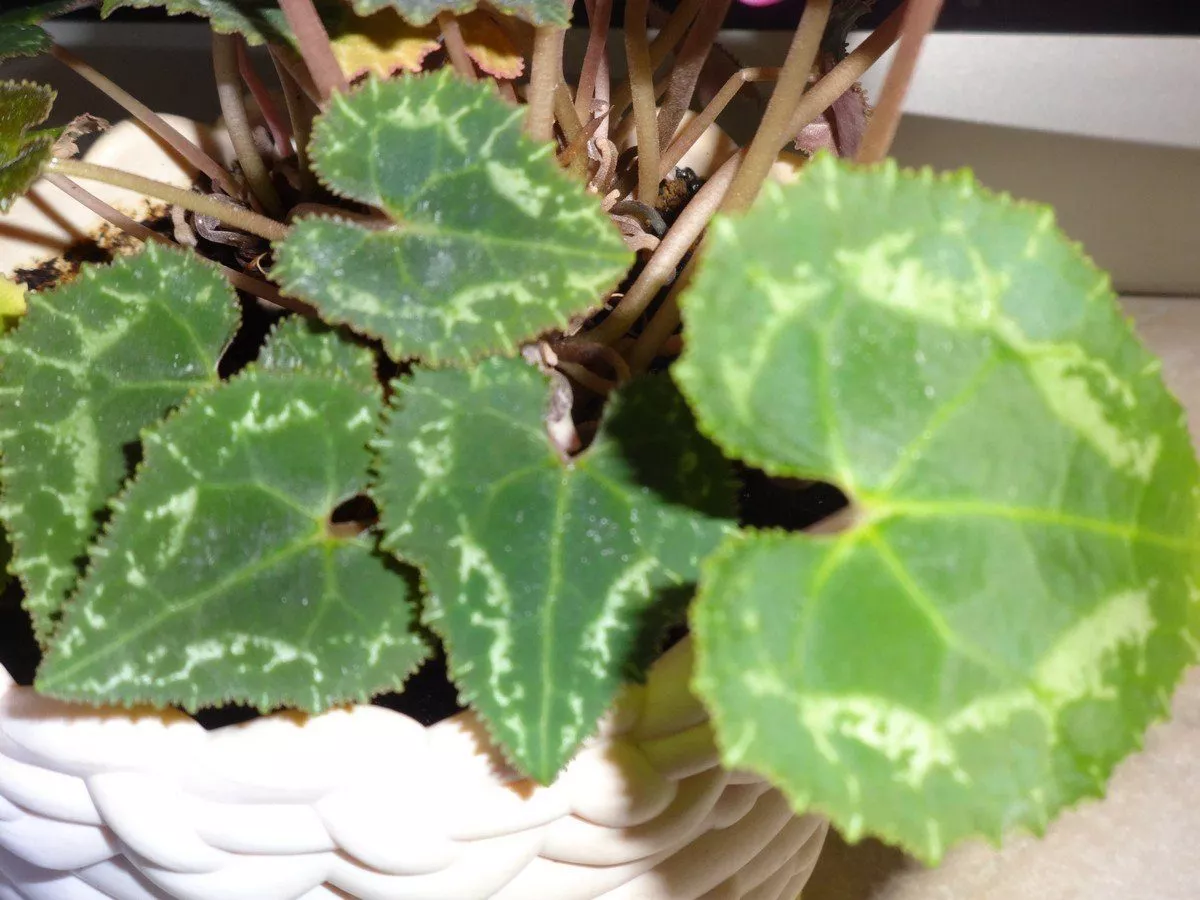
The plant's leaves are heart-shaped, serrated along the edges, dark green in color with a marbled pattern of gray-silver hue, collected in a dense rosette.
The flowers are large and vibrant, coming in a variety of shades—white, pink, crimson, red, and purple. Varieties with fringed, variegated petals have also been developed. The flowers, with five spirally curved petals, resemble fluttering butterflies.
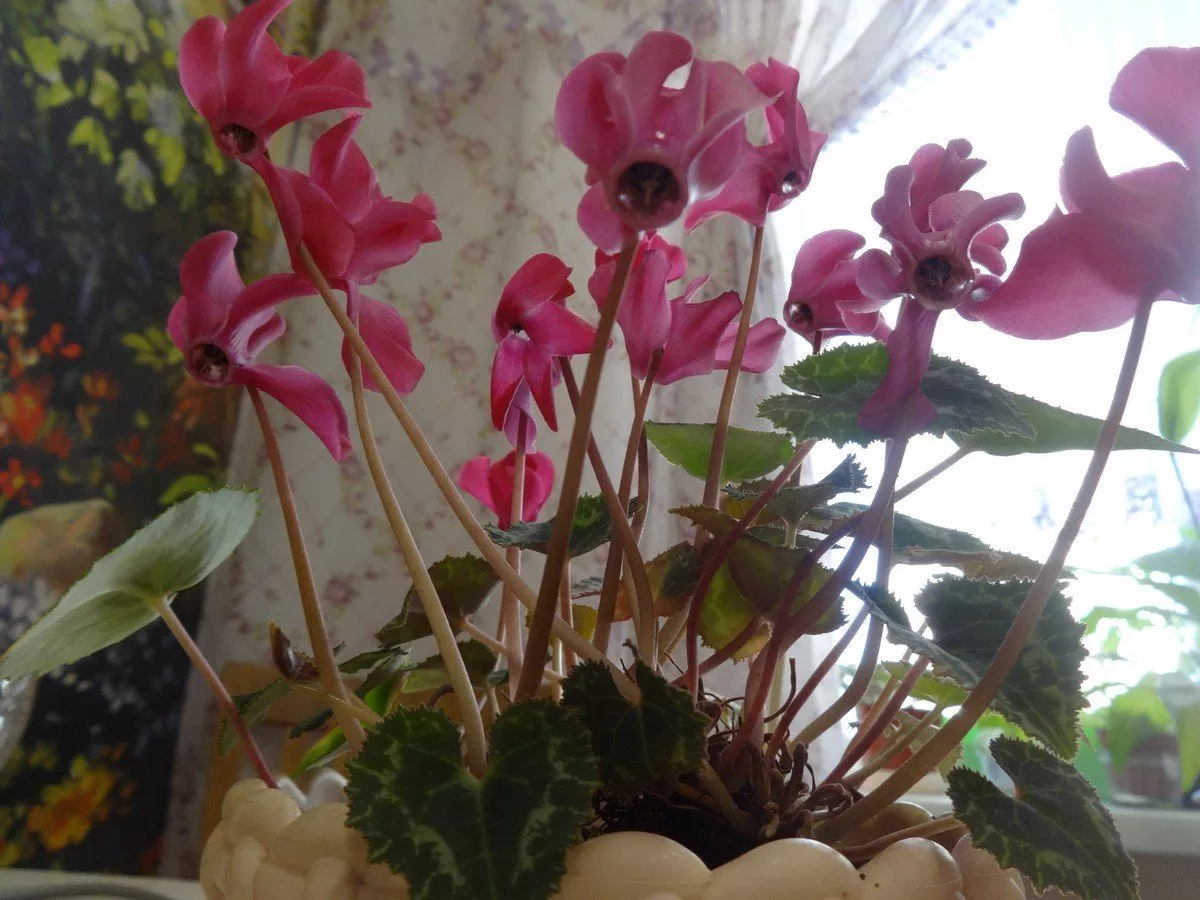
They are located on tall, thin peduncles. In the center of the flower, a fruit forms—a round capsule containing seeds.
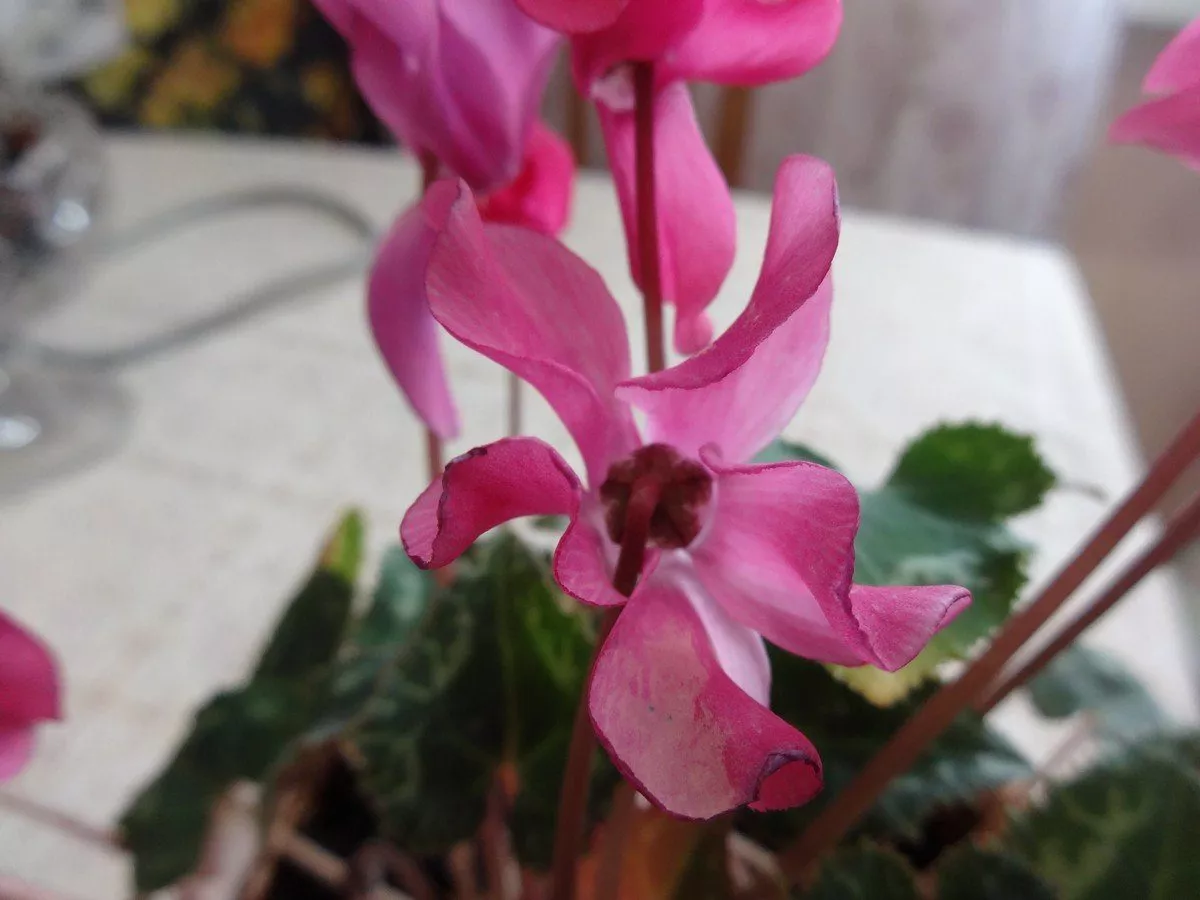
If faded inflorescences are not pruned, the seeds ripen and scatter into the pot, and small seedlings later emerge. The seeds can be simply collected and sown for seedlings.
I have a Persian cyclamen with bright pink flowers. The pot is on the east-facing bedroom window.
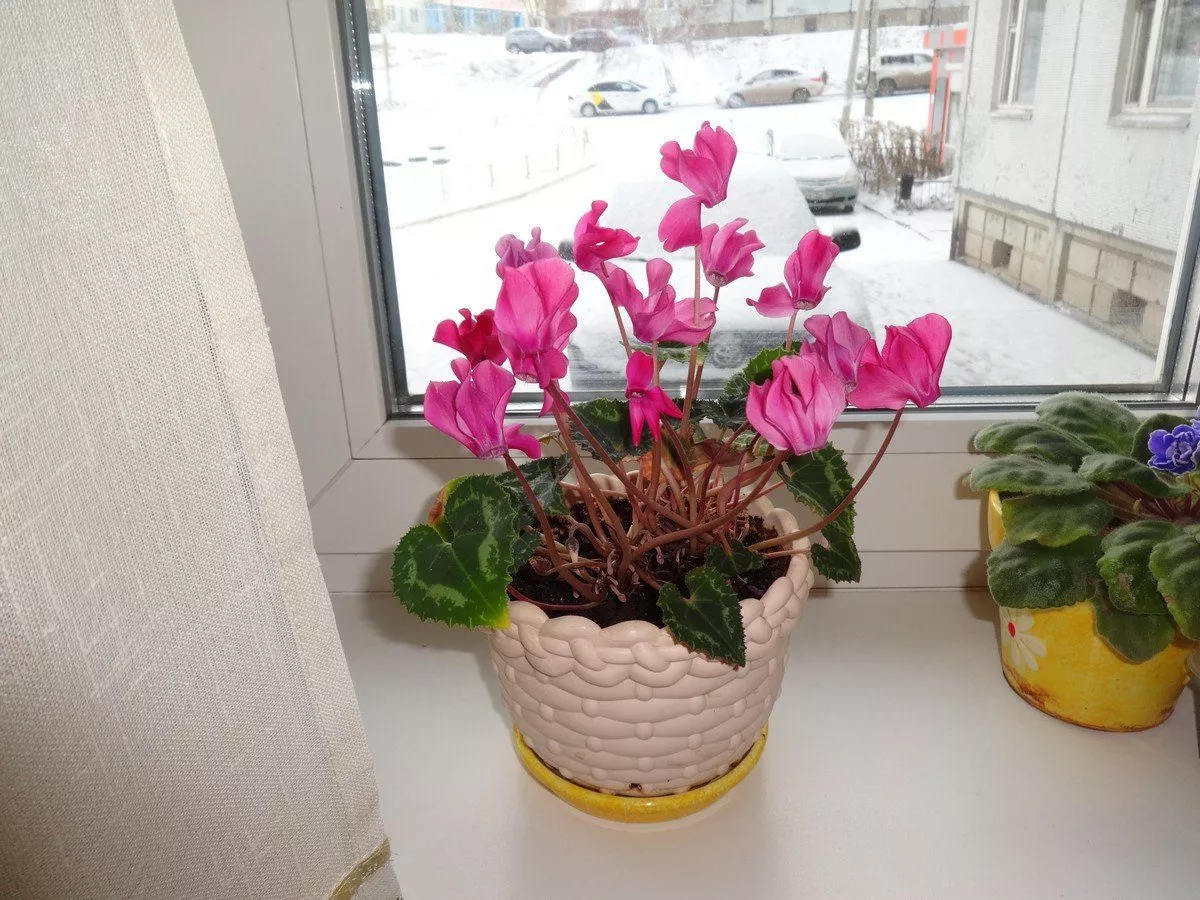
This is the coolest room in the apartment; the flower blooms more profusely in the cooler air. And the sun only shines through the window in the morning; cyclamens don't like direct sunlight.
This is what it looks like now.
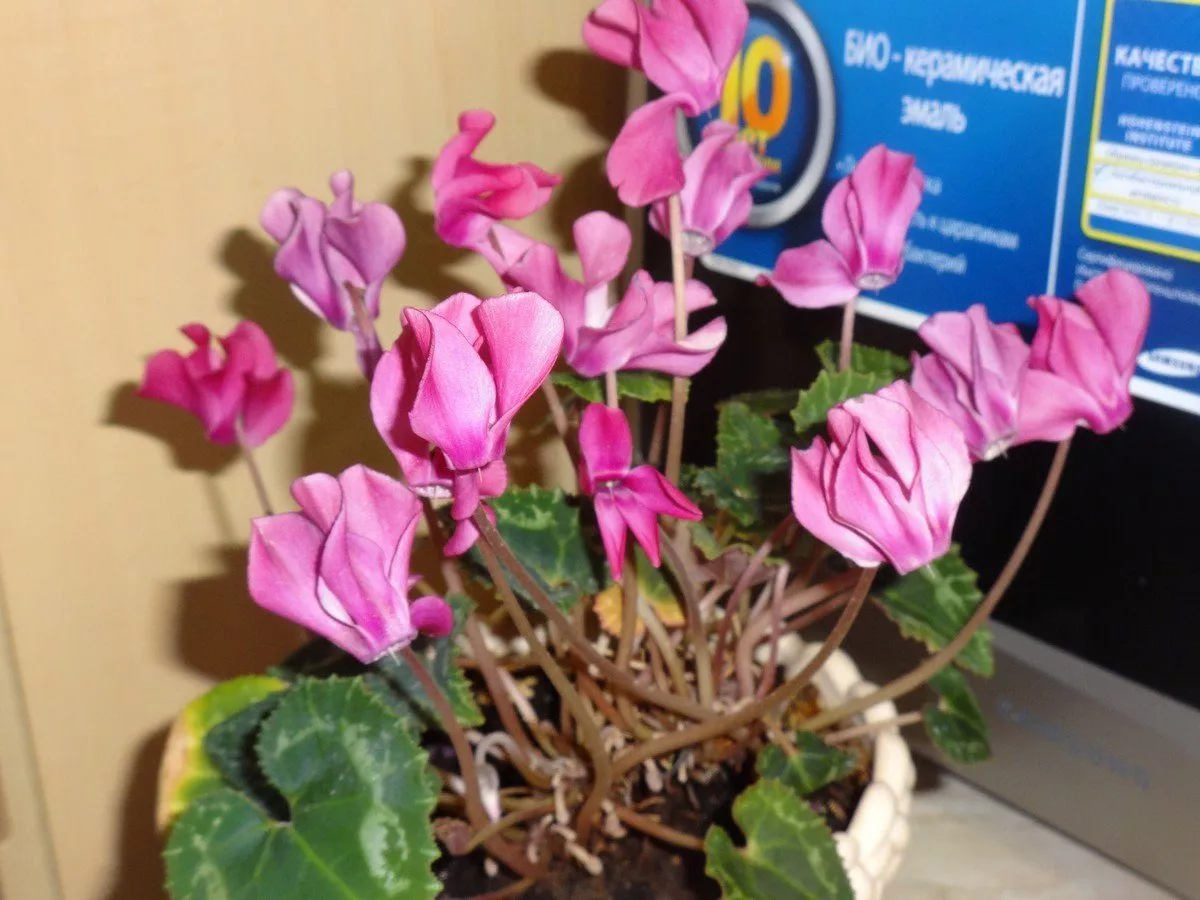
I had to trim most of the leaves because I neglected to water the plant properly. The dry soil and hot air from the radiators took their toll, and the leaf tips turned yellow and dried out.
But you don't need to overwater the alpine violet either, as excessive moisture can cause the tuber to rot and then the flower will die.
There are two tubers in the pot, and I don't even know when the second one formed. I sometimes leave the faded flower to ripen the seeds, and perhaps the corm will grow from the seed.
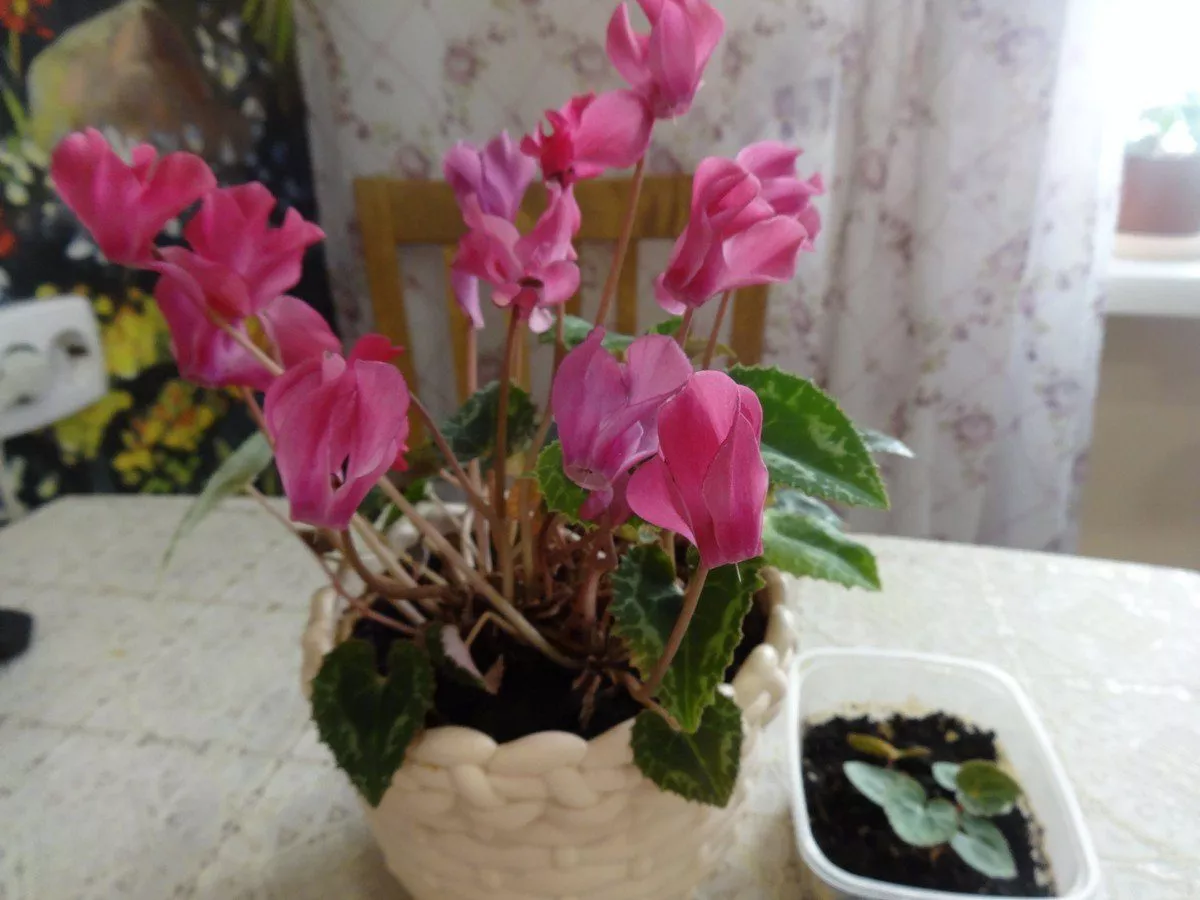
This spring I also planted a young sprout separately; for now it is growing in a small container. When it grows up, I will find a suitable pot for it.
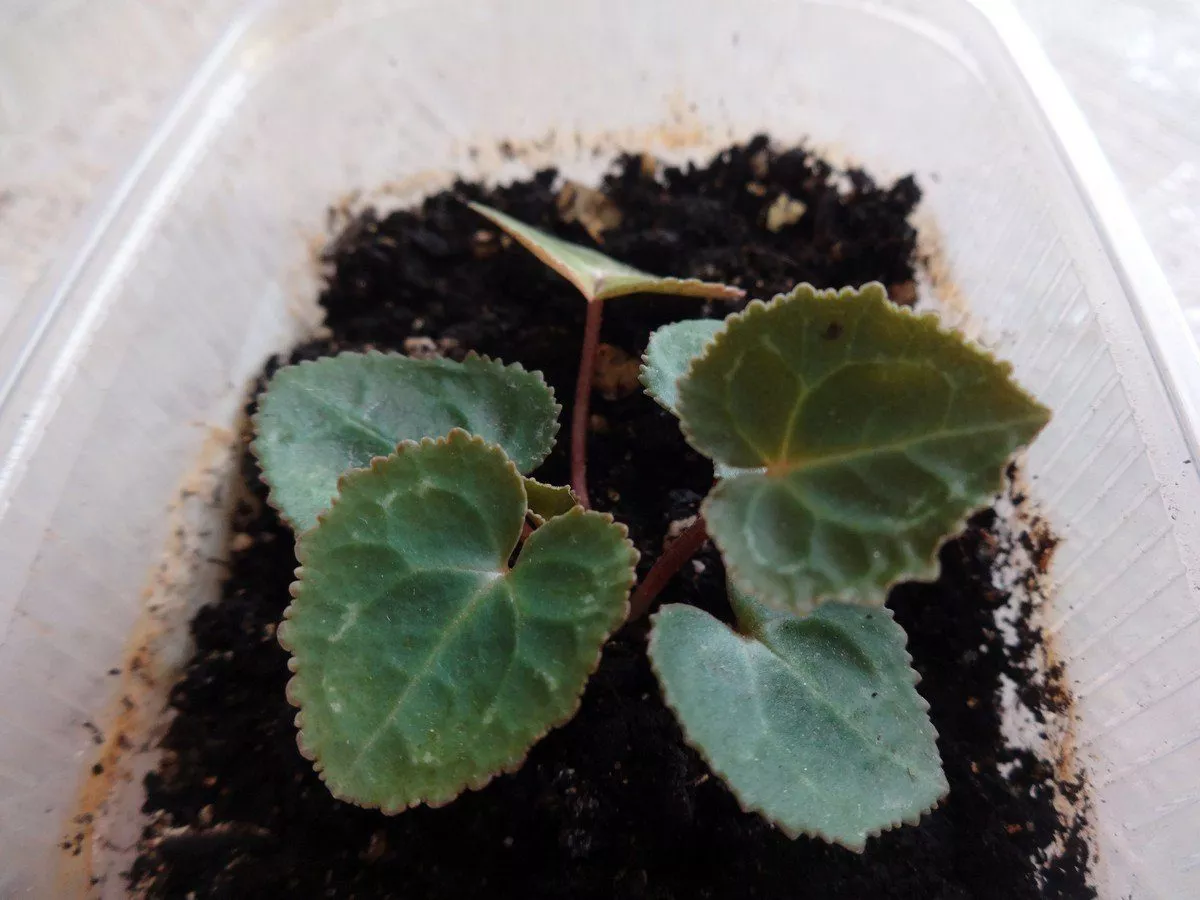
When replanting, add a drainage layer to the bottom of the pot and fill the container with good potting soil. The corm doesn't need to be completely covered with soil; one-third of the tuber should be above the soil surface.
I have had a flower growing for many years now, the bush is already quite old, but still, every autumn and winter, numerous butterfly flowers bloom on it.
Twice a month I fertilize it with a complete indoor plant fertilizer, and occasionally I treat it with natural remedies, sometimes banana water, sometimes an ash solution. And it blooms from late fall until mid-May.
These photographs were taken in April and May in different years.
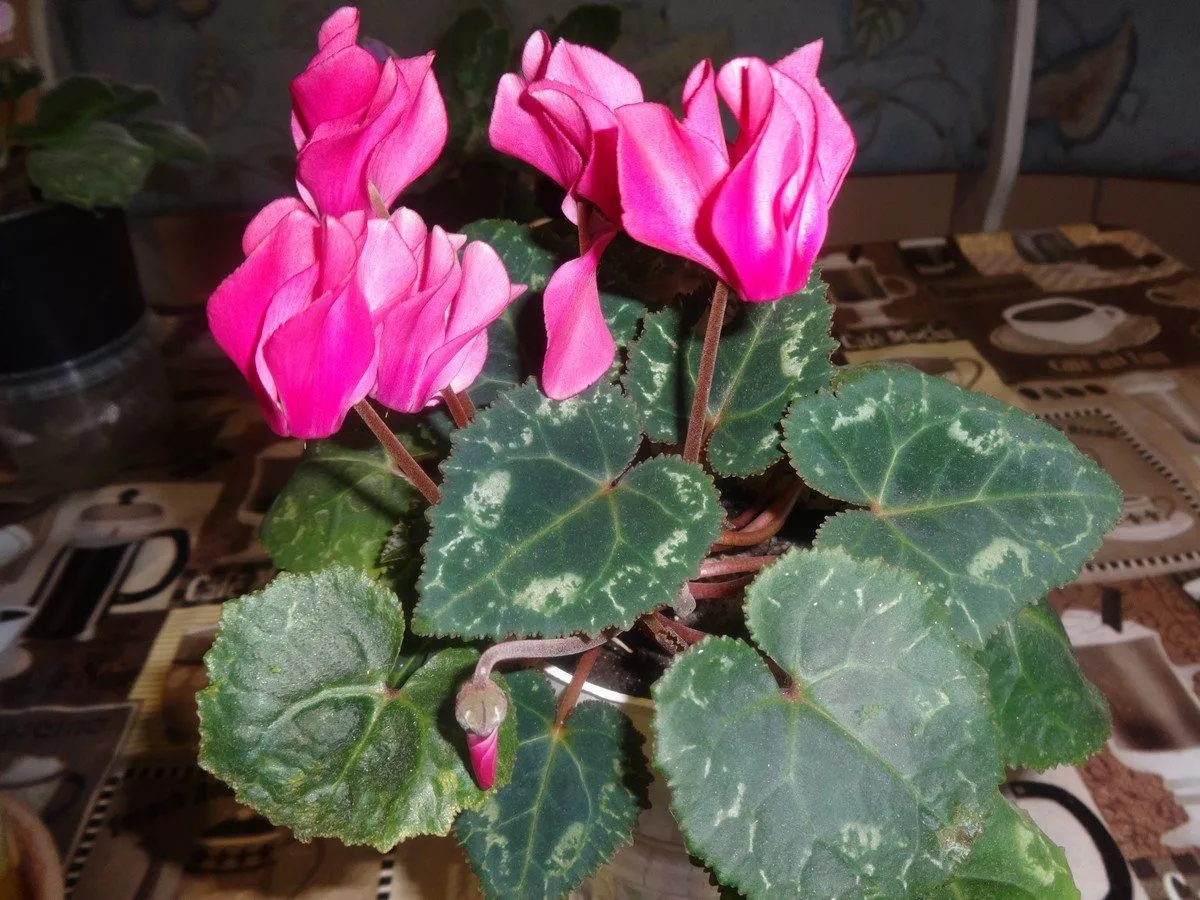
When flowering ends, the plant enters a dormant period. The leaves gradually die off, and new growth is almost nonexistent. In the spring, I remove the plant from the windowsill, like all my houseplants, as it's time to plant seedlings for the garden.
I usually place it on a flower shelf in the very bottom corner, where it gets very little light. But I still continue to care for it; even during its dormant period, the plant needs occasional watering to prevent the tuber from drying out. I begin fertilizing it in late summer, so the plant can accumulate nutrients and produce a sufficient number of large leaves and a multitude of bright flowers during its growth period.
Signs associated with cyclamen:
- Cyclamen growing and blooming in the house has great positive energy.
- The flower protects residents from evil spirits, natural disasters, envy, eliminates fears and drives away bad dreams.
- Brings love to the family, extinguishes conflicts between family members.
- According to folk beliefs, women who dream of having a child need to plant this flower and take care of it, and soon the woman will have a child.
- Those with financial problems should plant a white-flowered cyclamen in their apartment. Put the dried petals in your wallet, and your financial situation will improve.
Cyclamen is also a medicinal plant. Infusions and decoctions of the flower help fight infections, nervous disorders, and treat gastrointestinal diseases.
I also have a pink cyclamen blooming on my bedroom windowsill. I've had it for a long time, blooming every winter and then going dormant in the summer. My tuber is quite old and large, with three rosettes. I wonder how you got the individual shoots? I'd also like to get another plant. It's a shame I can't attach a photo of my blooming beauty in the comments.
Hello! Cyclamens reproduce well by seed. Periodically, some of my cyclamen flowers produce seed pods—round green balls.
Over time, they dry out and turn gray. The seed pods contain round seeds that can be collected and sown in February or March.
My little cyclamen grew on its own. I left the seed pod in the cyclamen pot, and the seeds sprouted on their own. There were several seedlings, and I chose the best one.
This year, one flower also produced seeds. I don't know how it was pollinated, but online they say that for cyclamen to set seeds, the buds need to be pollinated during flowering. In the morning, use a brush to transfer pollen from one flower to the other. This procedure needs to be repeated several times.
I didn't do anything special; the flower pollinated itself somehow. I usually remove the wilted, drooping flower stalks, but sometimes there are flower stalks with fruit among them; they don't wilt until the seeds ripen.
When such a flower stalk withers, you can simply leave it in the pot, placing it on the soil, or you can collect the seeds from it and sow them in a separate container.
An easier way to propagate cyclamen is by using rosettes. Simply carefully separate one rosette from the tuber and plant it in moist soil. Cover the container with a transparent lid or plastic bag. With this propagation method, roots will appear in about three weeks. And you'll have a new young flower.
Will the tuber be damaged? Or should I separate it at the tuber level? Will the rosette then fall apart?
I recently repotted a new rosette. I carefully separated the sprout from the tuber and planted it in a separate small pot. I covered it with a plastic bag. I'm waiting for the cyclamen to take root.
Thank you, I understand.
I also water the flower in the tray, it takes as much moisture as it needs, and when the tray dries out, I add more
Hello! We've added the ability to upload a photo to a comment (the camera icon below). Thanks for the idea.
Try it, it should work :)