

After purchasing our summer cottage, we discovered new plant species. One of them was Shepherdia, but we didn't recognize the name right away.
A strange tree, or rather a tall, unkempt bush, similar in appearance to an overgrown lilac bush, only with whitish, oblong leaves, immediately attracted attention.
They spent a long time wondering what it was, unsure whether to remove it from the property or leave it. The local summer residents didn't know the exact name, and the previous owner wouldn't tell them anything.
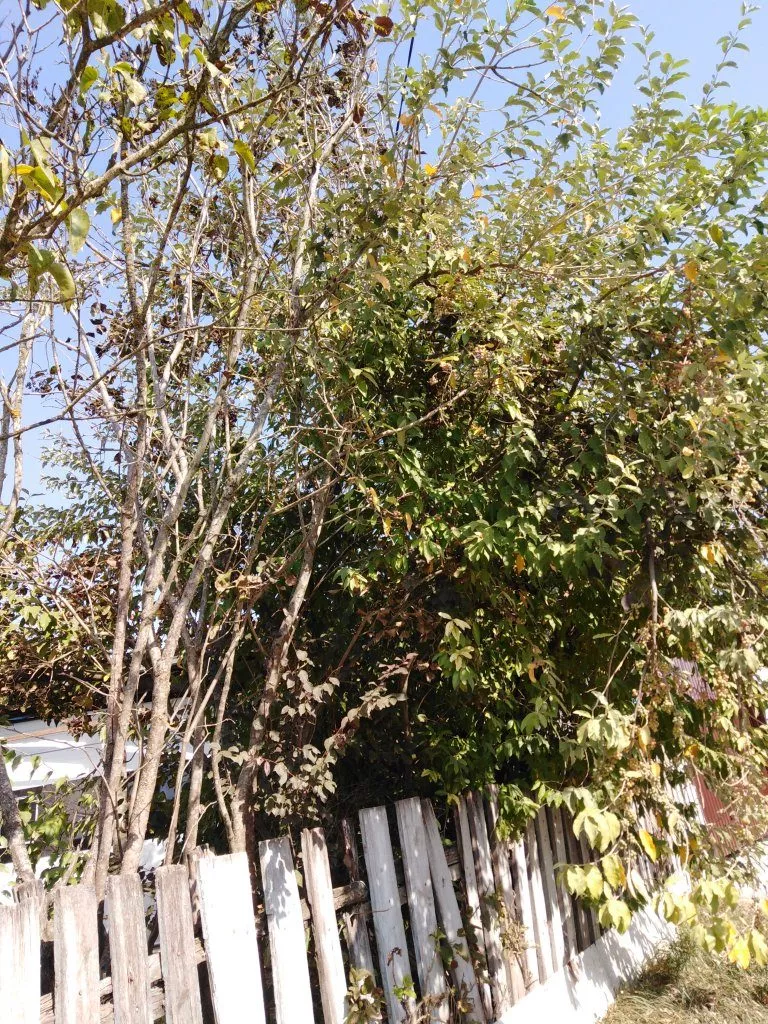
But the plant was planted in a prominent spot, near the gate, which meant it was beloved and beneficial in some way. They decided to wait for the harvest.
During the growing season, there were no complaints about this miracle shrub: it developed beautifully, showed no visible disease damage, and showed little pest concern. And this despite the fact that we were exhausted by treating the apple and plum trees for spider mites and cabbage whites! Here, however, we demonstrated an enviable resistance to all pests.
“The berries probably contain a poisonous substance, and the tree was planted for beauty,” the husband suggested.
And it truly was beautiful. Light green leaves with a white tint, some already yellowed, and against them clusters of small berries, ripening gradually and giving them a variety of colors.
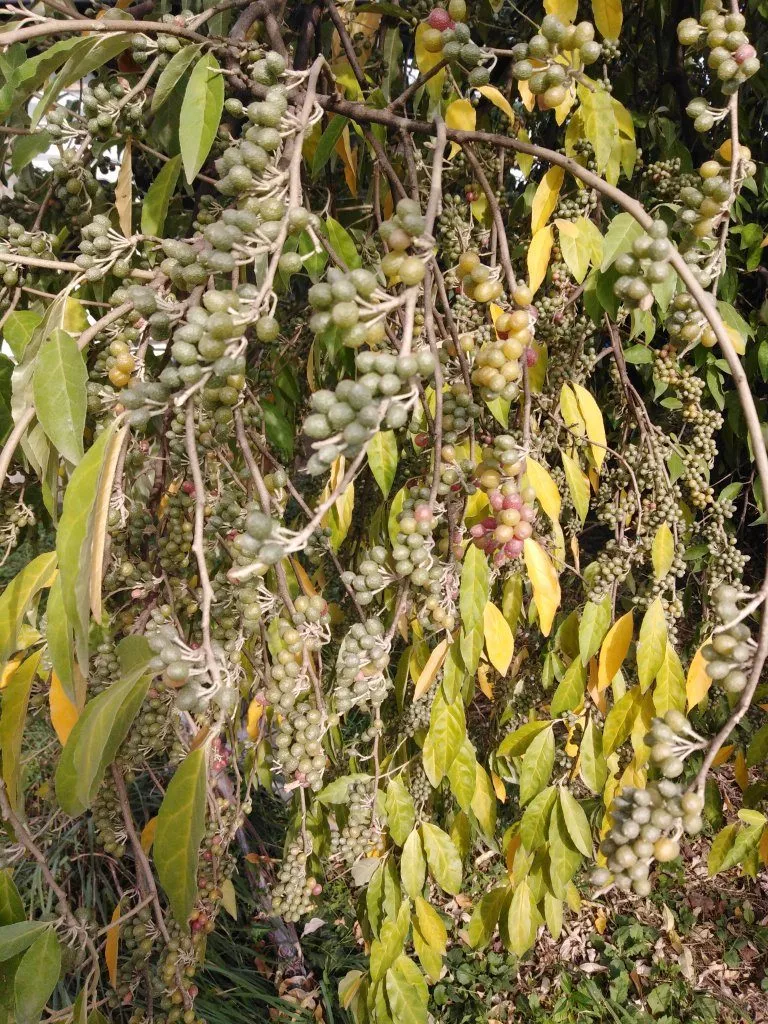
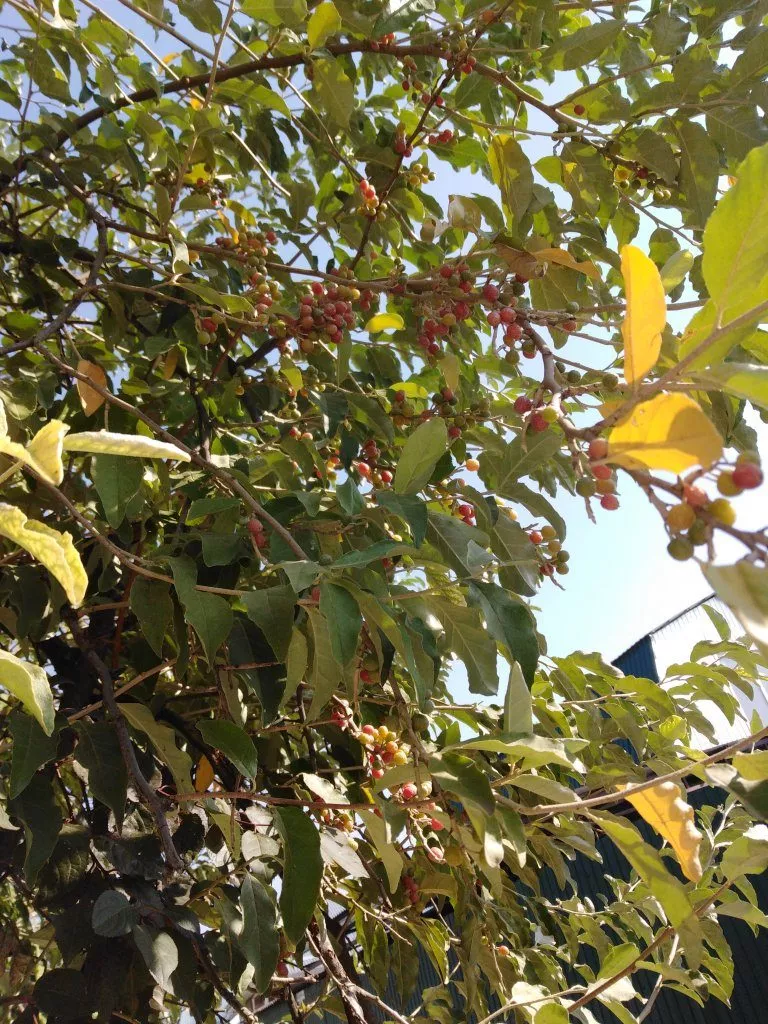
My neighbor said it was a Siberian oleaster. I examined the plant closely and realized she was mistaken. Elaeagnus produces single berries, while this one produces clusters. So I decided to taste the berry, the brightest, the ripest one... At your own risk, I don't recommend it.
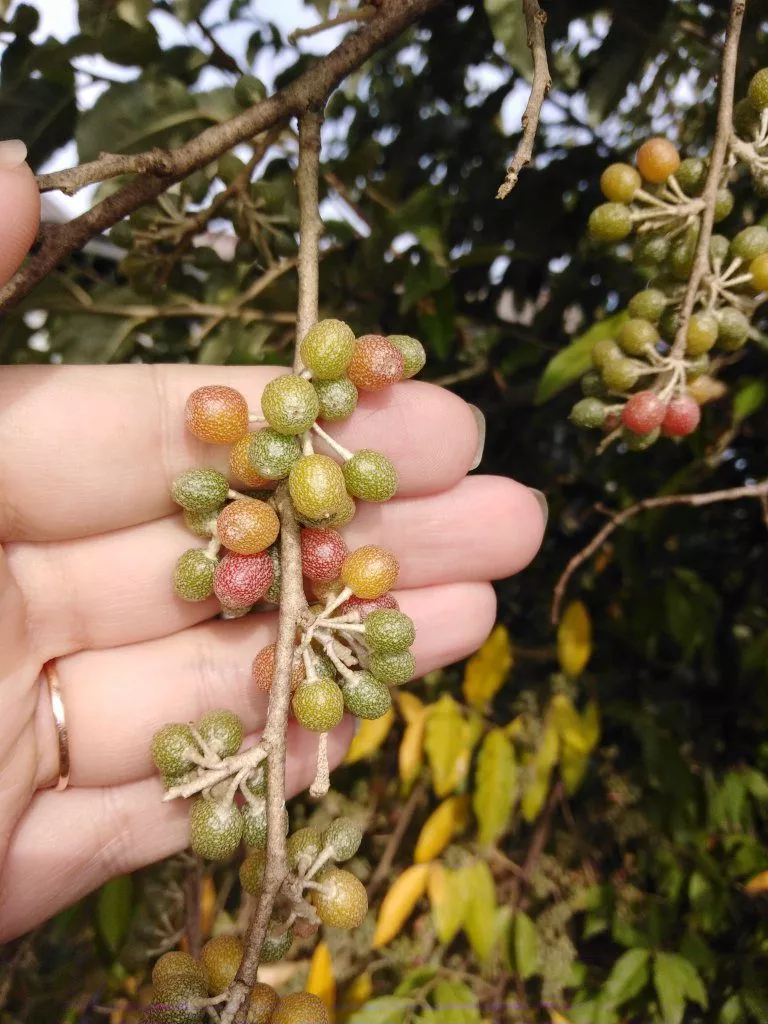
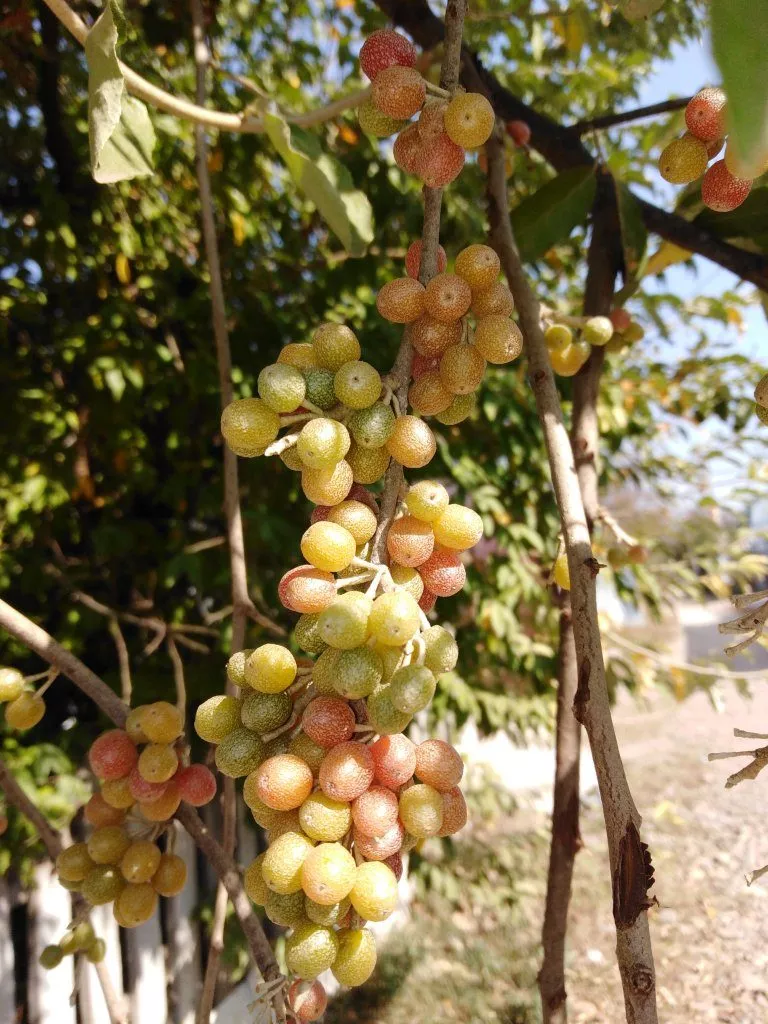
The small, pea-sized berry is covered in what appears to be a splash of white paint—a pattern on each one. This coating doesn't wash off. The fruit tastes sweet and sour with a slight, subtle bitterness. This is likely due to its lack of ripeness. The seed inside is biconvex. The structure and flavor combination are very similar to sea buckthorn. However, the bush is not thorny at all.
Later, through a photo of the fruit online, we discovered the name of this miracle—Shepherdia. It's a medicinal plant (shrub) with delicious and healthy berries. In terms of vitamin C content, for example, they surpass even currants and lemons. Besides vitamin C, the berries also contain:
- organic acids;
- carotene;
- several tannins;
- anthocyanins;
- vitamins A, E, P, etc.
After the first frosts, I harvested the berries. I froze some of them and pureed the rest with sugar. Delicious! We're looking forward to this year's harvest.
Shepherdia is now our favorite! We use this delicacy, along with lemon, ginger, and honey, to boost our immunity and fight colds.
I forgot to mention that this shrub only requires pruning and doesn't like waterlogged areas. It can even be used to form hedges before its branches become woody. It's the perfect plant for any garden!
THE AUTHOR IS NOT SHEPHERDIA BUT AN UMBRELLA SUCCESS (AKIGUMI)