

Hello! I'd love to share with you my incredibly beautiful and frost-hardy shrub – the snowberry. Or, in other words, the snowberry. The idea to write about it came spontaneously – it's snowing now, all the flowers have faded, and there's absolutely no beauty around the yard! But the snowberry remains to decorate the front garden. I recommend planting it for anyone who appreciates the beauty of living nature, even in the cold winter months.
Brief description of the plant
There are many varieties of snowberries, but I only grow two: white and pink. I'll tell you more: I have both pink and white berries on the same bush. Honestly, I don't know why this happens; it must be self-pollination...
This is what the multi-colored bushes look like:
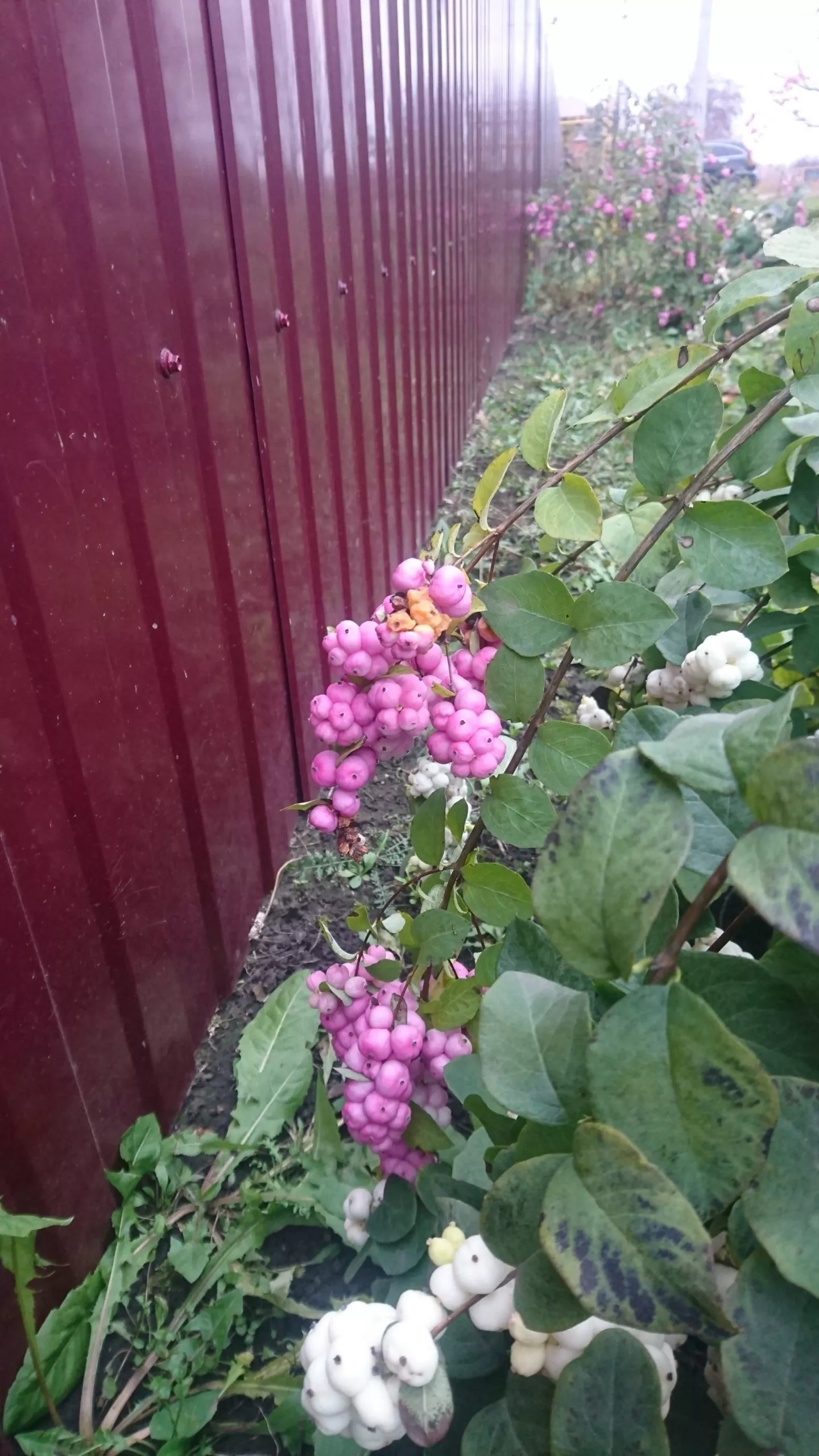
Belonging to the Honeysuckle family, the bushes grow from 20 cm to 3 m in height, depending on the specific species and variety. Mine are about half a meter tall—judgment for yourself from the photo:
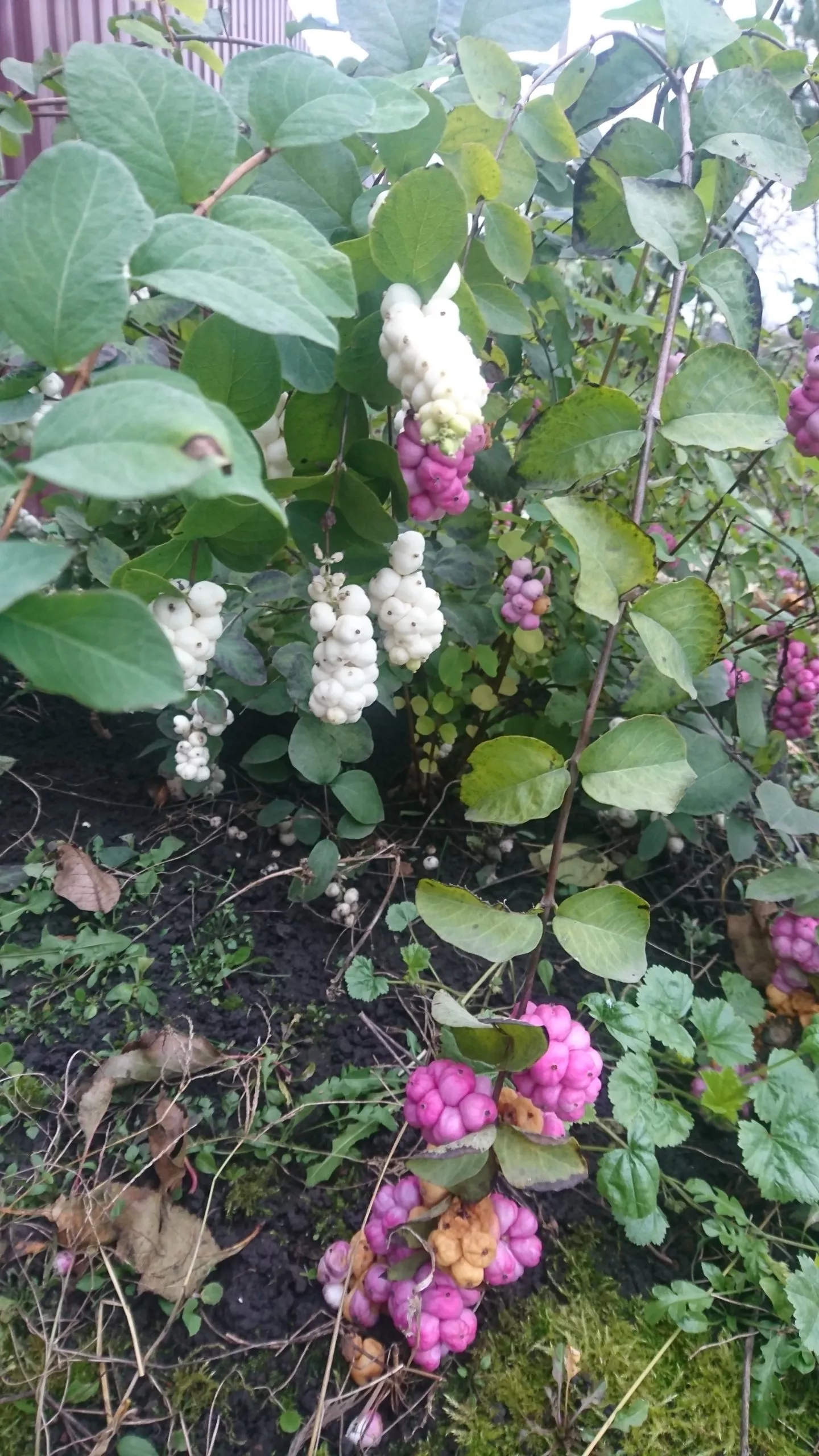
Other characteristic features of snowberries are:
- A densely growing, deciduous shrub with thin, always drooping stems. Not all species shed their leaves. My varieties retain their leaves even in winter.
- The plant is considered frost-hardy, so it thrives in our climate (it's native to North America). I live in the central part of the country, and the plant has never frozen, even though our winters can be very cold.
- The branches never break. Actually, it's difficult to do so because they're so flexible and pliable. They have a moderate number of leaves. I wouldn't say they have many or few.
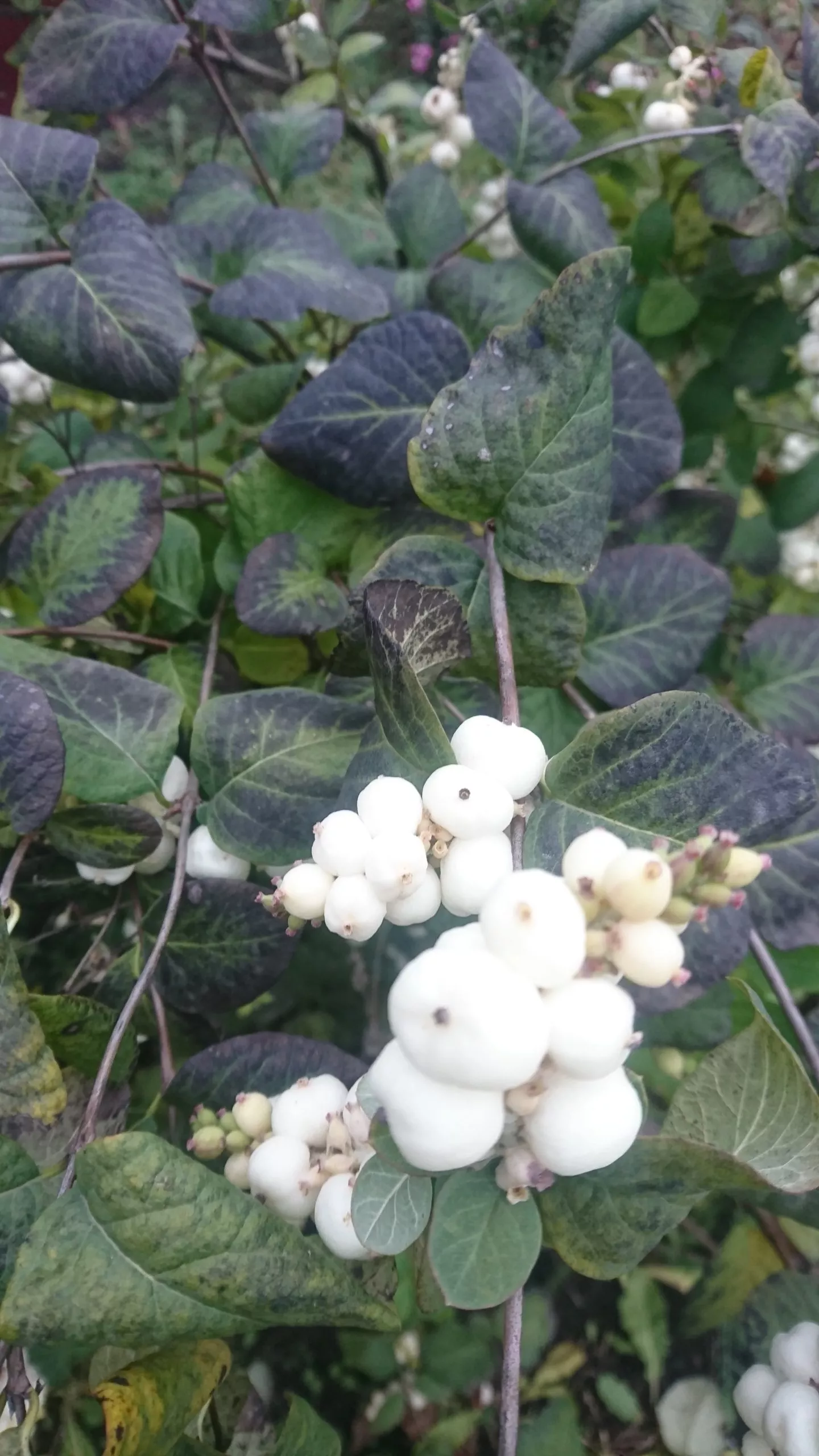
- The leaves are dark green, rounded (about 1.5-2 cm in diameter), with a shortened petiole. Towards the end of November, they acquire a blue-violet hue. As seen in my photo, taken around November 20th:

- The inflorescences are racemose and very attractive. Each cluster contains 10 to 20 flowers. They are the same color as the future berries. In my case, it's white and pink.
- Flowering begins in late June or early July. There's no exact time, as it depends on weather conditions—the warmer the weather, the earlier.
- The flowers have a pleasant, delicate scent when in bloom. This attracts insects needed to pollinate garden plants.
- The fruits are the most interesting and important part, as they create the beauty of winter landscape design. They are spherical, as if covered in a plastic shell. They are soft, spherical, and very juicy. The drupes are 2 to 2.5 cm in diameter; if you press on them, you can hear a distinctive click. The fruits grow very close together, giving the branch a cluster-like appearance. They are firmly attached to the branches, so they last until spring. Incidentally, if you cut the branches with the berries, they will also last a long time in a vase (even without water, like dried flowers).
Comparison of popular snowberry varieties
| Variety | Bush height | Color of berries | Winter hardiness | Peculiarities |
|---|---|---|---|---|
| Albus | 1-1.5 m | White | Up to -35°C | Does not shed leaves in winter |
| Doorenbosii | 0.5-1 m | Pink | Up to -30°C | A hybrid with increased decorative value |
| Hancock | 0.2-0.5 m | White and pink | Up to -25°C | Dwarf form for borders |
| Variegatus | 1.5-2 m | White | Up to -28°C | Variegated leaves with a creamy edge |
Why else is snowberry considered unusual and exclusive?
I know of several factors that attract the attention and interest of gardeners when it comes to snowberries. If anyone has any other exclusive information, please share it in the comments. Believe me, I'm very interested.
So, what do I know:
- From what I've read, snowberries were popular even during the reign of Tsar Peter the Great. It turns out the bushes were grown in the gardens and parks of Russia's first emperor.
- Snowberries are renowned for their honey production, and birds love to peck at them, although the berries are considered poisonous. But I understand that's only for humans. And the toxicity level is quite high. For example, eating just one or two berries causes severe intoxication, and consuming around 100 grams can be fatal.
For this reason, I grow this crop mainly in the yard—to keep children from trying it. I used to have two bushes outside the yard, but when I learned the berries are poisonous, and what's more, children love to play with them (because the fruits burst and snap), I immediately transplanted them outside. - Because of the toxicity and aroma of its flowers, the plant is untouched by pests. Honestly, in all my years of growing the snowberry, I've never seen a single harmful insect, only beneficial ones.
- The culture is generally not afraid of diseases, except perhaps powdery mildew, but even then, only if the bush is not looked after too much.
- Winter hardiness depends on the species and variety. I can confidently say that the best varieties for Russia are the white and pink snowberries (considered the most cold-hardy).
- The culture is generally unpretentious in care, I have already written about this, so it does not cause any special trouble for the gardener.
- Many Russians call the snowberry "wolfberry." But I just don't understand why. Probably because it's toxic...
- There's some information that Americans used the plant for medicinal purposes (and some likely still do). No, they don't eat the berries, but rather crush them and apply them to purulent wounds, abrasions, and ulcers. They boil the bark and prescribe it for tuberculosis and venereal diseases. But I personally haven't found any confirmation of this last claim (even in foreign sources). It's probably a myth, so you should never use anything for treatment that doesn't have a solid basis.
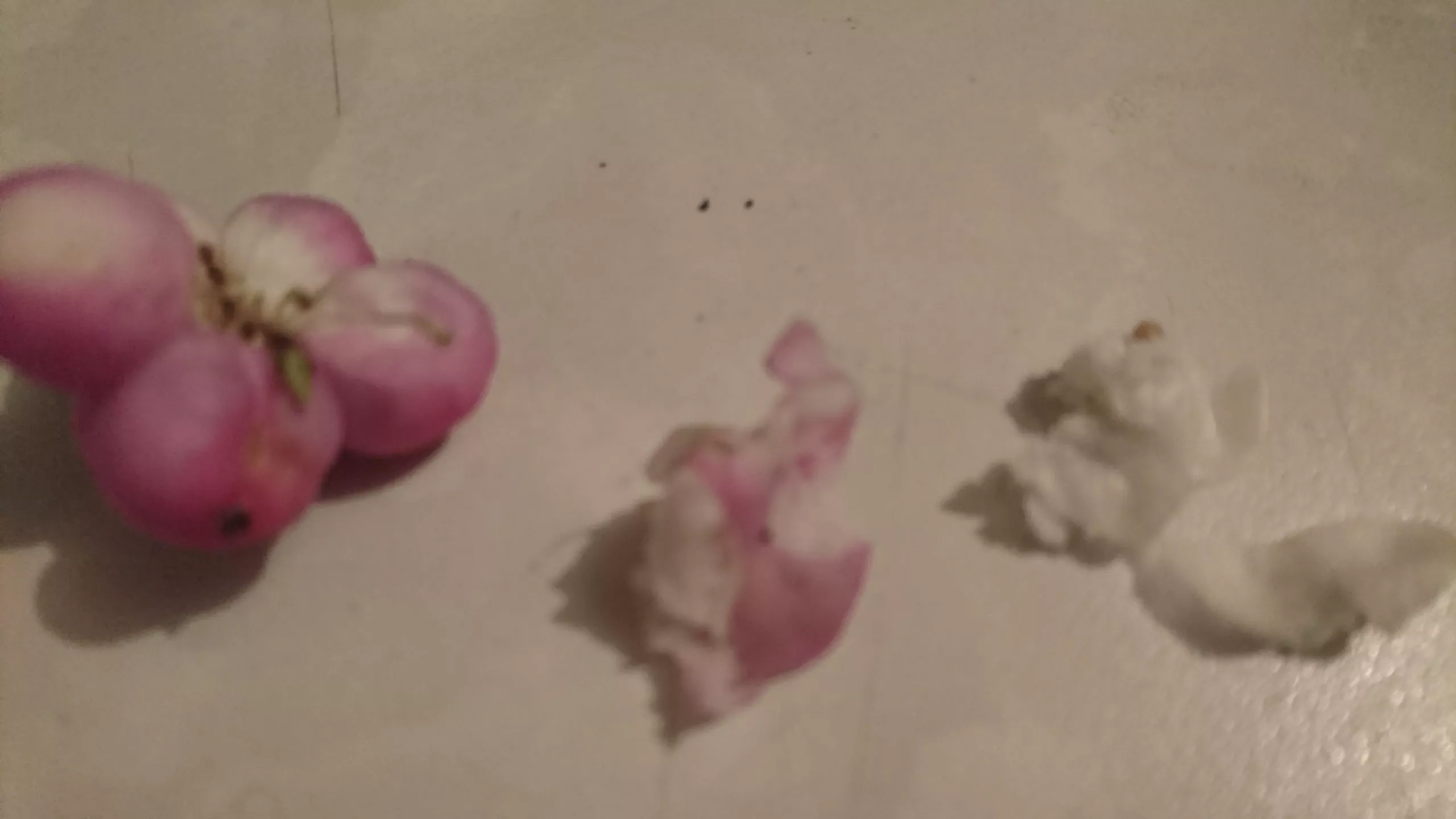
By the way, this is what the berries look like when they're crushed. I wanted to cut them with a knife at first, but I was afraid—they're poisonous, after all.

- Conventional medicine doesn't recognize snowberry as a healing herb. But folk medicine does. I've heard that crushed snowberries can be applied to the feet for a week or a little longer to treat cracks and severely roughened areas. Leave them on for about five hours. I haven't tried it myself, so I can't speak to the results, but I don't think it will harm the skin.
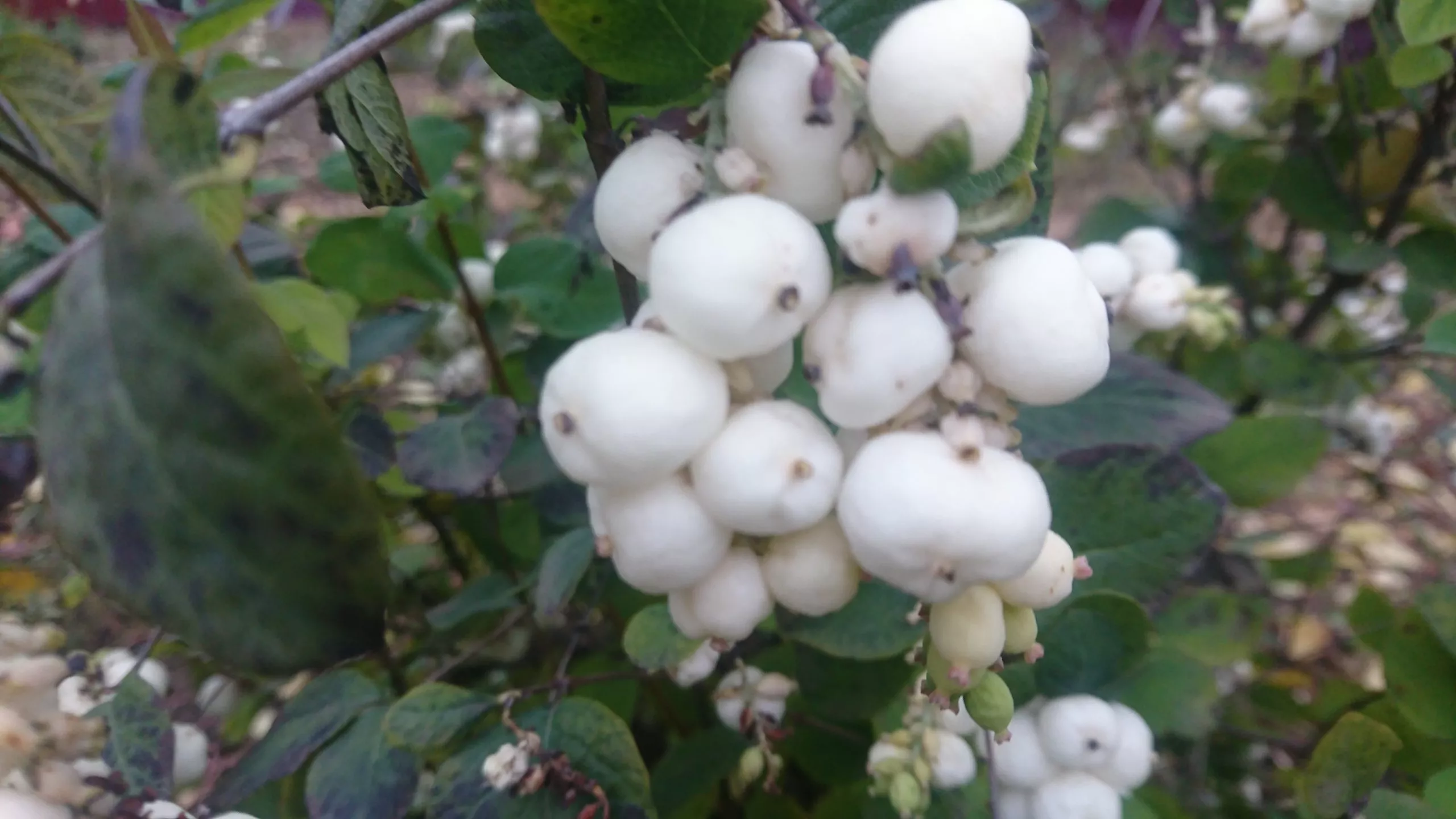
A friend once asked me what exactly makes snowberries poisonous. I knew the answer because I always carefully and thoroughly research the crops I grow. The thing is, they contain saponins, plant-based glycosides with a high toxicity level and a nauseating aftertaste (a good sign; not everyone would want to eat them).