

Zucchini is the first vegetable to grow quickly (except for radishes planted in a greenhouse in early spring). Zucchini is the most common and popular vegetable among Siberian gardeners, after cucumbers.
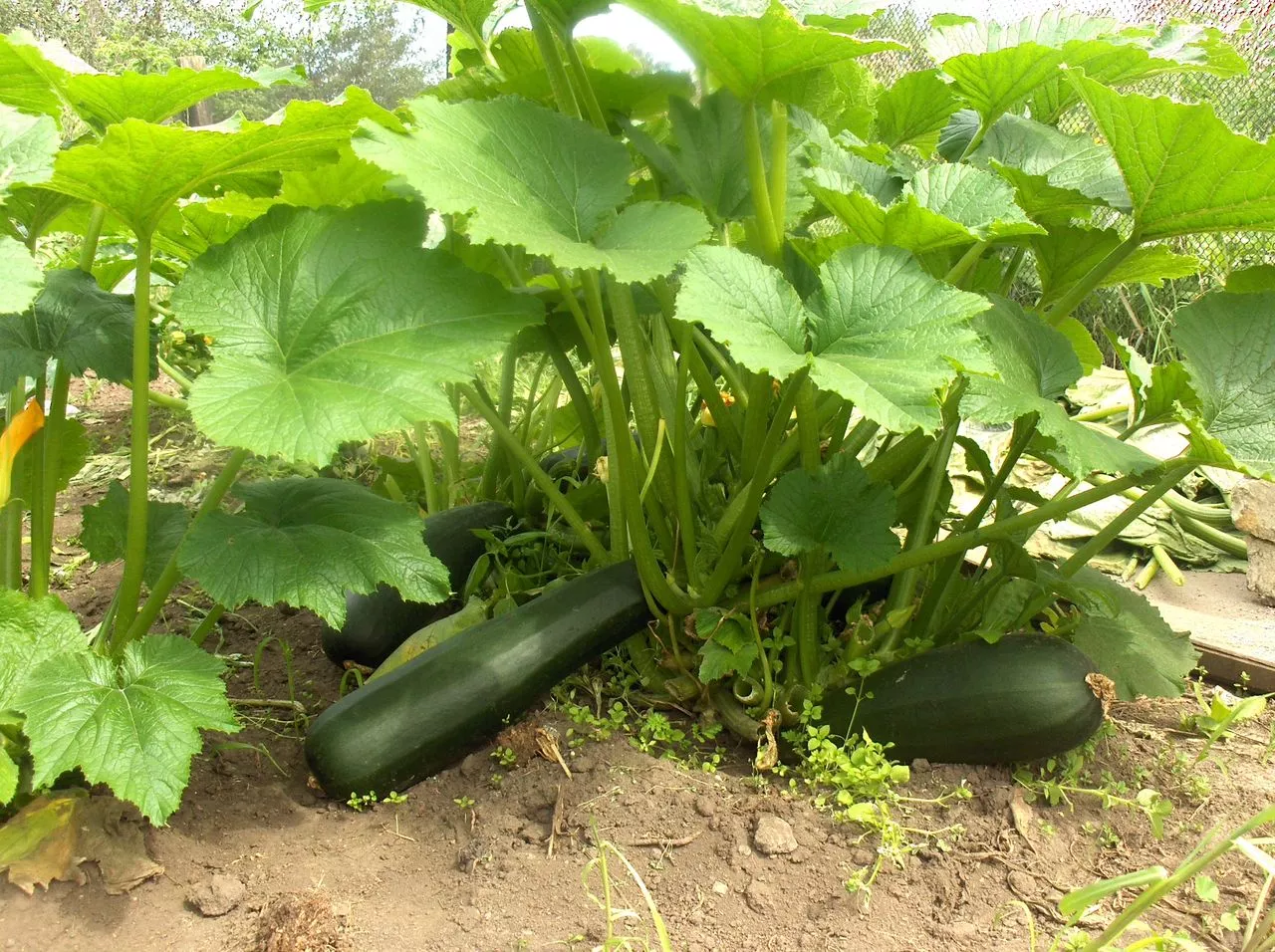
They even used to make jam out of it, and maybe some people still do. I've never tried it.
I always grow zucchini using seedlings (five or six bushes of different varieties).
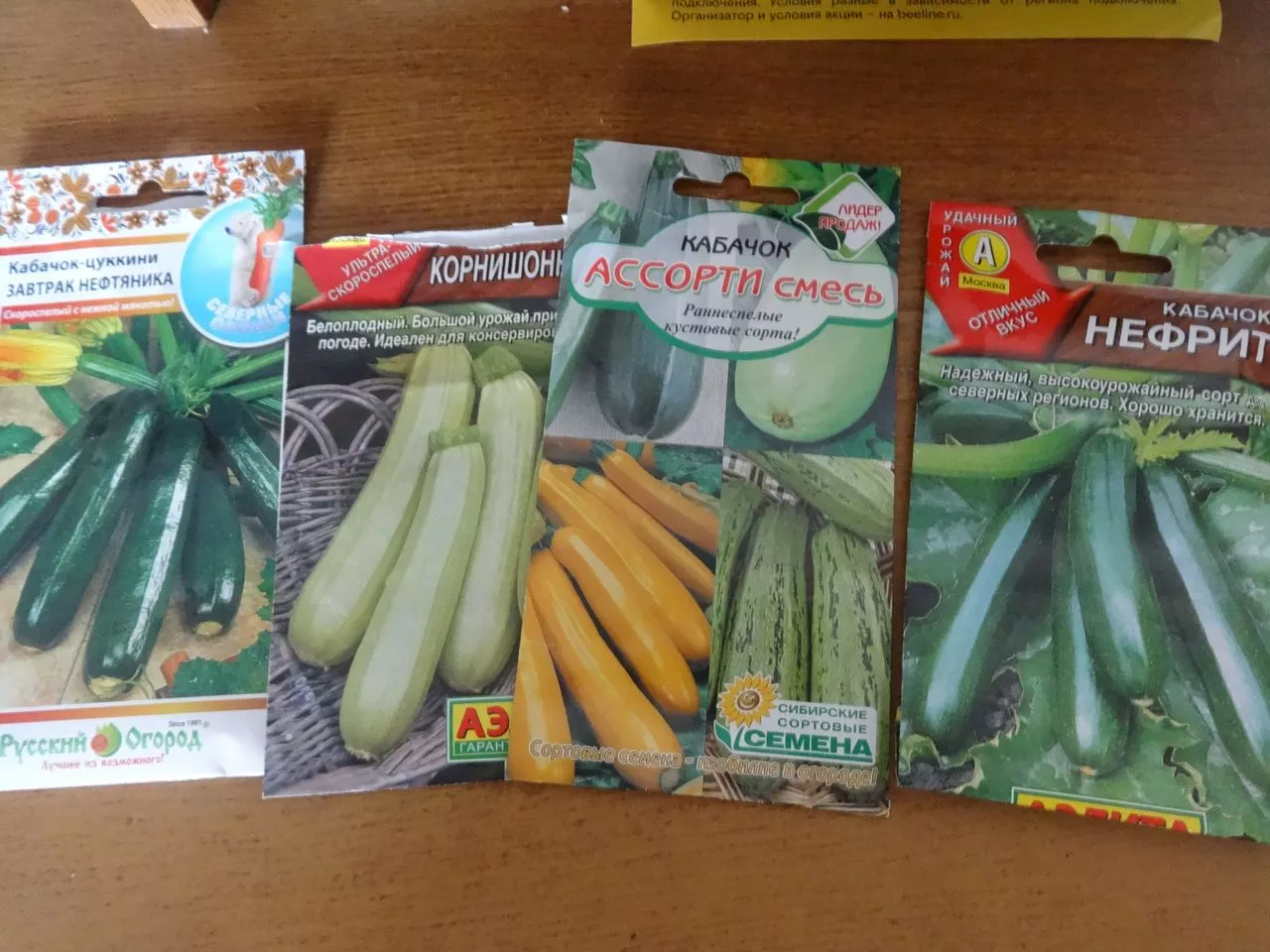
They always grow without problems and produce a good harvest, part of which we then distribute to our poor friends, relatives and neighbors.
We fry zucchini, grill it, make pancakes, and preserve it to make zucchini caviar for the winter.

And even when fresh, they keep well in an apartment.
But this spring, the zucchini planted at the end of May suddenly frozen June sixth.
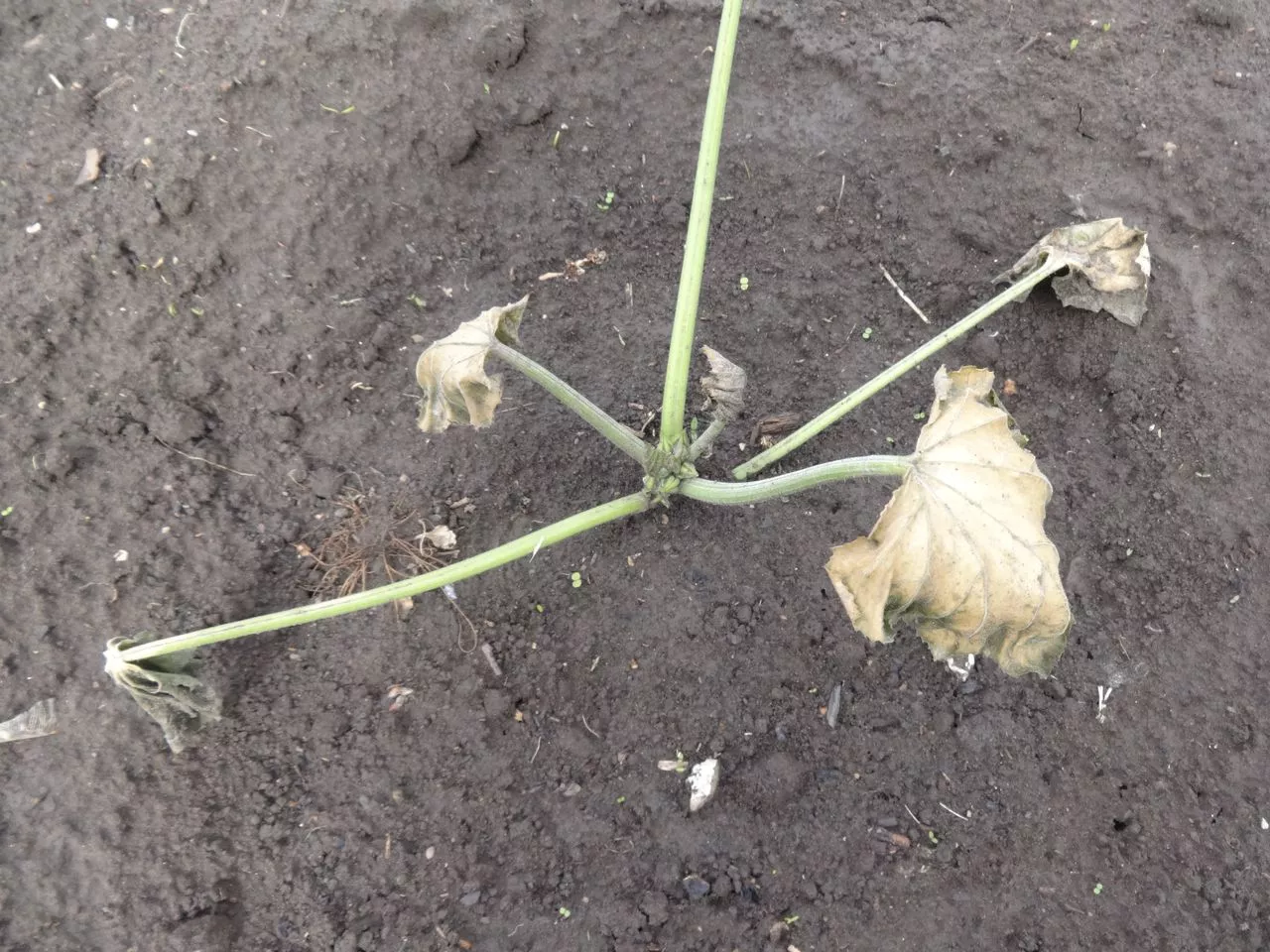
Of the six bushes, only one, which grew between the apple trees, remained intact.
I had to soak the seeds again and re-sow them directly into the soil. Plus, my neighbor at the dacha gave me an extra zucchini in a cup.
I didn't pull out the frozen zucchini, since the frost was light and, most likely, the roots were not damaged.
After a while, the frozen zucchini recovered, sprouted new leaves, and already set fruit. The seeds we planted also sprouted, and now half our garden is covered in zucchini.
But something strange happened to my neighbor's zucchini... I planted it in the garden as soon as the weather cleared up. I transplanted it into a bed where the strawberries had frozen over the winter. Before that, it was growing in a plastic cup. Everything was fine, the leaves were normal, and the first buds had even appeared. Beautiful, healthy roots were visible through the sides of the cup.
But after a while, I noticed the leaves had changed strangely. I'd never seen leaves like that on zucchini before. Is this a disease, or are the leaves deformed due to a lack or excess of certain minerals in the soil?
Most likely on deformed leaves a tick has settled inThere are some surviving strawberry plants left in the bed from the frozen ones. They're very frail, and I don't care for them. I just wanted to dig up the bed later and plant some black radishes there. I'll try spraying the zucchini with Fitoverm...
This is how strange the leaves on this zucchini look.
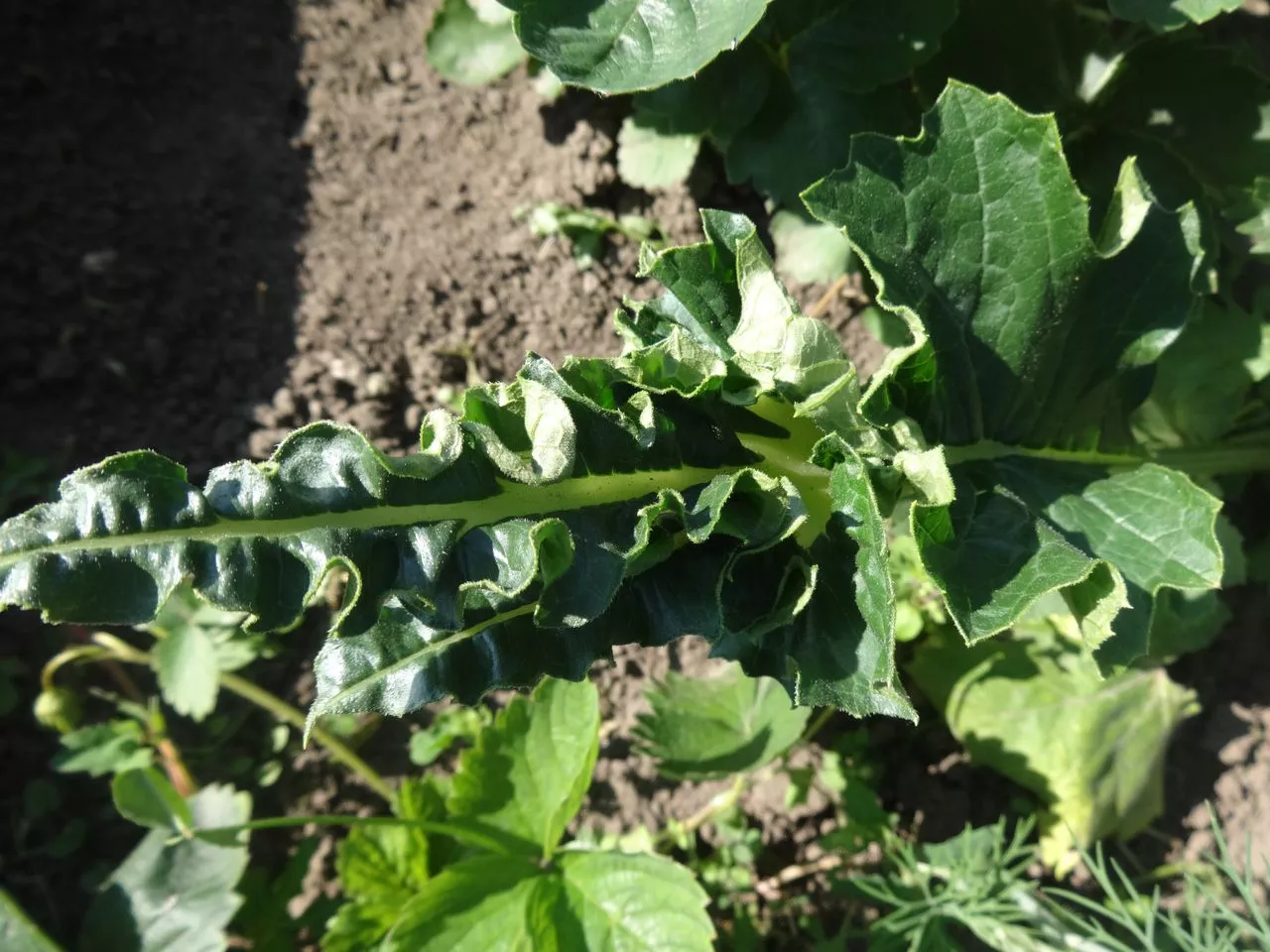
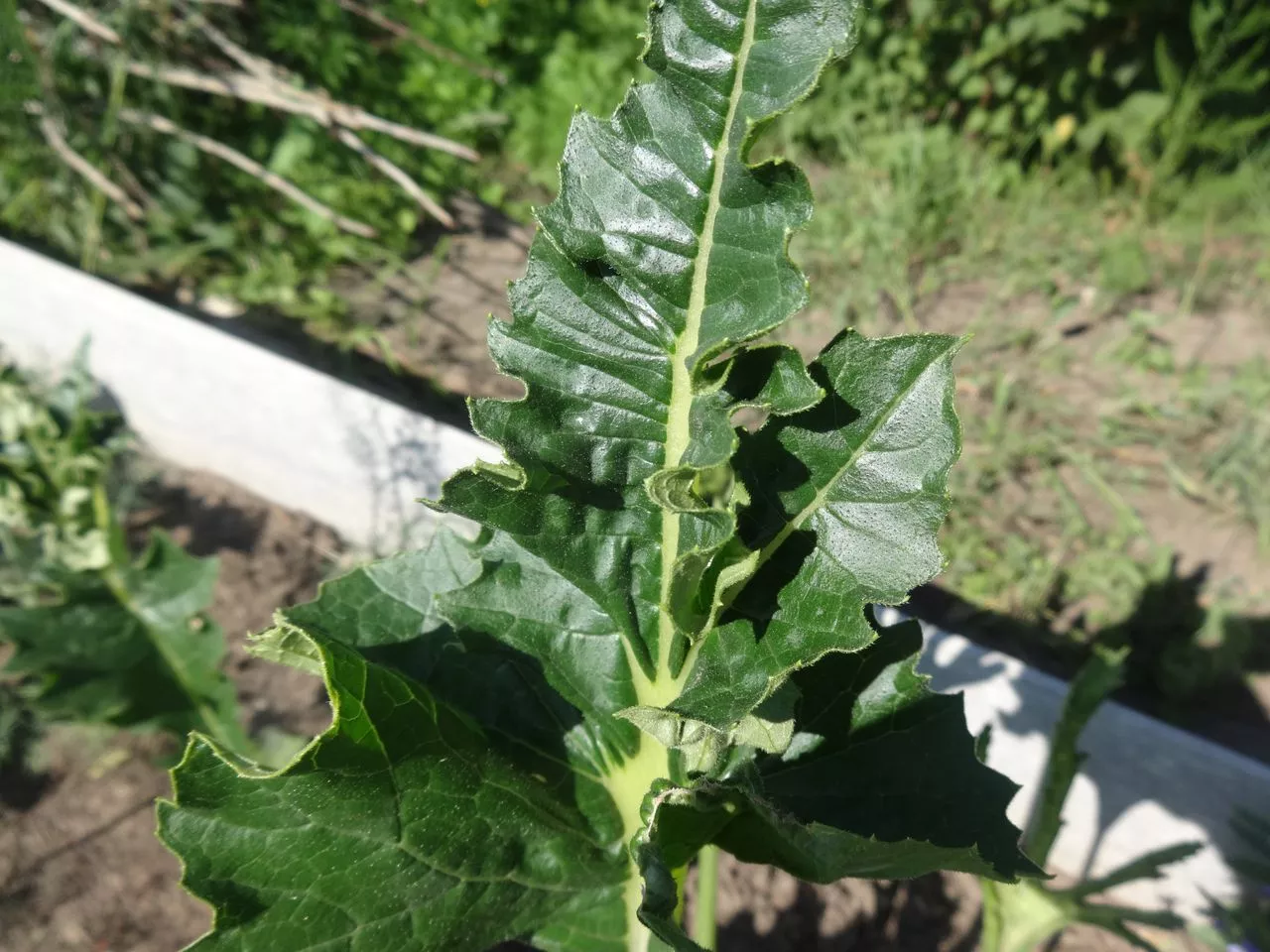
Of course, I took action—I fed this zucchini with potassium humate, added compost, and sprayed it with boric acid. Its new leaves are growing back perfectly normal, and the deformed ones can be trimmed off.
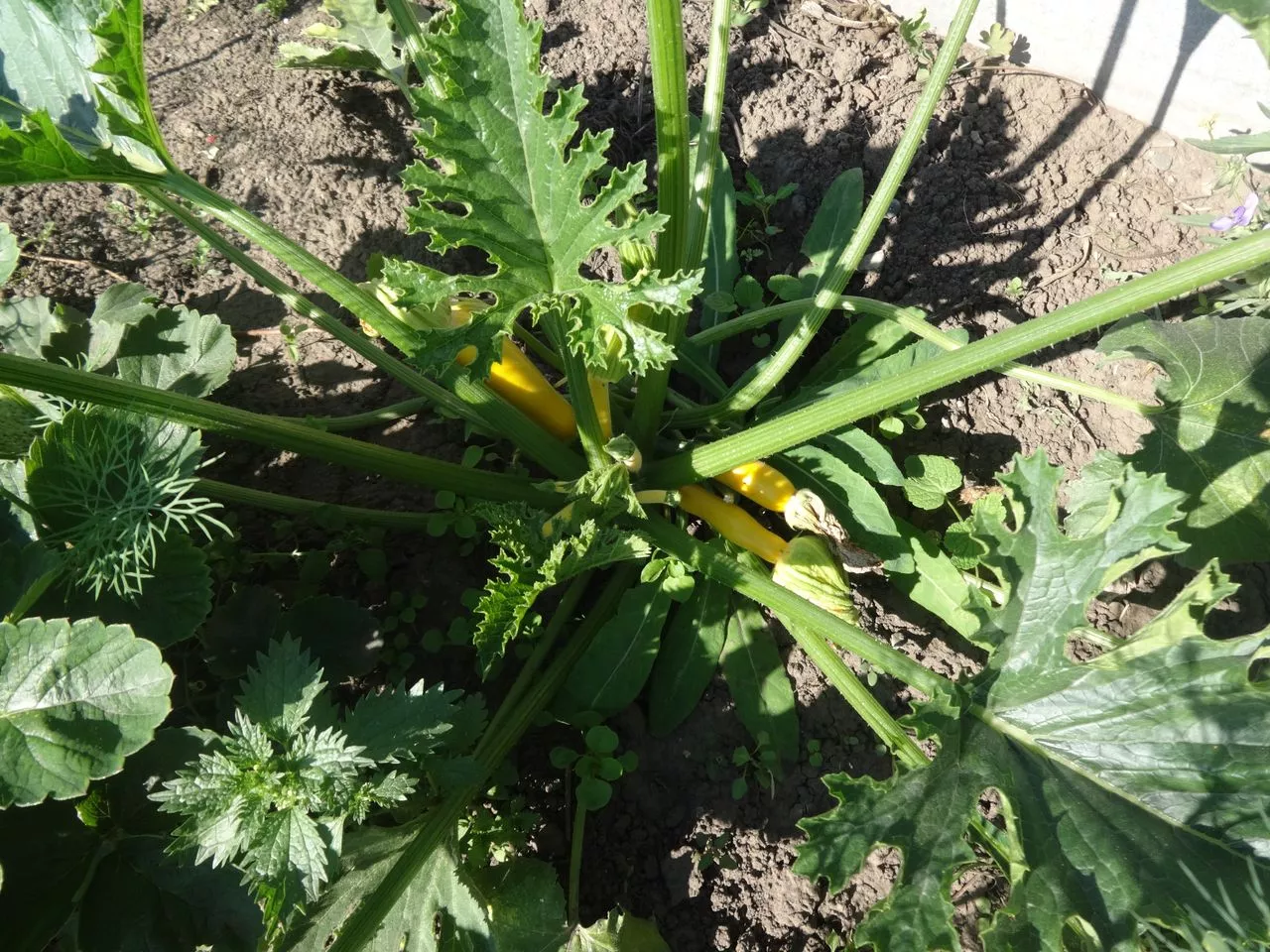
And all the other zucchini are developing normally.
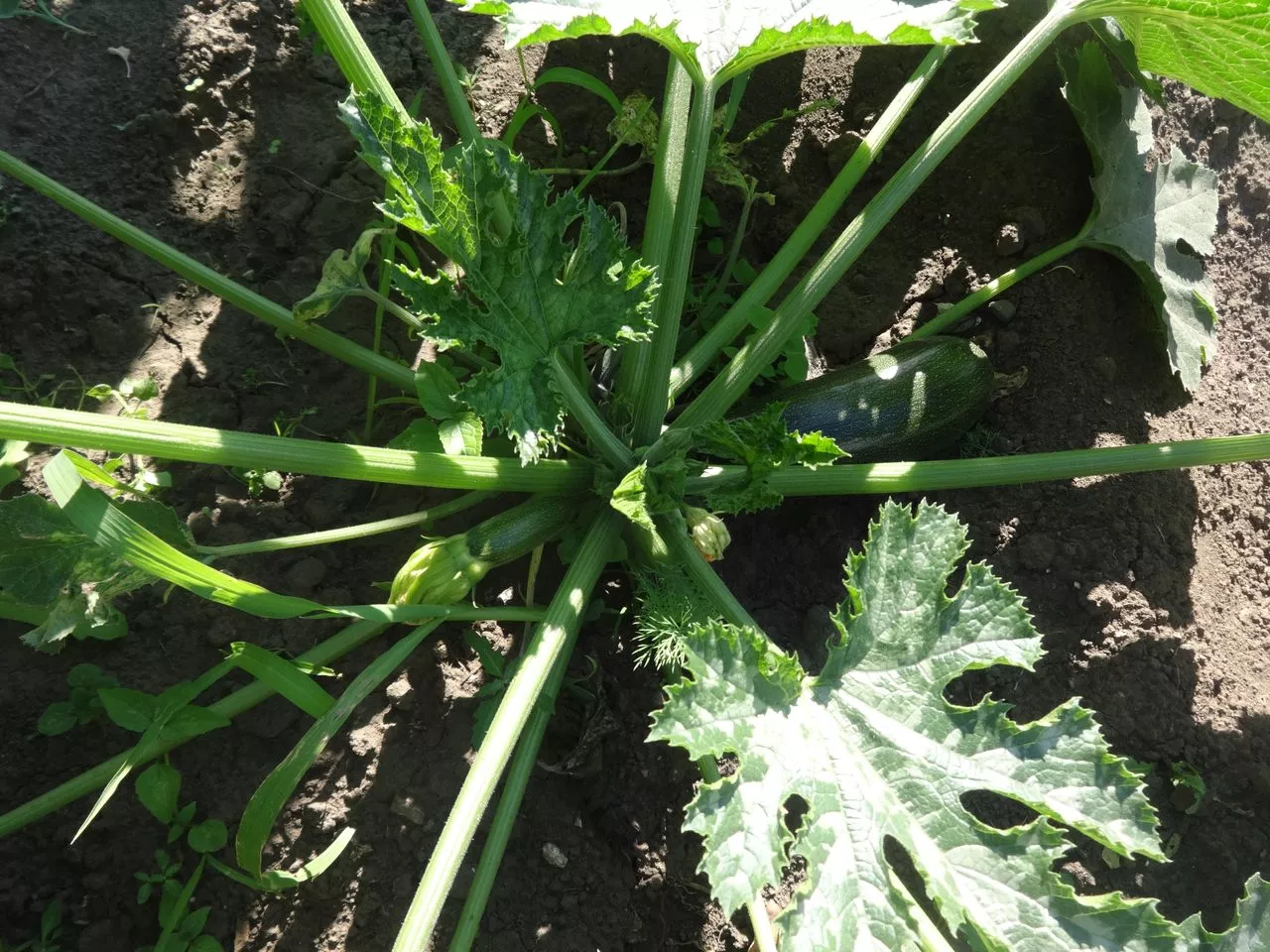
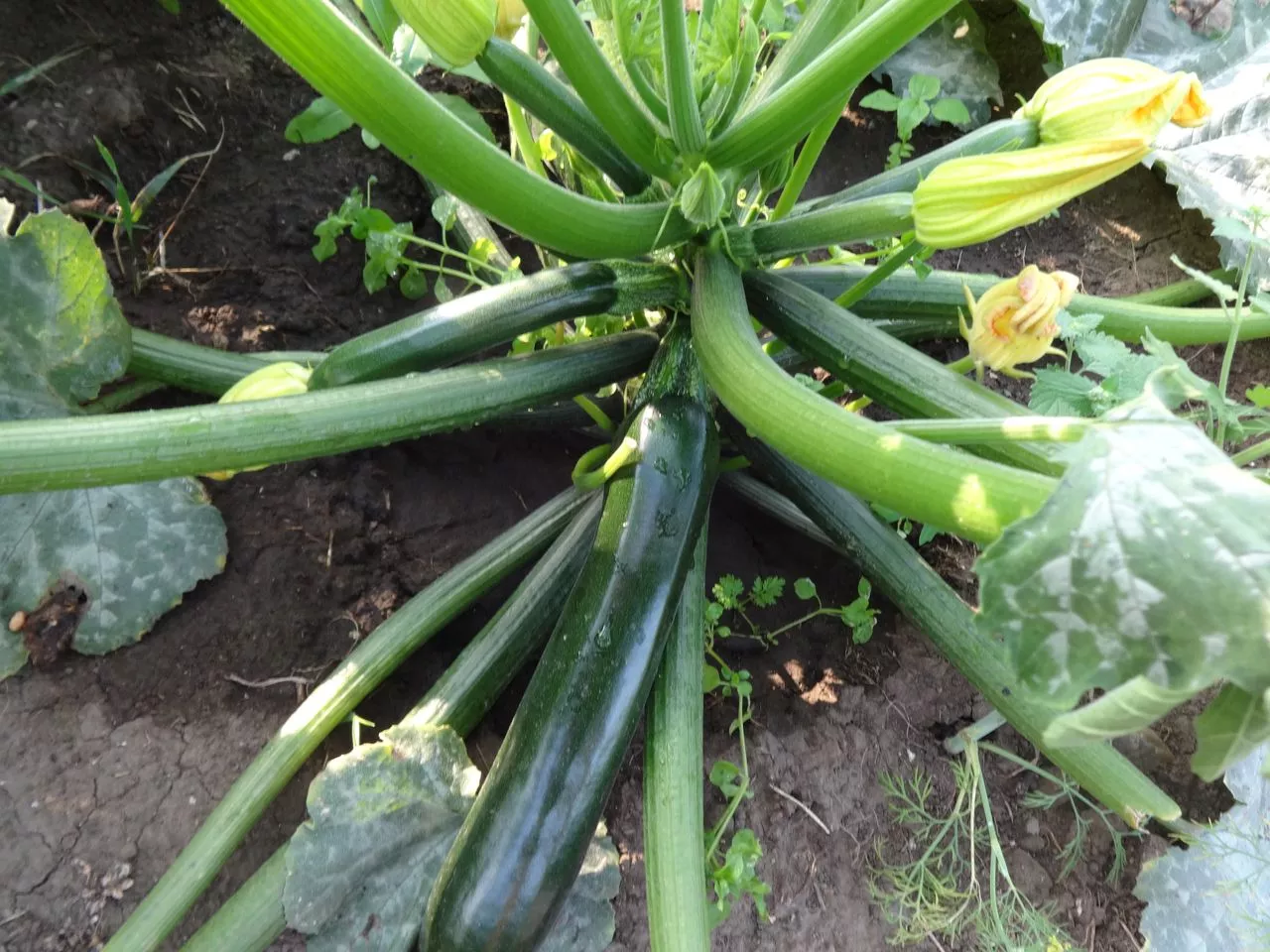
We never have any difficulties growing zucchini. The vegetables grow naturally, and we always have a harvest. Even in the rainiest years, we never run out of zucchini. Of course, in such weather, the yield decreases; often, the very first young zucchini drop their ovaries. Excess moisture and cold weather can cause the tips of the small fruits to rot, and the plants can be affected by fungal diseases.
Zucchini love sun and loose, fertile soil, which is when they grow lots of fruit and large leaves. Extra leaves are essential. needs to be trimmedso that sunlight can reach the small zucchini plants, so that fresh air can reach the fruit, so that there is no stagnant water, and so that pollinating insects can easily find the flowers.
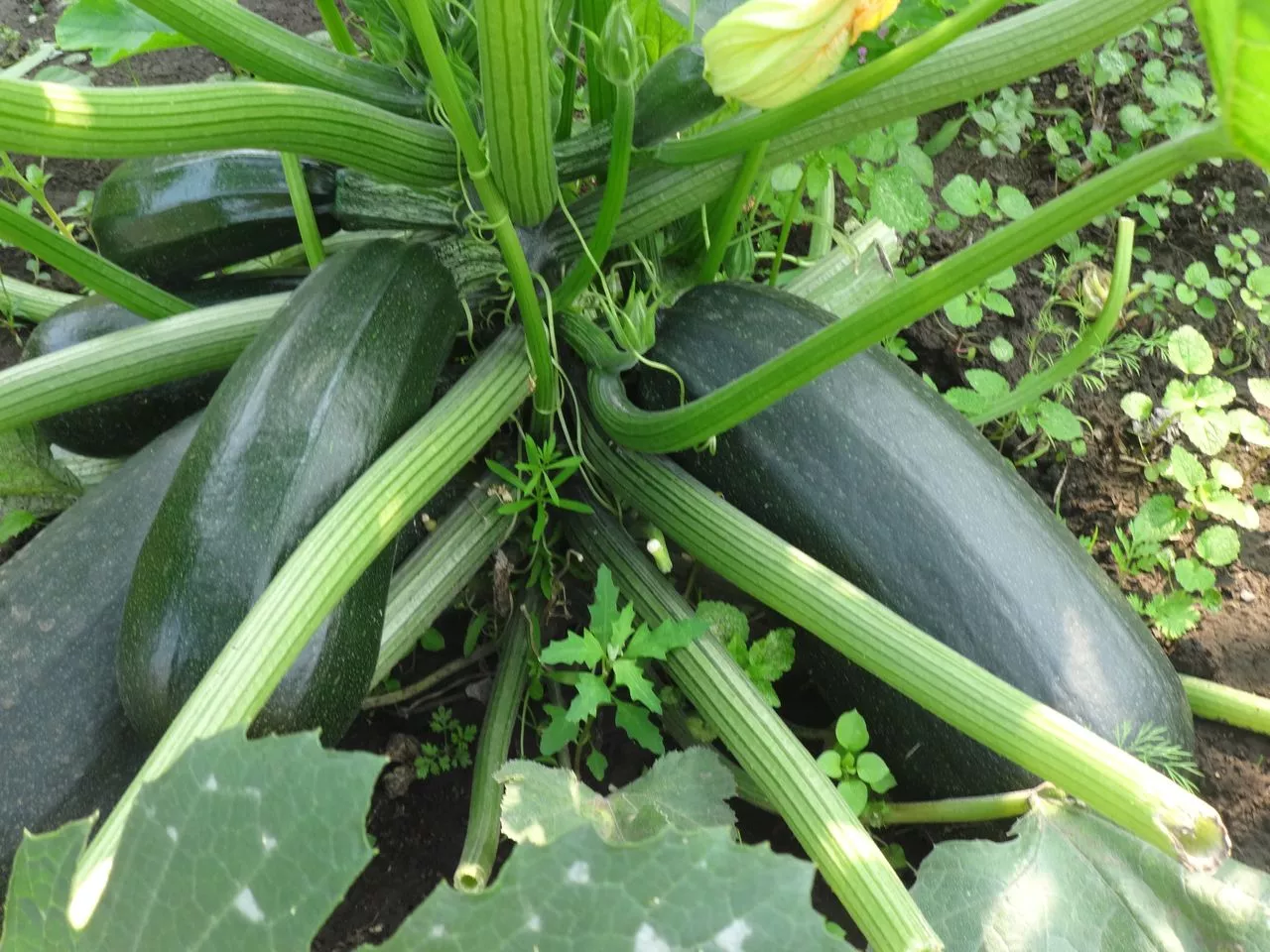
During prolonged rains, you can cover the zucchini plants with plastic wrap. To promote fruit set, it's recommended to treat the zucchini plants with a boric acid solution (2 grams of the powder are dissolved in warm water, then added to a 10-liter bucket of water and sprayed onto the plants). When planting, we add ash and compost to the holes, water with herbal infusion at the beginning of growth, and sprinkle ash under the plants. And we always have a good zucchini harvest.
How are your zucchini growing this year?